Tag: Duke

  • Duke Asked Some Faculty to Avoid Talking to Media

    Duke Asked Some Faculty to Avoid Talking to Media

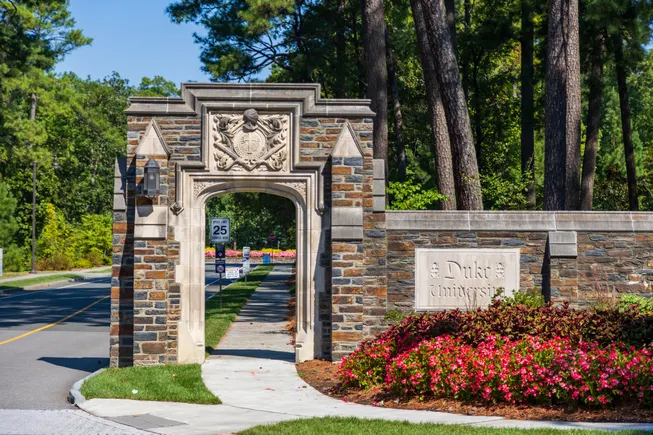
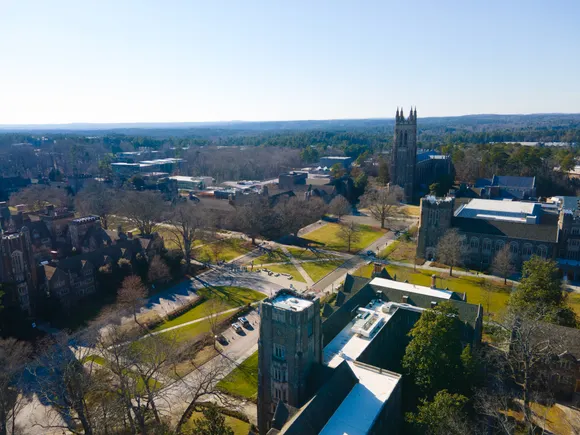
    Duke University file photo

    As Duke University navigates a $108 million federal research funding freeze and multiple investigations by the Trump administration, administrators want faculty to avoid talking to the media about institutional operations, The Chronicle, Duke’s student newspaper reported Monday.

    According to an August email obtained by The Chronicle, Jenny Edmonds, associate dean of communications and marketing at Duke’s Sanford School of Public Policy, encouraged faculty to “continue to engage with the media to disseminate [their] research as [they] have always done,” while also cautioning that “media attention to institutions of higher education and discussions about institutional responses to policy changes have become more prominent than ever.”

    “In this moment in particular, questions about Duke and current events are being answered by Frank Tramble and his team,” Edmonds wrote. “If you are contacted by the media about overarching issues confronting the University, please forward the requests to [Sanford’s Senior Public Relations Manager Matt LoJacono] and me.”

    Although it wasn’t a universitywide directive, The Chronicle obtained emails that show some other departments also gave their faculty similar instructions to route media requests through the university’s central communications channels.

    At an Academic Council meeting in October, Duke’s president, Vincent Price, and council chair, Mark Anthony Neal, commended faculty members for not speaking to a New York Times reporter; the reporter had visited the campus while working on a story about the Trump administration targeting Duke’s diversity, equity and inclusion program.

    “It was pretty amazing that [the reporter] actually got no commentary from Duke officials and Duke faculty,” Neal continued. “Even if it wasn’t overtly communicated to the community, the community understood the stakes of that mode of inquiry.”

    At that meeting Price also called Trump’s higher education compact—which would allegedly give universities preferential funding in exchange for making sweeping institutional policy changes— “highly problematic,” according to The Chronicle. Despite public pressure, Duke hasn’t officially rejected the terms of the compact.

    Source link

  • Duke Faces $108M Funding Freeze, Multiple Investigations

    Duke Faces $108M Funding Freeze, Multiple Investigations

    Duke University file photo

    The Departments of Education and Health and Human Services are investigating Duke University and the Duke Law Journal for allegedly violating Title VI of the Civil Rights Act of 1964, which bars discrimination based on race and national origin, the agencies announced Monday.

    The New York Times reported Tuesday night that the Trump administration froze $108 million in federal grants and contracts at Duke’s medical school and health system.

    On Monday, ED and HHS sent a letter detailing their concerns about potentially discriminatory practices at Duke Health and threatening the medical school’s federal funding.

    “These practices allegedly include illegal and wrongful racial preferences and discriminatory activity in recruitment, student admissions, scholarships and financial aid, mentoring and enrichment programs, hiring, promotion, and more,” the letter states, though officials didn’t offer specifics.

    The departments want Duke to “review all policies and practices at Duke Health for the illegal use of race preferences, take immediate action to reform all of those that unlawfully take account of race or ethnicity to bestow benefits or advantages, and provide clear and verifiable assurances to the government that Duke’s new policies will be implemented faithfully going forward—including by making all necessary organizational, leadership, and personnel changes to ensure the necessary reforms will be durable.”

    Additionally, the agencies want Duke to convene a “Merit and Civil Rights Committee” that can negotiate with the federal government on behalf of university leaders and “avoid invasive federal engagement,” according to the letter. This request appears to be a new ask for the Trump administration as officials work to expand their scrutiny of higher education, based on what’s publicly known about investigations at other colleges.

    “We hope this arrangement will enable the parties to move quickly toward a mutually agreeable resolution of outstanding concerns and complaints,” officials wrote in the letter. “If the alleged offending policies, practices, and programs are found to exist and remain unrectified after six months, or if at any time the Merit and Civil Rights Committee and federal government reach an impasse, the federal government will commence enforcement proceedings as appropriate.”

    Duke has 10 days to respond to the request to form the committee.

    Meanwhile, the Duke Law Journal investigation, led by the Education Department’s Office for Civil Rights, centers on allegations that the journal uses factors such as race or national origin to select editors. The department opened a similar investigation into the Harvard Law Review

    The Washington Free Beacon, a conservative news outlet, reported last month that the Duke Law Journal prepared a special application packet for affinity groups that noted applicants could get a three- to five-point bump if they have “meaningfully advanced the interests of communities with diverse perspectives and experiences either at school or in their community.” 

    Source link

  • Federal officials open probes into Duke University’s law journal, medical school

    Federal officials open probes into Duke University’s law journal, medical school

    Dive Brief: 

    • The U.S. Department of Education announced Monday that it has opened a civil rights investigation into Duke University and its law journal, based on allegations that the institution racially discriminates to select the publication’s editors. 
    • Separately, the Education Department and the U.S. Department of Health and Human Services also sent a letter Monday to university officials saying they’re reviewing allegations that Duke’s medical school and Duke Health racially discriminate in their hiring, admissions, financial aid and recruitment practices. 
    • The probes come less than a week after U.S. Education Secretary Linda McMahon said officials hoped that Columbia University’s $221 million settlement with the federal government would be a “template for other universities around the country.”

    Dive Insight: 

    Like with the federal government’s previous Columbia probes, the Education Department has opened an investigation into Duke University to determine whether it has violated Title VI, which prohibits federally funded institutions from discriminating based on race, color or national origin. 

    The department said its probe is based on recent reporting that Duke Law Journal racially discriminates against students applying to be editors. It comes one month after The Washington Free Beacon, a conservative publication, alleged that Duke Law Journal potentially gave students applying to be editors an edge if they held leadership positions in affinity groups or if they explained how their “membership in an underrepresented group” would help them promote diverse voices. 

    Duke Law Journal shared this information only with the law school’s affinity groups, according to the Beacon. 

    The letter from HHS and the Education Department doesn’t provide the source of the allegations of racial discrimination against Duke’s medical school and Duke Health. However, it says Duke Health would be “unfit for any further financial relationship with the federal government” if the federal government determines they are true. 

    In their letter, officials suggested they want to cut a deal with the university.

    “Our Departments have historically recognized Duke’s commitment to medical excellence and would prefer to partner with Duke to uncover and repair these problems, rather than terminate this relationship,” McMahon and HHS Secretary Robert F. Kennedy Jr. wrote. 

    The two Cabinet secretaries demanded that the university review and reform policies at Duke Health to ensure they don’t include illegal racial preferences, including by making “necessary organizational, leadership, and personnel changes.”

    They also asked Duke to establish a Merit and Civil Rights Committee, which would be delegated authority from the university’s board, to conduct the review. 

    “The Committee must be made up of those members of Duke’s leadership and medical faculty most distinguished in and devoted to genuine excellence in the field of medicine, and the members chosen must satisfy the federal government as to their competence and good faith,” McMahon and Kennedy said in their letter. 

    McMahon and Kennedy threatened Duke with enforcement actions if the federal government and the Merit and Civil Rights Committee reach an impasse — or if they don’t change the “alleged offending policies” within six months. 

    Following Columbia’s controversial agreement with the federal government — which also included vast policy changes — law and free speech scholars warned that the Trump administration may attempt to increase their pressure campaigns against other universities to cut deals. 

    “The Trump administration has made clear that while Columbia is first in line, it intends to reach comparable agreements with other schools — to scale the Columbia shakedown into a broader model of managing universities deemed too woke,” David Pozen, a Columbia law professor, wrote in a blog post. As has already occurred with law firms, tariffs, and trade policy, regulation by deal is coming to higher education.

    Source link

  • Duke University offers buyouts and signals future layoffs as federal cuts hit

    Duke University offers buyouts and signals future layoffs as federal cuts hit

    Dive Brief:

    • Duke University is offering voluntary buyouts for employees and has frozen hiring as it braces for federal funding cuts, the institution said Wednesday. 
    • The North Carolina institution signaled that layoffs were likely in the coming months, but said it is “pursuing several employment actions now in hopes of reducing the scale of involuntary separations later this summer.”
    • The moves are in response to federal cuts and policy shifts, which could translate into funding losses for Duke between $500 million and $750 million, university officials said during an internal webinar Wednesday, according to media reports.

    Dive Insight:

    Historically, much of Duke’s research enterprise has been devoted to work on behalf of the government. Federal grant support made up nearly three-quarters of the $1.5 billion in sponsored research funds that Duke received in fiscal 2024, much of it going toward health science.

    The university, in its latest financial statement, described its medical school as “one of the largest biomedical research enterprises in the country.” And funding just from the U.S. Department of Health and Human Services — which houses the National Institutes of Health — accounted for 58% of all of Duke’s sponsored research funding. 

    The National Science Foundation and U.S. Department of Energy also accounted for tens of millions of dollars in the university’s funding. 

    Since President Donald Trump retook office, those agencies and others have been cutting and delaying grant awards at a frantic pace, including moves to cap reimbursement for indirect research costs at NIH and the Energy Department. Both funding caps have been blocked in courts — at least for now — but the Trump administration is continuing to fight the legal cases against the policies. 

    Uncertainty over the funding will likely loom for some time to come. 

    For Duke, the NIH indirect cost cap would mean $194 million in lost funding each year, President Vincent Price and other leaders said in February. 

    “Much is at stake,” the officials said then. “Our nation’s world-leading research enterprise has been enabled by — and will only be sustained by — partnership and co-investment from both the government and higher education.” 

    They also signaled at the time that “careful planning and difficult decisions” could lie ahead. 

    Today, Duke is trying to cut $350 million from its budget, according to reports of the university’s presentation, as it grapples with funding gaps under the Trump administration. 

    As it trims down, Duke has paused capital spending on buildings, renovations and other projects that are “not fully funded or deemed essential,” the university said Wednesday. 

    It’s also reviewing universitywide programs — such as technology adoption, off-campus real estate and on-campus space consolidation — for potential cost-savings.  

    Employee benefits could also be on the chopping block. 

    “A study is also under way to assess how certain changes to the university’s benefits may generate savings while protecting the program’s strong competitive position,” Duke said.

    However, Executive Vice President Daniel Ennis told employees Wednesday that the university still plans to give out merit raises and will not change its tuition grant program for children of employees. 

    Universities around the country have been scrambling in recent months to open breathing room in their budgets to cope with the uncertainty and disruption created by cuts and delays at federal agencies. Many have frozen hiring and budgets to maintain financial flexibility while others have laid off employees to cope with cuts.

    Source link

  • Duke Criticizes the Use of Its Brand on “The White Lotus”

    Duke Criticizes the Use of Its Brand on “The White Lotus”

    Duke University is unhappy with The White Lotus, the hit HBO television show, for using its logo repeatedly in its third season—particularly in a scene where one character is on the verge of suicide, holding a gun to his head, all while wearing a Duke T-shirt.

    A spokesperson for institution told Bloomberg and other media outlets this week that Duke hadn’t approved of the use of its logo on the show. “The White Lotus not only uses our brand without permission, but in our view uses it on imagery that is troubling, does not reflect our values or who we are, and simply goes too far,” the spokesperson said.

    A copyright attorney told Bloomberg that the show’s use of the logo is most likely protected by the First Amendment.

    Source link