Tag: duty

  • Duty of care isn’t about mental health, it’s about preventing harm

    Duty of care isn’t about mental health, it’s about preventing harm

    When people talk about a “duty of care” in higher education, the conversation almost always circles back to mental health – to counselling services, wellbeing strategies, or suicide prevention.

    It’s understandable. Those are visible, urgent needs. But the phrase “duty of care” carries far more weight than any one policy or pastoral initiative.

    It reaches into every space where universities hold power over students’ lives, and every context where harm is foreseeable and preventable.

    That misunderstanding has shaped national policy, too. When over 128,000 people petitioned Parliament for a statutory duty of care in 2023, the Government’s response was to establish the Higher Education Mental Health Implementation Taskforce – a body focused on mental health and suicide prevention.

    Its four objectives spoke volumes – boosting University Mental Health Charter sign-ups, expanding data analytics to flag students in distress, promoting “compassionate communications” to guide staff interactions with students and, where appropriate, with families, and overseeing a National Review of Higher Education Student Suicides.

    These were not bad aims – but they did not speak to the duty that had been demanded. None addressed the legal, structural, or preventative responsibilities that underpin a real duty of care.

    The Taskforce has tackled symptoms, not systems – outcomes, not obligations. By focusing on “student mental health,” the issue became more comfortable – easier to manage within existing policy frameworks and reputational boundaries.

    It allowed the sector to appear to act, while sidestepping the harder questions of legal clarity, parity, and the accountability owed to those who were harmed, failed, or lost.

    In a 2023 Wonkhe article, Sunday Blake made this point with striking clarity. “Duty of care,” she wrote, “is not just about suicide prevention.”

    Nor, by extension, is duty of care just about mental health. Universities shape students’ experiences through housing, assessment, social structures, disciplinary systems, placement arrangements, and daily communications.

    They wield influence that can support, endanger, empower or neglect. If the phrase “duty of care” is to mean anything, it must cover the full spectrum of foreseeable harm – not only the moments of crisis but the conditions that allow harm to build unseen.

    Importantly, this broader understanding of duty of care is not confined to campaigners or bereaved families. The British Medical Association has also recently called for a statutory duty of care across higher education, after hundreds of medical students reported sexual misconduct, harassment, and institutional neglect in a UK-wide survey.

    Drawing on evidence from its Medical Students Committee, the BMA argued that universities hold both knowledge and control, and therefore must bear legal responsibility for preventing foreseeable harm. Crucially, the BMA understands duty of care as a legal obligation – not a wellbeing initiative. Their intervention shows that this is not a niche debate about mental health, but a structural failure across the entire higher-education sector.

    That wider perspective is not a theoretical question. It has been tested – violently, publicly, and avoidably – in real life.

    The stabbing

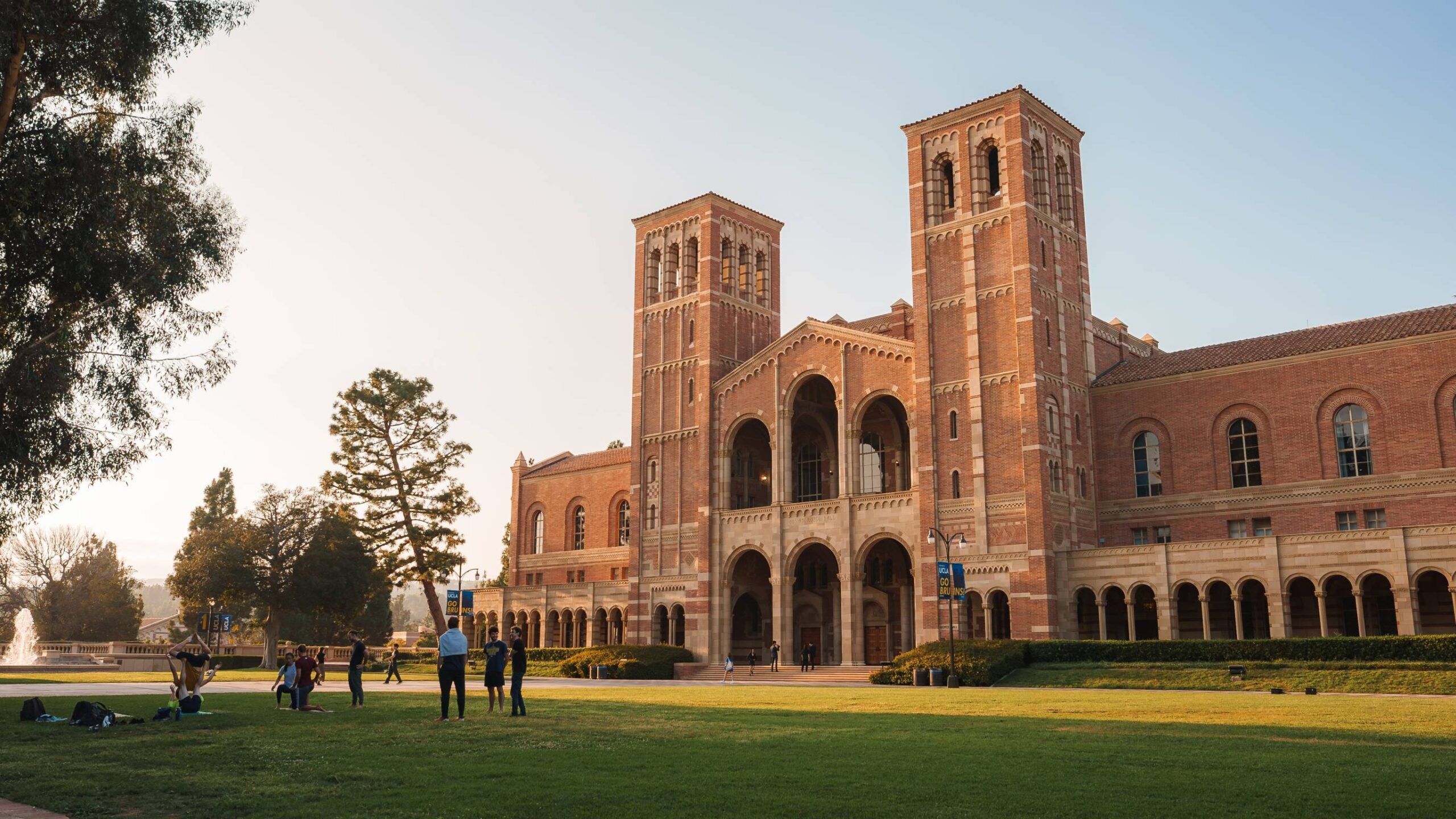
    In October 2009, Katherine Rosen was a third-year pre-med student at UCLA, one of America’s leading public universities. She was attending a routine chemistry class – an ordinary academic setting – when another student, Damon Thompson, approached her from behind and stabbed her in the neck and chest with a kitchen knife. He nearly killed her.

    It was sudden. It was unprovoked. But it was not unexpected.

    Thompson had a long, documented history of paranoid delusions. University psychiatrists had diagnosed him with schizophrenia and major depressive disorder. He reported hearing voices and believed classmates were plotting against him.

    He had been expelled from university housing after multiple altercations. He told staff he was thinking about hurting others. He had specifically named Katherine in a complaint – claiming she had called him “stupid” during lab work.

    Staff knew. Multiple professionals were aware of his condition – and the risks he posed. Just one day before the attack, he was discussed at a campus risk assessment meeting. And yet – no action was taken. No warning was issued, no protection was offered, and no safeguarding plan was put in place.

    Katherine was left completely unaware. Because the university chose to do nothing.

    The legal battle

    After surviving the attack, Katherine took an action that would shape the future of student safety law in the United States – she sued her university.

    Her claim was simple but profound. UCLA, she argued, had a special relationship with her as a student. That relationship – based on enrolment, proximity, institutional control, and expectation of care – created a legal duty to protect her from foreseeable harm. And that duty, she said, had been breached.

    She wasn’t demanding perfection or suggesting universities could prevent every imaginable harm. She asked a basic question – if a student has been clearly identified as a threat, and the university knows it, doesn’t it have a legal responsibility to act before someone gets seriously hurt – or killed?

    UCLA’s response? No. The university claimed it had no legal duty to protect adult students from the criminal acts of others – even when it was aware of a risk. This wasn’t their responsibility, they said. Universities weren’t guardians, and students weren’t children. No duty, no breach, no liability.

    Their argument rested on a key principle of common law, shared by both the US and UK – that legal duties of care only arise in specific, established situations. Traditionally, adult-to-adult relationships – like those between a university and its students – did not automatically create such duties. Courts are cautious – they don’t want to impose sweeping responsibilities on institutions that may be unreasonable or unmanageable. But that argument ignores a crucial reality – the power imbalance, the structure, and the unique environment of university life.

    The judgment

    Katherine’s case wound its way through the California courts for almost ten years. At every level, the same question remained – does a university owe a duty of care to its students in classroom settings, especially when it is aware of a specific risk?

    Finally, in 2018, the California Supreme Court delivered a landmark ruling in her favour.

    The Court held – by a clear majority – that yes, universities do owe such a duty. Not universally, not in every context – but during curricular activities, and particularly when risks are foreseeable, they must take reasonable protective measures.

    The judgment clarified that a “special relationship” exists between universities and their students, based on the student’s dependence on the university for a “safe environment.” That relationship created not just moral expectations but legal ones.

    In the Court’s own words:

    Phrased at the appropriate level of generality, then, the question here is not whether UCLA could predict that Damon Thompson would stab Katherine Rosen in the chemistry lab. It is whether a reasonable university could foresee that its negligent failure to control a potentially violent student, or to warn students who were foreseeable targets of his ire, could result in harm to one of those students.

    That emphasis on warning mattered. The Court was clear that the duty it recognised did not demand extraordinary measures or perfect foresight. The minimum reasonable step UCLA could have taken — and failed to take — was to warn Katherine or put in place basic protective actions once staff knew she was a potential target. It was this failure at the most elementary level of safeguarding that brought the duty sharply into focus.

    And again:

    Colleges [universities] provide academic courses in exchange for a fee, but a college is far more to its students than a business. Residential colleges provide living spaces, but they are more than mere landlords. Along with educational services, colleges provide students social, athletic, and cultural opportunities. Regardless of the campus layout, colleges provide a discrete community for their students. For many students, college is the first time they have lived away from home. Although college students may no longer be minors under the law, they may still be learning how to navigate the world as adults. They are dependent on their college communities to provide structure, guidance, and a safe learning environment.

    This ruling was a seismic moment. It wasn’t just about Katherine – it was about thousands of other students, across hundreds of other classrooms, who could now expect, not merely hope, that their university would act when danger loomed.

    The precedent was narrow but profound

    This victory came at a cost. It took nearly a decade of litigation, immense emotional strength, and personal resilience. And even in success, the ruling was carefully limited in scope:

    … that universities owe a duty to protect students from foreseeable violence during curricular activities.

    The duty applied only to harm that was:

    • Foreseeable,
    • Tied to curricular activities, and
    • Within the university’s ability to prevent.

    It did not impose a sweeping obligation on universities to protect students in all circumstances – nor should it. But it decisively rejected the idea that universities have no duty to protect.

    This distinction – between the impossible and the reasonable – is crucial. The court did not ask universities to do the impossible. It simply expected them to act reasonably when aware of a real and specific risk to student safety. That principle sets a clear floor, not an unreachable ceiling, for institutional responsibility.

    It also highlights a broader truth – duty of care in higher education is not a binary. It is not all or nothing. A range of duties may arise depending on the setting – academic, residential, or social – or the nature of the risk. The more control a university exercises, and the more vulnerable the student, the greater the duty it may owe.

    This is not about creating impossible expectations – it is about recognising that responsibility must follow power.

    That same logic – and the emerging recognition of limited but enforceable duties – has begun to surface in UK courts. In Feder and McCamish v The Royal Welsh College of Music and Drama, a County Court held that higher education institutions have a duty of care to carry out reasonable investigations when they receive allegations of sexual assault:

    …by taking reasonable protective, supportive, investigatory and, when appropriate, disciplinary steps and in associated communications.

    Again, where institutions have knowledge and control, the law expects a proportionate response.

    But it is important to recognise just how narrow the duty was in Feder & McCamish. The College already had safeguarding procedures in place, and liability arose only because it failed to follow the process it had voluntarily adopted when students reported serious sexual assault.

    The court did not recognise any general duty to protect student welfare – it simply enforced the College’s own promises. It illustrates the limits of UK law – duties arise only in piecemeal, procedural ways, leaving large gaps in protection whenever an institution has not explicitly committed itself to a particular process, or chooses not to follow it.

    Why this story matters now

    The Rosen judgment exposes a truth that too many still miss. Duty of care in higher education is not about expanding counselling teams or implementing wellbeing charters. It’s about the structure of responsibility itself – who knows what, who can act, and who must act when risk is foreseeable.

    In Katherine Rosen’s case, mental health support for Damon Thompson already existed. What failed was the system around him – communication, coordination, and the willingness to protect others. The danger was known, the mechanisms to prevent it were available, and the decision to use them was not taken.

    That is why framing “duty of care” as a question of mental health provision misses the point. Whether the risk is psychological, physical, financial, or reputational, the same principle applies – when institutions hold both knowledge and control, they owe a duty to act with care.

    From assaults in halls to exploitation on placements, from harassment ignored to risks left unmonitored, the duty of care spans far more than mental health. It is about foreseeable harm in any form. It is about accountability that matches authority. It is about creating a culture in which doing nothing or ignoring what you know is no longer an option.

    As Parliament prepares to debate the issue once again, the Rosen case stands as a reminder that this conversation cannot stop at wellbeing. The question is not whether universities should care about students’ mental health – of course they should. The question is whether they will take responsibility for the predictable consequences of their own systems, structures, and decisions.

    Katherine Rosen’s survival – and her long legal struggle – gave the world a clearer definition of that responsibility. It showed that duty of care is not about offering sympathy after the fact, but about preventing foreseeable harm before it happens. That is the real meaning of duty of care in higher education – and it is the clarity the UK still urgently lacks.

    Source link

  • Podcast: Quality reforms, duty of candour, skills

    Podcast: Quality reforms, duty of candour, skills

    This week on the podcast we examine the Office for Students’ proposed overhaul of England’s quality system, as radical reforms seek to integrate the Teaching Excellence Framework with minimum standards and give TEF some serious teeth.

    Plus we discuss the government’s long-awaited “Hillsborough law” as the Public Office (Accountability) Bill imposes new duties of candour on universities, and examine the machinery of government changes that have seen apprenticeships policy and Skills England transferred from the Department for Education to Pat McFadden’s expanded Department for Work and Pensions.

    With Andrea Turley, Partner at KPMG, Shane Chowen, Editor at FE Week, Debbie McVitty, Editor at Wonkhe and presented by Jim Dickinson, Associate Editor at Wonkhe.

    TEF6: the incredible machine takes over quality assurance regulation

    Reputation versus sunlight – universities and the new duty of candour

    What Ofsted inspections reveal about university leadership and culture

    A machinery of government muddle over skills

    The former student leaders entering Parliament

    You can subscribe to the podcast on Acast, Amazon Music, Apple Podcasts, Spotify, Deezer, RadioPublic, Podchaser, Castbox, Player FM, Stitcher, TuneIn, Luminary or via your favourite app with the RSS feed.

    Source link

  • Reputation versus sunlight – universities and the new Duty of Candour

    Reputation versus sunlight – universities and the new Duty of Candour

    The idea of a “Hillsborough Law” has been in circulation for years.

    Campaigners – led by families of those who died at at Hillsborough Stadium in 1989, and joined more recently by those bereaved by Grenfell, Covid, and the death of headteacher Ruth Perry – have long argued that public authorities must be placed under a clear, statutory duty to tell the truth.

    Manchester Mayor (and emergent Labour leadership hopeful) Andy Burnham first introduced a Private Members’ Bill in 2017, but it fell with the general election.

    Labour then adopted the idea as policy in 2022, and after years of pressure – including a personal promise from Keir Starmer in the run-up to the 2024 election – the King’s Speech in July 2024 confirmed it would be brought forward.

    A year later, ministers missed the April anniversary deadline – triggering frustration from campaigners and months of rumour about officials attempting to water down the Bill – before finally introducing the Bill to Parliament now under the stewardship of new Justice Secretary David Lammy.

    To campaigners’ relief, this is not just symbolic legislation – it’s about correcting a deep structural imbalance, and very much connects to what little there is in Starmer’s vision – the idea and ideals of public service and a public realm “on the side of truth and justice”.

    For decades, bereaved families navigating inquests have faced publicly funded barristers representing the police, the NHS, local councils, or universities – while they themselves have been forced to crowdfund. They have seen evidence lost, withheld, or destroyed, and have encountered institutions that default to defensive strategies – preferring to protect their reputation than face accountability.

    The Public Office (Accountability) Bill (along with its explanatory notes and multiple impact assessments) – colloquially known as the Hillsborough Law – attempts to change that dynamic. It is about “candour”, legal aid, and cultural reform. And although the national debate has focused on disasters and policing, the legislation will very much apply to universities.

    What the Bill does

    At its core, the Bill does two things. First, it imposes a statutory duty of candour on public authorities and officials. That means a proactive obligation to be frank, open, and transparent when dealing with inquiries, investigations, and inquests. In some cases, it criminalises obstruction, dishonesty, and selective disclosure.

    Second, it guarantees non-means-tested legal aid for bereaved families involved in inquests and inquiries where public authorities are represented. That ends the unjust asymmetry of families crowdfunding – while the state and its arms funds lawyers to defend itself.

    Alongside this, the Bill codifies a replacement for the common law offence of misconduct in public office, creates new statutory misconduct offences, and requires public authorities to adopt and publish their own codes of ethical conduct embedding candour and the Nolan principles.

    The schedules name government departments, police forces, NHS bodies, schools, and further education corporations. But it also applies to any body carrying out “functions of a public nature” – a familiar phrase from the Human Rights Act and the Freedom of Information Act. Universities are covered.

    Pre-1992 universities were founded by Royal Charter or statute, and their governing bodies often include members approved by ministers or the Crown. Post-1992 universities are higher education corporations created by the 1992 Act. They fit easily within the test. Whether private providers, where they are registered with the Office for Students (OfS) and teach (quasi-)publicly funded students, will be caught under the “functions of a public nature” clause.

    For universities and their staff, this ought to be a profound change to the way they respond to tragedy, handle complaints, and manage their obligations to students and the public.

    Candour in inquiries and inquests

    In Part 2, Chapter 1, the Bill sets out the statutory duty of candour in relation to formal, statutory inquiries, investigations, and inquests.

    The duty is not passive – it requires public authorities to notify an inquiry if they hold relevant material, preserve records, provide assistance, and correct errors or omissions. Institutions can’t wait until a chair or coroner demands disclosure – they have to surface relevant material themselves.

    A new mechanism – a compliance direction – then strengthens the framework. Chairs of inquiries and coroners can issue formal directions requiring disclosure, written statements, clarifications, or corrections. These are binding. If an authority, or the official responsible for compliance, ignores, delays, or obstructs such directions, it becomes a criminal offence if done deliberately or recklessly.

    For universities, the most direct likely application will likely be to coroners’ inquests into student deaths. If, for example, a university was aware that it held key documents about a student’s support plan, assessment records, or internal communications, the duty would compel it to notify the coroner and disclose them proactively. The current norm – where families must ask precise questions and often guess at what exists – would be replaced by a statutory expectation of candour.

    If, as another example, a coroner designated a university as an interested person, a compliance direction could require a formal position statement explaining its role, structured disclosure of documents, and timely corrections if errors emerged. Senior officers will be personally responsible for compliance.

    And if relevant staff had first-hand knowledge of a critical incident – say, supervising an assessment where a student’s distress became acute – they could not quietly stay in the background. The university would be under pressure to identify and disclose their evidence candidly.

    The Bill also extends legal aid. Families would be guaranteed representation in any inquest where a public authority is an interested person. That means if, for example, a university and an NHS trust were both in scope, the family would not have to crowdfund tens of thousands of pounds to achieve parity of arms.

    At present, coroners have wide powers, but families often lack the leverage to ensure they are exercised fully. Coroners have to answer the four statutory questions – who, where, when, how – and they often interpret “how” narrowly. Families often push for broader scope, but institutions can resist. A statutory duty of candour would not change the coroner’s legal remit, but it should alter the behaviour of institutions within that remit. Selective disclosure, defensive positioning, and late document dumps would become high-risk strategies.

    It’s also notable that the Bill places the duty personally on those in charge of public authorities. In the university context, that means senior leadership cannot outsource disclosure entirely to lawyers or middle managers. Accountability flows up to the governing body and vice chancellor.

    And coroners’ Prevention of Future Deaths reports (PFDs) matter too. With fuller disclosure under candour, coroners are more likely to identify systemic failings in universities and recommend changes. While coroners cannot assign civil liability, their reports can shape policy and practice across the sector.

    Crucially, the Bill specifically recognises the problem of “information asymmetry.” Families can’t know what to ask for if they do not know what exists. By flipping the responsibility – making universities proactively disclose rather than forcing families to drag material into the open – the duty addresses that asymmetry head-on.

    The scope of this bit of the Bill is wide, but not limitless. It clearly applies to coroners’ inquests, Fatal Accident Inquiries in Scotland, and statutory public inquiries under the 2005 Act. It also extends to non-statutory inquiries set up by ministers, and there is a power for the Secretary of State (or devolved governments) to designate other investigations by regulation.

    But it does not automatically capture every process that universities are familiar with – complaints investigated by the OIA in England and Wales, regulatory investigations by OfS, Medr or the SFC, professional regulator fitness to practise panels, or independent reviews commissioned internally are all outside its scope as drafted.

    In those arenas, candour would only bite through the separate Chapter 2 duty to adopt and apply an ethical code (see below), rather than through the compliance-direction machinery of Chapter 1. But for those types of iniquity and investigation explicitly covered, it means candour is no longer optional or reputational – it is statutory, enforceable, and personal.

    Candour in day-to-day conduct

    If Part 2, Chapter 1 is about how institutions behave in high-profile inquiries, Chapter 2 is about how they behave every day. The Bill as drafted would require every public authority to adopt and publish a code of ethical conduct. In that Code, universities will be required to:

    • articulate the Nolan principles (selflessness, integrity, objectivity, accountability, openness, honesty, leadership);
    • define a duty of candour for the authority’s context;
    • explain consequences for breaches, including disciplinary and professional sanctions;
    • set out whistleblowing and complaint routes for staff and the public;
    • be public, regularly reviewed, and supported by training.

    For universities, this will mean embedding candour into teaching, research, administration, and student support.

    There are all sorts of potential implications. Consider complaints handling – at present, plenty of universities instruct lawyers at an early stage to assess litigation risk. For complainants, that shifts the emphasis to protecting the institution rather than resolving the complaint candidly. A student might receive partial explanations, documents only when pressed, or carefully worded responses that obscure institutional failings.

    If the idea is that the Code required under Chapter 2 incorporates and translates the principles reflected in Chapter 1, that approach to complaints would be unacceptable. The code should require:

    • proactive disclosure of relevant information during a complaint;
    • corrections when errors are identified;
    • clear explanations of decisions, not just outcomes;
    • openness even where disclosure is uncomfortable.
    • and a failure to act candidly could itself be misconduct, separate from the original complaint.

    For staff, the implications are significant. An academic accused of discrimination could no longer rely on the institution minimising disclosure to reduce liability. If records show concerns were raised earlier, candour might require acknowledging that, not burying it. Someone processing appeals could not quietly omit inconvenient information from a report.

    It raises staff-side concerns. The NHS experience shows frontline workers often feel candour exposes them personally, while leadership remains insulated. In universities, staff already operate under high pressure – REF, TEF, student satisfaction surveys, and reputational risk all loom large.

    A candour duty could feel like additional personal exposure – unless universities design their codes carefully, the burden may fall disproportionately on individual staff rather than leadership.

    And the implications extend beyond complaints. In admissions, candour could mean being frank with applicants about course viability or resource constraints. In research, it could mean full disclosure of conflicts of interest. In governance, it could mean sharing risk assessments with staff and students rather than keeping them confidential.

    The duty also requires universities to build internal systems – staff will have to be trained to understand candour, managers will be required to reinforce it, and whistleblowing protections will have to be clear. And codes will need to specify sanctions for breaches – shifting candour from an abstract principle to a live HR and governance issue. If the Higher Education (Freedom of Speech) Act offers staff protection for saying things out loud, at least in theory the Public Office (Accountability) Bill will require universities to require staff to say (some) things out loud.

    Legal context

    There are still limits. The Bill is explicit that candour doesn’t override other legal restrictions – data protection, privilege, and statutory exemptions still apply. A university can’t disclose student medical records without consent, nor breach confidentiality agreements lawfully in place. But the default flips – the presumption is disclosure unless legally barred, not concealment unless forced.

    That will all interact directly with stuff like Equality Act duties and consumer protection law. Universities might resist admissions in complaints because acknowledging discrimination or misleading marketing creates liability. Under Chapter 2, the risk is reversed – concealing those admissions would itself be a statutory breach. The Digital Markets, Competition and Consumers Act 2024 and CMA guidance already push towards transparency in student marketing. A candour duty would add a new, statutory dimension.

    In practical terms, universities will need to rewrite policies, retrain staff, and rethink how they interact with students. Complaints offices, HR teams, and legal advisers will all have to internalise the new default of candour. The reputational instinct to minimise admissions of fault will be directly challenged by statutory obligation.

    In theory, as liability risk increases, so should trust. Universities are often criticised for opacity, defensiveness, and spin – a statutory candour duty offers a chance to change that culture. Students making complaints would be entitled not just to process fairness but to institutional honesty, and staff accused of misconduct would know that concealment or minimisation would itself be a breach. Governing bodies would have to lead by example, publishing codes and demonstrating compliance.

    Regulators and adjudicators

    Of course if candour becomes law, regulators and adjudicators will need to respond. As it stands, no specific regulator is identified for monitoring compliance with the “devolved” duty under Chapter 2 – that may get added as the Bill progresses, but even if it doesn’t, the interactions with other areas of regulation make it wise for there to be change.

    In England and Wales, the Office of the Independent Adjudicator (OIA) already reviews individual complaints and publishes a Good Practice Framework. It emphasises fairness, transparency, and clarity, but not candour as a statutory duty per se.

    Once Chapter 2 is in force, the OIA would likely need to update its framework to reference candour explicitly. It would then be able to hold universities to account not just against good practice, but against a legal standard – did the university act candidly in its handling of this complaint?

    The Office for Students (OfS) then has wider systemic oversight. The regulatory framework includes Condition E2 on management and governance, and requires compliance with Public Interest Governance Principles. These do currently cover accountability and academic freedom – but not candour. If universities are under a statutory candour duty, OfS will almost certainly need to amend the PIGPs or issue guidance to reflect it.

    How this all sits with other existing regimes like the Freedom of Information Act (FOIA) will be another big question. FOIA already imposes transparency duties, but universities often take a restrictive approach, especially private providers not designated as public authorities under FOIA. The candour duty would run in parallel – requiring disclosure in complaints and inquests even where FOIA might not apply.

    Other sections of the Bill

    While most attention has focused on the duty of candour and the reforms to inquests, the Bill also contains other important provisions that will reshape the accountability of public authorities.

    Part 1 of the Bill tackles the long-running debate around misconduct in public office. The common law offence – dating back centuries – has long been criticised as vague, inconsistently applied, and overly reliant on judicial interpretation.

    The Bill abolishes the common law offence and replaces it with a new statutory framework, creating clear offences for serious misconduct by public officials, defining more precisely what counts as abuse of position or wilful neglect of duty. For universities, where senior leaders or governors are increasingly seen as “public officials” when exercising functions of a public nature, this should provide sharper statutory clarity on when misconduct could cross from an HR or governance issue into criminal liability.

    The Bill also addresses investigations and inquiries more broadly. It enhances powers for inquiry chairs and coroners not just to compel evidence, but to ensure compliance is timely and truthful. The creation of compliance directions backed by criminal sanction sits here, but the wider context is about rebalancing relationships.

    Families and victims have long argued that inquiries too often become adversarial battles against obfuscating institutions. As the Bill shifts legal duties onto the institutions themselves, it tries to realign incentives so truth-seeking, not reputation-protection, dominates. And Part 2 expects those principles to be reflected inside universities too.

    Another significant element is the reform of legal aid at inquests. For the first time, non-means-tested legal aid will be automatically available for bereaved families whenever a public authority is represented at an inquest. This is not just a financial change – it’s another attempt to end the asymmetry that has often characterised high-profile inquests. For universities, it should mean that whenever they are an interested person, families will now face them on an equal legal footing.

    The Bill also contains provisions on whistleblowing and reporting duties – where staff often feel trapped between loyalty to the institution and responsibility to students or the public. Public authorities will have to create clear internal mechanisms to support those who raise concerns, and codes of conduct will have to integrate protections and processes for staff who disclose wrongdoing.

    Taken together, these other sections of the Bill flesh out the candour framework, create sharper criminal liability for misconduct, and give families, the public and/or students and staff stronger levers for truth and accountability.

    Territorial application

    The Bill extends to England and Wales, with many provisions applying directly to public authorities operating there. Scotland and Northern Ireland have their own legal systems and inquest regimes, so the Bill’s application is more limited. But universities across the UK will need to pay attention.

    In Scotland, there is no coroner system, but Fatal Accident Inquiries serve a similar role. While the Bill itself does not apply wholesale, the Scottish Government and the Scottish Funding Council are likely to face pressure to adopt parallel reforms – particularly on candour and legal aid – to avoid a two-tier approach for bereaved families.

    In Wales, higher education is now regulated under the Tertiary Education and Research (Wales) Act 2022, with the new Commission for Tertiary Education and Research (CTER) taking over regulatory functions. Although the Bill applies to Wales, CTER will need to consider how candour duties interact with its quality and governance oversight.

    And in Northern Ireland, inquests operate differently again, and universities there are few in number. The territorial extent of the Bill is narrower, but questions will inevitably arise about parity of rights for families and students.

    For providers operating across borders – particularly cross-UK institutions or partnerships – the patchwork will be complex. Consistency will matter, and regulators in devolved nations might usefully align their governance principles and duties to ensure students and families are not disadvantaged by geography.

    Culture change

    Of course, policy is one thing – culture is another. The NHS has had its own statutory duty of candour for a decade, requiring openness with patients when things go wrong. But implementation has been patchy – studies and reviews have found variability, defensiveness, and resistance. In practice, candour clearly depends not just on statutory text but on leadership, training, and incentives.

    The same will be true in higher education. Universities are complex, professionalised, and reputationally sensitive – candour is simply not their default culture. Embedding it will require governing bodies and senior staff to model openness, leaders to embrace uncomfortable truths, and lawyers to reframe their advice.

    The risk is that candour becomes yet another procedural box-tick – a paragraph in a code, a slide in induction training – while the real behaviours remain defensive. The opportunity is for universities to embrace candour as a chance to rebuild trust with students, staff, and the public.

    A particularly thorny question is how the Bill will apply to the growing number of private higher education providers. A brief glance at WhatDoTheyKnow suggests that they routinely refuse Freedom of Information requests on the basis that they are not designated as public authorities under FOIA, despite (in England) often being registered with the Office for Students and enrolling thousands of publicly funded students.

    On the face of the Bill, they would only fall within scope of the candour duty where they are performing “functions of a public nature” – a phrase that has generated years of litigation under the Human Rights Act and remains contestable.

    That creates a risk of a two-tier candour regime in higher education – so one way to resolve it would be for OfS to hardwire candour into its Public Interest Governance Principles, explicitly requiring all registered providers – public and private – to adopt candour codes and to respond to FOI requests as a condition of registration (especially if registration does eventually end up covering franchised-to providers not on the OfS register).

    That would extend the protections in practice, ensuring that students and families do not see their access to information and honesty diluted simply because their provider is incorporated as a private company. Similar steps could be taken by the Scottish Funding Council and Medr in Wales, embedding candour and transparency as regulatory expectations across the UK.

    Oh – and the position of partners and contractors is also significant, and may need exploration as the Bill progresses. Under Chapter 1, some may be caught directly where they are exercising functions of a public nature or hold relevant health and safety responsibilities – for example, halls providers, outsourced counselling services, or teaching partners.

    And even where they are not formally within scope, the spirit of the Bill makes clear that universities cannot sidestep candour by outsourcing – they will effectively be expected to build equivalent obligations into contracts, ensuring that candour duties flow through to partners so that evidence and disclosure gaps do not open up when multiple organisations are involved.

    A different kind of leadership

    The coverage might not point directly at universities – but the Hillsborough Law is not just about disasters, policing, or health. It is about the way the state – and those who exercise public functions – treat people when things go wrong.

    For universities, inquests into student deaths should be different – candour will be mandatory, legal aid automatic, and compliance enforceable. Day-to-day complaints handling should be reshaped – defensive, lawyer-led strategies will sit uneasily alongside statutory candour codes. Regulators and adjudicators should respond, updating frameworks and guidance.

    But as I say, just as the OIA’s “Bias and the perception of bias” expectations haven’t automatically made complaints handling any less… biased, legislation of this sort alone will not fix culture. The challenge for leaders will be to embed candour not just in codes and conditions, but in the behaviours of academics, professional services staff, their partners, and themselves.

    In an ideal world, universities would embrace transparency organically, driven by their educational mission rather than legal compulsion. The best learning happens when trust and openness prevail, not when compliance regimes loom.

    But not only have academic careers forever been about reputation, universities have evolved into large, corporatised institutions with competing pressures – league tables, reputational risk, financial sustainability. In this environment, in the teeth of a crisis or complaint, the truth is that abstract appeals to academic values often lose out to immediate institutional interests.

    Rather than hoping for cultural transformation, the Hillsborough Law reshapes incentives. When concealment becomes legally riskier than disclosure, and when defensive strategies carry criminal liability, candour becomes not just morally right but institutionally smart.

    For students, families, and staff facing institutional defensiveness at vulnerable moments, legal leverage may be the only way to level the playing field. Too many public authorities have failed to redefine reputation to mean trustworthiness rather than unblemished image – now the law will redefine it for them.

    That will mean shifting from reputation management to truth telling, from legal defensiveness to openness, and from institutional self-interest to public accountability. In a sector so dominated by the powerful incentives of reputation, that will be no simple task – but it will be a vital one.

    Source link

  • Universities are not border agents – but they do have a duty

    Universities are not border agents – but they do have a duty

    As summer draws to a close, the UK finds itself in the grip of growing public frustration over the slow processing of asylum claims and the perceived misuse of the student visa system. With over 111,000 asylum applications recorded in the year to June 2025 – the highest number ever recorded in the UK – the pressure is growing on the UK government, local councils and public services to reduce both processing times and the cost of housing asylum seekers.

    Currently, the UK is facing a backlog of more than 106,000 asylum cases, including 51,0000 appeals, with average wait times stretching to 53 weeks. The use of hotels to accommodate asylum seekers – originally a temporary measure introduced by the last government – has become a flashpoint for anti-migrant protests nationwide.

    Spotlight on international education

    As the asylum debate intensifies, UK universities are increasingly being drawn into the spotlight. This is largely due to recent Home Office data revealing that 16,000 student visa holders claimed asylum in 2024 – more than any other visa category. Nearly 40% of these individuals had entered the UK legally from countries including Pakistan, Nigeria and Sri Lanka.

    These figures have already prompted the government to introduce a new wave of visa reforms in its Immigration White Paper, including reducing the post-study work entitlement from two years to 18 months and imposing sanctions on universities with high rates of post-study asylum claims. From September 2025, UK universities may face fines, public naming or even temporary bans on international student recruitment if they fail to meet new compliance standards.

    The risk of reputational fallout

    For universities already navigating considerable financial pressures, the implications of these restrictions could be severe. Just one year’s intake of international students contribute almost £42 billion annually to the UK economy and represent a vital segment of enrolments across the sector. The growing association between universities and fraudulent asylum claims nevertheless risks undermining public trust and casting doubt on the integrity of university admissions processes.

    This reputational risk also extends beyond domestic borders. If the UK is perceived globally as hostile or unpredictable in its treatment of international students, competitor destinations such as Canada, Australia and New Zealand may stand to gain from the UK’s inability to get its house in order and bring its asylum system under control. Moreover, the Graduate Route, once a cornerstone of the UK’s appeal to global talent, remains under constant threat of review, further fuelling uncertainty among prospective applicants.

    Lessons for the academic year ahead

    So, what should UK universities do in response to growing concerns about illegal immigration? First, universities must strengthen their admissions oversight. Higher education institutions must ensure robust financial and academic checks, particularly for applicants from high-risk regions, and be transparent about any shortcomings and plans for improvement to maintain government goodwill and reassure the public.

    Second, universities must continue to support vulnerable students wherever in the world they may come from. Not all asylum claims are opportunistic. With the world around us changing apace, some students face genuine threats to their lives from political upheaval, persecution or conflict. This means universities should be prepared to offer legal guidance and pastoral support to those at risk and add legitimacy to the asylum claims of those in genuine danger.

    Third, universities need to speak with a unified voice and collectively defend the value of international education. This includes countering populist narratives about fraudulent asylum claims and backdoor immigration with evidence-based accounts of how international students contribute to the economy, innovation and a flourishing society.

    Finally, universities should be prepared to step up and engage with their local communities. The distinction between economic migrants, asylum seekers and international students is sadly all-too-often blurred in public discourse and populist rhetoric. Yet, with their strong and vibrant international communities, universities can help clarify these differences and highlight the positive contributions of their international students and staff, including through stories of civic engagement, volunteering and career successes.

    Compliance calls

    With no quick fixes to the asylum system in sight and public protests continuing as we head into the autumn, UK universities must not allow fear and frustration to erode the foundations of international education. While universities are not border agents, they do have a duty to comply with the systems that enable them to remain places of learning, inclusion and opportunity for people from across the world.

    As we enter a new academic year, the challenge is therefore clear: UK universities must find ways to balance compassion with control, ensuring that future international admissions processes meet the expectations of both government and the society they serve.

    Source link

  • There’s nothing certain about the circumstances when a duty of care applies to students

    There’s nothing certain about the circumstances when a duty of care applies to students

    The Secretary of State for Education was recently asked in Parliament if she would meet with campaigners to discuss the “duty of care” owed by higher education providers to their students.

    Janet Daby – the Minister for Children, Families and Wellbeing in the Department for Education (DfE) responded on her behalf, and also outlined the department’s current view on the law for holding negligent institutions to account.

    At first glance, her response was unhelpful – arguing the department’s position is that a duty of care in higher education may arise in “certain circumstances”:

    Such circumstances would be a matter for the courts to decide, based on the specific facts and context of the case being considered, and will be dependent on the application by a court of accepted common law principles.

    It would be easy to argue that lawmakers, including Janet Daby and skills minister Jacqui Smith, should not simply defer to the courts on matters of law and institutional accountability.

    After all, lawmakers have the power to create laws – so overall responsibility doesn’t rest solely with judges and their judicial interpretation of common law principles.

    But perhaps Daby’s response was more helpful than it looked – because it directly confronts misleading statements that have persisted since 2023, particularly those made by former Minister Robert Halfon.

    Although some might view her answer as a cautious response, in reality, it was a breath of fresh air – a much-need step in addressing the confusion that has clouded our understanding of legal responsibilities in higher education.

    From Halfon’s Law to Daby’s Law

    To grasp the significance of Janet Daby’s correction, we must first revisit the origins of the confusion – what I’ll call here Halfon’s Law.

    Introduced by Robert Halfon in 2023, it laid the foundation for a misrepresentation of the legal duties owed by higher education providers to their students. Halfon’s Law is a belief that stemmed from a misunderstanding of online material, initially presented in a now-deleted AMOSSHE blog that was published in 2015.

    In responding to the 128,000+ registered voters who signed our parliamentary e-petition calling for a statutory duty of care, Halfon asserted his department’s belief that universities already owed their students a broad and generalised duty of care. He said:

    Higher Education providers do have a general duty of care to deliver educational and pastoral services to the standard of an ordinarily competent institution and, in carrying out these services, they are expected to act reasonably to protect the health, safety and welfare of their students. This can be summed up as providers owing a duty of care to not cause harm to their students through the university’s own actions.

    At first glance, this might sound reasonable, but in truth, it was far from accurate. By conflating a general moral and legal principle – to act in a way that avoids causing harm to others – with a formal, court recognised duty of care that only arises in specific, legally-defined circumstances and relationships, Halfon introduced a dangerous oversimplification.

    It was a distortion used to justify dismissing the petitioners’ call for a statutory duty of care, effectively silencing important conversations about the protections that students need.

    Halfon’s Law, with the documented source having now been quietly removed from its original website, was a misstep in understanding the complexities of legal responsibilities in higher education. Its fall from grace is something to be celebrated.

    Enter Daby’s Law: Janet Daby’s response marks a shift towards legal clarity. A duty of care may arise in certain specific circumstances, but ultimately, it is the courts that will determine the existence and application of any such duty on a limited case-by-case basis – should lengthy and costly litigation ever actually occur.

    As it stands therefore, nobody truly knows what protections are in place, leaving students vulnerable, and institutions at risk of being punished for failing to do the right thing. As such, Daby’s position not only corrects the errors of Halfon’s Law, but also raises significant concerns, including the urgent need for a properly codified duty that both universities and their students can understand.

    The advocacy that led to Daby’s law

    Daby’s correction of the record didn’t happen by chance. It was the direct result of relentless behind-the-scenes efforts from advocates, especially ForThe100, who recognised the need to dismantle Halfon’s contention? – since it was a significant barrier preventing meaningful progress.

    For too long, Halfon’s Law and its sweeping and factually incorrect statements had clouded the conversation around student safety and wellbeing, effectively stopping us from moving forward and pushing for the protections students desperately need. Too many policymakers thought it true – and so dismissed the need for a dedicated duty.

    The subtle shift in content and tone, while preferable to outright inaccuracy, introduces its own set of challenges. Without clear or codified guidance, students, families, and institutions are left to navigate a murky and uncertain legal landscape.

    That vagueness is deeply problematic. It means widespread confusion about rights and responsibilities, leaving institutions uncertain of their obligation, and exposed to unforeseen legal liabilities – while students are left unsure of the protections they can depend on.

    Worse, the lack of clear, direct, and upfront standards is a reactive rather than proactive system, shifting the burden onto individuals to seek legal recourse only after harm has occurred.

    This approach neither prioritises prevention nor ensures accountability, leaving gaps in a system meant to put students first.

    It is now crucial that the government corrects the public response to our petition without delay. Halfon’s Law remains embedded in the official narrative, and its continued presence in government communications perpetuates confusion, and blocks meaningful progress.

    More importantly, for over five decades, students have been without adequate legal protection, and this gap continues to undermine their safety and wellbeing.

    Nobody should be reassured by a duty that arises in “certain circumstances” where those circumstances would be a matter for “the courts to decide”. Students and universities need instead to know where they stand – with the same sort of clarity on offer for the duty of care that universities as employers owe to their staff.

    The next step is for the government to act – taking concrete steps toward enacting statutory reform that holds higher education institutions accountable for their acts and omissions with regard to student safety and wellbeing, and giving students and their families the confidence that when they enrol into a university, they know the minimum “duty of care” that they can actually expect.

    Source link

  • The courts are slowly clarifying universities’ duty of care

    The courts are slowly clarifying universities’ duty of care

    Imagine you’re a student, a member of staff, a parent or even an MP trying to work out what type, level or nature of “duty of care” is owed by a university to students.

    The other day Janet Daby, whose day job is Minister for Children, Families and Wellbeing but who also moonlights as a kind of spokesperson for HE given that Jacqui Smith is in the Lords, was asked about duty of care.

    Her answer was as follows:

    The department’s position is that a duty of care in HE may arise in certain circumstances. Such circumstances would be a matter for the courts to decide, based on the specific facts and context of the case being considered, and will be dependent on the application by a court of accepted common law principles.

    That’s unhelpful enough – but the courts don’t seem to be very clear either. Of relevance down this rabbit hole, there’s a fairly lurid bit of press coverage doing the rounds on a case involving a law student at Cambridge who has sued the university for its refusal to award him a PhD.

    The Mail, with its usual insinuative air quotes, runs the headline as follows:

    Cambridge law student sues university after he failed his PhD, claiming it held up his career as a barrister because he was “less able” to write a thesis.

    The case itself is interesting because of the way in which the judge in a recent appeal has differentiated between different bits of law that are supposed to protect students.

    And in a context of disabled students routinely reporting problems with the way in which reasonable adjustments are delivered, there could be significant implications, depending on what happens next, for practice in the future.

    Background

    Jacob Meagher is a disabled PhD student at Cambridge who alleges that he was not provided with an adequate supervisor or advisor, and was denied certain scholarships – acts which he claims were acts of victimisation.

    He previously brought a claim against the university on those issues in 2017, and reached a settlement in 2019 which involved him restarting his PhD. But he alleges he was subjected to a number of detriments after the settlement – crucially, that in connection with his PhD examination, the university was aware of the adjustments he needed to avoid a disadvantage because of his disability, but failed to provide them.

    That’s partly because they had been recommended by the university’s Accessibility and Disability Resource Centre (ADRC) in a plan, but not implemented in the department, which is the sort of scenario that Disabled Students UK’s research suggests is common.

    That, Meagher claims, led to a suicide attempt and hospital admissions – things he claims the university was made aware of but refused to help or support him. Then following complaints, the university recognised the issues with the initial viva and is working to ensure a fair process for his re-examination.

    But even though the university agreed to let the student re-defend his thesis and implement reasonable adjustments, he took the university to court for several reasons:

    • The case includes additional claims beyond the failure to implement reasonable adjustments during the initial viva. He alleges various breaches of the Equality Act 2010, including victimisation and discrimination, stemming from incidents throughout his PhD program. These include claims of inadequate supervision, vetoing of scholarships, and mishandling of complaints.
    • Meagher is seeking compensation for damages already incurred. He claims that the university’s actions have caused him financial losses, including missed opportunities for a tenancy as a barrister due to the delay in completing his PhD. He is also seeking general damages for the distress and harm to his mental health caused by the university’s alleged actions.
    • He is seeking a legal declaration that the university unlawfully discriminated against him, validating his claims and potentially influencing future practice at the university. He is also seeking to clarify legal issues concerning the university’s obligations ahead of that agreed re-examination.

    The university or individuals?

    When he initially brought his claim in August 2023, he included six individuals as defendants in the case – all senior employees of the university that held specific leadership roles within the departments and committees relevant to his complaints.

    He argued that in addition to the liability of their employer under section 109, section 110 of the Equality Act 2010 allows individuals to be held personally liable for acts of discrimination committed in the course of their employment.

    Meagher’s argument was that these individuals, by virtue of their positions, were responsible for the university’s decisions and actions that he alleged were discriminatory and caused him harm. So he sought a declaration from the court that these individuals had discriminated against him, in addition to the declaration sought against the university.

    The university’s legal team argued that including these individuals as defendants provided no tangible benefit to Meagher as the university had acknowledged its liability for discriminatory acts committed by its employees, and that the claims against them were duplicative and unnecessarily increased the cost and complexity of the legal proceedings.

    The County Court Judge hearing the initial applications in the case agreed with the university’s arguments and struck out the claims against the individuals, citing the “Jameel principle” that allows the courts to strike out claims that are technically valid but considered an abuse of process due to the disproportionate costs and burden they impose on the defendants compared to the potential benefit to the claimant.

    And on appeal, a High Court judge has now agreed – hence the headlines. But it’s where the High Court has disagreed with the County Court where things get interesting.

    Breach of contract?

    In the County Court, Meagher argued that the university’s failure to implement adjustments recommended by the ADRC for his viva constituted not just breaches of the Equality Act 2010, but also breaches of contract and tort – and once you’re in that space the legal principles of foreseeability of harm, and the duty of care in providing services with reasonable skill and care, kick in.

    On the duty to avoid foreseeable harm, the principle basically means that individuals and organisations have a legal responsibility to take reasonable steps to prevent harm that is reasonably foreseeable as a consequence of their actions or omissions. If the Court determines that the harm Meagher experienced (e.g. psychological distress, academic setbacks) was a foreseeable consequence of the university’s failure to implement the adjustments, that would strengthen his claim for breach of contract and tort.

    Then there’s the duty of care in carrying out a service with reasonable skill and care issue. That’s enshrined in section 49 of the Consumer Rights Act 2015, and also applies under common law principles of negligence – and requires service providers, in this case, the university, to exercise reasonable skill and care in the provision of their services to consumers, in this instance, Meagher as a student.

    The question in this case is whether the university, by failing to implement the adjustments recommended by its own ADRC, breached this duty of care by not conducting his PhD viva with the requisite skill and care, considering his disability. Meagher argues that the university’s failure to implement the ADRC’s recommendations, which he says were specific to his needs and aimed at ensuring a fair and accessible assessment process, constitutes a breach of this duty.

    And at the heart of all that is the question of competence standards and how they intersect with reasonable adjustments for disabled students under the Equality Act 2010.

    Competence standards

    Competence standards are essentially the academic benchmarks used to assess whether a student has attained the necessary knowledge, skills, and abilities for a particular qualification. You’ll recall from the Natasha Abrahart case that there was disagreement about whether presenting in-person to a lecture theatre was itself a required competence, or merely a way of assessing competence that could be (reasonably) adjusted.

    The Equality Act doesn’t require universities to adjust competence standards to accommodate disabled students – but it does require universities to make reasonable adjustments to the assessment processes used to evaluate a student’s competence.

    This distinction is crucial in Meagher’s case because he argues that the university’s failure to implement certain adjustments, specifically those recommended by the ADRC, resulted in him being disadvantaged in demonstrating his competence during his viva.

    He argues that requiring him to take the viva in a standard format, without the recommended adjustments, placed him at a substantial disadvantage due to his disabilities, and that they were necessary to enable him to fairly demonstrate his understanding of the subject matter and meet the PhD competence standard.

    Meagher proposed that his PhD assessment be based on an analysis of his published academic papers, a method already used for university staff, rather than a traditional thesis. He requested a legally-qualified editor to proofread his thesis for aesthetic and presentation standards, along with significant restructuring or adjustments to the viva process. His proposed adjustments included written feedback from examiners on areas needing improvement, followed by revisions and reassessment, as well as receiving written questions and a detailed agenda seven days prior to the viva to reduce anxiety.

    To further support his needs, Meagher requested oral questions be linked to specific thesis sections in active voice, pauses and breaks after oral questions for cognitive processing, and the ability to write down questions for clarity. He also sought the option to clarify ambiguous questions with examiner explanations and breaks of at least ten minutes every hour to manage fatigue and maintain focus during the viva.

    The Student Support Document (SSD) created by the ADRC included much of that – but Meagher says that the university failed to provide it to the examiners before the viva, leaving them unaware of his disabilities and the necessary adjustments – only providing a list of adjustments. He also alleges that adjustments to the viva format were not made – the examiners, he says, failed to avoid unnotified topics, clearly signpost questions, and accommodate the thesis format.

    He was then granted an interim injunction against the university in July 2024 preventing it from taking any action over his PhD course or examination without consent from both parties pending the conclusion of the legal proceedings.

    Two big issues

    In other words, there are two things going on. On the one hand, in the discrimination arguments the student wants clarity over the reasonable adjustments/competence standards issue before that re-examination issue goes ahead.

    Depending on what happens next, there could be significant implications across the sector as it continues to try to wrangle reasonable adjustments to assessment and the differences between competence standards in a subject that shouldn’t change, and mere methods for assessing them that could.

    On the other hand, the potential compensation would be higher if Meagher was able to make the contract/tort arguments for a breach of contract and the implied duty to act with reasonable skill and care. Crucial there is whether, once it was agreed, the plan from the ADRC became part of the contract with the student – where if so we’re into avoiding foreseeable harm and so on. And that matters because it looks like it could create a form of duty of care.

    On that issue, in the County Court Meagher argued that the failure to implement adjustments for his viva constituted breaches of contract and tort – but the judge reasoned that that was an attempt to improperly import the statutory duty to make reasonable adjustments under the Equality Act 2010 into contractual and duties of care.

    But on appeal in the High Court, the contract and tort claims have been reinstated – the judge found that the County Court judge had got it wrong on “you’re trying to use two bits of law on one issue,” and argued that once it had agreed them, the university had separate contractual and tortious duties to implement the recommendations, irrespective of whether those recommendations aligned with the reasonable adjustments duty under the Equality Act.

    And so that’s where things now get very interesting – because of who the pressure goes on now in any tug of war between professional services and academics that disabled students often find themselves in.

    Where will the pressure fall?

    It is possible that the pressure goes onto academic departments. If universities face potential legal liability for breaches of contract or tort when they fail to implement their reasonable adjustment plans, that could strengthen the hand of frustrated disabled students, and strengthen the authority of disability services departments within universities to ensure that their recommendations are given due weight and followed through.

    It could also mean better training for academic staff on disability law, or clearer procedures for communicating and implementing reasonable adjustments so academic departments are aware of their obligations.

    But it’s also possible that the risk of legal action causes universities to pressure their professional disability staff to be more cautious in creating and publishing reasonable adjustment plans that they could later be held to account over. They may put in steps like ensuring relevant academics agree first, slowing down already slow processes. There may also be a chilling effect on adjustments that beleaguered staff know will be hard to get academic staff to agree to.

    And of course there’s more to run here – in the eventual potential outcome of the case – on what is and isn’t a reasonable adjustment to a PhD viva as a method of assessment.

    What is clear is that the chances of an individual student having the money, time or smarts to take a case as far as Meagher has so far are slim. It also remains the case that disabled students’ rights in areas like this are desperately unclear, that the legal frameworks surrounding them interact in potentially unhelpful ways, and their access to support is heavily restricted once at the end of their course.

    Someone, somewhere – perhaps OfS’ Disability in Higher Education Advisory Panel – needs to grip these issues properly. And next time Janet Daby is forced to issue an answer like “well it’s for the courts to decide”, perhaps she could remind herself and her boss in the other place that she’s a lawmaker.

    Source link