
Tag: Earl

  • Not Just a Legacy but a Mandate: What the Life of Dr. Earl S. Richardson Demands of Us

    Not Just a Legacy but a Mandate: What the Life of Dr. Earl S. Richardson Demands of Us

    The passing of Dr. Earl S. Richardson is not only a moment for reflection. It is a call to responsibility. For scholars of higher education and leaders at historically Black colleges and universities, his legacy must not be confined to warm memories or ceremonial praise. His life’s work demands more than tribute. It demands action. It demands accountability. It demands that we ask ourselves, urgently and honestly, whether we are doing enough to build upon the foundation he laid.

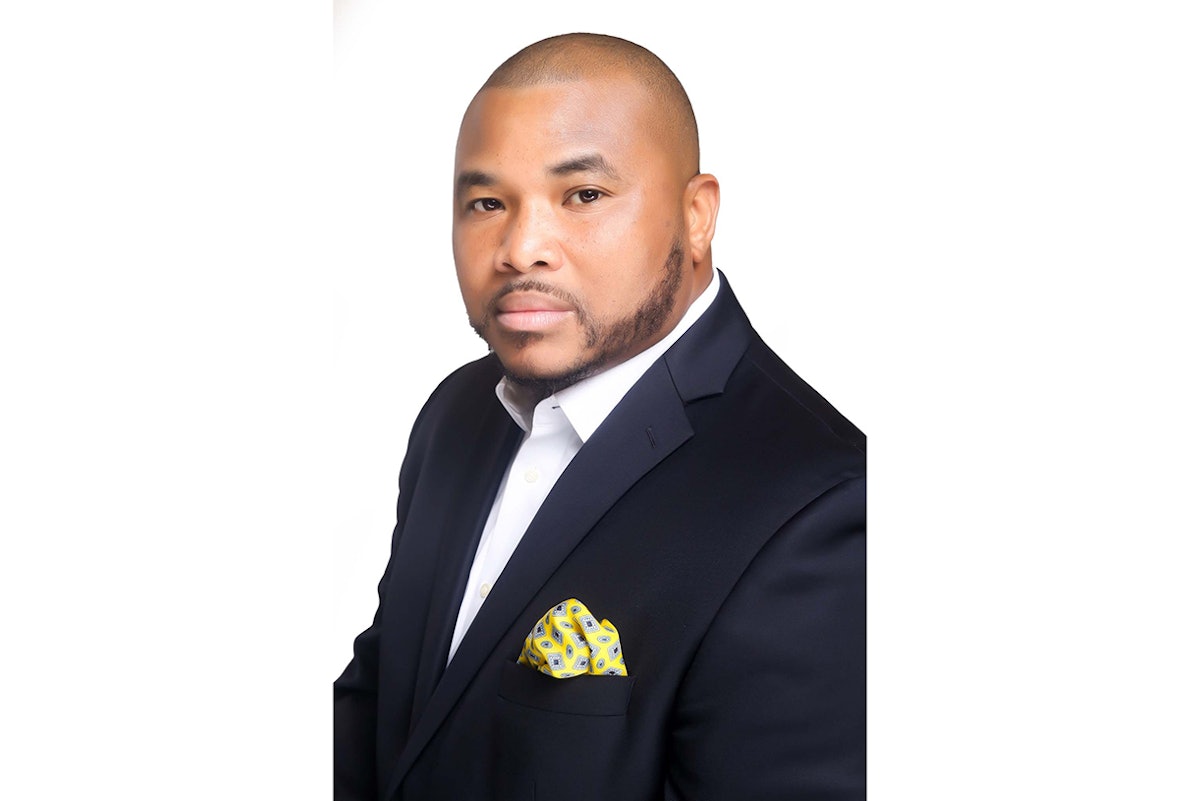
    Dr. Adriel A. HiltonDr. Richardson served as the ninth president of Morgan State University from 1984 to 2010. Under his leadership, Morgan did not simply grow. It transformed. It rose to become a national leader in graduating African American students in science, technology, engineering and mathematics. It expanded its infrastructure, enhanced its academic reputation and centered student success in every strategic decision. Dr. Richardson did not wait for others to validate his vision. He led with clarity, conviction and courage. 

    He was a master builder in every sense of the term. He saw potential where others saw limits. He saw the value of HBCUs not as a second option but as essential to the American higher education ecosystem. His leadership challenged a state system that had long underfunded and undervalued Black institutions. His efforts helped bring national attention to Maryland’s long-standing inequities in higher education funding and set in motion the legal battles and policy changes that continue to shape the landscape today. 

    What made Dr. Richardson different was that he understood the stakes. For him, education was not abstract. It was urgent. It was necessary. It was justice. He never forgot the students who came from under-resourced communities. He never stopped believing in the transformative power of institutions that were built by and for Black people. He knew that when HBCUs thrive, entire communities thrive. And he gave everything he had to make sure that happened.

    Years ago, I was invited by Chancellor James T. Minor to introduce Dr. Richardson at a gathering of HBCU leaders in Atlanta. It was a moment I will never forget. After the formalities, he pulled me aside, embraced me and spoke just three words: “Hilton, continue on.” I have carried those words with me ever since. They were not just encouragement. They were instruction. And now, in the wake of his passing, they are challenge and charge.

    To those of us who study higher education, we must be more than chroniclers of injustice. We must be architects of equity. It is not enough to publish about access. We must dismantle the structures that deny it. It is not enough to measure disparities. We must eradicate them. Dr. Richardson did not write about transformation. He led it. His career reminds us that research must inform action and that theory must be in service to the students whose lives hang in the balance.

    To leaders of our HBCUs, I say this as a researcher and as someone who deeply respects the weight of your responsibility. Dr. Richardson raised the standard. It is ours to meet and exceed. If we claim to honor his legacy, then we cannot be satisfied with survival. We must pursue excellence with purpose and with boldness. We must ask difficult questions. Are we growing in ways that reflect our mission? Are we advocating with full voice for the resources our institutions deserve? Are we leading with vision or simply managing with caution? 

    Our students do not need caretakers of tradition. They need disruptors of inequality. They need leaders who will challenge broken systems, fight for full funding, and refuse to accept a future that mirrors the past. They need us to be as courageous as Dr. Richardson was and as committed as he remained throughout his life.

    Dr. Richardson believed in leading with love. Love for students. Love for community. Love for institutions that have long stood as beacons of opportunity against overwhelming odds. But love, as he modeled it, was not passive. It was active. It was strategic. It was unapologetic. It was the kind of love that demands more, not less. That refuses to compromise when the stakes are too high. That knows the fight for educational equity is not about charity but about justice. 

    Let us be clear. Dr. Richardson’s story is not one of ease. It is one of struggle, persistence and vision. He faced resistance. He faced doubt. But he pressed on. And in doing so, he created new possibilities for generations of students who might otherwise have been left behind.

    If we are to honor him now, we must take up his mantle with urgency. We must refuse to be complicit in systems that marginalize Black institutions. We must lead in ways that are bold, strategic and student centered. We must act with the same clarity and commitment that defined his presidency.

    Dr. Richardson did not just leave a legacy. He left a blueprint. The question is whether we will follow it. 

    We thank you, Dr. Richardson. We mourn your passing, but more than that, we commit ourselves to your example. We will remember your words. We will continue on.

    And we will do so with purpose.

    ________

    Dr. Adriel A. Hilton (a proud graduate of three Historically Black Colleges and Universities (HBCUs), is a passionate advocate for the power and promise of HBCUs. Now a resident of Chicago, Illinois, he brings his deep commitment to educational excellence to his new role as Vice President of Institutional Strategy and Chief of Staff at Columbia College Chicago.
     

    Source link

  • Dr. Earl S. Richardson, Transformative HBCU Leader and Civil Rights Champion, Dies at 81

    Dr. Earl S. Richardson, Transformative HBCU Leader and Civil Rights Champion, Dies at 81

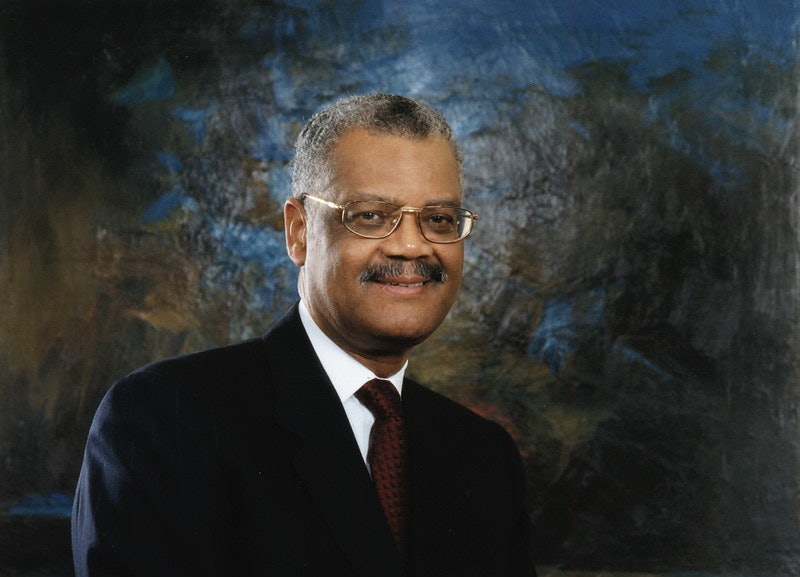
    Dr. Earl S. Richardson, the visionary leader who transformed Morgan State University during a remarkable 25-year presidency and spearheaded a groundbreaking legal victory that secured hundreds of millions in funding for historically Black colleges and universities, died Saturday. He was 81.

    Dr. Earl S. RichardsonRichardson’s death was announced by Morgan State University, where he served as the institution’s ninth president from 1984 to 2010. Under his stewardship, the Baltimore university experienced what became known as “Morgan’s Renaissance”—a period of unprecedented growth that saw enrollment double, the campus expand with new buildings, and the institution elevated to doctoral research university status.

    But Richardson’s most enduring legacy may be his role as the architect of a historic 15-year legal battle that resulted in one of the largest settlements ever secured for HBCUs. The lawsuit, filed in 2006 and settled in 2021, compelled the state of Maryland to provide $577 million in supplemental funding over 10 years to four historically Black institutions, addressing decades of systematic underfunding.

    The case drew comparisons to Brown v. Board of Education for its challenge to educational disparities, though it focused on higher education rather than K-12 schools. During the trial, state attorneys even attempted to have Richardson removed from the courtroom, though he remained as an expert witness, providing crucial historical testimony.

    Richardson’s leadership style combined the tactical wisdom of a seasoned administrator with the moral clarity of a civil rights activist. In 1990, when students occupied Morgan’s administration building for six days to protest deteriorating facilities—leaking roofs, outdated science labs, and dilapidated dorms—Richardson subtly guided their anger toward the real source of the problem: insufficient state funding.

    When Richardson arrived at Morgan State in November 1984, he found a struggling institution with 3,000 students housed in aging buildings. By the time he stepped down in 2010, enrollment had grown to more than 7,000 students, and the university had received approximately $500 million for new construction and renovations.

    Major projects completed during his tenure included a $54 million school of architecture, a $40 million fine arts building, new engineering facilities, a student union, and stadium expansions. Richardson also oversaw the addition of new academic schools, including programs in architecture and social work, while elevating Morgan’s research profile.

    “Our vision has been to transform Morgan from a liberal arts institution to a doctoral research university,” Richardson told Diverse in 2009. “We lead the state in graduating African-Americans.”

    His impact extended far beyond physical infrastructure. Richardson strengthened faculty excellence, raised admission standards, and championed the unique mission of HBCUs in educating both the most talented Black students and those who might not otherwise consider higher education accessible.

    Richardson’s advocacy extended beyond Morgan State to become a national voice for historically Black colleges and universities. In a 2008 testimony before the U.S. House of Representatives, he articulated the dual mission of HBCUs: serving high-achieving students while also reaching those who faced barriers to higher education access.

    “We can make them the scientists and the engineers and the teachers and the professors—all of those things,” he told lawmakers. “But only if we can have our institutions develop to a level of comparability and parity so that we are as competitive as other institutions.”

    His legal victory in Maryland put a national spotlight on funding disparities that have long plagued HBCUs, which are more likely than other institutions to rely on government funding and receive smaller portions of their revenue from private donations and grants.

    An Air Force veteran, Richardson brought military discipline and strategic thinking to his educational leadership. He often spoke of participating in civil rights demonstrations during his own student years, experiences that shaped his understanding of both the power of organized protest and the importance of strategic action in pursuing justice.

    Current Morgan State President Dr. David K. Wilson, who followed Richardson in the presidency, credited his predecessor with building the foundation for continued success.

    “The foundation he built allowed us to continue Morgan’s upward trajectory, and much of what we have achieved in recent years is possible because of the strong platform he left behind,” Wilson said in announcing Richardson’s death.


    Source link