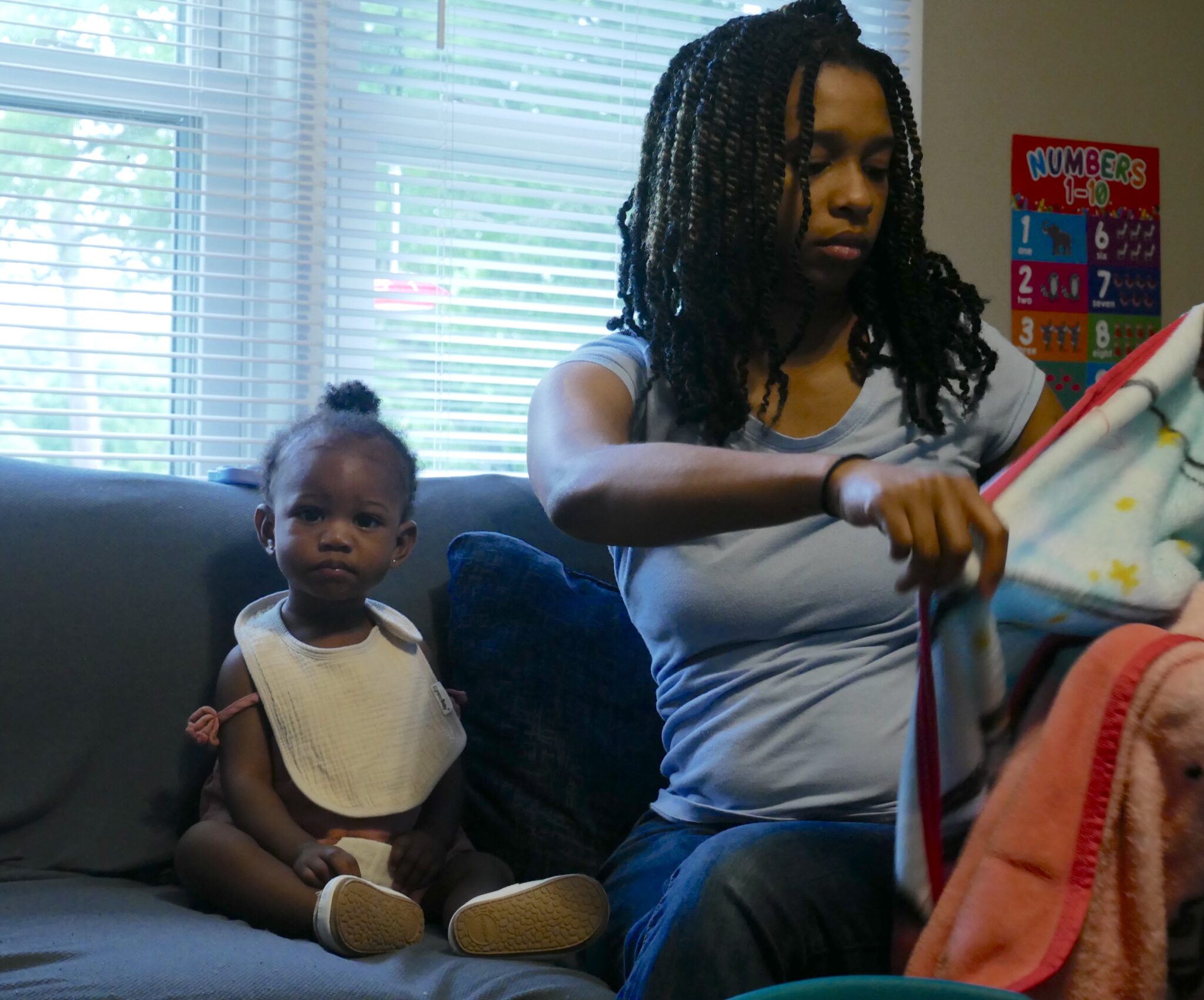
Nearly 9,000 children across 16 states and Puerto Rico remained locked out of Head Start programming as of Friday evening, according to the National Head Start Association, despite the federal government’s reopening on Wednesday night.
For some programs, the promise of incoming funding will be enough to restart operations. But many won’t be able to open their doors until they receive their federal dollars, which could take up to two weeks, said Tommy Sheridan, deputy director at the NHSA.
Sheridan said the Trump administration understands the urgency and is “moving as fast as they possibly can.”
That said, this interruption had an opportunity cost, and it’s led to instability for families and providers, he said, adding that the shutdown caused staff to focus on issues they “should not be worried about,” such as fundraising and contingency planning.
“They’re going to be working as hard as they can, but they’re going to be doing it with half the capacity,” said Katie Hamm, former deputy assistant secretary for early childhood development under President Joe Biden.
And even once the funding comes through, closed centers will need to go through a series of logistical hurdles, including reaching out to families who may have found alternative child care arrangements and calling back furloughed staff, some of whom have found employment elsewhere.
“Head Start is not a light switch,” Hamm said. “You can’t just turn it back on.”
This interruption has also further eroded trust between grantees and the federal government that was already shaky, she added.
The Administration for Children and Families did not respond to a request for comment on when programs can anticipate communication from the office or their funding.
Since Nov. 1, approximately 65,000 kids and their families — close to 10% of all of those served by Head Start — have been at risk of losing their seats because their programs had not received their awarded funding during the longest government shutdown in history. The early care and education program delivers a range of resources to low-income families including medical screenings, parenting courses and connections to community resources for job, food and housing assistance.
At the peak of the Head Start closures, roughly 10,000 kids across 22 programs lost access to services, according to Sheridan. A number of the remaining programs were able to stay open through private donations, loans, alternative funding streams and staff’s willingness to go without pay.
Valerie Williams, who runs a Head Start program with two facilities in Appalachian Ohio, was excited to tell parents that classrooms would be reopening soon. Her centers have been closed since Nov. 3, impacting 177 kids and 45 staff, many of whom already live paycheck to paycheck, she said.
Valerie Williams runs two Head Start centers in Appalachian Ohio, serving 177 kids. (Valerie Williams)
A number of families were doubly impacted, losing access to Head Start’s resources as well as the Supplemental Nutrition Assistance Program, also known as SNAP, simultaneously. In the days leading up to the closure, Williams and her staff prepared families as best they could, sharing information about resources for food, assistance for utilities and heating and guidance on child care options.
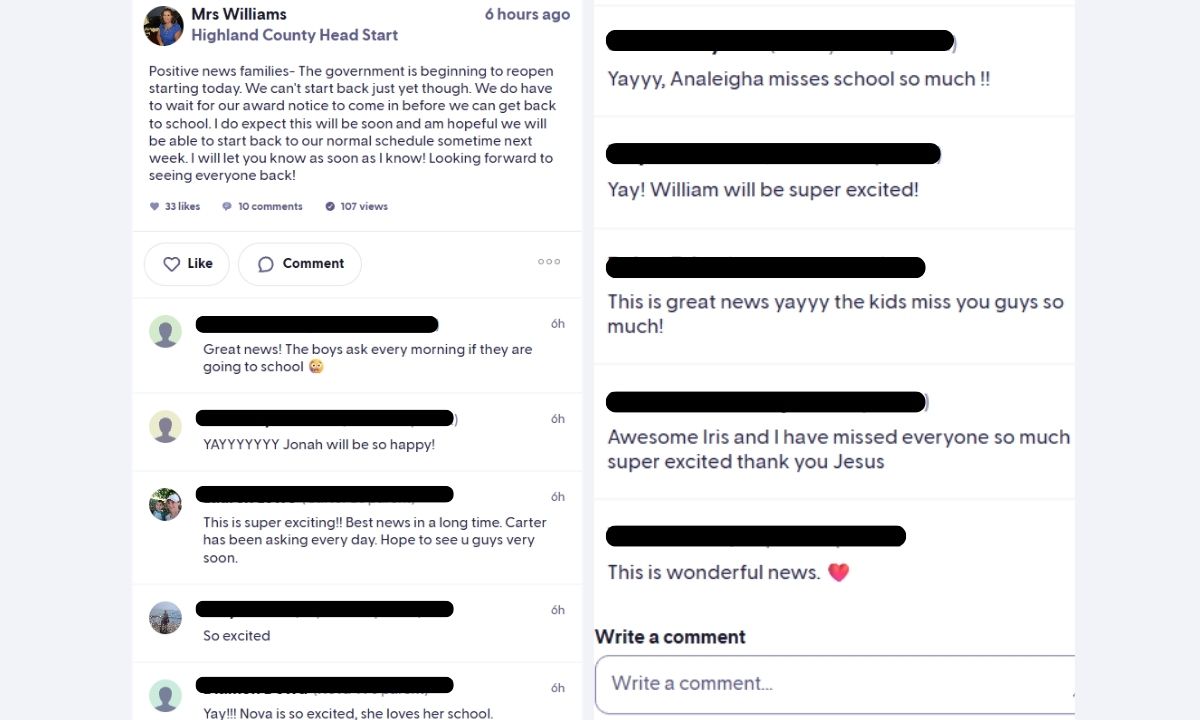
On Thursday, Williams wrote to parents via an online portal that she hopes to restart the normal school schedule sometime next week. The post was quickly flooded with comments.
“This is super exciting!!” wrote one parent. “Best news in a long time. Carter has been asking every day. Hope to see u guys very soon.”
“Yayyy,” wrote another. “The kids miss you guys so much!”
Valerie Williams, who runs a Head Start program in Appalachian Ohio, was excited to tell parents that classrooms would be reopening soon. (Valerie Williams)
Still, Williams knows reopening won’t be seamless. Along with program leaders across the country, she’ll need to call back furloughed staff, place food orders and handle a number of other operational challenges.
And despite the excitement, the transition back may also prove tricky for some kids.
“I do think that it will feel like starting school again for a lot of our classrooms,” Williams said. “They’ve been out for two weeks … You’re going to work on separation anxiety issues, you’re going to have to get into that routine again and the structure of a classroom environment. So I think that will be a big issue for a lot of our teachers.”
As of Friday afternoon, Williams was still awaiting communication from the federal Office of Head Start with information about the anticipated timeline for next steps.
“As soon as we get that notice of award, [I want to] start our staff and kids back immediately,” she said. “The very next day.”
Now that the shutdown has ended, what’s next for Head Start?
Funding for Head Start is complex. Some 80% comes from federal grants that are released to local providers on a staggered schedule throughout the year. This year, grant recipients with funding deadlines on the first of October and November were left scrambling, as the federal shutdown dragged on.
The government began to resume operations late Wednesday night after President Donald Trump signed a bill, funding most federal agencies through Jan. 30 and allowing programs that didn’t receive their funding on time, including Head Start, to use forthcoming dollars to backpay expenses incurred over the past month and a half.
Here’s what Hamm predicts will happen next: The Office of Head Start will recall all staffto resume, including those who were furloughed during the shutdown. The employees will review grant applications, a process which now requires them to flag any language that might be reflective of diversity, equity and inclusion practices. Next, money will be sent along to the remaining regional offices, and eventually dispersed to individual grantees. The NHSA is hopeful that this process will be completed by Thanksgiving for all grantees.
There are two things the federal government can do to help centers open faster, according to Hamm. First, they could waive a typical protocol that leads to a period of seven days between when a member of Congress is notified that their state will be receiving funding and when the funding actually goes out, Hamm explained.
Officials could also notify grantees, in writing, about how much money they’ll get and when it’s expected to come through, so they can begin planning.
Unlike SNAP, which received guaranteed funding through the budget year, money for Head Start remains uncertain beyond Jan. 30. While the fear of another shutdown has caused “quite a bit of worry” among the Head Start community, Sheridan said it would likely lead to fewer program disruptions, since it wouldn’t fall at the start of the fiscal year.
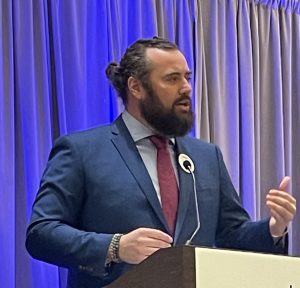
Tommy Sheridan, deputy director of the National Head Start Association. (Tommy Sheridan)
To prevent similar chaos moving forward, Democratic Sen. Tammy Baldwin of Wisconsin introduced a bill in the final days of the shutdown that would guarantee uninterrupted service for fiscal year 2026.
“The 750,000 children and their families who use Head Start shouldn’t pay the price for Washington dysfunction,” Baldwin, the ranking member of the Senate Appropriations Subcommittee for Labor, Health and Human Services, Education, and Related Agencies, wrote in a statement to The 74.
Multiple funding threats and deep staffing cuts by the Trump administration over the past year have plunged programs across the country into uncertainty. In the wake of that recent upheaval, a leadership change is also underway. The acting director of the Office of Head Start, Tala Hooban, accepted a new role within the Office of Administration for Children and Families and will be replaced by political appointee Laurie Todd-Smith, according to an email statement from ACF. Todd-Smith currently leads the Office of Early Childhood Development, which oversees the Office of Head Start.
Sheridan described this move as anticipated and not particularly concerning, though others were less sure. Joel Ryan, the executive director of the Washington State Association of Head Start, noted that Hooban was a longtime civil servant and strong supporter of the Head Start program. Without her, he fears “there’s nobody internally with any kind of power that will push back,” on future threats to the program.
Another worry plaguing providers: current funding for Head Start has remained stagnant since the end of 2024, meaning that through at least Jan. 30, programs will be operating under the same budget amid rising costs across the board.
In previous years, the program’s grant recipients typically got a cost-of-living adjustment, such as the 2.35% bump ($275 million) for fiscal year 2024. In May, a group of almost 200 members of Congress signed a letter to a House Appropriations subcommittee, requesting an adjustment of 3.2% for 2026. A recent statement from NHSA suggested that instead, the proposed Senate bill for next year includes a jump of just 0.6%, or $77 million.
“If we don’t see a funding increase in line with inflation, that means that Head Start will be facing a cut of that degree,” said Sheridan. “It’s just kind of a quiet cut, or a silent cut.”
“I think what will end up happening,” said Ryan, “is you’ll end up seeing a massive reduction in the number of kids being served.”
Did you use this article in your work?
We’d love to hear how The 74’s reporting is helping educators, researchers, and policymakers. Tell us how

Approximately 1 in 5 children in the United States are estimated to be neurodivergent, representing a spectrum of learning and thinking differences such as autism, ADHD, dyslexia, and more. These children experience the world in unique and valuable ways, but too often, our education systems fail to recognize or nurture their potential. In an already challenging educational landscape, where studies show a growing lack of school readiness nationwide, it is more important than ever to ensure that neurodivergent young learners receive the resources and support they need to succeed.
Early support and intervention
As President and CEO of Collaborative for Children, I have personally seen the impact that high-quality early childhood education can have on a child’s trajectory. Birth to age five is the most critical window for brain development, laying the foundation for lifelong learning, behavior, and health. However, many children are entering their academic years without the basic skills needed to flourish. For neurodivergent children, who often need tailored approaches to learning, the gap is even wider.
Research indicates that early intervention, initiated within the first three years of life, can significantly enhance outcomes for neurodivergent children. Children who receive individualized support are more likely to develop stronger language, problem-solving, and social skills. These gains not only help in the classroom but can also lead to higher self-confidence, better relationships and improved well-being into adulthood.
The Collaborative for Children difference
Collaborative for Children in Houston focuses on early childhood education and is committed to creating inclusive environments where all children can thrive. In Houston, we have established 125 Centers of Excellence within our early childhood learning network. The Centers of Excellence program helps child care providers deliver high-quality early education that prepares children for kindergarten and beyond. Unlike drop-in daycare, our certified early childhood education model focuses on long-term development, combining research-backed curriculum, business support and family engagement.
This year, we are expanding our efforts by providing enhanced training to center staff and classroom teachers, equipping them with effective strategies to support neurodivergent learners. These efforts will focus on implementing practical, evidence-based approaches that make a real difference.
Actionable strategies
As educators and leaders, we need to reimagine how learning environments are designed and delivered. Among the most effective actionable strategies are:
Creating sensory-friendly classrooms that reduce environmental stressors like noise, lighting, and clutter to help children stay calm and focused.
Offering flexible learning formats to meet a range of communication, motor, and cognitive styles, including visual aids, movement-based activities, and assistive technology.
Training teachers to recognize and respond to diverse behaviors with empathy and without stigma, so that what is often misinterpreted as “disruption” is instead seen as a signal of unmet needs.
Partnering with families to create support plans tailored to each child’s strengths and challenges to ensure continuity between home and classroom.
Incorporating play-based learning that promotes executive functioning, creativity, and social-emotional development, especially for children who struggle in more traditional formats.
Benefits of inclusive early education
Investing in inclusive, high-quality early education has meaningful benefits not only for neurodivergent children, but for other students, educators, families and the broader community. Research indicates that neurotypical students who learn alongside neurodivergent peers develop critical social-emotional skills such as patience, compassion and acceptance. Training in inclusive practices can help educators gain the confidence and tools needed to effectively support a wide range of learning styles and behaviors as well as foster a more responsive learning environment.
Prioritizing inclusive early education can also create strong bonds between families and schools. These partnerships empower caregivers to play an active role in their child’s development, helping them navigate challenges and access critical resources early on. Having this type of support can be transformative for families by reducing feelings of isolation and reinforcing that their child is seen, valued, and supported.
The benefits of inclusive early education extend far beyond the classroom. When neurodivergent children receive the support they need early in life, it lays the groundwork for increased workforce readiness. Long-term economic gains can include higher employment rates and greater earning potential for individuals.
Early childhood education must evolve to meet the needs of neurodivergent learners. We cannot afford to overlook the importance of early intervention and tailored learning environments. If we are serious about improving outcomes for all children, we must act now and commit to inclusivity as a core pillar of our approach. When we support all children early, everyone benefits.
Dr. Melanie Johnson, Collaborative for Children
Dr. Melanie Johnson serves as the President and CEO of Collaborative for Children, where she leads groundbreaking initiatives in early learning enterprise systems across Texas’s Gulf Coast region. Her work focuses on improving school-readiness outcomes for under-resourced children from birth to age five through metrics-driven outcomes and digital transformation.
Latest posts by eSchool Media Contributors (see all)
After almost 20 years in business, Milestones Preschool in Inglewood closed its doors this month.
It was a decision that preschool director Milena Bice had been putting off for years. She’d turned her family home into a small business, transforming the house on a quiet tree-lined street into a playground of childish delights, complete with a sand pit, fruit trees and even a brood of chicks waddling around a small pen.
Bice loved her preschool. She loved the way it allowed her to care for her own kids when they were little, and how she could continue to apply therapeutic approaches to her work long after they’d outgrown preschool. Over the years, she developed a reputation for her care for children with neurological differences.
But child care is no easy business. Margins were about as slim as can be. When parents couldn’t afford to pay full tuition, Bice felt it was her duty to keep caring for their kids anyway. The question of closing loomed over her as her business survived the ups and downs of the global economy: first, the 2008 recession, and the COVID-19 pandemic more than a decade later.
But this month, Bice finally called it quits. She was sick of charging families high fees and still struggling to pay herself at the end of the month. And for the first time this year, she said her preschool didn’t have anyone on her waitlist. One reason is universal transitional kindergarten — or TK — no-cost public kindergarten that becomes an option for all California 4-year-olds this fall.
“ I can’t compete with free,” she told LAist in a recent interview. “And in this economy, I think a lot of families are hurting.”
Bice’s predicament mirrors a statewide challenge. As families sign their 4-year-olds up for TK, some childcare and preschool providers say they’re losing enrollment and it’s threatening their businesses. While teachers struggle to adjust, childcare remains an unaffordable and unmet need for many families across California, especially with very young children.
Child care is still a major need for CA families
Even as transitional kindergarten expands, there’s no shortage of need for child care. The California Budget & Policy Center estimates that just 19% of infants, toddlers and preschool-aged children who are eligible for state subsidized care are enrolled. The need is especially great for children age 2 or younger — the most expensive age group to care for.
A recent report from the Center for the Study of Child Care Employment found that most early education programs will need to pivot to younger kids to meet the need and stay in business, and that centers and home-based childcares are hurting from declined enrollment since the pandemic.
Anna Powell, the lead author of that report, said early educators struggling to adapt to the changing landscape of their industry are a byproduct of the state’s massive investment in universal TK, but lack of similar investment in others.
“ If one area, for example TK, receives a lot of resources to scale up to reach demand, in theory, that is positive,” she said. “What happens when you don’t invest in all the quadrants at the same time is that there can be these unintended consequences.”
Transitioning to younger kids is a challenge
Powell said that caring for younger kids requires a number of shifts in how child care programs operate. Teaching expertise is different for younger children, and staffing ratios are smaller. The time a provider might expect to have a child enrolled is also shorter, since kids are heading to the public school system earlier. This means early educators could face more turnover.
There’s also the matter of teaching preferences. Caring for a 3- or 4-year-old is very different from taking care of a 1-year-old. In a survey of nearly 1,000 early educators, just 20% said they’d be interested in teaching infants and toddlers.
David Frank, who runs a preschool in Culver City, told LAist in April that he’s also closing his doors this year. He said that 4-year-olds used to make up a third of the school’s students, and his enrollment was down from 34 to 13. His preschool already took 2 -year-olds, but he didn’t want to go any younger. One reason is it would require him to reconfigure the school to create a separate space for the youngest children.
Frank said he’s not against TK, but he couldn’t keep making it work.
“ I’m happy that children will have good, free education,” he said. “But as a person trying to run a business … it’s just no longer a viable plan to stay open anymore.”
Advocates say even more investment is needed
California’s transitional kindergarten is a plan years in the making, and, despite kinks, it has achieved a big goal: offering a free option for every family with a 4-year-old in the state.
That program runs through the public school system, but child care and early education offerings for the state’s youngest children continue to be a patchwork of different types of care with no similar central system. The state funds a public preschool program for 2- to 5-year-olds for low-income families, which has received more money in recent years. Many private programs receive state subsidies for serving low-income families, and the state has increased the number of seats it funds in recent years.
It also bumped up reimbursement rates for 3-year-olds to entice more providers to take younger kids.
Gov. Gavin Newsom’s office pointed to these changes, telling LAist that it has invested heavily in a universal Pre-K program that extends beyond transitional kindergarten.
Some advocates and childcare providers say still more game-changing investment is needed. The state has promised the childcare providers that receive its subsidies to overhaul its payment system to reflect the “true cost” of care, but this year deferred offering them pay bumps. The union representing those workers is currently bargaining with the state, saying providers can’t wait for a raise.
Patricia Lozano, the executive director of advocacy organization Early Edge California, said TK’s ripple effect on early education programs shows that the state needs to do more to provide for its youngest children.
“ TK was one of the key things we’ve been advocating since it was passed,” she said. “But that’s just one piece. I think the whole system itself is problematic. It’s underfunded.”
Lozano pointed to New Mexico as a potential model for California. The state has boosted teacher pay and expanded eligibility for free care by directing gas and oil revenue to state childcare programs. She said this type of consistent source of money is especially important amid threats to federal funding and state budget cuts.
“The bottom line is we need to have that source of funding protected,” she said.
In the meantime, Milena Bice’s preschool in Inglewood is closed. She’s not sure exactly what happens next. She can’t go work at a public school. Despite decades in the business, she doesn’t have a bachelor’s degree or teaching credential.
While she debates the future, Bice is holding onto her childcare license. Who knows? Maybe she’ll want to reopen someday.
State legislators from both parties want to expand family child care — the home-based sector of licensed child care, which has shrunk by more than a third since 2018. Both the House and Senate budget proposals include pilots to open new programs to meet the needs of families and employers.
For the past two years, a team from the nonprofit Southwestern Child Development Commission (SWCDC) has done just that, creating North Carolina’s first statewide system of support for family child care. In the past year, the organization has helped launch 27 new family child care programs, 20 of which are open, creating at least 160 new slots for children. Two are the first family child care programs in their counties.
Since September 2023, the team has awarded start-up grants to another 26 programs and business sustainability grants to 38 programs. It has created the first statewide family child care mentorship program, regional communities of practice, and a marketing campaign that has garnered interest from more than 200 prospective providers since April.
As state leaders ask how to improve child care access and affordability, the project’s lessons should carry forward, said Daniel Bates, the statewide project’s manager.
“I just really felt like we’ve done something here, and I hope that, no matter what, it still continues, because family child care is so incredibly important,” Bates said. “And they are part of early childhood education.”
‘People that will be around for a while’
Expanding family child care takes one-on-one support for new providers who often bring a passion for children but little knowledge of the complex regulations and business challenges that come with starting and operating a program, the project leaders said. It also requires funding.
In 2024, SWCDC, a nonprofit focused on early care and education based in western North Carolina, was awarded $525,000 from the Division of Child Development and Early Education (DCDEE) from legislative pilot funding to expand access to family child care. The project’s expected output was to help 18 programs get started. Instead, it has helped launch 27 programs by awarding grants to cover start-up costs.
The grants ranged from $5,000 to $20,000 depending on the providers’ needs and the strategic goals of the project. The average grant was about $13,000.
Providers also spent their own money to open their programs outside of the grants. A survey of some of the providers found that most had spent between $1,000 and $5,000 before receiving grants to prepare their homes and buy materials.
The new providers are in 19 counties. In Alleghany and Montgomery counties, grant recipients will be the only family child care providers in their counties. Two providers speak Spanish fluently, according to the project leaders. At least 18 have college degrees. Four of the new providers were under 30 years old. Six were in their 30s; 10 were in their 40s.
“These are people that will be around for a while,” said Vickie Ansley, SWCDC’s Child Care Resource & Referral (CCR&R) regional programs manager and family child care in-home program activity coordinator.
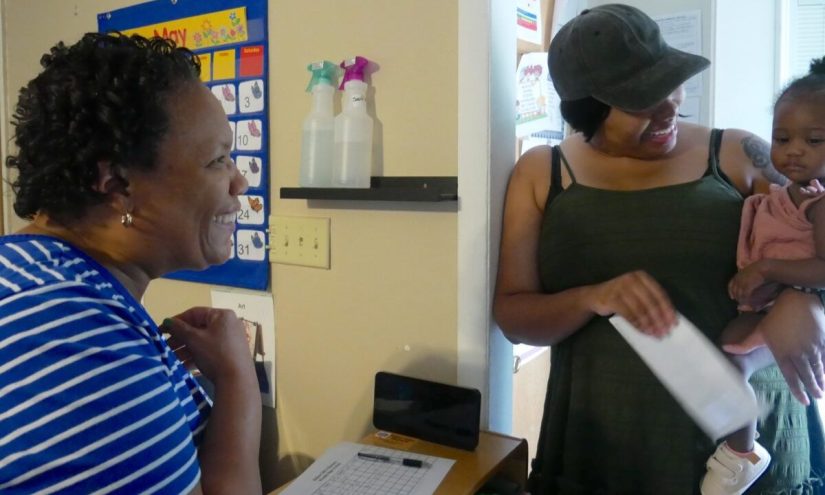
Danielle Dixon wakes up students from nap time at Helen Cole’s Day Care. (Liz Bell/EducationNC)
That grant funding was layered onto a larger statewide family child care project the organization has been leading since February 2023 through a separate $3 million contract with DCDEE from the CCDF, the federal funding stream that helps states raise the quality of child care and helps working families afford it.
The statewide project had many components, including start-up grants of up to $10,000 and business grants of up to $5,000 for access to business training, software, or devices to manage programs. It provided 64 professional development workshops to providers on a range of issues. It also created a framework for family child care substitute pools and a database of zoning contacts and information.
Hands-on support from regional consultants
The crux of the project, however, was all about hands-on support and community building, the project leaders said. The project funded 17 family child care consultants who reached 477 providers in 73 counties with coaching and consultation.
The consultants, trained in the specifics of owning and operating a family child care program, were embedded in the 14 regional CCR&R hubs covering all 100 counties.
“We’re talking about people located in those communities,” Ansley said. “They know the (providers), or they know somebody who knows them.”
Helen Cole, a family child care provider in Taylortown, says the grants she received from Southwestern Child Development Commission helped her buy high-quality materials. (Liz Bell/EducationNC)
The PDG contract is in process but will be awarded to Acelero Charitable Foundation “in collaboration with multiple agencies that support family child care.” It will focus on increasing quality and family engagement, the spokesperson said.
DCDEE employs licensing consultants who meet with all types of potential child care owners to begin the licensure process. The licensing consultants began recommending reaching out to the regional family child care consultants to new providers.
The family child care consultants then could provide knowledge specific to family child care, dedicate time and energy to decipher the complexities of starting and sustaining a business, and offer support that was independent from regulatory oversight and compliance. Some of the consultants were former family child care providers themselves.
“Prior to that, if an agency had capacity, then they provided support,” Bates said. “The services were somewhat limited, whereas this was full 100% dedication for family child care.”
The regional consultants received business training to advise providers on budget planning, financial reports, marketing, and recruiting and retaining staff.
Kathleen Hoffler, a regional consultant at the Partnership for Children of Cumberland County who once owned a family child care home, described the role as her “dream job.”
Hoffler said she has helped providers take better care of their businesses, their children, and themselves. She encouraged providers to take time off and to reach out for help.
“If you’re having issues with enrollment, if you’re having issues with collecting payments from parents, if you’re having behavior issues with kids or you’re worried that one of your kids might need some developmental screening, and you don’t have anybody to talk that out with, it’s real easy to get discouraged and possibly decide it’s not for you and you’re going to close your program,” Hoffler said.
The family child care consultants connected providers to the pilot grant opportunities and helped them budget what they needed and how they should spend the funding.
Since the consultants were embedded in CCR&R agencies, they could connect providers with a variety of professional development opportunities and resources.
And they connected providers to mentors — seasoned family child care providers who provided a listening ear and advice on overcoming obstacles — and to communities of practice, regional teams that met to share ideas and support one another.
Annette Anderson-Samuels, owner of Phenomenal Kids Child Care Services, a family child care home in Kings Mountain, was one of those mentors. She said her advice to two new providers on how to advertise their programs kept them from closing. She recently helped a provider navigate a tough conversation with parents who were not following her policies.
“It’s to help each other become better at what we do as child care providers,” Anderson-Samuels said.
There were 22 mentors and 44 mentees across the state. In his decades working in early childhood, Bates said the group has been a standout.
“They’ve crossed county lines to go help each other in person,” he said. “The interest and the willingness, wanting to improve themselves, is really out there if they have the opportunity to do that.”
‘The lost segment of early childhood education’
The number of family child care programs, child care businesses within a residence, has fallen by about 36% since 2018, compared with an overall 15% decline in all types of licensed child care.
As a generation of providers age out of the work, a lack of awareness, funding, and support — along with increased regulation — has kept new providers from entering the field, project leaders said.
The team was intentional about listening to providers’ experiences and needs before developing a system of support.
Helen Cole said her family child care home has better equipment and provides higher-quality care because of the support she received from the Southwestern Child Development Commission’s family child care projects. (Liz Bell/EducationNC)
Many brought up the low rates that family child care providers receive per child to participate in the state’s subsidy program. These rates, the state has found, do not cover the full cost of providing child care in any setting. Home-based programs receive lower amounts per child than centers. And providers in rural and low-income areas often receive lower rates than those in higher-income counties.
In rural areas where market rates are lower, “even though we need family child care in those communities desperately, market rates are a hindrance,” said Lori Jones-Ruff, SWCDC’s regional programs manager.
Jones-Ruff also sits on Gov. Josh Stein’s Task Force on Child Care and Early Education, where members have discussed the need for higher subsidy rates and a statewide floor rate that would level the playing field among counties. Research has shown the geographic disparities are wider than place-based differences in cost.
“That’s not just a center issue,” she said. “It’s for family child care as well.”
Low funding from public sources and private tuition leads to low compensation for family child care professionals. The median wage for home-based providers in 2023 was $10.20.
The team also heard about obstacles due to HOA rules and zoning regulations. They found that local ordinances were putting up barriers to new programs in some places. Septic tank requirements were among the most common and most expensive problems.
“(Providers) have recognized, ‘I don’t really need to run to Raleigh; some of the challenges I have are really just in my own backyard, and I just need to talk to my town or county,’” Bates said.
The team heard about the isolation many providers feel, being alone in their homes all day without a network to air ideas or lean on when challenges arise. Providers said they did not feel respected or supported by the state.
“Historically, there was a huge emphasis put on center-based care in North Carolina,” Jones-Ruff said. “Homes did not feel that they were as valued and as supported as center-based. And so there was a period of time where they really felt like they were kind of the lost segment of early childhood education in North Carolina.”
So the team built a strategy based on both funding and relationships.
‘Like a prayer answered’
For Helen Cole, that assistance and funding was key to opening her family child care home in Taylortown in Moore County.
“I just feel like this wouldn’t have been possible without the support and the funds,” said Cole, who recently earned her four-star license to care for children from infancy to 12 years old at Helen Cole’s Day Care.
She received more than $17,000 to start her program from the legislative pilot funding. She bought new outside equipment, furniture, dramatic play sets, age-appropriate toys and books, a new kitchen faucet, a state-approved curriculum, and a new laptop.
Cole heard about the potential grant funding for start-up costs from the state licensing consultant. She was also connected with Hoffler.
Students at Helen Cole’s program work on their counting skills. (Liz Bell/EducationNC)
Cole was excited to open after hearing about a local demand for second-shift care. After retiring as a substitute teacher in her local school district, she needed more income and was eager to fill a community need.
But after her initial meeting with a licensing consultant, she received a long checklist of everything she had to do. She said she felt overwhelmed.
“It was just so much information,” she said. “There are things on the website, but how do you adjust it for your day care?”
Plus, Cole had experience helping in her sister’s child care program, but she did not know the ins and outs of operating a small business. Even with a background in accounting, she knew the role would be challenging. So she reached out to Hoffler for an in-person meeting.
“It was like a prayer answered,” Cole said. “She broke it down for me.”
Hoffler helped Cole navigate the tough decisions that come with operating a business from your home, such as how much living space she was willing to sacrifice and what renovations were needed. And she helped Cole create a budget to apply for grant funding through the legislative pilot. She gave her ideas on high-quality and age-appropriate materials.
She also connected Cole with a mentor, helped her with business skills, and connected her with other resources through the Smart Start partnership.
Hoffler has helped her advertise her program and hold on through the ups and downs of enrollment, Cole said. Because she needed to hire another teacher, her niece Danielle Dixon, Cole said she is breaking even but has not started making a profit or been able to pay herself. She said she has been advised that it can take nine months to a year.
She said low subsidy rates and parents’ inability to afford her private rates have also been financially challenging. She serves one student whose parents are both working, making too much to qualify for a subsidy, but cannot afford her private rate of $200 per week. She only charges that family $85 per week.
Danielle Dixon, a teacher at Helen Cole’s Day Care, has worked in child care for 11 years. (Liz Bell/EducationNC)
Dixon, who has been working in child care professionally for 11 years but informally since she was 16 years old, has both of her children enrolled at the program. Dixon said her grandmother and mother, as well as three of her aunts, have worked in child care. She decided to partner with her aunt, Cole, to return to working with young children in a creative, exploratory environment after working in public schools.
Helen Cole’s Day Care opened in December in the home she was raised in, and where her mother used to take care of children whose parents were at risk of losing custody.
“All of our lives, we’ve had other children here,” Cole said.
Both Dixon and Hoffler have helped Cole strengthen her understanding and practice of early childhood care and education. Her program’s philosophy is based on relationships, exploration, and emotional and social development. Then academic foundations are added.
“It’s that give and take between you and this child,” Hoffler said. “They’re going to learn more from you if you are actively engaging with them and talking to them throughout the day, than they’ll ever learn if you give them a coloring sheet and try to teach them how to stay in the lines. There are no lines in early childhood.”
“That was a wow moment,” Cole said. “I understand that we have to have a curriculum, and we do, but the biggest thing is for them to develop on their own.”
It is this one-on-one attention and intimate environment that make family child care appeal to so many parents. Rural children, low-income children, and children of color are more likely to access home-based care than center-based, according to national advocacy and research group Home Grown. It is often more affordable, more convenient and flexible for nontraditional working hours, and more culturally and linguistically relevant to diverse families.
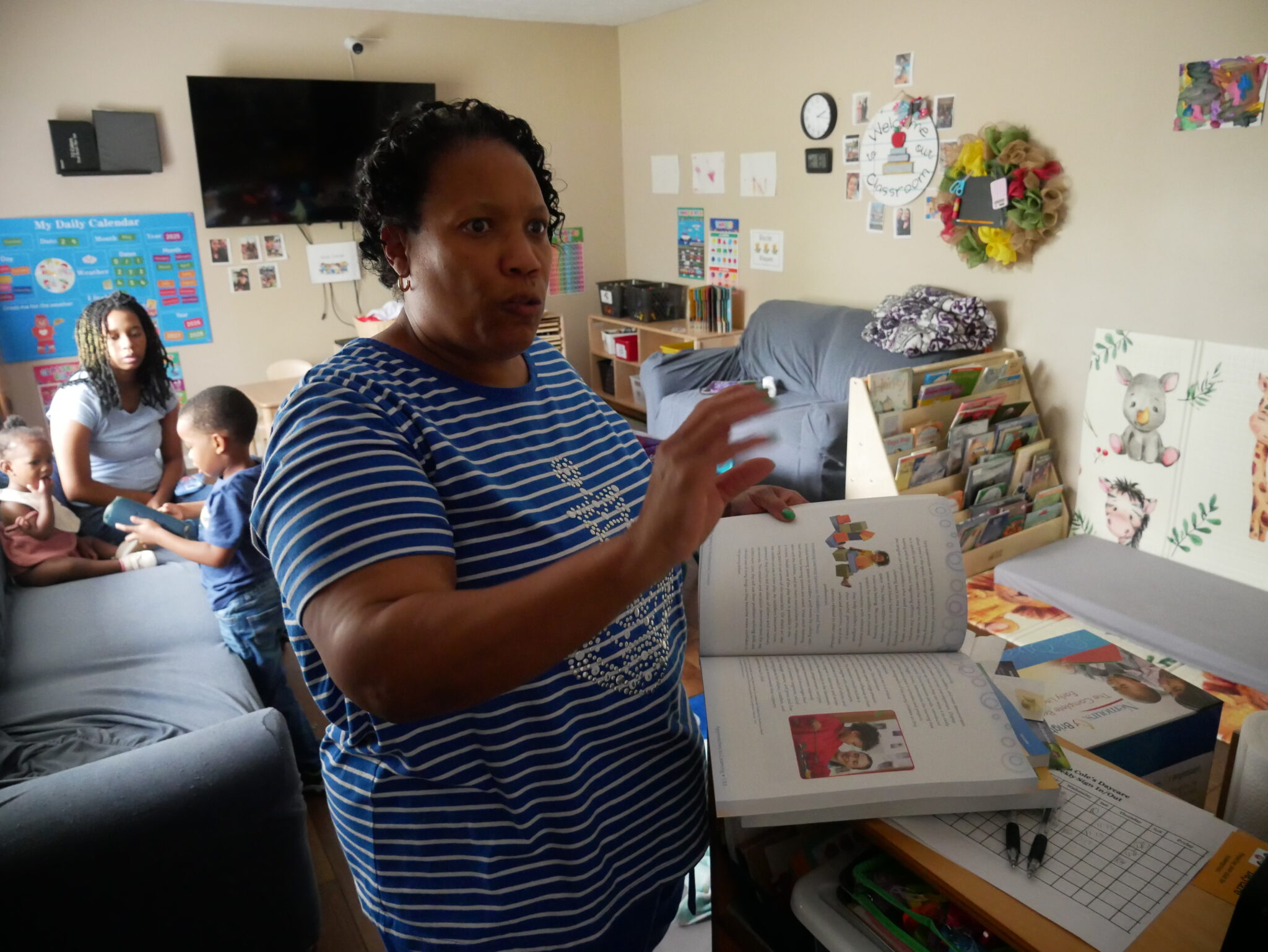
Inside Helen Cole’s child care program. (Liz Bell/EducationNC)
Kailyn Green, whose daughter has been at the program for a month, said she toured other programs with open spots but they “didn’t feel right.” Then she visited Cole’s program and did a walk-through.
“I was like, ‘I’m sold. I’m good,’” Green said.
A licensed clinical social worker, Green said she has been able to return to work without worrying. She receives texts and videos of her daughter’s days and has been impressed by how much she has progressed, especially with eating more consistently.
“I love that she truly gets the attention,” she said. “She’s been able to form a relationship with her. It’s been great.”
Hoffler said she was excited to hear about Cole’s recent accomplishment: earning four out of five stars on the state’s quality rating scale.
“I’m just so proud of her,” she said. “She handled it like a pro.”
What’s next?
There are multiple efforts to build different kinds of supports for family child care. DCDEE said the project with SWCDC taught them that “Family Child Care Homes (FCCHs) would benefit from additional funding, continued community engagement, and professional development to improve quality,” according to a DCDEE spokesperson.
“FCCHs are a vital part of our state’s early care and learning network, and DCDEE is committed to continuing our support for these small businesses,” the spokesperson said in an emailed statement.
Though the contract for the statewide project ends on June 30, the spokesperson said the division will continue using CCDF funds and federal funds from the Preschool Development Grant (PDG) Birth through Five to provide business technical assistance and other services to family child care programs.
The PDG contract is in process but will be awarded to Acelero Charitable Foundation “in collaboration with multiple agencies that support family child care.” It will focus on increasing quality and family engagement, the spokesperson said.
DCDEE is also contracting with Frank Porter Graham Child Development Institute at UNC-Chapel Hill to provide evaluation and coordination of the PDG Elevate FCCH project, which will provide extra subsidy funding to family child care programs to increase wages for providers.
The House and Senate budget proposals direct DCDEE to use CCDF funds to expand family child care capacity. The House would allocate $7 million over two years for a pilot in three localities, and the Senate would allocate $6 million for a pilot in Alamance, Harnett, and Johnston counties. The funding would go to councils of governments in each of those counties to select a third-party vendor. Both proposals have specific requirements for the chosen vendor, including experience in establishing family child care homes in at least three other states and rural areas, experience in operating a substitute pool in another state, and technology that connects families with providers and includes billing and coaching functions.
Meanwhile, Jones-Ruff said SWCDC will continue supporting family child care by retaining a statewide team with organizational funding — and will seek outside funding to continue other aspects of the project. Some of the family child care consultants will continue their work through local CCR&R or Smart Start funding.
“I can see just the monumental amount of work and the progress that has happened in such a short amount of time,” she said. “We’re not going away.”