Tag: Education

  • Congress Shows Resistance to Trump’s Science Budget Cuts

    Congress Shows Resistance to Trump’s Science Budget Cuts

    Researchers and the academic community may have reason to be hopeful about the future of federal funding. Early indications from the appropriations process suggest that both the House and Senate will diverge significantly from the president’s federal budget proposal for science and technology for the next fiscal year.

    In May, the White House released its budget proposal that aims to reduce federal research and development funding by nearly a quarter, according to an analysis from the American Association for the Advancement of Science. It also proposed eliminating funding for the National Endowment for the Humanities, the National Endowment for the Arts and the Institute of Museum and Library Services.

    Congress still has months of negotiations before the start of the next fiscal year on Oct. 1 but, so far, funding for science has received bipartisan support in appropriations meetings—though the House appears more willing to make significant cuts than the Senate.

    In a July 10 Senate Appropriations Committee meeting, legislators put forth a cut to the National Science Foundation (NSF) of only $16 million compared to the more than $5 billion proposed by Trump. Four days later, a House Appropriations Committee subcommittee suggested slashing $2 billion—less than half of Trump’s proposal.

    Alessandra Zimmermann, budget analyst and senior manager for the American Association for the Advancement of Science’s R&D Budget and Policy Program, highlighted in a statement the Senate’s proposal and noted that the House’s over 20 percent proposed cut to NSF is still “a much smaller decrease than the Administration’s initial request.”

    “This shows that there is bipartisan support for investing in basic research, and putting the U.S. on track for FY26,” Zimmermann said. “The story of the future of science is still being written, and we appreciate the strong support from Congress.”

    The House has also suggested increasing by $160 million funding for the Department of Energy’s Office of Science—rejecting the White House’s planned 14 percent cut. The House has floated cutting NASA’s Science Mission Directorate by $1.3 billion, or 18 percent, but that’s still better than Trump’s proposal to nearly halve that budget. The House also proposed $288 million for the Fulbright scholarship, a highly selective cultural exchange program that Trump had recommended eliminating.

    The White House didn’t respond to a request for comment Friday.

    Bipartisan Support for R&D

    Congressional Republicans have remained in lock step with the second Trump administration. Early grumbles about the One Big Beautiful Bill were silent when the House passed it into law July 3, cutting nearly $1 trillion from Medicaid, eliminating a loan program for graduate students and much more.

    Still, observers say there is reason for science and research communities to have some optimism that Republicans will step out of line on budget proposals.

    “Neither bill goes to the extreme of the president’s budget,” said Debbie Altenburg, vice president of research policy and advocacy at the Association of Public and Land-grant Universities. “We are pleased that both the House and the Senate have marked up bills that are above what the president called for.”

    She noted that Republicans, who want the federal government to have a smaller footprint, control Congress and the White House.

    “We will be lucky if we get that flat funding” that senators have proposed, she said.

    The House and Senate have to agree on a dozen appropriations bills to pass the federal budget by Sept. 30 or risk a government shutdown.

    “It’s a very tense political situation,” she said. “It will be hard for Congress to complete all of these bills by the end of September.”

    Roger Pielke, a senior fellow at the conservative American Enterprise Institute, noted that “this is not the first time that Congress, on science-technology policy issues, has pushed back on the Trump administration.” It happened during Trump’s first term. And, going back to the 1970s and ’80s, research and development “has been a strong bipartisan area of agreement.”

    “R&D money goes all over the country,” Pielke said. “… It does kind of have a built-in support structure.”

    He said the NSF, which focuses on basic research, may be more insulated from political fights than agencies such as the National Oceanic and Atmospheric Administration, which deals with climate science, and the National Institutes of Health, which deals with vaccines. The congressional appropriations committees haven’t yet indicated what they plan to do with Trump’s proposed 38 percent cut to the NIH.

    But, Pielke noted, “in this day and age, everything can be politicized.”

    ‘Scientific Supremacy’

    While House Republicans appear more willing to protect spending for science than the president, Democratic members of the Commerce, Justice, Science, and Related Agencies subcommittee have criticized the bill. Representative Grace Meng, a New York Democrat and the subcommittee’s ranking member, said a proposed cut to the NSF and NASA “disinvests in the scientific research that drives American innovation, technological leadership and economic competitiveness.”

    “As other countries are racing forward in space exploration and climate science, this bill would cause the U.S. to fall behind by cutting NASA’s science account by over $1.3 billion,” Meng said.

    Representative Rosa DeLauro, a Connecticut Democrat and ranking member of the full House Appropriations Committee, said the bill “continues Republicans’ senseless attacks on America’s scientific supremacy.”

    “They have fired hundreds of scientists, including scientists who monitor extreme weather and who advance our scientific goals in space,” DeLauro said, referencing the mass layoffs at federal research agencies. “Why on Earth are we forfeiting America’s scientific supremacy? What would you do differently if you were America’s adversary and wanted to undermine everything that made us a superpower?”

    In the Senate, where Republicans need Democratic support to get to 60 votes to pass their bill, proposed spending cuts have been more modest.

    Sen. Susan Collins, a Maine Republican who chairs the Senate Appropriations Committee, said during its July 10 meeting that the NSF and NASA appropriations bill “funds research in critical scientific and technological fields.” She said another appropriations bill “supports much-needed investments in agricultural research in animal and plant health that were requested by nearly every member in this room.”

    Sen. Patty Murray, a Washington state Democrat and ranking member of the Senate committee, said “these compromise bills offer a far better outcome for families back home than the alternatives of either the House or another disastrous CR [continuing resolution].”

    She cautioned, though, that rescissions legislation—like the bill passed by Congress last week that claws back $9 billion in foreign aid and public broadcasting funding–could undermine consensus on a budget.

    “We cannot allow bipartisan bills with partisan rescission packages,” she said, asking, “if we start passing partisan cuts to bipartisan deals, how are we ever supposed to work together?”

    Source link

  • AAUP v. Rubio Reveals Details of Deportation Efforts

    AAUP v. Rubio Reveals Details of Deportation Efforts

    Today is the final day of the American Association of University Professors v. Rubio trial, in which the association, its chapters at Rutgers and Harvard Universities, and the Middle East Studies Association sued to stop the Trump administration from the “ideological deportation” of international students.

    The lawsuit argues that the deportations violate international students’ right to free expression and their Fifth Amendment right not to have laws enforced against them arbitrarily or discriminatorily. It also claims that the arrests of student protesters chilled speech on campuses—something witnesses corroborated.

    The trial, conducted during the last two weeks, revealed new details about the administration’s targeting of international students, including high profile cases like those of graduate students Mahmoud Khalil and Rümeysa Öztürk, who were detained by Immigration and Customs Enforcement in March. (Both have since been released.)

    Here are some of the key takeaways from the trial ahead of the parties’ closing statements.

    1. Dossiers about the targeted students included information about their protest activities.

    On Friday, John Armstrong, the most senior official at the State Department’s Bureau of Consular Affairs, testified that the memos written by state department officials recommending deportation actions and visa revocations contained details about student and faculty members’ activism.

    The memos have been designated as for “attorneys’ eyes only”—the most restrictive possible designation for sensitive information in a trial, which prevents even the plaintiffs and defendants from viewing them. But attorneys and witnesses quoted excerpts of them during the trial.

    The action memo for Öztürk highlighted an op-ed she had co-written supporting a call for her institution, Tufts University, to divest from companies with ties to Israel, Armstrong said, according to trial transcripts published by the Knight First Amendment Institute at Columbia University, which is representing the plaintiffs. But he insisted that the op-ed was not a “key factor” in the decision to revoke her visa and detain her.

    Another memo, regarding Columbia student activist Mohsen Mahdawi, specifically noted that “a court may consider his actions inextricably tied to speech protected under the First Amendment,” according to an excerpt read by Alexandra Conlon, an attorney for the plaintiffs.

    2. Investigators weren’t given guidance about what constitutes antisemitism.

    The State Department hasn’t release any guidance as to what, exactly, should be considered antisemitism, Armstrong acknowledged on Friday. He also stated that, to his knowledge, the officials who have written action memos about protesters haven’t received any training about what constitutes antisemitism.

    That’s significant, because at least one memo, Mahdawi’s, referred specifically to “antisemitic conduct.”

    “I do know that there’s a common understanding in our culture, in our society of what antisemitism is,” Armstrong said.

    When U.S. District Judge William G. Young pushed him to describe that “common understanding,” he responded: “In my opinion, antisemitism is unjustified views, biases, or prejudices, or actions against Jewish people, or Israel, that are the result of hatred towards them.”

    3. ICE officials leaned on the Canary Mission website to find students and professors to target.

    For over a decade, the anonymously operated site Canary Mission has been publishing the identities of students and professors they deem antisemitic. Several of those listed on the website, including Khalil, Mahdawi and Öztürk, have been targeted since the Trump administration began taking aim at student protesters.

    On the third day of the trial, Peter Hatch, a senior ICE official, stated that “many of the names, even most of the names” on a list of noncitizen students presented to ICE’s “Tiger Team” for investigation came from the Canary Mission site.

    Hatch said that other names came from Betar USA, the American chapter of an international Zionist organization, which the Anti-Defamation League has labeled an extremist group.

    4. ICE agents said they prioritized the arrest of activists at the urging of their higher-ups.

    ICE agents who oversaw the arrests of Öztürk, Khalil, Mahdawi, and Badar Khan Suri, a Georgetown University professor, said last Tuesday that the cases were unusual not just because of the legal grounds on which the activists were detained but also because the orders came from high-ranking officials in the organization.

    Patrick Cunningham, an agent with ICE’s Homeland Security Investigations office in Boston, said that the agency’s leaders were “inquiring” about Öztürk’s case, leading his office to prioritize her arrest.

    “I can’t recall a time that it’s come top-down like this with a Visa revocation, um, under my purview anyway,” Cunningham said, according to the transcript. “And so with the superiors that were, you know, inquiring about this, it made it a priority, because we worked for them.”

    5. Students and faculty confirmed they stopped protesting out of fear.

    Over the trial’s first two days, five noncitizen faculty members took the stand to describe how news about activists being targeted had caused them to stop engaging in various political activities. They said they decided not to attend protests or sign statements related to Israel’s war in Gaza after hearing about Khalil’s and Öztürk’s arrests.

    One Brown University professor, Nadje Al-Ali, said she cancelled longstanding plans to travel to Beirut and Baghdad for research into women artists and gender-based violence in the Middle East.

    “Following the arrest and the detention and the threat of deportation of several students, graduate students, and also I think one post-doc—I mean, most prominently Mahmoud Khalil but others as well—I started to think that it is not a good idea,” she said. “I felt that it was too risky for me to do research in the Middle East, come back, and then my pro-Palestinian speech would be flagged. And as a green card holder and also as a prior director for the Center For Middle East Studies that had been under attack, and there are a lot of sort of false allegations about, I felt very vulnerable.”;

    The fear also extended beyond speech related to the Middle East; Al-Ali also refrained from attending a protest on No Kings Day, a massive day of demonstration that opposed President Donald Trump’s policies in his second presidency, including cutting federal government offices, defunding research and social services, and his mass deportation campaign.

    Source link

  • America First Legal Urges DOJ to Investigate Hopkins for DEI

    America First Legal Urges DOJ to Investigate Hopkins for DEI

    America First Legal has called on the U.S. Department of Justice to investigate the Johns Hopkins University School of Medicine for alleged racial discrimination, according to The Baltimore Banner.

    In a 133-page complaint filed Thursday, the conservative legal group, run by President Trump’s deputy chief of staff, Stephen Miller, urged the DOJ to investigate Johns Hopkins “for its systemic, intentional, and ongoing discrimination within its School of Medicine on the basis of race, sex, ethnicity, national origin, and other impermissible, immutable characteristics under the pretext of ‘diversity, equity, and inclusion’ (‘DEI’) in open defiance” of civil rights laws, Supreme Court precedent and presidential executive orders.

    “Johns Hopkins has not merely preserved its discriminatory DEI framework—it has entrenched, expanded, and openly celebrated it as a cornerstone of its institutional identity,” the complaint reads, adding that identity-based preferences are “embedded” in the medical school’s curriculum, admissions processes, clinical practices and administrative operations.

    The America First Legal complaint singles out certain medical school divisions and programs for seeking to recruit a “diverse applicant pool,” including residency programs in gynecology and obstetrics, emergency medicine, dermatology, anesthesiology and critical care.

    But the complaint leaves room for attacks beyond the medical school, noting that DEI practices “are part of a comprehensive, university-wide regime of racial engineering.”

    Johns Hopkins has not responded to America First Legal’s complaint.

    But the university has lately taken pains to address what critics have called a lack of viewpoint diversity on campus, engaging in civic education initiatives and partnering with the conservative American Enterprise Institute to “convey the importance of rooting teaching and research with implications for the nation’s common life in a broad range of points of view,” according to the university.

    Source link

  • Teaching Critiques in an Unsettled Political Time (opinion)

    Teaching Critiques in an Unsettled Political Time (opinion)

    As a university professor, I recently found myself in an awkward spot. I teach a large survey course called Introduction to Cultural Anthropology that enrolls some 350 students. As part of the course, I usually spend one class period every semester lecturing on the anthropology of development. This is a field in which the dominant strains have involved critiquing development projects, most frequently for two sorts of reasons: either for ignoring local cultural practices and priorities, or for exacerbating the very things that development projects are meant to ameliorate.

    In the spring semester of 2025, after I had already finalized and posted the course syllabus, something unprecedented happened in the United States: the United States Agency for International Development (USAID) was dismantled by the Trump administration and Elon Musk’s Department of Government Efficiency (DOGE). From the standpoint of the standard critiques of development, some of the rationales the Trump administration provided for this unprecedented move were eerily familiar. “Musk and the Right Co-Opt the Left’s Critique of U.S. Power,” The New York Times proclaimed.

    Development isn’t the only topic on which such a critique of power has suddenly shifted politically. Science, another topic on which I spend some class sessions, is similarly fraught. For a long time, many researchers in the anthropology of science argued that the values and beliefs of scientists shape the sciences. The attacks on scientific authority that began during President Trump’s first term and have intensified since amplify these very same sorts of arguments. So how do we broach these topics today, as university professors?

    In pondering this question in the context of my own class, I came to view the common refrain that the right is “coopting” or “appropriating” the critiques made by the left with some curiosity and a bit of suspicion. Both of these terms carry some connotations of misuse and bad faith. Don’t get me wrong: There certainly is truth to the view that some Republican politicians in the United States have recently lifted and re-deployed arguments simply because they justify a desired end (and achieve a little trolling as an added benefit). But, educationally, “appropriation” in this context is not always a useful refrain. It sidesteps the arguments themselves by drawing pre-determined boundaries around their fair use.

    Further, the view that these migrating arguments are cases of “cooptation” does not always stand up to historical scrutiny. Take, for example, questions concerning the power vested in experts. Today, the right is waging more of a battle against experts and the institutions that house them than the left. This battle is undergirded by several arguments, including claims of insufficient “viewpoint diversity” and elite capture, themselves logics that have migrated.

    This battle against experts is most vociferously waged in the name of a populist view: that the people know what’s best for them. A couple of decades ago, the left was more invested in critiquing the ways that expertise was used to exert control over people who understood their own circumstances and their own needs better than many experts.

    But before that, a similar argument sat at the core of the neoliberal right. The famed neoliberal theorist Friedrich von Hayek made this sort of argument against expertise as part of his case for unfettered markets, which, he argued, aggregated and responded to the locally informed decisions of large numbers of individuals better than any expert ever could. It’s also a mistake to think about the migration of these ideas in terms of a stable divide between left and right: MAGA has instilled in the “right” in the guise of the current Republican party a new hostility toward the free market while the “left” of today’s Democratic party has embraced elements of neoliberalism.

    Instead of simple “appropriation,” the migration of arguments across an array of worldviews should be interpreted as zones of agreement where the depth of that agreement—superficial or comprehensive?—has to be scrutinized. Why and how are different implications drawn from these zones? This entails continuing to think about and teach these critical perspectives rather than shying away from them for fear of exacerbating the attacks they now authorize.

    Ultimately, recognizing that similar critiques cross-pollinate with disparate ideological positions is an invitation to engage even more deeply with the substance of these arguments, both in the classroom and beyond.

    Talia Dan-Cohen is an associate professor of sociocultural anthropology and associate director of the Center for the Humanities at Washington University in St. Louis.

    Source link

  • General Education for Working Learners in the Age of AI – Faculty Focus

    General Education for Working Learners in the Age of AI – Faculty Focus

    Source link

  • General Education for Working Learners in the Age of AI – Faculty Focus

    General Education for Working Learners in the Age of AI – Faculty Focus

    Source link

  • Why education leaders are converging at Integrate 2025 – Campus Review

    Why education leaders are converging at Integrate 2025 – Campus Review

    Are you ready to transform your institution’s learning landscape?

    In an era where technology constantly reshapes the classroom, keeping pace with the latest innovations isnt just an advantage – it’s a necessity

    From vice-chancellors to technical support staff, leaders across higher education are grappling with the challenge of creating dynamic, intuitive and effective learning environments that truly empower students and educators.

    The rapid evolution of AV technology is at the heart of this transformation. Interactive displays, immersive virtual reality labs, sophisticated lecture capture systems, and intelligent campus-wide AV networks are no longer futuristic concepts; they are the bedrock of modern education.

    Yet, staying informed about these advancements, understanding their practical applications, and integrating them seamlessly into existing infrastructure can feel like a monumental task.

    How can your institution harness these tools to foster collaboration, enhance engagement, and prepare students for a technologically driven future?

    This is precisely why this years Integrate, Australia’s leading audiovisual and integration tradeshow, is once again set to be an indispensable event for anyone involved in higher education.

    More than just an exhibition, Integrate is a curated experience designed to demystify complex AV solutions and demonstrate their tangible impact across various sectors, with a significant focus on education.

    Integrate is where innovation comes to life

    Australias premier annual AV and integration trade show, Integrate serves as the central hub for local and global brands to showcase their latest solutions and products. This year it runs from August 27-29 at the ICC Sydney, and exhibition registration is free.

    Walking the Integrate exhibition floor is like stepping into the future of technology. Youll encounter hundreds of leading companies – from established giants like Crestron and HP Poly to emerging innovators – all demonstrating cutting-edge advancements that will transform your learning environment.

    Collaboration technology
    Discover unified communication platforms, advanced video conferencing tools, and interactive displays that foster seamless communication and teamwork, whether in a hybrid classroom or across a global research network.

    Audio technology and equipment
    Explore the latest in sound reinforcement, acoustic design, and intelligent audio systems that ensure every lecture, presentation, or performance is heard with crystal clarity.

    Digital signage
    See how dynamic digital displays are transforming campus communication, wayfinding, and interactive learning experiences.

    Networks and AV-over-IP
    Understand the foundational shift towards AV over IP and how robust high-speed networks are enabling flexible and scalable AV solutions across your entire campus.

    Smart buildings
    Learn about the integration of AV into smart building automation, creating intuitive and energy-efficient spaces that respond to user needs.

    Technology built for education

    Beyond the vast exhibition, Integrate and the Audiovisual and Educational Technology Management (AETM) Association proudly presents the AETM K-12 Conference on the first day of Integrate.

    This dedicated stream is specifically tailored for the education sector. While its title specifies K-12, the insights, case studies, and technological showcases are profoundly relevant and applicable across all levels of education, including the nuanced demands of universities and higher learning institutions.

    It’s an opportunity to delve into specific challenges and solutions pertinent to creating agile, future-proof learning environments.

    Imagine a space where you can:

    • Discover groundbreaking AV technologies: See firsthand the latest interactive whiteboards, advanced projection systems, robust campus AV management platforms, and collaborative tools that are redefining learning spaces.
    • Gain actionable insights: Hear directly from industry experts, leading educators, and technical specialists who have successfully implemented cutting-edge AV solutions in real-world educational settings. Learn from their successes and challenges.
    • Network with peers: Connect with hundreds of like-minded professionals – all focused on enhancing educational delivery through technology. Share experiences, discuss challenges, and forge valuable partnerships.
    • Experience practical demonstrations: Move beyond brochures and see how these technologies operate in live environments, understanding their potential applications within your own institution’s lecture halls, labs, and collaborative spaces.

    View the agenda and purchase tickets for the AETM K-12 Conference here.

    Security and safety

    This year Integrate is co-located with the Security Exhibition & Conference, further enhancing its value by showcasing the convergence of AV and security technologies – a crucial aspect of integrated campus solutions.

    This strategic partnership offers a holistic view of how intelligent AV systems work hand-in-hand with AI-powered security solutions to create truly integrated, safe, and efficient environments.

    Dont let your institution fall behind in the race for educational excellence. Equip yourself with the knowledge and tools to create truly seamless learning environments that foster innovation and prepare the next generation.

    Ready to shape the future of learning?

    Visit the official Integrate website here to explore the full program, purchase education tickets, view the list of hundreds of exhibitors, and secure your registration for this essential event. Dont miss your opportunity to connect with the forefront of educational AV technology and unlock limitless potential for your institution.

    Integrate runs from August 27-29, 2025, at the ICC Sydney. Exhibition registration is free.

    Do you have an idea for a story?
    Email [email protected]

    Source link

  • Weekend reading: The Launch of the APPG on Students: Commission on Students in Higher Education

    Weekend reading: The Launch of the APPG on Students: Commission on Students in Higher Education

    This blog was kindly authored by Alex Stanley, NUS Vice President of Higher Education, Saranya Thambirajah, NUS Vice President Equality & Liberation and Alex Sobel Member of Parliament for Leeds Central and Headingly.

    Today, we’re proud to launch the Commission on Students in Higher Education, a project between the APPG on Students, supported by NUS UK and a group of expert Commissioners, and based on evidence, event attendance and input from over 50 students’ unions and sector organisations.

    The Commission speaks to the themes of the Department for Education’s HE Review and Post-16 Strategy and places the voices of students right at the heart of key questions on inspiring high-quality teaching and learning, access and widening participation.

    In the current financial climate for universities and for the Treasury, we would have loved to be able to produce a Commission which speaks to interventions in quality, that highlights the groundbreaking pedagogical practice that students’ unions and educational organisations were excited to share with us, and the amazing widening participation work that we have seen across the country.

    However, across all of our work we had to return to the question of funding, for students and for the sector. Right now, we risk a situation where the state of funding for students and for universities creates a double crisis, where neither the student themselves have the money to thrive while studying, nor the university has the money to adequately support them.

    We know that students are working longer and longer hours outside of their degrees, in jobs not directly relevant to their future careers. The HEPI and AdvanceHE Student Academic Experience Survey for 2025 shows that this is eating into their independent study time, with the average weekly study time dropping by two hours over the last year.

    Our evidence shows a further impact of working hours: what is suffering is not necessarily academic outcomes, but students’ overall experience in higher education. Students’ unions reported to us that the uptake of student activities, clubs, societies, and extracurricular activities is decreasing, and when asked, students stated that they were spending the time they would have liked to spend on activities undertaking paid work instead.

    This should raise significant concerns for anyone involved in higher education and student life. When a student enters university, they of course gain experience and qualifications from their academic study, but the skills and experiences gained from their additional activities are just as valuable for many students. In providing these activities, students’ unions are engines of social capital.   

    Those students who work the longest hours and come from middle and lower income families are seeing the sharpest end of the cost-of-living crisis are also those who stand to benefit from extracurricular activity. There are some widening participation initiatives actively working to rectify this, by providing mentoring and support to participate in additional activities. Evaluation of these programs, further explored in the Commission report, found that those who were enrolled in the programs were also more likely to take up leadership positions in their Students’ Unions, clubs and societies. This shows the need for financial support which supports not only academic, but social participation.

    As part of the Commission, we received proposals on how a fairer settlement for student maintenance could be reached within the current financial envelope. The Commission considered proposals on funding maintenance through a system of stepped repayments to redress regressive distributional effects in the current student loan repayment system, to instituting a graduate levy on employers who benefit from recruiting graduates, both of which have been covered in the HEPi report How should undergraduate degrees be funded?

    The cross-party consensus is clear: right now, it’s imperative that the government establish a new system of student maintenance that rises with the cost of living and ensures grant funding is available for the poorest students. We also believe that the government should have ambition toward meeting a Student Minimum Income, also fully explored here.

    In the Post-16 Review, the Department for Education has the opportunity to publish with a suite of bold, brave reforms to make like better for students. We will not be able to have the conversation about teaching, access and high-quality student experience without a foundational conversation about funding and student maintenance: we urge the Department to include a new settlement for student maintenance in the scope of the Post-16 Strategy.

    You can read the full report from the Commission here.

    Source link

  • Trump Administration Freezes Education Funds to 23 States, Legal Challenges Follow

    Trump Administration Freezes Education Funds to 23 States, Legal Challenges Follow

    In a move that has sparked legal action from nearly half the country, the Trump administration has frozen more than $6 billion in education funds to 23 states and the District of Columbia. The decision, issued by the U.S. Department of Education in late June 2025, follows a broader pattern of halted federal support for state and local programs, many of which were previously protected by court rulings.

    The funding pause is linked to the Trump administration’s January 2025 memorandum from the Office of Management and Budget (OMB Memo M-25-13), which directed federal agencies to withhold disbursements from thousands of grant and aid programs. The stated purpose was to align spending with the administration’s priorities, though the policy has been challenged as lacking legal authority. The memo was later rescinded, but its effects have continued through new administrative directives.

    In this latest instance, the Department of Education cited a need to review Title II and Title IV programs under the Elementary and Secondary Education Act (ESEA), including programs for teacher development, after-school enrichment, and English language learners. 

    The decision disproportionately affected Democratic-led states, with California alone facing the loss of $939 million. 

    States impacted include Arizona, California, Colorado, Connecticut, Delaware, Hawaii, Illinois, Maine, Maryland, Massachusetts, Michigan, Minnesota, Nevada, New Jersey, New Mexico, New York, North Carolina, Oregon, Rhode Island, Vermont, Washington, Wisconsin, and the District of Columbia.

    On June 30, attorneys general from those jurisdictions filed suit in Rhode Island, arguing that the Education Department lacks the authority to unilaterally withhold funds that Congress has already appropriated. They assert that the freeze violates both statutory obligations and constitutional principles, including the separation of powers. The lawsuit follows earlier court rulings from January and February in which judges issued temporary restraining orders and preliminary injunctions to stop the administration from freezing other categories of grants. Those cases were largely brought by Democracy Forward, a legal advocacy organization that has played a leading role in contesting the OMB memo.

    Although the administration has defended the funding freeze as a necessary review of federal spending, courts have questioned the legality of such actions. In March, a federal court criticized the lack of statutory basis for the freezes, and Democracy Forward issued a detailed brief outlining the harm to nonprofit programs, environmental projects, and public services. That brief emphasized the breadth of affected programs and the legal overreach involved.

    The broader legal battle continues. While some funding has been restored through court action, the Education Department’s freeze represents a new front in ongoing disputes between the Trump administration and state governments. Plaintiffs argue that withholding these funds sets a precedent that undermines established appropriations and legislative intent. More lawsuits are expected.

    The Trump administration’s freeze on education funding to 23 states opens several legal and political paths, each with different implications depending on how courts and federal agencies proceed. Below are the most likely possibilities based on current legal precedent, federal authority, and political conditions:

    Courts Overturn the Freeze, Funding Restored

    The most immediate and probable outcome is that courts will order the Education Department to restore the frozen funds, as they did earlier this year with other parts of the federal grant freeze. Courts have already found that the administration lacked statutory authority to suspend programs that Congress explicitly funded. If this logic holds, the education freeze will likely be ruled unlawful and states will receive the funds—possibly with retroactive reimbursement for missed payments.

    Partial Restoration, Continued Legal Conflict

    The administration may attempt to restore only some of the funding—especially those programs that have garnered the most public or bipartisan support—while continuing to block others. In this scenario, the courts could issue narrow rulings or temporary injunctions that apply to specific funding streams. This would prolong litigation and administrative uncertainty, potentially pushing the issue into 2026 or the next presidential term.

    Supreme Court Intervention

    If the lower courts issue conflicting rulings or the Trump administration loses significant cases, the Justice Department may seek Supreme Court review. The Court could use this as an opportunity to clarify executive authority over grant disbursement. Depending on the composition of the Court and its interpretation of separation of powers, this could either curtail future executive control over federal spending—or affirm broader authority to “review” or condition funding.

    Legislative Response

    Congress, particularly if Democrats control at least one chamber in 2025-2026, could pass legislation to prohibit similar funding freezes in the future or require automatic disbursement of appropriated funds. However, any such legislation would likely face veto threats or require a veto-proof majority, making this a longer-term fix rather than a short-term remedy.

    Further Administrative Retaliation or Expansion

    If courts delay action or issue narrow rulings, the Trump administration could expand the use of funding freezes to other agencies or sectors, testing the limits of executive control. The precedent set by OMB Memo M-25-13 could be repurposed in other contexts—such as public health, housing, or infrastructure—creating broader instability in federal-state relations.

    Political Mobilization and Fallout

    States may respond by increasing pressure on Congress and federal courts while using the issue as a rallying point in the 2026 midterm elections. Public schools, educators, and parents may amplify the issue if it leads to job losses, school closures, or reduced services. The freeze could become a political liability for the Trump administration, especially in battleground states that rely heavily on federal education support.

    In sum, the most likely near-term result is court-mandated restoration of the withheld funds. But depending on how aggressively the administration continues to test the boundaries of federal authority, the dispute could escalate into a broader constitutional and political conflict over the power to allocate and control federal funds.

    Sources

    Democracy Forward, “Initial Policy Memo on Federal Grant Freezes,” March 12, 2025.

    CBS News, “Democratic states sue Trump administration over halted education funds,” July 1, 2025.

    Reuters, “Trump asks US court to end judicial overreach, allow funding freezes,” February 11, 2025.

    Wikipedia, “2025 United States federal government grant pause.”

    The Daily Beast, “GOP Lawmakers Blast Trump Chief Russell Vought for Freezing Education Money,” July 2025.

    The Guardian, “Nothing like this in American history: the crisis of Trump’s assault on the rule of law,” March 9, 2025.

    Source link

  • William Inbonden | Diverse: Issues In Higher Education

    William Inbonden | Diverse: Issues In Higher Education

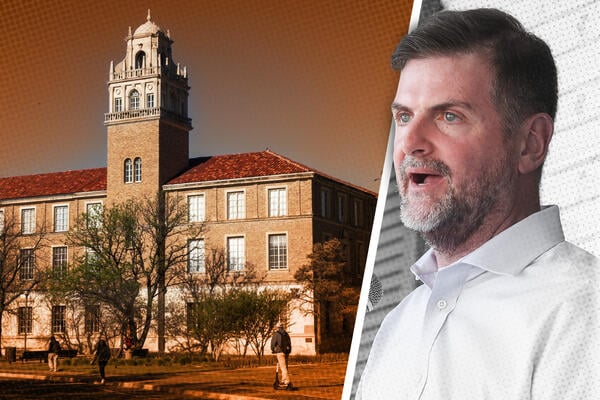
    Dr. William InbodenWilliam Inboden, an expert on national security and foreign policy scholar, has been appointed executive vice president and provost at The University of Texas at Austin, effective Aug. 1. He will also hold the William Powers Jr. Chair and a joint faculty appointment with the Department of History and the School of Civic Leadership.

    Inboden has held several academic leadership roles at UT Austin and the UT System from 2010 to 2023. These include serving as founder and executive director of the Clements Center for National Security, founding editor-in-chief of the Texas National Security Review, and co-director of The University of Texas System National Security Network.

    In addition, Inboden served as a faculty member in the LBJ School of Public Affairs and was a Distinguished Scholar at the Strauss Center for International Security and Law.

    Currently the director of the Alexander Hamilton School for Classical and Civic Education at the University of Florida, Inboden is also a Peterson Senior Fellow with the Kissinger Center for Global Affairs at the Johns Hopkins School of Advanced International Studies. He received Ph.D., M.Phil and M.A. degrees in history from Yale University and an A.B. in history from Stanford University.

    Source link