In 2021, I piloted a city-wide mentoring programme for global majority ethnic staff working in London universities.
It was born from the bilateral North London Leadership Programme between London Metropolitan University and City St George’s, University of London. Four years later the Global Majority Mentoring Programme is flourishing – but world events show us that we need interventions like these as much as we ever did.
The Global Majority Mentoring Programme is London Higher’s flagship commitment to championing equality, diversity and inclusion across the capital. It is a cross-institutional scheme that aims to improve career progression for global majority ethnic staff; give mentees a senior mentor from a different institution, outside their institutional hierarchy; and build professional networks across the capital to foster pan-London collaboration. Over 300 participants from 20 institutions have engaged with the scheme, with representation from small specialist institutions, large multi-faculty universities, and everything in between.
London remains the most ethnically diverse region in the UK. Ten of London’s 32 boroughs (plus the City of London) have a majority non-white population. Newham is London’s most diverse borough, with a population that is 69.2 per cent non-white. In the boroughs of Brent, Redbridge, Harrow and Tower Hamlets, the figure is also above 60 per cent.
You could also call the capital a microcosm of the wider HE sector. London has the largest concentration of diverse higher education providers in the country. A citywide initiative here has a real opportunity to effect meaningful and visible change. Our universities are proudly outward-looking and global, from research links to equitable international partnerships, yet they are also firmly rooted in place and contributors to local growth, regeneration and prosperity. However, lasting change doesn’t happen overnight; London’s higher education sector was not, and still is not, truly representative of the city it serves.
Mentoring individuals from global majority ethnic backgrounds aligns with London-wide policy aims and ambitions: there’s a clear evidence base to support this. Along with the London Anchor Institutions’ Network, we’re striving to meet the clear priorities that have been set out for London’s post-pandemic recovery and regeneration, addressing systemic issues of social and economic unfairness. The London Growth Plan and upcoming Inclusive Talent Strategy encapsulate these priorities.
Growing the pipeline
We are all acutely aware of the wider narrative around EDI. The second Trump administration’s efforts in the US show us what can happen when a populist government takes up “anti-woke” as a cause. There may be disagreement about the form that EDI work should take and some people may fundamentally disagree with the legitimacy of EDI work as part of a public service agenda.
However, in a sector in which there is a visible lack of diversity – in all its forms – that worsens, the further upstream in the talent pipeline you go, we need to continue to work to understand the practical and cultural barriers to leadership and drive to overcome them, learning together as we go. A theme that has consistently emerged throughout the programme is gaining a better knowledge of HE, and its systemic complexities and barriers.
Mentoring programmes like ours create space and connections to make sense of personal experience and explore shared challenges. Participants report feeling a greater sense of empowerment and increased confidence. And tangible impacts on mentees include promotions, collaborations across universities, joint research bids, and even funded PhDs happening as a result of their participation in the scheme.
Future-proofing
Career progression and leadership opportunities were identified as key issues from the outset, so it seems appropriate that the programme is supported by Minerva, an executive search and recruitment firm specialising in education. As headhunters responsible for significant appointments, Minerva is in a position of influence to shape the composition of senior university leadership and their boards.
The programme ensures that a diverse talent pool is in the Minerva team’s line of sight, and can understand more about the challenges global majority colleagues face in moving up the ladder. Minerva also runs yearly masterclass for participants to demystify the executive search process – providing insights into a world that is largely unknown to many of them. This includes a breakdown of recruitment, explanations of things such as the “informal coffee” interview stage, tips on negotiating, conveying a personal brand and profile raising.
We also tailored a leadership development programme alongside the University of Westminster and Blue Whistle Learning that has been taken up internationally, in countries like the Philippines and South Africa.
It is my hope that the initiatives like this are viewed not as political footballs or shiny nice-to-haves, but for what they are – interventions based on robust evidence that meet local and sectoral needs and broaden opportunities for collaboration.
Higher education, especially in London, does not exist in a bubble. It is critical that universities continue to position themselves as integral to driving wider policy change in service of society. A more diverse sector does not mean a watered-down one – it means one that is informed by more voices and perspectives, and therefore better equipped to succeed in tackling the challenges laid out before it.
This article is one of four exploring London Higher’s Global Majority Mentoring Programme – you can find the others here.
The Global Majority Mentoring Programme, delivered by London Higher, aims to support career progression for Black, Asian, and minority ethnic (BAME) staff by providing tailored mentoring relationships and learning opportunities for academics and professional services staff.
I joined the programme as a mentee in 2023–24 while seeking support during my time as head of two merged divisions in the School of Law and Social Sciences. For me, mentoring is an exchange of knowledge and experience, and I was looking for a woman of colour in a leadership role outside my own institution with whom I could turn to for advice on navigating the unique challenges I was facing in confidence.
The programme was recommended to me by a colleague who recognised that, as the only non-white member of the school leadership team, I faced specific challenges which, although acknowledged by the rest of the team, could only be supported to a limited extent given that the remainder of the team were white. They understood that someone with lived experience of both race and gender might be better placed to offer the kind of support I needed. I was matched with someone in an Associate Dean role who I met with regularly for three months. She validated my experiences especially when I was second guessing myself, she also offered me guidance and advice on navigating career progression and insights on HE headhunters.
In addition to the mentoring, I also took part in the two-day Learning Leaders Workshop, delivered in partnership with the mentoring programme and the University of Westminster. I approached the workshop ambivalently while hoping it would offer more than the surface-level training I had experienced in the past. Previous programmes had often been underwhelming, failing to meet expectations and lacking depth. One in particular was overcrowded, with more than twenty participants, which made it difficult to engage in the kind of deep thinking that individual and collective inquiry needs.
Surface pressure
Reflecting on these past experiences, I began to question the broader purpose and structure of leadership development in higher education. Despite good intentions, many leadership development initiatives in higher education appear to remain disconnected from the structural changes reshaping the sector. And it is not always clear why line managers support staff participation in these programmes when, in practice, there appears to be limited opportunities to apply or build on the learning.
This concern feels especially pressing now, as the sector undergoes significant transformation, with widespread voluntary redundancies affecting many institutions across the UK. I fear that higher education is losing emerging talent at an alarming rate. While the current focus is largely on financial viability, we may be overlooking a more profound long-term issue, the need to reimagine what leadership in higher education looks like. The urgency of building a future-focused leadership pipeline is growing, particularly as ongoing threats to equity, diversity and inclusion continue to challenge the sector’s values and resilience.
Amid this context of uncertainty, where many of us are increasingly time-poor and juggling demanding workloads, I hoped the Learning Leaders workshop would offer a more meaningful and impactful experience. Taking time out of our busy schedules for training must feel worthwhile, rather than merely another tick-box exercise to meet 360 performance management targets. To my surprise, several aspects of the workshop turned out to be both unusual and thought-provoking.
Leadership through lived experience
Notably, there were just six of us in the room, all women, all from the global majority. Throughout the two days, I found myself reflecting on this. Why is it that I so often see more women than men who feel the need to be “trained up” for leadership? This prompted broader questions about gender, expectations and who is seen as ‘ready’ for leadership roles in our institutions. Women lead in many areas of life, particularly those of us who are parents or and carers. We are skilled problem-solvers, strong networkers, and we manage complex responsibilities every day.
In my role as Head of Division, I noticed a recurring frustration among female academics who felt that the emotional labour involved in providing pastoral care to students often went unrecognised. There was a shared sense that this responsibility frequently fell to them, with both students and male colleagues appearing to expect them to take it on. Yet we rarely describe care and pastoral work as leadership.
The programme was not a traditional form of training in any sense. Instead, it offered a series of facilitated sessions that created space for us to reflect, share, and learn from one another’s experiences. Together, we explored how we each learn which was presented in four quadrants – body, heart, mind, and spirit – and how to make the most of this intel within a team setting. This deeper understanding uncovered the strengths within our own leadership styles and helped us consider how best to apply them in our professional contexts. We took time to reflect on how leadership is defined and, more importantly, where it is learned and practised.
Leadership, we came to understand, is not something taught in a conventional way but rather something that evolves through lived experience. It happens in both personal and professional settings, though we might not always recognise it as leadership in a formal or professionalised sense. The workshop took a holistic approach and illustrated how knowledge can emerge through embodied learning, incorporating philosophical inquiry to uncover deeper insights into our individual and collective strengths. This is when it occurred to me, for the first time, that developing leadership practice is best done in communities of practice.
By the end of the two days, we weren’t “trained” by the facilitator in any traditional sense. Instead, the leadership wisdom we uncovered emerged from within our own group, the Super Six, which is what we have come to be known as and was brought to light through Keith’s expert and highly unconventional facilitation, which gently led us to that shared discovery.
Many paths to leadership
In hindsight, the Learning Leaders workshop gave me the space to actively explore the “what next” and “how next” of leadership. A series of thoughtful one-to-one conversations with one of the Super Six proved particularly impactful. Their questions led me to reflect deeply on new possibilities for academic leadership, including working as a freelance scholar, moving to a different institution, or stepping outside the sector altogether. I have always held a personal principle not to remain in one institution for more than ten years, out of concern for becoming institutionalised and limiting my professional growth. After several thoughtful conversations with my Dean, I came to the difficult but right decision to leave at the end of 2024.
Since then, I have had the privilege of working with several universities and organisations from teaching, advising, researching and collaborating on projects – all of which have been intellectually energising and impactful. There is no one way to lead, and the Learning Leaders workshop reminded me that there are many paths to leadership, each shaped by context, values and personal experience.
If there is any advice that I could offer to emerging leaders from global majority backgrounds, it would be to identify a sponsor with decision making power within the institution, a mentor outside of the university for confidential developmental advice and identify role models across different sectors and who do leadership well so you can begin building your own community of practice.
This article is one of four exploring London Higher’s Global Majority Mentoring Programme – you can find the others here.
This HEPI Blog post was kindly authored by Huw Morris, Honorary Professor of Tertiary Education, IoE, UCL’s Faculty of Education and Society and Richard Watermeyer, Professor of Education, University of Bristol.
Introduction
It is a year since the Labour Government was elected with a commitment to produce a post-16 skills and higher education White Paper by Summer 2025. In this article, we look at how changes in the UK’s economy and politics since July 2024 have altered what is likely to be in this policy statement and what might happen despite it.
What has happened over the last twelve months?
Last September, the Minister of State for Skills, Jacqui Smith, drew attention to the enormous economic challenges and tough choices facing the Government, but stressed the administration’s commitment to a mission-led approach to create a new era of opportunity and economic growth within a fairer society for everyone. Two months later the Secretary of State for Education, Bridget Phillipson, wrote to vice chancellors outlining the Government’s expectation that universities will:
expand access and improve outcomes for disadvantaged students;
make a stronger contribution to economic growth;
play a greater civic role in local communities;
raise teaching standards; and
deliver sustained efficiency and reform.
There were also subsequent calls for more effective higher education leadership, strong governance and a new business model for the sector. To support these changes, ministers provided an increase in the undergraduate home tuition fee of £285/year and an uplift to the maximum maintenance loan support of £414. For those concerned with institutional finances, this uplift in income was more than matched by higher costs due to increases in employers’ national insurance contributions, reductions in foundation year fees, withdrawal of level 7 apprenticeship funding and reduced capital allocations, among other things. To deal with these changes, most universities have sought to increase their international student recruitment and classroom-based home undergraduate students, as well as higher margin postgraduate provision. For some of the institutions denied these opportunities because of their market position the alternative has been to expand their franchise operations and transnational education and/or to reduce costs. As figure 1 illustrates, these changes in funding and activity have produced some significant changes in forecasts for the money flowing to colleges, independent training providers and universities.
Figure 1: Funding and Orientation Matrix
Looking at the balance between areas of activity which enhance prestige and those that support widening participation, when combined with those that are funded publicly or privately, reveals some big changes. The increase in undergraduate home student tuition fees has not been enough to stem the decline of overall funding from foundation years, postgraduate courses and research grants. The balance in government funding has shifted from these areas of activity towards schools, further education and apprenticeship provision. Meanwhile, although funding from private sources for international students taught in the UK and for transnational education overseas has expanded, UKRI funding for individual institutions has declined due to increases in the number of grant applications from a wider range of institutions and a larger number of researchers leading to a halving of the success rate compounded by changes to the treatment of what was and is now again EU research funding.
Meanwhile, the impact of universities and colleges on local communities has been a tale in two parts. The annual Higher Education / Business Community Interaction survey reveals small increases in business start-ups and spinouts as well as partnerships with small firms, but measures of the impact on local economies is more difficult to demonstrate. These issues are less pronounced with apprenticeship providers and further education colleges where local community engagements are key to engaging adult part-time learners.
The Government has fared poorly in opinion polls over the last twelve months due to concern about the cost of living, immigration and the state of public services. This has prompted challenges from the political right and left. This is not confined to questions about tax, immigration and public spending, it has also extended to concerns about the role of universities and support for other forms of post-16 education. Across the voting population, recent private opinion polling has revealed that just over half of the electorate are questioning, sceptical or openly hostile to the role of universities in their communities. University research as an area of activity is poorly understood and where there is an appreciation of this activity, it is not automatically seen as meeting real-world needs. Meanwhile, among the leadership of many major civic and corporate organisations, universities are seen as profit-driven and not working in the public interest. In short, there is a lack of an emotional and relational connection between universities, local communities and national leaders.
It has been argued that university leaders need to respond to these adverse public perceptions by stating the virtues of higher education and research more clearly and advocating for universities more often. Pursuing this approach, it is argued, will open the door to greater trust, less regulation and improved funding. More recently, it has been argued that public opinion has changed to such an extent since the Covid pandemic that this approach will not work and there is now a need, quoting Robbie Burns, for university staff “to see ourselves as others see us”, before considering how best to respond. The priorities of these others are likely to become more visible over the summer months as they question the evidence of university contribution and those who champion the current arrangements in the wake of this year’s home and international student recruitment rounds.
The Autumn party conference season begins with the Liberal Democrats in Bournemouth (20 to 23 September), Labour in Liverpool (27 to 1 October), the Green Party in Bournemouth (3 to 5 October) and the Conservatives in Manchester (5 to 8 October). In today’s world of multi-party politics and jostling to define the public policy agenda, it is also important to note that the Reform Party conference will take place in Birmingham (5 to 6 September). Meanwhile, “Your Party”, the new left-wing party led by Jeremy Corbyn and Zarah Sultana, has not given a formal indication of its plans for an inaugural conference, but it seems likely that there will be events in early Autumn..
The conference season is normally a time when parties outline what is planned or hoped for in the future. Governments are not supposed to announce new initiatives outside of the House of Commons, and although they occasionally do, they are rebuked by the Speaker of the House of Commons, as the Secretary of State for Education and Chancellor of the Exchequer have found out in recent months. This year is likely to be more difficult than usual as pressures on the public purse raise questions about tax changes in the Autumn budget and raise the spectre of changes to expenditure plans to meet the Government’s spending rules and to provide for defence, health and welfare commitments.
Any post-16 education announcements are likely to be especially difficult because of the competition with other parties. The Reform party has promised to eliminate interest on student loans and to extend loan repayment periods (a graduate tax in all but name), as well as removing student loans for medical and STEM students and writing off the loans of long-serving NHS workers. There are also proposals to invest more in apprenticeships and technical education with an increase in publicly funded training courses.
Similar proposals were made by the Green Party in their 2024 General election manifesto with commitments echoing the 2019 Labour Party manifesto to scrap tuition fees, restore maintenance grants and increase investment in skills and lifelong learning. Meanwhile, for completeness, the Liberal Democrats pledged to improve financial support for disadvantaged students by reintroducing maintenance grants, in part modelled on the arrangements introduced by the Liberal Democrat minister, Kirsty Williams, while she oversaw higher education for the Welsh Government (2016-2021). These promises of increased spending on student maintenance are likely to be attractive to many young voters and particularly newly enfranchised 16–18-year-olds. These promises can also be made by parties that believe they are unlikely to find themselves in government in 2026. The problem for university leaders and staff with these proposals is that while they will help students, they won’t help institutions to pay their bills, except perhaps for students’ halls of residence.
What could possibly go wrong?
Increased strain on university finances and growing pressure on the public purse, combined with demands for improved student maintenance funding, create a difficult context if anything unexpected goes wrong with the income and expenditure of individual institutions. These challenges have been added to by the publication of nine major Government strategy and policy papers with implications for post-16 education and training.
The five missions that the Government was elected to pursue have been added to by a plan for the NHS, an Immigration White Paper, five critical technologies, six milestones, seven chapters in the Get Britain Working white paper, the eight priority sectors in the industrial strategy white paper, the nine regions identified in the national infrastructure plan and 10 priority skills sectors identified by Skills England. All of these plans have local dimensions that are being developed with the 12 established Mayoral Strategic Authorities and 12 new regional bodies outlined in plans for devolution to 44 English regions which will combine with 38 Local Skills and Improvement Plans (LSIPs). The complexity associated with these arrangements means that there will, in practice, have to be some simplification.
It is reassuring to see this energy and commitment to change, but it is also a cause of concern that it is not clear how the various plans and governance arrangements will join up within Whitehall and across the regions. This may not be a problem in the largest city regions of Greater Manchester, Liverpool, London, North East, West Midlands and West Yorkshire. However, it is likely to be more of an issue in the less developed Mayoral regions of Cambridgeshire and Peterborough, the East Midlands, Sheffield, South Yorkshire, Tees Valle and West of England, not to mention the other 22 yet to be reorganised regions of the UK covering 50% of the population.
The challenges of developing joined-up plans are likely to become problems if the reputational and financial risks being experienced by cash-strapped colleges, independent training providers and universities materialise. Among universities 43% are currently forecasting a deficit and the most recent published figures for further education colleges in 2022/3 revealed a figure of 37%. As recent experience with the University of Dundee has illustrated, the short-term direct costs can exceed £100m, and the longer-term indirect costs are even greater. These additional costs are likely to be substantial as national regulators, regional officials and local providers wrestle with the challenge of developing the capacity, capability and courage needed to align provision with employer demand as well as student interest.
With low economic growth, high inflation and challenges to reductions in government expenditure and without additional funding for student maintenance and living expenses, it is difficult to see how universities will widen participation for students from lower socio-economic backgrounds. Without more funding for courses in the areas of skill shortage that underpin the eight industrial sectors and the requirements of the NHS and National Infrastructure Plan, it is difficult to see how local skills needs will be met and the improvements in productivity and economic growth achieved. Teaching quality might be maintained by a lower-paid and increasingly casualised workforce, but will the efficiency and effectiveness of institutions improve without support for the local coordination and rationalisation of activity?
What might be in the Post-16 and Higher Education White Paper?
Now that the anticipated publication of the Post-16 and Higher Education White Paper has been delayed until the Autumn it seems likely that it will be timed to coincide with the Budget in November. This Indian Summer schedule is needed to gain some certainty about the future funding position and associated changes to tax and spending decisions. So, what might be in the White paper? At present the following five strands of activity seem most likely.
Widening participation and progression
Proposals for the development of regional education and skills pathways to support the introduction of the credit and modular funding arrangements that will be needed with the Lifelong Learning Entitlement in January 2027. Proposals for consultation on how institutions could be required to introduce bursary and scholarship arrangements if they fail to meet regionally agreed targets for widening participation and progression.
International students
Proposals for consultation on how the 6% international student levy will be used to pay for the upskilling of domestic learners, rebalancing of funding towards institutions that have not recruited international students and underwriting of the costs of structural adjustments.
Local Skills and Productivity
Outline of how Local Skills Improvement Plans will be developed by Skills England to ensure that Mayoral Strategic Authorities and other regional bodies have tools to influence education provision to respond to the 10 skills priorities and 5 critical technologies while meeting the needs of local employers and communities. This might include local independent careers, advice and guidance arrangements of the sort developed in Greater Manchester.
Quality and Standards
Announcement of the provisional findings from an internal review of the standards and regulations applied by the Office for Students including tightened controls over franchise and transnational education arrangements.
Efficiency, effectiveness and exit
Changes to Competition and Market Authority guidance on regional institutional cooperation. The introduction of an insolvency and regime for higher education institutions to parallel arrangements for further education colleges and independent apprenticeship providers. This to include formal mechanisms for restructuring loans or similar transitional finance arrangements.
What is currently missing from these arrangements is a multi-year agreement on fees and funding or a plan for supporting English regions that are not part of the current plans for devolution. All major post-16 White papers in the past have included an explicit or tacit exchange of support for the UK economy locally and nationally with an agreement on longer-term funding and finance. To achieve this realistically in the future will require guidance on how regional and institutional leadership and governance will be aligned with national plans. The UK’s devolved governments and a few established Mayoral Strategic Authorities have mechanisms to bring colleges and universities together to discuss their plans and the opportunities for alignment. In many instances these arrangements span more than one MSA or its equivalent. Most of the other regions lack these arrangements and will need support to develop local officials, senior managers and governing bodies. Most importantly what should these groupings do if one or more institutions in their patch fail?
There is little appetite among the UK’s political parties and government departments for an independent review of higher education because of concern about the time this would take and the loss of control it would entail. However, the risks associated with current economic constraints and political polarisation pose substantial risks for local communities and regional economies in general and for the students and staff in individual institutions in particular. The summer months provide a useful time to reflect on these challenges and to consider how genuinely transformational change can be led and managed within city regions and rural combined authorities. For universities, further education providers and independent training providers and their representatives, this should involve more than improving their public affairs and relations and should consider how local and regional forms of organisation can be developed.
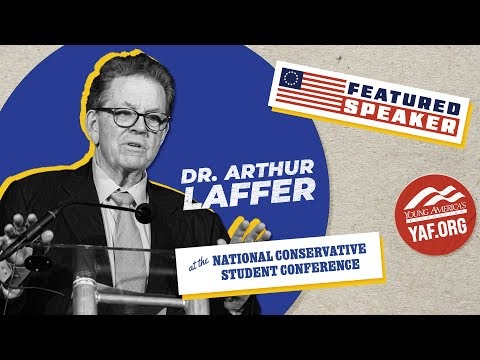
Arthur Laffer, the Reagan-era economist best known for the “Laffer Curve,” appeared recently at a Young America’s Foundation (YAF) event, still making the same tired claims that have shaped decades of economic inequality, deregulation, and magical thinking. The event, broadcast on C-SPAN, was marketed as a fresh take on conservative economics. What it delivered instead was a rerun of discredited supply-side talking points—punctuated by jokes that fell embarrassingly flat.
Laffer claimed that Donald Trump’s tariffs were a strategy to bring about more free trade in the future—a baffling contradiction to anyone who understands trade policy or the basics of coercive economic diplomacy. The idea that protectionism is a roundabout route to free markets would be laughable if it weren’t so destructive. But Laffer, like many libertarians, thrives on contradiction. The audience—young, mostly white, mostly male—nodded along as if it all made sense.
He also defended increased U.S. military spending, invoking Ronald Reagan’s 1980s arms buildup. What he didn’t mention: Reagan was in the early stages of dementia during his presidency, and his military strategy deepened the national debt, even as Laffer’s beloved tax cuts starved the government of revenue. That context never surfaced, of course.
Laffer’s appearance was followed by Linda McMahon, former WWE executive and Small Business Administration head under Trump. The tag team pairing reinforced the spectacle of right-wing economic theater disguised as intellectual discourse.
YAF, a competitor to Turning Point USA, presents itself as the more polished brand of conservative youth organizing. It’s backed by deep pockets and institutional support, but its message remains the same: glorify the market, demonize government, and elevate charisma over critical thinking. Its speakers are well-coached in rhetorical sparring, skilled in sophistry, and eager to exploit the inexperience of their college-aged audience.
Laffer fits that mold perfectly. He’s less a thought leader than a relic of failed policy, propped up by a movement that rewards ideological loyalty over intellectual honesty. His ideas can’t really be called “theories” anymore—empirical evidence has repeatedly debunked them. But among libertarians and the far right, evidence is optional, and repetition is persuasive.
Young America’s Foundation is adept at drawing youth into a worldview of individualism that rarely benefits individuals. It relies on the passion and ignorance of its followers, asking them to embrace contradictions: that tariffs bring freedom, that debt from war is freedom, that cutting taxes magically increases revenue. It’s a faith-based economics, and Laffer remains its high priest.
In the end, the only thing more stale than the Laffer Curve is the attempt to keep it alive.
Sources:
C-SPAN: Art Laffer speech at YAF
Reagan’s Alzheimer’s revelations: The New York Times
Critiques of supply-side economics: Brookings, Economic Policy Institute
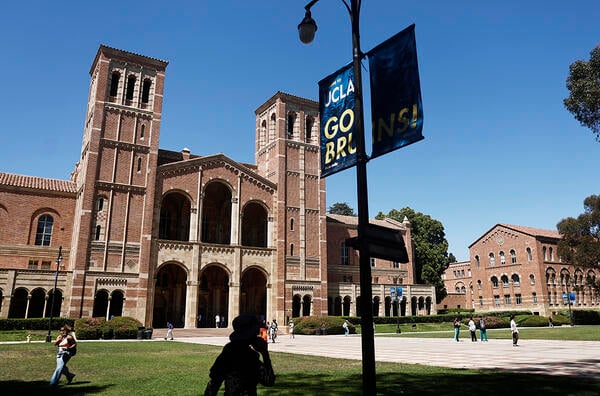
The federal government has frozen $584 million in grants and contracts at UCLA.
The Trump administration is ratcheting up pressure on the University of California, Los Angeles, and seeking a $1 billion settlement, following concessions from other institutions, CNN reported.
University of California president James B. Milliken said in a statement Friday that “a payment of this scale would completely devastate our country’s greatest public university system as well as inflict great harm on our students and all Californians.”
Demands for a settlement come as the federal government has accused UCLA of violating civil rights law by allegedly failing to protect students from antisemitism as pro-Palestinian protests surged on campus last spring. The National Science Foundation and other agencies have since suspended $584 million in federal research funding, according to UCLA chancellor Julio Frenk. TheNew York Timesreported that the administration also wants UCLA to put $172 million in a fund for victims of civil rights violations.
UC system officials announced Wednesday they would negotiate with the federal government in the hope of reaching a “voluntary resolution agreement” over the charges.
“Our immediate goal is to see the $584 million in suspended and at-risk federal funding restored to the university as soon as possible,” Milliken wrote in a Wednesday statement, adding that cuts to federal research funding “do nothing to address antisemitism.”
UCLA was one of several institutions whose executives were hauled before Congress over the last two years to address pro-Palestinian encampments and alleged antisemitism and harassment tied to such protests.
Should UCLA reach a settlement with the Trump administration, it would be the first public university to do so but the third institution to strike a deal with the federal government over the course of several weeks. Last month, Columbia University reached an unprecedented settlement with the Trump administration, agreeing to changes to admissions and academic programs and paying $221 million to close investigations into alleged antisemitism and restore some frozen research funding. The deal will be overseen by a third-party resolution monitor.
Brown University also struck a deal with the federal government in July that did not include a payout to the Trump administration, but officials did agree to provide admissions data to the federal government and bar transgender athletes from competing, among other concessions.
Federal officials didn’t respond to a request for comment Friday.
Higher education serves different purposes for different people. For some, it represents transformation and expanded horizons. For others, it remains a site of oppression—a place where white supremacy and anti-Blackness flourish while administrations proclaim commitments to diversity even as their actions contradict these stated values. The commitments to diversity, equity, and inclusion (DEI) have long been performative at most predominantly white institutions (PWIs). Now, institutions no longer need to maintain even this pretense.
Dr. Frederick Engram JrThe current presidential administration has made anti-Black, anti-immigrant, anti-LGBTQ+, and anti-women policies central to its agenda. We are not approaching fascism—we are immersed in it. The fundamental problem with higher education and liberal politics more broadly is that while we all recognized the warning signs, no substantive preventative measures were taken to counter the impending assault.
When the previous Trump administration targeted K-12 education—falsely claiming that critical race theory was being taught in elementary schools and suspending administrators in states like Texas—higher education watched passively, believing itself safe from similar attacks. Instead of mounting resistance and uniting against authoritarian overreach, higher education capitulated. Institutions cancelled classes and programs designed to educate students about historical injustices, prioritizing the comfort of white students and families while disregarding everyone else.
As Professor Emeritus Dr. John R. Thelin documents in his seminal work A History of American Higher Education, the system was designed from its inception to serve wealthy, white, cisgender, able-bodied men. Higher education was never intended to include marginalized people of color or women. The argument that white men are now being excluded from spaces where they have always been centered would be absurd if it weren’t so dangerous.
Anti-discrimination DEI initiatives became necessary precisely because white men were not voluntarily making space for others—supported by white women who were themselves fighting for inclusion. The notion that white men feel excluded from higher education reflects a false sense of entitlement and the sting of having their mediocrity exposed. This wounded sense of supremacy drives them to destroy institutions rather than share them.
Fascism is not approaching—it has arrived.
The targeted attacks on Harvard, UCLA, University of Pennsylvania, minority-serving institutions (MSIs), and historically Black colleges and universities (HBCUs) are rooted in anti-Black rhetoric that was explicitly outlined in Project 2025. This blueprint seeks to create a dystopian America where marginalized voices are silenced and governance is built around white anxieties and grievances.
The worst possible response from higher education institutions is capitulation. Instead of forming coalitions, deploying legal resources, and mobilizing their extensive alumni networks, institutions are either confronting this administration in isolation or retreating into silence. Someone should inform higher education that fascism doesn’t reward compliance. It seeks total destruction and will not protect those who failed to oppose it simply because they remained quiet.
Our institutions and academic disciplines face existential threats. Regardless of how compliant we choose to be, when the destruction is complete, nothing will remain standing. We cannot measure progressive politics by white comfort levels, nor should white feelings determine whether we defend the most vulnerable among us.
Understanding liberation and resistance in this moment requires recognizing that active opposition is our only viable option. Millions have died, millions are dying, and millions more await death—all to satisfy the bloodlust of mediocre leaders drunk on power. Our resistance must be meaningful and sustained.
What purpose will silence serve when we lose everything anyway?
The time for half-measures and performative gestures has passed. Higher education must choose between principled resistance and institutional suicide. The stakes could not be higher, and history will judge our response.
_________
Dr. Frederick Engram Jr. is an assistant professor of higher education at at Fairleigh Dickinson University.
Dr. Brendan L. JohnsonBrendan L. Johnson has been appointed as the new Director of Bands at Benedict College, where he will lead all ensembles, including the nationally recognized Benedict College Band of Distinction (BCBOD). Johnson brings a decade of transformative leadership from Darlington High School, where he served as Director of Bands. During his tenure, he grew the program from 75 to 225 members, making it one of the largest high school bands in South Carolina. He was selected for the Benedict role following an extensive nationwide search for elite musicians and conductors.
A dual graduate of Bethune-Cookman University, Johnson holds bachelor’s degrees in music education and liberal studies. While at Bethune-Cookman, he made history a the third Mr. Bethune-Cookman University. He later earned a master’s in education from Anderson University, and a Doctorate from the University of Southern Mississippi.
Forty-some years ago, students sat in straight rows with books, papers, and pencils neatly lined up on their desks. But beginning in the 1990s, educators faced very different classrooms as computers found their way into schools.
For most teachers, it felt daunting to figure out how to integrate new tools into curriculum requirements–and how to find the time to make it happen. To help this digital transformation then, I joined the South Dakota Department of Education to lead summer immersion teacher training on technology integration, traveling the state to help schools understand how to use new tools like video systems. I was one of many who helped educators overcome that initial learning curve–and now tools like computers are an integral part of the education system.
Let’s face it: The advent of new technologies can be overwhelming. Adjusting to them takes time. Now, with the coming of age of AI, teachers, administrators, students, and parents have endless questions and ideas on how it might positively or negatively influence education. I’ve seen it in my current role, in which I continue to empower educators and states to use modern technology to support student learning. And while concerns about AI are valid, there are many positive potential outcomes. For educators in particular, AI can be a huge value-add, automating certain administrative tasks, helping understand and predict student success and struggles, and even helping tailor instruction for individual students.
The upside is huge. As schools embark on their AI journeys, it’s important to remember that we’ve been here before–from the introduction of the internet in classrooms to the abrupt shift to e-learning at the outset of COVID-19. Superintendents, boards of education, and other education leaders can draw on important lessons from prior technological transformations to fully take advantage of this one.
Here are some rules of the road for navigating the integration of disruptive technologies:
1. Choose the right tools. The AI tool(s) you choose can have varying results. School districts should prioritize proven technologies with a track record in education. For students, this includes adaptive learning platforms or virtual tutors. Some of the best tools are those that are specifically designed by and for educators to expedite administrative tasks such as grading and lesson planning. Even more valuable is the ability to support education-specific issues such as identifying struggling students with early warning systems and using AI to provide projections for student futures.
2. Training is everything. With proper training, AI can be less intimidating. We don’t expect students to understand a new concept by reading a few paragraphs in a textbook, and we shouldn’t expect teachers to figure out how to best use AI on their own. President Trump’s recent executive order prioritizes the use of AI in discretionary grant programs for teacher training, which is an important step in the right direction.
3. Engage parents. Moms and dads may be concerned if they hear–without a deeper explanation–that a school board is rolling out an AI tool to help with teaching or administrative tasks in their children’s education. Keep an open line of communication with the guardians of students about how and why AI is being used. Point parents to resources to help them improve their own AI literacy. To a reasonable degree, invite feedback. This two-way communication helps build trust, allay fears and clarify any misconceptions, to the benefit of everyone involved, including, most importantly, the students.
4. Humans must be involved. The stakes are high. AI is not perfect. Administrators must ensure they and the educators using AI tools are double checking the work. In the parlance of responsible AI, this is known as having a “human in the loop,” and it’s especially important when the outcomes involve children’s futures. This important backstop instills confidence in the parents, students and educators.
5. Regularly evaluate if the tools are living up to expectations. The point of integrating AI into teachers’ and administrators’ workstreams is to lighten their load so they can spend more time and energy on students. Over time, AI models can decay and bias can be introduced, reducing the effectiveness of AI outputs. So, regular monitoring and evaluating is important. Educators and administrators should regularly check in to determine if the integration of AI is supporting their goals.
6. The learning curve may create more work at first–but the payoff is exponential. Early adoption is important. I worked with school districts that pushed off integrating digital technologies–ultimately, it put the educators behind their peers. AI can make a difference in educators’ lives by freeing them up from administrative burdens to focus on what really matters–the students.
This is the start of a journey–one that I believe is truly exciting! It’s not the first nor the last time educators adopt new technologies. Don’t let AI overwhelm or distract you from tried-and-true integration techniques. Yes, the technology is different–but educators are always adapting, and it will be the same with AI, to the benefit of educators and students.
Melody Schopp, SAS
Melody Schopp, PhD serves as the Director of Education Industry Consulting at the SAS Institute, supporting the Education Practice to empower education leaders and states to use analytics to improve student outcomes. Previously, following two decades of classroom experience, Schopp was a member of the South Dakota Department of Education and served in numerous director positions, including as Secretary of Education for seven years.
Latest posts by eSchool Media Contributors (see all)
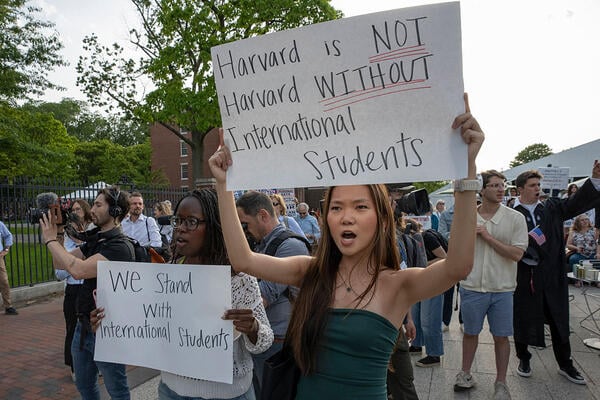
The Trump administration has extended an offer to Harvard University to “simplify” an ongoing legal battle by pulling back on threats made in a May 22 letter from U.S. Department of Homeland Security secretary Kristi Noem to revoke the institution’s ability to host international students.
At the time, Noem wrote in a letter to Harvard officials that DHS was stripping its Student Exchange and Visitor Program certification due to an alleged “failure to adhere to the law.” Harvard responded with a lawsuit, and a judge quickly granted a temporary restraining order to block the federal government from stripping Harvard’s SEVP certification, which would have likely resulted in a loss of international students and dealt the university a severe financial blow. (Harvard also sued the Trump administration over frozen federal research funding in April.)
Harvard argued in its May lawsuit that the revocation was “a blatant violation of the First Amendment” and due process and a retaliatory move by the federal government after the university rejected demands to control its governance, curriculum and the “ideology” of faculty and students. The move, according to the lawsuit, could potentially “erase a quarter of Harvard’s student body” and would harm students who had already been admitted to the university.
Now, in a Wednesday court filing, government attorneys have agreed “that the May 22 letter will not be used to revoke Harvard’s SEVP certification or Exchange Visitor Program designation.” They called the proposal “an attempt to jointly simplify the case.”
DHS officials wrote in the filing that they are “open to counterproposals and a meet and confer.” However, they wrote that Harvard “did not accept.”
Harvard declined to comment and DHS did not respond to an inquiry from Inside Higher Ed.
As Harvard and the federal government battle over international students in court, the Trump administration has found other ways to ratchet up pressure on the nation’s wealthiest university. Last month the U.S. Department of State announced it was opening an investigation into Harvard’s eligibility to participate in the Exchange Visitor program, which is overseen by the State Department and grants J-1 visas for visiting scholars, researchers and postdocs. Secretary of State Marco Rubio wrote that the probe will ensure programs don’t “run contrary to our nation’s interests.”
There have been recent reports—and denials—that Harvard is nearing a settlement with the Trump administration, which, in addition to attempting to cut off its flow of international students, has leveled a litany of claims against the university, including vague allegations of unlawful action and accusations of antisemitism. The Trump administration has demanded sweeping changes at Harvard, which the university has largely rebuffed thus far.
If Harvard settles, it would be the third Ivy League university to strike a deal with the federal government since mid-July. Columbia University was the first, agreeing to a seemingly unprecedented settlement, which closed investigations into allegations of antisemitism and restored some frozen research funding in exchange for changes to admissions, academic programs and other concessions that will be overseen by a third-party resolution monitor. Columbia agreed to pay $221 million as part of the settlement.
Brown University also reached an agreement in late July to settle investigations into alleged antisemitism and restore about $510 million in frozen federal research funds. Brown agreed to spend $50 million on state workforce development efforts, provide admissions data to the federal government and bar transgender athletes from competing, among other stipulations.
Outside the Ivy League, the University of California system announced earlier this week that it intends to negotiate with the federal government over $584 million in suspended federal funding amid Department of Justice investigations into alleged antisemitism. UC officials said the system is seeking a “voluntary resolution agreement” with the Trump administration to restore funding.
The end of the “hegemony” of X as the most used social media platform by researchers has been strongly shaped by political and geographic factors, as well as Elon Musk’s intervention into U.S. politics, according to a new study.
Since Musk rebranded Twitter to X, many within higher education—including some universities themselves—have decided to leave the platform, particularly since the billionaire threw his support behind Donald Trump in the 2024 U.S. election.
Researchers from Arizona State University and the University of Granada examined almost 15,000 publications from multidisciplinary and Library and Information Science journals between January 2024 and March 2025.
Across the whole period, Bluesky had a much smaller presence compared with X in terms of engaged users—those who comment on papers.
However, the paper found a “notable increase” in Bluesky accounts mentioning papers published in multidisciplinary journals in November 2024, which the paper said was likely influenced by political and platform change.
“We observe a clear surge in mentions beginning in September 2024 and continuing into early 2025, particularly around the United States presidential election and subsequent political events.”
The shift in users and increasing diversification between the two platforms, particularly from late 2024 onward, coincided with “major U.S. political events in which Elon Musk has actively intervened.”
The study says the results reveal a scholarly landscape where conversations are no longer concentrated on a single platform, but are now “genuinely distributed between X and Bluesky.”
“This reflects that the response to platform changes is not only field-dependent, but also strongly shaped by political-geographical factors.”
The study comes after a recent analysis by Andy Tattersall, an information specialist at the Sheffield Centre of Health and Related Research, found a third of U.K. universities have now quit X. While the number of active accounts on Bluesky has risen, however, many institutions are still not posting regularly.
A previous study revealed that Bluesky hosted more posts linked to work published in 2025 for the first time in March—declaring, “The days of X’s dominance are over.”
The new paper reached a similar conclusion, adding, “What is clear is that the Altmetric hegemony of X may have come to an end, as for the first time there is a clear alternative in Bluesky, which even matches user engagement in ways that would have seemed unthinkable until recently.
“Only time will tell how effective and lasting this platform shift truly is.”
It says further research was needed to learn why Bluesky has succeeded where other alternatives—such as Threads or Mastodon—did not.