The Georgetown fellow, an Indian citizen, was released from detention in May.
Andrew Thomas/AFP via Getty Images
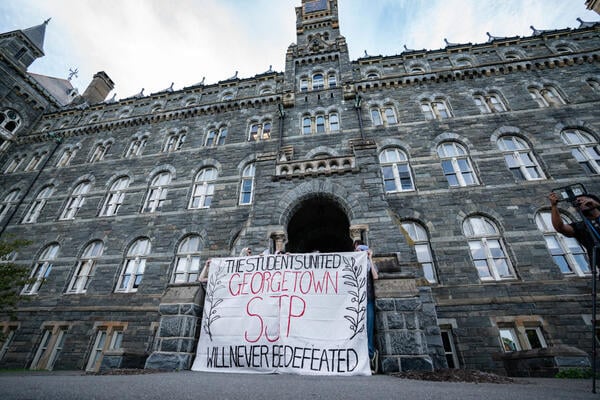
A Georgetown University researcher who was detained by immigration agents in March will be allowed to resume his work, at least for now, according to a court settlement released Tuesday. Politico first reported the development.
The agreement does not guarantee that the postdoctoral fellow, Badar Khan Suri, will be able to stay in U.S. long term, and it doesn’t resolve his claim that the government violated his First Amendment rights by detaining him because of his pro-Palestinian comments and what the government claims are ties to Hamas. Those aspects of the case will be determined by a later ruling.
That said, as litigation continues, Suri will be protected, maintain his status as a student and remain employed.
Suri was first released from detention in May. His wife is a citizen, but her father has been identified as a former Hamas adviser, which likely was a key factor that influenced Suri’s arrest, Politico reported.
Both parties in the case agreed the settlement was a result of “good faith” negotiations, Politico noted, though the State Department and Department of Homeland Security declined to comment.
“We are encouraged that the government agreed to restore Dr. Suri and his children’s status and records,” Eden Heilman, an ACLU lawyer representing Suri, told Politico. “We know Dr. Suri is eager to rejoin the academic community at Georgetown and this will give him the opportunity to do that this fall.”
Ages ago, in the 1970s Soviet Union, a Jewish stand-up comedian, Mikhail Zhvanetski, remarked in one of his skits that if you want to argue about the taste of coconuts (not available in the Soviet Union at that time), it’s better to talk to those who’ve actually tried them.
If you want to argue about antisemitism in academia, better ask those who have actually experienced it. Ask me.
I was 16 years old when I graduated from high school in Moscow in 1971. My ethnic heritage—Jewish—was written on my state ID by the authorities. I couldn’t change it. I applied to the “Moscow MIT”: Moscow Institute of Physics and Technology. I passed the entrance tests with flying colors: 18 points out of 20, higher than 85 percent of those admitted. I was denied entry. I knew why. The unwritten but strict quota was that Jews could make up no more than 2 percent of freshmen.
I did get my education, at another university less closely observed by the party authority. But six years later, looking for a job, I could not find one. In part, this was because institute directors knew they could be disciplined if they hired Jews who then applied to emigrate to Israel. I later learned that I was hired only when my future boss and close friend gave his word of honor that I would never try to emigrate.
Two years later, I applied for Ph.D. study at the renowned Lebedev Physical Institute of the Russian Academy of Sciences (home to seven Nobel laureates). It was common knowledge at that time that one of the officials at Lebedev who had to approve admissions was a notorious antisemite. My gentile adviser also knew that, made sure that the official would never see either my characteristically Jewish face or my state ID, and took over all paperwork communications himself under various pretexts. When I was officially admitted and walked into the official’s office, they looked like they were going to have a heart attack. This was antisemitism.
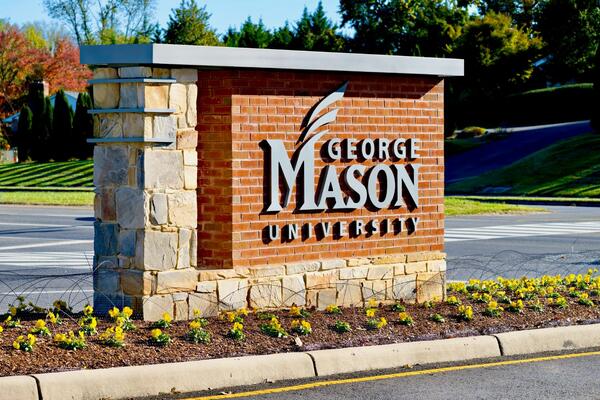
In 1994, 10 years after graduating, I moved to the United States, where, eventually, I devoted more than 20 years of service to the Naval Research Laboratory. Then, in 2019, I joined the faculty at George Mason University, one of the most ethnically diverse universities in the country. In my time here, I have never seen any sign of antisemitism, not a shred. I graduated a Muslim student, who—in his own words—felt honored to have me as his adviser (he even invited me to his sister’s wedding, which was restricted, due to the pandemic, to just 20 guests). I taught several more Muslim students and did research with some others. We openly discussed our religions, and I found these students to be good and compassionate listeners if I chose to share one or another story from my Jewish experience.
Now, however, the U.S. Department of Education is taking seriously a charge of “a pervasive hostile environment for Jewish students and faculty” at George Mason. This is as shocking to me (and to many of my Jewish colleagues at GMU) as hearing that I have broken two legs and never noticed it. In fact, during the trying months after Oct. 7 and amid growing pro-Palestinian protests on campuses, I often praised Mason president Gregory Washington’s handing of this sensitive issue. While paying full respect to respectful protests, freedom of speech and the First Amendment, he fully avoided disruption of the educational process and university business.
To this point, I can again dig into my experience under a totalitarian regime. When I came to America in 1994, I was fascinated by the famous case of Yates v. U.S., in which the Supreme Court issued a decision that offered a powerful contrast to Soviet rule. In that 1957 case, the court reversed the convictions of 14 Communist leaders in California who had been charged with advocating for the overthrow of the U.S. government by force. As Justice Black wrote, they “were tried upon the charge that they believe in and want to foist upon this country a different, and, to us, a despicable, form of authoritarian government in which voices criticizing the existing order are summarily silenced. I fear that the present type of prosecutions are more in line with the philosophy of authoritarian government than with that expressed by our First Amendment.”
To me, this case reflected a quintessential characteristic of American democracy: rephrasing Voltaire, “We may find your view despicable, but will defend to the death your right to say it.”
Though the details of the antisemitism complaint against George Mason have not been made public, it appears that Washington’s leadership is coming under attack based on just two cases involving three students; only one of those cases involved an alleged incident (vandalism) that occurred on campus. In both cases, the university administration, in collaboration with law enforcement, took immediate and harsh steps to resolve the situations: As Washington noted in a recent message to campus, the university was applauded by the Jewish Community Relations Council of Greater Washington for “deploying the full weight of the university’s security and disciplinary measures to prevent these students from perpetrating harm on campus.”
And these incidents are outliers. Just as three thieves who may be GMU students wouldn’t attest to “pervasive thievery” on campus, three students alleged to have violent anti-Israeli agendas do not constitute a “pervasive hostile environment for Jewish students and faculty.” On the contrary, I feel safer and more assured knowing that three miscreants out of a student body of 40,000 were immediately and efficiently dealt with.
What does make me feel uncomfortable—and what I do find antisemitic— is the implicit suggestion that I, an American Jew who does not have Israeli citizenship, must feel offended and defensive in the face of any criticism of any action of the Israeli government. I find such beliefs reprehensible, and they encroach on my freedom to have my own opinion about international affairs.
Gregory Washington is my president, and I am confident that he is doing an excellent job protecting all faculty and students, including Jews, from bigotry and harassment. It is false allegations of antisemitism on campus under the pretext of “defending” Jews like myself that really threatens my well-being as a GMU professor.
Igor Mazin is a professor of physics at George Mason University.
If we are lucky, if we get through this period with our democracy intact rather than sliding into a Hungary-like competitive authoritarianism (or worse), my hope is we will look back on the recent spate of capitulations of elite higher education institutions to the authoritarian regime with some mixture of disbelief and shame. I hope that individuals who I could but will not name, but who are easily identifiable as being central to these capitulations, are viewed harshly as people who failed to hold to important principles at a crucial time.
The alternative, that these people are either viewed as pragmatists or, more likely, forgotten, means we will have fallen so far from our ideals of a free nation built on free inquiry that whatever continues to exist will be unrecognizable as compared to today.
The editorial board for the Penn student paper, The Daily Pennsylvanian, put it plainly in responding to the deal their school struck with Trump, “Penn Descends Into Fascism.” They argue that Penn will be remembered as the school that “welcomed tyranny” “with open arms.”
As bad as it may be for Penn’s reputation, I hope lots of people agree, because if so, it means we have not yet normalized these extortionate practices.
I think these students are correct about what Penn has done. Our only hope is that this welcoming does not turn into a permanent stay. The actions of Penn and other institutions will make achieving this outcome significantly harder. When former Harvard president Larry Summers says, in reacting to Columbia’s capitulation to the authoritarian, that it was “the best day higher ed had in a year,” we should understand Summers is positioning higher ed as something other than an important part of our democratic institutions.
A major institution paying out extortion money in response to a nonmeritorious “investigation” and submitting to government surveillance of its policies is not a good day for higher ed.
The present constantly shapes the future, and even small adjustments now may have large impacts down the road, butterfly-effect style. It is a big problem that so many schools have bent the knee to Trump, but the problem can get bigger if more schools follow suit. Each individual act of resistance continues to matter.
One of these books, Universities in the Marketplace: The Commercialization of Higher Education, was written by Derek Bok, who served as Harvard’s president from 1971 to 1991, and then again from 2006 to 2007 as interim president following a faculty vote of no confidence in, wait for it … Larry Summers.
In Universities in the Marketplace, Bok recognizes that it seems as though, for the right price, everything in the modern university is for sale. By contemporary standards, Bok’s book seems a little quaint, as the practices he’s worrying about, such as institutions and professors reaping financial rewards from intersections with the growing knowledge economy—particularly around tech—has gone from a potentially questionable practice to almost de rigueur at elite institutions. But Bok argues, convincingly, that these compromises erode public trust in higher education.
Fast-forward to today, when preserving access to federal money no matter the cost to institutional independence is deemed by one of Bok’s successors as the high calling of institutional leaders, a sign of success.
While Bok could not have had the foresight to see his institution contemplating paying extortion money to an aspiring authoritarian president, his book all but predicts this outcome by showing that when money is involved, there is no principle. That this is true even for the wealthiest higher education institution of all time suggests no one is capable of resisting.
Or maybe it’s the opposite: Freedom’s just another word for nothing left to lose. Is it a coincidence that it seems as though corporate America and our most corporatized educational institutions are most vulnerable?
I do not think the battle over preserving some semblance of independent and free higher education is irretrievably lost, but it does seem possible that we already have some permanent casualties.
As student journalists at The Harvard Crimson report, Harvard, too, has already allowed government pressure to alter its programs, but those same journalists also suggest that, for now, the school is holding firm against paying the—let’s be frank—kind of bribe handed over by their Ivy League compatriots. The Crimson reports that stories about an impending $500 million payment were byproducts of strategic leaks from the Trump administration rather than trial balloons out of Harvard.
This is good news, because any act of resistance is, well … good news. Whatever relief Columbia, Brown and Penn have experienced by paying these tributes is inevitably temporary. Contra David Leonhardt of The New York Times, who decries Trump’s methods but does not wholly lament the changes the extortion schemes have wrought, there is no good way to cede power to Donald Trump.
Those who think there may be accommodations to be made better hope others continue to fight on their behalf, because failure to do will result in a world where Columbia, Brown, Penn and maybe even The New York Times will exist at the pleasure of the executive.
When we win, should I still be around, personally, I’m not going to let them forget this moment.
Your website is no longer just a digital brochure. It’s the heart of your institution’s marketing, recruitment, and student engagement efforts. For most prospective students, it’s the very first touchpoint, and their decision to inquire, apply, or move on often hinges on what they find there.
More than 90% of students visit a college or university website during their school search. That means your site must not only attract attention but deliver a seamless experience that inspires trust and action.
What does that look like? It’s a blend of smart navigation, compelling visuals, personalized content, and performance that works flawlessly across all devices. It’s also about serving many different audiences, students, parents, alumni, and staff, without sacrificing clarity or focus.
In this article, we break down the 7 best practicesfor higher education websites, with examples from institutions putting them into action. These proven strategies will help your school build a web presence that engages users and drives real results, from exploration to enrollment.
Struggling with enrollment?
Our expert digital marketing services can help you attract and enroll more students!
1. Ensure a Mobile-Responsive, Mobile-First Design
Smartphones are the default browsing tool for most prospective students and their parents. If your institution’s website doesn’t offer a seamless mobile experience, you’re not just frustrating users; you’re losing them.
Why is mobile responsiveness crucial for higher education websites? Most students browse on mobile devices. A mobile-responsive site ensures readability, easy navigation, and fast loading, key for user experience and search rankings. Without it, your site could rank lower on Google and lose over half of the visitors who abandon slow or poorly displayed pages.
Mobile responsiveness means your content adjusts fluidly to any screen size, from smartphones to tablets. This isn’t a nice-to-have feature; it’s a necessity. Google now uses your site’s mobile version to determine how it ranks in search results (a process known as mobile-first indexing). If your site isn’t optimized for mobile, both your visibility and your credibility take a hit.
Use a responsive design that automatically adjusts layouts for smaller screens
Collapse navigation into a clean, mobile-friendly format
Display readable text without requiring zoom
Feature buttons and links that are easy to tap
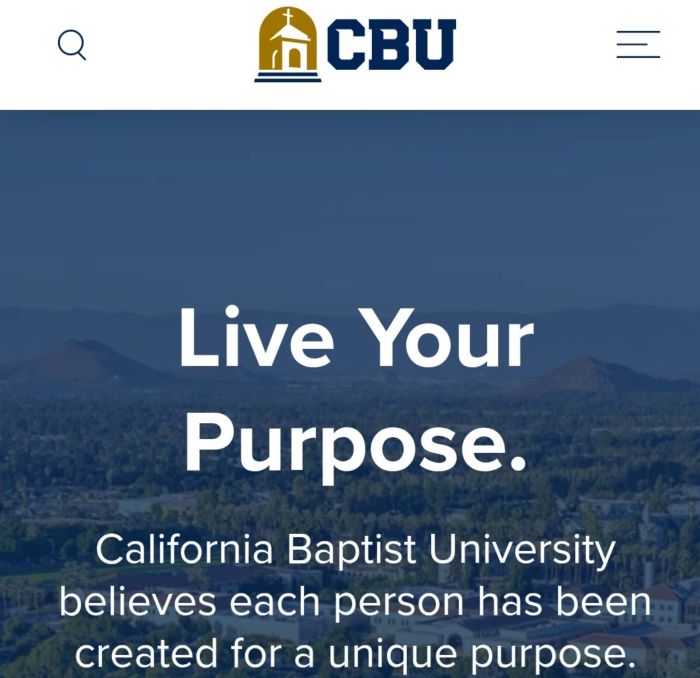
Example:California Baptist University delivers a standout mobile experience. Its responsive design stacks content cleanly for smaller screens, while large, tappable calls-to-action make it easy for prospective students to explore programs or request information. The site balances function and aesthetics, showing that CBU understands what mobile users need and delivers it.
How can improving website speed benefit my higher education institution? Faster websites reduce bounce rates and keep users engaged longer. Prospects find what they need quickly, improving their impression of your institution. Speed also boosts SEO rankings and increases the chances of conversions like form submissions or brochure downloads.
A smooth mobile journey doesn’t just meet expectations, it sends a clear message: your institution is accessible, student-focused, and ready to meet users where they are.
2. Optimize Your Site’s Speed and Performance
Speed matters. Gen Z users expect instant access, and if your pages lag, they’ll bounce, sometimes before they’ve even seen your programs.
Beyond user frustration, slow sites impact your visibility. Google uses page speed as a ranking factor, so sluggish load times can tank your SEO and conversions.
To keep your site performing at its best, follow these key practices:
Compress images and media. Use modern formats like WebP and apply compression tools to reduce file sizes without sacrificing quality.
Minify code and enable caching. Clean up your HTML, CSS, and JavaScript, and use browser caching to speed up page loads for returning visitors.
Implement a Content Delivery Network (CDN). CDNs serve content from servers closest to the user, minimizing delays caused by physical distance.
Limit heavy third-party scripts. Only use plugins and scripts that are essential—too many can drag your site’s performance down.
Test regularly. Tools like Google PageSpeed Insights, GTmetrix, or Lighthouse help you spot bottlenecks like oversized images or slow server response.
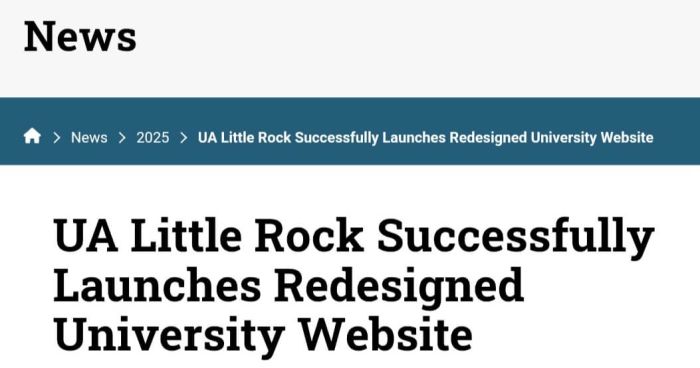
Example:University of Arkansas at Little Rock (UA Little Rock): In March 2025, UA Little Rock rolled out a major website overhaul that improved both user experience and performance speed. A key move was transitioning to modern cloud hosting, which “ensures greater reliability, multiple backups, and improved site performance,” especially during peak or emergency periods. The web team also streamlined the site’s content (trimming 8,000+ pages down by 30%) and modernized the codebase, which reduces load times by eliminating bloat.
Why this matters for higher ed: Even a one-second improvement in page load time can make a measurable difference in how long users stay and what actions they take. A fast website tells students you’re efficient, professional, and respectful of their time, a small detail that leaves a big impression.
If your site is slow, it’s time to speed things up.
3. Implement Strong SEO to Boost Search Visibility
You can have the most beautifully designed website in the world, but if prospective students can’t find it, it won’t deliver results.
That’s where search engine optimization (SEO) becomes critical. Most college students rely on search engines to explore programs, compare schools, and research next steps. If your institution doesn’t appear in those search results, you risk missing out on a massive share of qualified leads.
Think about the intent behind queries like:
“Best MBA programs in Canada”
“Colleges in Toronto for computer science”
“Online diploma in healthcare administration”
If your pages don’t show up, students won’t even know to consider you.
Here’s how to strengthen your SEO strategy and stay visible throughout the student journey:
Keyword Optimization
Start with the language students use. Research long-tail keywords that reflect real queries (e.g., “online MBA in finance” or “career college digital marketing course”). Then, use those terms naturally in your:
Program page titles and H1 headers
Metadata and image alt text
Body content and subheadings
This improves your rankings and helps students quickly identify whether your offerings match their needs.
High-Quality, Student-Centric Content
Search engines prioritize helpful content. So do students. Build rich pages and blog posts that answer common questions about admissions, tuition, career outcomes, or student life. Content that educates, informs, and reassures will keep users engaged and build trust.
Gen Z doesn’t want to dig for answers. Make them easy to find, and you’ll win the click.
On-Page SEO Basics
Each page on your site should have:
A unique meta title and description featuring relevant keywords
Structured headings (H1, H2, H3…)
Descriptive image alt text for both accessibility and SEO
These basic elements are easy to overlook, but they make a real difference in how Google interprets and ranks your content.
Technical SEO and User Experience
Your site’s infrastructure plays a big role in search visibility. Prioritize:
Mobile-friendliness (as covered in Section 1)
Fast page load times
Secure browsing (HTTPS)
Logical, crawlable URLs
Fixes for broken links and outdated pages
Google rewards user-friendly experiences. So do your prospective students.
Local and International SEO
Have a physical campus? Make sure your Google Business Profile is claimed and accurate. Serving international audiences? Offer multilingual content or geo-targeted landing pages to attract global prospects.
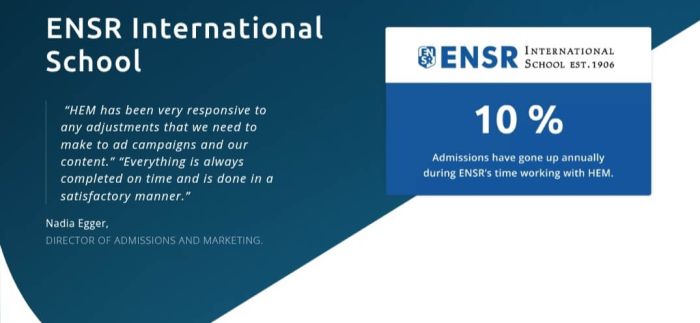
Example: When ENSR partnered with Higher Education Marketing (HEM) in 2019, the school sought to improve its online visibility and attract more qualified leads. HEM implemented a comprehensive SEO strategy that included technical website improvements, bilingual content creation, and targeted Google Ads campaigns. These efforts significantly enhanced ENSR’s search rankings and increased high-quality inquiries from families seeking international education in Switzerland.
Why this matters: SEO isn’t a quick win; it’s a long-term strategy. But done right, it builds sustained visibility across every stage of the student journey.
A prospect might first find your blog post about how to choose a business school. Weeks later, they search for [Your University] campus life. Eventually, they return to your site to click Apply Now. SEO ensures you’re present at each step.
And since over 90% of students visit your website before applying, showing up in search isn’t just a marketing boost, it’s mission-critical.
What role does SEO play in the success of a higher education website?
SEO helps your site appear in search results when students research programs. Strong SEO brings qualified traffic, builds credibility, and ensures your programs are seen, without relying solely on paid ads.
SEO brings it all together. A fast, accessible, content-rich, and mobile-optimized site naturally ranks better. That means more visibility, more engagement, and more students taking the next step with you.
4. Make Your Content Accessible and Inclusive to All Users
Accessibility is now a fundamental expectation. Your website should serve everyone, including users with visual, auditory, motor, or cognitive disabilities.
In the U.S., more than 61 million adults live with a disability, and in Canada are more than 27 million. Globally, the number reaches into the hundreds of millions. If your website isn’t accessible, you may be shutting out prospective students, parents, or staff who are eager to connect but simply can’t.
Beyond ethics, it’s also the law. New ADA Title II regulations in the U.S. now require public colleges and universities to comply with WCAG 2.1 Level AA standards. Similarly, Canada’s AODA (Accessibility for Ontarians with Disabilities Act) sets a comparable benchmark for accessibility. Failure to comply with these standards can result in lawsuits, financial penalties, loss of federal funding, and significant reputational damage.
An inclusive website is no longer optional. It’s a legal, ethical, and strategic imperative.
Best practices for accessible higher education websites:
Follow WCAG 2.1 AA guidelines. This includes alt text for images, captions or transcripts for videos, strong color contrast, and keyboard-friendly navigation.
Use semantic HTML. Headings, lists, and ARIA landmarks help users navigate with screen readers and assistive tech. Avoid flashy layouts that confuse accessibility tools.
Write descriptive link text. Replace vague links like “click here” with actionable, informative phrasing: Download the admissions brochure, for example.
Test with real users. Use accessibility checkers and consult individuals who rely on screen readers or other assistive devices; automated tools often miss real-world issues.
Why this benefits everyone: Captions aren’t just for deaf users; they help second-language learners, mobile viewers, and anyone watching a video in a noisy space. High-contrast design improves readability in bright light or on low-quality screens. And clean navigation benefits all users, whether or not they rely on assistive technology.
Accessibility makes your site better for everyone and signals your commitment to equity and inclusion.
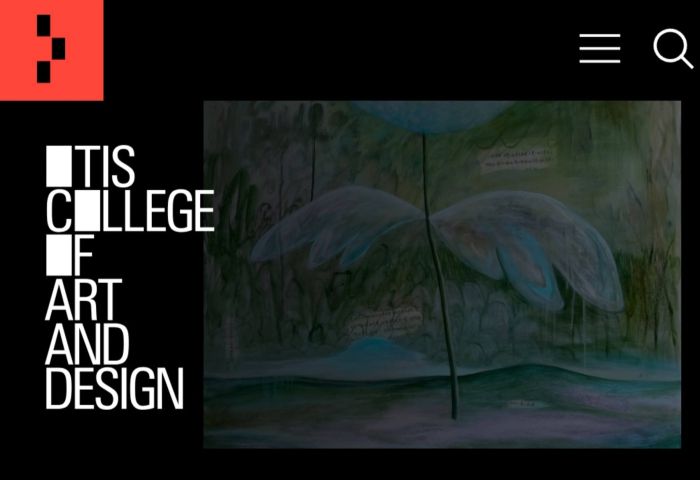
Example:Otis College of Art and Design proves that accessible websites don’t have to be boring. Their visually bold, design-forward site includes thoughtful accessibility features, like the ability to pause animated content and high-contrast elements that enhance readability. It’s proof that inclusive design and creativity can go hand in hand.
By prioritizing accessibility from the start, your institution not only meets regulatory standards, but it also opens the door to more prospects and strengthens its reputation as a place where everyone belongs.
5. Design Intuitive Navigation and User-Friendly Interfaces
Higher education websites often contain a massive amount of information, program details, admissions requirements, campus services, student life, alumni resources, and more. Without clear navigation, this wealth of content can quickly become overwhelming.
If prospective students can’t find basic information like how to apply, what programs you offer, or where to request info, they won’t stick around. They’ll simply move on to another institution that makes things easier.
Your goal? Make exploration effortless: Navigation should be clean, logical, and centered around user needs, not internal structures or department silos. Every menu, page layout, and search function should guide visitors toward their goals with clarity and speed.
Tips for intuitive higher ed site navigation:
Use simple, student-focused labels. Stick to clear menu items like “Programs,” “Admissions,” “About Us,” and “Contact.” Avoid institutional jargon. Limit top-level menu items to avoid overload, and organize deeper pages using dropdowns or mega menus.
Design for user journeys, not just departments. Group content around tasks or audience needs. Instead of listing academic departments, consider categories like Plan, Start, Succeed, or even Explore Programs and Find Support.
Create clear user paths for different audiences. Persona-based navigation (e.g., Prospective Students, Current Students, Parents, Alumni) lets visitors self-identify and jump directly to what matters to them. This reduces cognitive load and improves time-to-information.
Make CTAs impossible to miss. Buttons like Apply Now, Request Info, and Visit Campus should be visually distinct and consistently visible across key pages.
Maintain styling and structural consistency. Don’t make users relearn how to navigate with every new section. Ensure the styling, placement, and behavior of menus remain predictable and responsive for mobile users.
Example: Eastern Iowa Community Colleges: EICC structures its top-level navigation around the student journey with three clear categories: Plan, Start, and Succeed. This not only simplifies decision-making but also shows a deep understanding of student concerns. The site also includes an “I’m most concerned about…” section: addressing common hesitations head-on, with empathy and clarity.
A user-friendly website doesn’t just look polished; it feels helpful. Smart navigation says, “We understand your needs, and we’ve made it easy to find what you’re looking for.” Higher education website design can be the difference between a visitor who bounces and one who applies.
6. Provide Engaging Content and Clear Calls-To-Action
Content is what transforms a higher ed website from a digital brochure into a dynamic recruitment tool. Prospective students don’t just want information; they want answers, inspiration, and a glimpse of what their future might look like at your institution.
They’re searching for:
Program details
Admission requirements
Tuition costs
Campus life
Career outcomes
Student experiences
Your job is to deliver that content in a way that’s clear, engaging, and actionable.
Best Practices for Content That Drives Enrollment:
Showcase your academic programs clearly. Each program should have a dedicated page that covers curriculum highlights, faculty expertise, admissions requirements, and career prospects. Schools should prioritize program-level content because it’s the first place prospects look.
Use rich media to bring your campus to life. Photos, videos, virtual tours, and infographics add emotional and visual depth that text alone can’t match. Consider a homepage hero video, a student life highlight reel, or virtual walkthroughs of your campus and classrooms.
Incorporate authentic student voices. Today’s students want real stories. Feature testimonials, student spotlights, or day-in-the-life content that reflects your community’s diversity and vibrancy. Whether it’s a video diary from a nursing student or a blog from an international applicant, authenticity builds trust.
Keep your content fresh. Outdated information erodes credibility. Make it a priority to update admissions deadlines, program details, and tuition info regularly. Maintain a blog or news section to show your campus is active, but don’t let fresh content bury essential evergreen pages like Programs or How to Apply.
Guide users with clear, strategic CTAs. Every important page should ask: What’s the next step? Then answer it with a bold, well-placed button. Whether it’s “Apply Now,” “Download a Program Brochure,” or “Book a Virtual Tour,” your CTAs should stand out visually and match the context of the page.
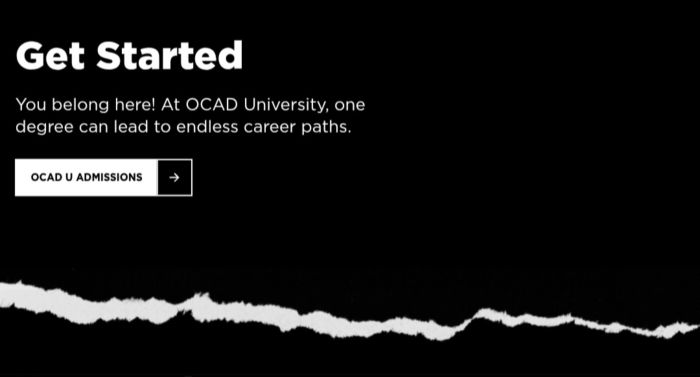
Example: OCAD University (Canada) redesigned its admissions website with a bold visual identity, simplified navigation, and CTAs tailored to the user journey, like “Get Portfolio Help” or “Start Your Application.” The results? Within weeks of launch, the site saw a 21% increase in visits and a 15% increase in applicants. The combination of user-first content and clear actions paid off.
Content also reinforces every other best practice:
Accessible content means adding alt text and transcripts.
SEO-optimized content means using keywords that align with search intent.
Fast-loading content means using lightweight visuals and optimized media.
When your content delivers real value and your calls-to-action guide users clearly, you don’t just inform; you inspire. And that’s what drives conversions.
7. Integrate With a CRM for Lead Management and Personalization
A well-designed website gets visitors. A strategically integrated website gets conversions.
One of the most powerful ways to level up your higher ed site is by connecting it to a Customer Relationship Management (CRM) system. CRMs are central hubs for capturing, organizing, and nurturing prospective students through the enrollment journey.
When your website and CRM are integrated, lead data flows automatically from inquiry forms, newsletter signups, and event registrations into a centralized system, no more manual data wrangling, missed follow-ups, or siloed information.
Why CRM Integration Matters:
Instant lead capture and time savings Every time a prospect fills out a form, to download a course brochure or RSVP to an open house, their information is logged automatically in your CRM. This eliminates the need for staff to transfer spreadsheets or copy-paste emails. The result? Less administrative busywork and fewer mistakes, giving your admissions team more time to focus on real engagement.
Faster, personalized follow-up CRM integration lets you respond in real time. Someone requests info? They get a tailored email within minutes. And your recruiters are instantly notified with the lead’s details, so they can follow up while your institution is still top of mind. Prompt follow-up, especially within 24 hours, greatly increases contact and conversion rates. A connected CRM makes that speed possible.
Personalized web experiences Advanced CRMs like HubSpot or Mautic allow you to show smart CTAs and dynamic content based on the visitor’s behavior. If someone has already attended a webinar, your site might offer “Schedule a One-on-One Consultation” instead of “Register for Info Session.” Personalization like this increases engagement and accelerates movement through the funnel.
One institution used smart CTAs to tailor messaging for return visitors. New users saw English test prep offers, while returning prospects saw “Start Your Application” prompts, resulting in higher click-through and application rates.
Full visibility into the student journey Every interaction, form fill, email open, and event attendance is tracked in the CRM. Your team gets a 360° view of each lead’s engagement, helping them tailor conversations and prioritize follow-ups. You can also track which web pages and campaigns are driving the most conversions, helping you optimize over time.
For example, CRM data may reveal that campus tour sign-ups convert at twice the rate of general inquiries. Insights like these help you double down on what works.
A seamless, consistent user experience From a student’s perspective, CRM integration reduces friction. They won’t have to fill in the same information twice. Communications feel timely and relevant. Even if a staff member changes, the CRM ensures continuity, so the conversation picks up where it left off.
Behind the scenes, your team gains confidence that every lead is being handled properly, with full history and context at their fingertips.
The tools and payoff
Higher education institutions are increasingly using education-focused CRMs like HubSpot or HEM’s Mautic CRM. These tools enable automation at every stage, from capturing leads to triggering nurture emails to customizing website CTAs.
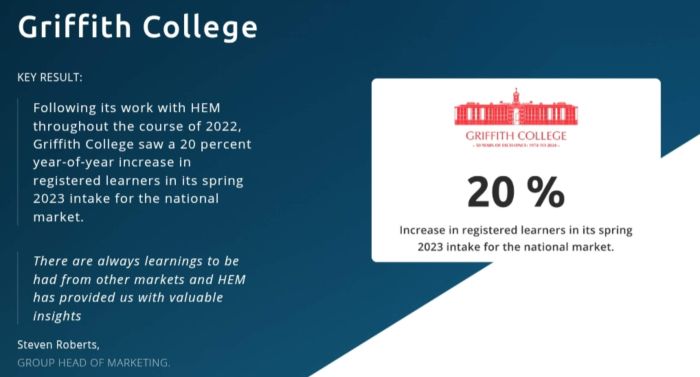
Example: Griffith College, Ireland’s largest independent college, partnered with Higher Education Marketing (HEM) to implement HubSpot CRM for more efficient lead management and personalized student recruitment. Through a comprehensive strategy that included conversion funnel audits, CRM staff training, automated workflows, and segmented lead nurturing, HEM helped Griffith streamline communications and improve follow-up with prospective students. As a result, the college achieved a 20% year-over-year increase in registered learners for its Spring 2023 intake.
CRM integration does require some technical setup and cross-department coordination. But the payoff is immense: your website becomes a two-way communication platform, collecting insights, responding to actions, and guiding visitors toward enrollment with relevance and precision.
For institutions serious about scaling recruitment and deepening personalization, connecting your CRM to your website is no longer optional. It’s a modern best practice and a clear path to smarter, more successful digital engagement.
Build a Website That Drives Enrollment
Your website isn’t just a marketing asset; it’s your institution’s top recruiter. Every click, scroll, and form fill is a chance to move a prospective student closer to enrollment.
By applying these best practices for higher education websites, from mobile-first design and fast performance to SEO, accessibility, and CRM integration, you create more than just a polished digital presence. You build a site that informs, inspires, and converts.
In a crowded higher ed market, the schools that win are the ones that treat their website like the powerful recruitment engine it is. Make yours work harder, smarter, and more strategically, starting now.
Struggling with enrollment?
Our expert digital marketing services can help you attract and enroll more students!
Frequently Asked Questions
Question: Why is mobile responsiveness crucial for higher education websites? Answer: Most students browse on mobile devices. A mobile-responsive site ensures readability, easy navigation, and fast loading, key for user experience and search rankings. Without it, your site could rank lower on Google and lose over half of the visitors who abandon slow or poorly displayed pages.
Question: How can improving website speed benefit my higher education institution? Answer: Faster websites reduce bounce rates and keep users engaged longer. Prospects find what they need quickly, improving their impression of your institution. Speed also boosts SEO rankings and increases the chances of conversions like form submissions or brochure downloads.
Question: What role does SEO play in the success of a higher education website? Answer: SEO helps your site appear in search results when students research programs. Strong SEO brings qualified traffic, builds credibility, and ensures your programs are seen, without relying solely on paid ads.
The U.S. Department of Justice sued the state of Oklahoma Tuesday over a state law that allows undocumented students to pay in-state tuition rates. Oklahoma is now the fourth state the DOJ has sued for having such a policy.
The state’s Republican attorney general, Gentner Drummond, swiftly sided with the federal government and filed a joint motion in support of quashing the law. He said in a statement that it’s “discriminatory and unlawful” to offer noncitizens lower in-state tuition rates “that are not made available to out-of-state Americans.”
“Today marks the end of a longstanding exploitation of Oklahoma taxpayers, who for many years have subsidized colleges and universities as they provide unlawful benefits to illegal immigrants in the form of in-state tuition,” Drummond said.
Now the state and the DOJ await a ruling from the U.S. District Court for the Eastern District of Oklahoma.
Oklahoma’s quick support for the legal challenge is reminiscent of what happened in Texas when the DOJ sued the state in June: Within hours of the lawsuit, Texas sided with the Justice Department and a judge ruled in favor of a permanent injunction, ending in-state tuition for noncitizens. The DOJ then filed similar lawsuits against Kentucky and Minnesota, though those legal fights are still ongoing.
The lawsuits follow an executive order issued by President Donald Trump in April calling for a crackdown on so-called sanctuary cities and state laws unlawfully “favoring aliens over any groups of American citizens,” citing in-state tuition benefits for noncitizens as an example.
I recently coached a scholar through drafting a proposal for her second book. Her manuscript is almost complete, and our work together involved putting together a strong pitch for a few of the university presses that publish in her field. As she shared the last component of her book proposal with me for feedback, she observed with satisfaction that the proposal was indeed coming together but that the hard part would be working up the nerve to send the project off. If she only knew how many times I’ve seen that “hard part” be the step that kept people from realizing the publishing success they so deserve.
As a professional developmental editor and publishing consultant who has spent the last 10 years helping academics bring their books and articles to print, I’m well-versed in the struggles of the scholarly writer. It’s no small feat to find time to research and write amid other professional obligations (like teaching and service) and personal commitments (like childcare, eldercare and self-care), not to mention national and global turbulence. Those who manage to complete a scholarly manuscript under these conditions should be applauded. But then the writer who has already accomplished so much faces another hurdle: persuading a press or journal to publish the text they’ve written.
A common reaction to this hurdle is to find ways to delay having to confront it. I see writers get stuck in endless rounds of revision, going back and forth about which citations to include, tinkering with sentence structure and word choice, waiting to contact publishers until they’ve landed on the perfect phrasing for their cover letters.
The truth is that the minute details don’t matter as much in the first submission as authors might think, especially at book publishers. You do want to put your best foot forward, to show that you value an editor’s time and that of the peer reviewers who will consider your work for publication. But it’s expected that your manuscript will evolve with the input of peer reviewers and that polishing words and sentences will happen during the final revision and copyediting stages. The writer’s goal when submitting to publishers should therefore not be a perfectly finished text, but a “good enough” manuscript that allows a press or journal to seriously consider whether they want to give a greater platform to the writer’s ideas.
But what constitutes “good enough” in the eyes of scholarly publishers? The first criterion publishers are looking for is a sense of fit with their existing offerings. This actually has little to do with the quality of your writing. It’s more about whether the readership that the press or journal has already cultivated is generally welcoming to the topic, methods and theoretical framework of your piece.
To ensure your manuscript is good enough in the area of fit, do your homework on what your target press or journal has recently published in the last year or two. Get clear on whom you are writing for and find outlets where those readers are already gathering. The risk of rejection goes down exponentially when you send your manuscript to the right place.
Turning to your manuscript itself, before sending it to a publisher, you should evaluate it for what I call the four pillars of scholarly writing: argument, evidence, structure and style. Scholarly manuscripts must have a solid foundation in all four areas to be successful in the publishing process, because each of these fundamental aspects of the text has the potential to make or break the text’s chances of being received well by peer reviewers, getting approved for publication and ultimately reaching readers in the author’s scholarly field and beyond.
Your argument is the main claim that drives your text and that you want readers to accept. Is it clearly stated near the beginning and does it remain present throughout the text? Your evidence backs up the argument for the reader. Do you have sufficient evidence and do you analyze it effectively to guide your reader to the points you want them to accept?
The structure of your manuscript supports the reader in encountering your evidence and absorbing your points in a logical and engaging order. Structural concerns include the way the text is organized into chapters, sections and paragraphs, as well as your use of titles, headings, transitions and other signposts to move your reader along. Have you put thought into why the components of your text are organized the way they are, and have you used appropriate cues to make the structural logic obvious to your reader? By style, I mean the overall presentation of your writing, including how your attitude toward both reader and subject matter shows up on the page. Depending on the publishing venue, the style of a scholarly manuscript may be informal or formal, passionate or detached. Consider what will be most effective with your most important readers and ensure stylistic consistency across your text.
After attending to big-picture matters, you will want to double-check that everything in your text is accurate and that sloppy errors don’t interfere with a reader’s understanding of what you want to say. But resist the temptation to tinker endlessly with superficial details. Everyone’s time, labor and mental fortitude are limited these days, so spend yours where they will get you the greatest return on investment.
Try to reframe the editorial and publication process in your mind, thinking of it not as an adversarial set of gatekeeping encounters—though it can be that at times—but as a process designed to make your work the best it can be before it goes public. Your manuscript doesn’t have to be perfect when entering the process, because you’ll be taking it through several cycles of development before considering it to be finished. There will be multiple opportunities to improve it, and editors, peer reviewers and supportive readers will be alongside to help.
The prospect of hitting “send” on your manuscript can be incredibly nerve-racking, but your ideas can’t reach anyone, let alone do good work in the world, if you don’t put them out there. You must eventually let go of the manuscript so it can go do its work.
Doubts are natural. You may worry that a reader you respect will have reasonable objections or that you’ve missed something important. Perhaps you also worry about exposing yourself to criticism or rejection on the basis of your ideas, identity, background or political beliefs. Such fears are legitimate, especially for those scholars who are already marginalized in the academy. Name these fears and acknowledge that you have a right to feel your anxieties. Then assess whether the actual risks are worth silencing yourself by not putting your work out there at all.
Laura Portwood-Stacer is the author of Make Your Manuscript Work (Princeton University Press, 2025), which offers a practical method to develop scholarly texts for publication, including a list of the most common areas where manuscripts need improvement. She is also the author of The Book Proposal Book (Princeton, 2021) and the Manuscript Works Newsletter, providing weekly guidance for scholarly writers and publishing professionals.
From declining enrollments to equity gaps and growing concerns about student belonging, the pressures on colleges and universities—especially those serving first-generation and regional student populations—are intense and unrelenting. We have all read about the enrollment cliffs and seen firsthand how small, regional institutions are being asked to do more with less while still delivering transformational experiences to diverse and increasingly nontraditional learners.
While there is no single solution to these complex and multifaceted challenges, I believe we can and must do better to organize and focus our collective efforts. In my two decades of experience as a mathematics education professor, interim dean, student success leader and first-generation college graduate, I have repeatedly seen the power of synthesizing widely known but often disconnected strategies into coherent, institutionwide models for student success.
That experience led me to develop the ACCESS framework, a holistic and memorable approach that integrates six core pillars essential to supporting students from recruitment through graduation and beyond. These pillars—affinity, community, career, early alert, support and storytelling—are not novel in isolation. However, woven together, they offer a powerful and practical road map for institutions striving to create environments where students not only persist but thrive. Importantly, ACCESS also addresses what I see as a common and costly issue in higher education: fragmentation. Too often, well-intentioned programs exist in silos, failing to produce the sustained, cross-campus impact we seek. ACCESS offers a way to unify these efforts into a clear, student-centered strategy.
Affinity: Fostering Belonging From Day One
Students are more likely to succeed when they feel they belong. This is especially true for first-generation students, underrepresented populations and those navigating higher education in rural or regional settings where campus may feel unfamiliar or disconnected from prior experiences.
Affinity strategies focus on helping students quickly form meaningful connections with peers, faculty and the institution itself. Examples include first-year experience programs, peer mentorship initiatives, themed housing and proactive advising. Institutions that intentionally create these touch points early and often can increase students’ sense of belonging and purpose, which researchhasshown to be critical predictors of retention and achievement.
Affinity is about more than social engagement—it is about students seeing themselves as valued and capable members of the campus community.
Community: Building Meaningful and Reciprocal Connections
Beyond personal belonging, students benefit from opportunities to engage in shared purpose.
Community-focused strategies emphasize service learning, civic engagement, student organizations and collaborative learning experiences that help students feel connected not only to campus but to broader societal goals. Partnerships with local community and nonprofit organizations create reciprocal value: Students gain real-world experience and social capital while institutions strengthen ties with the communities they serve.
Moreover, community-building activities enhance peer support networks. Students engaged in study groups, cohort models or co-curricular leadership roles oftendemonstrate higher retention and graduation rates. Creating purposeful, inclusive spaces for students to connect with one another should be viewed as essential, not optional.
Career: Connecting Learning to Life After College
Students increasingly expect—and deserve—a clear connection between their academic experience and future opportunities. Career-connected learning, designed to deepen students’ classroom experiences by connecting skills to real-world occupations, has been shown to increase engagement, motivation, broader sense of purpose and sense of preparedness for employment. But career integration must go far beyond the traditional career center model. It should be infused throughout the student journey.
ACCESS emphasizes career as a core pillar, with a focus on early and ongoing exposure to career pathways, industry partnerships and hands-on learning. Microcredentials, internships, alumni mentoring and project-based courses all help students articulate the value of their degree and build the confidence to pursue their aspirations. When students can see the relevance of their studies to their goals, their motivation, persistence and sense of belonging increase substantially.
Early Alert: Leveraging Data to Intervene and Support
While many institutions have adopted early-alert systems, ACCESS emphasizes the importance of using data in intentional, coordinated ways across campus. A study of more than 16,000 students at a regional university found an early-alert system was effective at identifying students at significantly higher risk of dropping out, even when controlling for academic performance and demographic characteristics. Early-alert systems are not simply about identifying struggling students—they are about creating a culture where faculty, advisers and staff collaborate to proactively support students before issues become crises. Effective systems involve mobilizing cross-campus teams to conduct outreach—through emails, phone calls or in-person check-ins—to improve retention rates and remove barriers ranging from financial hardship to emotional stress.
Early alert requires more than technology. It requires buy-in, training and shared ownership. When done well, it sends a powerful message to students: “You matter, and we are here to help you succeed.”
Students’ lives are complex, and so are the challenges they face. ACCESS recognizes that academic success cannot be separated from wellness, financial stability and mental health. Institutions must offer robust, coordinated support systems that meet students where they are and that encompass everything from advising, tutoring and accessibility services to counseling, financial aid navigation and basic needs support. Centralized student success centers, coordinated case management models and wraparound services are all effective ways to ensure that no student falls through the cracks.
Wraparound student support services, especially when delivered through relational, trauma-informed and personalized case management, foster deeper connection and institutional engagement. This in turn supports retention and persistence outcomes. Importantly, support must be framed as a strength, not a deficiency. Normalizing help-seeking behavior and reducing stigma are essential to creating an environment where students feel safe accessing the resources they need.
Storytelling: Creating a Culture of Pride and Narrative
Finally, ACCESS includes a pillar that is often overlooked but profoundly impactful: storytelling. Students are more likely to persist and complete their degrees when they can see themselves as protagonists in their own educational journeys.
Institutions should prioritize sharing student and alumni stories—through social media, newsletters, admissions materials and campus events—to reinforce the value and relevance of the college experience. Equally important is empowering students to reflect on and tell their own stories, helping them make meaning of their experiences and building a sense of pride and ownership. Research suggests that as students reshape their narrative identities, seeing themselves not as outsiders but as capable contributors, they become more engaged and persistent in their academic work.
In my leadership roles, I have seen how storytelling humanizes data and drives institutional momentum. Donors connect emotionally to stories of transformation. Prospective students see possibilities reflected in the experiences of peers. Faculty and staff are reminded of their purpose. Storytelling, when done authentically, becomes a unifying force.
Putting ACCESS Into Action
The ACCESS framework is not prescriptive or rigid. Rather, it is an adaptable model that provides institutions with a common language and conceptual map for aligning efforts across recruitment, retention, student support and advancement.
I am mindful that the individual strategies embedded in ACCESS are not new. What is new—and, I believe, urgently needed—is a simple, memorable framework that helps institutions avoid fragmented initiatives and instead build integrated, student-centered ecosystems.
Importantly, ACCESS should not exist outside of the academic mission. Its greatest potential lies in integration with the curriculum. Faculty play a vital role in fostering belonging, connecting coursework to careers, identifying students in need of support and empowering students to reflect on their learning. When academic and co-curricular strategies align, student success becomes not a separate initiative but a seamless and transformative part of the college experience.
ACCESS can serve as a guide for cabinet-level planning, cross-departmental working groups, strategic enrollment management and assessment. It offers a way to bring together academic affairs, student affairs, advancement and community partners around a shared vision for student success.
As higher education faces unprecedented challenges, we must embrace models that are not only evidence-based but also intuitive and human-centered. I invite my colleagues across higher education to consider how ACCESS—or similar integrative models—might provide clarity, cohesion and inspiration as we work collectively to support the students we serve.
Laura J. Jacobsen is the chair of the Department of Mathematics and Statistics and a professor of mathematics education at Radford University.
Yet underneath those challenges lies another, less headline-grabbing danger: delayed upkeep and repairs to infrastructure and assets.
More on the Survey
Inside Higher Ed’s 15th annual Survey of College and University Chief Business Officers was conducted by Hanover Research. The survey included 169 chief business officers, mostly from public and private nonprofit institutions, for a margin of error of 7 percent. The response rate was 7 percent. A copy of the free report can be downloaded here.
On Wednesday, Aug. 20, at 2 p.m. Eastern, Inside Higher Ed will present a free webcast to discuss the results of the survey, with experts who can answer your most pressing questions about higher education finance—including how to plan effectively amid the current financial and policy uncertainty. Register here.
One in three surveyed CBOs (36 percent) identified infrastructure/deferred maintenance costs as a top financial risk to their institution, just behind state and/or federal policy changes—and ahead of options such as technology investment requirements, increased market competition (including from alternative credential providers), potential changes to international student enrollment and changes in student athletics revenue and name, image and likeness deals.
Most CBOs also say they’re at least moderately concerned about their institution’s ability to fund deferred maintenance and facility needs, with 11 percent extremely concerned and another quarter (25 percent) very concerned.
How bad is the problem? Just 1 percent of institutions represented were on track to fund no deferred maintenance in the then-current fiscal year (the survey was live in April and May). But another 63 percent were only poised to fund up to a quarter of identified needs. This is consistent across public and private nonprofit institutions.
By institution type, public doctoral university CBOs were most likely to report funding a quarter or less, at 89 percent. Community college CBOs were least likely to report this, at 44 percent. Still, just about a third of community college CBOs expected their institution to fund more than half of identified needs.
Across higher education, deferred maintenance needs span aging HVAC systems, roofs and dorms; buildings in need of rewiring; and more. Technical deferred maintenance, such as addressing choppy Wi-Fi, is another concern. These aren’t the flashy projects that attract donors or drive capital campaigns (exceptions notwithstanding). But they matter in terms of curb appeal and functionality. Prospective students notice the state of facilities. Dingy classrooms and buildings are current students’ learning and living conditions, and employees’ working conditions. Deferred maintenance may translate to safety or accessibility issues (think sidewalks and elevators). And problems only compound over time, meaning deferred maintenance can—and does—escalate to larger, costlier repairs.
Richard G. Mills Jr., president and CEO of United Educators, a liability insurance and risk management services provider, said that underfunding depreciation has “long been in the bag of tools that institutions will turn to in times of financial stress.” It’s never been a “great practice,” he continued, “but I understand why it happens, and there is even an argument that in the past era of growth—in endowments, tuition, philanthropy and student population—it wasn’t an outlandish way to approach what were largely temporary downturns.”
Now all that has changed, said Mills, a former college chief administrative, business and operating officer: “The forward environment is unlikely to be one of growth,” with philanthropy, tuition revenue and student populations “certain to remain flat or decline for some time.”
In this light, using deferred maintenance as a tool is simply delaying an expense whose cost is likely to compound at a significant rate, he added.
Ruth Johnston, vice president of consulting for the National Association of College and University Business Officers, agreed that deferred maintenance “is a very big and growing issue for universities and colleges and has been for many years.”
Public colleges and universities are often hardest hit, Johnston said, as state legislators “prefer to fund new capital projects over providing funds for the less glamorous options of deferred maintenance.” And unless universities and colleges “intentionally create budgets, and consistently add funds to them, they don’t prioritize deferred maintenance and often only pay for emergency needs.”
The shiny-object phenomenon isn’t exclusive to public institutions. Mills recalled, for example, how a dean at a private institution once said he wasn’t worried about underfunding because when major renewal was required, “he would simply run a capital campaign to build a new building.”
In addition to the findings on deferred maintenance, the survey also suggests that some institutions are rethinking their physical campuses amid shifting enrollment and study trends. About two in five respondents (41 percent) report that their institution is retaining its current physical campus footprint but investing in renovations. Another 34 percent report targeted expansion, or moderate growth in specific areas. But relatively few CBOs report either strategic downsizing or significant expansion.
Deferred maintenance expenses can sometimes be bundled into other project budgets. But uncertainty and other factors are slowing or halting even capital spending on many campuses—even if strategic downsizing isn’t yet a major trend.
Seth Odell, founder of Kanahoma, an education marketing agency, underscored the gravity of the deferred maintenance backlog, saying it “feels like it’s a part of a broader death spiral many institutions have found themselves in.”
“We often treat deferred maintenance as a facilities or finance issue, but it’s increasingly a strategic enrollment risk—and one that’s compounding year over year,” he said. “I’ve worked with institutions where students are literally walking past shuttered buildings on campus tours, or sweating through admitted-student events due to outdated HVAC systems. In a competitive enrollment environment, these realities are no longer just aesthetic. They’re affecting yield.”
Compounding Problems, (Radical) Solutions
Even before it downgraded its higher education outlook in March due to federal policy uncertainty, Moody’s Ratings had warned that a “large and growing backlog of capital needs posed a significant credit risk for the higher education sector.” In a report last summer, Moody’s said that $750 billion to $950 billion of spending would be needed over the next decade for just its approximately 500 rated colleges and universities to make “significant headway toward reducing deferred maintenance, upgrading facilities and building the new projects that are critical to strategic positioning.”
“Colleges and universities that are unable to offer updated facilities, advanced technology and an attractive physical environment risk losing competitive standing,” Moody’s said at the time.
Construction cost data firm Gordian documented in its most recent “State of Facilities in Higher Education” report “ongoing curtailment of campus expansions as institutions take stock of what they will really need to own and operate,” plus shortfalls in the funding of needed campus renewal investments of more than 32 percent. It valued the backlog of capital renewal needs at over $140 per gross square foot.
The situation isn’t likely to improve anytime soon. Emily Raimes, associate managing director at Moody’s, told Inside Higher Ed that amid growing economic and policy uncertainty, “many institutions are adopting a more cautious approach to financial planning. This shift in strategy may lead to a deceleration or postponement of capital investment initiatives.”
Shrinking the footprint of a college campus is a real opportunity for colleges and universities to move forward and save money.”
—Consultant John Woell
F. King Alexander, who served as president of Louisiana State University from 2013 to 2020, said that deferred maintenance needs increased $30 million per year at the Baton Rouge campus alone during his tenure. The university “cobbled” together only about $8 to $10 million annually to address emergency issues, he said, so the problem still grew by about $20 million annually “despite what we were able to do.”
“We used a lot of duct tape,” he said.
Louisiana last year passed legislation designed to fund deferred maintenance and capital improvements at state institutions. It will take years and consistent support to tackle the state’s $2 billion backlog.
Alexander, now a professor of educational leadership at Florida Gulf Coast University, is currently involved in an ongoing national study that draws on the insights of chief community college financial officers. Based on that research, completed with colleagues at the University of Alabama’s Education Policy Center, only “marginal” progress has been made in facilities since 2007, as institutions “still have the same needs, the same backlogs, the same increases in maintenance and the same lack of planning,” he said. In 2024, the largest areas of deferred maintenance and facility problems for community colleges included science labs, classroom spaces and computer labs.
“States have consistently shifted their deferred maintenance costs from state government to the public colleges and universities over the last three decades,” Alexander said. “In other words, to student tuition and fees.”
Odell described deferred maintenance as “both a symptom and an accelerant of the bigger financial reckoning” now facing higher education.
For tuition-dependent institutions especially, he added, “it’s a vicious cycle. Declining enrollment leads to reduced revenue, which leads to deferred investments, which in turn erode the very experience that drives enrollment.”
Odell did note some “success stories,” including Southern New Hampshire University, which has been able to work somewhat in reverse, “using surplus generated from online enrollment growth to completely revamp and reimagine their campus experience.”
Among other strategies, the consultancy EAB recommends that campus leaders create maintenance endowments that will support a building’s “true needs” across its life cycle—not just construction.
John Woell, principal at Manitou Passage Consultancy, offered his own suite of suggestions—some of them unconventional: replacing faculty and staff offices with more flexible workspace arrangements, known as “hoteling”; being clear about needs, including how each campus space supports the college’s mission; and ending gifts in perpetuity by pivoting to “sponsorships.”
“If a gift pays to build a space that has a likely useful life span of 50 years, allow renaming at the end of the 50 years.”
Bigger picture, Woell said, “Shrinking the footprint of a college campus is a real opportunity for colleges and universities to move forward and save money.”
Alexander agreed that campus-based solutions such as rethinking physical spaces and even downsizing make sense where enrollment is not growing. But he stressed the importance of public investment in higher education—including more reliable state funding for deferred maintenance expenses at public institutions.
“This is a huge issue that presidents have to deal with that nobody’s talking about.”
The beta version of the financial aid application portal was released Monday, Aug. 4.
Photo illustration by Justin Morrison/Inside Higher Ed | SimoneN/iStock/Getty Images
The Office for Federal Student Aid made history this week, launching the test version of this year’s Free Application for Federal Student Aid earlier than ever before, Aaron Lemon-Strauss, executive director of the FAFSA program, announced in a LinkedIn post Monday.
It marks the beginning of “the next chapter in making higher ed more accessible,” he wrote.
This comes less than two years after the botched rollout of what was supposed to be a simpler FAFSA form for the 2024–25 academic year. The opening of that year’s application platform, which typically occurs in October, was delayed until the very end of the year. And even when it launched in late December 2023, it had a myriad of glitches, significantly delaying financial aid award processing for colleges and students.
For the next FAFSA cycle, the Education Department revamped its planning processing, bringing in an outsider to lead the effort. The launch of the 2025–26 FAFSA was slightly delayed, but the agency spent months testing the form before opening it up to all students. Now, for the 2026–27 FAFSA, the application is set to open on time on Oct. 1.
To meet that deadline, the department kicked off several weeks of selective beta testing this week, starting with a small number of students and families. The plan is for the beta version to become public in early September. By launching ahead of schedule, the department hopes to boost application completion rates, improve troubleshooting tools for financial aid advisers and increase overall speed of the process, Lemon-Strauss explained.
“As we celebrate this milestone, we also push forward,” he said, “building a FAFSA that truly meets the evolving needs of students, families, and schools.”
First-generation students face a host of barriers when they go to college. Terms commonly used in higher ed, like “registrar,” “provost” or “credit hours,” can be mystifying. They’re confronted with a hidden curriculum, a set of unspoken expectations for how to succeed. And they don’t always know whom to turn to for help.
But a new book, the first of three volumes on first-generation students, argues that these challenges, while important to study, offer an incomplete picture of who these students are.
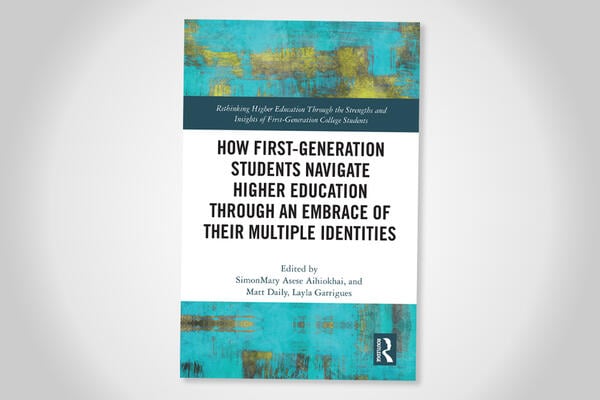
The book, How First-Generation Students Navigate Higher Education Through an Embrace of their Multiple Identities (Routledge, 2025), explores in a series of essays how different identities, including class and race, affect the first-generation student experience and how these students bring unique strengths and assets to the classroom. It also offers guidance to different types of institutions about how to support first-generation students better and highlights colleges and universities that have modeled successful reforms and programs. Some of the essays are research-focused and written by scholars, while others are personal narratives authored by first-generation college graduates.
Co-editor Matt Daily, assistant vice president and dean of students at Idaho State University, spoke with Inside Higher Ed about why he’s working to change the discourse around first-generation students, alongside his co-editors, University of Portland professors SimonMary Asese Aihiokhai and Layla Garrigues. The conversation has been edited for length and clarity.
Q: A theme throughout this book is the idea that too often first-generation students are studied through a deficit-focused lens that emphasizes their challenges rather than their strengths. Why was it important to you to shift that approach?
A: For a long time, when we’ve talked about first-gen, we’ve come in thinking that they need something, that they are lacking something, and I think for the last five years or so, that narrative has really shifted. It’s shifted from “What are they lacking?” to “What are they contributing?”
As we were doing a lot of research, as we were having a lot of conversations, while that’s something that we’re talking about at our respective institutions and starting to do more across the United States and beyond, it’s still something that we have to keep reminding ourselves is important—to really focus on the assets or the strengths that students bring.
And so, we thought that when we were dreaming up this project—and that’s a fun story, too, about how it came to be—we thought it really needs to be based in the strengths. And it would be so nice for practitioners, scholars, students, that they could find that the real theme and the real foundation and the real thread through it is the strengths of first-gen students, and what it is that they’re really bringing to these college campuses.
Q: What are some of the strengths and assets of first-generation students that you think are too often overlooked?
A: There’s really no one-size-fits-all for first-gen. Each first-gen student is as unique as the experience itself. I think that’s actually one trap we fall into: We really have to take each case as they come in and create that space.
In the introduction, I mention how Tara Yosso talks about her “community cultural wealth” model and cultural capital and talks about this idea of [ties to] family and culture [as] strengths. I think those are strengths that are really important. Laura Rendón also talks about—what Yosso was saying and building on it—this idea of ganas or perseverance, which is that ability to really develop inner strength and becoming self-reliant and determined to succeed.
There’s something about first-gen students where they are just so gritty. They really stick with it, and they are so inspiring. I love the way that they’re able to sort of exist in multiple worlds. I could have my college world, my peers, but also a lot of first-gen students work, so I can have that world, and then my family, and then maybe I’m from a different country. Really understanding how to exist in all those different worlds and being able to do that successfully, I think that is an incredible strength.
My biggest criticism of first-gen students is that they are too humble. They don’t think that their story is worthy enough to share. They don’t think it has worth, and I think they’re dismissive [of themselves], and that is my biggest criticism. Because for the amount of different first-gen students we have, there are an equal amount of stories that come with them. We need to encourage them to really share those and know that they have worth.
Q: Going off of that, you interspersed scholarly research with student narratives in this essay collection. Why was it important to you to include both perspectives?
A: That was really intentional. I think that the student voice gets ignored if we’re just talking about theory. If we’re going to talk about students, we need to hear their voice, right? It needs to be expressed, and we need to really have that authentic perspective. And so that was something we talked about early on in the project … especially in the last chapter, where we wanted to have students themselves or recent graduates share.
And I think that there’s equally as much value in terms of the research as to what the students are expressing, as they’re sort of in the moment, so to speak. I think [it’s important] even just coaching students that their voice matters … that you can go up and talk to senior administrators … and there’s value in that. I think that was one thing we were really hoping with this anthology was that maybe a graduate student or an undergraduate student could read that and feel inspired and go, “Oh, you know, this is something I could see myself doing,” and really get that spark, too. Gosh, if that happened, I would be over the moon.
Q: The book also emphasizes taking an intersectional approach to serving first-generation students. What does that mean to you? And what do you think we miss when we don’t factor in these students’ other identities?
A: I think that’s just so important. And I have to kind of acknowledge my own positionality. I’m a white male. And I am not first-gen. I will never understand a lot of these identities because I don’t identify that way. And so that’s something that’s been a part of my own journey. That was why it was so important with Simon, myself and Layla—we’re just a diverse collection. And then when you get to the other contributors, they do identify in a variety of different ways.
But that being said, identity is so important to the cultural richness of our college campuses. When I talk to college students, we talk about their gender identity, and sometimes that can be fluid; we talk about their racial or ethnic identity. We talk about their sexual identity, even their academic identity—meaning, what does it mean when I go from high school to college? Does that academic identity come into question when I experience different levels of success? But I think a lot of those identities we talk about, they’re visible. A lot of those identities we can see.
First-gen is not one of them. And that’s what’s interesting about being first-gen is you will never see physically if someone is first-gen. And so, it’s sort of this hidden identity. In a lot of my experiences working with first-gen students, I almost feel that I’ve outed them. When I explain to them, “Hey, I think you’re first-generation based on the information you’ve given me,” there’s a variety of different reactions, because it’s sort of a later-emerging identity. It’s not maybe one that’s discussed when a student is in elementary school, [with someone telling them],“Hey, you’re going to be a first-generation college student.” And so, I think what’s interesting is when you talk about this identity with other first-gen students, it’s one of many that intersect. But I think the timing of the intersection is so different for every first-gen student, if that makes sense.
In my previous role in Portland, when I would reach out to say, “I think you’re a first-gen student,” a lot of students would say, “No, I don’t want to be a first-gen student,” because they would think me identifying them in that way is something that’s negative. And part of that was really [making] that shift and going, “I am identifying you based on your mom and dad’s educational history or parent or guardian, and you might be first-gen—and that is so beautiful. Let’s celebrate that.”
I can be first-gen and a male or first-gen and African American male or I can be first-gen and a student athlete. What do those identities mean? Just being able to share what that identity means is so important for why a student is in college.
And I think that they forget that even as they graduate and go on to whatever’s next after college, to share that they’re first-gen is something that graduate schools, employers, what have you—they really value that.
It’s been programmed for so long that this is such a deficit. We’re working really hard at institutions to say, “Yeah, share that out—because of those qualities we talked about, this makes you a valuable part of this community.”
Q: I thought it was interesting that multiple chapters described how first-generation students can feel isolated from campus life, but also that campus life made them feel isolated from their home lives and families. How do you see the role of family and community for first-generation students’ success, and how do you think higher ed institutions can better account for that?
A: We assume that for first-gen students, when they go to college, that their families are behind it 100 percent, and that is not always the case. I think a lot of times the person that’s the most in favor of them going to college is themselves. And there’s a lot of, you know, “Why don’t you just work at the store?” The argument to convince others to go to college sometimes falls on the first-gen student, and we forget that. And so that kind of carries on through the experience, [family] going, “Why do you need to go to these programs?” or “Why do you need to go abroad?” It’s sort of having to be the explainer and the decoder for college life, and that is a lot for one student.
And so, I think that there is some push and pull with families sometimes, because the family wants to be supportive, but they don’t know how to be supportive strategically. In talking to a lot of families, I’ve coached them, saying, “Hey, you can just call your daughter or son and just say, ‘I love you. I support you doing this. I don’t know how I can strategically do that, but I want you to know I support you.’” That type of thing just goes so far.
The thing that’s also interesting, to your point about feeling isolated, we talk about programs and strategies that can really help first-gen students. But also on college campuses, the onus is on the student. You need to go do these things to be successful. And that’s not a first-gen thing, that’s a college thing. And I sort of push back on that. I think it’s on the institution to really create these spaces, to make students feel welcome, that they belong, that they matter, that they feel that they can have some sense of value in these spaces with their peers. And going back to first-gen identity, they’re not going to know who else is first-gen unless we create spaces where the students can find who else among their peer group is. And so, I think you kind of have to shift it a little bit.
They maybe feel isolated from family because we’re asking them to do a lot of things, such as engage with campus community, campus life, but sometimes that might come into conflict with what they’re being asked to do with their families, whether it’s watch my little brother or go to Grandma’s birthday party. That happened one time where a student really had to negotiate why they had to be on campus that first weekend of school for a lot of the programming [when] they were going to miss Grandma’s birthday. It really puts them in this code-switching situation where they feel isolated because they don’t feel anyone really gets what they’re going through.
Q: The book also offers a lot of concrete advice on how to better structure services and support for first-generation students and ensure they’re engaged and able to take advantage of opportunities like internships and study abroad. What do you think are some of the practical action steps you want to see higher ed leaders take away after reading this book?
A: I think high-impact practices are so important.
We talk so much about what student success means—what does it mean to have a sense of belonging, that type of thing—but I think one thing we really don’t talk a lot about is, other than the degree that the students are seeking, what is it that we really want them to take away from the college experience? What type of skills? Do we want them to think critically? Do we want them to be really engaged with the community? I think that we need to be really intentional on our college campuses about talking about what we want the students to take away, besides the degree. That can really help them in their next step. And I hope that maybe this book can talk a little bit about that. Can we really reimagine what we’re trying to do rather than just be very transactional about the degree?
I hope that they realize that it’s important to invest in this, that we need to invest in sustainable programs. Because I think a lot of times, what you have happen is different leaders or champions of first-gen work will leave institutions and then these initiatives really fizzle out. So, how can we think strategically that it’s not about the person, it’s about the program and initiatives. I think some of the things we talk about in here are almost a love letter to higher education institutions to say, “Look, this population is worth investing in, and it’s not just a one-size-fits-all, but if we can all adopt something that’s really creative and sustainable, all these students across the United States and even globally can benefit.”