The Office for Civil Rights is investigating five universities for offering scholarships to undocumented students, the Education Department announced Thursday.
The universities of Louisville, Nebraska Omaha, Miami, Michigan, and Western Michigan University have been accused of violating Title IV of the Civil Rights Act of 1964, which prohibits discrimination against or otherwise excluding individuals on the basis of race, color, or national origin, in offering the scholarships.
“Neither the Trump Administration’s America first policies nor the Civil Right Act of 1964’s prohibition on national origin discrimination permit universities to deny our fellow citizens the opportunity to compete for scholarships because they were born in the United States,” said Acting Assistant Secretary for Civil Rights Craig Trainor in a statement.
Trainor said the department is expanding its enforcement efforts to “protect American students and lawful residents from invidious national origin discrimination.”
The scholarships at issue that allegedly provide exclusionary funding based on national origin include the University of Miami’s U Dreamers Program and University of Michigan’s Dreamer Scholarship.
The investigations are in response to complaints submitted to OCR by the Equal Protection Project (EPP), an initiative from the Legal Insurrection Foundation (LIF), a national free speech advocacy group founded by Cornell law professor William A. Jacobson.
EPP describes itself as “devoted to the fair treatment of all persons without regard to race or ethnicity” and lists as part of its “Vision:2025” “continued OCR complaints” “strategic lawsuits” and “media-narrative setting.”
LIF also runs criticalrace.org, a series of databases cataloguing admissions policies, programming, funding models and other instances of alleged critical race training.
In a statement provided by the department, Jacobson said: “Protecting equal access to education includes protecting the rights of American-born students. At the Equal Protection Project, we are gratified that the Department of Education’s Office for Civil Rights is acting on our complaints regarding scholarships that excluded American-born students.”
The Department of Education also is planning to investigate the colleges for other scholarships detailed in the complaint that provide funding to undergraduate LGBTQ+ students of color, Hispanic students, Native American students, African American students and other underrepresented student groups.
Jim Ryan’s decision last month to step down as president of the University of Virginia in the face of pressure from the Trump administration drew renewed attention to the political appointees steering the public institution who will pick the next campus leader.
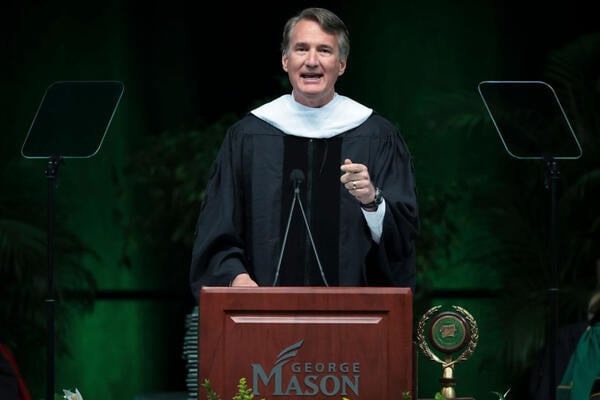
Multiple onlookers blamed Ryan’s resignation at least partly on the university’s Board of Visitors, which has been dramatically reshaped over the last three-plus years by Republican governor Glenn Youngkin’s appointments. Since taking office in 2022, Youngkin has stocked the board with former GOP lawmakers, Republican donors and members of the Jefferson Council, a conservative alumni group that called for Ryan’s ouster.
But UVA’s board isn’t the only one that has seen a dramatic overhaul. An Inside Higher Ed analysis shows that boards at public institutions across the state are heavy with GOP donors, former lawmakers and Trump officials, and members with ties to conservative think tanks. Tensions between conservative boards and faculty have prompted two recent no confidence votes and concerns over whether members who are ideologically aligned with Trump will protect universities in the administration’s crosshairs.
Now, a battle is brewing over who gets to serve on Virginia’s governing boards at a pivotal moment for higher education in the commonwealth.
A Battle Over Appointments
When Youngkin took office, he quickly focused on education-related issues, banning so-called “divisive concepts” in K-12 classrooms and purging “equity” from the state education system.
While the Democrat-controlled General Assembly has blocked some of Youngkin’s other efforts to overhaul education, he’s wielded board appointments as a tool to reshape higher education across Virginia, largely bypassing state lawmakers. His appointees have since pushed out university leaders, eliminated diversity, equity and inclusion programs, and taken aim at faculty members for teaching on topics such as race and gender.
Democrats in the General Assembly signed off on most of the appointments, even the controversial ones. But the Democrats started pushing back this year.
In January, the Democrats rejected former Trump officials Kenneth Marcus and Marc Short along with four other appointees—a move Youngkin blasted as “petty.” Later, they turned down former Virginia attorney general Ken Cuccinelli (who Youngkin appointed to the UVA board in March to replace Bert Ellis, who the governor removed due to his volatile conduct) and seven others.
Democrats argued that the appointees were “poor choices.”
“Historically, the governance of higher education in Virginia has not been nearly this political,” State senator and Democratic majority leader Scott Surovell told Inside Higher Ed.
Surovell said Democrats grew concerned by the actions of Youngkin’s appointees as they gained a majority on the university boards. For example, Virginia Military Institute declined to renew the contract of superintendent Cedric Wins, the first Black leader in VMI history. Wins, a VMI graduate, faced frequent criticism from alumni over diversity, equity and inclusion efforts that were introduced following allegations of a racist and sexist environment at the military school.
But when the Democrats on the Senate Privileges and Elections Committee rejected eight nominations for public university boards in a special session last month, the Youngkin administration refused to accept that outcome. The governor’s office has argued that those nominees need to be voted on by the full Senate and can continue to serve in the meanwhile.
Democrats then sued board representatives of George Mason University, Virginia Military Institute and UVA. The nine state senators who brought the lawsuit alleged that Youngkin “refused to recognize the rejection of those appointments by a coequal branch of government, in open defiance of the Constitution of Virginia and 50 years of tradition in the Commonwealth.” Plaintiffs asked the court to block appointees from serving on those boards.
A hearing in the case is scheduled for Friday.
Virginia Education Secretary Aimee Rogstad Guidera accused state Democrats of gamesmanship in a statement shared with Inside Higher Ed and argued that rejecting the recent slate of Youngkin’s board appointees could undermine the governance of public institutions.
“One of the strengths of the Virginia Higher Education system is the quality of citizens who choose to take time away from personal and professional endeavors to serve the Commonwealth as Visitors to our colleges,” she wrote. “The baseless attacks by Senate Democrats on these good peoples’ reputations may deter future leaders’ willingness to serve.”
And Youngkin’s office bristled at the notion that the governor has stocked the board with Republican donors and conservative political figures, arguing all appointees are highly qualified.
“The premise of your question is absurd—to diminish Governor Youngkin’s imminently qualified higher education board appointees as mere partisans is an insult to the citizens who willingly put in the time and effort to voluntarily serve our Commonwealth,” Press Secretary Peter Finocchio wrote in an emailed statement to Inside Higher Ed. “Governor Youngkin is proud to have appointed individuals who are distinguished alumni of our universities, respected business executives, and integral community leaders who have demonstrated experience overseeing complex budgets, running large organizations, and implementing long-term strategies.”
Concerns at GMU
Among Virginia’s public institutions, GMU’s board has likely attracted the most attention for its picks, which includes 10 former Republican officials, current and former Heritage Foundation employees—which had included Project 2025 co-author Lindsey Burke, who recently stepped down to join the Department of Education—and others with ties to conservative groups.
Although Youngkin’s appointees have featured multiple political firebrands, the appointment of donors is common. Ralph Northam, the Democratic governor who preceded Youngkin, appointed multiple Democratic mega donors who contributed to him. Northam’s appointees to the GMU board included six former Democratic officials. Two other Northam appointees served as legislative aides to Republicans earlier in their careers. (Governors, regardless of political affiliation, frequently appoint donors, though political activists are less common. One notable exception is Florida governor Ron DeSantis, a Republican, who has regularly appointed conservative activists and GOP political figures to university boards in recent years.)
Now, many professors question whether the board will meet the moment as GMU faces four investigations from the federal government spanning admissions and scholarship practices, alleged discrimination in hiring decisions, and claims the university has not adequately addressed antisemitism. Given the numerous connections between the Trump administration and George Mason’s Board of Visitors, some faculty members believe that the university is facing a series of coordinated attacks designed to oust GMU President Gregory Washington.
George Mason University President Gregory Washington.
Bill O’Leary/The Washington Post via Getty Images
“I think when you peel back the connections of all of these individuals, it’s hard to imagine that this is not orchestrated or coordinated,” said Bethany Letiecq, chair of GMU’s chapter of the American Association of University Professors, which passed a no confidence vote in the board Monday.
The AAUP chapter expressed support for Washington and condemned the board for “fail[ing] to support President Washington and George Mason University during this period of unprecedented and increasing federal scrutiny and political targeting,” according to a copy of the resolution.
GMU faculty senate chair Solon Simmons, who also serves as the faculty representative on the Board of Visitors, believes “this is a coercive action by the federal government” and that Mason is caught up “in a larger ideological agenda.” But Simmons is less critical of his fellow members.
Simmons said he hasn’t seen “bad faith actions from the board members,” in that they haven’t tried to micromanage faculty tenure cases or dictate what should be in the university curriculum, though he added they have raised concerns about what they believe shouldn’t be included. He also suggested that “they’re enacting their values and sometimes they’re enacting their biases.”
But he added that, in a purple state that has long been trending blue, the board seems politicized.
“They’ve been professional, but they bring a much more conservative point of view than you’d think would be typical of a swing state where you’re appealing to the median taxpayer,” Simmons said.
Letiecq, however, argues the board is packed with extremists who have targeted faculty members. One member, Sarah Parshall Perry, works for the conservative group Defending Education, which posted the syllabus for one of her classes online last year as an example of “indoctrination.” The organization took aim at the graduate level course titled “Critical Praxis in Education” because it included topics such as “white supremacy, family privilege, intersectionality, and gender affirming policies.” Following that post and coverage from conservative media about her research, Letiecq said she has received two death threats.
“Tell me how faculty can feel safe, not just to exercise their academic freedom, but safe in their personhood, when you have extremist board members siccing their organizations on us,” Letiecq said.
George Mason officials did not respond to a request for comment from Inside Higher Ed. However, the board has offered some limited statements about the federal investigations, committing to respond to the government’s request and noting its fiduciary obligation to ensure the university continues to thrive.
Fallout at UVA
Meanwhile, at UVA, questions are swirling in the aftermath of Ryan’s resignation, including what the board knew and what role it played. Answers, however, are in short supply.
Former University of Virginia President Jim Ryan.
Mike Kropf-Pool/Getty Images
After Ryan said he would resign, UVA’s faculty senate voted no confidence in the Board of Visitors, alleging they failed to protect “the university and its president from outside interference.” Faculty also accused the BOV of failing to engage the faculty senate in a “time of crisis” and demanded “a full accounting of the specific series of events, and actions taken by the board” that led to Ryan’s resignation.
Initially, the faculty senate intended just to censure the board. That escalated when board members refused to commit to “protecting the selection of the interim president and the [next] president of the university from outside influence,” said faculty senate chair Jeri Seidman. They also declined to share additional details with faculty about Ryan’s resignation.
Of the 17 appointed board members listed on UVA’s website, all have donated to Republican candidates and causes. Of those members, 11 have donated to Youngkin, including several who contributed hundreds of thousands of dollars to his gubernatorial campaign and associated political action committee. Other members also have Republican ties, such as Cuccinelli.
(Northam appointed multiple Democratic mega donors who contributed to him. He also appointed three former Democratic lawmakers to UVA’s board.)
And it’s not just faculty members pressing the board for more transparency. UVA’s board also reportedly ignored requests from 12 deans who asked to meet, noting the palpable concerns of students, faculty and staff, alumni, and other community members. The deans wrote that some donors are withholding pledges and new hires are reconsidering plans to work at UVA.
Seidman said the board has “not been terribly responsive to us,” though she noted legal issues have hampered its ability to meet. Given the legal question over whether Cuccinneli is a board member or not, she said the board could risk lawsuits by including or excluding him from meetings.
UVA officials did not respond to a request for comment.
Vacancy at VMI
At VMI, the Board of Visitors that declined to renew Wins’s contract includes major GOP donors.
Former board president Thomas Gottwald, whose term ended in June, donated $130,000 to Youngkin’s Spirit of Virginia PAC and $77,500 to his gubernatorial campaign. Other members include former Trump official, Kate Todd; former Youngkin adviser, Meaghan Mobbs; two former lawmakers—William Janis and Scott Lingamfelter, both Republicans–and failed GOP political candidate Ernesto Sampson.
(Northam, a VMI graduate, also appointed multiple members who contributed to his campaign.)
Former Virginia Military Institute Superintendent Cedric Wins.
Justin Ide/for The Washington Post via Getty Images
Although the rejection of Wins came immediately after a new swath of appointments, Board President James Inman (a minor Youngkin donor) denied they were given direction by the governor and emphasized members are committed to acting in the best interest of VMI.
“Members of the board recognize their responsibility to work across party lines with the governor, the administration, and the General Assembly to advance the critical mission and vision of the Institute. The VMI BOV has received no directives—binding or otherwise—from Governor Youngkin,” Inman wrote in an emailed statement shared by the university.
Other Appointments
Youngkin has made notable appointments at university boards across Virginia.
Some are national conservative figures such as Carly Fiorina who ran for president as a Republican in 2016 and was appointed to the James Madison University Board by Youngkin in 2023. Fiorina is joined on the JMU board by former Heritage Foundation and Trump Administration staffer Kay Coles James; David Rexrode, former executive director of the Republican Party of Virginia; and other appointees with direct ties to Youngkin or the GOP.
At Old Dominion University, Youngkin appointed Susan Allen, the wife of former Republican senator and Virginia governor George Allen. He also named Stanley Goldfarb to the board, a former University of Pennsylvania medical school dean and national advocate against gender-affirming care. However, Goldfarb was one of the rare Democratic rejections before this summer, which he claimed was because he had questions about the medical school curriculum.
Similar appointments dot multiple boards across the state.
Surovell said now that the partisan composition of Virginia boards has become clear, Democrats are vowing to take up reforms in the next legislative session. Likely reforms include changing the terms of board members so that no one governor can reshape an institution through such appointments over one term. He would also like to see board members wait to take their seats until they’ve been confirmed by the General Assembly. Currently, appointees may join boards after being named by the governor and while awaiting confirmation.
Surovell also thinks Democrats need to hold off on appointments until such reforms are in place.
“The governor has exposed some real weaknesses in our current system of higher educational governance, and we’re going to come back in January, and we’re going to reform the process,” Surovell said.
Kansas public university leaders have ordered employees to remove “gender-identifying pronouns or gender ideology” from their email signatures. The officials say they’re complying with new state prohibitions against diversity, equity and inclusion.
In March, the Republican-controlled Kansas Legislature passed Senate Bill 125, a nearly 300-page piece of budget legislation. The following month, Gov. Laura Kelly, a Democrat, signed it into law. A spokesperson from the governor’s office didn’t respond to Inside Higher Ed’s request for comment on why.
According to a few lines on page 254, the Kansas secretary of administration must certify that all state agencies—including colleges and universities—have eliminated all positions, policies, preferences and activities “relating to diversity, equity and inclusion.”
SB 125 also specifically requires the secretary to certify that agencies have “removed gender identifying pronouns or gender ideology from email signature blocks on state employee’s [sic] email accounts and any other form of communication.” The law doesn’t define DEI or gender ideology.
Kansas isn’t the first state with a GOP-controlled legislature this year to pass nonfinancial public higher ed provisions by inserting them into budget legislation. Among other things, Indiana lawmakers required faculty to undergo “productivity” reviews and post syllabi online, and Ohio lawmakers stressed that boards of trustees have “final, overriding authority to approve or reject any establishment or modification of academic programs, curricula, courses, general education requirements, and degree programs.”
Ross Marchand, program counsel at the Foundation for Individual Rights and Expression, told Inside Higher Ed the new Kansas law is unconstitutional.
“No one knows how to interpret this, and it’s overly broad,” Marchand said. “And both of these issues are fatal for First Amendment purposes.”
Citing the law, the Kansas Board of Regents issued guidance in June directing universities to comply by the end of this month. On July 9, Kansas State University provost Jesse Perez Mendez wrote to K-State’s campuses that “all faculty, staff and university employees—including student employees—are asked to review and update their signature blocks accordingly.”
On Tuesday, the University of Kansas’s chancellor, provost and chief health sciences officer wrote to KU’s campuses that “all employees shall comply with this directive by removing gender-identifying pronouns and personal pronoun series from their KU email signature blocks, webpages and Zoom/Teams screen IDs, and any other form of university communications.”
The leaders also warned against efforts to circumvent the ban.
“Your KU email account is your only official means for sending emails related to your employment at the university,” they wrote. “Do not use an alternate third-party service, such as Gmail, to conduct university business or communications.”
They told supervisors that “employees who have not complied with the new proviso by July 31 should be reminded of it and the deadline.” They told supervisors to contact human resources about those who continue to refuse—while also telling KU community members to “please consider submitting a Support and Care referral” if they “know of a student, staff, or faculty member who needs assistance as a result of this new requirement.”
A KU spokesperson shared the university’s new policy banning pronouns from email signatures. While it broadly says it applies to “all employees and all affiliates that use ku.edu and kumc.edu email addresses,” it also says “this policy shall not apply to or limit or restrict the academic freedom of faculty.”
Joseph Havens, a KU undergraduate student researcher who has he/him/his listed in his email signature, said fellow students are unhappy with the order and are now adding their pronouns in protest. He said he doesn’t know how this will go over after July 31, but “I’m kind of excited to see the drama.”
Havens said listed pronouns help people to avoid assumptions, and helped him personally to avoid misgendering a professor. “It seems very likely to me that the university’s hands are tied on this,” he said. But “in a lot of ways it feels like they agree with it.”
Louisiana will join the new accrediting body Florida established earlier this month in conjunction with five other states, according to an executive order Gov. Jeff Landry signed Tuesday.
Florida governor Ron DeSantis announced the formation of the new accreditor, the Commission for Public Higher Education (CHPE), last month, decrying higher education’s “woke ideology” and vowing to take down the “accreditation cartel.” CPHE’s business plan said the idea arose from “growing dissatisfaction with current practices among the existing institutional accreditors and the desire for a true system of peer review among public institutions.”
In addition to the state university system of Florida, Louisiana now aims to join public university systems in Georgia, North Carolina, South Carolina, Tennessee and Texas in switching to the new accreditor.
“Louisiana stands to benefit from early engagement with CPHE, both by diversifying accreditation options and by shaping the standards and procedures that align with the public mission of its institutions,” Landry’s executive order said. “CPHE will focus on student outcomes, streamline accreditation standards, focus on emerging educational models, modernize the accreditation process, maximize efficiency, and ensure no imposition of divisive ideological content on institutions.”
The order establishes a task force “to lead statewide engagement on accreditation reform aligned with institutional autonomy, academic excellence, and federal requirements.”
Landry will appoint the 13 members of the task force, which is required to reports its findings and recommendations no later than January 30, 2026.
CPHE still needs to secure recognition from the Department of Education, a process that could take years. In the meantime, higher ed institutions can retain their current accreditors, according to the CPHE business plan.
Louisiana’s public institutions are currently accredited by the Southern Association of Colleges and Schools Commission on Colleges (SACSCOC).
“We pretend to work and they pretend to pay us.” That’s what everyday Soviets said in the 1970s and 1980s, as the Soviet Union teetered toward collapse.
American higher education today is facing a similar crisis of confidence.
Most people within academia seem content to ignore the signs of impending collapse and continue on as if the status quo is inevitable. Sustained increases in tuition, expansion of the administrative bureaucracy, relentless fundraising drives and a preoccupation with buzzwords such as “efficiency” dominate the academic ecosystem. Efficiency in today’s academic parlance seems aligned with how to teach the most students (i.e., maximize revenue) with the least overhead (i.e., by employing the fewest number or lowest-paid faculty). This endless drive for efficiency is the biggest crisis in higher education today.
For at least the last two academic cycles, people have recognized that artificial intelligence (AI) is poised to play a serious role in American higher education. At first, the challenge was how to detect whether students are using AI to complete assignments. Once ChatGPT was released for public consumption, it became clear that the software could do a fair bit of work on behalf of the enterprising student. Simply insert your prompt and input a few parameters, and the chatbot would return a rather cogent piece of writing. The only questions became, 1) how much did students need to alter the chatbot’s output before submission and 2) how could faculty spot such artificial intervention. Faculty debates centered on how to identify AI-generated work and what the appropriate response would be. Do we make the charge of plagiarism? Using a chatbot seems to be a form of academic dishonesty, but from whom is the student copying? Like many faculty, I saw some clear examples of AI in student essay submissions. Thankfully, since I employed a specific rubric in my classes, I was able to disregard whether the student acted alone or not and simply grade the essay based on how well it met each of the expectations. The fact that AI-generated content tended to include a lot of fluff, that it frequently lacked precision and direct quotes, and that it often reflected a hesitancy to take strong positions made it all the easier to detect, and made its use less attractive to my students given the severe grade implications.
If complications around grading AI-enhanced or AI-sourced work represented a challenge to the integrity of the education system, we could rest easy knowing that we would be able to persevere indefinitely and overcome. But alas we cannot. The most severe issue that threatens to upend the system is not the challenge of detecting AI in students’ work, but the fact that universities are now encouraging a wholesale embrace of AI.
Universities across the United States—especially the self-proclaimed cutting-edge or innovative ones—are declaring that AI is the future and that we must teach students how to master AI in order to prepare for their careers. We faculty are urged to leverage AI in the classroom accordingly. What does this look like, you might ask? In part, it means asking faculty to think about how AI can be used to create assignments and lesson-plans, how it can aid in research, and how it might help grade student work.
Using AI as a teaching tool seems innocuous enough—after all, if an instructor uses AI to create questions for a test, prompts for an essay, or a slideshow for student consumption, it would presumably all be based on the material delivered in the course, with the AI using as its source the same corpus of information. Or so it should be.
Using AI to aid in research also seems innocent enough. Before, I had to use keywords to search through databases and catalogues and then read through an enormous amount of material. Taking notes, organizing my thoughts, and developing an argument was an inherently time-consuming and inefficient process. I might read hundreds of pages of material and then realize that the direction I’d taken was in vain, therefore requiring me to start fresh. AI promises to expand my search and deliver summaries that I can more efficiently process as I seek to find a direction for my scholarship. I can now use my time more wisely thanks to AI, so the story goes. All of this efficiency means that I can conduct even more research, or that I can free up my time to teach students more effectively.
And so, we get to the crux of the issue: using AI to grade student work.
Grading represents a significant time allotment for most faculty in higher education. Essays probably take the longest to grade, but multiple-choice tests and discussion posts can similarly require significant outlays of effort to evaluate them fairly. Feedback on assignments represents a pillar of education, an opportunity to guide students and challenge them to think critically. Grading for my discussion seminars, which are based on a participation portion and an argumentative essay portion, is manageable with my courses capped at 21. I can devote the time needed to help students and award them a score for the course commensurate with their displayed abilities (ideally as demonstrated through progress over the course of the semester). But, once the class size grows beyond 21, my ability to grade and use feedback as a learning tool diminishes.
Here we return to the drive for efficiency. Universities have already embraced more part-time faculty, a reliance on grading assistants (usually drawn from the ranks of other students, who work for much less money), and large class sizes to maximize profitability. All institutions need to remain solvent, so this in and of itself is not a sin. Yet, the continued pushing of the boundaries has meant that the actual student experience has been in decline for decades. AI promises to make it worse. One can scale up the number of students in a course and scale down paid facilitators of said class by using AI. The machine can take a rubric and grade thousands of student submissions—no matter how complex—in a miniscule amount of time. It doesn’t take a big imagination to envision the college administrator thinking about how much more profitable a course would be in such a scenario.
Herein lies the trap. If students learn how to use AI to complete assignments and faculty use AI to design courses, assignments, and grade student work, then what is the value of higher education? How long until people dismiss the degree as an absurdly overpriced piece of paper? How long until that trickles down and influences our economic and cultural output? Simply put, can we afford a scenario where students pretend to learn and we pretend to teach them?
Robert Niebuhr is a teaching professor and honors faculty fellow at Arizona State University.
Columbia University has agreed to a $200 million settlement with the federal government after months of scrutiny over how it handled pro-Palestinian student protests and campus antisemitism.
The long-rumored deal was announced by acting president Claire Shipman Wednesday night.
“This agreement marks an important step forward after a period of sustained federal scrutiny and institutional uncertainty,” Shipman said. “The settlement was carefully crafted to protect the values that define us and allow our essential research partnership with the federal government to get back on track. Importantly, it safeguards our independence, a critical condition for academic excellence and scholarly exploration, work that is vital to the public interest.”
Columbia will also pay another $21 million to settle investigations by the U.S. Equal Employment Opportunity Commission. The university also agreed to codify reforms it announced in March that include overhauling disciplinary processes and appointing a new senior vice provost to oversee academic programs focused on the Middle East, among other changes.
The university will pay out the settlement over three years.
The settlement is intended to bring an end to months of scrutiny by the Trump administration and restore hundreds of millions of dollars in frozen federal research funding. Access to “billions of dollars in current and future grants” will also be restored, according to the university statement.
Board members emphasized the university’s commitment to academic freedom in a statement.
“Today’s agreement with the federal government affirms Columbia’s unyielding commitment to academic freedom, freedom of expression, and open inquiry. It confirms the changes already underway at Columbia to meaningfully address antisemitism on our campus and allows the University to continue to undertake its transformative research and scholarship,” Columbia Board of Trustees co-chairs David Greenwald and Jeh Johnson said Wednesday night.
News of the deal came one day after Columbia announced that it had disciplined numerous pro-Palestinian protesters for disruptive activities in spring 2024 and in May of this year. Though the university did not specify how many students were disciplined, the student activist group CU Apartheid Divest alleged that as many as 80 were suspended or expelled.
Columbia’s settlement prompted strong reactions from academics on social media.
“It is heartbreaking to see Columbia capitulating to the Trump Administration’s attacks on higher education and democracy,” Columbia professor Alex Hertel-Fernandez wrote in a post on Bluesky. “Not only does this legitimize the offensive against civil society and pressure other universities to fold, but it feels like madness to trust the Administration to keep a deal.”
Columbia lecturer Scott Horton called the move “a total betrayal” by administrators in a social media post calling for the removal of Shipman and Greenwald over the settlement.
The AAUP took aim at the Trump administration.
“You can never bend the knee enough to appease an authoritarian bully,” the organization posted on Bluesky. “This is a devastating blow to academic freedom & freedom of speech at Columbia. Never in the history of this nation has there been an administration so intent on the utter destruction of higher education as we know it.”
Trump administration officials, however, celebrated the news.
“Columbia’s reforms are a roadmap for elite universities that wish to regain the confidence of the American public by renewing their commitment to truth-seeking, merit, and civil debate. I believe they will ripple across the higher education sector and change the course of campus culture for years to come,” Education Secretary Linda McMahon said in a statement about the settlement.
College Employees in Kansas Can’t List Pronouns in Emails
Ryan Quinn
Wed, 07/23/2025 – 05:25 PM
Lawmakers in Topeka, like those in some other state capitals, used a budget bill to order nonfinancial changes to public higher ed. DEI was the target this time.
In a nation that throws trillions at war, banks, and billionaires while students drown in debt and public schools crumble, the Bronx-based hip-hop duoRebel Diaz has carved out a necessary lane—one where education doesn’t come from a classroom but from struggle, solidarity, and sound. Formed by Chilean-American brothers Rodrigo (RodStarz) and Gonzalo (G1) Venegas, Rebel Diaz is more than a music group. They are truth-tellers, radical educators, and architects of a liberatory curriculum that centers the oppressed and calls the system by its name.
Nowhere is that more evident than in their track “A Trillion,” a searing critique of post-9/11 U.S. capitalism, war profiteering, and the impunity of Wall Street elites. It opens with an indictment so sharp it borders on satire:
“A lotta people askin’—‘Is that really nine zeroes?’
Nah, homie, it’s twelve.”
And then the verses drop—complex, accessible, and devastating in their precision. G1 raps:
“Lotta speculations on the moneys they made
Markets they played
Pimping the system because they run the game
They trades is inside of the old boy network
Money stays in while they build they net worth.”
This is economics with teeth—naming not just the scale of corruption but the two-tiered justice system that underwrites it. G1 continues:
“If I was to flip money that ain’t exist
Or get a loan on my home and not pay back that shit
Interest will stack up
Moving truck or backup
And the repo man will pack everything up.”
These aren’t abstract critiques. They’re visceral comparisons between the impunity of the rich and the precarity of everyday people. Wall Street collapses the economy and gets bailed out with public funds. Meanwhile, poor and working-class people are criminalized for far less—whether it’s defaulting on a loan, evading rent, or “flipping currency” in the underground economy.
A Trillion was written in the shadow of the Bush administration’s wars in Iraq and Afghanistan—wars that cost American taxpayers more than a trillion dollars, all while social services were gutted and inequality soared. Rebel Diaz doesn’t just call out that grotesque spending. They tie it directly to neoliberal austerity, to gentrification, to student debt, and to the very structure of a U.S. economy built on extraction and punishment.
Their music functions as what bell hooks called engaged pedagogy. It’s teaching that risks something—something real. And it’s rooted not in theory alone, but in a lifetime of organizing, community-building, and lived experience. The brothers’ political lineage runs deep: they are children of Chilean exiles who fled the Pinochet dictatorship, and that legacy of resistance is embedded in every syllable they spit.
Their broader body of work—songs like “Runaway Slave,”“Crush,”“I’m an Alien,” and “Which Side Are You On?”—challenges both the prison-industrial complex and the nonprofit-industrial complex, the police and the politicians, the landlords and the labor exploiters. In their hands, hip-hop becomes a weapon against what Paulo Freire called banking education—where students are seen as empty vessels to be filled, rather than agents of transformation.
Rebel Diaz refuses that model. They’ve facilitated workshops for youth around the world. They founded the Rebel Diaz Arts Collective (RDAC) in the South Bronx—a radical cultural center that functioned as studio, classroom, and sanctuary. While elite universities peddle “diversity” through PR campaigns, Rebel Diaz built power in real time.
A Trillion reminds us that debt and inequality aren’t natural—they’re designed. That a trillion dollars could be conjured for war and bailouts, while education remains underfunded and healthcare inaccessible, isn’t a fluke. It’s policy. It’s ideology. It’s class warfare.
And while most institutions of higher learning remain silent—or worse, complicit—Rebel Diaz offers a curriculum of truth. Their syllabus includes economic justice, anti-imperialism, grassroots organizing, and critical media literacy. Their lectures come through speakers, not Zoom screens. And their degrees? Measured not in credits, but in collective awakening.
In a society that leaves millions in debt for chasing knowledge, and rewards only the knowledge that maintains power, Rebel Diaz flips the script. They aren’t just part of the resistance—they are building the new university.
And in that space, “A Trillion” isn’t just a song. It’s a lesson. A warning. A call to action.
Rebel Diaz Playlist: A Syllabus of Sound
Listen to these Rebel Diaz tracks as an alternative curriculum—one that speaks to the struggles universities often silence:
“A Trillion” — A blistering takedown of war spending, corporate bailouts, and the injustice of capitalism.
“Which Side Are You On?” — A rallying cry against complicity, rooted in a long tradition of protest music.
“Runaway Slave” — A powerful indictment of the prison-industrial complex and systemic racism.
“Crush” — A sharp narrative linking gentrification, police violence, and displacement.
“I’m an Alien” — A migrant anthem reclaiming humanity against the backdrop of dehumanizing immigration policy.
“Work Like Chávez” — A celebration of working-class resistance and Latin American liberation.
“Revolution Has Come” — An intergenerational call to remember the lessons of past uprisings.
These tracks are available via Rebel Diaz’s Bandcamp page, Spotify, YouTube, or independent archives. Better yet, invite them to speak—virtually or in person—if your institution has the courage to confront its own contradictions.
In a recent opinion piece entitled “This Law Made Me Ashamed of My Country,” former Harvard University president and U.S. Secretary of the Treasury Lawrence Summers details the human brutality that will result from the recent unprecedented cuts to Medicaid. One glaring omission in his compelling narrative is concern for the estimated 3.4 million college students who are Medicaid recipients.
Especially vulnerable are those students with disabilities and chronic conditions, including mental health issues, which recently surpassed financial considerations as the primary reason students are either dropping out of college or not attending in the first place. In addition, when states face budget shortfalls, as they will with the federal Medicaid cuts, higher education is often one of the first areas targeted, leading to higher tuition, fewer resources for students and cuts to academic support services. It is certain that reductions in state-funded appropriations will have a direct negative impact on college access and quality for the approximately 13.5 million students enrolled in America’s community colleges and public universities. The catastrophic repercussions, including the exacerbation of existing healthcare disparities, will be disproportionately felt in rural and underserved communities.
Moreover, both poor health and financial insecurity are known to significantly reduce cognitive bandwidth, impeding the ability of students to learn and resulting in lower completion rates. While racism, sexism, homophobia, ableism and other forms of discrimination each contribute to diminished cognitive bandwidth. studies show that belonging uncertainty is one of the biggest bandwidth stealers. Since the passage of the One Big Beautiful Bill Act, I haven’t been able to stop thinking about the long-term consequences for those who already have doubts about whether they belong in college.
My understanding of the subtle but powerful ways in which policies and practices communicate exclusion is not a mere exercise in moral imagination—it is at the core of my lived experience. When I began college as a first-generation student at the age of 17, I was able to escape the factory work I had done alongside my mother the previous summer only because of funding I received under the Comprehensive Employment and Training Act. At the time, CETA funds were reserved for those at the lowest socioeconomic rungs who were considered at risk of being permanently unemployable. That fall, with the additional help of Pell grants and Perkins loans, I attended a local community college that had just opened in the small, rural town in which I lived. Throughout my first two years in college, I worked 35 hours a week under the CETA contract, took a full course load of five classes a semester, and served as a caregiver to my mother, who was chronically ill. Like my mother, I suffered from severe asthma, during the days before biologics and inhaled corticosteroids were available to manage the disease, and Medicaid was a lifeline for both of us.
One late afternoon, I rushed across town to the pharmacy from my American literature class that was held in the basement of the Congregational church, trying to make it before going to my Bio 101 lab, taught in the public high school after hours. My exchange with the pharmacist was straight out of a Monty Python skit. There were people milling around, browsing the makeup aisle and buying toiletries, but there was no one other than me picking up prescriptions. Yet, when I handed over my Medicaid card, the person controlling access to the medicine yelled, loud enough for everyone to hear, “Title XIX patients line up over there.” Regardless of his intention, the pharmacist’s insistence that I was in the wrong line and that I move to a different, nonexistent line, when in fact I was the only one in any line and he was the only person behind the counter, was more than an exercise in blind adherence to pointless bureaucratic protocol—it was a reinscription of the notion that there are spaces across all sectors of society reserved for those who are wealthier, healthier and more “deserving.” Students who are already uncertain about whether they belong in college begin to internalize the idea that their presence on campus is conditional and tolerated.
When national leaders frame Medicaid as an “entitlement” and abuse of taxpayer money, their rhetoric conveys a sense of stigmatization and the appropriateness of shame felt by those relying on it. And I am especially concerned about the effect of stricter Medicaid work requirements on those in communities like mine, with limited job opportunities and little to no public transportation. The recent cuts to Medicaid send a message to them that their struggles are either invisible or unimportant.
The new Medicaid policies aren’t accidental missteps. They are the result of a social policy ecosystem built to privilege some while sidelining others. Thus, when we see Medicaid cuts and rollbacks in programs such as SNAP (supplemental nutrition assistance program), we need to understand them not just as budgetary decisions, but as deliberate reinforcements of exclusion. Indeed, Medicaid cuts don’t just remove healthcare—they erode the social contract that says everyone is deserving of access to education and well-being. Rather than reaffirming higher education as a cornerstone of the American Dream for students at the lowest socio-economic rungs, the message from cuts to Medicaid is loud and clear: If you are poor, you don’t belong in college. Higher education is reserved for those who don’t need help to get or stay there.
As Jessica Riddell, an American Association of Colleges and Universities board member, reminds us, “The systems in higher education are broken and the systems are working the way they are designed.” For this reason, higher education advocates at all levels must organize, teach and lead in ways that dismantle that design.
Lynn Pasquerella is president of the American Association of Colleges and Universities.
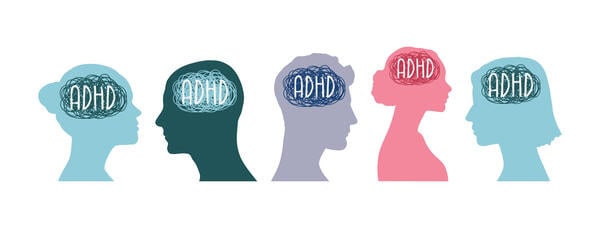
“Have you ever considered you might have ADHD?” My therapist asked me that during my second year of Ph.D. studies at Cornell University. I had just mentioned my 8-year-old nephew’s diagnosis, adding that both my brother and father had it too. She explained how attention deficit hyperactivity disorder manifests differently in women—less hyperactivity, more internal struggle—and why men and children with more recognizable symptoms are diagnosed earlier.
The diagnosis, when it finally came, illuminated a lifetime of confusion: why simple tasks felt insurmountable, why my brilliance arrived in unpredictable bursts, why I could hyperfocus for 12 hours on coding but couldn’t remember to pay rent. Then the pandemic hit. Isolated in my apartment, stripped of external structure, I watched my symptoms spiral out of control. My dissertation research stalled. My carefully constructed coping mechanisms crumbled. I wasn’t just struggling with ADHD—I was drowning in it.
I had been thinking about creating a space specifically for academics with ADHD. In a therapy group, I met another graduate student silently battling the same demons. When I shared my idea, she immediately understood its value. Together, we organized our first meeting, gathering a few friends via Zoom. Our numbers grew after I took a calculated risk during a department seminar—openly discussing my diagnosis and the unique challenges it created in academic life. Private messages trickled in from students across departments, each one a confession of silent, similar struggles.
My courage to speak openly came from an unexpected source. Months earlier, a successful visiting professor had casually mentioned getting diagnosed with ADHD after their first year on the faculty. Seeing someone in a position I aspired to reach discuss their diagnosis so matter-of-factly gave me hope. This cascade effect—from the professor to me, from me to others—became how our community grew.
Four years later, our weekly meetings continue, even as many of us have graduated and moved to new institutions. What began as a survival mechanism during isolation has evolved into a sustainable community that transcends institutional boundaries.
The Challenges of Being an Academic With ADHD
Academia presents unique challenges for individuals with ADHD that differ from those found in other professional environments. Research requires sustained focus over months or years with minimal external structure—a particularly difficult task for the ADHD brain that thrives on novelty and immediate feedback. Grant deadlines, publication timelines and research planning demand executive functioning skills that many of us struggle with, despite high intelligence and creativity.
But ADHD’s effects on academic life extend far beyond issues of executive function. Rejection sensitive dysphoria—the intense emotional response to perceived criticism—can make grant rejections and peer review feedback devastating rather than constructive. What neurotypical colleagues might process as routine academic critique can trigger profound emotional responses that interrupt work for days or weeks.
Time blindness affects how we manage projects and deadlines in significant ways. The inability to accurately perceive how much time has passed or how long tasks will take creates a pattern of either last-minute panic work or paralysis when deadlines feel abstractly distant. Poor working memory impacts our ability to hold multiple concepts in mind during writing and research, often leading to fragmented work processes that others misinterpret as lack of focus or commitment.
Many of us also struggle with auditory processing issues that make departmental meetings, lectures and conferences particularly taxing. The cognitive effort required simply to process spoken information in these settings depletes mental energy.
Traditional academic support resources rarely address these specific challenges. Time management workshops typically assume neurotypical brain functioning and don’t account for the variable attention and motivation that characterizes ADHD. Productivity advice often focuses on willpower and discipline rather than taking into account neurodivergent traits. Even when disability services are available on campus, they tend to focus on classroom accommodations rather than the holistic challenges of academic life with ADHD, particularly the unstructured aspects of research and writing that often cause the greatest difficulty.
Building Our Community
Our initial meetings were simply virtual gatherings to validate frustrations and share strategies. The pandemic actually provided an unexpected advantage—virtual meetings allowed us to participate from our most comfortable environments, pacing or fidgeting as needed.
While we first attempted a highly structured approach with designated facilitators, we quickly discovered this created more pressure than relief. What worked better was a simple pattern: rounds of updates in which each person shares recent struggles and wins, plus spontaneous advice sharing and time spent setting intentions for what we’ll accomplish next.
Creating psychological safety was paramount. We established clear confidentiality guidelines—what’s shared in the group stays in the group. Group norms evolved organically: no shame for forgetfulness, no competitiveness with one another, and a focus on solutions rather than just venting. We emphasized how ADHD traits such as hyperfocus and creative thinking can become significant strengths when properly channeled.
Starting Your Own Group
Based on our experience, here’s how to create an effective ADHD academic community:
Start small with trusted connections. Begin with three to five people you already know to establish psychological safety before expanding.
Consider independence from institutional structures. Our unofficial status meant less administrative hassle and allowed continuity as members graduated.
Implement minimal structure. Our simple meeting format provided enough structure to be productive while allowing flexibility. A rotating notetaker helped members with memory challenges revisit past discussions.
Embrace accessible, virtual options. We created a shared calendar and Slack channel for regular meetings, but also allowed members to add impromptu co-working sessions.
Share resources collaboratively. Regularly exchange tools and strategies—from productivity apps to therapist recommendations to successful accommodation requests.
Prioritize confidentiality. Some members may not have disclosed their diagnosis in their departments, making the group their only space for open discussion.
Impact Beyond Expectations
Members of our group have reported significant improvements in completing dissertations, meeting deadlines and navigating the job market with ADHD. The psychological benefits have been equally profound. Academia’s competitive nature breeds imposter syndrome, amplified for those with ADHD. When peers appear to effortlessly juggle multiple responsibilities while you struggle with basic tasks, the comparison can be crushing.
In our group, however, we found role models who shared our challenges. Watching fellow ADHD academics successfully defend dissertations or secure positions created a powerful ripple effect of inspiration. These visible successes provided concrete evidence that academic milestones were achievable with ADHD, motivating others to persevere through their own struggles.
While consistent attendance can be challenging (unsurprisingly, given our shared attention difficulties), we’ve found that maintaining a no-pressure atmosphere works better than strict accountability—members drift in and out as needed, returning without shame.
Finding Connection Through Shared Neurodiversity
What I’ve learned through this journey is that sometimes the most powerful communities form around shared neurological experiences rather than departmental affiliations. The regular connection with others who understand your specific challenges can be transformative for wellbeing, productivity and career development.
By creating these supportive micro-communities, we not only help ourselves navigate existing structures but gradually transform academic culture to better accommodate diverse cognitive styles—ultimately enriching scholarship for everyone.
If you’re an academic with ADHD, consider initiating a similar group. The effort to create connection amid the isolation of both academia and neurodivergence yields returns far beyond what we initially imagined.
Maria Akopyan is a National Science Foundation postdoctoral research fellow in the Department of Evolution, Ecology and Organismal Biology at the University of California, Riverside. She uses genomic tools to study how species diverge, adapt and persist across environments through time.