Tag: Education

  • Humanities Students Participate in Faculty-Led Research

    Humanities Students Participate in Faculty-Led Research

    On-campus engagement is one metric that can predict student success, but external factors including needing to work, caretaking responsibilities or living off campus can hinder students’ participation in activities.

    At Stony Brook University, part of the State University of New York system, institutional data showed retention rates lagged for students in the humanities and social science disciplines. In response, leaders created several programs to incentivize students in those majors to build relationships with others in their field and engage in hands-on work.

    Three Stony Brook leaders—Tiana De Jesus, lead academic success advisor and retention specialist; Richard Tomczak, director of faculty engagement; and Jennifer Rodriguez, associate director of the student success and retention center—shared details of the program and initial results at NASPA’s Student Success in Higher Education conference in Denver last month.

    The background: The Undergraduate Retention Initiatives and Success Engagement (U-RISE) office houses a variety of innovative retention supports, including a research lab, called SSTAR, and re-engagement advising.

    One of the more recent projects the staff at SSTAR—short for Student Success Through Applied Research—have taken on is addressing gaps in retention for non-STEM students.

    University data pointed to six majors in the humanities and social sciences with the lowest retention rates as well as relatively high admission rates of students with lower grade point averages from high school.

    Research shows that students who are engaged on campus are more likely to feel a deep sense of belonging and establish meaningful relationships with peers and faculty, as well as develop career skills. Students who have a strong sense of belonging in their major program are also more likely to have higher retention rates and levels of faculty connection.

    SSTAR team members sought to foster relationships between students and their instructors, improve students’ academic readiness and provide financial support to ensure equitable retention for students across socioeconomic groups.

    A National Picture

    Research from the Student Experience in the Research University Consortium at the University of California, Berkeley, found fewer students participating in faculty-led research post-pandemic compared to their peers enrolled in 2019, showing a gap in experiential learning opportunities.

    One of the more common reasons why students are unable to take on research roles is a lack of pay or needing to work for pay. A significant number of colleges have established financial aid for students to receive a stipend for participating in unpaid or underpaid experiential learning opportunities, ensuring the inability to pay does not prevent participation.

    To accomplish these goals, campus leaders created three interventions: research assistantship positions in faculty-led research, a first-year seminar for academic preparation and paid on-campus jobs for humanities students.

    In focus: This past spring, Stony Brook hired 12 first-year students out of an application pool of over 100 to serve as research assistants. Each student was matched with a faculty member from one of a variety of departments, including English, art, history, linguistics and Asian and Asian American studies. Research assistants committed to eight to 10 hours of work per week and were paid a stipend. Funding came from the provost’s office.

    The projects varied; one English and sociology student analyzed TikTok videos of social activists to challenge stereotypes, while an English and psychology student trained artificial intelligence on European literature from the 1700s, according to a university press release.

    The impact: Across interventions, students who participated in the programs were more likely to say they feel connected to their peers, see the value of their degree and intend to persist, according to pre- and post-survey data.

    Many students said the experiences helped open their eyes to the career and research opportunities available to them in their field and made them feel faculty were more accessible to them. Of the students who participated in the three interventions, 92.8 percent enrolled as a sophomore the following year, compared to 91.8 percent of their peers who didn’t participate, surpassing the university’s 92 percent retention goal. Students also had higher cumulative GPAs, showing a correlation between engagement and academic achievement.

    An unexpected finding was that before participating in the program, many students said they felt stigmatized for their major choice (Stony Brook is a majority of STEM learners), but afterward they felt more connected to those in similar fields, even if not in their exact major.

    In the future, researchers hope to recruit a larger number of students and expand their work to other humanities and social sciences majors.


    Source link

  • Navajo Nation Considers Higher Ed Funding Boost

    Navajo Nation Considers Higher Ed Funding Boost

    A month after President Donald Trump proposed slashing some $105 million in federal funding for tribal colleges next year, the Navajo Nation is considering legislation that would provide $30 million in recurring annual funding for tribal colleges and scholarships, Native News Online reported Thursday

    The Health, Education and Human Services Committee of the 25th Navajo Nation Council passed the proposal earlier this week, but it still has to get the approval of the full council. If it does, Diné College, Navajo Technical University and the Office of Navajo Nation Scholarship and Financial Assistance would each get $10 million a year beginning in 2027, potentially indefinitely.

    The plan would more than double the current funding allocations for those institutions, which receive a total of $12.4 million from the Navajo Nation. Each one would be required to put at least 1 percent of the $10 million allocation toward support for Diné language teacher programs, institutional endowments and K–12 education pipeline efforts. 

    According to Council Delegate Andy Nez, who sponsored the legislation, fewer than half of Navajo students who apply for scholarships through ONNSFA get one. 

    “This legislation provides a stable source of funding that directly supports our students and institutions, while investing in the longevity of learners and Diné speakers,” he told Native News Online. “We are moving beyond limited five- or 10-year grants to a consistent, annual allocation. This ensures funds go directly to the institutions and scholarship office without delay.”

    (This story has been updated to correct the amount of federal funding cut.)

    Source link

  • Higher education postcard: Oh I do like to be beside the seaside!

    Higher education postcard: Oh I do like to be beside the seaside!

    Student life can mean lots of things, but for some universities it means the seaside! And I’m not talking here about universities in towns by the sea, I mean ones where the seaside is literally on their doorstep.

    Now I’m not claiming that this is a comprehensive survey of UK seaside universities – I haven’t visited them all, and I’m almost certain to have missed some. But let’s visit three.

    First of all, the University of the Highlands and Islands. Which, as the name suggests, includes some campuses on islands. And the Stornoway campus is in Lews castle, overlooking the sea. I wrote about UHI a couple of years ago – here’s a link – and it’s highly likely that some of the other campuses are right by the sea too. But I don’t have postcards, so I can’t really check.

    Secondly, going widdershins, is Aberystwyth. The old college, which is in the card, is no longer the hub of the university, but it is still part of the university. And it is literally on the seafront. I’ve written about Aberystwyth a few times – here’s one on the university, here’s one about student representation, and here’s one about the university court.

    And finally, here’s Swansea. The university’s old campus is right next to the coast – you can see the coast road, the now-gone railway and the edge of the beach at the bottom right of the card above. Swansea has a new campus too, further round the bay and still on the sea front. Here’s a blog I wrote about Swansea almost three years ago now.

    So what other universities are right by the sea? Let me know in the comments below, and I’ll try and find postcards and add them to my list of future bogs.

    Anyway, here’s a jigsaw of the three postcards, pinned, as it were, on the cork-board in your office. It’s a tougher one then normal!

    Thank you for reading, and for all of the comments and feedback. I hope you have a great summer, and I’ll be back again with some more higher education postcards in September.

    Source link

  • AI and Art Collide in This Engineering Course That Puts Human Creativity First – The 74

    AI and Art Collide in This Engineering Course That Puts Human Creativity First – The 74

    I see many students viewing artificial intelligence as humanlike simply because it can write essays, do complex math or answer questions. AI can mimic human behavior but lacks meaningful engagement with the world.

    This disconnect inspired my course “Art and Generative AI,” which was shaped by the ideas of 20th-century German philosopher Martin Heidegger. His work highlights how we are deeply connected and present in the world. We find meaning through action, care and relationships. Human creativity and mastery come from this intuitive connection with the world. Modern AI, by contrast, simulates intelligence by processing symbols and patterns without understanding or care.

    In this course, we reject the illusion that machines fully master everything and put student expression first. In doing so, we value uncertainty, mistakes and imperfection as essential to the creative process.

    This vision expands beyond the classroom. In the 2025-26 academic year, the course will include a new community-based learning collaboration with Atlanta’s art communities. Local artists will co-teach with me to integrate artistic practice and AI.

    The course builds on my 2018 class, Art and Geometry, which I co-taught with local artists. The course explored Picasso’s cubism, which depicted reality as fractured from multiple perspectives; it also looked at Einstein’s relativity, the idea that time and space are not absolute and distinct but part of the same fabric.

    What does the course explore?

    We begin with exploring the first mathematical model of a neuron, the perceptron. Then, we study the Hopfield network, which mimics how our brain can remember a song from just listening to a few notes by filling in the rest. Next, we look at Hinton’s Boltzmann Machine, a generative model that can also imagine and create new, similar songs. Finally, we study today’s deep neural networks and transformers, AI models that mimic how the brain learns to recognize images, speech or text. Transformers are especially well suited for understanding sentences and conversations, and they power technologies such as ChatGPT.

    In addition to AI, we integrate artistic practice into the coursework. This approach broadens students’ perspectives on science and engineering through the lens of an artist. The first offering of the course in spring 2025 was co-taught with Mark Leibert, an artist and professor of the practice at Georgia Tech. His expertise is in art, AI and digital technologies. He taught students fundamentals of various artistic media, including charcoal drawing and oil painting. Students used these principles to create art using AI ethically and creatively. They critically examined the source of training data and ensured that their work respects authorship and originality.

    Students also learn to record brain activity using electroencephalography – EEG – headsets. Through AI models, they then learn to transform neural signals into music, images and storytelling. This work inspired performances where dancers improvised in response to AI-generated music.

    The Improv AI performance at Georgia Institute of Technology on April 15, 2025. Dancers improvised to music generated by AI from brain waves and sonified black hole data.

    Why is this course relevant now?

    AI entered our lives so rapidly that many people don’t fully grasp how it works, why it works, when it fails or what its mission is.

    In creating this course, the aim is to empower students by filling that gap. Whether they are new to AI or not, the goal is to make its inner algorithms clear, approachable and honest. We focus on what these tools actually do and how they can go wrong.

    We place students and their creativity first. We reject the illusion of a perfect machine, but we provoke the AI algorithm to confuse and hallucinate, when it generates inaccurate or nonsensical responses. To do so, we deliberately use a small dataset, reduce the model size or limit training. It’s in these flawed states of AI that students step in as conscious co-creators. The students are the missing algorithm that takes back control of the creative process. Their creations do not obey AI but reimagine it by the human hand. The artwork is rescued from automation.

    What’s a critical lesson from the course?

    Students learn to recognize AI’s limitations and harness its failures to reclaim creative authorship. The artwork isn’t generated by AI, but it’s reimagined by students.

    Students learn chatbot queries have an environmental cost because large AI models use a lot of power. They avoid unnecessary iterations when designing prompts or using AI. This helps reducing carbon emissions.

    The Improv AI performance on April 15, 2025, featured dancer Bekah Crosby responding to AI-generated music from brain waves.

    The course prepares students to think like artists. Through abstraction and imagination they gain the confidence to tackle the engineering challenges of the 21st century. These include protecting the environment, building resilient cities and improving health.

    Students also realize that while AI has vast engineering and scientific applications, ethical implementation is crucial. Understanding the type and quality of training data that AI uses is essential. Without it, AI systems risk producing biased or flawed predictions.

    Uncommon Courses is an occasional series from The Conversation U.S. highlighting unconventional approaches to teaching.

    This article is republished from The Conversation under a Creative Commons license. Read the original article.

    Source link

  • Deborah F. Rutter | Diverse: Issues In Higher Education

    Deborah F. Rutter | Diverse: Issues In Higher Education

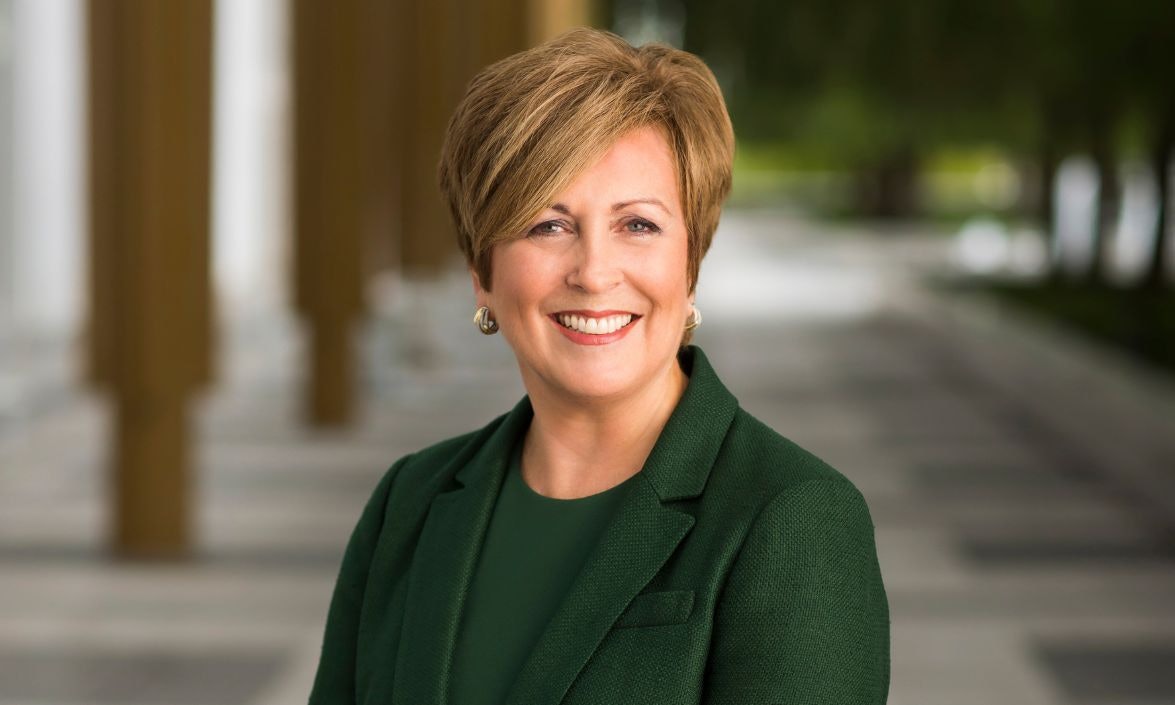
    Deborah F. RutterDeborah F. Rutter, the former president of the John F. Kennedy Center for the Performing Arts in Washington, D.C., has been appointed vice provost for the arts at Duke University.

    From 2014 to 2025, Rutter was the first woman to serve as president of the Kennedy Center, the nation’s cultural center and living memorial to President Kennedy. Under Rutter’s leadership, the center experienced a period of transformative programmatic growth; opened the REACH, a physical expansion of the campus; and strengthened its financial position through increases in its endowment and working capital reserves.

    Rutter is a graduate of Stanford University, where she majored in music and German, and earned an MBA from the University of Southern California. Trained in piano and violin, she previously served as president of the Chicago Symphony Orchestra Association and executive director of the Seattle Symphony Orchestra. She also held executive leadership roles with the Los Angeles Chamber Orchestra and the Los Angeles Philharmonic.

    Rutter received an honorary Doctor of Arts degree from Duke in 2023.

    Source link

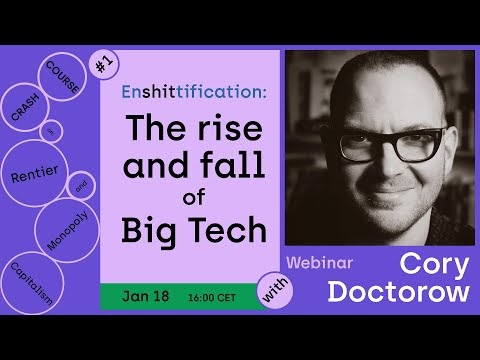
  • The Enshitification of Higher Education in the United States

    The Enshitification of Higher Education in the United States

    Cory Doctorow’s theory of enshitification—originally coined to describe how digital platforms decay over time—perfectly captures the grim evolution of U.S. higher education. Institutions that once positioned themselves as public goods now exist primarily to sustain themselves, extracting revenue, prestige, and labor at the expense of students, faculty, and the broader public.

    In the post–World War II era, higher education in the United States was broadly seen as a driver of social mobility, economic growth, and democratic citizenship. The GI Bill and substantial state funding opened college doors to millions. Tuition at public institutions was minimal or nonexistent. Academic freedom, faculty governance, and research for the common good were foundational ideals.

    By the 1980s, neoliberal policies began to reshape the higher education landscape. Public disinvestment led institutions to rely more heavily on tuition, philanthropy, corporate partnerships, and student debt. Universities became more bureaucratic and brand-conscious. Students were reframed as consumers, and education as a commodity. Faculty positions gave way to underpaid adjunct labor, and Online Program Managers like 2U, Academic Partnerships (aka Risepoint) and Kaplan emerged to monetize digital learning. Marketing budgets ballooned. Classrooms and research labs became secondary to enrollment targets and revenue generation.

    A 2019 Higher Education Inquirer report revealed how elite universities joined the downward spiral. Institutions like Harvard, Yale, and USC outsourced online graduate programs to 2U, employing aggressive recruitment tactics that resembled those of discredited for-profit colleges. Applicants were encouraged to take on excessive debt for degrees with uncertain returns. Whistleblowers likened it to fraud-by-phone—evidence that even the most prestigious universities were embracing an extractive model.

    Doctoral education offers a deeper glimpse into how enshitification has hollowed out academia. Sold as a noble pursuit of truth and a path to secure academic employment, the Ph.D. has become, for many, a journey into economic instability, psychological distress, and underemployment. Only a small percentage of doctoral students land tenure-track jobs. Graduate schools continue to admit far more students than they can responsibly support, while providing little preparation for careers outside academia. Mentorship is often lacking, and financial support is frequently inadequate. Many graduate students rely on food pantries, defer medical care, or take on gig work just to survive. Meanwhile, universities benefit from their labor in teaching and research.

    International graduate students face even steeper challenges. Promised opportunity, they instead encounter a saturated job market, low wages, and immigration precarity. Their labor props up U.S. research and rankings, but their long-term prospects are often bleak.

    The rise of career-transition consultants—like Cheeky Scientist and The Professor Is In—has become a booming cottage industry, a byproduct of the failed academic job pipeline. For most Ph.D.s, what was once considered “alternative academia” is now the only path forward.

    Financial hardship compounds the crisis. Graduate stipends in many programs are far below local living wages, especially in high-cost cities like San Francisco, Boston, or New York. Few programs provide retirement benefits or financial literacy resources. The financial toll of earning a doctorate is often hidden until students are years deep into their programs—and years behind in wealth accumulation.

    Meanwhile, university medical centers—often affiliated with elite institutions—offer a parallel example of institutional enshitification. These hospitals have long histories of exploitation, particularly of poor and minority patients. Even today, these facilities prioritize affluent patients and donors, while relying on precariously employed staff and treating marginalized communities as research subjects. The disparities are systematic and ongoing. The rhetoric of innovation and healing masks a legacy of racial injustice and extractive labor practices.

    Legacy admissions further entrench inequality. While race-conscious admissions have been rolled back, legacy preferences remain largely untouched. They serve to maintain elite networks, ensuring that wealth and access remain intergenerational. These policies not only contradict the rhetoric of meritocracy but also deepen structural inequities in the name of tradition.

    Today, higher education serves itself. Institutions protect billion-dollar endowments, award executive salaries in the millions, expand sports programs and real estate portfolios, and depend on underpaid faculty and indebted students. Campuses are rife with inequality, surveillance of student protest, and performative gestures of inclusion, even as DEI initiatives are gutted by state governments or internal austerity.

    The consequences are clear. Enrollment is declining. Campuses are closing. Faculty are being laid off. Public trust is eroding. And even elite institutions are feeling the strain. Doctorow’s theory suggests that once a system has fully enshittified, collapse becomes inevitable. The College Meltdown is not hypothetical—it’s here.

    And yet, collapse can be a beginning. Higher education must be radically reimagined: public investment, tuition-free education, student debt relief, labor protections, honest admissions policies, and genuine democratic governance. The alternative is more of the same: a system that costs more, delivers less, and cannibalizes its future to feed its prestige economy.


    Selected Sources

    Caterine, Christopher L. Leaving Academia: A Practical Guide. Princeton University Press, 2020.

    Cassuto, Leonard. The Graduate School Mess: What Caused It and How We Can Fix It. Harvard University Press, 2015.

    Kelsky, Karen. The Professor Is In: The Essential Guide to Turning Your Ph.D. into a Job. Three Rivers Press, 2015.

    Roberts, Emily. Personal Finance for Ph.D.s. https://www.pfforphds.com

    Shaulis, Dahn. “2U Expands College Meltdown to Elite Universities.” Higher Education Inquirer, Oct. 4, 2019. https://www.highereducationinquirer.org/2019/10/college-meltdown-expands-to-elite.html

    Shaulis, Dahn. “The Dark Legacy of Elite University Medical Centers.” Higher Education Inquirer, Mar. 13, 2025. https://www.highereducationinquirer.org/2025/03/the-dark-legacy-of-elite-university.html

    Doctorow, Cory. “TikTok’s Enshittification.” Pluralistic.net, Jan. 21, 2023. https://pluralistic.net/2023/01/21/potemkin-ai/

    American Association of University Professors. Annual Report on the Economic Status of the Profession, 2023. https://www.aaup.org

    National Student Clearinghouse Research Center. Current Term Enrollment Estimates, 2024. https://nscresearchcenter.org

    Newfield, Christopher. The Great Mistake: How We Wrecked Public Universities and How We Can Fix Them. Johns Hopkins University Press, 2016.

    Goldrick-Rab, Sara. Paying the Price: College Costs, Financial Aid, and the Betrayal of the American Dream. University of Chicago Press, 2016.

    Roth, Gary. The Educated Underclass: Students and the Promise of Social Mobility. Pluto Press, 2019.

    Teen Vogue. “The Movement Against Legacy Admissions.” Jan. 2, 2025. https://www.teenvogue.com/story/movement-against-legacy-admissions

    The Guardian. “‘Affirmative Action for the Privileged’: Why Democrats Are Fighting Legacy Admissions.” Aug. 11, 2023. https://www.theguardian.com/education/2023/aug/11/college-legacy-admissions-affirmative-action-democrats

    Source link

  • Student Preferences in On-Campus Housing

    Student Preferences in On-Campus Housing

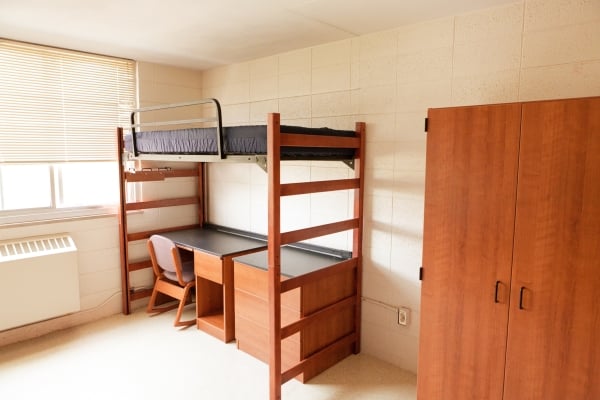
    YinYang/iStock/Getty Images Plus

    What do students look for in on-campus housing? According to university staff, students are most satisfied with their space when it’s well furnished and clean.

    A new report from StarRez, a student housing management platform, identified room conditions and a sense of community as top priorities for on-campus housing residents. The survey also found that a majority of institutions see social events and mental health support as key to the student experience in residence halls.

    In addition, the research reveals that today’s students prefer privacy in their living space but are still interested in creating connections and engaging with peers who share their residence hall. They are also open to opportunities to build living-learning communities.

    Methodology

    StarRez’s survey was fielded between Feb. 10 and April 14, 2025. It yielded 459 responses from 418 institutions across the globe, including 360 institutions based in the Americas.

    Setting the stage: An estimated 16 percent of all undergraduates live on campus, including 30 percent of those who attend four-year, public institutions and 43 percent of students at independent colleges, according to an analysis from the American Association of Community Colleges.

    Previous research shows that students who live in residential housing on campus are more likely than their peers who live off campus to persist and complete a degree. This trend may be due in part to the proximity to peer support, academic resources and security in basic needs that living on campus affords.

    In recent years, many colleges have seen a housing crunch impact their students, resulting in less-than-ideal accommodations and residence halls exceeding capacity. StarRez’s survey found that 64 percent of responding institutions had 90 percent or higher occupancy rates; 15 percent had occupancy rates of 99 percent or higher. Yet nearly 57 percent of students do not have access to on-campus housing, according to respondent data.

    But StarRez’s report points to a post-pandemic spike in students interested in living on campus—a trend that has leveled out this year—meaning the exceptionally high demand for on-campus housing may decline.

    Affordability also remains a growing concern in the campus housing market. Student housing prices are rising faster than those of single-family housing, growing 8.8 percent in 2023 compared to multifamily rentals, which rose 4.5 percent in cost over the same period.

    Survey says: When students say they’re satisfied with their housing, approximately one-third are referring to the room conditions and furnishings, their sense of community, or the residence hall’s amenities, according to institutional respondents.

    On the flip side, cost, facility issues and dissatisfaction with food or meal plans were the most commonly reported criticisms of on-campus living. Inside Higher Ed’s Student Voice survey from 2023 found that 48 percent of students believe their dining hall options need improvement and 37 percent said dining facilities need improvement.

    Across room types, apartment-style housing is the most requested option by students (34 percent), followed by suite-style housing (27 percent) and traditional dorms (21 percent), according to StarRez’s survey. The report also found that a greater share of students want their own space; at a majority of institutions (51 percent), students rank single rooms as their top choice on the housing application.

    Not every housing placement turns out to be successful. A majority of colleges said more than 10 percent of their residents requested a room change during the year, with 8 percent saying between 25 and 50 percent of residents asked for a new room.

    Among events offered to residents, 90 percent said social events are the most popular and widely attended, followed by recreational activities (56 percent) and wellness programs (39 percent).

    When asked which health and well-being activities students most often requested of their housing facility, nearly 60 percent of respondents said mental health support programs, and over half (56 percent) wanted social events and community-building activities. Less popular responses included counseling and peer support networks (46 percent), healthy dining options (38 percent), and financial and academic support services (36 percent).

    Living-learning communities continue to grow in popularity, with four out of five colleges offering this type of student housing. Academic-focused communities (23 percent) and honors programs (17 percent) were the most popular LLCs, while career (5 percent) and leadership-focused (6 percent) groups were the least popular.

    National data shows students with disabilities are enrolling in higher education at higher rates, and StarRez’s report points to an increase in emotional support animals making their way to campus as well. One-third of institutions said between 3 and 10 percent of residents have emotional support animals, with 3 percent of respondents saying more than 10 percent of students have them.

    Fewer institutions reported offering gender-inclusive housing in 2025 (69 percent) than in 2024 (73 percent), and there was little difference in the number who said they were considering implementing gender-inclusive housing space.

    Growth in international student enrollment is also pushing an increase in housing demand from international students, with 34 percent of respondents indicating a slight increase and 6 percent reporting a significant increase. A majority of respondents house fewer than 10 percent of their international students on campus. The report data does not reflect recent federal actions this spring that may impede international student enrollment in the fall.

    So what? Based on the report’s findings, authors recommend housing providers consider:

    • Students’ desire for privacy, mental health and belonging, which are core to their experiences on campus.
    • More students want apartment-style and single-room housing options, creating opportunities for institutions to adapt spaces to match this need.
    • Living and learning communities can provide high-impact experiences for residents, leading to greater satisfaction and retention.

    How does your institution promote belonging and well-being in the residence halls? Tell us more.

    Source link

  • Columbia “Incorporating” IHRA Antisemitism Definition

    Columbia “Incorporating” IHRA Antisemitism Definition

    Columbia University’s acting president says the institution is incorporating the controversial International Holocaust Remembrance Alliance definition of antisemitism into the Office of Institutional Equity’s work. That office investigates discrimination complaints against students and employees.

    “Formally adding the consideration of the IHRA definition into our existing anti-discrimination policies strengthens our approach to combating antisemitism,” Claire Shipman said in a statement Tuesday announcing “additional commitments to combatting antisemitism.”

    The IHRA, which calls its definition a “working definition,” says antisemitism “might include the targeting of the state of Israel, conceived as a Jewish collectivity. However, criticism of Israel similar to that leveled against any other country cannot be regarded as antisemitic.”

    It also says antisemitism might include “comparisons of contemporary Israeli policy to that of the Nazis” or “claiming that the existence of a State of Israel is a racist endeavor.”

    Columbia’s leaders, like those at Harvard University, have been negotiating with the Trump administration to restore funding the federal government said it froze over alleged campus antisemitism. Harvard announced in January that it would start using the IHRA definition when evaluating complaints of antisemitic harassment or discrimination—before its public war with the Trump administration began.

    In a statement, Afaf Nasher, executive director of the Council on American-Islamic Relations’ New York chapter, called Columbia’s move “an attack on free speech” and a “shameless weaponization of antisemitism in order to stifle the ability of students to speak out against the ongoing genocide of Palestinians by the Israeli government.”

    Shipman also announced that Columbia would not “recognize or meet with the group that calls itself ‘Columbia University Apartheid Divest’ (CUAD), its representatives, or any of its affiliated organizations. Organizations that promote violence or encourage disruptions of our academic mission are not welcome on our campuses and the University will not engage with them.”

    Source link

  • F-1, J-1 Student Visa Issuances Dropped in May

    F-1, J-1 Student Visa Issuances Dropped in May

    The U.S. Department of State issued 12,689 fewer F-1 visas in May 2025 compared to the May before, which could forecast a decline in international students able to attend U.S. universities this fall.

    Recently published data from the State Department shows a 22 percent drop in F-1 visas issued across the world and a 13 percent decline in J-1 visas.

    While visa issuances can help predict international student enrollment trends, they don’t tell the full story, said Rachel Banks, senior director for public policy and legislative strategy at NAFSA, the association of international educators. Still, the trend line isn’t positive.

    “We’re not really going to know until we get through September to know everyone who arrives, to know what the enrollment really looks like,” Banks said. “But it’s certainly not encouraging.”

    Over the past few months, President Donald Trump has cracked down on international students via arrests, travel bans and revocations of legal status. Those moves and other executive orders could affect the number of F-1 and J-1 visas issued.

    In May, the administration said it would revoke visas from Chinese nationals who have ties to the Chinese Communist Party. The number of Chinese nationals issued a F-1 visa in May declined by 15 percent (or about 2,578 students). The State Department also paused visa interviews in late May while the agency developed a policy to screen international students’ social media profiles. Interviews resumed in June once the policy was in place.

    The interview pause may have contributed to but cannot fully explain the decline in visa issuances, said Finn Reynolds, head of market research at Lawfully, a legal tech start-up focused on immigration.

    The State Department doesn’t publish the number of visa applications or interviews it engages in, which means the decline could be tied to a decreased demand or slower processing by the department, Reynolds added. A May 27 survey by Study Portal found student interest in studying in the U.S. has dropped to its lowest point since COVID-19, with fewer students interested in U.S. programs and instead considering other English-speaking nations such as the U.K. or Australia.

    Additionally, the State Department doesn’t share daily visa issuance numbers, meaning the drop could be tied solely to the pause in the final week of May, Banks said. The connection, over all, is unclear.

    The data also points to the effect of travel restrictions on students from certain nations. The Trump administration banned visitors from 12 countries and implement heightened restrictions for seven other countries in June. The May numbers show a nearly 150 percent decline in F-1 visa issuances (or 451 visas) and a 105 percent decline in J-1 issuances (157 visas) to citizens from the impacted nations, even before the ban took place.

    One factor not reflected in the data is the number of students returning to their institutions who already hold visas. Students don’t need to receive a new visa if they remain in the U.S.; they only need one when traveling in and out of the country. Given the disruption to Student Exchange and Visitor Information System statuses in April, many students chose to remain in the U.S. over their summer break, Banks said.

    Reynolds expects to see a further drop in visa issuances for June and July, because social media vetting procedures result in fewer appointment slots.

    Students in China, Ghana, India, Japan, Niger and Nigeria have had the most trouble getting appointments, according to NAFSA members.

    “We’re halfway through July, and there’s still students who are struggling to get an appointment; that’s troubling,” Banks said.

    Future policies could also bottleneck the visa pipeline for international students. A proposed rule at the Office of Management and Budget would end duration-of-stay policies and instead implement a fixed date for how long students can remain in country on their visa.

    “We’re very concerned that if that were to go through, that sort of adds to further disruptions and hurdles that students have to jump over, that then gives students more reason to say, ‘You know, this seems like a hassle, this seems like I’m not welcome, I’m going to find another opportunity to pursue,’” Banks said.

    Enrollment Declines Loom

    Colleges and universities are already anticipating declines in their international student populations. The Institute of International Education found that 40 percent of institutions projected declines in their undergraduate population of international students, and 49 percent anticipated a drop in graduate student populations.

    A NAFSA survey of about 150 members institutions this summer found 78 percent of institutions predict a decline in both undergrad and graduate international students.

    Each year, institutions enroll 1.1 million international students, about 6 percent of all college students in the U.S.

    Calculations by The Financial Times, published last week, found that a decline of even 10 percent in international student enrollment would cost U.S. colleges and universities $3 billion in revenue. A significant portion of this loss would be in tuition revenue; a 10 percent drop would result in a $900 million decrease in tuition dollars.

    Source link

  • Wins and Losses of the Reconciliation Bill

    Wins and Losses of the Reconciliation Bill

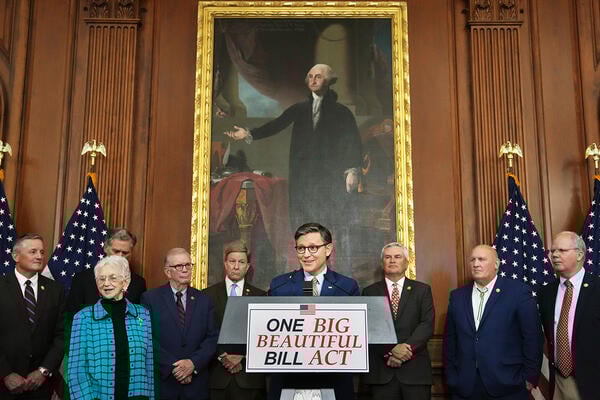
    Kevin Dietsch/Getty Images

    It’s been six months since the second Trump administration took office, and in that time it has radically changed the policy around federal student loans, grants and college accountability. With the One Big Beautiful Bill Act now signed into law, Inside Higher Ed’s editor in chief, Sara Custer, spoke with news editor Katherine Knott about what’s in the bill and the outcome of the sector’s efforts to influence the massive piece of legislation. 

    In a recent episode of The Key, Inside Higher Ed’s news and analysis podcast, they also checked in on Harvard and Columbia’s negotiations with the administration and shared what they’ll be looking out for in the next six months. 

    Source link