RESTON, Va.(GLOBE NEWSWIRE) — K12, a portfolio brand of Stride, Inc. has been recognized for its steadfast commitment to quality education. In a recent review by Cognia, a global nonprofit that accredits schools, K12 earned an impressive Index of Education Quality (IEQ) score of 327, well above the global average of 296. Cognia praised K12 for creating supportive environments where students are encouraged to learn and grow in ways that work best for them.
For over 25 years, K12 has been a pioneer in online public education, delivering flexible, high-quality learning experiences to families across the country. Having served more than 3 million students, K12 has helped shape the future of personalized learning. This long-standing presence in the field reflects a deep understanding of what families need from a modern education partner. The recent Cognia review further validates K12’s role as a trusted provider, recognizing the strength of its learning environments and its commitment to serving all students.
“What stood out in this review is how clearly our learning environments are working for students,” said Niyoka McCoy, Chief Learning Officer at Stride, Inc. “From personalized graduation plans to real-time feedback tools and expanded course options, the Cognia team saw what we see every day, which is students being supported in ways that help them grow, stay engaged, and take ownership of their learning.”
K12’s impact extends well beyond the virtual classroom. In 2025, the organization was honored with two Gold Stevie® Awards for Innovation in Education and recognized at the Digital Education Awards for its excellence in digital learning. These awards highlight K12’s continued leadership in delivering meaningful, future-focused education. What sets K12-powered online public schools apart is a curriculum that goes beyond the basics, offering students access to STEM, Advanced Placement, dual-credit, industry certifications, and gamified learning experiences. K12’s program is designed to spark curiosity, build confidence, and help students thrive in college, careers, and life.
Through student-centered instruction and personalized support, K12 is leading the way in modern education. As the learning landscape evolves, K12 adapts alongside it, meeting the needs of today’s students while shaping the future of education.
To learn more about K12 and its accredited programs, visit k12.com.
About Stride, Inc.
Stride Inc. (LRN) is redefining lifelong learning with innovative, high-quality education solutions. Serving learners in primary, secondary, and postsecondary settings, Stride provides a wide range of services including K-12 education, career learning, professional skills training, and talent development. Stride reaches learners in all 50 states and over 100 countries. Learn more at Stridelearning.com.
eSchool Media staff cover education technology in all its aspects–from legislation and litigation, to best practices, to lessons learned and new products. First published in March of 1998 as a monthly print and digital newspaper, eSchool Media provides the news and information necessary to help K-20 decision-makers successfully use technology and innovation to transform schools and colleges and achieve their educational goals.
A conservative think tank called on President Trump Tuesday to “draft a new contract” that universities must follow or face “revocation of all public benefit.” Among other things, institutions would have to end “their direct participation in social and political activism,” abolish “DEI bureaucracies,” and publish “complete data on race, admissions, and class rank,” according to the statement put out by the Manhattan Institute.
“The Manhattan Statement on Higher Education” also says universities must deliver “swift and significant penalties, including suspension and expulsion, for anyone who would disrupt speakers, vandalize property, occupy buildings, call for violence, or interrupt the operations of the university.”
“Beginning with the George Floyd riots and culminating in the celebration of the Hamas terror campaign, the institutions of higher education finally ripped off the mask and revealed their animating spirit: racialism, ideology, chaos,” the statement says.
“The universities have contributed to a new kind of tyranny, with publicly funded initiatives designed to advance the cause of digital censorship, public health lockdowns, child sex-trait modification, race-based redistribution, and other infringements on America’s long-standing rights,” it says.
Among the 44 signatories are:
Christopher Rufo, an anti-DEI activist, member of the New College of Florida Board of Trustees and Manhattan Institute senior fellow;
Virginia Foxx, a Republican U.S. representative from North Carolina who chaired the House Education and the Workforce Committee;
Jordan Peterson, a University of Toronto professor emeritus and Daily Wire contributor;
Ben Shapiro, a podcaster and Daily Wire co-founder;
Scott Yenor, a Claremont Institute fellow and Boise State University professor who resigned from the University of West Florida Board of Trustees after implying only straight white men should be in political leadership;
Peter Wood, president of the National Association of Scholars; and
Mark Bauerlein, an Emory University professor emeritus and member of the New College of Florida Board of Trustees.
In an email to Inside Higher Ed, Rufo wrote, “The American people have reached a decision point: to continue subsidizing the corruption of the universities, or to demand sensible, popular, and targeted reforms.”
In a post on X Tuesday, Education Secretary Linda McMahon congratulated Rufo and the Manhattan Institute for “envisioning a compelling roadmap to restore integrity and rigor to the American academy!” But Education Department spokespeople didn’t specifically say whether the federal government would take action on the proposed contract.
In a paradoxical bid to “make America great again,” President Trump and congressional Republicans are pushing to restrict international research collaboration in U.S. higher education. The Department of Education is investigating Harvard University; the University of California, Berkeley; and the University of Pennsylvania for potential violations of the Higher Education Act, which requires universities to report foreign gifts and contracts valued at $250,000 or more.
At a time when the global race to develop cutting-edge technologies is accelerating, the U.S. should be expanding—not constraining—its international research partnerships.
Federal demands for foreign gift reporting kicked off in 1986, after Georgetown University received donations from Arab governments to establish its Center for Contemporary Arab Studies. Policymakers worried about potential strings attached, such as influence over curricula and threats to free speech, resulting in legislation requiring universities to disclose foreign funding. Over time, however, compliance waned, and successive administrations allowed the law to fall into disuse.
That changed in 2019, when the Trump administration revived enforcement and began investigating universities for noncompliance, uncovering billions of dollars in unreported funding. The concern then, as now, was that a lack of transparency threatened academic independence and posed national security risks.
It is understandable to want to know if foreign governments are influencing American institutions. But is there good reason to think current rules are effective, or that stricter ones would be?
There is little evidence that decades of lax enforcement have led to significant harm. The Trump administration’s China Initiative, for example, sought to root out espionage in academia but instead cast a wide, indiscriminate net, leading to criminal charges against professors like Feng Tao, Anming Hu and Gang Chen based on questionable allegations. In each case, charges were ultimately dropped or the scientists were acquitted, but not before reputations were damaged and careers derailed. Of the 162 cases prosecuted by the Department of Justice under the China Initiative, only about 20 involved university researchers, and at least nine of these cases ended in dismissed charges or acquittals. The initiative illustrates how geopolitical anxiety can erode academic freedom and damage innocent collaborations for little gain.
Both the previous and current Trump administrations have scrutinized universities’ research, including on dual-use technologies such as artificial intelligence, robotics systems and laser technology, arguing that they can be used to advance foreign governments’ (particularly China’s) military objectives. But politicians too often fail to acknowledge that most applications in these fields are nonmilitary, including autonomous vacuum cleaners, industrial robots and self-driving cars. Autonomous systems have been a long-standing area of global research, much of it geared toward civilian innovation. Moreover, federal agencies, including the Department of Defense, have implicitly supported this research through funding.
While reporting can be onerous, requiring universities to obtain federal waivers to collaborate with researchers from “foreign countries of concern” is more intrusive. So too are possibly biased social media screening of foreign students and travel bans that prevent entire populations from engaging with U.S. institutions. These policies move beyond transparency into gatekeeping, forcing universities to seek permission before working with researchers from countries like China, home to more than 1.4 billion people and a global leader in scientific research. Past historical lessons on how political tensions have been allowed to erode academic freedom do not need to be relearned.
Although the U.S. Department of Education claimed to improve the process for foreign gift reporting with a new portal in the first Trump administration, it increased the amount of information for colleges to report. The reporting process, while intended to enhance transparency, imposes bureaucratic costs on institutions.
Preserving open academic environments, where innovation can thrive, is not a liability, but a strategic advantage. Still, precautions should be taken. Sensitive research should be classified by the federal government. Companies partnering with universities should set clear terms about who can access proprietary projects. People who violate classification rules or contract terms should face consequences. But the default should be freedom, not prohibition.
To keep America great, it is essential to preserve the openness and intellectual freedom that define U.S. higher education and make it the best postsecondary system in the world, at least as indicated by its dominance of international rankings, share of Nobel laureates and attractiveness to international students. Open academic environments encourage innovation, foster critical thinking and enable researchers to explore cutting-edge fields—including those vital to national competitiveness.
If the U.S. is to maintain its position as a global leader in research, it must champion academic freedom, not restrict it.
Neal McCluskey is the director of the Center for Educational Freedom at the Cato Institute, where Kayla Susalla is a research associate.
The last book I recommended for digital learning teams to read to fuel conversations about AI and higher education was Co-Intelligence: Living and Working With AI by Ethan Mollick. It is short, taking only four hours and 39 minutes to read in audiobook format. (Is there any other way to read books?)
Yuval Noah Harari’s Nexus: A Brief History of Information Networks from the Stone Age to AI is an altogether different beast. Reading this book entails absorbing some significant opportunity costs at a portly 17 hours and 28 minutes of listening time.
Counterintuitively, at this moment in higher education, Nexus’s 17 hours and 28 minutes of required attention are more feature than bug. All of us working in digital learning and higher education would do well to trade time reading about the latest assault on our values and institutions and instead spend that time listening to Harari tell his AI story.
Despite the value of Nexus as a distraction from news, screens and any conversations about almost anything nowadays, real value can be derived from the book in our campus discussions about AI. Granted, a bit of handwaving may be necessary to connect Harari’s story with how we are going to infuse AI into our curriculum, course production and university administrative processes. As with most exercises in lateral thinking, the benefits come from the process, not the ends, and any attempt to connect the ideas in Nexus to campus AI policies and practices is sure to yield some interesting results.
What Harari sets out to do in Nexus is fit the emergence and future impact of AI within the broader historical story of the evolution of information networks. As with all prior information technology revolutions, AI (or at least generative AI) will decrease information creation and transmission costs.
In higher education, we already see the impact of AI-generated content, as AI-created assessments and AI-generated synthesis of course videos and readings appear across a wide range of online courses. Very quickly, we will start to see a transition from subject matter expert instructional videos to SME avatar media, generated from nothing more than a headshot and a script.
Harari’s worry about our AI future is that generative AI can create new information. Information does not equal knowledge, as platforms for dissemination can just as quickly (or more easily) spread disinformation as facts. What happens when generative AI generates and spreads so much disinformation that practical knowledge gets overwhelmed?
Unlike Mollick’s book Co-Intelligence, which is practical and positive, Nexus is abstract and a bit scary. It will be challenging to read Nexus with the goal of making connections with how we might handle the rise of generative AI on our campuses and within our industry without arriving at some level of pessimistic concern. After all, we are in the business of knowledge creation and dissemination, and generative AI promises to change (perhaps radically) how we go about both of these activities.
A second area of higher education AI concern that reading Nexus will do little to alleviate revolves around who creates the tools. The history of universities being dependent on the platforms of for-profit companies to accomplish our core mission-related teaching activities is not an encouraging precedent. The thought of higher education as a passenger in a corporate vehicle of AI tools and capabilities should invoke first worry and then action.
While Nexus’s lack of actionable steps for universities in the age of AI might frustrate many in our community looking for that road map, it may be that taking a 30,000-foot view is what is needed to best assess the landscape. What Nexus lacks in practical advice around AI for higher education, it excels in providing the overarching framework (information networks) and historical context in which to have different (and perhaps more ambitious) campus conversations on AI.
For many colleges and universities, licensed merchandise has long been a quiet but steady source of revenue and brand visibility. From sweatshirts and baseball caps to water bottles and notebooks, these products not only generate income but also serve as walking billboards that boost school spirit and brand recognition far beyond campus.
But lately, there’s been a shift. Higher ed marketers should be paying close attention to what’s happening in the licensing space, because the early warning signs of disruption are already here.
Tariffs and Canceled Orders: A Brewing Storm
Recent increases and uncertainty regarding tariffs on imported goods are driving up pricing for licensees to manufacture and import collegiate merchandise. With rising material, shipping and import costs, many licensees are reassessing their strategies. Some are choosing to cancel or reduce purchase orders, pulling back on riskier bets or deprioritizing smaller-volume schools in favor of top-tier brands with national visibility. Some are choosing to completely rebuild their supply chains, which involves changing product offerings, factory partners and source nations. Smaller-volume schools necessarily will be cut from some offerings as supply chains are rebuilt.
For institutions outside the Power Four athletic conferences, that means your branded products may no longer be showing up on some store shelves for a while or may be offered in significantly reduced volume. Even for larger schools, the financial strain on licensees and the changes they need to make could lead to diminished SKU/style offerings, fewer special collections, slower product refreshes and reorders, and less innovation.
The Impact on Brand Visibility and Affinity
This isn’t just a revenue issue; it’s a brand issue. Licensed merchandise is one of the few marketing channels that turn fans, alumni and students into ambassadors. Today’s prospective students are tomorrow’s student body and future alumni and lifetime fans. When a fan or parent wears your school’s hoodie to the grocery store or a high school senior sees your logo in a retail window, that visibility reinforces your institution’s cultural presence.
If fewer products are being made or if those products aren’t showing up in physical and digital storefronts, your brand presence shrinks. That affects more than just sales; it influences how connected your audience feels to your institution and has downstream negative impacts on enrollment, community involvement, donations and athletic support. These supply chain and licensee challenges are coming on the heels of significant COVID-related upheavals and before an anticipated nationwide enrollment cliff related to shrinking high school population.
Why Marketing Leaders Should Get Involved
Traditionally, licensing may live under auxiliary services or a separate business office. But as marketing leaders, we should be partnering more closely with licensing teams to ensure we have a full picture of how our brand is performing in the marketplace.
Here are three steps marketing leaders can take now to mitigate the impact of this changing landscape.
Re-Engage With Your Licensing Team
Ask for a performance snapshot: How have royalties trended? Are specific categories, like youth apparel, tailgating gear or alumni merchandise, down or up more than others? What are your top-selling or worst-performing licensees and SKUs? Are there any retail partners you could work with to broaden their selection of licensed products?
Evaluate Your Licensee Mix and Sourcing Strategy
Encourage conversations about domestic sourcing options and alternative manufacturers with domestic production. If one of your primary partners is pulling back due to tariffs, there may be smaller or niche partners who are better equipped to weather the storm and innovate in response.
Activate Your Community Through Storytelling
If retail sales are contracting, consider how your marketing team can help drive traffic to official online stores or promote domestic-sourced direct-to-consumer efforts. Strategic storytelling such as featuring alumni-owned or local licensees or highlighting sustainable merchandise can align with institutional values while boosting sales.
A Moment for Brand Resilience
In higher ed, we often talk about resilience in terms of enrollment, endowment or curriculum. But brand resilience matters, too, and licensing is a key part of that equation. As market conditions tighten, schools that stay actively involved in their licensing strategy will have an advantage—not just financially, but reputationally.
Now is the time to treat your licensing portfolio not as a passive revenue stream but as an extension of your brand strategy. The marketers who do will be best positioned to navigate the challenges ahead and emerge stronger.
Jenny Petty is vice president, marketing communications, experience and engagement, and chief marketing and communications officer, and Denise “Goat” Lamb is chief licensing officer at the University of Montana.
Academic advisers play a key role in helping students navigate higher education.
Martine Doucet/E+/Getty Images
Academic advising is key to helping students navigate their institution and critical for student engagement and retention. However, not every student receives high-quality advising.
A 2023 Student Voice survey by Inside Higher Ed and College Pulse found that just over half (55 percent) of college students said they were advised on their required coursework for graduation. And a 2023 survey by Tyton Partners found that only 65 percent of students were aware of academic advising supports on campus, compared to 98 percent of college employees who said the service was available.
In a 2024 Student Voice survey, 75 percent of students said they had at least some trust in academic advisers on their campus, while 20 percent said they had not much trust in them.
High caseloads, a lack of coordination among departments and low student engagement with resources are some of the top challenges advisers face in their work, according to a 2024 report by Tyton Partners.
Inside Higher Ed compiled five resources to support academic and faculty advisers in their goal of promoting student success.
Advising Journey Map
NASPA’s Advising Success Network hired a group of student fellows to create advising support resources for colleges and universities that reflect students’ identities and educational goals. One resource, a journey map, was developed by three students and highlights the ideal and lived experiences students had navigating the institution, as well as any gaps in awareness or support. For example, while students expect to feel empowered and supported during their class registration period, in reality, according to the map, they feel confused but ready. In fact, the word “confused” is used four times in the 13 steps along the map, and “scared” appears three times.
The resource is designed to help college advisers recognize the discrepancies between expectations and reality, as well as the ways nontraditional learners may feel differently about their college experience compared to their traditional-aged peers.
Understanding Generative AI Tools
While many advisers want to better engage and support students, burnout and high caseloads can reduce the time and ability staff have to work with them.
Reports from Tyton Partners and EAB find opportunities to implement generative AI tools to help reduce redundancies and increase human-to-human interactions between advisers and advisees.
Course registration, in particular, is one area ripe for generative AI support, according to Tyton’s report, because the technology can enhance student autonomy, facilitate more informed decisions and allow advisers to focus on issues like safety or financial aid that can’t be addressed by technology. A student survey included in Tyton’s report also shows that students prefer using generative AI for academic advising and course registration, making it a more natural fit.
The University of Central Florida employed CampusEvolve.AI to aid with course registration and the University of Michigan developed its own tool, U-M Maizey, to provide 24-7 advising resources to students.
Trauma-Informed Support
College students today are increasingly diverse in their lived experiences, socioeconomic backgrounds, disabilities and racial and ethnic identities. A greater number of students also report trauma and significant mental health challenges, which makes providing student-centered care essential in all settings across the university. Inside Higher Ed’s 2023 Student Voice survey found that 38 percent of respondents believe advisers have a responsibility to help students who are struggling with mental health concerns.
Campus-specific training supports can also enhance services and ensure staff are confident enough to engage with students.
The University of Pittsburgh helps upskill its academic advisers and others across the institution with support and awareness for historically marginalized student groups at the Mentoring and Advising Summit.
The annual conference is a free, one-day experience open to anyone interested to share ideas and explore tools used by departments. In addition to the event, early career staff can join a Pitt Mentoring and Advising Community Circle to receive support and encouragement as they navigate their roles and seek to improve their work.
Digital Courses
In addition to providing reports and white papers that focus on boosting advising support for a variety of learners, including incarcerated students, HBCU students and student parents, the Advising Success Network offers online course opportunities.
The six courses are asynchronous and free, providing attendees with evidence-based advising practices focused on equity and closing opportunity gaps for student from racial minorities or low-income backgrounds.
Course topics include facilitating cross-campus collaboration, holistic advising efforts and leveraging technology, among others.
Saint Augustine’s University has lost another appeal to maintain its accreditation status, the Southern Association of Colleges and Schools Commission on Colleges announced Monday.
But the historically Black university in North Carolina is continuing to fight to stay open, and leaders sayrecent loans and efforts to streamline operations are cause for optimism. Classes will be held online this fall but otherwise proceed as planned.
SACS initially stripped accreditation from the university in December 2023 due to financial and governance issues, setting off a lengthy battle between SAU and its accreditor. SAU appealed that decision and lost in February 2024 but took the fight to court and won last July, when an arbitration committee agreed to restore SAU’s accreditation.
However, SACS pulled Saint Augustine’s accreditation again in December 2024, prompting another appeal, which was denied in March. Leadership at the embattled university once again sought a legal remedy only for a panel of arbitrators to side with the accreditor. Arbitrators determined that Saint Augustine’s “did not meet the burden of proof to show” that the accreditor “failed to follow its procedures and that such failure significantly attributed to the decision to remove the institution from membership,” according to details SACS released on Monday.
But in the Monday news release, SAU officials wrote that the “fight is far from over.”
University officials plan to request an injunction in court “to prevent any disruption to the university’s accreditation status,” according to SAU’s website. While SAU will remain accredited as the legal challenge plays out, the university “will explore all other means of accreditation if necessary.”
SAU officials also sought to dispel the notion that the university was closing, a prospect that has swirled for more than a year as the HBCU has dealt with various financial setbacks and lawsuits. The university has also struggled to maintain enrollment, which has collapsed since 2022.
The agency received $9.06 billion in fiscal year 2025 but could lose $2 billion under the House plan.
National Science Foundation
House Republicans want to cut the National Science Foundation’s funding by about $2 billion, according to budget documents released Monday.
The House proposal shows Republicans’ priorities as funding talks for the coming fiscal year ramp up. Congress has until Sept. 30 to reach an agreement on a budget, which is made up of 12 appropriations bills, or else the government could shut down. The House appropriations committee has released several proposal bills, while its Senate counterpart is just getting started.
Still, funding for NSF is already one point of disagreement between House and Senate appropriators. Last week, Senate Republicans indicated that they would cut only about $16 million from NSF, leaving the agency with just over $9 billion.
The House plan, which would give NSF about $7 billion, is just a proposal and doesn’t go as far as President Donald Trump’s proposed budget for fiscal year 2026, which cuts more than $5 billion from the agency.
A House appropriations subcommittee will review the spending bill at 12 p.m. July 15—a key step before the full committee and entire House can consider the legislation. The National Science Foundation’s budget is just one piece of the bill, which also includes spending plans for the Justice and Commerce Departments and other science agencies. Since the Senate and House have to agree on the bills, the 23 percent cut is likely not the final figure.
In the past, lawmakers have pressured colleges and universities to cut the number of degrees they offer through measures such as publicly criticizing institutions or simply slashing funding and letting institutions figure out where to cut.
But at least three Republican-dominated states—Indiana, Ohio and Utah—passed specific laws this year that push institutions to eliminate degree programs that graduate few students. In a similar vein, Texas passed a law going after academic minors and certificate programs with low enrollments. It worries faculty and scholarly groups, who stress that the number of majors in a program isn’t the only or best way to gauge its worth.
“Campuses are forced to respond to legislative mandates that have arisen from a narrow understanding of what higher education is,” said Paula Krebs, executive director of the Modern Language Association. Students who pursue public higher education will be “getting a reduced version of what a degree should be,” she said.
Robert Kelchen, a professor of higher education at the University of Tennessee at Knoxville, said the move reflects the broader trend of “legislatures getting more involved in academic affairs issues that have historically been either done through shared governance or done through institutional leadership.”
“It’s just another sign that the era of ‘trust the universities, they’re doing the right thing’ has long since passed,” Kelchen said.
And Tom Harnisch, vice president for government relations at the State Higher Education Executive Officers Association (SHEEO), said these laws are “driven in part by the need to direct scarce resources to higher-demand programs in order to meet state workforce needs.” He said some humanities programs may be targeted for political reasons, but the laws are also the latest evolution of a long-standing discussion in higher ed over what programs to offer.
“It’s a very difficult conversation to have, but what we’ve seen over this legislative session is that the state legislators have been more aggressive in trying to shape this conversation,” Harnisch said. “More states have been involved in the inner workings of academia—more so than any time in recent memory.”
Minimum Requirements
Ohio’s sprawling new public higher education overhaul law, Senate Bill 1, mandates a lot—from requiring institutions to post undergraduate course syllabi online to banning diversity, equity and inclusion offices. But amid its pages detailing requirements for faculty evaluations, post-tenure review and more lies a short section that could have an even bigger impact on faculty jobs and which degrees students can pursue.
“A state institution of higher education shall eliminate any undergraduate degree program it offers if the institution confers an average of fewer than five degrees in that program annually over any three-year period,” the law says.
Colleges and universities can appeal to Ohio’s higher education chancellor to save these programs, but even if the chancellor—appointed by the Republican governor—grants a waiver, he gets to set the terms under which the program “may conditionally continue.” Well before SB 1 took effect last month, the University of Toledo announced in April that, in order to comply, it will stop offering bachelor’s degrees in Africana, Asian, Middle East, religious, disability and women’s and gender studies, as well as degrees in Spanish, philosophy and data analytics.
A month after Ohio’s General Assembly passed SB 1 in March, Indiana’s Legislature passed a state budget bill filled with higher ed provisions—including one similar to its Midwest neighbor’s. The Indiana law sets minimum thresholds for different degree programs to avoid termination. Associate programs must graduate an average of at least 10 students annually over three years, while the threshold is 15 students for bachelor’s degree programs, seven for master’s degree programs and three each for education specialist programs and doctorate programs.
While the law, House Bill 1001, says institutions can ask the Indiana Commission for Higher Education for exceptions, that agency said universities already plan to eliminate or consolidate more than 400 programs—roughly one-fifth of their degree offerings statewide. The list of programs being cut at various institutions includes multiple K–12 teacher training programs, foreign languages and Africana, religious and women’s and gender studies degrees, as well as economics, math and electrical, mechanical and computer engineering.
Utah took a more complex, but still blunt, approach. In March, its GOP-controlled Legislature passed House Bill 265, which cut 10 percent of public institutions’ state-funded instructional budgets—$60 million in total. But the law said colleges and universities could win the money back for “strategic reinvestment” in programs based on their enrollment, completion rates and “localized and statewide workforce demands,” among a few other factors.
Last month, the flagship University of Utah, which says it’s shouldering more than a third of the initial $20 million in statewide cuts, announced it’s planning to cut 94 programs across 10 colleges and schools. According to a slideshow posted by the university, the losses will include master’s degrees in Middle East studies, educational psychology, modern dance, audiology, marketing, neurobiology and bioengineering.
To earn back money from the Legislature, the university says it will reinvest in the “high impact” and “workforce-aligned” areas of biotechnology, engineering, “responsible AI,” behavioral health, nursing and simulation, and “civic engagement”—which the presentation described as including “new initiatives focused on American federalism and civic responsibility, and another on civic discussion and debate.”
Utah Valley University, which offers traditional community college programs along with higher-level degrees, said in its presentation that it’s cutting a bachelor’s in aerospace technology management and an associate degree in cabinetry and architectural woodwork, among other offerings. At the same time, it’s reinvesting in an “applied AI institute,” engineering, chemistry, health, accounting, construction management, written communication and more.
In Texas, the Legislature has passed the least direct of the laws targeting programs. Senate Bill 37 doesn’t demand that institutions make cuts to traditional majors, but it requires that they review minors and certificate offerings every five years “to identify programs with low enrollment that may require consolidation or elimination.”
Weeding Out
Mark Criley, a senior program officer in the Department of Academic Freedom, Tenure and Governance at the American Association of University Professors, said the laws are “part of a growing trend among state legislatures to insert themselves in university governance in ways that go beyond their expertise.”
Criley compared these laws—which push program cuts without requiring faculty input on what should be cut—to someone walking into a garden and saying they’re going to pull up every plant under a certain height. He said some of those shorter plants may be important to the health of the whole garden, or “about to bloom into something fantastic.”
“Without the opportunity for faculty involvement, what you’re doing then is, essentially, you’re pulling up all those plants while the gardener’s away,” Criley said. This “blunt instrument we’re talking about here isn’t a way of responsibly ensuring that universities serve their mission to the state.”
But Ohio senator Jerry Cirino, who filed SB 1 and now chairs the state’s Senate Finance Committee, told Inside Higher Ed that circumventing shared governance and faculty unions is part of the law’s point. Shared governance slows changes, he said, and Ohio faculty unions are so committed to protecting their members that they rarely cooperate with institutions trying to cut classes or programs that aren’t graduating enough students in order to justify employing faculty—often tenured faculty.
“How could the faculty be objective when it comes to making decisions that reduce faculty?” Cirino said, adding that more “business principles” should be practiced in universities.
“It’s supply and demand,” he said. “All we’re asking is for our institutions to practice what they teach in their business schools.”
But others criticized using simple metrics such as enrollment and number of graduates to decide which programs should be on the chopping block. Ohio and Indiana’s laws are based on average graduate numbers, while the Texas and Utah laws require institutions to look at enrollment.
“If the major is the coin of the realm, then languages are an easy target,” said Krebs, the Modern Language Association executive director.
Kelchen, the UT Knoxville professor of higher education, said that from a financial standpoint, what really matters is whether classes are full. A program with few majors could still attract students who are earning a minor or taking the classes for other reasons, such as to satisfy general education requirements.
Kelchen and Krebs both pointed out that universities in other states have cut programs even without legislative mandates; they noted West Virginia University, where the administration and Board of Governors ordered degree programs slashed in 2023.
“I think we can trace it back to West Virginia University and before, where it wasn’t a legislative mandate,” Krebs said of cuts to foreign language and other humanities programs.
Harnisch, of SHEEO, suggested it goes back even further, noting “deep program cuts” amid the Great Recession of 2008. Over the past decade, he said, states have tried to keep college affordable, and a growing economy and COVID-19–related aid packages helped.
But now, Harnisch said, multiple financial pressures are leading to “sharper program cuts and tuition increases.” After all, Indiana universities volunteered to eliminate 19 percent of degree offerings without requesting exemptions from the state, according to the Indiana Commission for Higher Education.
“I only see this trend increasing in the years ahead,” he said.
The Trump administration has waged its war on higher education on the battlegrounds of social media, press releases and on-air interviews. Shrouded in vague terminology and questionable legal authority, the public attacks are a stark departure from the channels the federal government traditionally uses to issue guidance and policy changes.
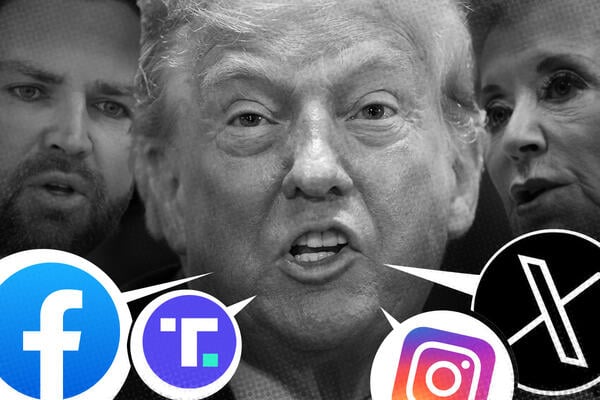
In March, we learned from the Department of Health and Human Services press office that it, along with the Department of Education and the General Services Administration, had started a comprehensive review of $54.1 million in federal contracts and $5 billion in federal grant commitments for Columbia University over alleged violations of Title VI of the Civil Rights Act. The next day, the president doubled down on social media, posting to the conservative site Truth Social, which he owns, that colleges and universities that allow “illegal protests” would be at risk of losing federal funding.
In May, during an ongoing public battle with Harvard University, Education Secretary Linda McMahon announced in a letter posted to the social media platform X thatthe federal government would no longer give grants to the institution. The document aired a litany of grievances against the institution including allegedly adopting a remedial math program and hiring “failed” former mayors Bill De Blasio and Lori Lightfoot; it also took aim at the Harvard Corporation’s senior fellow Penny Pritzker for being a “Democrat operative.”
The style and tone of communication goes beyond bombast and tells of a more coherent vision for the country, including higher education, according to Daniel Kreiss, the Edgar Thomas Cato Distinguished Professor in the Hussman School of Journalism and Media at the University of North Carolina at Chapel Hill and the faculty director and principal researcher of the UNC Center for Information, Technology, and Public Life. Issuing public threats, using pliable labels and making examples of individual colleges are tactics to control an autonomous sector and provoke widespread confusion, he said in an interview with Inside Higher Ed.
Colleges have little recourse to fight the full force of the federal government—legally or through publicity, Kreiss said, but he urged institutions to invest more in their local communities and to recommit to their teaching missions. He also explained why Vice President JD Vance’s autobiography is a great teaching tool.
(This interview has been edited for length and clarity.)
Q: The way the administration is communicating with higher ed is unlike anything the sector has seen before. Public letters and social media posts now deliver news of investigations, funding freezes or threats of future action. What does that reveal about how the government is thinking about its relationship with higher ed?
Daniel Kreiss
UNC at Chapel Hill
A: This is not the relationship, let’s say, between the U.S. government and research universities that prevailed from World War II on, when the government was collaborating with its research industries to make America stronger, militarily and economically. This is very much an adversarial relationship where the Trump administration is saying, “Universities and higher education broadly are making America weaker, and therefore we need to bring U.S. higher education to a heel in order to fit with our political vision for what America should be.” I think that some of the characteristics of the communication that you described is the strategy of policymaking through publicity, as well as the creation of a pervasive climate of uncertainty that is really directed by this core goal of theirs, which is control. In essence, what they want is for universities to fall in line behind the administration’s own vision and priorities for what the American agenda should be, which is one of a deeply reactionary, far-right coalition that is currently occupying all three branches of government.
Q: Do you think the administration has a vision for higher education in particular?
A: I think it’s a vision for America, and Trump has been remarkably clear on what that looks like. It’s an America defined pretty narrowly on racial, ethnic and religious terms. It’s an America that has a certain understanding of its history that aligns with those dominant religious, racial and ethnic groups. It’s an America that has doubled down on masculinity as its defining gender in terms of who should be in power and have power in public life. So when we talk about a vision for higher ed, it’s a higher ed that serves that.
This is what you see in these very vague pronouncements about things like DEI. Anyone who educates or does research on anything that runs counter to that celebration of a very particularistic America is suspect and un-American. Higher ed is part of a whole set of knowledge-producing institutions in society—we can think about journalists and scientists, too— as being problematic because they serve accountability functions. They hold corporations responsible for things like polluting. They hold executives responsible for violations of democratic norms. Or, you know, they hold people in power accountable for not being good custodians of public trust. I think the administration wants to weaken that accountability function that can be played by universities because it undermines, ultimately, their ability to exercise power in the service of that larger vision of what they believe America should be.
Q: You mentioned vague pronouncements about things like DEI. What conclusions do you draw from this tactic of sowing confusion and using unclear and undefined language?
A: Ultimately, the end goal is control. They have a few tools to do so—legal means, regulatory means—and they have a lot of funding means to get institutions that are otherwise autonomous in civil society to comply with what they want them to do. But in the absence of those levers, what do you use? Well, you use publicity to get willing compliance or anticipatory compliance.
This is really what’s key about the publicity piece, because every time they issue something on X or Truth Social or speak publicly about something, whether it’s a threat or making claims that a college is going to be investigated, they’re speaking to the sector as a whole. And publicity ensures that everyone in higher ed is going to have to be responsive to what they say, even if not publicly, but at least in internal decision-making.
If nobody really knows what DEI is, what discrimination actually entails, what threats are actually real and legal, who will be investigated and how, that creates conditions where every single university administrator has to act in some anticipatory way in order to mitigate a perceived threat, or to escape scrutiny. That ultimately increases this control over universities because they’re acting in ways that might comply in some way and likely are going far beyond what the law will actually allow. We can understand this by looking at other countries, like Hungary, for example. Viktor Orbán has created enough of a climate of both outright control and uncertainty over funding that people comply with what he wants them to do. He’s weaponized this to his advantage
The Supreme Court’s recent decisions have also played a role in this—in making it harder for [federal] judges to issue these broad injunctions. In essence, what they’re saying is that people are going to be anticipatory, interpreting whatever this public statement is in some way, and in the absence of any other guidance of what might be subject to judicial scrutiny or might be, let’s say, judicially suspect in itself, administrators are going to be making these decisions based on their own risk assessments.
Q: Speaking of the courts, we’ve seen a flurry of lawsuits challenging the administration, so some final decisions will be made on these issues at some point. Will that clarity roll back some of the pre-emptive compliance you’re describing?
A: Well the rub is the judicial process takes years. And administrators have to act now. And it’s in exactly that disconnect between that far-off time horizon of, “Oh, I’m sure our lawyers are telling us that this will likely get struck down” and in the meantime, you have to act on the basis of yearly budgets or what is in compliance with guidelines coming from the NIH or the NSF. All of those decisions have to be made in the moment, in a climate of uncertainty.
So in that context, no, the legal resolution is so far off, and the strategy of how to get there is so deeply unclear, that I don’t think higher ed’s in a great place to pursue judicial remedies for these things.
Q: We’ve got a number of examples of how institutions have responded to the administration—Harvard pushing back, Columbia and Penn conceding to demands, Jim Ryan resigning from the UVA presidency. Are universities at all prepared for how to handle this moment?
A: There’s a lot going on there, right? The best public case that we have for resistance is Harvard, but even while Harvard is negotiating, the Trump administration is continuing to put a lot of public pressure on it, which gets back to that earlier point that they’re speaking far beyond Harvard, saying, “If you do this, you will come under the full weight of federal government scrutiny, and we’re willing to have this battle.”
Universities are in a hard spot for a few reasons. One, collective action is really hard. Higher ed as a sector is deeply diversified, so the question is: Who’s in the best position to actually do that sort of fighting? The second is that every institution, no matter how large, is really complex. It’s hard to make a proactive case for anything, for just all of faculty, for example, let alone an entire university.
That said, there are a few effective models that we can begin to pick out. Harvard’s choice to double down on making an easily understandable argument for the value of higher education is our best public communication strategy—really doubling down on how universities are an economic engine for communities, states and America itself. When we’re talking about advancing science and technology, early research into artificial intelligence, the development of the internet—that all comes from university-led research that was funded, in part, through federal subsidies and research dollars. That has made America the leading country in technology innovation. This is where we get into a big tent with people from the Republican coalition who are pro-business and pro-corporations that are built on the infrastructure that universities help put together. We train the employees that go work for Fortune 500 companies that position America’s global dominance in its corporate workforce. It’s not saying we do everything, but we do a lot of really great public value work. And somebody needs to make that argument, because if no one is doing it, why would the American public come to these answers themselves?
Q: On the point about federally funded research at universities advancing technology innovation and the economy—is that argument lost on this administration?
A: My educated guess of why universities are this particular target in this particular way is that this is political. It’s not about America’s economic growth or America’s technological advantage at the end of the day. This is foremost a political strategy of mobilizing a set of grievances and victimhoods that help to build and maintain a coalition. It’s this idea that Trump’s electoral coalition is being continually victimized by being less safe. That America is losing its culture, its language, its identity, etc., through immigration. This has been the dominant drumbeat since Trump announced his candidacy for president in advance of 2016.
The other piece to this is the divide in the two parties between who has a college education and who doesn’t. This is a really important point that fuels the Republican Party’s coalition, and which is why attacks on higher ed, if we read them through the lens of publicity, are about identity work. [It’s] saying, “We are representing you people who never went to college against all these higher ed elites who don’t respect you, constantly denigrate America and who want us to be some cosmopolitan global force that’s going to undermine what makes America great.” That’s why, to me, it’s fundamentally political.
Q: Can you say more about the education divide among voters? How can colleges address that?
A:The New York Times did some great reporting maybe two years ago that gave universities social mobility scores. It was looking at which universities were the best vehicles of the American dream. One broad conclusion from that reporting was that a lot of universities are failing at this. Now, there’s all sorts of complicated reasons for that—income inequality generally, the finances of higher ed, etc.—but I think one thing that universities can very much do across the board is reinvest in opportunities for those who have the least amount of money or access to a college education.
I’m somebody who spent some time at very elite institutions, and, you know, they don’t always have great relationships with the communities that exist right next to them. If we’re thinking about what a model would look like to win people back to see these great advancements and their ultimate value for the American people, it would involve just trying to extend it locally. How do we create more affordable housing in towns where universities are located? How can we help people in communities where there’s vast income inequalities between the university and its surrounding environments? How do we get our deep wells of expertise and knowledge out into the communities closest to us in a way that clearly demonstrates through action, not just words or abstract statistics, our real value in people’s lives?
The last thing is that we need to reinvest in our teaching missions. Most professors I know care deeply about their students, but their time and attention is split in many different ways. We really need to restore commitment to that educational mission that we all have, at least for the very simple reason that students are the bridges to the communities that they represent. They’re our best messengers for what the value of this amazing institution of American higher education is. I have kids from all over the state, from all different walks of life—this idea is that what the university does is serve those students as well as their communities. The knowledge that students are bringing from those communities and the traditions that they are a part of flows into universities as much as knowledge is flowing out.
Q: In the swirl of staffing cuts and hiring freezes in response to federal funding cuts, are you concerned about what it means for science communication, fact-checking and efforts to combat misinformation?
A: At its best, science communication is scientists and social scientists making assessments based on the best available evidence that we have about a particular phenomenon in the world and society. We need people to play that function, because that’s the best evidence we have to make political decisions. We can have a range of possible political solutions to things as long as we’re safeguarding institutions that produce a set of public facts that we’re all sharing.
But as you know, science is complicated. There are always going to be debates. And that’s good. But when social scientists or scientists have a general consensus about something, it is the outcome of a very antagonistic process. Maybe that speaks to something that we used to have a lot more conversations around—explaining the scientific process and how hard it is to produce a fact, and how many millions of dollars go into producing research that can produce something as reliable as a fact.
We’re seeing this erosion of institutions that can serve the goals of public accountability, and it is deeply problematic for the field. So there’s going to be fewer people entering the field, because there’s less funding and fewer opportunities for them to do this work. The other thing is a lot of people make the choice not to go into doing disinformation-related research, in part, because it’s hard. We’ve seen doxing, death threats against researchers. It’s also the rhetoric, like when the vice president is calling somebody an “enemy of the people.” I taught JD Vance’s book to my undergraduates in 2017, and we had a great series of conversations about that book. I could have all sorts of differences with him, but I would never say JD Vance is an enemy of the people. It’s that deliberately inflammatory rhetoric that is exactly what a lot of researchers like myself are concerned about.
Q: Do you still teach Hillbilly Elegy to your undergrads?
A: That was a special one-off course, but I 100 percent would teach it again. It’s a great teaching tool and book, and I think it lays out a very particular and searing account of somebody’s upbringing while then prescribing a set of political responses that are thoughtful and can and should be debated in a classroom. It resonated with a lot of my students.