Tag: Education

  • The Complicity of Higher Education in Slavery

    The Complicity of Higher Education in Slavery

    New Jersey’s legacy as a “slave state of the North” is often overlooked, especially in the sanitized histories of its most prestigious universities. Yet a closer examination reveals that the state’s institutions of higher education—particularly Princeton University and Rutgers University—were not only complicit in slavery, but were active beneficiaries of racial exploitation. Their histories are deeply intertwined with a system that built wealth and social power through the bondage of Black people.

    This article is based on the findings of For Such a Time as This: The Nowness of Reparations for Black People in New Jersey, a landmark report from the New Jersey Reparations Council. The report is an urgent call for transformative change through reparative justice. It draws a direct throughline from New Jersey’s foundational embrace of slavery, through its Jim Crow era and more recent forms of structural racism, to today’s reality of “Two New Jerseys”—one Black, one white, separated by a staggering $643,000 racial wealth gap between median Black and white family wealth.

    Princeton University: Built by the Enslaved, for the Elite

    Founded in 1746 as the College of New Jersey, Princeton University’s early leadership reads like a roll call of slaveholders. Nine of its first presidents enslaved Black people. At least five brought enslaved individuals to live and labor on campus—including Aaron Burr Sr., who in 1756 purchased a man named Caesar to work in the newly built President’s House. Another, John Witherspoon, signer of the Declaration of Independence and president from 1768 to 1794, kept two people in bondage and spoke out against emancipation, claiming that freeing enslaved people would bring “ruin.”

    Financially and culturally, Princeton thrived on slavery. Many of its trustees, donors, and faculty enriched themselves through plantation economies and the transatlantic slave trade. Historian Craig Steven Wilder has shown that the university’s enrollment strategy was deliberately skewed toward elite southern families who owned enslaved people. From 1768 to 1794, the proportion of southern students doubled, while the number of students from New Jersey declined. Princeton became a finishing school for the sons of America’s racial aristocracy.

    Slavery was not just in the background—it was present in the daily life of the institution. Enslaved Black people worked in kitchens, cleaned dormitories, and served food at official university events. Human beings were bought and sold in full view of Nassau Hall. These men and women, their names often lost to history, were the invisible labor force that built the foundation for one of the wealthiest universities in the world.

    The results of this complicity are measurable. Princeton graduates shaped the American Republic—including President James Madison, three U.S. Supreme Court justices, 13 governors, 20 senators, and 23 congressmen. Many of them carried forward the ideologies of white supremacy and anti-Black violence they absorbed in their youth.

    Rutgers University: Queen’s College and the Profits of Enslavement

    Rutgers University, originally established as Queen’s College in 1766, shares a similarly grim legacy. The college’s early survival depended on donations and labor directly tied to slavery. Prominent among its early trustees was Philip Livingston, a signer of the Declaration of Independence who made his fortune by trading enslaved people and operating Caribbean plantations.

    Enslaved labor helped build Rutgers, too. A man named Will, enslaved by the family of a college trustee, is among the few individuals whose name has survived. His work helped construct the early physical campus, though his story, like so many others, is only briefly mentioned in account books and correspondence.

    The intellectual environment of Queen’s College mirrored the dominant racial attitudes of the time. While some students and faculty opposed slavery, their voices were overwhelmed by an institution that upheld the social, political, and economic status quo. Rutgers, like Princeton, prepared white elites to rule a society built on racial exclusion.

    Toward Reparative Justice

    The For Such a Time as This report from the New Jersey Reparations Council underscores that the legacy of slavery is not a relic of the past—it is embedded in the material realities of today. New Jersey’s racial wealth gap—$643,000 between Black and white families—is not accidental. It is the result of centuries of dispossession, disinvestment, and discrimination.

    The state’s leading universities played a formative role in that history. Acknowledgment of this fact is only a first step. True reckoning means meaningful reparative action. It means directing resources and power toward the communities that have been systematically denied them. It means funding education, housing, healthcare, and business development in Black communities, and making structural changes to how wealth and opportunity are distributed.

    Princeton and Rutgers are not just relics of the past; they are major economic and political actors in the present. As institutions with billion-dollar endowments and vast influence, they have both the means and the moral obligation to contribute to a just future.

    The question now is whether they will answer the call. 

    Source link

  • AI in Higher Education Marketing

    AI in Higher Education Marketing

    An Argument With Myself

    Reaping the benefits of AI also means addressing the concerns and challenges of using it.

    Artificial intelligence (AI) has already made significant inroads into higher education, transforming various aspects of campus life and academic processes. Since becoming part of the mainstream lexicon two years ago, AI has rapidly evolved from a subject of concern regarding academic integrity to an integral tool for enhancing educational experiences. Today, AI is influencing everything from recruitment strategies to long-term student success, with institutions using advanced analytics to predict outcomes, optimize operations, and improve decision-making. Our 2025 Marketing and Recruitment Practices for Undergraduate Students Report details some of the ways colleges and universities have incorporated AI in higher education marketing and enrollment operations.

    However, the integration of AI in higher education is not without its challenges and ethical considerations. As we examine the pros and cons of utilizing AI in higher education marketing, it’s crucial to understand that this technology is no longer a future prospect but a present reality shaping the landscape of colleges and universities across the nation.

    The pros of AI in higher education marketing

    AI offers transformative benefits for higher education marketing by enabling personalized and data-driven strategies. Key advantages include:

    • Personalized outreach: AI analyzes vast datasets to tailor content and communication for prospective students, increasing engagement and conversion rates. For example, predictive analytics can identify high-value leads and anticipate drop-off points in the enrollment process. And since Ann Taylor, Target, Netflix and a host of other brands are utilizing AI to serve me content that is specifically tailored to my tastes, my buying behaviors, and my blood sugar level/impulse control, it is imperative that higher ed keep up with the rest of the content consumer driven market.
    • Automation: AI automates repetitive tasks like email campaigns, social media posts, and chatbot interactions, freeing up staff to focus on strategy and relationship-building. This reduces costs and improves operational efficiency. Higher ed leaders continue to lament the talent/staff crisis on campus, particularly in smaller cities and rural areas where the available talent may be shallow and work-from-home opportunities are not widespread. Instead, we must maximize the time of the staff we have and utilize them for the activities and outcomes that are truly reliant on human interaction, while automating, outsourcing, or eliminating the rest.
    • Real-time support: AI-powered chatbots provide 24/7 support, answering student inquiries instantly and improving the overall student experience. Digital assistants engage with your prospective students, parents, alumni, and supporters when it’s best for THEM, rather than best for you. International student populations may not be in your time zone and may be unable to connect during U.S. business hours. Parents and prospective parents may be researching during off-hours. The RNL Compass digital assistant provides that round-the-clock engagement that directly integrates and feeds data to your CRM while also protecting your data in a closed environment.
    • Scalability: Institutions can scale their marketing efforts across diverse demographics and platforms without requiring proportional increases in resources, helping smaller teams achieve broader reach.

    Potential cons with AI in higher education marketing

    Despite its advantages, AI in higher education marketing could pose significant risk or create unforeseen challenges if not managed with care:

    • Data privacy issues: The use of AI requires collecting and analyzing large amounts of personal data, raising concerns about compliance with privacy regulations such as GDPR or FERPA. Data security, privacy, and management are top concerns on campuses. It is incredibly important that you are utilizing tools that not only secure your data but that you are managing that data ethically. AI governance requires thoughtful planning and ongoing management. RNL works closely with partners who wish to devise a governance framework whether or not you are implementing AI tools.
    • Bias in algorithms: AI systems may inadvertently perpetuate biases present in training data, leading to unfair targeting or exclusion of certain student groups.
    • Round peg, square hole syndrome: Many AI solutions are not created for higher ed and do not account for the specific, complex needs that colleges and universities have compared to other consumer or B2B industries.
    • Loss of human touch: Over-reliance on AI can make interactions feel impersonal, potentially alienating prospective students who value human connection. Working with your team to talk about appropriate uses for AI, proper proofreading, and quality control is key. My colleague Dr. Raquel Bermejo discussed the need to balance technology and human connection with students.
    • Implementation costs: While AI promises cost savings over time, initial setup costs for advanced tools and training staff can be prohibitive for some institutions. Work closely with a trusted partner/vendor to ensure you are getting the best bang for your buck. Embracing AI may require investment, but it should yield so much more in return.

    Be aware of all the pros and cons as you evaluate your AI options

    In summary, while AI enhances efficiency and personalization in higher education marketing, institutions must navigate ethical challenges, potential biases, and implementation hurdles to maximize its benefits responsibly.

    We cannot, however, let the possible risks prevent our institutions from maximizing this tremendous capacity-building tool. As a 50+ year veteran in higher education, RNL has a unique understanding of your campus environment, the likely trepidation, the potential hurdles to adoption, and the risk of inaction. That is why we are investing in AI development that is built just for you, your students, and your campus needs. Coupled with RNL’s renowned consulting expertise, governance support, strict attention to data privacy, and industry-leading marketing and enrollment solutions, we can help you and your campus use AI to advance your mission and achieve your goals while minimizing risk and campus pushback.

    Discover RNL Edge, the AI solution for higher education

    RNL Edge is a comprehensive suite of higher education AI solutions that will help you engage constituents, optimize operations, and analyze data instantly—all in a highly secure environment that keeps your institutional data safe. With limitless uses for enrollment and fundraising, RNL Edge is truly the AI solution built for the entire campus.

    Ask for a Discovery Session

    Source link

  • State Department Screening Visa Applicants’ Social Media

    State Department Screening Visa Applicants’ Social Media

    John McDonnell/Getty Images

    The U.S. State Department is rolling out sweeping new rules for vetting student visa applicants using their social media presence, according to Politico.

    The new process will include screening for “any indications of hostility towards the citizens, culture, government, institutions or founding principles of the United States,” according to an internal State Department cable. 

    Department officials will also look for posts that signal “advocacy for, aid or support for foreign terrorists and other threats to national security” and “support for antisemitic harassment or violence,” specifically citing support for Hamas—a charge commonly levied against student protesters advocating for Palestinian rights—as grounds for rejection. The cable also directs officials to cull applicants who “demonstrate a history of political activism.”

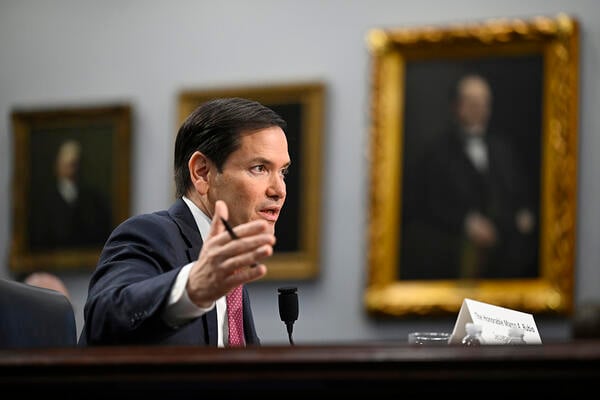
    The news comes a few weeks after Secretary of State Marco Rubio paused all student visa interviews in order to implement a new screening policy focusing on students’ online activity. The Associated Press reported that the department rescinded the pause, but applicants who don’t allow the government to review their social media accounts could be rejected.

    The cable is the Trump administration’s latest effort to curtail the flow of international students to the U.S., as tens of thousands of foreign students await approval of their visas after months of delays and with only weeks until the start of the fall semester. 

    State Department spokespeople did not respond to a list of questions from Inside Higher Ed in time for publication. 

    Source link

  • Tech Titans, Ideologues, and the Future of American Higher Education

    Tech Titans, Ideologues, and the Future of American Higher Education

    American higher education is under pressure from within and without—squeezed by financial strain, declining enrollment, political hostility, and technological disruption. But the greatest challenge may be coming from a group of powerful outsiders—figures with deep influence in politics, technology, and media—who are actively reshaping how education is perceived, delivered, and valued. Among them: Donald Trump, Elon Musk, Peter Thiel, Sam Altman, Alex Karp, and Charlie Kirk. Each brings a different ideology and strategy, but their combined influence represents an existential threat to traditional colleges and universities.

    Donald Trump’s second rise to power has included a full-spectrum attack on elite and public institutions of higher learning. From threats to strip funding from schools that promote diversity, equity, and inclusion, to freezing billions in research grants at elite institutions like Harvard, Trump has positioned universities as enemies in a broader cultural and political war. His proposed education policy emphasizes trade schools and short-term credentials over liberal arts and research, while his administration has floated revoking accreditation from institutions that resist his agenda. Rather than investing in public education, the Trump agenda calls for punishment, privatization, and obedience. And for institutions that don’t comply, there are growing threats of taxation, defunding, and public humiliation.

    Elon Musk is undermining higher education in a different way. Musk has openly mocked the need for college degrees, suggesting that “you can learn anything online for free.” While that’s partly rhetoric, it’s also a blueprint for disruption. His experimental school Astra Nova already offers a glimpse into a post-institutional future—one that favors creative, independent thinking over traditional credentialing. Now, with plans to launch the Texas Institute of Technology & Science, Musk is betting that elite training can happen outside the bounds of accreditation and federal oversight. Musk’s future is technocratic and libertarian, with universities seen as bloated, slow-moving, and culturally out of touch.

    Peter Thiel’s vision is even more radical. Thiel has compared American higher education to the Catholic Church before the Reformation—rich, corrupt, and intellectually bankrupt. His Thiel Fellowship pays young people to skip college entirely, offering $100,000 to start companies instead of accumulating debt. He argues that universities reward conformity and delay adulthood. For Thiel, colleges don’t just fail to prepare students—they actively mislead them. His endgame is a decentralized, market-driven system in which talent rises through initiative and capital, not credentials.

    Sam Altman, CEO of OpenAI, presents yet another threat—this time from artificial intelligence. Altman doesn’t reject learning, but he does question the institutions that monopolize it. With tools like ChatGPT and future AI tutors, Altman envisions personalized, real-time learning for everyone, everywhere. In this model, universities risk becoming obsolete—not because they are wrong, but because they are too slow and too expensive. Altman has also pushed universities to take a more active role in shaping AI policy; if they don’t, the tech industry will do it for them. The message is clear: adapt or be replaced.

    Alex Karp, CEO of Palantir, is building a new kind of corporate university. Through programs like the Palantir Meritocracy Fellowship and “Semester at Palantir,” Karp is recruiting students directly out of elite schools—particularly those disillusioned by what he sees as anti-Israel sentiment or campus censorship. These programs offer practical, high-paid experience that bypasses traditional academic pathways. Karp’s vision doesn’t require the elimination of universities—it just renders them unnecessary for the most competitive jobs in tech and intelligence. His model suggests a future in which corporations, not universities, decide who is qualified.

    Charlie Kirk, founder of Turning Point USA, has weaponized the culture war to delegitimize higher education entirely. Kirk’s brand of activism portrays universities as corrupt, anti-American indoctrination centers. Through social media campaigns, donor networks, and student chapters, he has built an infrastructure of resistance against academic institutions. His goal isn’t reform—it’s replacement. Through efforts like the Freedom College Alliance, Kirk is helping to build a parallel educational system rooted in conservative Christian values, classical curricula, and ideological purity. In Kirk’s world, higher education isn’t broken—it’s the enemy.

    Together, these six men are shaping a new, fragmented future for American education. Some want to burn it down. Some want to replace it. Some want to privatize it or profit from its collapse. What they share is a conviction that traditional universities no longer serve their intended purpose—and that a new model, rooted in tech, politics, or religion, must take its place.

    This isn’t a theoretical debate. Universities are already responding—cutting liberal arts programs, racing to implement AI tools, rebranding themselves as career accelerators, and seeking favor with donors who increasingly resemble these disruptive outsiders. For those who resist, the future may include not just funding cuts, but political investigations, lawsuits, and public smear campaigns.

    Higher education faces a stark choice. It can double down on its public mission—defending critical thinking, civic engagement, and social mobility—or it can retreat into elite credentialing and survival mode. What it cannot do is ignore the forces gathering at its gates. These forces are rich, powerful, ideologically driven—and they are not waiting for permission to remake the system.

    Source link

  • University Leaders Weigh Changes to Research Funding Model

    University Leaders Weigh Changes to Research Funding Model

    After the National Institutes of Health tried earlier this year to cut funding for universities’ costs indirectly related to research and set off alarm bells across higher education, 10 higher education associations decided to come up with their own model for research funding rather than having the government take the lead.

    Now, after just over six weeks of work, that group known as the Joint Associations Group is homing in on a plan to rework how the government funds research, and they want feedback from the university research community before they present a proposal to Congress and the Trump administration at the end of the month.

    “Unfortunately, something is going to change,” said Barbara Snyder, president of the Association of American Universities. “Either we will be part of it or it will be imposed upon us … Significant division in the research community is going to kill us.”

    Snyder and other JAG members said at a virtual town hall Tuesday that the current system for direct and indirect research funding costs has served the community well, but it isn’t transparent and leads to confusion about how the rates are calculated, among other challenges. AAU and other higher ed groups sued the NIH in February after the agency proposed capping indirect expenses for all institutions at 15 percent of the direct research costs—down from the average of 28 percent. (Historically, colleges negotiate their own reimbursement rates directly with the federal government.)

    The White House said the cap would make more money available for “legitimate scientific research,” but universities warned that the change would halt lifesaving research and lead to job losses, among other consequences. The NIH rate cap would mean a cut of $4 billion for university-based research.

    Court challenges have since halted the NIH plan, as well as similar caps proposed by two other federal agencies; meanwhile, the Department of Defense is working on its own plan related to indirect costs. Snyder said the lawsuits are about fiscal year 2025, while the JAG effort looks ahead to fiscal year 2026 and beyond.

    Over the years, Congress and federal agencies have sought to rethink the funding model but didn’t reach an agreement. In fact, after the first Trump administration proposed a 15 percent cap on indirect costs in 2017, Congress specifically prohibited such a move. But now that prohibition doesn’t seem likely to stick as lawmakers consider bills to fund the government for fiscal year 2026, so a new model is necessary. Adding to the pressure on universities, Trump has proposed significant cuts to research funding in his budget.

    JAG’s panel of experts presented two options to the university research community at a webinar last week and then answered questions at the town hall Tuesday. Colleges and universities have until June 22 to test the proposed models and provide feedback before JAG sends its final proposal to the government June 27, though any model will likely need additional work.

    “No one would choose to work at this rapid pace and rethink how to effectively, fairly and transparently cover these real and unavoidable costs,” said Matt Owens, president of the Council of Government Relations, at last week’s webinar. “But we are where we are, and it’s vital that we meet this moment so that we can emerge with an improved and sustainable indirect cost policy that will enable our country to continue leading the world in research and innovation.”

    Proposed Models

    Both versions of what JAG is calling the Fiscal Accountability in Research model, or FAIR, are geared toward offering more accountability and transparency about how federal research dollars are spent. JAG hopes that in the end, the new model will be simpler than the current one. They also want to nix terms like “indirect costs rate” and “overhead” for either essential research support or general research operations in an effort to underscore that the money goes toward the real costs of research.

    “This will require a bit of a culture change in institutions, but we think the benefit of that far outweighs the downsides,” said Kelvin Droegemeier, a professor and special adviser to the chancellor for science and policy at the University of Illinois at Urbana-Champaign, who led the JAG effort, at the webinar.

    One model, which the group calls FAIR No. 1, would include costs related to managing the grant, general research operations and facilities as a fixed percentage of the total budget. The percentage would be based in part on the type of institution and research. This approach is designed to be simple and reasonable, according to the group’s presentation, but it’s more general, which makes it “difficult to account for the wide array of research frameworks that now exist.”

    The other model, FAIR No. 2, would more accurately reflect the actual costs of a project and make the structure for federal grants more like those from private foundations. Under this model, essential research support would be lumped into the project costs while funding for general research operations, such as payroll and procurement, would be a fixed percentage of the total budget. That change would likely increase the direct costs of the project.

    Droegemeier and other members of JAG’s expert panel noted that FAIR No. 2 would be a “significant departure” from the current approach, and universities would likely need more time to overhaul their processes for tracking costs. Still, the group said this model would better show what the money goes toward, addressing a key concern from Congress.

    Droegemeier described the two models as “bookends” and said the group would probably end up somewhere between the two.

    ‘In a Good Spot’

    At Tuesday’s town hall, attendees questioned whether Congress or the Trump administration would even consider JAG’s proposal and why any change was necessary.

    Droegemeier said he’s met with members of Congress who have endorsed their process, and he’s kept in touch with Trump administration officials about the group’s work. So far, he’s seen a positive response to the models, adding that officials at the Office of Management and Budget indicated that they weren’t “oceans apart.”

    “We’ve done everything possible to build goodwill and trust,” he said. “There’s a long road ahead of us, but I think we’re in a good spot.”

    Other speakers echoed that point, noting that Sen. Susan Collins, a Republican from Maine and chair of the powerful Appropriations Committee, publicly supported the models at a recent hearing. And NIH director Jay Bhattacharya called the proposals “quite promising” at the same hearing, STAT News reported.

    Additionally, the House’s appropriations bill for the Department of Defense calls on the agency to “work closely with the extramural research community to develop an optimized Facilities and Administrative cost reimbursement solution for all parties that ensures the nation remains a world leader in innovation.”

    Across the board, speakers at the town hall said they must act to have a say in discussions about the future of research funding.

    “The two models are a significant change,” said Deborah Altenburg, vice president for research policy and advocacy at the Association of Public and Land-grant Universities. “But all of our organizations are responding to a new political situation.”

    Source link

  • Most Student Borrowers Face Other Money Challenges

    Most Student Borrowers Face Other Money Challenges

    Just over half of student loan borrowers consider themselves financially insecure, while about three-quarters said they had experienced an adverse financial event, like skipping a bill, in the past year, according to a survey from the Pew Charitable Trusts exploring the attitudes of student loan borrowers after federal student loan repayments restarted in October 2023 following a three-year pause. The survey was conducted in the summer of 2024.

    Existing financial challenges are closely associated with struggles to repay student loans, the survey found. About 23 percent of respondents indicated they had missed some or all of their student loan payments since October 2023, but that number was higher among those who are financially insecure (34 percent) and those who had experienced a negative financial event (30 percent).

    But paying off student loans isn’t just challenging for those facing other financial difficulties. Among all borrowers, 57 percent said they found it difficult to afford their loans, including 41 percent of those who said they do not consider themselves financially insecure. Over a third of borrowers also said they found repaying their student loans more stressful than paying their other bills.

    The Education Department estimates that nearly 25 percent of borrowers have either defaulted on their loans or will default in the next several months. In May, the agency restarted collections on unpaid loans.

    Source link

  • Higher Ed’s Troubles Are Affecting Its Workforce: The Key

    Higher Ed’s Troubles Are Affecting Its Workforce: The Key

    As colleges across the country cut staff, implement hiring freezes and slash budgets, fewer people could see higher education as a long-term career path, according to Kevin McClure, a professor of higher education and chair of the Department of Educational Leadership at the University of North Carolina at Wilmington.

    In a recent episode of The Key, Inside Higher Ed’s news and analysis podcast, McClure told IHE editor in chief Sara Custer that in the current environment, demoralization is high among faculty and staff. “It’s just really difficult to do good work. There’s a significant amount of uncertainty, there is stress, there is trauma that people are still living through from COVID and the great resignation … and there is no doubt that the workforce in higher education is struggling,” he said.

    “It’s not the case that across the board every institution is in this scenario …but every single institution is being cautious right now, and there is enough uncertainty and enough question about multiple revenue streams coming into institutions that there are cascading effects for working conditions.”

    McClure said he’s concerned institutions are not doing a good enough job of articulating their values. This, he said, is what colleges should “double down” on to combat the demoralization he’s observed in current employees and to show future talent “what they’re all about.”

    “In the current environment, I think we have seen some backsliding, some backtracking, some revisions of our websites—all of these signposts suggesting to people who work here that the things we stand for are actually maybe flexible and can be modified as the political winds blow.”

    Listen to the full episode of The Key.

    Source link

  • Embracing Credit Mobility for Student Success

    Embracing Credit Mobility for Student Success

    Let me tell you about Andrew, a motivated student who graduated high school early with impressive dual-enrollment credits. After attending a private college for a year and taking some time to work, he rekindled his educational ambitions at a community college. With approximately 30 credits remaining for his bachelor’s degree, he applied to an R-1 university, ready to complete his journey.

    What should have been a seamless transition became an unexpected challenge. Despite submitting his transfer work in October and regularly checking in with his adviser, Andrew discovered in January—after classes had already begun—that he faced “at least three years of coursework” rather than the anticipated single year to graduation.

    This isn’t a rare occurrence or some administrative anomaly. Rather, it is the norm for individuals who aren’t pursuing a four-year degree on the traditional timeline. Higher education talks endlessly about completion and student success while maintaining systems and policies that actively undermine these goals.

    Andrew’s story represents a critical opportunity for higher education. While his family successfully advocated for a refund and found another institution that better recognized his prior learning, his experience highlights a fundamental challenge we must address collectively.

    The Scale of the Challenge

    We have 42 million Americans with some college credit but no degree. We have 200,000 military personnel transitioning to civilian life annually. We have an economy desperately needing upskilled workers. Yet higher education’s response to credit mobility remains anchored in outdated policies and processes that fail to serve today’s students, institutions or workforce needs.

    Many institutions have made meaningful progress in supporting diverse student needs through childcare services, flexible scheduling and online options. These are important steps. Now we must extend this same commitment to the academic evaluation processes that directly impact students’ time to degree and financial investment.

    The Disconnect

    Transfer articulation agreements—where they have been struck—have created valuable pathways, but their implementation often lacks the consistency and transparency students deserve. When agreements include qualifying language without firm commitments, students can’t effectively plan their educational journeys or make informed financial decisions.

    The contradiction is striking: We express concern about student debt and extended time to degree, questioning why students take 150 credits when they only need 120 to graduate. Meanwhile, our credit evaluation processes remain opaque, slow and often costly.

    The current reality—where students frequently must apply, pay deposits or even enroll before understanding how their previous academic work will be valued—creates unnecessary barriers. We can do better—and, frankly, must. It’s like buying a car and finding out the price after you’ve signed the paperwork. In what other industry would this be acceptable?

    The Opportunity

    Consider the possibilities if we fully embraced credit mobility as a cornerstone of student success:

    • Students could make informed decisions about their educational pathways before committing financially.
    • Institutions could demonstrate their commitment to affordability by recognizing prior learning.
    • Graduation rates would improve as students avoid unnecessary course repetition.
    • The workforce would benefit from skilled professionals entering more quickly.

    Addressing the Objections

    The objections to credit mobility typically fall into three categories:

    1. Faculty workload: Faculty are being asked to do more, and evaluating credits for prospective students can feel like an unnecessary burden. But what if more students could see that their learning had value, that their degree was within reach, that they didn’t have to retake classes they’ve already mastered? This shift in perspective could transform the evaluation process from a burden to an opportunity.
    2. Lost revenue: The focus on enrollments often overshadows the reality that only 50 percent of students who start college actually finish within six years. What if our goal was to expand opportunities so more students could complete their degrees? What if students were taking classes that genuinely added to their experience and built their confidence rather than repeating content they’ve already learned?
    3. Quality concerns: Quality is often cited as justification for delayed evaluation. In reality, transparent evaluation supports faculty’s desire to maintain academic standards. Clear processes allow for informed decisions and data collection that ensures the focus remains on student outcomes.

    The AI Opportunity

    The emergence of artificial intelligence presents a tremendous opportunity to enhance our credit-evaluation processes—addressing issues of time and cost while creating transparency for data analysis. A new study just released by AACRAO on the role of AI in credit mobility makes a compelling case as to why the technology could help unlock new ways of working. We can harness technology as a powerful tool to support faculty decision-making and administrative resource allocations. AI could:

    • Identify potential course equivalencies based on learning outcomes.
    • Highlight relevant information in transfer documentation.
    • Streamline evaluation processes, allowing human experts to focus on complex cases.
    • Provide leadership with insights into where credit mobility is operating effectively.
    • Identify areas needing additional resources or training.

    With proper implementation and training, AI can become a tool to achieve our goals of access and completion at scale—reducing both the cost and timeline to graduation.

    The Path Forward

    If we truly believe in access and completion, then credit mobility must become a shared priority across higher education. This means:

    • Making course information, learning outcomes and sample syllabi readily accessible.
    • Expanding recognition of diverse learning experiences, including microcredentials, corporate training, internships and apprenticeships.
    • Establishing and honoring clear timelines for credit evaluation.
    • Eliminating financial barriers to credit assessment.
    • Providing updated articulation and equivalency tables in easy-to-find locations on admissions websites.

    Andrew’s experience should be the exception, not the rule. Colleges and universities that embrace this challenge will not only better serve their students but will also position themselves for long-term sustainability in an increasingly competitive landscape. Those that resist change risk becoming irrelevant to the very students they aim to serve and perpetuating the cost and time-to-completion conundrum.

    The Call to Action

    The question before us isn’t whether credit mobility matters—it’s whether we have the collective will to make it a reality at scale, not just at a handful of institutions, but across systems and all institutions. We must recognize that our students are learning in new ways, on new timelines, and bringing knowledge that evolves faster than our curriculum. Our students deserve nothing less than our full commitment to recognizing their learning, regardless of where it occurred.

    So I’ll ask: How committed are you to credit mobility at scale? Your answer says everything about how seriously you take college completion.

    Jesse Boeding is the co-founder of Education Assessment System, an AI-powered platform mapping transfer, microcredentials and prior learning to an institution’s curriculum to enable decision-making and resourcing.

    Source link

  • A Setback for Maine’s Free Community College Program

    A Setback for Maine’s Free Community College Program

    The Maine Legislature’s budget-writing committee voted last week in favor of ending the state’s free college program, to the great disappointment of community college leaders.

    The move by Democrats on the Appropriations and Financial Affairs Committee contradicts Governor Janet Mills’s proposal earlier this year to make the program a permanent fixture. The free college program, which Mills initially put forward, went into effect in 2022 to support students affected by the pandemic. It originally covered two years of community college tuition for anyone who graduated high school between 2020 and 2023, after other forms of aid were applied. Though created with one-time funding, the program enjoyed strong bipartisan support and was extended in 2023 to include the Classes of 2024 and 2025. Students have a certain amount of time to enroll; for example, 2025 graduates have to start college no later than the 2027–28 academic year to take advantage of the program.

    Since the program began, Maine’s community college enrollment has surged—enrollment of all degree-seeking students in the system jumped from 11,308 in 2022 to 14,278 in 2024. A total of 17,826 students have participated in the program since it started, according to data from the Maine Community College System. Many hoped, and expected, the program would continue.

    But the Appropriations and Financial Affairs Committee’s proposal would give the community college system $20 million over two years to help current participants finish their studies before winding down the program for good, Maine Public Radio reported. The recommendation comes as Maine faces a lean budget year, with federal funding for the state hard to predict. President Donald Trump threatened to cut Maine’s federal funds after a tense exchange with Mills in February over his executive order barring transgender athletes from competing on the teams that match their gender identity.

    Maine representative Michael Brennan said at the committee meeting last week, “We’ve had to make hard decisions about what we think we can afford and not afford,” though he called the free college program “tremendously successful.”

    Senator Peggy Rotundo, co-chair of the Appropriations and Financial Affairs Committee, emphasized in a statement to Inside Higher Ed that state lawmakers are honoring their commitment to fund students who graduated in 2025 and expected to receive the program’s support. She implied the program could still be made permanent in the future.

    “When considering what comes next, our focus is on ensuring this program’s long-term sustainability,” she wrote. “The Appropriations and Financial Affairs Committee is seeking additional data and evaluation from the community college system to inform a responsible, future-focused approach. In a tough budget year, we have a duty to balance expanding opportunity with fiscal responsibility—and that means looking ahead to build a durable model that can serve Maine students for years to come.”

    The decision to nix the program isn’t set in stone—the state budget still needs to make its way through the state House and Senate and finally to the governor’s desk. But state legislators indicated they plan to wrap up the budget by today.

    David Daigler, president of the Maine Community College System, wrote a letter to the system’s Board of Trustees on Saturday expressing “deep disappointment” over the committee’s vote. He told the board it’s “highly unlikely” there will be any major changes to funding for the free college program at this point.

    “Ultimately, the committee’s vote reflects the state’s challenging financial situation, which made it hard to get support even though Free College is a very popular, effective program that directly benefits Maine families, students, and employers,” Daigler said in the letter. “You can be certain that we will build on the momentum of this program to emerge stronger, wiser, and re-dedicated to providing an affordable, accessible education to Mainers looking to improve their lives.”

    In February, Daigler and community college staff members advocated for the program before the committee. Multiple students also spoke out in support, some arguing they wouldn’t have attended college without the program.

    Brianna Michaud, a health-science student at Southern Maine Community College, told the budget-writing committee she considered not going to college because, despite her working two jobs, her family couldn’t afford it. Then she heard about the free college program.

    “As a first-generation college student who’s entirely responsible for paying off their education, the Maine free college scholarship is the reason why I’m able to put my hard work and dedication toward fulfilling my purpose in life, which is to help others,” said Michaud, who plans on becoming a pediatric occupational therapist.

    Payson Avery, a student representative at Southern Maine, said he graduated high school in 2020, during the height of the pandemic, and didn’t know what to do. He felt like his grades senior year didn’t show his potential. After two years, while working at a restaurant, he decided to take the state up on its free college offer. Now he has plans to attend the University of Maine at Farmington to major in education, he told the committee.

    “Without this program, I’m not sure I would have been able to make it to this point,” he said.

    Source link

  • A Unified System for Student Athlete Supports

    A Unified System for Student Athlete Supports

    A growing number of programs in higher education focus on student athletes’ mental health, recognizing that the pressures of competing in collegiate athletics, combined with academic challenges, financial concerns and team relationships, can negatively impact student well-being.

    At the University of Richmond, the athletics department created a new program to emphasize holistic student well-being, taking into account the different dimensions of a student athlete’s identity and development.

    Spider Performance, named after the university mascot, unites various stakeholders on campus to provide a seamless experience for student athletes, ensuring they’re properly equipped to tackle challenges on the field, in the classroom and out in the world beyond college.

    “The athlete identity is a really special part of [students’ identities], but it’s not the only part, so making sure they are [considered] human beings first—even before they’re students, they’re humans first. Let’s examine and explore that identity,” said Lauren Wicklund, senior associate athletics director for leadership and student-athlete development.

    How it works: The university hosts 17 varsity sports in NCAA Division I, which include approximately 400 student athletes. Richmond has established four pillars of the student athlete experience: athletic, academic, personal and professional achievement.

    “The whole concept is to build champions for life,” said Wicklund, who oversees the program. “It’s not just about winning in sport; it’s about winning in the classroom, winning personally and then getting the skills and tools to win for the rest of your life.”

    These pillars have driven programming in the athletics department for years, but their messaging and implementation created confusion.

    Now, under Spider Performance, the contributions and collaborations of stakeholders who support student athletes are more visible and defined, clarifying the assistance given to the athletes and demonstrating the program’s value to recruits. The offices in Spider Performance include academic support, sports medicine, leadership, strength and conditioning, mental health, and well-being.

    “It’s building a team around them,” Wicklund explained. “Rather than our student athlete thinking, ‘I have to go eat here, I have to do my homework here, I have to do my workout here,’ it’s, ‘No, we want you to win at everything you do, and how you do one thing is how you do everything.’”

    Outside of the specific athletic teams, Wicklund and her staff collaborate with other campus entities including faculty members, career services and co-curricular supports.

    Preparing for launch: Richmond facilitates a four-year development model for student athletes, starting with an orientation experience for first-year students that helps them understand their strengths and temperament, up to more career-focused programming for seniors.

    Recognizing how busy students’ schedules get during their athletic season, the university has also created other high-impact learning experiences that are more flexible and adaptive. Students can engage in a career trek to meet alumni across the country, study abroad for a short period, participate in a service project or take a wellness course, all designed to fit into their already-packed schedules.

    Part of the goal is to help each student feel confident discussing their experience as an athlete and how it contributes to their long-term goals. For instance, students might feel ill-equipped for a full-time job because they never had a 12-week internship, but university staff help them translate their experiences on the field or the court into skills applicable to a workplace environment, Wicklund said.

    The university is also adapting financial literacy programming to include information on name, image and likeness rights for student athletes, covering not just budgeting, investing and financial literacy topics but also more specific information related to their teams.

    Encouraging athletes to attend extra sessions can be a challenge, but the Spider Performance team aims to help students understand the value of the program and how it applies to their daily lives. The program also requires buy-in from other role models in students’ lives, including trainers, coaches and professors.

    “We work really hard to customize fits to different programs so we’re speaking the same language as our coaches,” which helps create a unified message to students, Wicklund said.

    If your student success program has a unique feature or twist, we’d like to know about it. Click here to submit.

    Source link