Liberty University, one of the largest Christian universities in the United States, has built an educational empire by promoting conservative values and offering flexible online degree programs to hundreds of thousands of students. But behind the pious branding and patriotic marketing lies a troubling pattern: Liberty University Online has become a master’s degree debt factory, churning out credentials of questionable value while generating billions in student loan debt.
From Moral Majority to Mass Marketing
Founded in 1971 by televangelist Jerry Falwell Sr., Liberty University was created to train “Champions for Christ.” In the 2000s, the school found new life through online education, transforming from a small evangelical college into a mega-university with nearly 95,000 online students, the vast majority of them enrolled in nontraditional and graduate programs.
By leveraging aggressive digital marketing, religious appeals, and promises of career advancement, Liberty has positioned itself as a go-to destination for working adults and military veterans seeking master’s degrees. But this rapid expansion has not come without costs — especially for the students who enroll.
A For-Profit Model in Nonprofit Clothing
Though technically a nonprofit, Liberty University operates with many of the same profit-driven incentives as for-profit colleges. Its online programs generate massive revenues — an estimated $1 billion annually — thanks in large part to federal student aid programs. Students are encouraged to take on loans to pay for master’s degrees in education, counseling, business, and theology, among other fields. Many of these programs are offered in accelerated formats that cater to working adults but often lack the rigor, support, or job placement outcomes associated with traditional graduate schools.
Federal data shows that many Liberty students, especially graduate students, take on substantial debt. According to the U.S. Department of Education’s College Scorecard, the median graduate student debt at Liberty can range from $40,000 to more than $70,000, depending on the program. Meanwhile, the return on investment is often dubious, with low median earnings and high rates of student loan forbearance or default.
Exploiting Faith and Patriotism
Liberty’s marketing strategy is finely tuned to appeal to Christian conservatives, homeschoolers, veterans, and working parents. By framing education as a moral and patriotic duty, Liberty convinces students that enrolling in an online master’s program is both a personal and spiritual investment. Testimonials of “calling” and “purpose” are common, but the financial realities can be harsh.
Many students report feeling misled by promises of job readiness or licensure, especially in education and counseling fields, where state licensing requirements can differ dramatically from what Liberty prepares students for. Others cite inadequate academic support and difficulties transferring credits.
The university spends heavily on recruitment and retention, often at the expense of student services and academic quality.
Lack of Oversight and Accountability
Liberty University benefits from minimal federal scrutiny compared to for-profit schools, largely because of its nonprofit status and political connections. The institution maintains close ties to conservative lawmakers and was a vocal supporter of the Trump administration, which rolled back regulations on higher education accountability.
Despite a series of internal scandals — including financial mismanagement, sexual misconduct cover-ups, and leadership instability following the resignation of Jerry Falwell Jr. — Liberty has continued to expand its online presence. Its graduate programs, particularly in education and counseling, remain cash cows that draw in federal loan dollars with few checks on student outcomes.
A Cautionary Tale in Christian Capitalism
The story of Liberty University Online is not just about one school. It reflects a broader trend in American higher education: the merging of religion, capitalism, and credential inflation. As more employers demand advanced degrees for mid-level jobs, and as traditional institutions struggle to adapt, schools like Liberty have seized the opportunity to market hope — even if it comes at a high cost.
For students of faith seeking upward mobility, Liberty promises a path to both spiritual and professional fulfillment. But for many, the result is a diploma accompanied by tens of thousands in debt and limited economic return. The moral reckoning may not be just for Liberty University, but for the policymakers and accreditors who continue to enable this lucrative cycle of debt and disillusionment.
The Higher Education Inquirer will continue to investigate Liberty University Online and similar institutions as part of our ongoing series on higher education debt, inequality, and regulatory failure.
Grant House, the plaintiff in a now settled antitrust lawsuit against the NCAA, swam for Arizona State University.
Michael Reaves/Getty Images
Federal district judge Claudia Wilken granted final approval to a multi-billion-dollar settlement in the yearslong House v. NCAA lawsuit late Friday evening, effectively transforming college sports: Starting July 1, institutions will be allowed to pay student athletes directly.
In accordance with the settlement, the National Collegiate Athletic Association and colleges in Division I conferences will distribute nearly $2.8 billion in back damages over the next 10 years to athletes who competed any time since 2016, as well as to their lawyers. The case also allows each college that opted in to pay their athletes collectively up to $20.5 million per year, in addition to scholarships. That figure will increase incrementally over time.
The ruling, which technically resolves three antitrust lawsuits against the NCAA, essentially turns student-athletes from amateurs into professionals. But experts say this isn’t likely to end court battles over athletics. The creation of the revenue-sharing model (where schools distribute money earned from areas such as media rights or merchandise), combined with existing turmoil over the regulation of name, image and likeness (NIL) deals, will only invite more lawsuits, they say.
“The judge said, in essence, this is not a perfect settlement that solves everyone’s concerns, but it makes progress towards ‘righting the wrongs’ of higher education’s desire to maintain amateurism status for the players but no one else,” Karen Weaver, adjunct assistant professor in the graduate school of education at the University of Pennsylvania, wrote in an email to Inside Higher Ed.
Although many colleges began making changes to their programs in anticipation of the settlement’s approval, the timing of the ruling could present logistical challenges as they move to start revenue-sharing with students from the July 1 deadline set out in the suit.
Current and former athletes have celebrated the ruling.
“It’s historic,” former college basketball star Sedona Prince, a co-lead plaintiff in one of the lawsuits, told ESPN. “It seemed like this crazy, outlandish idea at the time of what college athletics could and should be like. It was a difficult process at times … but it’s going to change millions of lives for the better.”
Wild West Yet to be Tamed
Judge Wilken’s ruling comes nearly two months after both parties presented arguments in early April for approving the settlement, and nearly five years after the suit was first filed in 2020. But contentious debates over how to manage paying student athletes really erupted in 2021, when NIL deals were first legalized.
Since then, collectives made up of alumni and boosters have paid athletes millions of dollars to play at schools through unregulated NIL partnerships. Top football and basketball players have earned the most.
College leaders have argued that the collectives could give wealthier institutions an unfair recruiting advantage. The House settlement, which not only allows colleges to pay athletes directly but also gives conferences the power to regulate booster influence, could help solve that problem.
“For several years, Division I members crafted well-intentioned rules and systems to govern financial benefits from schools and name, image and likeness opportunities, but the NCAA could not easily enforce these for several reasons,” NCAA president Charlie Baker wrote in a statement Friday. “The result was a sense of chaos: instability for schools, confusion for student-athletes and too often litigation.”
“The settlement opens a pathway to begin stabilizing college sports,” Baker said. “This new framework that enables schools to provide direct financial benefits to student-athletes and establishes clear and specific rules to regulate third-party NIL agreements marks a huge step forward for college sports.”
The settlement alsoestablishes a new clearinghouse, run by Deloitte, that will vet any endorsement deal between a booster and an athlete worth more than $600, with the goal of ensuring it is for a “valid business purpose.”
Still, doubts remain about how the watchdog will work; one commenter on X noted that all it takes for boosters to create an NIL regulatory loophole is to pay athletes in multiple $599 payments rather than one mass sum
Despite the efforts to regulate NIL payments through the clearinghouse, Weaver said the settlement will create “a feeding frenzy of agents and dealmakers capitalizing on a few athletes wealth while schools scramble to lock down players who could bolt for a better offer at any moment.”
“I expect to see the first Title IX lawsuits, and requests for an immediate stay, filed as soon as this week,” she said. “It’s important for higher education leaders to understand the far-reaching impact on our industry—it’s only just begun.”
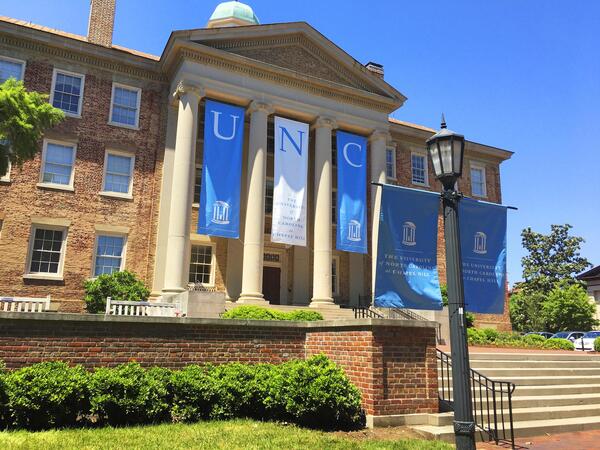
Last month, Peter Hans, president of the University of North Carolina system, casually dropped a bombshell announcement that the system and others were in talks to launch a new accreditor.
“We’ve been having a number of discussions with several other major public university systems, where we’re exploring the idea of creating an accreditor that would offer sound oversight,” Hans said at a UNC system Board of Governors meeting last month, The News & Observer reported.
Since then, no additional details have emerged, though Hans teased an update to come in July.
But public records obtained by Inside Higher Ed show UNC system officials have been quietly engaged in conversations about launching a new accreditor for at least a year, including discussions with unnamed collaborators in Florida, where the effort could be headquartered. UNC officials have also spoken with officials at the U.S. Department of Education, even getting a heads-up on what an April 23 executive order from the Trump administration on accreditation would entail.
Here’s what those documents show.
‘The Florida Project’
In early April, UNC officials appeared ready to tell the world about their plans for a new accreditor that “would be publicly accountable, outcomes-based, and more efficient and effective in its reviews,” according to the draft of a statement that was never publicly released.
“We believe it is past time for the creation of a new accreditor focusedon the unique needs of public colleges and universities,” the statement said. “We have worked collaboratively over the past year to explore and develop such a cross-state partnership.”
Andrew Kelly, a senior adviser to Hans, sent a draft of the statement to other UNC officials. The statement argued that accreditors “wield enormous power, but too often have opaque and counterintuitive governance” and fail to “focus on matters that are significant to students.” He argued in the statement that the current model “creates unnecessary duplication and cost, conflicts with the authority of state governments, and does little to ensure educational quality.”
An unidentified number of state systems of higher education were supposed to sign the statement, according to the draft.
Kelly drafted the statement in response to the Trump administration’s anticipated changes to accreditation, which included streamlining the processes for ED to recognize accreditors and for institutions to switch agencies, among other changes to the system that serves as gatekeeper to federal financial aid.
But the public did not hear about the UNC system’s quiet effort to launch a new accreditor until Hans spoke up at the May board meeting.
Other emails yielded some insights into whom the UNC system might be partnering with.
Daniel Harrison, vice president for academic affairs at the UNC system, sent an email on April 23 to fellow officials recapping a call with the U.S. Department of Education and what could be expected in the coming executive order on accreditation (which was issued shortly after his email).
In that email, Harrison also pointed to potential partners in the accreditation effort.
“An update on the Florida project—we met with the new entities [sic] attorneys and made substantial progress toward determining the legal structure of the new accreditor. It is likely to be a single member Florida nonprofit corp. Florida would be the sole member, but would delegate all delegable powers to a Board of Directors made up of the participating states,” Harrison wrote.
But despite having met with potential partners, UNC considered going its own way.
In a response to Harrison, Hans asked him to convene several system officials involved with the effort to weigh the pros and cons of “joining [a] multi-state coalition” or “forming a NC entity.” Email records obtained by Inside Higher Ed don’t show what the group recommended, but remarks made by Hans at May’s meeting indicate the system opted for the coalition approach.
UNC system officials did not respond to requests for comment from Inside Higher Ed.
System leaders also appear to have discussed the effort with state legislators in private. On May 15, Hans asked senior vice president of government relations Bart Goodson to set up a meeting with Michael Lee, the Senate majority leader in the Republican-dominated Legislature. When Goodson asked about the topic, Hans replied, “accreditation update with good news.”
Lee did not respond to a request for comment from Inside Higher Ed.
Potential Partners?
Like their UNC counterparts, other public systems are staying quiet on the effort.
Inside Higher Ed contacted a dozen public university systems, all in red states, to ask if they are partnering with UNC or others in an effort to launch a new accreditor, or if they participated in such discussions. Only two replied: the Arkansas State University system and the University of Alabama system. Both noted they had not been involved in those accreditation discussions.
The State University System of Florida—which did not reply to media inquiries—is the most likely potential partner, given the details in Harrison’s email and the governor’s recent political fury with accreditors.
In 2022, Florida’s dark-red Legislature passed a law requiring state institutions to switch accreditors regularly. That move came after the Southern Association of Colleges and Schools Commission on Colleges, which accredited all 40 of Florida’s public institutions, inquired about a potential conflict of interest at Florida State University, which was considering Richard Corcoran for its presidency despite his role on the Florida Board of Governors. (He now leads New College of Florida.)
SACS also raised questions about an effort by the University of Florida to prevent professors from testifying against the state in a legal case challenging voting-rights restrictions. (UF later dropped that policy amid a torrent of criticism.) Both incidents occurred in 2021.
Florida governor Ron DeSantis has been a vocal critic of the federal accreditation system.
Joe Raedle/Getty Images
Following the 2022 law, some institutions began the process of switching accreditors,though state officials argued that the Biden administration slowed down that effort and Florida tried unsuccessfully to get a federal judge to rule the current system of accreditation unconstitutional.
Outside of Florida, North Carolina is the only other state with a similar law. In 2023, legislators quietly slipped a provision into a state budget bill that required state institutions to change accreditors every cycle. The law was passed with no debate among North Carolina lawmakers. The change came after UNC clashed with SACS in early 2023 over shared governance.
Florida governor Ron DeSantis did not confirm to Inside Higher Ed whether the state is launching a new accreditor, but recent remarks from the GOP firebrand suggest, albeit vaguely, that something is in the works.
“For too long, academic accreditors have held our colleges and universities hostage,” DeSantis said in an emailed statement. “These accreditation cartels have worked behind the scenes to shape university behavior, embedding ideological concepts like Diversity, Equity, and Exclusion Indoctrination into the accreditation process. If you weren’t meeting politically motivated standards, like enthusiastic participation in DEI, they would hamper your accreditation and access to federal funding. In Florida, we refuse to let academic accreditation cartels hold our colleges and universities hostage to ideology at the expense of academic excellence. Stay tuned.”
Wade Maki, Faculty Assembly chair and a philosophy professor at UNC Greensboro, said he and other faculty members recently met with system officials to share their thoughts on the plan.
“We had a very open conversation with the system office and shared our hopes that we get an accreditor that is independent, that maintains the strong reputation of the UNC system and helps keep the politics out of higher ed and the curriculum, whether that’s from the politicians or the accreditors themselves,” Maki said. “We’ve seen it come from both directions over the years.”
He also thinks the narrow focus of such an accreditor could be a positive.
“My leadership team, the Faculty Assembly Executive Committee and the faculty that we’ve talked to on campuses, we see the potential benefits of trying something like this, of having an accreditor that focuses just on the accrediting of state-supported public institutions,” Maki said.
Outside observers were more critical of the UNC system’s plans.
Accreditation expert Paul Gaston III, an emeritus trustees professor at Kent State University, argued that building an accreditor composed only of public institutions would omit valuable perspectives in review processes. He argued that colleges undergoing accreditation reviews benefit from the diversity of experiences from evaluators working at a broad range of institutions.
“What would be the advantage of, in a sense, separating classes of institutions for accreditation? I think one of the strengths of accreditation has been that it brings a variety of perspectives to the evaluation of a particular institution,” Gaston said.
Then there’s the arduous process of getting a new accrediting agency up and running; gaining federal recognition, which is required, takes years. Although Trump’s executive order on accreditation promised a smoother pathway to recognition for new entrants, it does not supersede federal regulations.
“Becoming federally recognized, typically, is a five-plus-year process,” said Edward Conroy, a senior policy manager at the left-leaning think tank New America. Under current federal regulations, Conroy doesn’t expect the new accreditor to be recognized until 2030 or so.
Conroy also questioned whether the effort to create a new accreditor is about institutional quality assurance or political control.
“Everything Florida has done on accreditation over the past few years appears to be politically and ideologically driven, rather than about what is best for students and ensuring that they go to high-quality institutions and get a good education when they’re paying a lot of money for it and when taxpayers are investing a lot of money in public funding for higher education,” he said.
Conroy worries that state lawmakers in either Florida or North Carolina would require public colleges in their state to be accredited by their new accreditor. That would undermine the current requirement that colleges get to choose their own accreditor.
“It undercuts the principle of the higher education accountability triad, where states, accreditors and the Department of Education are all meant to do different things,” Conroy said. “If you have a state that becomes both, to some degree or another, the accreditor, as well as the state authorizing entity, then we’ve combined two legs of a three-legged stool.”
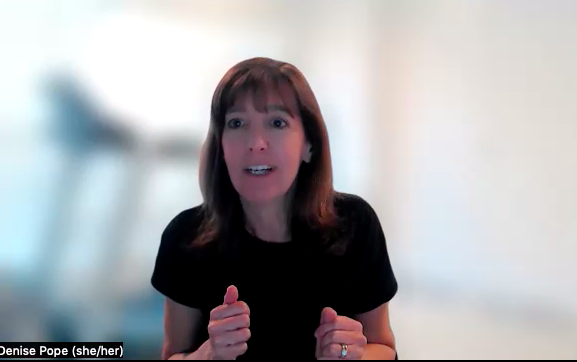
Tired of talking about AI? That’s too bad. The technology remains the most impactful force in education. The challenge becomes avoiding all the Claptrap. Thankfully, that’s where Denise Pope, Co-Founder of Challenge Success at the Stanford Graduate School of Education, comes in.
I had the chance to explore the current AI state-of-play from her perspective. One striking disparity I haven’t heard talked about: While AI usage among students has skyrocketed—from 25% to 60% at the middle school level and 45% to 75% at the high school level over just two school years—only 32% of teachers report using AI for academic purposes.
This gap has created what Denise describes as an educational “La La Land,” where students are experimenting with AI tools while many schools lack clear policies or guidance. The absence of structured approaches is breeding anxiety among both educators and students, who are left wondering when and how AI should appropriately be used in academic settings.
Click through to hear how Denise believes this issue can be addressed:
Kevin is a forward-thinking media executive with more than 25 years of experience building brands and audiences online, in print, and face to face. He is an acclaimed writer, editor, and commentator covering the intersection of society and technology, especially education technology. You can reach Kevin at [email protected]
America’s K-12 educators are more stressed than ever, with many considering leaving the profession altogether, according to new survey data from Prodigy Education.
The Teacher Stress Survey, which polled more than 800 K-12 educators across the U.S., found that nearly half of teachers (45 percent) view the 2024-25 school year as the most stressful of their careers. The surveyed educators were also three times more likely to say that the 2024-25 school year has been the hardest compared to 2020, when they had to teach during the height of the COVID-19 pandemic.
Student behavior challenges (58 percent), low compensation (44 percent), and administrative demands (28 percent) are driving teacher burnout and turnover at alarming rates. Public school teachers were more likely to report stress from unrealistic workloads, large class sizes, school safety concerns, and student behavior issues than their private school counterparts.
“The fact that stress levels for so many teachers have exceeded those of the pandemic era should be a wake-up call,” said Dr. Josh Prieur, director of education enablement at Prodigy Education and former assistant principal in the U.S. public school system. “Teachers need tangible, meaningful, and sustained support … every week of the year.”
Additional key findings include:
The vast majority of teachers (95 percent) are experiencing some level of stress, with more than two-thirds (68 percent) reporting moderate to very high stress. K-5 teachers were the most likely to feel extremely/very stressed (33 percent). Sixty-three percent of teachers report that their current stress levels are higher than when they first started teaching.
Nearly one in 10 teachers surveyed (9 percent) are planning to leave the profession this year, while nearly one in four (23 percent) are actively thinking about it. One-third of teachers do not expect to be teaching three years from now, likely because nearly half (48 percent) of teachers don’t feel appreciated for the work that they do.
Teachers are finding ways to prioritize their well-being, but time limits and job pressures often get in the way. Seventy-eight percent of teachers say they actively make time for self-care, but nearly half (43 percent) feel guilty for spending time on self-care and 78 percent have skipped self-care due to work demands. Implementing school-provided self-care perks and mandatory self-care breaks would appeal to teachers, with 85 percent and 76 percent taking advantage of each benefit, respectively.
Top solutions that would reduce teachers’ stress include a higher salary (59 percent), a four-day school week (33 percent), stronger classroom discipline policies (32 percent), and smaller class sizes (25 percent). Public school teachers were more likely to prefer a shorter week, while private school educators opted for higher pay.
“Teacher Appreciation Week should serve as the starting point for building systems that show we value teachers’ time, talent, and well-being,” said Dr. Prieur. “Districts can do this by investing in tools that reduce the burden on teachers, prioritizing time for self-care and implementing policies that reinforce teachers’ value as an ongoing commitment to bettering the profession.”
Laura Ascione is the Editorial Director at eSchool Media. She is a graduate of the University of Maryland’s prestigious Philip Merrill College of Journalism.
This audio is auto-generated. Please let us know if you have feedback.
UPDATE: June 6, 2025: The U.S. Department of Justice asked the U.S. Supreme Court on Friday for an immediate pause on a court order that the U.S. Department of Education reinstate nearly 1,400 employees fired during a mass workforce reduction in March. The Justice Department’s appeal calls the lower court’s order an “unlawful remedy” and says the injunction “causes irreparable harm to the Executive Branch.”
Dive Brief:
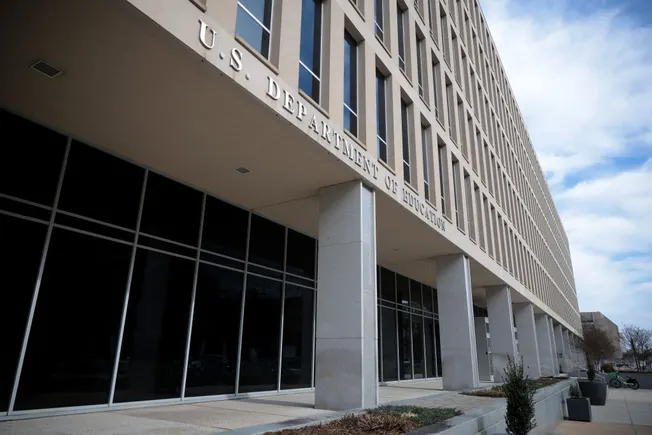
A federal appeals court on Wednesday rejected the Trump administration’s motion for a stay in a lawsuit challenging the dismantling of the U.S. Department of Education, effectively halting — at least temporarily — efforts to reduce the agency’s workforce and transfer some education responsibilities to other federal departments.
The administration had argued it could still carry out the statutory requirements of the Education Department, even with a workforce cut in half. But the 1st U.S. Circuit Court of Appeals disagreed, saying it saw “no basis” that a lower court erred in concluding that task seemed “impossible.”
The ruling was the latest in a series of legal developments concerning Trump administration reforms at the Education Department. Trump, U.S. Education Secretary Linda McMahon and many Republican lawmakers are attempting to eliminate what they say is federal overreach and inefficiencies in education.
Dive Insight:
The lawsuit at the center of the ruling was filed in March by 20 Democratic-leaning states and the District of Columbia. They sued the Education Department, Trump and McMahon two days after the agency announced mass workforce reductions. That challenge was combined with a similar lawsuit from public school districts in Massachusetts and education labor unions.
A federal district judge last month issued a preliminary injunction halting the workforce reductions temporarily. That ruling also prohibited the Education Department from transferring management of the federal student loans portfolio and special education management and oversight to other federal agencies.
In Wednesday’s decision denying a motion for a stay, the three-judge panel said the Education Department has not shown “that the public’s interest lies in permitting a major federal department to be unlawfully disabled from performing its statutorily assigned functions.”
The Trump administration also argued that it is being forced to return staff whose services are no longer needed. The 1st Circuit, however, said its reading of the preliminary injunction shows no specific number or deadline for returning employees who were part of the reduction in force.
“We do not see how complying with those aspects of the injunction imposes a burden on the government, no less one that is ‘extraordinary,’” the court said.
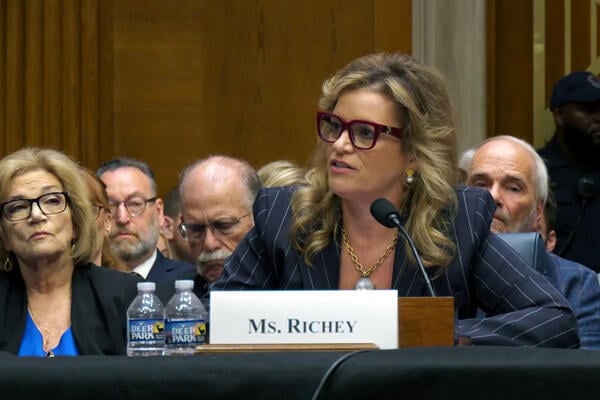
Kimberly Richey, a Florida education official, made her case Thursday about why she should lead the Education Department’s Office for Civil Rights, pledging “unwavering” support of the administration’s priorities such as protecting Jewish students.
“Should I be confirmed as assistant secretary for civil rights, I will proudly be joining an administration that will not allow students to be intimidated, harassed, assaulted or excluded from their institutions,” she said in her opening remarks.
But repeatedly throughout the hearing, Democratic senators interrogated her on how she plans to address a massive backlog in complaints—which one senator said has more than doubled since Trump took office, to 25,000—with a reduced staff.
“This administration has fired more than half of the staff at OCR, and President Trump is now asking, in his budget, to slash that by $49 million next year, so explain to me how those firings and that funding cut will help reduce that backlog? I want to understand how you’re going to square that circle,” Sen. Patty Murray, a Democrat from Washington, asked early on in the hearing.
Richey mostly avoided answering the questions, arguing that she had not yet assumed the role of assistant secretary and, therefore, had no say in the recent changes to OCR.
“As a nominee, I do not have access to information with regard to the decisions that are being made at the department,” Richey responded. “I’m not in communication with OCR leadership or the secretary. One of the reasons why this role is so important to me is because I am always going to advocate for OCR to have the resources it needs to do its job. I think that what it means is I’m going to have to be really strategic, if I’m confirmed, stepping into this role, helping come up with a plan where we can address these challenges.”
Several others doubled down on Murray’s line of questioning, including Sen. Andy Kim, a New Jersey Democrat, who asked Richey if antisemitism was getting worse in America. When she said it was, he questioned how cutting OCR staff is conducive to fighting antisemitism on college campuses. She reiterated her answer to Murray’s question, saying, “I can’t explain or provide information on decisions I wasn’t involved in.”
Richey was one of four people who testified Thursday before the Senate Health, Education, Labor and Pensions Committee. She and the nominee for deputy secretary of education, Penny Schwinn, fielded the bulk of the committee’s questions as lawmakers pressed for answers about the OCR’s operations and priorities, proposed budget cuts, and the president’s plans to dismantle the Education Department. The senators didn’t vote on whether to advance the nominations to the Senate floor; that step will likely occur at a later meeting.
Richey is currently senior chancellor for the Florida Department of Education and has twice served in OCR before, including a brief stint as acting secretary of civil rights at the end of Trump’s first term and the beginning of Biden’s presidency. Her confirmation hearing comes months after the Trump administration slashed more than half of OCR’s staff, including shuttering seven of the 12 regional offices dedicated to investigating complaints. The office has also reportedly begun prioritizing opening cases regarding trans women athletes and antisemitism since Trump’s second term began, letting other cases pile up and go unaddressed, according to multiplenews reports.
In the confirmation hearing, Richey expressed strong support for those causes, stressing that she led OCR when it investigated one of the federal government’s earliest cases against a school for allowing a trans woman to play on a women’s sports team.
“I’m certainly committed to vigorously enforcing it and continuing to pursue these cases,” she said.
In response to a different question, though, she did say that OCR would investigate certain complaints of discrimination related to gender identity and sexual orientation—an answer that appeared to incense Republican senator Josh Hawley of Missouri.
“I want to be crystal clear on this—I think it’s a very dangerous thing to start allowing this into Title IX, which, as you know, it is a landmark statute, it is vitally important, and it has been under attack for four long years,” he said, asking her to confirm that OCR will “go after” colleges and universities that allow trans women to play women’s sports.
He also warned Richey that she should “rethink” her position that OCR can investigate discrimination based on gender identity.
Sen. Angela Alsobrooks, a Democrat from Maryland, pressed Richey on whether she would continue OCR’s new system of prioritizing cases regarding antisemitism and trans athletes, asking if all forms of discrimination should be treated with equal importance.
Richey told Alsobrooks she does believe “it’s important to vigorously enforce all of the federal laws that OCR is responsible for enforcing.” Later in the hearing, she noted that Education Secretary Linda McMahon is “prioritizing” removing trans women from women’s athletics, and she plans to do the same if confirmed.
Schwinn, who was formerly Tennessee’s commissioner of education, received most of the panel’s questions about the Trump administration’s efforts to dismantle the education department. In response a question from Sen. Jim Banks, an Indiana Republican, about what steps would be required to dismantle the department, she stated that she “would certainly work, if confirmed, with the secretary and with Congress on any actions related to the role of the department” and that she believes in equipping states with legislation and funding that will help them improve their own educational systems.
“A department or an agency in the federal government is not going to change the outcomes of students—the teacher in the classroom is going to teach the standards that are approved by that state. The parent is the parent of that child. What we need to do is ensure we’ve created a system that is going to drive outcomes,” she said. “That is not going to happen from the federal government, whether there is a Department of Education or not.”
Purdue University has ended a long-standing partnership with its independent student newspaper, The Purdue Exponent, and will no longer distribute papers, give student journalists free parking passes or allow them to use the word “Purdue” for commercial purposes.
The Purdue Student Publishing Foundation board (PSPF), the nonprofit group that oversees The Exponent—the largest collegiate newspaper in Indiana—said the changes came without warning.
On May 30, PSPF received an email from Purdue’s Office of Legal Counsel notifying the group that their contract had expired more than a decade ago and the university would not participate in newspaper distribution or give the students exclusive access to newspaper racks on campus.
In addition, the message said, the university will not enter into a new contract for facility use with the paper to remain consistent with the administration’s stated policy on institutional neutrality.
According to a statement from the university, it is not consistent “with principles of freedom of expression, institutional neutrality and fairness to provide the services and accommodations described in the letter to one media organization but not others.”
The Exponent is the only student newspaper, though Purdue also has two student news channels, FastTrack News and BoilerTV.
Legal counsel also asked The Exponent to keep “Purdue” off the masthead and out of the paper’s URL because “The Foundation should not associate its own speech with the University.” PSPF says it has a trademark on “The Purdue Exponent” until 2029.
PSPF and Purdue have held distribution agreements since 1975, in which Exponent staff would drop papers off at various locations across campus and staff would then place them on newspaper racks.
In 2014, the Exponent delivered the university a new contract to renew the agreement for the next five years, according to paper staff. The contract was never signed, but the terms of the agreement continued until Monday, June 2.
Now, The Exponent is permitted to distribute papers themselves and have nonexclusive access to newspaper stands on campus, according to the university; students said they don’t have early access to many of the buildings the way staff do.
“Purdue’s moves are unacceptable and represent not only a distortion of trademark law but a betrayal of the university’s First Amendment obligations to uphold free expression,” Dominic Coletti, a student press program officer for the Foundation for Individual Rights and Expression, told The Exponent. “Breaking long-standing practice to hinder student journalism is not a sign of institutional neutrality; it is a sign of institutional cowardice.”
The Trump administration is asking Congress to cut funds for tribal colleges and universities by nearly 90 percent, according to the Department of the Interior’s proposed budget released Monday.
Tribal college advocates told ProPublica, which first reported on the cuts, that tribal colleges could have to shutter if Congress approves the plan, leaving thousands of students without the support they need to complete a degree program. And reports from ProPublicashow that it will only further devastate institutions that were already underfunded.
“The numbers that are being proposed would close the tribal colleges,” Ahniwake Rose, president and CEO of the American Indian Higher Education Consortium, told ProPublica. “They would not be able to sustain.”
The budget request calls for about $860 million to operate Indian Education Programs, which includes two federally controlled tribal colleges—Haskell Indian Nations University and Southwestern Indian Polytechnic Institute. Of that $860 million, about $22 million would go toward postsecondary programs. That’s about a $161 million cut compared to fiscal year 2024.
Tribal colleges argue that their funding is protected by treaties and contend that the institutions up for discussion are critical providers in some of the country’s poorest areas.
“It doesn’t make sense for them to [approve the cuts[ when they’re relying on us to train the workforce,” Dawn Frank, president of Oglala Lakota College in South Dakota, told ProPublica. “We’re really relying on our senators and representatives to live up to their treaty and trust obligation.”
A federal judge ordered the Trump administration to restore funding to AmeriCorps programs in 24 states and Washington, D.C., following a lawsuit that challenged the April cuts to the program, The Hill reported Thursday.
The judge, Obama appointee Deborah Boardman, ruled that the states were likely to succeed in their argument that the agency’s funding could not legally be cut without a notice-and-comment period. The ruling did not reinstate any of the agency’s staff.
AmeriCorps volunteers and grants support at least 100 college-access organizations across the U.S., many of which had to lay off their AmeriCorps members in the wake of the cuts.
It’s the latest court order blocking the administration’s crusade to reduce the size of the federal government; recently, judges reversed layoffs at the Department of Education and ruled that a lawsuit challenging funding cuts at the National Institutes of Health could move forward.