Tag: Education

  • Democratic senators call for probe of Trump Education Department cuts

    Democratic senators call for probe of Trump Education Department cuts

    This audio is auto-generated. Please let us know if you have feedback.

    Democrat efforts to challenge President Donald Trump’s dismantling of the U.S. Department of Education mounted Thursday, as 11 senators asked the agency’s acting inspector general, René Rocque, to investigate the push. 

    Sen. Elizabeth Warren and senate Minority Leader Chuck Schumer were among those requesting an evaluation of whether the administration is undermining the Education Department’s ability to provide students with equal access to education and to help state and local governments’ education systems

    “Decimating the Department of Education’s abilities to administer financial aid, investigate civil rights violations, conduct research on educational outcomes, and oversee the use of federal education grants threatens to have disastrous consequences for American students, teachers and families,” they wrote in a March 27 letter to Rocque. 

    “The Trump Administration’s further attempts to close the Department entirely and transfer its responsibilities over to other agencies will likely interrupt and degrade education programs and services, causing additional pain for the 62 million students across the country that the Department serves.” 

    The administration’s gutting of the Education Department not only impacted nearly half of the department’s workforce, but also left civil rights investigation and enforcement offices at half their previous capacity, cut the Federal Student Aid office by over 450 employees, and slashed 90% of the Institute of Education Sciences staff. 

    These decisions would likely impede key functions of the department, including ensuring all students’ civil rights are protected, administering federal loans and overseeing lenders and FAFSA, and tracking students’ educational outcomes and the condition of education in the nation, the Democratic senators told Rocque.

    Rocque, who joined the Education Department’s Office of Inspector General as deputy inspector general in December 2023, became acting director in January.

    As with many other issues dividing lawmakers today, Democrats and Republicans have been starkly divided over the Trump administration’s efforts to eliminate the department altogether. This makes attaining a Senate supermajority of 60 votes — which is required to officially shut the department — unlikely. 

    House Democrats introduced a resolution on March 21 calling for transparency and information from the administration, including unredacted copies of all federal documents referring to the department’s closure and information on workforce reduction decisions.

    About a week after the massive reduction in force on March 11, Democrat lawmakers from both the House and Senate wrote the department demanding information on the layoffs, saying that halving its workforce could impact the agency’s ability to perform vital functions required by law.

    Meanwhile, Republicans in some states have taken the opportunity to ask the administration for more leeway in their education spending. 

    On March 25, for example, Oklahoma State Superintendent Ryan Walters sent a letter to the Education Department requesting a waiver to receive a block grant for all funds allocated to his state under the Every Student Succeeds Act. Such a consolidated block grant would “significantly enhance local flexibility” so “schools will be able to address their unique needs and priorities,” Walters wrote.

    The block grant would be used to “expand educational choices,” including attendance at private schools, and would loosen federal oversight of education spending requirements.

    Source link

  • Higher Education Inquirer continues to follow IPO/sale of University of Phoenix

    Higher Education Inquirer continues to follow IPO/sale of University of Phoenix

    On March 6, 2025, Apollo and Vistria publicly announced a possible IPO or sale of the University of Phoenix.  These companies have been trying to sell the University of Phoenix since 2021, but there have been no takers. The owners claim the school is worth $1.5M to $1.7M, but we (and experts we know) are skeptical, given the financials we have seen so far. The University of Phoenix was previously on sale for about $500M-$700M but the University of Arkansas System, the State of Idaho, and apparently other colleges declined the offers. 

    The University of Phoenix offers subprime education to folks,
    historically targeting servicemembers, veterans, and people of color. While some students may profit from these robocollege credentials, one wonders what
    these workers actually learn. The current student-teacher ratio at the
    University of Phoenix, according to the US Department of Education, is
    132 to 1.   

    In 2023 we made a Freedom of Action (FOIA) request to the US Department of Education (ED) to get Phoenix’s most recent audited financials. In March 2025, more than 20 months later, we were provided with a 35-page report, audited by Deloitte, with numbers from 2021 and 2022. 

    This month the Higher Education Inquirer followed up with a Freedom of Information request with the ED to obtain more up-to-date financial numbers for the University of Phoenix. We hope they will be responsive and timely enough to get the word out to the public.   

    Source link

  • Report details uneven AI use among teachers, principals

    Report details uneven AI use among teachers, principals

    Key points:

    English/language arts and science teachers were almost twice as likely to say they use AI tools compared to math teachers or elementary teachers of all subjects, according to a February 2025 survey from the RAND Corporation that delves into uneven AI adoption in schools.

    “As AI tools and products for educational purposes become more prevalent, studies should track their use among educators. Researchers could identify the particular needs AI is addressing in schools and–potentially–guide the development of AI products that better meet those needs. In addition, data on educator use of AI could help policymakers and practitioners consider disparities in that use and implications for equitable, high-quality instruction across the United States,” note authors Julia H. KaufmanAshley WooJoshua EaganSabrina Lee, and Emma B. Kassan.

    One-quarter of ELA, math, and science teachers used AI tools for instructional planning or teaching in the 2023–2024 school year. Nearly 60 percent of surveyed principals also reported using AI tools for their work in 2023-2024.

    Among the one-quarter of teachers nationally who reported using AI tools, 64 percent said that they used them for instructional planning only, whether for their ELA, math, or science instruction; only 11 percent said that they introduced them to students but did not do instructional planning with them; and 25 percent said that they did both.

    Although one-quarter of teachers overall reported using AI tools, the report’s authors observed differences in AI use by subject taught and some school characteristics. For instance, close to 40 percent of ELA or science teachers said they use AI, compared to 20 percent of general elementary education or math teachers. Teachers and principals in higher-poverty schools were less likely to report using AI tools relative to those in lower-poverty schools.

    Eighteen percent of principals reported that their schools or districts provided guidance on the use of AI by staff, teachers, or students. Yet, principals in the highest-poverty schools were about half as likely as principals in the lowest-poverty schools to report that guidance was provided (13 percent and 25 percent, respectively).

    Principals cited a lack of professional development for using AI tools or products (72 percent), concerns about data privacy (70 percent) and uncertainty about how AI can be used for their jobs (70 percent) as factors having a major or minor influence on their AI use.

    The report also offers recommendations for education stakeholders:

    1. All districts and schools should craft intentional strategies to support teachers’ AI use in ways that will most improve the quality of instruction and student learning.

    2. AI developers and decision-makers should consider what useful AI applications have the greatest potential to improve teaching and learning and how to make those applications available in high-poverty contexts.

    3. Researchers should work hand-in-hand with AI developers to study use cases and develop a body of evidence on effective AI applications for school leadership, teaching, and learning.

    Laura Ascione
    Latest posts by Laura Ascione (see all)

    Source link

  • Trump Administration Revokes 300 Student Visas, More to Come

    Trump Administration Revokes 300 Student Visas, More to Come

    The Trump administration has revoked more than 300 international students’ visas in the past three weeks, according to reporting from Axios

    Yesterday two Ph.D. students with revoked visas were detained by immigration agents and now await deportation: an Iranian student at the University of Alabama and a Turkish student at Tufts University in Massachusetts. 

    The Tufts student, Rumesya Ozturk, was abducted by plainclothes ICE agents on the street. At a press conference Thursday, U.S. secretary of state Marco Rubio said that any international student whose visa was revoked could be forcefully deported in such a manner. 

    “Once you’ve lost your visa, you’re no longer legally in the United States,” he said. “If you come to the U.S. as a visitor and create a ruckus for us, we don’t want it.”

    Axios also reported that the administration has discussed using a small arm of the Immigration and Customs Enforcement office to strip colleges they deem to be “pro-Hamas” of their ability to enroll international students.

    “You can have so many bad apples in one place that it leads to decertification of the school,” an unnamed White House official told Axios. “I don’t think we’re at that point yet. But it is not an empty threat.”

    The Student and Exchange Visitor Program normally investigates student visa fraud and international student recruiting practices, sometimes withdrawing colleges’ certification to enroll foreign students if there’s evidence that students are primarily enrolling as a pretext to reside and work in the U.S. instead of earn a degree. 

    Now, the SEVP may be tasked with a very different mandate: punishing colleges that have been the site of large pro-Palestine protests. 

    “What you’re going to see in the not-too-distant future is the universities … not doing anything to stop these demonstrations in support of Hamas … we can stop approving student visas for them,” a senior Justice Department official told Axios. “That’s one of their biggest cash cows, foreign students. That’s a meaningful source of revenue.” 

    Source link

  • Duke Criticizes the Use of Its Brand on “The White Lotus”

    Duke Criticizes the Use of Its Brand on “The White Lotus”

    Duke University is unhappy with The White Lotus, the hit HBO television show, for using its logo repeatedly in its third season—particularly in a scene where one character is on the verge of suicide, holding a gun to his head, all while wearing a Duke T-shirt.

    A spokesperson for institution told Bloomberg and other media outlets this week that Duke hadn’t approved of the use of its logo on the show. “The White Lotus not only uses our brand without permission, but in our view uses it on imagery that is troubling, does not reflect our values or who we are, and simply goes too far,” the spokesperson said.

    A copyright attorney told Bloomberg that the show’s use of the logo is most likely protected by the First Amendment.

    Source link

  • CUNY Revises Palestinian Scholar Job After Controversy

    CUNY Revises Palestinian Scholar Job After Controversy

    The City University of New York’s Hunter College reposted a job listing for Palestinian studies scholars earlier this week, one month after New York governor Kathy Hochul ordered the system to remove an earlier listing that she called antisemitic.

    The new job description does not include some of the phrases that initially angered pro-Israel activist groups who lobbied for the original posting’s removal. 

    The old posting said Hunter sought “a historically grounded scholar who takes a critical lens to issues pertaining to Palestine including but not limited to: settler colonialism, genocide, human rights, apartheid, migration, climate and infrastructure devastation, health, race, gender, and sexuality.” The revised version excised that entire list of issues.

    Free speech advocates and Hunter staff told Inside Higher Ed last month that CUNY’s decision to pull the initial job posting and revise it in response to the governor’s order was an unprecedented breach of the institution’s academic autonomy in faculty hiring, an area normally sequestered from political influence. 

    The new posting comes as colleges face federal investigations, funding cuts and student harassment as a result of pro-Palestinian campus activity.

    Correction: an earlier version of this story reported that the posting had removed a description of Hunter as a “vibrant and dynamic community within a highly diverse urban setting.” That language is still in the revised post.

    Source link

  • Recruiting U.S. Scholars Can Protect “Threatened Research”

    Recruiting U.S. Scholars Can Protect “Threatened Research”

    Universities should look to recruit researchers fleeing the U.S. amid dramatic funding cuts by the Trump administration because it could help protect vital scientific expertise from being lost, according to the rector of a leading Belgian university.

    Vrije Universiteit Brussel (VUB) has announced a host of new postdoctoral positions for international academics, stating that the institution “particularly welcomes excellent researchers currently working in the U.S. which see their line of research threatened.”

    VUB and its sister university Université Libre de Bruxelles are offering a total of 36 grants to researchers with a maximum of eight years of postdoctoral experience, funded by the European Union’s Marie Skłodowska-Curie Actions. The positions are not exclusively designed for U.S.-based researchers, VUB rector Jan Danckaert stressed, but are “open to all incoming researchers, whatever their nationality or their working place at the moment outside of Belgium.”

    VUB chose to advertise the positions to scholars in the U.S., Danckaert explained, in the wake of drastic funding cuts by the Trump administration, with research fields under particular threat including climate, public health and any areas considered to be related to diversity.

    “We also hear from colleagues in the United States that they are applying a kind of self-censorship in order to stay under the radar,” he said. “We believe that freedom of investigation is now under threat in the U.S.”

    “It’s not so much about trying to attract the best US researchers to Brussels but trying to prevent fruitful lines of research from being abruptly cut off,” Danckaert said. While recruiting talent “would benefit our society,” he said, “it’s important that these lines of research can be continued without interruption, for the benefit of the scientific community as a whole and, in the end, for humanity.”

    VUB has already lost U.S. funding for two research projects, one concerning youth and disinformation and the other addressing the “transatlantic dialogue,” Danckaert said. The grants, amounting to 50,000 euros ($53,800) each, were withdrawn because “they were no longer in line with policy priorities,” the rector said. “Now, we have some costs that will have to be covered, but that’s nothing in comparison to the millions that are being cut in the United States.”

    European efforts to recruit U.S.-based researchers have faced some criticism, with the KU Leuven rector Luc Sels arguing that “almost half of the world population lives in countries where academic freedom is much more restricted,” while “the first and most important victims of Trump’s decisions”—such as the cancellation of USAID funding—“live and work in the Global South.”

    “Should we not prioritise supporting the scientists most at risk?” Sels writes in a recent Times Higher Education comment piece, adding that “drawing [the U.S.’s] talented scientists away will not help them.”

    Asked about these concerns, Danckaert said, “It’s true, of course, that the U.S. by no means has a monopoly on putting scientists under threat,” noting that VUB, alongside other Belgian universities, participates in academic sanctuary programs such as Scholars at Risk. “We try to provide a safe haven for scholars who are being persecuted in their countries, and this work doesn’t stop.”

    As for fears of a potential brain drain from the U.S., the VUB rector said he was “by nature optimistic.” Recruiting U.S.-based researchers “is hopefully only a temporary measure to avoid some lines of research being abruptly cut,” Danckaert said.

    “I believe this is a temporary difficult period for a number of scientists,” he continued. “We’ve always looked with high esteem to the quality of science done in the United States, and I’m confident that the climate in which science was prospering will come back.”

    Source link

  • Education Department Cuts and an Ultimatum for Columbia: The Key

    Education Department Cuts and an Ultimatum for Columbia: The Key

    The third month of the second Trump administration is coming to a close, and the White House has shown no signs of slowing down on the number of actions it’s taking that directly impact the higher education sector. 

    In the latest episode of The Key, Inside Higher Ed’s news and analysis podcast, Editor in Chief Sara Custer checks in on the latest developments with news editor Katherine Knott and federal policy reporter Jessica Blake. 

    They discuss the huge staff cuts at the Department of Education, an executive order to shutter the agency, arrests and intimidation of international students and scholars, and a $400 million ultimatum to Columbia University. They share what IHE has learned from the people at the center of these stories.  

    They also consider what legal and policy experts have said about the potential for these actions to be challenged in courts or through Congress. 

    Listen to the latest episode here and find more episodes of The Key here.

    Source link

  • University of Michigan Axes DEI

    University of Michigan Axes DEI

    The University of Michigan announced Thursday that it will essentially eliminate all diversity, equity and inclusion efforts on its campus. That includes shuttering two diversity offices, the Office of Diversity, Equity and Inclusion and the Office for Health Equity and Inclusion, and ending its DEI 2.0 Strategic Plan.

    The changes come in response to federal anti-DEI actions, including executive orders and the Feb. 14 Dear Colleague letter, which declared all race-based programs in higher education illegal. Michigan’s decision was made in consultation with “various stakeholders regarding our DEI programs,” according to the announcement.

    The university said it plans to increase investments in student-facing programs, including financial aid, a scholarship program for former foster children and student success resources.

    The university has long been a champion of DEI efforts, funneling nearly $240 million into such programs over the past nine years, according to The Chronicle of Higher Education, though some have critiqued the efforts for appearing to have little impact despite the big price tag.

    Source link

  • Senate Republicans Spotlight Campus Antisemitism at Hearing

    Senate Republicans Spotlight Campus Antisemitism at Hearing

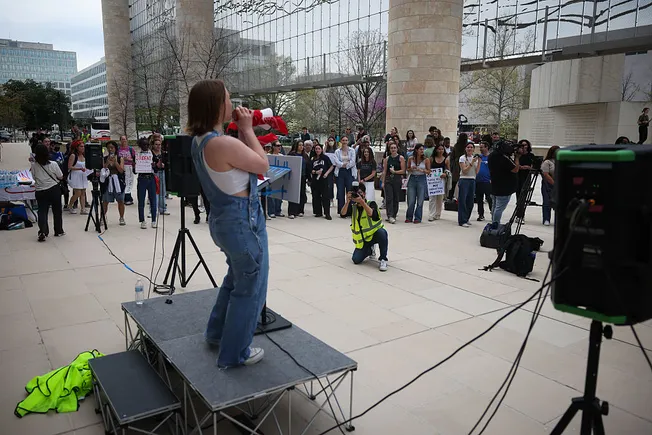
    Nearly a year after pro-Palestinian encampments sprang up on college campuses across the country—and with them, increased reports of antisemitism—Senate Republicans are saying university leaders need to crack down on campus conduct or be placed “on notice.”

    Although the House Republicans have spent more than a year investigating campus antisemitism, the hearing, held Thursday on Capitol Hill, was the Senate Health, Education, Labor and Pensions Committee’s first strike at the issue since it became a top priority after Oct. 7, 2023.

    The two-hour discussion didn’t break much new ground, aside from giving members of the GOP a chance to highlight the changes President Trump has made since taking office and to promote several related pieces of legislation. Democrats largely used their time to criticize the Trump administration and the plan to shut down the Education Department.

    Last Congress, the House Committee on Education and the Workforce held multiple hearings, blaming diversity, equity and inclusion for what they saw as “the scourge of antisemitism on campus.” They grilled the presidents of elite institutions, subpoenaed universities for documents and lambasted higher ed over all for its handling of protests. Ultimately, they concluded that university leaders made “shocking concessions” to protesters; intentionally declined to support Jewish students, faculty and staff; and failed to impose meaningful discipline, among other findings.

    But up until this year, Republicans had limited options to enact legislation that they say would address campus antisemitism. Up until the start of the year, Democrats controlled the Senate and the White House. That meant that no matter what acts of alleged discrimination the committee tried to highlight or what bills it tried to pass, their efforts were almost always dead in the water. But now, with Donald Trump as president and Republicans controlling the House and Senate, the HELP Committee chair, Sen. Bill Cassidy of Louisiana, and his fellow Republicans hold the power. And they were sure to make it known.

    “With President Trump in office and a Republican majority in Congress, the time of failed leadership is over,” Cassidy said in his opening remarks. “Universities have been put on notice: Failing to protect a student’s civil rights will no longer be tolerated.”

    Cassidy and multiple of his Republican counterparts promoted the Antisemitism Awareness Act, which would require colleges to use the International Holocaust Remembrance Alliance’s definition of antisemitism when conducting civil rights investigations. He also pushed the Protecting Students on Campus Act, which would require institutions to provide students with information about how to file an antisemitism complaint. (Cassidy is lead sponsor of the Protecting Students on Campus Act.)

    The witnesses who testified Thursday included rabbis, researchers and Jewish student advocates. As was the case with the hearing over all, they largely echoed comments about campus antisemitism made at previous hearings. The three speakers selected by Republicans believed that the protests were not driven by students but faculty members and outside forces who were trying to demonize the definition of Zionist. The two selected by Democrats said colleges must focus on maintaining free speech while responding to antisemitism and all forms of discrimination.

    Meanwhile, lawmakers from both parties wanted to talk about the actions of President Trump since he took office in January.

    Republicans praised his decision to strip Columbia University of $400 million in federal funding, saying it was high time to hold the Ivy League institution—an epicenter of campus protests—accountable. (Columbia said last week that it agreed to sweeping demands from the Trump administration, though the funds haven’t been restored.)

    The Department of Education has also sent out letters warning more than 60 colleges and universities that they could be the next to face “potential enforcement actions” if they don’t comply with civil rights laws and crack down on antisemitism.

    “The days of a tepid response or toothless resolution agreements are over,” said Sen. Ashley Moody, a Florida Republican. “Universities have now been put on notice, and I don’t think there’s any question that there’s been a change in the tenor on how we will protect the rights of Jewish students on our campus.”

    The conservatives also used the hearing as a chance to tie allegedly antisemitic protests to concerns about foreign influence on higher education and promote legislation that increases federal oversight of foreign gifts and student visas. On Thursday, the House passed a bill that would increase disclosure requirements for foreign gifts and contracts.

    Republicans embraced a report from the Institute for the Study of Global Antisemitism and Policy, which found that American colleges and universities have received more than $3 billion in unreported gifts from Qatar. According to the report, colleges that received undocumented gifts saw a significant increase in incidents of antisemitism compared to those that did not. The report argues, essentially, that the gifts are a use of “soft power” to encourage antisemitic views on campus.

    Charles Small, founding director and president of the Institute for the Study of Global Antisemitism and Policy, was one of the witnesses at the hearing, and he urged lawmakers to increase their oversight of what gifts are allowed.

    “I don’t think it’s wrong to question foreign funding in universities and colleges and whether foreign nations are trying to persuade or influence or brainwash our children. Do you think that they want us to be more pro-American … is that why they’re giving hundreds of millions of dollars to our universities?” Moody said.

    But Sen. Roger Marshall, a Kansas Republican, defended the gifts, saying Qatar played a critical role in the release of Americans held hostage by Hamas.

    Democrats, on the other hand, repeatedly argued that rather than working to combat antisemitism and other forms of discrimination, President Trump and Secretary McMahon are making the problem worse by seeking to close the Department of Education and slashing its capacity. McMahon recently laid off half of the staff at the Office for Civil Rights and closed many regional offices—a move that experts said will only worsen the agency’s backlog of complaints and reduce enforcement.

    Sen. Patty Murray, a Democrat from Washington State, said OCR is America’s front line of defense against discrimination. So if the goal is to combat antisemitism, there should be more support and resources distributed to the OCR, not less, she added.

    “It’s like saying if you want to fight fires, you should support the fire department. Well, I hate to tell you all, Trump is axing the fire department,” she said. “It’s as straightforward as it gets.”

    Source link