Tag: Education

  • Fulbright-Hays Grants Canceled for the Year

    Fulbright-Hays Grants Canceled for the Year

    The Department of Education canceled this year’s competition for three Fulbright-Hays fellowship programs, adding to the growing list of higher education grants that have been eliminated since President Donald Trump took office in January.

    The decision, announced Thursday on the Federal Register, will affect doctoral students and faculty who applied for the Group Projects Abroad, Doctoral Dissertation Research Abroad and Faculty Research Abroad programs—all of which focus on expanding American expertise in critical languages and are congressionally mandated.

    About 110 individuals and 22 groups from over 55 institutions benefited from these three programs, according to department data, in fiscal year 2022, the most recent year for which data is available. This year, prior to the cancellation, more than 400 applications had been submitted.

    Department officials wrote in Thursday’s announcement that the cancellation is just for fiscal year 2025 and was part of a “comprehensive review” to ensure that all competition criteria and priorities “align with the objectives established by the Trump Administration.”

    But outside critics say these cuts signify larger problems that stem from cutting nearly half of the department’s staff in March.

    The massive reduction in force was sweeping and impacted nearly every sector of the agency, including the International and Foreign Language Education Office, which oversees Fulbright-Hayes. After the cuts, not one IFLE employee remained.

    “When [the department] conducted the reductions in force, it claimed it would continue to deliver on all of its statutory requirements,” said Antoinette Flores, director of higher education accountability and quality at New America, a left-leaning think tank. “But this is evidence that it’s not, and it can’t.”

    The Department of Education did not respond to Inside Higher Ed’s request for further comment on why the cuts were made and whether the program will resume in fiscal year 2026.

    ‘A Loss to Education’

    All three of the canceled programs were signed into law by President John F. Kennedy during the Cold War in response to national security concerns. The goal was to ensure Americans had the international exposure and comprehensive language training necessary to maintain the nation’s diplomatic, economic, military and technological prowess.

    In total, the 12 Fulbright-Hays programs have allocated more than $2 trillion to nearly 58,000 participants since 2000. But now higher education advocates worry that impact will be squandered.

    “This is just a cancellation for these grants for this year, but the entire office that ran these programs was let go. It’s a team that had very specific expertise and knowledge that is not easily transferable or replaceable,” said Flores, who worked as a political appointee in the department during the Biden administration. “This is just one year, but long term, it’s a loss to education over all.”

    IFLE’s former director of institutional services confirmed Flores’s concerns in a court declaration filed in an ongoing lawsuit from Democratic state attorneys general challenging Trump’s efforts to dismantle the department.

    In addition to selecting grant recipients, the anonymous declarant said, IFLE assisted the awardees with securing visas and housing, ensured their work aligned with the goals articulated in their applications, helped establish research affiliations, and responded to safety and security concerns if they arose. Furthermore, each of the 18 staff members had expertise in curriculum development, and most were multilingual—skills the declarant said were “critical.”

    Without the staff’s expertise, maintaining the program and meeting the department’s statutory obligations would likely be impossible, the former director explained.

    “The complete removal of our team, leaving underqualified and overwhelmed staff left to manage these programs, seems to suggest to me that the decision was not made for budgetary efficiency but rather as part of a broader effort to dismantle international education initiatives within the Department and the America[n] education system,” the declarant explained.

    And the consequences will not only fall on this year’s applicants whose proposals will be dismissed, but also on last year’s awardees, who are currently abroad and left with no experienced contact point in the States.

    “We put in lifesaving mechanisms to ensure that scholars overseas are safe,” the declarant said. “The absence of this expertise puts scholars at extreme risk.”

    Source link

  • Understanding the Impact of Workplace Incivility in Higher Education – Faculty Focus

    Understanding the Impact of Workplace Incivility in Higher Education – Faculty Focus

    Source link

  • Understanding the Impact of Workplace Incivility in Higher Education – Faculty Focus

    Understanding the Impact of Workplace Incivility in Higher Education – Faculty Focus

    Source link

  • Higher education postcard: Harvard University

    Higher education postcard: Harvard University

    Greetings from Cambridge! No, not that one.

    This is Cambridge, Massachusetts, home of Harvard University. Harvard is one of the world’s great universities; it’s the oldest university in the United States of America; and it is currently the target of attempted coercion by the executive of the USA. There’s quite a story to tell!

    April showers bring May flowers

    In the 1630s, the northeast of what would become the USA was a series of colonies from Britain: parties of settlers had landed, established small towns, fought and traded with the people who were already there (this was no terra incognita), and either died out or survived. The colonies were not independent states: they were British, and ultimately ruled from Britain. But local government was needed, and in the case of the Massachusetts Bay colony this was via the charter obtained by the Massachusetts Bay Company.

    The General Court of Massachusetts was the local government, and in 1636 it allocated £400 to establish a college to be located in Newetowne. In 1638, Newetowne was renamed Cambridge; this was coincident with a bequest by John Harvard, a graduate of the University of Cambridge in England, who left the college half of his estate, and his library of 400 books.

    John Harvard was born in Southwark in 1607; he studied at Emmanuel College, Cambridge and gained a BA in 1632, and an MA in 1635. He moved to the Massachusetts colony in 1637 and was a puritan preacher, he died in 1638. The value of his estate was £1700, worth about 300,000 today. And the college got half of that. Not a huge amount, but enough to get the college going; and it was named for him in commemoration.

    Here’s two fun facts: the statue of Harvard at Harvard says on its plinth that he was the founder. Not true. Also, it isn’t an image of Harvard, but of an 1884 student who was descended from an early president of the university.

    The first students graduated in 1642. In 1650 the college was granted a charter – issued by the General Court, not the British monarch, for by 1650 Britain was temporarily a commonwealth not a monarchy. The charter created the Harvard Corporation, being the president and the fellows of Harvard College; and it is this corporation which continues to this day.

    Harvard College continued to grow and develop, as successful colleges do. Its curriculum was modelled on the Cambridge liberal arts approach; its theology was Puritan. It enrolled a native American student, John Sassemon, in 1653. When serving as interpreter to Metacom, the Wampanoag chief in 1675, he was murdered as an English informant, sparking the worst of the many wars between settlers and existing populations in New England.

    Independence day

    The late eighteenth century was momentous in America. Eight Harvard graduates (John Hancock, Samuel Adams, John Adams, Robert Treat Paine, Elbridge Gerry, William Ellery, William Williams, and William Hooper) signed the declaration of independence in 1776.

    In 1780, when Massachusetts as a state gained a constitution, it granted to Harvard the title of university. In 1781 a chapter of Phi Beta Kappa opened at Harvard – it is the oldest continually running chapter of the society. And in 1782 it opened a medical school – which, interestingly, the university’s own history regards as the start of it being a proper university.

    A side note on Phi Beta Kappa. This described itself as an academic honour society; such societies also might be known as fraternities. Frat houses cause no end of trouble on some American university campuses, as well as providing a location for some sometimes dubious comedy.

    You may recall in my blog on Purdue University that one of its presidents resigned having failed to ban fraternities from campus. There’s loads of them – the Wikipedia entry has too many for me to count – and there are accrediting bodies. I may have to find a postcard one day…

    Football crazy

    In the nineteenth century Harvard continued to grow, adding schools of divinity and law in the first couple of decades, a science school in the 1850s, a dental school in the 1860s, and a graduate school in 1872. In 1852 the first intercollegiate boat race – Harvard versus Yale – took place on Lake Winnipesaukee. And in 1875 the first intercollegiate football match (gridiron, not association, union or league) took place. Harvard won.

    Let’s at this point note Tom Lehrer, mathematician, satirist, Harvard alumnus and academic, who I regard as one of Harvard’s finest. An early song of his, Fight fiercely, Harvard, satirizes the football fight song. And the YouTube video linked above has some fabulous footage of Harvard v Yale games through the ages.

    Lehrer also wrote Bright College Days, a satire of college songs. Which includes the wonderful line, “ivy-covered professors, in ivy-covered halls”. A great Lehrer quote: “political satire became obsolete when Henry Kissinger was awarded the Nobel peace prize.” And finally, Lehrer in 2022 gave all his songs to the public, making them available without copyright on a website: well done, sir.

    Establishment

    Harvard was by now a firm fixture in the US establishment. Eight US Presidents have been educated at Harvard (as was the most recent Canadian Prime Minister, Mark Carney). In 1886, at its 250th anniversary celebrations, President Grover Cleveland, not an alumnus, was in attendance.

    In 1908 the Harvard Business School opened, the first in the country restricting its intake to graduates. More schools were established; the Harvard University Press opened in 1913; the first Harvard Nobel laureate was crowned in 1914 (Theodore Richards, for determination of atomic weights).

    In 1947 General George C Marshall (pictured, when he himself was a student at the Virginia equivalent of Colonel Oates’ miliary academy), then Secretary of State, received an honorary degree. He used his speech to announce the Marshall Plan, via which the US supported the rebuilding of post-war Europe. To be fair this knocks most graduation speeches I have heard into a cocked hat.

    Opening the door a little wider…

    It would be fair to characterise Harvard as not having been, historically, at the forefront of change. One example is women’s education.

    Harvard was, like (I suspect but can’t demonstrate) nearly all universities previously, restricted to men only. In 1879 Arthur Gilman, a banker, and his wife Stella Scott Gilman, wished their daughter to have a university education. Harvard would not admit women, so they persuaded the president of Harvard to allow them to employ Harvard academics, part-time, to deliver courses to women in what became known as the Harvard Annex.

    They had hoped that Harvard might relax its stance and accept women to study for degrees, but the attitude of the university was summed up in 1869 by its President, Charles Eliot, who in his inaugural address said:

    The world knows next to nothing about the capacities of the female sex. Only after generations of civil freedom and social equality will it be possible to obtain the data necessary for an adequate discussion of woman’s natural tendencies, tastes, and capabilities…It is not the business of the University to decide this mooted point.

    And this in 1888 from Eliot to a potential new faculty member:

    There is no obligation to teach at The Annex. Those professors who on general grounds take an interest in the education of women…feel some obligation but there are many professors who think it their duty NOT to teach there, in which opinion some of the Corporation and Overseers agree.

    Nevertheless, the Harvard Annex thrived, with increasing numbers of women wishing to study there. In 1894 a compromise was reached: the annex became a degree-awarding college – Radcliffe College – with Harvard staff teaching and guaranteeing standards.

    In the 1930s a subsequent Harvard President – Lawrence Lowell – felt that Radcliffe was a distraction to Harvard’s academics, and a limit was placed on the number of students who could be admitted to Radcliffe: 750 undergraduates in total, 250 graduate students. These limits stayed in place until 1979, when Radcliffe was incorporated into Harvard, which finally became co-educational.

    It wasn’t only women with which Harvard, historically, had a problem. In the 1923, Lowell had sought to put a cap on the proportion of Jewish students at Harvard. He was unsuccessful. Harvard presidents don’t always get what they want.

    Lowell also enforced racial segregation where he could. In 1921 he refused to allow black students to reside in the university’s dormitories. Writing to the father of one such student, he said:

    We owe to the colored man the same opportunities for education that we do to the white man, but we do not owe to him to force him and the white into social relations that are not, or may not be, mutually congenial.

    Do the right thing

    Faced with examples like these, you might be forgiven for thinking Harvard would always behave badly where it could. But they are currently taking a stand for academic autonomy.

    Threatened with withdrawal of funding and tax exempt status, the university has refused to accede to the US government’s demands which are, frankly, a full-on assault on academic autonomy. Here’s the letter of 11 April sent to the university; here’s the university’s response.

    It is worth taking a minute to read the demands made of Harvard. They relate to student discipline; the appointment and employment of faculty; the content of programmes; the admission of students. The US government cavilled that the letter was sent in error (and if you believe that I’d like to talk to you about a bridge I have for sale) but its my view that where a country’s government threatens universities, that country is in trouble.

    Harvard has an endowment of over $50 billion, so it has the financial resources to cushion the significant blow. But it didn’t have to resist, and we should all be glad that it is doing so.

    Missed opportunities

    With such a big university, such a famous university and such an old university, there’s a stack of things which I haven’t been able to write about. Another time, maybe.

    For now, here’s a jigsaw of the card, which was sent in November 1907 to Miss Adeline Tower at Rutgers Prep School, New Jersey. The message on the front – to save you straining you eyes – reads:

    Dear Ade: how are you? Eliza came home alright. I missed her very much. Hope to see you Xmas. Love Grandma

    Source link

  • Why I Chose University of Florida, by Santa Ono (opinion)

    Why I Chose University of Florida, by Santa Ono (opinion)

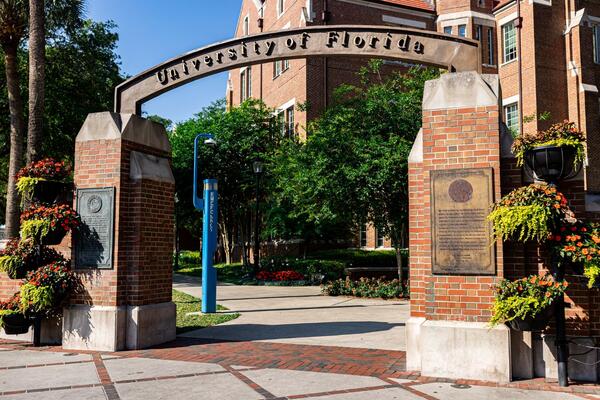
    The University of Florida is already one of the nation’s premier public universities. But it has the potential to be the very best. That belief—in UF’s momentum, its mission and its future—is what led me to pursue the extraordinary opportunity of the UF presidency.

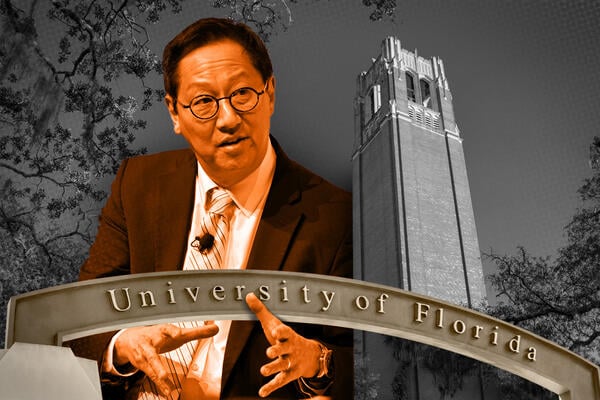
    Santa J. Ono was recently recommended as the sole finalist for the University of Florida presidency. 

    University of Florida

    Over the past several weeks, I’ve had the chance to spend meaningful time with the university’s leadership. I believe deeply in their vision: ambitious, anchored in a culture of excellence and laser-focused on student success. The passion I’ve seen for this institution—including during my visit to campus earlier this week to meet its students, faculty and administrators—is infectious, and the alignment between the Board of Trustees, the Board of Governors, the governor and the Legislature is rare in higher education. This alignment signals seriousness of purpose, and it tells me that Florida is building something truly exceptional. I’m excited to be part of that.

    I believe in Florida’s vision for higher education. I understand its priorities, and I support them. I will execute this vision with clarity, consistency and integrity. I put my name forward for this position because I agree with the state leadership’s vision and values for public higher education. My alignment is rooted in principles—like the renewed emphasis on merit, the strengthening of civics and foundational learning, and the belief that our universities should prepare students not just for careers, but for informed citizenship in a free society.

    Public universities have a responsibility to remain grounded in academic excellence, intellectual diversity and student achievement. That means rejecting ideological capture, upholding the rule of law and creating a culture where rigorous thinking and open dialogue flourish. I share that commitment.

    Like many, I supported what I believed to be the original intent of DEI — ensuring equal opportunity and fairness for every student. That’s something on which most everyone agrees. But over time, I saw how DEI became something else—more about ideology, division and bureaucracy, not student success. That’s why, as president of the University of Michigan, I made the decision to eliminate centralized DEI offices and redirect resources toward academic support and merit-based achievement. It wasn’t universally popular, but it was necessary. I stood by it—and I’ll bring that same clarity of purpose to UF.

    The future of higher education depends on a clear mission, a culture of merit and accountability, and a deep commitment to preparing students to thrive in the real world. That means strengthening partnerships with businesses, supporting agriculture and innovation, and ensuring each student—regardless of background—has the opportunity to reach their full potential.

    I also understand the challenges of leadership in today’s academic environment. During my tenure leading other public universities, I declined to politicize the institutions or publicly oppose national political figures. I did this because I believe universities must serve as platforms for learning, not partisanship or ideological activism.

    Combating antisemitism has been a priority throughout my career. I’ve worked closely with Jewish students, faculty and community leaders to ensure that campuses are places of respect, safety and inclusion for all. I know that the University of Florida has been a national leader in this regard —setting a gold standard in standing firmly against antisemitism and hate. That standard will not change under my leadership. I will continue to ensure that UF is a place where Jewish students feel fully supported, and where all forms of hatred and discrimination are confronted clearly and without hesitation.

    Finally, peaceful protest has a place in campus life. But the University of Florida is not a place for disruption, intimidation or lawlessness. If I am approved, UF will remain a campus where all students are safe, where differing views can be heard and where the rule of law is respected.

    This is an exciting moment for Florida and for the University of Florida. I’m honored to be a part of it. And I’m ready to get to work.

    Santa J. Ono has been recommended as the sole finalist to be the 14th president of the University of Florida. He formerly served as the president of the University of Michigan.

    Source link

  • The New Pope, Leo XIV, Is a ’77 Villanova Grad

    The New Pope, Leo XIV, Is a ’77 Villanova Grad

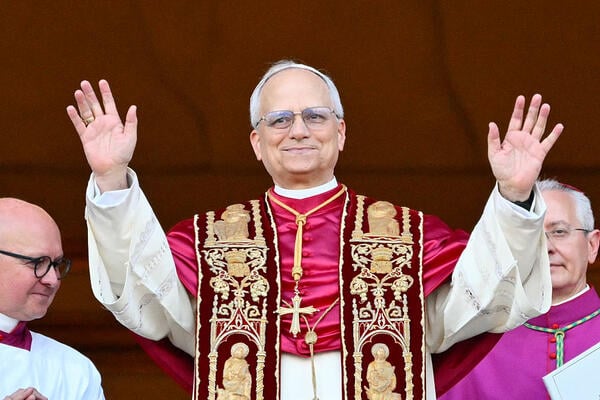
    The Vatican announced the selection of a new pope to lead the Catholic Church on Thursday, the first to come from the United States and the first to hold a bachelor’s degree from a U.S. university.

    Pope Leo XIV, then Robert Prevost, graduated from Villanova University in 1977.

    Pope Leo XIV, born Robert Prevost, is a Chicago native who graduated from Villanova University in Philadelphia in 1977 with a bachelor of science in mathematics. In September of that year, he joined the Order of St. Augustine. He took his solemn vows in August 1981 and earned a master of divinity from the Catholic Theological Union in Chicago in 1982.

    Villanova president Peter M. Donohue said in a statement that the university celebrates the election of Pope Leo XIV.

    “I cannot help but reflect on what his Augustinian papacy will mean to our university community and our world,” Donohue said. “Known for his humility, gentle spirit, prudence and warmth, Pope Leo XIV’s leadership offers an opportunity to reaffirm our commitment to our educational mission.”

    For most of his career, Prevost served in Peru, holding roles as a parish pastor, diocesan official, seminar teacher and administrator before becoming bishop of Chiclayo in 2015. In 2023, Pope Francis appointed Prevost prefect of the Dicastery for Bishops, which increased his visibility and influence in the church, putting him on the path to the papacy.

    In addition to being the first pope from the U.S., Leo is also the first dual-citizen pope, holding citizenship in Peru. He’s also the first Augustinian friar to be elected pontiff, reflecting Villanova’s Augustinian Catholic roots.

    The last pope to take the name Leo also has ties to American higher education. Pope Leo XIII (1878–1903) gave his formal approval for the founding of the Catholic University of America in Washington, D.C., on April 10, 1887, and the university recognizes this date as Founders Day.

    Source link

  • Conservatives Clash Over Ono Hire at UF

    Conservatives Clash Over Ono Hire at UF

    Less than a year after former president Ben Sasse resigned abruptly, the University of Florida has gone in the opposite direction for its next presidential pick, announcing Santa Ono as the sole finalist.

    Ono, who stepped down from the University of Michigan presidency last week after less than three years on the job, brings a wealth of academic and research experience: He also served in the top jobs at the University of Cincinnati and the University of British Columbia.

    Sasse, a Republican U.S. senator from Nebraska when he was hired in late 2022, previously served as president of Midland University, a small institution in his home state. Despite a lack of experience overseeing a massive research enterprise like UF, Sasse fit a profile in demand in Florida, where GOP lawmakers have ascended to presidencies at multiple universities. But his time at UF was short-lived; after less than 18 months on the job, he stepped down amid a spending scandal. At the time, he cited his wife’s deteriorating health as his reason for leaving.

    Ideology has regularly trumped experience in recent Florida presidential hires. Multiple former lawmakers, all Republicans, are at the helm of various state institutions. They include former lieutenant governor Jeanette Nuñez at Florida International University, Adam Hasner at Florida Atlantic University and Richard Corcoran at New College of Florida, among others.

    Considering those recent hiring trends, Ono is an outlier—a traditional higher ed candidate in a state where Republican governor Ron DeSantis and the Florida Board of Governors, most of whom he appoints, have taken active roles in presidential searches.

    And while many faculty members have celebrated the selection of a candidate with strong research and leadership credentials, some conservative figures are pushing back on Ono.

    Now a public battle appears to be brewing over who will lead the University of Florida.

    Opposition Emerges

    When UF announced Ono as the sole finalist for its presidency on Sunday, many observers were shocked that he was leaving his plum job at Michigan so soon. In October, Ono signed an eight-year contract extension with a $1.3 million base salary to keep him at Michigan long term. (Though UF’s compensation package has not yet been released, Ono could earn as much as $3 million a year, according to a salary range set by trustees.)

    But almost seven months later, Ono resigned when his candidacy at UF was announced.

    Given the trend of DeSantis’s involvement in presidential searches across the state, it seems unlikely Ono would have emerged without the governor’s blessing. But other conservative figures have publicly objected to Ono’s candidacy over concerns about diversity, equity and inclusion programs at Michigan, which has been scrutinized for its significant spending on such efforts.

    Chris Rufo, a trustee at New College of Florida who has championed anti-DEI efforts nationwide, strongly opposed the pick and called for UF to reverse course on the hire. Rufo has been a regular critic of DEI at UM.

    “The finalist for the University of Florida presidency is a left-wing administrator who recently declared his support for ‘DEI 2.0’ and claimed that ‘the climate crisis is the existential challenge of our time.’ Florida deserves better than a standard-issue college president,” Rufo wrote on X.

    Congressman Byron Donalds, who represents Florida’s 19th Congressional District and is the expected front-runner to replace DeSantis as governor at the end of his term, has also voiced concerns: “Florida cannot afford to inject wokeness into our flagship university. This selection must be blocked and the search committee must start over,” Donalds wrote in a social media post.

    DeSantis Defends the Pick

    But DeSantis defended the selection in a Wednesday press conference.

    Though he said he was “not involved” with the search and had not talked to Ono, he emphasized that he has faith in UF’s trustees—most of whom he appointed—guiding the pick. He added that the expectations for higher education in Florida were clear, noting the state’s opposition to DEI and what he called a rejection of “woke indoctrination” at state institutions.

    “I don’t think that a candidate would have been selected who is not going to abide by those expectations, and I think that you will likely see that will be very clear in this instance. I will let the process play out, but we have put a real serious stake in the ground on this,” DeSantis said.

    The governor boasted that Florida “led the efforts” to take down diversity initiatives, which he said the Trump administration has since followed on a national level.

    DeSantis also noted that Ono eliminated the University of Michigan’s DEI office in recent months.

    “I don’t think that anyone would want to come to the University of Florida if your goal was to pursue a woke agenda. You’re going to run into a brick wall here in the state of Florida,” DeSantis said.

    If the governor disapproved, he could blow up the search, as he did last month when UF’s College of Liberal Arts and Sciences tried to hire a new dean. In that case, DeSantis ordered the search restarted after his office took issue with DEI statements from candidates. Allowing UF’s hiring effort to proceed seems to suggest at least tacit approval from DeSantis.

    Some members of the Florida Board of Governors have also thrown their support behind Ono, pushing back on criticism. Their support is critical, considering that board has the power to upend presidential searches, which it has done in past searches, such as at FAU in 2023.

    Florida Board of Governors member Alan Levine has taken to social media to urge fellow conservatives, including Rufo, to give Ono a chance and hear him out through the process.

    “Chris, let’s give @SantaJOno a chance to tell his whole story,” Levine wrote in response to Rufo. “He eliminated the DEI office at Michigan. He faced threats and vandalism for standing up to the pro-palestinian/anti-israel/anti-US movement on campus. There seems to be more to Dr. Ono’s actions, and we need to let him tell his story. No candidate is without things they need to explain. I’m open to giving him the chance to do that, particularly given his total body of work.”

    The University of Florida declined to comment on critiques of the candidate.

    Ono Explains

    As Ono exits Michigan, he leaves several controversies in his wake.

    The outgoing president has faced criticism for his handling of pro-Palestinian protests in the aftermath of the Oct. 7, 2023, attacks by Hamas on Israel and the brutal retaliatory offensive by the Israeli military. Several former employees alleged they were fired for engaging in pro-Palestinian protests, prompting a lawsuit against the university, Ono and others, filed earlier this month.

    Michigan has also navigated a series of athletic scandals during Ono’s tenure. Most recently, a former Michigan football coach was accused of hacking the digital accounts of more than 2,000 NCAA athletes and downloading “personal, intimate digital photographs and videos,” according to the U.S. Department of Justice. Matt Weiss, an assistant at UM from 2021 through early 2023, was charged with 14 counts of unauthorized access to computers and 10 counts of aggravated identity theft in March. The incident also prompted multiple lawsuits against the university.

    And Ono shut down Michigan’s DEI office in March, despite objections from constituents.

    But in an op-ed shared exclusively with Inside Higher Ed, Ono made no mention of the lawsuits and avoided most other controversies. Instead, he focused on the potential at the University of Florida, emphasizing his belief “in Florida’s vision for higher education” and UF’s leadership.

    “The passion I’ve seen for this institution—including during my visit to campus earlier this week to meet its students, faculty and administrators—is infectious, and the alignment between the Board of Trustees, the Board of Governors, the governor and the Legislature is rare in higher education. This alignment signals seriousness of purpose, and it tells me that Florida is building something truly exceptional. I’m excited to be part of that,” Ono wrote in the op-ed Thursday.

    Ono echoed themes championed by both DeSantis and Rufo as he argued that universities must reject “ideological capture” and renew “emphasis on merit.” He also sought to distance himself from DEI efforts.

    “Like many, I supported what I believed to be the original intent of DEI—ensuring equal opportunity and fairness for every student. That’s something on which most everyone agrees,” he wrote. “But over time, I saw how DEI became something else—more about ideology, division and bureaucracy, not student success. That’s why, as president of the University of Michigan, I made the decision to eliminate centralized DEI offices and redirect resources toward academic support and merit-based achievement. It wasn’t universally popular, but it was necessary.”

    Ono added that he would bring “that same clarity of purpose to UF.”

    Source link

  • OfS continues to sound the alarm on the financial sustainability of English higher education

    OfS continues to sound the alarm on the financial sustainability of English higher education

    For the third year in a row, the English higher education sector’s collective financial performance is in decline.

    That is the conclusion of the latest annual assessment of the sector’s financial sustainability from the Office for Students (OfS), based on finance returns for 2023-24.

    Overall, after stiff warnings this time last year about the risks of system-wide provider deficits if projected student number growth failed to materialise, OfS says that many providers are taking steps to manage their finances, by reducing costs and downgrading recruitment growth projections. It remains unlikely, says OfS, that a large provider will become insolvent in the coming financial year.

    But 43 per cent of providers are forecasting a deficit for the current financial year 2024–25, and there is an overall decline in overall surplus and liquidity – albeit with the expectation of growth in the years ahead. While larger teaching-intensive and medium sized providers were more likely to report a deficit, there is also quite a lot of variation between providers in different groups – meaning that institution type is not a reliable guide to financial circumstances.

    Recruitment woes

    Student recruitment is the most material driver of financial pressure, specifically, a home and international student market that appears insufficient to fill the number of places institutions aspire to offer. The broad trend of institutions forecasting student number growth in hopes of offsetting rising costs – including national insurance and pension contributions – makes it unlikely that all will achieve their ambitions. There’s evidence that the sector has scaled back its expectations, with aggregate forecast growth until 2027–28 lower than previous forecasts. But OfS warns that the aggregate estimate of an increase of 26 per cent in UK entrants and 19.5 per cent in non-UK entrants between 2023–24 and 2027–28 remains too optimistic.

    Questioned further on this phenomenon, OfS Director of Regulation Philippa Pickford noted that there is significant variation in forecasts between different providers, and that given the wider volatility in student recruitment it can be really quite difficult to project future numbers. The important thing, she stressed, is that providers plan for a range of possible scenarios, and have a mitigation plan in place if projections are not achieved. She added that OfS is considering whether it might give more information to providers upfront about the range of scenarios it expects to see evidence of having been considered.

    Storing up trouble

    While the focus of the financial sustainability is always going to be on the institutional failure scenario, arguably an equally significant concern is the accumulation of underlying structural weaknesses caused by year-on-year financial pressures. OfS identifies risks around deferral of estates maintenance, suspension of planned physical or digital infrastructure investments, and a significant increase in subcontractual (franchising) arrangements that require robust governance.

    All this is manifesting in some low-key emergency finance measures such as relying on lending to support operating cashflow where there is low liquidity at points in the year, selling assets, renegotiation of terms of covenants with lenders, or seeking injections of cash from donors, benefactors or principal shareholders. Generally, and understandably, the finance lending terms available to the sector are much more limited than they have been in the past and the cost of borrowing has risen. The general increases in uncertainty are manifest in the increased work auditors are doing to be able to confirm that institutions remain a “going concern.” Such measures can address short-term financial challenges but in most cases they are not a viable long term strategy for sustainability.

    OfS reiterates the message that providers are obligated to be financially sustainable while delivering a high quality student learning experience and following through on all commitments made to students – but it’s clear that frontline services are in the frame for cuts and/or that there is a limit to the ability to reduce day-to-day spending or close courses even when they are loss-making if there is likely to be an impact on institutional mission and reputation. Discussions between OfS and directors of finance point to a range of wider challenges around increased need for student support, the difficulty of recruiting and retaining staff, the increasing costs of conducting research, and shifts in the student accommodation rental market. Some even pointed to the cost of investment in AI-detection software.

    The future is murky

    The bigger picture points to long term (albeit unpredictable) shifts in the underlying financial model for HE. Philippa Pickford’s view is that institutions may need to shift from taking a short-term view of financial risks to a longer-term horizon, and will need to grapple with what a sustainable long term future for the institution looks like if the market looks different from what they have been used to. Deferral of capital investment, for example, may keep things going for a year or two but it can’t be put off indefinitely. There’s a hint in the report that some institutions may need to invest in greater skills, expertise and capacity to understand and navigate this complicated financial territory – and OfS is taking an increased interest in multi-year trends in financial performance, estates data and capital investment horizons in its discussions with providers.

    The situation remains, however, that OfS is primarily empowered to monitor, discuss, convene and, if necessary, issue directives relating to student protection. Activity of this nature has ramped up considerably in the past year, but financial sustainability remains, at base, individual providers’ responsibility – and system-level intervention on things like changing patterns of provision, or management of the wider impact of institutional insolvency, nobody in particular’s. Government is, of course, aware of the problem but has not yet given a steer on whether its upcoming HE reform measures, expected to be published in the summer after the spending review, will grasp the nettle in delivering the support for transformation the sector hopes to see.

    OfS has now said that it is talking to government to put forward the view that there should be a special administration regime for higher education. This signals that while the immediate risks of institutional closure or “disorderly market exit” are low, the pressures on a small number of institutions remain considerable. On the assumption of little or very modest changes in the funding model in the upcoming spending review, and ongoing competitive pressures, there will almost inevitably be losers.

    Source link

  • How the Trump Administration’s FSA Notice Doubles Down on Student Debtors While Privileging the Higher Education Racket

    How the Trump Administration’s FSA Notice Doubles Down on Student Debtors While Privileging the Higher Education Racket

    The U.S. Department of Education, under the renewed influence of the Trump Administration and its deep-pocketed friends in the for-profit and debt collection industries, has issued a chilling reminder of just how little it cares for the tens of millions of Americans drowning in student debt. Cloaked in bureaucratic language and peppered with sanctimonious calls for “shared responsibility,” the Department’s latest notice is, in truth, a battle cry in its war to privatize higher education, scapegoat the vulnerable, and enrich corporate cronies at the expense of working families.

    Let’s call this what it is: a renewed assault on the student debtor class—the adjunct professors, the first-generation college students, the single mothers, the underemployed graduates who were sold a dream of economic mobility and handed a lifetime of debt servitude.

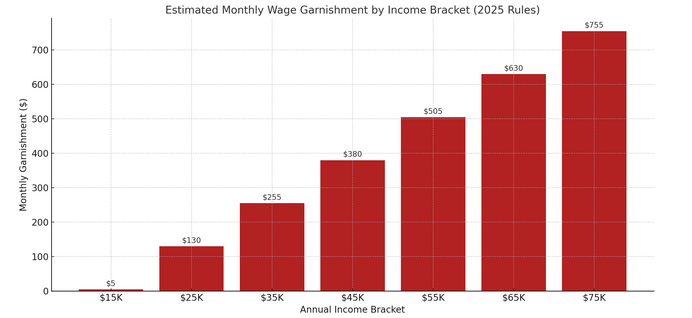
    According to the Department, only 38% of borrowers are current on their loans, and nearly a quarter of all loans are in default or severe delinquency. Rather than treating this figure as evidence of systemic failure—ballooning tuition, predatory lending, lack of loan forgiveness—the Department responds by resuming draconian collection measures like the Treasury Offset Program and Administrative Wage Garnishment. This means that the government will begin seizing tax refunds and garnishing wages of those already pushed to the economic brink.

    Worse, the Department has the audacity to wrap this cruelty in the rhetoric of “support” and “outreach.” Borrowers are told that they’ll be reminded of their “repayment obligations” as if they have simply forgotten—not that they’ve been buried under compound interest, stagnating wages, and fraudulent institutions that peddled worthless degrees. The supposed “enhancements” to income-driven repayment plans are little more than PR spin, insufficient to address the tidal wave of suffering inflicted by a broken system.

    Then comes the most insulting part: the Department deflects blame onto institutions while simultaneously pressuring them to track down and guilt-trip former students. Colleges are urged to contact former enrollees and remind them they’re obligated to pay. Why? Not out of concern for their welfare—but because high cohort default rates (CDRs) might threaten those institutions’ eligibility for federal aid money.

    So we see the real game here: this isn’t about protecting students. It’s about protecting the federal loan program as a revenue engine and shielding the reputations of colleges—especially the for-profit diploma mills that flourished under prior Republican administrations. These institutions can continue hiking tuition and churning out underprepared graduates because the government, under Trump and his Department of Education appointees, would rather collect on unpayable loans than hold schools accountable.

    Even more dystopian is the Department’s plan to publicly release “loan non-payment rates by institution.” While transparency sounds virtuous, this move will undoubtedly be weaponized—not to shut down abusive schools but to further stigmatize borrowers, especially those from marginalized backgrounds who attended underfunded schools with few resources.

    Nowhere in this document is there any meaningful discussion of debt relief, student protections, or reining in college costs. Nowhere is there a reckoning with the fact that federal student aid has been transformed from a tool of opportunity into a tool of coercion. Instead, the Trump Administration signals it is open for business—the business of extracting wealth from the poor and funneling it into the private sector.

    This notice is more than a policy update. It is a declaration of values. And those values are clear: Profit over people. Compliance over compassion. Privatization over public good.

    The Higher Education Inquirer stands with the debtors. We see through the lies of “fiscal responsibility” and “integrity.” And we will continue to expose every cynical maneuver designed to crush the educated underclass in the name of neoliberal orthodoxy.

    To student borrowers: You are not alone. You are not a failure. You are a victim of a system that was never built to serve you.

    Here’s the actual post from the US Department of Education, Federal Student Aid, dated May 5, 2025:


    The
    United States faces critical challenges related to the federal student
    loan programs. According to estimates from the U.S. Department of
    Education (Department), only 38% of Direct Loan and Department-held
    Federal Family Education Loan Program borrowers are in repayment and
    current on their student loans. We also estimate that almost 25% of the
    entire portfolio is either in default or a late stage of delinquency. 

    Given these challenges, the Department is taking immediate steps to
    engage student borrowers and support the repayment of their federal
    student loans. As announced in an April 21, 2025, press release,
    today, the Department will resume collections on its defaulted federal
    student loan portfolio with the restart the Treasury Offset Program and,
    later this summer, Administrative Wage Garnishment. The Department has
    also initiated an outreach campaign to remind all borrowers of their
    repayment obligations and provide resources and support to assist them
    in selecting the best repayment plan for their circumstances. The
    Department has also launched an enhanced income-driven repayment (IDR) plan process,
    simplifying how borrowers enroll in IDR plans and eliminating the need
    for many borrowers to manually recertify their income each year. 

    Maintaining the integrity of the Title IV, Higher Education Act of 1965 (HEA)
    loan programs has always been a shared responsibility among student
    borrowers, the Department, and participating institutions. Although
    borrowers have the primary responsibility for repaying their student
    loans, institutions play a key role in the Department’s ongoing efforts
    to improve loan repayment outcomes, especially as the cost of college
    set solely by institutions has continued to skyrocket. Institutions are
    responsible for providing clear and accurate information about repayment
    to borrowers through entrance and exit counseling, and colleges and
    universities are responsible for disclosing annual tuition and fees and
    the net price to students and their families on the costs of a
    postsecondary education. The financial aid community has demonstrated
    its commitment to providing direct advice and counsel to students
    regarding their borrowing, but institutions must refocus and expand
    these efforts as pandemic flexibilities come to an end.

    Under section 435 of the HEA, institutions are required to
    keep their cohort default rates (CDR) low and will lose eligibility for
    federal student assistance, including Pell Grants and federal student
    loans, if their CDR exceeds 40% for a single year or 30% for three
    consecutive years. The Department reminds institutions that the
    repayment pause on student loans ended in October 2023, and CDRs
    published in 2026 will include borrowers who entered repayment in 2023
    and defaulted in 2023, 2024, or 2025. The Department further reminds
    institutions that those borrowers whose delinquency or default status
    was reset in September 2024 could enter technical default status / be
    delinquent on their loans for more than 270 days beginning in June and
    default this summer. As such, we strongly urge all institutions to begin
    proactive and sustained outreach to former students who are delinquent
    or in default on their loans to ensure that such institutions will not
    face high CDRs next year and lose access to federal student aid. 

    Given
    the urgent need to ensure that more student borrowers enter repayment
    and stay current on their loans, the Secretary urges each participating
    institution to provide the following information to all borrowers who
    ceased to be enrolled at the institution since January 1, 2020, and for
    whom they have contact information: 

    • Remind
      the borrower that he or she is obligated to repay any federal student
      loans that have not been repaid and are not in deferment or forbearance;

    • Suggest that the borrower review information on StudentAid.gov about repayment options; and 

    • Request that the borrower log into StudentAid.gov
      using their StudentAid.gov username and password to update their
      profile with current contact information and ensure that their loans are
      in good standing. 

    The
    Department urges that this outreach be performed no later than June 30,
    2025. We do not stipulate how institutions reach out to borrowers, nor
    the specific information provided, as long as it covers the three
    categories described above. 

    We also encourage institutions to focus their initial outreach on
    students who are delinquent on one or more of their loans in order to
    prevent defaults. We will provide additional information in the future
    to assist schools with identifying and communicating with these
    borrowers.

    The
    Department is committed to overseeing the federal student loan programs
    with fairness and integrity for students, institutions, and taxpayers.
    To that end, the Department believes that greater transparency is needed
    regarding institutional success in counseling borrowers and helping
    them get into good standing on their loans. 

    The Department maintains data on the repayment status of federal
    student loan borrowers and in the past has provided information in the
    College Scorecard about the status of each institution’s borrowers at
    several intervals after they enter repayment. The Department plans to
    use this data to calculate rates of nonpayment by institution and will
    publish this information on the Federal Student Aid Data Center later
    this month. The Department will provide more information about this
    publication process soon. 

    Thank you for your continued efforts to maintain the integrity of the Title IV, HEA
    loan programs. The Department values its institutional partners and
    looks forward to continued collaboration to place borrowers on the path
    to sustainable repayment of their loans.

    Source link

  • Talking the talk: language for learning in higher education

    Talking the talk: language for learning in higher education

    by Estefania Gamarra, Marion Heron, Lewis Baker and Harriet Tenenbaum

    Do you remember when you started university, and you were expected to use a whole new language? We don’t just mean new nomenclature such as ‘seminars’ or ‘tutorials’, but language that can help you make a clear argument or disagree politely with a classmate. This language, or educational dialogue, and in particular disagreeing politely, is critical to be an engaged citizen in a healthy democracy, without otherwise descending into unhealthy practices such as ‘cancel culture’ as recently highlighted in the media. In this blog post, we argue that universities have a responsibility not only to teach students how to talk in an academic context, but also for this teaching to be discipline-specific and embedded in the disciplinary study where possible.

    There is a long-held misperception that all students who start university are able to talk the talk of the university, that is, they have the language skills, the terminology, and the confidence to articulate their opinions from their first day. This is just simply not true for many undergraduate students. Having English as a first language is also not necessarily an advantage. Bourdieu et al (1994, p8) said, “academic language… is no one’s mother tongue, not even that of children of the cultivated classes”.

    What do we mean by language here? We have drawn on the pedagogy and research from compulsory school education, namely the work of scholars at Cambridge University. Their work on educational dialogue has been successfully incorporated into school teaching with impressive results. Educational dialogue here refers to communicative acts such as agreeing, disagreeing, reasoning and expressing ideas. Research in school settings has shown that encouraging such dialogue can boost academic attainment. One study highlighted the relationship between elaborating on ideas and attainment in reading, spelling, punctuation and grammar. Despite this compelling evidence, similar strategies have been underexplored in higher education.

    In our university classrooms, we hear students say things such as: ‘I know the answer, but don’t know how to phrase it’ and ‘I need to learn how to express my answer like that’. So, if students are themselves noticing a need for academic language, why are we so behind in the higher education context? And more importantly, what language do these students need? Do they all need the same academic language to confidently talk the talk? This is exemplified by the dialogue below between two engineering students working on answering multiple-choice questions together, an excerpt from our forthcoming research:

    Student A:  Yeah, listen, we need to be able when we say “force”, to say why.  

    Student B:  Yeah, to flip it.  

    Student A:  Because we were right, like, C is incorrect, but we don’t say why it is not incorrect.  

    Student B:  I don’t know how to word it, you know.

    In our current research project, supported by a Nuffield Foundation grant, we explore whether pairs of Foundation Year students across Engineering, Psychology and Bioscience, engaging in discipline-specific multiple-choice questions, can learn to develop these academic language skills and the extent to which they can do this in an academic year-long intervention programme.

    Our early findings indicate that while students are capable of using academic language, the forms they adopt vary by discipline. For example, consider one of the most basic interactions in academic discussions – giving and asking for reasons. Typically, the default marker for requesting justification is “why?”. The following extract from a psychology discussion illustrates this:

    Student A:  Why do you think that is?

    Student B:  Because, uh, if you got negative emotion, you know, so that is not called positive psychology. Yep, yeah, so I’m thinking about understanding like how to prevent negative emotions.

    In contrast, in science courses such as biology or engineering, it was more common to use “how?” rather than “why?” when asking for reasoning. Consider this extract from an engineering discussion:

    Student A:  Yes. Then the same as D.

    Student B:  D? How?

    Student A:  And then it’s…

    Student B:  Oh.

    Student A:  And this is…

    Student B:  So the arrow goes this way…

    Student A:  So then P goes this way…

    Here, Student B not only asks for the reasoning by using “how?”, but the response unfolds as a sequence of steps outlining the reasoning process. This example also highlights another subject-specific difference: while psychology students typically expand on each other’s arguments or examples, engineering students more frequently build on each other’s equations, often with the assistance of pen and paper.

    So, based on these snippets of authentic student dialogues, let’s return to the question posed at the beginning. Yes, all students can and do need to learn academic language to talk to each other and develop understanding, but the type of language depends on the discipline. Disciplinary differences can be seen in the way students build on each other’s ideas (eg long turns, short turns) as well as the words and phrases used. The evidence from our project shows this.

    We argue that learning to talk the language of higher education should not be considered a prerequisite but instead, should be an essential feature of the higher education curriculum embedded within disciplinary studies.

    Why is this important? Integrating academic language training into the curriculum can enhance students’ academic confidence, foster a stronger sense of belonging, and ultimately improve retention rates. In a post‐COVID world, where student engagement is waning, this conversation‐based approach may also help rebuild the social and collaborative fabric of university life.

    Moreover, the skills developed through such training are highly transferable beyond academia. Students acquire essential discussion and teamwork abilities that prove invaluable in their future careers. It is important to emphasise that developing these skills requires deliberate training; we must not assume that students will acquire them without practice and guidance.

    Although students may already use discipline‐specific language, targeted training helps them become accustomed to engaging in – and, more importantly, listening to – disagreement. These conversational practices become part of their repertoires, enabling them to generalize these skills across various contexts. As noted earlier, we must all learn to engage in constructive disagreement to counteract cancel culture. While the manner of such discourse may vary by discipline, developing these skills is essential for active participation in a healthy, thriving democracy.

    Estefania Gamarra Burga is a Postdoctoral Research Fellow at the University of Surrey. Her research interests include educational dialogue, discourse analysis, gender, and spatial cognition in STEM and higher education.

    Marion Heron is Associate Professor of Educational Linguistics in the Surrey Institute of Education, University of Surrey. She supervises doctoral students on topics in the field of applied linguistics and higher education. She researches in the areas of language and education, with a particular interest in classroom discourse, genre and doctoral education.

    Lewis Baker is a Senior Lecturer in the Faculty of Engineering and Physical Sciences and a Chartered Science Teacher. His research interests include teaching pedagogy and science education, often within a foundation year context.

    Harriet Tenenbaum is Professor of Social and Developmental Psychology. Her research focuses on social justice in young people, everyday conversations, and teaching and learning across the lifespan.

    Author: SRHE News Blog

    An international learned society, concerned with supporting research and researchers into Higher Education

    Source link