Prime Minister Anthony Albanese delivers his victory speech at the Labor Party election night event on May 3. Picture: Asanka Ratnayake
Australians have resoundingly re-elected Anthony Albanese as prime minister delivering Labor a huge majority, while Peter Dutton has lost his own seat in what was one of the most devastating results for the Coalition in living memory.
Please login below to view content or subscribe now.
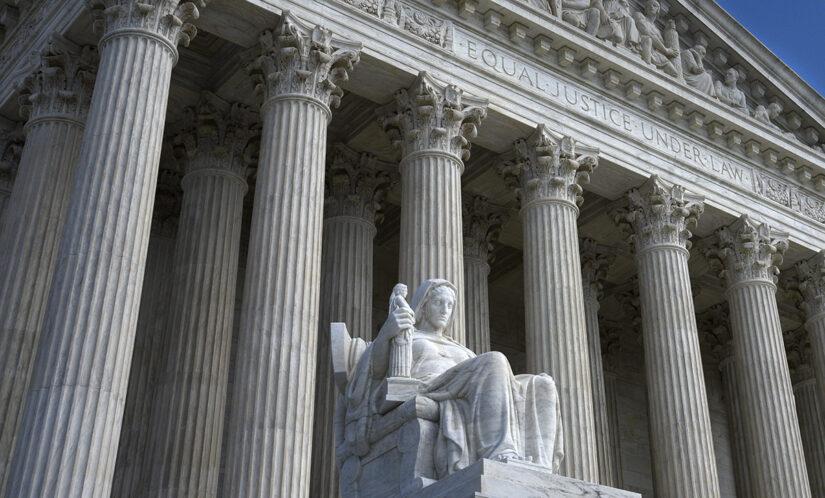
Last week, the Supreme Court held oral arguments in a case that could undermine public education across America. The question the court is looking to answer is whether a religious institution may run a publicly funded charter school — a move that would threaten not only the separation of church and state, but the right of every student to access free, high-quality learning.
In 2023, Oklahoma’s Statewide Virtual Charter School Board approved St. Isidore of Seville Catholic Virtual School, an action that would make it the nation’s first-ever religious charter school. It would be governed by Catholic religious doctrine in its syllabus, operations and employment practices. It would use taxpayer dollars to pay for religious instruction. And it could turn away students and staff if their faith or identity conflict with Catholic beliefs.
Here’s the issue: Charter schools were created to be public schools. They are open to all students, from every background, tradition and faith community. They are publicly funded and tuition-free. And they are secular.
That’s not an arbitrary distinction – it’s a constitutional one, grounded in the law and embedded in charter schools’ very design. The First Amendment’s Establishment Clause bars the government from promoting or endorsing any religion through public spaces or institutions. This foundational rule has ensured that students of all backgrounds can access public schools. It does not stifle religious expression — the Constitution fully protects this freedom, and religious education is available in other venues. Personally, I was, in fact, educated at Jesuit Catholic schools for my entire academic career.
Parochial education has long been an accepted and important part of the education ecosystem, serving a variety of students and often filling an important need. Religiously affiliated schools have a long history of educating and caring for children who are new to this country and underserved, and supporting families who are overlooked. But promoting the exclusive teachings of a specific religion with public funds in a public school violates a clear constitutional principle.
The issue isn’t only a legal matter; it’s about the character of public education itself. Muddying the boundary between public and religious institutions would undercut a fundamental commitment made by the nation’s public charter schools: that they are accessible to every student. It would undermine legal protections that keep public services available to the public.
Rather than creating more opportunities for America’s students, it would constrict opportunities for a high-quality education, especially in states that are hostile toward charters or alternative public school models. Legislative bodies could seek to eliminate funding for all unique school types if the court decision forced them to fund religious schools operating with public dollars. This would curtail or dismantle strong independent schools, 30-year-old public charter schools and schools with unique programs designed for special populations.
As executive director of the DC Charter School Alliance, and a long-time public charter school advocate, I’ve seen the importance of public charter schools firsthand. Here in the District of Columbia, charter schools serve nearly half of the public school students in the city. Outstanding educators from all walks of life teach a wide range of subjects with enthusiasm and expertise to prepare young people for success. Our students bring to the classroom an incredible range of experiences, including faith traditions. And every student, family and faculty member is welcome. D.C.’s charter schools reflect a core American value: the promise of a high-quality public education for all.
The justices of the Supreme Court face a clear and critical choice: They can bolster that promise, or they can tear it down. If the court allows a religious school to operate with public funds, there is no doubt that it will open the floodgates to other proposals across the country. Taxpayers could be forced to foot the bill for countless new and converted schools, draining resources from an already financially strapped education system. True public charter schools — the ones committed to high standards, positive results and opportunity for all — could bear the cost. And the students who rely on them could suffer.
Public education is one of America’s most vital institutions. It offers all children, no matter their background or beliefs, access to free, high-quality learning. Charter schools play an essential role in making that promise real. But allowing a religious school to operate with public funds turns public education into something much more restrictive, dismantling its very foundation.
The court must reaffirm this indisputable truth: Public schools should remain public — and open to all.
This audio is auto-generated. Please let us know if you have feedback.
President Donald Trump on Friday proposed wide-ranging cuts to federal higher education spending in his fiscal 2026 budget request, calling to eliminate some grant programs altogether and for states to take over others like Federal Work-Study.
The budget request offers a broad look at Trump’s priorities, which include shaving 15.3% off the U.S. Department of Education’s budget, a move in line with his broader plan to shutter the agency. Across the federal government, Trump’s request would eliminate some $163 billion in nondefense domestic spending, including the dramatic cuts to education programs.
U.S. Education Secretary Linda McMahon said in a statement Friday that the budget reflects “funding levels for an agency that is responsibly winding down, shifting some responsibilities to the states, and thoughtfully preparing a plan to delegate other critical functions to more appropriate entities.”
Presidential budget proposals are akin to executive wishlists and are never enacted as introduced. And Trump’s budget request for the 2026 fiscal year, which begins Oct. 1, faces key obstacles before it could be approved. Even though Republicans control both the House and Senate, at least one GOP lawmaker has already objected to some of Trump’s proposed cuts.
But other party leaders signaled a willingness to embrace Trump’s proposals.
“The American people sent Republicans to Washington to lower costs and rein in wasteful government spending,” Tim Walberg, chair of the House Committee on Education and Workforce, said in a Friday statement. “The budget proposal President Trump released today not only gives us a blueprint but shows us it is possible to deliver on this promise.”
Student aid takes a blow
The budget takes aim at Federal Work-Study, which provides part-time jobs to students who need help paying for college. Under the program, the federal government covers up to 75% of students’ wages.
Trump’s proposal calls for a $980 million reduction in funding for the program, which was appropriated $1.2 billion in fiscal year 2024.
In his budget plan, the president called for Federal Work-Study to be run by the states and the colleges “that financially benefit from it.”
“Reform of this poorly targeted program should redistribute remaining funding to institutions that serve the most low-income students and provide a wage subsidy to gain career-oriented opportunities to improve long-term employment outcomes of students,” it says.
Trump’s proposal would also eliminate funding for Supplemental Educational Opportunity Grants, which assist undergraduate students who have “exceptional financial need.” The program was allocated $910 million in fiscal 2024 — all of which would be cut under Trump’s budget.
The budget document accuses the grants of contributing “to rising college costs” that colleges have used to pay for a “radical leftist ideology.” Colleges that receive these grants pass the money onto students, and the institutions must contribute 25% of their own money for those awards.
Two other programs are on the chopping block: TRIO, which provides support for middle school through college students from disadvantaged backgrounds, and Gear Up, which helps low-income students prepare for postsecondary education. Trump’s budget called these programs a “relic of the past when financial incentives were needed to motivate” colleges to increase access to low-income students.
“Today, the pendulum has swung and access to college is not the obstacle it was for students of limited means,” the budget document claims, saying higher education institutions should use their own resources to recruit students.
Together, the programs received nearly $1.6 billion in fiscal 2024, all of which would be cut under Trump’s plan.
The budget documents released Friday did not address funding for Pell Grants, the largest student aid program.
Department services and college grants also targeted
The proposal would also cut $49 million from the Education Department’s Office for Civil Rights, a 35% reduction from fiscal 2024 levels, according to the budget. The agency recently cut OCR’s workforce in half as part of mass layoffs.
In his budget plan, Trump accused colleges of misusing the Fund for the Improvement of Postsecondary Education, which awards grants for projects aimed at improving postsecondary educational opportunities. The budget claims they used the program to “fund ideologies instead of students.”
Trump proposed cutting $195 million from FIPSE and said colleges and states should be responsible for funding innovative programs themselves.
He also proposed sending responsibility for the Strengthening Institutions initiative to states and colleges. Under this program, the Education Department provides grants to help colleges expand their ability to serve low-income students, bolster their academic quality and become more financially stable, according to the agency’s website.
The program was allocated $112 million in fiscal 2024 — and Trump’s plan calls for zeroing that amount out.
The budget would also slash $64 million from Howard University, the only historically Black institution in the country that is federally chartered. The Trump administration said the move would bring the university’s funding back to 2021 levels and “more sustainably support” the institution.
President Donald Trump wants to end funding for TRIO, Federal Work-Study and other grant programs that support students on campus as part of a broader plan to cut $163 billion in nondefense programs.
The funding cuts were outlined in a budget proposal released Friday. The document, considered a “skinny budget,” is essentially a wish list for the fiscal year 2026 budget for Congress to consider. The proposal kicks off what will likely be a yearlong effort to adopt a budget for the next fiscal year, which starts Oct. 1. Trump is unlikely to get all of his plan through Congress, though Republicans have seemed especially willing this year to support his agenda.
If enacted, the plan would codify Trump’s efforts over the last three months to cut spending and reduce the size of the federal government—moves that some have argued were illegal. (Congress technically has final say over the budget, but Trump and his officials have raised questions about the legality of laws that require the president to spend federal funds as directed by the legislative branch.)
The proposed budget plan slashes nearly $18 billion from the National Institutes of Health, $12 billion from the Education Department, and nearly $5 billion from the National Science Foundation. The skinny budget also eliminates funding for the Institute of Museum and Library Sciences, AmeriCorps, National Endowment for the Arts, and National Endowment for the Humanities. Trump has already made deep cuts at those agencies and put most—if not all—of their employees on leave.
A fuller budget with more specifics is expected later this month.
Democrats were quick to blast Trump’s plan, saying it would set the country “back decades by decimating investments to help families afford the basics.” But Republicans countered that the proposal would rein in “Washington’s runaway spending” and right-size “the bloated federal bureaucracy.”
For higher ed groups and advocates, the proposed cuts could further jeopardize the country’s standing as a leader in global innovation and put college out of reach for some students.
“Rather than ushering in a new Golden Age, the administration is proposing cuts to higher education and scientific research of an astonishing magnitude that would decimate U.S. innovation, productivity, and national security,” said Mark Becker, president of the Association of Public and Land-grant Universities, in a statement. “We call on Congress to reject these deeply misguided proposed cuts and instead invest in the nation’s future through education and pathbreaking research.”
Zeroing Out ED Programs
At the Education Department, the Trump administration is proposing to end a number of programs and reduce funding to others.
The president wants to eliminate the department altogether; Education Secretary Linda McMahon said in a statement that the proposal reflects “an agency that is responsibly winding down, shifting some responsibilities to the states, and thoughtfully preparing a plan to delegate other critical functions to more appropriate entities.”
McMahon laid off nearly half of the agency’s staff in March, so the budget also addresses those cuts.
To compensate for the cuts to programs that directly support students or institutions, the administration argued colleges, states and local communities should on take that responsibility. Other justifications for the cuts reflect the administration’s crackdown on diversity, equity and inclusion programs and higher ed.
For instance, officials from the Office of Management and Budget wrote that the SEOG program “contributes to rising college costs that [institutes of higher education] have used to fund radical leftist ideology instead of investing in students and their success.” (The SEOG program provides $100 to $4,000 to students “with exceptional financial need,” according to the department.)
On TRIO and GEAR UP, which help low-income students get to college, the administration said those programs were a “relic of the past when financial incentives were needed to motivate Institutions of Higher Education to engage with low-income students and increase access … Today, the pendulum has swung and access to college is not the obstacle it was for students of limited means.”
Additionally, the administration wants to cut the Office for Civil Rights’ budget by $49 million, or 35 percent. The budget document says this cut will refocus OCR “away from DEI and Title IX transgender cases.” In recent years, the Biden administration pleaded with Congress to boost OCR’s funding in order to address an increasing number of complaints. The office received 22,687 complaints in fiscal year 2024, and the Biden administration projected that number to grow to nearly 24,000 in 2025.
But the OMB document claims that OCR will clear its “massive backlog” this year. “This rightsizing is consistent with the reduction across the Department and an overall smaller Federal role in K-12 and postsecondary education,” officials wrote.
The administration also proposed cutting the Education Department’s overall budget for program administration by 30 percent. The $127 million cut reflects the staffing cuts and other efforts to wind down the department’s operations.
“President Trump’s proposed budget puts students and parents above the bureaucracy,” McMahon said. “The federal government has invested trillions of taxpayer dollars into an education system that is not driving improved student outcomes—we must change course and reorient taxpayer dollars toward proven programs that generate results for American students.”
Science and Research Cuts
Agencies that fund research at colleges and universities are also facing deep cuts. The $4.9 billion proposed cut at the National Science Foundation is about half of what the agency received in fiscal year 2024—the last year Congress adopted a full budget.
The cuts will end NSF programs aimed at broadening participation in the STEM fields, which totaled just over $1 billion, as well as $3.45 billion in general research and education.
“The budget cuts funding for: climate; clean energy; woke social, behavioral, and economic sciences; and programs in low priority areas of science,” the officials wrote in budget documents. “NSF has fueled research with dubious public value, like speculative impacts from extreme climate scenarios and niche social studies.”
As examples of “research with dubious public value,” officials specifically highlighted a $13.8 million NSF grant at Columbia University to “advance livable, safe, and inclusive communities” and a $15.2 million grant to the University of Delaware focused on achieving “sustainable equity, economic prosperity, and coastal resilience in the context of climate change.” The administration is maintaining the funding for research into artificial intelligence and quantum information sciences.
The budget plan also aims to make significant reforms at the National Institutes of Health while slashing the agency’s budget by $17.9 billion. NIH received $47 billion in fiscal 2024.
The plan would consolidate NIH programs into five areas: the National Institute on Body Systems Research; National Institute on Neuroscience and Brain Research; National Institute of General Medical Sciences; National Institute of Disability Related Research; and National Institute on Behavioral Health.
The National Institute on Minority and Health Disparities, the Fogarty International Center, the National Center for Complementary and Integrative Health and the National Institute of Nursing Research would all be cut. The administration is planning to maintain $27 billion for NIH research.
“The administration is committed to restoring accountability, public trust, and transparency at the NIH,” officials wrote. “NIH has broken the trust of the American people with wasteful spending, misleading information, risky research, and the promotion of dangerous ideologies that undermine public health.”
Abraham Maslow’s Hierarchy of Needs is a fundamental psychological theory that explains human motivation. At its base are physiological and safety needs, followed by love and belonging, esteem, and self-actualization at the peak. While this theory is universally recognized for understanding personal growth in human development, it can also be applied to an individual’s educational journey.
Had Maslow been an educator, he might have reconsidered the foundation of our education system to one that would align student aptitudes and interests to sustain the rapidly changing workforce. Consider the phrase, “If you give a man a fish, he will be hungry tomorrow. If you teach a man to fish, he will be richer forever.” It could be applied here, too. If we pair students’ strengths and aptitudes with in-demand careers through personalized learning, we are ensuring the success of our students and tomorrow’s workforce, thus realigning motivation and fulfilling the individuals Hierarchy of Needs.
States have begun investing in career-connected learning (CCL) to connect learning to career pathways as a means to boost employability and inevitably support businesses and the local economy.
Students are rarely guided toward career paths that match their aptitudes (or natural talents). But if our districts began doing so, we would likely see higher levels of employment and job satisfaction, and lower economic instability and gaps in the job market. This could ultimately impact our communities and the national economy at large.
While work is being done, there is still plenty to do as the career exposure gap grows, particularly in IT, manufacturing, finance, and more. It’s time for educational stakeholders–policy, K-12 decision makers, guidance counselors and parents alike–to rethink how we prepare young people for their futures.
The foundation: Addressing basic needs first
It has become ever so clear that every student, starting as early as junior high, should have the opportunity to take an aptitude assessment. Researchers have identified that students’ natural aptitudes solidify by age 14, forming the foundation for understanding what they’re inherently good at. If Maslow were designing today’s educational experience, this would be the starting point–helping students discover their strengths and setting the stage for growth.
Students’ ability to learn, and therefore their level of education, has always shown to have direct correlations to their physical well-being and sense of security. Often, students feel discouraged and unengaged in their coursework because it doesn’t connect to their innate strengths, making it harder to feel confident in their abilities and motivated to tap into potential future pathways for employment.
When these foundational supports are provided, students are likely to feel ready to explore career opportunities and develop the workplace-ready skills needed in today’s economy.
Building confidence: Belonging and self-esteem in education
Students thrive when they feel a sense of belonging–both in the classroom and in the broader community. They also need to build self-esteem by experiencing achievement, recognition, and purpose. Connecting education with natural aptitudes and real-world career experiences can foster this sense of belonging and achievement.
Encouraging students to participate in internships, apprenticeships, or mentorship programs can bridge the connection between their talents and real-world job opportunities. This fosters a sense of community and a personal identity tied to their future careers and success. CCL helps students understand that they have valuable contributions to make, both in school and beyond, which often leads to students taking ownership of their educational journeys.
Path to self-actualization: Unlocking career potential
At the pinnacle of Maslow’s hierarchy is self-actualization. Students are no longer just attending school to pass tests–they are actively seeking knowledge and skills to help them achieve their dreams. Students are often more motivated when they see the relevance of their learning, especially when they understand how it connects to their future aspirations.
Tech solutions have helped districts provide personalized career assessments and work-based learning experiences for students, which empowers them to explore their career interests in-depth. When we offer students opportunities for hands-on exploration and real-world application, they find greater fulfillment in their educational experiences and a stronger desire to achieve higher learning goals.
The crisis: How the current system is failing to meet Maslow’s vision
Most high school graduates (75 percent) do not feel prepared to make college or career decisions after graduation.
Simultaneously, 40 percent of employers stated that educational institutions do not sufficiently prepare students for their future careers, and 90 percent emphasized the need for stronger partnerships between K-12 schools and postsecondary institutions.
Despite the clear benefits of linking education to career pathways, more often schools solely focus on academic success, neglecting the broader skills students need to thrive in the workforce. And CCL is frequently seen as a nice-to-have, rather than an essential piece of education. The growing career exposure gap is evidence of this disconnect.
Closing this disconnect begins with helping people understand where to invest in their skills.
A new model: Career-connected learning as the solution
By ensuring basic needs are met, fostering belonging and esteem, and unlocking students’ potential, we equip students with the real-world skills they need to succeed. CCL benefits every student and should be seen as an essential part of education, not just a nice-to-have.
Personalized learning platforms, aptitude assessments, career identification, and skill-based learning tools provide the foundation for this transformation. But it’s the convergence among educators, employers, policymakers, and technology providers that will ultimately ensure that every student has the opportunity to realize their full potential.
My final thoughts: Maslow would remind us that education isn’t just about filling students’ heads with knowledge–it’s about inspiring them to dream, grow, and discover their limitless opportunities. This vision offers not just hope for individual students, but economic benefits for society as a whole.
Edson Barton, YouScience
Edson Barton is CEO and co-founder at YouScience, an education technology company transforming college and career readiness through its award-winning platform Brightpath.
Latest posts by eSchool Media Contributors (see all)
Across the country, education is on the brink of significant change. As schools, districts, and policymakers grapple with the realities of a rapidly evolving workforce that requires discipline-specific knowledge, high-tech know-how, and hands-on skills, there is a growing recognition that the traditional approaches to preparing students for the real world no longer suffice.
This shift brings uncertainty and anxiety for district leaders here in Indiana. Change can be intimidating, especially when the stakes are as high as the future success of our students. Yet, this moment also holds immense potential to redefine what it means to truly ready them for a workplace that is continually reinventing itself.
To confront the challenges future-focused schools face, we’re sharing our approach from two distinct, but complementary, perspectives. One, from the superintendent of Eastern Hancock Schools, a small, rural district in Indiana that is deeply rooted in its community and focused on creating opportunities for students through strong local partnerships. The other, from the president and CEO of Project Lead The Way (PLTW), a national nonprofit organization that provides schools with innovative, hands-on, project-based STEM curriculum designed to develop critical skills and knowledge, while preparing students for careers beyond the classroom.
While we work in different contexts, our shared mission of preparing students and educators for an ever-changing world unites us. Together, we aim to highlight the excitement and possibility that change can bring when approached with readiness and purpose.
Redefining what it means to be ready
The jobs of tomorrow will demand far more than technical knowledge. As industries transform at warp speed, accelerated by AI, automation, and other technological advancements, many of today’s students will enter careers that don’t yet exist.
Preparing them for this reality requires educators to focus on more than just meeting academic benchmarks or prepping for the next standardized test. It demands fostering critical thinking, collaboration, communication skills, and, perhaps most importantly, confidence–characteristics many employers say are lacking among today’s graduates.
At Eastern Hancock, this preparation begins by creating opportunities for students to connect their learning to real-world applications. The district’s robust work-based learning program allows juniors and seniors to spend part of their day in professional placements across industries, such as construction, healthcare, engineering, and education, where they receive hands-on training. These experiences not only provide exposure to potential careers but also help students develop soft skills, including teamwork and problem-solving, that are critical for success in any field.
We also know that when students have earlier access to STEM learning and concepts, they are more inclined to pursue a STEM-driven career, such as computer science and engineering. Students in PLTW programs tackle meaningful problems as capable contributors, such as designing prototypes to address environmental issues, exploring biomedical innovations, and solving arising problems like cybersecurity and information safety.
Preparation, however, is about more than providing opportunities. Many students dismiss career paths because they lack the self-assurance to see themselves thriving in those roles. Both Eastern Hancock and PLTW work to break down these barriers–helping students build self-esteem, explore new possibilities, and develop confidence in chosen fields they may have once considered out of reach.
Empowering educators to lead with confidence
While students are at the heart of these changes, educators are the driving force behind them. For many teachers, however, change can feel overwhelming, even threatening. Resistance to new approaches often stems from a fear of irrelevance or a lack of preparation. To truly transform education, it is essential to support teachers with the resources, tools, and confidence they need to thrive in evolving classrooms.
PLTW’s professional development programs equip educators with training that builds their capacity to lead transformative learning experiences. Teachers leave PLTW sessions with practical strategies, a renewed sense of purpose, and the self-assurance to inspire their students through immersive classroom experiences.
At Eastern Hancock, the promise of growth drives efforts to support educators through professional development that aligns with their goals and the district’s vision. Teachers collaborate to set meaningful objectives, fostering a culture of innovation and shared purpose. This approach ensures that educators feel prepared not only to guide students but also to grow alongside them.
Blending a local approach and national reach illustrates how schools and organizations at every level can work together to address the shared challenge of preparing and supporting educators for the future. By empowering teachers with the tools and confidence they need, both Eastern Hancock and PLTW demonstrate how readiness can ripple outward to transform entire communities.
Delivering on the promises of education
Indiana’s reimagined graduation requirements offer schools the chance to redefine what it means to be truly prepared for the future. At Eastern Hancock, we’ve seen how aligned values–like those we share with PLTW–can inspire new ways of thinking about career readiness. We’re both deeply committed to ensuring students are equipped with the skills, experiences, and confidence they need to thrive in an unpredictable world.
Change may cause anxiety, but it also creates opportunities for innovation, growth, and excitement. When educators, students, and communities embrace readiness, the future of education becomes a source of hope and possibility-for Indiana and for the nation.
George Philhower, Ed.D., Eastern Hancock Schools & David L. Dimmett, Ed. D., MBOE, Project Lead The Way
George Philhower, Ed.D., is superintendent of Eastern Hancock Schools, a rural district just east of Indianapolis.
David L. Dimmett, Ed. D., MBOE, is president and CEO of Project Lead The Way, a national non-profit organization providing hands-on learning experiences to PreK-12 students across the U.S.
Latest posts by eSchool Media Contributors (see all)
This audio is auto-generated. Please let us know if you have feedback.
The U.S. Department of Education unveiled guidance Thursday intended to make it easier for colleges to change accreditors and lifted a pause on its review of applications for new accrediting agencies.
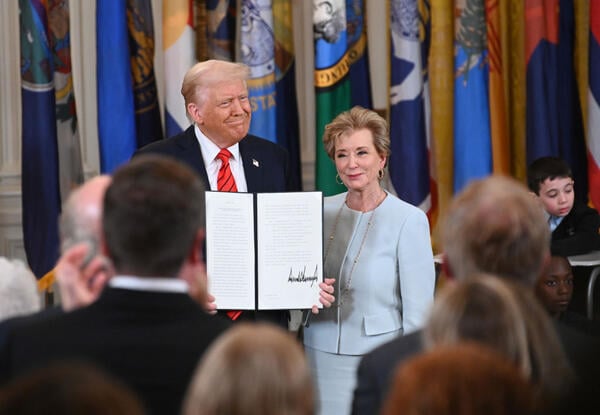
The guidance comes a week after President Donald Trump signed an executive order to reshape the accreditation system and make it easier for new agencies to come onto the scene.
Trump’s order also took aim at accreditor criteria related to diversity, equity and inclusion and directed U.S. Education Secretary Linda McMahon to ensure colleges prioritize “intellectual diversity” among their faculty — a mandate that raised concerns about academic freedom among some higher education experts.
“President Trump’s Executive Order and our actions today will ensure this Department no longer stands as a gatekeeper to block aspiring innovators from becoming new accreditors nor will this Department unnecessarily micromanage an institution’s choice of accreditor,” McMahon said in a Thursday statement.
The Education Department also revoked guidance issued in 2022 that outlined a more rigorous review process for colleges to switch accreditors. The Biden-era guidance said the department would review whether a college wanted to change accreditors to lessen oversight and if moving to a new agency would strengthen its institutional quality, among other factors.
At the time, the Biden administration said the guidance sought to ensure colleges weren’t attempting to evade oversight from their current accreditor by switching to a new one.
The Trump administration’s new guidance, however, says the agency will reestablish “a simple process that will remove unnecessary requirements and barriers to institutional innovation.” Under the policy, colleges must submit a two-page form to serve as documentation of their prior accreditation, as well as “materials demonstrating reasonable cause” for changing or adding an accreditor.
The form includes a checklist of reasons institutions may seek to switch accreditors, along with a section requiring colleges to certify that they have not had their accreditation withdrawn or faced accreditor sanctions in the past two years. Colleges must also attach their most recent letter renewing their accreditation.
Wesley Whistle, project director for student success and affordability at New America, a left-leaning think tank, criticized the new process, arguing that making it easier to switch accreditors could lead institutions to move to agencies with less rigorous standards.
“This new guidance says all they have to do is fill out this checklist and provide them [with] their most recent letter of reaffirmation,” Whistle said. “That letter could be almost a decade old.”
Moreover, that letter wouldn’t indicate if a college is currently under investigation by its accreditor, Whistle said.
“Just because an institution may not be on probation today, they could still be under investigation,” Whistle added.
The Education Department also said it will have 30 days to approve an application to switch accreditors. If not, the change will be automatically granted unless a college failed to meet the eligibility requirements.
Whistle described the policy as a “30-day rubber stamp.”
“It’s irresponsible,” Whistle said. “There’s nearly 6,000 colleges and universities that are eligible for Title IV aid, so conducting even a modest review takes time and expertise.”
The Trump administration’s new guidance also permits colleges to switch to new accreditors if required by state law. Other recognized reasons include seeking an accreditor that better aligns with a college’s religious mission, changing the types of academic programs offered or objecting to current accreditation standards, including DEI requirements.
The Biden administration’s guidance was in part prompted by a 2022 Florida law requiring the state’s public colleges to switch accrediting agencies every accreditation cycle. This sparked concerns that colleges weren’t voluntarily choosing to switch to new accreditors, even though department regulations require colleges to be voluntary members of their accrediting agencies.
Still, the Education Department gave approval to at least one public Florida college to change accreditors in 2023, Inside Higher Ed reported. However, some have faced a time-intensive process that has required the submission of hundreds of pages of documents, according to the publication.
In the department’s new guidance, Deputy Under Secretary James Bergeron said the agency recognizes the significance of voluntary membership “but does not believe that an institution’s change in accrediting agency due to State law compliance constitutes involuntary membership.”
With research contracts, cost recovery and student financial aid totaling billions of dollars on the line, many universities have called upon powerhouse external lobbying firms to defend against federal funding cuts and make the case for the public good that flows from higher education. Engaging external government relations experts can bring important perspective and leverage in this critical period, but this approach may not be scalable or sustainable across the nearly 550 research universities in large and small communities across the country.
Fortunately, campuses have their own powerful asset for advocacy: alumni. Graduates know firsthand the benefits of higher education in their lives, professions and communities, and they can also give valuable feedback as campuses work to meet the challenges of this moment and become even better. The National Survey of College Graduates estimates that 72 million individuals hold at least a bachelor’s degree. Engaged well, alumni can be a force multiplier.
Alumni often get attention in their role as donors. They will receive, on average, more than 90 email messages from their alma mater this year, many asking them to reflect on the value of their college experience and pay it forward. The most generous donors will be celebrated at events or visited personally by campus leaders. Millions and sometimes billions of dollars will be raised to advance campus missions.
As generous as alumni donors may be, the effectiveness of their philanthropic support is linked to the even greater investments states and the federal government make in higher education. University leaders in fundraising and beyond have an obligation to provide alumni with candid information about the potential impacts of looming generational policy and funding shifts, along with opportunities to support their campus as advocates.
In a crisis, information and attention necessarily flow first to on-campus constituents. Crisis communications and management plans may initially overlook alumni or underestimate the compelling role that they can play with both external and internal stakeholders. While most alumni are not on the campus, they are of the campus in deep and meaningful ways. And, unlike the handful of ultrawealthy alumni who have weighed in to the detriment of their Ivy League campuses, a broad group of alumni can bring practical wisdom and a voice of reason to challenging issues.
Campus leaders now preparing for a long period of disruption should assess alumni engagement as part of this planning and gather their teams to consider:
How might alumni and development staff work with strategic communications, government relations staff and academic leaders to shape university messaging and advocacy?
What facts about policy and funding challenges do alumni need to understand in a media environment filled with misinformation?
How might alumni perspectives inform campus discourse about challenges to the institution’s values and academic freedom?
How might existing alumni programming provide opportunities for information-sharing between campus leaders, academic leaders and alumni?
How are campuses acknowledging and supporting alumni who are directly affected by changes in the federal workforce and economic disruption?
This is a critical time for campus leaders to build bridges. Alumni can be a huge asset in this work. As degree holders, donors, professionals and citizens, engaged alumni know the specific value of their alma mater and of higher education broadly. They have stakes, authenticity and social capital, and they deserve the opportunity to add their voices.
Lisa Akchin,senior counsel at RW Jones Agency and founder of On Purpose LLC, previously served as associate vice president for engagement and chief marketing officer at University of Maryland Baltimore County.
A 2023 global survey of more than 900 faculty members found that 33 percent are “often or always” physically exhausted, 38 percent are emotionally exhausted and 40 percent are just worn-out. The constant pressure to conduct research, secure grants and fellowships, attend conferences, and publish or perish is only part of the story. There is, additionally, the immense responsibility to teach and mentor students who are facing their own mental health crises.
In the inescapable race to beat the tenure clock and, once tenured, move to the next rung of the ladder while staying relevant and recognizable in our fields, faculty members need to take a pause. We must slow down to strengthen our mental health, ensure student success and produce meaningful scholarship.
Some might ask how slowing down will help us keep up. How will we survive in academia if we are slow to publish in high-impact journals, or present our research in international forums, or participate in faculty development opportunities, or mentor multiple students, or be on several significant boards and committees? We will, if we do not equate slowness with being lazy or unproductive and, instead, understand it as the pace and the process that allows us to function and create deliberately, contemplatively, while resisting exhaustion and burnout.
In my international conflict management classroom at Kennesaw State University, I encourage my students—future peacemakers—to think about slow peace. In my research on feminist agency in violent peripheral geographies, I deliberate on how, in zones of ongoing conflict, active resistance must (and does) surface in response to direct and immediate violence. But this only addresses the symptoms; in the urgency of the moment, what is not—and cannot—be addressed is the structural violence that results from a lack of cultivating peace as a way of life. Only by slowing down to reflect on, and gradually dismantle, the tools that perpetuate cultures and structures of violence can we enable enduring peace, ensure the well-being of the communities in conflict and reduce the recurrence of everyday violence.
As I move deeper into decolonial feminist peace in my scholarship, teaching and practice, I recognize the university depends on some of the same tools of violence and patriarchal control that are used to perpetuate the colonial and postcolonial conflicts that we study in my classroom. For example, the “fast-paced, metric-oriented neoliberal university” makes constant demands on faculty members’ time and effort, ensuring we are exhausted and preoccupied with “keeping up.” To meet its numerical expectations, we often sacrifice our “intellectual growth and personal freedom”; we rarely pause to reflect on the quality and real-world impact of our output or the toll it takes on us. Exhausted people rarely have the time or energy for community and rest, which are essential not only for individual well-being but also for collective resistance to slow violence.
Similarly, colonial capitalists initiated my ancestors in Assam, in the peripheral northeast region of India, into the plantation (tea) and extraction (coal, oil) economies by weaponizing productivity and exhaustion. They denigrated our traditional lahe lahe way of life that was based on living gently, slowly and in organic harmony with the planet and its people. The nontribal people of Assam embraced capitalism and the culture of “hard work” and exhaustion. They also aligned with the colonizers to designate the tribal peasants who stayed connected with their ancestral lands and refused to work in the plantations as “lazy natives.”
This process of ethnic fragmentation started by the colonizers was subsequently exploited by the post-/neocolonial Indian state to diffuse and dissipate resistance against itself as it continued to extract the communal resources of the ethnic people of Assam and its neighboring northeastern states while ignoring their customary laws and political rights and governing this peripheralized region through securitization and militarization. The historical, horizontal conflicts between the many communities of the Northeast undermined their necessary, vertical resistance against the Indian state. Meanwhile, on the Indian mainland, Assam is still derogatorily referred to as “the lahe lahe land” and people from the entire Northeast region are subjected to discrimination and racist violence.
Building solidarities across marginalized entities alone can successfully challenge larger structures of oppression—whether racism, colonial violence or academic capitalism—that continue to thrive while we remain divided. In the conflict zone I call home, I advocate for addressing the slow and sustained violence that historically eroded indigenous ways of peaceful coexistence between communities. I propose ways of building peace by reintroducing customary nonviolent structures and cultures into everyday practices of communities, allowing community members to reconnect with each other and with nature and the environment.
For example, traditional slow crafts like weaving organic cotton and silk fabrics involved the entire community while benefiting individual members and protecting the planet. Reviving these practices would slowly, but radically, disrupt the cycle and progression of violence and societal fragmentation.
Within the academy, too, we can practice slow peace. My individual resistance began when I started questioning my sense of guilt and self-doubt about being unproductive or “slow.” Just as my precolonial ancestors did, I too realized that my self-worth is not tied to my productivity; I slowed down. This deepened my scholarship and made it more deliberate as I connected it to my embodied, intergenerational history. My approach to scholarship also grew more intentional as I re-examined its real-world impact.
At the same time, I recalled that my lahe lahe culture valued rest and resting in community through finding connections with people, engaging in communal joy and being in nature. I moved away from commodified self-care products and apps and took more mindful breaths during my morning yoga. Now I am more energized in the classroom, where I practice laughter and joy with my students while encouraging them to build an empathetic and mutually caring classroom culture. They bring genuine engagement and produce strong work that they take ownership of. I have also added nature walks with emotional support coworkers, aka new friends, to my routine. Our conversations have led to research collaborations and several creative engagements with the local community.
If, as Audre Lorde says, self-care is “warfare,” it is no less a war to attempt to build a community of care involving colleagues and students in institutions and settings that are engineered to facilitate isolation by emphasizing increasingly demanding personal achievements tied to hierarchies of power and privilege. As I continue to deliberately and strategically work on decolonizing my academic praxis, I am convinced that within the academy and outside—where our knowledge-making has consequences—the quicker we begin slowing down, the sooner we will reap the benefits of the lahe lahe life.
Uddipana Goswami is author of Conflict and Reconciliation: The Politics of Ethnicity in Assam (Routledge 2014) and Gendering Peace in Violent Peripheries: Marginality, Masculinity and Feminist Agency (Routledge 2023). Gendering Peace earned an honorable mention in the International Studies Association’s Peace Section’s 2025 Best Global South Scholar Book Award. She teaches at the School of Conflict Management, Peacebuilding and Development at Kennesaw State University.
A large number of college students experience housing insecurity or homelessness, and finding suitable accommodations can be a challenge, particularly for those who attend colleges and universities that do not provide on-campus housing.
The fall 2024 Student Financial Wellness Survey by Trellis Strategies found that 43 percent of all respondents experienced housing insecurity and 14 percent were homeless during the prior 12 months. Among two-year college respondents, 46 percent were housing insecure and 16 percent experienced homelessness in the previous year.
Community colleges often lack the resources to directly address housing insecurity, so they rely on outside partnerships or housing assistance programs to accommodate students. For example, LaGuardia Community College partners with Airbnb to offer vouchers for short-term housing support for students. Tacoma Community College and the Tacoma Housing Authority co-created the College Housing Assistance Program, which subsidized housing costs for students experiencing homelessness until 2022.
These programs often come with red tape that can make it difficult for a student to enroll in the program; for example, GPA or credit requirements can push vulnerable students out if the institution doesn’t think they’re making adequate progress.
Alena A. Hairston, a professor at Fresno City College and doctoral student at Alliant International University, conducted a qualitative research project that evaluated student experience and engagement with housing assistance programs. Hairston found that while many students did not meet benchmarks for student success in the classroom, the experience contributed to their improved self-actualization, which can be a meaningful metric in student development.
The background: To ensure students are persisting and making progress toward a degree, college-led assistance programs often require learners to meet baseline educational checkpoints, including being enrolled, achieving a certain GPA or meeting regularly with a staff member. Community partners may institute their own requirements, including drug- and alcohol-free living or payment of a deposit.
If students don’t meet these requirements, they’re dropped, often without another option to continue their housing, which can be detrimental to their health and well-being. While failing to meet requirements can be a sign of student disinterest or lack of appreciation for the offerings, Hairston views stable housing as a foundational piece in student achievement and tied to the mission of community colleges.
“If a student shows up to attend [and] to be a part of the collegiate process, that says desire, right?” Hairston said. “And the only requirement for admission [at community colleges] is a desire to learn, so we need to go with that as our mandate [to serve students].”
Hairston wanted to understand how students accessed resources and the impact it had on their psychosocial development.
The study: Hairston interviewed nine students who participated in housing assistance programs, led either by the college or an off-campus entity, in 2021. Students were between the ages of 18 and 47 and represented a variety of racial, ethnic and gender categories. All learners were enrolled at least part-time at a community college.
Most respondents said they learned about housing programs through specific contacts, such as academic counselors for special programs including Extended Opportunity Programs, TRIO and the Puente Project, while others used the internet or other partners.
While students appreciated the services, they faced logistical challenges that made the experience frustrating, such as a lack of notification or timely communication from staff members. One was in an unsafe area and roomed with an individual who used methamphetamine.
Students said program requirements to maintain academic standing or health conditions (such as sobriety) were perceived as helpful, but in practice sometimes harmful and led to loss of housing. “As soon as you drop [below] a 2.0 or you drop nine units, they literally evict you,” one student shared. “Then you have an eviction on your record as well.”
A few students said they gained personal life skills or were motivated to continue working toward academic and career goals. Others felt their citizenship status or racial and ethnic backgrounds impeded their housing placements or ability to access resources.
In addition to finding secure housing, most participants utilized other campus, public and private services to pay for additional resources, including furniture, phone bills, laptops, bikes and mental health support.
The COVID-19 pandemic created additional challenges for participants, such as job losses, the decline of support networks, moves, educational disruption and relapses into substance use.
In conversations, students commented on how housing assistance motivated them to stay enrolled and allowed them to prioritize other elements of their lives, including mental health care and caregiving responsibilities.
“The program [helped me with] a lot of psychological things like digging into yourself and figuring out the root problems that keep causing me to drink,” a study participant shared. “So I got to unburden a lot of my little demons.”
Lessons learned: Based on her conversations with students, Hairston recommends policymakers tie self-actualization and personal growth to efficacy metrics to understand the value of these programs and improve students’ self-reflection on their progress and achievement.
One possibility would be to measure student success on a yearlong basis, rather than term by term. Some learners returning to higher education may need counseling or struggle with the rigor of their coursework, resulting in poor academic performance in their first term back.
Instead of weighing GPA or credits completed as the most important factors for student eligibility, Hairston advocates for a greater emphasis on self-efficacy and personal growth, perhaps delivered through a self-diagnostic at the start and end of the term or a regular self-study to track learning and the challenging circumstances they encountered. This also creates opportunities for checking in on students during the term to ensure that they’re not falling behind without support, Hairston said.
Program participants should also be paired with counselors who are trained in trauma-informed care and academic counseling, Hairston said. Ensuring a welcoming atmosphere for services, program information and resources can reduce barriers to access and promote thriving.
If your student success program has a unique feature or twist, we’d like to know about it. Click here to submit.