Tag: Education

  • Federal Judge Blocks Trump’s Executive Order to Close Education Department

    Federal Judge Blocks Trump’s Executive Order to Close Education Department

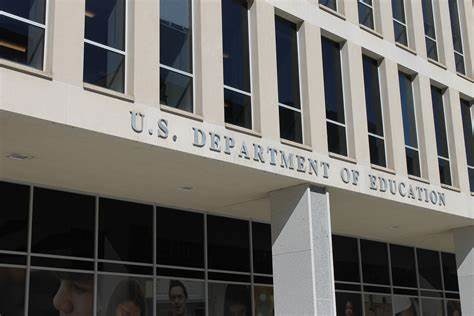
    A federal judge in Massachusetts has issued a preliminary injunction halting President Donald Trump’s executive order to dismantle the U.S. Department of Education, dealing a significant blow to the administration’s efforts to eliminate the federal agency.

    District Court Judge Myong J. Joun on last Thursday blocked Trump and Education Secretary Linda McMahon from carrying out the executive order and ordered the administration to reinstate approximately 1,300 Education Department employees who were terminated in March as part of a sweeping reduction-in-force.

    The ruling comes in response to consolidated lawsuits filed by a coalition of 20 states, the District of Columbia, educator unions, and school districts challenging the administration’s moves to shrink and eventually close the department.

    When Trump took office in January, the Education Department employed 4,133 workers. The reduction-in-force announced March 11 terminated more than 1,300 positions, while nearly 600 additional employees chose to resign or retire, leaving roughly 2,180 remaining staff—approximately half the department’s original size.

    In his ruling, Judge Joun wrote that “a department without enough employees to perform statutorily mandated functions is not a department at all,” adding that the court “cannot be asked to cover its eyes while the Department’s employees are continuously fired and units are transferred out until the Department becomes a shell of itself.”

    The judge also prohibited Trump from transferring management of the federal student loan portfolio and special needs programs to other federal agencies, as the president had pledged to do from the Oval Office.

    Judge Joun determined that the Trump administration likely violated the separation of powers by taking actions that conflicted with congressional mandates. He noted the administration had failed to demonstrate that the staff reductions actually improved efficiency, writing that “the record is replete with evidence of the opposite.”

    The plaintiffs argued that the department could no longer fulfill critical duties, including managing the $1.6 trillion federal student loan portfolio serving roughly 43 million borrowers and ensuring colleges comply with federal funding requirements.

    The American Association of University Professors (AAUP), which joined the legal challenge alongside other educator groups, praised the ruling as a crucial victory for higher education access.

    “The AAUP is thrilled that District Judge Joun has blocked Trump’s illegal attempt to gut the Department of Education and lay off half of its workforce,” said AAUP President Dr. Todd Wolfson. “Eliminating the ED would hurt everyday Americans, severely limit access to education, eviscerate funding for HBCUs and TCUs while benefiting partisan politicians and private corporations looking to extract profit from our nation’s higher education system.”

    American Federation of Teachers President Randi Weingarten called the decision “a first step to reverse this war on knowledge and the undermining of broad-based opportunity.”

    The Education Department’s deputy assistant secretary for communications, Madi Biedermann, criticized the ruling in a statement, calling Judge Joun a “far-left Judge” who “dramatically overstepped his authority” and vowed to “immediately challenge this on an emergency basis.”

    The case, Somerville Public Schools v. Trump, represents the consolidation of two separate lawsuits filed in March. Democracy Forward is representing the coalition of plaintiffs, which includes the AAUP, Somerville Public School Committee, Easthampton School District, Massachusetts AFT, AFSCME Council 93, and the Service Employees International Union.

    The ruling temporarily halts one of the Trump administration’s most ambitious efforts to reshape federal education policy, though the legal battle is expected to continue as the administration pursues its appeal.


    Source link

  • Empowering neurodiverse learners with AI-driven solutions

    Empowering neurodiverse learners with AI-driven solutions

    Key points:

    A traditional classroom is like a symphony, where every student is handed the same sheet music and expected to play in perfect unison. But neurodiverse learners are not able to hear the same rhythm–or even the same notes. For them, learning can feel like trying to play an instrument that was never built for them. This is where AI-powered educational tools step in, not as a replacement for the teacher, but as a skilled accompanist, tuning into each learner’s individual tempo and helping them find their own melody.

    At its best, education should recognize and support the unique ways students absorb, process, and respond to information. For neurodiverse students–those with ADHD, dyslexia, autism spectrum disorder (ASD), and other learning differences–this need is especially acute. Traditional approaches often fail to take care of their varied needs, leading to frustration, disengagement, and lost potential. But with advances in AI, we have the opportunity to reshape learning environments into inclusive spaces where all students can thrive.

    Crafting personalized learning paths

    AI’s strength lies in pattern recognition and personalization at scale. In education, this means AI can adapt content and delivery in real time based on how a student is interacting with a lesson. For neurodiverse learners who may need more repetition, multi-sensory engagement, or pacing adjustments, this adaptability is a game changer.

    For example, a child with ADHD may benefit from shorter, interactive modules that reward progress quickly, while a learner with dyslexia might receive visual and audio cues alongside text to reinforce comprehension. AI can dynamically adjust these elements based on observed learning patterns, making the experience feel intuitive rather than corrective.

    This level of personalization is difficult to achieve in traditional classrooms, where one teacher may be responsible for 20 or more students with diverse needs. AI doesn’t replace that teacher; it augments their ability to reach each student more effectively.

    Recent research supports this approach–a 2025 systematic review published in the EPRA International Journal of Multidisciplinary Research found that AI-powered adaptive learning systems significantly enhance accessibility and social-emotional development for students with conditions like autism, ADHD, and dyslexia.

    Equipping educators with real-time insights

    One of the most significant benefits of AI tools for neurodiverse learners is the data they generate–not just for students, but for educators. These systems can provide real-time dashboards indicating which students are struggling, where they’re excelling, and how their engagement levels fluctuate over time. For a teacher managing multiple neurodiverse learners, these insights are crucial. Rather than relying on periodic assessments or observations, educators can intervene early, adjusting lesson plans, offering additional resources, or simply recognizing when a student needs a break.

    Imagine a teacher noticing that a student with ASD consistently disengages during word problems but thrives in visual storytelling tasks. AI can surface these patterns quickly and suggest alternatives that align with the student’s strengths, enabling faster, more informed decisions that support learning continuity.

    Success stories from the classroom

    Across the U.S., school districts are beginning to see the tangible benefits of AI-powered tools for neurodiverse learners. For instance, Humble Independent School District in Texas adopted an AI-driven tool called Ucnlearn to manage its expanding dyslexia intervention programs. The platform streamlines progress monitoring and generates detailed reports using AI, helping interventionists provide timely, personalized support to students. Since its rollout, educators have been able to handle growing caseloads more efficiently, with improved tracking of student outcomes.

    Meanwhile, Houston Independent School District partnered with an AI company to develop reading passages tailored to individual student levels and classroom goals. These passages are algorithmically aligned to Texas curriculum standards, offering engaging and relevant reading material to students, including those with dyslexia and other learning differences, at just the right level of challenge.

    The future of neurodiverse education

    The promise of AI in education goes beyond improved test scores or sleek digital interfaces, it’s about advancing equity. True inclusion means providing every student with tools that align with how they best learn. This could be gamified lessons that minimize cognitive overload, voice-assisted content to reduce reading anxiety, or real-time emotional feedback to help manage frustration. Looking ahead, AI-driven platforms could even support early identification of undiagnosed learning differences by detecting subtle patterns in student interactions, offering a new frontier for timely and personalized intervention.

    Still, AI is not a silver bullet. Its impact depends on thoughtful integration into curricula, alignment with proven pedagogical goals, and ongoing evaluation of its effectiveness. To be truly inclusive, these tools must be co-designed with input from both neurodiverse learners and the educators who work with them. The score is not yet finished; we are still composing. Technology’s real legacy in education will not be in algorithms or interfaces, but in the meaningful opportunities it creates for every student to thrive.

    Latest posts by eSchool Media Contributors (see all)

    Source link

  • Higher Education Inquirer : HEI Investigation: Campus.edu

    Higher Education Inquirer : HEI Investigation: Campus.edu

    In a sector under constant strain, Campus.edu is being heralded by some as the future of community college—and by others as a slick repackaging of the troubled for-profit college model. What many don’t realize is that before it became Campus.edu, the company was known as MTI College, a private, for-profit trade school based in Sacramento, California.

    Campus.edu rebranded in 2020 under tech entrepreneur Tade Oyerinde, is backed by nearly $100 million in venture capital. Campus now markets itself as a tech-powered alternative to traditional community colleges—and a lifeline for students underserved by conventional higher ed.

    The rebranding, however, raises red flags. While Campus.edu pitches a student-first mission with attractive promises—zero-cost tuition, free laptops, elite educators—the model has echoes of the troubled for-profit sector, with privatization, outsourcing, and digital-first delivery taking precedence over public accountability and academic governance.

    The Promises: What Campus.edu Offers

    Campus.edu markets itself with a clean, six-step path to success. The pitch is aspirational, accessible, and designed to appeal to working-class students, first-generation college-goers, and those shut out of elite institutions. Here’s what the company promises:

    1. Straightforward Application – A simple application process, followed by matching with an admissions advisor who helps identify a student’s purpose and educational fit.

    2. Tech for Those Who Need It – A free laptop and Wi-Fi access for students who lack them, ensuring digital inclusion.

    3. Personal Success Coach – Each student is assigned a personal success coach, offering free tutoring, career advising, and 24/7 access to wellness services.

    4. Elite Educators – Courses are taught live via Zoom by faculty who also teach at top universities like Stanford and Columbia.

    5. Enduring Support – Whether transferring to a four-year college or entering the workforce, Campus promises help with building skills and networks.

    6. More Learning, Less Debt – For Pell Grant-eligible students, Campus markets its programs as costing nothing out-of-pocket, with some students completing degrees debt-free.

    It’s a compelling narrative—combining social mobility, digital access, and educational prestige into a neat online package.

    Behind the Curtain: MTI College and the For-Profit Legacy

    Campus.edu did not rise out of nowhere. It emerged from the bones of MTI College, a long-running, accredited for-profit vocational school. MTI offered hands-on training in legal, IT, cosmetology, and health fields—typical offerings in the for-profit world. The purchase and transformation of MTI into Campus.edu allowed Oyerinde to retain accreditation, avoiding the long and uncertain process of seeking approval for a brand-new college.

    This kind of maneuver—buying a for-profit and relaunching it under a new brand—is not new. We’ve seen similar strategies with Kaplan (now Purdue Global), Ashford (now the University of Arizona Global Campus), and Grand Canyon University. What makes Campus.edu unique is the degree to which it blends Silicon Valley aesthetics with the structural DNA of a for-profit college.

    Missing Data, Big Promises

    Campus.edu boasts high engagement and satisfaction, but as of now, no independent data on student completion, debt outcomes, or long-term career impact is publicly available. The company remains in its early stages, with aggressive growth goals and millions in investor backing—but little regulatory scrutiny.

    With investors like Sam Altman (OpenAI)Jason Citron (Discord), and Bloomberg Beta, the pressure to scale is intense. But scale can come at the expense of quality, especially when students are promised the moon.

    Marketing Meets Memory

    Campus.edu is savvy. Its marketing strikes all the right notes: digital equity, economic mobility, mental health, and student empowerment. It presents itself as the antidote to everything wrong with higher education.

    But as its past as MTI College shows, branding can obscure history. And as for-profit operators adapt to a new digital age, it’s essential to distinguish innovation from opportunism. Without transparency, regulation, and democratic oversight, models like Campus.edu could replicate the same old exploitation—with better user interfaces.

    The stakes are high. For students already at the margins, a false promise can be more damaging than no promise at all.

    Source link

  • Longtime Professor Offers Administrators Advice (opinion)

    Longtime Professor Offers Administrators Advice (opinion)

    I read articles constantly in various journals, including this one, on how to be successful in various administrative roles—department chair, dean, provost, president, etc. Most of these are addressed to institutions not at all like mine, and many of the pieces are facile.

    I am a senior faculty member bordering 50 years at a small private university of fewer than 900 undergrads and fewer than 500 graduate enrollments. I have held most leadership roles, won just about all the available honors and have had offers from other institutions as dean and vice president, among other roles. I have declined them all because I am at heart a classroom teacher and my dedication to my institution is inviolate.

    In my long tenure, I have seen many senior administrators come and go, and I have kept notes on the bad ones. Some left significant damage not easily repaired. Reflecting on a recently departed senior administrator inspired me to articulate some advice and a few rules for success or failure at institutions such as mine.

    1. Know the institution that you come to serve. This requires far more than a general overview; it necessitates a deep dive into the culture and nature of the place. Do not invoke the platitude “from my experience at other places, I have concluded …” Very large universities may reflect somewhat similar characteristics, but even that is questionable. However, institutions such as mine differ distinctively in their culture, including history, experiences, individuals and makeup. Learn all that you can about this before arriving, and once on campus devote the necessary time to knowing the individuals who are key players, especially those who through long service have shaped the character of the place.
      New administrators often privilege new members of the community, who, like them, are novices, in hopes that they will be more amenable to reshaping the environment. However, it is those with long history who are embedded in the culture and who have deep connections with many important constituencies, including peers, the Board of Trustees and alumni. A new administrator may believe that they have a mandate to change the culture. But traditions are the lifeblood of small institutions, and they don’t die readily. Supposed mandates can dissipate quickly. First gain trust before venturing into this potential minefield.
    2. If the institution is in such despair that immediate drastic action is imperative, ask yourself honestly if you can handle the responsibility of the challenge. Success may be ephemeral, and even if you achieve short-term goals, you may burn bridges that can continue to haunt you. My institution has not experienced existential travail, but some leaders during my tenure have exploited unease and trepidation, taking advantage of fears about salary stagnation, job reductions, benefits suspensions or even, in extreme cases, mentioning other college closings to promote their agendas. Academia today is precarious, and honesty is necessary, but fear is a poor leadership strategy.
    1. Put the institution above yourself. When you lose the trust of the community, it is merely a matter of time. No action is more damning for an administrator than résumé-building for the next position. Every action must be in the interests of the institution rather than one’s own benefit. Over 50 years, I have witnessed several leaders whose actions were so patently self-serving that I wished only that they would move away—whether up or down, I didn’t care. This is a character flaw. What one may consider as career enhancement can come at the expense and livelihood of my peers and colleagues.
      In my early days as an ambitious potential climber, my president counseled me, to privilege my personal career as I pursued the next step might be successful or not. But to privilege my institution with all my energy, talent and commitment would lead to a more fulfilling life. I didn’t appreciate the admonishment at the time, but I came to internalize it. I won’t impose this mindset on others, and personally I would be a wealthier man if I had acted differently, but it has provided a personal career satisfaction that far exceeds any material or ego considerations. My mantra is to “devote heart and soul to the institution to the day of departure, and even beyond.”
    1. Be honest, transparent, ethical and kind. Administrators often have to make hard decisions that drastically affect individual lives. You must act, but do so with integrity, empathy and kindness. Take responsibility for the decisions that you make; do not blame others or the situation for actions that you administer. Eschew pronouncements (which I have heard more than once) that “these actions are for better positioning the institution for long-term success.” That may be true, but tone-deaf remarks do not offer solace to individuals losing their careers for the institution’s “future well-being,” nor do they generally resonate well for institutional morale.
    2. Faculty and staff morale is fragile, particularly at small institutions such as mine. Compromising it is hazardous. Keep steadfast: Sincerity and trust should be your guiding principles. If people trust you, they will bear considerable pain. If they do not trust you, then you will fail no matter what your motives.

    The responsibility of leadership in the contemporary environment is a daunting undertaking. It demands skill, fortitude, courage, principles and character. From my long years of observations, many who carry significant titles do not demonstrate the requisite capabilities. One hopes that the few best practices expressed above may point toward some standards.

    Joe P. Dunn is the Charles A. Dana Professor and chair of the Department of History and Philosophy at Converse University.

    Source link

  • What AI Can’t Read: Ambiguities and Silences (opinion)

    What AI Can’t Read: Ambiguities and Silences (opinion)

    A year ago, I saw artificial intelligence as a shortcut to avoid deep thinking. Now, I use it to teach thinking itself.

    Like many educators, I initially viewed artificial intelligence as a threat—an easy escape from rigorous analysis. But banning AI outright became a losing battle. This semester, I took a different approach: I brought it into my classroom, not as a crutch, but as an object of study. The results surprised me.

    For the first time this spring, my students are not just using AI—they are reflecting on it. AI is not simply a tool; it is a mirror, exposing biases, revealing gaps in knowledge and reshaping students’ interpretive instincts. In the same way a river carves its course through stone—not by force, but by persistence—this deliberate engagement with AI has begun to alter how students approach analysis, nuance and complexity.

    Rather than rendering students passive consumers of information, AI—when engaged critically—becomes a tool for sharpening analytical skills. Instead of simply producing answers, it provokes new questions. It exposes biases, forces students to reconsider assumptions and ultimately strengthens their ability to think deeply.

    Yet too often, universities are focused on controlling AI rather than understanding it. Policies around AI in higher education often default to detection and enforcement, treating the technology as a problem to be contained. But this framing misses the point. The question in 2025 is not whether to use AI, but how to use it in ways that deepen, rather than dilute, learning.

    AI as a Tool for Deep Engagement

    This semester I’ve asked students to use AI in my seminar on Holocaust survivor testimony. At first glance, using AI to analyze these deeply human narratives seems contradictory—almost irreverent. Survivor testimony resists coherence. It is shaped by silences, contradictions and emotional truths that defy categorization. How can an AI trained on probabilities and patterns engage with stories shaped by trauma, loss and the fragility of memory?

    And yet, that is precisely why I have made AI a central component of the course—not as a shortcut to comprehension, but as a challenge to it. Each week, my students use AI to transcribe, summarize and identify patterns in testimonies. But rather than treating AI’s responses as authoritative, they interrogate them. They see how AI stumbles over inconsistencies, how it misreads hesitation as omission, how it resists the fragmentation that defines survivor accounts. And in observing that resistance, something unexpected happens: students develop a deeper awareness of what it means to listen, to interpret, to bear witness.

    AI’s sleek outputs conceal a deeper problem: It is not neutral. Its responses are shaped by the biases embedded in its training data, and by its relentless pursuit of coherence—even at the expense of accuracy. An algorithm will iron out inconsistencies in testimony, not because they are unimportant, but because it is designed to prioritize seamlessness over contradiction, clarity over ambiguity. But testimony is ambiguity. Memory thrives on contradiction. If left unchecked, AI’s tendency to smooth out rough edges risks erasing precisely what makes survivor narratives so powerful: their rawness, their hesitations, their refusal to conform to a clean, digestible version of history.

    For educators, the question is not just how to use AI but how to resist its seductions. How do we ensure that students scrutinize AI rather than accept its outputs at face value? How do we teach them to use AI as a lens rather than a crutch? The answer lies in making AI itself an object of inquiry—pushing students to examine its failures, to challenge its confident misreadings. AI does not replace critical thinking; it demands it.

    AI as Productive Friction

    If AI distorts, misinterprets and overreaches, why use it at all? The easy answer would be to reject it—to bar it from the classroom, to treat it as a contaminant rather than a tool. But that would be a mistake. AI is here to stay, and higher education has a choice: either leave students to navigate its limitations on their own or make those limitations part of their education.

    Rather than treating AI’s flaws as a reason for exclusion, I see them as opportunities. In my classroom, AI-generated responses are not definitive answers but objects of critique—imperfect, provisional and open to challenge. By engaging with AI critically, students learn not just from it, but about it. They see how AI struggles with ambiguity, how its summaries can be reductive, how its confidence often exceeds its accuracy. In doing so, they sharpen the very skills AI cannot replicate: skepticism, interpretation and the ability to challenge received knowledge.

    This approach aligns with Marc Watkins’s observation that “learning requires friction.” AI can be a force of productive friction in the classroom. Education is not about seamlessness; it is about struggle, revision and resistance.

    Teaching history—and especially the history of genocide and mass violence—often feels like standing on a threshold: one foot planted in the past, the other stepping into an uncertain future. In this space, AI does not replace the act of interpretation; it compels us to ask what it means to carry memory forward.

    Used thoughtfully, AI does not erode intellectual inquiry—it deepens it. If engaged wisely, it sharpens—rather than replaces—the very skills that make us human.

    Jan Burzlaff is a postdoctoral associate in the Jewish Studies program at Cornell University.

    Source link

  • What Ruth Simmons Taught Me About Standing for Something

    What Ruth Simmons Taught Me About Standing for Something

    Those who know me are well aware that I have a professional crush on Ruth Simmons. I have talked about how much I admire her career and the bold stances she has taken publicly and taken opportunities to ask others about how she has encouraged and mentored them. When presented with a chance to meet her, I quickly bought an airline ticket and counted down the days.

    For those who are unfamiliar with her career, she was the first Black president of an Ivy League institution; holds the title of president emerita of Smith College, Brown University and Prairie View A&M University; and as of this past weekend, has been awarded 41 honorary degrees.

    The last of these degrees was conferred by Southern Methodist University, which is where I earned my doctoral degree. Michael Harris, a professor at SMU, was the Faculty Senate president who nominated Simmons to receive the award. As a result, he was invited to the dinner given in her honor, and it was my great fortune his wife was unable to attend. He jokes that only one person references Simmons as often as I do, and he felt obligated to ask if I was interested in attending.

    Prior to the dinner, Simmons was the speaker at a campuswide symposium, where signed copies of her book, Up Home, were distributed to attendees. She spoke about her childhood and career, offering advice to all in attendance.

    Her final statement felt like a follow on to my last “Call to Action” piece, which encouraged everyone to fight on behalf of higher education:

    “It’s in those moments, even when you’re wrong or when people think you’re wrong, that you’re elevated. It’s in those moments that you stand for something and know what is beyond the pale, in the things that you see before you. And so if, like my mother, you see somebody being unfairly treated, how dare you be silent? How dare you if you see someone doing something that trespasses. What should we be doing as human beings? How dare we not say something?

    “So the question I get when I do my book events, from students and everyone else, is ‘What should I be doing in this moment?’ Everybody’s question is ‘What should I be doing now?’ I don’t have an answer for everybody, but I do know that at 80 years old, I get up every day ready to do something, and that’s what I always answer. ‘You’ve got to do something.’ It is not a moment to sit on the sidelines and be comfortable and say, ‘Oh, let everybody else worry about that.’ Shame on you if you draw that conclusion right now.”

    I couldn’t agree more.

    Like Ruth Simmons, I’ve received many questions from people who are unsure how or if they can fight, having read my recent piece. Some colleagues feel they can’t fight because they are in red states, or they worry they could put themselves or their institutions at risk through their actions. Others feel they lack the credibility or the authority to lead a fight. Still others worry they need to take on the fight on behalf of the whole industry and are already exhausted.

    Fighting on behalf of higher education isn’t a one-size-fits-all endeavor. I would encourage, as Simmons notes, that this can include addressing mistruths, defending those who are being treated unfairly and speaking out when the moment demands it. I believe that fighting for higher education means that we each defend the academy within our spheres of influence in big and small ways.

    For example, arm yourself with facts and be prepared to address misinformation you may hear about the “Big Beautiful Bill,” which was just approved by the House GOP and has been sent to the Senate. As passed by the House, it includes limiting Pell eligibility and eliminating subsidized student loans.

    Know what the impact of the House’s proposed endowment tax will be on the institutions that will be impacted. Be versed in how institutions are reeling from the elimination of research grants and how the bill will now further impact them. It is clear to me that these are the first cuts for institutions, but they won’t be the last. The goal is to have fiscal death by a thousand cuts. I would argue it is our responsibility to speak out—to fight— when we hear people discussing the federal budget and grant cuts and explain the impacts these cuts are having on student persistence, on campuses, on research, and on everyday people.

    Despite my choice of language and the traditional connotation associated with it, I don’t think of fighting as only a negative concept. Or, at the very least, I was raised in a Hispanic household where the duality of challenge and support was viewed as a given, rather than a negative. A colleague of mine said that he felt my language was solely confrontational. I suggested in response that fighting to me means asserting an alternative, which includes sharing expertise, data and information, and serving as a sense maker. I believe it covers addressing falsehoods and defending the truth. It is up to each of us if we view and live this only as a negative.

    It’s possible that Simmons’s advice feels aligned with my thinking because I want so dearly to be aligned with her, but the reality is that there’s something about a fighter that is always aligned with another fighter, and for that reason I hope you’ll see yourself in her words and in mine. Once again, I invite you to fight.

    Source link

  • King Misrepresented in Anti-DEI Congressional Hearing

    King Misrepresented in Anti-DEI Congressional Hearing

    In January 2024, I wrote a Forbes article titled, “How Martin Luther King Would Respond to Today’s Attacks on DEI.” I declared therein that King would be outraged and disgusted by the catastrophic assault on values for which he fought, was arrested 29 times and ultimately died. Were he still alive today, I know for sure that King would call on leaders to demonstrate more courage and integrity as DEI is being recklessly torn down in our nation’s K-12 schools, higher education institutions, government agencies and businesses. He would insist on brave truth telling, nonviolent resistance, larger and more audacious multiracial coalitions, and strategically pulling every possible lever in defense of racial justice. King would not have been okay with colleges and universities closing culture centers and multicultural affairs offices, scrubbing their websites of language pertaining to antiracism and equity, and firing innocent DEI practitioners who broke no laws and did nothing wrong.

    Regarding his dream, I insisted the following in the aforementioned Forbes article about King: “Paradoxically, many people who know little about the greatest American civil rights leader of all time at least know he famously spoke these words: ‘I have a dream that my four little children will one day live in a nation where they will not be judged by the color of their skin, but by the content of their character.’ The part about not judging people by skin color gets weaponized to justify colorblindness.”

    Unsurprisingly, this very thing happened this week in a U.S. House of Representatives hearing titled “Restoring Excellence: The Case Against DEI.” I was the lone expert witness for the Democrats, a role I had played twice before on Capitol Hill.

    Robert Onder, a Republican congressman representing Missouri, prefaced a question to me by reciting the go-to line from King’s speech. “Let me read to you a quote you may have heard of, maybe you haven’t, it goes something like this …”

    Two things ran through my mind at the time. First was “Oh, here we go with the tired, predictable misrepresentation of Martin Luther King’s stance on colorblindness.” Secondly, I thought, “Of course I have heard these words—I have been a Black man in America for nearly 50 years; I am a proud graduate of a historically Black university; I spent a decade as a member of the Africana studies faculty at the University of Pennsylvania; I have delivered numerous Martin Luther King Day keynote addresses for universities and companies across the country (including this one in 2016 at Duke University in which I critiqued the twisting of King’s Dream speech); and I have read dozens of MLK sermons, speeches and letters, including but not limited to those published in A Testament of Hope: The Essential Writings and Speeches—how absurd to even suggest that I may be hearing these words for the first time.” It was the most disgusting moment of the hearing for me, yet I somehow maintained my composure.

    I have said it many times before, but it is worth repeating during these dangerous times in higher education and our democracy: King was not a proponent of colorblindness. He hated racism against African Americans and other people of color. He called white supremacy by its name. He called Black people by their names as he fearlessly demanded equity, opportunity and justice for them. The remedies he advocated were extraordinarily race-forward and color-conscious. Any policy or practice in higher education or elsewhere that insists on colorblindness is a misrepresentation of King’s stance.

    There is at least one other noteworthy thing about the annoying evocation of King in the congressional hearing: The civil rights icon said judged “by the content of their character,” but Onder and other Republicans kept insisting on narrowly judging applicants by standardized college entrance exams that tell admission professionals more about those prospective students’ ZIP codes, socioeconomic statuses, the ability of their families to pay for expensive test prep courses and tutors, and the abundance of resources in the K-12 schools they attended.

    Ironically, DEI opponents often fail to recognize and appreciate the incredibly valuable proxies for character, leadership, creativity and other strong indicators of undeniable potential for greatness in holistic admissions practices.

    Those of us who love King and truly value the race-consciousness of the unrealized American dream for which he fought, was repeatedly jailed and died must continue to help our family members, neighbors, colleagues, presidents and governing board members, students, and elected officials understand why wholesale, decontextualized advocacy for colorblindness is wrong, unfair and bad for our democracy.

    If we really want to honor King, especially during this time, more of us would demonstrate brave resistance to the enormously consequential dismantling of DEI in educational institutions and our broader society. The civil rights hero is widely known for peace, love and nonviolence—what Cornel West calls the “Santa Clausification” of King.

    But to be sure, King would have hated the weaponization of government to dismantle DEI broadly and racial equity efforts specifically right now. He would have put up the biggest fight and demanded that leaders, including those in higher education, stop cowardly surrendering to white supremacy and hate. More of us should do that, too.

    Shaun Harper is University Professor and Provost Professor of education, business and public policy at the University of Southern California, where he holds the Clifford and Betty Allen Chair in Urban Leadership.

    Source link

  • 3 Considerations for “Nudging” Intervention in Higher Ed

    3 Considerations for “Nudging” Intervention in Higher Ed

    Nudging systems are low-cost, simple mechanisms colleges can deploy to ensure students stay on track with enrollment. They can have a long-term impact on student success, creating socioeconomic mobility and closing equity gaps for students from historically marginalized backgrounds. But how does a college create effective nudging measures to enhance student success?

    The nonprofit group ideas42 conducted a field review of available research on educational nudging and its impact on student outcomes and identified promising practices in an April report.

    Over all, researchers found nudges that reduced students and parents’ mental load and simplified processes, such as prefilled forms, were tied to higher educational outcomes, compared to messages that required additional processes or complex decision-making.

    A Slice of Research

    Ideas42’s report addresses the entire education pipeline, from kindergarten to higher education. This article focuses only on processes implemented in university settings or related to enrollment in higher education.

    The background: Behavioral science principles have been applied to higher education for decades with the goal of supporting students and families as they navigate complex institutions. Called nudges, these interventions happen in admissions, financial aid and the registrar’s offices, and can take place via email, learning management systems and texts, to help students meet deadlines.

    Large-scale nudging interventions at the state and national level have been shown to be less effective than smaller-scale outreach from groups students are familiar with. A more recent study from Georgia State University found that time-sensitive nudges, or those related to high-stakes tasks, were more likely to encourage student behavior.

    Methodology: In the report, researchers define nudges as “interventions that change student behavior by modifying their decision-making context, without meaningfully restricting available choices or exerting coercive influence through large incentives or penalties.”

    The report authors focused on three types of nudges that address students’ bounded awareness, rationality and self-control—subconscious factors that may limit an individual’s decision-making, willpower or information-seeking abilities.

    Nudges were categorized by whether they add or subtract elements from student-facing processes. For example, an additive nudge requires students to interact with a new product or service or complete additional tasks, whereas a subtractive nudge reduces the tasks students have to complete or eliminates products (for example, texts to a student rather than notifications through a portal). Researchers also evaluated whether the nudges increased students’ cognitive load, requiring additional processing and decision-making, or reduced mental pressure to help them focus attention and process information.

    The findings: Researchers found that the most effective nudges in improving student outcomes are those that reduce unnecessary steps, simplify processes and make it easier for individuals to complete their goals—such as prefilled financial aid applications or streamlined enrollment forms.

    However, nudge designers often lean toward creating more steps or introducing new tools and activities, such as a texting campaign to connect students to resources about late course withdrawal, that don’t reduce the effort required by students. This can overload them and fail to benefit them in the intended ways, adding confusion.

    Instead, campus leaders should prioritize subtraction in the number of messages and steps a student may receive in the hopes of reducing their mental burden.

    Some additive measures can be helpful, such as creating a tool for students and families to evaluate various options in a choice set, because it makes decision-making easier or enables action in a simpler manner.

    But in general, the best practice is to reduce the complexity of processes and the cognitive demands of the task.

    Making changes: To enhance nudging systems, the ideas42 review suggested education leaders consider the following:

    • Focus on the messenger. Often, nudge development focuses on the content of the message, but identifying a trusted and recognized source to deliver the message can increase its credibility. Messengers who are trusted, local and human are more likely to engage recipients than generic, institutional or automated senders.
    • Forget the low-hanging fruit. Nudges can be developed as a cost-effective and scalable intervention, but they may neglect the deeper, more systemic solutions that could generate long-term student success. “This focus on cheap and incremental solutions also risks exacerbating inequities in educational outcomes, because the barriers faced by historically marginalized communities often require deeper solutions,” the report says.
    • Evaluate the problem thoroughly. The nudge design process can begin with a predetermined solution, rather than a diagnosis-driven approach, which doesn’t necessarily fit the need at hand. Campus leaders should seek to understand the barriers students face and create nudges that touch the root of the problem.

    Get more content like this directly to your inbox. Subscribe here.

    Source link

  • Higher Ed Unions Call for Free College in Fed Policy Agenda

    Higher Ed Unions Call for Free College in Fed Policy Agenda

    A coalition of labor unions representing faculty and other higher education workers called for free college and more Thursday—the same day House Republicans passed their reconciliation bill, which would cut Pell Grants and target postsecondary education in other ways.

    The federal policy agenda is from Higher Ed Labor United (HELU), which seeks to unify all types of higher ed workers—academic and nonacademic, unionized or not—in a single national coalition that can organize together.

    The other broad prongs of HELU’s agenda are to:

    • Establish strong labor standards on every campus
    • End the crises of student and institutional debt
    • Rebuild and expand the nation’s research infrastructure
    • Enshrine and protect the right to learn, speak freely and teach without fear or retaliation
    • Ensure democracy and shared governance for those who work, learn and live alongside colleges and universities

    “Now is the time to rally our forces and offer a different vision of higher education and a positive path forward,” said Todd Wolfson, president of the American Association of University Professors and a founder of HELU, at a news conference in Washington, D.C.

    “Higher ed is under a withering assault right now,” Wolfson said. “But it’s important for us to be clear: The assault on higher ed did not begin with Trump.”

    “As a sector, we have suffered through 50 years of federal and state divestment,” Wolfson continued. He said this has led to, among other things, “skyrocketing tuition” and a lack of job security for campus workers.

    “The corporatization and neoliberal attacks on our universities are entwined with the right-wing authoritarian attacks,” Wolfson said. “They want to stop political dissent,” and, “as higher education goes, so goes democracy.”

    Two Democratic politicians—Rep. Mark Takano of California and Sen. Ed Markey of Massachusetts—spoke at Thursday’s event alongside leaders from multiple unions. Markey said House Republicans “have proposed a budget that will decimate the Pell Grants, leaving colleges out of reach for hundreds of thousands of low-income and first-generation students.”

    “Donald Trump and Republicans don’t want freedom, they don’t want democracy, they want control,” including over curricula, research and student speech, Markey added.

    Source link

  • U.K. Invests $40M to Attract International Researchers

    U.K. Invests $40M to Attract International Researchers

    The Royal Society has announced a $40 million fund designed to attract global research talent to the U.K.

    The Faraday Fellowship “accelerated international route” will provide up to $5.4 million per academic or group willing to relocate to British universities and research institutes, over a period of five to 10 years. The society said that it would be willing to consider larger awards “in exceptional circumstances.”

    The announcement comes as countries around the world vie to attract leading scholars who are considering fleeing the U.S. in protest of President Donald Trump’s attacks on research funding and diversity initiatives.

    Adrian Smith, president of the Royal Society, said that international science was “in a state of flux with some of the certainties of the postwar era now under question.

    “With funding streams and academic freedom coming under threat, the best scientific talent will be looking for stability. The U.K. can be at the front of the queue in attracting that talent,” Smith said.

    “Our new opportunity, combined with schemes from [UK Research and Innovation] and the Royal Academy of Engineering, is a step in the right direction.”

    The society said that two-thirds of the initiative’s budget would come from the Faraday Discovery Fellowship Fund, part of a $335 million government endowment set aside in 2023 to support attempts to attract midcareer academics to the U.K. The society will top this up with $13.4 million of its own, enabling the plan to be widened to cover researchers at other career stages.

    Full eligibility criteria will be published by the end of June.

    The announcement follows the European Union’s unveiling of a $565 million fund to attract researchers, including doubling to $2.25 million the maximum grant available to those arriving from outside the bloc to set up a laboratory or research team.

    Individual European countries and universities have also launched initiatives to attract international researchers following Trump’s election, including a $9.8 million scheme in Norway. France’s University of Aix-Marseille is providing nearly $17 million in grants for those seeking “scientific asylum” from the U.S.

    Leading scientists have been calling on the U.K. to launch a similar initiative. However, the House of Lords Science and Technology Committee has warned that such attempts could be stymied by U.K. immigration policies, including high visa and health-care costs.

    Source link