Tag: Education

  • More calls for Michigan colleges to end Chinese partnerships

    More calls for Michigan colleges to end Chinese partnerships

    More Republican politicians are calling for colleges to end their partnerships with Chinese universities.

    U.S. representatives John Moolenar and Tim Walberg wrote letters to the presidents of Eastern Michigan University, Oakland University and the University of Detroit Mercy demanding that they cancel their partnerships with institutions in China, expressing concerns that sensitive research could help the Chinese military advance its technological capabilities.  

    “The university’s [People’s Republic of China] collaborations jeopardize the integrity of U.S. research, risk the exploitation of sensitive technologies, and undermine taxpayer investments intended to strengthen America’s technological and defense capabilities,” Moolenar and Walberg wrote in all three letters. “You must immediately terminate these collaborations.”

    Pressure is mounting on U.S. higher ed institutions to cut ties with Chinese partners, whether in research collaborations, exchange programs or branch campus initiatives.

    Moolenar and Walberg’s letters come a few weeks after the University of Michigan ended a 20-year partnership with Shanghai Jiao Tong University. In September, Moolenar wrote a similar letter to Michigan president Santa Ono demanding an end to that collaboration after five Chinese international students were caught taking photos of training exercises at nearby Camp Grayling, where the state National Guard trains.

    EMU has partnerships with Beibu Gulf University and Guangxi University; Oakland partners with Changchun University of Science and Technology, Zhengzhou University of Light Industry, and Beijing Information Science and Technology University; and Detroit Mercy offers dual-degree programs with Beijing University of Chemical Technology, Yancheng Institute of Technology and Anhui Polytechnic University.

    Source link

  • College presidents stay mostly silent on Trump

    College presidents stay mostly silent on Trump

    In his first month, President Donald Trump has upended federal research funding and taken aim at race-conscious programs amid a flurry of executive orders and other actions.

    While some higher ed associations and universities have responded with lawsuits, college presidents, for the most part, have watched in relative silence. Some have released statements on changes to their institutions’ federal funding or diversity, equity and inclusion initiatives, but those announcements have mostly been vague, with little mention of the political forces driving the changes. Few college leaders have publicly criticized the president’s efforts to overhaul the sector to match his vision.

    The muted or mostly nonexistent response comes as campuses have increasingly grappled with how to navigate political events since last spring’s pro-Palestinian protests, when students demanded their leaders speak up about the war between Israel and Hamas. That seems to have quelled interest in taking institutional positions. Any pushback college leaders voiced during Trump’s first term has been largely replaced by silence.

    The Presidents Speaking Up

    Still, there have been some notable exceptions to the trend.

    Michael Roth at Wesleyan University and Patricia McGuire at Trinity Washington University—two notoriously outspoken presidents—are among those who have voiced alarm about Trump’s attacks on the sector.

    Roth has written op-eds calling on his fellow college presidents to “weigh in when they see the missions of their institutions” and the health of their campus communities “compromised.” He also shared his thoughts on speaking up at the American Council on Education conference last week, noting that he tries “not to speak about the president directly” but rather the need to stand up for institutional values when they are threatened by external forces, such as Trump.

    McGuire remains an outspoken presence on social media and in interviews.

    Other leaders have spoken forcefully to their constituents about Trump’s interference.

    Following a recent and widely panned Dear Colleague letter that declared race-conscious programming, resources and financial aid illegal, Case Western Reserve University president Eric Kaler wrote in a message to campus that “this expansion to include all aspects of campus life appears to be a gross overreach of the Supreme Court decision and may be challenged in the legal system.” He added that the university “will remain firmly committed to our core values.”

    Some presidents at minority-serving institutions have added their voices to the mix.

    David Thomas, president of Morehouse College, a historically Black institution, told CNBC last month that Trump’s attempted freeze on federal funding represents an “existential threat.” He also called out an executive order targeting diversity, equity and inclusion, telling MSNBC that “we must be a point of resistance to that effort to essentially teach untruths.”

    Thomas, who is retiring in June, suggested a second Jim Crow era was coming, which he called “a reaction to the progress of people of color and others who have been disenfranchised.”

    Presidential Silence

    But as most presidents have remained silent, some critics have blamed institutional neutrality, the concept that universities should refrain from making statements on social or political issues. The movement seemed to boom last year as pro-Palestinian protests spread nationally and students often called on presidents to make public statements.

    Roth, speaking at ACE, cast institutional neutrality as “a vehicle for staying out of trouble.”

    The American Association of University Professors has also taken a critical view of institutional neutrality, writing in a lengthy statement earlier this month that it “conceals more than it reveals.”

    Joan Scott, professor emerita at the Institute for Advanced Study who was part of the AAUP group that crafted the statement on institutional neutrality, is also critical of presidential silence in the face of what she described as an attack by the Trump administration on higher education.

    “I think there is no question that the target is the university mission as we’ve known it, and that very few people are speaking up,” Scott said. “And in fact, I would say that institutional neutrality is being used as a kind of protective stance for those administrators who are not speaking up.”

    A frequent refrain from campus leaders who have adopted institutional neutrality is that they would speak up when the core institutional mission is threatened, which experts argue is happening. However, most presidents are not speaking up despite perceived threats to the core mission.

    Inside Higher Ed contacted 10 universities with institutional neutrality policies, all among the wealthiest in the nation, with multibillion-dollar endowments. Only Yale University provided a statement, though some others shared prior messages from their presidents to the campus communities regarding the federal funding freeze and Trump attacks on DEI. Of those messages, none directly connected their concerns to the Trump administration or said what was driving federal actions.

    “The university is working to understand the scope and implications of the recent [Dear Colleague] letter and remains committed to the mission, to the principles of free expression and academic excellence, and to supporting the community,” Yale spokesperson Karen Peart wrote by email. “President [Maurie] McInnis and Provost [Scott] Strobel sent a message to the Yale community that addresses recent developments from the federal government. President McInnis has also shared a message to the community about the university’s commitment to the research mission.”

    Yale did not answer specific questions sent by Inside Higher Ed.

    Scott believes presidents are conducting a balancing act—one she views as cowardly. She argues that many are more concerned about “short-term risks,” such as an increase to the endowment tax or the loss of federal funding, than “the long-term risk” that “higher education as we’ve known it disappears or is put on hold” through the remainder of Trump’s four-year term.

    “What we’re watching is a struggle on the part of university administrators to balance some commitment to the mission—the attacked mission of the university—and some anxiety about the funding that keeps the mission going, even as the mission is being undermined,” Scott said.

    Jeremy Young, director of state and higher education policy at PEN America, a free expression group, takes a more charitable view of college presidents remaining mum on Trump’s actions.

    Speaking up is fraught with risks, Young argues, ranging from punitive actions by the Trump administration to pushback from trustees. Instead, he thinks leaders should organize a unified sector response.

    “If you’re looking to individual presidents to face off against the power of the U.S. government, you’re looking in the wrong place,” Young said.

    He believes associations are leading the fight and urges them to collaborate more, arguing that organizations need to stick together to flex collective strength. That’s the only way “higher ed will be strong enough to be able to respond effectively,” he said.

    But just because presidents aren’t speaking up doesn’t mean they have to cower, he said.

    “I think the one thing that’s easy is that presidents shouldn’t overinterpret the law,” Young emphasized. “They shouldn’t comply in advance. You look at the Dear Colleague letter—it’s very clear in the letter that it does not have the force of law. There is an attempt here to scare presidents, and they should avoid being scared into doing things that aren’t required.”

    He stressed the importance of maintaining normalcy and core values on campus. One area where college presidents could improve is on their internal messaging, he said. As political pressures mount on higher ed, it’s vital that administrators communicate with constituents “to reassure them that they have their backs.”


    Source link

  • Voodoo doll study explores why scientists get harassed

    Voodoo doll study explores why scientists get harassed

    What can voodoo dolls tell us about the public’s distrust of, and aggression toward, scientists? A new paper has attempted to find out.

    Despite a growing fear that global attitudes have hardened toward scientific research, including instances of violence, “virtually nothing is known” about those likely to attack scientists, according to the study, published in Scientific Reports.

    The paper, which examined about 750 responses across two different studies, claims to be the first to identify factors associated with an increased likelihood of harassing scientists.

    Researchers tested their theories by offering participants a bonus payment of 1 pound ($1.27), which they could gift to themselves or donate to the Union of Concerned Scientists, and by asking them to sign a petition against the harassment of scientists.

    Out of the total of £359 ($455) offered, participants opted to donate £69.79 ($88). The study found that political ideology was the best predictor for who would donate, with right-wing individuals contributing less.

    The paper also asked those taking part to express their aggression by sticking pins in a digital voodoo doll of a stereotypical scientist—an “old-age male with a lab coat and equipment.”

    Participants were asked to “release negative energy” by clicking their mouse, with a higher number of “pins” indicative of more aggressive behavior. It found significant positive correlations with five variables—conspiracy mentality, science cynicism, relative deprivation, threat and attitudes toward harassment.

    Lead author Vukašin Gligorić, a Ph.D. researcher in the Department of Psychology at the University of Amsterdam, said across the two studies, distrusting worldviews, political ideology and perception of threat were associated with more approving attitudes toward harassment of scientists.

    Notably, the paper found that science cynicism—the belief that scientists are incompetent and corrupt—also drives approval of scientists’ harassment.

    In addition, perceiving scientists as threatening, as well as dark personality traits, such as psychopathy and narcissism, contributed to approving harm.

    The paper concluded that highlighting reasons why people should trust scientists and not be threatened by them is the most promising way to counter such behavior.

    The antiscience movement is a growing trend in some countries, Gligorić told Times Higher Education.

    And he said that changing these attitudes will be challenging, because scientists are viewed as part of the “establishment,” which many people around the world are dissatisfied with.

    “To address this, I believe scientists should engage more directly with the public … rather than for private or corporate interests, which erode trust.

    “Ultimately, people are cynical about the political and economic systems we live in, and they sometimes blame scientists as part of that system. Therefore, scientists should also be critical of and work to improve the system itself.”

    Source link

  • STEM accreditor drops DEIA from its standards

    STEM accreditor drops DEIA from its standards

    The Accreditation Board for Engineering and Technology has dropped diversity, equity, inclusion and accessibility from its accreditation criteria and supporting documents, a move made in response to federal pushback on DEIA, according to an email obtained by Inside Higher Ed.

    “Recognizing the heightened scrutiny of higher education and accreditation—including recent directives and legislation in the United States—the ABET Board of Directors recently approved the removal of all references to diversity, equity, inclusion and accessibility (DEIA) from our accreditation criteria and supporting documents,” officials wrote in the email.

    ABET did not respond to a request for comment from Inside Higher Ed.

    The move comes as President Donald Trump has turned campaign trail rhetoric against DEI into policy, issuing an executive order early in his term that took aim at what the administration called “illegal” DEI initiatives without specifying what would violate federal civil rights laws.

    “These changes were made in response to the significant challenges many institutions, academic programs, and industry partners face in implementing and sustaining DEIA initiatives,” ABET officials wrote in the email announcing changes to their accreditation criteria.

    The accrediting body also appeared to delete the DEIA page on its website that was active until at least last week, according to an archived copy that is accessible via the Wayback Machine.

    ABET currently accredits programs at 930 colleges, according to its website.

    Source link

  • Federally run tribal colleges reel from staff cuts

    Federally run tribal colleges reel from staff cuts

    Native American education advocacy groups are calling on the Trump administration to spare Haskell Indian Nations University and Southwestern Indian Polytechnic Institute from employee cuts, after the Office of Personnel Management ordered federal agencies to lay off most probationary employees.

    The two tribal colleges are the only ones operated by the Bureau of Indian Education rather than tribal nations, making them vulnerable to the administration’s federal workforce reductions.

    At Haskell Indian Nations University, about 40 people have already lost their jobs across campus departments, out of about 160 employees, according to a Monday letter from the Haskell Board of Regents to the U.S. Department of the Interior. The board urged in the letter that the university be exempt from the staff cuts. The Lawrence Times reported that the institution has had to postpone or cancel some campus events. Meanwhile, roughly 20 employees were laid off at Southwestern Indian Polytechnic Institute, out of a staff of about 100, according to Indian Country News.

    Pearl Yellowman, the former vice president of operations at Southwestern Indian Polytechnic Institute, who was recently laid off, told the Native American news outlet that one department has only a single employee left.

    “Our students are going to say, ‘Where’s my instructor?’ ‘What happened to my class?’ ‘What’s going on?’ ‘Is my future of being a student OK here?’ ‘Where’s my tutor?’ ‘What happened to this person?’ ‘Are my scholarships in jeopardy?’ ‘Is my financial aid in jeopardy?’” Yellowman told Indian Country News.

    Ahniwake Rose, president and CEO of the American Indian Higher Education Consortium, said in a news release that “there are legitimate concerns that workforce reduction at these institutions will eliminate vital services and much-needed educational programs the students need to complete their degree programs.”

    Jason Dropik, executive director of the National Indian Education Association, emphasized in the release that the Bureau of Indian Education has a “federal trust obligation to educate Native youth.”

    “Significant workforce reductions will negatively impact students and have long-term educational consequences for our Tribal Nations,” he said.

    For Haskell, this isn’t the first time the university’s status as a federally run tribal college has been a source of tension. Kansas lawmakers have recently debated about whether Haskell should be under the auspices of the Bureau of Indian Education at all.

    U.S. senator Jerry Moran and Representative Tracey Mann of Kansas announced plans late last year to propose legislation to remove federal control of Haskell, arguing the institution would be better run by a new university Board of Regents. The plan, backed by the then-president of the Haskell board, came after a tense congressional hearing regarding student and employee complaints about the university, which were revealed in a report by the bureau.

    After the recent staff cuts, Dalton Henry, president of the Haskell Board of Regents, recognized these policymakers and the Bureau of Indian Education for “working to reduce the impact of these changes.”

    “We are grateful for their attention to this issue,” Henry said in a news release.

    Source link

  • Richard Bland wins total autonomy from William & Mary

    Richard Bland wins total autonomy from William & Mary

    Richard Bland College is one step closer to total autonomy, the Progress-Index reported.

    The public two-year college in Virginia, established in 1960 as an extension campus of William & Mary, has always been governed by its parent institution’s Board of Visitors. Now both houses of the State Legislature have passed a bill that establishes an independent, nine-member Board of Visitors for Richard Bland—a longtime goal of the college’s administrators.

    The legislation now awaits Governor Glenn Youngkin’s signature.

    “Governor Youngkin has demonstrated his commitment to growth and prosperity in Petersburg, and his support of RBC’s independence will add to that legacy,” said Richard Bland president Debbie Sydow.

    While the college has always operated independently of William & Mary, efforts to set up its own board have been ongoing for over a decade.

    Sydow called the new legislation “momentous, especially as RBC is poised to deepen and expand its strategic partnerships.” 

    Source link

  • How to Be Proactive in an Evolving Higher Education Landscape

    How to Be Proactive in an Evolving Higher Education Landscape

    How can you make the future of your campus more clear and sustainable?

    As colleges and universities continue to rise above the challenges brought on by the pandemic five years ago, it has become clear that the new normal for higher education demands more than resilience—it requires strategic foresight and proactive leadership. Institutions today must navigate shifting policies, demographic changes, public sentiment, natural disasters, economic pressures, compliance mandates, safety concerns, talent turnover, operational efficiency demands, and increasing pressure for measurable results.

    Is your institution prepared to proactively face these challenges, knowing that disruption is not just possible but highly probable?

    • Will your strategic plan ensure financial sustainability if events on the scale of the pandemic disrupt your revenue streams?
    • Does your current enrollment strategy include innovative approaches to capture new market share despite declining numbers of prospective students?
    • Is your institution leveraging artificial intelligence to drive innovation and efficiency?
    • Does your academic master plan align with program demand, employer talent needs, and student success outcomes?
    • Can your organization prioritize limited resources effectively and use data to inform critical budget decisions?
    • Do your stakeholders understand that your institution’s reputation and competitive standing depend on academic innovation, excellence, community engagement, and student success—achieved through accountability, continuous improvement, campus engagement, agility, and clear prioritization?

    If your answer isn’t a confident “YES!”, it’s time to act. Consider investing two days at RNL’s Strategic Planning Executive Forum (April 1–2, Chicago).

    Building a foundation for strategic planning in two days

    RNL quite literally wrote the book—three of them, in fact—on Strategic Enrollment Planning. For decades, RNL has guided institutions in transforming their approach and achieving their missions through a proven, data-informed strategic planning framework.

    Today, institutions discover that this framework goes beyond enrollment—it is adaptable to address every facet of university and college operations, including institutional culture, financial health, academic excellence, technology integration, student success, community engagement, branding, and institutional value. This approach aligns your institution’s goals with the realities of the evolving higher education landscape, ensuring long-term enrollment success and financial sustainability.

    While many institutions simply set goals and outline steps, true strategic planning thrives at the intersection of creativity, critical thinking, data analysis, and action. The RNL Strategic Planning Forum is designed to elevate your institution’s capacity by focusing on essential, foundational steps:

    • Analyzing your institution’s strengths, weaknesses, opportunities, and threats (SWOT)
    • Identifying key performance indicators (KPIs)
    • Fostering a data-informed decision-making culture
    • Developing actionable strategy plans with clear accountability and measurable ROI
    • Establishing prioritization protocols by assessing risk, resistance, and required effort
    • Implementing, managing, and refreshing dynamic strategic plans through effective dashboards and processes

    What to expect at the forum

    The forum offers practical case studies and shared experiences from transformation leaders. Sessions will highlight best practices in areas such as:

    • Strategic enrollment planning
    • Institutional strategic planning
    • Academic program revitalization

    Breakout sessions will cater to specific institutional needs—whether from two-year colleges, four-year public universities, or private institutions—offering space to share best practices and tackle unique challenges.

    Institutional assessment with expert guidance

    Your leadership team will have the opportunity to complete a strategy assessment and receive live feedback from RNL experts with decades of higher education experience in:

    • Marketing and market research
    • Recruitment and financial aid strategy
    • Student success initiatives
    • Academic program planning
    • Online learning and delivery models
    • Advancement and venture philanthropy
    • Artificial intelligence applications in higher education

    Discussion and collaboration are at the heart of this event. You’ll dive into critical areas of strategic planning while engaging with industry experts, higher education leaders, and peers from other campuses. This will spark meaningful conversations within your own team, setting the stage for momentum and change.

    RNL Strategic Planning ExecutiveForum: A history of driving enrollment and revenue success

    Many institutions that have participated in this event have seen transformative results, including:

    • Record-breaking enrollment growth
    • Enhanced student outcomes
    • Millions in additional revenue generation
    • Stronger community engagement
    • Streamlined operations and improved efficiency

    Equip your institution for future-focused success

    Empower your institution with actionable insights, dynamic strategies, and the tools necessary for growth, resilience, and meaningful impact in today’s higher education environment.

    See the agenda and register for the Forum today. Bring your leadership team and ignite the discussions that will drive action and measurable results for your institution’s future. You’ll be hard-pressed to find a more impactful event to propel your institution forward.

    Source link

  • Higher education postcard: Al-Azhar University

    Higher education postcard: Al-Azhar University

    Greetings from Cairo!

    In 970 work started on the Al-Azhar Mosque in Cairo, which had been founded on the orders of al-Mu’izz li-Din Allah, the fourth Fatimid Caliph. Work on the buildings was completed two years later. In 988 Ya’qub ibn Killis, the first vizier of the Fatimids, designated the mosque as a centre of learning, and the following year 35 scholars were hired. This marked the beginnings of the mosque as a place of learning. The curriculum included law and jurisprudence, grammar, astronomy, philosophy and logic; ibn Killis himself taught; and both men and women could study there.

    It was also, it seems, a place of learning with an agenda. The Fatimids, argue Roy Lowe and Yoshihito Yasuhara in their 2016 work “The Origins of Higher Learning”, funded Al-Azhar in order to create a framework to underpin Shia Islam.

    In 1171, the Ayyubid caliph Salah ad-Din Yusuf ibn Ayyub, who you might know better as Saladin, overthrew the last of the Fatimids, after many years of strife. One of the actions he took was to assert Sunni Islam, rather than Shia; and with this the fortunes of Al-Azhar took a downward turn. There was, it seems, the destruction of books on a vast scale. Some say 120,000 books from the library, some say 2,000,000. Now, by the 1050s the library was said to hold 200,000 books, which is a lot, but it does feel like the upper estimate for destruction one hundred years later has some poetic license about it. In any event, a lot of books were destroyed. Al-Azhar lost its breadth, becoming a centre for the study of Sunni Islam.

    And so it remained, for several centuries. It gained in prestige, becoming one of the four main centres for Sunni jurisprudence in the Islamic world. It regrew its library, which now holds over seven million items; it expended its premises. It continued to accept students for study; and continued too award qualifications. On which rests its claim to be the longest continually operating degree awarding body in Egypt.

    In 1961 – nearly 1000 years after its foundation – Al-Azhar was re-founded as a modern university. Its curriculum was secularised, to cover business, science, engineering, and medicine. And it has a broader remit, as a body responsible for schools across Egypt, with over 4,000 affiliated institutions, with 2,000,000 learners at those schools and institutes.

    Since 2011 the University’s Council of Senior Scholars – senior Islamic scholars, that is – has been re-established and plays a role in national affairs. This includes electing Egypt’s Grand Mufti, which role had previously been appointed by the country’s president. Roughly speaking, a mufti is an Islamic scholar who can issue a fatwa; the Grand Mufti in a country is head of that country’s muftis.

    One of the reasons I like finding out about universities in other countries is the exposure to different ideas of what a university is or does. Al-Azhar has antiquity, it teaches to a high level, it’s a university. And it has a broader remit too.

    And here, as is now becoming customary, is a jigsaw of the postcard. Hope you enjoy it!

    Source link

  • McMahon confirmation as education secretary advances to full Senate

    McMahon confirmation as education secretary advances to full Senate

    This audio is auto-generated. Please let us know if you have feedback.

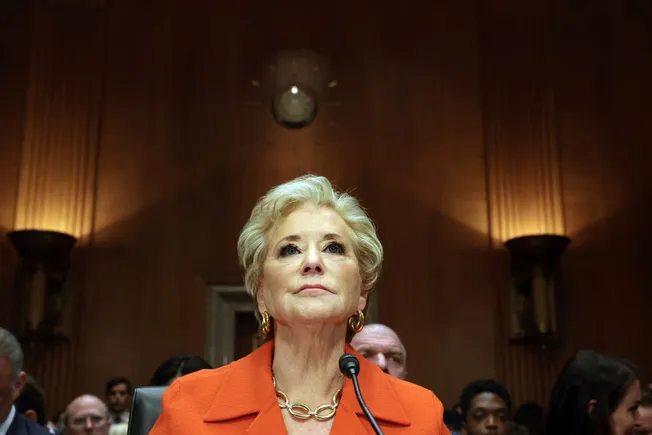
    Linda McMahon’s nomination for U.S. secretary of education advanced Thursday with the approval of the Senate Health, Education, Labor and Pensions Committee, which voted 12-11 along party lines.

    “We need a strong leader at the department who will get our education system back on track, and Ms. McMahon is the right person for the job,” said HELP Chair Bill Cassidy, R-La., before the vote.

    McMahon appeared before the committee Feb. 13 for a 2 ½ hour confirmation hearing where she spoke of her priorities for expanding school choice and skills-based learning, providing more decision-making power to local schools and parents, and protecting students from discrimination and harassment. 

    She also talked about her openness to making sweeping changes at the U.S. Department of Education, including moving programs like special education oversight and civil rights investigations to other federal agencies.

    We are failing our students, our Department of Education, and what we are doing today is not working, and we need to change it,” McMahon said at the time. McMahon formerly served as administrator of the Small Business Administration for two years in President Donald Trump’s first administration. She was previously president and CEO of World Wrestling Entertainment.

    Trump and the temporary Department of Government Efficiency, or DOGE, have already made major alterations to Education Department activities, including by attempting to freeze funding to states, canceling research contracts, halting diversity, equity and inclusion funds and programming, and calling for the end of “radical indoctrination” in K-12 schools.

    Trump has also said his goal is to close the Education Department — a move that would need congressional approval. 

    At Thursday’s HELP executive session, which lasted about 15 minutes, Sen. Tim Kaine, D-Va., said he was opposing McMahon’s nomination. “I find areas of agreement [with McMahon], but I can’t vote for somebody who will willfully engage in the destruction of the very agency she wants to lead. That is disqualifying,” Kaine said.

    Ranking member Bernie Sanders, D-Vt., also voted against McMahon’s nomination and criticized what he said was a move toward an authoritarian society where “all power is resting in the hands of a few in the White House.”

    “It doesn’t really matter who the Secretary will be, because he or she will not have the power,” Sanders said.

    Sen. Markwayne Mullin, R-Okla., before voting in favor of the nomination, said U.S. education has fallen in global rankings. “If we really say we’re for the kids, then let’s try something drastic,” Mullin said. “Let’s actually make a change, because we’re doing nothing but going backwards, and our test scores haven’t improved since 1979. They’ve just continued to fall.”

    A full Senate vote on McMahon’s confirmation is forthcoming.

    Source link

  • Higher Ed IT Outsourcing | Collegis Education

    Higher Ed IT Outsourcing | Collegis Education

    College administrators know that technology can be a powerful tool for improving operations and boosting student success. However, given the rapid pace of technological change and the shrinking pool of qualified IT professionals, getting a real return on IT investments can be a major challenge.

    One way to deal with these challenges is to outsource IT management and operations, and explore managed IT services for higher education.

    While change can seem daunting, IT outsourcing can significantly improve overall IT management and strategic focus while mitigating risk and reducing cost. It’s about more than just maintaining IT infrastructure and operations –– it’s about using technology strategically to create better student experiences and drive institutional success.

    Complexity: Streamlining the Transition

    One of the primary concerns I hear from administrators is the perceived complexity of moving to an outsourced IT model. Such a move impacts people, processes, and technology – so if not managed thoughtfully, unintended consequences could occur.

    However, a well-structured transition plan significantly simplifies the process and minimizes risk to business operations during the transition. At Collegis, we employ a phased approach, starting with a thorough assessment of an institution’s current IT ecosystem, including resources, processes, financials, systems, infrastructure, projects, operations, etc. This assessment forms the foundation of a customized transition plan designed around the institution’s unique needs, outlining each step – from stabilization and standardization to technology optimization and, finally, transformation.

    A key element of our approach is the stabilization phase, where we address immediate pain points and ensure that systems are secure and able to support day-to-day operations with no disruptions. This initial phase creates the foundation from which to build on and, ultimately, a level of confidence that sets the stage for longer-term improvements.

    By breaking the transition into manageable phases and providing clear communication throughout the process, we alleviate much of the anxiety associated with change. Instead of a big “lift and shift,” the multi-year transition plan means current systems and processes continue to be supported. Administrators often express relief once they understand our structured approach and how it addresses their specific needs.

    For example, our managed IT services solution for Saint Francis University involved stabilizing the core technology and infrastructure, standardizing expectations through strong IT governance (including installing a virtual CIO), and optimizing business processes and infrastructure for increased efficiency. This identified $200,000 in budgetary waste that was able to be reallocated toward technology upgrades.

    Cost: ROI Beyond the Bottom Line

    Cost is, of course, a major factor in any IT outsourcing decision. Administrators are understandably concerned about the financial implications of outsourcing.

    Studies show that many higher education institutions spend more than 75% of their IT budgets on basic support and technology maintenance. This is partially due to the technology debt that accrues after years of neglect and a lack of the precise skill sets needed to address deficiencies and create more efficient and effective operations. Just think of the impact technology could make if schools could reduce this amount by 25%+ and reallocate these dollars to improving student experiences or driving institutional cost savings.

    Outsourcing can free up these valuable financial resources, enabling institutions to focus on projects that drive growth and enhance the student experience. Collegis partners typically experience:

    • Predictable budgeting: We offer all standard IT management services through a clear and transparent fixed fee mutually determined for the life of the partnership so institutions know exactly what they spend for IT management every year. There are no surprises.
    • Access to top IT talent: While Collegis goes out of its way to assess existing staff and rebadge those who have the needed skill sets and cultural fit, we also bring a team of more than 185 IT professionals to our partnerships, ensuring schools have access to the right skillsets at the right time.
    • Better contract negotiations: Schools benefit from Collegis’s expertise in IT contract negotiations and cross-institutional expertise during all technology contract negotiations. We have long-term relationships with third-party vendors and can negotiate from a position of strength because we support dozens of similar institutions.
    • Lower cybersecurity costs: We handle network, application, and data security, reducing a school’s need for additional resources or security solutions. Our partnerships have also helped many schools successfully stabilize or even reduce their cybersecurity insurance premiums.
    • Elimination of consulting fees: Our model also eliminates the need for expensive consultants to fill staffing gaps or deliver strategic projects.

    Most schools find that an IT managed services partnership with Collegis either saves them money or is cost-neutral. Our economies of scale enable us to provide expert services at a lower cost than most institutions could achieve in-house. Plus, we provide clear service level agreements (SLAs) to ensure accountability.

    Beyond cost savings, outsourcing can also improve ROI by ensuring technology investments deliver their intended value. By leveraging the expertise of a dedicated IT partner, institutions can optimize their systems and ensure they are getting the most out of their technology investments.

    Control: Maintaining Oversight and Ensuring Security

    Some administrators worry about losing control when they outsource IT. They’re concerned about relinquishing oversight of critical systems and data. However, a well-designed outsourcing agreement includes clear governance structures and communication channels, ensuring they retain control.

    One way we’ve addressed this concern is by establishing a steering committee for IT governance that includes representatives from the institution’s leadership and fosters collaboration and shared decision-making.

    Data security is paramount, and we understand the sensitivity of institutional data. We are a SOC 2-compliant organization that undergoes regular external audits to ensure the security and integrity of the data we manage.

    Our dedicated information security officers (CISOs) work closely with each institution to implement best practices and address any security concerns. We also proactively monitor systems for potential threats, leveraging our experience working with multiple institutions to identify and mitigate risks before they escalate.

    Getting More Out of IT investments

    Outsourcing IT management in higher education can be a game-changer for institutions looking to navigate the complexities of the evolving IT landscape. Working with a partner that focuses on open communication, a phased approach to transitioning, a stronger cybersecurity posture, and leveraging your technology’s true potential can eliminate concerns about complexity, cost, and control while enabling schools to achieve strategic goals.

    Finally, when considering IT outsourcing, institutions cannot underestimate the importance and value of cultural fit. Finding a partner who shares your values and can be trusted to run a critical function for your institution is just as important as any of the other considerations I’ve highlighted above.

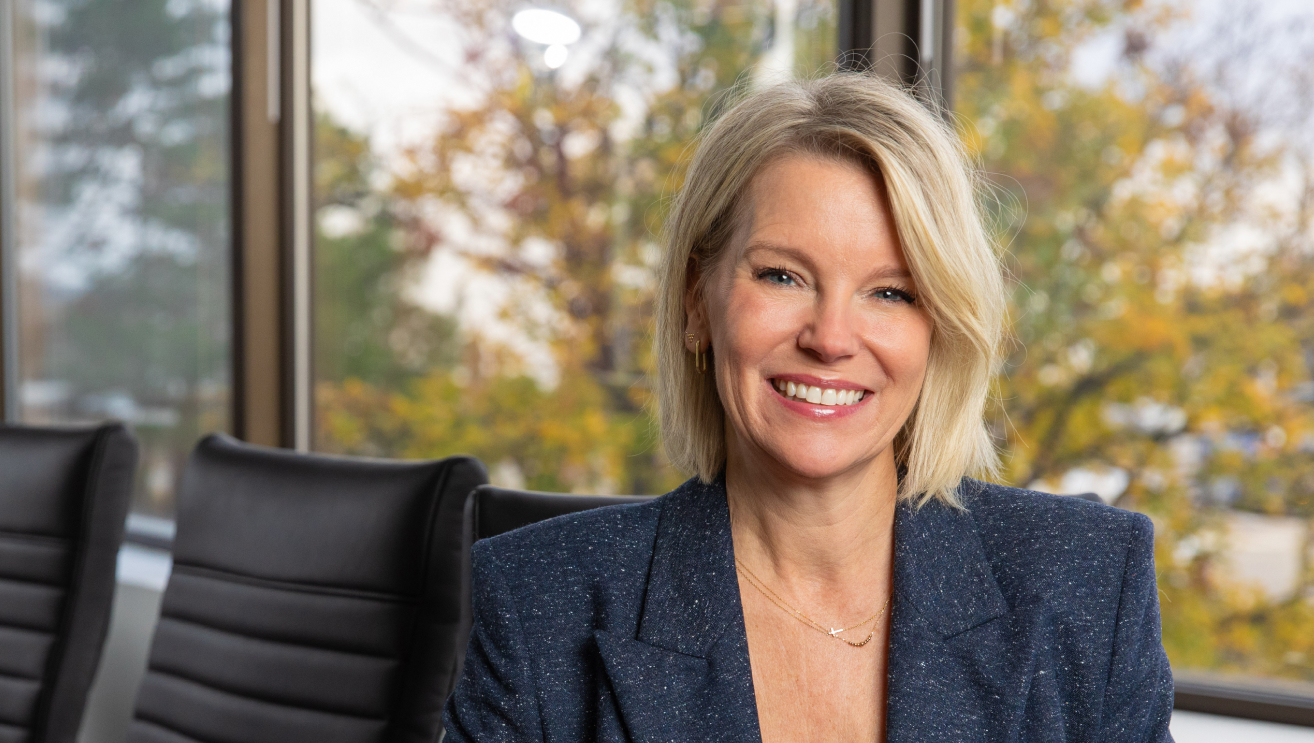
    — Kim Fahey, CEO Collegis Education

    Source link