Tag: Education

  • The Top 20 Education Next Articles of 2025

    The Top 20 Education Next Articles of 2025

    In a journal devoted to U.S. education reform, some recurring themes in its content are expected: student achievement, curriculum, teacher effectiveness, school choice, testing, accountability. Other topics are more contemporaneous, reflecting the functional reality of American schooling in its present context. The latter group may capture just a moment in time and give future education historians a glimpse at what mattered to early 21st century reformers (and seem quaint in hindsight). It may also reflect prescient insights from leaders, thinkers, and scholars—contributions that document the early stages of a significant transformation in education policy and practice (and later be deemed ahead of their time).

    What we can say confidently is that Education Next published a good mix of the classic and the contemporary in 2025, just as it has each year in its quarter century of existence. You can see for yourself below in our annual Top 20 list of most-read articles, which features an assortment of writings by researchers, journalists, academics, and teachers.

    Among the traditional fare, readers turned to EdNext to keep apprised of developments in classroom instruction, from reading to literacy to history. They wanted to know if the U.S. might be better off evaluating schools using the European model of inspections rather than, or in addition to, student test scores. Amid ongoing debates about the merits of using standardized tests to gauge student preparation, readers were drawn to the findings of researchers in Missouri that 8th graders’ performance on the state’s MAP test are highly predictive of college readiness. In the realm of teachers and teaching, proponents of merit pay received a boost by an analysis of Dallas ISD’s ACE program, which was shown to improve both student performance and teacher retention in the district.

    As for school choice, Education Next followed successes like the expansion of education savings account programs, the proliferation of microschools, and the federal scholarship tax credit passed by Congress as part of the One Big Beautiful Bill Act. But the stumbles of choice had more of a gravitational pull for readers. There were the defeats of private-school voucher measures in three states—continuing a long string of choice failures at the ballot box. There are the enrollment struggles of Catholic schools, which researchers found are impacted by competition from tuition-free charter schools. And just when Catholic and other private religious schools could have gotten a shot in the arm by being allowed to reformulate as religious charters, the Supreme Court deadlocked on the constitutionality of the question, leaving the matter to be relitigated for another day.

    There was no shortage of timely topics that exploded onto the scene and captivated readers. American education is still grappling with the fallout from the Covid-era school shutdowns, now five years in the rearview. Many harbor consternation about the politics of pandemic closures, as demonstrated by the enthusiasm over a new book that autopsied the decisions of that era and the subsequent book review that catapulted onto this year’s list (an unusual feat!). And now there’s research to corroborate the disaster closures were for public education. Two Boston University scholars find evidence of diminishing enrollment in public middle schools, an indication that families whose children were in the early grades in 2020 are parting for the more rigorous shores of private choice. But the post-pandemic problems in schooling have not been uniform. In one of the most-read articles this year, founding EdNext editor Paul Peterson and Michael Hartney show how, based on recent NAEP results, learning loss was greater among students in blue states that had more prolonged school shutdowns than in red states that reopened more quickly.

    Meanwhile, everyone in education circles continues to grapple with what to do about technology in the classroom. Two writers did so in our own pages, presenting opposite perspectives on Sal Khan’s prediction that AI will soon transform education with the equivalent of a personalized tutor for each student. And one of our favorite cognitive scientists gave readers a different way of thinking about how digital devices affect student attention.

    It is perhaps fitting that our most-read article of 2025 was also the cover story of the last print issue of Education Next. (You can read more about our transition to a web-only publication here.) After Donald Trump reassumed the presidency this year and his administration enacted major reductions to the federal bureaucracy, several education-focused programs (and indeed the entire U.S. Department of Education) came under intense scrutiny. One target was Head Start, in part because Project 2025 called to eliminate the program on the grounds it is “fraught with scandal and abuse” and has “little or no long-term academic value for children.” Paul von Hippel, Elise Chor, and Leib Lurie tested those claims against the research and found little basis for them. Yet they also highlight lingering questions about the program’s impact on students’ long-term success—and opportunities to answer them with new research. As of this writing, the nation’s largest early-education program survives, but the sector is still watching and waiting.

    And so are we all for what will happen next in education. Some issues captured by Education Next this year will continue into 2026. Some will flame out. And others that are unforeseen will arise. Readers can depend on Education Next to lean into all the twists and turns that come in the year ahead.

    The full top 20 list is here:

    Source link

  • Best Sites & Apps for K-12 Education Games

    Best Sites & Apps for K-12 Education Games

    This article was updated December 2025.

    Game-based learning turns potentially tedious study time into an adventurous knowledge quest, complete with catchy soundtracks and digital rewards. It helps keep kids engaged with the subject matter and motivated to pursue greater expertise. Best of all, web- or app-based gameplay integrates easily into both online and in-person classes.

    We’ve curated the best K-12 educational game sites and apps, arranged according to cost. Many are free (or offer free basic accounts), while some provide progress tracking and analysis tools for teachers. All are remarkably creative and will help kids enjoy learning.


    Best Free K-12 Education Games


    Source link

  • DEI in education: Pros and cons

    DEI in education: Pros and cons

    eSchool News is counting down the 10 most-read stories of 2025. Story #6 focuses on DEI in education.

    Key points:

    Diversity, equity, and inclusion (DEI) initiatives have become integral to educational institutions across the United States. DEI aims to foster environments where all students can thrive regardless of their backgrounds. The programs are designed to address systemic inequalities, promote representation, and create inclusive spaces for learning. However, as DEI becomes more prevalent, it also faces scrutiny and debate regarding its effectiveness, implementation, and impact on educational outcomes.

    One of the main advantages of DEI in education is the promotion of a more inclusive and representative curriculum. Students gain a broader understanding of the world by integrating diverse perspectives into course materials. This enhances critical thinking and empathy. Furthermore, the approach prepares students to navigate and contribute to our increasingly globalized society. Moreover, exposure to diverse viewpoints encourages students to challenge their assumptions and develop a more nuanced perspective on complex issues.

    DEI initiatives also contribute to improved academic outcomes by fostering a sense of belongingness amongst students. When students see themselves reflected in their educators and curricula, they are more likely to feel valued and supported. This leads to increased engagement and motivation. This sense of inclusion can result in higher retention and graduation rates (particularly among historically marginalized groups). Furthermore, diverse learning environments encourage collaboration and communication skills because students learn to work effectively with peers from different backgrounds.

    In addition to benefiting students, DEI programs can enhance faculty satisfaction and retention. Institutions that prioritize diversity in hiring and promotion practices create more equitable workplaces. This can lead to increased job satisfaction among faculty members. Mentorship programs and professional development opportunities focused on DEI can also support faculty in creating inclusive classroom environments, which further benefits students.

    Despite these benefits, DEI initiatives are not without challenges. One significant concern is the potential for resistance and backlash from individuals who perceive DEI efforts as a threat to traditional values (in other words, a form of reverse discrimination). This resistance can manifest in various ways (opposition to DEI policies, legal challenges, and political pressure). Such opposition can hinder the implementation and effectiveness of DEI programs, thereby creating a contentious atmosphere within educational institutions.

    Another challenge is the difficulty in measuring the success of DEI initiatives. Without clear metrics, it can be challenging to assess the impact of these programs on student outcomes, faculty satisfaction, or institutional culture. The lack of quantifiable data can lead to skepticism about the efficiency of DEI efforts, thus resulting in reduced support or funding for such programs. Additionally, the absence of standardized definitions and goals for DEI can lead to inconsistent implementation across institutions.

    Resource allocation is also a critical issue in the execution of DEI initiatives. Implementing comprehensive DEI programs often requires significant financial investment (funding for specialized staff, training, and support services). In times of budget constraints, institutions may struggle to prioritize DEI efforts. This may lead to inadequate support for students and faculty. Without sufficient resources, DEI programs may fail to achieve their intended outcomes thus further fueling criticism and skepticism.

    The potential for tokenism is another concern associated with DEI initiatives. When institutions focus on meeting diversity quotas without fostering genuine inclusion, individuals from underrepresented groups may feel marginalized or exploited. Tokenism may undermine the goals of DEI by creating superficial diversity that does not translate into meaningful change or equity. To avoid this, institutions must commit to creating inclusive environments where all individuals feel valued and empowered to contribute fully.

    Furthermore, DEI programs can sometimes inadvertently reinforce stereotypes or create division among student populations. For example, emphasizing differences without promoting commonalities may lead to increased social fragmentation or feelings of isolation among certain groups. Educators must carefully balance the celebration of diversity with the promotion of unity and shared values to foster cohesive learning communities.

    In summary, DEI initiatives in education offer numerous benefits, but these programs also face significant challenges. To maximize the positive impact of DEI efforts, educational institutions must commit to thoughtful, well-resourced, and inclusive implementation strategies that promote genuine equity and inclusion for all members.

    Latest posts by eSchool Media Contributors (see all)

    Source link

  • 5 early childhood education highlights of 2025

    5 early childhood education highlights of 2025

    by Jackie Mader, The Hechinger Report
    December 24, 2025

    In the nearly 13 years since I wrote my first early childhood story for The Hechinger Report, I have never experienced a year quite like 2025. From the gutting of federal early childhood offices to threats to Head Start and the deeply felt ramifications of aggressive federal immigration enforcement, news on the early ed beat felt constant — and especially urgent — this year.  

    Amid all this, there were some promising steps taken, especially at the state level, to elevate children’s issues and pay for programs that support the earliest years of life. Here are five highlights, including a few you may have missed: 

    New Mexico introduced universal child care. New Mexico was the first state in the country to roll out universal child care to every family, regardless of income. Experts are cautiously optimistic, and acknowledge the state likely has some kinks to work out. One New Mexico source I spoke to said she’s especially worried that wealthier families will snatch up spots if guardrails aren’t put in place to prioritize certain populations, including children with disabilities. Another advocate told me she is worried that the wages for early childhood educators are still too low. This is a story that will continue to play out over the next few years, and will be watched carefully. Still, in a country that has long underfunded early learning, experts are hopeful that other states will follow suit and invest more in the child care industry in ways that support the child care staff and families.

    New Jersey, which leads the nation in excluding young children with disabilities, committed to investigate how to improve inclusive practices: Earlier this year, a Hechinger Report investigation found New Jersey is the worst in the nation at making sure young students with disabilities are learning alongside their peers for at least 80 percent of the day, which is a federal metric for inclusion. After our series was published, a council that advises New Jersey education officials on special education issues announced it will investigate inclusion rates for young children and look at how state educators and administrators are trained.

    States and municipalities invested in early childhood: Cincinnati, Montana and California’s Alameda County increased their support for early learning this year, said Emmy Liss, a researcher and policy consultant for the think tank New America’s New Practice Lab. In San Antonio, the city’s pre-K program expanded this year to serve infants and toddlers. In Colorado, voters approved new “taxing districts” that will raise sales tax for early childhood programs. “We see this consistent pattern of mayors, would-be mayors, county officials, saying, ‘Our families can’t withstand this anymore, and we have the power and the mandate from our community to invest in early childhood,’” Liss said. “I feel optimistic because of that.”

    Some states expanded family-friendly policies: After reporting by Hechinger contributor Sarah Carr this year found few parents are made aware of their infant’s rights to early intervention services, Illinois passed a law requiring that families with infants who stay in the NICU are connected to those early therapies. In Colorado, state officials added NICU leave to the state’s paid family medical leave program. Minnesota policymakers are on the cusp of launching their state’s paid family leave program.

    Pittsburgh embraced a citywide play-based initiative: After decades of research that shows the importance of play for healthy development, a new initiative in Pittsburgh is putting research into action. After funding several years of play-based projects around the city, the Let’s Play, PGH program, funded by the nonprofit Remake Learning and the Grable and Henry L. Hillman foundations, rolled out permanent play-based experiences this year. Those include a “Clayground,” where families can try hands-on clay sculpting, and a “Discovery Tree,” an indoor structure with various play and learning features. “I think society, especially in education, we’re moving away from valuing play in a way that it’s often spoken of more in a pejorative sense, like there’s more serious things we have to do,” said Tyler Samstag, executive director of Remake Learning. “But there’s this rich research around the importance of play,” he added. And, “there’s a kind of reeling back from the pandemic era of always being in front of a screen.” 

    I also asked a few early childhood experts what they plan to watch for in 2026:

    • I’m watching the dual trends of state momentum for universal child care proposals against the budgetary headwinds states are facing as a result of economic policies and H.R. 1 [the “big, beautiful bill”]. 

    Elliot Haspel, senior fellow at Capita

    • The early care and education community will have the opportunity to stake out bold policy positions, like those we saw in New Mexico, New York, Connecticut, Montana and Vermont this past year, while facing the challenge of protecting children, families and educators from federal policies that will wreak havoc on safety net programs and state budgets. 

    Albert Wat, deputy director of advocacy and impact at the Alliance for Early Success

    • I am paying attention to whether there are signs of even a minor shift away from this dominant narrative — that something close to universal child care is the ‘true goal,’ which we now seem to be accepting without question. My concern is that the needs of young children will once again get blotted out by the needs of grown-ups, the needs of the economy, the needs of business. 

    Katharine B. Stevens, founder and president of the Center on Child and Family Policy

    • Differences between the House and Senate funding bills, which will be settled in January, which could affect funding for various early childhood programs.

    Sarah Gilliland, senior policy manager, New America’s New Practice Lab

    • With New York City’s cost of living driving families away in droves, the time is ripe for universal child care — and it can happen! We look forward to working with Mayor-elect Mamdani and his team as they develop plans that lift up home-based child care as a vital support. 

    Jessica Sager, CEO, All Our Kin

    Thank you so much to all of you for your support and readership this year, and please don’t hesitate to reach out with any story ideas, questions or comments. Happy holidays!

    This story about early childhood education was produced by The Hechinger Report, a nonprofit, independent news organization focused on inequality and innovation in education. Sign up for the Hechinger newsletter.

    This <a target=”_blank” href=”https://hechingerreport.org/5-early-ed-highlights-from-2025/”>article</a> first appeared on <a target=”_blank” href=”https://hechingerreport.org”>The Hechinger Report</a> and is republished here under a <a target=”_blank” href=”https://creativecommons.org/licenses/by-nc-nd/4.0/”>Creative Commons Attribution-NonCommercial-NoDerivatives 4.0 International License</a>.<img src=”https://i0.wp.com/hechingerreport.org/wp-content/uploads/2018/06/cropped-favicon.jpg?fit=150%2C150&amp;ssl=1″ style=”width:1em;height:1em;margin-left:10px;”>

    <img id=”republication-tracker-tool-source” src=”https://hechingerreport.org/?republication-pixel=true&post=114137&amp;ga4=G-03KPHXDF3H” style=”width:1px;height:1px;”><script> PARSELY = { autotrack: false, onload: function() { PARSELY.beacon.trackPageView({ url: “https://hechingerreport.org/5-early-ed-highlights-from-2025/”, urlref: window.location.href }); } } </script> <script id=”parsely-cfg” src=”//cdn.parsely.com/keys/hechingerreport.org/p.js”></script>

    Source link

  • Higher Education Inquirer : HELU’s Wall-to-Wall & Coast-to-Coast Report: December 2025

    Higher Education Inquirer : HELU’s Wall-to-Wall & Coast-to-Coast Report: December 2025

    To win the higher education system we want will require national, coordinated, multi-union organizing campaigns that build collective power across the sector. As one important step towards this broader goal, HELU is organizing a Northeast Regional Bargaining Summit in Amherst, MA on Jan 9-10, 2026.

    Source link

  • ED to Investigate Brown Over Campus Shooting

    ED to Investigate Brown Over Campus Shooting

    The Department of Education is investigating whether Brown University violated the Clery Act in relation to a campus shooting earlier this month that left two students dead.

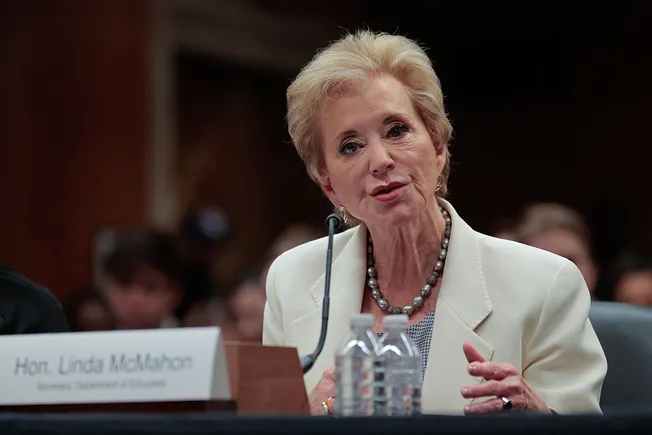
    “After two students were horrifically murdered at Brown University when a shooter opened fire in a campus building, the department is initiating a review of Brown to determine if it has upheld its obligation under the law to vigilantly maintain campus security,” U.S. Secretary of Education Linda McMahon said in a Monday news release announcing the investigation. 

    The release also questioned whether Brown’s video surveillance system was “up to appropriate standards” and accused the university of being “unable to provide helpful information about the profile of the alleged assassin” in the aftermath of the shooting. 

    The suspected shooter, Claudio Manuel Neves Valente, a former Brown student, evaded capture and was found dead from a self-inflicted gunshot wound following a five-day manhunt. While some observers accused Brown of substandard security practices, which critics say delayed the capture of the suspected shooter, others allege the FBI bungled the search.

    ED is also probing whether Brown’s emergency notifications about the shooting were delayed.

    The department requested various records to aid in the investigation, including copies of annual security reports; crime logs; student and employee disciplinary referrals “related to the illegal possession, use, and/or distribution of weapons, drugs, or liquor”; and copies of all Brown policies and procedures, among other campus safety documents.

    The same day that ED announced the investigation into Brown, the private university in Rhode Island placed its top campus safety official, Rodney Chatman, on administrative leave as it reviews the shooting. Hugh T. Clements, the former chief of police of the Providence Police Department, will take on the top public safety job as Brown conducts a security assessment.

    Brown officials did not respond to a request for comment from Inside Higher Ed.

    Source link

  • Edtech teaching strategies that support sustainability

    Edtech teaching strategies that support sustainability

    eSchool News is counting down the 10 most-read stories of 2025. Story #7 focuses on sustainability in edtech.

    Key points:

    Educational technology, or edtech, has reshaped how educators teach, offering opportunities to create more sustainable and impactful learning environments.

    Using edtech in teaching, educators and school leaders can reduce environmental impact while enhancing student engagement and creativity. The key is recognizing how to effectively leverage edtech learning strategies, from digitized lesson plans to virtual collaboration, and keeping an open mind while embracing new instructional methods.

    Rethinking teaching methods in the digital age

    Teaching methods have undergone significant transformation with the rise of educational technology. Traditional classroom settings are evolving, integrating tools and techniques that prioritize active participation and collaboration.

    Here are three edtech learning strategies:

    • The flipped classroom model reverses the typical teaching structure. Instead of delivering lectures in class and assigning homework, teachers provide pre-recorded lessons or materials for students to review at home. Classroom time is then used for hands-on activities, group discussions, or problem-solving tasks.
    • Gamification is another method gaining traction. By incorporating game-like elements such as point systems, leaderboards, and challenges into lesson plans, teachers can motivate students and make learning more interactive. Platforms like Kahoot and Classcraft encourage participation while reducing paper-based activities.
    • Collaborative online tools, such as Google Workspace for Education, also play a critical role in modern classrooms. They enable students to work together on projects in real time, eliminating the need for printed resources. These tools enhance teamwork and streamline the sharing of information in eco-friendly ways.

    Sustainability and innovation in education

    Have you ever wondered how much paper schools use? There are approximately 100,000 schools in this country that consume about 32 billion sheets of paper yearly. On a local level, the average school uses 2,000 sheets daily–that comes out to $16,000 a year. Think about what else that money could be used for in your school.

    Here are ways that edtech can reduce reliance on physical materials:

    • Digital textbooks minimize the need for printed books and reduce waste. Through e-readers, students access a vast library of resources without carrying heavy, paper-based textbooks.
    • Virtual labs provide another example of sustainable education. These labs allow students to conduct experiments in a simulated environment, eliminating the need for disposable materials or expensive lab setups. These applications offer interactive simulations that are cost-effective and eco-conscious.
    • Schools can also adopt learning management systems to centralize course materials, assignments, and feedback. By using these platforms, teachers can cut down on printed handouts and encourage digital submissions, further reducing paper usage.

    Additionally, edtech platforms are beginning to incorporate budget-friendly tools designed with sustainability in mind; some of these resources are free. For instance, apps that monitor energy consumption or carbon footprints in school operations can educate students about environmental stewardship while encouraging sustainable practices in their own lives.

    Supporting teachers in the shift to edtech

    Transitioning to edtech can be a challenging yet rewarding experience for educators. By streamlining administrative tasks and enhancing lesson delivery, technology empowers teachers to focus on what matters most: engaging students.

    Circling back to having an open mind–while many teachers are eager to adopt edtech learning strategies, others might struggle more with technology. You need to expect this and be prepared to offer continuous support. Professional development opportunities are essential to ease the adoption of edtech. Schools can offer workshops and training sessions to help teachers feel confident with new tools. For instance, hosting peer-led sessions where educators share best practices fosters a collaborative approach to learning and implementation.

    Another way to support teachers is by providing access to online resources that offer lesson plans, tutorials, and templates. Encouraging experimentation and flexibility in teaching methods can also lead to better integration of technology. By allowing teachers to adapt tools to their unique classroom needs, schools can foster an environment where innovation thrives.

    If you’re concerned about bumps on this road, remember teachers have common traits that align with edtech. Good teachers are organized, flexible, have communication skills, and are open-minded. Encourage a team approach that’s motivating and leverages their love of learning.

    Bringing sustainability and enhanced learning to classrooms

    The integration of edtech learning strategies into classrooms brings sustainability and enhanced learning experiences to the forefront. By reducing reliance on physical materials and introducing eco-friendly tools, schools can significantly lower their environmental impact. At the same time, teachers gain access to methods that inspire creativity and collaboration among students.

    There’s also this: Edtech learning strategies are constantly evolving, so you’ll want to stay on top of these trends. While many of those focus on learning strategies, others are more about emergency response, safety, and data management,

    Investing in modern technologies and supporting teachers through training and resources ensures the success of these initiatives. By embracing edtech learning strategies, educators and administrators can create classrooms that are not only effective but also sustainable–a win for students, teachers, and the planet.

    Latest posts by eSchool Media Contributors (see all)


    Source link

  • DOJ: Education Department’s race-based grants are unconstitutional

    DOJ: Education Department’s race-based grants are unconstitutional

    This audio is auto-generated. Please let us know if you have feedback.

    Dive Brief: 

    • The U.S. Department of Justice issued a legal memo earlier this month declaring that several of the U.S. Department of Education’s grant programs for minority-serving institutions and students from underrepresented backgrounds are unconstitutional. 
    • The memo, which was made public Friday, said the DOJ considered the grant programs — some of them decades-old — unlawful because they have racial criteria, such as requiring institutions to have a certain share of students from a particular racial or ethnic group. 
    • Continuing several of the programs would be unconstitutional, the DOJ said, adding the Education Department could instead redirect the funds. However, the memo concluded that some of them could continue under racially neutral criteria. 

    Dive Insight: 

    The Education Department had already canceled grants for MSIs before the DOJ released its memo. 

    In September, the Education Department said it would end roughly $350 million in discretionary grants for MSIs, arguing the funding was discriminatory because colleges had to enroll certain shares of racial or ethnic minority students to be eligible. However, the Education Department still disbursed $132 million in congressionally mandatory grant funding to MSIs. 

    In a statement Friday, U.S. Education Secretary Linda McMahon praised the new memo from the DOJ’s Office of Legal Counsel. 

    “We cannot, and must not, attach race-based conditions when allocating taxpayer funding,” McMahon said. “This is another concrete step from the Trump Administration to put a stop to DEI in government and ensure taxpayer dollars support programs that advance merit and fairness in all aspects of Americans lives.” 

    Citing the U.S. Supreme Court decision striking down race-conscious admissions in 2023, the memo found the following grant programs were unconstitutional and said that the Education Department may repurpose their funding:

    • Grant programs for Hispanic-serving institutions, including those aimed at improving their academic offerings and increasing the number of Hispanic and low-income students attaining STEM degrees. 
    • Grants for Alaska Native and Native-Hawaiian-serving institutions. 
    • Grants for Native American-serving, nontribal institutions. 
    • Grants for community-based organizations that primarily provide career and technical education for Native-Hawaiian students. 
    • Formula-based grants for predominantly-Black institutions, which are intended to be used to improve the colleges’ ability to serve low- and middle-income Black students. 

    However, the DOJ said the Education Department could continue the following programs so long as it set aside their race-based eligibility criteria: 

    • The Minority Science and Engineering Improvement Program, which aims to increase the number of minority students entering science and engineering fields. 
    • The Ronald E. McNair Postbaccalaureate Achievement Program, which gives colleges funding to support students from disadvantaged backgrounds in research and other scholarly work. 
    • Competitive grant programs for predominantly-Black institutions, which has included funding for several types of initiatives, including establishing STEM programs and improving educational outcomes of African American men. 
    • Student Services Support Program, which provides funding to colleges to help them bolster student services. 

    The Education Department said it is reviewing the memo’s impact on its grant programs. 

    Virginia Rep. Bobby Scott, the top Democrat on the House’s education committee, slammed the memo in a statement Friday, arguing it was at odds with the Higher Education Act’s purpose of ensuring that students from all backgrounds “can access an affordable, quality degree.” 

    “A college degree remains the surest path to financial stability,” Scott said. “This is particularly true for low-income students and students of color whose educational and workforce opportunities have historically been limited by intergenerational poverty and systemic racism.”

    Source link

  • DOJ Report Declares MSIs Unconstitutional

    DOJ Report Declares MSIs Unconstitutional

    Photo illustration by Justin Morrison/Inside Higher Ed | d1sk and nullplus/iStock/Getty Images

    The Department of Justice has declared a slew of Department of Education programs and grants unconstitutional based on the Supreme Court’s decision in Students for Fair Admissions v. Harvard and the University of North Carolina.

    According to a report by the DOJ’s Office of Legal Counsel (OLC), minority-serving institution (MSI) programs are unlawful because they award money to colleges and universities based on the percentage of students of a certain race. The report said such programs “effectively [employ] a racial quota by limiting institutional eligibility to schools with a certain racial composition” and should no longer be funded.

    The report also deemed it unconstitutional that two scholarship providers, the United Negro College Fund and the Hispanic Scholarship Fund, both of which award scholarships to students of a specific race, are given access to Free Application for Federal Student Aid data.

    In a statement from the education department, Secretary Linda McMahon said that the report is “another concrete step from the Trump Administration to put a stop to DEI in government and ensure taxpayer dollars support programs that advance merit and fairness in all aspects of Americans lives. The Department of Education looks forward to working with Congress to reform these programs.”

    The statement noted that the department is “currently evaluating the full impact of the OLC opinion on affected programs.”

    The OLC also evaluated the constitutionality of two TRIO programs, the Ronald E. McNair Postbaccalaureate Achievement Program, a scholarship that helps students from underrepresented backgrounds work towards Ph.D.s, and Student Support Services, which provides grants for institutions to develop academic support infrastructure. It ultimately concludes that those programs are constitutional and may continue to be funded.

    Nevertheless, in ED’s announcement of the DOJ decision, those TRIO programs were included in a list of “affected programs.”

    The Trump administration’s attack on MSI programs began in July, when the U.S. Solicitor General declined to defend against a lawsuit challenging the definition of a Hispanic-serving institution (HSI) as one that enrolls a student body with at least 25 percent Hispanic students. In September, ED officially announced its plans to end these programs, terminating the majority of MSI grants for FY2025.

    Supporters of MSI programs strongly criticized the OLC’s report.

    “Today’s baseless opinion from the Justice Department is wrong, plain and simple. Donald Trump and his Administration are once again attacking the institutions that expand opportunity for millions of aspiring students of all backgrounds. The opinion ignores federal law, including Congress’ bipartisan support for our nation’s Hispanic-Serving Institutions and Minority-Serving Institutions, including more than 100 MSIs in California alone,” Senator Alex Padilla, a California Democrat who chairs the Senate HSI Caucus, wrote in a statement. “Every student deserves access to the American Dream. This unconscionable move by this Administration will harm millions of students who deserve better.”

    Presidents of institutions that could be impacted by the legal decision are also speaking out. Wendy F. Hensel, president of the University of Hawai’i, called the news “disappointing” in a statement to the campus community. UH is an Alaskan Native and Native Hawaiian-serving institution, an Asian American and Native American Pacific Islander-serving institution, and a Native Hawaiian Career and Technical Education grantee; Hensel said these programs are “vital” to UH and the state of Hawai’i.

    She wrote that the university’s general counsel is examining the full report and that campus leadership is currently “evaluating the full scope of the impact on our campuses and programs and implementing contingency plans for the loss of funding.”

    “We recognize that this news creates uncertainty and anxiety for the students, faculty and staff whose work and educational pathways are supported by these funds. We are actively assessing how best to support the people and programs affected as we navigate this evolving legal landscape,” she wrote.

    Trump’s allies, however, applauded the report and ED’s efforts to end MSI programs.

    “Today’s announcement is a strong step by the Trump administration to end racial discrimination in our higher education system. These programs determine funding eligibility through arbitrary, race-based quotas which unfairly assume a student’s background determines his or her educational destiny,” Education and Workforce Committee Chairman Tim Walberg, a Republican representative from Michigan, wrote in a statement. “America was founded on the principles of freedom and equality, and that every citizen can chase the American Dream. In Congress, we are working with the Trump administration to create a fairer higher education system so every student has a strong chance at success.”

    Source link

  • CSU Trade Workers Union Votes to Strike Statewide

    CSU Trade Workers Union Votes to Strike Statewide

    David McNew/Getty Images

    Members of Teamsters Local 2010, a union representing 1,100 skilled trade employees at the California State University system, voted Monday to authorize a strike across all 22 campuses.

    CSU refused to pay contractually guaranteed five percent raises and salary step increases in July, and the union has filed several unfair labor practice complaints against the university system, union representatives said in a news release. Teamsters members are not striking yet, but are prepared to do so “if CSU continues to break the law, ignore their contract, and refuse to pay the raises that its skilled workforce is owed,” the release stated.

    “CSU is steering itself into a completely avoidable battle with the Teamsters Union. Our members will not stand by while the University commits unfair practices, misuses state funds, breaks its promises, and enriches executives at the expense of the workers who keep its campuses running,” Jason Rabinowitz, secretary-treasurer of Teamsters Local 2010, said in the release. “CSU’s greed, dishonesty and disrespect for its workforce are indefensible. This vote makes clear that we are ready to strike if CSU continues to rip us off while lining their own pockets.”

    In a statement, a spokesperson for the CSU Chancellor’s office said the vote is procedural and that a strike is not necessarily “imminent.”

    “The result of the strike authorization vote is disappointing, as the current labor agreement, negotiated and ratified through the collaborative collective bargaining process, contained clear contingency provisions language that tied certain salary increases to the receipt of new, unallocated, ongoing state funding. Those contingencies were not met, leading to the current reopener negotiations on salary terms,” the spokesperson said. “We believe the time and resources of all parties would be more productively devoted to the bargaining table, where meaningful progress can be made, rather than toward preparing for a strike.”

    Source link