Tag: Education

  • Trump administration rescinds Title IX guidance on athlete pay

    Trump administration rescinds Title IX guidance on athlete pay

    The Trump administration announced Wednesday it is rolling back guidance issued in the final days of the Biden administration that said payments to college athletes through revenue-sharing agreements or from name, image and likeness deals “must be made proportionately available to male and female athletes.”

    Republicans quickly criticized the guidance and called for its rescission, arguing that mandating equal pay between men and women’s sports could cause some colleges to cut athletics programs.

    Under Title IX, colleges must provide “substantially proportionate” financial assistance to male and female athletes, though it wasn’t clear until the Biden guidance whether that requirement applied to NIL deals or revenue-sharing agreements. A settlement reached in the House v. NCAA case would require colleges to share revenue with athletes starting in the 2025–26 academic year and provide back pay.

    The Trump administration said the guidance was “overly burdensome” and “profoundly unfair.”

    “Enacted over 50 years ago, Title IX says nothing about how revenue-generating athletics programs should allocate compensation among student athletes,” acting assistant secretary for civil rights Craig Trainor said in a statement. “The claim that Title IX forces schools and colleges to distribute student-athlete revenues proportionately based on gender equity considerations is sweeping and would require clear legal authority to support it.”

    A federal judge is set to sign off on the House settlement later this spring. Several athletes have objected to the plan, including some groups of women athletes who argue the revenue won’t be shared equitably and will primarily benefit men who play football and basketball.

    Source link

  • Senate holds confirmation hearing for Linda McMahon

    Senate holds confirmation hearing for Linda McMahon

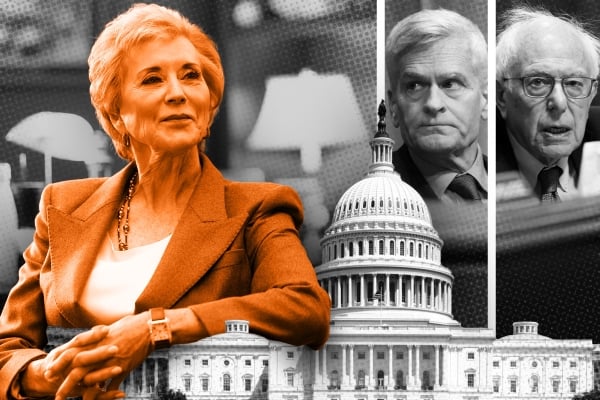
    President Trump’s pick to lead the Education Department, Linda McMahon, will appear today before a key Senate committee to kick off the confirmation process.

    The hearing comes at a tumultuous time for the Education Department and higher education, and questions about the agency’s future will likely dominate the proceedings, which kick off at 10 a.m. The Inside Higher Ed team will have live updates throughout the morning and afternoon, so follow along.

    McMahon has been through the wringer of a confirmation hearing before, as she was appointed to lead the Small Business Administration during Trump’s first term. But this time around the former wrestling CEO can expect tougher questions, particularly from Democrats, as the Trump administration has already taken a number of unprecedented, controversial and, at times, seemingly unconstitutional actions in just three short weeks.

    Our live coverage of the hearing will kick off at 9:15 a.m. In the meantime, you can read more about McMahon, the latest at the department and what to expect below:

    will embed youtube


    Source link

  • Realising the collaborative advantage of the Healthcare Education Consortium

    Realising the collaborative advantage of the Healthcare Education Consortium

    • By Darryll Bravenboer, Director of Apprenticeships and Professor of Higher Education and Skills, Middlesex University.

    We have all seen the media coverage with packed A&E departments, patients waiting for hours and being treated in corridors. Last week was the busiest for the NHS in England so far this year, with more patients in hospitals than at any other point this winter, and yet without action the situation will get worse.

    The NHS currently employs around 1.5 million people, making it the biggest employer in Europe. However, the NHS clinical workforce is not enough to keep pace with demand. The population of England is projected to grow to 61.7 million by mid-2043, and we are living longer which often means more complex illnesses.

    There are currently over 112,000 NHS vacancies, the population of England is projected to be 61.7 million by mid-2043, and when combined with demographic changes, a shortfall of between 260,000 and 360,000 health service staff by 2036/37 is predicted by 2036/37.

    The NHS Long Term Workforce Plan (2023) has set ambitious clinical workforce commitments with the aim to significantly increase the number of health staff, including doctors, nurses and midwives by 2032.

    To achieve this, employers and universities delivering degree apprenticeships need to work together and develop innovative programmes that benefit students, the public sector and ultimately the public.

    The University Alliance (UA) represents leading professional and technical universities, educating around 30% of all nursing apprentices in England, plus a substantial number of allied health professionals and healthcare degree apprentices.

    Several UA members* have formed the Health Education Consortium to coordinate and expand healthcare degree apprenticeships to meet the NHS Long Term Workforce Plan goals.

    By collaborating, we aim to increase the number of apprentice starts, reduce duplication and pool resources, creating a joined-up programme for local, regional and national apprenticeship provision. The Health Education Consortium will work with NHS England to scale operations in partnership with NHS Trusts and Integrated Care Boards, co-designing programmes to meet their needs.

    The key benefit for healthcare employers of a higher education collaborative approach is that by working together, we can increase training places while minimising costs.

    • A comprehensive degree apprenticeship offer – working on their own individual universities are unlikely to have the resources to meet national employer needs. By joining forces, we can pool our funds and expertise and offer a broader range of healthcare degree apprenticeships to meet NHS requirements.
    • Driving innovation: a commitment to share innovative practice is at the heart of the Health Education Consortium and ensures that we work as an innovation engine creating solutions to the growth barriers employers identify.
    • Scalability and growth: working together means it is possible to scale up provision to meet the increasing demand outlined in the NHS Long-Term Workforce Plan.
    • Towards a one-stop-shop for healthcare education: providing a ‘one-stop-shop’ for NHS, employers save time and money as they do not need to communicate and work with a range of universities.

    The benefits outlined above make the case for a more collaborative approach to delivering higher education, which, at the same time, better meets the needs of NHS employers. This aligns with the government’s ambition for greater collaboration to drive efficiency and contribute towards economic growth.

    At a time of financial challenge for the higher education sector, the significant growth of degree apprenticeships within the NHS, made possible through effective university collaboration, could address government expectations while contributing to the financial sustainability of providers in the sector.

    *Middlesex University, Birmingham City University, Oxford Brookes University, University of Hertfordshire, Kingston University and University of Greenwich.

    Source link

  • From Potholes to Progress: How Higher Education is Driving Solutions to the UK’s Pressing Challenges

    From Potholes to Progress: How Higher Education is Driving Solutions to the UK’s Pressing Challenges

    It’s National Apprenticeship Week. Today on the HEPI blog, you can read about how University Alliance members are using healthcare degree apprenticeships to address workforce shortages: click here to read.

    Or carry on reading to hear from Viggo Stacey at QS about how the researchers at Swansea University are solving contemporary problems like potholes with cutting-edge research.

    • By Viggo Stacey, International Education & Policy Writer at QS Quacquarelli Symonds.

    Drivers in England and Wales encounter an average of six potholes per mile, and damage sustained from them cost drivers an average of £460 in 2024. One estimate put the cost of potholes to the UK economy at £14bn last year.

    Research published last week by Swansea University provides a real solution to this critical problem. Adding plant spores to bitumen will create a self-healing road surface that can extend its lifespan by 30%.

    This speaks directly to the Secretary of State for Education’s five key priorities for reform of the higher education system – that universities should play a great civic role in their communities.

    Local communities and businesses need to benefit fully from the work of higher education institutions, Bridget Phillipson wrote to the sector in November last year and as Debbie McVitty recently covered over at Wonkhe. This research will help individual drivers, councils across the country and UK industry.

    But another thing that is so exciting about this discovery is where it came from. Swansea University, on the south coast of Wales and an institution whose Vice Chancellor in the last week has said higher education in Wales is facing ‘the toughest [financial] position that we’ve been in’, is showing what its academics are capable of, given the right resources.

    And that leads to the second place where this research originated.

    One of those involved is Dr Jose Norambuena-Contreras, a Senior Lecturer in Swansea’s Department of Civil Engineering, originally from Chile, while Dr Francisco Martin-Martinez is a Lecturer at King’s College London’s Chemistry Department who hails from Spain.

    It is also notable that this news came out on the day that Keir Starmer became the first UK prime minister to join a gathering with EU leaders since Brexit.

    While rejoining the EU’s single market is firmly off the cards, a deal on youth mobility is an obvious open goal. Some 57% of voters recently backed a scheme for the under 30s, in addition to polling last year finding 58% thinking a scheme is a good idea.

    The UK Science and Tech Secretary, Peter Kyle, rightly met with EU counterparts in January to push to turbo-charge UK-EU science and technology links in a bid to tackle shared global challenges.

    Potholes in the UK might just be a small part of the UK’s challenge. But as Norambuena-Contreras puts it, it’s a ‘very sexy topic’ that British people like to talk about. If researchers can continue to identify problem areas that resonate with local communities and industry, they’ll be on to a winner.

    International talent is, and will continue to be, key to solving crises across the UK. If only researchers at the country’s top business schools were empowered to find solutions to filling higher education’s financial gaps in the same way as others can for potholes.

    Jessica Turner, CEO at QS Quacquarelli Symonds, commented:

    The UK’s universities are not just centres of learning—they are engines of economic transformation and real-world problem-solving.

    Research from the University of Bristol released this week – showing that it contributed £1.13 billion to the West of England economy in 2022/23 – is just one example of that.

    Swansea University’s ground-fixing research is a perfect example of how higher education drives innovation with tangible benefits for communities, industries, and the economy,” Turner added.

    As the QS World Future Skills Index highlights, the UK is a global leader in academic readiness and future workforce skills. To sustain this momentum, continued investment in universities is essential—not just to address today’s challenges but to shape the solutions of tomorrow.

    Source link

  • Higher Education Inquirer : Michael Burry’s Warning: Get Out! (Money Notes)

    Higher Education Inquirer : Michael Burry’s Warning: Get Out! (Money Notes)

    Michael Burry, the legendary investor who predicted the 2008 crash, just made his biggest bearish bet ever – a staggering $1.6 billion against the U.S. stock market. He’s not just talking about a crash anymore; he’s putting his money where his mouth is. Even more shocking? He’s completely exited his U.S. positions and is betting big on China.


    Source link

  • Trump’s vision for dismantling the Department of Education (PBS News Hour)

    Trump’s vision for dismantling the Department of Education (PBS News Hour)

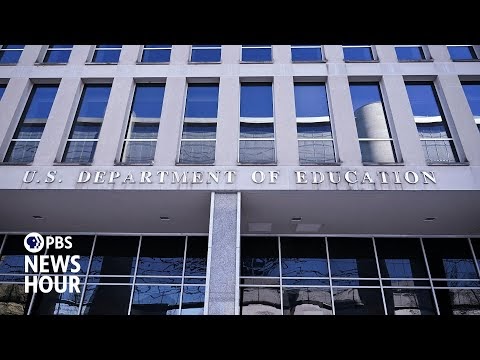
    The Department of Education is on the Trump chopping block. Details have not been fully released yet, but the president has signaled plans to dismantle it and move some of its key functions elsewhere. The department oversees student loans, federal funds for lower-income students, special education programs and more. Geoff Bennett discussed more with Laura Meckler of The Washington Post.


    Source link

  • What works for leadership in higher education now?

    What works for leadership in higher education now?

    We all know higher education has undergone a seismic shift from being a stable, traditional environment in the late twentieth century to a dynamic, complex and fast-moving sector. This transformation isn’t only in the UK – it’s global as well.

    Leaders in higher education are now tasked with navigating political and regulatory changes, financial pressures, shifts in social dynamics and technological advancements. And that’s before they are faced with enhancement challenges like building student experience initiatives or boosting research impact.

    In the past, leadership has perhaps been viewed as something of an anathema in academia, but its importance today permeates every level of an organisation. It is now a crucial component in the higher education sector’s efforts to successfully navigate current challenges.

    We’ve created the Framework for Leading in Higher Education to address these multifaceted issues which can’t be left to executive teams alone. What’s needed most is a joined-up approach, engaging formal and informal leaders right across the institution. The mission, vision and values need to feel intuitive and fitting, so that, in an ideal world, everyone would want to frame their actions around the strategic plans to meet them and to feel part of the bigger picture. And this alignment must be two-way, fostering a sense of ownership and inclusivity, whether it’s about building inclusive cultures or understanding financial imperatives.

    The journey to the framework

    The story of our framework began in 2021 when Doug Parkin, former Principal Consultant at Advance HE and a research team led by Richard Watermeyer from the University of Bristol asked a deceptively simple question: “what works for leadership in higher education?” This question sparked a literature search and a scoping study, engaging leaders at all levels and functions from around the world. This was followed by Advance HE’s Leadership Survey, published in 2023.

    After the report’s publication, we convened a rather brilliant steering group of colleagues from the UK, Australia and the Middle East, chaired by Ben Calvert, vice chancellor at the University of South Wales, and Shân Waring, vice chancellor at Middlesex University. We engaged with the sector through roundtables and workshops in the UK, Australia and Southeast Asia initially, to understand if a framework was wanted and then to determine its details.

    The desire for a framework was clear.

    We heard repeatedly about the importance of elevating leadership as a career path alongside research or teaching and supporting learning. The need for a common understanding and vocabulary around higher education leadership came across loud and clear.

    In the back of our minds throughout all of this was a sense of disconnection between people and institutions. A sense that, sometimes, leadership is like wading through treacle with an intensity of policies, regulations and workload holding us back from being the leaders that we want to be. Unfortunately, the framework can’t shift all the treacle, but it might help find some pathways through, help to join-up thinking across institutions and help us to make friends with the structures, strategies and resources that are needed to sustain the whole organisation.

    Who’s it for?

    The framework is designed for leaders, aspiring leaders and those involved in leadership and organisational development. It’s intended for a global audience, recognising the many ways to lead in higher education across diverse cultures, contexts, structures and institutions.

    Leadership happens throughout an institution, and this framework enables engagement from leaders operating formally and informally, from institutional to individual contributors, and from aspiring leaders to highly experienced ones. It’s designed to be inclusive in terms of culture, geography, institution type, level of responsibility, experience, and function.

    The framework explained

    Advance HE leadership framework

    At the core of the framework are three sets of leadership attributes, encompassing “knowledge and understanding”, “values and mindsets”, and “skills and applications”. Each of these is broken down into five dimensions for deeper exploration.

    Moving outward, the framework articulates the context in which the leader operates: place, people and practice. The outer ring, intentionally blurred to remind us that the lines between individual attributes, context and institutional goals are never clearly defined, and that disruption is most likely to occur in those grey zones.

    We’ve then defined three essential functions of university leadership as:

    1. Developing, defining, and operating within organisational culture, strategy and vision: recognising that these will undoubtedly shape you as a leader as they are shaped by you.
    2. Achieving internal measurable outcomes: performance and quality, financial sustainability, employability, curriculum quality and relevance, student and staff attraction, retention, progression, partnerships and collaborations, research and knowledge exchange.
    3. Generating impact on the external world: generating local growth, reputation, addressing and solving global problems, creating economic value, developing cultural capital, social mission and graduate impact.

    You might be tempted to ask, “is everyone supposed to do all of that?” To which, thankfully, the answer is no.

    This is an all-encompassing framework, and not all leaders will engage with every aspect. Less experienced leaders might focus on a few of the dimensions, while senior leaders might engage across all of them. Similarly, not everyone will be involved in every function of the outer circle, but everyone will be directly or indirectly involved in some aspects.

    How to use the framework

    Leaders seeking self-development might use the framework for individual reflection, considering their strengths and areas for development, and how their organisation’s people, places and practices support or impede their progress. New leaders might use the framework to understand leadership in the context of higher education, considering their strengths and experiences, and how these contribute to the outer wheel’s functions. Leaders preparing for promotion might reflect on past impacts, connect them to leadership attributes, and identify further development needs.

    Team leaders and leadership developers might assess team strengths and attributes, understand how context shapes performance, and use the framework for future-focused conversations. Institutions might use this framework to inform their own context-specific leadership frameworks and development programs.

    Organisation development and learning and development professionals might consider the cultural and development needs of their leaders, ideally in consultation with them, to determine necessary structures and interventions for succession planning or responding to change initiatives.

    What’s next?

    We’ll be launching the framework over several months, with podcasts, interviews, seminars and workshops in the UK, Australia, Europe and the Middle East.

    We want the sector to experiment, test it out, and help us shape it into something that will have a lasting impact. In the future, we’re looking at building accreditation to recognise those leading in higher education, similar to how we currently recognise those in teaching and supporting learning with the Professional Standards Framework.

    We welcome thoughts, suggestions and feedback on this as well. And if you are involved in research activities in this area, we’d be delighted to hear from you.

    Find out more about the Framework for Leading in Higher Education.

    Source link

  • Higher Education Inquirer : “DOGE Eat DOGE” World

    Higher Education Inquirer : “DOGE Eat DOGE” World

    Every day brings revelations about how corrupt the US government is. Every day the Department of Government Efficiency ( DOGE) reports on one agency or another that they have taken over and plan to eliminate or downsize. The first targets were the USAID and the US Department of Education. 

    But this is just the beginning. 

    Every day is a spectacle, with Elon Musk and a  handful of young men taking control over federal agencies. Some call it a coup, though President Trump has granted them the power through executive privilege. Others may call it a mission from God. 

    There is no telling how far this DOGE takeover will continue, but as long as folks are not protesting, we can expect it to last indefinitely.  President Trump has recently mentioned corruption in the Department of Defense, which would be an interesting target to investigate. 

    In the meantime, President Trump has relaxed enforcement of US law banning bribery of foreign officials.

    You can watch the DOGE boys in action through the DOGE tracker.  You can also follow crypto trading and prices, which appear to be a key part of the DOGE movement. 

    Source link

  • When the chair-president “marriage” goes sour (opinion)

    When the chair-president “marriage” goes sour (opinion)

    In a conversation recently with someone whose presidency and mine overlapped (1992–2003), we talked about how even though we worked 24-7 and lost a fair amount of sleep, we mainly loved what we did and even had lots of fun doing it. That is not what I am hearing today from presidents I know, nearly all of whom use language like “I’m worn out” and “I can’t wait to retire.” It is therefore not surprising that the average presidential tenure, according to a recent American Council on Education survey, has decreased significantly in recent years (from 8.5 years to 5.9).

    As I have often learned during my 18 years as a higher ed consultant, short presidential tenures take a toll on their institutions. Even in the best of circumstances, presidential transitions are time-consuming. Searches frequently take nine or more months, during which time planning and even implementation of previously approved plans often get put on hold. Departing presidents are frequently viewed as lame ducks, while interim presidents are often seen as placeholders, whose presence similarly delays institutional progress.

    Then, too, during the first year of a new presidency, campus communities generally are trying to decide if the new president is trustworthy and capable. If the previous president left under negative circumstances, people on campus are likely to be especially skittish about new leadership. Moreover, many new presidents are so focused on learning about the institution and its people that they defer important decisions until their second year.

    That used to make things difficult; now in these fraught times for higher education, it can be catastrophic.

    Successful presidents simultaneously serve a variety of different groups (students, faculty, staff, alumni, the community, donors and the board), many of whom have conflicting interests and concerns. As I tell presidents I coach, their board has the responsibility to hire and fire them, so their board is inevitably their most important constituency.

    Given the array and complexity of presidential responsibilities, many of which require confidentiality, it’s not surprising that a campus community doesn’t know all the ins and outs of how their presidents spend their time and the issues with which they deal. Indeed, on most campuses and even for some board members, the issues presidents must contend with are a black box.

    In this context, the president’s connection to the board is typically opaque to the broader campus community. Indeed, as is also true for most marriages, it’s almost impossible for those not in the relationship to know what really happens inside it. And of course, if a board loses confidence in the president, the result is a divorce in which the president is the one who leaves. (Two personal confessions come to mind in this regard: First, as a former Faulkner scholar, I am mindful of the importance of narrative, am alert to unreliable narrators and am always aware that history, culture and memory affect perception. And second, despite the fact that I have never taken a course in clinical psychology, I sometimes believe that clients with unhealthy board-president relationships may need a marriage counselor in addition to a higher ed consultant.)

    In any case, when the president-chair relationship is troubled, it is almost always presidents who find themselves on shaky ground. And although I am happy to say that the majority of president-chair relationships that I have observed are positive, I have been recently observed what seems to be an uptick in the souring of such relationships.

    Specifically, a dozen presidents—at least half of whom were in a second contract—have described their relationship with their chair as deeply problematic. In a number of these instances, I should stress, the chair who was in place when the president was hired has rotated out of that position and the new chair is for various reasons less invested in the president’s success. (Note: In the interest of confidentiality, none of my examples derive from clients with whom I have begun to work in the last year. In fact, a number of these examples come from institutions with which I’ve not had a consulting relationship but where I know well the president and/or the chair.)

    The most common complaint I hear is from presidents who characterize their chair as a micromanager who is inappropriately engaged in operational decisions—despite the fact that in every institution I know, board bylaws call for the trustees to delegate operational responsibility to the president. As a result, these boards often spend their time in the proverbial weeds rather than focusing on their primary fiduciary responsibility and their responsibilities for strategy and policies.

    I also have heard about chairs who have—without presidential knowledge much less involvement—talked directly with faculty and staff (and sometimes even students), ignoring the best practice that all trustees, including the chair, who wish to interact with those on campus should work with and through the president or, if the president so specifies, the board secretary. (The exception to this is trustee committee chairs who have direct conversations about the work of their committee with their administrative liaison, typically a vice president. At the same time, in healthy institutions presidents are fully informed about and often participate in such conversations.)

    Some examples:

    • A chair at a research university crossed the boundary from governance into management by inappropriately meeting with individual faculty members without the president’s knowledge in his quest to gain support for his personal belief that the provost should be let go, even though he knew the president wished to retain the provost.
    • The board chair at a liberal arts college met with individual faculty members without the president’s knowledge to dissuade them from addressing diversity or gender in their classes.
    • The board chair at a small comprehensive college met with members of the campus community off-site to seek reasons to let the president go.

    The first two presidents subsequently left the institution they were leading, dismayed that their chair was ignoring the fact that as president, they were the board’s only employee and that all other employees essentially work for the president. The third president ended up being fired, based on the chair’s conversations.

    Why has this happened? My suspicion is that it is related to the coarsening of discourse generally and the growing partisanship in this country and beyond. Until roughly the last decade, I was struck by how much those of us in the academy—faculty, staff, administrators and trustees—truly placed a high value on civil discourse, with colleges and universities typically priding themselves on being places where people could disagree passionately but with mutual respect, or at least the appearance of that respect. But in recent years, this is no longer the case. Instead, as we are seeing, families and friends are torn apart by differing points of views. Congress, which was once a place where people argued fervently with those with whom they disagreed but then spent congenial social time together, is now similarly torn apart. And although colleges and universities ideally should not be the playground for partisan politics, that is no longer the case.

    I believe that in this context, particularly at a time when so many colleges and universities are vulnerable (think for example about the enrollment cliff), the president-chair relationship is even more critical than ever. Presidents and boards, especially their chairs, are entrusted in different ways with the health and integrity—financial and academic—of the institutions they serve. Successful presidents and chairs both have a clear understanding of and respect for their differing roles and responsibilities. In the most successful of these relationships, chairs see themselves as the president’s strategic partner and presidents see the board as a strategic advantage to the institution.

    But in those instances where the relationship is strained, entire communities of faculty, staff, students, alumni, donors and others are often negatively affected even if few if any of them are aware of this problematic leadership dynamic. Indeed, members of the campus community in these cases are like families and friends of those in a fragile marriage—they don’t know what’s really going on, but they know enough to be unsettled.

    So what do we do about all of this? Although I know enough now to know that we aren’t likely to change the larger culture, I do recommend that college and university boards set aside time—certainly in new trustee orientation and at least once a year for the entire board in an executive session—to address the question of how trustees interact with one another and with the campuses that they have committed to serve. I further recommend that boards commit to a regular process by which they are reviewed. For example, if a board has retained an outside consultant to do a 360-degree review of the president, I suggest that they ask that same consultant to make recommendations about the board’s functioning, particularly in terms of its behavior in relation to the president and the senior leadership team. But most of all, I hope that trustees, who at their best are focused on the health and integrity of the institution, will understand how important it is that they model respect for others and the civil discourse that is necessary not only for board service but for the health of our larger society.

    Susan Resneck Pierce is president of SRP Consulting, president emerita of the University of Puget Sound and author of On Being Presidential (2011) and Governance Reconsidered (2014), both published by Jossey-Bass and sponsored by Inside Higher Ed.

    Source link

  • The Common App welcomes community colleges

    The Common App welcomes community colleges

    The Common App allows students to submit applications to more than 1,100 higher ed institutions. But until now, none of its members were community colleges focused on granting associate degrees.

    The organization announced a first-of-its-kind partnership with the Illinois Community College Board last week, adding Sauk Valley Community, Rend Lake, Carl Sandburg and Black Hawk Colleges to its ranks. Three more two-year institutions will join next admissions cycle: Lincoln Land Community, Oakton and Triton Colleges.

    When the Common App launched 50 years ago, it offered high school students a streamlined application path to 15 private institutions. Since then, hundreds of others have signed on, most of them fairly selective four-year colleges and universities. The new move raises a question: What do open-access institutions, which accept all students, stand to gain from joining the application platform?

    Brian Durham, executive director of the Illinois Community College Board, said most importantly, it boosts their visibility.

    Starting this year, the Common App is partnering with the Illinois Board of Higher Education to support its direct admissions program to eight public universities in the state. As a part of the partnership, eligible high school students who apply to any college through the Common App will be notified of their direct admissions offers from these universities. Durham wants those students to receive notice about their local community college choices, too.

    “We want to make sure that community colleges are seen as an option on that list”—even “potentially a first choice for students,” Durham said. “It’s ultimately about exposing them to that as an option.” He added that students who gain admission to universities sometimes realize later that “they can’t afford it, or it’s not right choice for them.” This way, if they come to that conclusion after filling out the Common App, they’ll know which community colleges are “right there” and ready to serve them.

    Research suggests the move could offer community colleges an enrollment bump. The National Bureau of Economic Research published a paper in 2019 that found that institutions that joined the Common App enjoyed on average a 12 percent increase in admissions compared to the years before they joined, according to an analysis of Common App data from 1990 to 2015.

    Durham hopes that eventually all 45 of the state’s public two-year colleges offer a Common App application route in addition to their in-house application systems.

    A Decade-Long Effort

    Jenny Rickard, president and CEO of the Common App, said that the organization has been working toward representing a broader swath of higher ed institutions for a decade.

    In 2014, the organization stopped requiring member colleges to use a “holistic admissions” process—assessing students beyond test scores—in order to open up the platform to more institutions. The Common App also got rid of its requirement that applications include essays and recommendations. Then, in 2018, the organization launched a new application for transfer students applying to four-year universities.

    All those moves “opened the door for us to be able to welcome two-year and four-year public institutions into the membership,” Rickard said. She noted that, as of the 2022–23 application cycle, 77 percent of current Common App members admitted over 50 percent of their fall first-year applicants, a sign that the organization has moved away from serving only more selective institutions.

    The Common App also set a “moonshot” goal in 2023 to substantially increase its applicants from low- and middle-income communities, Rickard said. The organization aims to bring in 650,000 additional applicants from those backgrounds by 2030.

    Rickard said teaming up with community colleges is the organization’s most recent step toward diversifying both its member institutions and its applicant pool.

    “Bringing a greater diversity of college and university members into the Common App helps us pursue that mission, and it also helps students from all different backgrounds be able to see the great diversity of institutions in the United States and the world,” she said. “Most students go to more open-access and less selective institutions,” yet too often “we focus on the places that nobody can get into.”

    Durham agreed that the move could expand the Common App’s “footprint,” given applicants to community colleges are disproportionately low-income and first-generation students.

    “More underserved students are naturally going to go to community college for all the reasons we know: affordability, location,” he said. So, working with community colleges offers the Common App a new “opportunity to reach those students.”

    Steps for the Future

    As much as Durham would like to see more community colleges join the Common App’s ranks, he believes the platform will need to change to serve community colleges at a larger scale.

    Currently the platform is designed for high school students, he said, but many community college applicants are adult learners or attend college part-time. Those types of students are more likely to enroll directly at a college rather than find themselves on the Common App platform like high school seniors applying to multiple institutions with guidance from college counselors.

    “How do you get a 34-year-old guy who wants to go into welding to go through that application?” Durham said. For now, he expects participating Illinois community colleges will maintain their own “parallel” application systems “until we can work that out down the road.”

    Rickard acknowledged the organization has work to do to optimize its platform for a more diverse set of institutions. She hopes that onboarding this initial cohort of community colleges will help the Common App figure out its blind spots.

    “We know that we need to learn more about how our platform can continue to evolve to meet their needs more effectively,” she said.

    Source link