
During my five years working in postdoctoral affairs at two higher education institutions, current postdoctoral associates have often shared their frustrations with me.
Some feel they aren’t getting the credit they deserve in their research group. Others share they feel pressured to work long hours. And in terms of relationships with their mentors, some sense a lack of feedback and support from their faculty supervisor, while others feel they are micromanaged and lack autonomy.
When I hear these things, it strengthens my belief that many of the problems that emerge during the postdoctoral experience could be reduced by more proactive communication prior to an individual accepting a position. Talking through personality, leadership and communication styles can help both postdocs and mentors better understand the relational dynamics, as well as the expectations and needs each bring to the partnership.
So, while earlier “Carpe Careers” pieces have focused on the pragmatics of a postdoc job search and discovering postdoc opportunities, including those outside the traditional academic postdoc, I want to share the thought process late-stage Ph.D. students should be working their way through prior to and during a postdoc search, as well as advice on navigating the start of a postdoc position. My hope is that by carefully considering their own values and needs, graduate students can better understand if a postdoc position is the best career path for them, and if so, which postdoc position might be the right fit.
The first piece of advice I would give any prospective postdoc is that you must take ownership of your postdoc search. This includes talking to the right people and asking the right questions, which begins with asking yourself the most critical one: Why am I considering a postdoc position?
People pursue postdocs for a variety of reasons. None are necessarily more appropriate than others, but your motivations for engaging in a postdoc should be clear to you. Some motivations might include:
There is nothing wrong with any of these reasons, but understanding your reason will help you find the postdoc position that best fits your academic and professional journeys.
Even if your goal is not to pursue an academic career and you don’t believe you will be in a postdoc position longer than a year, it is critical to take the postdoc experience seriously as professional experience, and accept and understand its responsibilities and deliverables.
I fully acknowledge that the postdoc role can be nuanced and, ideally, it is some hybrid of employment, extended training and apprenticeship under a more senior faculty member. In nearly all cases, however, an individual is hired into a postdoc role to help make progress on a funded research project. This may involve funding from federal agencies such as the National Institutes of Health or National Science Foundation, a nonprofit foundation, or the institution itself. Regardless, a postdoc is hired to help deliver important outputs associated with a project that’s being paid for. From this perspective, the postdoc’s job is to help move the project forward and ultimately produce data and findings for further dissemination. Successful postdocs understand what these deliverables are and their importance to their faculty mentor.
Of course, this does not mean postdocs should devote 100 percent of their time to producing research products. In fact, many years ago, the Office of Management and Budget made clear to federally funded U.S. agencies supporting graduate students and postdocs that such roles have dual functions of employee and trainee. The notice specifically states that postdocs “are expected to be actively engaged in their training and career development under their research appointments.” Additionally, the NIH is seeking to explicitly specify the percentage of time a postdoc should be devoting to their career and professional development through recommendations from a Working Group on Re-envisioning NIH-Supported Postdoctoral Training. In a report published in December 2023, the group suggests postdocs should have a minimum of 10 percent of their effort devoted to career and professional development activities.
It’s clear that the job of a postdoc is to both deliver on research products and invest in one’s own training and professional development. Given the need to effectively balance these two activities, it is critical that prospective postdocs seek to understand how the group they might work in, or the faculty member they might work with, understands the position. And likewise, it is important for the candidate to convey their expectations to the same parties.
A proactive conversation can be intimidating for some, but the Institute for Broadening Participation has created a list of questions taken from a National Academies report on enhancing the postdoc experience to get you started.
Potential postdocs should also consider speaking to current and/or past postdocs with experiences in groups and with people with whom they are interested in working. Past postdocs can often more freely enlighten others as to faculty members’ working and communications styles and their willingness to provide support.
Another important factor prospective postdocs should consider is the support and resources institutions provide. This can range from employee benefits and postdoc compensation to career and professional development opportunities.
A critical resource to help you understand the current institutional landscape for postdoc support in the United States is the National Postdoctoral Association’s Institutional Policy Report and Database. You can leverage this data by benchmarking the benefits of institutions you are considering for your postdoc. For example, in the most recently published report from 2023, 52 percent of responding U.S. institutions reported offering matching retirement benefits to their employee postdocs.
Considering the entire package around a postdoc position is yet another important step in evaluating if a potential position aligns with your academic, professional and personal goals.
Once you have decided to accept a postdoc position, I advise communicating proactively with your new faculty supervisor to ensure all expectations are aligned. A great document to help with framing your potential responsibilities is the Compact Between Postdoctoral Appointees and Their Mentors from the Association of American Medical Colleges.
Finally, I highly encourage any new postdoc to create an individual development plan to outline their project completion, skill development and career advancement goals. This can be shared with the supervisor to ensure both parties’ project completion goals match and the postdoc’s other goals will be supported. If faculty supervisors could benefit from additional resources that stress the importance of IDPs, I suggest this piece published in Molecular Cell and this Inside Higher Ed essay.
Deciding whether to pursue a postdoc position, and how to pursue one proactively, is important to maximize your future prospects as a Ph.D. holder. Leveraging this advice, plus that of other online resources— such as the Strategic Postdoc online course from the Science Communication Lab and the Postdoc Academy’s Succeeding as a Postdoc online course and mentoring resources—will help you to choose a position with intention and engage in deliberate discussions prior to accepting it. This will increase the likelihood that your postdoc experience will align with your needs and help successfully launch the next stage in your career.
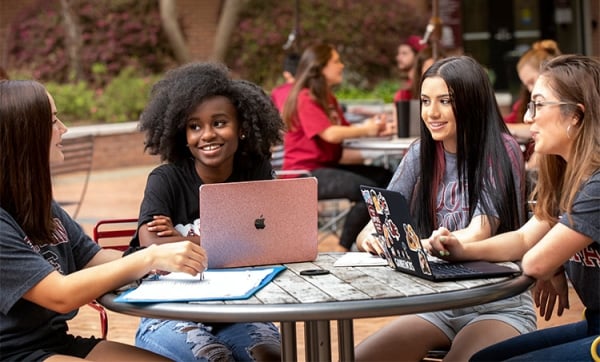
First-generation students make up around 20 percent of the University of South Carolina student population.
University of South Carolina
While first-generation students are a growing population in higher education, they remain less likely to retain or complete a credential, compared to their continuing-generation peers.
A new initiative at the University of South Carolina unifies assistance for students who are the first in their families to attend college to guide them through the university and provide a sense of belonging. The First-Generation Student Center is connected to a first-generation living-learning community and offers embedded academic and socioemotional support, which reduces the need for students to seek support independently.
What’s the need: USC serves a large number of first-generation learners—one in five undergraduate students or around 6,000 individuals.
“We know from our campus data on students in our long-standing TRIO program that they do not have the gaps in retention and graduation that our other first-generation students have,” says Shelley Dempsey, assistant provost for graduation and retention. “However, the program is at max capacity. It was time for our university to provide additional options to serve students in a similar demographic who are not able to be a part of the TRIO program.”
The center was designed to provide increased and more specialized services for learners in a physical space that promotes students’ feelings of belonging.
Dempsey sees particular benefits with first-generation student support, including social capital growth and impacting future generations of their families. But Dempsey also notes improving processes and the student experience for first-generation degree attainment is a benefit for the institution as a whole.
How it works: The First-Generation Center (FGC), which opened in fall 2024 within Maxcy College residence hall on campus, includes a variety of support services and resources.
A dedicated director and assistant director support the center, as does a faculty director, who oversees the living and learning community for 151 first-generation students.
Within the center, students can engage with an embedded mental health counselor for one-on-one in-person or virtual sessions, as well as group sessions on common themes like homesickness and exam anxiety. The Student Success Center has embedded staff presence for drop-in hours, and the FGC hosts other partners across campus, including financial aid, the career center and the meal card office, to provide insights into navigating higher ed.
“The idea is that if we can have all of these offices have a presence in the FGC as a safe space, then we build comfort and confidence with the first-generation students to utilize them in their locations outside the FGC as well,” Dempsey says.
This fall, the center hosted a series called First-Gen Connections that provided relevant information related to campus experiences and deadlines. Athletics staff led a discussion on how students can earn ticket priority for sporting events and offered students a behind-the-scenes tour of the football stadium, for example.
How it’s going: Since launching the center, USC leaders have seen an increase in first-generation student involvement. The center was advertised through meetings, events and campus media including newsletters, but word of mouth has been the most effective marketing campaign.
Several sections of University 101, USC’s first-year seminar program, also meet in the center, which helps raise awareness of the support offerings.
This fall, efforts to include first-generation students were noticeable in mini-grant applications for research and creative projects alongside a mentor, with 55 percent of applicants being first-gen learners.
“We want our first-generation students to know that they are just as capable, and sometimes that takes bringing the info to them in a designated space so that they don’t have to navigate the large university and unfamiliar lingo or jargon for themselves,” Dempsey says.
What’s next: The current target is incoming and first-year students, with the hopes of continuing to involve them as they progress through the institution, but administrators hope to reach graduate students, as well.
“We are in the process of conducting a needs assessment to know how to increase our supports going forward,” Dempsey says.
The university will also track other student metrics including involvement in high-impact practices, GPA, DFW rates, campus involvement and leadership opportunities. Additionally, leaders will compare utilization of support services among first-gen students who engage with the center compared to their peers who are also first-gen but not associated with the center.
If your student success program has a unique feature or twist, we’d like to know about it. Click here to submit.

Young people today spend a large amount of time online, with a U.S. Department of Health and Human Services report noting teens ages 12 to 17 had four or more hours of daily screen time during July 2021 to December 2023.
This digital exposure can impact teens’ mental health, according to Pew Research, with four in 10 young people saying they’re anxious when they don’t have their smartphones and 39 percent saying they have cut back their time on social media. But online presences can also impact how individuals process information, as well as their ability to distinguish between news, advertisement, opinion and entertainment.
A December Student Voice survey by Inside Higher Ed and Generation Lab found seven out of 10 of college students would rate their current level of media literacy as somewhat or very high, but they consider their college peers’ literacy less highly, with only 32 percent rating students as a whole as somewhat or very highly media literate.
A majority of students (62 percent) also indicate they are at least moderately concerned about the spread of misinformation among their college peers, with 26 percent saying their concern was very high.
To address students’ digital literacy, colleges and universities can provide education and support in a variety of ways. The greatest share of Student Voice respondents (35 percent) say colleges and universities should create digital resources to learn about media literacy. But few institutions offer this kind of service or refer students to relevant resources for self-education.
What is media literacy? Media literacy, as defined in the survey, is the ability or skills to critically analyze for accuracy, credibility or evidence of bias in the content created and consumed in sources including radio, television, the internet and social media.
A majority of survey respondents indicate they use at least one measure regularly to check the accuracy of information they’re receiving, including thinking critically about the message delivered, analyzing the source’s perspective or bias, verifying information with other sources, or pausing to check information before sharing with others.
A missing resource: While there are many groups that offer digital resources or online curriculum for teachers, particularly in the K-12 space, less common are self-guided digital resources tailored to young people in higher education.
“Create digital resources for students” was the No. 1 response across respondent groups and characteristics and was even more popular among community college respondents (38 percent) and adult learners (42 percent), which may highlight students’ preferences for learning outside the classroom, particularly for those who may be employed or caregivers.
Arizona State University’s Walter Cronkite School of Journalism offers a free self-directed media literacy course that includes webinars with journalism and media experts, as well as exercises for reflection. Similarly, Baylor University’s library offers a microcourse, lasting 10 minutes, that can be embedded into Canvas and that awards students a badge upon completion.
The University of North Carolina at Charlotte provides a collection of resources on a Respectful Conversation website that includes information on free expression, media literacy, constructive dialogue and critical thinking. On this website, users can also identify online classes, many of which are free, that provide an overview or a deeper level look at additional topics such as misinformation and deepfakes.
The American Library Association has a project, Media Literacy Education in Libraries for Adult Audiences, that is designed to assist libraries in their work to improve media literacy skills among adults in the community. The project includes webinars, a resource guide for practitioners.
Does your college or university have a self-guided digital resource for students to engage in media literacy education? Tell us more.

“Engagement, to me, is probably…getting the most out of university…taking and making the most of available opportunities.”
This quote, from Queen’s University Belfast students’ union president Kieron Minto sums up a lot of the essential elements of what we talk about when we talk about student engagement.
It captures the sense that the higher education experience has multiple dimensions, incorporating personal and professional development as well as academic study. Students will be – and feel – successful to the extent that they invest time and energy in those activities that are the most purposeful. Critically, it captures the element of student agency in their own engagement – higher education institutions might make opportunities available but students need to decide to engage to get the most from them.
In recent years “student engagement” has suffered from the curse of ubiquity. Its meanings and applications are endlessly debated. Is it about satisfaction, academic success, personal growth, or a combination of factors? There is a wealth of examples of discrete projects and frameworks for thinking about student engagement, but often little read-across from one context to another. We can celebrate the enormous amount of learning and insight that has been created while at the same time accepting that as the environment for higher education changes some of the practices that have evolved may no longer be fit for purpose.
Higher education institutions and the students that are enrolled in them face a brace of challenges, from the learning and development losses of the Covid pandemic, to rising costs and income constraints, to technological change. Institutions are less able to support provision of the breadth of enriching opportunities to students at the same time as students have less money, time, and emotional bandwidth to devote to making the most of university.
The answer, as ever, is not to bemoan the circumstances, or worse, blame students for being less able to engage, but to tool up, get strategic, and adapt.
Students still want to make the most of the opportunities that higher education has to offer. The question is how to design and configure those opportunities so that current and future students continue to experience them as purposeful and meaningful.
Our report, Future-proofing student engagement in higher education, brings together the perspectives of academic and professional services staff, higher education leaders, and students, all from a range of institutions, to establish a firm foundation of principles and practices that can support coherent, intentional student engagement strategies.
A foundational principle for student engagement is that students’ motivations and engagement behaviours are shaped by their backgrounds, prior experiences, current environments, and hopes and expectations for their futures – as explained by Ella Kahu in her socio-cultural framework for student engagement (2013).
It follows that it is impossible to think about or have any kind of meaningful organisational strategy about student engagement without working closely in partnership with students, drawing on a wide range of data and insight about the breadth of students’ opinions, behaviours, and experiences. Similarly, it follows that a data-informed approach to student engagement must mean that the strategy evolves as students do – taking student engagement seriously means adopting an institutional mindset of preparedness to adapt in light of feedback.
Where our research indicates that there needs to be a strategic shift is in the embrace of what might be termed a more holistic approach to student engagement, in two important senses.
The first is understanding at a conceptual level how student engagement is realised in practice throughout every aspect of the student journey, and not just manifested in traditional metrics around attendance and academic performance.
The second is in how institutions, in partnership with students, map out a shared strategic intent for student engagement for every stage of that journey. That includes designing inclusive and purposeful interventions and opportunities to engage, and using data and insight from students to deepen understanding of what factors enable engagement and what makes an experience feel purposeful and engaging – and ideally creating a flow of data and insight that can inform continuous enhancement of engagement.
Our research also points to how some of that shift might be realised in practice. For example, student wellbeing is intimately linked to engagement, because tired, anxious, excluded or overwhelmed students are much less able to engage. When we spoke to university staff about wellbeing support they were generally likely to focus on student services provision. But students highlighted a need for a more proactive culture of wellbeing throughout the institution, including embedding wellbeing considerations into the curriculum and nurturing a supportive campus culture. Similarly, on the themes of community and belonging, while university staff were likely to point to institutional strategic initiatives to cultivate belonging, students talked more about their need for genuine individual connections, especially with peers.
There was also a strong theme emerging about how institutions think about actively empowering students to have the confidence and skills to “navigate the maze” of higher education opportunities and future career possibilities. Pedagogies of active learning, for example, build confidence and a sense of ownership over learning, contributing to behavioural and psychological engagement. Developing students’ digital literacy means that students can more readily deploy technology to support connection with academics and course peers, make active critical choices about how they invest time in different platforms, and prepare for their future workplace. Before getting exercised about how today’s students do not arrive in higher education “prepared to engage,” it’s worth remembering just how much larger and more complicated the contemporary university is, and with these, the increased demands on students.
While there is a lot that institutions can do to move forward their student engagement agenda independently, there is also a need for a renewed focus on student engagement from the higher education sector as a whole. The megathemes contributing to shifting student engagement patterns are shared; they are not distinctive to any institution type, geography, or student demographic.
The promise of higher education – that you can transform your life, your identity and your future through a higher education experience – only holds true if students are willing and able to engage with it. This demands a unified effort from all involved.
Institutions must prioritise student engagement, placing it at the heart of their strategies and decisions. Furthermore, the higher education sector as a whole must renew its focus on student engagement, recognising its fundamental role in achieving the goals of higher education. Finally, as regulatory bodies evolve their approach to the assessment and enhancement of academic quality, student engagement must once again be put front and centre of the higher education endeavour.
This article is published in association with evasys. You can download a copy of Future-proofing student engagement here.
Get stories like this delivered straight to your inbox. Sign up for The 74 Newsletter
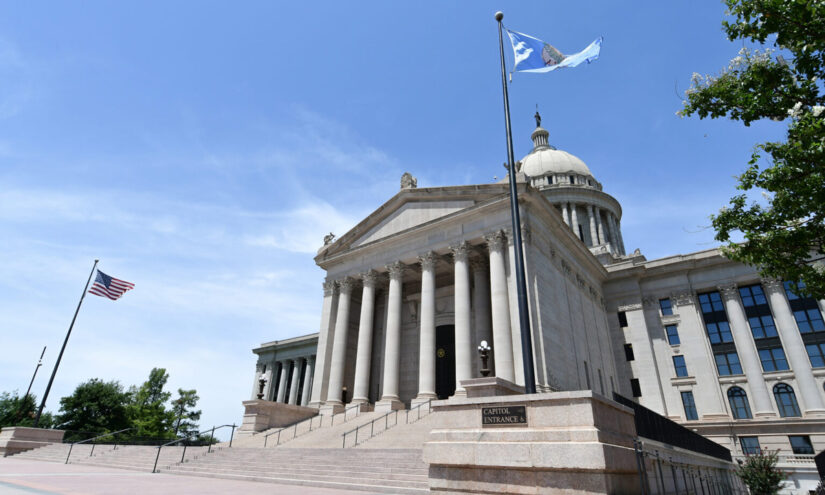
OKLAHOMA CITY — Oklahoma lawmakers filed hundreds of bills affecting education for the next legislative session.
Oklahoma Voice collected some of the top trends and topics that emerged in legislation related to students, teachers and schools. The state Legislature will begin considering bills once its 2025 session begins Feb. 3.
As expected, lawmakers filed multiple bills to limit student cellphone use in public schools, an issue that leaders in both chambers of the Legislature have said is a top priority this year.
The House and Senate each have a bill that would prohibit students from using cellphones during the entire school day. Some Oklahoma schools already made this a requirement while others allow cellphone access in between classes.
After encouraging all districts to establish cellphone restrictions, Gov. Kevin Stitt visited multiple schools in November that have done so.
Senate Bill 139 from Education Committee vice chair Sen. Ally Seifried, R-Claremore, would require all districts to ban students from accessing their cellphones from the morning bell until dismissal, and it would create a $2 million grant program to help schools enact phone-free policies.
Legislation from a House leader on education funding, Rep. Chad Caldwell, R-Enid, would prohibit student cellphone use while on school premises.
Multiple bills target children’s social media use. Sen. Kristen Thompson, R-Edmond, aims to ban social media accounts for anyone under 16 with SB 838 and, with SB 839, to deem social media addictive and dangerous for youth mental health.
A bill from Seifried would outlaw social media companies from collecting data from and personalizing content for a minor’s account, which a child wouldn’t be allowed to have without parent consent
SB 371 from Sen. Micheal Bergstron, R-Adair, would require districts to prohibit the use of social media on school computers or on school-issued devices while on campus. SB 932 from Sen. Darcy Jech, R-Kingfisher, would allow minors or their parents to sue a social media company over an “adverse mental health outcome arising, in whole or in part, from the minor’s excessive use of the social media platform’s algorithmically curated service.”
Multiple lawmakers have refiled a bill seeking to enable religious chaplains to counsel students in public schools. A version of the controversial bill passed the House last year but failed in the Senate.
Its original author, Rep. Kevin West, R-Moore, refiled it as House Bill 1232. Sen. Shane Jett, R-Shawnee, and Sen. Dana Prieto, R-Tulsa, filed similar school chaplain bills with SB 486 and SB 590.
Another unsuccessful bill returning this year is legislation that would have families opt into sex education for their children instead of opting out, which is the state’s current policy.
Students wouldn’t be allowed to take any sex education course or hear a related presentation without written permission from their parents under SB 759 from Prieto, HB 1964 from Danny Williams, R-Seminole, and HB 1998 from Rep. Tim Turner, R-Kinta.
Sen. Dusty Deevers, R-Elgin, would have any reference to sex education and mental health removed from health education in schools with SB 702.
Prieto’s bill also would exclude any instruction about sexual orientation or gender identity from sex education courses. It would require school employees to notify a child’s parents before referring to the student by a different name or pronouns.
Other bills similarly would limit students’ ability to be called by a different name or set of pronouns at school if it doesn’t correspond to their biological sex.
Deevers’ Free to Speak Act would bar teachers from calling students by pronouns other than what aligns with their biological sex or by any name other than their legal name without parent consent. Educators and fellow students could not be punished for calling a child by their legal name and biological pronouns.
Rep. Gabe Woolley, R-Broken Arrow, filed a similar bill.
No public school could compel an employee or volunteer to refer to a student by a name or pronoun other than what corresponds with their sex at birth under SB 847 from Sen. David Bullard, R-Durant, nor could any printed or multimedia materials in a school refer to a student by another gender.
Once again, Oklahoma lawmakers will consider whether to outlaw corporal punishment of students with disabilities. State law currently prohibits using physical pain as discipline on children with only the most significant cognitive disabilities.
In 2020, the state Department of Education used its administrative rules to ban corporal punishment on any student with a disability, but similar bills have failed to pass the state Legislature, drawing frustration from child advocates.
Sen. Dave Rader, R-Tulsa, was an author of last year’s bill to prohibit corporal punishment of students with any type of disability. He filed the bill again for consideration this session.
HB 2244 from Rep. John Waldron, D-Tulsa, would require schools to report to the Oklahoma State Department of Education the number of times they administer corporal punishment along with the age, race, gender and disability status of the students receiving it. The state Department of Education would then have to compile the information in a report to the Oklahoma Commission on Children and Youth.
Oklahoma Voice is part of States Newsroom, a nonprofit news network supported by grants and a coalition of donors as a 501c(3) public charity. Oklahoma Voice maintains editorial independence. Contact Editor Janelle Stecklein for questions: [email protected].
Get stories like these delivered straight to your inbox. Sign up for The 74 Newsletter
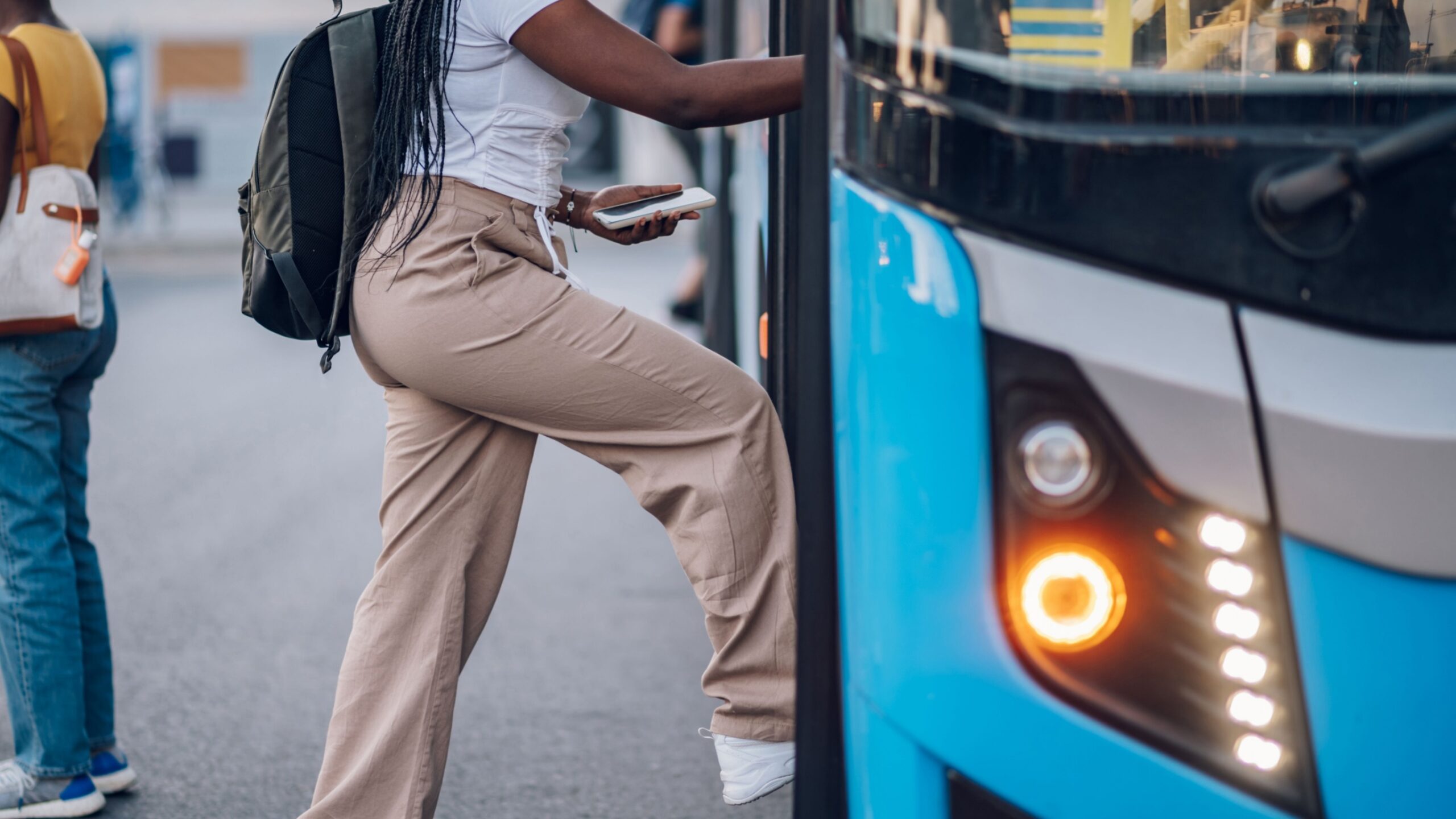
For the first time, there are now more commuter students in the UK – students who continue to live at home whilst studying, rather than relocating to attend university – than traditional residential students.
Surprised? You’re not alone. My research on commuter students suggests that even commuter students themselves don’t realise that there are others like them. In common with most of those who shape higher education pedagogy, policy, practices and plans for the future, they believe that they are a minority, an anomaly, inconsistent with the (presumed) majority of “normal,” residential students.
The sector is increasingly waking up to the needs and experiences of commuter students, supported by the inclusion of commuters in the Office for Students Equality of Opportunity Risk Register in England – Emma Maslin has explored this further on the site.
It is essential, for students, higher education institutions and the future viability of our sector, that we increase awareness of commuter students – who they are and what they need – and that we reshape higher education provision for this growing cohort.
Students will benefit from a better experience and outcomes. Institutions will benefit from higher retention, league table position and therefore recruitment. The sector as a whole will benefit from greater financial stability and clear evidence to the government that we are meeting their priorities and truly expanding access and improving outcomes for non-traditional students.
Commuter students are diverse. However, there is a strong correlation between being a non-traditional student – those targeted by widening participation initiatives – and being a commuter student.
This is because many of the reasons that students have historically been unable or unwilling to enrol in higher education are the same as those that make them unable or unwilling to relocate. These include affordability, being first in family to higher education, from a low-participation neighbourhood, having caring or family commitments, over 25. Commuters are also likely to be in employment, be home owners, to be studying part time, at lower-tariff universities. Finally, my research suggests that commuter students are more likely to be local students, not long-distance learners.
This said, commuting isn’t always about widening participation. It is likely that the undersupply of student accommodation and resultant increasing prices, alongside the cost-of-living crisis, are encouraging traditional students to remain at home. There is also evidence to suggest that international and postgraduate students are more likely to be commuters, both key target markets for UK higher education institutions.
But why does this matter? Data tell us that commuter students have a poorer experience throughout the student lifecycle. Choice of institution, access to learning, resources, support and extra-curricular activities, are all restricted. Commuters are less able to engage with in-person learning activities and are isolated from their learning community.
They feel less a sense of belonging, more a sense of burden. In consequence, commuter students have lower attainment, continuation and graduate outcomes than their residential counterparts.
In part, this is because higher education has been designed without consideration of the need to travel. Pedagogy, policy and processes have historically been and continue to be shaped around residential students. Assessments, extracurricular activities, facilities, learning and wellbeing support, teaching activities, timetabling—all continue to be premised on the residential model, structured for the residential student, provided at a time and in a place that assumes that students live on or near to campus.
The first step is to see our commuters. Count them, to make them count. Make them visible, not only to decision makers and practitioners, but also to each other. Provide information for commuters, before, during and after application. Create a sense of belonging, building community through awareness, acceptance and actions such as repurposing unused parts of the estate, for commuter students – a common room, sleeping areas.
Next, review all policies for accessibility, with particular focus on timetabling, attendance, learning and teaching, support services and skills development.
Make changes where necessary, enabling students to maximise access, whilst minimising travel. Rethink in-person learning and make attendance worth it. Consider online learning, but avoid hybrid learning and include on-commute learning options.
For commuter students, access to learning isn’t just about distance. It’s not even just about transport. We need to look at the acceptability, accessibility, affordability and availability of transport. However, we also need to recognise that access and participation are also about students’ activities, responsibilities and relationships, outside of the classroom.
The data tell us that our commuter students are struggling to adapt to pedagogy, policies and practices that are based on the assumption that they will relocate to attend university. Our ability to adapt our provision to their needs is likely to be key to the future sustainability of many of our institutions, if not the sector as a whole.
This article is the first in our series on commuter students where we’ll explore their student journey and what support institutions and the sector can provide to enhance their experience. If you’d like to get involved in the series, we’d welcome further contributions, email [email protected] to pitch us an article.
Get stories like this delivered straight to your inbox. Sign up for The 74 Newsletter
Chicago Public Schools launched new school profiles on its website — a milestone in the district’s five-year push to change how it portrays the quality of its campuses.
The new school accountability dashboards replace the district’s controversial number ratings for schools, which CPS put on hold and then scrapped during the pandemic. Those ratings had drawn the ire of educators and some community members, who said they unfairly stigmatized campuses that serve students with high needs. The old level ratings had also factored into high-stakes decisions about school closures and staff overhauls.
Some parents who’ve provided feedback on the shift said families welcome having a one-stop repository of information on school performance again. But they said they’d like to see simpler, more accessible language in information about the metrics the district included to put the numbers into context. And they noted that a busy parent must click repeatedly to get to each metric — only to find out in many cases that these numbers aren’t available yet.
Bogdana Chkoumbova, the district’s chief education officer, said the new system aimed to strike a balance.
“We didn’t want this to be just another state report card; we are embracing the complexity of the data,” she said. “If it looked like a one-pager in red and green, that just brings in the trauma.”
The new profiles went up in mid-December, the day after the window to apply to the district’s selective and magnet programs closed. Chkoumbova said the timing was not intentional. After all, families could find most of the information available on the dashboards so far on schools’ Illinois Report Card profiles.
For now, the profiles include only a portion of the data they’ll eventually feature — mostly traditional metrics such as test scores, chronic absenteeism, and graduation rates. Later this year, the district is gearing up to add long-anticipated information that gets at students’ experience and well-being — metrics that in some cases officials are still weighing how to best capture.
Still, CPS leaders say the launch of the new dashboards is an important start. They can be a handy tool as the members of a new, partly elected school board learn about the district and its schools. District officials plan to show off the profiles at the board’s monthly meeting on Thursday.
“We are transitioning to a completely new way of how we view student success and the district’s role in supporting schools,” said Chkoumbova.
The dashboards are available here by scrolling to the bottom and looking up a school.
Chicago first set out to overhaul how it measures and publicly communicates about school quality in 2019. At that time, school board members called on district officials to do away with the School Quality Rating System, or SQRP, policy, which many considered too focused on metrics that are affected by poverty levels and other demographics of the student body. The district formally adopted a new Continuous Improvement and Data Transparency policy in 2023.
With input from academics, parents, and others, the district tried to design a more holistic approach, bringing in a wider array of metrics, including some that got at the experience students have on campus — and at whether the district is providing schools the resources they need to improve that experience.
After years of largely behind-the-scenes work, the new dashboards went live quietly in December, giving principals and other educators a chance to weigh in.
Claiborne Wade, the father of four CPS students, served on a district committee that provided input on the new accountability system. He said he is a big believer in the district’s efforts to take a more holistic look at school performance.
“It’s more than test scores and attendance rates and graduation rates,” he said. “Those are important, but so is making sure we have funds for extracurricular activities and parents have a seat at the table.”
Last week, Wade presented the new dashboards to a group of 10 parents actively involved at DePriest Elementary on the West Side, where he works as a family coordinator as part of the Sustainable Community Schools program. Some liked that the new dashboards offer information about each metric and how to interpret it. But many felt these explanations were too heavy on education jargon and terms such as “alternate assessments.”
Jaqueline Vargas, the mother of two CPS students and two district graduates, said the site asks parents to do too much navigating — especially given that many metrics are not landing on the dashboard until later this year.
“You have to click a lot, but when you finally get there, the information isn’t there,” said Vargas, who also served on the district’s Transparency Committee.
She said she would love to see more information on parent leadership groups and parent engagement more generally, photos of principals, and readily accessible listings of the specialized programs and support services a campus offers. One of her CPS graduates was really interested in cooking while in high school, but the family had no idea that even though their neighborhood high school did not offer a culinary program, two nearby campuses did.
Hal Woods, chief of policy with the parent advocacy group Kids First Chicago, said the dashboards are clearly a work in progress. The layout can be more user-friendly. The metrics available so far are largely what SQRP offered, though the recently released dashboards do include some new information, such as whether a school has quality curriculums.
Parents are eager to see the full set of metrics later this year, Woods said — including those that show how schools are providing social and emotional support to students, a task that recent research has shown greatly affects outcomes such as high school graduation.
Like districts across the country, CPS is still grappling with how to measure the student experience on campus more fully, said Elaine Allensworth of the University of Chicago’s Consortium on School Research. For the past two years, the district has given students a survey called Cultivate, which was developed by Allenworth’s team at the university. But she says the survey was designed to give teachers information about students’ experiences in their classrooms — not as an accountability tool for families and others.
“There’s a concern that if the survey becomes public, teachers would feel under pressure to make their schools look good and won’t feel as comfortable using it for their own development,” she said.
The district also explored how to best present another key piece of the student experience: extracurricular activities. The district could likely do more than simply listing the activities a school offers, Allensworth said. The new dashboards show the portion of students who participate in any activities. But are these activities high-quality? Are outside partners chipping in?
Chkoumbova said the district will continue to work on improving the platform. In late February, it will include new data on the growth toward math and reading proficiency on state tests that students make — a metric that Ellensworth said is much more telling about how well a school is doing than the portion of students who meet state standards on these tests.
Chkoumbova feels CPS is on the right track.
“We are trailblazers,” she said. “There are very few systems that have taken such an innovative and different approach.”
Chalkbeat is a nonprofit news site covering educational change in public schools.
Get stories like these delivered straight to your inbox. Sign up for The 74 Newsletter
Our devotion to transparency, accountability, and value for our readers guides us.
We invite a diverse group of guest authors who are willing to share their truths. The list includes academics from various disciplines, advocates, activists, journalists, consultants, and whistleblowers. We back up all of this work with data and critical analysis, irrespective of politics and social conventions. We are willing to challenge the higher education establishment, including trustees, donors, and university presidents.
Our articles covering student loan debt, academic labor, nonviolent methods of protest, and freedom of speech are unparalleled. And we are not shy about including other issues that matter to our readers, including stories and videos about mental health, student safety, technology (such as artificial intelligence), academic cheating, and the nature of work. And matters of of war, peace, democracy, and climate change.
Our focus, though mainly on US higher education, also has an international appeal.
Some of our work takes years to produce, through careful documentation of primary and secondary sources, database analysis, and Freedom of Information Act (FOIA) requests. We share all of this information for everyone to see, at no cost.
Of course, we could not operate without all your voices. We welcome all your voices. Something few other sources are willing to do.

Trainor said the change is based on a federal judge’s decision in early January that struck down the 2024 rule as unconstitutional across the country. That Biden administration rule for the first time extended Title IX civil rights protections to LGBTQI+ students and employees at federally funded schools and colleges — including by prohibiting discrimination based on gender identity and sexual orientation.
Released in April 2024, the rule drew legal challenges, and courts blocked the regulations in at least 26 states.
Trainor also stated that the 2024 rule conflicts with a Jan. 20 executive order from President Donald Trump that requires all federal agencies and departments to recognize just two sexes — male and female — when it comes to “sex-protective” laws.
“As a constitutional matter, the President’s interpretation of the law governs because he alone controls and supervises subordinate officers who exercise discretionary executive power on his behalf,” Trainor’s letter said.
Supporters of the 2020 rule, developed under the first Trump administration, praised the letter.
Chad Wolf, executive vice president of the America First Policy Institute, said that under the 2020 rule, women and girls were “unjustly and illegally” denied access to sex-segregated athletic opportunities and intimate spaces. Linda McMahon, President Trump’s nominee for U.S. education secretary, is chair of the board at AFPI.
“Female athletes were seriously injured competing against males, and many were forced to undress in front of males,” Wolf said in a statement. “It was a misguided policy that did real harm, and this new guidance puts an end to it.”
But opponents to the 2020 rule voiced concern, saying it puts students at greater risk of harassment and discrimination.
“This is an incredibly disappointing decision that will leave many survivors of sexual violence, LGBTQ+ students, and pregnant and parenting students without the accommodations critical to their ability to learn and attend class safely,” said Emma Grasso Levine, senior manager of Title IX policy and programs at Know Your IX, in a statement. “Schools must step up to protect students in the absence of adequate federal guidance.”