Republish This Article
We want our stories to be shared as widely as possible — for free.
Please view The 74’s republishing terms.


We want our stories to be shared as widely as possible — for free.
Please view The 74’s republishing terms.

1. Election result brings continuity – and questions – for the sector
Anthony Albanese secured a second term for the Labor government in Australia’s federal election. While the outcome removed uncertainty around a change of government – particularly given the Coalition’s proposed international student caps and higher visa fees – it also left many in the sector assessing what continuity would mean in practice. The result sparked renewed discussion about policy direction, including commentary on whether stability would translate into greater certainty or restraint for international education.
2. Julian Hill steps into the international education brief
In July, Julian Hill was appointed assistant minister for international education, giving the sector a dedicated political lead. Since taking on the brief, Hill has repeatedly emphasised the need to protect the “integrity” of the sector, particularly in relation to visa settings and compliance. Hill has spent a lot of time at out and about at industry events and liaising with the sector, including in an exclusive webinar with The PIE News.
3. Perth International College of English shuts its doors
Perth International College of English was not the only provider to close its doors in 2025. But its decision to shut down became a clear illustration of how rising visa fees and tightening settings were landing on the ground. For many in the ELICOS sector, it underscored the vulnerability of smaller providers operating with thin margins in a rapidly changing policy environment.
4. Student visa fees jump to AUD$2,000
One of the most talked-about changes of 2025 came when Australia lifted the cost of a student visa to AUD$2,000 – making it the most expensive in the world. The hike sparked debate across the sector about competitiveness and particular concerns came from the ELICOS sector with stakeholders arguing that yet another price hike would put off short-term students.
5. Australia moves toward a new tertiary education watchdog
This year saw the Australian government introduce legislation to establish the Australian Tertiary Education Commission (ATEC). The ATEC began interim operations in July 2025, with plans to become fully operational by 2026. This new body is set to centralise the planning and regulation of post-school education, including international education, marking a significant shift in how the sector will be governed in the years to come.
6. International student enrolment limit lifted to 295,000
Australia raised its de facto international student enrolment cap to 295,000 places. The decision provided some breathing room for universities and providers, even as questions remained about how limits would be managed long term and who would benefit most.
7. The PIE Live Asia Pacific 2025 puts the spotlight on sector leaders
The PIE Live Asia Pacific 2025 offered a moment for the sector to come together – to unpack policy and trends, hear from across the industry, and recognise the people driving international education forward. Lifetime Impact Awards recognised long-standing leaders whose work has shaped international education across decades – a reminder of the human side of an industry often discussed in numbers.
8. Can Australia thrive in a “managed” era?
One of the year’s most widely read opinion pieces asked a question many were already grappling with: can Australia remain globally competitive while tightly managing international student numbers? The piece captured a growing tension between regulation, reputation, and market reality.
9. A new visa processing directive replaces MD 111
Later in the year, Australia confirmed that Ministerial Direction 111 would be replaced with a new student visa processing directive. While intended to improve integrity and efficiency, the new settings under Ministerial Direction 115 largely mirror its predecessor, with a handful of key changes – including the introduction of a third priority category for providers that exceed their new overseas student commencement (NOSC) allocations by more than 15%.
10. Education reforms are locked in after clearing parliament
Rounding out the year, Australia’s education reforms moved from proposal to reality in 2025 after clearing parliament in the nick of time. The changes include a broader legal definition of an education agent and expanded ministerial powers. While the measures were designed to improve integrity, parts of the sector raised concerns during consultation, with attention now turning to how the reforms will be applied in practice.

The September 2025 assassination of conservative activist Charlie Kirk sent shockwaves through the political and academic worlds. It also ignited a public feud between two figures whose influence stretches across campus activism and national media: Candace Owens, a former Turning Point USA (TPUSA) strategist turned media provocateur, and Erika Kirk, the widow of Charlie Kirk and newly appointed leader of TPUSA. The conflict exposes not only the personal and political stakes involved but also the broader dynamics of media influence, ideological factionalism, and the politics of grief in contemporary higher education.
Charlie Kirk built his public persona on provocation and confrontation. He staged highly orchestrated debates on college campuses, often targeting liberal-leaning students with “Prove Me Wrong” events that were designed to go viral. Turning Point USA’s social media strategy amplified these conflicts, rewarding spectacle over substantive discussion. Kirk also courted controversy through statements on race and opportunity, claiming in interviews that a Black woman had “taken his slot” at West Point, and through his unabashed support of fossil fuels, rejecting many climate mitigation policies.
Under Kirk’s leadership, TPUSA expanded its influence with aggressive initiatives. The Professor Watchlist cataloged faculty allegedly promoting leftist propaganda, drawing condemnation from academic freedom advocates who argued it chilled open debate and exposed professors to harassment. In 2019, TPUSA, through its affiliated nonprofit Turning Point Action, acquired Students for Trump, integrating campus organizing with national political campaigns. These moves cemented Kirk’s reputation as a strategist who thrived on conflict, spectacle, and the orchestration of young conservative voices, setting the stage for the posthumous clashes between Owens and Erika Kirk.
Candace Owens leveraged her experience as a TPUSA strategist into a national media presence. Her commentary is known for being provocative, frequently conspiratorial, and sometimes antisemitic. After Kirk’s death, Owens publicly questioned the official narrative, hinting that TPUSA leadership may have failed Kirk or been complicit. She amplified unverified reports, including accounts of suspicious aircraft near the crime scene, drawing criticism for exploiting tragedy for attention. Owens’ stature as a former insider gave her claims credibility in some circles, but her approach exemplifies the hazards of insider knowledge weaponized against organizations and individuals in moments of vulnerability.
Erika Kirk’s public response has been markedly different. As TPUSA’s new CEO and widow of its co-founder, she emphasized factual communication, transparency, and respect for grieving families. Yet her messaging presents a striking tension. She has publicly urged women to “stay at home and have children,” even as she leads a major national organization herself. This contradiction highlights the challenges faced by leaders whose personal actions do not neatly align with ideological prescriptions, especially within high-profile, media-saturated contexts.
Erika Kirk’s stance against conspiracy and misinformation underscores the responsibilities of institutional leadership in politically charged environments. By rejecting Owens’ speculation and emphasizing ethical communication, she models crisis management that prioritizes credibility and accountability, even as ideological tensions complicate her public image.
The feud did not remain internal. The Groypers, a far-right network led by Nick Fuentes, inserted themselves into the controversy, criticizing TPUSA for insufficient ideological purity and aligning with Owens’ confrontational rhetoric. Their intervention escalated tensions, highlighting how external actors can exploit internal disputes to influence narratives, polarize supporters, and pressure campus organizations. The Groypers’ involvement illustrates the precarious environment student-focused organizations face, where internal conflict can quickly become a battleground for external ideological agendas.
The Owens–Kirk conflict exemplifies the challenges inherent in politically engaged campus organizations. Insider knowledge can confer authority, but it can also be leveraged in ways that destabilize institutions. Personal grief and tragedy can be amplified in the media, creating narratives that are part advocacy, part spectacle. Organizations like TPUSA, with expansive networks, high-profile donors, and initiatives such as the Professor Watchlist and Students for Trump, are uniquely vulnerable to reputational damage and internal discord. Kirk’s legacy of confrontation and spectacle created fertile ground for sensationalism, factionalism, and opportunistic interventions by groups such as the Groypers.
The feud offers a cautionary lesson for student-focused political organizations and higher education at large. While former insiders may provide valuable insight, amplification of unverified claims can destabilize leadership, undermine institutional credibility, and warp student engagement. Erika Kirk’s insistence on restraint, transparency, and fact-based discourse demonstrates the importance of ethical leadership, media literacy, and principled decision-making in sustaining credible campus organizations.
The conflict between Candace Owens and Erika Kirk is more than a personal dispute. It reflects the entangled worlds of media influence, ideological factionalism, and institutional accountability in higher education. For observers, the episode offers a vivid study of how grief, ideology, and spectacle collide, and how effective leadership must navigate these pressures with clarity, ethical judgment, and a steady commitment to institutional integrity.
Candace Owens – Wikipedia: https://en.wikipedia.org/wiki/Candace_Owens
Owens vs. Erika Kirk, AOL News: https://www.aol.com/news/candace-owens-strangely-accuses-erika-154928626.html
Erika Kirk public statements, WABC Radio: https://wabcradio.com/2025/12/11/erika-kirk-snaps-back-at-candace-owens
Megyn Kelly mediation reports, AOL: https://www.aol.com/articles/megyn-kelly-reveals-she-helped-220748120.html
Charlie Kirk career and assassination, UPI: https://www.upi.com/Voices/2025/09/11/charlie-kirk-activist-fatal-shooting/5321757598392
Conflict-driven persona, Washington Post: https://www.washingtonpost.com/politics/2025/09/10/charlie-kirk-dead/
Campus engagement and media amplification, PBS: https://www.pbs.org/newshour/politics/charlie-kirk-dead-at-31-trump-says
Charlie Kirk’s statements on race and West Point, Washington Post: https://www.washingtonpost.com/politics/2025/09/13/charlie-kirk-turning-point-politics-debates
Professor Watchlist – Wikipedia: https://en.wikipedia.org/wiki/Turning_Point_USA
Students for Trump acquisition, Charlie Kirk – Wikipedia: https://en.wikipedia.org/wiki/Charlie_Kirk
Groypers intervention, Nick Fuentes – Wikipedia: https://en.wikipedia.org/wiki/Nick_Fuentes

Historically White Institutions (HWIs) occupy a distinctive position in the U.S. higher education landscape. Defined by their origins as institutions serving predominantly White students during eras of segregation, HWIs today include many of the nation’s most prominent colleges and universities. While often overlooked in discussions about equity, their historical and structural context provides key insight into why these institutions remain financially resilient even as other colleges, particularly smaller or more diverse institutions, struggle (Darity & Hamilton, 2015; Jackson, 2018).
HWIs are schools founded to educate White students in a segregated society. Unlike Historically Black Colleges and Universities (HBCUs) or tribal colleges, HWIs historically excluded students of color. Today, they often enroll more diverse student populations than in the past, but their demographic and financial legacies remain.
Some of the largest and most prominent HWIs in the U.S. include:
Brigham Young University (UT) — affiliated with the Church of Jesus Christ of Latter-day Saints (LDS); majority White enrollment; nationally recognized academic and athletic programs.
University of Notre Dame (IN) — Catholic research university with a large endowment and historically majority White student body; high national profile academically and athletically.
Boston College (MA) — Catholic research university; historically White, strong alumni networks, and notable national reputation.
Marquette University (WI) — Catholic university; majority White; prominent regionally and nationally in academics and athletics.
Select public flagships in predominantly White states — such as University of Wisconsin–Madison and University of Michigan, whose student bodies historically reflect state demographics and remain disproportionately White relative to national averages.
These institutions collectively represent a significant portion of the elite, high-profile U.S. higher education sector, and they share common financial and structural advantages rooted in their historical composition (Smith, 2019; Harper, 2020).
Several factors stemming from HWI status contribute to financial stability:
Alumni Wealth and Giving
Historically, HWIs drew students from communities with greater intergenerational wealth. Today, this translates into strong alumni giving networks, major gifts, and multi-generational planned giving (Darity & Hamilton, 2015; Gasman, 2012). Universities like Notre Dame, BYU, and Boston College leverage these networks to maintain robust endowments and fund major campaigns.
Endowment Growth and Stability
HWIs often have substantial endowments accumulated over decades. Early access to philanthropic networks and preferential funding opportunities during eras when colleges serving communities of color were systematically underfunded contributed to long-term financial resilience (Gasman, 2012; Perna, 2006). Endowments provide flexibility for scholarships, faculty hiring, campus infrastructure, and new initiatives — crucial buffers against enrollment volatility.
Religious and Regional Networks
Many prominent HWIs are faith-based (BYU, Notre Dame, Boston College, Marquette). Their institutional networks foster recruitment, donations, and career placement. These social structures create operational and financial advantages that are difficult for newer or demographically diverse institutions to replicate (Harper, 2020; Museus & Quaye, 2009).
The financial and structural advantages of large HWIs become especially apparent when compared to smaller or mid-sized colleges that have closed or struggled in recent years, including faith-based and regional institutions with smaller endowments or more diverse student populations (Perna, 2006; Gasman, 2012). The historical demographic composition of HWIs — and the associated alumni wealth and networks — provides a buffer that allows them to weather challenges that might otherwise threaten institutional survival.
While HWIs enjoy structural advantages, they are not invulnerable. Changing demographics, particularly declining percentages of White high school graduates in key regions, present long-term enrollment challenges (Harper, 2020). HWIs that fail to diversify both their student bodies and donor bases may find these historical advantages eroded over time.
Moreover, institutions must balance financial stability with commitments to equity and inclusion. Over-reliance on historically White alumni networks can reinforce systemic inequities if not paired with active strategies to support students of color and broaden philanthropy (Smith, 2019; Jackson, 2018).
Historically White Institutions provide a clear example of how demographic legacy intersects with financial resilience in higher education. Large HWIs such as Notre Dame, BYU, Boston College, Marquette, and select public flagships have leveraged endowments, alumni networks, and religious and regional structures to maintain stability and prominence.
Yet these advantages carry responsibilities: HWIs must adapt to shifting demographics, diversify both student and donor populations, and ensure that financial strength supports equity alongside institutional growth. Understanding HWIs is essential for policymakers, educators, and funders seeking to navigate the complex landscape of American higher education.
Darity, W.A., & Hamilton, D. (2015). Separate and Unequal: The Legacy of Racial Segregation in Higher Education. In The Color of Crime Revisited.
Gasman, M. (2012). The Changing Face of Private Higher Education: Wealth, Race, and Philanthropy. Journal of Higher Education, 83(4), 481–508.
Harper, S.R. (2020). Racial Inequality in Higher Education: The Dynamics of Inclusion and Exclusion. Review of Research in Education, 44(1), 113–141.
Jackson, J.F.L. (2018). Diversity and Racial Stratification at Predominantly White Colleges. New Directions for Higher Education, 181, 7–23.
Museus, S.D., & Quaye, S.J. (2009). Toward an Understanding of How Historically White Colleges and Universities Handle Racial Diversity. ASHE Higher Education Report, 35(1).
Perna, L.W. (2006). Understanding the Relationship Between Resource Allocation and Student Outcomes at Predominantly White Institutions. Review of Higher Education, 29(3), 247–272.

The University of Austin (UATX) markets itself as the cure for the alleged decay of American universities—a “fearless pursuit of truth” dedicated to restoring rigor, patriotism, and civic virtue. In a recent fundraising appeal, UATX’s president Carlos Carvalho argued that America’s youth have been “miseducated, unwise, and confused” by elite institutions and that only UATX’s model can reverse these trends.
But beneath the rhetoric lies a deeply ideological project that raises serious questions about educational substance, inclusivity, and the influence of wealthy backers. Rather than addressing the structural challenges facing higher education, UATX simplifies complex societal shifts into a moral blame game, offering solutions grounded in a narrow set of political and cultural assumptions.
A Narrow Diagnosis for a Complex Problem
UATX highlights surveys showing declining patriotism among young Americans and growing interest in alternative economic systems such as socialism. The university concludes that mainstream universities are to blame for this generational malaise—a claim both simplistic and selective. Attitudes toward identity, governance, and civic life are shaped by economics, media, community, and lived experience, not solely by seminar-room pedagogy. Reducing broad societal trends to grading policies or curriculum choices obscures complexity and risks promoting moral panic over reasoned analysis.
UATX’s Prescriptions: Tradition Over Inquiry
The university champions meritocratic admissions emphasizing test scores, small seminars, and strict grading as antidotes to the so-called “gutting of academic standards.” While rigorous study has value, these proposals reflect a particular vision of education: one centered on classical Western texts, narrow definitions of excellence, and pedagogical models that prioritize conformity over intellectual exploration. Rather than fostering openness, this approach risks reinforcing orthodoxy.
Donors, Ideology, and Influence
UATX rejects tuition and government support in favor of private philanthropy, a choice that amplifies questions of ideological influence. The university’s early and major backers are heavily aligned with conservative and libertarian priorities, raising doubts about whether the institution can serve as a genuinely neutral forum for intellectual inquiry. Notable supporters include Jeff Yass, billionaire co-founder of Susquehanna International Group and major Republican donor, who pledged $100 million to UATX, launching a $300 million campaign; Harlan Crow, real estate developer and GOP donor, reported as an early backer; Len Blavatnik, investor whose family foundation has donated to UATX; and Bill Ackman, hedge fund manager supporting UATX’s free-speech mission.
Founders and trustees include Bari Weiss, journalist and co-founder who remains a trustee, framing UATX as a response to “censoriousness” in higher education; Joe Lonsdale, venture capitalist and founding trustee linked to UATX’s fiscal sponsor; and Niall Ferguson, Pano Kanelos, and others who played founding leadership roles. The concentration of wealth and ideological alignment among donors raises pressing questions: can a university built on such a foundation truly function as a neutral intellectual space?
Alarmism, Ideology, and Academic Freedom
UATX portrays mainstream universities as ideologically monolithic and hostile to free speech. Critics note that such framing conflates disagreement with censorship, overlooking the robust debates already occurring on campuses nationwide. Moreover, by marketing itself as an alternative to “woke indoctrination,” UATX signals a particular cultural orientation rather than offering a neutral platform for diverse perspectives.
Ideological Branding—not Educational Transformation
UATX presents itself as an education revolution. Yet its model appears more rooted in ideological branding than in addressing real structural and pedagogical challenges: affordability, accessibility, genuine academic freedom, and engagement with both classical and contemporary ideas. True reform demands more than a privately funded bubble of aligned donors and like-minded students; it requires grappling with complexity rather than caricaturing crisis.
Sources
Green, Erica L. At the U. of Austin, a Raft of Departures Leaves More Questions Than Answers. Chronicle of Higher Education.
Zaleski, Olivia. Austin’s Anti‑Woke University Is Living in Dreamland. The New Republic.
Smith, Helen. Is the University of Austin Betraying Its Founding Principles? Quillette.
CBS News. UATX Launches, Touting Ideological Openness and Debate.
Austin Monthly. How the So‑Called University of Austin Is Faring Nearly Two Years After Conception.
Chron.com. University of Austin Staff Exodus.
Reformaustin.org. GOP Donors Pour Millions Into Anti‑Woke University in Texas.
Salon.com. Bari Weiss’ Field of Right‑Wing Dreams: Will the University of Austin Ever Actually Exist?

For much of the past few decades, global higher education’s engagement with India followed a narrow script. India was the source of students; institutions elsewhere were the destination. Success was measured in enrolments and mobility flows.
That framing is no longer adequate – nor is it aligned with the scale of the challenges and opportunities now facing the world. The coming decade will be shaped by ageing populations, rapid technological disruption and the green transition, creating a global talent challenge. At this moment, India stands out as the world’s youngest and most dynamic talent nation – and by 2030, one in five global workers is projected to be Indian.
If global progress on artificial intelligence, climate and sustainability, healthcare, inclusive growth and productivity is to be meaningful, India and the world must work together – not through transactional pipelines, but through deeper collaboration between education, industry and governments.
India is not only a key driver of international student mobility; it is increasingly the talent engine of the world. Yet many international engagements with India remain fragmented. MoUs are signed without delivery pathways. Recruitment activity is often disconnected from research, innovation, skills and employability. What is missing is not ambition, but shared infrastructure: platforms that bring universities, domestic and international, together with policymakers, employers, innovators and students to design solutions – not just discuss them.
The next phase of global engagement with India will be defined by mutually beneficial, equitable co-creation
The next phase of global engagement with India will be defined by mutually beneficial, equitable co-creation.
This requires moving beyond “India as a market” to “India as a partner” – and engaging India as a federal ecosystem in which states are decisive actors in shaping education, research, industry collaboration and workforce strategy. Tamil Nadu exemplifies this shift.
Long recognised as India’s leading state for higher education, research and industry integration, Tamil Nadu is now advancing a next-generation model for global collaboration through Knowledge City – India’s first integrated global education district. Designed as a full ecosystem rather than a standalone campus, Knowledge City is planned as an 870-acre, purpose-built education, research and innovation district with universities and research at its core, co-located with industry clusters and supported by plug-and-play infrastructure for global institutions.
The significance is not branding; it is architecture. Knowledge City enables joint degrees, transnational education delivery, applied research hubs, innovation clusters and skills pathways that are inherently industry-aligned. It is designed to make academic–industry collaboration the default rather than the exception, and to convert education into workforce and innovation outcomes at scale.
This moment also demands a different kind of convening infrastructure. Not conferences as showcases, but platforms built to translate intent into execution – where governments, domestic and international universities, employers, innovators and student communities can align on priorities and progress. This includes structured engagement through B2B exhibitions, curated G2G, G2B and B2B dealrooms, and focused dialogues that enable partnerships to move from discussion to delivery.
For those holding responsibility across education, skills, talent and innovation – including ministers and policymakers; vice-chancellors and senior academics; international directors and employability leaders; CEOs, investors; innovators; global employers and talent platforms; testing and credentialing bodies, think tanks and foundations – this conversation is now critical to shaping the decade ahead.
The focus is not only internationalisation and transnational education – though those remain central. It also spans the domains where universities are now system actors: AI and future learning, climate and sustainability, healthcare, creative economies, diversity and inclusion, academic-industry collaboration, employability and entrepreneurship, and the role of universities in nation-building. These are not “themes”; they are national and global imperatives.
A delivery-oriented platform should therefore be judged by outcomes. The most serious convenings are those that build the partnerships and systems required for the decade ahead: aligning education with future skills and workforce demand; strengthening sustainable transnational education models; building ethical, student-centred mobility frameworks; developing global communities of practice; providing data and intelligence for decision-making; and co-creating Knowledge City as a living global education lab for research, education and innovation partnerships.
It is in this spirit that the inaugural India Global Education Summit (IGES) will take place on January 2026 28-29, co-organised by the government of Tamil Nadu and NISAU. The invitation is intentionally inclusive: to Indian institutions and stakeholders shaping India’s domestic education and skills future, and to international partners seeking equitable collaboration with India at scale.
Registration is complimentary for academic institutions and universities, ensuring broad participation across the global higher education community. For those shaping education, skills, talent and innovation strategies, this is an opportunity to move from conversation to co-creation.
Registration details are available at educationsummit.global.

About the author: Sanam Arora is founder and chair of NISAU (National Indian Students and Alumni Union UK) and convenor of the India Global Education Summit.

eSchool News is counting down the 10 most-read stories of 2025. Story #9 focuses on chronic absenteeism.
Key points:
The biggest problem in education is that kids aren’t showing up to school. Last year, 26 percent of students missed a month of class or more, leading to dramatic declines in academic performance. Chronic absenteeism accounted for 27 percent of the drop in math scores and 45 percent of the decline in reading scores from 2019 to 2022. Students who are chronically absent are 7x more likely to drop out before graduating, and while state and district leaders are scrambling for solutions, kids are falling further behind.
Why chronic absenteeism is hard to solve
In 2019, only 13 percent of students in the U.S. were chronically absent. Typically, these students missed school because of significant personal reasons–long-term illness, gang involvement, clinical depression, working jobs to support their families, lacking transportation, drug use, unplanned pregnancy, etc.–that aren’t easily fixed.
However, since the pandemic, the rate of chronic absenteeism has doubled from 13 percent to 26 percent.
The change is cultural. For the last hundred years, it was drilled into the American psyche that “school is important.” A great effort was made to provide bussing to any child who lived too far to walk, and the expectation was that every child should come to school every day. Cutting class was sure to land you in the principal’s office or potentially even lead to police showing up at your door.
During the Covid-19 pandemic, this narrative flipped. As parents began working from home, their kids sat beside them. With lectures recorded and assignments posted online, attending class began to feel optional. When school doors reopened, many families didn’t fully come back. Common excuses like being tired, missing the bus, or simply not feeling like going were validated and excused rather than admonished. While students who skip school were once seen as delinquent, for many families it has become culturally acceptable–almost even expected–for kids to stay home whenever they or their parents want.
Overwhelmed by the drastic rise in absenteeism, school staff are unable to revert cultural norms about attendance. And it’s not their fault.
The root of the problem
Each student’s situation is unique. Some students may struggle with reliable transportation, while others skip certain classes they don’t like, and others still are disengaged with school entirely. Without knowing why students are missing school, staff cannot make progress addressing the root cause of chronic absenteeism.
Today, nearly 75 percent of student absences are “unexplained,” meaning that no authorized parent called or emailed the school to say where their children are and why they aren’t in class. This lack of clarity makes it impossible for schools to offer personalized solutions and keep students engaged. Unexplained absences only deepen the disconnect and limit schools’ ability to tackle absenteeism effectively.
Knowing why students are missing school is critical, but also very difficult to uncover. At a high school of 2,000 students with 85 percent average daily attendance, 225 students will be absent each day without providing any explanation. In an ideal world, schools would speak with every parent to find out the reason their child wasn’t in class–but schools can’t possibly make 225 additional phone calls without 3-5 additional staff. Instead, they rely on robocalls and absence letters, and those methods don’t work nearly well enough.
Normalize attendance again: It takes a village
Improving attendance is about more than just allocating additional resources. It’s about shifting the mindset and fostering a culture that prioritizes presence. This starts with schools and communities making attendance a shared responsibility, not just a policy.
First, schools must take the initiative to understand why students are missing school. Whether through modern AI-driven attendance systems or with more traditional methods like phone calls, understanding the root causes is critical to addressing the issue.
Next, categorize and recognize patterns. Small adjustments can have big impacts. One district noticed that students who were 0.9 miles away from school were much more likely to not show up because their bussing policy was for families living 1 mile away from school or further. By changing their policy, they saw a surge in attendance. Similarly, pinpointing specific classes that students are skipping can help tailor interventions, whether through teacher engagement or offering additional support.
Lastly, schools should focus resources on students facing the most severe challenges. These students often require personalized solutions, such as home visits for unresponsive parents or help with transportation. Targeted efforts like these create a direct impact on reducing absenteeism and improving overall attendance.
When communities unite to make school attendance a priority, students receive the support they need to succeed. Tackling chronic absenteeism is not an easy task, but with focused effort and a culture of engagement, we can reverse this troubling trend and give students the foundation they deserve for future success.

When a new university president arrives on campus, they inherit more than a title and a set of obligations. They inherit a political ecosystem, a financial tangle, an entrenched culture of silence, and a long list of unresolved failures handed down like family heirlooms. Academic folklore captures this reality in the famous story of the three envelopes, a darkly humorous parable that has circulated for decades. But the contemporary landscape of higher education—with its billionaire trustees, private-equity logic, political interference, and donor-driven governance—demands an updated version. In 2025, the story no longer ends with three envelopes.

The higher ed sector underwent rapid change in 2025, as leaders navigated new and evolving federal and state policy, emerging technologies and shifting employer expectations for graduates, all while responding to the diverse and pressing needs of students.
For practitioners, faculty, staff and administrators looking to impact student success in the new year, Inside Higher Ed identified 26 data points that outline the major trends of 2025 and those to watch out for in 2026.
Want more data? Subscribe to our weekday newsletter on Student Success here.
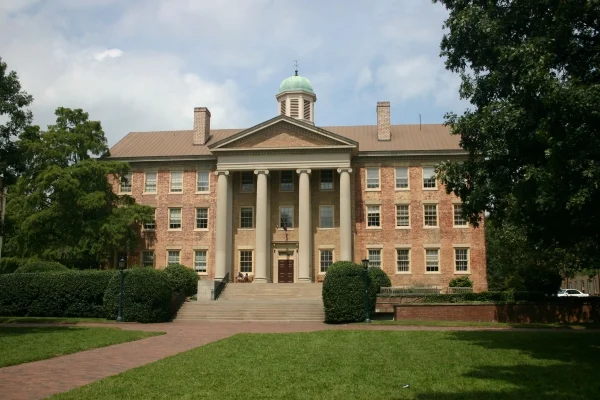
A total of 14 centers and institutes will be decommissioned, according to a budget reductions presentation to the board in November.
Tar_Heel_Rob/iStock/Getty Images
The University of North Carolina at Chapel Hill will close its area studies centers in 2026, faculty members within the centers told Inside Higher Ed.
The six centers—the Center for European Studies, the African Studies Center, the Carolina Asia Center, the Center for Middle East and Islamic Studies, the Institute for the Study of the Americas and the Center for Slavic, Eurasian and East European Studies—are all expected to close at some point next year.
“Our leadership team is taking a thoughtful and targeted approach, looking into areas that can be streamlined for greater efficiency, strengthening our operations while meeting our fiduciary responsibility to the people of North Carolina,” the UNC media relations department said in a statement. “A number of factors were taken into consideration while evaluating Centers and Institutes and some programs have been identified to be sunset [sic] in 2026. The list is not finalized at this time.”
Further updates will come after the January Board of Trustees meeting, the spokespeople said.
In a “budget reductions update” to the board’s finance and infrastructure committee in November, university officials said they planned to save $7 million in annual spending from “centers and institute reductions” made over several years, with a goal of $3 million in budget reductions before the end of this fiscal year in June 2026. A total of 14 centers and institutes will be decommissioned, according to the presentation.


