Tag: Education

  • PowerSchool Got Hacked. Now What? – The 74

    PowerSchool Got Hacked. Now What? – The 74


    Get stories like this delivered straight to your inbox. Sign up for The 74 Newsletter

    Were you a current or former student in the last few decades? Or a parent? Or an educator? 

    If so, your sensitive data — like Social Security numbers and medical records — may have fallen into the hands of cybercriminals. Their target was education technology behemoth PowerSchool, which provides a centralized system for reams of student data to damn near every school in America.

    Given the cyberattack’s high stakes and its potential to harm millions of current and former students, I teamed up Wednesday with Doug Levin of the K12 Security Information eXchange to moderate a timely webinar about what happened, who was affected — and the steps school districts must take to keep their communities safe.

    Sign-up for the School (in)Security newsletter.

    Get the most critical news and information about students’ rights, safety and well-being delivered straight to your inbox.

    Concern about the PowerSchool breach is clearly high: Some 600 people tuned into the live event at one point and pummeled Levin and panelists Wesley Lombardo, technology director at Tennessee’s Maryville City Schools; Mark Racine, co-founder of RootED Solutions; and Amelia Vance, president of the Public Interest Privacy Center, with questions. 

    PowerSchool declined our invitation to participate but sent a statement, saying it is “working to complete our investigation of the incident and [is] coordinating with districts and schools to provide more information and resources (including credit monitoring or identity protection services if applicable) as it becomes available.”

    The individual or group who hacked the ed tech giant has yet to be publicly identified.

    Asked and answered: Why has the company’s security safeguards faced widespread scrutiny? What steps should parents take to keep their kids’ data secure? Will anyone be held accountable?
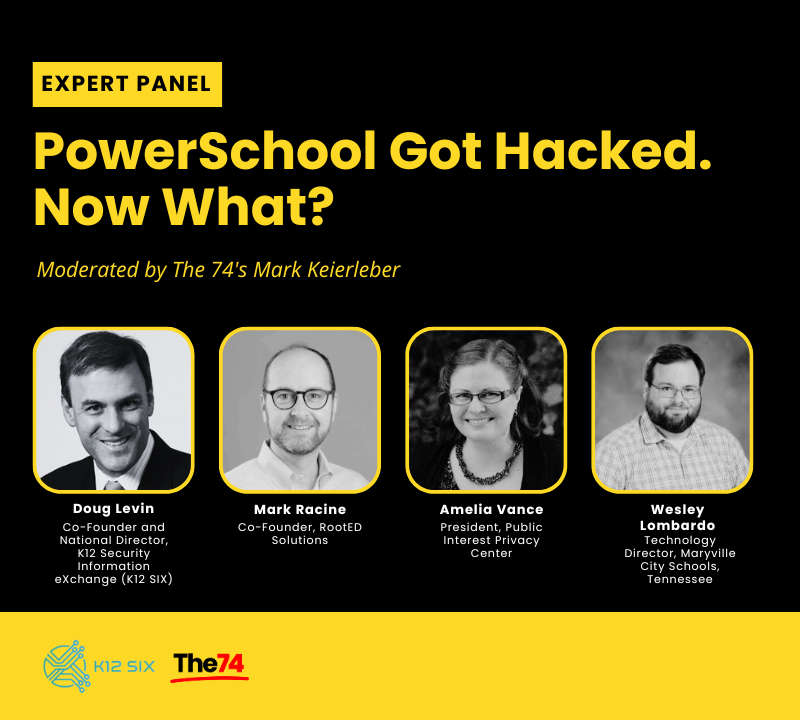
    Watch the webinar here.


    In the news

    Oklahoma schools Superintendent Ryan Walters, who says undocumented immigrants have placed “severe financial and operational strain” on schools in his state, proposed rules requiring parents to show proof of citizenship or legal immigration status when enrolling their kids — a proposal that not only violates federal law, but is likely to keep some parents from sending their children to school. | The 74

    • Not playing along: Leaders of the state’s two largest school districts — Oklahoma City and Tulsa — rebuked the proposal and said they would not collect students’ immigration information. Educators nationwide fear the incoming Trump administration could carry out arrests on campuses. | Oklahoma Watch
       
    • Walters filed a $474 million federal lawsuit this week alleging immigration enforcement officials mismanaged the U.S.-Mexico border, leading to “skyrocketing costs” for Oklahoma schools required “to accommodate an influx of non-citizen students.” | The Oklahoman
       
    • Timely resource guide: With ramped-up immigration enforcement on the horizon — and with many schools already sharing student information with ICE — here are the steps school administrators must take to comply with longstanding privacy and civil rights laws. | Center for Democracy & Technology

    A federal judge in Kentucky struck down the Biden administration’s Title IX rules that enshrined civil rights protections for LGBTQ+ students in schools, siding with several conservative state attorneys general who argued that harassment of transgender students based on their gender identity doesn’t constitute sex discrimination. Mother Jones

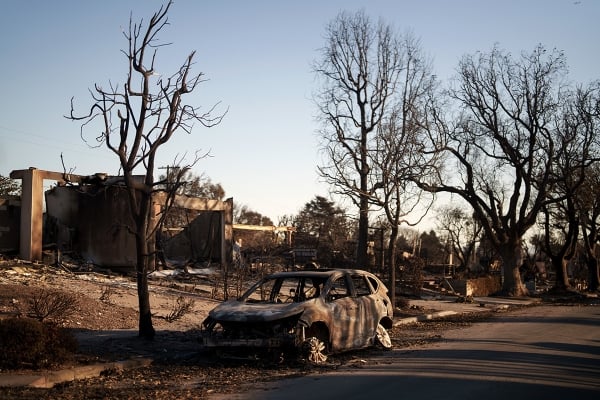
    Fires throw L.A. schools into chaos: As fatal wildfires rage in California, the students and families of America’s second-largest school district have had their lives thrown into disarray. Schools serving thousands of students were badly damaged or destroyed. Many children have lost their homes. Hundreds of kids whose schools burned down returned to makeshift classrooms Wednesday after losing “their whole lifestyle in a matter of hours.” | The Washington Post 

    • At least seven public schools in Los Angeles that were destroyed, damaged or threatened by flames will remain closed, along with campuses in other districts. | The 74

    Has TikTok’s time run out? With a national ban looming for the popular social media app, many teens say they’re ready to move on (and have already flocked to a replacement). | Business Insider

    Instagram and Facebook parent company Meta restricted LGBTQ+-related content from teens’ accounts for months under its so-called sensitive content policy until the effort was exposed by journalist Taylor Lorenz. | Fast Company
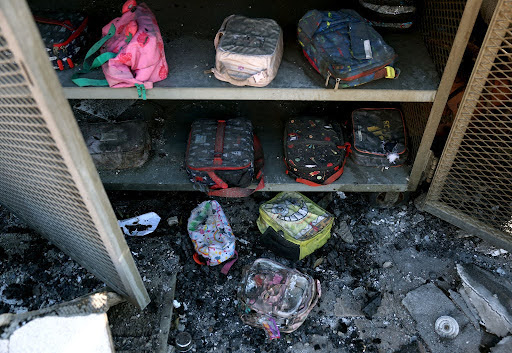
    Students’ lunch boxes sit in a locker at California’s Marquez Charter Elementary School, which was destroyed by the Palisades fire on Jan. 7. (Photo by Justin Sullivan/Getty Images)

    The Federal Communications Commission on Thursday announced the participants in a $200 million pilot program to help schools and libraries bolster their cybersecurity defenses. They include 645 schools and districts and 50 libraries. | FCC

    Scholastic falls to “furry” hackers: The education and publishing giant that brought us Harry Potter has fallen victim to a cyberattacker, who reportedly stole the records of some 8 million people. In an added twist, the culprit gave a shout-out to “the puppygirl hacker polycule,” an apparent reference to a hacker dating group interested in human-like animal characters. | Daily Dot
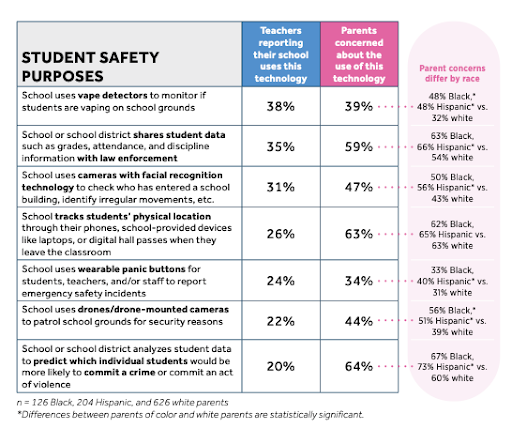
    Not just in New Jersey: In a new survey, nearly a quarter of teachers said their schools are patrolled by drones and a third said their schools have surveillance cameras with facial recognition capabilities. | Center for Democracy & Technology

    The number of teens abstaining from drugs, alcohol and tobacco use has hit record highs, with experts calling the latest data unprecedented and unexpected. | Ars Technica


    ICYMI @The74

    Librarians Gain Protections in Some States as Book Bans Soar

    RFK Jr. Could Pull Many Levers to Hinder Childhood Immunization as HHS Head

    Feds: Philadelphia Schools Failed to Address Antisemitism in School, Online


    Emotional Support

    New pup just dropped.

    Meet Woodford, who, at just 9 weeks, has already aged like a fine bourbon. I’m told that Woody — and the duck, obviously — have come under the good care of 74 reporter Linda Jacobson’s daughter.


    Get stories like these delivered straight to your inbox. Sign up for The 74 Newsletter

    Source link

  • Johns Hopkins, Caltech settle in antitrust lawsuit

    Johns Hopkins, Caltech settle in antitrust lawsuit

    Johns Hopkins University and the California Institute of Technology agreed to settle in a federal antitrust lawsuit that alleges 17 wealthy institutions, known as the 568 Presidents Group, illegally colluded on financial aid formulas and overcharged students for years.

    Late Friday, JHU settled for $18.5 million and Caltech for $16.7 million, according to court filings. Both were more recent additions to the group, which was established in 1998. Johns Hopkins joined in November 2021, and Caltech in 2019.

    The class action lawsuit was filed in January 2022 and initially implicated Caltech along with Brown, Columbia, Cornell, Duke, Emory, Georgetown, Northwestern, Rice, Vanderbilt and Yale Universities; Dartmouth College; the Massachusetts Institute of Technology; and the Universities of Chicago, Notre Dame and Pennsylvania.

    Johns Hopkins was added to the lawsuit in March 2022.

    After Friday’s court filing, 12 of the 17 institutions have settled. Altogether the settlement amounts add up to nearly $320 million. Vanderbilt had the largest settlement: $55 million.

    The five remaining defendants in the lawsuit—Cornell, Georgetown, MIT, Notre Dame and Penn—have denied wrongdoing and continue to fight the antitrust case in court. The 568 Presidents Group name is a reference to a carve-out in federal law that allowed member institutions to discuss financial aid formulas with immunity from federal antitrust laws due to their need-blind status. Congress created that exemption following a 1991 price-fixing scandal that involved all eight Ivy League universities and MIT.

    The legislative carve-out expired in 2022, and the group subsequently dissolved.

    However, plaintiffs have argued that defendants did consider financial circumstances and made decisions based on family wealth and donation history or capacity, often admitting students on “special interest lists” with substandard transcripts compared to the rest of accepted classes.

    Source link

  • HESA’s AI Observatory: What’s new in higher education (January 17, 2025)

    HESA’s AI Observatory: What’s new in higher education (January 17, 2025)

    Transformation of education

    The McDonaldisation of higher education in the age of AI

    Yoonil Auh, J. University World News. December 11th, 2024.

    Reflection on how AI’s impact on higher education aligns with the principles of McDonaldisation (efficiency, calculability, predictability and control), what opportunities and challenges it creates, and how institutions are responding

    Decolonization

    AI and digital neocolonialism: Unintended impacts on universities

    Yoonil Auh, J. University World News. July 12th, 2024. 

    The evolution of AI risks reinforcing neocolonial patterns, underscoring the complex ethical implications associated with their deployment and broader impact

    Workforce preparation

    As workers seek guidance on AI use, employers value skilled graduates

    Ascione, L. eCampusNews. December 9th, 2024.

    A new Wiley survey highlights that 40% of respondents struggle to understand how to integrate AI into their work and 75% lack confidence in AI use, while 34% of managers feel equipped to support AI integration

    California students want careers in AI. Here’s how colleges are meeting that demand

    Brumer, D. and Garza, J. Cal Matters. October 20th, 2024. 

    California’s governor announced the first statewide partnership with a tech firm, Nvidia, to bring AI curriculum, resources and opportunities to California’s public higher education institutions. The partnership will bring AI tools to community colleges first.

    Let’s equip the next generation of business leaders with an ethical compass

    Côrte-Real, A. Times Higher Education. October 22nd, 2024. 

    In a world driven by AI, focusing on human connections and understanding is essential for achieving success. While AI can standardize many processes, it is the unique human skills – such as empathy, creativity, and critical thinking – that will continue to set individuals and organizations apart.

    How employer demand trends across two countries demonstrate need for AI skills

    Stevens, K. EAB. October 10th, 2024. 

    Study reviewing employer demands in the US and in Ireland to better understand how demand for AI skills differ across countries, and examine if these differences are significant enough to require targeted curricular design by country

    Research

    We’re living in a world of artificial intelligence – it’s academic publishing that needs to change

    Moorhouse, B. Times Higher Education. December 13th, 2024.

    Suggestions to shift mindsets towards GenAI tools to restore trust in academic publishing

    Teaching and learning

    The AI-Generated Textbook That’s Making Academics Nervous

    Palmer, K. Inside Higher Ed. December 13th, 2024. 

    A comparative literature professor at UCLA used AI to generate the textbook for her medieval literature course notably with the aim to make course material more financially accessible to her students – but the academic community reacted strongly

    GenAI impedes student learning, hitting exam performance

    Sawahel, W. University World News. December 12th, 2024.

    A study conducted in Germany using GenAI detection systems showed that students who used GenAI scored significantly lower in essays

    The renaissance of the essay starts here

    Gordon, C. and Compton, M. Times Higher Education. December 9th, 2024. 

    A group of academics from King’s College London, the London School of Economics and Political Science, the University of Sydney and Richmond American University came together to draft a manifesto on the future of the essay in the age of AI, where they highlight problems and opportunities related to the use of essays, and propose ways to rejuvenate its use

    These AI tools can help prepare future programmers for the workplace

    Rao, R. Times Higher Education. December 9th, 2024.

    Reflection on how curricula should incorporate the use of AI tools, with a specific focus on programming courses

    The future is hybrid: Colleges begin to reimagine learning in an AI world

    McMurtrie, B. The Chronicle of Higher Education. October 3rd, 2024.

    Reflection on the state of AI integration in teaching and learning across the US

    Academic integrity

    Survey suggests students do not see use of AI as cheating

    Qiriazi, V. et al. University World News. December 11th, 2024. 

    Overview of topics discussed at the recent plenary of the Council of Europe Platform on Ethics, Transparency and Integrity in Education

    Focusing on GenAI detection is a no-win approach for instructors

    Berdahl, L. University Affairs. December 11th, 2024

    Reflection on potential equity, ethical, and workload implications of AI detection 

    The Goldilocks effect: finding ‘just right’ in the AI era

    MacCallum, K. Times Higher Education. October 28th, 2024. 

    Discussion on when AI use is ‘too much’ versus when it is ‘just right’, and how instructors can allow students to use GenAI tools while still maintaining ownership of their work

    Source link

  • How AI Has Gone To The Dogs

    How AI Has Gone To The Dogs

    One highlight from FETC’s Startup Pavilion is Florida-based Scholar Education, which uses AI chatbot dogs to help tutor students and give feedback to teachers. How it works: A friendly AI-powered classroom assistant provides academic guidance and encourages engagement. The AI dogs will deliver daily reports to parents so they can see feedback on their kids’ learning, creating a direct line of communication between home and school. See it in action for yourself:

    Kevin Hogan
    Latest posts by Kevin Hogan (see all)

    Want to share a great resource? Let us know at [email protected].

    Source link

  • Historians’ council vetoes Gaza scholasticide condemnation

    Historians’ council vetoes Gaza scholasticide condemnation

    The American Historical Association’s top elected body has shot down a resolution opposing scholasticide in Gaza, after members who attended its annual convention approved the statement early this month by a 428-to-88 margin.

    The association’s elected council, which has 16 voting members, could have accepted the resolution or sent it to the organization’s roughly 10,450 members for a vote. Instead, the council rejected it as the official position of the association.

    Jim Grossman, the association’s executive director and a nonvoting member of the council, said the Thursday afternoon vote was 11 to 4, with one abstention. He said the meeting was over Zoom.

    The rejected resolution had condemned the U.S. government’s funding of Israel, saying it “has supplied Israel with the weapons being used to commit this scholasticide” and that Israel “has effectively obliterated Gaza’s education system.” Scholasticide is defined as the intentional eradication of an education system.

    The resolution also called for a permanent ceasefire and for the association to form a committee to help rebuild Gaza’s “educational infrastructure.”

    In a written explanation of the veto, the council said it “deplores any intentional destruction of Palestinian educational institutions, libraries, universities and archives in Gaza.”

    However, it considers the resolution to be a contravention of AHA’s “constitution and bylaws because it lies outside the scope of the association’s mission and purpose.” The constitution, the council noted, defines that mission and purpose as “the promotion of historical studies through the encouragement of research, teaching and publication; the collection and preservation of historical documents and artifacts; the dissemination of historical records and information; the broadening of historical knowledge among the general public; and the pursuit of kindred activities in the interest of history.”

    Grossman said the vote to approve that explanation was 10 to zero with three abstentions, after some members left the meeting following the veto vote. He said he couldn’t reveal who voted which way in either tally because the discussion was confidential.

    “We consider it imperative that council members be able to speak freely and candidly during the meeting, and that’s why they’re not recorded and that’s why we do not quote any individual council members,” Grossman said. “And they did speak freely and candidly.”

    Van Gosse, a co-chair and founder of Historians for Peace and Democracy, which wrote the resolution, said “we are extremely shocked by this decision, and disappointed.” He said, “It overturns the democratic decision at that huge [conference] business meeting and the landslide vote.”

    Anne Hyde, a council member and a University of Oklahoma history professor, said she voted to veto “to protect the AHA’s reputation as an unbiased historical actor,” noting that the organization does congressional briefings. She also said the current war in Gaza “is not settled history, so we’re not clear what happened or who to blame or when it began even, so it isn’t something that a professional organization should be commenting on yet.”

    Asked why she didn’t support sending the resolution to the full membership for a vote, Hyde said, “As a council member, you really are thinking about the full 10,000 people, and it includes high school teachers, people who teach in really difficult circumstances and who don’t agree about this issue.” She said, “You could imagine all kinds of scenarios” where a full membership vote “still wasn’t representative.”

    This marks the second time this academic year that the top body of a major scholarly organization has shot down a pro-Palestinian resolution before the group’s full membership could vote on it. In the fall, the Modern Language Association’s executive council rejected a resolution that would’ve also accused Israel of scholasticide—and would’ve gone further by endorsing the international boycott, divestment and sanctions movement against Israeli policy.

    Unlike the American Historical Association, the Modern Language Association Executive Council, which has different bylaws, axed that resolution before its convention this month even began.

    In February 2022, the AHA council did approve a statement on another current war. It condemned “in the strongest possible terms Russia’s recent invasion of Ukraine” and said, “This act of overt military aggression violates the sovereignty of an independent Ukraine, threatening stability in the broader region and across the world.”

    The statement rebutted Russian president Vladimir Putin’s historical justifications for the invasion, saying, “Putin grossly simplifies and distorts Ukraine’s history, essentially erasing its distinct past and rendering it indistinguishable from Russia.” The statement ended with this: “We vigorously support the Ukrainian nation and its people in their resistance to Russian military aggression and the twisted mythology that President Putin has invented to justify his violation of international norms.”

    Grossman told Inside Higher Ed Friday that “the Ukraine statement was purely historical. It was well within our scope.” He said, “No serious professional historian in the United States considers Putin’s historical explanation to be anything close to accurate history, so the war itself was based on an abuse of history, and that’s what our statement addressed.” There’s “no such consensus” among U.S. historians on the situation in Gaza, he said.

    Two pro-Israel organizations, the American Jewish Committee and the Academic Engagement Network, said they sent a joint letter to the council Thursday urging the veto. The letter calls the scholasticide accusation “preposterous.”

    “There is no evidence to suggest that Israel is deliberately and systematically targeting the Palestinian educational system for destruction,” the letter said. “The resolution blatantly ignores the fact that Hamas routinely launches rockets from, and houses its weapons and fighters in, civilian structures and facilities.”

    The organizations wrote that “as an institution, the AHA should steer clear of weighing in on contentious political conflicts, particularly when so many members vehemently disagree.” They said such resolutions can “create a hostile and unwelcoming environment for scholars and students who identify as Zionists and those with strong personal, academic and professional ties to Israel.” They further argued that “the association would be better served by adopting a stance of political neutrality on geopolitical issues.”

    This story has been updated.

    Source link

  • Montana State president to lead APLU

    Montana State president to lead APLU

    The Association of Public and Land-grant Universities named Montana State University president Waded Cruzado as its next president, according to a Thursday news release.

    Cruzado, who has served as chair of APLU’s Board of Directors since 2021, will formally step into the top job at APLU on July 1. Cruzado has led Montana State University since 2010, and last August that she would retire in June 2025.

    She replaces outgoing president Mark Becker, who has led APLU since 2022.

    “Throughout my life, the history and the impact of land-grant universities and public higher education have provided me, and countless students and families, with inspiration and a call to action. I’ve seen firsthand the life-changing opportunity our public universities provide to their students, their communities, the country, and the world,” Cruzado said in the news release.

    Cruzado, who was a first-generation college student, is a native of Puerto Rico.

    Gary May, chancellor of the University of California, Davis, who led the search committee that hired Cruzado, described her as “an exceptional leader who brings deep experience in successfully leading a public and land-grant university to impressive new heights.” May also noted her familiarity with the organization given her time as chair of APLU’s Board of Directors.

    (The headline was corrected to reflect that Cruzado is retiring before going to APLU.)

    Source link

  • Rise in college applications driven by minority students

    Rise in college applications driven by minority students

    The number of first-year applicants this cycle is up 5 percent over January of last year, according to a new report from Common App, and overall applications rose 7 percent.

    The growth was buoyed by a sharp uptick in underrepresented students: Latino applicants increased 13 percent, Black applicants by 12 percent and first-generation applicants by 14 percent. Asian applicants rose by 7 percent, while the number of white applicants didn’t change.

    A Common App analysis also found that the number of applicants from low-income neighborhoods increased more than those from neighborhoods above the median income level—by 9 percent, compared to 4 percent. And the number of applicants who qualify for a fee waiver is up 10 percent so far.

    Geographically, applicant trends seemed to follow broader demographic trends; they surged by 33 percent in the Southwest, with a 36 percent boost in Texas alone, while every other region remained relatively stable. The Western region saw applicants decline by 1 percent.

    In general, students are applying to about the same number of schools as last year, with only a 2 percent increase in applications per student. Public institutions have received 11 percent more applications, while private ones have received 3 percent more.

    For the first time since 2019, domestic applicant growth outpaced that of international applicants, with the former increasing by 5 percent and the latter slowing to 1 percent. Certain high-volume countries experienced steep declines: The number of applicants from Africa fell by 14 percent, and Ghana in particular saw a 36 percent decrease. Applicants from other increasingly popular source countries for international students surged; Bangladesh, for instance, saw 45 percent growth.

    The number of applicants who submitted test scores was about even with the number who didn’t. For the past four years, since test-optional policies were implemented in 2020, no-score applicants have significantly outnumbered those who submitted scores, but institutions returning to test requirements may be swinging the pendulum back.

    Source link

  • Students feel “spammed” by “overload” of university emails

    Students feel “spammed” by “overload” of university emails

    Students feel that they receive “too many emails” from their universities, and they find their institution’s communications “inconsistent, inauthentic and rather annoying,” according to researchers.

    A new paper says that an “overload” of emails sent from universities to students means important emails are getting “buried” and that students simply disengage from their inboxes.

    The article, based on interviews with students, senior academics and professional staff who typically distribute emails, found that students were more likely to read emails sent by course tutors, whereas they were likely to ignore mass emails sent from unknown senders.

    “Students spoke positively about the messages that related to modules they were studying but were critical of the ‘dear student’ mass communications, which most described as ‘irrelevant’ and some described as ‘spam’,” says the paper published in Perspectives: Policy and Practice in Higher Education.

    It found students were “remarkably consistent” when filtering their emails, explaining, “They read all the emails relating to their modules, then prioritized the rest using the name of the generator and the subject line. Messages from teaching staff were welcomed, but students rarely read messages from unknown generators, messages sent to all students or newsletters.”

    Student services staff said they felt “uncomfortable [and] even guilty” about some of the messages they were asked to distribute, and one student told the researchers, “In my first year, like, there were so many emails being sent out that I basically just gave up.”

    However, report co-author Judith Simpson, lecturer in material culture at the University of Leeds, told Times Higher Education that while institutions were “a long way away from optimal communication,” it was “important to note that we measured student perception of email.”

    “Some students definitely feel as if they are being spammed, but we don’t actually know how many emails it takes to create that effect. A small number of emails asking you to do life admin might feel like a horrible burden if you haven’t done life admin before,” she said.

    The article concedes that “universities are in a difficult situation” and that “students expect to be provided with necessary information but seem unprepared to read it.”

    It argues that while this is an “eternal problem” and students failed to read paper handbooks in the pre-email era, “‘overload’ does seem to have been accentuated by the pandemic,” when universities “compensated” for the lack of in-person communication by “reaching out” to students via email. This often included important news, as well as information about “all the good things the university was doing” during this period to support students.

    “Staff and students are less likely to meet on campus now that hybrid working is the norm, and the ‘email habits’ developed in the pandemic are still in operation,” the article says.

    It suggests that to improve student engagement, universities should consider re-routing well-being messages through personal tutors, and that administrative staff should be introduced to students—virtually or in-person—to increase trust in communications.

    Source link

  • California colleges confront loss as Los Angeles burns

    California colleges confront loss as Los Angeles burns

    The past week has been a blur for Fred Farina, the California Institute of Technology’s chief innovation officer, who lost his home in the fires still tearing through Los Angeles.

    “Things turned on a dime. One evening we were sitting in our living room and within 10 minutes we had to evacuate,” said Farina, who lived in Altadena, one of the neighborhoods hardest hit by the Eaton fire. “The loss of everything you have is hard to deal with.”

    Farina is one of hundreds of faculty, staff and students from colleges and universities across Los Angeles who have been displaced by the wildfires.

    While most institutions were spared burn damage to their physical plants, many spent the last week entrenched in immediate recovery efforts. Numerous colleges are raising money to help students and staff secure housing and other basic needs.

    Others are opening shelters and food pantries. Pepperdine University’s law school is hosting free remote legal clinics to educate homeowners and lawyers about federal emergency assistance and related issues such as insurance, leases and mortgages. And the University of California, Los Angeles, opened space at its research park for the Federal Emergency Management Agency to use as a disaster recovery center for fire victims living on the city’s Westside.

    Flexibility and Compassion

    But beyond efforts to meet their communities’ most pressing needs, colleges in Los Angeles are also figuring out how to move forward and get through a semester already scarred by more than one of the most destructive fires in California history. The priority emerging for most college leaders is moving forward with flexibility and compassion.

    “Words seem inadequate to capture the scale of the devastation,” said Thomas F. Rosenbaum, president of Caltech in Pasadena, near where the Eaton fire destroyed 1,400 homes. “The Caltech community has responded with compassion and generosity, seeking to help each other and working heroically to permit Caltech and [the Jet Propulsion Laboratory] to resume their fundamental missions of learning and discovery. We are in this for the long term, and the closeness of our community gives us hope for the future.”

    The blaze didn’t reach the Caltech campus itself, but the institute estimates that more than 1,000 students and employees live in an evacuation zone. Of those, more than 90 employees have lost their homes, along with at least 200 employees—many of whom live in the decimated nearby enclave of Altadena—of the Caltech-managed Jet Propulsion Lab.

    Caltech was one of the many colleges in Southern California that closed down last week—in addition to Santa Monica College, Pasadena City College and Glendale Community College—as strong winds accelerated the Palisades and Eaton fires and displaced scores of people affiliated with those campuses.

    Caltech resumed in-person classes Monday, and most other local colleges have done the same or are planning to in the coming days as the air quality continues to improve. But hundreds of students, staff and faculty are far from resuming life as it was before the fire.

    “It’s pretty overwhelming, the things that have to be done to get back to a good situation,” said Farina, who is in the throes of dealing with insurance and disaster relief logistics after losing his home. “There’s so many decisions that have to be made so quickly.”

    Although Farina is uncertain about when he’ll find permanent new housing for his family—apartments are scarce and rents have skyrocketed in the past week—Caltech helped him and many other employees secure a temporary place to live. So far, the Caltech and JPL Disaster Relief Fund has raised about $2 million, and the fund is giving that money to help displaced people meet their basic needs in the aftermath of the fires.

    Numerous other L.A.-area colleges are also helping their students and employees get access to cash and safe housing, which have emerged as two of the most needed resources more than a week after the fires started.

     At California State University at Los Angeles, at least 60 faculty, staff and students lost their homes, and college officials expects that number to grow. The university is raising money and offering basic needs support for those most affected, which includes grants for housing and food as well as adjustments to teaching and learning, as needed. Cal State LA President Berenecea Johnson Eanes said in a memo Wednesday that the institution “will continue to harness the healing power of our university for the long road to recovery.” (This paragraph was updated with information provided after publication.)

    The L.A. Foundation for Los Angeles Community Colleges launched the L.A. Strong: Disaster Response Fund, which is raising money to give people financial assistance for housing, transportation, clothing, food and other basic needs.

    “What’s most important right now is financial support,” said Alberto J. Román, chancellor of the Los Angeles Community College District, who expected the first round of assistance to be distributed by the end of the week. “We consider these really unprecedented times with an impact, and that’s why we are compassionate and empathetic of individual situations.”

    None of LACCD’s nine campuses sustained fire damage, and Román said he doesn’t believe any of the district’s more than 200,000 students and 9,000 employees were injured as a result of the disaster, either.

    “The impact that we’ve had has been on folks who’ve been evacuated or lost their homes, road closures preventing people from coming to work or power outages and being without internet,” he said, noting that the colleges transitioned to remote work last week.

    Although LACCD resumed in-person operations this week, Román said the district wants to be flexible with students and staff whose lives have been upended by the fires.

    “It is important for us to continue instruction,” he said. “It’s a balance between health and safety and ensuring that students can finish their courses.”

    Glendale Community College reopened for in-person classes Wednesday, though at least a dozen employees and 20 students lost their homes and dozens more had to evacuate. While officials continue to try and make contact with the 600 students who live in evacuation ZIP codes, the college is also offering extra paid leave for some employees, raising money, supplying students with laptops and helping people connect with other resources.

    Smoke and fire could be seen from the Glendale Community College’s Verdugo campus last week.

    Glendale Community College

    Tzoler Oukayan, dean of student affairs at Glendale CC, said the college is allowing students to withdraw from their classes without facing a penalty.

    “The challenge is that a lot of our students in these areas didn’t—and some still don’t—have power. Access to the internet and their classes has been very challenging,” she said. “It was important for us to open up campus and give people a place to just be.”

    Empathy and compassion will also be a priority for Mount St. Mary’s University president Ann McElaney-Johnson when her campus reopens. As of Thursday, the university’s Chalon campus—which is about three miles from the burn path of the Palisades fire—was still under evacuation orders and four faculty members so far have lost their homes.

    “The impact of the fire—once we’ve ascertained what it is—is going to be tremendous. So, we really want to make sure we’re caring for our community as we move forward,” McElaney-Johnson said, adding that the university is using money from its operations budget to provide staff and students with financial assistance. “We’ll pick up where we need to, but there will be special attention. Some of the plans for different projects can get put on hold. Right now, the only thing that really matters is the safety and well-being of this community.”

    ‘Healing More Than Academics’

    That’s the approach California State University, Chico, took in 2018, when it reopened two weeks after the Camp fire destroyed the homes of more than 300 faculty, staff and students.

    “We made sure that we had all of the exceptions and support systems in place to prioritize the people who were part of our community, to make sure our eye was on their long-term success,” said Ashley Gebb, executive director of communications at Chico State. “We were focused on healing more than academics. It was about how we could get students to the end of semester with their well-being as a priority.”

    While Gebb said Chico State was “one of the first to have a community leveled by a fire like this,” the fires in Southern California this month have proven that catastrophes of this scale are becoming more common.

    Meredith Leigh, climate programs manager for Second Nature, a nonprofit focused on higher education’s role in climate action, said it’s a signal that higher education institutions across the country should be prepared to navigate increasingly drastic events.

    “While campuses across our network have taken steps to increase climate resilience and adaptation, the scale and impact of the current fires (as well as recent floods in the East) is novel in its intensity,” she said. “In this way, the biggest lesson for campuses across the nation is to shift the mental model for resiliency and emergency management—away from planning and implementation based on what has happened in the past, toward what are certain to be more frequent and intense events that previously seemed ‘unimaginable.’”

    Source link

  • Indiana governor issues executive order eliminating DEI

    Indiana governor issues executive order eliminating DEI

    Indiana governor Mike Braun signed an executive order Wednesday eliminating diversity, equity and inclusion in all state agencies and replacing it with what he’s calling “MEI”—merit, excellence and innovation.

    The order requires all executive branch state agencies to uphold the Supreme Court’s 2023 decision in Students for Fair Admissions vs. Harvard, which prohibited the consideration of race in college admissions, noting that “eliminating racial discrimination means eliminating all of it” and that equal protection applies “without regard to any differences of race, of color, or of nationality.”

    Under the order, government offices cannot use state funds, property or resources to support DEI initiatives, require job candidates to issue DEI statements or “mandate any person to disclose their pronouns.” State agencies must review their individual programs and policies for compliance by April 30 and provide a written report to the governor by July 1.

    The order also closes the government’s Office of the Chief Equity, Opportunity and Inclusion Officer, which was created in 2020 under Braun’s predecessor, Governor Eric Holcomb.

    This makes Indiana the second state this year to eliminate DEI by executive order, following West Virginia.

    Among the other executive orders Braun signed during his first week as governor was one requiring the state personnel office to review all job postings and eliminate degree requirements for positions where they’re not necessary.

    Source link