Tag: Education

  • Higher Education Inquirer : 2025 Will Be Wild!

    Higher Education Inquirer : 2025 Will Be Wild!

    2025 promises to be a disruptive year in higher education and society, not just in DC but across the US. While some now can see two demographic downturns, worsening climate conditions, and a Department of Education in transition, there are other less predictable and lesser-known trends and developments that we hope to cover at the Higher Education Inquirer. 

    The Trump Economy

    Folks are expecting a booming economy in 2025. Crypto and AI mania, along with tax cuts and deregulation, mean that corporate profits should be momentous. The Roaring 2020s will be historic for the US, just as the 1920s were, with little time and thought spent on long-range issues such as climate change, economic inequality, or the potential for an economic crash.  

    A Pyramid, Two Cliffs, a Wall and a Door  

    HEI has been reporting about enrollment declines since 2016.  Smaller numbers of younger people and large numbers of elderly Baby Boomers and their health and disability concerns spell trouble ahead for states who may not consider higher education a priority. We’ll have to see how Republican promises for mass deportations turn out, but just the threats to do so could be chaotic. There will also be controversies over the Trump/Musk plan to increase the number of H1B visas.  

    The Shakeup at ED

    With Linda McMahon at the helm of the Department of Education, we should expect more deregulation, more cuts, and less student loan debt relief. Mike Rounds has introduced a Senate Bill to close ED, but the Bill does not appear likely to pass. Diversity, Equity, and Inclusion (DEI) efforts may take a hit. However, online K12 education, robocolleges, and surviving online program managers could thrive in the short run.   

    Policies Against Diversity, Equity, and Inclusion

    Florida, Texas, Alabama, Iowa and Utah have banned diversity, equity and inclusion (DEI) offices at public universities. Idaho, Indiana and Kansas have prohibited colleges from requiring diversity statements in hiring and admissions

    Failing Schools and Strategic Partnerships 

    People should expect more colleges to fail in the coming months and years, with the possibility that the number of closures could accelerate. Small religious schools are particularly vulnerable. Schools may further privatize their operations to save money and make money in an increasingly competitive market.

    Campus Protests and Mass Surveillance

    Protests may be limited out of fear of persecution, even if there are a number of legitimate issues to protest, to include human induced climate change, genocide in Palestine, mass deportations, and the resurgence in white supremacy. Things could change if conditions are so extreme that a critical mass is willing to sacrifice. Other issues, such as the growing class war, could bubble up.

    The Legitimization of Robocollege Credentials    

    Online higher education has become mainstream despite questions of its efficacy. Billions of dollars will be spent on ads for robocolleges. Religious robocolleges like Liberty University and Grand Canyon University should continue to grow and more traditional religious schools continue to shrink. University of Southern Hampshire, Purdue Global and Arizona Global will continue to enroll folks with limited federal oversight.  Adult students at this point are still willing to take on debt, especially if it leads to job promotions where an advanced credential is needed. 


    Apollo Global Management is still working to unload the University of Phoenix. The sale of the school to the Idaho Board of Education or some other state organization remains in question.

    AI and Cheating 

    AI will continue to affect society, promising to add more jobs and threatening to take others.  One less visible way AI affects society is in academic cheating.  As long as there have been grades and competition, students have cheated.  But now it’s become an industry. Even the concept of academic dishonesty has changed over the years. One could argue that cheating has been normalized, as Derek Newton of the Cheat Sheet has chronicled. Academic research can also be mass produced with AI.   

    Under the Radar

    A number of schools, companies, and related organizations have flown under the radar, but that could change. This includes Maximus and other Student Loan Servicers, Guild Education, EducationDynamics, South University, Ambow Education, National American UniversityPerdoceo, Devry University, and Adtalem

    Related links:

    Survival of the Fittest

    Austerity and Disruption

    Shall
    we all pretend we didn’t see it coming, again?: higher education,
    climate change, climate refugees, and climate denial by elites

    The US Working-Class Depression: “Let’s all pretend we couldn’t see it coming.”

    Tracking
    Higher Ed’s Dismantling of DEI (Erin Gretzinger, Maggie Hicks, Christa
    Dutton, and Jasper Smith, Chronicle of Higher Education). 

    Source link

  • Univ. of Arizona Global Campus faculty respond to professor

    Univ. of Arizona Global Campus faculty respond to professor

    In a recent article, “Dear Prospective UAGC Students: Stay Away,” a professor from the University of Arizona discourages students from attending the University of Arizona Global Campus (UAGC). Unfortunately, this article was based on the author’s perspective rather than on facts and thus lacked the academic rigor of factual data from credible sources. This opinion piece was a collection of baseless assumptions, completely overlooking the true mission of UAGC, its faculty, and the diverse students we proudly serve. Frankly, the article has no merit.

    There is power in knowledge and truth. As such, the article could have accurately depicted the realities of UAGC instead of relying on inaccurate critiques about educational quality, enrollment numbers, adjunct faculty, and alleged student dissatisfaction. To set the record straight, UAGC is committed to providing online higher education for non-traditional students, including working adults, military personnel, parents, and underserved communities. Our students juggle countless responsibilities, and UAGC offers the flexibility and support they need. UAGC is vital in making higher education accessible to those who need it most, breaking barriers that traditional institutions often ignore.

    Furthermore, UAGC is unwavering in its commitment to supporting students, staff, and faculty, ensuring consistent educational quality and professional growth. As we continue to evolve, we focus on transparent evolution and collaboration, learning from past oversights to create an environment where our students can improve employment opportunities. Our pursuit of high-quality education is not a destination but an ongoing journey to which UAGC is deeply committed. Like any reputable university, we conduct regular course and program reviews, embrace continuous improvement, and acknowledge areas for development as a perpetual process. This commitment to educational quality is a cornerstone of our institution, ensuring our students receive the best education possible and can be confident in our dedication to their success. 

    The UAGC faculty, the backbone of our institution, is growing increasingly weary of misleading and disparaging remarks against the university and the faculty. It is time to move forward constructively and collegially. In the name of higher education, we implore you to stop defaming our university, staff, faculty, and students. To that end, we welcome meeting and educating any skeptical faculty or staff on our university’s mission and approach to serving non-traditional adult learners. Above all, we’re eager to clear any misconceptions by providing accurate data, helping to ensure that your words align more closely with the truth moving forward.

    As we look to the future (Dr. Cabrera), the late President Franklin D. Roosevelt, who signed the unprecedented G.I. Bill into legislation, stated, “A smooth sea never made a skilled sailor” (Roosevelt, n.d.).”


    Yvonne M Lozano, Ph.D. UAGC Faculty Council Co-Chair
    Teresa Handy, Ph.D. UAGC Faculty Council Representative
    Deanna Lauer, UAGC Associate Faculty Council Representative
    Carl Marquez, UAGC Faculty Council Representative
    Cara Metz, Ph.D. UAGC Faculty Council Co-Chair
    Darla Branda, Ph.D. UAGC Program Chair

    Source link

  • Education Levels in the US, by State and Attainment

    Education Levels in the US, by State and Attainment

    Attainment has always been an interesting topic for me, every since I first got stunned into disbelief when I looked at the data over time.  Even looking at shorter periods can lead to some revelations that many don’t make sense at first.

    Here is the latest data from NCES, published in the Digest of Education Statistics. Please note that this is for informational purposes only, and I’ve not even attempted to visualize the standard errors in this data, which vary from state-to-state. 

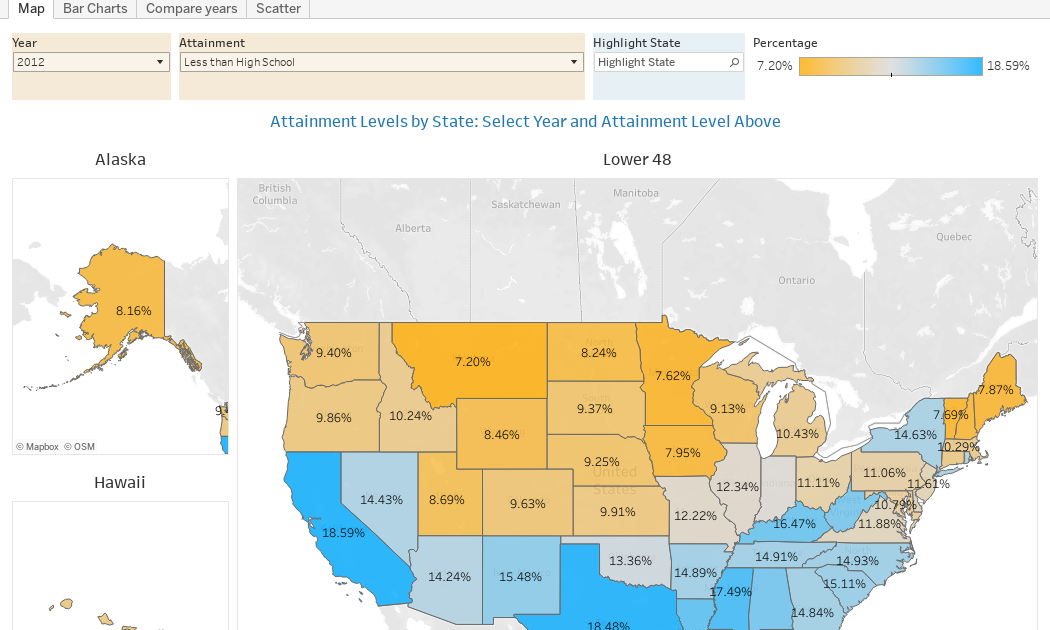
    There are four views year, all looking at educational attainment by state in 2012 and 2022.  

    The first shows data on a map: Choose the year, and choose the level of attainment.  Note that the top three categories can be confusing: BA means a Bachelor’s degree only; Grad degree means at least a Master’s (or higher, of course); and BA or more presumably combines those two.  Again, standard errors might mean the numbers don’t always add up perfectly.

    The second shows the data on a bar chart, in three views: 2012 data, 2022 data, and the change, in percentage points.  You can choose the attainment level, and then use the control to decide which column to sort the data by.

    The third view is a slope chart, where you can see the two years for any state.  Choose the attainment level, and then highlight the state you’re interested in.  Hover over the points for details. 

    And finally, the scatter shows the same data, with the same controls; the bubbles are sized by percentage-point change.  Additionally, you can use the filter to see which states have changed the most or the least.

    If anything surprises you here, drop a comment below, or send me an email.

    Source link

  • Higher Education Inquirer : Survival of the Fittest

    Higher Education Inquirer : Survival of the Fittest

    Social philosopher Herbert Spencer
    was wrong in many respects when he coined the term survival of the fittest to discuss human behavior and Victorian social policies. But
    social scientists would not be wrong today in comparing humans to other organisms, or to understanding (but not necessarily agreeing with) Spencer’s application of survival of the fittest, especially as the guardrails of government and religion are weakened. 

    Humans may appear sophisticated in some ways, but we are animals, nevertheless. Many of the laws of human behavior are consistent with the laws of nature, despite commonly held beliefs about human civilization that seemingly make us different. Yet like other animals, humans are prone to disease and vulnerable to the environment. We can adapt to change, and survive using a variety of means which may comport to our values or cause cognitive dissonance. Humans imitate, innovate, manipulate, connive, and steal. Non-human organisms, including viruses, bacteria, fungi, and more complex beings, like insects and rodents, can also adapt, and have so for millions of years, much longer than we have. We live in an ecosystem, and in communities. When other organisms thrive or die, it affects us.  


    This new social reality (or a return to older social realities) should become more apparent in the coming years as humans across the globe deal with a number of existential issues, including war, famine, and disease–and the human-induced climate change that will pour fuel on these issues. Not only must we reexamine Herbert Spencer, we must also reexamine Thomas Malthus and determine what aspects of his theories on population may be coming back to life, and what aspects may not be as relevant

    Related links: 

    Austerity and Disruption

    Shall we all pretend we didn’t see it coming, again?: higher education, climate change, climate refugees, and climate denial by elites

    The US Working-Class Depression: “Let’s all pretend we couldn’t see it coming.”
    Source link

  • Biden scraps debt relief plans, other regs

    Biden scraps debt relief plans, other regs

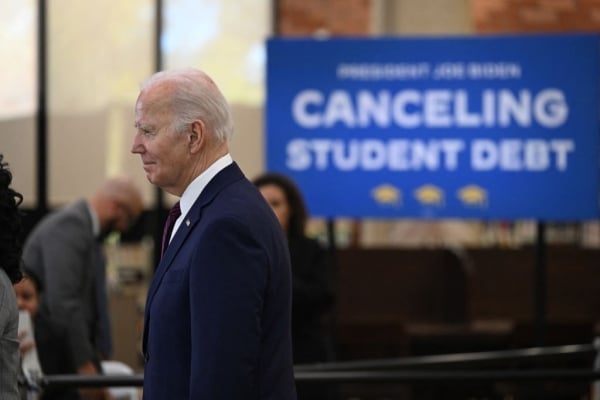
    Andrew Caballero-Reynolds/AFP via Getty Images

    The Biden administration’s ambitious plans to provide debt relief for millions of Americans is officially dead along with a number of other proposed regulatory changes.

    The administration said Friday it’s withdrawing two debt relief proposals from consideration. The Education Department had been reviewing thousands of comments on the plans and preparing to finalize at least one proposal before Friday’s announcement. The Associated Press first reported on the decision.

    The department is also scraping its proposal to amend Title IX to prohibit blanket bans barring transgender students from participating in the sport consistent with their gender identity. That proposal proved controversial, receiving more than 150,000 comments and prompting legal challenges to the department’s separate overhaul of Title IX. added

    “In light of the comments received and those various pending court cases, the department has determined not to regulate on this issue at this time,” officials wrote in a notice on the Federal Register. added

    The department also said Friday that it’s abandoning the effort to update the rules for accreditation, state authorization and cash management. Regulatory proposals were hashed out in the spring but have stalled since. Proposals to gather more data about distance education and open up college-prep programs to undocumented students appear to be moving forward. added

    The department said terminating the rule-making process or those three areas will “allow for additional evaluation of recent changes in other regulations and industry practices.” added

    The debt relief plans have been in the works since summer 2023 after the Supreme Court struck down President Biden’s first attempt at providing student loan forgiveness. Republicans and other critics said these latest debt relief plans, which would have benefited 36 million Americans, were unconstitutional and amounted to an unfair wealth transfer.

    Education Department officials maintain that they have the authority to forgive student loans for borrowers who meet certain criteria or are facing financial hardship, but they concluded that they don’t have the time to implement the proposals before Biden leaves office Jan. 20.

    “With the time remaining in this administration, the Department is focused on several priorities including court-ordered settlements and helping borrowers manage the final elements of the return to repayment,” officials wrote in a Federal Register notice. “At this time the Department intends to commit its limited operational resources to helping at-risk borrowers return to repayment successfully.”

    Withdrawing the rule “will assure agency flexibility in reexamining the issues,” officials added. The move means that the incoming administration would have to start from scratch on a rulemaking process rather than just rewrite the pending proposal.

    Some Republican attorneys general sued the administration over one of the plans, which would have provided targeted debt relief to borrowers who owe more than they initially borrowed or have been repaying their loans for more than 20 years, among other groups. That plan was blocked by a federal judge before the department could finalize it.

    The department’s decision came on the same day the Biden administration announced another round of loan forgiveness. The Education Department announced Friday morning that it would forgive loans for 55,000 borrowers who reached eligibility through Public Service Loan Forgiveness. A program created in 2007 and retooled under Biden, PSLF relieves an individual’s remaining debt if they properly complete 120 monthly payments while working full-time in a public interest career like law enforcement, health care or education. 

    Including Friday’s batch of relief, which totaled $4.28 billion, the Biden administration has now forgiven $180 billion in student loans for 4.9 million borrowers.

    Borrower advocacy groups like the Student Borrower Protection Center say that while they are deeply disappointed the Biden administration has to withdraw its regulations in response to legal pushback from right-wing attorneys, they appreciate Biden’s efforts and celebrate the regulations he was able to finalize. 

    “President Biden’s fixes to the Public Service Loan Forgiveness program and other student loan relief programs have once again delivered lasting change and will benefit millions of borrowers for years to come,” said Persis Yu, deputy executive director of the Student Borrower Protection Center, in a statement. But, at the same time, Yu added that “the actions of right-wing attorneys general have blocked tens of millions of borrowers from accessing critical student debt relief.” 

    Meanwhile, Republican lawmakers, including Senator Dr. Bill Cassidy of Louisiana, described Biden’s unfinalized attempts at student debt relief as a “scheme to transfer student debt onto American taxpayers.”

    “The Biden-Harris administration’s student loan schemes were always a lie,” the senator said in a statement. “With today’s latest withdrawal, they are admitting these schemes were nothing more than a dishonest attempt to buy votes by transferring debt onto taxpayers who never went to college or worked to pay off their loans.”

    Jessica Blake contributed to this report.

    Source link

  • The hypocrisy of community-engaged research (opinion)

    The hypocrisy of community-engaged research (opinion)

    Any critique about the neoliberal university ought to confront and acknowledge its colonial roots. Victoria Reyes, in her book Academic Outsider (Stanford University Press, 2022), highlights that higher education was never designed for the global majority, particularly people of color from low-income backgrounds. It was built by and for the elite—predominantly white, cisgender, male and affluent individuals—whose privilege shaped the norms that dominate higher education today. These norms actively harm oppressed communities. People of color in positions of power within higher education, such as tenured faculty or administrators, often perpetuate these systems of oppression when they conform to institutional norms instead of challenging them.

    The positivist research paradigm (a.k.a. positivism) sustains oppression in academia by prioritizing quantifiable data while dismissing subjective experiences and social contexts in pursuit of “objective” truths. This fragmented approach erases the complexity of lived experiences and ignores the interplay of privilege and oppression in shaping identities. Positivism fuels deficit-based research, white saviorism and helicopter science, invalidating diverse epistemologies and methodologies. Deficit-based research highlights negative conditions in oppressed communities, framing them as lacking while ignoring systemic causes of inequities, such as settler colonialism and structural racism. Legacies of positivism reinforce harmful stereotypes and stigmatization toward communities of color in higher education.

    In contrast, a transformative paradigm offers an alternative to positivism by centering the voices and experiences of oppressed communities. It prioritizes knowledge democracy and dismantling of power imbalances that have historically excluded marginalized communities from the research process. Over the past 25 years, community-engaged research (CEnR) and community-based participatory research (CBPR) have emerged as crucial approaches in health education, public health and the social sciences to address social inequities. Both approaches emphasize equitable, reciprocal community-academic partnerships, to foster genuine collaboration and systemic change.

    As a woman of color from the Global South and an immigrant scientist who studies health equity, I have witnessed firsthand both the transformative potential of CEnR in addressing social injustice and the discriminatory practices that neoliberal universities perpetuate in my own research with low-income and immigrant communities of color. While CEnR and CBPR are integral to addressing complex health and social inequities by empowering communities and fostering sustainable interventions, a question remains: Can these approaches thrive within the neoliberal university?

    White Saviorism and the Neoliberal University

    Unfortunately, the rise of CEnR within neoliberal universities, particularly during the COVID-19 pandemic, was driven not by a genuine shift toward equity, but by a desire for funding and institutional prestige. As Megan Snider Bailey notes, “Market forces … shape university-community partnerships,” reinforcing a colonial mindset rooted in the white savior complex. This complex positions universities as gatekeepers of resources and legitimacy, exploiting oppressed communities under the appearance of “helping” them to secure funding from entities like the National Institutes of Health, the National Science Foundation and the Patient-Centered Outcomes Research Institute.

    The white savior complex describes privileged individuals, often white, who see themselves as “saviors” or “benevolent rescuers” of oppressed communities. This paternalistic mindset creates exploitative dynamics and replicates patterns of subjugation. For instance, universities often profit significantly from research with oppressed communities, taking up to 50 percent of grant funds as indirect costs for expenses such as facility maintenance and administration. These funds rarely return to the communities that need them most. Instead, universities divert these resources to maintain their own operations, exposing the hypocrisy of institutions that claim to support equity and justice. These exploitative practices raise a critical question: Who benefits the most from the oppression and illness of communities of color?

    The answer often points back to the universities themselves. They profit from the appearance of equity while perpetuating social injustice. The harm caused by white saviorism extends beyond finances. Transactional and extractive research methods are normalized in the neoliberal university. These methods reinforce patterns of subjugation and undermine long-term partnerships that could foster social justice and radical healing. As scholars have shown, a human-centered, liberatory approach must replace the transactional and extractive methods often associated with white supremacy and settler colonialism.

    Precarity in the Academy

    Universities that claim to promote social justice and CEnR often perpetuate exploitative practices and precarious working conditions. They frequently hire community leaders, promotoras de salud (community health workers), students and scholars of color on short-term contracts with little job security and no benefits. These precarious positions create dependency on higher institutions that exploit labor while controlling access to resources.

    As Anne Cafer and Meagen Rosenthal explain, moral outrage often drives short-term involvement in community projects. CEnR that fails to address inequitable power dynamics becomes another tool of oppression disguised as allyship. Superficial, performative community-academic partnerships deepen mistrust of academic institutions in oppressed communities and reinforce power dynamics and social injustice.

    Raquel Wright-Mair and Samuel Museus highlight how academia’s power hierarchies instill a fear of retaliation, silencing junior scholars of color from challenging systemic inequities. Scholars of color are often forced to align their work with institutional goals while sickening their bodies and damaging their mental health. The market-driven model of the neoliberal university prioritizes profits and productivity, limiting justice-oriented research. To address these issues in higher education, we must ask urgent questions:

    • What can we do to dismantle white-led initiatives that perpetuate dependence and subjugation?
    • How can institutions eliminate the white savior complex embedded in their structures?
    • How can we ensure fair calculation of indirect costs in CEnR that prevent the exploitation of community needs for grant funding and institutional prestige?

    Recommendations for Conducting Respectful and Liberatory CEnR

    The neoliberal university perpetuates the white savior complex, commodifies community needs and exploits people of color through short-term appointments designed to maintain systemic inequities. Therefore, it is pivotal to embrace the liberatory nature of CEnR that prioritizes social justice and structural change.

    • Transformative practices. Researchers must critically reflect on how their own positionality and privilege influence the liberation or oppression of marginalized communities. Universities must recognize and amplify the expertise of community members in shaping research agendas and outcomes. Furthermore, institutions must actively embrace linguistic justice and culturally relevant methods, respecting the languages, traditions and cultural contexts of the communities they engage. By prioritizing these practices, institutions can foster decolonial, respectful and inclusive collaborations that effectively challenge and dismantle oppressive systems in higher education.
    • Accountability is essential. Funding agencies must prioritize equitable representation and tangible benefits for communities over superficial metrics when evaluating CEnR. Neoliberal universities must stop exploiting community researchers and scholars of color through precarious, short-term appointments that reinforce tokenization and systemic inequities. Universities often hire people of color temporarily to build trust for community-academic partnerships while maintaining the overrepresentation of white faculty. To disrupt this cycle, funding agencies must require universities to intentionally hire and retain leaders, scholars and students from oppressed communities, ensuring they have job security. Empowering these voices permits CEnR to address community-specific needs, build local infrastructure and foster authentic partnerships rooted in equity, respect and shared power, dismantling the traditional hierarchies of academic research.
    • Rejecting unpaid labor is nonnegotiable. Unpaid labor perpetuates inequities, exploiting oppressed communities. Ethical CEnR demands equitable compensation, collaboration and empowerment, ensuring all participants are treated with dignity and are compensated fairly. These principles are critical to advancing liberation and driving systemic change.

    Advancing CEnR that truly serves oppressed communities requires dismantling the colonial, patriarchal and exploitative structures underpinning higher education. Embracing a transformative paradigm prioritizes genuine representation, community needs and liberation over market-driven motives, creating a model for lasting social change and liberation in an increasingly inequitable world.

    Source link

  • Books reviewed in 2024

    Books reviewed in 2024

    Mostly, I’m interested in what books you read in 2024.

    Let me know if there is any overlap between the books I reviewed and what you read.

    Here are the books I wrote about in 2024:

    ‘Never Enough’ and the Roots of Our College Student Mental Health Crisis: Can universities be a counterweight to a toxic achievement culture?

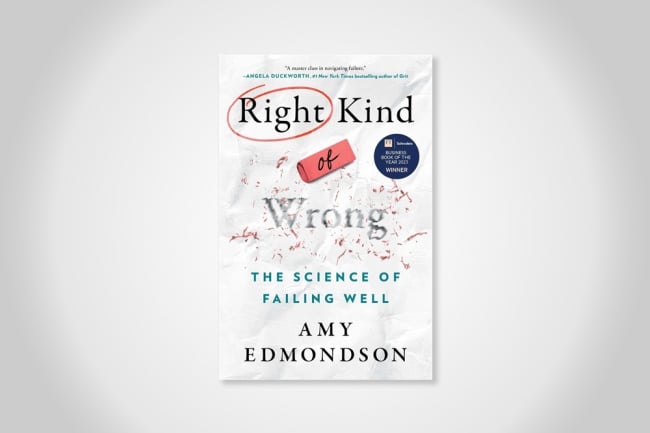
    Failure, Academic Careers and ‘Right Kind of Wrong’: Care to share your career failures with our Inside Higher Ed community?

    The cover of Right Kind of Wrong by Amy Edmondson

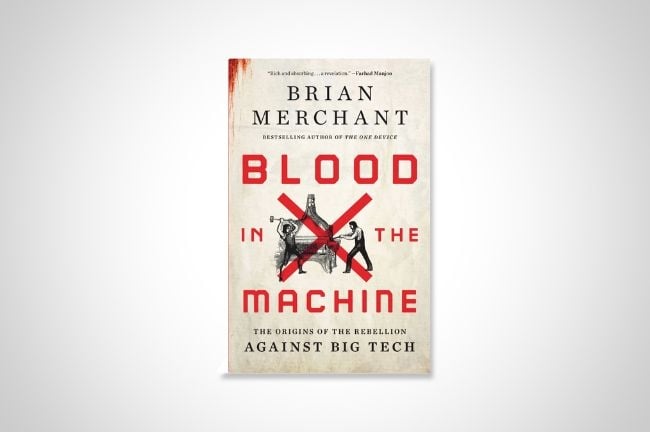
    The Ed-Tech ‘Blood in the Machine’: Can the 19th-century Luddite movement help us think about the corporate digitization of education?

    The cover of Blood in the Machine by Brian Merchant

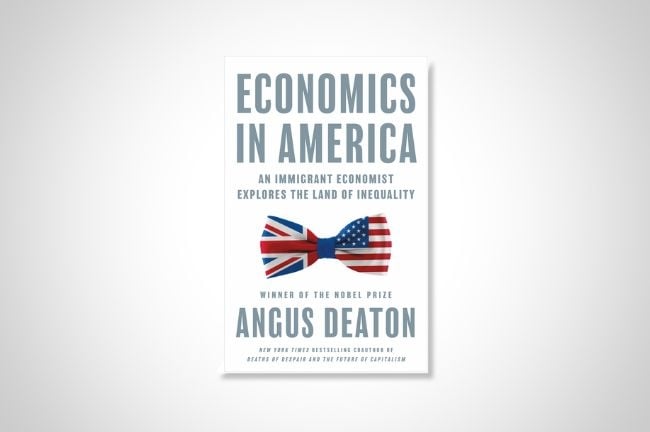
    An Imagined ‘Economics in America’ Dinner Conversation on Inequality in Higher Education: What I’d ask Sir Angus Deaton.

    The cover of Economics in America by Angus Deaton

    Universities and the ‘Material World’: What is higher education made of?

    The cover of Material World by Ed Conway

    Scaled Online Learning as Higher Ed’s ‘Pandora’s Box’: And other imperfect academic equivalencies inspired by a fantastic book on the history of prestige TV.

    The cover of the book Pandora’s Box by Peter Biskind.

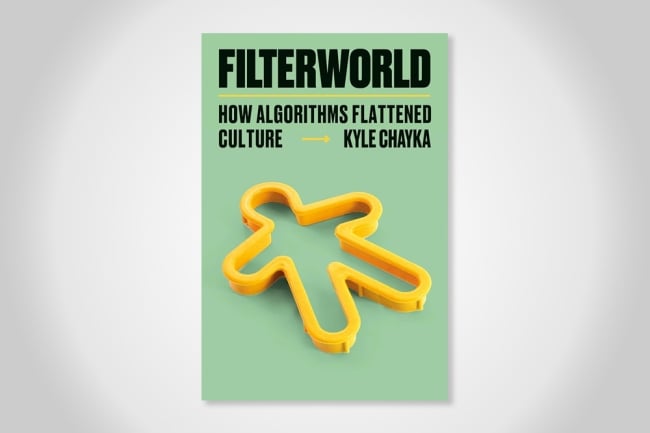
    Is ‘Filterworld’ Coming for Higher Ed? On algorithms and educators.

    The cover of Filterworld: How Algorithms Flattened Culture by Kyle Chayka

    Campuses, Climate Change and ‘How Infrastructure Works’:
    Understanding how the infrastructural systems that enable our campuses to run are dependent on stable climate.

    The cover of How Infrastructure Works: Inside the Systems That Shape Our World by Deb Chachra

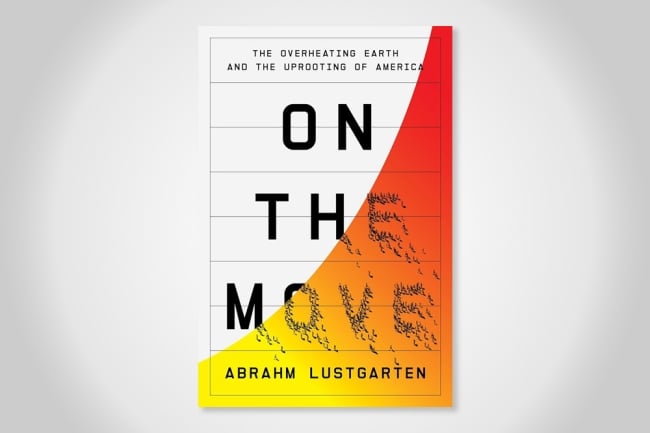
    Reading ‘On the Move’ and Thinking Mostly About Climate Change:
    Another excellent book to place in conversation with Universities on Fire.

     Cover of “On the Move: The Overheating Earth and the Uprooting of America” by Abrahm Lustgarten

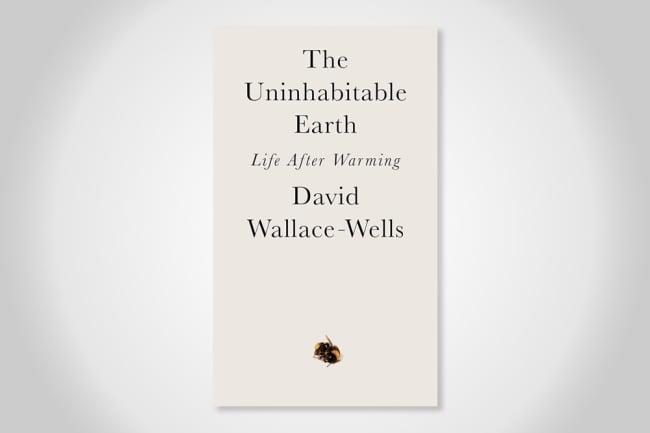
    ‘The Uninhabitable Earth’ and the Adaptable Campus: Climate change and higher education’s built environment.

    Cover of “The Uninhabitable Earth: Life After Warming” by David Wallace-Wells

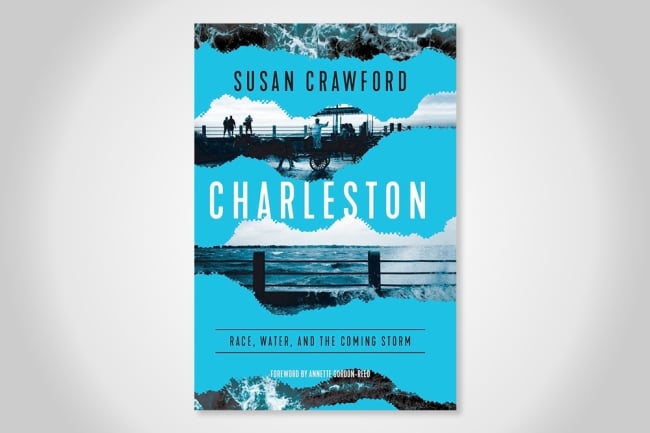
    Higher Ed and ‘Charleston: Race, Water, and the Coming Storm’: Climate change and the eight most interesting colleges and universities in the U.S.

    Charleston: Race, Water, and the Coming Storm by Susan Crawford book cover

    ‘The Displacements’ and the Need for a Climate Change Academic Novel: A call to combine climate and campus fiction.

    Cover of The Displacements, a novel by Bruce Holsinger

    ‘The English Experience’ Rounds Out the ‘Dear Committee’ Trilogy:
    Wondering how this novel, which is in part about teaching students to write, might have been different if written after the release of ChatGPT.

    Cover of The English Experience: A Novel by Julie Schumacher

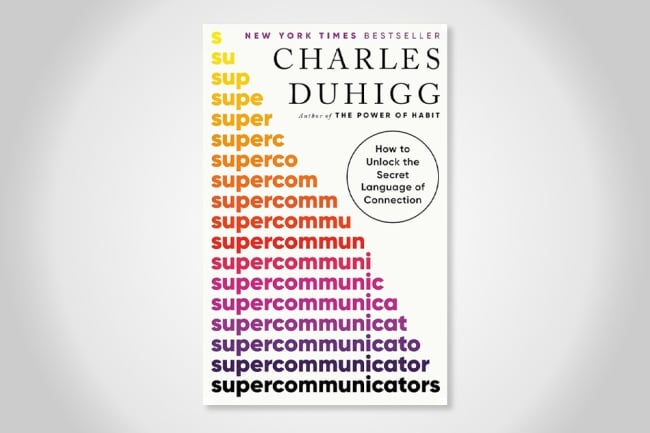
    ‘Supercommunicators’ and the Challenges of Hybrid Professional Academic Work: Why hybrid university work is better but feels worse, and where learning to be better digital communicators may help.

    Cover of "Supercommunicators" by Charles Duhigg

    Why Universities Need to Decarbonize ‘Five Times Faster’: Higher education and the economics of climate change.

    Cover of Five Times Faster by Simon Sharpe

    The Election, ‘Our Final Warning’ and Us: Where Universities on Fire meets Six Degrees of Climate Emergency.

    Cover of Our Final Warning by Mark Lynas

    ‘How the World Ran Out of Everything’ and ‘Recentering Learning’: Economic and higher education lessons from the pandemic.

    The cover of How the World Ran Out of Everything by Peter Goodman

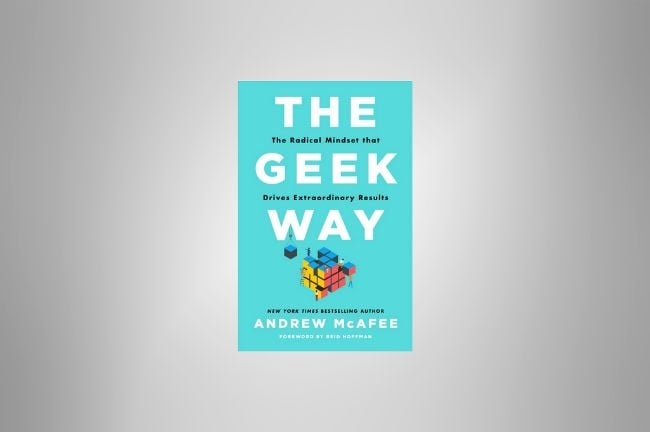
    University Culture and ‘The Geek Way’: What higher ed should absorb and reject from tech culture.

    Cover of The Geek Way by Andrew McAfee

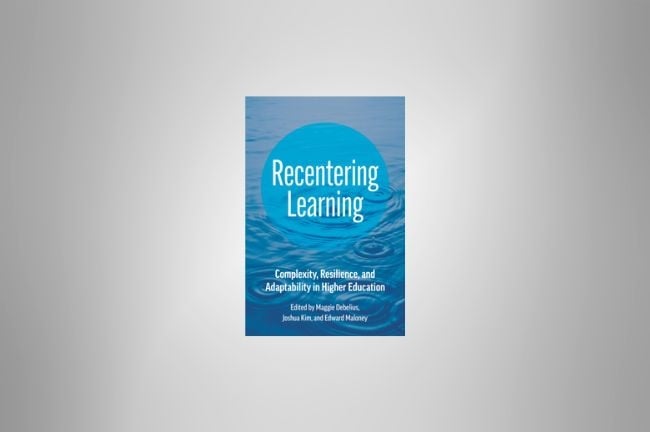
    Introducing ‘Recentering Learning’: The sections, chapter titles and authors from our new co-edited book.

    The cover of Recentering Learning

    Source link

  • Brown faces $46 million budget deficit

    Brown faces $46 million budget deficit

    Brown University, one of the nation’s wealthiest institutions, is facing a $46 million structural deficit, prompting efforts to limit growth in hiring and doctoral programs.

    “Without changes to the way Brown operates, the structural deficit is expected to continue to deepen significantly, including a deficit next year that would grow to more than $90 million, with steady increases in subsequent years. Although the current deficit of $46 million is only 3% of Brown’s total operating budget, increases in the deficit over time are not sustainable,” Provost Francis J. Doyle III and Executive Vice President for Finance and Administration Sarah Latham announced in a letter to the community on Dec. 17.

    Officials noted a range of factors driving the deficit, including flat undergraduate tuition revenue growth, increased financial aid, inflation and rising salaries and benefits.

    Brown announced a four-pronged plan to “constrain the deficit.”

    First, the institution will “hold faculty headcount growth to 1%” and limit the growth of staff members “not fully funded externally by grants and gifts” at zero percent, according to the letter from administrators. In addition, Brown will reduce admissions targets for Ph.D. programs, which have grown rapidly in recent years. The university also plans to “hold growth in unrestricted operating expenses to 3%.” Finally, the letter noted the university will work to “continue to grow master’s [program] revenue, ultimately doubling the number of residential master’s students and increasing online learners to 2,000 in five years.”

    While officials did not announce job cuts as they grapple with the yawning budget deficit, the message noted Brown will review vacancies “to determine if they will be refilled.”

    Brown is among the richest universities in the U.S. with an endowment valued at $7.2 billion. Last year, a study of endowments put Brown just beyond the top 25 wealthiest institutions.

    Source link

  • Roundup of select spring university press titles (opinion)

    Roundup of select spring university press titles (opinion)

    Johns Hopkins University Press/MIT Press/University Press of Kentucky/Duke University Press/Princeton University Press/University of Minnesota Press/University of California Press

    More catalogs from university presses started arriving almost immediately after the last roundup of spring titles appeared—and in going through them, a couple of topical clusters of books struck me as notable. Here is a quick overview. Quoted passages come from material provided by the publishers.

    What do ant colonies, online subcultures, the publishing industry and the device you are using to read this all have in common? Each is, in some sense, a network embedded in still wider networks. They, like myriad other phenomena, can be depicted in geometric diagrams in which the components of a system (“vertices”) are connected by lines (“edges”) representing interactions or relationships.

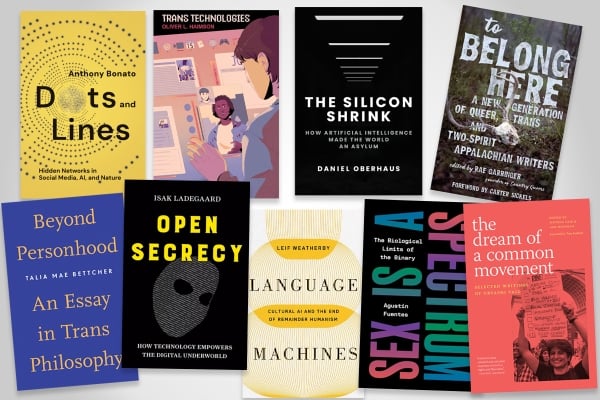
    Researchers across many disciplines understand how systems and processes can be conceptualized as networks. The lay public, on the whole, does not. Anthony Bonato’s Dots and Lines: Hidden Networks in Social Media, AI, and Nature (Hopkins University Press, May) aims to bring nonspecialist readers up to speed on elements of the network perspective. Everything from “Bitcoin transactions to neural connections” and “political landscapes to climate patterns” can be mapped via dots and lines. The author’s use of demotic labels seems well-advised, given that “Vertices and Edges” seems much less commercially viable as a title.

    Some networks make it a priority to remain diagrammable, of course. Isak Ladegaard’s Open Secrecy: How Technology Empowers the Digital Underworld (University of California Press, May) looks into the “military-grade encryption, rerouting software, and cryptocurrencies” enabling “shadowy groups to organize collective action.” Examples include dark-web markets for illegal drugs, the activities of online hate groups and the efforts of Chinese citizens to remain connected to parts of the internet blocked by the Great Firewall. In each case, those running stealth networks “move through cyberspace like digital nomads, often with law enforcement and other powerful actors on their tails.”

    Leif Weatherby’s Language Machines: Cultural AI and the End of Remainder Humanism (University of Minnesota Press, June) offers “a new theory of meaning in language and computation” applicable to the production of texts by artificial intelligence based on large language models.

    Generative AI “does not simulate cognition, as widely believed,” he argues, “but rather creates culture” instead of just shuffling together fragments of it. (This is perhaps as good an occasion as any to issue my prediction that 2025 will see the first best-selling novel written by an AI algorithm.)

    On an altogether more dire note, Daniel Oberhaus’s The Silicon Shrink: How Artificial Intelligence Made the World an Asylum (MIT Press, February) warns that the use of AI in psychiatry has shown “vanishingly little evidence” of improving patient outcomes. The problem is not one of engineering but of programming: The algorithms incorporate “deeply flawed psychiatric models of mental disorder at unprecedented scale,” posing “significant risks to vulnerable people.”

    In old-school psychodynamic therapy, what’s said during the consultation does not leave the room. The author warns that a “psychiatric surveillance economy” is emerging, one “in which the emotions, behavior, and cognition of everyday people are subtly manipulated by psychologically savvy algorithms.”

    Doubling down on a strictly defined and vigilantly enforced understanding of sex and gender as binary is high on the MAGA cultural agenda. A few books out this spring insist on the ambiguities and complexities, even so.

    Agustín Fuentes offers perhaps the most basic challenge to traditional assumptions with Sex Is a Spectrum: The Biological Limits of the Binary (Princeton University Press, May). Arguing on the basis of recent scientific research, the book “explain[s] why the binary view of the sexes is fundamentally flawed,” with “compelling evidence from the fossil and archaeological record that attests to the diversity of our ancestors’ sexual bonds, gender roles, and family and community structures.”

    The ability to survive and thrive in unwelcoming circumstances is a focus of the writings collected in To Belong Here: A New Generation of Queer, Trans, and Two-Spirit Appalachian Writers (University Press of Kentucky, April), edited by Rae Garringer. The term “two-spirit” refers to a nonbinary gender category recognized among some Indigenous peoples in North America. Contributors discuss “themes of erasure, environmentalism, violence, kinship, racism, Indigeneity, queer love, and trans liberation” in Appalachia, exploring “the writers’ resilience in reconciling their complex and often contradictory connections to home.”

    Transgender philosophy is covered at some length in an entry recently added to the Stanford Encyclopedia of Philosophy. Talia Mae Bettcher, whose work figures prominently in the entry’s bibliography, continues her work in the field with Beyond Personhood (University of Minnesota Press, March), presenting “a theory of intimacy and distance” that proposes “an entirely new philosophical approach to trans experience, trans oppression, gender dysphoria, and the relationship between gender and identity.”

    Engineering and programming enter transgender studies’ already interdisciplinary ambit with Oliver L. Haimson’s Trans Technologies (MIT Press, February), which draws on the author’s “in-depth interviews with more than 100 creators of technology” for trans people, showing “how trans people often must rely on community, technology, and the combination of the two to meet their basic needs and challenges.” From the book’s description and the author’s published articles, it seems that the technology in question tends to be digital: social networks, games, extended reality systems (akin to virtual reality but with additional capacities). The book also considers the factors shaping, and in some cases restricting, innovation in trans tech.

    To close this list, there’s The Dream of a Common Movement (Duke University Press, April), a collection of writings by and interviews with Urvashi Vaid (1958–2022) edited by Jyotsna Vaid and Amy Hoffman. Urvashi Vaid was a feminist and a civil rights advocate whose work “over the course of four decades fundamentally shaped the LGBTQ movement.” Her perspective that “the goal of any liberation movement should be transformation, not assimilation” seems compatible with an older principle, which holds that an injury to one is an injury to all.

    Scott McLemee is Inside Higher Ed’s “Intellectual Affairs” columnist. He was a contributing editor at Lingua Franca magazine and a senior writer at The Chronicle of Higher Education before joining Inside Higher Ed in 2005.

    Source link

  • AI-authored abstracts “more authentic” than human-written ones

    AI-authored abstracts “more authentic” than human-written ones

    Journal abstracts written with the help of artificial intelligence are perceived as more authentic, clear and compelling than those created solely by academics, a study suggests.

    While many academics may scorn the idea of outsourcing article summaries to generative AI, a new investigation by researchers at Ontario’s University of Waterloo found peer reviewers rated abstracts written by humans—but paraphrased using generative AI—far more highly than those authored without algorithmic assistance.

    Abstracts written entirely by AI—in which a large language model was asked to provide a summary of a paper—were rated slightly less favorably on qualities such as honesty, clarity, reliability and accuracy, although not significantly so, explains the study, published in the journal Computers in Human Behavior: Artificial Humans.

    For instance, the mean score for honesty for an entirely robot-written abstract was 3.32, based on a five-point Likert scale (where 5 is the highest rating), but just 3.38 for a human-written one.

    For an AI-paraphrased abstract, it was 3.82, according to the paper, which asked 17 experienced peer reviewers in the field of computer game design to assess a range of abstracts for readability and guess whether they were AI-written.

    On some measures, such as perceived clarity and compellingness, entirely AI-written abstracts did better than entirely human-written summaries, although were not seen as superior to AI-paraphrased work.

    One of the study’s co-authors, Lennart Nacke, from Waterloo’s Stratford School of Interaction Design and Business, told Times Higher Education that the study’s results showed “AI-paraphrased abstracts were well received” but added that the “researchers should view AI as an augmentation tool” rather than a “replacement for researcher expertise.”

    “Although peer reviewers were not able to reliably distinguish between AI and human writing, they were able to clearly assess the quality of underlying research described in the manuscript,” he said.

    “You could say that one key takeaway from our research is that researchers should use AI to enhance clarity and precision in their writing. They should not use it as an autonomous content producer. The human researcher should remain the intellectual driver of the work.”

    Emphasizing that “researchers should be the primary drivers of their manuscript writing,” Nacke continued, “AI [can] polish language and improve readability, but it cannot replace the deep understanding that comes with years of experience in a research field.”

    Stressing the importance of having distinctive academic writing—a desire expressed by several reviewers—he added that, “In our AI era, it’s perhaps more essential than ever to have some human touch or subjective expressions from human researchers in research writing.”

    “Because this is really what makes academia a creative, curious and collaborative community,” said Nacke, adding it would be a pity if scholars became “impersonal paper-producing machines.”

    “Leave that last part to the Daleks,” he said.

    Source link