Tag: Education

  • A new mission for higher education policy reviews

    A new mission for higher education policy reviews

    by Ellen Hazelkorn, Hamish Coates, Hans de Wit & Tessa Delaquil

    Making research relevant to policy

    In recent years there has been heightened attention being given to the importance of scholarly endeavour making a real impact on and for society. Yet, despite a five-fold increase in journal articles published on higher education in the last twenty years, the OECD warns of a serious “disconnect between education policy, research and practice”.

    As higher education systems have grown and diversified, it appears with ever increasing frequency that policy is made on the slow, on the run, or not at all. Even in the most regulated systems, gone is the decades-long approach of lifetime civil servants advancing copperplate notes on papyrus through governmental machines designed to sustain flow and augment harmony. In the era of 24-hour deliberation, reporting and muddling through, it may seem that conceptually rooted analysis of policy and policymaking is on the nose or has been replaced by political expediency.

    Nothing could be further from the truth. There has never been a more important time to analyse, design, evaluate, critique, integrate, compare and innovate higher education policy. Fast policy invokes a swift need for imaginative reflection. Light policy demands counterbalancing shovel loads of intellectual backfilling. Comparative analysis is solvent for parochial policy. Policy stasis, when it stalks, must be cured by ingenious, ironic, and incisive admonition.

    Governments worldwide expect research to provide leaders and policymakers with evidence that will improve the quality of teaching and education, learning outcomes and skills development, regional innovation and knowledge diffusion, and help solve society’s problems. Yet, efforts to enhance the research-policy-practice nexus fall far short of this ambition.

    Policy influencers are more likely to be ministerial advisory boards and commissioned reports than journal articles and monographs, exactly opposite to what incentivizes academics. Rankings haven’t helped, measuring ‘impact’ in terms of discredited citation scores despite lots of research and efforts to the contrary.

    Academics continue to argue the purpose of academic research is to produce ‘pure’ fundamental research, rather than undertake public-funded research. And despite universities promoting impactful research of public value, scholars complain of many barriers to entry.

    The policy reviews solution

    Policy Reviews in Higher Education (PRiHE) aims to push out the boundaries and encourage scholars to explore a wide range of policy themes. Despite higher education sitting within a complex knowledge-research-innovation ecosystem, touching on all elements from macro-economic to foreign policy to environmental policy, our research lens and interests are far too narrow. We seem to be asking the same questions. But the policy and public lens is changing.

    Concerns are less about elites and building ‘world-class universities’ for a tiny minority, and much more about pressing social issues such as: regional disparities and ‘left-behind communities’, technical and vocational education and training, non-university pathways, skills and skills mismatch, flexible learning opportunities given new demographies, sustainable regional development, funding and efficiency, and technological capability and artificial intelligence. Of course, all of this carries implications for governance and system design, an area in which much more evidence-based research is required.

    As joint editors we are especially keen to encourage submissions which can help address such issues, and to draw on research to produce solutions rather than simply critique. We encourage potential authors to ask questions outside the box, and explore how these different issues play out in different countries, and accordingly discuss the experiences, the lessons, and the implications from which others can learn.

    Solutions for policy reviews

    Coming into its ninth year, PRiHE is platform for people in and around government to learn about the sector they govern, for professionals in the sector to keep abreast of genuinely relevant developments, and for interested people around the world to learn about what is often (including for insiders!) a genuinely opaque and complex and certainly sui generis environment.

    As our above remarks contend, the nature of contemporary higher education politics, policy and practice cannot be simplified or taken for granted. Journal topics, contributions, and interlocutors must also change and keep pace. Indeed, the very idea of an ‘academic journal’ must itself be reconsidered within a truly global and fully online education and research environment. Rightly, therefore, PRiHE keeps moving.

    With renewed vim and vigour, the Society for Research into Higher Education (SRHE) has refreshed the Editorial Office and Editorial Board, and charged PRiHE to grow even more into a world-leading journal of mark and impact. Many further improvements have been made. For instance, the Editorial Office has worked with SRHE and the publisher Taylor and Francis to make several enhancements to editorial and journal processes and content.

    We encourage people to submit research articles or proposals for an article – which will be reviewed by the Editors and feedback provided in return. We also encourage people to submit commentary and book reviews – where the authors have sought to interrogate and discuss a key issue through a policy-oriented lens. See the ‘instructions for authors’ for details.

    Read, engage, and contribute

    This second bumper 2024 issue provides six intellectual slices into ideas, data and practices relevant to higher education policy. We smartly and optimistically advise that you download and perhaps even print out all papers, power off computers and phones, and spend a few hours reading these wonderful contributions. We particularly recommend this to aspiring policy researchers, researchers and consultants in the midst of their careers, and perhaps most especially to civil servants and related experts embedded in the world of policy itself.

    SRHE and the Editorial Office are looking ahead to a vibrant and strong future period of growth for PRiHE. A raft of direct and public promotion activities are planned. PRiHE is a journal designed to make a difference to policy and practice. The most important forms of academic engagement, of course, include reading, writing and reviewing. We welcome your contribution in these and other ways to the global PRiHE community.

    This blog is based on the editorial published in Policy Reviews in Higher Education (online 16 November 2024) A new mission for higher education policy reviews

    Professor Ellen Hazelkorn is Joint Managing Partner, BH Associates. She is Professor Emeritus, Technological University Dublin.

    Hamish Coates is professor of public policy, director of the Higher Education Futures Lab, and global tertiary education expert.

    Hans de Wit is Professor Emeritus and Distinguished Fellow of the Boston College Center for International Higher Education, Senior Fellow of the international Association of Universities.

    Tessa DeLaquil is postdoctoral research fellow at the School of Education at University College Dublin.

    Author: SRHE News Blog

    An international learned society, concerned with supporting research and researchers into Higher Education

    Source link

  • Gaps in sustainability literacy in non-STEM higher education programmes

    Gaps in sustainability literacy in non-STEM higher education programmes

    by Erika Kalocsányiová and Rania Hassan

    Promoting sustainability literacy in higher education is crucial for deepening students’ pro-environmental behaviour and mindset (Buckler & Creech, 2014; UNESCO, 1997), while also fostering social transformation by embedding sustainability at the core of the student experience. In 2022, our group received an SRHE Scoping Award to synthesise the literature on the development, teaching, and assessment of sustainability literacy in non-STEM higher education programmes. We conducted a multilingual systematic review of post-2010 publications from the European Higher Education Area (EHEA), with the results summarised in Kalocsányiová et al (2024).

    Out of 6,161 articles that we identified as potentially relevant, 92 studies met the inclusion criteria and are reviewed in the report. These studies involved a total of 11,790 participants and assessed 9,992 university programmes and courses. Our results suggest a significant growth in research interest in sustainability in non-STEM fields since 2017, with 75 studies published compared to just 17 in the preceding seven years. Our analysis also showed that Spain, the United Kingdom, Germany, Turkey, and Austria had the highest concentration of publications, with 25 EHEA countries represented in total. The 92 reviewed studies were characterised by high methodological diversity: nearly half employed quantitative methods (47%), followed by qualitative studies (40%) and mixed methods research (13%). Curriculum assessments using quantitative content analysis of degree and course descriptors were among the most common study types, followed by surveys and intervention or pilot studies. Curriculum assessments provided a systematic way to evaluate the presence or absence of sustainability concepts within curricula at both single HE institutions and in comparative frameworks. However, they often captured only surface-level indications of sustainability integration into undergraduate and postgraduate programmes, without providing evidence on actual implementation and/or the effectiveness of different initiatives. Qualitative methods, including descriptive case studies and interviews that focused on barriers, challenges, implementation strategies, and the acceptability of new sustainability literacy initiatives, made up 40% of the current research. Mixed methods studies accounted for 13% of the reviewed articles, often applying multiple assessment tools simultaneously, including quantitative sustainability competency assessment instruments combined with open-ended interviews or learning journals.

    In terms of disciplines, Economics, Business, and Administrative Studies held the largest share of reviewed studies (26%), followed by Education (23%). Multiple disciplines accounted for 22% of the reviewed publications, reflecting the interconnected nature of sustainability. Finance and Accounting contributed only 6%, indicating a need for further research. Similarly, Language and Linguistics, Mass Communication and Documentation, and Social Sciences collectively represented only 12% of the reviewed studies. Creative Arts and Design with just 2% was also a niche area. Although caution should be exercised when drawing conclusions from these results, they highlight the need for more research within the underrepresented disciplines. This in turn can help promote awareness among non-STEM students, stimulate ethical discussions on the cultural dimensions of sustainability, and encourage creative solutions through interdisciplinary dialogue.

    Regarding factors and themes explored, the studies focused primarily on the acquisition of sustainability knowledge and competencies (27%), curriculum assessment (23%), challenges and barriers to sustainability integration (10%), implementation and evaluation research (10%), changes in students’ mindset (9%), key competences in sustainability literacy (5%), and active student participation in Education for Sustainable Development (5%). In terms of studies discussing acquisition processes, key focus areas included the teaching of Sustainable Development Goals, awareness of macro-sustainability trends, and knowledge of local sustainability issues. Studies on sustainability competencies focussed on systems thinking, critical thinking, problem-solving skills, ethical awareness, interdisciplinary knowledge, global awareness and citizenship, communication skills, and action-oriented mindset. These competencies and knowledge, which are generally considered crucial for addressing the multifaceted challenges of sustainability (Wiek et al., 2011), were often introduced to non-STEM students through stand-alone lectures, workshops, or pilot studies involving new cross-disciplinary curricula.

    Our review also highlighted a broad range of pedagogical approaches adopted for sustainability teaching and learning within non-STEM disciplines. These covered case and project-based learning, experiential learning methods, problem-based learning, collaborative learning, reflection groups, pedagogical dialogue, flipped classroom approaches, game-based learning, and service learning. While there is strong research interest in the documentation and implementation of these pedagogical approaches, few studies have so far attempted to assess learning outcomes, particularly regarding discipline-specific sustainability expertise and real-world problem-solving skills.

    Many of the reviewed studies relied on single-method approaches, meaning valuable insights into sustainability-focused teaching and learning may have been missed. For instance, studies often failed to capture the complexities surrounding sustainability integration into non-STEM programs, either by presenting positivist results that require further contextualisation or by offering rich context limited to a single course or study group, which cannot be generalised. The assessment tools currently used also seemed to lack consistency, making it difficult to compare outcomes across programmes and institutions to promote best practices. More robust evaluation designs, such as longitudinal studies, controlled intervention studies, and mixed methods approaches (Gopalan et al, 2020; Ponce & Pagán-Maldonado, 2015), are needed to explore and demonstrate the pedagogical effectiveness of various sustainability literacy initiatives in non-STEM disciplines and their impact on student outcomes and societal change.

    In summary, our review suggests good progress in integrating sustainability knowledge and competencies into some core non-STEM disciplines, while also highlighting gaps. Based on the results we have formulated some questions that may help steer future research:

    • Are there systemic barriers hindering the integration of sustainability themes, challenges and competencies into specific non-STEM fields?
    • Are certain disciplines receiving disproportionate research attention at the expense of others?
    • How do different pedagogical approaches compare in terms of effectiveness for fostering sustainability literacy in and across HE fields?
    • What new educational practices are emerging, and how can we fairly assess them and evidence their benefits for students and the environment?

    We also would like to encourage other researchers to engage with knowledge produced in a variety of languages and educational contexts. The multilingual search and screening strategy implemented in our review enabled us to identify and retrieve evidence from 25 EHEA countries and 24 non-English publications. If reviews of education research remain monolingual (English-only), important findings and insights will go unnoticed hindering knowledge exchange, creativity, and innovation in HE.

    Dr. Erika Kalocsányiová is a Senior Research Fellow with the Institute for Lifecourse Development at the University of Greenwich, with research centering on public health and sustainability communication, migration and multilingualism, refugee integration, and the implications of these areas for higher education policies.

    Rania Hassan is a PhD student and a research assistant at the University of Greenwich. Her research centres on exploring enterprise development activities within emerging economies. As a multidisciplinary and interdisciplinary researcher, Rania is passionate about advancing academia and promoting knowledge exchange in higher education.

    Author: SRHE News Blog

    An international learned society, concerned with supporting research and researchers into Higher Education

    Source link

  • SBO Weinhold International Education Week 2024

    SBO Weinhold International Education Week 2024

    Since February 2007, International Higher Education Consulting Blog has provided timely news and informational pieces, predominately from a U.S. perspective, that are of interest to both the international education and public diplomacy communities. From time to time, International Higher Education Consulting Blog will post thought provoking pieces to challenge readers and to encourage comment and professional dialogue.

    Source link

  • The Top 5 Higher Education Podcasts

    The Top 5 Higher Education Podcasts

    As an educator, where do you go for advice on teaching? Perhaps it’s a book. Maybe it’s a social media channel of your choosing. But more often than not, faculty have turned to higher education podcasts as a way of gleaning fresh insights in a captivating, bite-sized format. It’s no secret that educators are stretched between teaching, grading and research commitments. So listening to a reputable guest share their best practices for improving equity, engagement and interaction in the classroom is a valuable faculty development and training exercise in of itself.

    If you’re looking for the best higher education podcasts to explore, this post is for you. We’ve rounded up our favorite shows that speak to the good, the bad and the ugly within higher ed in our present moment. We also capture podcasts hosted by leaders who bring deep, discipline-specific expertise to their field. Most importantly, we’ve summarized shows that not only cover the latest trends but offer practical advice in an educational and entertaining way. So grab your earbuds and let’s dive into the top higher education podcasts of the year.

    → NEW HIGHER EDUCATION PODCAST: Stream S1 of Higher Listenings by Top Hat

    1. Higher Listenings by Top Hat

    Ok, call us biased, but we think Higher Listenings from Top Hat is well worth a listen. Higher Listenings aims to engage and entertain educators with a look at the latest trends shaping the future of teaching and learning. In our first season, we offer practical advice to leave you feeling equipped and confident to tackle your next teaching challenge—whether boosting reading completion rates or embracing AI-powered learning. The first season offers an all star line up featuring some of the leading change makers in higher ed including Jesse Stommel (author of Ungrading: Why We Grade and How to Stop), José Antonio Bowen (author of Teaching with AI) and Terrell Strayhorn (leading expert on student belonging). Stay tuned for season two releasing in January 2025! In the meantime, catch up on our inaugural season by listening on Apple Podcasts or Spotify.

    2. Teaching in Higher Ed by Bonni Stachowiak

    As the most effective educators know, good teaching is both an art and a science. Dr. Bonni Stachowiak is a professor and Dean of Teaching and Learning at Vanguard University. As the host of the Teaching in Higher Ed podcast, Stachowiak serves up best practices across four key categories including: digital pedagogy, student life, work-life balance and teaching. Notable guests include Joshua Eyler (Director of the Center for Excellence in Teaching and Learning at the University of Mississippi) and Jenae Cohen (Executive Director at the Center for Teaching and Learning at the University of California, Berkeley). Whether you’re looking for strategies to grade more productively or need guidance on ed tech integration in higher education, Stachowiak’s impressive lineup will leave you feeling inspired. Listen to the latest episodes on Apple Podcasts or Spotify.

    3. Intentional Teaching by Derek Bruff

    Do you want to take your knowledge of foundational teaching practices to the next level? Dr. Derek Bruff will help you do just that. Bruff, Associate Director of the Center for Teaching Excellence at the University of Virginia and author of Intentional Tech, hosts the Intentional Teaching podcast geared towards college and university faculty. His goal is to leave listeners with actionable techniques to make their classrooms more inclusive, responsive to an AI-saturated world and ultimately, more engaging for every learner. Esteemed guests on his podcast include Thomas J. Tobin (Senior Teaching and Learning Developer at the University of Wisconsin-Madison) and Viji Sathy (Associate Dean for Evaluation and Assessment at the University of North Carolina, Chapel Hill). Check out Bruff’s star-studded episodes on Apple Podcasts or Spotify.

    4. Tea for Teaching by John Kane and Rebecca Mushtare

    If you’re looking for faculty development and training paired with emerging research in pedagogy, this higher education podcast will surely be your cup of tea. The Tea for Teaching show is produced by John Kane and Rebecca Mushtare, who run the Center for Excellence in Learning and Teaching at the State University of New York (SUNY) at Oswego. The producers wrestle with hot-button topics from upskilling in the age of AI to reducing bias in course evaluations. High-impact guests, who include Michelle Miller (Professor in the Department of Psychological Sciences at Northern Arizona University) and Anthony Abraham Jack (Faculty Director of the Boston University Newbury Center), are featured in weekly episodes. Grab your favorite warm beverage and a notebook and tune into this podcast on Apple Podcasts or Spotify.

    5. Teach and Learn by D2L

    Unsure about the direction that education is heading in? Then you’ll want to take note of D2L’s Teach & Learn podcast. Geared towards K-12 and higher ed faculty, the show is hosted by Dr. Christi Ford (Vice President of Academic Affairs at D2L) and Dr. Emma Zone (Senior Director of Academic Affairs at D2L). In candid discussions with educational experts, the hosts dive into issues affecting higher education institutions today. This timely higher education podcast offers practical advice such as how to put diversity, equity and inclusion at the forefront of your course and how to harness AI to improve student learning. Recent guests include Thomas Cavanagh (Vice Provost for Digital Learning at the University of Central Florida) and Karen Costa (Faculty Development Facilitator for the Online Learning Consortium). Leave with practical tips for your own course by listening on Apple Podcasts or Spotify.

    Source link

  • Student Engagement in Higher Education

    Student Engagement in Higher Education

    How to Deliver a Personalized Experience Throughout the Student Journey

    Imagine this: a prospective student fills out a request for information on your website, sharing personal details like their program of interest, transfer status, and intended start date. What happens next? Too often, the response is a generic email or text urging them to apply. Then, perhaps unsurprisingly, many institutions see declining contact rates and applications. 

    Delivering an engaging, personalized experience — at scale, across programs, and from the very first interaction — is no small feat. But it’s also essential in today’s competitive higher education landscape. While complex communication plans and sophisticated automation tools play a role, sometimes the simplest approach can make the biggest difference: Asking the right questions.

    Focusing on the right questions can strengthen student relationships, increase lead-to-application rates, and even drive application-to-enrollment success, helping institutions connect personally with students and boost engagement at every stage of their journey.

    What Is Student Engagement in Higher Ed? 

    Before we can start asking students questions, we must first ask ourselves an obvious question: What is student engagement? 

    Engagement rates are metrics that show how actively involved your audience is with your content. By tracking specific metrics, your institution can analyze the effectiveness of your marketing campaigns. You should track the number of people who interact with your follow-up communications: whether they open, click, respond to, or visit a website.

    Every interaction a prospective student has with your institution’s website, social media posts, texts or emails, and other digital content generates data that you can use to capture information about leads (prospective students) and better understand and optimize future marketing efforts

    Tracking and analyzing “clicks” can tell you:

    At Archer, we’ve seen clients have 44% higher application-to-start rates and 33% higher application rates when prospective students engage with an institution’s post-inquiry communication. This makes for an efficient use of resources, as you’ve already generated the inquiry. A bump in conversion rates can go a long way in stretching a limited budget. 

    One Simple Thing You Can Do to Increase Student Engagement

    Imagine you have the opportunity to meet with every prospective student in person for coffee. What would you do? How would you engage with them? You’d probably begin to build rapport by asking them lots of questions. 

    A digital meetup should be treated no differently than an in-person engagement. “Digital” is simply another method of communication. Granted, you’re not able to sit at your computer and chat online with every prospect, but in terms of how to interact and build student engagement, you should think of it the same way: as a two-way conversation. 

    Simply put, stop talking at prospective students and start communicating with them.

    As much as you’re tempted to begin by telling them how great your school and program are, it’s best to first understand where a student is coming from and what they’re looking for.

    At Archer, our team and our proprietary end-to-end student support solution — called Onward — are available to students 24/7. Built exclusively for the student journey, Onward collects and analyzes data on digital student engagement and optimizes digital student communication with a goal of increasing post-inquiry engagement. It has taught us a lot.  

    We’ve found that one of the most impactful things we can do in our follow-up communication with students to boost engagement rates — at any stage of the student lifecycle — is to ask questions. Indeed, in follow-up exchanges where we ask students specific questions (and provide an option to answer directly in that communication), we see click-through rates 42% higher than average.

    It’s Not Too Late to Start Asking Questions 

    Even if you’ve already missed a key opportunity to ask questions of new prospects, circling back to get to know them better at any point in their student journey can have an impact.

    Working with our partner Peru State College, we started sending a “What’s holding you back?” email to prospective students who weren’t taking the next step forward. The email not only asked “What’s holding you back from enrolling with us?” but also let the recipient click on an answer. For that email, we saw an average open rate of 16% — which doesn’t look too impressive until you consider these prospects had stopped engaging — and, more importantly, an average 33% click-through rate (with a majority of clicks leading to “apply now” pages). Not only did the email help the college reconnect with “lost” students, but we learned how to better connect with unconverted prospects going forward.

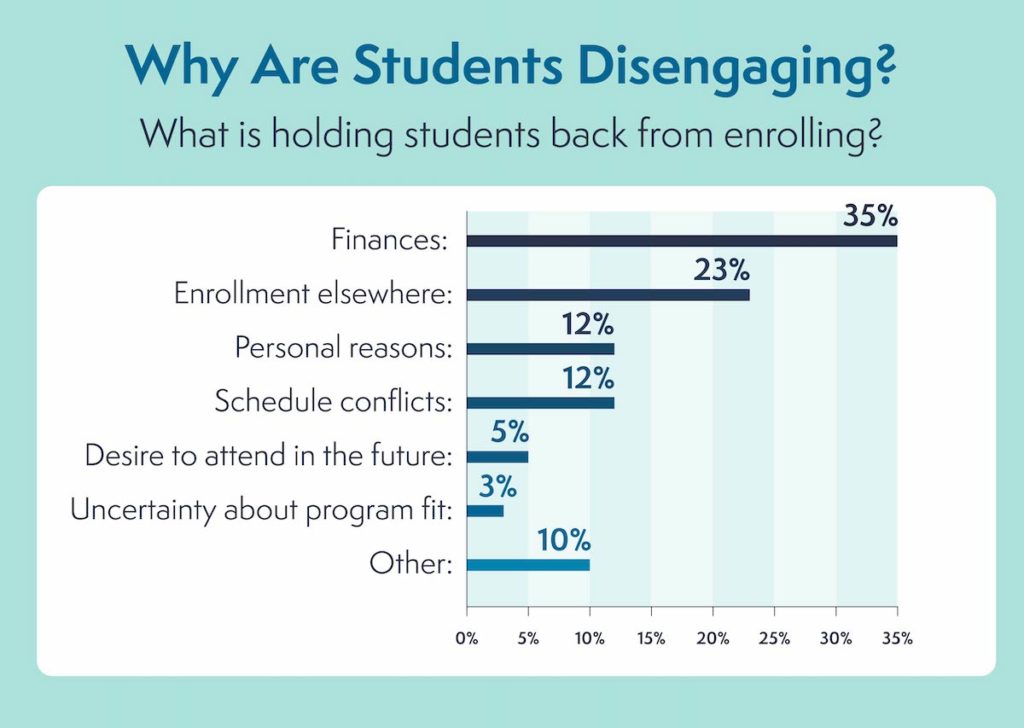
    The email allowed us to determine who was stopping out and why.

    • The top reason for not moving forward was related to finances (35%).
    • More than 20% of prospective students had enrolled elsewhere.
    • 5% said they weren’t ready to enroll yet but wanted to attend in the future.

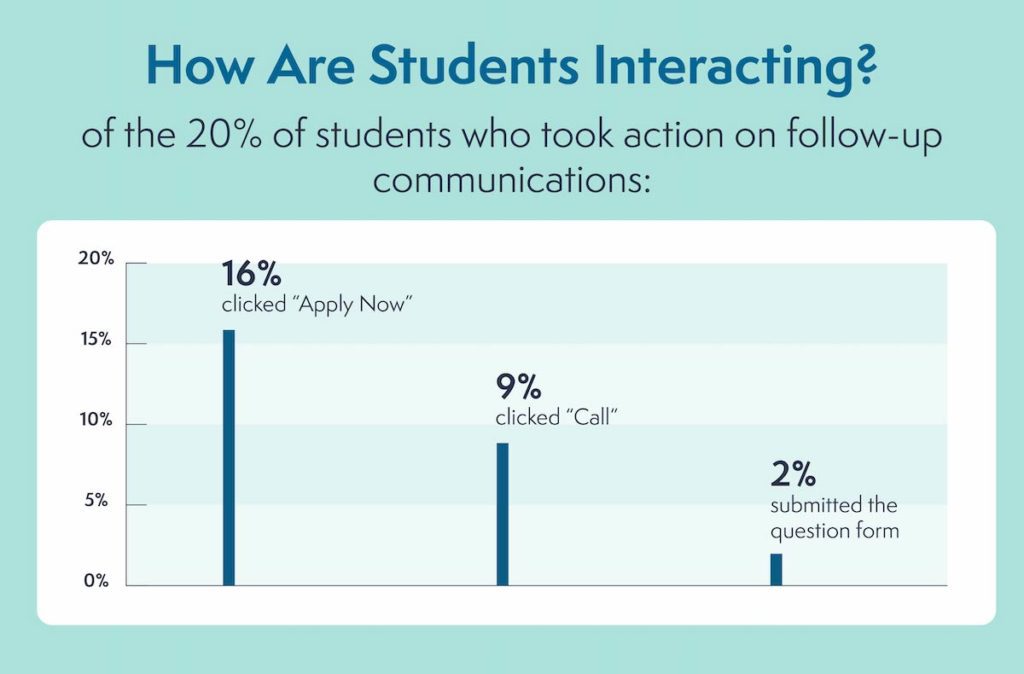
    These insights informed our follow-up digital communication, as well as our one-on-one admissions team follow-up. As a result, we reengaged with a meaningful percentage of stopped-out prospects by understanding some of their challenges and following up with relevant information. Moreover, 20% of this audience took action by clicking to start or finish their application and/or call an admissions rep.

    Student Engagement Strategies for Every Higher Ed Stage 

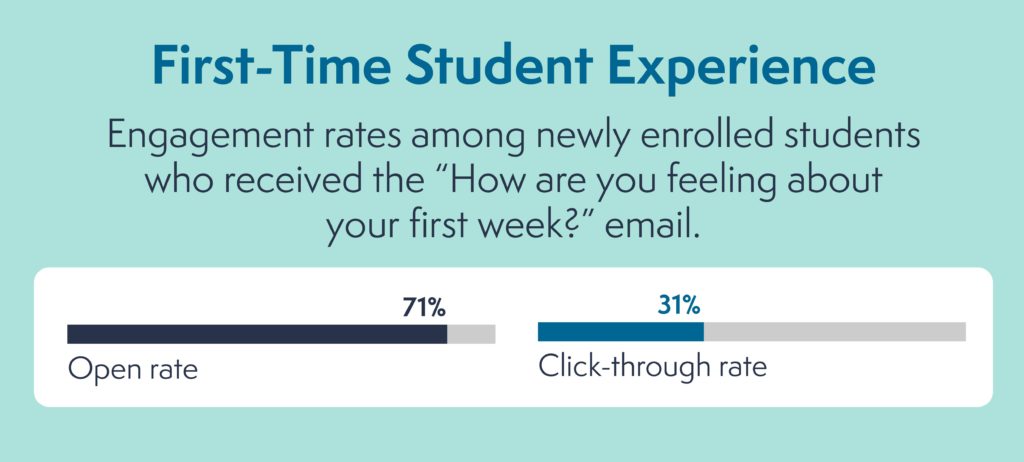
    We used this same engagement strategy for first-time students enrolled in Peru State College’s online programs. Before we could view information in our partner’s learning management system to see if students were showing up for class or turning in assignments — leading indicators of student success — we wanted to check in with these new students directly to ask how their first week was going. The email asked, “How are you feeling about your first week?”

    This email had an average open rate of 71% and an average click-through rate (CTR) of 31%.

    Using a similar email, Archer helped another partner intervene to help 14 students who had indicated they weren’t having the best first-week experience. By asking follow-up questions to learn what wasn’t working for them, and forwarding that information to our admissions team, we were able to connect those students with a success coach at the university.

    Optimize Student Engagement at Your Higher Education Institution 

    Higher-ed marketers and enrollment professionals know from experience that the success of every student is important to an institution’s long-term success. Providing a more personalized and engaging student experience can have a positive impact on enrollment growth and student retention. 

    It’s time for you to start having meaningful digital conversations that make an impact. 

    While Archer Education uses Onward, our easily scalable end-to-end student support solution, to deliver personalized communication and tailored post-inquiry follow-up 24/7, you don’t need a sophisticated lead nurturing tool to improve your student engagement strategies. Simply start asking questions in your communication with students and provide them with an easy way to respond. 

    Want to learn more about how to modernize your student experience and increase enrollment and retention rates with Archer’s Onward student support solution? Reach out to us and learn more today.

    Avatar photo


    Angie Mohr

    Director of Marketing & Communications

    Angie Mohr is the senior vice president of student engagement at Archer Education. With a background in marketing, communications, and CRM and marketing automation, she has over 15 years of strategic communications and higher education experience. In her current role at Archer Education, a full-service marketing and enrollment solutions provider for higher education institutions, Angie focuses on supporting student acquisition and life cycle delivery services, utilizing scalable communications strategies and technologies to help prospective students engage, enroll, and persist in their student journey.

    Source link

  • Meeting Accreditation Standards for Higher Education with Technology

    Meeting Accreditation Standards for Higher Education with Technology

    Tune In To Our Audio Blog


    Overview – Reimagining Accreditation

    Let’s get into the actual difficulties surrounding accreditation. You Directors of Accreditation are well-versed in the process and are very much aware that accreditation is not a game. It’s not enough to merely do the necessary compliance tasks, is it? Meeting accreditation criteria, establishing your institution’s value, enduring the never-ending audits, and keeping up with changing regulations are all part of it. The stakes are high and the pressure is intense. It remains constant. Traditional methods? They won’t cut it anymore.

    Imagine, though, if the tables could be turned. Envision yourself to use technology to not just complete the certification process, but to turn it into an asset. Think of real-time data, seamless procedures, and openness at every level. It’s time to go beyond the minimum and leverage approval to your benefit. Automating, cloud computing, and utilizing artificial intelligence-powered analytics will not only enhance the reputation of your university but also enhance the efficiency of operations.

    To help Directors of Accreditation use technology to improve institutional standards, ease compliance, and streamline accreditation data administration, we have put together this handbook. This will empower you to make critical decisions.


    A Dynamic Challenge for Directors: Redefining Accreditation

    As Directors of Accreditation, you are aware of the rapidity with which accreditation standards can evolve. Meeting accreditation standards necessitates a more comprehensive examination of student outcomes, diversity metrics, and the degree to which the institution aligns with its own objectives. No longer is it sufficient to simply mark off boxes.

    One of the hardest things to do? The stress that comes from having up-to-date, correct information at your hands. For accreditation reviews to be valid, the proof must be complete and up-to-date, leaving no room for doubt. Still, getting this information can feel like a race against the clock, especially when old methods can’t keep up with how needs change. Here, technology can really make a difference if it is used in the right way.


    Tech-Driven Solutions: Streamlining the Accreditation Journey

    Technology is the game-changer. Think about using AI-powered data analytics to revolutionize your accreditation data management. These smart tools can turn those stacks of paperwork into clear, insightful reports, making the process of proving your credentials not just easier, but a whole lot smarter! No more searching through spreadsheets or endless emails—just clear, usable information that shows your school is following the rules.


    Furthermore, cloud-based accreditation systems are very useful. Consider them as a safe, central location for all of your compliance-related info. It’s possible to get important data from these options, so your team can work together easily whether they’re at the office or traveling. Adopting these technologies doesn’t just keep you current; it sets a new standard for how quickly and clearly the approval process can be done.


    Automation: The Secret to Simplifying Repetitive Accreditation Tasks

    Imagine having more time to work on big-picture projects instead of doing the same old things over and over again. That’s how powerful technology can be in the process of getting accreditation. With the right tools, you can cut down on your work and free up your team to focus on raising institutional standards instead of just checking off tasks.


    Accreditation Data Management and Reporting Automation

    Consider the time used in gathering information and writing up reports for accreditation. Reducing the time and effort required to compile metrics in real-time is possible with automation technologies. As a bonus, you’ll spend less time worrying about mistakes and more time presenting accurate, up-to-date information.


    Smart Templates and Dashboards

    Meeting certain accreditation body criteria calls for customization, which is absolutely important. Smart templates let you quickly construct evaluations, audits, and self-studies that exactly fit what is required. Imagine having customized dashboards right at hand that clearly show your measurements and progress—no more poring over spreadsheets!


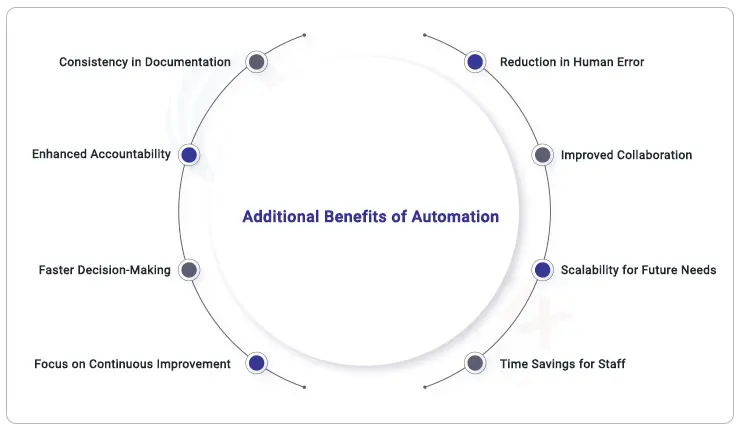
    Additional Benefits of Accreditation Data Management Automation


    • Maintain accurate, consistent, and up-to-date documentation without the need for manual updates.
    • Maintaining Accountability: A transparent audit trail for all your accrediting operations may be easily created by keeping track of who made changes and revisions.
    • Faster Decision-Making: With real-time insights and easy access to data, your team can make informed decisions quickly, keeping the accreditation process moving forward.
    • Focus on Continuous Improvement: By automating routine tasks, you can spend more time analyzing data and implementing improvements that enhance your institution’s performance and outcomes.


    Building Transparency and Trust Through Technology

    Let’s discuss something absolutely important for modern society: openness. Directors of Accreditation have a special opportunity to use technology to establish confidence among all those engaged in the accreditation process. How can you make this happen?

    Real-time dashboards available for stakeholders

    Imagine having real-time dashboards at your fingertips. These tools let you instantly share your accreditation progress with stakeholders—no more waiting for quarterly updates! With just a glance, everyone can see where you stand, thanks to clear visuals of your metrics, timelines, and benchmarks.

    This degree of openness helps everyone to be responsible as well as promotes teamwork. Trust naturally comes when your stakeholders know you are always trying to meet and surpass accreditation criteria.

    Blockchain for Academic Integrity

    Let’s now explore something somewhat more novel—blockchain technology. Consider blockchain as your new best buddy helping to maintain the integrity of your certification records. Using this technique makes an unchangeable record of all information connected to accreditation. Your accreditation data management is thus not only safe but also transparent and easily verifiable. Imagine being able to assure other stakeholders and accrediting authorities of your absolutely perfect data. Blockchain helps you to reduce the possibility of conflicts over data accuracy and inspires confidence among all the players. This kind of confidence helps to protect the reputation and integrity of your university.

    Enhanced Reporting Capabilities

    Now, let’s be honest: reporting can get draggy unless you trigger the right gear! Imagine being able to quickly and accurately create detailed reports that show your commitment to regulatory compliance and continuous growth. You can easily show accreditation groups how much progress you’re making like you have a superpower. By doing more than just checking off boxes, you’ll be showing that your institution is ready to take on any tasks that come its way. Therefore, why not use that report writing duty as a chance to shine? Using technology can help you stay prepared and make a great impression!

    Joining the Community

    In addition to internal partners, transparency also applies to the public and the rest of the academic community. Sharing your accreditation path will help your university project more professionalism and draw professors and students. Who would not want to be a part of an open and reliable institution?

    Using technology to track your certification procedures and results helps you to identify possible problems before they become serious ones. This proactive strategy lets you act early to maintain everything in line.


    Enhancing the Student Experience While Meeting Standards

    Outcome-Based Education (OBE) and Competency Tracking

    Using technology to track your certification procedures and results helps you to identify possible problems before they become serious ones. Being proactive keeps you on target. Improving the Student Experience While Complying with Outcome-Based Education (OBE) and Competency Monitoring.

    Here’s the stars: your pupils! The right technology will improve their experience and satisfy all needs. This is where Outcome-Based Education (OBE) really shines. Imagine a system that not only makes sure that educational results are in line with accreditation standards but also makes sure that student success is the most important thing. You definitely need to keep track of students’ skills and make sure they get the help they need to do well by using technology.

    Feedback Mechanisms & Surveys

    That’s not all, though! Real-time feedback tools and polls are your secret weapons for improving quality. These resources allow you to ask students for honest opinions, which might reveal where you’re succeeding and where you might need some improvement. Engaging with your students and listening to what they have to say goes beyond simply completing goals for continuous improvement.

    In this way, you make a place where students feel appreciated and supported, and you also show accreditation bodies that you’re dedicated to continuous improvement.


    Preparing for the Future: Tech Trends Directors Should Watch


    EdTech Innovations

    As the Director of Accreditation, it’s important to stay on top of things. Take a look at what next year holds! First, EdTech innovations are coming soon and will supposedly make the process of getting accredited even easier. Consider banking on cutting-edge software that makes data analysis better, streamlines reports, and automates tasks!


    Being Prepared to Virtual Accreditation Visits

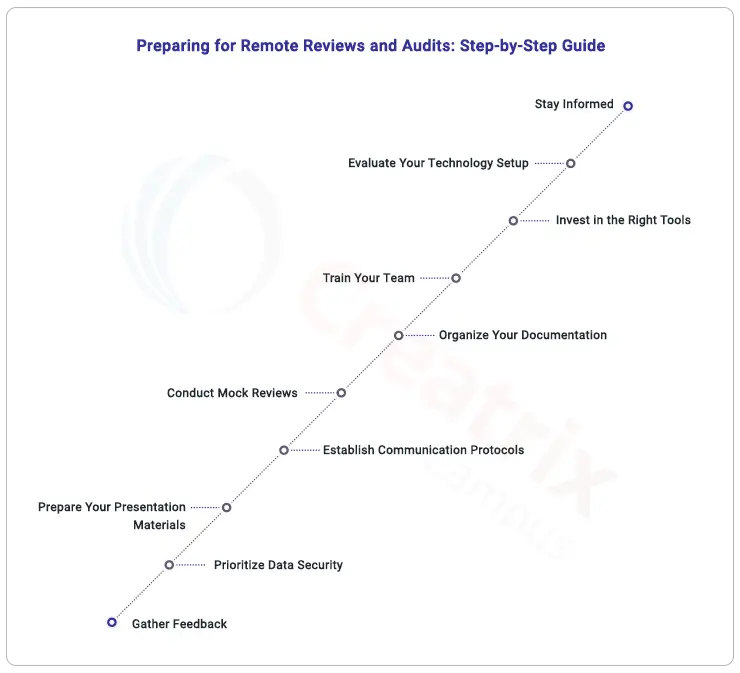
    Next, we’ll go over the basics of preparing for accreditation visits that take place virtually. As more and more things happen online, reviews and audits done from afar are becoming routine. In what ways can you become ready for this change? By acquiring robust technology that facilitates online participation and emphasizes your organization’s achievements. Ensure that all team members are informed about the use of virtual presentation techniques, online document sharing, and video conferencing. Not only will these novel concepts facilitate the acquisition of accreditations, but they will also facilitate collaboration among partners.


    Turn Compliance into a Strategic Advantage with Creatrix Campus Accreditation Platform

    By incorporating the appropriate technology, such as the Creatrix Campus Accreditation platform, Directors of Accreditation can elevate compliance from a mundane obligation to a strategic advantage. This strategy will help you satisfy accreditation criteria and match the main objectives of your institution.

    This is the time to simplify your certification application. Explore the Creatrix Campus platform for a smarter, more efficient way to meet standards. Let’s team to surpass simple compliance!

    Source link

  • Key Findings from the 2025 Landscape of Higher Education Report  

    Key Findings from the 2025 Landscape of Higher Education Report  

    As higher education navigates demographic shifts, new technologies, and economic challenges, institutions face a complex landscape when optimizing enrollment and meeting the evolving needs of students. The 2025 Landscape of Higher Education Report provides actionable insights that empower educational leaders to improve learning pathways and better serve the Modern Learner.

    Challenges such as the rising education costs have led to increased scrutiny of a college degree’s value, with only 47% of Americans considering it worthwhile without loans. When loans are involved, this number drops to 22%, underscoring the imperative for institutions to adapt to more cost-effective pathways.

    The 2025 Report offers a future-oriented outlook, equipping institutions with data to address gaps and better understand the evolving profile of the Modern Learner. Themes include shifting student preferences, an increased emphasis on career-aligned programs, and the need for more flexible learning pathways. In this article, explore six key findings that are molding students’ educational journeys and how these trends can enable education leaders to adapt.

    Finding #1: Flexible Pathways Drive Enrollment Growth 

    Spring 2024 saw a 2.5% increase in undergraduate enrollment, particularly within community colleges, public institutions, and associate degree-granting baccalaureate institutions (PABs). Graduate programs also saw enrollment increases, with a 3% rise. The highest areas of growth occurred among private, for-profit four-year institutions. These trends indicate a growing demand for flexible learning pathways that accommodate different student preferences and career aspirations.

    The age profile of part-time students has shifted as well, with the median age of part-time undergraduate students decreasing by nearly 2% across all sectors since Spring 2020. The shift was most pronounced at public two-year institutions, which saw a 4.2% decrease, and private accredited bachelor’s programs, which experienced a 2.8% decrease. As the age of part-time students continues to trend younger, it reaffirms that age is no longer a reliable predictor of learning modality. Furthermore, these shifting demographics emphasize the importance of embracing a Unified Enrollment Strategy that engages with Modern Learners based on their preferences and behaviors to meet them where they are with the right message, in the right place at the right time.

    Finding #2: Modern Learners are Prioritizing Practical Skills and Career Outcomes

    The emphasis on practical skills and career-readiness is reshaping Modern Learners’ educational preferences. With nearly half of Americans questioning the value of a traditional college degree, the demand for flexible, affordable, and industry-aligned options is growing rapidly. Apprenticeships have emerged as an appealing pathway for Modern Learners, offering paid opportunities for hands-on learning and gaining practical skills without the burden of taking on additional debt. 

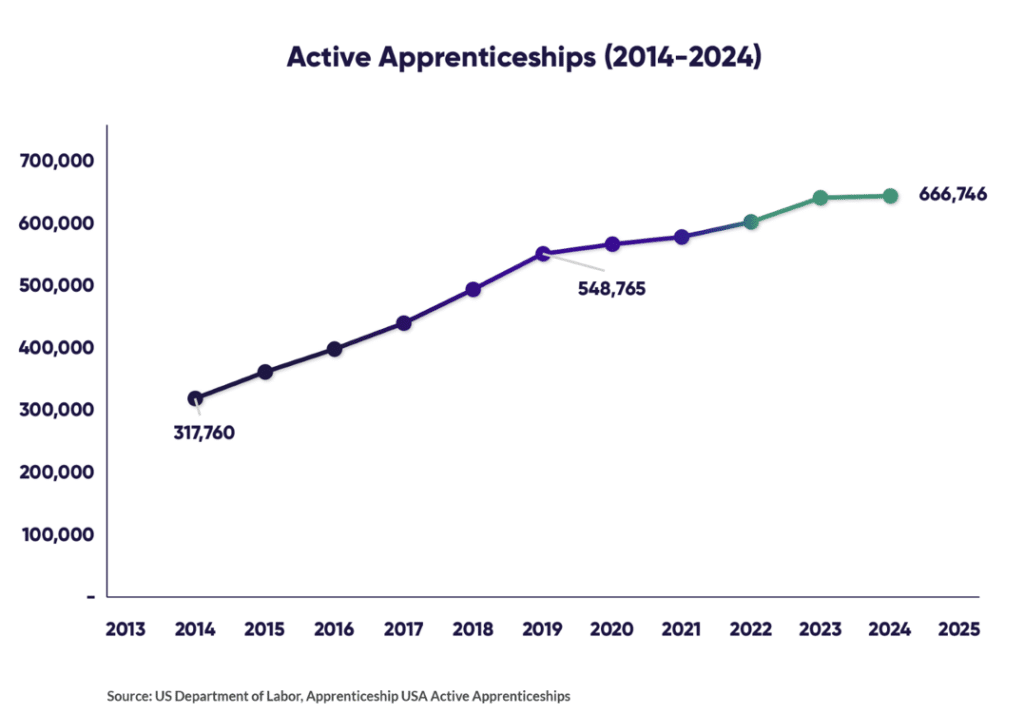
    Over the past decade, the number of apprenticeships in the U.S. has more than doubled, from approximately 317,000 to 640,000. Sectors such as Construction and Public Administration have led this growth with 34.5% and 22.4% increases, respectively. High-growth fields like Healthcare, Finance, and Technical Services present additional opportunities for expanding apprenticeship programs, aligning well with workforce demands and students’ increasing preference for practical, job-ready experience.  

    Despite apprenticeships’ increasing appeal, accessibility poses a challenge. While 75% find apprenticeships appealing, only 29% find them accessible. Geographic location, program availability, and a lack of awareness remain barriers that can prevent students from participating. Institutions can remove these barriers through strategic partnerships with industry leaders to expand opportunities, integrate practical skill-building in program curriculums, and market available programs to raise awareness. These efforts not only meet the demands of Modern Learners by providing them with relevant skills, but also enable employers to recruit qualified candidates, making apprenticeships valuable for both higher education and the economy.

    Finding #3: Student Demand for Alternative Credentials Continues to Rise 

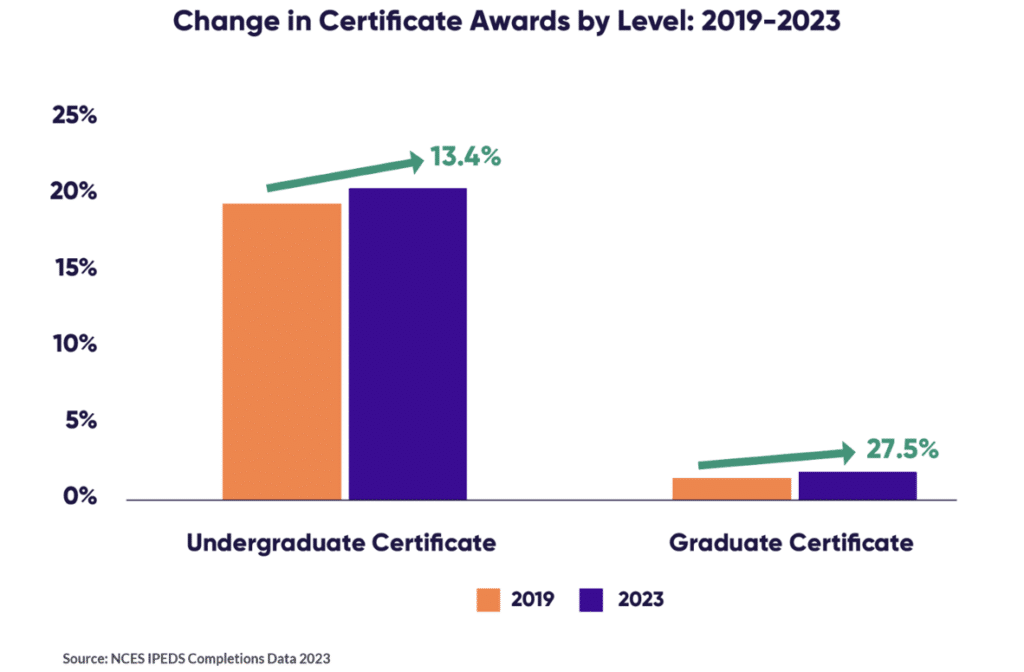
    Much like apprenticeships, the rising demand for alternative credentials like certificates further underscores the shifting preference towards more flexible and affordable learning pathways. As students continue to seek programs that offer practical skills and immediate benefits for their careers, certificates have increasingly become an attractive alternative to traditional degree paths. With the cost of higher education on the rise, Modern Learners are turning to certificate programs as a focused and affordable way to gain relevant skills for their desired career industries.

    Spring 2024 saw significant growth in certificate enrollments, with graduate programs seeing a nearly 10% increase and undergraduate certificates growing by nearly 4%. This growth reinforces that Modern Learners are increasingly prioritizing education opportunities that yield a high return-on-investment. Institutions can capitalize on this interest by expanding certificate offerings and making them more accessible to students through diverse modalities, competitive pricing, and aligning programs with job demands.  

    Finding #4: Dual Enrollment Programs Gain Momentum Among High School Students

    Dual Enrollment programs are becoming increasingly popular pathways, as more young learners seek flexible avenues for higher education. The popularity of these programs aligns with the growing trend of younger students engaging in part-time studies, demonstrating a trend towards more adaptable educational modalities. Dual enrollment has increased over 10% over the last year alone, adding approximately 100,000 students and accounting for nearly 28.1% of undergraduate enrollment increases. This growth presents a crucial opportunity for institutions to leverage this interest as they develop enrollment strategies going into 2025.

    Finding #5: The Some College, No Credential (SCNC) Population Presents a Growing Opportunity for Re-Engagement

    The Some College, No Credential (SCNC) population, now at 36.8 million and growing by 2.9% from the previous year, represents a significant opportunity for enrollment growth. With re-enrollment rising by 9.1% in the 2022-2023 academic year, institutions have a chance to attract students who left before completing their degrees.

    Understanding the educational preferences of SCNC students is key to tailoring outreach and support services. Popular fields of study for this group include Business and Liberal Arts at the bachelor’s level, Liberal Arts and General Studies for associate degrees, and Health professions and Business for undergraduate certificates. These areas indicate a clear demand for programs that offer clear pathways to employment. To effectively engage this population, institutions should focus on building accessible options that allow students to build upon previously earned credits, prioritize transfer credits, and offer support that enables students to advance in their chosen career fields.

    Finding #6: International Student Enrollment Boosts Institutions’ Global Appeal

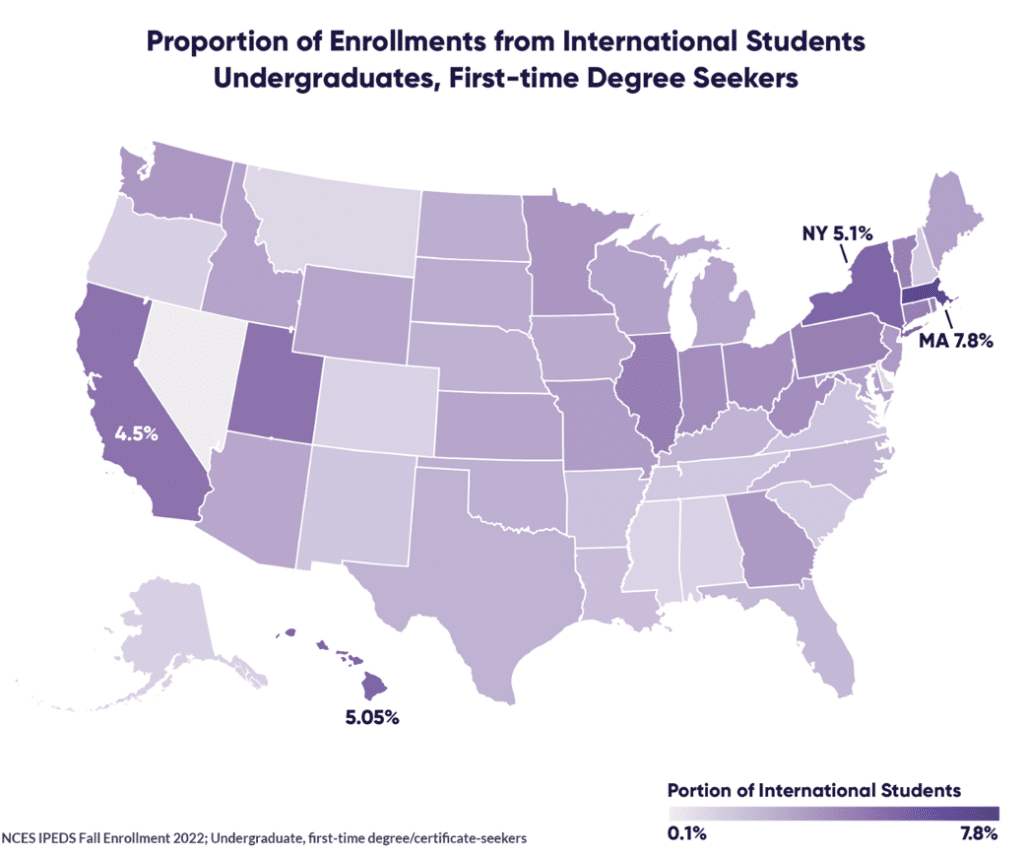
    The growing population of international students enrolled at U.S. schools presents a valuable opportunity to enhance universities’ presence and grow enrollments.  These students comprise of a significant share of enrollments, particularly in Massachusetts, Hawaii, New York, and California, where they account for 4.5% to 7.8% of the student population. Most undergraduate international students are enrolled within the public sector, underscoring its position to support higher education on a domestic and international scale.

    To maximize the benefits of international student enrollment, institutions should focus on strategies that attract and retain international students while providing support services tailored to their unique needs. By integrating a comprehensive enrollment and student support system with resources like language assistance, housing support, and financial aid, institutions can boost their global appeal, create more culturally diverse campuses, and enhance their enrollment by positioning themselves as a top choice for students worldwide.

    Looking Toward 2025

    The findings from the 2025 Landscape of Higher Education Report demonstrate both the challenges and opportunities shaping the future of higher education.

    As institutions look ahead, the ability to attract and retain students across a range of educational paths requires a holistic approach to enrollment and student support services. By focusing on creating accessible, cost-effective, and relevant learning opportunities, institutions can position themselves for success in 2025 and beyond, while meeting the diverse needs of Modern Learners and driving sustainable enrollment growth.

    For more insights and actionable strategies, download the full 2025 Landscape of Higher Education Report and see how your institution can stay ahead of the curve.

    Source link

  • SEO for Higher Education: Strategies in 2024

    SEO for Higher Education: Strategies in 2024

    Boost Your Enrollment Cycle With These Higher Ed SEO Strategies                                          

    Billions of queries occur daily through global search engines on desktop, mobile, and voice devices. These organic searches are the largest drivers of website traffic, particularly for higher education institutions, making SEO an essential ingredient in the recipe for generating student leads. A student’s journey toward enrollment is a roller coaster of considerations. From looking at financial costs and career opportunities to assessing workloads and faculty projects, students turn to search engines to answer their questions. 

    Optimizing your university’s website involves looking at a variety of SEO factors: webpage speed, page titles and headings, URL structure, link building, content, and more. Here at Archer, our higher education SEO team members have expert insight at every step on the path toward optimizing a university’s website, including technical on-page improvements, off-page link building, and, most importantly, content creation and promotion. 

    Let’s explore how your institution can stay relevant and bring new prospective students in with a sophisticated higher education SEO strategy.

    SEO for Higher Education: What You Need to Know 

    Online content saturation is at an all-time high, and competition in higher ed is intensifying. Meanwhile, the audiences that institutions are marketing to have become less traditional. 

    Capturing the attention of prospective students at a critical point in their college enrollment journey takes a deep understanding of all the nuances of search engine optimization, including search intent, click-through rates, and mobile experience. To create content that will engage online audiences, universities must have strong SEO strategies to ensure brand discovery. 

    7 SEO Strategies to Boost Your College Enrollment Cycle

    Our higher ed SEO experts have pulled together a list of seven strategies to help capture students along their path to college enrollment. Their expertise will help guide you in discerning what’s important in an SEO strategy and where to set focus for the rest of the year. 

    1. Determine Your Student Journey               

    Student journey maps are going to be key in helping you guide the focus and intent of your content. How are you making students aware of your programs? At what point are they considering your programs? Where in the journey do they make a decision, and what do they need to get there? 

    Students looking to advance their academic and professional careers are at some point in the sales funnel, but they’re also at some stage in their search engine journey. If you’re doing it right, you’ve constructed this journey carefully and provided several different routes for the different kinds of prospective students you interact with. 

    For example, a student might be only tangentially familiar with the construction industry, so you can gain their interest by crafting a piece about construction careers that graduates can enter after receiving a construction management degree. On the other hand, a student might be further along in their journey and might be at the point of more serious consideration of an engineering degree. For this student, you can craft a post about stress management for engineering students. 

    If you want to get students to your website, finding blog topics is only half the game. Using keywords to optimize your content is how you push those posts to the finish line. Google’s latest algorithms emphasize value, so figure out what value you can provide your reader at every stage of inquiry.

    By walking through the student’s college enrollment experience and differentiating content based on the needs of each stage, you can curate specific content to respond to their search intent, keep them engaged with your brand, and guide them down your content map to a post that encourages them to convert.

    2. Satisfy Student Search Intent              

    Since search intent is Google’s ultimate goal, when it comes to SEO for higher education, keyword research and content creation that match the student’s search intent should be a primary focus.

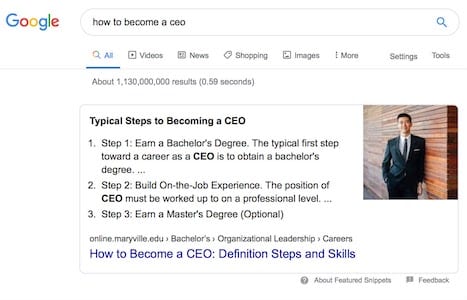
    The “How to Become a CEO” article above is a great example of a university-created piece of content that matches search intent and provides steps that show how the university program can help the searcher accomplish their goal. Content should discuss a range of topics that align with the university’s mission and program’s course curriculum while still keeping the searcher top of mind. With each piece of content, you’ll be able to attract a variety of students who are in different places in the student discovery process.

    Each of these posts should have a strong call to action (CTA) that intrigues prospective students to learn more about the university’s program and how they can become more involved and apply. This CTA can include an aesthetically pleasing “learn more” button that directs readers to a “request more information” form.

    3. Apply Google’s Helpful Content Update Learnings

    In 2023, Google introduced a new helpful content algorithm intended to help searchers find relevant results. This update is intended to weed out nonhelpful search results, defined as content that lacks experience, expertise, authoritativeness, or trustworthiness (E-E-A-T). 

    What does this mean for universities? Crafting high-quality content that meets student search intent is even more important. Instead of focusing solely on SEO keywords, university website pages and blogs need to meet Google’s quality standards in one or more E-E-A-T fields.

    Universities can meet these expectations by providing high-quality information that highlights faculty and student experiences and expertise.

    4. Elevate Your Content Strategy           

    Searchers are no longer satisfied with traditional text-based content or boring images. This is especially true for millennials and Gen Zers, who account for 42% of the U.S. population, according to Statista, and the majority of a university’s target market. 

    To capture the attention of these easily distracted searchers, higher education SEO strategies should branch out beyond traditional articles and infographics to include visually captivating and psychologically intriguing content, such as interactive graphics or videos. This refreshed content strategy should aim to not only catch a searcher’s immediate attention but also leave a lasting brand imprint to intrigue searchers to come back for more.

    Check out the following example of an engaging piece of content from Zippia.com that outlines the different career paths for cost accountants. The piece is interactive, allowing the user to move their mouse along the different career paths to reveal more detailed and relevant information.

    This interactive map is fun and easy to use while still providing the quality and quantity of content the user is looking for. It illustrates the kind of memorable yet useful experience required to capture a student’s attention.

    5. Occupy Google Search Results

    Occupying more real estate on ever-evolving search engine results pages (SERPs) is more crucial than ever. A large number of Google searches do not result in a click. With the advent of more featured snippets, the importance of a technically sound website, structured data, and high-quality content grows.

    While on-page SEO is still crucial for ranking on the SERP, off-page efforts and creating a user experience (UX) that expands past your website are the next wave of occupying internet real estate. Off-page citations, or references to your institution on websites such as U.S. News and Wikipedia, will push hints and signals to Google that validate your brand. Quality higher education SEO strategies should also include a UX that helps your site stand out in today’s saturated marketplace.

    6. Optimize Your Website for Mobile           

    To enhance the college enrollment funnel experience, you need to maintain the health of your website for both desktop and mobile.

    Since a majority of search engine visits come from mobile devices, there’s no question that higher education SEO teams should be focusing on the mobile user experience of their websites. Now that Google has mobile-first indexing best practices, your team has new factors to consider. If your website’s content differs between desktop and mobile, for example, then your site is at risk of having pages not indexed or crawled, which could result in a significant loss of traffic. 

    For starters, ensure that desktop and mobile versions of your website have identical content, as well as identical technical elements, such as structured data and meta tags. Whether you’re developing content or updating your website design, always be sure to consider both platforms in any updates you make.

    7. Understand Your Competition   

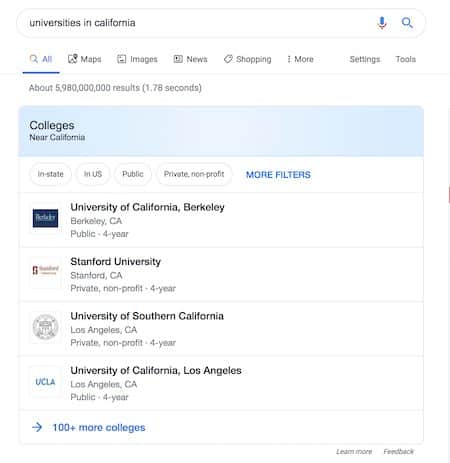
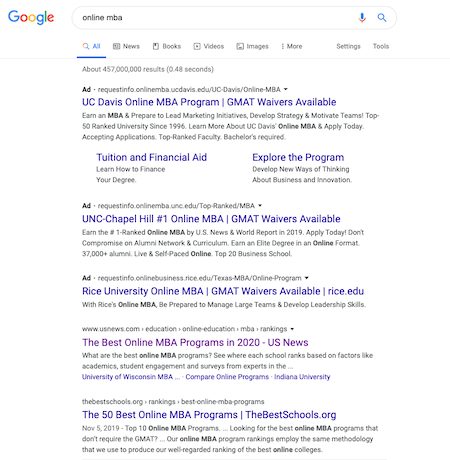
    With Google ads for search terms like “online mba” generating a high cost per click (CPC), higher education is one of the most competitive segments of search engine rankings. Why? Simply put, graduate degree programs are expensive and have large marketing budgets. In addition, affiliate marketing is rampant in the higher education space. What’s affiliate marketing? Affiliate marketers in higher education essentially sell student leads to universities.

    These affiliate sites often have large SEO budgets and benefit from degree ranking and badging tactics. Take a look at the density of non-edu sites in the search results by Googling “online mba.” 

    In addition to competing with a number of affiliate websites, traditional schools have to compete with for-profit institutions and institutions with powerful national and regional brands.

    Despite the competitive market, a long-term higher education SEO strategy, with a nuanced understanding of the market, can yield tremendous results around student enrollments and thought leadership.

    SEO for Higher Education: Boost Your Results with Archer 

    Here at Archer Education, we partner with accredited universities to help higher-ed leaders and marketers accelerate online learning growth and enrollment. We offer a variety of tech-enabled marketing, enrollment, and retention services, and our team of SEO experts is always up to date on strategies to help your program gain visibility in prospective students’ search results. 

    Our SEO tactics can help your university:

    Contact us or visit our SEO tactics page to learn more about how Archer can help you reach your enrollment goals.

    Sources

    Backlinko, Search Intent and SEO: A Complete Guide 

    Forbes, “Understanding Google’s Mobile-First Indexing To Generate More Traffic To Your Website” 

    National Student Clearinghouse Research Center, Current Term Enrollment Estimates

     Statista, U.S. population Share by Generation 2023

    Zippia, How To Become A Cost Accountant: What It Is and Career Path

    Source link

  • Advanced Software for Higher Education

    Advanced Software for Higher Education

    Tune In To Our Audio Blog


    Why Student Discipline Matters in Higher Education?

    Good discipline is essential to a secure and encouraging campus environment. According to NCES, colleges can easily monitor and address problems as they come up by using behavior-tracking software. This has resulted in a 15% increase in campus safety and a 20% increase in student satisfaction. It takes more than just following the rules to create an environment where students can succeed. Behavior monitoring is directly linked to higher retention rates, as evidenced by students in well-managed environments being 25 percent more likely to finish their education.

    Campus administrators will benefit from happier students, a safer and more encouraging environment, and continued vigilance about compliance standards.


    The Changing Landscape of Student Behavior in Higher Education

    Keeping an eye on student behavior gets harder as universities get bigger and more diverse. The days of having a few basic rules and occasionally checking in were long gone. Maintaining a courteous, secure, and welcoming campus community presents many challenges for today’s higher education institutions. 


    This is what adds to its complexity:

    • Handling Students from Diverse Populations: Managing Different Cultural Expectations.
    • Addressing plagiarism and cheating in the digital age is academic misconduct.
    • Behavioral Concerns: Dealing with disruptive behavior on the internet and in classrooms.
    • Campus Safety: Protecting students’ health from abuse and harassment.

    Behavior tracking plays a critical role in helping institutions confront these challenges head-on in this dynamic environment. Maintaining documentation is not enough; you also need to build an environment of responsibility, encourage good behavior, and eventually make a contribution.


    The Need for Efficient Behavior Tracking Software

    These days, handling student discipline with just paper records and spreadsheets is not going to be sufficient. Colleges should reconsider their strategy for the following reasons:

    Challenges of Outdated Practices: Paper trails and manual tracking can result in misplaced incidents and postponed actions, which makes it more difficult to provide students with timely support and responses.

    Consequences of Ineffective Discipline Oversight: Ineffective discipline management can drive away students and damage the institution’s reputation. Students who experience a lack of accountability may feel unsupported and insecure.


    Modern Behavior Tracking Software Advantages

    Improved Student Experience: Students can flourish in a more secure and caring environment when simplified discipline management is put into place.

    Improved Policy Adherence: A strong system makes sure that institutional rules are followed, reducing the possibility of possible legal issues.

    Data-Driven Insights: With the use of sophisticated tracking tools, organizations can examine patterns of behavior to make well-informed decisions and take preventative action.

    Adopting behavior monitoring software can transform educational institutions’ approaches to managing student behavior and promote a campus climate that puts safety and support first.


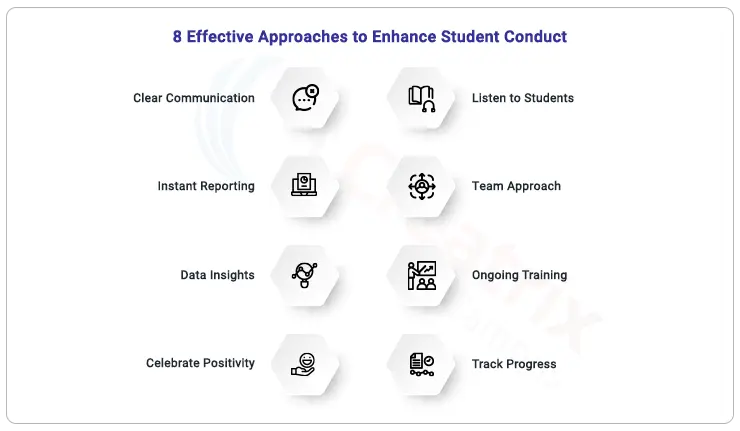
    Key Strategies for Improving Student Discipline


    strategies-for-improving-student-discipline


    • Establish the tone by making student conduct policies very apparent from the outset.
    • Give employees the tools they need to immediately report issues so that they can be addressed quickly.
    • Analyze behavior trends with analytics to adjust your strategy.
    • Highlight positive behavior because it inspires more of the same when it is acknowledged and rewarded.
    • Establish avenues for students to express their ideas and worries to promote a feeling of community.
    • Work together to present a unified front for discipline management with the staff, teachers, and parents.
    • Provide regular training to staff members on behavior management and conflict resolution techniques.
    • Put in place a system to keep an eye on incidents and their results so that changes and improvements can be made continuously.


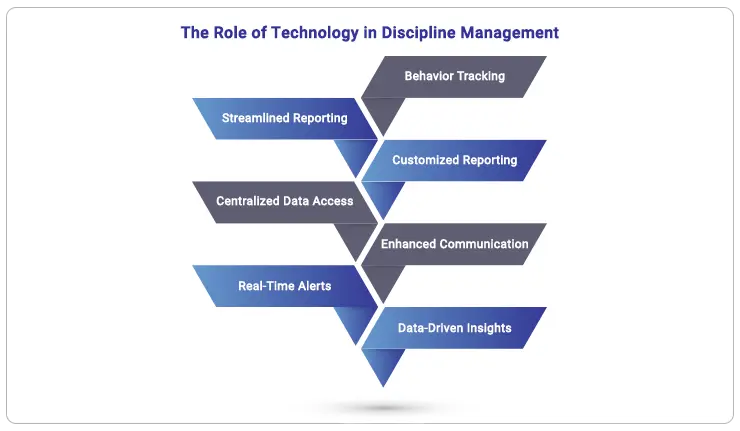
    How Technology Supports Discipline Management


    role-of-technology-in-discipline-management


    • When an incident occurs, you and your team can report it right away, focusing immediately on finding solutions. For example, a teacher could record a conflict in the hallway immediately rather than waiting for class to end.
    • You can quickly review and have educated discussions with ease when you have easy access to a student’s discipline history through a centralized system.
    • Parents and staff are kept informed about incidents instantly, allowing for timely action when necessary.
    • With the use of behavior tracking software, you can identify patterns over time and provide early interventions for students who consistently struggle.
    • Customized reports evaluate the success of disciplinary measures, enabling you to improve policies in light of actual outcomes.
    • Maintain open lines of communication among students, faculty, and parents as they work together to address discipline issues.
    • Use data insights to make informed decisions that improve behavior and campus safety. Institutions that implement technology solutions experience a 30% increase in compliance and satisfaction.


    Introducing Creatrix Campus Student Conduct Management System

    • Log incidents quickly while on the go to simplify documentation.
    • Create customized reports with an emphasis on particular incident types, locations, and student demographics.
    • To inform parents, teachers, and students about significant incidents, send out automatic alerts.
    • Using your mobile device, you can view and edit incident records from anywhere on campus.
    • An integrated reward system that acknowledges and motivates students can help to promote positive behavior.


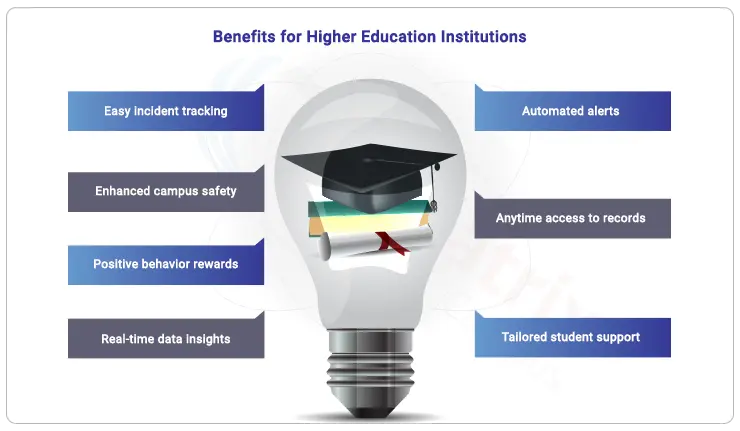
    Benefits for Higher Education Institutions


    benefits-for-higher-education-institutions


    Higher Ed Leaders, Take Action!

    We feel you definitely deserve a utopian campus where monitoring student behavior is a breeze for you! You can now effectively replace your legacy procedures with a more effective approach to handling student behavior when you use Creatrix Campus behavior tracking software. Want to know how it operates? Set up a demo with Creatrix now to see how it can help you and your team have a more seamless experience on campus! Let’s talk!

    Source link