by CUPA-HR | October 18, 2023
On September 28, 2023, the Department of Education released a report titled “Strategies for Increasing Diversity and Opportunity in Higher Education.” The report was issued in response to the Supreme Court’s June 2023 ruling against affirmative action in college admissions and it outlines ways institutions and states can adapt to prioritize improved accessibility to educational opportunities for underserved students.
In an introductory message for the report, Secretary of Education Matthew Cardona emphasized the enduring commitment to equal opportunity and student body diversity in higher education on behalf of his department and the president’s administration. While condemning the Supreme Court’s decision on affirmative action, Cardona pledged the Department of Education’s and the Biden administration’s support in promoting inclusivity and equity and stimulating long-term prosperity.
The Department of Education’s report centers around four areas that the administration believes institutions should consider when working to promote diversity and opportunity on campus: student recruitment, admissions, financial aid and student retention. The report focuses mostly on promoting diversity, equity and inclusion (DEI) initiatives in these areas to ensure underserved students have an equitable opportunity to be admitted into and succeed in postsecondary programs.
Relevant to higher education HR, the report discusses the need for improved training of admissions officers and other employees to ensure consistent, equitable evaluations of applicants.
Prior to the release of the Supreme Court’s affirmative action decision, stakeholders also raised concerns regarding the impact such a decision could have on hiring and employment decisions as well as programs or initiatives focused on creating diverse and inclusive workplaces that align with institutional values. The decision to strike down race-based affirmative action in admissions practices could leave employers open to future legal challenges regarding their hiring decisions and other diversity programs.
CUPA-HR endorses efforts to promote inclusive communities on campuses across the nation. The government relations team continues to track developments impacting these efforts and will inform members of updates as they become available.
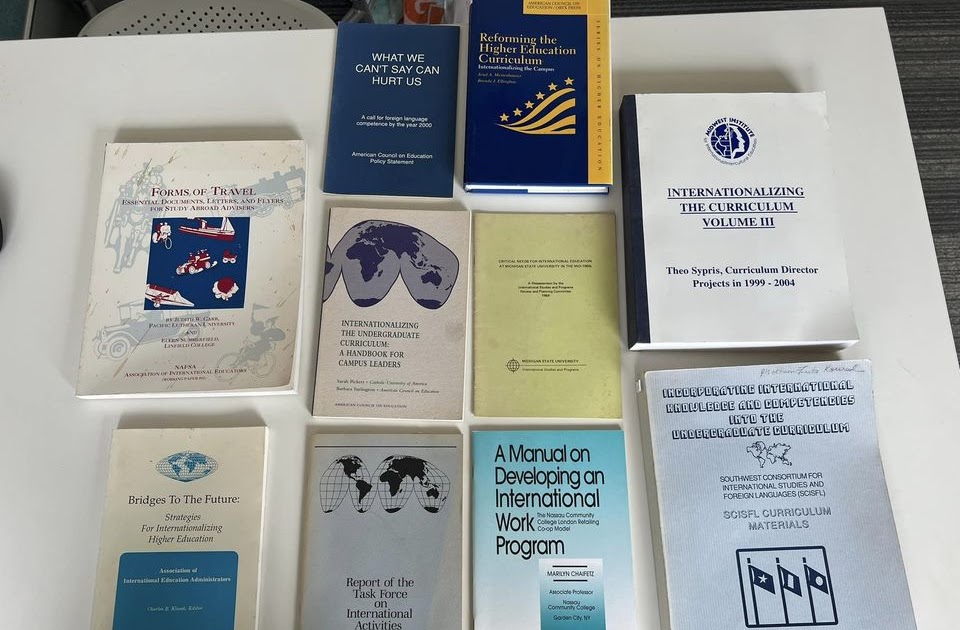
Since February 2007, International Higher Education Consulting Blog has provided timely news and informational pieces, predominately from a U.S. perspective, that are of interest to both the international education and public diplomacy communities. From time to time, International Higher Education Consulting Blog will post thought provoking pieces to challenge readers and to encourage comment and professional dialogue.
by CUPA-HR | May 30, 2023
On May 26, the Department of Education published a blog post stating that the release of the anticipated Title IX final rule will be delayed until at least October 2023. The final rule was previously targeted in the Fall 2022 Regulatory Agenda for May 2023.
In the blog post, the department states that they need additional time to review the 240,000 comments they received in response to the Title IX proposed rule that was issued in July 2022. The department said that the 240,000 comments are nearly twice the number of comments the department received during the Trump administration’s Title IX rulemaking process, which included the release of a proposed rule in November 2018 and the subsequent final rule in May 2020. The department added that the new target date of October 2023 will be reflected in the upcoming Spring 2023 Regulatory Agenda, which will likely be released in the next month.
As a reminder, the Biden administration’s Title IX rulemaking rolls back the Trump administration’s 2020 regulations, specifically with respect to its grievance procedures, while simultaneously expanding protections against sex-based discrimination to cover sexual orientation, gender identity, and pregnancy or related conditions. CUPA-HR filed comments in September 2022 in response to the NPRM, in which we brought attention to the possible impact the proposed regulations could have on how higher education institutions address employment discrimination.
In addition to the Title IX rulemaking, the blog post also states that the final rule on transgender student eligibility in athletic programs under Title IX will also be delayed until at least October 2023. Released on April 6, the proposed rule establishes that schools that receive federal funding would not be permitted to adopt or apply a one-size-fits-all ban on transgender students participating on teams consistent with their gender identity and would instead allow schools the flexibility to develop team eligibility criteria that serves important educational objectives, such as fairness in competition and preventing sports-related injuries.
CUPA-HR will continue to monitor for updates on the Title IX final rule.
by CUPA-HR | April 12, 2023
On April 6, the U.S. Department of Education released a Notice of Proposed Rulemaking (NPRM) on student eligibility for athletic teams under Title IX. The proposed rulemaking focuses on transgender students’ eligibility to participate on athletic teams as legislation and policies at the federal, state and local levels have been introduced to ban transgender student participation in athletic programs.
Under the NPRM, schools that receive federal funding would not be permitted to adopt or apply a “one-size-fits-all” ban on transgender students participating on teams consistent with their gender identity. Instead, the proposal allows schools the flexibility to develop team eligibility criteria that serves important educational objectives, such as fairness in competition and preventing sports-related injuries. The Department further explains that the eligibility criteria must take into account the sport, level of competition, and grade or education level of students participating, and the criteria would have to minimize harm to students whose opportunity to participate on a team consistent with their gender identity would be limited or denied.
The NPRM comes after the Biden administration announced its intention to release such a proposed rule after it excluded language on transgender student eligibility in athletics in its June 2022 Title IX proposed rule. The rule comes as policymakers at the federal, state and local levels have introduced and passed legislation that bans transgender participation on women’s athletic teams. Most recently, the House of Representatives passed H.R. 734, the Protection of Women and Girls in Sports Act, out of the Education and the Workforce Committee, where it now awaits a full floor vote. The bill would prohibit federally-funded education programs or activities to operate, sponsor or facilitate athletic programs or activities that allow individuals of the male sex to participate in programs or activities that are designated for women or girls, defining “sex” as an individual’s reproductive biology and genetics at birth.
Public comments in response to the NPRM will be due 30 days from the date of publication in the Federal Register. CUPA-HR will work with other higher education associations to fully analyze the NPRM and respond accordingly.

Hi Y’all!
A few weeks ago, I had the pleasure of presenting for an Undergraduate Research Group at my university. When they initially asked me about presenting about visual presentations, I had to think back to the numerous presentations that I have been fortunate to facilitate all over America.
Then, I thought about the items that I wish I would have had on site when I saw the place where I needed to place my poster. So, I decided to make a “Poster Presentation Survival Kit”. This kit contains: masking tape, t-pins, white out, sharpie markers, and cuticle clippers (to serve as scissors for your poster (just in case)).

The presentation was well received and they asked for a copy. I was very impressed with this group and their questions focused on research and the presentation process. We also had a great conversation about presenting information that has not yet been published.
Here’s the presentation:





Here are some additional resources. Thanks UNC, UC Davis, and Bucknell!
Enjoy! Please let me know if you have any questions.
Dr. Jennifer Edwards
***
Check out my book – Retaining College Students Using Technology: A Guidebook for Student Affairs and Academic Affairs Professionals.
Remember to order copies for your team as well!
Thanks for visiting!
Sincerely,
Dr. Jennifer T. Edwards
Professor of Communication
Executive Director of the Texas Social Media Research Institute & Rural Communication Institute

by CUPA-HR | March 1, 2023
When it comes to representation and pay equity for women and people of color in the higher education workforce, colleges and universities have frequently struggled to make meaningful progress. Through several new interactive graphics representing years of research, CUPA-HR shines a light on the progress that has been made and the disparities that persist. These graphics represent data from CUPA-HR’s four signature higher ed workforce surveys — Administrators, Faculty, Professionals, and Staff — through 2022.
While the proportion of people of color in higher ed administrator positions has grown steadily over the last 10 years, these increases have not kept pace with the rate at which minorities are obtaining graduate degrees. In 2022, people of color made up 18.2 percent of administrators, up from 12.9 percent in 2012.
The data also show that pay gaps for women administrators of all races/ethnicities are consistent across the past 10 years and notably wide. Pay inequity is particularly egregious for women administrators of color (with the exception of Asian women). Men of color, on the other hand, have been paid salaries equitable to or greater than those of White men in recent years.
The Administrators in Higher Education Survey collects data on administrator positions that manage a higher ed institution or a division within it.
There are two notable findings in faculty composition. First, more women are represented in non-tenure-track than in tenure-track faculty. Second, for each tenure status and with each increase in rank, the proportions of women and faculty of color decrease. This means that women are over-represented in the lowest-paying and lowest-ranking positions. This remains the case despite the fact that the proportion of women and faculty of color have increased slightly at each rank over the past five years.
Pay gaps for women faculty, regardless of tenure status or rank, continue to persist, particularly at the rank of professor. These gaps are most notable for women of color. Pay gaps at other ranks have narrowed over time, particularly for tenure-track faculty. Importantly, the factor that most impacts faculty pay is promotion to a higher rank. Often, the only significant increases in salary happen with these promotions. These data show that the only group that has greater representation with each increase in rank is that of White male faculty, and this pattern has persisted over time.
The Faculty in Higher Education Survey collects data on tenure-track faculty positions and non-tenure-track teaching faculty positions.
See the Faculty Composition and Pay Equity by Gender and Race/Ethnicity interactive graphics.
Women’s representation has increased across all professionals’ positions since 2017, and in 2022, women represented more than 60 percent of higher ed professionals. This change is due to slight increases in representation of women of color since 2017. In 2022, representation of people of color was 24 percent overall, with the highest percentage among human resources professionals (34 percent) and diversity and equal opportunity professionals (33 percent).
In 2022, women were consistently paid less than White men, a pattern that has worsened since 2017. However, men of color were paid more equitably in 2022 compared to previous years.
The Professionals in Higher Education Survey collects data on positions in specific functional areas in higher ed institutions, such as academic or student services, that usually require a baccalaureate degree.
See the Professionals Composition and Pay Equity by Gender and Race/Ethnicity interactive graphics.
Staff employees have a higher representation of people of color than any other higher ed employee group. This is notable in that these are the lowest-paying positions in higher ed. In 2022, women of color represented about 19 percent of all higher ed staff, and men of color represented about 13 percent of all higher ed staff. These numbers have increased since 2017, though modestly. Skilled craft employees were the least racially diverse group, as 80 percent were White men, a finding that has persisted across the past six years. Notably, skilled craft staff are among the highest-paid staff positions.
Since 2017, women in staff positions have been paid consistently and considerably less than White men in staff positions, a pattern that has worsened over time, particularly for women in office and clerical positions. Men of color were paid more equitably in 2022 when compared to 2017.
The Staff in Higher Education Survey collects data on positions that are generally non-exempt and do not require a college degree.
See the Staff Composition and Pay Equity by Gender and Race/Ethnicity interactive graphics.
CUPA-HR is the recognized authority on compensation surveys for higher education, with its workforce surveys designed by higher ed HR professionals for higher ed HR professionals and other campus leaders. CUPA-HR has been collecting data on the higher ed workforce for more than 50 years, and we maintain one of the largest workforce databases in existence. CUPA-HR also publishes numerous research publications and interactive graphics highlighting trends and issues around higher ed workforce planning, pay equity, representation of women and racial/ethnic minorities and more. Learn more about CUPA-HR research.
by CUPA-HR | February 7, 2023
After a month in session, the U.S. House of Representatives and Senate are finalizing their committee and subcommittee membership rosters. Of particular significance are the House Education and the Workforce Committee and Senate Health, Education, Labor and Pensions (HELP) Committee, which have jurisdiction over higher education and many labor and employment issues, including overtime, paid leave, occupational safety and health and employment-based discrimination.
The House Education and the Workforce Committee will be comprised of 25 Republicans and 20 Democrats with Rep. Virginia Foxx (R-NC) serving as chairwoman and Rep. Bobby Scott (D-VA) serving as ranking member of the full committee. Both Foxx and Scott served as their party’s committee leader in the previous Congress when Democrats held the majority, but Foxx was notably able to secure a waiver granting her exemption from House Republican-imposed committee leadership term limits that would have prohibited her from serving a fourth consecutive term as Republican leader on the committee.
Foxx has publicly stated her priorities for the committee, citing oversight of the Biden administration, Department of Labor and Department of Education as a top concern for the committee. Having previously taught at two institutions of higher education and served as president at Mayland Community College, Foxx also has a particular interest in higher education. With divided control of Congress and Democrat control of the Senate, however, it is unlikely that Foxx will be able to pass any meaningful legislation that would garner support from the Senate and the president.
In addition to the full committee roster, the Education and the Workforce Committee has also finalized their subcommittee rosters.
The Subcommittee on Workforce Protections has jurisdiction over issues relating to wages, hours of workers and overtime, including the Fair Labor Standards Act (FLSA); workers’ compensation, including the Family and Medical Leave Act (FMLA); issues relating to immigration and employment; and occupational safety and health, including the Occupational Safety and Health Administration (OSHA).
Freshman Rep. Kevin Kiley (R-CA) will serve as chairman of the subcommittee and Rep. Alma Adams (D-NC) will serve as ranking member after serving as chair of the subcommittee last Congress. The subcommittee will made be up of six Republicans, including Glenn Grothman (R-WI), James Comer (R-KY), Mary Miller (R-IL) and Eric Burlison (R-MO), all who did not serve on the subcommittee in the previous Congress; and four Democrats, all who served on the subcommittee in the last Congress.
The Subcommittee on Higher Education and Workforce Development has jurisdiction over the following areas: postsecondary student assistance and employment services, and the Higher Education Act; postsecondary career and technical education, apprenticeship programs, and workforce development; and science and technology programs.
Rep. Owen Burgess (R-UT) will serve as chairman of the Subcommittee on Higher Education and Workforce Development, while Rep. Frederica S. Wilson (D-FL) will serve as ranking member of the subcommittee after serving as chair of the subcommittee in the 117th Congress. The makeup of the subcommittee will include 13 Republicans, including Reps. Glenn Thompson (R-PA), Lloyd Smucker (R-PA), Nathaniel Moran (R-TX), John James (R-MI), Lori Chavez-DeRemer (R-OR), Erin Houchin (R-IN) and Brandon Williams (R-NY) as new members; and 11 Democrats, including Reps. Lucy McBath (D-GA), Gregorio Kilili Camacho Sablan (D-Northern Marina Islands) and Alma Adams (D-NC) as new members.
The Subcommittee on Health, Employment, Labor and Pensions’ jurisdiction involves “matters dealing with relations between employers and employees,” including to the National Labor Relations Act (NLRA) and employment-related health and retirement security, such as pension, health and other employee benefits and the Employee Retirement Income Security Act (ERISA).
The subcommittee will see Rep. Bob Good (R-VA) serve as chairman and Rep. Mark DeSaulnier (D-CA) serve as ranking member after previously serving as chair in the 117th Congress. The subcommittee will be composed of 12 Republicans, including Reps. James Comer (R-KY), Lloyd Smucker (R-PA), Michelle Steele (R-C), Aaron Bean (R-FL), Eric Burlison (R-MO), Lori Chavez-DeRemer (R-OR) and Erin Houchin (R-IN) serving as new members; and 10 Democrats, including Reps. Pramila Jayapal (D-WA), Jahana Hayes (D-CT), Ilhan Omar (D-MN) and Kathy Manning (D-NC) serving as new members.
The Senate HELP Committee is the Senate counterpart to the House Education and the Workforce Committee. Chair Bernie Sanders (I-VT) will be replacing former Chair Patty Murray (D-WA), who is now the chair of the Senate Appropriations Committee, and Ranking Member Bill Cassidy (R-LA) will be replacing former Ranking Member Richard Burr (R-NC), who retired at the end of the 117th Congress. Democrats will have 11 members and Republicans will have 10 members on the committee. Subcommittees have not yet been finalized, though we expect to see membership lists soon.
Sanders staffers have stated that, as chair, he will “focus on universal healthcare, lowering the cost of prescription drugs, increasing access to higher education and protecting workers’ rights on the job.” As previously mentioned, however, the divided Congress and Republican control of the House will likely prevent meaningful legislation from moving to President Biden’s desk for his signature.
CUPA-HR will be monitoring committee activity and will keep members apprised of any major hearings or updates that come out of the committees.