Tag: Education

  • Education Department will enforce 2020 Title IX rule

    Education Department will enforce 2020 Title IX rule

    This audio is auto-generated. Please let us know if you have feedback.

    Dive Brief:

    • The U.S. Department of Education has told school districts and colleges they should follow the 2020 Title IX rule for investigating sex discrimination in schools, closing the chapter on a Biden administration rule that faced much legal turmoil. 
    • In a Friday “Dear Colleague” letter, Craig Trainor, acting assistant secretary for civil rights, said that under the 2020 rule, the interpretation of “sex” means being born male or female. 
    • The letter also clarified that any open Title IX investigations initiated under the 2024 Title IX Rule should be immediately reevaluated to comply with the requirements of the 2020 rule.

    Dive Insight:

    Trainor said the change is based on a federal judge’s decision in early January that struck down the 2024 rule as unconstitutional across the country. That Biden administration rule for the first time extended Title IX civil rights protections to LGBTQI+ students and employees at federally funded schools and colleges — including by prohibiting discrimination based on gender identity and sexual orientation

    Released in April 2024, the rule drew legal challenges, and courts blocked the regulations in at least 26 states.

    Trainor also stated that the 2024 rule conflicts with a Jan. 20 executive order from President Donald Trump that requires all federal agencies and departments to recognize just two sexes — male and female — when it comes to “sex-protective” laws. 

    “As a constitutional matter, the President’s interpretation of the law governs because he alone controls and supervises subordinate officers who exercise discretionary executive power on his behalf,” Trainor’s letter said.

    Supporters of the 2020 rule, developed under the first Trump administration, praised the letter.

    Chad Wolf, executive vice president of the America First Policy Institute, said that under the 2020 rule, women and girls were “unjustly and illegally” denied access to sex-segregated athletic opportunities and intimate spaces. Linda McMahon, President Trump’s nominee for U.S. education secretary, is chair of the board at AFPI. 

    “Female athletes were seriously injured competing against males, and many were forced to undress in front of males,” Wolf said in a statement. “It was a misguided policy that did real harm, and this new guidance puts an end to it.”

    But opponents to the 2020 rule voiced concern, saying it puts students at greater risk of harassment and discrimination.

    This is an incredibly disappointing decision that will leave many survivors of sexual violence, LGBTQ+ students, and pregnant and parenting students without the accommodations critical to their ability to learn and attend class safely,” said Emma Grasso Levine, senior manager of Title IX policy and programs at Know Your IX, in a statement. “Schools must step up to protect students in the absence of adequate federal guidance.”

    Source link

  • 5 of the biggest education trends for 2025

    5 of the biggest education trends for 2025

    Key points:

    As we welcome a new year, educators and industry leaders are excited to discover the biggest education trends for 2025. The past few years have been characterized by fresh and innovative solutions for learning, as well as transformative, technology-forward approaches to education.  

    Each year, we like to look ahead and anticipate the biggest upcoming education trends. There are many topics education professionals can expect to be at the center of the conversation in 2025–from new perspectives on artificial intelligence for education to the emergence of nontraditional school models amid an increasingly competitive enrollment environment. 

    For 2025, schools and districts are focused on making learning more engaging for students, creating a more positive environment for educators, and transforming school culture to meet the diverse needs of the school community. As schools work to accomplish these goals, we expect to see an expansion of AI and other emerging technologies in the classroom, enhanced professional development and support for teachers, and more individualized learning opportunities for students. 

    Here are five of the biggest education trends for 2025: 

    1. Nontraditional school models 

      Everything from career opportunities, technology, and the world around us has changed significantly over the past decade, yet the traditional model of public schools in the U.S. has remained largely unchanged for generations. As this industrial-age school model persists, many students feel bored and disengaged with their learning.  

      When the COVID-19 pandemic caused school interruptions in 2020, many families decided it was time to pivot to new and nontraditional learning opportunities for their children. Since 2019, over 1 million students–the equivalent of one student from every class in the country–have left the conventional classroom to seek out different educational approaches and more innovative learning environments. The National Center for Education Statistics projects that public schools, including public charter schools, will lose an additional 2.4 million students by 2031.  

      Today’s students desire more individualized learning approaches, which empower them to use their creativity, explore their passions, and engage with their peers in more collaborative ways. In 2025, we will see a greater emergence of nontraditional school models that center student engagement, collaboration, and creativity, and prepare learners to graduate into a continually-evolving workforce.  

      Some of these emerging nontraditional education models include microschools, online and hybrid learning programs, and project-based or student-led schools, as well as long-established nontraditional school programs such as homeschooling, Montessori, and career and technical education schools. In 2025, we also anticipate that public schools will step up to meet the diverse needs of students through innovative approaches, mirroring some of the elements of these nontraditional school models in order to maintain enrollment, enhance engagement, and equip students with applicable career-ready skills. 

      2. Expanded use of AI in education 

        As we predicted last year, artificial intelligence (AI) has become prevalent in the educational space, and this emerging technology shows no sign of stopping its rapid growth as we make our way into 2025. This year, we expect the conversation around AI to shift, reflecting a more widespread acceptance of the technology as a beneficial tool to enhance education and productivity. 

        In 2025, schools will continue to integrate more AI into the curriculum, guiding students to use it appropriately to enhance their learning. Many schools and districts have already developed formal AI school policies and modified student codes of conduct to ensure safe, effective, and ethical use of AI tools in the classroom.  

        Furthermore, many educators are now taking the initiative to incorporate AI tools into their lesson plans to help students build familiarity with the technology. Introducing students to AI in a safe and controlled environment enables them to learn how to use it effectively and ethically. Equipping students with foundational skills in AI is already regarded as an essential skill set for college and many careers. 

        Because AI is a fairly new technology for everyone, including educators, we anticipate that more schools will implement AI professional development opportunities this year, enabling teachers to deliver more effective AI instruction. Some schools are also beginning to employ AI tools for administrative productivity, which will require training and guidance to ensure educators and staff can successfully integrate these tools into their work. 

        3. Targeted support for educators  

          Over the past five years, many districts have been focused on allocating Elementary and Secondary School Emergency Relief (ESSER) funding to implement new educational programs and tools, support student wellbeing, and overcome learning loss. Now that the final ESSER deadline has passed, 2025 will see schools and districts shift their attention to providing targeted support directly to educators.  

          With all of the new technology, refreshed learning spaces, and updated curriculum districts have recently introduced, professional development is essential to ensure effective implementation of these enhancements. In 2025, schools will incorporate new professional development programs that empower educators to foster engaged learners. By providing the tools and resources teachers need to be successful, schools can help educators improve their productivity and attain professional goals, while still keeping teacher wellbeing as a top priority. 

          Teachers are the primary influencers of the K-12 educational experience, so supporting educators is a holistic approach that benefits the entire school community. To address rising workloads, schools will implement new tools and strategies to support teacher efficacy and wellbeing. Some schools are even piloting automated and AI-powered technologies to take repetitive and administrative tasks off teachers’ plates, freeing up invaluable time for them to connect with students and focus on teaching.  

          Additionally, districts have begun to recognize the importance of a healthy work-life balance, as many teachers have left the profession over the past several years. In 2025, districts will continue to explore ways to cultivate a more positive job experience for teachers. Teachers want solutions for student behavioral issues, more attentive leadership teams, and more manageable workloads. Schools will work to improve these matters, while maintaining aspects of the job teachers value most, including school culture, opportunities for professional learning and certifications, and STEM and arts programs. 

          4. A focus on school and district culture 

            With a growing list of education options, students and their families are seeking out learning environments that not only provide high-quality curriculum and resources, but also align with their values and prioritize school-home communication. In this increasingly competitive enrollment environment, cultivating a positive culture and connected school community are the qualities that make schools stand out.  

            Funding and resources are directly related to the number of students at each school, so cultivating an inviting school culture is key. In 2025, schools and districts will take time to refine their school brand in order to attract and maintain students. School leaders will focus on creating more opportunities to engage with students and families, implementing new communications tools, initiatives, and events that bring the school community together. 

            In the past few years, some K-12 administrators have piloted mobile teaching stations to increase their visibility and daily impact throughout their school. We anticipate more school leaders will embrace this approach in 2025, enabling them to build stronger relationships with students and teachers. By working from mobile workstations, administrators can directly engage with students and staff, making face-to-face connections on a daily basis. Frequent positive interactions with school leadership help students, teachers, and families stay engaged with the school community, promoting a culture of connection and support. 

            5. Universal design for learning 

              Today’s students are making more choices about how and where they want to learn than ever before. Universal design for learning (UDL) promotes achievement among diverse student bodies by giving each student access to resources and environments that help them learn. Accessibility goes far beyond ADA compliance, and schools are recognizing this through the application of UDL across the learning experience. Understanding the diverse needs of students is crucial for creating learning experiences that are inclusive and supportive. 

              In 2025, UDL will be at the center of creating comfortable and engaging learning environments that accommodate all students’ needs. For instance, more schools are implementing sensory spaces, ensuring neurodiverse learners have a safe and comfortable space to self-regulate throughout the school day. These spaces don’t just serve neurodivergent students–all students benefit from having areas at school that are dedicated to supporting wellbeing. 

              As in previous years, accessibility and equity will continue to be prominent topics in 2025, but the conversation will pivot to focus on ways UDL can positively impact curriculum. UDL emphasizes providing students with multiple, flexible types of engagement, different ways of presenting information, and multiple ways to demonstrate their understanding in the classroom. This practice supports students who are neurodivergent and/or experience learning challenges, but also improves the learning experience for neurotypical students. 

              Latest posts by eSchool Media Contributors (see all)

    Source link

  • Essay on the panopticon (opinion)

    Essay on the panopticon (opinion)

    Not quite a household word (beyond academia, anyway), “panopticon” nonetheless turns up in news stories with surprising frequency—here and here, for example, and here and here. The Greek roots in its name point to something “all seeing,” and in occasional journalistic usage it almost always functions as a synonym for what’s more routinely called “the surveillance society”: the near ubiquity of video cameras in public (and often private) space, combined with our every click and keystroke online being tracked, stored, analyzed and aggregated by Big Data.

    Originally, though, the panopticon was what the British political philosopher Jeremy Bentham proposed as a new model of prison architecture at the end of the 18th century. The design was ingenious. It also embodied a paranoid’s nightmare. And at some point, it came to seem normal.

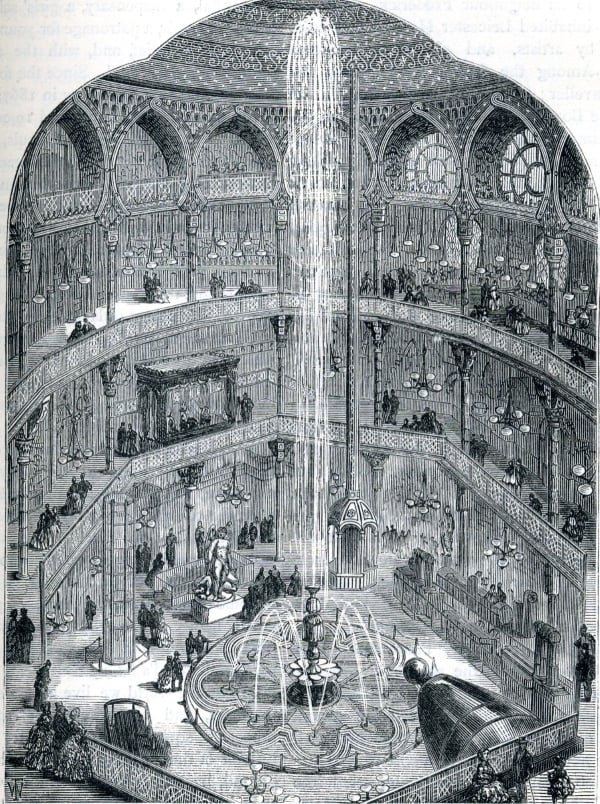
    Picture a cylindrical building, each floor consisting of a ring of cells, with a watchtower of sorts at the center. From here, prison staff have an unobstructed view of all the cells, which at night are backlit with lamps. At the same time, inmates are prevented from seeing who is in the tower or what they are watching, thanks to a system of one-way screens.

    Prisoners could never be certain whether or not their actions were under observation. The constant potential for exposure to the authorities’ unblinking gaze would presumably reinforce the prisoner’s conscience— or install one, if need be.

    The panoptic enclosure was also to be a workhouse. Besides building good character, labor would earn prisoners a small income (to be managed in their best interest by the authorities), while generating revenue to cover the expense of food and housing. Bentham expected the enterprise to turn a profit.

    He had similar plans for making productive citizens out of the indigent. The panoptic poorhouse would, in his phrase, “grind rogues honest.” The education of schoolchildren might go better if conducted along panoptic lines; likewise with care for the insane. Bentham’s philanthropic ambitions were nothing if not grand, albeit somewhat ruthless.

    The goal of establishing perfect surveillance sometimes ran up against the technological limitations of Bentham’s era. (I find it hard to picture how the screens would work, for instance.) But he was dogged in promoting the idea, which did elicit interest from various quarters. Elements of the panopticon were incorporated into penitentiaries during Bentham’s lifetime—for one, Eastern State Penitentiary in Pennsylvania, opened in 1829—but never to his full satisfaction. He was constantly tinkering with the blueprints, to make the design more comprehensive and self-contained. He worked out a suitable plumbing system. He thought of everything, or tried.

    Only in the late 20th century did the panopticon elicit discussion outside the ranks of penologists and Bentham scholars. Even the specialists tended to neglect this side of his work, as the American historian Gertrude Himmelfarb complained in a book from 1968. “Not only historians and biographers,” she wrote, “but even legal and penal commentators seem to be unfamiliar with some of the most important features of Bentham’s plan.” They tended to pass it by with a few words of admiration or disdain.

    The leap into wider circulation came in the wake of Michel Foucault’s Discipline and Punish: The Birth of the Prison (1975). Besides acknowledging the panopticon’s significance in the history of prison design, Foucault treated it as prototypical of a new social dynamic: the emergence of institutions and disciplines seeking to accumulate knowledge about (and exercise power over) large populations. Panopticism sought to govern a population as smoothly, productively and efficiently as possible, with the smallest feasible cadre of managers.

    This was, in effect, the technocratic underside of Bentham’s utilitarianism, which defined an optimal social arrangement as one creating the greatest happiness for the greatest number of people. Bentham applied cost-benefit analysis to social institutions and human behavior to determine how they could be reshaped along more rational lines.

    To Foucault, the panopticon offered more than an effort at social reform, however grandiose. Its aim, he writes, “is to strengthen the social forces—to increase production, to develop the economy, spread education, raise the level of public morality; to increase and multiply.”

    If Bentham’s innovation is adaptable to a variety of uses, that is because it promises to impose order on group behavior by reprogramming the individual.

    From a technocrat’s perspective, the most dysfunctional part of society is the raw material from which it’s built. The panopticon is a tool for fashioning humans suitable for modern use.

    The prisoner, beggar or student dropped into the panopticon is, Foucault writes, “securely confined to a cell from which he is seen from the front by the supervisor; but the side walls prevent him from coming into contact with his companions.” Hundreds if not thousands of people surround him in all directions. The population is a crowd (something worrisome to anyone with authority, especially with the French Revolution still vividly in mind), but incapable of acting as one.

    As if to remind himself of his own humanitarian intentions, Bentham proposes that people from the outside world be allowed to visit the observation deck of the panopticon. Foucault explains, with dry irony, that this will preclude any danger “that the increase of power created by the panoptic machine may degenerate into tyranny …” For the panopticon would be under democratic control, of a sort.

    “Any member of society,” Foucault notes, had “the right to come and see with his own eyes how the schools, hospitals, factories, prisons function.” Besides ensuring a degree of public accountability, their very presence would contribute to the panopticon’s operations. Visitors would not meet the prisoners (or students, etc.) but observe them from the control and surveillance center. They would bring that many more eyes to the task of watching the cells for bad behavior.

    As indicated at the beginning of this piece, nonscholarly references to the panopticon in the 21st century typically appear as commentary on the norms of life online. This undoubtedly follows from Discipline and Punish being on the syllabus, in a variety of fields, for two or three generations now.

    Bentham was confident that his work would be appreciated in centuries to come, but he would probably be perplexed by this repurposing of his idea. He designed the panopticon to “grind rogues honest” through anonymous and continuous surveillance, which the digital panopticon exercises as well—but without a deterrent effect, to put it mildly.

    Bentham’s effort to impose inhibition on unwilling subjects seems to have been hacked; the panoptic technology of the present is programmed to generate exhibitionism and voyeurism. A couple of decades ago, the arrival of each new piece of digital technology was hailed as a tool for self-fashioning, self-optimization or some other emancipatory ambition. For all its limitations, the analogy to Bentham’s panopticon fits in one respect: Escape is hard even to imagine.

    Scott McLemee is Inside Higher Ed’s “Intellectual Affairs” columnist. He was a contributing editor at Lingua Franca magazine and a senior writer at The Chronicle of Higher Education before joining Inside Higher Ed in 2005.

    Source link

  • Florida board approves extensive gen ed overhaul

    Florida board approves extensive gen ed overhaul

    Students at Florida State University can cheer on the Seminoles across multiple sports, but they can no longer learn about the namesake tribe of Indigenous Americans as part of FSU’s general education offerings after the Florida Board of Governors approved sweeping curriculum changes Thursday.

    Florida colleges have spent months rethinking their general education requirements following a change in state law. Thursday’s vote marked the final step in a contentious and controversial process that brought significant changes to all 12 state universities. Critics accuse the board and system officials of taking a heavy-handed approach and targeting specific topics or courses, while state officials have argued revisions were necessary both to simplify the curriculum and to strip it of “indoctrination.”

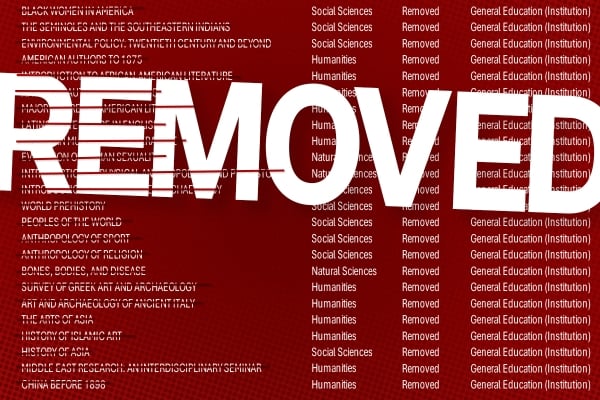
    Now, American History 583: The Seminoles and the Southeastern Indians is one of hundreds of courses across Florida’s public universities that will no longer count toward general education credit as part of the extensive overhaul. Neither will Black Women in America or LGBTQ History, both of which were previously included as general education offerings at FSU. Those are just three of numerous courses touching in some way on race, gender or sexuality that institutional boards voted in recent months to drop from general education. All 12 Boards of Trustees then submitted a pared-down list of classes to FLBOG for approval. Three Bible courses remain eligible for general education credit at FSU.

    (An FSU spokesperson noted in an email to Inside Higher Ed that American History 583, which currently has about 150 students enrolled this semester, will now be offered as an elective. Pressed on the rationale for why the course was dropped from gen eds, FSU did not respond.)

    Florida State University’s Board of Trustees dropped a course on Seminole history from the list of general education offerings, but fans can still cheer on the Seminoles.

    Chris Leduc/Icon Sportswire/Getty Image

    State lawmakers required colleges in 2023 to review general education classes in an effort to cut “courses with curriculum based on unproven, speculative or exploratory content,” according to materials shared with the Board of Governors in a presentation for Thursday’s vote.

    The Florida Board of Governors unanimously approved the new suite of gen ed classes Thursday, though some members tried to downplay the notion that the state was trying to limit knowledge.

    “We are not prohibiting universities from offering courses,” Timothy Cerio, chair of the Academic and Student Affairs committee, said at the meeting. Instead, he emphasized that those courses are just being removed from general education curriculum and will remain available as electives.

    State University System of Florida chancellor Ray Rodrigues depicted the vote on general education as stripping indoctrination from curricular offerings. Rodrigues argued that the American public has lost faith in higher education, citing a recent Gallup poll that noted shrinking public confidence in the sector. Among the reasons for that diminished confidence, particularly among Republican respondents, is the belief that colleges push liberal agendas.

    “The general education curriculum that was approved today makes Florida the only state in the nation to address the No. 1 reason why the American people have lost confidence in higher education,” Rodrigues said during the meeting. “We can confidently say that our general education courses that students have to take in order to graduate will not contain indoctrinating concepts.”

    ‘Political Overreach’

    But critics allege administrators have overstepped, as curriculum has traditionally been the faculty’s purview. They also worry that removing courses from general education will cause enrollment in such classes to plummet, limiting the number of students who will be introduced to certain majors like sociology—a discipline state officials have taken aim at for an allegedly liberal tilt—which will subsequently weaken academic departments and potentially decrease staffing levels.

    United Faculty of Florida, a union representing 25,000-plus professors, denounced the move toward scaled-back general education offerings.

    “Florida is at the forefront of an assault against public education, restricting the subjects students can study from K-12 to the colleges and universities,” UFF declared in a news release ahead of Thursday’s vote, casting FLBOG’s actions as “bureaucratic and political overreach.”

    “General education courses are the foundation of critical thinking and informed citizenship, and censoring them limits not only what students can learn but also what they can become. These proposed cuts are an insult to our students and to the world-class faculty that instruct and guide them,” UFF president Teresa M. Hodge said in a Monday webinar ahead of the meeting.

    Hodge argued that the courses being targeted were just “words and numbers on a spreadsheet” to the Florida Board of Governors, but “for the rest of us, they are the future of our students, our jobs, and our democracy” and the “foundation of critical thinking” and “informed citizenship.” She also accused Republican governor Ron DeSantis, who pushed for the legislation that led to the changes, of prioritizing “his personal political ambition” over students.

    Robert Cassanello, a history professor at the University of Central Florida, argued on the call that it was lawmakers—not professors—who were attempting to indoctrinate students.

    “They tell us that classes have to be removed from the curriculum that focus on race, gender and sexuality, but at the same time, they want courses and lessons on the centrality of Western civilization, free-market libertarianism and patriotic histories of this country infused into the general curriculum and life on our campuses,” Cassanello said.

    Students on the call also noted that general education courses set them on career pathways.

    Tessa Barber, a graduate student at the University of South Florida, began college as a biology major but is now working toward a doctorate in politics and international relations. She attributed that change to general education courses in anthropology and political science that pushed her in a different direction. She expressed concern about “political interference” in the education of undergraduates.

    Some speakers at Thursday’s meeting also pushed back on the gen ed overhaul.

    Jono Miller, president of NCF Freedom, a group that has been critical of the state’s conservative takeover of New College of Florida, alleged that the overhaul of its core curriculum was “rushed and chaotic” with “minimal faculty input” and a “lack of transparency.” Miller argued that “telling faculty what to teach translates directly to telling students what to think.”

    Thursday’s vote followed prior action on general education courses from the State Board of Education, which oversees the 28 institutions in the Florida College System. Earlier this month that board removed 57 percent of FCS general education courses, according to state officials.

    Source link

  • Idaho legislators accuse Boise State of flouting DEI ban

    Idaho legislators accuse Boise State of flouting DEI ban

    Lawmakers in Idaho accused Boise State University officials of skirting a statewide ban on diversity, equity and inclusion during a House education committee meeting Tuesday, according to reporting from Idaho Education News

    Republican legislators questioned Boise State president Marlene Tromp about a sociology certificate program in DEI advertised on the university’s website as well as its Institute for Advancing American Values, the latter of which is described as encouraging “respectful dialogue” about “the issues and values that have shaped America and Americans from all walks of life.”

    One representative remarked that the institute “sounds like a continuation of DEI under different labels.”

    Tromp said the university had “absolutely not moved something under another name” but added that she’d have to investigate the certificate program more closely. 

    In December, the Idaho State Board of Education passed a resolution prohibiting “central offices, policies, procedures, or initiatives … dedicated to DEI ideology” at public higher ed institutions. Boise State shuttered two of its student equity centers a week before the vote.

    Source link

  • San Francisco State to require climate justice coursework

    San Francisco State to require climate justice coursework

    San Francisco State University will soon require all incoming students to take a climate justice course, KQED, San Francisco’s NPR affiliate, reported Tuesday

    Students will be able to choose from dozens of different courses across various disciplines—including STEM, English, ethnic studies and history—to satisfy the requirement, which is set to take effect as early as fall 2026.

    “Climate change is an all-hands-on-deck crisis that requires understanding and solutions from all different disciplines and sectors of society,” Autumn Thoyre, co-director of the university’s Climate HQ, which supports climate-related work on campus, told KQED. “Our students’ lives are already being impacted by climate change, and so we think it’s part of our responsibility as a university to prepare students for that.”

    Although numerous other colleges and universities across the nation require climate change–focused coursework, SF State officials said in a news release that its focus on climate justice, or “the unequal impacts of climate change on marginalized and underserved populations,” is novel.

    “We are responding to the understanding that all jobs in the future will be climate jobs in some way. Our students, no matter their major and no matter their career, need to understand climate change because it is already impacting their lives,” Thoyre said in the release. “If you come to SFSU, you will learn about climate change and be ready for it in your career and civic life, you’ll be an informed voter and you’ll be ready for discussions with your family and friends.”

    Source link

  • After Trump DEI order, MSU cancels Lunar New Year event

    After Trump DEI order, MSU cancels Lunar New Year event

    A college within Michigan State University canceled a lunch celebrating the Lunar New Year in part because of President Trump’s recent executive orders cracking down on diversity, equity and inclusion in the federal government and elsewhere, the news site Bridge Michigan reported Thursday.

    The order, signed last week, doesn’t define DEI but calls on federal agencies to “combat illegal private-sector DEI preferences, mandates, policies, programs, and activities.” Colleges with endowments valued at $1 billion or more could be investigated for potentially violating the order, under the White House directive. Michigan State has a $4.4 billion endowment.

    A handful of colleges have taken down or reworked websites related to DEI since the order, while others have called off events. For instance, a conference at Rutgers University about registered apprenticeships and historically Black colleges and universities was canceled last week following the order. (Rutgers officials say calling off the conference wasn’t a university decision. Rather, it was canceled because the organizers, a group outside the university, received a stop work order from the Department of Labor.)

    Michigan State administrators told Bridge Michigan they canceled the lunch, which was scheduled for Jan. 29 and has been held four times before, after Chinese students “expressed concern about an event tied to one racial group.”

    The College of Communications Arts and Science was set to host the event. Lauren Gaines, the college’s Office of Diversity, Equity and Inclusion director, wrote in an email obtained by Bridge Michigan and the State News student paper that the cancellation was in response to concerns related to Trump’s immigration and DEI executive orders.

    “These actions have prompted feelings of uncertainty and hesitation about gathering for events that highlight cultural traditions and communities,” Gaines wrote. “We feel it is important to honor those concerns with sensitivity and care.”

    Heidi Hennink-Kaminski, the college’s dean, wrote in a follow-up email obtained by the news outlets that the decision was not “a statement of policy, but rather as an appropriate on-the-ground response given a very short decision window.”

    Michigan State officials did not respond to a request for comment by press time but confirmed after publication that staff at the college canceled the event, adding that other Lunar New Year events continue.

    Source link

  • Student visa numbers hit record despite Australian clampdown

    Student visa numbers hit record despite Australian clampdown

    Student visa issuances reached record levels in Australia late last year, suggesting that 12 months of policy upheaval have failed to suppress international education flows ahead of a federal election likely to be fought on migration.

    Visa grants to would-be university students applying from overseas reached an all-time high of almost 17,000 in November, the latest month for which Department of Home Affairs statistics are available.

    Monthly issuances have been at or near record levels since mid-2024, well exceeding pre-pandemic tallies and driving a surge in overall foreign student numbers. Higher education typically accounts for two-thirds or more of student visa recipients.

    The figures show that student flows have weathered some 10 separate policy changes unleashed to dampen overseas enrollments since December 2023. They include increased financial capacity requirements on applicants, a doubling of visa fees and a chaotic reprioritization of visa processing that has been blamed for soaring delays and refusals.

    The opposition Liberal Party, which is due to contest a general election by mid-May, has repeatedly berated the Labor government over student volumes since Australia’s post-pandemic reopening of its borders. The surge in student numbers, initially spurred by policies enacted by the opposition when it was in government, has been blamed for housing shortages.

    Liberal leader Peter Dutton promised “stricter caps on foreign students to relieve stress on city rental markets” during an election campaign rally on Jan. 12.

    While treasurer Jim Chalmers has attributed Australia’s lofty migrant tally to low departures rather than high arrivals, the latest statistics suggest both are contributing. And the figures do not include record numbers of applicants fighting to have their visa rejections overturned.

    The Sydney Morning Herald reported that the backlog of international students contesting their visa refusals in the Administrative Appeals Tribunal had doubled in five months to exceed 20,000 for the first time, and that two-thirds of visa rejections were being overturned by the tribunal.

    Meanwhile, overseas students are pursuing strategies to extend their time in Australia, including starting new courses or applying for asylum. Immigration expert Abul Rizvi said the tally of onshore student visa applicants had blown out to more than 100,000.

    Home Affairs data provided to a Senate inquiry in October showed that a long-term monthly average of about 300 asylum applications from overseas students had increased to about 450 since mid-2024, reaching 516 by August—the highest figure in at least five years, and probably since the 1989 Tiananmen Square massacre.

    Student visa grants could also increase following the late-December replacement of the controversial ministerial direction 107, which slowed down the processing of many visa applications, with ministerial direction 111.

    International education consultant Dirk Mulder said opinion on the new arrangements was divided, with some operators saying visa processing had sped up while others complained that it was slower than a year ago.

    Both camps expressed concern about the likelihood of further policy changes and the fate of institutions that had reached their “thresholds”—80 percent of the formerly announced international student caps, the trigger point for slower visa processing.

    One worry was that agents might stop referring students to universities and colleges in this position. “There is a large amount of angst as to how recruitment partners will work amongst institutions when they hit their 80 percent threshold,” Mulder wrote on his Koala news site.

    Source link

  • Too many communities lack broad-access colleges

    Too many communities lack broad-access colleges

    Most American college students attend broad-access institutions, or public colleges and universities that admit at least 80 percent of applicants. Yet millions of people live in communities without one of these institutions nearby—and millions more live in areas with only one option, according to a new report from the Institute for College Access and Success.

    The report, released today, shows stark disparities in higher ed access based on students’ geography and how some broad-access institutions are single-handedly serving whole regions. It also highlights communities with nearby colleges located across state lines, an understudied college-access issue, higher ed leaders say.

    Researchers analyzed different “commuting zones,” or clusters of counties workers commute between, to see which communities have broad-access institutions within a reasonable commuting distance.

    Nicholas Hillman, an education professor at the University of Wisconsin at Madison and co-author of the report, believes it’s critical to understand students’ geographical contexts.

    He said conversations about higher ed access often revolve around “informational problems”—whether students know about different college options and understand the college admissions process. But his previous research shows most students, even if well-informed, choose to stay close to home for college. That’s why he wanted to take a deeper look at where residents do or don’t have broad-access institutions within reach.

    “Maybe some of the problems in college access and opportunity are that there aren’t colleges nearby, or that there are not appropriate transportation infrastructures in place for students to access colleges … or that there are cost-prohibitive options nearby,” said Hillman, who also directs the university’s Student Success Through Applied Research Lab. When studying college access through a geographic lens, “you see problems differently. You might come up with a very different set of policy solutions.”

    He also sees the report as a “love letter” to broad-access institutions, especially those that are the only ones in their communities.

    “They’re doing the lion’s share of the work,” Hillman said. “They’re the blue-collar colleges out there, doing the heavy lifting in higher education, serving the most students and doing so oftentimes with the least amount of financial resources and under some of the most pressure.”

    The Findings

    To identify broad-access institutions, the report drew on data from the U.S. Department of Education’s Integrated Postsecondary Education Data System, with the caveat that IPEDS doesn’t account for all branch campuses.

    And then researchers used data from Pennsylvania State University’s Labor-sheds for Regional Analysis tool to measure commuting zones around the colleges. Finally, the report looked at how nearby these institutions were in “large-population commuting zones,” like urban or metropolitan areas, and “small-population commuting zones,” less populous areas, like rural communities.

    The report found that more than 831,000 people living in more populous commuting zones don’t have a local broad-access institution, and another 9.7 million had only one of these colleges nearby. That means about one in 16 people don’t have a broad-access institution nearby or just one, even in the country’s largest local labor markets.

    The issue was even more stark in less populous or rural local labor economies, where 2.8 million people don’t have a single broad-access institution in their area. Another 5.9 million live in areas with only one such institution. Meanwhile, among students who go to college in these less populous areas, 70 percent attend broad-access institutions, meaning these colleges “play an outsized role in creating opportunities and meeting local educational needs” in these communities, the report says.

    Riley Acton, an assistant professor of economics at Miami University in Ohio, said it’s important to differentiate between college access issues in the two types of regions, as the report did, because “what it means to have access, to have something nearby, can be really different in rural and urban environments.” In a rural area, a college might be miles away but easy to travel to by car, while in an urban area, a college could be close by but hard to reach via public transportation, she said, so the report opens up a conversation about those distinctions.

    Hillman added that a granular look at the data might surprise people. For example, some large metropolitan areas, like Chicago, are known for prominent private universities but have relatively few broad-access institutions for residents.

    “Local markets are just very different, depending on where you live, and I think that it’s important to put that out there, just to help remind ourselves that there’s no typical place or experience or market that every student experiences,” Hillman said.

    The report also highlights that some regions have broad-access institutions nearby but they’re across state borders, meaning they may not provide in-state tuition or could be harder to reach. There are 63 small-population commuting zones that cross state borders, which collectively have 77 broad-access institutions and serve about 190,000 students. The report also found 65 large-population zones that cross state lines with a total of 249 broad-access institutions enrolling roughly 1.3 million students.

    Acton said broad-access institutions that draw students from multiple states are an “understudied angle” in understanding students’ geographical contexts and what barriers could be getting in the way of their going to college.

    The Policy Implications

    To expand students’ access to these colleges, the report recommends that states offer nearby out-of-state students tuition discounts and that local leaders explore ways to improve transportation infrastructure, among other policy suggestions.

    Hillman emphasized that it’s also important to ensure broad-access institutions that are the only ones in their communities are well resourced. He suggested these colleges have a special federal or state designation that comes with extra financial support.

    “Sometimes a college is … serving a great need and is really an anchor for that community,” he said.

    Particularly in rural areas, broad-access institutions often do so much more for their communities than confer degrees, said Cecilia Orphan, associate professor of higher education at the University of Denver and founding co-director of the Alliance for Research on Regional Colleges. In some cases, these campuses provide local internet access and serve as major employers, among other services. Western Carolina University, for example, is home to its community’s power plant and has police officers that serve its surrounding area.

    “It’s very tempting for policymakers to simply look at enrollment numbers … and to ask themselves whether or not that institution is needed,” Orphan said. “But if you think about the broader services that institution likely provides a local community, closing it could be catastrophic.”

    Acton noted that limited access to broad-access institutions can especially hurt some of the most vulnerable students.

    She previously conducted research with a team of economists focused on how community college proximity affected Texas high school students’ college-going decisions. They found that Black, Hispanic and lower-income students without a community college nearby were less likely to pursue higher ed, while white, Asian and upper-income students were more likely to travel to go to college.

    She agrees higher ed decision-makers need to think carefully about what a college means to particular communities when they make policy choices.

    “Where do we open new colleges? Where do we close colleges? Where do we merge colleges?” she said. If an institution closes, “what are the other options for the people in this area? Are the people who are in this area ones who would be able to travel and go to something further away? … Those are conversations for state policymakers and institutional leaders to be having.”

    Source link