Tag: Education

  • Reflections from the Higher Education for Good Book Release Celebration – Teaching in Higher Ed

    Reflections from the Higher Education for Good Book Release Celebration – Teaching in Higher Ed

    What a way to start my week!

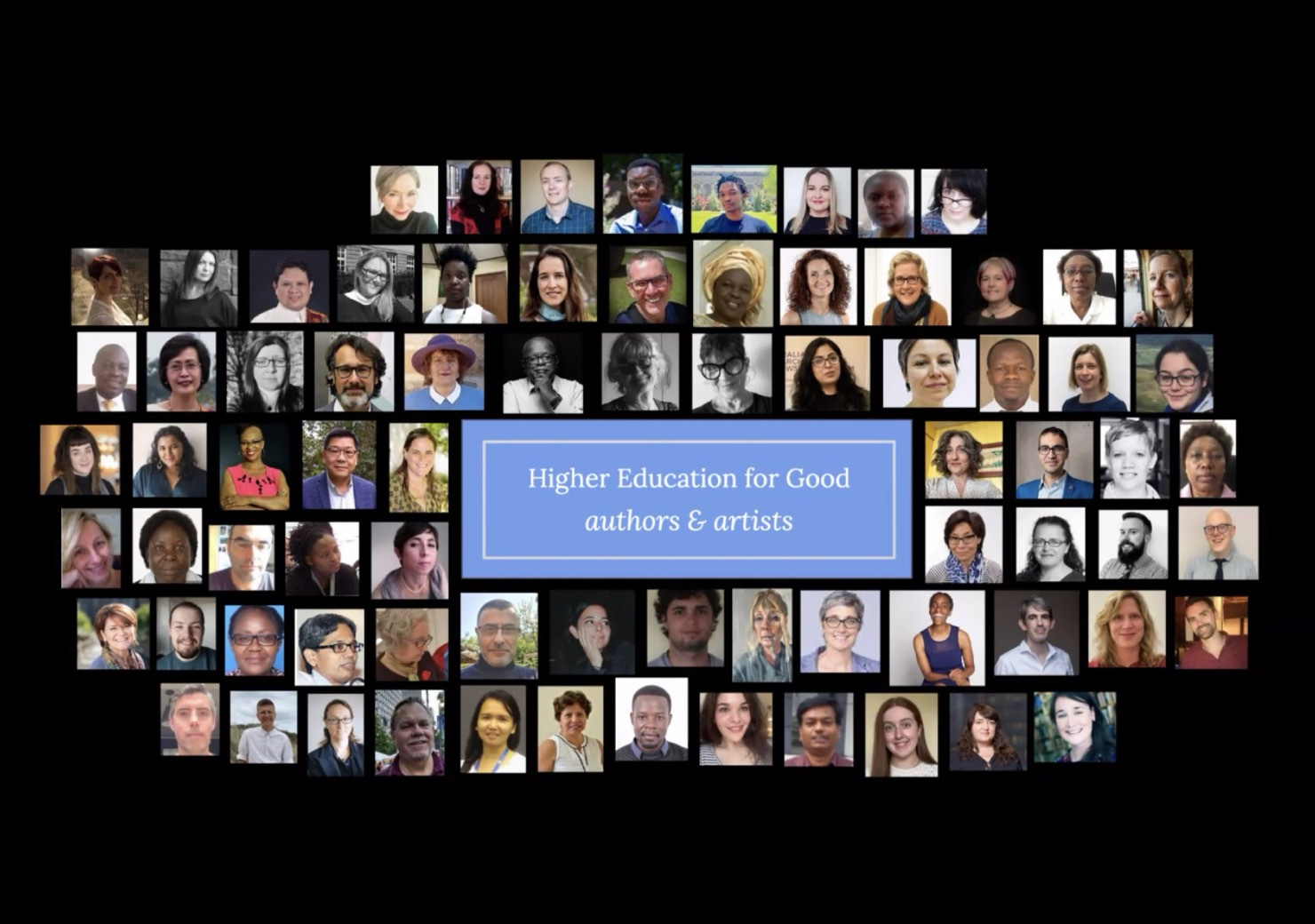
    November 20, 2023, I attended an online launch celebration event for a magnificent project. The book Higher Education for Good: Teaching and Learning Futures brought together 71 authors around the globe to create 27 chapters, as well as multiple pieces of artwork and poetry. Editors Laura Czerniewicz and Catherine Cronin shared their reflections of writing the book and invited chapter authors, and Larry Onokpite, the book’s editor, to celebrate the release and opportunities for collaboration. In total, the work represents contributions from 29 countries from six continents. Laura Czerniewicz was invited to talk about the book by the Academy of Science of South Africa (ASSAf), where she describes the values of inclusion woven throughout this project.

    Higher Ed for Good Aims

    At Monday’s book launch, Laura shared how the authors aimed to write about the tenants that were directed toward the greater aims of the book. Catherine described the call for authors to engage in this project, such that the resulting collection would help people:

    • Acknowledge despair
    • Engage in resistance
    • Imagine alternative futures and…
    • Foster hope and courage

    Laura stressed the way articulating what we stand for and not simply what we are against is essential in facilitating systemic change. Quoting Ruha Benjamin, Laura described ways to courageously imagine the future:

    Only by shifting our imagination, can we begin to think of a world that is more egalitarian, less extractive, and more habitable for everyone not just a small elite.

    It was wonderful to see the community who showed up to help celebrate this magnificent accomplishment. Toward the end of the conversations, someone asked about what might be next for this movement. Frances Bell responded by joking that she wasn’t sure she was necessarily going to answer the question, as she is prone to do. Instead, she described her use of ‘a slow ontology,’ a phrase which quickly resonated with me, even thought I didn’t know exactly what it meant.

    In some brief searching, I discovered a bit more about slow ontology. My novice understanding is that slow ontology asks the question of what lives might look like, were we to live them slowly and resist the socialization of speed as productivity and self-worth. Ulmer offers a look at a slow ontology for writing, while Mol uses slowness to analyze archeological artifacts. One piece I absolutely want to revisit is Mark Carrigan’s Beyond fast and slow: temporal ontology in critical higher education scholarship

    Next Steps

    I’ll have the honor, soon, of interviewing Laura and Catherine for the Teaching in Higher Ed podcast. I’m ~30% through Higher Education for Good and am glad I don’t have to rush through the reading too quickly. I mentioned as a few of us remained online together after the book release celebration that reading Higher Education for Good and Dave Cormier’s forthcoming Learning in a Time of Abundance has been an interesting juxtaposition. Rissa Sorensen-Unruh described a similar serendipity of reading Belonging, by Geoffrey Cohen at the same time as Rebecca Pope-Ruark’s Unraveling Faculty Burnout. After skimming the book description of Belonging, I instantly bought it… adding it to the quite-long digital to-read stack. I suppose that while I struggle with slowing down, that challenge doesn’t apply when it comes to my reading practice.
    Resources:

    Source link

  • Making Online Learning More Engaging in Higher Education – Edutechniques

    Making Online Learning More Engaging in Higher Education – Edutechniques

    With my recent work in Maynooth University (MU) in Ireland and my ten years of refining and teaching the courses we offer in the MAET program at Michigan State University (MSU), Ive been pontificating and procrastinating on what is current state of play with making more engaging online content in the higher education realm.

    Using Multiple Platforms for Collaboration/Communication

    At MSU we utilise Slack alongside our Brightspace D2L learning platform. This is the latest in a long line of platforms we have added to encourage collaboration and communication amongst our students. Discussion forums on LMS are by default….not the best..and not conducive to authentic engagement. We have found with Slack that engagement is up due to the interface and the fact that Slack has an app. Threads are logical and embedding multimedia works well. At Maynooth University, I taught the blended course TL517 Digital Technology in Higher Education which was delivered in Moodle, the old course framework had a weekly requirement to post to Moodle. I mixed it up a bit by incorporating live Microsoft Team activities along with collaborative Padlets. Padlet gave the students a different visual approach to communicating their thoughts and collaborating with others. The use of breakout rooms in Microsoft Teams gave the students the opportunity to navigate smaller groups in socially constructing knowledge and understanding.

    MORE INTERACTIVE CONTENT

    Quite logical and predictable, right? However, from my time in MU, the majority of online learning courses are merely substitutions of the analog courses that were delivered within the university walls. Working with lecturers to comb through their content to pinpoint areas that may become more interactive with technology is a very rewarding process. This process might be framed by the ABC protocols or just evolve organically through conversations.

    HUMANISE THE PROCESS

    When I am teaching an online course I always start with creating a video introducing myself and detail my professional and personal history. I also tell the students about my hobbies and interests. Seeing my face and hearing my voice always gives a human element to a potentially impersonal first impressions of an online course. It is also important to empathise with students online and realise the stress and pressures of real life that students are going through. Being flexible and empathetic with deadlines (to a certain degree) is greatly appreciated.

    CONSISTENT WORD-OLOGY

    When sorting out a course layout I like to organise the different activities in to action verbs. If a unit is mainly research based then the title will be “Research: “. If a unit involves creating something, then the title will be “Create”. If a unit involves reading to gain knowledge, then the title could be “Learn” or “Inquire”. Consistent wording enables the learner to understand what each unit of a course entails.

    VISUALS, VISUALS, VISUALS

    If the LMS allows I will create an interface of a grid of icons (which Moodle and other LMSs allow). If a student opens a course and encounters a wall of text it is usually quite daunting. A nice array of colourful yet not distracting icons makes a world of difference. Obviously, videos, infographics, images, and other elements that break down walls of text are all beneficial to the end user.

    CREATE ALL THE THINGS

    If we still adhere to the adage that to create is to know, then creating artefacts of learning in an online environment makes a lot of sense. I was surprised that the lecturers at MU were overjoyed when I asked them to create infographics to present their understandings of the concepts we had just read about. They immediately could see them using infographics with their students in their field. Something that I have used in K-12 education for a long time had not found its way to higher education and made me realise that certain pedagogical approaches that I may deem mainstream may be innovative in other realms.


    Discover more from Edutechniques

    Subscribe to get the latest posts sent to your email.

    Source link

  • Department of Education Issues Report on Diversity and Opportunity in Higher Education – CUPA-HR

    Department of Education Issues Report on Diversity and Opportunity in Higher Education – CUPA-HR

    by CUPA-HR | October 18, 2023

    On September 28, 2023, the Department of Education released a report titled “Strategies for Increasing Diversity and Opportunity in Higher Education.” The report was issued in response to the Supreme Court’s June 2023 ruling against affirmative action in college admissions and it outlines ways institutions and states can adapt to prioritize improved accessibility to educational opportunities for underserved students.

    The Report

    In an introductory message for the report, Secretary of Education Matthew Cardona emphasized the enduring commitment to equal opportunity and student body diversity in higher education on behalf of his department and the president’s administration. While condemning the Supreme Court’s decision on affirmative action, Cardona pledged the Department of Education’s and the Biden administration’s support in promoting inclusivity and equity and stimulating long-term prosperity.

    The Department of Education’s report centers around four areas that the administration believes institutions should consider when working to promote diversity and opportunity on campus: student recruitment, admissions, financial aid and student retention. The report focuses mostly on promoting diversity, equity and inclusion (DEI) initiatives in these areas to ensure underserved students have an equitable opportunity to be admitted into and succeed in postsecondary programs.

    Relevant to higher education HR, the report discusses the need for improved training of admissions officers and other employees to ensure consistent, equitable evaluations of applicants.

    Moving Forward

    Prior to the release of the Supreme Court’s affirmative action decision, stakeholders also raised concerns regarding the impact such a decision could have on hiring and employment decisions as well as programs or initiatives focused on creating diverse and inclusive workplaces that align with institutional values. The decision to strike down race-based affirmative action in admissions practices could leave employers open to future legal challenges regarding their hiring decisions and other diversity programs.

    CUPA-HR endorses efforts to promote inclusive communities on campuses across the nation. The government relations team continues to track developments impacting these efforts and will inform members of updates as they become available.


    Source link

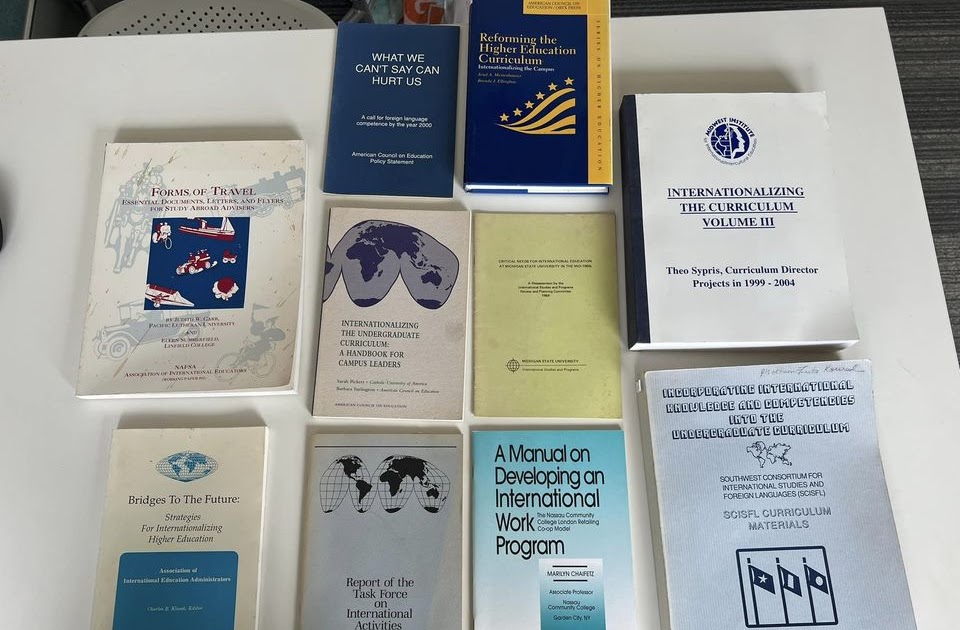
  • New Donation to Bury Book International Education Library & Archive

    New Donation to Bury Book International Education Library & Archive

    Since February 2007, International Higher Education Consulting Blog has provided timely news and informational pieces, predominately from a U.S. perspective, that are of interest to both the international education and public diplomacy communities. From time to time, International Higher Education Consulting Blog will post thought provoking pieces to challenge readers and to encourage comment and professional dialogue.

    Source link

  • Department of Education Delays Target Release of Title IX Rulemaking to October – CUPA-HR

    Department of Education Delays Target Release of Title IX Rulemaking to October – CUPA-HR

    by CUPA-HR | May 30, 2023

    On May 26, the Department of Education published a blog post stating that the release of the anticipated Title IX final rule will be delayed until at least October 2023. The final rule was previously targeted in the Fall 2022 Regulatory Agenda for May 2023.

    In the blog post, the department states that they need additional time to review the 240,000 comments they received in response to the Title IX proposed rule that was issued in July 2022. The department said that the 240,000 comments are nearly twice the number of comments the department received during the Trump administration’s Title IX rulemaking process, which included the release of a proposed rule in November 2018 and the subsequent final rule in May 2020. The department added that the new target date of October 2023 will be reflected in the upcoming Spring 2023 Regulatory Agenda, which will likely be released in the next month.

    As a reminder, the Biden administration’s Title IX rulemaking rolls back the Trump administration’s 2020 regulations, specifically with respect to its grievance procedures, while simultaneously expanding protections against sex-based discrimination to cover sexual orientation, gender identity, and pregnancy or related conditions. CUPA-HR filed comments in September 2022 in response to the NPRM, in which we brought attention to the possible impact the proposed regulations could have on how higher education institutions address employment discrimination.

    In addition to the Title IX rulemaking, the blog post also states that the final rule on transgender student eligibility in athletic programs under Title IX will also be delayed until at least October 2023. Released on April 6, the proposed rule establishes that schools that receive federal funding would not be permitted to adopt or apply a one-size-fits-all ban on transgender students participating on teams consistent with their gender identity and would instead allow schools the flexibility to develop team eligibility criteria that serves important educational objectives, such as fairness in competition and preventing sports-related injuries.

    CUPA-HR will continue to monitor for updates on the Title IX final rule.


    Source link

  • Department of Education Releases Title IX Rulemaking on Transgender Student Eligibility in School Athletics – CUPA-HR

    Department of Education Releases Title IX Rulemaking on Transgender Student Eligibility in School Athletics – CUPA-HR

    by CUPA-HR | April 12, 2023

    On April 6, the U.S. Department of Education released a Notice of Proposed Rulemaking (NPRM) on student eligibility for athletic teams under Title IX. The proposed rulemaking focuses on transgender students’ eligibility to participate on athletic teams as legislation and policies at the federal, state and local levels have been introduced to ban transgender student participation in athletic programs.

    Under the NPRM, schools that receive federal funding would not be permitted to adopt or apply a “one-size-fits-all” ban on transgender students participating on teams consistent with their gender identity. Instead, the proposal allows schools the flexibility to develop team eligibility criteria that serves important educational objectives, such as fairness in competition and preventing sports-related injuries. The Department further explains that the eligibility criteria must take into account the sport, level of competition, and grade or education level of students participating, and the criteria would have to minimize harm to students whose opportunity to participate on a team consistent with their gender identity would be limited or denied.

    The NPRM comes after the Biden administration announced its intention to release such a proposed rule after it excluded language on transgender student eligibility in athletics in its June 2022 Title IX proposed rule. The rule comes as policymakers at the federal, state and local levels have introduced and passed legislation that bans transgender participation on women’s athletic teams. Most recently, the House of Representatives passed H.R. 734, the Protection of Women and Girls in Sports Act, out of the Education and the Workforce Committee, where it now awaits a full floor vote. The bill would prohibit federally-funded education programs or activities to operate, sponsor or facilitate athletic programs or activities that allow individuals of the male sex to participate in programs or activities that are designated for women or girls, defining “sex” as an individual’s reproductive biology and genetics at birth.

    Public comments in response to the NPRM will be due 30 days from the date of publication in the Federal Register. CUPA-HR will work with other higher education associations to fully analyze the NPRM and respond accordingly.


    Source link

  • Dr. Jennifer T. Edwards: A Texas Professor Focused on Artificial Intelligence, Health, and Education: Preparing for Research Presentations

    Dr. Jennifer T. Edwards: A Texas Professor Focused on Artificial Intelligence, Health, and Education: Preparing for Research Presentations

    Hi Y’all!

    A few weeks ago, I had the pleasure of presenting for an Undergraduate Research Group at my university. When they initially asked me about presenting about visual presentations, I had to think back to the numerous presentations that I have been fortunate to facilitate all over America. 

    Then, I thought about the items that I wish I would have had on site when I saw the place where I needed to place my poster. So, I decided to make a “Poster Presentation Survival Kit”. This kit contains: masking tape, t-pins, white out, sharpie markers, and cuticle clippers (to serve as scissors for your poster (just in case)). 


    The presentation was well received and they asked for a copy. I was very impressed with this group and their questions focused on research and the presentation process. We also had a great conversation about presenting information that has not yet been published. 

    Here’s the presentation:

    Here are some additional resources. Thanks UNC, UC Davis, and Bucknell!

    Enjoy! Please let me know if you have any questions.

    Dr. Jennifer Edwards

    ***

    Check out my book – Retaining College Students Using Technology: A Guidebook for Student Affairs and Academic Affairs Professionals.

    Remember to order copies for your team as well!


    Thanks for visiting! 


    Sincerely,


    Dr. Jennifer T. Edwards
    Professor of Communication

    Executive Director of the Texas Social Media Research Institute & Rural Communication Institute

    Source link