The vast majority of students surveyed reported feeling “moderately,” “very” or “extremely” fearful about their visa status.
Photo illustration by Justin Morrison/Inside Higher Ed | aapsky/iStock/Getty Images | Chip Somodevilla/Getty Images
A new national survey from Stop AAPI Hate, a coalition dedicated to fighting discrimination against Asian Americans and Pacific Islanders, found that international students are experiencing heightened fear and uncertainty under the Trump administration.
The survey, released Wednesday, drew on quantitative and qualitative data from 87 graduate and undergraduate international students from 36 U.S. colleges and universities.
It found that more than half of respondents, 53 percent, felt “not at all safe.” About 88 percent reported feeling a decreased sense of belonging and said they were holding back from political engagement, and 86 percent changed how they use social media out of fear. The majority, 90 percent, reported feeling “moderately,” “very” or “extremely” fearful about their visa status.
Students detailed their fears further in qualitative responses, including one that expressed fear of “being kidnapped by ICE without due process, being disappeared into the detention system, [and] being denied healthcare if detained.” Others described fears about family members being whisked away or about disrupted academic and career trajectories. Chinese students in particular raised concerns about being surveilled and targeted as a national security threat, invoking Japanese Americans’ incarceration during World War II, according to the report.
Respondents reported that campuses offered supports including mental health care, travel guidance and updates about student visa policies, but 48 percent said campuses didn’t provide guidance about how to complete their studies and 38 percent lacked legal aid resources.
Students also discouraged others from coming to the U.S. for their studies.
“Run, don’t come,” one student wrote.
“America is no longer the land for dreams,” said another.
SUMS Consulting will host a webinar from 11:00 to 12:00 on Thursday 22 January 2026. The webinar will include a walkthrough of the report and online tool, and panel discussion featuring Nick Hillman OBE (Director of HEPI). Register here.
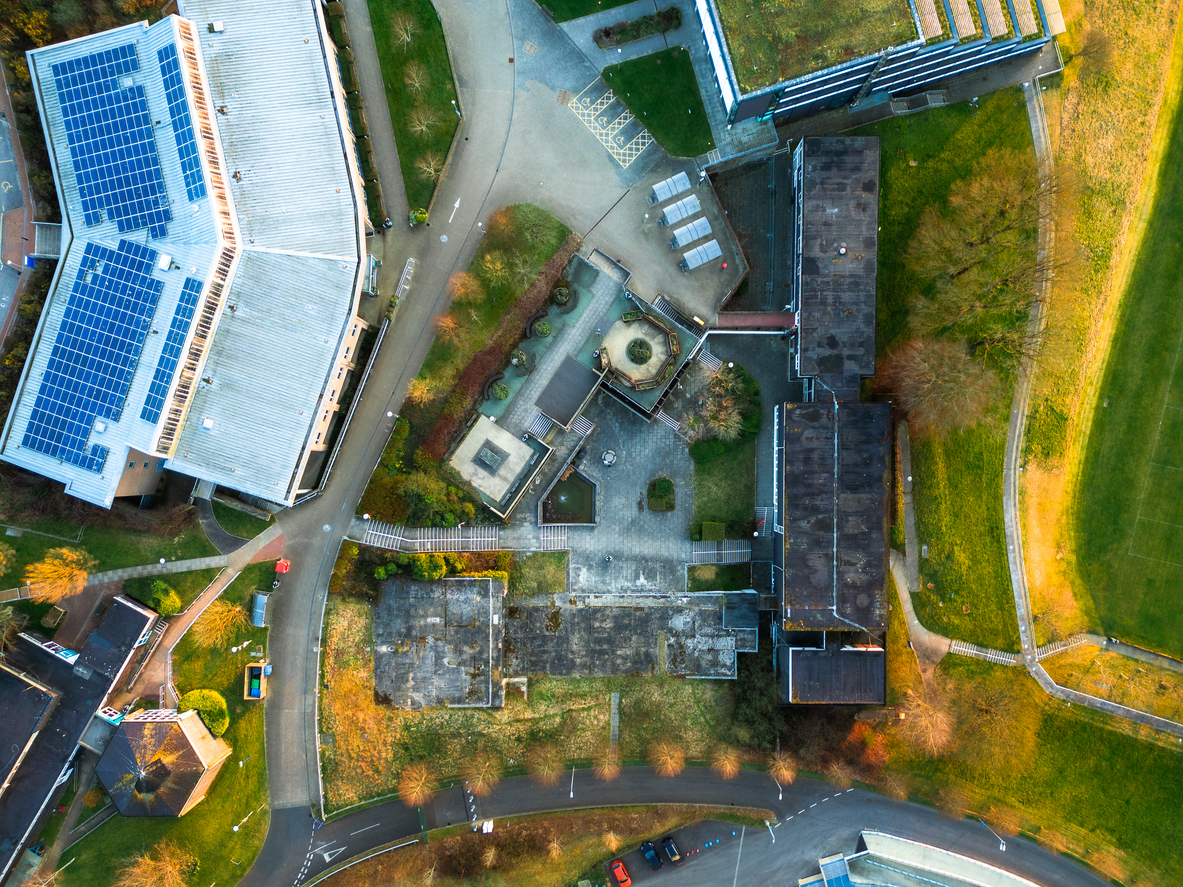
This blog, kindly authored by Thomas Owen-Smith, Principal Consultant at SUMS Consulting, and William Phillips, Data Analyst at SUMS Consulting, is part of a three-part mini series on UK universities’ approaches to land use.
2025 sees many higher education institutions looking for innovative approaches to rebalance their profile of income and costs.
Universities’ estates might offer the potential to save hundreds of millions of pounds on energy costs through harnessing the sun and wind, as well as opportunities to play a role in the local and regional systems that will play an important role in the UK’s energy transition.
Local and regional connectivity through infrastructure also brings opportunities around education, skills and jobs, as well as applied research, industry partnership and knowledge exchange. These offer means for institutions to nourish relationships with their local communities, with positive impacts on public opinion and consent around universities’ legitimacy and the public goods they bring to society.
We have also explored opportunities around afforestation and the natural capital value of ecosystem services supplied by UK universities’ lands – which stands separate to the commercial land value. (And there are many additional opportunities which we did not have time to investigate in detail).
Again, many institutions have already taken steps (in some cases over many years) around the opportunities outlined. Our mapping of sector land usecannot pick up these existing examples, but we have referred to some accessible cases in the report.
We hope the insights of this work can help individual institutions which may not yet have engaged with these questions to understand their initial option space, opening the track to more detailed investigation; and support the higher education sector and policymakers to have more informed conversations about what these options may mean for decisions and guidance at the aggregate or whole-sector level.
Using our mapping tool, institutions can explore the potential of their estates for solar and wind energy generation, as well as suitability for broadleaf forest growth.
These opportunities vary across the country according to latitude, topography, aspect and a range of local conditions and constraints. We used an assumptions-based approach, referring to sector-wide averages, to model the potential aggregate impacts of sector-wide uptake (noting that some institutions have already done this).
If 10% of universities’ built land were equipped with solar energy installations, this could generate an estimated 208,826 megawatt-hours (mWh) per year. This would equate to around 2.9% of the sector’s total energy usage in 2022/23 (as reported by 135 institutions in the Estates Management Record). Based on current commercial unit rates for energy, this could achieve an annual saving of around £42 million on energy bills. It would also abate in the region of 47,000 tonnes of carbon dioxide equivalent (tCO2e) annually, representing around 3.3% of the sector’s reported scope 1 and 2 emissions in 2022/23.
If 10% of universities’ grassland was used for solar power generation, this could generate an estimated 189,360 mWh per year. This would achieve energy savings, financial savings and abatement of carbon emissions of a similar, slightly smaller magnitude than the estimates just above for built land.If the same percentage was used for wind generation, this could generate an estimated 19,920 mWh per year. This would achieve energy-saving, financial and carbon abatement benefits of roughly 10% the size of those set out for solar opportunities.
Using carbon flux factors extrapolated from the UK Natural Capital Accounts, we also estimated the annual carbon sequestration of the university sector’s (core) estate as 3,162 tonnes of carbon dioxide equivalent (tCO2e) per year. If 10% of universities’ grasslands were put to forests, this could sequester an estimated 571 tCO2e per year of greenhouse gases over a 40-year period, increasing carbon drawdown by around 18% annually.
Although the potential carbon impacts would be smaller than those around renewable energy, afforestation would bring positive impacts for nature, biodiversity and the sector’s natural capital.
Our natural capital calculations are based on a value transfer approach, which extrapolates generalised national-level data (also from the UK Natural Capital Accounts) to a local area based on the assumed ecosystem services supplied by one unit of land (typically hectares).
We estimate the asset value of ecosystem services (including renewable electricity provisioning, water provisioning, air pollution regulating, greenhouse gas regulating, noise regulating, and recreation health benefits) provided by UK institutions’ lands at £248.5m. Of this, £147.4m (59.3%) is provided by built environment, £54.9m (22.1%) is provided by grass, £43.3m (17.5%) is provided by trees and £2.9m (1.2%) is provided by water. This is likely an underestimation.
Why this matters for universities
The way that we use land is a critical part of securing a sustainable future for the planet. In global terms, land use is a key driver of climate change and degradation of nature; but it can also be a solution to reversing these.
There already exist both regulatory and market-based frameworks which reflect various dimensions of the value of natural capital and ecosystem services.
Partially due to concerns around the credibility of commercial offsetting schemes, some universities have turned to approaches for carbon sequestration or “insetting” on their own lands, which allow for easier assurance and impact evaluation. We refer to some examples in the report.
While still emergent, these developments represent attempts to account for the true value of nature and the cost of destroying it (which traditional accounting and financial systems fail to do effectively) and may bring new economic opportunities around the stewardship of nature and natural resources.
The new report Rethinking Student Voice: How higher education must design effective student governance (HEPI Report 195), written by Darcie Jones exposes a key issue within university governance: the marginalisation of student governors.
With financial pressures intensifying across the sector, thee stakes for effective governance have never been higher. Yet, despite being core stakeholders within universities, many students on governing boards feel sidelined by opaque processes and exclusive norms. The evidence within this report reveals a persistent gap between symbolic representation and meaningful participation.
However it’s not all bad news, the report also highlights what is possible when the student voice is taken seriously. Using examples of effective practice it demonstrates the transformation value of empowered student governance.
Drawing on extensive evidence and sector insights, the report sets out clear, actionable reforms – from accessible governance culture, to improved recruitment, induction and development. They provide a pathway from why student perspectives and voices can be embedded at the heart of decision-making within universities.
In the world of higher education and its orbiting industries—veteran-serving nonprofits, student-debt advocacy groups, educational charities, “policy” organizations, and campus-focused foundations—there is a great deal of motion but not always much movement. Press releases bloom, awards are distributed, partnerships are announced, and donors beam from stages and annual reports. Yet too often, the people who most need substantive support—servicemembers, student-loan borrowers, contingent faculty, low-income students, and other working-class communities—receive only fragments of what the glossy brochures promise.
To understand why, you need only follow the money.
The Neoliberal Philanthropy Trap
Over the last four decades, American nonprofit culture has been reshaped and disciplined by neoliberal capital. So-called “impact philanthropy” and “venture philanthropy” introduced a corporate mindset: donors expect brand alignment, flattering metrics, and ideological safety. The result is a nonprofit sector that frequently mimics the institutions it claims to critique.
Organizations become risk-averse. They avoid structural analysis. They sidestep direct confrontation with the powerful. They produce white papers instead of organizing. They praise the very elite funders who limit their scope.
The most severe problems facing servicemembers and veterans—predatory for-profit schools, Pentagon-to-college corruption pipelines, GI Bill waste, chronic under-support—rarely get the oxygen they deserve. Advocacy groups that rely on neoliberal donors often focus on “financial literacy” workshops rather than taking on the multi-billion-dollar scams that actually trap servicemembers in debt.
Student-debt nonprofits, similarly, lean into “awareness campaigns” and technocratic fixes that avoid challenging lenders, profiteering institutions, or federal policy failures. Many will deliver testimonials and infographics, but few will call out the philanthropic class whose own investments are entangled in servicing and securitizing student debt.
And when it comes to helping working-class people more broadly—those navigating food insecurity, unstable housing, wage stagnation, and the crushing costs of education—the nonprofit sector too often does what neoliberal donors prefer: it performs compassion rather than redistributing power. It focuses on individual resilience rather than collective remedy. Appearance Over Impact
This creates a strange ecosystem in which organizations are rewarded for looking productive rather than for being productive.
• Events over empowerment. • Reports over results. • Branding over coalition-building. • Strategy sessions over structural change.
The donor’s name gets its plaque, its press release, its tax receipt. The nonprofit gets to survive another cycle. But the problems—deep, persistent, systemic—remain unchallenged.
Nonprofits that speak too directly about exploitation in higher education risk alienating the very people who write the checks. Some are nudged away from naming predatory universities. Others are steered toward “innovation,” “entrepreneurship,” or “student success” frameworks that sanitize the underlying issues. Many are encouraged to “partner” with the same institutions harming the people they were formed to help.
In the end, we get a sector filled with earnest staff but hollowed-out missions—organizations doing just enough to appear active but rarely enough to threaten the arrangement that keeps donors comfortable and inequality intact.
What Could Be—If Nonprofits Were Free
Imagine a nonprofit sector liberated from neoliberal constraints: Organizations could openly challenge predatory colleges instead of courting them as sponsors. Veteran-serving groups could expose fraud rather than “collaborate” with federal contractors. Debt-advocacy groups could organize mass borrower actions rather than hold polite policy forums. Working-class students could find allies who fight for public investment, not piecemeal philanthropy.
We could have watchdogs instead of window dressing. We could have mobilization instead of marketing. We could have justice instead of jargon.
But as long as donor-driven nonprofits prioritize appearance over impact, we’re left with what might be called “nonprofits and nothingness”: organizations whose glossy public-facing work obscures the emptiness underneath.
The Way Forward: Independent, Ground-Up Power
Real change in higher education—on affordability, accountability, labor rights, and fairness—will not come from donor-managed nonprofits. It will come from independent journalism, grassroots organizing, debt-resistance movements, student-worker coalitions, and communities willing to challenge elite decision-makers directly.
Those efforts don’t fit neatly into annual reports. They don’t flatter philanthropists. They don’t offer easy wins. But they build the kind of power that higher education, and the country, desperately needs.
Until more nonprofits break free from the neoliberal donor leash, we should continue to follow the money—and then look beyond it, to the people whose work actually changes lives.
Sources — Eikenberry, Angela. The Nonprofit Sector in an Age of Marketization. — Giridharadas, Anand. Winners Take All. — Reich, Rob. Just Giving: Why Philanthropy Is Failing Democracy.
For decades, English has dominated the global education ecosystem. While it opened doors for many, it also quietly closed them for millions of learners worldwide who do not speak English fluently. In today’s digital era, however, a powerful shift is underway. Multilingual digital education is emerging as one of the most effective ways to make learning inclusive, accessible, and equitable for students everywhere.
As digital platforms expand, education is no longer limited by geography—but language remains a critical barrier. Addressing this challenge is key to ensuring that digital education truly serves everyone, not just a privileged few.
The Global Language Barrier in Education
Despite the growth of online learning, a large portion of educational content is still delivered primarily in English. This creates obstacles for:
Non-English speakers
First-generation learners
Students from rural or underserved regions
Migrant and refugee communities
Adult learners returning to education
When learners struggle to understand the language of instruction, comprehension drops, confidence weakens, and dropout rates increase. Research consistently shows that students learn more effectively when taught in a language they understand well, especially during foundational learning years.
This is where multilingual digital education becomes transformative.
What Is Multilingual Digital Education?
Multilingual digital education refers to online learning platforms, tools, and content that are available in multiple languages, enabling learners to access the same high-quality education regardless of their primary language.
This includes:
Video lessons with multilingual narration or subtitles
Localized course materials and assessments
AI-powered real-time translation
Voice-based learning in native languages
Digital textbooks adapted for cultural relevance
By removing language as a barrier, digital education becomes more inclusive and learner-centric.
Why Multilingual Learning Matters in the Digital Age
1. Improves Learning Outcomes
Students understand concepts faster and retain knowledge better when learning in their strongest language. Multilingual content reduces cognitive overload caused by language translation in the learner’s mind.
2. Builds Learner Confidence
When students can participate without fear of language mistakes, engagement increases. This leads to better classroom interaction, stronger self-expression, and improved academic performance.
3. Supports Educational Equity
Language-inclusive platforms help bridge the gap between privileged learners and underserved communities, ensuring that access to quality education does not depend on language fluency.
4. Encourages Lifelong Learning
Adults who may have avoided education due to language barriers are more likely to upskill and reskill when learning is available in familiar languages.
The Role of Technology and AI in Multilingual Digital Education
Modern technologies are accelerating the growth of multilingual education globally.
AI and Machine Translation
AI-driven tools now enable accurate content translation, voice-to-text learning, and real-time subtitles—making multilingual delivery scalable and cost-effective.
Adaptive Learning Platforms
These platforms detect learner preferences and automatically deliver content in the most suitable language, improving personalization.
Mobile Learning Apps
Mobile-first platforms offering multilingual support are reaching learners in remote and low-connectivity regions, ensuring education is portable and flexible.
Global Impact of Multilingual Digital Learning
Across continents, multilingual digital education is driving meaningful change:
Higher enrollment and completion rates
Increased learner confidence and participation
Better understanding of technical and vocational skills
Preservation of linguistic and cultural diversity
Education delivered in multiple languages does not reduce global unity—it strengthens it.
Challenges in Implementing Multilingual Education
Despite its benefits, several challenges remain:
Maintaining accuracy and quality across languages
Addressing cultural nuances in learning content
Training educators for multilingual digital delivery
Balancing scalability with local relevance
However, advancements in AI, open educational resources, and global collaboration are rapidly solving these challenges.
The Future of Global Digital Education
The future of education is not English-only—it is inclusive, multilingual, and learner-driven. As digital learning becomes mainstream, platforms that prioritize language accessibility will lead the next generation of education.
Global education organizations, EdTech companies, and institutions are increasingly recognizing that language inclusion is not optional—it is essential.
When students learn in a language they understand, education becomes more than information delivery; it becomes empowerment.
Frequently Asked Questions (FAQs)
Why is multilingual digital education important?
It removes language barriers, improves comprehension, and ensures equitable access to education for non-English speakers worldwide.
Is multilingual education effective online?
Yes. Studies show learners perform better academically and remain more engaged when learning is available in a familiar language.
How does AI support multilingual learning?
AI enables real-time translation, speech recognition, adaptive content delivery, and personalized multilingual learning experiences.
Does multilingual education replace English learning?
No. It supports foundational learning while allowing learners to gradually develop additional language skills, including English.
Conclusion
Multilingual digital education is transforming global learning by breaking language barriers and opening doors for millions of learners worldwide. It ensures that education is not limited by language, geography, or background. As digital platforms expand, embracing language diversity will be essential to building a fair, effective, and truly global education system.
Education should be understood by all, because access to knowledge should never depend on the language someone speaks.
A recent Student Voice survey by Inside Higher Ed and Generation Lab found that nearly one in five college students say their top stressor is affording life after graduation. A similar share worry that they don’t have enough internship or work experience to be successful.
The survey, fielded in August, includes responses from over 5,000 college students, including 1,000 two-year and nearly 2,000 first-generation college students.
“Stability is really important to this generation of job-seekers,” said Shawn VanDerziel, chief executive officer at the National Association of Colleges and Employers, citing the organization’s own student surveys. “For the last several years, students regularly report to us that, in their first job, the most important thing is stability.”
That means having a reasonable living standard as well as an employer who provides sufficient benefits, work-life balance and assurances against layoffs, VanDerziel said.
Christine Cruzvergara, chief education officer of the job board Handshake, said the trend doesn’t surprise her because it mirrors similar data her organization collected earlier this year, which found that AI, changes to federal policy and a competitive job market are among the factors impeding students’ confidence after graduation.
“The cost-of-living piece is very real,” Cruzvergara said. “That is, anecdotally, something that we do hear from students, even in the four-year space: ‘Everything is so expensive; I don’t know how I’m going to be able to live.’”
Nationally, the American public is feeling strained financially. A recent McKinsey survey found that 45 percent of consumers said “rising prices or inflation” is their top concern; an additional 24 percent pointed to their “ability to make ends meet,” and 19 percent cited job security and unemployment.
“I know no one is going to hire me in an economy like this,” one student at New Mexico State University–Dona Ana wrote in the “other” response option on the Student Voice survey.
The cost-of-living squeeze has pushed more graduates to consider housing and grocery prices when selecting a city to live in.
“In the past, you may have found other things that have risen to the top, like vibrant nightlife, environmental issues, recreation. All those things are still on the list, but cost of living is No. 1 in the minds of graduates today,” VanDerziel said.
Handshake has seen more applicants looking toward smaller markets, or “B-list cities,” for their first destination after college, “because you might be able to get a good enough job that you can actually have the quality of life that you’re looking for at the same time,” Cruzvergara said.
Internships needed: Students’ perception that they lack skills and experience points to a growing need for higher education leaders to provide work-based learning to prepare students for the workforce. Some institutions now guarantee experiential learning or internships as part of their strategic plans, Cruzvergara said.
“I’m pleased to hear that students are concerned about internship opportunities, because that tells me that they are in tune with what’s happening in the world and the fact that employers see internship experience as being the best of everything,” VanDerziel said.
Four-year students are more likely to have enrolled in college directly after graduating from high school, which could explain why this group of students is more likely to fret about their lack of work experience, Cruzvergara said.
“If they didn’t do an internship, or they only did a part-time job in the summer, they might feel as if they’re at a disadvantage because they haven’t been in a more traditional white-collar work environment,” Cruzvergara said.
Older students (25 and up) or those who have worked full-time were less likely to cite anxieties over a lack of work or internship experience, despite being statistically less likely to complete an internship while in college. Handshake data from earlier this year found that about one in eight students have not participated in an internship and do not expect to before finishing their degree, in large part due to time constraints caused by other work or homework, or because they weren’t selected for an internship role.
While some employers value all work equally, others believe it’s important for students to have work experiences specific to their intended professions, VanDerziel said.
A soft landing: College and university career centers can help address some of students’ anxieties about graduation by connecting them to employers the traditional way at career fairs, Cruzvergara said.
“In the face of emerging AI in more industries, roles and sectors, I actually find that what’s become really quite popular again for students in order to get a job or an internship is good old-fashioned networking,” Cruzvergara said.
Attendance at networking and employer-led events hosted on Handshake (either virtual or for registration purposes) has tripled this year, according to the job board’s data.
“I know it’s not new; career centers have been doing this for a long time, but do we need to do it more? Do we need to do it in a different way?” Cruzvergara said.
Colleges should also consider their own departments as employers to host interns.
“The school is a business in and of itself that has all these different functions,” Cruzvergara pointed out. “So how are you creating an internship within your own finance department? How are you creating an internship within your own legal department?”
Union workers in Los Angeles protest Öztürk’s arrest on April 1, 2025.
Genaro Molina/Los Angeles Times/Getty Images
Rümeysa Öztürk, a Tufts University Ph.D. student from Turkey who was arrested by immigration officials earlier this year, is returning to teaching and research months after her release from detention, multiplesources reported.
Öztürk garnered national attention for being one of the first students swept up in the Trump administration’s attack on international students who had expressed pro-Palestinian beliefs; she had co-authored an op-ed in the student newspaper calling on Tufts to condemn Israel’s attacks on Gaza. Though she was released from detention in May, her status in the Student Exchange and Visitor Information System, a digital records system of international student information, was not restored, preventing her from teaching or engaging in research for months.
U.S. District Judge Denise J. Casper granted Öztürk’s request for a preliminary injunction restoring her SEVIS status on Monday. The judge agreed that the termination of her records had caused “irreparable harm” by preventing her from accessing employment, professional development and doctoral training in the last year of her Ph.D. program.
Kao denied any wrongdoing and plans to appeal the decision.
lucentius/iStock/Getty Images Plus
The University of California, Berkeley, suspended lecturer Peyrin Kao without pay for the spring semester because he made pro-Palestinian political comments during class.
Kao, a lecturer in the Electrical Engineering and Computer Science Department, participated in a 38-day hunger strike this fall to protest the use of technology in what he called Israel’s genocide in Gaza. He allegedly told students during class that he was undergoing a “starvation diet” and directed them to his website to learn more about why he was striking.
Also, last spring, Kao allegedly made “off-topic” remarks including about “the conflict in Israel and Gaza, an expression of solidarity with a protest happening outside the classroom, Google’s business dealings with Israel, UC’s investment in companies that themselves invest in companies that ‘supply bombs,’ and calls for solidarity with those in Gaza and to ‘Free Palestine,’” executive vice chancellor and provost Benjamin Hermalin wrote in his letter recommending that Kao be suspended.
Hermalin ultimately determined that Kao violated a Board of Regents policy requiring that instructors only discuss content relevant to the course in session during class time. With his comments and actions, Kao “misused the classroom for the purpose of political advocacy,” Hermalin wrote. Kao will be suspended for six months, starting Jan. 1.
“Mr. Kao drew attention to his hunger strike in class and informed the students how they could find out why he was engaging in it. In addition, the visible physical toll it presumably was taking and the adverse consequences it may have had on the quality of his instruction all represent a form of advocacy, albeit nonverbal,” Hermalin wrote. “In that sense, his actions are no different from those of an instructor who repeatedly wore a t-shirt when teaching that had on it a very visible political symbol or a picture of a political candidate.”
Kao denied any wrongdoing and plans to appeal the decision.
“The timing of my punishment raises serious questions about whether it was a politically motivated decision by the university to appease the Trump administration. My suspension is the latest in a long line of faculty and students disciplined for taking a stance against occupation and genocide in Palestine,” Kao said in a statement distributed by the San Francisco Bay Area Council on American-Islamic Relations, which also denounced Kao’s suspension. “The university is trying to make an example out of me and suppress any conversation about Palestine, because those conversations would expose the university’s investment in genocide. I will not be deterred by this unconstitutional attack on free speech, and I intend to continue exercising my First Amendment right to advocate for a free Palestine.”
Berkeley officials declined to answer Inside Higher Ed’s questions about Kao’s suspension.
“The university does not comment on confidential personnel matters,” a spokesperson wrote in an email. “Speaking generally regarding free speech policy, the university will always take a viewpoint-neutral approach when it comes to supporting freedom of expression and actions that align with policy.”
The number of unique credentials available in the U.S. has hit a whopping 1.8 million, with digital badges making up more than a million of those offerings, according to the latest report from Credential Engine.
The report, released Tuesday, is the fifth in a series tracking the ever-growing variety of credentials and providers cropping up across the country. Much has changed since the last “Counting Credentials” report came out in 2022. Credential Engine, a nonprofit dedicated to charting the credentialing landscape, improved its data collection and analysis strategies to remove duplicate programs from data samples and include more badge programs, allowing for more accurate counts and estimates, the new report noted.
Researchers found that 134,491 credential providers—including colleges and universities, online course providers, nonacademic organizations, industry associations, and state governments—are producing 1,850,034 credentials, up from the 1,076,358 they counted in 2022. The report also found that education institutions, federal and state governments, and employers spend $2.34 trillion annually on these programs.
Credential Engine identified 1,022,028 badges and 486,352 certificates among the total. Degrees, by comparison, made up a smaller fraction of the credentials tallied this year: 264,099 programs. The number of secondary school diplomas and occupational licenses followed behind at 52,948 and 14,331, respectively. Certifications, which require an exam and tend to expire, reached 6,892. And the organization found 3,384 microcredentials, defined by the report as any program offered by a massive open online course provider that embraces the label.
Scott Cheney, CEO of Credential Engine, said the standout finding to him is “there’s a lot of digital badging being done,” a trend he finds “really exciting.” He believes digital badges, which recognize specific skills and achievements for display online, allow workers to better showcase their learning at a more granular level. For example, badges, whether offered by academic or nonacademic providers, can recognize skill sets ranging from emotional intelligence to mastery of a coding language, or even completion of a class or work project.
Badges are “being used to recognize smaller and smaller learning activity and skill attainment,” Cheney said. “We’re really seeing a moment when we’re able to actually count all learning,” which helps job applicants “tell their story.”
He said the digital format not only makes it easier for learners to keep track of everything they’ve achieved but also simplifies sharing that information with employers.
A companion report, released with the credential count, suggests innovations like digital wallets and learning and employment records, which can house collections of digital credentials, are making badges more shareable and verifiable for employers.
“The technology is there,” Cheney said.
He also believes the ascent of skills-based hiring is driving the trend. More than half of states have adopted policies to encourage hiring according to skills, not degrees, and a slew of employers have embraced the approach. He’d like to see more employers with these goals use digital credentials to assess what candidates bring to the table.
Because of these recent developments, “all of a sudden, we need ways to actually unpack the skills that you have in a traditional degree or certificate or certification” and to offer ways to learn and prove mastery of “a single skill,” he said.
Though the report doesn’t delve into it, he noted that traditional higher education institutions are increasingly interested in offering nondegree credentials, which he believes is “healthy for them and their relationship with their students” as demand for such programs ramps up.
But Cheney also understands colleges’ trepidation about entering a nondegree credential landscape that’s crowded, “very chaotic” and “difficult to navigate.” He acknowledged that some academics have healthy concerns about the quality of proliferating nondegree credentials as nonacademic credential providers grow their offerings at fast clip. The trend “does cry out for … a greater need to have reliable outcome data and impact data,” he said. Members of the committee engaged in the negotiated rule-making process for Workforce Pell, a new federal financial aid option for short-term job training programs, are wrestling with such questions about how to ensure credentials’ quality this week.
Nondegree credentials aren’t “going to be right for every institution, and that’s OK, too,” Cheney said. “We need some that are still going to be very traditional … because the economy needs that as well.” At the same time, higher ed institutions “need to recognize where the marketplace is, where the zeitgeist is in the country and what employers need and what students are calling out for.”
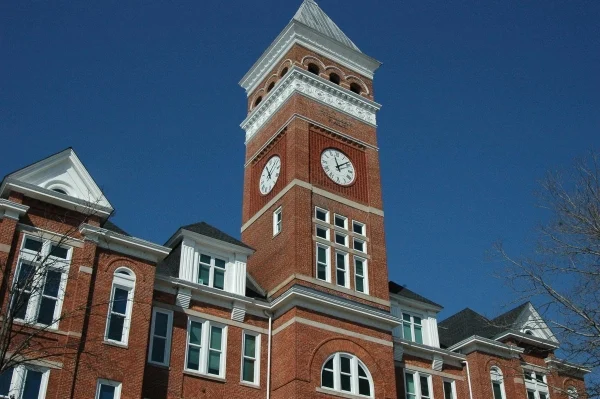
Clemson president Jim Clements is retiring at the end of the month.
sbrogan/E+/Getty Images
Clemson University president Jim Clements is retiring at the end of the month, bringing an abrupt end to his 12-year tenure at the helm of the public institution in South Carolina.
He cited “health and family” as his reasons for stepping down just over a year after he signed a five-year contract extension.
“Clemson has been my home and passion, yet my greatest love is for my wife, Beth, and our children and grandchildren. Life moves quickly, and I don’t want to miss what truly matters—the major milestones and the quiet, everyday joys,” Clements wrote in a Tuesday message announcing his retirement. “Those are the moments I want to experience and hold close.”
Clements joined Clemson in 2013 after nearly five years as president of West Virginia University.
He cited a record number of applications and Clemson’s attainment of Research-1 status under the Carnegie classification system, achieved in 2013, among his accomplishments. Board of Trustees chair Kim Wilkerson also said in her own message that under Clements’s leadership, “Clemson achievedrecord enrollment and graduation rates, expanded research initiatives and secured historic philanthropic support.”
More recently, however, Clements courted controversy after the university fired three employees for allegedly making inappropriate remarks about the death of Charlie Kirk. The university appeared to claim in a social media post related to the firings that First Amendment rights do not “extend to speech that incites harm or undermines the dignity of others.”
Clemson also shut down faculty and staff affinity groups intended to advise leaders on how to support Black, Latino, LGBTQ+ students, veterans and others in September. At the time, Clemson officials claimed, “The commissions have successfully fulfilled their important charge.”
Now Clemson is expected to name an interim president at an emergency board meeting Wednesday. Provost Bob Jones, who was planning to retire, is expected to be named to the interim role and to “serve until a successor is named,” according to Wilkerson’s statement.