Tag: Education

  • Making OBBBA Implementation Work for Students

    Making OBBBA Implementation Work for Students

    The One Big Beautiful Bill Act is the biggest shake-up to federal higher education policy in more than a decade. And while the bill passed on partisan lines, implementing it to maximize student success and postsecondary value requires real bipartisan cooperation. With negotiated rule making under way, and 2026 implementation deadlines looming, a new deep-dive report from Inside Higher Ed, “After Reconciliation: Higher Ed Reform and Where Left–Right Collaboration Matters Most,” looks at conservative, progressive and institutional priorities and perspectives on three key areas of OBBBA: institutional accountability for student outcomes; new loan limits and payment reforms; and changes to the Pell Grant program, including the introduction of Workforce Pell.

    Join the Discussion

    On Wednesday, Jan. 21 at 2 p.m. Eastern, Inside Higher Ed will host a live webcast discussion on the report and OBBBA’s impact on higher education. Register for that here. Download the free report here.

    Despite clear differences of opinion on various areas of the bill, many experts agree on the need for accountability, limits on excessive graduate debt and support for high-value training programs. 

    “The underlying principles here of stronger accountability for financial outcomes, of reining in excessive borrowing, especially in the graduate education space—those are bipartisan priorities that have been expressed for a long time,” says Michelle Dimino, director of education programs at the think tank Third Way. “These are conversations that we have been having in the higher education reform space for the last decade and beyond.”

    Common concerns also emerge around the tight timeline for adoption, the data infrastructure to support changes, aligning earnings regulations, handling repayment plan transfers with care, protecting the Pell Grant budget and more. Another challenge: execution by an Education Department in transition.

    “After Reconciliation: Higher Ed Reform and Where Left–Right Collaboration Matters Most” was written by Ben Upton. The independent editorial project is supported by Arnold Ventures.

    Source link

  • Pomona In Talks to Acquire Claremont Graduate University

    Pomona In Talks to Acquire Claremont Graduate University

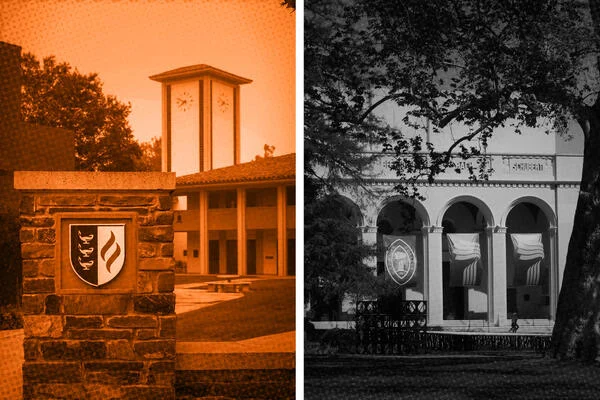
    Pomona College is in talks to acquire Claremont Graduate University as the latter seeks a strategic partner amid financial challenges, according to reports in local and student media.

    The two institutions, both part of California’s seven-institution Claremont Colleges consortium, are reportedly set to strike a preliminary agreement by the end of this week. But so far, neither institution has said much publicly about the potential deal.

    “CGU has entered a process to ensure its long-term viability. We’re aware of that process, and to maintain its fairness, we cannot offer comment at this time,” a Pomona spokesperson wrote in an email to Inside Higher Ed, sharing the same statement sent to other news organizations.

    CGU officials were similarly tight-lipped.

    “Claremont Graduate University continues to explore a range of potential partnerships as part of our long-term strategic planning. These conversations are ongoing and confidential, and we want to ensure that any information we share is accurate and complete,” CGU vice president of strategy Patricia Easton wrote in an emailed statement provided by the university. “Once there are updates appropriate for release, we will share them through our official channels.”

    Claremont Graduate University has been seeking a partner since at least April 2024, when it sought out consulting firms to help with that process, according to an April 2025 announcement.

    “After much debate, we came to a consensus that we do not have the financial resources to continue going it alone as a graduate-only, comprehensive university. It was time to seek out a strategic partner or partners with a strong financial and academic foundation that by joining together would expand our opportunities for the future,” Easton wrote in the April 2025 communiqué about where partnership efforts stood at the time.

    Officials said in that announcement that a consulting firm had contacted more than 100 prospective partners on behalf of the university in January. Arizona State University, Loyola Marymount University and Northeastern University all reportedly considered acquiring CGU. But now it appears that nearby Pomona College has emerged as the top pick.

    The acquisition is reportedly moving ahead despite financial strain for both institutions.

    CGU has operated with a persistent deficit for more than a decade, which is expected to continue in fiscal year 2026; the college anticipates an operating loss of nearly $8.7 million, according to a public filing.

    Pomona, meanwhile, has enacted cost-saving measures in recent years despite its deep pockets: It had an endowment valued at nearly $3 billion in fiscal year 2024. Officials wrote in November that “Pomona has faced financial uncertainty amid changes in federal funding and policy since early 2025,” and it is being squeezed by inflation, tariffs and rising operational costs. Recent challenges follow financial modeling in 2023 that projected expenses were on pace to grow faster than revenues, prompting a five-year “college-wide savings and reallocation program.”

    Any potential merger would still need regulatory approval before it becomes official.

    Source link

  • AI Tool From Maryland Grads Teaches Case Study Responses

    AI Tool From Maryland Grads Teaches Case Study Responses

    Nicole Coomber has taught consulting and experiential learning courses at the University of Maryland’s Smith School of Business for years, assigning graduate students take-home case studies that mimic consulting interviews.

    But, like many professors in the ChatGPT era, Coomber has found that the assignments no longer challenge her classes, because students simply enter questions into large language models and submit whatever the generative AI model spits out.

    “I was discovering that students could pretty much take my assignment, plug it into AI and get a perfect answer without having to go through some of the struggle that we know is part of learning,” she said.

    Case studies are a critical part of the interview process for many business students, so ensuring they engage with the exercises and don’t circumvent critical thinking is important to Coomber. But rather than create a new low-tech assignment, Coomber partnered with a group of master’s-level students to make an AI tool to act as a case interviewer.

    The result is STRATPATH, a generative AI tool that delivers faculty-created case studies to assess and provide real-time feedback to business students. The tool both connects students’ learning to real-world scenarios and provides career-readiness skills, prepping students for interviews after graduation.

    How it works: STRATPATH was developed by six recent UMD business school graduates: Deep Dalsaniya, Anna Huertazuela, Aditya Kamath, Aromal Nair, Krishang Parakh and Venkatesh Shirbhate. The team first assembled to participate in a case competition for M.B.A. students in 2024 and then returned to the university after graduation to launch STRATPATH, using funds allocated by the dean.

    “It was a bit of, ‘Hey, these are really talented students, the job market is really hard, they could use a soft landing to keep up with their job search,’” Coomber said. “It’s turned into something much more; we’ve built something that’s really incredible.”

    Students can chat with STRATPATH or respond with audio to the faculty-developed case study.

    To set up the tool, professors provide the case-study story they want the student to answer, a rubric or feedback form, and some examples of ideal answers, Dalsaniya said. Based on the input, STRATPATH facilitates prompts via audio or text, engaging the student in a conversation.

    “Students are getting prepared for thinking spontaneously and building their critical thinking abilities over all,” Dalsaniya said.

    STRATPATH relies on a large language model with additional boundaries set by developers to reduce the odds that the AI hallucinates, accepts incorrect information or provides overly complimentary feedback. It also investigates student responses to ensure that they aren’t cheating using outside sources.

    “It doesn’t say, ‘Deep, you’re so smart, that’s right!’” Coomber explained. “It’s like, ‘How did you get there?’ So even if the students are typing into ChatGPT, then putting that answer into our platform, our platform will go, ‘How did you get there?’”

    The platform also doesn’t allow for copying and pasting responses, so if a student is sidebarring with ChatGPT while responding to STRATPATH, they have to at least transcribe responses (and at a reasonably human words-per-minute rate), which will hopefully produce learning in some capacity, Dalsaniya said.

    “Our main focus is whether their critical thinking abilities are increasing or not, and it does even if they are cheating,” he said.

    The impact: STRATPATH provides instant grading and real-time personalized feedback, saving faculty time and helping students adjust faster.

    It used to take Coomber hours to go over student assignments, which could hinder learning due to the long lag time between assignment and feedback. Now she can spend more time conducting face-to-face learning or holding office hours.

    Anecdotal feedback from students so far indicates they feel better prepared to tackle interviews, and they’ve appreciated the assessments from the tool, which identifies both where they’re excelling and areas where they could improve.

    What’s next: Coomber and her team are looking to identify other campus stakeholders who might have a use case for STRATPATH. One option is to work alongside the career center to deliver behavioral interview prompts. Many interviewers require applicants to use the STAR method—situation, task, action and result—to respond to questions and use it to assess talent, and STRATPATH could be one forum for students to practice these questions.

    Dalsaniya and the development team are also investigating ways to feed STRATPATH additional resources from faculty to provide a richer evaluation of student responses to case studies.

    “Case-based learning has no right answer—all answers can be right,” Dalsaniya said. “What we are trying to focus on is how we can integrate all the class materials of the professor, including their slides, their video lectures, within the feedback so that the student can see the feedback and reference those slide numbers or chapters or video transcripts.”

    The team is also looking for additional funding sources to scale and possibly license the tool for outside groups.

    Source link

  • Okla. Instructor Put On Leave for “Viewpoint Discrimination”

    Okla. Instructor Put On Leave for “Viewpoint Discrimination”

    The University of Oklahoma put a lecturer on administrative leave last week for allegedly exercising “viewpoint discrimination” five days after a different instructor was placed on leave for alleged religious discrimination.

    Kelli Alvarez, an assistant teaching professor focused on race and ethnicity in literature and film, allegedly encouraged students to miss her English composition class to attend a protest in support of Mel Curth, a graduate teaching assistant in the psychology department who was removed from teaching after a student filed a religious discrimination complaint against her. Alvarez said she would excuse the absences of students who attended the protest. But according to university officials, she did not extend the same offer to students who intended to miss class that day to “express a counter-viewpoint.”

    “Immediately upon learning of the situation, the Director of First-Year Composition told students in class today and by email that the lecturer’s actions were inappropriate and wrong, and that the university classroom exists to teach students how to think, not what to think. The Director further stated that any student, regardless of viewpoint, would be excused if absent from class today to attend the protest without penalty, and that the lecturer had been replaced, effective immediately, for the remainder of the semester,” officials wrote in a statement Friday. “Classroom instructors have a special obligation to ensure that the classroom is never used to grant preferential treatment based on personal political beliefs, nor to pressure students to adopt particular political or ideological views.”

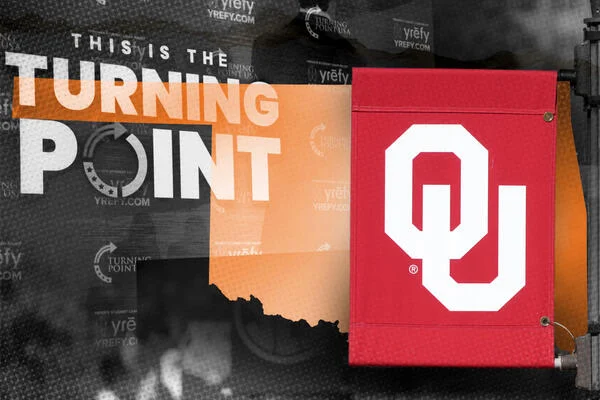
    Spokespeople for the University of Oklahoma did not respond to Inside Higher Ed’s request for comment. An X post by the University of Oklahoma chapter of Turning Point USA, a conservative student group founded by the late Charlie Kirk, said that the chapter president, a student in Alvarez’s class, had asked to miss class in order to counterprotest.

    “Kalib Magana, student in professor Alavarez’s [sic] class and TPUSA OU president, asking to counter-protest was denied the same option unless a large, documented group could be organized,” the chapter wrote. “Kalib filed a report with The University of Oklahoma’s Equity Office for ‘discrimination of a viewpoint’ and freedom of speech violations Friday morning.”

    Hundreds of students, faculty, staff and community members rallied Friday in support of Curth, who is on leave after giving a junior psychology student, Samantha Fulnecky, a zero on a reaction essay assignment. In her explanation about the grade, Curth said that Fulnecky did not answer the assignment’s questions, that her essay contradicted itself and that it “heavily uses personal ideology over empirical evidence in a scientific class, and is at times offensive.” A second teaching assistant for the course concurred with Curth’s grade.

    Fulnecky fought back, appealing to the president of the university and the governor of Oklahoma, arguing that she was unfairly given a failing grade because her essay cited the Bible and discussed her religious beliefs. Though university officials said the grading dispute was settled last week, Curth was put on leave pending investigation after Fulnecky filed a formal religious discrimination complaint.

    The university’s TPUSA chapter helped whip the story into a social media storm. The news caught fire, offering something for everyone to comment on. Supplied with the full essay, assignment instructions and rubric, academics online debated how they would have scored Fulnecky’s essay. Others blasted her writing skills. Conservatives, including Fulnecky’s mother, used the story to fuel a narrative of persecution against Christian students by “woke” academics. “Individuals who identify as trans should be automatically disqualified from holding any position as teacher or professor,” one X user commented, which Samantha Fulnecky’s mother, lawyer and conservative radio commentator Kristi Fulnecky, reposted.

    Liberal commenters pointed to the incident as another example of genderqueer faculty being unfairly maligned and doxed. “Mel Curth should be reinstated,” a user wrote on Bluesky. “I’m sorry, but religious freedom does not mean you as a student get to write out a genocidal screed wishing for your teachers death & eternal torture.”

    During a meeting Thursday, the University of Oklahoma Graduate Student Senate passed a resolution calling for greater transparency and protection for graduate teaching assistants on leave and under investigation. The resolution also said that Curth was justified in giving Fulnecky a zero on the assignment and called on the university to publicly apologize to the professor for failing to protect her from the bullying and harassment the case has incited.

    The Oklahoma University chapter of the American Association of University Professors made a similar call to administrators, KOKH reported. “Disturbingly, OU has not made a public statement stating that it vigorously defends instructors, including transgender instructors, from harassment, discrimination, and even reported death threats,” the chapter told KOKH in a statement.

    Source link

  • Survey Warns of Student Debt “Default Cliff”

    Survey Warns of Student Debt “Default Cliff”

    A new survey of federal student loan borrowers by the Institute for College Access and Success, a nonprofit focused on college affordability, found that about a fifth of borrowers are currently in either delinquency or default.

    “These findings bring even greater urgency to ongoing concerns about a looming ‘default cliff,’ where an unprecedented number of borrowers struggle so much to repay their loans that they default on their payments in droves,” Michele Zampini, TICAS’s associate vice president for federal policy and advocacy, wrote in a blog post.

    The Department of Education itself acknowledged a potential default cliff in an August data release, Zampini noted, writing that, although no new borrowers had defaulted since payments were paused in March 2020, many delinquent borrowers were in danger of defaulting after that pause ended.

    Zampini also wrote that student loan default “comes with severe and punitive consequences.”

    Just over half of respondents (52 percent) said their debt has negatively affected their ability to save for retirement, and 45 percent said the same about their ability to find and afford housing. Slightly fewer participants said that their student loan debt was “worth it”—41 percent—than said it wasn’t, at 48 percent. Advanced degree holders were more likely to consider their debt “worth it” than those with an associate or bachelor’s degree, as were male borrowers compared to female borrowers.

    Source link

  • ED Designates 23% of Colleges “Lower Earnings”

    ED Designates 23% of Colleges “Lower Earnings”

    First-time undergraduates applying for federal student aid will now receive a warning if they indicate interest in an institution where graduates don’t earn more than an adult with a high school diploma.

    The new earnings indicator on the Free Application for Federal Student Aid is aimed at ensuring students have more information about their postsecondary options, Education Department officials said in a news release Monday. Consumer protection advocates generally praised the department’s move, while institutional groups criticized it.

    About 23 percent of the nearly 5,900 institutions in the department’s database will be labeled as “lower earnings.” Those colleges enroll fewer than 3 percent of undergraduates and receive about $2 billion in federal student aid annually. That’s a fraction of the more than $100 billion in federal aid that’s doled out each year. The department pulled from publicly available data to generate the label, and program-level data is available online on the College Scorecard.

    This warning comes after years of debates over how to give students more information about the outcomes at institutions and specific programs. An Obama-era effort was scuttled after higher ed groups and institutions pushed back. However, a new rule drafted by the Biden administration will eventually provide more program-level data on earnings, which consumer protection advocates say will help to steer students away from those that don’t pay off.

    “This new indicator will help students and families better understand how their choices could translate into real-world outcomes, and it will be provided at a crucial moment in the college decision-making process,” Education Under Secretary Nicholas Kent wrote in a blog post. “This indicator is designed to inform—not limit—student choices. It’s one additional resource students can use—alongside factors like cost, mission, location, and personal interests—to identify the path that best aligns with their goals.”

    Most of the 1,365 institutions flagged for lower earnings are for-profits and beauty schools. A few on the list are community colleges and historically Black colleges and universities.

    The association that represents cosmetology schools didn’t respond to a request for comment Monday. However, the group has fought efforts to tie financial aid eligibility to students’ earnings, arguing in part that the underlying data is inaccurate.

    The left-leaning think tank New America released a report critical of the industry earlier this year, calling it “predatory.” Meanwhile, Michelle Dimino, director of the education program at Third Way, a left-of-center think tank, expects the lower-earnings list to add to the scrutiny on beauty schools.

    “Well over half [on the list] were [beauty schools and cosmetology institutes],” Dimino said. “That continues to really raise the temperature around that industry and some of the questions about return on investment and supply and demand in that space, how they might think about licensing and other requirements to be able to appropriately calibrate their costs with their outputs.”

    Institutional representatives said Monday afternoon that while they support greater transparency, they are concerned about the department’s methods to create the designation, such as which students are included in the calculations and how the earnings metric doesn’t take into account regional variations and differences in earnings for specific fields.

    “This is a blunt tool for a nuanced process that has enormous potential for creating misleading outcomes,” said Jon Fansmith, senior vice president for government relations and national engagement at the American Council on Education. “Much more care, time and attention should have gone into it, and it would be all the better for it if ED had done that. Regardless of their motivations, there are good reasons to question the process and how useful it will actually be. “

    Fansmith added that if the department is flagging low performers, it should also highlight high performers.

    In the release, Kent’s blog post and other online information about the earnings flag, the department made clear that it’s not taking a “position on the underlying value of educational services provided by any institution of higher education.”

    Jordan Wicker, senior vice president of legislative and regulatory affairs at Career Education Colleges and Universities, which represents the for-profit sector, said in a statement that he appreciates that the earnings indicator applies to all institutions.

    “CECU believes disclosures like this can be improved by including non-completer earnings data, which the College Scorecard currently lacks,” he said. “Similarly, CECU is consistent in its critique of the dataset for the comparison group age 25-34, as well as accounting for regional variations in earnings. We share the Department’s commitment to transparency and will work with them to ensure that the most accurate disclosures are provided to help students select the school that best fits their needs and wishes.”

    First-year undergraduates will see the label on their FAFSA Submission Summary. From there, they can click to receive more detailed earnings information on the institutions they selected. Students can then opt to remove a flagged institution.

    Even students who have already submitted their FAFSA can see whether any of their chosen schools have been flagged. In his blog post, Kent said the notices have “no impact on FAFSA completion, submission, or eligibility for aid.”

    Starting next July, all college programs will have to show their graduates make more than the average adult with only a high school diploma in order to access federal student aid. The department is still working through the specifics of how that test, known as Do No Harm, will work.

    To Dimino of Third Way, the launch of the indicator is a sign of growing momentum toward greater transparency and more information about earnings.

    Dimino particularly likes the department’s decision to tell students about the earnings data after they complete the FAFSA. She thinks disclosure at that step will help ensure students actually see the information and can use it as they consider their options. She is interested in learning more about how students act on the data and whether they decide against sending the lower-earnings institutions their aid application.

    Students lack awareness about available earnings data or where to find it, according to Inside Higher Ed’s 2025 Student Voice survey, conducted in August. About 11 percent of students said they don’t know where to find postgraduation outcomes information and an additional 8 percent said they “know nothing” about postgraduation outcomes. Just 12 percent said they knew detailed outcome data for their program.

    Michael Itzkowitz, founder of higher education research and policy firm HEA Group, said the earnings indicator is “a step in the right direction for transparency.”

    “Students today primarily attend college to secure better employment opportunities, and they deserve to know up front whether an institution simply isn’t delivering on that promise,” he said. “Most institutions deliver on the promise of economic prosperity but, unfortunately, some do not.”

    Source link

  • School Specialty LLC Announces Acquisition of Nasco Education U.S.

    School Specialty LLC Announces Acquisition of Nasco Education U.S.

    Greenville, Wis – December 8, 2025 – School Specialty®, a leading provider of learning environments, supplies and science curriculum to the preK-12 education market, today announced the acquisition of Nasco Education U.S., a trusted name in specialized, curated education solutions for K-12 schools. This strategic acquisition enhances School Specialty’s ability to serve its core customers by enhancing its value proposition to schools across the country.

    “We estimate that nearly two-thirds of Nasco Education U.S.’s customers are already School Specialty buyers,” said Ryan Bohr, CEO of School Specialty. “Like School Specialty, Nasco Education U.S. has been an industry fixture of supplying schools for decades. Combining our companies will bring procurement efficiencies to our customers and expand the scope of products available to them.”

    School Specialty has more than 60 years of leadership in transforming classrooms into future-ready learning spaces for preK-12 educational institutions, serving five in every six school districts nationwide and curating products from hundreds of trusted brands. Nasco Education U.S.  offers a broad selection of specialized products, including hands-on, activity-based resources that support instruction across subjects like science, math, and the arts. Both companies share a deep commitment to providing high-quality, relevant resources that empower teachers and students.

    Both organizations will operate independently for the near term.  School Specialty expects to integrate the businesses gradually to ensure a seamless experience for the longstanding customers of both organizations. 

    “Together, we will be able to provide even greater support, innovation, and value to schools nationwide, helping them deliver the best possible learning experiences for their students,” said Ryan Bohr, CEO of School Specialty.

    About School Specialty, LLC 

    With a 60-year legacy, School Specialty is a leading provider of comprehensive learning environment solutions for the pre-K12 education marketplace in the U.S. and Canada. This includes essential classroom supplies, furniture and design services, educational technology, sensory spaces featuring Snoezelen, science curriculum, learning resources, professional development, and more. School Specialty believes every student can flourish in an environment where they are engaged and inspired to learn and grow. In support of this vision to transform more than classrooms, the company applies its unmatched team of education strategists and designs, manufactures, and distributes a broad assortment of name-brand and proprietary products. For more information, go to SchoolSpecialty.com.

    About Nasco Education U.S.

    Nasco Education U.S. is a leading developer and distributor of instructional materials, offering a wide range of hands-on learning products for the preK-12 education market with 80+ years of experience. Nasco Education U.S. provides schools and educators with the educational materials needed to create impactful classroom experiences that enhance student engagement and academic performance. For more information, go to NascoEducation.com.

    eSchool News Staff
    Latest posts by eSchool News Staff (see all)

    Source link

  • ED Calls Civil Rights Workers It’s Trying to Ax Back to Work

    ED Calls Civil Rights Workers It’s Trying to Ax Back to Work

    Saul Loeb/AFP via Getty Images

    The Education Department is calling Office for Civil Rights employees who were fired earlier this year back to work.

    The Trump administration tried to ax half of the Education Department’s OCR staff in March, but it has been paying them not to work since then while it continues to fight litigation contesting its plan. The department says it hasn’t given up on defending that move, but now says it’s “important to refocus OCR’s work and utilize all OCR staff to prioritize OCR’s existing complaint caseload.”

    “In order for OCR to pursue its mission with all available resources, all those individuals currently being compensated by the Department need to meet their employee performance expectations and contribute to the enforcement of existing civil rights complaints,” the department said in Friday emails obtained by Inside Higher Ed. “Utilizing all OCR employees, including those currently on administrative leave, will bolster and refocus efforts on enforcement activities in a way that serves and benefits parents, students, and families.”

    One email gave an employee a Dec. 15 return date, while another said Dec. 29. It’s unclear how many workers will return. Bloomberg reported that the order went out to “more than 260,” while USA Today cited the department as saying “roughly 250,” but the Associated Press said “dozens.” Inside Higher Ed is awaiting clarification from the department.

    Rachel Gittleman, president of American Federation of Government Employees Local 252, which represents department employees, said her union hasn’t been told how many workers in its bargaining unit received the email. She said in a statement Monday that “while we are relieved these public servants are finally being allowed to return to work, Education Secretary Linda McMahon has made clear that she would rather play politics than uphold her responsibility to protect students’ rights.”

    “For more than nine months, hundreds of employees at the Office for Civil Rights (OCR) have been sidelined from the critical work of protecting our nation’s most vulnerable students and families,” Gittleman said. She said the administration’s actions keeping these employees out of work and on leave “wasted more than $40 million in taxpayer funds.”

    “By blocking OCR staff from doing their jobs, Department leadership allowed a massive backlog of civil rights complaints to grow, and now expects these same employees to clean up a crisis entirely of the Department’s own making,” she added.

    Source link

  • Higher Education and the Culture of Silence

    Higher Education and the Culture of Silence

    American higher education presents itself as a beacon of truth, courage, and critical inquiry. Yet behind the marketing gloss lies a pervasive culture of silence—one that extends far beyond colleges and universities themselves. The same forces that suppress dissent on campus operate through a larger ecosystem of nonprofits, contractors, ed-tech companies, and “public-private partnerships” that orbit higher ed. Together, they form a network of institutional interests that reward secrecy, punish whistleblowers, and prioritize reputation and revenue over honesty and accountability.

    At the center of this system are nondisclosure agreements. NDAs are now standard tools not only in universities, but in the foundations that support them, the think tanks that shape education policy, and the ed-tech corporations that extract profit from student data and public subsidies. Whether a case involves workplace retaliation, fraudulent recruitment, financial misconduct, algorithmic harm, or student exploitation, NDAs are used to hide patterns of abuse and protect organizations from scrutiny. What gets buried is not just information—it is the possibility of reform.

    The threat of litigation is part of the same architecture. Universities, nonprofits, and ed-tech companies routinely rely on aggressive legal strategies to silence critics. Workers attempting to expose unethical contracts, deceptive marketing, or discrimination face cease-and-desist letters. Researchers who publish unflattering findings are pressured to retract or soften their conclusions. Students raising alarms about data privacy or predatory practices encounter legal intimidation disguised as “professional communication.” These organizations—flush with donor money, investor capital, or public funds—use lawsuits and threats of lawsuits as shields and weapons.

    Leadership across this broader ecosystem is often weak, conflicted, or corrupt. University presidents beholden to trustees are mirrored by nonprofit executives beholden to major donors, and by ed-tech CEOs beholden to venture capital. Many leaders prioritize political favor, philanthropic relationships, and corporate growth over the public interest. They outsource accountability to law firms, PR agencies, and consulting outfits whose job is not to fix problems but to bury them.

    And circulating through this system is the same cast of characters: politicians chasing influence, lawyers crafting airtight silence, consultants selling risk-mitigation strategies, bean counters manipulating data, and conmen repackaging failed ideas as “innovation.” The lines between nonprofit, corporate, and educational interests have blurred to the point of erasure. Trustees who shape campus policy sit on nonprofit boards. Ed-tech companies hire former university officials and then market themselves back to campuses. Donors direct funds through philanthropic intermediaries that simultaneously pressure institutions for access and silence.

    The victims of this system—faculty, staff, gig workers in tech and nonprofit roles, graduate students, undergraduates, and even the communities surrounding campuses—are pressured to comply. They face retaliation in the form of job loss, non-renewal, demotion, academic penalties, professional blacklisting, or immigration vulnerabilities. Whistleblowers are isolated. Critics are surveilled. And when the fallout becomes too public to contain, institutions rely on payouts—quiet settlements, buyouts, and confidential agreements that allow perpetrators to move seamlessly to their next institution or company.

    This culture of silence is not a collection of isolated incidents. It is a structural feature of modern higher education and the industries built around it.

    But it is not unbreakable.

    If you have experienced or witnessed this culture—whether in a university, a higher-ed nonprofit, or the ed-tech world—the Higher Education Inquirer invites you to share your story. You may do so publicly or anonymously. We understand the risks. We know many people cannot speak openly without jeopardizing their jobs, degrees, or health. Anonymous accounts are welcome, valued, and protected.

    Your story, no matter how brief, can help illuminate the patterns that institutions spend billions to obscure. Silence is what sustains the system. Truth—shared safely and collectively—is what can dismantle it.


    Sources

    • Elisabeth Rosenthal, An American Sickness

    • Alondra Nelson, Body and Soul

    • Harriet A. Washington, Medical Apartheid

    • Rebecca Skloot, The Immortal Life of Henrietta Lacks

    • Reporting from the Higher Education Inquirer on university corruption, NDAs, donor influence, and ed-tech abuses

    • Investigations into nonprofit and ed-tech misconduct published in public records, court filings, and independent journalism

    Source link

  • Coach Buyouts Boom to Record Highs

    Coach Buyouts Boom to Record Highs

    Earlier this year, Pennsylvania State University announced it would close seven campuses due to financial constraints, while Louisiana State University implemented a hiring freeze and other cost-cutting measures.

    Months later both institutions fired their head football coaches—for a price. Despite Penn State’s financial challenges, administrators were willing to pay more than $45 million to make head coach James Franklin go away after the Nittany Lions posted a 6-3 record. LSU fired Brian Kelly after a 5-3 start and gave him a buyout of $54 million.

    Franklin’s total buyout was ultimately reduced to $9 million when he landed the head coaching job at Virginia Tech, and Kelly’s exit package will also shrink should he find another position. But the eye-popping compensation numbers are adding up—and setting new records at a time when many colleges and universities are cutting costs.

    Record Buyouts

    Recent data compiled by the Knight Commission on Intercollegiate Athletics shows that failing is a lucrative business for college football coaches. Fifteen fired football coaches have already racked up collective buyouts of nearly $228 million from public universities, compared to $120 million in fiscal year 2024. (Those totals are for Football Bowl Subdivision coaches only, formerly known as Division I-A, and only include public universities, since private institutions don’t release such contract details.)

    Former LSU coach Brian Kelly landed one of the largest buyouts in the history of college sports.

    Gus Stark/LSU/University Images/Getty Images

    The Knight Commission noted that individual coaching buyouts this year “are the second, third, fourth, and fifth highest severance pay obligations in history.” The top slot still belongs to Texas A&M University, which fired Jimbo Fisher in 2023 with an exit package of more than $75 million.

    Looking across a longer timeline, the commission estimates that universities shelled out a total of $852 million in severance pay for football coaches, including assistants, between 2012 and 2024.

    University Responses

    Universities often stress that coaching buyouts are paid with donor funds, not public money. Even so, some experts argue that paying vast sums of money to fire coaches is problematic and damages faculty and staff morale, especially at universities that are slashing jobs and budgets.

    Penn State defended its recent buyout to Inside Higher Ed by emphasizing that its athletic program is among the few in the nation “that is self-sustaining and therefore does not use any tuition or taxpayer dollars.” In addition, the university said, it has a major economic impact on the surrounding area.

    “Decisions regarding budgets and operations of the academic enterprise are separate and distinct,” a spokesperson wrote in an emailed response to a question about closing rural campuses across Pennsylvania. “As noted, no tuition or tax dollars are used for athletics. The difficult but necessary decisions Penn State has made impacting campuses and unit budgets, have been made with a core focus on setting our students up with the best opportunities for success.”

    LSU did not provide a statement to emailed questions prior to publication.

    Congressional Scrutiny

    While Congress has deliberated capping pay for college athletes—whom institutions can now pay directly, as of earlier this year—Knight Commission on Intercollegiate Athletics CEO Amy Privette Perko has encouraged lawmakers to rein in coaching salaries.

    “As Congress debates the merits of federal legislation to place limits and guardrails on college athlete compensation, it should also examine the conditions that allow for the continued growth of excessive compensation and severance for football coaches at non-profit universities,” she said in a statement accompanying the organization’s report on buyouts.

    Some members of Congress appear interested in taking on runaway salaries and buyouts.

    In October, Representative Michael Baumgartner, a Washington Republican, introduced the Correcting Opportunity and Accountability in Collegiate Hiring Act, a proposal that would cap annual pay for all athletics department employees. Baumgartner’s proposed bill would limit annual pay to no more than 10 times the cost of in-state tuition for undergraduate students.

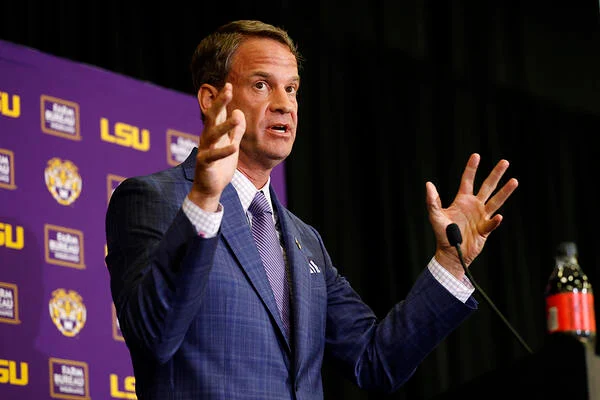
    While new LSU coach Lane Kiffin is set to make $13 million a year, his annual salary would be dramatically lower—about $280,000—under the pay scheme proposed by Baumgartner.

    Multiple state attorneys general have already voiced opposition to the proposal.

    Lane Kiffin speaks at a press conference as he is introduced as the new head football coach of the LSU Tigers. He is a white man with short brown hair, wearing a blue suit with a purple tie and patterned shirt.

    New LSU coach Lane Kiffin is poised to make $13 million a year.

    Tyler Kaufman/Getty Images

    Some lawmakers have also questioned whether college sports should remain tax-exempt. Senator Maria Cantwell, a Democrat representing Washington, wrote a letter to the Joint Committee on Taxation earlier this year, seeking an analysis of the implications of stripping the NCAA, member institutions and athletic conferences of their ability to continue as tax-exempt organizations.

    “Given the evolving market dynamics of college sports coupled with changes in the legal framework affecting college athletes, legitimate questions have been raised about whether it is time to rethink the tax-exempt regime under which college sports currently operates,” she wrote.

    But so far, legislation to alter the college sports landscape has proven difficult to pass. The latest effort to overhaul athletics—which would have limited student transfer eligibility and how much universities can spend on name, image and likeness deals—collapsed short of the end zone last week when House members balked on the GOP-backed bill and sponsors pulled it from a vote.

    Source link