By now, it’s obvious that the Trump administration’s efforts to expand Immigration and Customs Enforcement activities go far beyond enforcing federal immigration policy. The near-daily stories of inhumane detainment conditions, open violence against citizens and noncitizens alike, wanton civil rights violations, and purposeful shielding of these abuses from any form of public accountability lay bare that President Trump is now using ICE as a key component for advancing his administration’s hateful agenda.
This context is essential to evaluate why the administration has sung such a different tune with the advertised $60,000 student loan forgiveness offers to new ICE recruits, compared to the normal song and dance about how higher education is evil incarnate. Trump and his political allies didn’t suddenly discover the societal benefits of affordable education, as evidenced by his simultaneous efforts to strip loan forgiveness pathways from those who are deemed obstructors to Trump’s political goals. What’s clear is that federal student loan forgiveness is now a poverty draft, coercing increased ICE and military enlistment from among those experiencing economic desperation.
Weaponizing educational debt to fuel armed forces conscription from lower-income individuals is essentially socioeconomic hostage taking. It deprives people of their agency in choosing whether conscription is truly the career and life pathway they desire by forcing the decision as a survival tactic, especially when nearly half the country is approaching an economic recession deliberately caused by Trump’s policies.
A History of Weaponizing College Affordability
The easiest way for an authoritarian regime to maintain a highly militarized state is to make enlistment the only means of socioeconomic survival for the masses. This is exactly why the Trump administration is promoting student loan forgiveness for ICE recruits while curtailing eligibility for Public Service Loan Forgiveness. By passing the reconciliation bill that nearly tripled ICE’s budget while restricting Pell Grant eligibility for some students and cutting back basic needs programs like food stamps and Medicaid, congressional leaders have identified themselves as active participants in this strategy.
Though Trump’s tactics are an unprecedentedly naked attempt to weaponize student loan relief in the service of authoritarianism, this is a foundational concept in federal higher education policy that he’s taking the opportunity to exploit. The Servicemen’s Readjustment Act of 1944, the first federal educational assistance program for veterans, and most follow-up educational assistance programs were more focused on rewarding military service in already-declared conflicts than using benefits as a recruitment draw.
That shift came with the larger 1960s push to align higher education with the Cold War. California’s Master Plan of 1960 provided an opening for later attacks on college affordability, because it codified into public policy the idea that some types of institutions were worth attending more than others, mainly by segregating various types of educational experiences offered by different institutions. Later in the decade, then–California governor Ronald Reagan slashed public university budgets, in this way punishing students for antiwar protests. Reagan’s camouflaging of draconian education funding cuts as a necessary tool to combat the “filthy speech movement” became the groundwork for today’s deep inequality across all levels of the educational system.
Over the next several decades, federal and state policymakers abandoned their responsibilities to fund public higher education, which has strengthened the ties between college (un)affordability and militarization. In 2022, 20 Republican House members—14 of whom are still in office—wrote a joint letter to then-president Biden expressing concern that his efforts to provide widespread student loan forgiveness would harm the ability of the military to use higher educational benefits as a recruitment tool.
Last fall, 48 percent of 16- to 21-year-olds surveyed by the Department of Defense identified “to pay for future education” as a main reason they would consider joining the armed forces. This was the second-most common reason expressed in the survey, behind only “pay/money.”
Student Loan Forgiveness Is Not Siloed Public Policy
Public policy is rarely siloed into neat categories, and we are now experiencing the widespread consequences of allowing an inequitable and unaffordable higher education system to exist for so long in the United States. Trump isn’t the only federal policymaker endorsing this strategy, but he is the primary beneficiary. The more people willing to join ICE’s march toward martial law or forced to join ICE due to socioeconomic necessity, the easier it is for Trump to fully embrace authoritarianism and stay in power past January 2029.
This is the framing that should be used in every policy conversation about student loan forgiveness moving forward, not just for the offers given to new ICE recruits. These actions are not distinct or separate from the administration’s federalizing of the National Guard, ICE’s vast increase in weapons spending or Trump’s public consideration of invoking the Insurrection Act to deploy more troops to U.S. cities; they’re a vital complement. Ransoming access to an affordable higher education, along with its associated socioeconomic benefits, based on how willing someone is to inflict terror on immigrant communities or any other population that the administration deems undesirable, is a deliberate tactic to build an authoritarian military state.
Ideally, the current scenario facing higher education will end the usual hemming and hawing from policymakers about universal student loan forgiveness or tuition-free higher education being too expensive. Are the cost savings from not offering widespread forgiveness truly worth militarizing the country against the estimated 51.9 million immigrants living in the U.S., including more than 1.9 million immigrant and undocumented higher education students? Is appeasing Trump’s desire to play dictator dress-up so vital that policymakers feel compelled to willingly eradicate recent progress in national college affordability, discourage or outright bar international students from coming to learn in the United States, and shrink the economies of every state and congressional district due to the loss of international students?
State Legislatures Are the Last Line of Defense
The Trump administration is desperate to expand domestic militarization through ICE, as evidenced by advertisements on popular media streaming services and during nationally televised football games, public commitments to keep paying ICE agents as roughly 1.4 million federal workers go without pay during the government shutdown and the elimination or loosening of recruitment and training requirements for new ICE agents in relation to their age, physical fitness and ability to speak Spanish. As the Trump administration through ICE utilizes every available tool to further its authoritarian agenda, policymakers and institutions must use every available tool to combat said authoritarianism.
State legislatures wield vast amounts of legal authority over education policy in comparison to the federal government. However, that authority is useless if states capitulate or are otherwise unwilling to use that authority to protect their education systems and their larger communities.
Efforts like Connecticut’s new statewide student debt forgiveness program, California’s prohibition on campus police departments providing personal student information for immigration enforcement purposes and Colorado’s adoption of a new state law requiring public campuses to limit federal agents’ access to campus buildings are all welcome ways that state policymakers can fight back against ICE.
These efforts must be expanded to more states as ICE continues to ramp up its domestic terrorism and congressional leadership remains content to abandon its constitutional responsibilities to hold the executive branch in check. For institutions, advocates and concerned community members, resources available through the Presidents’ Alliance on Higher Education and Immigration and its Higher Ed Immigration Portal, and from the Immigrant Legal Resource Center, provide essential guidance on how to act in protecting immigrants and their families.
Student loan forgiveness, and the larger concept of an affordable and equitable higher education, could now be a matter of life and death for millions of people. The traditional willingness of policymakers to resist supporting higher education during times of economic surplus, while eagerly cutting educational funding at the first sign of economic distress, has now imperiled American democracy. Every image of ICE committing authoritarian violence is a stark call for policymakers to ask themselves what they value more: the fiscal savings of making no meaningful effort to address the more than $1.6 trillion owed in student debt, or American democracy itself.
Christian Collins is a policy analyst with the education, labor and worker justice team at the Center for Law and Social Policy, a nonprofit organization focused on reducing poverty and advancing racial equity.
The attacks on universities by the Trump administration have proven that higher education has “enemies” among authoritarian populist leaders and left other sectors wondering when they will be next, European leaders warn.
Michael Ignatieff, who was rector of the Central European University between 2016 and 2021, when the institution was expelled from Viktor Orbán’s Hungary, said the Hungarian prime minister had provided enormous inspiration to politicians around the world.
Speaking at the Going Global conference, Ignatieff, also a former opposition leader in Canada, said Orbán was “the master” who had learned that controlling the universities that recruit and train elites means they can eventually control the political system.
“Authoritarian populists have grasped the crucial strategic importance of universities … [which] gives them the possibility of ideological control of a society as a whole.”
As Trump continues to put pressure on U.S. universities, Ignatieff, now professor of historical studies at the CEU, which has relocated to Austria, likened higher education to sitting on a mountaintop “watching a storm forming on the horizon” over a nearby village.
“That village has been hit by lightning and thunder and storm, and our question now is how long will it be before that storm hits us?”
“We’re in a political battle. We cannot assume that the higher education sector in any of our countries is secure going forward. If the higher education sector can be attacked in the United States, let me tell you folks, it can be attacked anywhere,” he added.
“This sector has enemies. The American experience has shattered my confidence that the sector that I’ve spent my entire life in is safe.”
Speaking at the British Council event in London, Ignatieff said the “renationalization” of one of the most outward-looking educational systems in the world had put international education under threat for the first time in his lifetime.
He warned that European universities were also at risk because of how reliant they are on the state for research funding—allowing authoritarian governments to use funding against them to shut down academic freedom.
“I worry going forward that an authoritarian political regime could come to power … and begin to look at the way in which cutting off state funding or using the threat of cutting off state funding becomes an instrument to secure control of the higher education sector.”
Another weakness of the European sector is the lack of statutory protection for academic freedom, which makes universities vulnerable, he added, as do rising tuition fees in many countries.
“The increasing costs of higher education are weakening domestic popular political support for higher education,” he said. “It becomes easier and easier for populist politicians to attack higher education as a kind of elite luxury that the taxpayer pays for.”
Speaking at the same session, Maddalaine Ansell, director of education at the British Council, said the values that underpin higher education are coming under threat because of populism and polarization.
“In some places, academic freedom is challenged from without and highly polarized views amongst students and staff can affect robust debate within institutions,” she said.
“As nations focus on domestic issues, it can be harder to win arguments that internationalization of higher education deserves government support through regulatory support, including an enabling visa system and funding for international collaboration.”
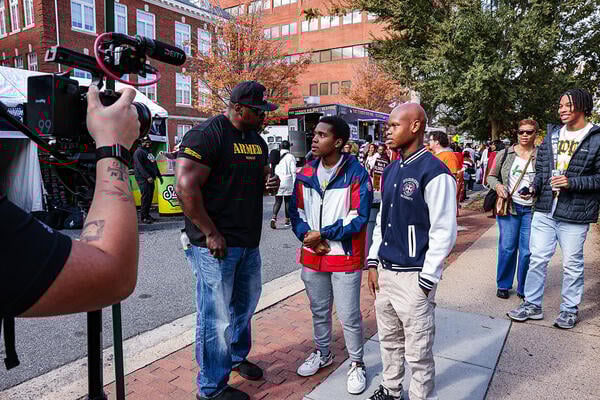
Campus security at Hampton University escorted members of Blexit off the historically Black university’s campus this past weekend after the Black conservative group tried to join homecoming festivities as part of its “Educate to Liberate” HBCU tour. The group claims it was silenced by the university. Hampton leaders say Blexit didn’t follow proper protocols for visiting the campus.
Blexit, which is affiliated with the Charlie Kirk–founded Turning Point USA, planned to visit 10 HBCUs during homecoming events with the goal of “bringing conservative values to life, fostering critical thinking, and sparking powerful conversations on HBCU campuses,” according to Blexit’s website. The group also made stops at Howard University and other campuses, though it canceled a visit to Florida A&M University, promising to announce a new date.
Craig Long, a Blexit member, claimed on Instagram that Hampton University shut down the group’s dialogue with students.
“Instead of celebrating that spirit of open discussion, the university shut it down—claiming we ‘didn’t go through the proper channels,’” Long wrote. “Let’s be honest: this wasn’t about paperwork. It was about politics. We were silenced because we are Blexit—because we stand for Christian values, conservative principles, and independent thought that challenge the mainstream narrative.”
Hampton University leaders pushed back on Long’s description of the incident. They wrote in a statement that Blexit didn’t complete the application to participate in homecoming as a vendor or pay the associated fees. Out of 36 vendor applications submitted, the university approved 18, and Blexit “was among those that did not meet the stated requirements,” according to the statement. Those vendors were notified the week before the event that they would not be allowed on campus. University leaders framed the procedures as a “matter of public safety” to know who’s on campus, with nearly 15,000 people visiting for homecoming.
“Hampton University welcomes organizations and speakers representing a variety of perspectives, provided they follow established protocols,” the statement read. “BLEXIT failed to meet those standards.”
Major accreditors are following through on their plans to bring new quality checks to the short-term credentialing landscape.
After years of preparation, the Higher Learning Commission is launching a new process to evaluate and endorse short-term credential providers this week, according to a Tuesday announcement from the HLC. The accreditor will be accepting applications for its first cohort of endorsed providers through Jan. 23.
Higher Learning Commission president Barbara Gellman-Danley said in the announcement that HLC’s goal is “to expand the nation’s pool of valuable, HLC endorsed providers, thereby increasing pathways for students to gain the qualifications they need to get ahead and succeed.”
The New England Commission of Higher Education also announced its inaugural cohort of eight recognized noncredit program providers last week, including higher ed institutions and external organizations.
“We know that there are increasing numbers of students enrolled in non-credit programs,” Michaele Whelan, chairperson of NECHE, said in a news release. “There has also been a growing need for quality assurance in this space. NECHE has taken the bold step to address this need and we are excited to expand our work into this area.”
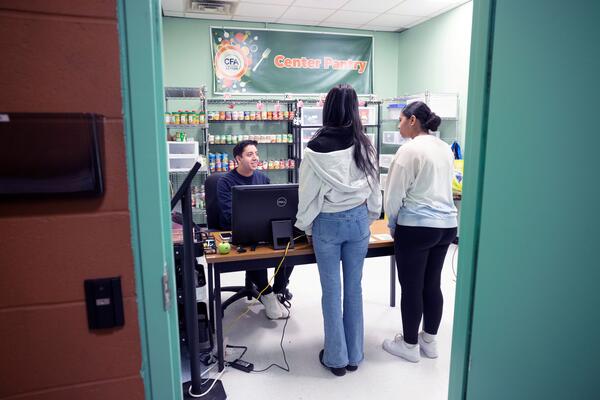
Nearly 60 percent of all college students in the U.S. experience at least one form of basic needs insecurity, lacking stable housing and/or consistent access to food, according to national surveys.
The One Big Beautiful Bill Act, which Congress passed in July, creates sweeping changes to higher education—including a new tax rate for university endowments and accountability metrics for student income levels after graduation. It also directly impacts college students, threatening their access to food assistance programs and their ability to pay for college, which experts warn could hamper their persistence and completion.
Policy and higher education leaders convened during an Oct. 28 webinar hosted by the Hope Center for Student Basic Needs at Temple University to discuss how the new legislation threatens student financial wellness and success.
“We are very, very worried that student basic needs insecurity will be increasing dramatically over the next few years,” said Bryce McKibben, senior director of policy and advocacy at the Hope Center.
For current students, experts outlined three major shifts in federal financial supports.
1.Cuts to SNAP Funding
OBBBA includes $186 billion in cuts to the Supplemental Nutrition Assistance Program, which provides support obtaining food for nearly three million young adults, according to U.S. Census data. The bill places more requirements on SNAP recipients; at present, all funding for SNAP is at risk due to the government shutdown. Some states expect to run out of SNAP dollars as early as Nov. 1.
“[SNAP] is our first line of defense against hunger. It reduces health care–related issues and it bolsters local economies,” said Gina Plata-Nino, interim director of the SNAP, Food Research & Action Center. “It also provides jobs; it provides federal income taxes. And all of this is going to be threatened.”
Under the bill, all adults ages 18 to 64 must demonstrate they work at least 20 hours per week to be eligible for SNAP, Plata-Nino said.
Approximately one in four college students experience food insecurity. SNAP resources are largely underutilized by college students, in part because of complicated enrollment processes. Instead, many rely on campus pantries, which are mostly privately funded by individual donors or campus budgets. Plato-Nino anticipates the changes to SNAP will impact funding and capacity for higher education institutions to provide resources, “because now they have to focus on these issues,” she said.
The federal cuts could cause further damage to an already fragile system.
“We have a threadbare social safety net that really hits students when they can least afford to meet what are pretty acute and deep costs as they’re trying to get through their degree program,” said Mark Huelsman, director of policy and advocacy at the Hope Center.
Many colleges and universities expanded emergency grant funding for students during the COVID-19 pandemic to address sudden expenses that could threaten a student’s ability to remain enrolled. While supplemental funding can help ease this gap, it’s not sufficient, Huelsman said.
“Campuses don’t often have the resources to help students meet what can be an acute financial emergency,” Huelsman said.
An August 2025 Student Voice survey by Inside Higher Ed and Generation Lab found that 64 percent of respondents said they didn’t know whether their college provides emergency financial aid, and an additional 4 percent indicated that resource was not available at their institution. Only 12 percent of respondents said they knew how to apply for emergency aid at their college.
2.Changes to Pell Grants
The reconciliation bill also includes a variety of changes to student eligibility for the federal Pell Grant program, which provides financial aid to low-income students.
Over one-third of Student Voice respondents indicated paying for college was a top source of stress while enrolled, second only to balancing family, academic, work and personal responsibilities.
For the academic year 2026–27, those with a student aid index (SAI) over $14,790, as identified by the FAFSA, are no longer eligible for Pell Grants. Similarly, students who receive scholarships that meet the full cost of attendance (including books, housing, food, tuition and fees) are not eligible for Pell, regardless of their SAI.
“We anticipate that this will affect a very small number of students,” said Jessica Thompson, senior vice president at the Institute for College Access and Success. “But this remains to be seen how this takes effect and what it looks like on the ground.”
3.Limits on Graduate and Parent Borrowing
OBBBA caps loans on professional degree programs (which include medical, law, veterinary and dentistry programs, among others) at $200,000, and other graduate programs at $100,000. It also eliminates Grad PLUS loans, which are unsubsidized federal loans with no borrowing limits. Students currently enrolled can borrow from Grad PLUS for three academic years or the remainder of their credential program, whichever is shorter.
While these limits can be beneficial for keeping student borrowing down, there may be unintended consequences regarding who can access the programs, Thompson said. For example, students who enroll at historically Black colleges and universities or minority-serving institutions are more likely to utilize Parent PLUS loans to pay for college.
“This has been a really big lifeline for accessing credit in order to cover college costs for people’s children, and there will be a disproportionate impact on these new caps on those types of institutions,” Thompson said.
Thompson also noted that a lack of federal loan opportunities for graduate and professional students may cause a rise in private loan borrowing, which often has higher interest rates and fewer protections for borrowers.
“We want to keep a really close eye on what it means for the availability of programs in general … but also access and looking at increasingly less diverse pipelines in terms of historically marginalized populations being able to access graduate and professional programs,” Thompson said.
Similar to SNAP cuts, Thompson anticipates the loan caps will add significant financial pressure on colleges and universities due to loss of revenue and enrollment.
Too many students studying full-time honours degrees at university are causing higher education to be ‘over-consumed’.
A Call for Radical Reform: Higher Education for a Sustainable Economy by Professor Tim Blackman argues that full-time honours degrees were created when universities were small and elite institutions. They were rolled over into the modern mass system of higher education we have today, with little thought about the appropriateness and affordability of providing such a large volume of learning straight after school, with the educational content expected to last a lifetime.
Instead, Professor Tim Blackman says more people need to be studying shorter courses, spreading the cost over time while encouraging lifelong updating of skills and knowledge.
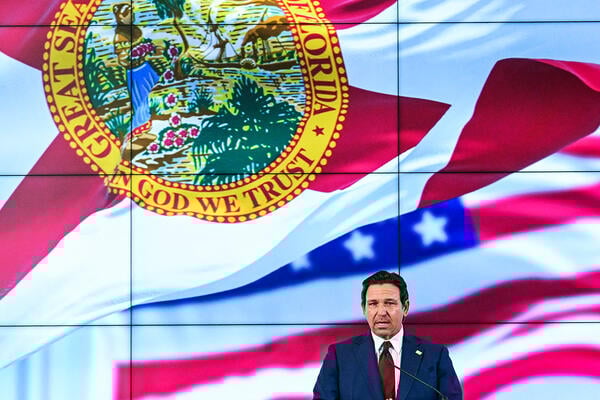
Florida governor Ron DeSantis on Wednesday ordered the state’s public universities “to pull the plug on the use of these H-1B visas in our universities.” In doing so, the Republican appeared to call for his state to go further than President Trump in restricting entry of these foreign employees—an issue that has divided prominent conservatives.
Since fiscal year 2022, Florida public universities have employed nearly 2,000 people via the H-1B program—nearly half at the University of Florida. The program is capped at 85,000 new visas a year, but colleges, universities and some other organizations aren’t subject to that cap. In the first three quarters of 2025, nearly 16,800 visas were approved for employees at colleges and universities; 395 of the visas were for jobs at Florida’s public universities. Universities use the program to hire faculty, doctors and researchers and argue it’s required to meet needs in health care, engineering and other areas.
Last month, Trump announced a $100,000 application fee for H-1B visas. U.S. Citizenship and Immigration Services says the fee will apply to new H-1B petitions filed on or after Sept. 21 and must be paid before the petition is filed. It said there could be exceptions from the fee in an “extraordinarily rare circumstance” in which the Homeland Security secretary determines a foreigner’s presence in the U.S. “is in the national interest.”
Lawsuits have been filed over the fee, and higher ed associations and institutions have spoken out in opposition. The Trump administration says employers are abusing the program to avoid hiring Americans.
In a speech at the University of South Florida on Wednesday, DeSantis called on the state board governing public universities to “pull the plug” on H-1B visa employees. He didn’t mention any exceptions.
If this the ban happens, it would be another example of a red state going further than the Republican-controlled federal government in restricting public higher ed institutions. In states such as Texas and Ohio, GOP politicians have exceeded Trump in regulating curricula and restricting faculty rights. Before Trump retook office, DeSantis put Florida on the leading edge of the conservative overhaul of higher ed, from cracking down on what he called “woke” education to putting allies in charge of universities—a playbook other states have followed.
It’s unclear, however, whether the Florida Board of Governors, which oversees the state’s public universities but not it’s public colleges, will follow DeSantis’s directive. Fourteen of the board’s 17 members are appointed by the governor and confirmed by the state Senate.
It’s also unclear what his directive specifically means; a news release the governor’s office issued Wednesday didn’t, unlike his speech, go as far as suggesting an end to all H-1B visa employees at public universities.
But neither the State University System of Florida nor the governor’s office provided more details in response to Inside Higher Ed’s questions about DeSantis’s intent. A news release from the governor’s office said DeSantis directed the board to “crack down on H-1B Visa abuse in higher education” but didn’t repeat the governor’s apparent call to end H-1B employment completely.
University of Florida interim president Donald Landry spoke at the press conference after DeSantis and mentioned his institution was called out.
“It’s a complex issue, and we can chat,” Landry said, to laughs from the audience. He did list one benefit, saying H-1Bs are mainly used at UF to hire new faculty from the international student population.
“Occasionally, some bright light might be good enough for the faculty, and then we will try and retain the person into whom we have invested so much,” he said.
UF is conducting its own review of the H-1B program, he added. “We know that H-1B is not handled in a pristine fashion, even in academia,” he said.
Robert Cassanello, president of the United Faculty of Florida union and a tenured associate history professor at the University of Central Florida, suggested that banning H-1B visa holders would be illegal.
“You can’t discriminate against someone based on foreign birth,” Cassanello said. “My big question coming away from this is: Where’s the authority?”
‘Do It’ With Florida Residents
In his speech, DeSantis started his criticism of the H-1B program from a national perspective. He said, “Tech companies will fire Americans and hire H-1B at a discount, and they’re basically indentured servants … They’re indentured to the company, so the company can basically pay them low.”
He then turned to Florida universities, appearing to read from a list of positions occupied by H-1B holders at unnamed institutions. (His office didn’t provide the list Wednesday.)
After mentioning a public policy professor from China, DeSantis said, “Why do we need to bring someone from China to talk about public policy?” Later—apparently looking at information on another H-1B holder—he exclaimed, “Wuhan, China!”
Although DeSantis’s complaints focused on supposed international scholars from China, he didn’t spare those from other countries.
“Assistant swim coach from Spain, on an H-1B visa—are you kidding me, we can’t produce an assistant swim coach in this country?” he said. He then turned to the Middle East.
“Clinical assistant professor from the West Bank, clinical assistant professor from supposed Palestine,” he said. “Is that just social justice that they’re doing? And that’s University of Florida.”
“We need to make sure our citizens here in Florida are first in line for job opportunities,” DeSantis said. But he also suggested he doesn’t fully know why universities are hiring H-1B workers.
“I guess there’s probably reasons why it ends up being this way,” DeSantis said. “But I think it’s a poor reflection on some of the decisions that some of these universities have made that they’re trying to say they need an H-1B visa to do some of these jobs … We can do it with our residents in Florida, or with Americans, and if we can’t do it then—man—we need to really look deeply about what is going on.”
Sarah Spreitzer, vice president and chief of staff for government relations at the American Council on Education, said DeSantis’s move would limit universities’ ability to hire the best researchers.
“It’s going to have an enormous impact, obviously, on Florida institutions,” Spreitzer said.
Cassanello, who said his union includes some H-1B holders, called DeSantis’s speech a “xenophobic and nativist diatribe.”
“He’s a nativist, he’s anti-immigrant and so he’s coming to these decisions based on no facts,” Cassanello said. He also said DeSantis opposed diversity, equity and inclusion programs by arguing they were anti-meritocratic, but now, “all of a sudden, he’s willing to throw out meritocracy.”
“He’s using fear of people of color and fear of immigrants to sort of impose his will on the running of our public colleges and universities,” Cassanello said. He said the speech represents “a further attack from DeSantis and our state political leaders on the autonomy of our public colleges and universities.”
In a letter to Secretary of Homeland Security Kristi Noem, higher ed institutions say maintaining a consistent flow of international faculty and staff members is critical.
Jabin Botsford/The Washington Post/Getty Images
A number of higher education institutions and the associations that represent them are asking to be exempted from the new $100,000 H-1B visa application fee, saying the prohibitive cost could be detrimental to the recruitment and retention of international faculty, researchers and staff members.
In a letter to the Department of Homeland Security last week, the American Council on Education argued that such individuals “contribute to groundbreaking research, provide medical services to underserved and vulnerable populations … and enable language study, all of which are vital to U.S. national interests.” Without them, ACE and 31 co-signers said, key jobs in high-demand sectors such as health care, information technology, education and finance will likely go unfilled.
The letter came just days after U.S. Citizenship and Immigration Services launched a new online payment website and provided an updated statement on policies surrounding the fee. UCIS clarified that the fee will apply to any new H-1B petitions filed on or after Sept. 21, and it must be paid before the petition is filed.
The update also referenced possible “exception[s] from the fee” but said those exceptions would only be granted in an “extraordinarily rare circumstance where the Secretary has determined that a particular alien worker’s presence in the United States as an H-1B worker is in the national interest.”
ACE said that H-1B visa recipients in higher education certainly meet those standards, citing data from the College and University Professional Association for Human Resources that shows that over 70 percent of international employees at colleges and universities hold tenure-track or tenured positions. The top five disciplines they work in are business, engineering, health professions, computer science and physical sciences.
“H-1B visa holders working for institutions of higher education are doing work that is crucial to the U.S. economy and national security,” the letter reads.
Despite the clarification provided by UCIS, ACE still had several remaining questions about the fee. These included whether the $100,000 would be refunded if a petition was denied and whether individuals seeking a “change of status” from an H-1B to an F-1 or J-1 would still be required to pay the fee.
At least two lawsuits have been filed against DHS concerning these visa fees. Neither has been issued a ruling so far.
A growing share of colleges and universities are embedding artificial intelligence tools and AI literacy into the curriculum with the intent of aiding student success. A 2025 Inside Higher Ed survey of college provosts found that nearly 30 percent of respondents have reviewed curriculum to ensure that it will prepare students for AI in the workplace, and an additional 63 percent say they have plans to review curriculum for this purpose.
In the latest episode of Voices of Student Success, host Ashley Mowreader speaks with Shlomo Argamon, associate provost for artificial intelligence at Touro, to discuss the university policy for AI in the classroom, the need for faculty and staff development around AI, and the risks of gamification of education.
An edited version of the podcast appears below.
Q: How are you all at Touro thinking about AI? Where is AI integrated into your campus?
Shlomo Argamon, associate provost for artificial intelligence at Touro University
A: When we talk about the campus of Touro, we actually have 18 or 19 different campuses around the country and a couple even internationally. So we’re a very large and very diverse organization, which does affect how we think about AI and how we think about issues of the governance and development of our programs.
That said, we think about AI primarily as a new kind of interactive technology, which is best seen as assistive to human endeavors. We want to teach our students both how to use AI effectively in what they do, how to understand and properly mitigate and deal with the risks of using AI improperly, but above all, to always think about AI in a human context.
When we think about integrating AI for projects, initiatives, organizations, what have you, we need to first think about the human processes that are going to be supported by AI and then how AI can best support those processes while mitigating the inevitable risks. That’s really our guiding philosophy, and that’s true in all the ways we’re teaching students about AI, whether we’re teaching students specifically, deeply technical [subjects], preparing them for AI-centric careers or preparing them to use AI in whatever other careers they may pursue.
Q: When it comes to teaching about AI, what is the commitment you all make to students? Is it something you see as a competency that all students need to gain or something that is decided by the faculty?
A: We are implementing a combination—a top-down and a bottom-up approach.
One thing that is very clear is that every discipline, and in fact, every course and faculty member, will have different needs and different constraints, as well as competencies around AI that are relevant to that particular field, to that particular topic. We also believe there’s nobody that knows the right way to teach about AI, or to implement AI, or to develop AI competencies in your students.
We need to encourage and incentivize all our faculty to be as creative as possible in thinking about the right ways to teach their students about AI, how to use it, how not to use it, etc.
So No. 1 is, we’re encouraging all of our faculty at all levels to be thinking and developing their own ideas about how to do this. That said, we also believe very firmly that all students, all of our graduates, need to have certain fundamental competencies in the area of AI. And the way that we’re doing this is by integrating AI throughout our general education curriculum for undergraduates.
Ultimately, we believe that most, if not all, of our general education courses will include some sort of module about AI, teaching students specifically about the AI-relevant competencies that are relevant to those particular topics that they’re learning, whether it’s writing, reading skills, presentations, math, science, history, the different kinds of cognition and skills that you learn in different fields. What are the AI competencies that are relevant to that, and to have them learning that.
So No. 1, they’re learning it not all at once. And also, very importantly, it’s not isolated from the topics, from the disciplines that they’re learning, but it’s integrated within them so that they see it as … part of writing is knowing how to use AI in writing and also knowing how not to. Part of learning history is knowing how to use AI for historical research and reasoning and knowing how not to use it, etc. So we’re integrating that within our general education curriculum.
Beyond that, we also have specific courses in various AI skills, both at the undergraduate [and] at the graduate level, many of which are designed for nontechnical students to help them learn the skills that they need.
Q: Because Touro is such a large university and it’s got graduate programs, online programs, undergraduate programs, I was really surprised that there is an institutional AI policy.
A lot of colleges and universities have really grappled with, how do we institutionalize our approach to AI? And some leaders have kind of opted out of the conversation and said, “We’re going to leave it to the faculty.” I wonder if we could talk about the AI policy development and what role you played in that process, and how that’s the overarching, guiding vision when it comes to thinking about students using and engaging with AI?
A: That’s a question that we have struggled with, as all academic leaders, as you mentioned, struggle with this very question.
Our approach is to create policy at the institutional level that provides only the necessary guardrails and guidance that then enables each of our schools, departments and individual faculty members to implement the correct solutions for them in their particular areas, within this guidance and these guardrails so that it’s done safely and so that we know that it’s going, over all, in a positive and also institutionally consistent direction to some extent.
In addition, one of the main functions of my office is to provide support to the schools, departments and especially the faculty members to make this transition and to develop what they need.
It’s an enormous burden on faculty members to shift, not just to add AI content to their classes, if they do so, but to shift the way that we teach, the way that we do assessments. The way that we relate to our students, even, has to shift, to change, and it creates a burden on them.
It’s a process to develop resources, to develop ways of doing this. I and the people that work in our office, we have regular office hours to talk to faculty, to work with them. One of the most important things that we do, and we spend a lot of time and effort on this, is training for our faculty, for our staff on AI, on using AI, on teaching about AI, on the risks of AI, on mitigating those risks, how to think about AI—all of these things. It all comes down to making sure that our faculty and staff, they are the university, and they’re the ones who are going to make all of this a success, and it’s up to us to give them the tools that they need to make this a success.
I would say that while in many questions, there are no right or wrong answers, there are different perspectives and different opinions. I think that there is one right answer to “What does a university need to do institutionally to ensure success at dealing with the challenge of AI?” It’s to support and train the faculty and staff, who are the ones who are going to make whatever the university does a success or a failure.
Q: Speaking of faculty, there was a university faculty innovation grant program that sponsored faculty to take on projects using AI in the classroom. Can you talk a little bit about that and how that’s been working on campus?
A: We have an external donor who donated funds so that we were able to award nearly 100 faculty innovation challenge grants for developing methods of integrating AI into teaching.
Faculty members applied and did development work over the summer, and they’re now implementing in their fall courses right now. We’re right now going through the initial set of faculty reports on their projects, and we have projects from all over the university in all different disciplines and many different approaches to looking at how to use AI.
At the beginning of next spring, we’re going to have a conference workshop to bring everybody together so we can share all of the different ways that people try to do this. Some experiments, I’m sure, will not have worked, but that’s also incredibly important information, because what we’re seeking to do [is], we’re seeking to help our students, but we’re also seeking to learn what works, what doesn’t work and how to move forward.
Again, this goes back to our philosophy that we want to unleash the expertise, intelligence, creativity of our faculty—not top down to say, “We have an AI initiatives. This is what you need to be doing”—but, instead, “Here’s something new. We’ll give you the tools, we’ll give you the support. We’ll give you the funding to make something happen, make interesting things happen, make good things for your students happen, and then let’s talk about it and see how it worked, and keep learning and keep growing.”
Q: I was looking at the list of faculty innovation grants, and I saw that there were a few other simulations. There was one for educators helping with classroom simulations. There was one with patient interactions for medical training. It seems like there’s a lot of different AI simulations happening in different courses. I wonder if we can talk about the use of AI for experiential learning and why that’s such a benefit to students.
A: Ever since there’s been education, there’s been this kind of distinction between book learning and real-world learning, experiential learning and so forth. There have always been those who have questioned the value of a college education because you’re just learning what’s in the books and you don’t really know how things really work, and that criticism has some validity.
But what we’re trying to do and what AI allows us to do [is], it allows us and our students to have more and more varied experiences of the kinds of things they’re trying to learn and to practice what they’re doing, and then to get feedback on a much broader level than we could do before. Certainly, whenever you had a course in say, public speaking, students would get up, do some public speaking, get feedback and proceed. Now with AI, students can practice in their dorm rooms over and over and over again and get direct feedback; that feedback and those experiences can be made available then to the faculty member, who can then give the students more direct and more human or concentrated or expert feedback on their performance based on this, and it just scales.
In the medical field, this is where it’s hugely, hugely important. There’s a long-standing institution in medical education called the standardized patient. Traditionally it’s a human actor who learns to act as a patient, and they’re given the profile of what disorders they’re supposed to have and how they’re supposed to act, and then students can practice, whether they’re diagnostic skills, whether they’re questions of student care and bedside manner, and then get expert feedback.
We now have, to a large extent, AI systems that can do this, whether it’s interactive in a text-based simulation, voice-based simulation. We also have robotic mannequins that the students can work with that are AI-powered with AI doing conversation. Then they can be doing physical exams on the mannequins that are simulating different kinds of conditions, and again, this gives the possibility of really just scaling up this kind of experiential learning. Another kind of AI that has been found useful in a number of our programs, particularly in our business program, are AI systems that watch people give presentations and can give you real-time feedback, and that works quite well.
Q: These are interesting initiatives, because it cuts out the middleman of needing a third party or maybe a peer to help the student practice the experience. But in some ways, does it gamify it too much? Is it too much like video games for students? How have you found that these are realistic enough to prepare students?
A: That is indeed a risk, and one that we need to watch. As in nearly everything that we’re doing, there are risks that need to be managed and cannot be solved. We need to be constantly alert and watching for these risks and ensuring that we don’t overstep one boundary or another.
When you talk about the gamification, or the video game nature of this, the artificial nature of it, there are really two pieces to it. One piece is the fact that there is no mannequin that exists, at least today, that can really simulate what it’s like to examine a human being and how the human being might react.
AI chatbots, as good as they are, will not now and in the near, foreseeable future, at least, be able to simulate human interactions quite accurately. So there’s always going to be a gap. What we need to do, as with other kinds of education, you read a book, the book is not going to be perfect. Your understanding of the book is not going to be perfect. There has to be an iterative process of learning. We have to have more realistic simulations, different kinds of simulations, so the students can, in a sense, mentally triangulate their different experiences to learn to do things better. That’s one piece of it.
The other piece, when you say gamification, there’s the risk that it turns into “I’m trying to do something to stimulate getting the reward or the response here or there.” And there’s a small but, I think, growing research literature on gamification of education, where if you gamify a little bit too much, it becomes more like a slot machine, and you’re learning to maneuver the machine to give you the dopamine hits or whatever, rather than really learning the content of what you’re doing. The only solution to that is for us to always be aware of what we’re doing and how it’s affecting our students and to adjust what we’re doing to avoid this risk.
This goes back to one of the key points: Our whole philosophy of this is to always look at the technology and the tools, whether AI or anything else, as embedded within a larger human context. The key here is understanding when we implement some educational experience for students, whether it involves AI or technology or not, it’s always creating incentives for the students to behave in a certain way. What are those incentives, and are those incentives aligned with the educational objectives that we have for the students? That’s the question that we always need to be asking ourselves and also observing, because with AI, we don’t entirely know what those incentives are until we see what happens. So we’re constantly learning and trying to figure this out as we go.
If I could just comment on that peer-to-peer simulation: Medical students poking each other or social work students interviewing each other for a social work kind of exam has another important learning component, because the student that is being operated upon is learning what it’s like to be in the other shoes, what it’s like to be the patient, what it’s like to be the object of investigation by the professional. And empathy is an incredibly important thing, and understanding what it’s like for them helps the students to learn, if done properly, to do it better and to have the appropriate sort of relationship with their patients.
Q: You also mentioned these simulations give the faculty insight into how the student is performing. I wonder if we can talk about that; how is that real-time feedback helpful, not only for the student but for the professor?
A: Now, one thing that needs to be said is that it’s very difficult, often, to understand where all of your students are in the learning process, what specifically they need. We can be deluged by data, if we so choose, that may confuse more than enlighten.
That said, the data that come out of these systems can definitely be quite useful. One example is there are some writing assistance programs, Grammarly and their ilk, that can provide the exact provenance of writing assignments to the faculty, so it can show the faculty exactly how something was composed. Which parts did they write first? Which parts did they write second? Maybe they outlined it, then they revised this and they changed this, and then they cut and pasted it from somewhere else and then edited.
All of those kinds of things that gives the faculty member much more detailed information about the student’s process, which can enable the faculty to give the students much more precise and useful feedback on their own learning. What do they perhaps need to be doing differently? What are they doing well? And so forth. Because then you’re not just looking at a final paper or even at a couple of drafts and trying to infer what the student was doing so that you can give them feedback, but you can actually see that more or less in real time.
That’s the sort of thing where the data can be very useful. And again, I apologize if I sound like a broken record. It all goes back to the human aspect of this, and to use data that helps the faculty member to see the individual student with their own individual ways of thinking, ways of behaving, ways of incorporating knowledge, to be able to relate to them more as an individual.
Briefly and parenthetically, one of the great hopes that we have for integrating AI into the educational process is that AI can help to take away many of the bureaucratic and other burdens that faculty are burdened with, and free them and enable them in different ways to enhance their human relationship with their students, so that we can get back to the core of education. Which really, I believe, is the transfer of knowledge and understanding through a human relationship between teacher and student.
It’s not what might be termed the “jug metaphor” for education, where I, the faculty member, have a jug full of knowledge, and I’m going to pour it into your brain, but rather, I’m going to develop a relationship with you, and through this relationship, you are going to be transformed, in some sense.
Q: This could be a whole other podcast topic, but I want to touch on this briefly. There is a risk sometimes when students are using AI-powered tools and faculty are using AI-powered tools that it is the AI engaging with itself and not necessarily the faculty with the students. When you talk about allowing AI to lift administrative burdens or ensure that faculty can connect with students, how can we make sure that it’s not robot to robot but really person to person?
A: That’s a huge and a very important topic, and one which I wish that I had a straightforward and direct and simple answer for. This is one of those risks that has to be mitigated and managed actively and continually.
One of the things that we emphasize in all our trainings for faculty and staff and all our educational modules for students about AI is the importance of the AI assisting you, rather than you assisting the AI. If the AI produces some content for you, it has to be within a process in which you’re not just reviewing it for correctness, but you’re producing the content where it’s helping you to do so in some sense.
That’s a little bit vague, because it plays out differently in different situations, and that’s the case for faculty members who are producing a syllabus or using AI to produce other content for the courses to make sure that it’s content that they are producing with AI. Same thing for the students using AI.
For example, our institutional AI policy having to do with academic honesty and integrity, is, I believe, groundbreaking in the sense that our default policy for courses that don’t have a specific policy regarding the use of AI in that course—by next spring, all courses must have a specific policy—is that AI is allowed to be used by students for a very wide variety of tasks on their assignments.
You can’t use AI to simply do your assignment for you. That is forbidden. The key is the work has to be the work of the student, but AI can be used to assist. Through establishing this as a default policy—which faculty, department chairs, deans have wide latitude to define more or less restrictive policies with specific carve-outs, simply because every field is different and the needs are different—the default and the basic attitude is, AI is a tool. You need to learn to use it well and responsibly, whatever you do.
Q: I wanted to talk about the future of AI at the university. Are there any new initiatives you should tell our listeners about? How are you all thinking about continuing to develop AI as a teaching and learning tool?
A: It’s hard for me to talk about specific initiatives, because what we’re doing is we believe that it’s AI within higher education particularly, but I think in general as well, it’s fundamentally a start-up economy in the sense that nobody, and I mean nobody, knows what to do with it, how to deal with it, how does it work? How does it not work?
Therefore, our attitude is that we want to have it run as many experiments as we can, to try as many different things as we can, different ways of teaching students, different ways of using AI to teach. Whether it’s through simulations, content creation, some sort of AI teaching assistants working with faculty members, whether it’s faculty members coming up with very creative assignments for students that enable them to learn the subject matter more deeply by AI assisting them to do very difficult tasks, perhaps, or tasks that require great creativity, or something like that.
The sky is the limit, and we want all of our faculty to experiment and develop. We’re seeking to create that within the institution. Touro is a wonderful institution for that, because we already have the basic institutional culture for this, to have an entrepreneurial culture within the university. So the university as a whole is an entrepreneurial ecosystem for experimenting and developing ways of teaching about and with and through AI.