Tag: Education

  • Extremist Group Claims Responsibility for “Swatting” Calls

    Extremist Group Claims Responsibility for “Swatting” Calls

    Aaron Ontiveroz/The Denver Post/Getty Images

    A person who goes by the name Gores online claimed responsibility for the flurry of so-called swatting calls made to colleges and universities over the past several days, Wired reported.

    Gores is the self-proclaimed leader of an online group called Purgatory, which is linked to a violent online extremist network called The Com, according to Wired. Alongside another Purgatory member called tor, Gores began placing fake calls to campus and local emergency services about active shooters about noon Aug. 21, the same day the University of Tennessee at Chattanooga and Villanova University received swatting calls. 

    As of Wednesday afternoon, Inside Higher Ed counted 19 confirmed swatting calls since Aug. 19, including at Mercer University, the University of Wisconsin at Madison, the University of Utah and the University of New Hampshire.

    Not all of the calls placed by Purgatory have been successful. In some cases, authorities correctly identified the calls as hoaxes. When the group placed a call to Bucknell University in Lewisburg, Pa., a researcher listening in on the call was able to alert the university. The FBI is investigating the uptick in swatting calls and has not publicly confirmed Purgatory’s involvement. Gores told Wired that the swatting spree will continue for another two months. 

    Purgatory offers to make swatting calls for as little as $20, though the price has increased to $95 since this recent campaign of calls began, according to Wired. Three members of Purgatory were arrested in 2024 and pleaded guilty earlier this year for threats made to a Delaware high school, a trailer park in Alabama, Albany International Airport, an Ohio casino and a private residence in Georgia. 

    Ashley Mowreader contributed to this article.

    Source link

  • New York Passes Law Requiring Title VI Coordinators

    New York Passes Law Requiring Title VI Coordinators

    Photo illustration by Justin Morrison/Inside Higher Ed | howtogoto/iStock/Getty Images

    New York is mandating that all colleges in the state designate a coordinator to oversee investigations into discrimination on the basis of race, color, national origin and shared ancestry, which is prohibited under Title VI of the Civil Rights Act of 1964, Gov. Kathy Hochul’s office announced Wednesday.

    According to Hochul, the state is the first in the country to pass such a law.

    “By placing Title VI coordinators on all college campuses, New York is combating antisemitism and all forms of discrimination head-on,” she said in the press release. “No one should fear for their safety while trying to get an education. It’s my top priority to ensure every New York student feels safe at school, and I will continue to take action against campus discrimination and use every tool at my disposal to eliminate hate and bias from our school communities.”

    Many colleges have begun hiring for Title VI coordinator roles in the past several months in response to the surge in reports of antisemitism and Islamophobia following Hamas’s fatal Oct. 7, 2023 attack on Israeli civilians. In some cases, the Department of Education’s Office for Civil Rights required institutions to add these roles after finding that they failed to adequately address complaints of discrimination on their campuses.

    The State University of New York system had already mandated each of its campuses to bring on a Title VI coordinator by the fall 2025 semester.

    Source link

  • How Technology Can Smooth Pain Points in Credit Evaluation

    How Technology Can Smooth Pain Points in Credit Evaluation

    Earlier this month, higher education policy leaders from all 50 states gathered in Minneapolis for the 2025 State Higher Education Executive Officers Higher Education Policy Conference. During a plenary session on the future of learning and work and its implications for higher education, Aneesh Raman, chief economic opportunity officer at LinkedIn, reflected on the growing need for people to be able to easily build and showcase their skills.

    In response to this need, the avenues for learning have expanded, with high numbers of Americans now completing career-relevant training and skill-building through MOOCs, microcredentials and short-term certificates, as well as a growing number of students completing postsecondary coursework while in high school through dual enrollment.

    The time for pontificating about the implications for higher education is past; what’s needed now is a pragmatic examination of our long-standing practices to ask, how do we evolve to keep up? We find it prudent and compelling to begin at the beginning—that is, with the learning-evaluation process (aka credit-evaluation process), as it stands to either help integrate more Americans into higher education or serve to push them out.

    A 2024 survey of adult Americans conducted by Public Agenda for Sova and the Beyond Transfer Policy Advisory Board found, for example, that nearly four in 10 respondents attempted to transfer some type of credit toward a college credential. This included credit earned through traditional college enrollment and from nontraditional avenues, such as from trade/vocational school, from industry certification and from work or military experience. Of those who tried to transfer credit, 65 percent reported one or more negative experiences, including having to repeat prior courses, feeling limited in where they could enroll based on how their prior learning was counted and running out of financial aid when their prior learning was not counted. Worse, 16 percent gave up on earning a college credential altogether because the process of transferring credit was too difficult.

    What if that process were drastically improved? The Council for Adult and Experiential Learning’s research on adult learners finds that 84 percent of likely enrollees and 55 percent of those less likely to enroll agree that the ability to receive credit for their work and life experience would have a strong influence on their college enrollment plans. Recognizing the untapped potential for both learners and institutions, we are working with a distinguished group of college and university leaders, accreditors, policy researchers and advocates who form the Learning Evaluation and Recognition for the Next Generation (LEARN) Commission to identify ways to improve learning mobility and promote credential completion.

    With support from the American Association of Collegiate Registrars and Admissions Officers and Sova, the LEARN Commission has been analyzing the available research to better understand the limitations of and challenges within current learning evaluation approaches, finding that:

    • Learning-evaluation decision-making is a highly manual and time-intensive process that involves many campus professionals, including back-office staff such as registrars and transcript evaluators and academic personnel such as deans and faculty.
    • Across institutions, there is high variability in who performs reviews; what information and criteria are used in decision-making; how decisions are communicated, recorded and analyzed; and how long the process takes.
    • Along with this variability, most evaluation decisions are opaque, with little data used, criteria established or transparency baked in to help campus stakeholders understand how these decisions are working for learners.
    • While there have been substantial efforts to identify course equivalencies, develop articulation agreements and create frameworks for credit for prior learning to make learning evaluation more transparent and consistent, the data and technology infrastructure to support the work remain woefully underdeveloped. Without adequate data documenting date of assessment and aligned learning outcomes, credit for prior learning is often dismissed in the transfer process; for example, a 2024 survey by AACRAO found that 54 percent of its member institutions do not accept credit for prior learning awarded at a prior institution.

    Qualitative research examining credit-evaluation processes across public two- and four-year institutions in California found that these factors create many pain points for learners. For one, students can experience unacceptable wait times—in some cases as long as 24 weeks—before receiving evaluation decisions. When decisions are not finalized prior to registration deadlines, students can end up in the wrong classes, take classes out of sequence or end up extending their time to graduation.

    In addition to adverse impacts on students, MDRC research illuminates challenges that faculty and staff experience due to the highly manual nature of current processes. As colleges face dwindling dollars and real personnel capacity constraints, the status quo becomes unsustainable and untenable. Yet, we are hopeful that the thoughtful application of technology—including AI—can help slingshot institutions forward.

    For example, institutions like Arizona State University and the City University of New York are leading the way in integrating technology to improve the student experience. The ASU Transfer Guide and CUNY’s Transfer Explorer democratize course equivalency information, “making it easy to see how course credits and prior learning experiences will transfer and count.” Further, researchers at UC Berkeley are studying how to leverage the plethora of data available—including course catalog descriptions, course articulation agreements and student enrollment data—to analyze existing course equivalencies and provide recommendations for additional courses that could be deemed equivalent. Such advances stand to reduce the staff burden for institutions while preserving academic quality.

    While such solutions are not yet widely implemented, there is strong interest due to their high value proposition. A recent AACRAO survey on AI in credit mobility found that while just 15 percent of respondents report currently using AI for credit mobility, 94 percent of respondents acknowledge the technology’s potential to positively transform credit-evaluation processes. And just this year, a cohort of institutions across the country came together to pioneer new AI-enabled credit mobility technology under the AI Transfer and Articulation Infrastructure Network.

    As the LEARN Commission continues to assess how institutions, systems of higher education and policymakers can improve learning evaluation, we believe that increased attention to improving course data and technology infrastructure is warranted and that a set of principles can guide a new approach to credit evaluation. Based on our emerging sense of the needs and opportunities in the field, we offer some guiding principles below:

    1. Shift away from interrogating course minutiae to center learning outcomes in learning evaluation. Rather than fixating on factors like mode of instruction or grading basis, we must focus on the learning outcomes. To do so, we must improve course data in a number of ways, including adding learning outcomes to course syllabi and catalog descriptions and capturing existing equivalencies in databases where they can be easily referenced and applied.
    2. Provide students with reliable, timely information on the degree applicability of their courses and prior learning, including a rationale when prior learning is not accepted or applied. Institutions can leverage available technology to automate existing articulation rules, recommend new equivalencies and generate timely evaluation reports for students. This can create more efficient advising workflows, empower learners with reliable information and refocus faculty time to other essential work (see No.3).
    1. Use student outcomes data to improve the learning evaluation process. Right now, the default is that all prior learning is manually vetted against existing courses. But what if we shifted that focus to analyzing student outcomes data to understand whether students can be successful in subsequent learning if their credits are transferred and applied? In addition, institutions should regularly review course transfer, applicability and student success data at the department and institution level to identify areas for improvement—including in the design of curricular pathways, student supports and classroom pedagogy.
    2. Overhaul how learning is transcripted and how transcripts are shared. We can shorten the time involved on the front end of credit-evaluation processes by shifting away from manual transcript review to machine-readable transcripts and electronic transcript transmittal. When accepting and applying prior learning—be it high school dual-enrollment credit, credit for prior learning or a course transferred from another institution—document that learning in the transcript as a course (or, as a competency for competency-based programs) to promote its future transferability.
    3. Leverage available technology to help learners and workers make informed decisions to reach their end goals. In the realm of learning evaluation, this can be facilitated by integrating course data and equivalency systems with degree-modeling software to enable learners and advisers to identify the best path to a credential that minimizes the amount of learning that’s left on the table.

    In these ways, we can redesign learning evaluation processes to accelerate students’ pathways and generate meaningful value in the changing landscape of learning and work. Through the LEARN Commission, we will continue to refine this vision and identify clear actionable steps. Stay tuned for the release of our full set of recommendations this fall and join the conversation at #BeyondTransfer.

    Beth Doyle is chief of strategy at the Council for Adult and Experiential Learning and is a member of the LEARN Commission.

    Carolyn Gentle-Genitty is the inaugural dean of Founder’s College at Butler University and is a member of the LEARN Commission.

    Jamienne S. Studley is the immediate past president of the WASC Senior College and University Commission and is a member of the LEARN Commission.

    Source link

  • Debating the Terms of Prejudice Is a Distraction

    Debating the Terms of Prejudice Is a Distraction

    To the Editor:

    John Wilson is right (“No One is Gaslighting You,” Aug. 20, 2025) that the term “gaslight” can be abused and manipulated in ways that are tendentious, ad hominem and not empirically sound, as can many words and phrases. 

    However, that’s not an argument against its reality as a social phenomenon and its pernicious impacts. One of the common features of prejudice and discrimination is their denial. That doesn’t make all reported allegations of prejudice and discrimination accurate and true, but it is a frequent characteristic of expressions of prejudice and discrimination to deny their existence. Whether or not such forms of discrimination and prejudice are institutional or systemic may be legitimately contested. But, even if they do not meet the definitions of those terms, when prejudice and discrimination are repeatedly and extensively encountered and consequently undermine equality, freedom and access to justice, it is inimical to the respect and fulfillment of civil rights and human rights to focus on debating whether terms such as “gaslighting” or “institutional discrimination” are appropriate to describe real and widespread experiences of exclusion and abuse.

    Rather, energy should be invested in correcting those alleged rights violations and reducing their prevalence and intensity, affirming human dignity, equity and equality, and respect for diversity. Like many forms of discrimination and racism, antisemitism is widespread in the United States. Sociological research shows that approximately one in four Americans holds substantially prejudiced anti-Jewish attitudes, including justification for discrimination and violence against Jewish Americans. Universities are not immune to these pejorative and harmful societal prejudices and beliefs; they reflect them. Elite institutions, including Harvard, are not ivory towers of moral virtue. Gaslighting is as real at universities as it is elsewhere and minorities—including Jews—experience it frequently. I have experienced it at my own university repeatedly and pervasively from different sectors of the university, including its leadership. Our new chancellor is trying to improve our campus climate and culture to ensure greater inclusion and respect for Jewish students, staff and faculty, but this will require substantial will and leadership, investment of resources, and the support of our university community as a whole.

    The dynamics of abusive behavior and behavior that enables abuse—including in contexts of domestic abuse but not exclusive to it—–are such that bigotry often manifests as a denial of empathy, care, trust and responsiveness to individuals reporting and experiencing its harms, and concurrent attacks on their character, honesty and rights and hostile claims that their reported experiences are fabricated, exaggerated or made with malicious intent.

    That should never be our response to harassment and discrimination that violate civil rights laws and undermine the ethos of our universities and their capacity to provide equal access to education without discrimination for everyone.

    Noam Schimmel is a lecturer in global studies at the University of California, Berkeley.

    Source link

  • Emmanuel Lalande | Diverse: Issues In Higher Education

    Emmanuel Lalande | Diverse: Issues In Higher Education

    Dr. Emmanuel LalandeEmmanuel Lalande has been named Senior Vice President of Enrollment Strategy and Student Success at Columbia College Chicago. Lalande has over two decades of experience in enrollment and student development. He is joining Columbia from Voorhees University.  

    Lalande earned a bachelor’s degree in political science and a master’s degree in educational leadership at Delaware State University before going on to complete an EdD in organizational leadership at Nova Southeastern University. 

    Source link

  • Free College Admissions Counseling for Cancer Survivors

    Free College Admissions Counseling for Cancer Survivors

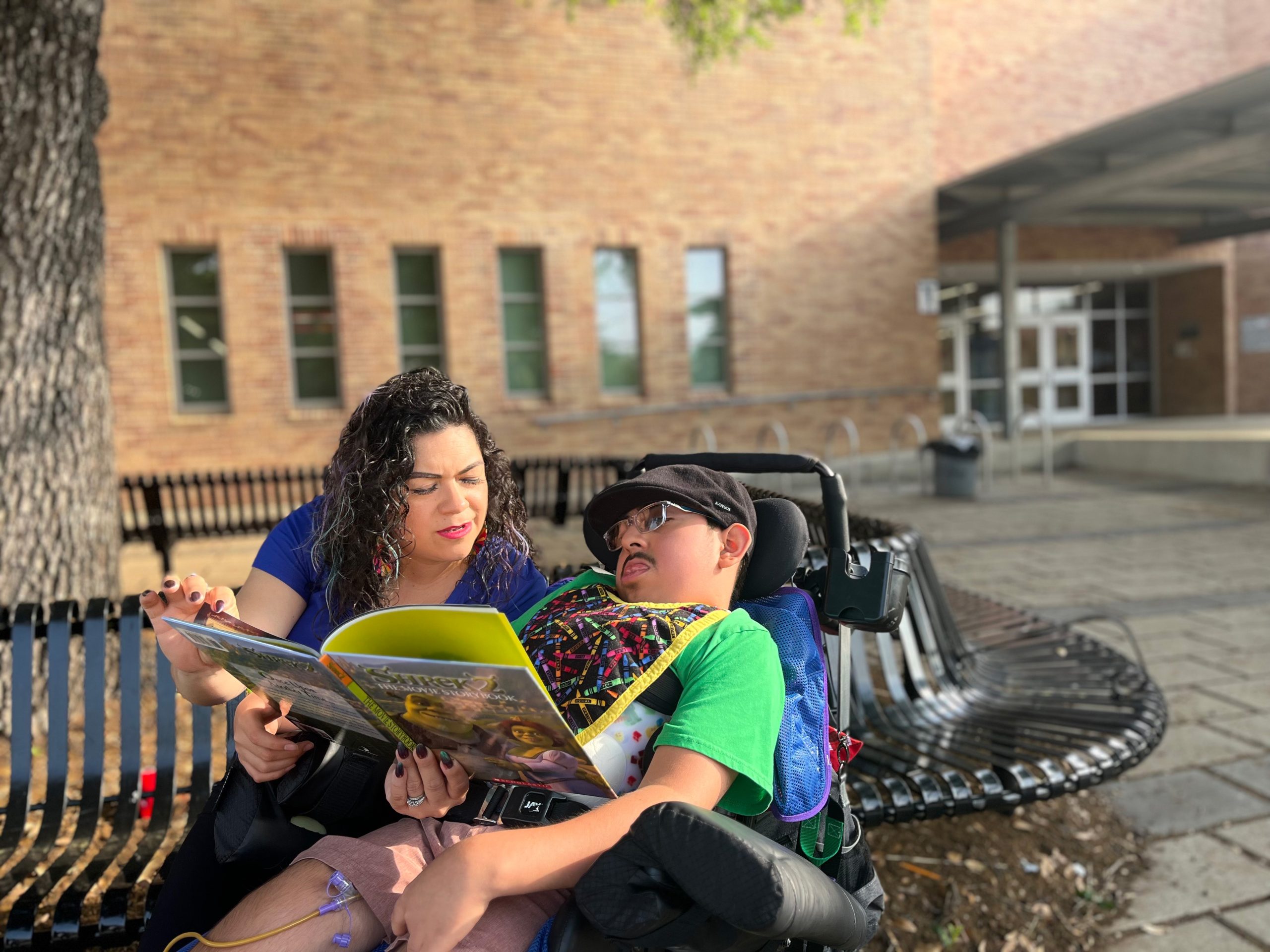
    Anthony Gallonio has spent most of his career working in higher education admissions and financial aid, watching young people select, apply to and enroll in colleges. But when his daughter Grace received a cancer diagnosis 14 years ago, when she was a year old, he realized there was an underserved group of teens who needed support in college exploration: cancer patients.

    “I remember looking at these kids coming in [to the hospital] thinking, ‘How are they doing it?’” Gallonio said. “Their lives are still going on, high school is taking place, college is still in the future. We know one missed application or one missed form or one missed deadline could mean the difference between getting into a school or not or getting tens of thousands of dollars in scholarships or not.”

    In 2011, Gallonio established the National GRACE Foundation, a nonprofit that offers free information and advice on higher education for families of young people who survived childhood cancer. The group is supported by volunteers across the country who work in higher ed, illuminating the hidden curriculum to encourage student success.

    The background: GRACE, named after Gallonio’s daughter and short for Growing, Recovering and Achieving a College Education, is designed to break down barriers to enrollment for childhood cancer survivors and support parents and caregivers navigating college applications and beyond.

    “The whole goal has been to take the stress out of the college admissions and financial aid process for families who have a lot of stress going on and try to help them avoid the mistakes that I have seen over the years,” Gallonio said.

    A 2019 study of 16,700 childhood cancer survivors found that about half graduated from college; those reporting chronic conditions were even less likely to complete a degree by age 25.

    Many pediatric cancer survivors Gallonio works with aspire to careers in helping roles, including in health care, social services or research, he said. Getting into and through college is just the first step in that journey.

    How it works: GRACE provides a range of services, including offering advice on financial aid, tracking upcoming deadlines, explaining confusing terminology or jargon, and highlighting various colleges and programs that might be a good fit for the student. A majority of the students and parents come from low- or middle-income families, and they often find the foundation through word of mouth or through partnerships with hospitals.

    “I think about our services in the way that a family might hire college consultants, but we do it all for free,” Gallonio said. “That’s the group that we’re seeing—those folks who need help but also don’t have necessarily the resources to pay for [a consultant].”

    GRACE volunteers also provide in-person and webinar events for parents and caregivers on topics like college costs and scholarships.

    Once students are enrolled, GRACE supports their persistence by working as a liaison between institutions and families. They might appeal for more financial aid, for instance, or advocate for student supports through disability services offices. “We know what [families] are going through, we know what these school are going through, we kind of speak their language,” Gallonio said.

    The organization has up to 30 volunteers at any point in the academic year, but “we are always looking for volunteers in the higher ed landscape—anywhere in the country, at any type of institution,” to provide counseling to pediatric cancer survivors, Gallonio said.

    Building better: Since launching in 2011, GRACE has assisted over 300 young people in their pursuit of a college degree, and Grace, the foundation’s namesake, is “a happy and healthy 15-year-old,” Gallonio said. Families have also secured over $3 million in scholarships through the foundation’s advocacy work.

    Olivia Falzone, a rising first-year student at the College of Charleston and cancer survivor, receives the Isabel Helen Farnum Scholarship from the National Grace Foundation.

    Anthony Gallonio/National GRACE Foundation

    Over the years, GRACE has expanded services beyond the Northeastern U.S., where Gallonio is located, to support prospective students from coast to coast. As the foundation’s reach has grown, so has its perspective on postsecondary education.

    Initially, the focus was to help cancer patients have a good shot at a competitive institution. It has since expanded to highlight the value of higher education in any capacity and offer vocational or alternative pathway support as well.

    “A lot of it has to do with breaking down that [college] can be done, that it can be affordable,” Gallonio said. “The stories that we hear about debt, about the $90,000 colleges—that’s not every college, and there are colleges in every state that a family can afford to go to.”

    Gallonio is considering changing GRACE’s acronym to “Growing, Recovering and Continuing Education,” to reflect the wider range of pathways available to young people.

    This fall, GRACE will launch a mobile application and webpage so prospective students and parents can explore colleges and universities’ disability services, careers and trades, financial aid information, and selectivity rates. The app also includes a personalized scholarship search service, allowing individuals to put in their information and receive tailored suggestions for scholarships to apply for.

    “We try to make it a one stop,” Gallonio said. “We’re not charging them for usage or anything like that. Hopefully it saves our volunteers and us time.”

    We bet your colleague would like this article, too. Send them this link to subscribe to our newsletter on Student Success.

    Source link

  • AAUP Academic Freedom Statement Needs a Refresh (opinion)

    AAUP Academic Freedom Statement Needs a Refresh (opinion)

    I am a lifetime member of the American Association of University Professors. It is an organization that has done remarkable work in defending academic freedom for people who teach in this nation’s colleges and universities.

    But as I contemplate returning to teaching this fall, I worry that the AAUP’s understanding of academic freedom is dangerously behind the times. The AAUP’s understanding of academic freedom urgently needs updating to take account of dangers that could not have been contemplated in 1940 when its statement on academic freedom was issued.

    It is time for the organization to think anew about what academic freedom means and what must be done to protect it in an era when the federal government and some state governments are seeking to curtail it. We can understand why its failure to do has been problematic by taking a look at lawsuits filed by the AAUP and its campus-based chapters at universities that have been attacked by the Trump administration.

    But before looking at those suits, let me say a bit about the 1940 statement.

    The AAUP tells the story of its “Statement of Principles on Academic Freedom and Tenure” this way: “In 1915 the Committee on Academic Freedom and Academic Tenure of the American Association of University Professors formulated a statement of principles on academic freedom and academic tenure known as the 1915 Declaration of Principles … In 1940 … representatives of the American Association of University Professors and of the Association of American Colleges agreed on a restatement of the principles. This restatement is known to the profession as the 1940 Statement of Principles on Academic Freedom and Tenure.”

    Thirty years later, the AAUP considered updating the 1940 statement but ultimately decided not to undertake a wholesale revision. Instead, it added a series of “Interpretive Comments” to the existing document. Those comments, the AAUP explains, were intended to update the document in light of “the experience gained in implementing and applying it for over thirty years and of adapting it to current needs.”

    This history reminds us that the thinking guiding that statement goes back more than a century, to a time when the modern university was just taking shape. As Yale Law School professor Robert Post notes, “The American concept of academic freedom was forged early in the 20th century. It emerged from struggles between the newly professionalizing American professoriate and the governmental, business, and parochial powers that controlled American universities.”

    And it has been more than half a century since the AAUP’s influential statement on academic freedom was refreshed at all.

    The 1940 statement imagined that the main threat to the “full freedom” in research, teaching and extramural speech would come “from institutional censorship or discipline.” The statement was, in that sense, addressed not just to teachers and scholars, but to university administrators.

    That is why if they do not follow the principles laid out in the AAUP statement, they can be subjected to censure. As the AAUP explains it, censure is reserved for institutions “that, as evidenced by a past violation … are not observing the generally recognized principles of academic freedom and tenure approved by this Association.”

    I searched the censure list, looking for the Trump administration. Alas, it was nowhere to be found.

    Not surprising, because by the AAUP’s standards, the Trump administration cannot violate academic freedom except indirectly by pressuring higher educational institutions to do so on its behalf.

    To be fair, the AAUP has not been silent about what the administration has done since Jan. 20. In February, it joined a suit seeking to prevent the Trump administration “from using federal grants and contracts as leverage to force colleges and universities to end all diversity, equity, and inclusion programs, whether federally funded or not, and from terminating any ‘equity-related’ federal grants or contracts.”

    In March, it sued the Trump administration for “unlawfully cutting off $400 million in federal funding for crucial public health research in an attempt to force Columbia University to surrender its academic independence.” As the AAUP noted, “This move represents a stunning new tactic: using cuts as a cudgel to coerce a private institution to adopt restrictive speech codes and allow government control over teaching and learning. “

    But here again, consonant with its existing approach to academic freedom, the focus was on what Columbia would do to its faculty.

    Also in March, the AAUP joined a lawsuit “seeking to block the Trump administration from carrying out large-scale arrests, detentions, and deportations of noncitizen students and faculty members who participate in pro-Palestinian protests and other protected First Amendment activities.” But note, the primary claim is about freedom of speech, not academic freedom.

    In April, the AAUP and its chapter at Harvard University sued “to block the Trump administration from demanding that Harvard University restrict speech and restructure its core operations or else face the cancellation of $8.7 billion in federal funding for the university and its affiliated hospitals.”

    Like the suit brought on behalf of Columbia University, it focused on what Harvard might do to restrict the academic freedom of those who teach and do research there.

    In one sense, this is a remarkable record for which the AAUP deserves enormous credit. But, as I pointed out in January, there are new threats to individual faculty members “to intimidate them into silence,” as Darrell M. West put it. It is time that the AAUP acknowledged them in its foundational statement on academic freedom.

    Protecting academic freedom now requires that colleges and universities not only refrain from abridging it themselves but that they take measures to protect and support members of their faculties in the face of governmental or other external threats targeting them directly. The AAUP should revise its 1940 statement to make clear that higher education institutions have an affirmative obligation to advance and protect academic freedom. Doing so would encourage recognition of academic freedom as a positive good in which the universities and their faculties have a joint interest.

    For colleges and universities, implementing that affirmative obligation requires, among other things, that they stand ready to provide legal assistance, make public statements of support and offer help in devising crisis communication strategies for faculty whose freedom in research, in teaching or in their use of academic expertise as citizens is threatened or abridged by external forces.

    That’s a big ask.

    It calls on universities to provide resources, spend reputational capital and stand behind faculty whose views administrators might not share. The university, in this new understanding, has to put itself more at risk to promote and protect academic freedom.

    Universities won’t do this easily, which is why the AAUP would play such an important role in advancing this goal. Redrafting the 1940 statement is a good place to start.

    As the history of its current statement suggests, the AAUP does not move easily or quickly to reconsider its principles. But the need is great, and the time for action is here. By meeting the challenge of the moment, the AAUP will once again demonstrate its essential role in the world of American higher education.

    Austin Sarat is the William Nelson Cromwell Professor of Jurisprudence and Political Science at Amherst College.

    Source link

  • Columbia Ends Some Teaching Roles for Grad Students

    Columbia Ends Some Teaching Roles for Grad Students

    DNY59/iStock/Getty Images

    Less than a month before the start of the semester, Ph.D. students at Columbia University in New York were told with little explanation that they would no longer be teaching this fall.

    The catalyst for this change is unclear. The university said it’s an effort to reduce the teaching load on Columbia graduate students and allow them to finish their degrees in six years rather than seven. The students said it’s a move to weaken the labor power of their union, which is in the middle of tense negotiations with the university to renew its contract, which expired June 30.

    The students, who are members of the graduate student union Student Workers of Columbia, will still be paid. However, instead of receiving a biweekly teaching stipend, they’ll get a lump sum at the start of the semester. To pay both the Ph.D.s and their replacements, “the cost to the university likely runs to millions of dollars,” estimated Michael Thaddeus, a mathematics professor at Columbia and vice president and acting president of the Columbia chapter of the American Association of University Professors. In July, Columbia agreed to a $221 million settlement with the federal government in order to restore hundreds of millions in federal research funding.

    Columbia has traditionally tapped sixth- and seventh-year graduate students to teach foundational courses and some of the undergraduate college’s Core Curriculum classes, which includes courses, like University Writing and Frontiers of Science, that all first-year students are required to take. The work is more time-consuming than a regular TA job; as the so-called instructors of record, the Ph.D. students must teach two two-hour lectures and attend a pedagogy seminar each week, on top of all of the reading and prep time that goes on behind the scenes. The workload sidelines their research and writing, a representative from SWC explained. But it offers valuable teaching experience, and Ph.D. candidates are usually guaranteed a seventh year of funding when they sign on to teach a core class.

    But this teaching expectation is unusually large for graduate students, according to Columbia officials.

    “Columbia doctoral students have typically been required to teach more than Ph.D. students at peer institutions, which often means delays in their time to degree,” a university spokesperson wrote in a statement to Inside Higher Ed. “After discussions with some departments about teaching requirements and instructional staffing, we have released some graduate students from teaching obligations for the fall—while continuing to offer them the same funding and benefits. These students will have more time to complete academic requirements or advance their dissertation research and writing.”

    Neither the students nor some faculty buy this explanation. Students say they didn’t receive any formal communication about changes to the graduate student teaching structure and that the move to dismiss or deny Ph.D.s from the teaching positions is an effort to undermine the labor power of the union, which had been planning a strike for the fall. As TAs and members of SWC, the students would still be able to participate in a work action, but it wouldn’t have as big an impact as lecturers walking out of class.

    More than 100 students are affected by this change, according to the union. Columbia officials said the figure was much lower but declined to share an exact figure and noted that the number of Ph.D. core instructors varies year to year.

    Columbia’s AAUP chapter denounced the university’s action in an Aug. 19 statement.

    “We do not agree with the claim that this step has been taken to help graduate students. Rather, it clearly has to do with the looming contract negotiations. The timing makes this clear,” said Thaddeus. “Students applied for preceptor positions back in November, and then they heard nothing at all for many months. If this were being done to help graduate students, then it would have made sense to notify them promptly.”

    The move will also damage the quality of Columbia’s doctoral and M.F.A. programs, Thaddeus argued.

    “Practical experience with setting assignments and exams, giving final grades, and so on is invaluable to those graduate students who pursue a career in teaching,” he added.

    One sixth-year Ph.D., who wished to remain anonymous to prevent retaliation from the university for speaking out, applied for a core teaching position in December. Over the next eight months, she received no communication about the position and finally received an offer for a TA position July 30. It wasn’t until Aug. 6, the day she was originally supposed to sign and return the teaching assistant appointment letter, that she heard back about the core position. She’d been rejected, the email said, and it included no explanation or information about the widespread changes to graduate teaching duties at Columbia.

    The abrupt change is “really disrupting people in the later stage of the program, like myself, who thought that this was not going to be my last year,” says the Ph.D. student. “Now I’m having to go on the academic job market basically at the last minute.”

    To fill the now-vacant teaching jobs, Columbia is recruiting for one-year lectureships and advertising the roles to adjuncts, postdocs and New York–based graduate students at other universities.

    “I wanted to share with you a posting we’ve just made for full-time lecturer positions teaching all across our Core curriculum—in Art, Music, Literature, and Contemporary Civilization—where we are expecting a larger entering class that we’d originally thought,” Columbia officials wrote in a message that was passed along to faculty at the University of Chicago and obtained by Inside Higher Ed. Columbia has also sent the position to Yale University.

    Source link

  • HHS Ends Minority Biomedical Research Support Program

    HHS Ends Minority Biomedical Research Support Program

    The Health and Human Services Department has terminated the Minority Biomedical Research Support program, which provided colleges and universities grants to increase the number of minority faculty, students and investigators conducting biomedical research.

    In a notice published Monday in the Federal Register, HHS secretary Robert F. Kennedy Jr. said the cancellation is to comply with two anti–diversity, equity and inclusion executive orders President Trump signed in January on his first two days back in office, plus the 2023 U.S. Supreme Court decision banning affirmative action in college admissions decisions. The change is effective Sept. 25.

    “The MBRS program prioritizes racial classifications in awarding federal funding,” including by relying on “‘minority student enrollment’ to determine applicant eligibility,” Kennedy wrote. And, though the Supreme Court ruling focused on university admissions, Kennedy wrote that “the principles identified in Students for Fair Admissions also apply to the federal government and require repeal of the MBRS program.”

    STAT reported the move earlier. Rochelle Newman, a University of Maryland psychologist who used the grant to pay undergraduate researchers and train them, told STAT that “cutting of these programs means that an entire generation of students will end up being lost to science.”

    Source link

  • International Students Face Visa Issues Into Fall Semester

    International Students Face Visa Issues Into Fall Semester

    This week marked the start of the semester for hundreds of colleges across the U.S. But many international students, plagued by difficulty getting visa appointments and unusually high rates of visa denials, are still unsure if they’ll be able to attend college in the U.S. this year.

    At the University of Maryland Baltimore County, a midsize public university that has a student body composed of about 15 percent international students, international Ph.D. and undergraduate students appear to be largely unaffected by visa issues. But the rate of visa issuance for master’s students is only about half what it has been in previous years, according to David Di Maria, UMBC’s vice provost for global engagement.

    Most of UMBC’s master’s students are from India, the country that now sends the most international students to the U.S.—but which experts say has had virtually no visa appointments available for the past several months.

    “I think what has impacted that population the most is that you’ve got a country where … you could probably guess, it’s the highest volume in terms of students visa applications at a time when there are fewer slots available,” Di Maria said. “Hopefully it’s a blip. Hopefully, in future terms, there won’t be an extended period where students are unable to secure visa appointments.”

    The backlog in visa appointments dates to the Trump administration’s pause on all student visa interviews in late May, after which the government began mandating social media reviews for all F-1 visa applicants. Some experts argue that the mandatory social media reviews have also extended the visa process by adding more responsibilities to the workload of consulate staff.

    Since then, experts have speculated about how significant the drop in international student enrollment will be this fall. NAFSA, the association that represents international education professionals, predicted earlier this summer that international enrollment would drop between 30 and 40 percent, resulting in $7 billion in lost revenue and 60,000 lost jobs. Experts warn that a dip that significant could have major repercussions for the economies of college towns and cities. Colleges may also have to scramble to find professors to lead low-level classes that international graduate students were slated to teach.

    Stuck In a Holding Pattern

    It’s difficult to tell if those projections are accurate. The Department of State hasn’t updated visa issuance numbers since May, at which point figures were already lower than they had been the previous year.

    But now, the picture of what this academic year might look like is beginning to take shape as institutions and experts report that significant numbers of international students are stuck in a holding pattern, unable to find visa appointments even after the semester has begun.

    “I actually joined a WhatsApp group in April … of all these Indian students who are aspiring to study in the U.S. this fall, and I [see] a lot of students saying, ‘No slots, no slots,’” said Girish Ballolla, chief executive officer of Gen Next Education, an international recruitment firm. “Basically, what they’re saying is they’re going online trying to schedule an appointment and they’re not finding any slots. Those students are, like, now talking about, ‘Oh, should I defer to spring? Should I take up my university’s offer of an online program?’”

    Other countries with severely limited appointments include China, Japan and Nigeria, according to NAFSA.

    Inside Higher Ed reached out to over 30 universities with significant international student enrollment to ask how many of their committed incoming students were unable to attend due to visa issues. Most did not respond; others declined to answer the question or said that data was not yet available.

    A handful of institutions noted that they’ve had only a small number of students impacted by delays and denials; Grinnell College, located in Iowa, has only one international student out of 72 who was unable to come to campus due to visa delays. At Mount Holyoke College, “fewer than seven” students are still waiting on their visas, a spokesman said in an email, though he said other students had deferred until the spring. It’s not unusual for a small number of students to miss the start of the semester due to visa issues, even in a regular semester.

    On the other hand, Cornell University, like UMBC, said some of its graduate students had trouble getting their visas—or were simply concerned about coming to the U.S.

    “Cornell accepted roughly the same number of international students this year as in past years and roughly the same number accepted our offer as in the past, but we have experienced some melt at the graduate level as students were worried about the visa application process or chose not to come to the U.S. because of the political climate,” Wendy Wolford, vice provost for international affairs, told Inside Higher Ed in an email.

    Grinnell, Cornell and Mount Holyoke, as well as UMBC, are among the 20 institutions with the highest proportion of international students in the U.S., according to The New York Times.

    Visa Denials Are Up, Too

    On top of having difficulty securing appointments, more students are having their visas denied, experts report.

    Sudhanshu Kaushik, the director of the North American Association of Indian Students, said that students from the subcontinent are being denied at a higher rate than he’s seen in his five years leading the organization.

    Many have been told the reason for their denial is because there’s not enough proof that they’re not attempting to immigrate to the U.S. That’s usual in some cases, Kaushik said, but it’s become common this year even among wealthier students from major cities with deep roots and connections in India.

    “A demographic that’s never had an issue is facing lots of issues,” he said. He also noted that some students are receiving denials many weeks after their visa interview, in some cases getting the news just a few days before they were hoping to start classes.

    Colleges are attempting to accommodate students facing visa delays and denials by offering them the chance to defer their admission until spring or take online classes, according to Joann Ng Hartmann, NAFSA’s senior impact officer.

    “Schools are really thinking and working very hard to be flexible, because they want these international students on campus,” she said.

    Cornell also devised what Wolford called a “global semester program” that will offer international students who couldn’t get their visas in time the option to spend their first semester at one of three international partner institutions before hopefully coming to Cornell in the fall.

    Some students are still hoping they’ll make it to campus this semester, despite not receiving visas by orientation.

    “At this point for us, the census date is Sept. 10, and that’s when we really know who’s here and who’s not,” said Di Maria of UMBC. “I do have a number of students who are still optimistic that say they would arrive later in the week, or even next week.”

    Source link