The UNC system doesn’t have a policy that specifies how syllabi are treated under open-records laws.
Photo illustration by Justin Morrison/Inside Higher Ed | Liudmila Chernetska and Davizro/iStock/Getty Images
As right-wing groups increasingly weaponize Freedom of Information Act requests to expose and dox faculty members who teach about gender, race and diversity, University of North Carolina system campuses are split over whether syllabi and other course materials should be subject to public records requests.
In July, officials at the University of North Carolina at Chapel Hill determined that the documents are not automatically subject to such requests after the Oversight Project, founded by the conservative think tank the Heritage Foundation, requested that the university hand over any course materials from more than 70 classes that contained one of 30 words or phrases, including “gender identity,” “intersectionality,” “queer” and “sexuality.” Officials ultimately denied the request, writing, “There are no existing or responsive University records subject to disclosure under the North Carolina Public Records Act. Course materials, including but not limited to exams, lectures, assignments and syllabi, are the intellectual property of the preparer.”
The requested materials are protected by copyright policies, a UNC Chapel Hill spokesperson told Inside Higher Ed. “The university has a longstanding practice of recognizing faculty’s intellectual property rights in course materials and does not reproduce these materials in response to public records requests without first asking for faculty consent,” they wrote in an email.
But an hour’s drive west, at the University of North Carolina at Greensboro, officials decided just the opposite. Professors were asked to hand over their spring 2025 syllabi in response to a Freedom of Information Act request earlier this fall, said Chuck Bolton, a professor of history at UNC Greensboro and chair of the Faculty Senate. He is among dozens of faculty members who were asked to upload their syllabi into a central database.
“The Public Records Act is inclusive in its coverage and unless there is an explicit exception, which this is not, it is covered,” UNC Greensboro spokesperson Diana Lawrence said in an email. “As a matter of public policy, transparency should take [precedence] over questions where there is doubt and we do not believe that the Federal Copyright Act provides a specific exemption or preempts what has been passed in state law.”
Which university is interpreting the law correctly? It’s hard to know, said Hugh Stevens, an attorney who specializes in public records and FOIA law and litigation at the law firm Stevens Martin Vaughn & Tadych. There is no case law specific to this question, and the answer likely depends on how different course materials—from lecture notes to syllabi to course descriptions—are defined under the law.
“It’s probably a matter of degree,” Stevens said. “Something that you post online for your class to read, it’s pretty hard to say those are not subject to [public records requests]. But on the other hand, the materials that you use to prepare to teach your class, but which are never published to anybody, are certainly, in my view, copyrightable and proprietary.”
For years, UNC Greensboro put syllabi online as part of an accreditation requirement, said Jeff Jones, a history professor and head of the institution’s American Association of University Professors chapter. After the university’s website was redesigned and accreditation procedures changed, the syllabi were no longer posted.
The UNC system doesn’t have a policy that specifies how syllabi are treated under open-records laws, leaving the decision up to individual campuses. The policy “does not discuss distribution of course materials” and “essentially covers the basic functions and procedures involved with records requests,” said UNC system spokesperson Andy Wallace.
But the system does define copyrightable works, which include coursework produced by faculty members, Wallace added.
Lawrence, the Greensboro spokesperson, did not respond to questions about whether the university’s records request was also from the Oversight Project and whether it has already provided the material. The FOIA request has not been made public, but Bolton, the history professor, believes it’s a narrower request than what UNC Chapel Hill received and that it is focused exclusively on syllabi.
The opposing interpretations of the law from two universities in the same public system have left faculty confused and worried about their safety as right-wing groups rifle through course materials for any terminology they don’t like, usually related to gender identity, sexuality or race. Faculty members at Texas A&M University, the University of Houston and George Mason University, among others, have been targeted and sometimes threatened on social media for their instruction and teaching materials. Bolton said he knows of several UNC Greensboro faculty members who have been doxed.
“Faculty have been upset and scared and freaked out about it, because there are people that seem to be [making FOIA requests] because they are trying to create gotcha moments by taking certain things out of context,” he said.
Michael Palm, an associate professor of media and technology studies and cultural studies at UNC Chapel Hill, said in an email that while many faculty are glad Chapel Hill decided not to release the requested course materials, some expressed frustration about the lack of transparency. “We were disappointed when we learned through news reports that UNC Chapel Hill’s lawyers had decided not to respond to the requests, rather than having that decision communicated to us by administrators,” he said.
Some professors are also concerned about how long and how vigorously the university will continue to protect faculty. “We are all concerned about the increasing political interference into our classrooms and attempts to quash our academic freedom,” said Erik Gellman, a history professor at Chapel Hill.
Bolton, at UNC Greensboro, has similar worries.
“This is a tough time for universities,” he said. “There are a lot of attacks coming from a lot of different directions, and that increases the anxiety and anger on behalf of the faculty, because we know that these kinds of things are not being done just because people want to find out what’s on our syllabus for intellectual reasons. They’re doing it for more nefarious reasons.”
Last week I and several colleagues visited a local technical high school to see what kind of dual-enrollment courses we could offer there. The school was leaps and bounds beyond what technical high schools were known for when I was a student: It had an impressive range of programs, new facilities, dedicated staff and some very poised students. I’d be proud to have them here.
That said, I couldn’t help but notice a pattern that hasn’t changed over the decades: gender segregation by field remains robust.
The electronics lab and the computer gaming lab were full of young men. The allied health area was almost entirely young women. When I asked the admins there whether that was typical of what they’ve seen, they responded that it was.
This week I dropped by a continuing-education conference that the college hosts for dental hygienists. I noticed that the attendees were nearly all women. A woman who runs a complementary program and was in attendance told me that over 98 percent of the dental hygienists in our state are women. Strikingly, she noted that the few men in the field have a terrible time getting hired; dentists are afraid that patients will mistake male hygienists for dentists.
This, in 2025.
In each case, the organizers were fully aware of the gender split. They certainly didn’t encourage it and, in some cases, tried actively to counter it. That has been true for years. Yet the patterns persist; if anything, they seem to be strengthening in certain occupational areas.
It’s not news that women have been graduating college at higher rates than men for several decades now. But if you looked only at HVAC and cybersecurity programs, you wouldn’t know it. Conversely, if you looked only at allied health programs, you’d wonder how the percentage of men even hits double digits. The disjuncture between greater integration in certain professional fields and markedly persistent segregation in others is striking.
Honestly, if you had asked me 30 years ago, I would have expected to see much more integration by now. Maybe not parity, but something far closer to it than what we have now. And the fact that the patterns exist among current high school students suggests that it isn’t just a matter of one generation slowly replacing another.
My own bias is that, generally speaking, more integration is better. That means more women in welding and more men in nursing. That’s because defaulting to individual choice as an explanation doesn’t take account of the conditions in which those choices are made. Whether your preferred metaphor is critical mass or a tipping point, there’s often a threshold of representation beneath which folks who might otherwise have wanted to be there will feel unwelcome. That threshold is usually well below absolute parity, but above being the “only.”
Having enough people like you—however defined—in the field can make the option seem more welcoming.
So, no, I don’t believe in trying to engineer absolute parity in all things. People have free will, and an occupational draft isn’t likely to lead anywhere good. But surely we can make headway toward making more choices more welcoming for more types of people. We know that having too much sameness in a group leads to groupthink and that groups with multiple perspectives tend to make better decisions. The same can be said of professions. I didn’t think we’d still be making those points in 2025, but here we are.
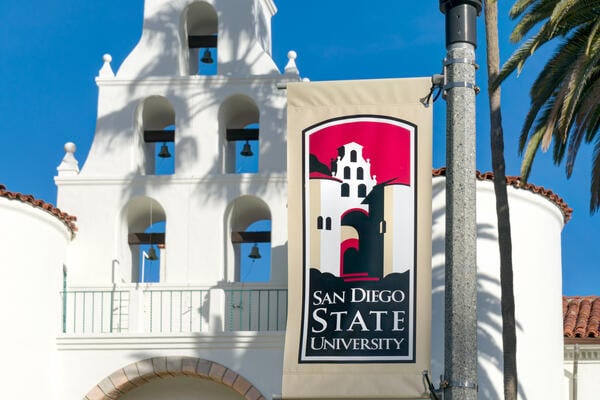
While generative artificial intelligence tools have proliferated in education and workplace settings, not all tools are free or accessible to students and staff, which can create equity gaps regarding who is able to participate and learn new skills. To address this gap, San Diego State University leaders created an equitable AI alliance in partnership with the University of California, San Diego, and the San Diego Community College District. Together, the institutions work to address affordability and accessibility concerns for AI solutions, as well as share best practices, resources and expertise.
In the latest episode of Voices of Student Success, host Ashley Mowreader speaks with James Frazee, San Diego State University’s chief information officer, about the alliance and SDSU’s approach to teaching AI skills to students.
An edited version of the podcast appears below.
Q: Can you give us the high-level overview: What is the Equitable AI Alliance? What does it mean to be equitable in AI spaces?
James Frazee, chief information officer at San Diego State University
A: Our goal is simple but ambitious: to make AI literacy and access available as opportunities to all of our students, and I mean every student, whether they started at a community college, a California State University like ours or at a University of California school. We want to make sure they all have that same foundation to understand and apply AI responsibly in their lives, in their careers and during their academic journey.
Through this alliance, we’re trying to align resources and expand access to institutionally supported AI tools. So when people are using the free tools, they’re not free, right? They’re paying for them with their privacy, with their intellectual property. We want to make sure that they have access, not only to the training they need to use these tools responsibly, but also to the high-quality tools that are more accurate and that have commercial data protection so that they can rest assured that their intellectual property isn’t being used to train the underlying large language models.
Q: The alliance strives to work across institutions, which is atypical in many cases in higher ed. Can you talk about that partnership and why this is important for your students?
A: The Equitable AI Alliance emerged from survey results. We have this listening infrastructure we’ve created here at San Diego State—we launched an AI survey in 2023, within months of ChatGPT going public. We really wanted to establish a baseline and determine what tools our students were using, what opinions did they have about AI and maybe, most importantly, what did they expect from us institutionally in order to help them meet the moment?
During the analysis of those survey findings, we discovered evidence of a growing digital divide. For instance, we asked students about how many devices they had. If you have a smartphone, a tablet, a desktop and a laptop, you would have four smart devices.
What we found was more devices led to people being more likely to say that AI had positively affected their education, and more devices meant that they were more likely to be paying for the paid versions of these tools. We also saw in the open-ended responses … people being concerned about fee increases as a result of AI, people being concerned about students who didn’t have access to these tools or fluency with these tools being disadvantaged.
People were saying, “The people who are using these have an unfair advantage,” right? Students were asking questions about, is everybody going to be able to afford what they need in order to keep up with AI? So that really was a key driver in forming this alliance.
Q: When it comes to consolidating those resources or making sure that students have access, what does that look like? And how do you all share?
A: The Equitable AI Alliance is really two things. First, it’s a consortium that’s all about saving time and saving money and having universities and colleges come together to really look at ways to form these partnerships to democratize access to these high-quality tools. And also to provide the training that people need. So that’s kind of the first part of it, and that’s much larger than the regional consortium.
But we have a regional consortium between our San Diego Community College District, San Diego State University and the University of California at San Diego, which is also dubbed the Equitable AI Alliance. And the mission there is to ensure that every student, no matter where they begin their journey, has access to AI literacy, to those high-quality tools and opportunities to leverage those to help them succeed, both inside and outside of the classroom.
It’s really, ultimately about responding to the workforce needs that we’re seeing. Employers today are demanding students come to them with fluency using these tools, and if they don’t have that fluency, they’re not going to get that internship or that job interview. So it’s really important. That’s where those microcredentials that we’re sharing across our institutions are really powerful, because they can put that badge on their LinkedIn profile, which may make the difference between them getting the interview or not, just having that little artifact there that demonstrates that they have some skills and knowledge can really make an impact.
Q: What is the microcredential? How are students engaging with that?
A: The microcredentials themselves are really powerful because they’re basically mini courses in our learning management system. We try and make them bite-size enough to where people actually get through them.
There are five modules. The first module is really kind of demystifying AI—this is not some dark art. We try to explain, at a high level, how does AI work?
The second module, which is arguably the most important one, is all about responsible use. The fact that these models are built on information from human beings, which is inherently biased. How to be critical consumers of that information, the environmental costs, the human costs, talking about how to cite the use of these tools in your work, both academically and professionally.
Then there’s a module on what AI can do for you. And so we have different microcredentials, a microcredential for faculty, there’s microcredentials for students. For instance, in the microcredential for students, it’s focusing on using AI to find jobs, prepare for jobs, tailor your résumé for a particular job or internship, how to do role-playing—to practice for an interview, let’s say.
And then there’s finding apps, finding generative AI tools, how to do that, because there’s different AI tools you might want to use for certain things, like maybe you want to create some sort of graphic—you might want to use Midjourney or DALL-E, or whatever it might be.
And then there’s the activities. Part of the idea with the activities, which they have to do in order to earn the badge, is that we’re designing activities that try and keep the microcredential evergreen. So for instance, when we first rolled out the microcredential, nobody had heard of DeepSeek, because it didn’t exist. So now we have an activity that has people going out and looking for the latest large language models that are emerging. Every day, there’s some new model, it seems—that is something to be aware of.
And then bringing it back to again, why it’s important for them to be able to be in the loop, pointing out the fact that these models are often very sycophantic, right? They want to tell you what they think you want to hear. And so you really have to go back and forth and ideate with the tools, which requires a little practice, a little coaching, and you have to fact-check everything. And so that’s a really big part of this idea of, what does it mean to be literate when it comes to using these tools?
Q: When it came to developing the microcredential, who were the stakeholders at the table?
A: We have a long history of engaging with faculty and providing fellowships to faculty. That’s a way for us to incentivize engagement with faculty.
That manifests itself in the form of course release. So, in other words, we provide them with reassigned time, buy them out of teaching a course, so that they can come and work with us and consult with us. We have a long history of doing that, and this goes back decades, first helping us with faculty development around moving courses online.
We wanted that to be done by faculty for faculty. Yes, we have instructional designers who are staff, but we really wanted the faculty to be driving that. We identified in 2023 our first AI faculty fellows, and we got a faculty member from information systems and a faculty member from anthropology—very different in terms of their skill sets and their orientation to research. One a qualitative ethnographic researcher, another more of a quantitative machine learning focus. Very complementary in terms of just balancing each other out.
Twenty twenty-three was the first time we had ever provided fellowships to students. We provided fellowships to two students. One was an engineering student and another was an Africana studies student. Again, very different in terms of the academic domain and the discipline they were in, but again, very balanced.
So those two AI student fellows and the two AI faculty fellows helped us design the survey instrument, get the IRB [institutional review board] approvals, launch the survey, promote the survey. I really want to give credit where credit is due: We got an incredible response rate. We’re lucky if we usually get like a 3 percent response rate from a student survey. We got a 21 percent response rate in 2023; 7,811 students responded to that survey.
The credit for that goes to Associated Students, our student government. The president of Associated Students that year ran on a platform of getting students high-paying jobs, and he knew for students to get high-paying jobs, they needed to be conversant with AI. So he helped us promote that survey, and the whole campaign was around “your voice matters.” So thanks to his help and the help of these AI student fellows, we got this incredible response from our students.
So anyway, the students and the faculty fellows helped us analyze those results and then use that data to build these microcredentials. So very much involving faculty and students and our University Senate, our library. I mean, the library knows a thing or two about information literacy, right? They absolutely have to be at the table. Our Center for Teaching and Learning, which is responsible for providing faculty with professional development on campus, they were also very involved from the very outset, so very much of a collaborative effort.
Q: I wanted to ask about culture and creating a campus culture that embraces AI. How are you all thinking about engaging stakeholders in these hard conversations and bringing different disciplines to the playing field?
A: I think it’s really important. That’s what the data has done for us. It’s really created space for these conversations, because faculty will respond to evidence. If you have data that is from their students, who they care about deeply, that creates space for these conversations.
For instance, one of the things that emerged from the survey findings was inconsistency. In the same course, maybe taught by different instructors, there would be different expectations and policies with regard to AI.
In multiple sections of Psychology 101—and that’s not a real example, I’m just using that as a fictitious example—one instructor might completely forbid the use of AI and another one might require it, and that’s stressful for students because they didn’t know what to expect.
In fact, one of the comments that really resonated with me from the survey was, and this is a verbatim quote, “Just tell us what you expect and be clear about it.” Students were getting mixed messages.
So that led to conversations with our University Senate about the need to be clear with our students. I’m happy to report, just this past May, our University Senate unanimously passed a policy that requires an AI … statement in every syllabus. That was an important step in the right direction.
The University Senate also created guidelines for the use of generative AI in assessments and deliverables. You know, it’s important that you not be prescriptive with your faculty. You need to provide them with lots of examples of language that they can use or tweak, because they own the curriculum, and knowing that you don’t have to take a one-size-fits-all approach.
Maybe one assignment, it’s restricted; in another assignment, it’s unrestricted, right? You can do that. And they’re like, “Oh yeah, I can do that.” Giving them examples of language they can use, and also encouraging them to use this as an opportunity to have a conversation with their students.
The students want more direction on how to use these tools appropriately. And I think if you race to a policy that’s all about academic misconduct, it’s frankly insulting to the students, to just assume everybody’s cheating, and then when they leave here and go into their place of business, they’re going to be expected to use these tools. So, really powerful conversations.
That’s been key here—just talking about [AI]. I mean, it’s this seismic kind of epistemic shift for our faculty and how knowledge is created, how we acquire knowledge, how we represent knowledge, how we assess knowledge. It’s a stressful time for our faculty—they need to be able to process that with other faculty, and that’s super important.
Q: It’s also important that you’re having that conversation collegewide, because if this is a career competency and students do need AI skills, it needs to happen in every classroom, or at least be addressed in every classroom.
A: That’s a really good point, Ashley. In fact, we’re launching a program this year that we’re calling the AI-ready course design workshop, and the idea for that is that we’re identifying a faculty member from every major and we are paying them—and this is super important, too: It’s really a sign of respect, in terms of acknowledging the labor required to reimagine an assignment, to weave AI into the fabric of that assignment.
The goal is to have a faculty member from every major who teaches a required course in that major at least two times. We want to make sure that they have an opportunity to do this and then refine it and do it again. They’re being paid over break this winter to reimagine an assignment that leverages AI, and it is a deliverable. They will produce a three- to five-minute introspective video where they reflect on what they did, why they did it and what were the learning outcomes, both for them and for their students.
That is great because we will have an example from every major of how you can use AI in the fabric of your teaching. And I think that’s what faculty need right now. Again, they need lots of examples, and we’re incentivizing that through this program. We already have something we call the “AI in action” video series, so we already have some examples, but we don’t have examples from every major.
For us right now, I think you’re seeing a lot of engagement from faculty in engineering and sciences. We’re concerned that our humanities faculty need to engage; we need to engage the political scientists. We need to engage the philosophers and the historians. They can’t just sit this out. They’re really going to be key players in moving this forward, to prepare our students, regardless of major, for this AI-augmented world that we’re living in.
Q: What are some of the lessons that you’ve learned that you hope higher education can learn from? How do you all hope to be a model to your peers across the sector?
A: I think key is the importance of data and using data to inform the choices you’re making, whether it’s in the classroom, whether it’s in the cabinet. I report to the president, and using data to really drive those conversations, and using that to make sure that you’re engaging all of those stakeholders.
For instance, we’re looking at the survey data. That survey that we did in 2023 and repeated in 2024, we’ve now scaled up to the entire California State University system, and that is underway right now. In fact, I was just looking at the latest response rates. We have had, as of this morning, 77,714 people responding to the survey … which is about a 15 percent response rate. We’ve got half a million students in the CSU, so it’s a big number.
I was looking at [the data] with the council of vice presidents and my colleague … the provost, and I said, “When you look at the numbers for San Diego State, we’ve had 10,682 responses from students. We’ve had 406 responses from faculty and 556 responses from staff. But relative to the students, the response rate from faculty is pretty low.” So I talked with [the provost] about sending a message out to our academic leaders—the deans and the department chairs and the school directors—encouraging their faculty to respond to the survey, so that we have a balanced perspective.
Everybody has a voice. That is certainly something that I want to encourage; this whole idea of incentivizing faculty engagement, I think, is important. I think you really need to provide that encouragement for faculty to experiment, to show off, and then to really use that as an opportunity to recognize those faculty and celebrate them. That does a couple things. One, it honors them for taking the risk to do this work. Then it might inspire another faculty [member] to build on that work, or have coffee with that person and talk about what they wish they would have known that they could advise this person on who maybe is early career and would appreciate their advice. I think that idea of incentivizing faculty engagement is another thing that I would encourage the audience to consider.
Q: What’s next for you all? Are there other cool interventions or programs that are coming out?
A: That survey data is going to do quite a few things for us. It’s going to help us to not only refine the microcredentials and the work we’re doing with the microcredentials, but it’s also going to allow us to scaffold conversations with industry and our industry partners in terms of being responsive to the competencies they’re going to need in their industry.
I think it’s something like 35 out of the top 50 AI companies are housed here in California, but they can’t find the talent they need in California, let alone the United States, so they’re having to go abroad to get the people they need to continue to innovate. So using this as an opportunity to work with our industry partners to make sure we’re preparing this workforce that they need to continue to innovate, that’s a key element of it, and then using this data also to help us get additional resources and use that data to say, “Hey, here’s a gap we’ve identified. We need to fill this gap,” and using that data to make the case for that investment.
This speech was delivered by HEPI Director Nick Hillman at the University of Cardiff on Thursday, 16 October 2025.
Introduction
The other day, I was speaking to the University of Liverpool Council at the Ness Botanic Gardens on the Wirral, which as you know is four hours due north of here, pretty much on the Welsh / English border. I started my speech there by noting that I only exist because of the University of Liverpool, as my maternal grandparents met there in the early 1930s. Well, I also only exist because of the Welsh university system, as my parents met while they were students here in Wales in the early 1960s, just as my own children only exist because I met my wife in the early 1990s at university.
The fact that three generations of my family originally met while at university is a powerful reminder, at least to me, that higher education change lives. And at HEPI, we had another powerful reminder of that during our first event of this academic year, when – last month – we hosted the UK launch of the OECD’s Education at a Glance publication.
Education at a Glance
In case you have not come across it before, this is the most useful but worst titled publication on education that appears anywhere in the world each year. It is a vast 541-page compendium of comparative data that you need to pore over rather than glance at.
This year’s OECD report had a particular focus on tertiary education. While we have become used to people beating up on the UK higher education sector, the OECD actually painted a picture of a very successful sector playing to its strengths. When you look in from the outside, it seems the UK’s higher education institutions are not so bad after all.
For example, the OECD showed that, among the many developed countries covered in their report, the UK has:
higher than average participation in higher education;
lower than average graduate unemployment, irrespective of whether the individuals studied STEM, business or humanities; and
among the very highest undergraduate completion rates anywhere in the world, vying with Ireland for the top spot.
I recognise the OECD is looking at averages for the UK as a whole and the position of Wales is not necessarily the same but, in general, the weaknesses the OECD found in were on the lack of good opportunities for people who do not succeed in education first time around.
Specifically, the OECD found a profound problem among young men, a rising proportion of whom are classified as NEETs (Not in Employment, Education or Training). While the OECD use historic data for a year or two past, last week’s brand new NEET data for Wales confirms the depressing picture. Indeed, it was even more salutary, noting:
The proportion of young people aged 16 to 24 in Wales who were not in employment, education or training (NEET) was 15.1% in the year ending June 2025, an increase of 3.6 percentage points over the year.
The OECD additionally found that the UK has the biggest gap of all developed countries when it comes to the difference in earnings between low-skilled adults and those who leave school with A-Levels (or equivalent). This should perhaps worry Wales even more than the rest of the UK, given that Wales scores the worst for schoolchildren’s academic performance for any part of the UK. Indeed, Wales is the only part of the UK to perform worse than the OECD average in all three areas of Mathematics, Reading and Science.
When it comes to funding of higher education, the OECD found the UK spends more than most other countries … but the shift to loan-based finance means direct government spending on each student in higher education is only half the OECD average and only half the amount spent ‘at primary to post-secondary non-tertiary levels’ ($13,000). Of course, the UK’s figures are distorted by England’s numbers because England is much larger than the other parts of the UK and has moved towards loans to a greater degree than Scotland, Wales or Northern Ireland. That is one reason why we have worked with London Economics and the Nuffield Foundation to look at the picture in each part of the UK separately.
There are three profound differences. First, the Exchequer cost is lowest in England, which also has the highest per-student income for institutions. Scotland is at the other end of the scale, with the largest Exchequer cost but the lowest unit-of-resource for institutions. Wales is, as you may expect, somewhere in the middle, with an Exchequer cost and a per-student income for institutions that lies between those in England and Scotland.
There is a similar picture when we look – secondly – at the balance of who is paying the costs of higher education. In England, it is mainly former students via the loan system; in Scotland, it is entirely taxpayers (and then some). In Wales there is a more even split approaching 50:50 between the Exchequer and graduates, arguably reflecting the public and private benefits of higher education more accurately. There are probably lessons from Wales for the rest of the UK here, though seemingly not for Kemi Badenoch, who complained at the Conservative Party Conference last week that higher education in England still costs taxpayers too much.
The third big difference is on student maintenance, where the system in Wales is more generous and more logical than those elsewhere in the UK. Each student gets more and the non-repayable grants are more generous in Wales than elsewhere – all undergraduates have at least a small grant whereas no one currently gets a grant in England, where grants were abolished in 2016. (Ministers promised the return of grants in England at the Labour Conference a fortnight ago, but only for some students on some courses, meaning it is likely to prove a mouse of an intervention and a very complicated one at that. It is certainly set to be nothing like the Welsh system.)
Many people I know are fans of the system in Wales for the way that it tries to strike a balance. However, while there are certainly far worse systems even within the rest of the UK, I personally think the benefits of the Welsh system are sometimes oversold. For example, I think the structure of student support in Wales is excessively generous to students who come from wealthy households. In other words, it is not means tested enough, perhaps explaining the need for the recent cuts to postgraduate support.
I have held this view consistently since the current Welsh funding system was introduced on the back of the Diamond review in 2018, but it has got me in trouble. After my concerns reached the front page of the Western Mail, I got not only an official rebuke from the Welsh Government but HEPI also received a formal complaint that came jointly from Universities Wales and NUS Wales. Rather than persuading me to change my view, I must admit this mainly had the effect of making me wonder if higher education debates in Wales are sometimes a little too cosy and stifled.
Boys, Boys, Boys
One other area where the OECD painted a less positive picture is on the differential educational performance of young men and young women. Women are more likely to obtain tertiary education across the developed world but the gap between men and women is bigger in the UK than elsewhere and has been growing while it has stayed the same on average across the OECD as a whole. According to the OECD:
In the United Kingdom, they [women] accounted for 56% of first-time entrants in 2023, up from 55% in 2013. Across the OECD, women make up 54% of new entrants on average, the same share as in 2013.
This is a convenient segue into some more of HEPI’s recent output because we have long worried about the educational performance of boys and young men and have published a number of papers on the topic over the years, with the most recent one appearing in March 2025. As Mary Curnock Cook wrote in the Foreword:
Something has surely gone wrong with education if boys – in aggregate at least – do worse than girls at all stages of education from early years to higher education and beyond.
Overall, out of every 100 female school leavers, 54 proceed to higher education by the age of 19; out of every 100 male school leavers, just 40 do so.
Again, the problems are worse in Wales than elsewhere. Over half of Inner London school leavers eligible for Free School Meals reach higher education by the age of 19; it is hard to get directly comparable figures for Wales but it seems the numbers are less than half as much for FSM Welsh-domiciled school leavers. Overall, while the gap in school leavers’ entry rates to higher education between men and women is dire in England, it is even worse in Wales. In fact, the proportion of young men who make it to higher education in Wales is lower than in every other part of the UK. It has been a known problem for at least 20 years yet for whatever reason, and perhaps because of misplaced fears of seeming politically incorrect, it has not been addressed.
Yet if male educational underachievement is not tackled, it seems certain that we will store up further societal problems for the future – including having more under-educated men veering towards the political extremes. Here, I note in passing the high polling of Reform for next year’s Senedd election. It is not rocket science to solve the boy problem, however, to take just one example, some schools following a ‘boy positive’ approach have managed to equalise their results for boys and girls and there is some great work underway in our own sector – for example, at Ulster University and the Arts University Bournemouth.
What remains completely absent, however, is any concerted interest at a national and ministerial level – certainly at Westminster and as far as I can tell in the Senedd too. People who did not want to take the Black Lives Matter protests seriously a few years ago sought to deflect attention from them by saying ‘All Lives Matter’, as if that was ever in doubt. Similarly, when Ministers wish to deflect attention from the crisis in boys’ education they like to respond by saying things like ‘Opportunity should be available to all’, which is true but it papers over the specific challenges faced by young men.
Our work on male underachievement sits alongside our work on the disadvantages faced by women, such as our reports on the substantial gender pay gap that remains in higher education as well as our other work on the overall gender pay gap among graduates. It also sits alongside a new HEPI report published just three months ago on the impact of menstruation on undergraduates’ attendance, academic engagement and wellbeing.
This revealed 70% of female students report being unable to concentrate on their studies or assessments due to period pain and that female students miss an average of 10 study days per academic year due to menstrual symptoms. It also suggested that just 15% of universities have a specific menstruation policy and, for those that do, the policy relates solely to staff rather than students.
So as I hope you can sense, the topics that tend to work best for HEPI are issues – like boys’ underperformance and the impact of menstruation on learning – that we should be speaking about more than we have done. Another area where that is true is public perceptions of higher education.
Misperceptions
A year ago, I had a drink with a neighbour who has a background in banking and two graduate children, meaning – in theory at least – that he knows the value of money and the value of education. However, when it came to universities, he expressed some typical rhetoric about them being too numerous, too big, too expensive and so on.
I responded by telling him I was on the Board at the University of Manchester and asking him to guess that institution’s financial turnover. His reply was £30 million – which is between 40 and 50 times smaller than the actual number of c.£1.3 billion (and over 20 times smaller than Cardiff’s turnover). Once my hangover had subsided, I contacted Bobby Duffy of the King’s College Policy Institute, who is the UK’s greatest expert on misperceptions – that is, the difference between what is true and what we tend to believe is true. This led over a process of many months to a new research project on what the public think about higher education, which we and King’s College launched the results of last month.
The findings are worth poring over in detail and we have brought hard copies of the work along for each you. Sone of the results particularly stand out.
For example, we gave people a list of seven institutions: Manchester City, Manchester United, the University of Manchester, the University of Oxford, the Daily Mail, MoneySupermarket.com and Greggs bakery.
When the public were asked about the relative financial size of these seven, the University of Oxford came fifth and the University of Manchester seventh, at the very bottom. More than half of respondents said they thought either Manchester City or Manchester United was the biggest in terms of their financial size; only 6% chose the right answer, the University of Oxford. The University of Manchester should be third in that list of seven by the way because, while it easily beats City and United in terms of its financial size, you might be surprised to know that Greggs has a turnover of £2 billion.
Similarly, when we gave the public a list of five big industries – legal services, accountancy services, aircraft manufacturing, telecommunications and higher education – and asked them to say which is least important in terms of export revenues, higher education was the most popular option. That result could not be any more wrong because higher education actually brings in much more export income than each of the others.
Let me share three other fascinating data points from the survey with you too:
people greatly overestimate the level of graduate regret about going to higher education – on average, the public guess 40% of graduates would opt not to go to university if they had their again, when the actual proportion of graduates who say this is only 8%;
on average, the public guess half (49%) of graduates say their university debt has negatively impacted their lives – in reality only 16% of graduates feel this way; and
a majority of people, including a majority of Reform voters at the 2024 general election, have positive feelings about universities.
Oversight and regulation
Over the past decade, the oversight of tertiary education and research has been transformed in England, though not necessarily for the better. When I worked as a Special Adviser in Whitehall a dozen years ago, there was one Minister for Universities and Science who sat in one Government Department and who had oversight of one regulator that oversaw both teaching and research (known as the Higher Education Funding Council for England). But in recent years we have had different regulators, different Ministers and different Departments for the teaching and research functions of universities, meaning coordinated oversight has been missing.
Moreover, while the Westminster Government has promised more ‘clarity and coherence’, the latest Machinery of Government changes have made the current situation even more of a dog’s dinner. The Minister for Skills, who has responsibility for higher education, now has one foot in the Department for Education and another in the Department for Work and Pensions, which has just taken on the responsibility for ‘skills’, while the Minister for Science has one foot in the Department for Science, Innovation and Technology and another in the Department for Energy Security and Net Zero. Split ministerial posts tend to be a recipe for chaos, as I saw close up during my own time in Whitehall.
So while I know that the new Medr (the Commission for Tertiary Education and Research) here in Wales has had some teething challenges, on paper it makes a lot more sense than what England has. At one point, it was thought England’s long-awaited post-16 skills white paper was likely to be heavily influenced by Wales; given the latest reshuffle and associated changes, that now – perhaps regrettably – seems less likely.
International students
Finally, I want to end by touching on the issue of international students. The majority of the really big projects HEPI has undertaken over the past few years have focused on international students. Perhaps that is not surprising, given the OECD data I started with, which shows that, while there is one international student for every thirteen home students across the OECD as a whole, the ratio in the UK is completely different at 1:3.
That helps to explain why we have calculated (more than once) the net economic benefits of international students to the UK. The latest iteration found a gross benefit of £41.9 billion for just one incoming cohort of students and a net benefit (after taking account of the impact on public services and so on) of £37.4 billion. We split up this total to reveal a number for each one of the 650 parliamentary constituencies across the UK, including Cardiff South and Penarth, which is the top-performing constituency in Wales and one where international students contribute significantly over £300 million a year.
We have separately calculated the positive tax contributions of those former international students who stay in the UK to work after completing their studies, undertaken detailed studies on the Graduate Route visa and looked specifically at the experience of Chinese students in the UK. In addition, we produce each year a Soft-Power Index that looks at how many very senior world leaders have been educated to a higher level outside of their own home country. If they return home with fond memories of their time in the UK and a better understanding of our country, then this tends to bring real benefits. We will be launching the results for 2025 next week but last year’s Soft-Power Index, which is regularly quoted by Ministers, showed that, across the globe’s 195 countries, there were 58 serving world leaders who received some higher education in the UK, second only to the US.
I am going to stop here because I started the speech on a positive – on the way higher education changes lives for the better. And despite all the numerous political, financial and geopolitical challenges facing higher education across the UK, the continuing immense soft-power benefits delivered by UK higher education institutions is another area where there is a huge amount of which we can be proud.
We looked a few weeks ago at Philip Stott College; this week we’ll go to the Bonar Law Memorial College, its rival and successor, and see what happened there.
Earlier in my career, when I worked at what is now City St George’s, I was obliged to visit Ashridge in my official capacity. A magnificent stone building, with wonderful medieval fireplaces and mullioned windows; the childhood home of Elizabeth I, rich in history.
Except, of course, that Ashridge House was built in the early nineteenth century. All of that history took place at Ashridge Priory, which stood on the same site but was demolished in 1803. And Ashridge House is now grade I listed, with its grounds grade 2 listed. It’s a fake, but it’s a glorious fake.
It was built under the auspices of John Egerton, 7th Earl of Bridgewater. He was a descendent of Thomas Egerton, Lord Keeper of the Great Seal and Lord Chancellor of Elizabeth I and James VI and I, and also of Francis Egerton, 3rd Duke of Bridgewater and a canal magnate. And when complete it eventually passed into the Brownlow family, who in 1921 sold the house and the grounds to the National Trust.
It was bought by Urban H Broughton. Broughton was a civil engineer, who in 1884 went to the USA to promote a hydro-pneumatic sewerage system. He clearly did well there, promoting the system at the 1893 World Fair in Chicago, and in 1895 being hired by oil tycoon Henry Rogers to instal the system in his home community. And there he met Cara Leland Duff, Rogers’ widowed daughter. Sparks flew; they married. And, years later, he returned to Britain with his family, a rich man. He became a personage in society, a Conservative MP, and he was just about to be ennobled when he died.
Before he did this, however, he gave Ashridge House to the Conservative Party to be used as a staff college.
And so the Bonar Law Memorial College was born. Its original trustees were a roll-call of the Conservative party’s great and good: Stanley Baldwin MP, John Colin Campbell Davidson MP, Baron Fairhaven, John William Beaumont Pease, Viscount Hailsham, Neville Chamberlain MP, Viscount Astor, Col. John Buchan (he of The Thirty-Nine Steps), Viscountess Bridgeman, and Lady Greenwood, amongst others. The Leader and Chaiman [sic] of the Conservative and Unionist Party were trustees ex officio. It was named for Andrew Bonar Law, Prime Minister from 1922 to 1923.
The Bonar Law Memorial College opened in 1929; it became known as a college of citizenship. During WW2 it was used as a field hospital. And it seems that its time as a Conservative college was not without tensions between the Conservative party and the college. Which is probably inevitable: the periodicity of vicissitudes in politics is, I claim, shorter than the periodicity of change in ideas and curricula.
By 1954 the political nature of the college was coming to an end. By an Act of Parliament – the Ashridge (Bonar Law Memorial) Trust Act 1954 – the college became non-partisan, and known as the Ashridge Management College. It seems that the charitable aims were focused on the UK and the Commonwealth, meaning that the Ashridge (Bonar Law Memorial) Trust Act 1983 was necessary to enable the college to recruit students from countries outside the Commonwealth.
In the 1990s Ashridge was validated by City University – which was how I got to go there – but then gained its own degree awarding powers. And rightly so. In 2015 it became part of Hult International Business School and now hosts executive education.
The card is undated and unposted but judging by the cars parks out front I would guess stems from the 1950s, after it had become Ashridge. Here’s a jigsaw of the card – it’s a really tricky one this week!
First Amendment advocates are condemning Indiana University’s decision this week to suspend print publication of the Indiana Daily Student, a move that comes after administrators fired its adviser for allegedly rejecting demands to censor the student newspaper.
The Foundation for Individual Rights and Expression called the decision “outrageous,” while officials at the Student Press Law Center cast the move as a classic case of censorship. Editors at the newspaper say they want to work with the university to address the issue but pledged “to resist as long as the university disregards the law.”
“Any other means than court would be preferred,” wrote IDS editors Mia Hilowitz and Andrew Miller in an op-ed Wednesday.
The decision is the latest flare-up between student journalists and institutions. Earlier this year, Purdue University ended its partnership with the student paper, citing “institutional neutrality.” The move also echoes Texas A&M University’s unilateral decision in 2022 to end its student newspaper’s print edition.
The IDS editors first brought attention to the firing of Director of Student Media Jim Rodenbush in a Tuesday op-ed. They accused IU of ousting Rodenbush after he refused to follow directions from administrators to censor a homecoming edition of the newspaper. Administrators reportedly told Rodenbush the newspaper was only to contain information about homecoming and “no traditional front page news coverage.” But when he resisted, and editors at the Indiana Daily Student pressed Media School administrators for clarity, Rodenbush was fired.
A termination letter shared with Inside Higher Ed and signed by Media School dean David Tolchinsky accused Rodenbush of a “lack of leadership” and inability “to work in alignment with the University’s direction for the Student Media Plan,” which he called “unacceptable.” Tolchinsky added that Rodenbush “will not be eligible for rehire at Indiana University.”
The termination letter sent to Jim Rodenbush.
After Rodenbush was ousted, administrators canceled publication of the newspaper, citing a plan adopted last year that outlined a shift for the student newspaper from print to digital platforms.
“In support of the Action Plan, the campus has decided to make this shift effective this week, aligning IU with industry trends and offering experiential opportunities more consistent with digital-first media careers of the future,” Tolchinsky wrote in an email to student editors obtained by Inside Higher Ed.
Indiana administrators deny that the university censored the paper, despite telling the student publication not to publish news. IU officials say that the newspaper retains full editorial control.
Accelerating a Shift
In a statement shared with Inside Higher Ed and attributed only to an IU spokesperson, officials wrote, “Indiana University Bloomington is committed to a vibrant and independent student media ecosystem.” The statement added that the shift from print to digital is geared toward “prioritizing student experiences that are more consistent with today’s digital-first media environment while also addressing a longstanding structural deficit at the Indiana Daily Student.”
Chancellor David Reingold also pointed to the action plan in his statement, noting that “the campus is completing the shift from print to digital effective this week.” He added that the decision “concerns the medium of distribution, not editorial content,” and IU upholds “the right of student journalists to pursue stories freely and without interference.”
Tolchinsky, President Pamela Whitten and members of the Board of Trustees did not respond to requests for comment from Inside Higher Ed. IU did not answer specific questions sent by email.
Although Indiana officials have denied censoring the student newspaper, some officials were concerned about the optics of shutting down coverage, according to the Indiana Daily Student.
When Rodenbush pushed back on the directive to censor the newspaper in a Sept. 25 meeting, Ron McFall, assistant dean of strategy and administration at the Media School, reportedly asked, “How do we frame that, you know, in a way that’s not seen as censorship?”
McFall did not respond to a request for comment from Inside Higher Ed.
‘Textbook Case of Censorship’
Rodenbush told Inside Higher Ed in a phone interview that he was surprised by his firing and open to exploring all legal options. He also cast the happenings at IU not as a business decision but pure censorship.
“This is a textbook case of censorship,” Rodenbush said.
He also disputed the notion that what happened was part of a shift to a digital product. In fact, Rodenbush argued, that shift largely already happened when university administrators decided last year to scale back the publication of the print edition from weekly to seven editions across the spring semester. Those seven printings were special editions, Rodenbush said, given that those “are generally our biggest revenue generators.” Special editions this year have been printed as supplemental sections, or essentially inserts into the regular editions of the paper.
Prior to the fall semester, Rodenbush said, he never heard concerns from administrators about that practice until they objected to publishing the homecoming edition as an insert in the regular newspaper in September. When asked to ban news coverage from the homecoming edition, Rodenbush told Media School administrators, including Tolchinsky, he “wasn’t going to participate in censoring the paper,” which he said led to his firing.
Hilowitz and Miller, the IDS editors, also disputed the notion that the cancellation of the print publication, which was communicated to them by Tolchinsky, was anything but censorship.
“IU decided to fire Jim Rodenbush after he did the right thing by refusing to censor our print edition. That was a deliberate scare tactic toward student journalists and faculty. The same day, the Media School decided to fully cut our physical paper, fully ensuring we couldn’t print news. We’re losing revenue because of that decision,” they wrote in a joint emailed statement.
The duo accused IU of trying to “irrationally justify” censorship as a “business decision.”
Mike Hiestrand, senior legal counsel at the Student Press Law Center, told Inside Higher Ed that IU’s actions amount to content-based censorship and are “a clear violation of the First Amendment.”
Asked to weigh in on IU’s response, Hiestrand commented, “No censor wants to be called a censor,” but “that’s clearly the case.” He added that being told not to publish certain information is “as content-based an action of censorship as you can get.” In an interview at a media conference in Washington, D.C., with hundreds of student journalists and advisers in attendance, Hiestrand said that there has been a sense of shock and outrage from attendees over the situation.
“I think there’s shock that this happened here. We have strong laws that protect against this,” Hiestrand said.
Free Speech Under Fire
The censorship flap comes amid broad criticism of the state of free expression at IU, which FIRE ranked as one of the nation’s worst institutions on campus speech. Of 257 universities, FIRE ranked IU at 255 in its free speech rankings.
IU has seen a flurry of campus speech controversies since Whitten became president in 2021.
“Censoring a student publication after it reported on a university’s dismal record on free speech isn’t just a stunning display of lack of self-awareness, it’s a violation of the First Amendment,” FIRE student press program officer Dominic Coletti said in a statement. “If Indiana University is embarrassed about its terrible showing in the College Free Speech Rankings, it should put down the shovel and start caring more about its students’ constitutional rights than its own image.”
The university’s chapter of the American Association of University Professors urged administrators to reconsider their decisions to fire the adviser and cut the print edition, saying the situation further deteriorates IU’s commitment to free speech.
“In refusing to be cowed by demands to voluntarily abrogate constitutionally protected rights, Director Rodenbush and the Indiana Daily Student have indeed shown themselves out of alignment with a University Administration that has consistently silenced dissenting voices with a seeming disregard for First Amendment protections,” the chapter said in a statement.
This latest controversy is also gaining national attention from big-name donors such as Mark Cuban, the billionaire entrepreneur and IU alum. Cuban, who previously donated money to support the Indiana Daily Student, called out administrators in a post on X.
“Not happy. Censorship isn’t the way,” Cuban wrote Wednesday. “I gave money to [the] IU general fund for the IDS last year, so they could pay everyone and not run a deficit. I gave more than they asked for. I told them I’m happy to help because the IDS is important to kids at IU.”
This audio is auto-generated. Please let us know if you have feedback.
The University of Pennsylvania on Thursday became the third institution to publicly reject the Trump administration’s sweeping higher education compact that promises priority for federal research funding in exchange for policy changes.
In an online message, Penn President J. Larry Jameson said he informed the U.S. Department of Education that the university “respectfully declines” to sign the compact.
“At Penn, we are committed to merit-based achievement and accountability. The long-standing partnership between American higher education and the federal government has greatly benefited society and our nation. Shared goals and investment in talent and ideas will turn possibility into progress,” he said.
Jameson also provided the agency feedback, as requested by the Trump administration, “highlighting areas of existing alignment as well as substantive concerns.” But he did not expand on why the university rejected the compact in his message. Penn did not provide more information about the concerns he mentioned in responding to a request for comment Thursday.
The Ivy League institution follows the Massachusetts Institute of Technology and Brown University in rejecting the administration’s offer. Those institutions raised concerns that the proposed compact would infringe on their independence and freedom.
The compact’s wide-ranging terms include freezing tuition for five years, placing caps on international enrollment, changing or eliminating campus units that “purposefully punish” and “belittle” conservative viewpoints, and requiring undergraduate applicants to take standardized tests.
Although federal officials initially invited nine high-profile institutions to sign the compact, President Donald Trump appeared to extend that invitation to all colleges in a recent social media post. Neither the White House nor the U.S. Education Department immediately responded to a request for comment Thursday.
Pennsylvania Gov. Josh Shapiro praised Penn’s move in a statement Thursday, saying the university “made the right decision to maintain its full academic independence and integrity.”
“The Trump Administration’s dangerous demands would limit freedom of speech, the freedom to learn, and the freedom to engage in constructive debate and dialogue on campuses across the country,” Shapiro said.
As governor, Shapiro is a nonvoting member of Penn’s board, but he has wielded that influence at the private university as few of his predecessors have, according to The Chronicle of Higher Education.
He said Thursday that he had “engaged closely with university leaders” on the Trump administration’s compact.
Shapiro isn’t the only Democratic lawmaker in Pennsylvania who has raised concerns about the compact. Two state representatives have also moved to bar colleges that receive state funding from signing the proposed agreement.
Penn’s rejection of the compact comes after the university cut a deal with the Trump administration earlier this year to restore some $175 million in suspended research funding. Federal officials had cut off the funding over Penn’s prior policies allowing transgender women to compete in women’s sports.
Under that deal, struck in July, Penn agreed to adopt the Trump administration’s interpretation of Title IX, the civil rights law barring federally funded institutions from discriminating on the basis of sex.
The university also agreed to award athletic titles to cisgender women on Penn’s swimming team who had lost to transgender women, according to the Education Department. And the university said it would send personal apology letters to affected cisgender women.
Four of the nine universities initially asked to sign have rejected the document.
Photo illustration by Justin Morrison/Inside Higher Ed | Jumping Rocks/Universal Images Group/Getty Images | Mario Tama/Getty Images
The Universities of Pennsylvania and Southern California have now refused to sign the Trump administration’s “Compact for Academic Excellence in Higher Education,” making them the third and fourth of the nine initial institutions that were presented the deal to publicly turn it down. No institution has agreed to sign so far.
Both announcements came Thursday, a few days before the Oct. 20 deadline to provide feedback on the proposal. Beong-Soo Kim, interim president of the University of Southern California, shared his message to Education Secretary Linda McMahon, which outlined how USC already seems to adhere to the compact.
“Notwithstanding these areas of alignment, we are concerned that even though the Compact would be voluntary, tying research benefits to it would, over time, undermine the same values of free inquiry and academic excellence that the Compact seeks to promote,” Kim wrote. “Other countries whose governments lack America’s commitment to freedom and democracy have shown how academic excellence can suffer when shifting external priorities tilt the research playing field away from free, meritocratic competition.”
Kim added that the compact does raise issues “worthy of a broader national conversation to which USC would be eager to contribute its insights and expertise.”
California governor Gavin Newsom, a possible Democratic presidential contender in 2028, had threatened that any university in his state that signed the compact would “instantly” lose billions of state dollars.
Over at Penn, President J. Larry Jameson wrote in a message to his community Thursday that his university “respectfully declines to sign the proposed Compact.” He added that his university did provide feedback to the department on the proposal.
Penn spokespeople didn’t say Thursday whether the university would sign any possible amended version of the compact that addressed the university’s concerns, nor did they provide Inside Higher Ed a copy of the feedback provided to the Trump administration. (Penn is the only university of the four that didn’t provide its response to McMahon.)
The White House also didn’t provide a copy of Penn’s feedback, but it emailed a statement apparently threatening funding cuts for universities that don’t sign the compact.
“Merit should be the primary criteria for federal grant funding. Yet too many universities have abandoned academic excellence in favor of divisive and destructive efforts such as ‘diversity, equity, and inclusion,’” spokesperson Liz Huston said in the statement. “The Compact for Academic Excellence embraces universities that reform their institutions to elevate common sense once again, ushering a new era of American innovation. Any higher education institution unwilling to assume accountability and confront these overdue and necessary reforms will find itself without future government and taxpayers support.”
Brown University announced it had rejected the compact Wednesday, and the Massachusetts Institute of Technology did the same last Friday. Following MIT’s rejection, the Trump administration said the compact was open to all colleges and universities that want to sign it.
The compact is a boilerplate contract asking colleges to voluntarily agree to overhaul or abolish departments “that purposefully punish, belittle, and even spark violence against conservative ideas,” without further defining what those terms mean. It also asks universities to, among other things, commit to not considering transgender women to be women, to reject foreign applicants “who demonstrate hostility to the United States, its allies, or its values” and to freeze “effective tuition rates charged to American students for the next five years.”
In exchange for these agreements, the White House has said signatories would “be given [funding] priority when possible as well as invitations to collaborate with the White House.” But the White House hasn’t revealed how much extra funding universities would be eligible for, and the nine-page compact doesn’t detail the potential benefits. The compact, and the Thursday statement from the White House, can also be read as threatening colleges’ current federal funding if they don’t sign. Multiple higher ed organizations have allied in calling on universities to reject the compact.
Jameson said in his statement that “at Penn, we are committed to merit-based achievement and accountability.”
Earlier this year, the Trump administration said that Penn violated Title IX of the Education Amendments of 1972 when it allowed a transgender woman to swim on the women’s team in 2022, and officials issued several demands to the university. Penn ultimately conceded to those demands over the summer, a decision that the administration said restored about $175 million in frozen federal funds.
Marc Rowan, a Penn graduate with two degrees from its Wharton School of Business who’s now chief executive officer and board chair for Apollo Global Management, wrote in The New York Times that he “played a part in the compact’s initial formulation, working alongside an administration working group.” Rowan argued that the compact doesn’t threaten free speech or academic freedom.
Apollo has funded the online, for-profit University of Phoenix. AP VIII Queso Holdings LP—the previous name for majority owner of the University of Phoenix—was the successor of Apollo Education Group, which went private in 2017 in a $1.1 billion deal backed by Apollo Global Management Inc. and the Vistria Group.
AP VIII Queso Holdings LP was recently renamed Phoenix Education Partners as part of a new deal to take the company public once again. Phoenix Education Partners, now owner of the University of Phoenix and backed by both Apollo and Vistria, started trading on the stock market last week and was valued at about $1.35 billion after the first day.
Four of the nine universities initially asked to sign have rejected the document.
Photo illustration by Justin Morrison/Inside Higher Ed | Jumping Rocks/Universal Images Group/Getty Images | Mario Tama/Getty Images
The Universities of Pennsylvania and Southern California have now refused to sign the Trump administration’s “Compact for Academic Excellence in Higher Education,” making them the third and fourth of the nine initial institutions that were presented the deal to publicly turn it down. No institution has agreed to sign so far.
Both announcements came Thursday, a few days before the Oct. 20 deadline to provide feedback on the proposal. Beong-Soo Kim, interim president of the University of Southern California, shared his message to Education Secretary Linda McMahon, which outlined how USC already seems to adhere to the compact.
“Notwithstanding these areas of alignment, we are concerned that even though the Compact would be voluntary, tying research benefits to it would, over time, undermine the same values of free inquiry and academic excellence that the Compact seeks to promote,” Kim wrote. “Other countries whose governments lack America’s commitment to freedom and democracy have shown how academic excellence can suffer when shifting external priorities tilt the research playing field away from free, meritocratic competition.”
Kim added that the compact does raise issues “worthy of a broader national conversation to which USC would be eager to contribute its insights and expertise.”
California governor Gavin Newsom, a possible Democratic presidential contender in 2028, had threatened that any university in his state that signed the compact would “instantly” lose billions of state dollars.
Over at Penn, President J. Larry Jameson wrote in a message to his community Thursday that his university “respectfully declines to sign the proposed Compact.” He added that his university did provide feedback to the department on the proposal.
Penn spokespeople didn’t say Thursday whether the university would sign any possible amended version of the compact that addressed the university’s concerns, nor did they provide Inside Higher Ed a copy of the feedback provided to the Trump administration. (Penn is the only university of the four that didn’t provide its response to McMahon.)
The White House also didn’t provide a copy of Penn’s feedback, but it emailed a statement apparently threatening funding cuts for universities that don’t sign the compact.
“Merit should be the primary criteria for federal grant funding. Yet too many universities have abandoned academic excellence in favor of divisive and destructive efforts such as ‘diversity, equity, and inclusion,’” spokesperson Liz Huston said in the statement. “The Compact for Academic Excellence embraces universities that reform their institutions to elevate common sense once again, ushering a new era of American innovation. Any higher education institution unwilling to assume accountability and confront these overdue and necessary reforms will find itself without future government and taxpayers support.”
Brown University announced it had rejected the compact Wednesday, and the Massachusetts Institute of Technology did the same last Friday. Following MIT’s rejection, the Trump administration said the compact was open to all colleges and universities that want to sign it.
The compact is a boilerplate contract asking colleges to voluntarily agree to overhaul or abolish departments “that purposefully punish, belittle, and even spark violence against conservative ideas,” without further defining what those terms mean. It also asks universities to, among other things, commit to not considering transgender women to be women, to reject foreign applicants “who demonstrate hostility to the United States, its allies, or its values” and to freeze “effective tuition rates charged to American students for the next five years.”
In exchange for these agreements, the White House has said signatories would “be given [funding] priority when possible as well as invitations to collaborate with the White House.” But the White House hasn’t revealed how much extra funding universities would be eligible for, and the nine-page compact doesn’t detail the potential benefits. The compact, and the Thursday statement from the White House, can also be read as threatening colleges’ current federal funding if they don’t sign. Multiple higher ed organizations have allied in calling on universities to reject the compact.
Jameson said in his statement that “at Penn, we are committed to merit-based achievement and accountability.”
Earlier this year, the Trump administration said that Penn violated Title IX of the Education Amendments of 1972 when it allowed a transgender woman to swim on the women’s team in 2022, and officials issued several demands to the university. Penn ultimately conceded to those demands over the summer, a decision that the administration said restored about $175 million in frozen federal funds.
Marc Rowan, a Penn graduate with two degrees from its Wharton School of Business who’s now chief executive officer and board chair for Apollo Global Management, wrote in The New York Times that he “played a part in the compact’s initial formulation, working alongside an administration working group.” Rowan argued that the compact doesn’t threaten free speech or academic freedom.
Apollo has funded the online, for-profit University of Phoenix. AP VIII Queso Holdings LP—the previous name for majority owner of the University of Phoenix—was the successor of Apollo Education Group, which went private in 2017 in a $1.1 billion deal backed by Apollo Global Management Inc. and the Vistria Group.
AP VIII Queso Holdings LP was recently renamed Phoenix Education Partners as part of a new deal to take the company public once again. Phoenix Education Partners, now owner of the University of Phoenix and backed by both Apollo and Vistria, started trading on the stock market last week and was valued at about $1.35 billion after the first day.
ACE and the Association of College and University Educators (ACUE) have reaffirmed our long-standing collaboration to continue driving transformative change in faculty development and elevate teaching excellence across higher education. For more information about the updates to this nearly decade-long alliance, click here.
To learn more and register for an Oct. 29 webinar that will feature ACE President Ted Mitchell and ACUE Chairman and CEO Andrew Hermalyn, click here.
If you have any questions or comments about this blog post, please contact us.