Two American academics were among the three winners of this year’s Sveriges Riksbank Prize in Economic Sciences in Memory of Alfred Nobel. They were given the prestigious award “for having explained innovation-driven economic growth,” the Royal Swedish Academy of Sciences announced Monday morning.
Joel Mokyr, the Robert H. Strotz Professor of Economics at Northwestern University, will receive half the roughly $1.6 million prize “for having identified the prerequisites for sustained growth through technological progress,” according to the announcement.
Peter Howitt, a professor emeritus of economics at Brown University, will split the other half of the award money with Philippe Aghion of Collège de France and INSEAD and the London School of Economics and Political Science, “for the theory of sustained growth through creative destruction.”
“The laureates’ work shows that economic growth cannot be taken for granted,” said John Hassler, chair of the committee for the Prize in Economic Sciences. “We must uphold the mechanisms that underlie creative destruction, so that we do not fall back into stagnation.”
Pepperdine officials modified a sculpture to delete the text.
Henry Adams/Pepperdine Graphic
Last month Pepperdine University in Malibu, Calif., opened an art exhibit titled “Hold My Hand In Yours,” which was scheduled to run for six months in the on-campus Frederick R. Weisman Museum of Art. But On Oct. 6, the university closed the exhibit after artists learned their work had been removed or altered for being “overtly political.”
The exhibition, curated by Weisman Museum director Andrea Gyorody, centered on the imagery of hands in paintings, drawings, sculpture and videos, among other media, with a focus on hands as a means of labor and care, according to the museum’s website.
Last week, one of the artists in the show learned her video had been turned off at the university’s request, and a sculpture had been modified to hide text that said “Save the Children” and “Abolish ICE,” Hyperallergic reported. The creators requested their pieces be removed from the museum, and several other contributors followed suit in solidarity with the affected artists and in opposition to the university.
Pepperdine administrators alleged the pieces went against the museum’s policy to “avoid overtly political content consistent with the university’s nonprofit status,” Michael Friel, senior director of communication and public relations at Pepperdine, told Inside Higher Ed in an email.
In addition to removing pieces, the university inquired about posting signage that notifies visitors that “the artwork does not necessarily reflect the views of the university,” Friel noted. “That process has not been successful.” With the addition of the artists pulling their work, the museum decided to close the gallery. All compensation agreements are being honored and inconvenienced artists have received an apology, according to Friel.
“For the past week, the administration’s rationale for the initial censorship and removal has been murky and opaque, and honestly, still unclear to me. It didn’t have to be this way,” Stephanie Syjuco, an artist who was featured in the show, wrote on Instagram.
The Weisman Museum is housed under the university’s advancement office. “Our intent is to maintain the highest standards of excellence as we celebrate artistic expression through the visual arts,” Friel said.
In 2019, Pepperdine censored a senior art student’s gallery because the art featured nude bodies; officials placed the art in a mobile gallery instead of in the Weisman Museum, which featured work by the artist’s peers.
This audio is auto-generated. Please let us know if you have feedback.
During this tumultuous year at the U.S. Department of Education that saw about half of the 4,133 employees leave due to layoffs, buyouts and early retirements, the staff at the Office of Special Education Programs stayed mostly stable.
That changed on Friday, however, when the Trump administration issued reduction-in-force notices across the federal government, including at the Education Department. Court filings show that 466 employees at the Education Department were impacted and several special education association leaders say most of the OSEP staff was laid off.
On Friday, the department’s press office confirmed that the RIFs affected staff at the Education Department but did not provide more details.
The National Association of State Directors of Special Education, in a statement on Sunday, said informal reports that NASDSE believes to be true indicate that only the two most senior staff remain in OSEP and just one staff member remains in the Rehabilitation Services Administration. Both offices are part of the Education Department’s Office of Special Education and Rehabilitative Services.
NASDSE said it was “confused and concerned” by the staffing changes, adding that the Education Department under the Trump administration has repeatedly said it supports federal funding and implementation of the Individuals with Disabilities Education Act and special education for children with disabilities.
“These RIFs, if true, will make it impossible for the Department to fulfill those responsibilities,” the NASDSE statement said. “There is significant risk that not only will Federal funding lapse, but children with disabilities will be deprived” of a free, appropriate public education.
Like NASDSE, several other organizations in the special education field wondered how the Education Department would support special education services across the country with such a limited staff.
“The rumored near elimination of the Office for Special Education Programs is absolutely devastating to the education of people with disabilities,” said Chad Rummel, executive director of the Council for Exceptional Children, in an email on Saturday.
Rummel said OSEP’s oversight, technical assistance and accountability efforts are critical to supporting the implementation of IDEA, which celebrates its 50th anniversary next month. About 8.4 million infants, toddlers, children and young adults received services under IDEA in 2023.
“Eliminating federal capacity to support IDEA is harmful to people with disabilities, their families, and the professionals who serve them, and it runs counter to everything our members work toward every day,” he said.
Myrna Mandlawitz, policy and legislative consultant for the Council of Administrators of Special Education, said on Sunday that the OSEP staff reductions will put an “extreme burden on states and locals that are already really stretched.”
IDEA, Mandlawitz noted, is implemented collectively by local, state and federal agencies. The federal staff reductions take away “one very vital piece of the partnership. It’s just hard to understand how it can possibly function,” she said.
Promises to protect special education
The RIFs came two weeks into the federal government shutdown that began Oct. 1 as Congress remains at a funding impasse for fiscal year 2026. During the shutdown, the Education Department planned to furlough about 95% of its non-Federal Student Aid staff for the first week, according to a Sept. 28 memo from U.S. Education Secretary Linda McMahon.
Federal staff are not paid during a government shutdown, but typically receive retroactive compensation. However, there are reports that the Trump administration may try to withhold back pay for this current shutdown, according to the American Federation of Government Employees, a union representing over 820,000 workers in nearly every agency of the federal government.
McMahon said in the memo that school systems could still draw down federal grants awarded over the summer and processing would continue for the Free Application for Federal Student Aid. Title I and IDEA grants would be distributed as well.
However, the agency is pausing Office for Civil Rights investigations, new grant-making activities and technical assistance support during the shutdown.
For several months, McMahon has repeatedly told Congress that federal funding for special education activities would be protected. The Trump administration’s proposed FY 26 budget level funded IDEA at $15.5 billion despite an overall 15% drop in the recommended agency budget.
The Education Department, in an April 28 letter to Sen. Lisa Blunt Rochester, D-Del., said no employees in OSEP or at RSA were subject to massive layoffs at the agency that took place on March 11.
Nonetheless, McMahon and Trump have voiced support for moving special education programming out of the Education Department and into the U.S. Department of Health and Human Services. No plan has been publicly released, and opponents say such a move would require congressional approval. Court documents show that between 1,100 and 1,200 employees at HHS were expected to receive RIF notices on Friday.
The broader layoffs and the talk of moving special education programs are in line with vows from candidate and now-President Donald Trump to shutter the Education Department. Trump’s stated aim is to reduce federal bureaucracy and to give states and school districts more authority in education funding decisions.
This summer, about a dozen former federal senior special education officials wrote to Congress urging that lawmakers reject transferring oversight of special education services out of the Education Department. The former officials and others said keeping special education within the Education Department is essential for properly implementing IDEA regulations.
Looking back at OSEP
Before Friday’s RIFs, morale at OSEP was already at a low point, say former OSEP employees and others familiar with the office.
Larry Wexler, who retired last year as OSEP director of research to practice, said he had talked with current and former OSEP employees before and after Friday’s RIFs.
“If the mood could be described as despondent, it would be such an improvement over what it is,” Wexler said on Sunday. “These people are shattered.”
Former and current OSEP staff have also been saddened by the death of long-time OSEP official Gregg Corr, who died Sept. 28 from an aggressive form of lung cancer. His friends, family and former OSEP colleagues gathered for his memorial service Oct. 11 in Washington, D.C., to pay tribute to his life, including his 38 years at OSEP.
When Corr retired from OSEP in December 2024, he said, “My time in OSEP has been nothing short of extraordinary,” according to his obituary. Corr added that during his career he visited nearly every state, connecting with state offices, local programs, parents and advocates.
“These experiences have been deeply inspiring and have strengthened my belief in the importance of the work we do. Hearing firsthand from families about the impact of our efforts has been both humbling and motivating,” Corr said. “Over the years, I’ve witnessed remarkable progress in the field, yet I know there is still so much more to achieve.”
As of Friday afternoon, it remained unclear how many staff members would be affected.
Photo illustration by Justin Morrison/Inside Higher Ed | Tierney L. Cross/Getty Images | BraunS and Prostock-Studio/iStock/Getty Images
Staff members at the Department of Education will be affected by the mass layoffs taking place across the federal government, a spokesperson said Friday.
Russell Vought, director of the Office of Management and Budget, has threatened the layoffs for weeks, citing the government shutdown. Vought wrote on social media Friday that his promised reduction in force had begun.
A department spokesperson then confirmed in an email to Inside Higher Ed that “ED employees will be impacted by the RIF.” The spokesperson did not clarify how many employees will be affected or in which offices. Other sources say no one who works in the Office of Federal Student Aid will be laid off.
Trump administration officials said in a court filing that an estimated 466 employees were given reduction-in-force notices. About 1,100 to 1,200 employees at the Department of Health and Human Services also got laid off. Overall, more than 4,200 workers across eight agencies were fired.
At the Education Department, the estimated layoffs will leave the department with just over 2,001 employees. The agency, which President Trump wants to close, already lost nearly half its career staff members during a first round of mass layoffs in March. In the wake of those layoffs, former staffers warned that the cuts would lead to technical mishaps, gaps in oversight and a loss of institutional knowledge. College administrators have also reported delays and issues in getting communications and updates from the department, though agency officials say critical services have continued.
The federal workers’ union and multiple outside education advocacy groups challenged the first round of layoffs in court. Lower courts blocked the RIF, but the Supreme Court overturned those rulings in July. Affected staff members officially left the department in August.
Another lawsuit challenged this latest round when Vought threatened the layoffs – before the pink slips had even been distributed today. It was filed at the end of September.
The union representing Education Department employees as well as sources with connections to staffers who were still working at the department as of Friday morning said that the latest round of cuts will at least affect staff members from the offices of elementary and secondary education and communications and outreach. A union representative added that all of the employees in the communications office’s state and local engagement division were laid off.
A senior department leader, who spoke on condition of anonymity, told Inside Higher Ed that the layoffs were directed by OMB and came as a surprise.
“Last week the [education] secretary’s office had said no RIFs at all,” the senior leader explained. “We heard on Tuesday that OMB sent over a list of people for ED to RIF … ED apparently edited it and sent it back.”
In neither case were cuts planned for the Office of Federal Student Aid, which manages the Pell Grant and student loans, the senior leader added.
Rachel Gittleman, president of the union that represents Education Department employees, promised in a statement to fight the layoffs.
“This administration continues to use every opportunity to illegally dismantle the Department of Education against congressional intent,” Gittleman said. “They are using the same playbook to cut staff without regard for the impacts to students and families in communities across the country … Dismantling the government through mass firings, especially at the ED, is not the solution to our problems as a country.”
Through late September and into the first 10 days of the shutdown, both Vought and President Trump used the threat of further RIFs to try to convince Democrats in the Senate to acquiesce and sign the Republicans’ budget stopgap bill. But Democrats have stood firm, refusing to sign the bill unless the GOP meets their demands and extends an expiring tax credit for health insurance.
Health and Human Services Department spokesperson Andrew G. Nixon wrote in an email to Inside Higher Ed earlier on Friday that “HHS employees across multiple divisions” received layoff notices. But he didn’t provide an interview or answer written questions about whether the layoffs include employees at the National Institutes of Health, a major funder of university research.
Nixon wrote that “HHS under the Biden administration became a bloated bureaucracy” and “all HHS employees receiving reduction-in-force notices were designated non-essential by their respective divisions. HHS continues to close wasteful and duplicative entities, including those that are at odds with the Trump administration’s Make America Healthy Again agenda.”
Democrats and some Republicans have warned against the layoffs. Sen. Susan Collins, a Maine Republican who chairs the powerful appropriations committee, opposed the layoffs in a statement while also blaming Democrats in the shutdown.
“Arbitrary layoffs result in a lack of sufficient personnel needed to conduct the mission of the agency and to deliver essential programs, and cause harm to families in Maine and throughout our country,” she said.
But Democrats in particular have argued that firing federal workers during a shutdown is unconstitutional.
“No one is making Trump and Vought hurt American workers—they just want to,” Sen. Patty Murray, a Washington State Democrat and vice chair of the appropriations committee, said in a statement Friday afternoon. “A shutdown does not give Trump or Vought new, special powers to cause more chaos or permanently weaken more basic services for the American people … This is nothing new, and no one should be intimidated by these crooks.”
Rep. Bobby Scott, a Virginia democrat and ranking member of the House Education and Workforce Committee, pointed out in a statement that the administration has had to rehire employees who were fired earlier this year.
“In addition to wasting millions of taxpayer dollars to fire and rehire government employees, arbitrarily firing government employees means there are fewer people to help administer essential programs,” he said. “Moreover, I fear the lasting impact of mass firings will be an incredible loss of invaluable institutional knowledge. Furthermore, random and chaotic layoffs will make it difficult to recruit qualified employees in the future.”
This audio is auto-generated. Please let us know if you have feedback.
The Massachusetts Institute of Technology on Friday rejected the Trump administration’s proposed compact that offers priority for federal research funding in exchange for making sweeping policy changes.
MIT is the first institution to formally reject the compact, which the administration sent to nine research universities on Oct. 1.
The nine-page compact’s wide-ranging terms include freezing tuition for five years, capping international student enrollment to 15% of the institution’s undergraduate student body, and changing or eliminating units on campus that “purposefully punish, belittle, and even spark violence against conservative ideas.”
MIT already meets or exceeds many of the proposed standards in the compact, university President Sally Kornbluth said in a Friday message to U.S. Education Secretary Linda McMahon. However, the compact includes other principles that would restrict the university’s free expression and independence, Kornbluth said.
“And fundamentally,” Kornbluth added, “the premise of the document is inconsistent with our core belief that scientific funding should be based on scientific merit alone.”
The White House did not immediately respond to a request for comment on Friday.
Kornbluth’s letter to the Trump administration
In her message, which she shared publicly, Kornbluth pointed to several MIT policies that she said were already in step with the compact.For instance, the proposed agreement dictates that colleges mandate standardized testing for applicants, and MIT reinstated its SAT and ACT requirement in 2022 after pausing it due to the coronavirus pandemic.
Similarly, Kornbluth noted that MIT limits international enrollment to about 10% of its undergraduate population — below the Trump administration’s proposed cap of 15%.
The compact also focuses on affordability, including through a standard that would require colleges with large endowments to not charge tuition to students enrolled in “hard science programs,” with exceptions for those from well-off families.
Kornbluth shared MIT’s own affordability initiatives, including not charging tuition to incoming undergraduate students from families earning under $200,000. She noted that 94% of undergraduate degrees awarded at MIT are in science, technology, engineering and mathematics fields.
But the MIT president opposed other compact provisions over concerns that they would restrict free expression at the university — which she underscored as a core MIT value.
“We must hear facts and opinions we don’t like — and engage respectfully with those with whom we disagree,” Kornbluth wrote.
The compact’s terms have raised alarms from free speech advocates since becoming public.
Tyler Coward, lead counsel for government affairs at the Foundation for Individual Rights and Expression, said that the compact contains troubling language, pointing to the provision to eliminate departments that “belittle” or “spark violence” against conservative beliefs.
“Let’s be clear: Speech that offends or criticizes political views is not violence,” Coward wrote in an Oct. 2 statement. “Conflating words with violence undermines both free speech and efforts to combat real threats.”
Widespread opposition to the compact
The eight other colleges that received the compact are Brown University, Dartmouth College, the University of Arizona,the University of Pennsylvania, the University of Southern California, the University of Texas at Austin, the University of Virginia and Vanderbilt University.
The compact has drawn widespread opposition from employee groups and students.
Faculty senates at two institutions — the University of Arizona and UVA — have voted to oppose the agreement. It has also drawn campus protests and petitions to urge administrators to reject the proposal.
Democratic state lawmakers have likewise pushed colleges to reject the agreement.
“This is not a partnership,” the Virginia lawmakers said in an Oct. 7 letter to UVA leadership. “It is, as other university leaders have aptly described, political extortion.”
As of Friday afternoon, other university leaders had yet to publicly share whether they plan to agree to or reject its terms, though some of their statements allude to concerns with it. The Trump administration has demanded feedback on the proposed compact by Oct. 20 and a signature by Nov. 21
At Dartmouth College, President Sian Beilock said in an Oct. 3 statement that she would always guard the institution’s “fierce independence.”
“You have often heard me say that higher education is not perfect and that we can do better,” Beilock wrote in a message to the Dartmouth community. “At the same time, we will never compromise our academic freedom and our ability to govern ourselves.”
And Penn President J. Larry Jameson said the university “seeks no special consideration.”
“We strive to be supported based on the excellence of our work, our scholars and students, and the programs and services we provide to our neighbors and to the world,” Jameson wrote in an Oct. 5 statement.
However, he said he was seeking input from Penn stakeholders, including the trustee board, the faculty senate, deans and university leadership.
Massachusetts Institute of Technology has rejected the Trump administration’s proposal to sign on to the “Compact for Academic Excellence in Higher Education,” which would mandate sweeping changes across campus in exchange for preferential treatment on federal funding.
MIT is the first of the nine universities invited to join the compact to publicly reject the proposal that has ignitedfierce pushback from other higher ed leaders, faculty and experts who see the document as a way to strip institutions of their autonomy. The Trump administration also asked Brown University, Dartmouth College, the University of Arizona, the University of Pennsylvania, the University of Southern California, University of Texas at Austin, the University of Virginia and Vanderbilt University to sign. Most have provided vague statements saying that they are reviewing the compact, though Texas officials have expressed some enthusiasm about the offer.
MIT President Sally Kornbluth announced the move in a Friday morning letter to the campus community, which included a copy of her response to Education Secretary Linda McMahon.
Kornbluth highlighted in the response to McMahon a number of areas emphasized by the White House in the compact, such as focusing on merit, keeping costs low for students and protecting free expression.
“These values and other MIT practices meet or exceed many standards outlined in the document you sent. We freely choose these values because they’re right, and we live by them because they support our mission—work of immense value to the prosperity, competitiveness, health and security of the United States. And of course, MIT abides by the law,” Kornbluth wrote.
She also noted that MIT disagreed with a number of the demands in the letter, arguing that it “would restrict freedom of expression and our independence as an institution” and that “the premise of the document is inconsistent” with MIT’s belief that funding should be based on merit.
“In our view, America’s leadership in science and innovation depends on independent thinking and open competition for excellence,” Kornbluth wrote. “In that free marketplace of ideas, the people of MIT gladly compete with the very best, without preferences. Therefore, with respect, we cannot support the proposed approach to addressing the issues facing higher education.”
This is a breaking news article and will be updated.
At all institution types, students living off campus reported a 16 percent higher sense of belonging than those living on campus.
Daniel de la Hoz/iStock/Getty Images Plus
A new study from the American Indian College Fund and National Native Scholarship Providers found that Indigenous students report a stronger sense of belonging on campus when their college provides “perceptions of a sense of acceptance, inclusion and identity.”
They call this “institutional support,” and it’s the primary predictor of belonging, trailed by peer support, campus climate and tribal support, the study showed.
The “Power in Culture Report,” released Wednesday, examined Indigenous students’ sense of belonging at the institutional and state level. NNSP surveyed more than 560 students enrolled at 184 institutions across multiple sectors, including tribal colleges and universities, predominantly white institutions, Hispanic-serving institutions, and other minority-serving institutions. The survey was conducted between March and April of 2024.
Unsurprisingly, tribal colleges foster a greater sense of institutional belonging among Indigenous students than other institution types. At nontribal institutions, Indigenous students must create belonging via “informal networks and cultural resilience amid institutional neglect or performative inclusion.” Indigenous students at nontribal campuses also report experiencing more microaggressions and cultural isolation. Students at institutions with larger populations of Indigenous students report a 14 percent higher sense of belonging than those at schools with fewer Native peers.
When looking at Indigenous student belonging at the state level, students attending college in states with larger tribal populations actually report a lower sense of belonging and say they feel less supported than students in states with smaller tribal populations, “suggesting that population size alone does not equate to meaningful support,” the study noted. Students in states with a tribal college or university reported an 18 percent lower sense of belonging than students in states without a tribal institution.
At all institution types, students living off-campus reported a 16 percent higher sense of belonging than those living on-campus.
The report includes several policy recommendations to bolster Indigenous student belonging, including recruiting Indigenous faculty and staff, funding Native language revitalization courses, and establishing meaningful relationships with local tribal nations.
As public skepticism about the value of a college degree persists, the number of students who expect to earn one is also on the decline.
Between 2002 and 2022, the percentage of students surveyed who said they expected to earn a bachelor’s degree or higher fell from 72 percent to 44 percent, according to a research brief the Pell Institute for the Study of Opportunity in Education published Tuesday.
During the same time frame, the percentage of first-generation students who aspired to earn a degree fell from 60 percent to 33 percent; among students with at least one college-educated parent, degree aspirations dropped from 83 percent to 53 percent.
“The decline in college aspirations among first-generation students is deeply concerning,” Kimberly Jones, president of the Council for Opportunity in Education, which oversees the Pell Institute, said in a news release. “These students have long faced systemic barriers to higher education, and this data underscores the urgent need for renewed investment in outreach, support, and affordability—including through programs like TRIO and the Pell Grant.”
But in his quest to shrink the size of the federal government, President Donald Trump has proposed cutting funding for TRIO—a set of federally funded programs that support low-income, first-generation college students and students with disabilities as they navigate academic life.
Major cuts to the federal government also mean it will be harder to produce reports like the one the Pell Institute released this week. That’s because such studies rely on data from now-discontinued longitudinal surveys that were administered by the National Center for Education Statistics; the Trump administration fired all but a handful of NCES employees earlier this year.
“Without the continuation of these programs, it will be much harder to track the progress of high school, first-generation, and college students and to learn how to improve education outcomes,” Sean Simone, vice president of research at COE, said in the news release.
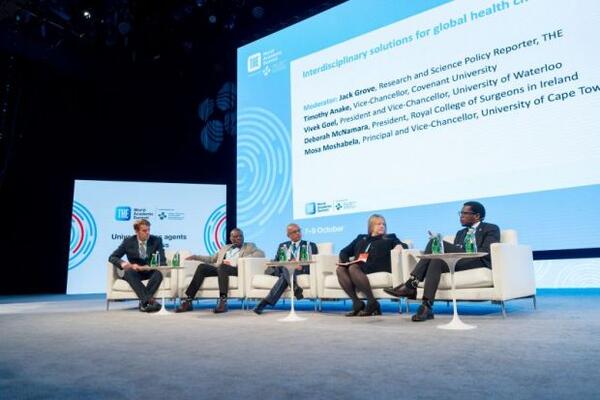
Universities focused on global health will have to collaborate more with each other and with industry and philanthropic organizations in the face of the Trump administration’s multibillion-dollar aid cuts, according to academic leaders from around the world.
Funding covering projects tackling conditions such as AIDS, tuberculosis and Ebola has been upended since Donald Trump returned to power in January, and speakers at Times Higher Education’s World Academic Summit said that it would be impossible to replace the lost dollars overnight.
Mosa Moshabela, vice chancellor of the University of Cape Town, said that his institution had been one of the largest recipients of National Institutes of Health funding outside the U.S., supporting projects in areas such as HIV and tuberculosis prevention, and that his institution had been “impacted a lot” by the White House’s decisions.
“We realize the danger of having placed all our eggs in one basket, pretty much,” said Moshabela, himself a leading public health researcher.
“We know that, in terms of scale of funding, we’re not necessarily going to have one source that can replace the amount [we received] from the NIH, but by spreading our partnerships we can still achieve similar results—and we are strengthening our partnerships in the Middle East, in Asia, across the globe, and also looking at new donors that are coming through.”
Moshabela said that Cape Town was also putting pressure on the South African government to increase research spending, highlighting that it currently spent only 0.6 percent of gross domestic product in this area, despite a long-standing target for the outlay to reach a minimum of 1.5 percent.
“Even between universities, we are adopting the principle of cooperation over competition,” Moshabela continued.
“For a long time, we were competing for the same sources of funding, but now what we’re trying to do as a strategy is to cooperate more rather than compete over sources of funding.”
“I don’t think it’s realistic to expect that overnight we are going to fill those gaps,” he said. “I think we became very reliant on a certain model … I think in collaboration between governments, philanthropy, industry and our institutions we can come up with new ways of working that can replace that work [on global health, but] not necessarily all of that funding.”
Goel, another public health researcher, highlighted that it was not just U.S. funding that was being lost, pointing to research that was funded by Canadian sources or philanthropic organizations but that depended on clinics or infrastructure operated by the United States Agency for International Development. Researchers may also lose access to Centers for Disease Control data, he warned.
Drawing down funding for global health research in the future will require a change of mindset, Moshabela argued, such as focusing on solutions with wider commercial benefit to attract the support of pharmaceutical companies and working to develop broader ecosystems and not just clinical interventions to win funding from philanthropists.
“Our partners in the Global South have been doing more with less for a very, very long time,” she noted.
“I think we’ve all observed over time waste in development funding, and in the surgical arena certainly we often discover [that] at hospitals that we work with they have large amounts of donated equipment that perhaps can’t be maintained, can’t be run, [and] isn’t operational.
“By listening more we can reduce the waste that happens and direct [funding] more effectively.”
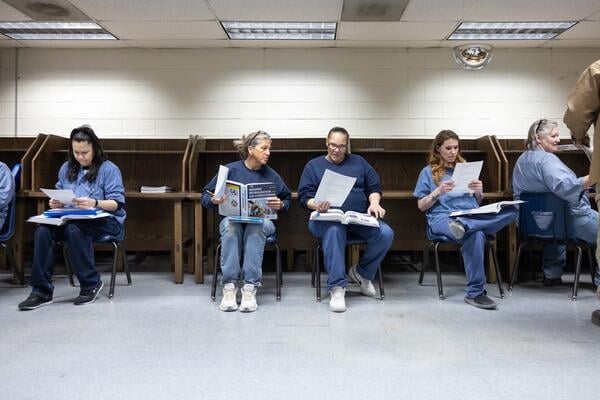
One of the stipulations was that colleges would provide them with the same access to resources that on-campus students have, including academic supports, career advising, tutoring, mental health resources and study halls. However, a recently published report from the University of Puget Sound finds that this provision has been difficult to fulfill, in part because of prison systems, but also because of the overly bureaucratic processes at higher ed institutions themselves.
The report identifies existing barriers, as well as opportunities to better serve incarcerated students.
What’s the need: Higher education programs in prisons can help incarcerated individuals improve their educational attainment and career opportunities upon release, as well as increase socioeconomic mobility for affected individuals and their families.
Providing education to incarcerated individuals, however, can be a challenge due to their lack of access to technology and learning materials, restrictions on when they can participate and policies like lockdowns that impede learning opportunities.
“Prison rules and staff often limit the ability to study, work together, possess books and supplies in cells, and meet outside the classroom,” according to the report. Students can also lack access to faculty outside of the classroom.
Students often are unaware of or unable to access traditional campus resources such as research databases, learning management systems, disability and mental health resources, and tutoring.
The findings: Puget Sound’s report includes survey data from alumni of higher education in prison (HEP) programs and faculty. Researchers also relied on in-depth interviews with 25 stakeholders involved in such programs, as well as any affiliated teaching and learning center staff members. Interviews were conducted between August and November 2024.
In conversations with faculty, researchers learned that silos often exist between teaching and learning centers and HEP programs, which can leave professors without sufficient resources or supports to be effective instructors. Even at the national level, pedagogical or student success–oriented conversations often don’t take into account incarcerated students.
For instructors, working with incarcerated students can be demanding because it’s not part of their regular teaching load, they have long commutes or they have to adapt their materials and syllabi to a low- or no-tech teaching environment, according to the report. Some professors reported feeling isolated from peers or unable to share or receive feedback about their teaching.
Keep Reading
The University of Puget Sound compiled resources from higher education in prison programs to improve teaching and learning, including trainings, sample faculty and student handbooks, models for mental health support, and more.
What can help: The researchers identified a variety of innovative programs to enhance incarcerated students’ learning and educational outcomes.
Some HEP programs, including those at Rutgers University and Scripps College, established peer tutoring opportunities among incarcerated students, in which graduates provide feedback on writing, research, time management and study skills.
“The implementation of peer-to-peer tutoring does not just help the students receiving support. It builds professional development skills, volunteer or employment histories, and confidence for the tutors themselves as they continue their learning journeys,” the report says.
The University of Utah Prison Education Program pays incarcerated students about $600 per month to provide peer support in a one-stop location. Student employees offer homework assistance, help organize events and educate their peers on health and wellness topics.
The report also advocates for developing college prep and student success courses for incoming incarcerated students to help them get familiar with resources and technology that they may not know about. Tufts University Prison Initiative of Tisch College offers a two-semester foundation of academic success course, for example.
Incarcerated students may also have mental health needs or disabilities that require extra intervention from the institution. Loyola University in Chicago’s HEP program employs a social worker who meets with students individually to understand their needs and connect them with support.
Administrators can also institutionalize support for instructors of these programs by counting teaching in prison settings as a part of a regular course load or providing training for such programs during new faculty orientations. Learning communities, course development stipends and certifications can also incentivize effective teaching practices among instructors who teach in prisons.
Connecting campus staff, particularly those in teaching and learning centers, with HEP faculty and students can also break down silos between campus and incarcerated students and ensure learners are being best served, according to the report.
In the future, researchers hope to establish a national learning community for pedagogy in prison and a convening of stakeholders in this space to share resources.