Tag: Education

  • Why Higher Ed Must Be Intentional With AI

    Why Higher Ed Must Be Intentional With AI

    Walk into almost any office on a campus right now and you’ll hear the same thing: “We’re experimenting with AI.” Someone is drafting social posts in ChatGPT. Someone else is piloting a chatbot for admissions FAQs. Another is tinkering with predictive models in the CRM.

    These efforts are well intentioned, but nearly three years into the ready availability of generative AI tools, higher ed needs to understand that dabbling isn’t enough anymore.

    Higher education is under immense pressure. From the demographic cliff to the search cliff, the drop in international enrollment to the decline in the public perception of higher education, our industry is fraught with challenges. When we combine these challenges with the escalating expectations from students and families and the “experience economy,” we’re setting ourselves up to fall dangerously behind.

    AI can be part of the solution to those challenges. But if we limit ourselves to scattered experiments, we risk wasting resources and missing the opportunity to use AI as a true strategic advantage.

    The Risks of Dabbling 

    When AI adoption is fragmented, several challenges emerge:

    • Duplicated work and tool sprawl. Different units adopt different tools, leading to confusion, inconsistent data and hidden costs.
    • Inconsistent brand voice. Without shared guidelines, AI-generated content can erode the consistency of a university’s storytelling.
    • Ethical blind spots. Dabbling often means no governance. Sensitive student data can inadvertently end up in AI tools.
    • Staff frustration. When AI feels like extra work instead of a supportive tool, teams become skeptical. That makes adoption harder later.
    • Lost momentum. When experiments aren’t connected to measurable outcomes, leadership may conclude that AI “doesn’t work here.”

    The paradox is this: Dabbling may feel safer, but it is actually riskier than intentional adoption.

    What Intentional Adoption Looks Like 

    Intentional adoption doesn’t mean rushing into automation or replacing staff. It means aligning AI with institutional goals, building literacy across teams, creating ethical guardrails and sharing results transparently.

    Take admissions chatbots. Many institutions piloted them to handle high-volume FAQs. Some fizzled out because there was no plan for training, governance or integrating insights back into the enrollment strategy. But at campuses where chatbots were tied to yield goals, tested with student input and connected to human follow-up, they became powerful tools for reducing melt and increasing student satisfaction.

    Or consider content creation. I’ve seen marketing teams use AI to repurpose one student story into dozens of assets, like email copy, Instagram posts, video scripts. When done thoughtfully, this allowed teams to do more with the same staff, freeing time for higher-level strategy. When done haphazardly, it can lead to a flood of off-brand content that students recognize as AI, eroding trust.

    A Framework for Readiness 

    So how can institutions move from dabbling to adopting? One approach I use with teams is the AI Maturity Matrix.

    The matrix evaluates readiness across six dimensions—vision, leadership support, skills, governance, collaboration, and technology—and places organizations on a five-stage curve:

    1. Nascent: AI is barely leveraged, or individual experiments happen in silos.
    2. Developing: Small pilots exist but aren’t connected to strategy.
    3. Scaling: Multiple projects are coordinated and tied to goals.
    4. Optimized: AI is part of daily workflows, with governance and training in place.
    5. Transformational: AI is a true differentiator, fueling innovation and efficiency across the institution.

    Most higher ed teams that I speak with fall in the second and third categories. They are experimenting and maybe scaling, but without the governance or strategy to optimize. The matrix helps teams see their starting point clearly and, more importantly, identify what it will take to get to the next stage.

    The key is not to leap from nascent to transformational overnight, but instead move steadily, stage by stage, building capacity along the way.

    A Call to Action for Higher Ed Leaders 

    The issue isn’t whether higher education will use AI; it’s whether we’ll use it well.

    If you’re leading a team, here are three questions to start with:

    1. Do we know where we stand on the AI maturity curve?
    2. Are our current experiments connected to our overarching goals?
    3. What’s one step we could take in the next 30 days to build intentional capacity?

    These questions are urgent. Students are already comparing their campus experience to the seamless, personalized interactions they get from Amazon, Spotify or Netflix. Faculty and staff are already using AI tools in their personal lives, whether institutions acknowledge it or not. The longer we leave AI adoption uncoordinated, the greater the gap grows between what higher ed delivers and what students expect.

    I still hear from people who believe AI is a passing fad. Meanwhile, the world around us is shifting in significant ways that have the potential to leave us far behind. Institutions must approach their AI adoption with clarity and intentionality. Those that treat it as a novelty risk being left behind.

    The time for dabbling is over. The time for intentional adoption is now. 

    Jaime Hunt is president of Solve Higher Ed and an adjunct faculty member at West Virginia University teaching courses in higher ed marketing and emerging media.

    Source link

  • Trump’s push for ‘patriotic’ education could further chill history instruction

    Trump’s push for ‘patriotic’ education could further chill history instruction

    High school history teacher Antoine Stroman says he wants his students to ask “the hard questions” — about slavery, Jim Crow, the murder of George Floyd and other painful episodes that have shaped the United States. 

    Now, Stroman worries that President Donald Trump’s push for “patriotic education” could complicate the direct, factual way he teaches such events. Last month, the president announced a plan to present American history that emphasizes “a unifying and uplifting portrayal of the nation’s founding ideals,” and inspires “a love of country.” 

    Stroman does not believe students at the magnet high school where he teaches in Philadelphia will buy this version, nor do many of the teachers I’ve spoken with. They say they are committed to honest accounts of the shameful events and painful eras that mark our nation’s history.

    “As a teacher, you have to have some conversations about teaching slavery. It is hard,” Stroman told me. “Teaching the Holocaust is hard. I can’t not teach something because it is hurtful. My students will come in and ask questions, and you really have to make up your mind to say, ‘I can’t rain dance around this.’” 

    Related: Become a lifelong learner. Subscribe to our free weekly newsletter featuring the most important stories in education. 

    These are tense times for educators: In recent weeks, dozens of teachers and college professors have been fired or placed under investigation for social media posts about their views of slain 31-year-old conservative activist Charlie Kirk, ushering in a slew of lawsuits and legal challenges

    In Indiana, a portal called Eyes on Education encourages parents of school children, students and educators to submit “real examples” of objectionable curricula, policies or programs. And nearly 250 state, federal and local entities have introduced bills and other policies that restrict the content of teaching and trainings related to race and sex in public school. Supporters of these laws say discussion of such topics can leave students feeling inferior or superior based on race, gender or ethnicity; they believe parents, not schools, should teach students about political doctrine.

    “It has become very difficult to navigate,” said Jacob Maddaus, who teaches high school and college history in Maine and regularly participates in workshops on civics and the Constitution, including programs funded by the Sandra Day O’Connor Institute. Almost 80 percent of teachers surveyed recently by the institute say they have “self-censored” in class due to fear of pushback or controversy. They also reported feeling underprepared, unsupported and increasingly afraid to teach vital material.

    After Kirk’s death Trump launched a new “civics education coalition,” aimed at “renewing patriotism, strengthening civic knowledge, and advancing a shared understanding of America’s founding principles in schools across the nation.” The coalition is made up made up almost entirely of conservative groups, including Kirk’s Turning Point USA, whose chief education officer, Hutz Hertzberg, said in a statement announcing the effort that he “is more resolved than ever to advance God-centered, virtuous education for students.” 

    So far, no specific guidelines have emerged: Emails to the Department of Education — sent after the government shut down — were not returned. 

    Related: Teaching social studies in a polarized world 

    Some students, concerned about the shifting historical narratives, have taken steps to help preserve and expand their peers’ access to civics instruction. Among them is Mariya Tinch, an 18-year-old high school senior from rural North Carolina. “Trump’s goal of teaching ‘patriotic’ education is actually what made me start developing my app, called Revolve Justice, to help young students who didn’t have access to proper civic education get access to policies and form their own political opinions instead of having them decided for them,” she told me. 

    Growing up in a predominantly white area, Tinch said, “caused civic education to be more polarized in my life than I would like as a young Black girl. A lot of my knowledge in regard to civic education came from outside research after teachers were unable to fully answer my questions about the depth of the issues that we are taught to ignore.”

    Mariya Tinch, a high school senior in North Carolina, at the 2025 Ready, Set, App! competition (second from left). She developed an app to help students get access to policies and form their own political opinions. Credit: Courtesy of Mariya Tinch

    Other students are upset about federal cuts to history education programs, including National History Day, a 50-year-old nonprofit that runs a history competition for some 500,000 students who engage in original historic research and provides teachers with resources and training. Youth groups are now forming as well, including Voters of Tomorrow, which has a goal of building youth political power by “engaging, educating, and empowering our peers.” 

    Related: What National Endowment for the Humanities cuts mean for high schoolers like me

    There will surely be more attention focused on the founders’ original ideals for America as we approach the 250th anniversary of the signing of the Declaration of Independence this July. Some teachers and groups that support civics teachers are creating resources, including the nonprofit iCivics, with its “We can teach hard things — and we should” guidelines.

    How all of these different messages resonate with students remains to be seen. In the meantime, Jessica Ellison, executive director of the nonprofit National Council for History Education is fielding a lot of questions from history teachers and giving them specific advice.

    “They might be anxious about any teaching that could get them on social media or reported by a student or parent,” Ellison told me, noting the strategy she shares with teachers is to focus on “the three S’s –— sources, state standards and student questions.” 

    Ellison also encourages teachers to “lean into the work of historians. Read the original sources, the primary sources, the secession documents from Mississippi and put them in front of students. If it is direct from the source you cannot argue with it.”

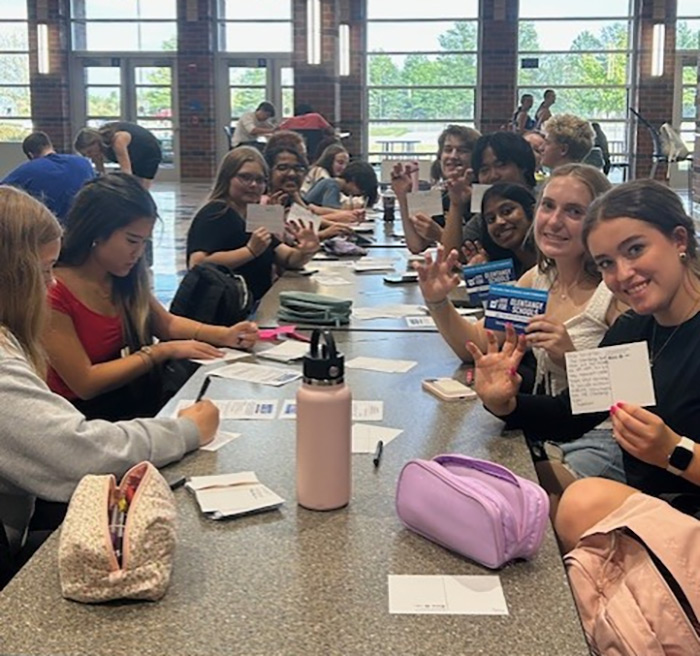
    In September, students at Berlin High School in Delaware, Ohio, participated in a sign creation and postcard campaign for a levy on the ballot. Credit: Courtesy Michael LaFlamme

    Michael LaFlamme has his own methods: He teaches Advanced Placement government and U.S. history at Olentangy Berlin High School outside of Columbus, Ohio, where many of his students work the polls during elections to see up close how voting works. They learn about civics via a participatory political science project that asks students to write a letter to an elected official. He also encourages students to watch debates or political or Sunday morning news shows with a parent or grandparent, and attend a school board meeting.

    “There is so much good learning to be done around current events,” LaFlamme told me, noting that “it becomes more about community and experience. We are looking at all of it as political scientists.”

    For Maddaus, the teacher in Maine, there is yet another obstacle: How his students consume news reinforces the enormous obstacles he and other teachers face to keep them informed and thinking critically. Earlier this fall, he heard some of his students talking about a rumor they’d heard over the weekend. 

    “Mr. Maddaus, is it true? Is President Donald Trump dead?” they asked. 

    Maddaus immediately wanted to know how they got this false news. 

    “We saw it on TikTok,” one of the students replied — not a surprising answer, perhaps, given that 4 out of 10 young adults get their news from the platform.

    Maddaus says he shook his head, corrected the record and then went back to his regularly scheduled history lesson. 

    Contact editor in chief Liz Willen at [email protected].

    This column about patriotism in education was produced by The Hechinger Report, a nonprofit, independent news organization focused on inequality and innovation in education. Sign up for the Hechinger newsletter.

    The Hechinger Report provides in-depth, fact-based, unbiased reporting on education that is free to all readers. But that doesn’t mean it’s free to produce. Our work keeps educators and the public informed about pressing issues at schools and on campuses throughout the country. We tell the whole story, even when the details are inconvenient. Help us keep doing that.

    Join us today.

    Source link

  • Colleges Must Pursue All Legal Paths for Diversity (opinion)

    Colleges Must Pursue All Legal Paths for Diversity (opinion)

    Two years ago, the Supreme Court dealt a devastating blow to opportunity in America when it gutted access to higher education for underrepresented groups. That decision was not only legally misguided but also turned a blind eye to the deep inequities that have long shaped our education system. Our colleges and universities scrambled to find lawful tools to ensure that their student bodies still reflected the breadth of talent and promise in this country.

    One of those tools was Landscape, a program recently canceled by the College Board that gave admissions officers data about a student’s high school and neighborhood while explicitly excluding race or ethnicity.

    Standardized test scores and GPAs never tell the whole story. Median family income, access to Advanced Placement courses, local crime rates and other key indicators help admissions officers see the full picture and provide crucial context to help identify high-achieving students from disadvantaged communities. These are students whom universities might otherwise overlook. Tools that give context level the playing field—not by lowering standards, but by lifting students up according to their merit and the obstacles they have overcome.

    The Supreme Court, even in striking down diversity initiatives, still made clear that universities could explore race-neutral alternatives to achieve equity. The use of socioeconomic and geographic factors is exactly such an alternative. Despite U.S. Attorney General Pamela Bondi’s recent nonbinding guidance warning against the use of geographic indicators as “proxies” for race, make no mistake: Abandoning consideration of these elements of an applicant’s background is not a legal requirement but a political choice, reflecting fear rather than courage.

    Without tools that account for the barriers students face, colleges will fall back on practices that overwhelmingly favor the privileged, shutting out low-income and first-generation students who have already beaten the odds. This spoils opportunity for millions, and our campuses and our nation will suffer for it. Diversity is not a box to check; it is a vital engine of education and democracy. Classrooms that bring together students from different walks of life prepare all graduates to lead a diverse society, foster innovation and strengthen our communities.

    We cannot allow the Supreme Court’s decision—and the chilling effect in its wake—to undo decades of progress. And we cannot allow educational institutions to abdicate their responsibility in this moment of crisis. The data that provides broader context for applicants remains available, but without the will to use it, too many doors will remain closed for the students who need them most.

    America has always promised to reward hard work and perseverance, no matter where you come from. That promise rings hollow if we allow the wealthy and well connected to monopolize educational opportunity. Colleges and universities must honor that promise by continuing to seek out and support students who have succeeded against the odds. Fairness demands it, equal opportunity requires it and the future of our country depends on it.

    The authors all serve as state attorneys general: New York Attorney General Letitia James, Connecticut Attorney General William Tong, Delaware Attorney General Kathy Jennings, Illinois Attorney General Kwame Raoul, Minnesota Attorney General Keith Ellison, New Jersey Attorney General Matthew Platkin, Vermont Attorney General Charity Clark and Washington Attorney General Nick Brown.

    Source link

  • ED Pushes Workforce Readiness as a Priority

    ED Pushes Workforce Readiness as a Priority

    The U.S. Department of Education is doubling down on its emphasis on workforce development. Education Secretary Linda McMahon recently proposed adding career pathways and workforce readiness to her list of priorities for discretionary grant funding, possibly guiding how the department spends billions of dollars.

    “After four years of the Biden Administration pedaling [sic] divisive ideology and racial preferencing, the Trump Administration will prioritize discretionary grants to education programs that actually improve student outcomes by using evidence-based strategies for instruction and creating pathways to high-demand fields,” U.S. Secretary of Education Linda McMahon said in a statement late last month. “The department looks forward to empowering states to close achievement gaps and align education with the evolving needs of the workforce.”

    McMahon’s plan would channel federal funds toward efforts to align workforce-development programs with state economic priorities. The department proposed supporting projects dedicated to identifying and promoting strong industry-recognized credentials, building tools for students to compare costs and earnings of different educational pathways and growing work-based learning opportunities, like apprenticeships and pre-apprenticeships. It also encouraged support for skilled trades and the development of talent marketplaces, digital platforms run by states to connect job seekers and potential employers based on skills.

    “For decades, the dominant ‘college for all’ narrative has led to a narrow focus that often leaves students with degrees and debt but limited job prospects,” the grant priority proposal reads. “By expanding the range of options so that a broader array of education providers can access existing funding in a manner that aligns outcomes with the demands of today’s workforce, the government can foster both economic mobility for students and sustained competitiveness for the nation.”

    McMahon has named other grant priorities since becoming secretary as well, including mathematics education, evidence-based literacy education, education choice, patriotic education and returning education to the states. The Education Department takes its priorities into account and can give them extra weight when approving discretionary grant awards.

    The department’s workforce-readiness proposal mirrors other plans from the Trump administration to put workforce development center stage. An April executive order, for example, charged federal officials with better addressing the nation’s workforce needs, including by reaching, and surpassing, one million new active apprenticeships. The One Big Beautiful Bill Act, signed into law in July, established workforce Pell, allowing Pell Grants, starting next year, to flow to low-income students in short-term programs.

    The Department of Labor also came out with a report outlining “America’s talent strategy” in August and is moving forward with a controversial interagency agreement with the Department of Education for a more “coordinated federal education and workforce system.” (The agreement would move administration of career and technical education programs to the DOL.)

    Education and workforce advocates say the new grant priority—open for public comment until Oct. 27—is a welcome win for causes they’ve long championed, but their celebration is tempered by some questions and concerns. Some argue ED’s workforce goals could be disrupted by other Trump administration policies. Others worry the department’s focus on nondegree pathways could lead to an underinvestment in traditional higher ed. And while some are cautiously optimistic about the proposed plan, they’re waiting to see how it works in practice.

    “When we look at this functionally, in theory, all of this looks like things that we like,” said Jennifer Stiddard, senior director of government affairs for Jobs for the Future, an organization focused on the intersection between education and the workforce. “Career-connected learning … creating better pathways for students, creating better opportunities to learn about careers—these are all things that are included in here. Where we always have pause is understanding how all of this is going to be applied.”

    Hopes and Worries

    The proposal has sparked hope for workforce development wonks, as some of their long-held goals are becoming national priorities.

    Erica Cuevas, director of education policy at Jobs for the Future, said she’s still reviewing the grant priority language, but she’s heartened to see the administration using its “bully pulpit and its discretionary grant authority to promote career-connected learning within the broader K–12 educational ecosystem,” beyond career and technical education programs, which reach a limited number of students.

    Katie Spiker, chief of federal affairs for the National Skills Coalition, a research and advocacy organization focused on workforce training, said it’s clear the Education Department is focused on aligning education offerings with workforce needs, fostering industry partnerships and expanding work-based learning opportunities. She also applauded the department for its focus on forging connections between high school programs, apprenticeships and other workforce development programs, which “really reflects how the work is done on the ground,” as a “holistic effort across education and workforce.”

    But she also worries that the Trump administration is simultaneously pushing policies that don’t serve these goals. For example, the president’s budget for fiscal year 2026 proposed zeroing out funding for adult education, which she views as critical for training adults in basic skills so they can fill workforce gaps.

    “The funding conversations and the massive shifts and reductions in investments that we’ve seen both from the House appropriations process and from the president’s budget request are really incongruent with these important priorities that they’re setting out in this document,” Spiker said.

    She also emphasized that the proposed grant priority doesn’t put any focus on “reaching and engaging with communities that have not traditionally had access” to certain high-demand jobs, including women, communities of color and workers with disabilities. She believes filling workforce shortages will require actively recruiting, and building up supports for, workers underrepresented in industries with workforce gaps.

    Businesses “are scrambling to try and build broader pipelines of folks, both because of job openings that they have today, as well as those that they are projecting for next year, five years from now and into the future,” Spiker said.

    In a similar vein, Lynn Pasquerella, president of the American Association of Colleges and Universities, said she found it “frustrating” that McMahon’s announcement of the grant priority described workforce readiness and diversity, equity and inclusion efforts as at odds.

    “We know that employers are insisting that their employees be able to speak across differences, work in diverse teams and engage in cross-cultural understanding,” based on surveys AAC&U conducts with employers, Pasquerella said.

    She supports aligning education programs with workforce needs and offering students more experiential learning opportunities. But she believes liberal arts education is also a part of training students for the workforce and fears such offerings could be sidelined in the department’s vision for supporting workforce readiness.

    “The risk is always that if we focus too narrowly on career preparation—without recognizing that career preparation must involve skills, competencies and dispositions central to a liberal education—that we will have a group of students who are narrowly technically trained without the capacity to grapple with the grand challenges that will confront us in the future,” she said. “We shouldn’t create a false dichotomy between career preparation and liberal education.”

    John Colborn, executive director of Apprenticeships for America, believes the proposed grant priority is over all a “positive development” for learners.

    “I think it brings some more balance to the educational enterprise, which has been overwhelmingly focused on getting everyone into college,” he said. “I think we’ve realized the limitations of that particular approach.”

    But while he favors exposing K–12 students to a broader range of career pathways, including apprenticeships, he also wants to make sure career-focused programs prepare students for both careers and college. He said one of the problems with vocational training in high schools in the past was that students too often were “constrained into a particular pathway.”

    “We don’t want to go down that road or repeat some of those mistakes,” he said.

    He noted that the partnership between the Education Department and the Department of Labor raises these types of concerns, because the DOL has less of an academic focus. But he believes stronger ties between the agencies is a net positive.

    The long-term effects of the proposal, and other workforce-development plans, “is really going to turn on whether or not that nuance can be represented in the grant making and priority setting for the department,” Colborn said.

    Source link

  • Tapping Alumni to Be Career Mentors for Students

    Tapping Alumni to Be Career Mentors for Students

    For students at Gettysburg College in Pennsylvania, alumni mentors are becoming embedded in their experience. A recently launched mentorship program pairs each rising junior with a graduate from the college to provide advice and encouragement as they finish their last two years of college.

    The initiative, part of Gettysburg’s reimagining of career development, helps students build a professional network before they leave college and hopefully eases the transition into life after graduation, said Billy Ferrell, director of external relations in Gettysburg’s Center for Career Engagement.

    What’s the need: Professional mentors can be an asset for early-career professionals, offering insights into navigating the workforce and their specific industry, as well as personal support and encouragement. But a majority of Americans say they don’t have a mentor, according to a 2023 survey by the University of Phoenix, and one-third of respondents said a lack of mentorship has held them back in their careers.

    Within higher education, many students are asking their institutions for assistance in identifying role models.

    A spring 2024 Student Voice survey by Inside Higher Ed found that 29 percent of students believe their college or university should focus more on connecting students to alumni and other potential mentors. And a 2023 student survey found that 45 percent of students think their career center should help them find a professional mentor.

    However, only a fraction of students have participated in a formal mentoring program, either through their college or outside the institution, according to a 2021 survey by Inside Higher Ed.

    How it works: Gettysburg’s Alumni Mentoring Program launched this fall with the Class of 2027, who coincidentally were the first class to participate in the college’s guided co-curricular pathways, Ferrell said.

    Students could opt to add an alumni mentor to their advising team, which already includes a faculty adviser, career adviser and co-curricular adviser, who coaches students on their pathway. Alumni advising is focused on the student’s career but could include job exploration, the postcollege transition, networking and industry-specific trends, Ferrell said.

    The goal is for students to learn “real world” skills to navigate life after college, according to the college’s website.

    Students will meet with their mentor at least once a month starting in October and conclude in March, Ferrell said.

    Gettysburg recruited mentors through email campaigns, social media posts and the alumni magazine, Ferrell said. Interested alumni signed up through connectGettysburg, the college’s career networking platform, and completed a short intake survey. Students completed a similar questionnaire and a computer algorithm made the mentor match, Ferrell said.

    Mentors participated in an online training module to prepare them to take on an advising role. Additionally, the college established a handbook for mentor pairs to outline expectations for the relationship and offer topical sessions for students to choose from to guide conversations with mentors.

    These resources can address a common barrier to mentorship for students: a lack of awareness of what the relationship entails. A 2021 survey by Inside Higher Ed found that among students who lacked a mentor, 45 percent didn’t know what they would ask a mentor and 27 percent didn’t know what they would do with one.

    What’s next: Eighty-one juniors and alumni are participating in the initial program, and Gettysburg will survey students and alumni throughout the term to gauge the effectiveness of the initiative and ensure students are getting the kind of support they’re looking for, Ferrell said.

    Next year, Gettysburg will expand the program to junior and senior-level students.

    Source link

  • Higher Education must help shape how students learn, lead and build the skills employers want most

    Higher Education must help shape how students learn, lead and build the skills employers want most

    For the first time in more than a decade, confidence in the nation’s colleges and universities is rising. Forty-two percent of Americans now say they have “a great deal” or “quite a lot” of confidence in higher education, up from 36 percent last year.  

    It’s a welcome shift, but it’s certainly not time for institutions to take a victory lap. 

    For years, persistent concerns about rising tuition, student debt and an uncertain job market have led many to question whether college was still worth the cost. Headlines have routinely spotlighted graduates who are underemployed, overwhelmed or unsure how to translate their degrees into careers.  

    With the rapid rise of AI reshaping entry-level hiring, those doubts are only going to intensify. Politicians, pundits and anxious parents are already asking: Why aren’t students better prepared for the real world?  

    But the conversation is broken, and the framing is far too simplistic. The real question isn’t whether college prepares students for careers. It’s how. And the “how” is more complex, personal and misunderstood than most people realize.  

    Related: Interested in innovations in higher education? Subscribe to our free biweekly higher education newsletter. 

    What’s missing from this conversation is a clearer understanding of where career preparation actually happens. It’s not confined to the classroom or the career center. It unfolds in the everyday often overlooked experiences that shape how students learn, lead and build confidence.  

    While earning a degree is important, it’s not enough. Students need a better map for navigating college. They need to know from day one that half the value of their experience will come from what they do outside the classroom.  

    To rebuild America’s trust, colleges must point beyond course catalogs and job placement rates. They need to understand how students actually spend their time in college. And they need to understand what those experiences teach them. 

    Ask someone thriving in their career which part of college most shaped their success, and their answer might surprise you. (I had this experience recently at a dinner with a dozen impressive philanthropic, tech and advocacy leaders.) You might expect them to name a major, a key class or an internship. But they’re more likely to mention running the student newspaper, leading a sorority, conducting undergraduate research, serving in student government or joining the debate team.  

    Such activities aren’t extracurriculars. They are career-curriculars. They’re the proving grounds where students build real-world skills, grow professional networks and gain confidence to navigate complexity. But most people don’t discuss these experiences until they’re asked about them.  

    Over time, institutions have created a false divide. The classroom is seen as the domain of learning, and career services is seen as the domain of workforce preparation. But this overlooks an important part of the undergraduate experience: everything in between.  

    The vast middle of campus life — clubs, competitions, mentorship, leadership roles, part-time jobs and collaborative projects — is where learning becomes doing. It’s where students take risks, test ideas and develop the communication, teamwork and problem-solving skills that employers need.  

    This oversight has made career services a stand-in for something much bigger. Career services should serve as an essential safety net for students who didn’t or couldn’t fully engage in campus life, but not as the launchpad we often imagine it to be. 

    Related: OPINION: College is worth it for most students, but its benefits are not equitable 

    We also need to confront a harder truth: Many students enter college assuming success after college is a given. Students are often told that going to college leads to success. They are rarely told, however, what that journey actually requires. They believe knowledge will be poured into them and that jobs will magically appear once the diploma is in hand. And for good reason, we’ve told them as much. 

    But college isn’t a vending machine. You can’t insert tuition and expect a job to roll out. Instead, it’s a platform, a laboratory and a proving ground. It requires students to extract value through effort, initiative and exploration, especially outside the classroom.  

    The credential matters, but it’s not the whole story. A degree can open doors, but it won’t define a career. It’s the skills students build, the relationships they form and the challenges they take on along the way to graduation that shape their future. 

    As more college leaders rightfully focus on the college-to-career transition, colleges must broadcast that while career services plays a helpful role, students themselves are the primary drivers of their future. But to be clear, colleges bear a grave responsibility here. It’s on us to reinforce the idea that learning occurs everywhere on campus, that the most powerful career preparation comes from doing, not just studying. It’s also on us to address college affordability, so that students have the time to participate in campus life, and to ensure that on-campus jobs are meaningful learning experiences.  

    Higher education can’t afford public confidence to dip again. The value of college isn’t missing. We’re just not looking in the right place. 

    Bridget Burns is the founding CEO of the University Innovation Alliance (UIA), a nationally recognized consortium of 19 public research universities driving student success innovation for nearly 600,000 students. 

    Contact the opinion editor at [email protected]. 

    This story about college experiences was produced by The Hechinger Report, a nonprofit, independent news organization focused on inequality and innovation in education. Sign up for Hechinger’s weekly newsletter. 

    The Hechinger Report provides in-depth, fact-based, unbiased reporting on education that is free to all readers. But that doesn’t mean it’s free to produce. Our work keeps educators and the public informed about pressing issues at schools and on campuses throughout the country. We tell the whole story, even when the details are inconvenient. Help us keep doing that.

    Join us today.

    Source link

  • Chatbots in Higher Education: Benefits, Challenges, and Strategies to Prevent Misuse – Faculty Focus

    Chatbots in Higher Education: Benefits, Challenges, and Strategies to Prevent Misuse – Faculty Focus

    Source link

  • UNC Professor Accused of Advocating Political Violence Reinstated

    UNC Professor Accused of Advocating Political Violence Reinstated

    Marin Herold/iStock/Getty Images Plus

    Dwayne Dixon, a professor at the University of North Carolina at Chapel Hill, was reinstated Friday after the university performed a “thorough threat assessment,” Dean Stoyer, vice chancellor for communications and marketing, said in a statement. 

    Dixon was placed on leave Monday following allegations that he was an advocate for political violence.

    “The Carolina Behavioral Threat Assessment and Management Team consulted with the UNC System security office and with local law enforcement, undertaking a robust, swift and efficient review of all the evidence. We have found no basis to conclude that he poses a threat to University students, staff, and faculty, or has engaged in conduct that violates University policy,” Stoyer said in a statement. “As a result, the University is reinstating Professor Dixon to his faculty responsibilities, effective immediately.”

    Dixon is a teaching associate professor of Asian and Middle Eastern studies at UNC Chapel Hill, and he’s been active at counterprotests to alt-right rallies, including at the Unite the Right rally in Charlottesville, Va., in 2017. He’s also a strong advocate for gun rights and used to be a member of the Silver Spring Redneck Revolt, a chapter of the now-disbanded antifascist, antiracist, anticapitalist political group Redneck Revolt. Andrew Kolvet, a spokesperson for the late Charlie Kirk’s Turning Point USA, called for Dixon to be fired in an X post because of these affiliations.

    Source link

  • Duration-of-Status Rule Prompts Opposition From Commenters

    Duration-of-Status Rule Prompts Opposition From Commenters

    A slew of public commenters derided the Department of Homeland Security’s proposal that would restrict how long international students can stay in the country.

    The measure would alter the long-standing policy known as duration of status, which allows international students to stay in the U.S. until their course of study is complete. Among other concerns, commenters argued that the rule would unnecessarily restrict international students, who are already closely monitored by the government and their institutions of study. Many commenters also drew attention to the potential consequences for the health-care system and employers.

    The proposed rule would instead cap the amount of time students could stay in the U.S. to just four years, though they would be able to request an extension from U.S. Citizenship and Immigration Services. It would also prevent international students from changing their majors or transferring between U.S. institutions.

    According to DHS, the proposal aims to lessen the number of students who overstay their F and J visas. However, NAFSA, the international education association, argued that research has shown that DHS overestimates overstay rates. The organization, along with other commenters, also noted that the Student Exchange and Visitor Information System—the online system that monitors international students—already alerts Immigration and Customs Enforcement if a student overstays their visa.

    The comment period closed on Sept. 29. DHS will now have to review and respond to more than 15,700 comments before deciding whether to move forward with the elimination of duration of status.

    More Than 4 Years

    Numerous commenters noted that a significant number of students take more than four years to complete their undergraduate degree—and it’s incredibly rare to complete a Ph.D. in that length of time. That means a significant number of students will be at risk of being unable to complete their programs if they are unable to secure extensions.

    Commenters noted a range of reasons they, their peers or their students have struggled to finish a degree in under four years, including medical and family emergencies, the death or departure of a faculty mentor, completing cooperative internships, and more.

    Others pointed out that some programs are even intended to take longer than four years. Jessica Goswick, an architect and a lecturer, wrote that a B.Arch., a professional bachelor’s degree in architecture, is intended to be completed in five years. The University of Illinois system—one of several dozen institutions that opposed the rule in written comments—said that its main Urbana-Champaign campus has over 30 undergraduate programs requiring more than 120 credit hours.

    “Limiting initial entry to four years would require students in these programs to take more than 15 credits every semester for four years, which would reduce performance and graduation rates,” the system’s comment reads. “Undergraduate students should be encouraged to take course loads appropriate for success rather than rush toward an arbitrary completion date determined by their date of entry to the United States.”

    Several researchers and current Ph.D. students also stressed that graduate students frequently need more time to complete their research.

    “Reducing this time for foreign student scientists would make it impossible for them to earn a Ph.D. in many fields, including my own field of neuroscience. Science takes years to build, develop, execute, and compile in order [to] share the information with the world and enrich the scientific community,” wrote Grace Swaim, a postdoctoral researcher at Yale University.

    Although students would have the option to get their visas extended beyond the four-year cap, experts warned that doing so is costly, time-consuming and uncertain, and it would add to USCIS’s already-lengthy processing time—about 6.5 months—for such extensions, according to NAFSA. The University of Illinois system also emphasized that the rule would force the system to hire 13 new full-time and one part-time employee and spend over $2 million in the first year alone to apply for these extensions.

    These added barriers could ultimately lead fewer students to want to study in the United States, commenters warned, which many faculty said would be a loss for their labs, their larger institutions and the country as a whole.

    “These students not only make crucial contributions to the fundamental research in our department, but often end up filling important roles in industry, academia and national labs in the U.S. Others contribute to the international efforts unraveling the nature of matter and developing novel technologies even after returning to their home country,” wrote Sebastian Kuhn, chair of the physics department at Old Dominion University. “International graduate students are an indispensable contribution to the success of the U.S. research enterprise and the international standing of our country.”

    Beyond the Campus

    Other commenters shared that the rule could have an impact outside of the classroom and the lab. Physicians and hospital administrators said the roughly 17,000 J-1 visa holders currently working in hospitals as part of their medical training would be affected and detailed in comments how the change could ultimately disrupt Americans’ access to health care.

    “It is important to recognize that the 17,000 J-1 physicians training in the U.S. do not displace domestic medical graduates; rather, they fill residency slots that would otherwise remain unfilled each year,” wrote the American Hospital Association in a comment. “These physicians disproportionately train in high-need specialties that continue to be in substantial shortage, such as internal medicine, pediatrics and family medicine. They also frequently work in rural and underserved communities, and many who train in those settings continue to work in them when their training is complete. J-1 physicians not only help sustain the physician workforce pipeline but also help expand patient access to essential care.”

    Numerous commenters who identified themselves as leaders in industries from financial services to pharmaceuticals also explained how their companies and industries at large rely on the contributions of international students.

    “The maximum stay restrictions are especially problematic for Ph.D. students and those conducting long-term clinical trials, which often span five to seven years,” wrote an anonymous commenter who identified themself as a senior executive in a global pharmaceutical company. “Reducing this flexibility would disrupt important research in drug efficacy and public health. Students engaged in such long-term research projects would be forced to abandon their work prematurely, leading to a waste of time, resources, and intellectual capital that the U.S. cannot afford to lose.”

    A seemingly small number of comments were in favor of the change, with many of the supportive comments claiming international students are taking jobs and spots at colleges away from Americans.

    One higher education association—the Council for Christian Colleges and Universities—did not outright oppose the measure, but rather encouraged DHS to limit it just to colleges with admission rates under 30 percent. The council’s president, David A. Hoag, argued that those are the institutions at which the administration is concerned about “foreign students potentially displacing American students.”

    “This approach directly addresses the administration’s stated concern by focusing on the subset of institutions where foreign student enrollment is most likely to impact domestic applicants,” he wrote. “By limiting the rule’s scope in this way, DHS can more effectively target its regulatory efforts while minimizing unnecessary restrictions on less selective schools where this displacement issue is less pronounced.”

    Source link

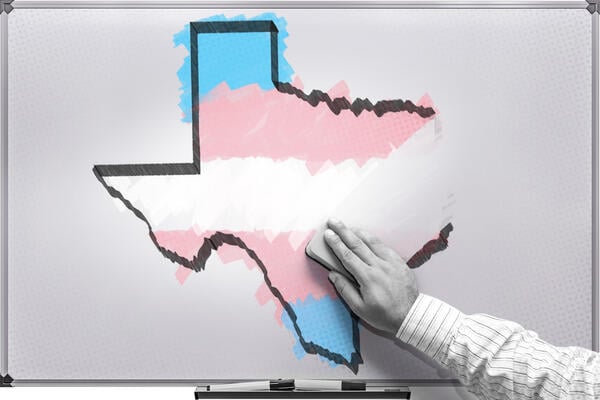
  • Texas Tech Clarified Anti-Trans Policies in FAQ—Then Removed It

    Texas Tech Clarified Anti-Trans Policies in FAQ—Then Removed It

    Photo illustration by Justin Morrison/Inside Higher Ed | menonsstocks/E+/Getty Images | snorkulencija/iStock/Getty Images

    After a confusing week, Texas Tech University officials offered the first written clarification on new university policies that prohibit faculty members from speaking or teaching about transgender identity. On Sunday, the provost’s office posted a lengthy frequently asked questions page that, among other things, addressed the definition of “noncompliant language,” explained how the new policies impact research and answered whether faculty can write on their syllabi that they are an ally to transgender people.

    But after three days, the FAQ was taken down. Faculty have not been told why the information was removed, and health-care instructors are concerned students will not be trained in care for transgender patients, as required by certification exams.

    A university spokesperson did not respond to Inside Higher Ed’s questions on the matter. Some faculty suspect that Brandon Creighton, who was officially named the Texas Tech system’s next chancellor on Tuesday, may have orchestrated the removal of the FAQ. Creighton was the lead author of the Texas Senate’s sweeping ban on diversity, equity and inclusion in 2023, and of the recent bill giving control of faculty senates to university presidents and boards. He will assume the chancellor role on Nov. 19.

    While it was the first and most comprehensive written guidance Texas Tech has posted on its anti-trans policies, the FAQ left a lot of questions unanswered. The word “transgender” wasn’t included in any of the written answers. In one answer, officials wrote that noncompliant language “refers specifically to outdated or inaccurate syllabus content (i.e., COVID-era statements or statements referring to offices or units that no longer exist at Texas Tech.),” but said nothing about gender identity.

    In response to a question about academic freedom, officials wrote, “Faculty may include course content that is relevant to a student’s program of study and post-graduation opportunities, including workforce and additional education. Faculty are encouraged to be thoughtful about including content that is described in the Chancellor’s memo.”

    The new directives do not impact research, the FAQ clarified. Officials advised against including a “personal statement of student support” or a statement professing LGBTQ allyship, writing that “such a statement could attract unwanted attention.” They also wrote that faculty could include a preferred name policy on their syllabi, but that “until further clarification is available, it is advisable to omit personal pronoun language.” When relevant, instructors are permitted to facilitate classroom discussions in which students examine the state’s position on gender alongside other views, but the instructor may not advocate for any particular view.

    In a later question about government censorship and faculty retention, officials wrote, “We recognize that faculty recruitment and retention may be affected. At present, the issued guidance applies only to instructional activities, not a faculty member’s independent research.”

    The Texas conference of the American Association of University Professors has pushed back on the anti-trans policies at Texas Tech and other public universities in the state.

    “Colleges and universities have an obligation to develop campus policies that protect the constitutional rights of their faculty to teach and research the subjects in their areas of expertise without intimidation or censorship,” said Brian Evans, president of the Texas conference of the AAUP. “By ensuring that teachers can speak freely, campus administrators should enable students to explore and learn the widest set of topics for civil engagement and successful careers. Campus policies related to academic freedom and free speech should be devised with the full participation of faculty in the spirit of a shared commitment to excellence.”

    The FAQ—as short-lived as it was—only applied to Texas Tech’s flagship campus. The four other campuses in the public system, including Angelo State University, where faculty have received a profusion of conflicting verbal information, were not included.

    A faculty member at the Texas Tech University Health Sciences Center who asked to remain anonymous for fear of retribution confirmed to Inside Higher Ed that faculty at their campus have been told not to use certain terms in their course content, including “transgender”; “gender-affirming care”; “diversity, equity and inclusion”; and “affirmative action.” Health Sciences Center faculty have not received any written guidance, and the deans don’t have clarifying information, either, the faculty member said. It is an especially troubling policy to enforce for health-care students, because care for transgender patients is included in some certification exams students must pass to be licensed, they said.

    “There are certainly many things that our government has [outlawed] … but I can’t think of another thing that we’ve been told we can’t talk about,” the faculty member said. “Sex trafficking is illegal, but we can talk about how to care for people who have been victims of sex trafficking. Drunk driving—there’s about a million examples.”

    It is unclear how much information students have about these new policies, according to the faculty member. Some students are bringing up transgender care in classroom discussions, and instructors are unsure how to respond.

    Source link