Tag: Education

  • When AI Meets Engineering Education: Rethinking the University 

    When AI Meets Engineering Education: Rethinking the University 

    This HEPI blog was kindly authored by James Atuonwu, Assistant Professor at the New Model Institute for Technology and Engineering (NMITE). 

    Where machines of the past multiplied the strength of our hands, AI multiplies the power of our minds – drawing on the knowledge of all history, bounded only by its training data. 

    We are living through a moment of profound transition. The steam engine redefined labour, the computer redefined calculation, and now AI is redefining thought itself. Unlike earlier technologies that multiplied individual workers’ power, AI, particularly large language models (LLMs), multiplies the collective intelligence of humanity. 

    For engineering practice and universities alike, this shift is existential. 

    AI as Servant, Not Master 

    The old adage is apt: AI is a very good servant, but a very bad master

    • As a servant, AI supports engineers in simulation, design exploration, and predictive maintenance. For students, it provides on-demand access to resources, enables rapid testing of ideas, and helps them reframe problems.  
    • As a master, AI risks entrenching bias, undermining judgment, and reshaping educational systems around efficiency rather than values. 

    The challenge is not whether AI will change engineering education, but whether we can train engineers who command AI wisely, rather than being commanded by it. 

    This logic resonates with the emerging vision of Industry 5.0: a paradigm where technology is designed not to replace humans, but to collaborate with them, enhance their creativity and serve societal needs. If Industry 4.0 was about automation and efficiency, Industry 5.0 is about restoring human agency, ethics, and resilience at the heart of engineering practice. In this sense, AI in engineering education is not just a technical challenge, but a cultural one: how do we prepare engineers to thrive as co-creators with intelligent systems, rather than their servants 

    Beyond ‘AI Will Take Your Job’ 

    The phrase AI won’t take your job, but a person using AI will has become a cliché. It captures the competitive edge of AI literacy but misses the deeper truth: AI reshapes the jobs themselves.  

    In engineering practice, repetitive calculations, drafting, and coding are already being automated. What remains – and grows in importance – are those tasks requiring creativity, ethical judgment, interdisciplinary reasoning, and decision-making under uncertainty. Engineering workflows are being reorganised around AI-enabled systems, rather than human bottlenecks

    Universities, therefore, face a central question: Are we preparing students merely to compete with each other using AI, or to thrive in a world where the very structure of engineering work has changed? 

    Rethinking Assessment 

    This question leads directly to assessment – perhaps the most urgent pressure point for universities in the age of AI. 

    If LLMs can generate essays, solve textbook problems, and produce ‘good enough’ designs, then traditional forms of assessment risk becoming obsolete. Yet, this is an opportunity, not just a threat

    • Assessment must shift from recalling knowledge to demonstrating judgment. 
    • Students should be evaluated on their ability to frame problems, critique AI-generated answers, work with incomplete data, and integrate ethical, social, and environmental perspectives. 

    A further challenge lies in the generational difference in how AI is encountered. Mature scholars and professionals, who developed their intellectual depth before AI, can often lead AI, using it as a servant, because they already possess the breadth and critical capacity to judge its outputs. But students entering higher education today face a different reality: they arrive at a time when the horse has already bolted. Without prior habits of deep engagement and cognitive struggle, there is a danger that learners will be led by AI rather than leading it. 

    This is why universities cannot afford to treat AI as a mere technical add-on. They must actively design curricula and assessments that force students to wrestle with complexity, ambiguity, and values – to cultivate the intellectual independence required to keep AI in its rightful place: a servant, not a master. 

    Rediscovering Values and Ethics 

    AI forces a rediscovery of what makes us human. If algorithms can generate correct answers, then the distinctive contribution of engineers lies not only in technical mastery but in judgment grounded in values, ethics, and social responsibility

    Here the liberal arts are not a luxury, but a necessity

    • Literature and history develop narrative imagination, allowing engineers to consider the human stories behind data. 
    • Philosophy and ethics cultivate moral reasoning, helping engineers weigh competing goods. 
    • Social sciences illuminate the systems in which technologies operate, from environmental feedback loops to economic inequities. 

    In this light, AI does not diminish the need for a broad education – it intensifies it. 

    Reimagining the University 

    Yet, values alone are not enough. If universities are to remain relevant in the AI era, they must reimagine their structures of teaching, learning, and assessment. Several approaches stand out as particularly future-proof: 

    • Challenge-based learning, replacing rote lectures with inquiry-driven engagement in authentic problems. 
    • Industry and community co-designed projects, giving students opportunities to apply knowledge in practical contexts 
    • Interdisciplinary integration across engineering, business, and social perspectives. 
    • Block learning, enabling sustained immersion in complex challenges – a counterbalance to the fragmenting tendencies of AI-enabled multitasking. 
    • Professional skills and civic engagement, preparing graduates to collaborate effectively with both people and intelligent systems. 
    • Assessment through projects and portfolios, rather than traditional exams, pushing learners to demonstrate the judgment, creativity, teamwork and contextual awareness that AI can only imitate but not authentically embody. 

    These approaches anticipate what the AI era now demands of universities: to become sites of creation, collaboration, and critique, not simply repositories of content that AI can reproduce at scale. Some newer institutions, such as NMITE, have already experimented with many of these practices, offering a glimpse of how higher education can be reimagined for an AI-enabled world. 

    Closing Reflection 

    AI may be the greatest machine humanity has ever built – not because it moves steel, but because it moves minds. Yet, with that power comes a reckoning. 

    Do we let AI master our universities, eroding integrity?  
    Or do we make it serve as a co-creator, multiplier of human intelligence, and a tool for cultivating wise, ethical, creative engineers? 

    The answer will define not just the future of engineering training and practice, but the very shape of university education itself. 

    Source link

  • Gaza, higher education, and the ethics of institutional neutrality

    Gaza, higher education, and the ethics of institutional neutrality

    When I published my academic article Witnessing Silence: The Palestinian Genocide, Institutional Complicity, and the Politics of Knowledge in June this year, I shared it on LinkedIn expecting it might quietly circulate among those already engaging with Palestine and decolonial education.

    Instead, what followed was an unexpectedly wide response – emails, messages, and private conversations from academics and professional services staff across the sector, expressing that the piece gave language to something they had been living with but unable to name.

    Where the original piece offered a theoretically grounded, autoethnographic account of institutional complicity and epistemic violence in UK higher education, this is a direct reflection on what that silence means in practice: for those of us who work within universities, support students, write policy, and try to teach with integrity in times of crisis.

    This is not a neutral topic. Nor, I believe, should it be. But it is one that demands clarity, care, and honesty about what our sector chooses to say – or not say – when faced with the mass killing of civilians, including thousands of children. It also demands that we reckon with how our silences function, who they serve, and who they leave behind.

    What is the silence we’re talking about?

    Since October 2023, higher education institutions in the UK have issued few, if any, direct statements on the situation in Gaza. Where communications have been made, they have been strikingly general: references to “ongoing events in the Middle East,” or “the situation in Israel and Gaza.” In many cases, even the word “Palestine” is omitted altogether.

    This is not simply a matter of tone. Language signals recognition, and its absence is felt. In the same period, UK universities have published clear and immediate statements on the war in Ukraine, the Christchurch mosque attacks, and the murder of George Floyd. These responses were swift and specific, naming both the nature of the violence and the communities affected.

    By contrast, when it comes to Gaza, where, as of April 2025, the Palestinian Central Bureau of Statistics reported that 17,954 children killed, 39,384 children orphaned, and 7,065 children injured, many with life-changing disabilities most institutions have chosen vagueness or silence.

    The use of the term “genocide” is not a personal flourish. It has been raised by international human rights organisations such as Amnesty International, by UN experts, and by legal scholars. It is also under formal consideration at the International Court of Justice, which in January 2024 issued provisional measures recognising a plausible risk of genocide in Gaza. To avoid naming this, or to replace it with neutral euphemisms, is not caution. It is abandonment.

    I do not assume that this silence stems from indifference. In many cases, it reflects complex pressures: reputational risk, external scrutiny, internal disagreement, legal advice. But intention does not cancel out impact. And the cumulative impact of this silence is a deepening sense that Palestinian suffering is institutionally unrecognisable: too controversial to name, too politically fraught to mourn, too inconvenient to address.

    How silence affects minoritised staff and students

    The consequences of silence are not theoretical; they are lived. For many Muslim, Arab, and pro-Palestinian staff and students, the ongoing refusal to acknowledge what is happening in Gaza has created a climate of anxiety, exhaustion, and quiet despair. What I describe in my research as “moral injury” – the psychological toll of witnessing profound injustice while being expected to remain silent – has become, for many, a defining feature of daily academic life.

    I’ve heard this from colleagues across roles and disciplines: early career researchers who self-censor in lectures and grant proposals, students too afraid to name Palestine in their dissertations, and professional services staff torn between personal conviction and institutional messaging. Some have received formal warnings; others speak only in private, fearful of reputational damage or being labelled as disruptive. The burden of caution is not equally distributed.

    These are not isolated feelings. For many colleagues and friends, this silence also carries an unbearable weight: the knowledge that our lives are treated as less valuable and more easily dispensable. Conflicts in Iraq, Afghanistan, Yemen, Gaza, and Syria have taken millions of lives, yet they rarely provoke the same sustained outrage or mobilisation that far smaller losses elsewhere receive – a phenomenon documented by Kearns et al. (2019). To live with that awareness is haunting. And when universities, too, remain vague or silent, the omission feels less like caution and more like confirmation, that even here, in institutions that speak of justice and care, some lives – our lives – and losses are considered harder to name.

    I want to be clear: I am not accusing individuals of deliberate harm. But when institutions fail to name atrocities, when they issue statements that sidestep historical context, and when they offer wellbeing support without acknowledging what that support is for, they deepen a sense of abandonment that many minoritised staff already carry. It becomes harder to feel safe, heard, or morally aligned with the institutions we work in.

    Silence becomes censorship

    Silence in our universities is not just absence. It often comes with a cost for anyone who dares to speak. What looks like neutral restraint can be revealed, in practice, as institutional censorship.

    Since October 2023, disciplinary investigations have spread across UK campuses. A joint investigation found that at least 28 universities launched formal proceedings against students and staff over pro-Palestinian activism, involving more than a hundred people. Other reporting suggests that as many as 250 to 300 employees across the sector have been investigated or threatened with dismissal simply for expressing pro-Palestinian views.

    A HEPI report documents how encampments across UK universities, including many Russell Group members, were met with heavy institutional responses. Emails obtained by journalists also show that university security teams adopted “US-style” surveillance tactics during protests, often under pressure from their own professional networks.

    These are not isolated anecdotes. The pattern is clear. Silence is not neutral. It is often enforced. When colleagues or students raise their voices, they risk being investigated, disciplined, or even expelled. That cost is real and immediate, and it must be named.

    Ethical contradictions

    What makes the silence so disorienting is not just the absence of language, it’s the dissonance between that silence and the values our sector claims to uphold. We talk about decolonisation, inclusive pedagogy, and trauma-informed practice. We encourage students to “critically engage with systems of power,” and we celebrate academic freedom as foundational to our purpose. Yet when faced with a case of genocide – documented by international bodies, witnessed daily in the media, and devastating in its scale – many universities fall silent.

    This is not simply a question of public statements. It is a deeper ethical contradiction that permeates the day-to-day environment of higher education institutions. When staff are encouraged to design anti-racist curricula but discouraged from naming colonial violence in Palestine, the message is clear: some histories are welcome, others are not. When mental health services are promoted but cannot address the context of collective grief, the care offered feels hollow.

    None of this is new. As my article argues, the logic of institutional silence is historically patterned. Higher education has long been selective in its expressions of solidarity – often willing to speak when the political stakes are low, but cautious when they risk reputational or legal exposure. What we are seeing now is the cumulative effect of that selectivity: a moral framework that is uneven, inconsistent, and, for many, increasingly untenable.

    What can institutions do?

    If silence has consequences, then breaking it must be an intentional act. This doesn’t mean rushing to issue statements for every global tragedy. But it does require universities to reflect on the ethical frameworks guiding their public responses, especially when those responses (or omissions) disproportionately impact already marginalised groups.

    First, naming matters. Even if a university does not take a political position, it can acknowledge the reality of civilian death and collective grief. It can refer explicitly to Palestinians as a people, not just as part of a geography. It can recognise that some communities in our institutions are disproportionately affected by what is unfolding, and that they are looking to us not just for pastoral care, but for moral clarity.

    Second, policy protections must catch up with practice. Staff who speak out within the bounds of academic freedom should not face disproportionate scrutiny or reputational risk. Nor should students be penalised for engaging critically with the politics of occupation, war, or settler colonialism. Institutional support must be consistent, not selectively applied based on the political palatability of the cause.

    Finally, universities must reckon with the unequal distribution of emotional labour. Many of us who are called upon to “lead conversations” on inclusion or belonging are also the ones absorbing the silence around Palestine. That dissonance is unsustainable – and addressing it requires more than a line in a strategy document. It requires courage, consistency, and care.

    There is no perfect statement, no risk-free position. But neither is neutrality ever neutral. If we expect students and staff to bring their whole selves into our classrooms, then we must be prepared to name the losses and injustices that shape those selves—and to respond with more than silence.

    Silence is not safety

    The idea that universities must remain neutral in the face of political crisis may feel institutionally safe, but it is ethically brittle. Neutrality, when applied unevenly, is not neutrality at all. It becomes complicity, dressed up as caution.

    What makes this moment so painful for many in the sector is not just the lack of solidarity, but the sense that even the language of care has become selective. If we are truly committed to fostering inclusive, trauma-informed institutions, then we cannot exclude entire communities from the scope of our empathy. We cannot preach justice in our classrooms while avoiding it in our corridors.

    In the weeks following the article’s publication, I received messages from colleagues across the country – many from minoritised backgrounds – who described feeling both moved and afraid: seen, perhaps for the first time, but still unsure whether it was safe to speak.

    There is still time for institutions to act, not by offering perfect words, but by showing they are listening. By naming what is happening. By protecting those who speak. And by recognising that silence is not safety. For many of us, it is precisely the thing we are trying to survive.

    Source link

  • The Higher Education Inquirer: Six Hundred Thousand Views, and Still Digging

    The Higher Education Inquirer: Six Hundred Thousand Views, and Still Digging

    The Higher Education Inquirer has crossed another milestone, reaching more than 600,000 views over the past quarter. For a niche publication without corporate backing, this is a significant achievement. But the real measure of success is not in page views—it is in the stories that matter, the investigations that refuse to die even when the higher education establishment would rather they disappear.

    Since its inception, HEI has taken the long view on the crises and contradictions shaping U.S. colleges and universities. We continue to probe the issues that mainstream media outlets often skim or ignore. These are not passing headlines; they are structural problems, many of them decades in the making, that affect millions of students, faculty, staff, and communities.

    Among the stories we continue to pursue:

    • Charlie Kirk and Neofascism on Campus: Tracing how right-wing movements use higher education as a recruiting ground, and how student martyrdom narratives fuel a dangerous cycle.

    • Academic Labor and Adjunctification: Investigating the systemic exploitation of contingent faculty, who now make up the majority of the academic workforce.

    • Higher Education and Underemployment: Examining how rising tuition, debt, and credentials collide with a labor market that cannot absorb the graduates it produces.

    • EdTech, Robocolleges, and the University of Phoenix: Following the money as education technology corporations replace faculty with algorithms and marketing schemes.

    • Student Loan Debt and Borrower Defense to Repayment: Tracking litigation, regulatory shifts, and the human toll of a $1.7 trillion debt system.

    • U.S. Department of Education Oversight: Analyzing how federal enforcement waxes and wanes with political cycles, often leaving students exposed.

    • Online Program Managers and Higher Ed Privatization: Investigating the outsourcing of core academic functions to companies driven by profit, not pedagogy.

    • Edugrift and Bad Actors in Higher Education: Naming the profiteers who siphon billions from public trust.

    • Medugrift and University Medicine Oligopolies: Connecting elite medical centers to systemic inequality in U.S. healthcare.

    • Student Protests: Documenting student resistance to injustice on campus and beyond.

    • University Endowments and Opaque Funding Sources: Pulling back the curtain on how universities build wealth while raising tuition.

    • Universities and Gentrification: Exposing the displacement of working-class communities in the name of “campus expansion.”

    • Ambow Education as a Potential National Security Threat: Tracking foreign-controlled for-profit education companies and their entanglements.

    • Accreditation: Examining the gatekeepers of legitimacy and their failure to protect students.

    • International Students: Covering the precarity of students navigating U.S. immigration and education systems.

    • Student Health and Welfare: Looking at how universities fail to provide adequate physical and mental health support.

    • Hypercredentialism: Interrogating the endless inflation of degrees and certificates that drain students’ time and money.

    • Veritas: Pursuing truth in higher education, no matter how uncomfortable.

    These are the stories that make HEI more than just a blog—they make it a watchdog. As higher education drifts deeper into corporatization and inequality, we will keep asking difficult questions, exposing contradictions, and documenting resistance.

    The numbers are gratifying. But the truth is what matters.

    Source link

  • Elon U and Queens U of Charlotte to Merge

    Elon U and Queens U of Charlotte to Merge

    Elon University and Queens University of Charlotte, private institutions roughly two hours apart, announced Tuesday that they plan to merge, with more details to come in the next few months.

    Although the “formal structure of the proposed merger” still needs to be finalized, Elon officials said in a university announcement that “the vision is clear: to create a stronger, more sustainable model of higher education in Charlotte that expands access, enhances opportunity, prepares a future-ready workforce and honors the storied legacies of both institutions.”

    Language in the announcement suggests that Elon will absorb Queens as part of the merger.

    “At the conclusion of the merger, which is anticipated in the summer of 2026, Elon will operate Queens in partnership with existing and legacy leaders,” Elon officials wrote in a news release.

    Elon is the larger of the two institutions and appears to be more financially stable.

    Elon enrolled more than 7,230 students last fall, according to its Common Data Set. The head count at Queens came in at 1,599 students last fall, its Common Data Set shows. Elon has an endowment valued at more than $361 million, compared to nearly $162 million at Queens, which has operated at a deficit in recent years, public financial records show.

    Queens also laid off employees last year after it missed its enrollment goal by about 100 students, which it blamed on the flawed rollout of the new Free Application for Federal Student Aid. 

    Officials expect the merger, which will require regulatory approval, to be finalized next summer.

    Source link

  • 2026 Higher Education Digital Marketing Trends and Predictions

    2026 Higher Education Digital Marketing Trends and Predictions

    Hushed conversations about the budget, a shrinking applicant pool and that dreaded enrollment cliff are no longer whispers. The numbers are in and they tell a story you know all too well: the old way of doing things isn’t working any more.

    The traditional models are failing to keep pace with a new generation of students and a rapidly evolving job market. We’ve moved beyond the “enrollment cliff” as a future threat; it’s a present reality that is forcing institutions to fundamentally rethink their approach to marketing and enrollment.

    The old playbook of generic campaigns and static brochures is obsolete. In 2026, the game is no longer about reaching the most students but about connecting with the right students in the most authentic way possible. This new landscape is defined by data, driven by Artificial Intelligence (AI) and built on a foundation of radical transparency. It’s a world where the institutions that survive will be those willing to break away from the establishment and challenge the status quo.

    Explore the 2026 trends and predictions that are shaking up digital marketing for education industry, what it means for the next generation of enrollment and how institutions can position themselves to thrive in a new era of higher education.

    Shift to GEO/AEO and “Search Everywhere Optimization”

    With the rise of social search and AI Overviews, traditional Search Engine Optimization (SEO) is becoming insufficient. The new paradigm is “Search Everywhere Optimization.” This includes GEO (Generative Engine Optimization) to ensure your institution is favorably mentioned in AI-generated answers and AEO (Answer Engine Optimization) to appear in direct answers in AI Overviews as well as on platforms like TikTok, Reddit, Quora and voice assistants. By 2026, success will not be measured by a #1 ranking on a Google page, but by being the embedded answer wherever a student asks a question. 

    Conversational AI as the 24/7 Admissions Counselor

    AI is already strongly embedded in advertising platforms to capture student interest, but the next frontier is how institutions leverage AI in lead nurturing and admissions. As shown in EducationDynamics’ latest Engaging the Modern Learner Report, 60% of students use AI chatbots for college research, a significant jump from 49% just a year ago.  This will move beyond simple chatbots into sophisticated conversational AI that manages entire nurturing funnels, providing instant, personalized answers to complex questions about financial aid, credit transfers and program specifics via SMS and web chat. These AI assistants will be able to schedule campus tours, triage inquiries to the correct human counselor and provide 24/7 support, dramatically improving the prospective student experience and freeing up admissions teams to focus on high-intent, high-value interactions.

    Authentic Storytelling 

    Authentic user generated content will be a vital part of a brand’s storytelling as more students turn to social channels and short form video to research and validate individual brands. Brands will increasingly leverage content creators’ sphere of influence, leveraging short-form video to tell showcase their brand story.  This creates a massive opportunity for institutions to leverage user-generated content and partner with student-creators who can showcase the real, unpolished and relatable brand story. Think a “Day in the Life” series on TikTok or a student ambassador Q&A on Instagram Live—these genuine interactions build trust and connection in a way a static brochure never could.

    AI for Personalization

    AI picks up on individual user preferences and can serve ad creative that they are more likely to engage with due to better relevance. AI will use existing ad assets (images, videos, headlines, descriptions, etc.)  and landing page experiences to create unique and personalized ads. Landing page personalization will also emerge in 2026 as a way to increase relevance and conversion rate optimization. To be successful, advertisers need to provide a wide variety of existing assets and have a strong landing page experience. For example, if a prospective student has previously browsed your computer science program page, an AI-powered ad could then automatically show them a video testimonial from a current computer science student, rather than a generic campus tour video.

    Rise of Social for Search

    Over the past couple of years, we’ve seen students turning to social for search, we will continue to see this pattern and expect it to increase. Unlike a traditional search engine that provides a list of links, social platforms offer an immersive experience. Students can search for a university’s name and instantly see “day in the life” videos, unscripted dorm tours and Q&A sessions with real students. This content feels more genuine and trustworthy than a polished university-produced video. For them, a hashtag search is less about finding a fact and more about getting a feel for a school’s culture. Having an organic and paid presence on social channels will be vital for brands to be present where their audience is searching. 

    More Ads in AIOs/AI Mode

    To date, there have been very few instances of EDU ads within AI Overviews or AI Mode, but in 2026, we expect this to change dramatically. Google is actively integrating ads directly into its AI-generated summaries and institutions need to be prepared to take advantage of this new frontier for digital advertising for higher education.

    This shift is about more than just a new ad placement; it represents a fundamental change in how advertisers reach prospective students. Instead of relying solely on keywords, digital advertising for universities in AI Overviews are triggered by the full conversational context of a user’s query. This means an ad for your nursing program could appear not just on a search for “nursing school near me,” but also on a more exploratory query like “what are the best career paths in healthcare?” that generates an AI Overview response.

    To secure a presence in these valuable new placements, institutions will need to embrace Google’s AI-powered ad solutions. These include:

    • Broad Match:
      This uses Google’s AI to match your ads to a much wider range of relevant searches, including long-tail and conversational queries that are common in AI Overviews.
    • Performance Max:
      This campaign type leverages automation to find high-value conversions across all of Google’s channels, including Search, Display, YouTube and, increasingly, AI Overviews.
    • AI Max for Search (Beta):
      The newest iteration of Google’s AI-powered ad solutions, AI Max for Search is designed specifically to enhance creative relevance and expand reach within AI-driven search experiences.

    As AI-generated results take up more screen space, being present in these ad placements is crucial. This is a chance to get your brand in front of students at a new moment of discovery, where they are actively seeking complex, nuanced information. Shifting to these AI-powered tools is the key to ensuring your institution remains visible and competitive.

    First-Party Data is the Ultimate KPI

    As audience targeting and keywords continue to get broader, across paid search and paid social, properly training AI to find and optimize to the right user will be crucial to a campaign’s success. The best signal institutions can provide is through their own data. Institutions will need to prioritize regularly importing their 1st party data to fuel their audiences and bidding strategies. Bidding to outcomes will drive quality and as a result CPCs as a KPI will decrease in importance, especially as CPCs continue to increase. Instead, the focus should remain on the cost per outcome, such as cost per application and cost per enroll. Focusing on and optimizing to these ultimate KPIs will bypass front-end noise, ensure quality and prioritize outcomes that more closely correlate to business goals.

    Ready to Break Free From the Old Playbook in the Higher Education Industry?

    The time for waiting is over. The institutions that will survive and thrive in this new era are those that abandon the outdated playbooks of the past and embrace a new, data-driven and authentic approach to enrollment.

    This is not a time for incremental change. It’s a time for bold, strategic action. By leveraging AI for personalization and operational efficiency, embracing authentic storytelling and prioritizing first-party data, you can build a recruitment strategy that not only attracts the right students but also proves the enduring value of your institution.

    Ready to transform your enrollment strategy and secure your institution’s future? EducationDynamics is the only partner with the expertise, technology and end-to-end solutions to help you not just adapt, but thrive. Contact us today to future-proof your institution.

    Source link

  • It’s Censorship, Not Cancel Culture

    It’s Censorship, Not Cancel Culture

    “We are in the cancel culture part of the tragedy cycle.”

    This is the declaration of Adam Goldstein, vice president of strategic initiatives for the Foundation for Individual Rights and Expression, writing at the organization’s website.

    In the piece, dated Sept. 12, he chronicles almost three dozen incidents of individuals being sanctioned, suspended or terminated for public remarks following the tragic killing of Charlie Kirk.

    The vast majority of these incidents concern schools, colleges and universities. The examples exhibit a pattern of public outrage, which gets the attention of a public official, who then calls for sanction, followed by the sanction being administered by another public entity.

    As a typical example, Tennessee senator Marsha Blackburn called for the firing of a Cumberland University professor on Sept. 11, the day after Kirk’s death. On Sept. 12, the professor was dismissed, along with a member of the university staff.

    Goldstein says that this is a cycle of “the cancel culture machine. It goes like this: A tragedy happens. Someone reacts by celebrating that tragedy for whatever reason. Then the social media mob comes to demand this person be fired, expelled, or otherwise punished for their views.”

    I’m appreciative of Goldstein’s work to compile, publicize and criticize these actions, but I have an important point of disagreement. Most of these are not incidents of cancel culture.

    It’s censorship.

    The problem is not about “social media mobs” making demands, but on the public officials in power following through and punishing those views.

    Whatever anyone thinks about people saying things on social media, all of it (providing it doesn’t run afoul of the law) is a form of protected speech. Some may decry the effect of that speech, but this doesn’t make it not speech. Charlie Kirk’s Professor Watchlist was a documented vector of threats and harassment directed toward college faculty, but the website itself is too is an example of speech, even when the website called for professors to be fired.

    The public discussion about these issues has been unfortunately muddled for years, including by FIRE president Greg Lukianoff, who, along with his Coddling the American Mind co-author Jonathan Haidt, invented a psychological pathology they called “safetyism” in order to delegitimize student speech they believed to be “illiberal.”

    The “cancel culture” narrative had much the same effect, by categorizing contentious speech where people were advocating for particular outcomes—without having the power to directly enact those outcomes—as something akin to censorship. Whatever one thinks of the phenomenon as a whole or individual examples of it, it was never censorship.

    United States senators calling for firings and then college presidents complying is straight-up censorship.

    These distinctions very much matter in this moment, because it is clear that numerous government officials are interested in using the response to Kirk’s death as a pretext to crack down on speech they don’t approve of. The United States State Department is “warning” immigrants not to “mock” Kirk’s death.

    Legal remedies to illegal firings are also no longer guaranteed in a system where politicians are willing to use the weight of their office to crush dissent. At Clemson, one employee was fired and two faculty members were removed from teaching duties after complaints originating with the Clemson College Republicans surfaced. The South Carolina attorney general, Republican Alan Wilson, issued an opinion holding Clemson harmless if it fired the employees claiming, without evidence, the speech was tantamount to threats.

    Other state legislators overtly threatened the school’s state funding should officials fail to act.

    Coercion, intimidation.

    Representative Clay Higgins declared that he is “going to use Congressional authority and every influence with big tech platforms to mandate immediate ban for life of every post or commenter that belittled the assassination of Charlie Kirk.”

    The same Clay Higgins sponsored the Protecting Speech from Government Interference Act in 2023, in which he said, “The American people have the right to speak their truths, and federal bureaucrats should not be dictating what is or isn’t true. We must continue to uphold the First Amendment as our founding fathers intended.”

    In 2021, Blackburn, who called for the firing the Cumberland University professor, introduced an anti–cancel culture resolution, declaring, “Cancel culture is a barrier to a free marketplace of ideas and remains antithetical to the preservation and perpetuation of global democracy.”

    It is tempting to nail Blackburn and Higgins as hypocrites, but again, this mistakes the underlying aim of the larger political project for surface-level features. Blackburn and Higgins were against “cancel culture” because they did not approve of the potential consequences for speech with which they agreed. They are now calling for sanctions against speech and speakers with which they disagree. In both cases, they are using their power to promote speech of which they approve and discount that of which they don’t approve.

    The major difference is that instruments of the state are acting on these calls to sanction, suspend and fire people.

    Like I said, censorship.

    The only thing that’s changed is the locus of power and a presidential administration that is more than willing to use the instruments of the state to intimidate and silence the opposition.

    This isn’t cancel culture; it’s authoritarianism.

    As I say, I’m appreciative of FIRE’s attention to these incidents, but the facts of what’s going on show the limits of trying to adjudicate freedoms—including academic freedom—entirely through the lens of free speech. If we’re going to preserve our freedoms, I think it’s important that, at the very least, we use the most accurate descriptive language we can.

    FIRE’s Goldstein is wrong. We aren’t in the “cancel culture” part of the cycle.

    We’re in the retaliation, censorship, coercion, authoritarianism part of the cycle, and the wheels are turning ever faster.

    Source link

  • Berkeley Releases 160 Names, Complies With U.S. Investigation

    Berkeley Releases 160 Names, Complies With U.S. Investigation

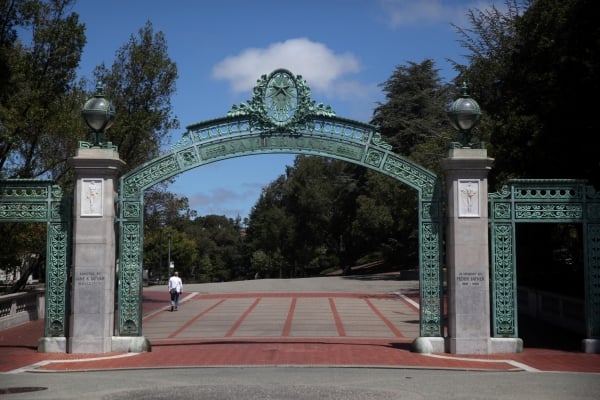
    Justin Sullivan/Getty Images

    The University of California, Berkeley, told about 160 faculty, staff and students on Sept. 4 that their names appeared in documents officials gave to the Trump administration, which is investigating the university’s response to reports of campus antisemitism, The New York Times reported

    According to Berkeley, the 160 names provided to the Education Department in compliance with the investigation include people accused of or affected by antisemitic incidents, as well as those who filed complaints about antisemitism on campus.

    Berkeley is one of numerous higher education institutions the Trump administration is investigating for alleged antisemitism, including the University of California, Los Angeles. The UC system is also weighing Trump’s demands that UCLA pay the government a $1.2 billion settlement to restore $584 million in frozen federal research funding.  

    Berkeley’s decision to hand over the 160 names comes two months after House Republicans grilled Berkeley’s chancellor, Rich Lyons, and two other university leaders at a hearing about their alleged failures to protect Jewish students from discrimination and harassment. At the hearing, Lyons said the university has an “obligation to protect our community from discrimination and harassment” and uphold the First Amendment’s guarantee of free speech.

    While some alumni criticized Berkeley’s compliance with the Trump administration’s investigation, the UC system said in a statement to the Times that it’s “committed to protecting the privacy of our students, faculty, and staff to the greatest extent possible, while fulfilling its legal obligations.”

    Source link

  • More Colleges Promise Grads Employment, Grad School Placement

    More Colleges Promise Grads Employment, Grad School Placement

    For some students, enrolling in college can feel like a gamble due to the high cost and lack of a clear career at the end of the program. But a growing number of colleges and universities are guaranteeing students will land a job or graduate program slot within months of graduation.

    Bethel University in St. Paul is the latest to make such a promise; Bethel’s Career Commitment provides students in the College of Arts & Sciences with additional assistance if they are still unemployed or not enrolled in graduate school six months after graduation—including by offering a tuition-free spot in a graduate-level Bethel course or a staff job at the university. 

    The trend indicates a growing awareness among institutions of their responsibility to provide students with career-development opportunities, as well as their recognition that a lack of institutional support can impact the college’s perceived value.

    State of play: Nationally, institutions of higher education are struggling to demonstrate value to the public, including prospective students, parents and lawmakers. Much of the trepidation comes from a lack of transparency regarding colleges’ high cost of attendance and the mountain of student loan debt Americans hold, as well as high unemployment and underemployment rates among graduates.

    A recent survey by Tyton Partners found that among students who believe college is worth the cost, 95 percent think higher education is preparing them well for jobs and careers.

    In general, students give fair ratings to the work campuses are currently doing to prepare them for their professional lives. A 2024 Student Voice survey by Inside Higher Ed and Generation Lab found that the plurality of students rate their institution’s efforts in career development as “average” (34 percent), 44.6 percent combined consider their college “good” or “excellent,” and 18 percent said poor or below average.

    Today’s college students are also eyeing a competitive job market during an economic downturn, as well as pressures from evolving technologies, such as generative artificial intelligence, that threaten entry-level roles.

    Embedding career development throughout the curriculum or as a graduation requirement is becoming more common, encouraging students to think about life after college earlier and in more meaningful ways so they aren’t caught unprepared when senior spring rolls around.

    Previous research shows that students engaged in career development are more likely to secure a job; a 2022 survey by the National Association of Colleges and Employers found that students who engaged with their career center received more job offers than their peers who didn’t. But some structural barriers can hinder students’ ability to participate in career activities, including off-campus work, caregiving responsibilities or lack of awareness of services. Internships are also increasingly competitive, leaving some students behind.

    How it works: A key piece of the Bethel Career Commitment is that students must undertake significant measures to advance their own career before the university will open additional doors of support.

    Students must complete four “phases” of career preparation prior to graduation to be eligible for a spot in Bethel’s career commitment plan. The elements include creating a Handshake profile, meeting with a career-development coach and participating in an internship. And after they earn their degree, students must meet with a career coach monthly and apply for at least 20 jobs per month to complete the final phase.

    In addition, students must have a minimum 3.0 GPA, be in good financial standing with the university and be willing to relocate.

    For students who don’t meet all the eligibility requirements, the university provides postgraduation career support in the form of coaching, Bethel University president Ross Allen told Inside Higher Ed.

    “Today, 99 percent of Bethel graduates are employed or in graduate school within a year, so we expect a small number of graduates will need the additional postgraduation support,” Allen said.

    He anticipates that graduate-level credits will often be “the most helpful next step vocationally,” but the university may offer short-term employment opportunities to students based on staffing needs, Allen said.

    A national picture: Other institutions, including Thomas College in Maine, Davenport University in Michigan, Curry College in Massachusetts and the University of Tulsa, guarantee their graduates employment, also on the condition that students participate in career development while enrolled.

    At Davenport, for example, students in select majors who earn a 3.0 GPA, complete an internship or experiential learning opportunity, and participate in extracurricular activities are supported by the DU Employment Guarantee. The plan allows students to enroll in 48 additional credits tuition-free in a graduate, undergraduate or professional program at the university, as well as participate in career coaching and recruitment efforts.

    At Curry College, students who opt into the Curry Commitment receive assistance with federal student loans for up to 12 months. They are also given a paid internship or a tuition waiver for six credits of graduate studies at the institution. To be eligible, a student must participate in career advising, workshops and résumé development; earn at least a 2.8 GPA; and graduate within four years.

    None of these institutions differentiates among the types of job a student may secure—making no distinction between a part-time role or one that doesn’t require a bachelor’s degree—leaving some questions about the underemployment of college graduates.

    If your student success program has a unique feature or twist, we’d like to know about it. Click here to submit.

    Source link

  • Academic Leaders Under Pressure: What Provosts Are Saying

    Academic Leaders Under Pressure: What Provosts Are Saying

    Provosts remain committed to their institutions’ academic mission but face growing pressures that make the job more reactive than strategic, according to Inside Higher Ed’s 2025 Survey of College and University Chief Academic Officers with Hanover Research, out today. While 91 percent of respondents say they’re glad to have pursued administrative work, only 29 percent report consistently having the resources to implement initiatives. 

    Other findings further reveal how leaders are responding to a shifting landscape within and outside higher education: Nearly a third of institutions represented have begun updating curricula to prepare students for artificial intelligence in the workplace, and more than half of provosts report declines in federal funding under the second Trump administration. Some 47 percent cite a “strategic compliance” approach to this new policy environment and 41 percent a “wait and see” approach. Many institutions are also trying out new ways to support research funding.

    On Wednesday, Oct. 22, at 2 p.m. Eastern, Inside Higher Ed will host a free live webcast on the findings with expert panelists who will share their reasons for optimism in higher education in 2025, along with their concerns about the sector and being a campus leader. Register for that here.

    Even amid these challenges, provosts’ confidence in academic quality remains high. Seventy-nine percent rate their institution’s academic health as good or excellent, and 87 percent say their college’s innovative programs are serving students well. Yet, a majority of provosts note uneven support across disciplines and limited resources for certain student populations, namely those with disabilities. Some doubts about scaling online education for quality are also present.

    Download the full survey report, produced with support from Coursedog, Honorlock and Watermark, here.

    Mental health and well-being are other pressing concerns: Most provosts say their campus has responded effectively to the student mental health crisis, but fewer see overall student health improving. Community college leaders, in particular, highlight food and housing insecurity as a top challenge.

    Read more about what provosts have to say about campus speech and other topics—including the federal policy environment and artificial intelligence, here and here.

    Source link

  • Roll up roll up for the great higher education fire sale

    Roll up roll up for the great higher education fire sale

    Since the announcement, most eyes interested in “radical transformation” have been on the creation of a new “super-university” – Greenwich and Kent becoming the London and South East University Group.

    But The Times is reporting a very different kind of tie-up – which if it comes to pass could have much more interesting implications.

    It says that the University of Buckingham, the UK’s only “independent” university, is considering a £150 million sale to Global University Systems (GUS).

    It suggests that the potential sale could compromise the university’s Royal Charter, non-profit status, and academic integrity – risking its identity as a “free speech and research-focused institution”.

    Precedented

    If that sounds and feels “unprecedented”, you may not have noticed the extent to which everything from research parks to student accommodation are already (part or fully-)owned by private companies.

    You may also not have noticed any number of mergers, takeovers and fire sales among small private HE providers – many of which specialise in the kinds of franchised provision that have been generating considerable regulatory interest in recent months.

    There’s also Richmond, the American University in London. When founder Sir Cyril Taylor died in 2018, he bequeathed his for-profit company (American Institute for Foreign Study) to his own charitable foundation (Cyril Taylor Charitable Foundation).

    It created what former vice chancellor Lawrence Abeln called a charity “operating like a shell for a commercial company it wholly owns” – allowing commercial interests to control educational decisions through charitable structures while maintaining the appearance of independence.

    Abeln argued that the foundation used funding as leverage to demand governance changes, including his forced resignation, threatening the university’s survival unless commercial interests were satisfied.

    It mirrors concerns about the potential Buckingham sale – that once charitable educational institutions become dependent on private sector funding or ownership, academic independence becomes vulnerable to commercial priorities.

    Even when the charitable structure remains intact, the substance of independent governance can be hollowed out, creating what critics might term a “stealth privatisation” where commercial control operates behind charitable facades.

    Any number of things could be going on behind the scenes that already resemble that in universities that have breached, or are close to breaching, their banking covenants.

    But the wholescale takeover of a university with a Royal Charter? Really?

    We work at supplying HE

    Back in 2020, five men registered a UK company called “GGE UK Newco” in a WeWork near London Fields. Within four months, it had acquired university title, degree awarding powers, and registration with the Office for Students – a process that typically takes years for new higher education providers.

    The company pulled this off by purchasing the assets of the former Regent’s University London charity, including its degree awarding powers (awarded in 2012) and university title (granted in 2013). On September 29th, GGE UK Newco changed its name to “Regent’s University London Limited,” becoming the wholly-owned product of a partnership between the original Regent’s University and Galileo Global Education, a large international education provider with over 110,000 students worldwide.

    The transaction appeared to have bypassed normal regulatory processes entirely. While new providers typically wait around 180 days and must pass a Quality and Standards Review, no such review appeared to have been conducted for Regent’s University London Limited. OfS was largely silent on the specifics, raising real questions about transparency and whether standard due diligence procedures were followed.

    As DK noted at the time, the case was interesting insofar as it suggested that university titles and degree awarding powers can effectively be bought and sold as assets. With some independent providers still waiting on registration decisions, the apparent fast-tracking raised concerns about fairness and regulatory consistency, potentially setting a precedent for more financially-motivated restructuring in the sector.

    And there’s more

    Scroll forward to March 2023, when IU Group acquired the education and training activities of the London Institute of Banking and Finance through a structural split.

    The original Royal Charter charity was renamed “The London Foundation for Banking & Finance (LFBF)” and continues as a charitable foundation, while the commercial education business now operates as “LIBF Limited” (a wholly owned UK subsidiary of IU Group) trading under the original name “The London Institute of Banking & Finance.”

    That preserved the charitable Royal Charter structure while transferring the degree-awarding educational operations to private ownership.

    Then in 2014, struggling Ashridge Business School was acquired by Hult International Business School in what was described as both a merger and acquisition driven by Ashridge’s need for “financial salvation.” Hult provided a £50 million investment, and the schools completed an operational merger in 2015.

    Ashridge now operates as “Hult Ashridge Executive Education” – the executive education arm of Hult International Business School, with the historic Ashridge House estate serving as Hult’s flagship executive education campus. Unlike LIBF, this was a complete absorption rather than a structural split, with Ashridge’s independent existence ending as it became part of Hult’s global network of campuses across Boston, London, Dubai, Shanghai, San Francisco, and New York.

    And then there’s the College of Law.

    It can trace its origins to 1876 with the formation of Gibson & Weldon, a leading tutorial firm. In 1962, The Law Society created The College of Law by merging its own Law Society School of Law (founded in 1903) with Gibson & Weldon, establishing it as a specialist institution for training solicitors.

    It was formally incorporated by Royal Charter on 5 December 1975 and registered as a charity in May 1976, with the stated aim “to promote the advancement of legal education and the study of law in all its branches.” This gave it constitutional status as a chartered institution dedicated to legal education. And in 2006, it was granted degree-awarding powers by the Privy Council.

    So when it was sold to Montagu Private Equity for around £200 million in 2012, the transaction revealed just how valuable degree-awarding powers had become as tradeable assets.

    The deal involved splitting the institution – the original College of Law retained its Royal Charter and charitable status under a new Legal Education Foundation, while the commercial education business, crucially including those 2006 degree-awarding powers, moved to a newly created for-profit company called “The University of Law Limited” (originally incorporated as “Col Subco No.1 Limited”).

    DAPs, it seemed, could now be packaged and sold as part of a commercial education business – degree-awarding powers as an asset class.

    At the time, constitutional lawyers questioned how powers granted to a Royal Charter body could legitimately transfer to what was essentially a separate company. But the then responsible Department for Business, Innovation and Skills (BIS) maintained that the powers remained valid because the “whole education and training business” had moved to the new entity. The precedent was set – and so in 2015, when the University of Law was acquired by GUS, its valuable degree-awarding powers travelled with it as part of the commercial package.

    Or take Arden. Originally founded as Resource Development International (RDI) in 1990 by entrepreneur John Holden, the distance learning provider was sold to US-based Capella Education in 2011 as part of Capella’s international expansion strategy. The timing proved crucial – RDI was granted Taught Degree Awarding Powers in April 2014, gained full university status in August 2015, and was immediately put back on the market when Capella’s international strategy faltered.

    By August 2016, GUS acquired Arden for £15 million – demonstrating how rapidly degree-awarding powers could travel through corporate hands. The transaction showed DAPs functioning specifically as tradeable assets – Capella had effectively acquired a company that later gained valuable regulatory permissions, then sold those permissions onwards as part of a portfolio optimisation. For GUS, acquiring Arden provided another set of degree-awarding powers to add to its growing collection, which already included the University of Law.

    Royal charters

    But the potential Buckingham sale arguably represents a qualitatively different proposition from previous transactions. While ULaw, LIBF, Ashridge, and Richmond were specialist institutions operating in commercial-adjacent sectors – professional training, banking education, executive development, or niche international provision – Buckingham is the UK’s flagship independent university, purpose-built to demonstrate that alternatives to state higher education could thrive.

    Established in 1976 and granted its Royal Charter in 1983, Buckingham has operated successfully for over four decades as Thatcher’s “proof of concept” for educational independence. Unlike the struggling institutions that sought private sector rescue or the professional training providers that already operated in quasi-commercial spaces, in theory the sale of Buckingham would represent the commodification of the university ideal itself.

    It would also signal that even the most symbolically important Charter institutions – those created explicitly to preserve educational independence – could be subject to market forces when financial incentives align.

    Whether structured as a direct sale or following a version of a model of splitting charitable and commercial operations, a Buckingham transaction would force regulators to confront fundamental questions they’ve previously avoided. The Office for Students, the Privy Council and potentially the Charity Commission would need to justify why the commercialisation of Britain’s flagship independent university serves the public interest.

    If it happens, regardless of the technicalities of its legal structure, it would also establish that Royal Charter status provides no meaningful protection against commercialization, making virtually any institution a potential acquisition target – completing the evolution of degree-awarding powers from constitutional privileges into tradeable corporate assets.

    Back to the future

    As Mary Synge demonstrates in her analysis of university charity law regulation, universities are charities whose trustees have a fundamental legal duty to act “in the best interests of the charity” – not commercial interests, and not even student interests – at least as variously defined by politicians.

    When charitable assets and degree-awarding powers become tradeable commodities, this feels like a fundamental breach of charity law principles that have governed universities for centuries. The strategic goals of “maximising growth in income” that might benefit institutional finances are legally distinct from – and potentially in conflict with – acting in the charity’s best interests for public benefit.

    But the regulatory conditions that make the Buckingham sale possible have been deliberately created. Synge’s research shows how OfS has systematically weakened charity law oversight compared to its predecessor HEFCE, removing transparency requirements, diluting governance standards, and abandoning serious incident reporting.

    Where HEFCE demanded universities demonstrate compliance with charity law principles, OfS has reduced this to a mailing list subscription. The regulatory hollowing-out creates the conditions where transactions that should trigger intensive charity law scrutiny can proceed with minimal oversight.

    When the regulator tasked with promoting charity law compliance barely acknowledges charity law exists, constitutional protections become meaningless.

    Back to the future

    As ever, we’ve been here before – or at least the FE sector has. Back in 2016, FE Week got hold of a leaked government document that revealed the Department for Education (DfE) was actively planning for private sector acquisition of failing FE colleges.

    A draft “Framework for due diligence in the FE sector following area reviews” (a process which itself had nudged/inspired/funded a series of mergers and groups) specifically addressed the “acquisition of an FE college by a private sector organisation,” noting that private providers “may have different benchmarks and parameters as to what is acceptable in terms of both curriculum and financial performance.”

    BIS guidance published that March had already unveiled government plans to introduce an insolvency regime for colleges, explicitly stating that following area reviews, government would “no longer bail out colleges in financial trouble, but would instead allow them to go bust.” Sound familiar?

    Critics warned of potential “fire sales” where private equity firms could asset-strip college buildings and facilities, cherry-picking profitable courses while abandoning community obligations. And the University and College Union (UCU) pointed to American examples of private equity involvement leading to “derisory rates of graduation, crushing levels of debt and of course dubious value.”

    The Technical and Further Education Bill (2016) created a “Special Administration Regime” for FE – essentially corporate insolvency procedures for FE colleges with an “education objective” twist. One battle during debate on the Bill came when Labour’s Gordon Marsden attempted to protect publicly-funded college assets from private acquisition.

    Marsden argued that FE colleges represented decades of public investment – from 1950s local authority funding through the multi-billion pound Building Colleges for the Future programme – and warned that defeat would enable private equity “asset stripping” of educational institutions built with taxpayer money.

    But then Minister Robert Halfon rejected the amendment – arguing that student protection must override asset protection, even if it meant transferring publicly-funded infrastructure to private companies. When the division was called, Conservative MPs defeated the amendment 8-5, explicitly authorising education administrators to transfer college assets to private entities if deemed necessary for the “education objective.”

    It established the principle that educational assets, regardless of their public funding history, could be commodified and transferred to private ownership when market logic demanded it.

    Here in 2026, we have a Labour, not Conservative government. It is already “interested” in what’s been going on in the franchised for-profit sector. But it doesn’t seem to have been especially keen to question what’s been going on from a profit/principle point of view. And it’s not clear that what is planned in regulatory terms will be nimble enough to tackle the real questions that surround outcomes or quality.

    As is increasingly clear, the “line” between private and public interest has already been blurred by loans, accommodation, research parks and all sorts of other aspects of HE. What the government does or doesn’t do over a potential sale of Buckingham will tell us whether it’s interested in, or willing to, draw a line before the examples in blogs like this become much less obscure.


    Source link