
Tag: eliminate

  • You can’t eliminate real-world violence by suing over online speech

    You can’t eliminate real-world violence by suing over online speech

    With so much of our national conversation taking place online, there’s an almost reflexive tendency to search for online causes — and online solutions — when tragedy strikes in the physical world. The murder of Charlie Kirk was no exception. Almost immediately, many (some in good faith, and others decidedly less so) began to postulate about the role played by online rhetoric and polarization.

    Taking the stage at Utah Valley University to discuss political violence last week, Sens. Mark Kelly and John Curtis shared the view that social media platforms are fueling “radicalization” and violence through their content-recommendation algorithms. And they previewed their proposed solution: a bill that would strip platforms of Section 230 protections whenever their algorithms “amplify content that caused harm.”

    This week, the senators unveiled the Algorithm Accountability Act. In a nutshell, the bill would require social media platforms to “exercise reasonable care” to prevent their algorithms from contributing to foreseeable bodily injury or death, whether the user is the victim or the perpetrator. A platform that fails to do so would lose Section 230’s critical protection against being treated as the publisher of user-generated content — and injured parties could sue the platform for violating this “duty of care.”

    The debate over algorithmic content recommendation has been going on for years. Lower courts have almost universally held that Section 230 immunizes social media platforms from lawsuits claiming that algorithmic recommendation of harmful content contributed to terrorist attacks, mass shootings, and racist attacks. When faced with the question in 2023, the Supreme Court declined to rule on the scope of Section 230 — opting instead to hold the claims of algorithmic aiding and abetting at issue would not survive either way.

    Forcing social media platforms to do the dirty work of censorship on pain of expensive litigation and expansive liability is no less offensive to the First Amendment than a direct government speech regulation.

    But there’s an important question that usually gets lost in the heated debate over Section 230: Would such lawsuits be viable even if they could be brought?

    In a Wall Street Journal op-ed making the case for his bill, Sen. Curtis wrote, “We hold pharmaceutical companies accountable when their products cause injury. There is no reason Big Tech should be treated differently.”

    At first blush, this argument has an instinctive appeal. But it ultimately dooms itself because there is a reason to treat social media platforms differently. That reason is the First Amendment, which enshrines a constitutional right to free speech — a protection not shared by prescription drugs.

    Perhaps anticipating this point, Sen. Curtis argues that the Algorithm Accountability Act poses no threat to free speech: “Free speech means you can say what you want in the digital town square. Social-media companies host that town square, but algorithms rearrange it.” But free speech doesn’t only protect users’ right to post online free of government censorship; it also protects the editorial decisions of those that host those posts — including algorithmic “rearranging,” to use the senator’s phrase. As the Supreme Court recently affirmed in Moody v. NetChoice:

    When the platforms use their Standards and Guidelines to decide which third-party content those feeds will display, or how the display will be ordered and organized, they are making expressive choices. And because that is true, they receive First Amendment protection.

    The “rearranging” of speech is just as protected as the speech itself, as when a newspaper decides which stories to print on the front page and which letters to the editor to publish. That is no less true for social media platforms. In fact, the term “content-recommendation algorithm” itself points to its expressive nature. Recommending something is a message — “I think you would find this interesting.”

    The Moody Court also acknowledged the expressive nature of arranging online content (emphasis added): “Deciding on the third-party speech that will be included in or excluded from a compilation — and then organizing and presenting the included items — is expressive activity of its own.” Similarly, while dismissing exactly the kind of case the Algorithm Accountability Act would enable, the U.S. Court of Appeals for the Fourth Circuit held this past February: “Facebook’s decision[s] to recommend certain third-party content to specific users . . . are traditional editorial functions of publishers, notwithstanding the various methods they use in performing” them.

    The NO FAKES Act is a real threat to free expression

    In Congress, the “NO FAKES” bill claims to promise deepfake fixes, but their restrictions on expression would chill news, history, art, and everyday speech.


    Read More

    So the First Amendment is at least implicated when Congress institutes “accountability” for a platform’s arrangement and presentation of user-generated content, unlike with pharmaceutical safety regulations. But does it prohibit Congress from imposing the kind of liability the Algorithm Accountability Act creates?

    Yes. Two well-established principles explain why.

    First: As the Supreme Court has repeatedly made clear, imposing civil liability for protected speech raises serious First Amendment concerns.

    Second: Except for the exceedingly narrow category of incitement — where the speaker intended to spur imminent unlawful action by saying something that was likely to cause such action — the First Amendment demands that we hold the wrongdoer accountable for their own conduct, not the people whose words they may have encountered along the way.

    The U.S. Court of Appeals for the Fifth Circuit concisely explained why these principles preclude liability for “negligently” conveying “harmful” ideas:

    If the shield of the first amendment can be eliminated by providing after publication that an article discussing a dangerous idea negligently helped bring about a real injury simply because the idea can be identified as ‘bad,’ all free speech becomes threatened.

    In other words, faced with a broad, unmeetable duty to anticipate and prevent ideas from causing harm, media would be chilled into publishing, broadcasting, or distributing only the safest and most anodyne material to avoid the risk of unpredictable liability.

    For this reason, courts have — for nearly a century — steadfastly refused to impose a duty of care to prevent harms from speech. A few noteworthy examples are illustrative:

    • Dismissing a lawsuit alleging that CBS’ television programming desensitized a child to violence and led him to shoot and kill his elderly neighbor, one federal court wrote of the duty of care sought by the plaintiffs:

    The impositions pregnant in such a standard are awesome to consider . . . Indeed, it is implicit in the plaintiffs’ demand for a new duty standard, that such a claim should exist for an untoward reaction on the part of any ‘susceptible’ person. The imposition of such a generally undefined and undefinable duty would be an unconstitutional exercise by this Court in any event.

    • In a case brought by the victim of a gruesome attack alleging that NBC knew of studies on child violence putting them on notice that some viewers might imitate violence portrayed on screen, the court ruled:

    [T]he chilling effect of permitting negligence actions for a television broadcast is obvious. . . . The deterrent effect of subjecting [them] to negligence liability because of their programming choices would lead to self-censorship which would dampen the vigor and limit the variety of public debate.

    • Affirming dismissal of a lawsuit alleging that Ozzy Osbourne’s Suicide Solution caused a minor to kill himself, the court noted the profound chilling effect such liability would cause:

    [I]t is simply not acceptable to a free and democratic society to impose a duty upon performing artists to limit and restrict the dissemination of ideas in artistic speech which may adversely affect emotionally troubled individuals. Such a burden would quickly have the effect of reducing and limiting artistic expression to only the broadest standard of taste and acceptance and the lowest level of offense, provocation and controversy.

    • When the family of a teacher killed in a school shooting sued makers and distributors of violent video games and movies, the court rejected the premise of the suit:

    Given the First Amendment values at stake, the magnitude of the burden that Plaintiffs seek to impose on the Video Game and Movie Defendants is daunting. Furthermore, the practical consequences of such liability are unworkable. Plaintiffs would essentially obligate these Defendants, indeed all speakers, to anticipate and prevent the idiosyncratic, violent reactions of unidentified, vulnerable individuals to their creative works.

    In his op-ed, Sen. Curtis wrote, “The problem isn’t what users say, but how algorithms shape and weaponize it.” But the “problem” this bill seeks to remedy very much is what users say. A content recommendation algorithm in isolation can’t cause any harm; it’s the recommendation of certain kinds of content (e.g., radicalizing, polarizing, etc.) that the bill seeks to stymie.

    And that content is overwhelmingly protected by the First Amendment, regardless of whether the posts might, individually or in the aggregate, cause an individual to commit violence. When the City of Indianapolis created remedies for people who viewed pornography, the U.S. Court of Appeals for the Seventh Circuit rejected the municipality’s justification that pornography “perpetuate[s] subordination” and leads to cognizable societal and personal harms:

    [T]his simply demonstrates the power of pornography as speech. All of these unhappy effects depend on mental intermediation. Pornography affects how people see the world, their fellows, and social relations. If pornography is what pornography does, so is other speech.

    [ . . . ]

    Racial bigotry, anti-semitism, violence on television, reporters’ biases — these and many more influence the culture and shape our socialization. None is directly answerable by more speech, unless that speech too finds its place in the popular culture. Yet all is protected as speech, however insidious. Any other answer leaves the government in control of all of the institutions of culture, the great censor and director of which thoughts are good for us.

    And that’s why the Algorithm Accountability Act also threatens users’ expressive rights. There’s simply no reliable way to predict whether any given post might, somewhere down the line, factor into someone else’s independent decision to commit violence — especially at the scale of modern social media. Faced with liability for guessing wrong, platforms will effectively have two realistic choices: aggressively re-engineer their algorithms to bury anything that could possibly be deemed divisive (and therefore risky), or — far more likely — simply ban all such content entirely. Either road leads to the same place: a shrunken public square where whole neighborhoods of protected speech have been bulldozed.


    WATCH VIDEO: A warning label on social media? | So to Speak: The Free Speech Podcast

    “What a State may not constitutionally bring about by means of a criminal statute,” the Supreme Court famously wrote in New York Times v. Sullivan, “is likewise beyond the reach of its civil law.” Forcing social media platforms to do the dirty work of censorship on pain of expensive litigation and expansive liability is no less offensive to the First Amendment than a direct government speech regulation.

    Political violence is a real and pressing problem. But history has already taught us that trying to scrub away every potential downstream harm of speech is a dead end. And a system of free speech requires us to abstain from the temptation of trying in the first place.

    Source link

  • Can you eliminate a gender gap by segregating genders?

    Can you eliminate a gender gap by segregating genders?

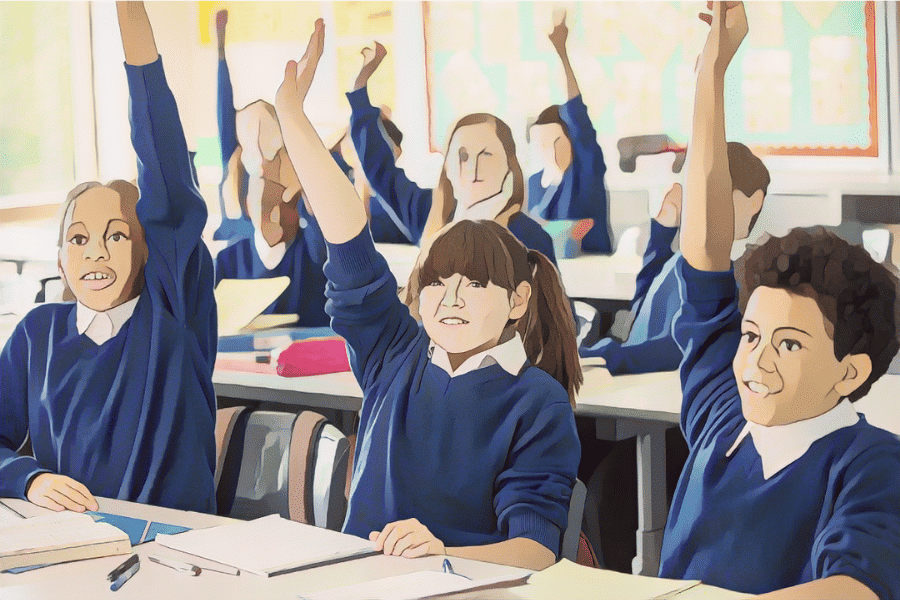
    In her 23 years as an educator at Hunter College High School, a highly-competitive coeducational high school in New York City, Jana Lucash has found that boys in her class will often participate even when they are not prepared. Her female students, in contrast, seem to be unwilling to participate unless they absolutely know the correct answer. 

    This is one reason that many parents choose to send their daughters to all-girls schools. These schools are known for fostering connections and developing academic success. 

    But do social pressure, competition and other negative consequences outweigh the benefits of a predominantly female environment?

    I attend an all-girls school and so I decided to explore the positive and negative aspects of being a part of this type of environment.

    All-girls schools are educational institutions catering exclusively to female students, allowing them to grow intellectually and socially in a single-gender environment. 

    Gender segregation

    These schools generally have a reputation for creating a supportive and empowering atmosphere for young girls and women. The purpose of an all-girls school is to encourage academic excellence, build confidence and teach leadership skills to their students. 

    While these institutions around the world often leave positive impacts on their attendees, like increased participation in class and eliminating distractions, they are also critiqued for their competitive nature, which could negatively affect student mental health. 

    These issues raise serious concerns and questions about how beneficial and positively impactful these all-girls schools truly are for the population that they serve.  

    Research has shown that all-girls schools increase student participation in the STEM field and other male-dominated fields after graduation. A study conducted by Goodman Research Group, back in 2005 asked some 1,000 recent graduates of all-girl schools to participate in a survey, which focused on the academic and social impact of single-gender institutions. 

    After conducting the survey, the authors found that 74% of the grads felt more encouragement in math, science and technology by attending an all-girls school. Additionally, they found that all-girls school graduates were six times more likely to major in science, math and technology, in comparison to girls attending coeducational schools. 

    Girl empowerment

    All-girls institutions cultivate an environment where female students feel empowered to explore their interests and academic pursuits, specifically in male-dominated fields. This not only encourages young women to follow their aspirations, but allows them to challenge the stereotypical gender barriers in professional fields where women are underrepresented. 

    All-girls schools also offer students a social environment with a strong sense of community and an emphasis on building strong relationships. Many young women feel more connected to their peers and lose the social pressures that are typically present in coeducational schools. 

    A 2013 survey, which was conducted on behalf of the National Coalition for Girls Schools, asked a series of questions to 2,000 students from schools that were all-girls, with an additional 5,000 girls who attended coed private schools and another 5,000 girls who attended coed public schools. 

    The study concluded that almost 97% of all-girls school students felt their ideas and opinions were more respected at their single-gender school compared to 58% of girls at coeducational schools.

    Without feeling pressure and judgement from their male counterparts, female students tend to feel more safe and are more inclined to express themselves and their ideas. This environment allows students to feel a sense of belonging, confidence and power that is not always found in a coed environment.

    Coed education versus single-gender schools

    At coeducational schools, girls’ voices and opinions might be self silenced or silenced by the more rambunctious boys in the room. In addition, these institutions and faculty can further undermine the confidence and self-worth of their female students.

    Lucash at Hunter College High School, for example, found that girls tend to self-silence and boys have no trouble expressing themselves throughout class. 

    This sentiment is echoed by a 10th-grade student at The Hewitt School, which I attend. Abby Potenza attended a coeducational school prior to switching to Hewitt.

    “Being at an all-girls school has given me both confidence and a sense of comfort to express my opinions and ask questions, which I did not receive at a coed school,” Potenza said. “I feel the environment, both social and educational, is stronger and more supportive at an all-girls school.”

    When I was an elementary school student in a progressive, coeducational environment, I too experienced the detrimental impact of being silenced, both institutionally and by an educator. 

    Being silenced and self-silencing

    In an advanced math class in fourth grade, I found myself one of three girls in a class of 20 students. For a school which valued diversity and equity, it was disturbing that the institution itself could not see that as a problem.

    This shows that many institutions in the 21st century do not prioritize creating a supportive and empowering environment for girls.

    Most positive associations with single-gender education can be countered by certain challenges and all-girls schools are no exception. While these schools empower young women and can foster a supportive environment, a sense of competition can often emerge.

    Miriam Walden teaches English at The Hewitt School and sees a similar competitive nature. 

    “Even when you take away the boys in the classroom, there is still competition between girls, a lot of competition,” Walden said. “It’s very subtle and it’s very insidious and so there is a lot of harm that happens at the school, socially, around status, academic success, wealth, where you are going to college. All of this stuff becomes extremely damaging to many students.”

    The global popularity of single-gender education

    Outside of the United States, single-gender education is popular in many countries. The reasoning for attending these single-gender schools varies from community to community, country to country. Some of the variables that impact the choice to attend these schools include religion, socio-economic status and geography. 

    In 2022, University of Oslo researcher Sadaf Basharat looked at math achievement in Saudi Arabia where single-gender education is mandatory and found that girls do better than boys in math, according to international assessment standards known as TIMSS. 

    Other countries in the Middle East, such as Oman, Iran, Kuwait and Bahrain, which have a high proportion of single-gender schools, have also seen female students in recent years outperforming their male classmates in math.

    While single-gender schools open the opportunity for girls and young women to be educated, countries such as Afghanistan are prohibiting women from attending secondary schools, whether single-gender or coeducational.

    The academic effect single-gender schools in the United States have on their students is equal to the ones at international single-gender schools. A 2016 study in the Caribbean Educational Research Journal found that students at all-girls schools in the Caribbean have a higher passing rate than both girls attending coeducational schools, as well as boys in coeducational schools and single-gender schools.  

    Due to the demographics of the students who attend all-girls schools outside of the United States, the data is not as conclusive as to the negative impact of these types of schools on their students’ competitive nature. 

    For instance, UNESCO published a study by the London Business School’s Global Entrepreneurship Monitor that found that all-girl’s schools in countries such as Trinidad and Tobago and Thailand attract a wealthier subset of the population, which could create a false representation of what the possible positive outcomes are. 

    Competition between girls

    All-girls schools offer an educational environment with both important benefits and possible limitations for students. On one hand, these institutions offer students a supportive atmosphere which encourages them to reach their full potential and cultivate a strong sense of confidence. This environment can lead to higher academic success and a greater likelihood of breaking gender norms in the workplace. 

    They also encourage young women to move past gendered expectations regarding future intellectual pursuits and challenges them to break societal barriers by moving into STEM-based fields specifically. 

    On the other hand, all-girls schools can create a bubble of competition and rivalry that can limit a young woman’s development and aspirations. The focus on academic achievement is only intensified in a single-gender educational environment and can be pressuring and damaging. 

    Weighing out the benefits and drawbacks of an all-girls school is important when making the decision on whether to attend one, or in determining how you perceive single-gender schools in general. The question is, what would be best for you or your daughter?


    The views and citations expressed by this student journalist are their own and not those of their school or any person or organization affiliated or doing business with their school.


    Questions to consider:

    1. Why might a parent choose to send a child to a single-gender school?

    2. Why do some teachers think girls don’t do as well when there are boys in the class?

    3. Do you think you would do better or worse by changing to an single-gender school if you attend a coed school now or vice versa? Why?


    Source link

  • Eliminate the Structured Interview (opinion)

    Eliminate the Structured Interview (opinion)

    Job interviews have become significantly more formulaic and predictable. Employers seem to increasingly favor standardized or structured interviews, in which each applicant is presented with the same questions in the same order, with no variation permitted.

    Over the past few years, I have had almost 20 such interviews for faculty positions, all almost exactly identical, as if the questions were read from a script. I was able to prepare my answers ahead of time just by consulting the ad. After I answered each question, the search committees moved on to the next one, with little or no follow-up. Every interview ended with “do you have any questions for us?” but even then there was no sense of conversational give and take.

    There are two main reasons employers use structured interviews. One is that they are supposed to level the playing field between candidates, ensuring fairness. They are considered a best practice for the elimination of unconscious biases in interviewing. The other reason is that unstructured or open interviews are lousy predictors of job performance, as research has repeatedly shown.

    But neither of these arguments is convincing. The structured interview is based on a flawed conception of fairness as well as a misguided understanding of what a job is. These flat and dehumanizing conversations are just as pointless as they seem to anyone who has been subjected to one. In the interest of genuine fairness and for the sake of healthy workplaces, the structured interview should be eliminated.

    Start with the confusion about fairness. The structured interview rests on the assumption that the elimination of the interviewer’s subjective, individual perspective results in greater objectivity and thus less discrimination. But there’s nothing intrinsically fair about making everyone answer the same questions. On the contrary—making everyone answer the same questions goes against the very idea of equity.

    Equity is the idea that individuals start in different places and that adjustments must be made to ensure fairness. It’s a worthy and important principle. In an emergency room, it might dictate that patients be treated based on the severity of their condition rather than on when they arrived. In a workplace, it might dictate that employees with physical disabilities be provided with additional resources to allow them to perform the job.

    In the case of interviews, equity requires that employers make the effort to meet candidates where they are, so that each candidate can showcase their unique strengths. If a candidate served in the Iraq War before entering academia, for example, it might make more sense to spend more time discussing that experience than it would discussing previous jobs with a candidate who had worked only in academia.

    This kind of imbalance in the interview process would hardly be unfair. Indeed, it would be unfair not to give the Iraq veteran a chance to discuss the relevance of her war experience.

    It also makes the candidate feel seen and interesting. My structured interviews were exhausting, not because the questions were difficult, but because they were alienating and depressing. Designed to stifle the candidate’s individuality, structured interviews can end up costing candidates a lot in dignity and self-esteem. They are supposed to eliminate emotions from the hiring process, but in reality the candidate may go through intense negative emotions: In my experience, it felt like running a gantlet, in which questions were not real problems to solve, but a string of reminders that I was just one of many faceless cogs.

    This brings us to the argument that unstructured interviews are lousy predictors of job performance. That argument assumes that what counts as “performance” is skills and deliverables, rather than the human element of the workplace. But what is a job, really, apart from working with other people? The structured interview neglects what really impacts job performance: the personal attributes of the individuals involved, their commitment to the work and their ability to work with colleagues. These interviews cannot predict how well my co-workers and I will get along, how long I will stay, how dedicated I will feel over time, how the job will challenge me and build my character—all essential elements of successful performance.

    Job interviews are more equitable and more informative about what really matters when they are open-ended conversations. And such conversations let applicants evaluate prospective employers, too: Structured interviews give the candidate very little insight into their potential employer. The perfunctory and dreaded “do you have any questions for us?” tells me nothing about why I should want the job. Open interviews, by contrast, take the candidate seriously, as someone who can accept an offer or walk away.

    Having unconscious biases is part of the human condition—everyone has them. We should strive to mitigate them in hiring practices, but not at the cost of the candidates’ self-esteem. What should we talk about in open interviews? The job, of course. But the absence of a formula allows the exchange to center on the people and take place in the moment. Is this not the ultimate goal behind our desire to eliminate unconscious bias—to be able to see people as they truly are?

    Margret Grebowicz is the Maxwell C. Weiner Distinguished Professor of the Humanities and professor of philosophy at the Missouri University of Science and Technology.

    Source link