
Tag: Elites

  • The Mis-education of Global Elites

    The Mis-education of Global Elites

    Across the United States, the U.K., Europe, and increasingly the Gulf States and East Asia, elite education has become a finishing school for rulers rather than a training ground for genuine public servants. These institutions—rich in endowment, selective in admission, steeped in prestige—construct worldviews that normalize inequity as efficiency, privatization as innovation, and austerity as necessity. Instead of interrogating the historical and structural forces that produce suffering, elite curricula often neutralize them, reducing political economy to management science and social justice to branding.

    This mis-education manifests in global leadership failures. The same graduates who enter parliaments, presidential cabinets, central banks, multinational boards, and international NGOs routinely oversee policies that accelerate inequality and erode the public sphere. Many come from universities with unparalleled research capacity and moral rhetoric, yet preside over housing crises, medical debt catastrophes, and planetary degradation. They authorize wars but rarely experience them. They tout meritocracy while gatekeeping opportunity. They celebrate entrepreneurship while dismantling public goods. Their philanthropic initiatives—often built from profits derived through tax avoidance, monopolization, and labor exploitation—give the appearance of benevolence without altering the underlying systems of harm.

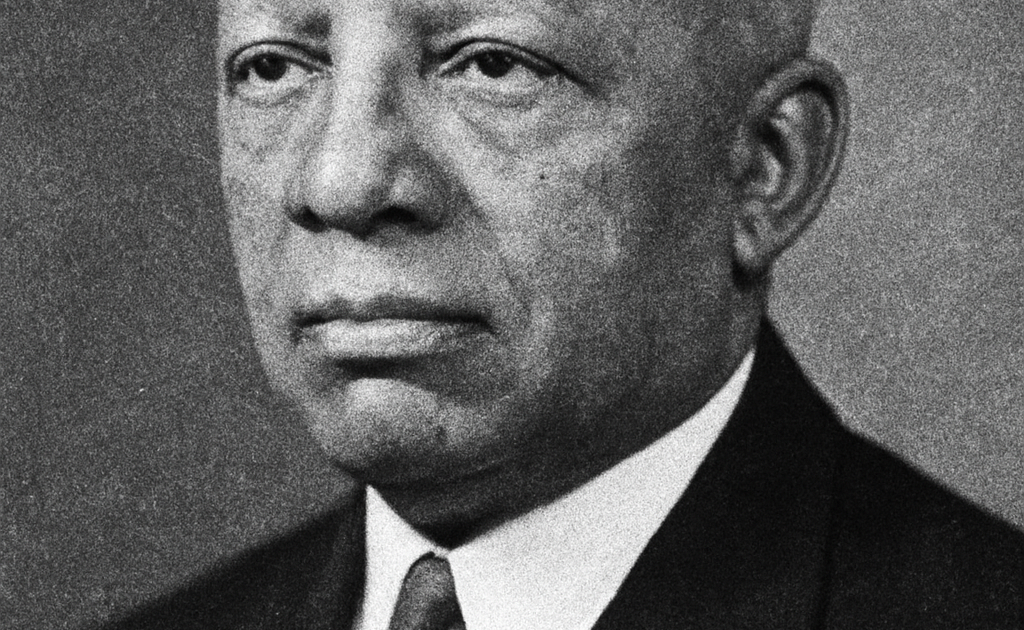
    Carter G. Woodson’s warning in The Mis-education of the Negro echoes eerily here: “When you control a man’s thinking you do not have to worry about his actions.” Global elites, educated into a narrow ideology that glorifies markets and hierarchy, do not need to be coerced into maintaining destructive systems—they do so voluntarily, believing themselves enlightened.

    Nowhere is this clearer than in the corporate education complex itself. Elite universities produce the analysts who rationalize austerity, the managers who coordinate privatization, the consultants who reengineer public institutions to mimic corporations, and the financiers who define the metrics of success. They also cultivate the ideological insulation that shields elites from accountability. When their policies trigger chaos, the explanation is never structural, only technical: markets corrected, externalities emerged, populists disrupted stability. The mis-education of elites ensures they cannot see failure as their own.

    Global institutions—from the IMF and World Bank to the UN and WTO—have mirrored this mindset. Their leaders, mostly trained in the same corridors of prestige, have promoted development models that prioritize capital mobility over community well-being, and foreign investment over local sovereignty. Even when faced with overwhelming evidence that structural adjustment, privatized healthcare, or financialization intensify human suffering, the elite worldview persists. The inability—or unwillingness—to imagine alternative systems is not an intellectual deficiency but the logical outcome of an education designed to reproduce power, not challenge it.

    Meanwhile, those most affected by global crises—workers, migrants, debtors, students, the poor—are told to adapt, innovate, or sacrifice. They are bombarded with entrepreneurial rhetoric and resilience talk while their material conditions worsen. Political leaders lament social fragmentation but continue to funnel wealth upward. University administrators speak of inclusion while expanding administrative hierarchies and outsourcing labor. Energy executives promise transitions while drilling new pipelines. Tech CEOs warn about misinformation while building the infrastructure that spreads it.

    The result is a world where the legitimacy of elites is evaporating. From Santiago to Paris, Lagos to Minneapolis, Delhi to London, mass movements are demanding accountability from institutions that have proven incapable of self-reform. The global backlash against inequality, authoritarianism, and corporate hegemony is not a misunderstanding—it is a recognition that the systems run by elites have failed.

    If there is to be a better world, the mis-education of elites must be confronted directly. That means transforming the mission of universities from prestige accumulation to public purpose; replacing managerialism with democratic governance; centering histories of resistance rather than merely histories of empire; teaching economic justice instead of market worship; and training leaders who measure success not by shareholder value or rankings but by human flourishing.

    Elites have long claimed exclusive expertise in solving the world’s problems. They have had centuries—and trillions—to prove it. They have failed miserably. A new generation of thinkers, activists, workers, and communities is already building the alternatives. Whether global elites choose to learn from them—or continue along their well-worn path of extraction and denial—will determine the next century.

    For now, the record is clear: the institutions that shaped the world’s most powerful people were never designed to create justice. And they haven’t.


    Academic Sources

    Baldwin, Davarian L. In the Shadow of the Ivory Tower: How Universities Are Plundering Our Cities. Bold Type Books, 2021.

    Bourdieu, Pierre. The State Nobility: Elite Schools in the Field of Power. Stanford University Press, 1996.

    Giroux, Henry A. Neoliberalism’s War on Higher Education. Haymarket Books, 2014.

    Harvey, David. A Brief History of Neoliberalism. Oxford University Press, 2005.

    Khan, Shamus Rahman. Privilege: The Making of an Adolescent Elite at St. Paul’s School. Princeton University Press, 2011.

    Mills, C. Wright. The Power Elite. Oxford University Press, 1956.

    Mkandawire, Thandika. “Institutional Monocropping and Monotasking in Africa.” UNRISD, 2007.

    Piketty, Thomas. Capital and Ideology. Harvard University Press, 2020.

    Saul, John Ralston. Voltaire’s Bastards: The Dictatorship of Reason in the West. Free Press, 1992.

    Sklair, Leslie. The Transnational Capitalist Class. Wiley-Blackwell, 2000.

    Stiglitz, Joseph E. Globalization and Its Discontents Revisited. W.W. Norton, 2017.

    Woodson, Carter G. The Mis-education of the Negro. Associated Publishers, 1933.
    Source link

  • Should Elites Get Bailed Out Again?

    Should Elites Get Bailed Out Again?

    In 1929, when the stock market crashed, millions of Americans were plunged into unemployment, hunger, and despair. Yet the elites of Wall Street—whose reckless speculation fueled the disaster—often landed softly. By 1933, as the Great Depression deepened, nearly a quarter of the U.S. workforce was unemployed, thousands of banks had failed, and working families bore the brunt of the collapse. Ordinary people endured soup lines, Dust Bowl migration, and generational poverty. The government of Franklin D. Roosevelt eventually stepped in with reforms and safeguards like the FDIC and Glass-Steagall, but not before working-class Americans had paid the heaviest price.

    Fast forward to 2008, when the global financial system once again teetered on collapse. This time, instead of letting the failures run their course, the U.S. government rushed to bail out Wall Street banks, auto manufacturers, and other corporate giants deemed “too big to fail.” Banks survived, CEOs kept their bonuses, and investors were shielded. Meanwhile, millions of working-class families lost their homes, jobs, and savings. Student loan borrowers, particularly those from working-class and minority backgrounds, never got a bailout. Adjunct faculty, contract workers, and gig laborers were left to navigate economic insecurity without systemic relief.

    The pandemic brought the same story in a new form. Corporate bailouts, Federal Reserve interventions, and stimulus packages stabilized markets far more effectively than they stabilized households. Wall Street bounced back faster than Main Street. By 2021, the wealth of America’s billionaires had surged by more than $1.8 trillion, while ordinary workers struggled with eviction threats, childcare crises, and medical debt.

    But the stakes are even higher today. U.S. elites are not only repeating past mistakes—they are doubling down on mass speculation across crypto, real estate, and equity markets. The rise and collapse of speculative cryptocurrencies revealed how wealth can be created and destroyed almost overnight, with everyday investors bearing the losses while venture capitalists and insiders cashed out early. Real estate speculation has driven housing prices beyond the reach of millions of working families, fueling homelessness and displacement. Equity markets, inflated by cheap debt and stock buybacks, have become disconnected from the real economy, rewarding executives while leaving workers behind.

    This speculative frenzy is not just an economic issue—it is an environmental one. Fossil fuel corporations and their financiers continue to reap profits from industries that accelerate climate change, deforestation, and resource depletion. The destruction of ecosystems, the intensification of climate disasters, and the burden of environmental cleanup all fall disproportionately on working-class and marginalized communities. Yet when markets wobble, it is these same polluting elites who position themselves first in line for government protection.

    The Federal Reserve has played a decisive role in this cycle. By keeping interest rates artificially low for years, it fueled debt-driven speculation in housing, equities, and corporate borrowing. When inflation spiked, the Fed shifted gears, raising rates at the fastest pace in decades. This brought pain to households through higher mortgage costs, rising credit card balances, and job insecurity—but banks and investment firms continued to receive lifelines through emergency lending facilities. The Fed’s interventions have too often prioritized elite stability over working-class survival.

    Political leadership has compounded the problem. Under Donald Trump, deregulation accelerated, with key provisions of the Dodd-Frank Act rolled back in 2018. Banks gained greater leeway to take risks, and oversight of mid-sized institutions weakened—a decision that later contributed to the collapse of Silicon Valley Bank in 2023. Trump’s tax cuts overwhelmingly favored corporations and the wealthy, further concentrating wealth at the top while leaving the federal government less able to respond to future crises. Even today, Trump and his allies signal that, if returned to power, they would pressure the Fed to prioritize markets over workers and strip down remaining regulatory guardrails.

    The logic of endless bailouts assumes that the survival of elites ensures the survival of the economy. But history proves otherwise. Whether in 1929, 2008, or 2020, the repeated subsidization of corporations and financial elites entrenches inequality, fuels reckless risk-taking, and leaves working families with the bill. The banks, crypto funds, and private equity firms that profit most during boom times rarely share their gains, yet they demand protection in busts.

    And the problem is no longer just domestic—it is geopolitical. While U.S. elites depend on bailouts, rival powers are recalibrating. China is building alternative banking systems through the Asian Infrastructure Investment Bank and the Belt and Road Initiative. Russia, sanctioned by the West, is tightening its economic ties with China and other non-Western states. India and Brazil, key players in the BRICS bloc, are exploring alternatives to U.S. dollar dominance. If the U.S. continues to subsidize private failure with public money, it risks undermining its own global credibility and ceding economic leadership to rivals.

    National security is directly tied to economic and environmental stability. A U.S. that repeatedly bails out elites while leaving ordinary citizens vulnerable erodes trust not only at home but abroad. Allies may question American leadership, while adversaries see opportunity in its fragility. If the U.S. financial system is perceived as permanently rigged—propping up elites while disempowering its workforce—it will accelerate the shift of global influence toward China, Russia, India, and Brazil.

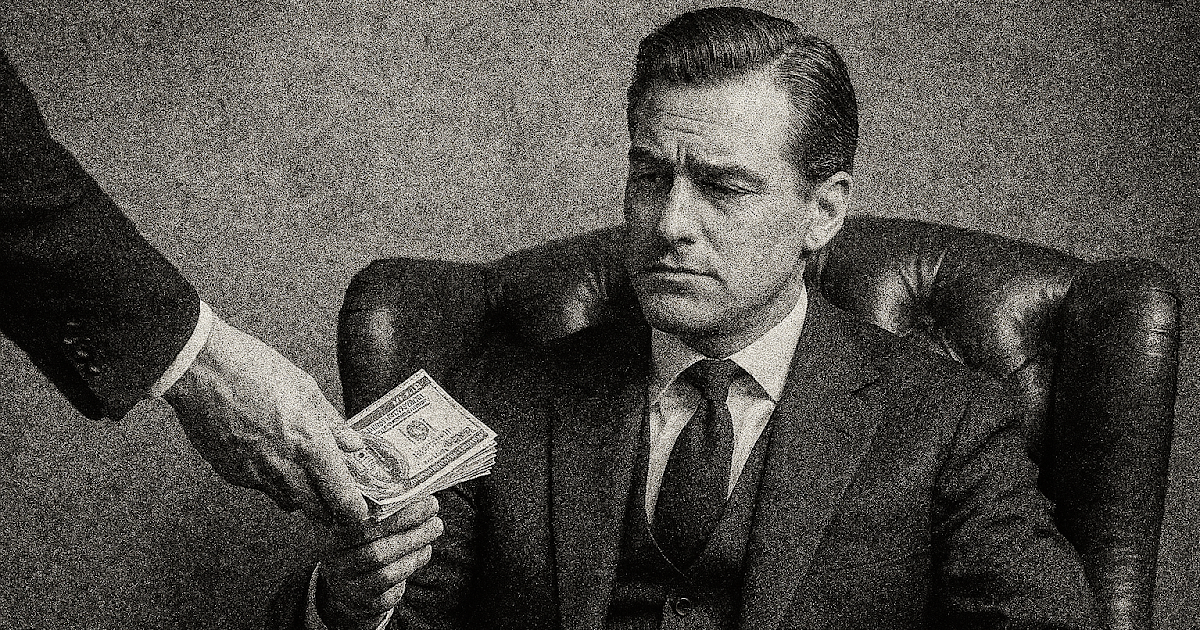
    Perhaps it’s time to let the system fail—not in the sense of mass suffering for ordinary people, but in the sense of refusing to cushion elites from the consequences of their own decisions. If banks gamble recklessly, let them face bankruptcy. If private equity firms strip-mine industries, let them collapse under their own weight. If universities chase speculative growth with predatory lending and overpriced credentials, let them answer for it in the courts of law and public opinion.

    Failure, though painful, can also be cleansing. Without bailouts, institutions would be forced to reckon with structural flaws instead of papering them over. Alternatives could emerge: community-based credit unions, worker-owned cooperatives, public higher education funded for the public good rather than private profit, and serious investment in green energy and sustainable development.

    The real question is not whether elites deserve another bailout. The real question is whether the United States can afford to keep subsidizing them while undermining its working class, its environment, and its national security. For too long, workers, students, and families have shouldered the costs of elite failure. The survival of the U.S. economy—and its place in the world—may depend not on saving elites, but on building something stronger and fairer in their place.


    Sources:

    • Congressional Budget Office, The 2008 Financial Crisis and Federal Response

    • Federal Deposit Insurance Corporation, Bank Failures During the Great Depression

    • Institute for Policy Studies, Billionaire Wealth Surge During COVID-19

    • Federal Reserve, Monetary Policy and Emergency Lending Facilities

    • Brookings Institution, Bailouts and Moral Hazard

    • BRICS Policy Center, Alternative Financial Governance Structures

    • Intergovernmental Panel on Climate Change (IPCC), Climate Change 2023 Synthesis Report

    • National Association of Realtors, Housing Affordability Data

    • Public Law 115-174, Economic Growth, Regulatory Relief, and Consumer Protection Act (2018)

    Source link