Recent U.S. actions in Venezuela, Ukraine, Yemen, South Sudan, and Palestine reveal how deeply embedded this pattern has become.
In Venezuela, the United States pursued years of sanctions, covert pressure, and diplomatic isolation as part of a regime-change strategy. Throughout this period, universities repeated a narrow range of policy narratives promoted by the State Department and U.S.-aligned think tanks. Panels and conferences elevated experts connected to defense contractors, oil interests, and government-funded NGOs, while the humanitarian consequences of sanctions and the legality of U.S. interference were often ignored. The atmosphere of academic neutrality masked a clear alignment with Washington’s objectives.
Universities also showed a troubling degree of complicity during Russia’s assault on Ukraine, a war marked by the systematic killing of civilians, mass displacement, and the kidnapping and forced transfer of Ukrainian children into Russia. Even after international human rights organizations and war-crimes investigators documented atrocities, some U.S. institutions maintained partnerships with Russian universities aligned with the Kremlin, accepted visiting scholars linked to state propaganda outlets, or avoided direct condemnation of Putin’s actions for fear of disrupting scientific or financial relationships. In certain cases, academic centers framed the invasion as a “complex geopolitical dispute” rather than a brutal, unilateral attack on a sovereign population, allowing Russian narratives about NATO, Western “provocation,” or Ukrainian illegitimacy to seep into public programming. While some campuses cut ties, others hesitated, revealing how financial incentives, research networks, and institutional caution can blunt moral clarity even in the face of internationally verified crimes against civilians and children.
Higher education’s relationship with the Gulf states adds another dimension to this complicity. As Saudi Arabia waged a catastrophic war in Yemen—with U.S. weapons, logistical support, and diplomatic protection—American universities deepened their financial partnerships with Saudi and Emirati institutions. Engineering programs, medical schools, cybersecurity labs, and energy research centers accepted major gifts and expanded joint research agreements. Few leaders questioned these ties, even as human rights groups documented atrocities in Yemen or as the UAE’s role in proxy conflicts, including episodes in South Sudan, came into sharper focus. Protecting revenue streams took precedence over confronting abuses committed by powerful allies.
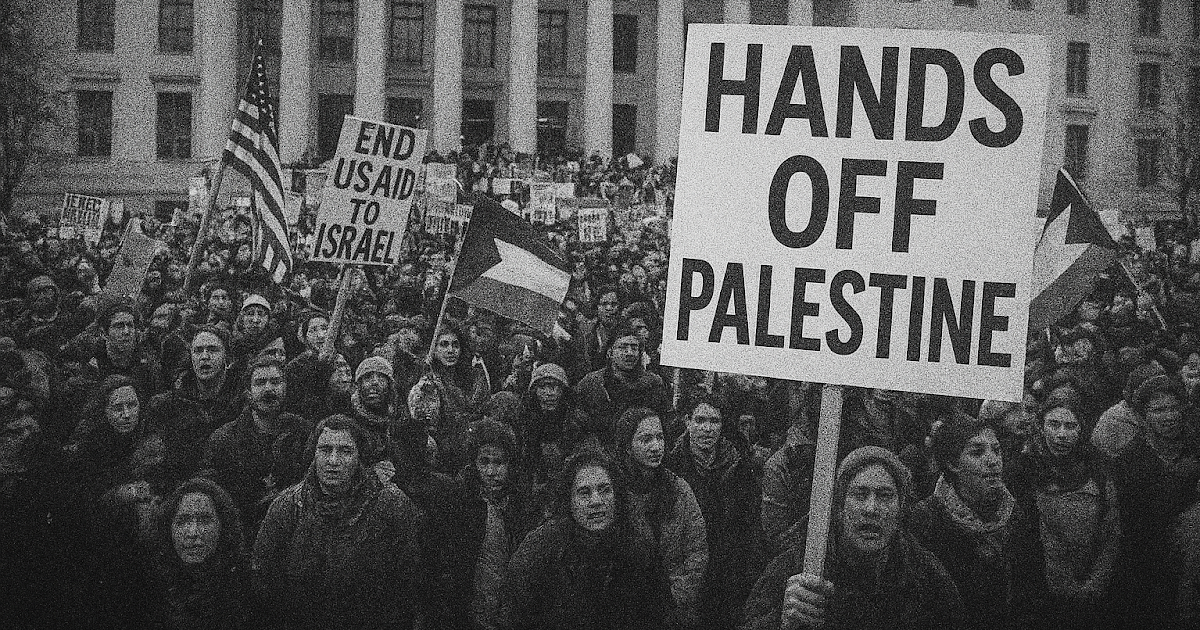
Nowhere is the failure of higher education more visible than in its response to Israel’s assault on Gaza. As civilian deaths soared and international human rights organizations sounded alarms about the scale and intent of the military campaign, most universities responded with repression rather than reflection. Administrators disciplined student protesters, sanctioned faculty for political speech, and issued public statements carefully aligned with prevailing U.S. political positions. Research partnerships with Israeli institutions linked to defense industries persisted without scrutiny. Universities that once examined apartheid with clarity struggled to acknowledge parallels when the subject was Palestine. Donor sensitivities, political pressures, and fear of congressional retaliation overwhelmed any commitment to moral consistency or academic freedom.
The same institutional behavior is likely if U.S. policy shifts in East Asia. Should Washington move toward accommodating the People’s Republic of China’s ambitions regarding Taiwan—whether through diplomatic recalibration or reduced willingness to intervene—universities will likely adapt quickly. The history of U.S.-China normalization in the 1970s showed how fast higher education can reorient itself when geopolitical winds change. Partnerships, narratives, and research agendas would shift to align with new federal signals, demonstrating again that universities follow the imperatives of state power more readily than they challenge them.
The deeper issue is structural. U.S. higher education relies on federal research funding, defense and intelligence partnerships, corporate relationships, overseas investment programs, and philanthropic networks shaped by geopolitical interests. Endowments are tied to global markets that profit from conflict. Study-abroad and academic exchange programs depend on diplomatic priorities. Administrators understand that openly challenging U.S. foreign policy—from Venezuela to Ukraine, from Yemen to Gaza—can threaten institutional stability and funding. Silence or selective engagement becomes the safest administrative posture.
If the academy hopes to reclaim its integrity, it must learn to confront rather than replicate state power. That requires transparency about foreign funding and defense contracts, protection for dissenting scholars and students, genuine engagement with global South perspectives, and ethical evaluation of partnerships with authoritarian governments. Universities cannot prevent wars, but they can refuse to serve as intellectual and financial enablers of violence.
Until such changes occur, higher education will remain entangled in the machinery of U.S. empire, complicit not through passivity but through the routine normalization of policies that inflict suffering around the world.
Sources
Amnesty International; Human Rights Watch; United Nations Office for the Coordination of Humanitarian Affairs; U.S. Congressional Research Service; Quincy Institute for Responsible Statecraft; Brown University’s Costs of War Project; Washington Post and New York Times reporting on U.S. sanctions and foreign policy; Investigations by the Associated Press, Reuters, and Al Jazeera on Yemen, Gaza, Venezuela, and South Sudan; HEI archives and independent higher education researchers.