The University of Pennsylvania has refused to disclose the names and personal information of Jewish employees to the Trump administration.
The University of Pennsylvania filed its formal response Tuesday to the Trump administration’s demand that the university disclose the names of Jewish employees without their consent, arguing the request is unconstitutional and that it disregards the “frightening and well-documented history” of governmental cataloging of people with Jewish ancestry.
In a July subpoena, the Equal Employment Opportunity Commission asked Penn to turn over the names and information of employees with Jewish faith or ancestry, as well as the personal information of employees affiliated with Jewish studies, organizations and community events. Penn has refused to do so and thus entered into a legal battle with the Trump administration, which is now seeking a court order to force Penn to comply.
“The government’s demand implicates Penn’s substantial interest in protecting its employees’ privacy, safety, and First Amendment rights,” the filing states.
A university spokesperson said the filing is “comprehensive and speaks for itself.” Faculty at Penn and other higher ed groups have backed Penn in its fight to avoid disclosure.
“The charge does not refer to any employee complaint the agency has received, any allegation made by or concerning employees, or any specific workplace incident(s) contemplated by the EEOC, nor does it even identify any employment practice(s) the EEOC alleges to be unlawful or potentially harmful to Jewish employees,” the filing states.
The Education Department and its Office of Federal Student Aid typically hold a conference the first week of December each year.
Photo illustration by Justin Morrison/Inside Higher Ed | Caiaimage/Chris Ryan/iStock/Getty Images
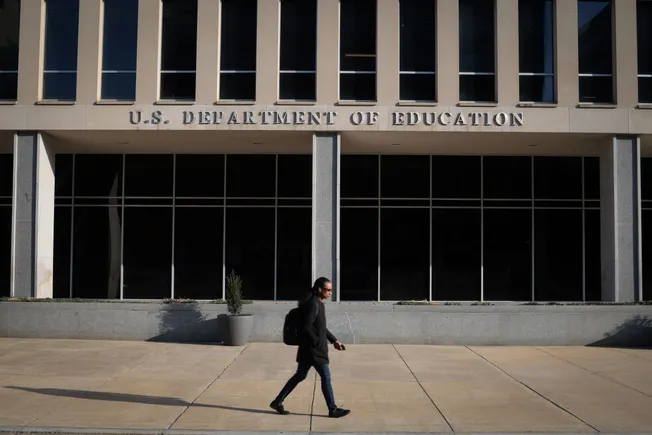
Each year during the first week of December, the Department of Education has historically hosted the Federal Student Aid Training Conference to provide university administrators with updated education on regulations and technical systems. That hasn’t happened this year.
Now, many financial aid experts are expressing their frustrations on social media, attributing the lapse to the Trump administration’s majorreductions in force and calling it a shortsighted mistake.
“There is no conference. That’s what happens when you fire many of the staff who organized and conducted the training,” Byron Scott, a retired FSA staff member, wrote on LinkedIn. “Perhaps in ‘returning’ this Department of Education function to the states—where [it] never was—the Department forgot to tell the states about this new responsibility.”
Department officials have neither announced the event’s cancellation nor clarified whether and when it might take place. The conference website, where logistical information is traditionally posted, only says, “Information coming soon.”
One senior department official who spoke with Inside Higher Ed on the condition of anonymity said the conference is slated to occur in person in March.
“The announcement was queued up but the shutdown got in the way,” the source wrote in a text message. “I think the plan [will be released] in the coming days.”
An Education Department spokesperson did not respond to questions about the March date but blamed any delay on the government shutdown.
“The Democrats shut down the government for 43 days, and as you can imagine, planning a conference is not an exempted activity,” the spokesperson said. “We’ll have more updates on this in the coming weeks.”
If the conference is eventually held in person, it would be the first time since the COVID-19 pandemic broke out in 2020.
The senior department official said they hope that “returning the conference to in-person will make the wait worth it.”
But Heidi Kovalick, director of financial aid at Rowan University, responded to Scott’s LinkedIn post saying that right now is “a critical time.”
Financial aid officers have a lot to adapt to; the One Big Beautiful Bill Act mandated major changes to the student loan system, and the department issued regulations outlining new standards for Public Service Loan Forgiveness, among other significant shifts since Trump took office.
“Fin[ancial] aid administrators really need to hear from the experts,” Kovalick wrote. “Of course as others have mentioned, [it’s] kind of hard when they have been forced out. We miss you all.”
Regardless of whether staffing shortages or the government shutdown played a role in the delay, Melanie Storey, president of the National Association of Student Financial Aid Administrators, said one of her greatest concerns is the tight timeline financial aid officers will face if the department does reschedule the conference for spring.
“Truthfully, March is pretty soon—three months away. Institutional budgets are tight. People are going to have to book flights and hotels, and you know that that can be expensive,” she said. Still, the NASFAA president applauded the department for its effort to return the conference to an in-person event.
“The last few were virtual, which had mixed reviews. The sessions had to be prerecorded. They weren’t always as timely. And there wasn’t an opportunity for interaction. But those are all the things that financial aid professionals prioritize,” she said. “If March is when they can do it, well, we’ll be happy to see it in March.”
This audio is auto-generated. Please let us know if you have feedback.
Dive Brief:
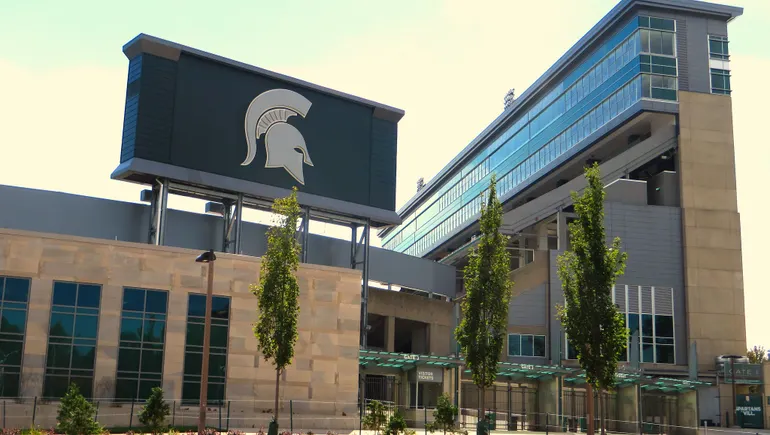
Michigan State University is laying off 99 faculty, staff and executives this month amid rising costs and other budget pressures, President Kevin Guskiewicz said in a public message Wednesday.
The university had cut an additional 83 employees since March because of the Trump administration’s revocation of federal research funding. Taken together, the job cuts represent 1.3% of Michigan State’s workforce.
Officials expect the job eliminations to save the university $50 million annually. “Today we expect the overall general fund budget to be largely on target,” Guskiewicz said.
Dive Insight:
In explaining the layoffs, Guskiewicz pointed to rising costs, including significant increases in employee healthcare costs. The institution’s operating expenses generally have risen as well, a sectorwide trend playing out across the country.
Between the fiscal years 2023 and 2024, Michigan State’s operating expenses rose 10% to $3.2 billion, according to its latest financial report.They rose 17.9% between fiscal years 2020 and 2024.
Revenue hasn’t kept pace, and the university’s operating loss widened by nearly a quarter to $840 million in fiscal 2024. However, with state funding and other outside revenue sources factored in, the university’s total net position more than tripled during the same period.
Along with inflation, federal funding disruptions have weighed on Michigan State’s budget.
By Oct. 1, the Trump administration had terminated 74 federally funded projects at the university, totaling $104 million in multiyear grants and contracts, according to Guskiewicz. Those include grants from the National Science Foundation, the U.S. Agency for International Development, the National Endowment for the Humanities, the National Institutes of Health and the U.S. Department of Agriculture.
Another 86 research projects, at minimum, have been hit with stop-work orders, pauses on future funding or conditional terminations, Guskiewicz said.
Enrollment has been a bright spot for the university, with its fall headcount hitting 51,838 students, according to institutional data.
“This total is close to our predictions and will keep us on the budget path we have laid out,” Guskiewicz said. Michigan State’s undergraduate class this semester hit a record 41,415 students.
However, he noted recent declines in international enrollment have weighed on tuition revenue. International students made up 8.2% of Michigan State’s student body in fall 2025, down from 8.5% last year. Their share of the university’s enrollment has almost halved since 2015, when they made up 15% of its students.
Michigan State’s colleges and administrative units have been working since the summer to cut their budgets by 9%.
“I am proud of units achieving as many savings as possible through non-personnel actions and evaluating vacancies before filling open roles,” Guskiewicz said. “Nearly two-thirds of the reductions, in fact, were proposed across supplies, services and other non-personnel expenses.”
But, he added, Michigan State wasn’t entirely able to avoid layoffs, hence the round of workforce cuts announced this week.
“These colleagues are valuable parts of our community, and their loss, for any reason, is still felt by colleges and programs,” Guskiewicz said.
The layoff numbers don’t include those whose employment classification changed, or faculty whose contracts were not renewed. However, Guskiewicz said it was difficult to quantify how many of those contract nonrenewals were related to the budget cuts or other factors such as enrollment levels or course demand.
This audio is auto-generated. Please let us know if you have feedback.
Dive Brief:
The University of Northern Colorado plans to lay off about 50 staff membersin early November and eliminate roughly 30 vacant roles,CFO Dale Prattsaid during a town hall last week.
The layoffs come as the university tries to close a projected $7 million budget shortfall for fiscal 2026 and shrink its scale to meet lower enrollment levels. The job eliminations are expected to save $8 million to $10 million annually, or up to 7.5% of its personnel expenses.
Signaling that layoffs were on the horizon earlier this month, university President Andy Feinstein pointed to unexpected reductions in state funding, lower-than-anticipated revenue from enrollment,inflation and historically low employee turnover.
Dive Insight:
Many of the University of Northern Colorado’s financial woes stem from enrollment that is shrinking faster than expenses. Between 2018 and 2023, the public institution’s fall headcount fell by nearly a third, to 9,067 students.
Following the pandemic, officials had expected a rebound in enrollment that has yet to materialize, Pratt said. Meanwhile Feinstein said the university is still optimistic that growth lies ahead given robust retention rates and other factors.
Even so, its student body is likely to remain smaller in the years ahead compared to the past. In his presentation, Pratt cited a note from S&P Global Ratings analysts arguing that the university’s financial health depended on its ability to scale down to meet a smaller student body going forward.
He also pointed to metrics showing that the university has more employees per student than nearly all other colleges in the state, and that its net operating results per student have been negative since fiscal 2023.
Going into the fiscal year, officials had a balanced budget drawn up for fiscal 2026, based in part on expected employee turnover and projected enrollment. Leaving jobs unfilled would have allowed University of Northern Colorado to save on costs without having to resort to layoffs, which leaders did consider when initially making the budget earlier this year, Pratt said.
But not as many employees left on their own as the university expected, with its turnover rate falling from 19.1% in June 2022 to 11.8% in June of this year, according to Pratt’s presentation. Just between 2024 and 2025, the turnover rate fell by 2 percentage points.
Moreover, Colorado lawmakers reduced the university’s funding for the current fiscal year by $550,000 to plug an unanticipated hole in the state budget, Pratt said.
An even bigger financial blow came as the new school year began. In the fall semester, 391 fewer students enrolled than the institution budgeted for, with an actual headcount of 8,443. That metric includes 119 fewer degree-seeking undergraduate students than anticipated, which Pratt described as especially worrisome.
“There were changes here that occurred that really caught us off guard,” Pratt said.
Although officials are still analyzing what exactly happened, Pratt pointed to the Trump administration’s aggressive approach to immigration and visas, including for international students, and the recent state budget cuts.
That translated into a dip in international enrollment at larger universities in the state, including University of Colorado and Colorado State University. However, to compensate for the declines, those institutions may have recruited and enrolled students that otherwise would have gone to the University of Northern Colorado, Patt and Feinstein said.
All of those factors combined to strain the University of Northern Colorado’s budget and pressure leaders to make cuts. Officials were still clearing the layoffs with the university’s legal and human resources offices at the time of the townhall, Pratt noted.
He also said that faculty positions would only be eliminated through vacancies or nonrenewals of contracts.
In addition to its workforce, the university plans to rein in spending on travel, professional development and services and supplies. It is also reviewing student wages and graduate assistantships.
This audio is auto-generated. Please let us know if you have feedback.
On Wednesday, a federal judge ordered the Trump administration to immediately stop the mass firing of federal employees during the government shutdown.
The Trump administration cannot issue any additional reduction-in-force notices, and it cannot enforce the notices already issued, according to the ruling from Judge Susan Illston of the U.S. District Court for the Northern District of California.
The temporary block follows a Sept. 30 lawsuit filed by two unions — the American Federation of Government Employees and the American Federation of State, County and Municipal Employees — against the U.S. Office of Management and Budget for violating the law when OMB Director Russ Vought threatened a mass firing of federal workers during a shutdown.
For the second time this year, the Trump administration on Oct. 10 laid off a significant number of staff in the U.S. Department of Education, as part of President Donald Trump’s broader effort to abolish the agency.
The first round of RIF notices at the Education Department came in March, leading the agency to get entangled in multiple lawsuits that challenged the legality of those firings.
Before Trump took office on Jan. 20, the department had 4,133 employees. In March, that dwindled to 2,183. The number of staff then dipped further to an estimated 2,000 after the Oct. 10 firings, which also impacted other federal agencies nearly two weeks after a federal shutdown began after lawmakers failed to reach an agreement on the federal budget.
Meanwhile, U.S. Education Secretary Linda McMahon said in a X post on Wednesday that schools are operating as normal despite the government shutdown, which confirms that the U.S. Department of Education is “unnecessary.”
“The Department has taken additional steps to better reach American students and families and root out the education bureaucracy that has burdened states and educators with unnecessary oversight,” McMahon wrote. “No education funding is impacted by the RIF, including funding for special education, and the clean CR [continuing resolution] supported by the Trump Administration will provide states and schools the funding they need to support all students.”
Here’s a timeline of events leading up to the agency’s latest round of RIFs and the continued downsizing of the federal education footprint.
March 11, 2025
The Education Department announced a massive reduction in force, with plans to slash nearly half of its workforce, impacting all divisions within the federal agency — some “requiring significant reorganization,” according to McMahon.
The cuts, along with previously accepted employee “buyouts,” reduced the department’s headcount from 4,133 when Trump was inaugurated Jan. 20 to approximately 2,183 — affecting over 1,900 employees.
March 12, 2025
As part of the Education Department’s mass downsizing of its staff, the agency also shuttered seven of its 12 civil rights enforcement offices. The seven closed offices of the Education Department’s Office for Civil Rights oversaw half of the nation’s states, impacting nearly 60,000 public schools and over 30 million K-12 students.
The Trump administration also informed all seven Office of Educational Technology employees in an email that their positions and office were being “abolished” as the Education Department announced massive layoffs across the agency the day prior.
March 20, 2025
President Donald Trump signed an executive order calling on McMahon to “take all necessary steps to facilitate the closure of the Department of Education,” marking the boldest push from the president to shut down the agency since its establishment under the Carter administration over four decades ago.
April 14, 2025
A lawsuit was filed against the Trump administration over its significant downsizing of the Education Department’s Institute of Education Sciences in March. The lawsuit from the American Educational Research Association and the Society for Research on Educational Effectiveness said the layoffs made it impossible for IES to carry out education research.
A similar lawsuit disputing the IES cuts was filed by the Association for Education Finance and Policy and the Institute for Higher Education Policy on April 4 in federal court.
April 17, 2025
Despite massive layoffs that left the Education Department with a skeleton crew in charge of administering and analyzing the Nation’s Report Card, the agency said the assessment will continue as planned in 2026.
June 18, 2025
A federal judge ordered the Education Department to reinstate all laid-off Office for Civil Rights employees for the time being, saying the layoffs and shuttering of seven regional offices had rendered the remaining staff “incapable of addressing the vast majority of OCR complaints.”
July 14, 2025
The U.S. Supreme Court allows the Trump administration to carry on with its efforts to lay off nearly half the Education Department’s staff as lower courts weigh in on the layoffs’ legality in New York v. McMahon.
July 15, 2025
Management of key federal workforce development programs began shifting from the Education Department to the U.S. Department of Labor under an interagency agreement signed in May, both agencies announced.
Aug. 19, 2025
Following a federal judge’s order directing that the Education Department be restored to “the status quo,” the agency said it plans to bring back more than 260 Office for Civil Rights staff who were cut as part of the March reduction in force, and it will be returning groups of employees to the civil rights enforcement arm in waves every two weeks from Sept. 8 through Nov. 3.
Sept. 29, 2025
The 1st U.S. Circuit Court of Appeals overturned a lower court’s order requiring the Education Department to restore the Office for Civil Rights to the “status quo,” which also allowed the department to move forward with plans to cut half of its OCR staff as litigation proceeds.
Oct. 1, 2025
The federal government enters the first day of its shutdown as Congress remains at a funding impasse for fiscal year 2026. During the shutdown, the Education Department planned to furlough about 95% of its non-Federal Student Aid staff for the first week, according to a Sept. 28 memo from U.S. Education Secretary Linda McMahon.
The Trump administration’s Office of Management and Budget issued a memo a week before that threatened mass firings of federal employees if a government shutdown occurs, according to a Sept. 30 lawsuit filed by labor unions against OMB.
Oct. 10, 2025
The Trump administration issued reduction-in-force notices throughout the federal government, including at the Education Department where court filings show 466 Education Department employees were impacted by the layoffs. Most of the employees at the Office of Special Education Programs — where staffing had remained fairly stable — were laid off as part of the department’s second wave of RIF notices this year, according to several special education professional organizations.
The latest RIFs also reached Education Department offices that oversee civil rights, student achievement supports, budgeting services, school safety, postsecondary education and more, according to the American Federation of Government Employees, a union representing more than 2,700 Education Department employees.
Oct. 15, 2025
A federal judge ordered the Trump administration to cease any mass firings of federal employees initiated during the government shutdown. The temporary block came in response to a lawsuit filed by two federal employee unions against OMB over the office’s threats to initiate mass firings ahead of the Oct. 1 shutdown.
Judge Susan Illston of the U.S. District Court for the Northern District of California said the administration’s issuance of reduction-in-force notices to over 4,000 employees throughout the federal government during the shutdown is illegal, exceeds the administration’s authority and is arbitrary and capricious.
As of Friday afternoon, it remained unclear how many staff members would be affected.
Photo illustration by Justin Morrison/Inside Higher Ed | Tierney L. Cross/Getty Images | BraunS and Prostock-Studio/iStock/Getty Images
Staff members at the Department of Education will be affected by the mass layoffs taking place across the federal government, a spokesperson said Friday.
Russell Vought, director of the Office of Management and Budget, has threatened the layoffs for weeks, citing the government shutdown. Vought wrote on social media Friday that his promised reduction in force had begun.
A department spokesperson then confirmed in an email to Inside Higher Ed that “ED employees will be impacted by the RIF.” The spokesperson did not clarify how many employees will be affected or in which offices. Other sources say no one who works in the Office of Federal Student Aid will be laid off.
Trump administration officials said in a court filing that an estimated 466 employees were given reduction-in-force notices. About 1,100 to 1,200 employees at the Department of Health and Human Services also got laid off. Overall, more than 4,200 workers across eight agencies were fired.
At the Education Department, the estimated layoffs will leave the department with just over 2,001 employees. The agency, which President Trump wants to close, already lost nearly half its career staff members during a first round of mass layoffs in March. In the wake of those layoffs, former staffers warned that the cuts would lead to technical mishaps, gaps in oversight and a loss of institutional knowledge. College administrators have also reported delays and issues in getting communications and updates from the department, though agency officials say critical services have continued.
The federal workers’ union and multiple outside education advocacy groups challenged the first round of layoffs in court. Lower courts blocked the RIF, but the Supreme Court overturned those rulings in July. Affected staff members officially left the department in August.
Another lawsuit challenged this latest round when Vought threatened the layoffs – before the pink slips had even been distributed today. It was filed at the end of September.
The union representing Education Department employees as well as sources with connections to staffers who were still working at the department as of Friday morning said that the latest round of cuts will at least affect staff members from the offices of elementary and secondary education and communications and outreach. A union representative added that all of the employees in the communications office’s state and local engagement division were laid off.
A senior department leader, who spoke on condition of anonymity, told Inside Higher Ed that the layoffs were directed by OMB and came as a surprise.
“Last week the [education] secretary’s office had said no RIFs at all,” the senior leader explained. “We heard on Tuesday that OMB sent over a list of people for ED to RIF … ED apparently edited it and sent it back.”
In neither case were cuts planned for the Office of Federal Student Aid, which manages the Pell Grant and student loans, the senior leader added.
Rachel Gittleman, president of the union that represents Education Department employees, promised in a statement to fight the layoffs.
“This administration continues to use every opportunity to illegally dismantle the Department of Education against congressional intent,” Gittleman said. “They are using the same playbook to cut staff without regard for the impacts to students and families in communities across the country … Dismantling the government through mass firings, especially at the ED, is not the solution to our problems as a country.”
Through late September and into the first 10 days of the shutdown, both Vought and President Trump used the threat of further RIFs to try to convince Democrats in the Senate to acquiesce and sign the Republicans’ budget stopgap bill. But Democrats have stood firm, refusing to sign the bill unless the GOP meets their demands and extends an expiring tax credit for health insurance.
Health and Human Services Department spokesperson Andrew G. Nixon wrote in an email to Inside Higher Ed earlier on Friday that “HHS employees across multiple divisions” received layoff notices. But he didn’t provide an interview or answer written questions about whether the layoffs include employees at the National Institutes of Health, a major funder of university research.
Nixon wrote that “HHS under the Biden administration became a bloated bureaucracy” and “all HHS employees receiving reduction-in-force notices were designated non-essential by their respective divisions. HHS continues to close wasteful and duplicative entities, including those that are at odds with the Trump administration’s Make America Healthy Again agenda.”
Democrats and some Republicans have warned against the layoffs. Sen. Susan Collins, a Maine Republican who chairs the powerful appropriations committee, opposed the layoffs in a statement while also blaming Democrats in the shutdown.
“Arbitrary layoffs result in a lack of sufficient personnel needed to conduct the mission of the agency and to deliver essential programs, and cause harm to families in Maine and throughout our country,” she said.
But Democrats in particular have argued that firing federal workers during a shutdown is unconstitutional.
“No one is making Trump and Vought hurt American workers—they just want to,” Sen. Patty Murray, a Washington State Democrat and vice chair of the appropriations committee, said in a statement Friday afternoon. “A shutdown does not give Trump or Vought new, special powers to cause more chaos or permanently weaken more basic services for the American people … This is nothing new, and no one should be intimidated by these crooks.”
Rep. Bobby Scott, a Virginia democrat and ranking member of the House Education and Workforce Committee, pointed out in a statement that the administration has had to rehire employees who were fired earlier this year.
“In addition to wasting millions of taxpayer dollars to fire and rehire government employees, arbitrarily firing government employees means there are fewer people to help administer essential programs,” he said. “Moreover, I fear the lasting impact of mass firings will be an incredible loss of invaluable institutional knowledge. Furthermore, random and chaotic layoffs will make it difficult to recruit qualified employees in the future.”
This audio is auto-generated. Please let us know if you have feedback.
Dive Brief:
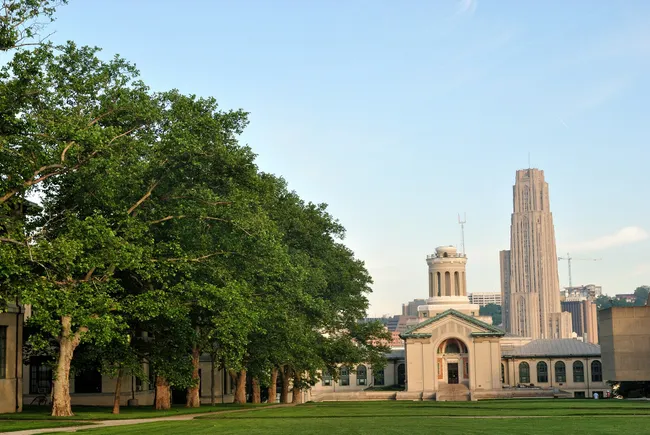
Carnegie Mellon University has laid off 75 employeesin its Software Engineering Institute as it wrestles with disruptions to federal funding,according to a community message Wednesday from Vice President for Research Theresa Mayer.
Mayer tied the cuts — which amount to 10% of SEI’s workforce — to the engineering institute’s “unique financial structure as a federally funded research and development center as well as the shifting federal funding priorities that are shaping the research landscape.”
Carnegie Mellonas a whole is in a “strong financial position” for fiscal 2026, university President Farnam Jahanian said in August, noting that the Pittsburgh institution cut its expenses by $33 million.
Dive Insight:
Jahanian said in an August community message that Carnegie Mellon is poised to get through the current fiscal year without a deficit, which is more than some of its peer institutions can say.
But the university faces stiff financial headwinds — and what its president described as “existential challenges” —from the Trump administration’s disinvestment in scientific and academic research.
To tighten its budget, Carnegie Mellon has paused merit raises, reduced nonessential expenditures, limited new staff and faculty hiring, and has reduced staff in certain units through voluntary retirements and employee reductions.
In the August message, Jahanian described “signs of a marked decline in the pipeline of new federal research awards nationally and at Carnegie Mellon.”He added that university officials expect more cutbacks in federal agencies’ research budgets under a Republican-led Congress.
The university’s Software Engineering Institute, which Mayer described as integral to Carnegie Mellon’s overall research enterprise, is one of the institution’s biggest recipients of federal research funding. Sponsored by the U.S. Department of Defense, SEI develops new technologies and studies complex software engineering, cybersecurity and AI engineering problems, in large part to advance the strategic goals of federal agencies.
The institute took in $148.8 million in grants and contracts revenue in fiscal 2024.
Prior to this month’s job cuts, officials at the institute took “extensive steps to avoid this outcome, including implementing cost-saving measures in recent months,” Mayer said Wednesday. “Despite these efforts, SEI was unable to reallocate or absorb costs, so staff reductions were unavoidable.”
Along with a slackening grant pipeline, Jahanian’s August message pointed to the possibility of reduced funding for research overhead costs.
The Trump administration has sought to unilaterally cap reimbursement rates for indirect research costs at 15% across multiple agencies, though these policies have been blocked by courts.
Carnegie Mellonis a plaintiff in one of the lawsuits that led to the 15% cap being permanently blocked at the National Institutes of Health, though the Trump administration has appealed the ruling. The university is also represented in lawsuits against other agencies through its membership in the Association of American Universities.
If a 15% cap were implemented on research overhead, that would create an additional $40 million annual shortfall for Carnegie Mellon, according to Jahanian. Indirect research costs include overhead expenses such as laboratories and support staff.
Beyond federal funding woes, Jahanian also noted in August that Carnegie Mellon’s projected $365 million in graduate tuition revenue for the current fiscal year is about $20 million short of initial estimates due to “lower-than-expected enrollment.”
While Jahanian didn’t offer reasons for the shortfall, he did note that going forward Carnegie Mellon was examining its balance of undergraduate to graduate and international to domestic students to “ensure long-term stability.”
Other universities have experienced major declines in their international enrollment amid the Trump administration’s disruptions to the visa approval process and aggressive immigration policies.
Officials at DePaul University, in Chicago, said recently that new international graduate student enrollment fell by 62% year over year this fall, contributing heavily to a budget crunch at the institution.
One group has predicted that international enrollment could drop by as much as 150,000 students this fall.
In recent years, Carnegie Mellon’s enrollment has grown, as has its graduate student ranks. Between 2018 and 2023, overall enrollment increased 11.2% to 15,596 studentsand graduate enrollment grew 11.7% to 8,307 students.
This audio is auto-generated. Please let us know if you have feedback.
Dive Brief:
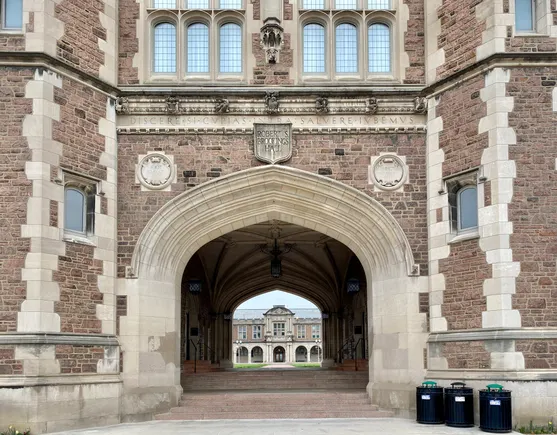
Washington University in St. Louis has laid off 316 staffers and eliminated another 198 unfilled positions since March, Chancellor Andrew Martin said in a community message Tuesday.
Leaders made the cuts to the private university’s main campus as well as to its medical center. In all, the reductions are expected to save about $52 million annually, Martin said.
The chancellor cited several budget pressures driving the cuts, including “drastic reductions in federal research funding,” the changing needs of students, and “ineffective processes and redundancies in the way we operate.”
Dive Insight:
Martin framed the workforce cuts overall in terms of mission and financial sustainability. “If we want to be great, and not just good, we must focus our resources where they will have the most impact and ensure that we’re positioned for success in the long-term,” he said.
He said the current round of reductions were finished but hinted that there could be more changes down the line. “We must continue to evaluate how we work and identify additional ways to operate more effectively in support of our mission, if we are to be successful,” Martin said.
Nonetheless, WashU is in a much stronger position than many of its peers in the private college world.
For fiscal 2024, the university logged $20.5 billion in assets on its balance sheet and an operating surplus of $150.3 million.
Still, that surplus has been steadily shrinking in recent years. Just between fiscal years 2022 and 2024, the figure fell by 58%. Over the same period, total expenses rose by nearly 25%, or about $1 billion, to $5.1 billion in fiscal 2024.
For fiscal 2025, the university broke even on its budget thanks to “prudent financial management and thoughtful work,” Martin said in late July. Among other actions, WashU paused new construction projects such as a planned arts and sciences building and green space upgrades.
In the same July message, Martin pointed to long-term “structural budget challenges that WashU must address” and announced that the university would skip annual merit raises for its employees for fiscal 2026.
“I know this is disappointing news,” he said. “Please know it is not a reflection of your hard work and contributions, which I deeply value, but a necessary step as we prioritize long-term institutional stability and strategic investment in our core mission.”
As WashU looks ahead to future fiscal years, Martin noted in his July message that the university will face a heightened endowment tax bill of roughly $37 million after Republicans’ massive tax and budget bill passed this summer takes effect.
In fiscal 2024, the university’s endowment was worth $12 billion, or about $797,600 per student, according to the latest study from the National Association of College and University Business Officersand asset management firm Commonfund.
This audio is auto-generated. Please let us know if you have feedback.
Dive Brief:
Southern Oregon Universitywill eliminate 10 bachelor’s degrees, 12 minors and one graduate program in the face of long-term structural budget deficits after a vote by the institution’s board.
The public university will also lay off 18 employees and cut roughly three dozen other jobs through retirements, the elimination of vacant positions and other methods. SOU will shift 17 jobs off its payroll by funding them through alternative sources, such as the SOU Foundation, a nonprofit affiliated with the university.
The cuts are intended to stabilize SOU following years “marked by unprecedented fiscal crises,” according to the plan approved by trustees last week in a 7-2 vote.
Dive Insight:
SOU has faced a quartet of problems plaguing other higher education institutions — declining enrollment, flat state funding, rising costs and a shifting federal policy landscape.
The university’s full-time equivalent enrollment fell almost 22% from 4,108 students in 2015 to 3,209 in 2024, according to state data.
“It is also highly likely that the federal government’s intent to dismantle support systems for low-income students also will have a devastating impact,” the plan noted.
Earlier this year, the Trump administration sought to reduce funding to certain need-based student aid programs and eliminate others altogether, such as theFederal Supplemental Educational Opportunity Grant program. Since then, both chambers of Congress have rejected some of those overtures in their own budget proposals for fiscal year 2026, though House lawmakers likewise pitched eliminating FSEOG.
At the state level, Oregon’s fiscal 2025-27 budget raised funding for its public universities slightly. But SOU argued that the bump fails to cover increasing costs outside of its control, such as retirement and medical benefits.
In June, SOU’s board of trustees directed the university to find $5 million in savings by the end of fiscal 2026.
In response, University President Rick Bailey planned more significant cuts to set SOU up for longer-term stability. He declared financial exigency at the beginning of August, paving the way for a dramatic restructuring at the institution.
The plan pitched to SOU’s board Friday will cut more than $10 million from the university’s annual educational and general budget over the next four years, bringing it down to approximately $60 million total.
Academically, the proposal will sunset “low-enrolled or less regionally relevant programs” to focuson “what SOU does best for the majority of students,” it said.
Following the reduction, the university will offer a total of 30 majors and 19 minors meant to lead students toward interdisciplinary programs “aligned with regional workforce demands.”
“SOU is no longer a comprehensive university,” the plan said. “We cannot continue to provide all the programs and supports as we have in the past.”
Bachelor’s degrees slated for elimination include international studies, chemistry, Spanish and multiple mathematics programs. It will also cut a graduate leadership degree focused on outdoor expeditions.
Some programs originally considered for elimination — such as creative writing and economics — will go on with restructured curricula and face additional review in coming years.
The plan will also restructure SOU’s honors college and eliminate direct funding for its annual creativity conference.
During Friday’s meeting, board member Debra Fee Jing Lee supported the cuts, arguing SOU‘s strength moving forward will be based on its ability “to be lean and agile and entrepreneurial.”
Board member Elizabeth Shelby similarly voted for the proposal.
“It’s incumbent upon us to plan as we must for the next several years, even if that requires additional cuts,” she said.
But Hala Schepmann, a board member and chair of SOU’s chemistry and physics department, opposed the plan, calling it “the nuclear option.”
“Do we need to make immediate cuts? Yes,” she said. “But taking away key foundational components of our institution will make it harder for us to make progress.”
Schepmann also took issue with deciding on the plan amid “significant fluctuations” in the university’s projected budget.
This summer, SOU lowered projections for its expected revenue by $1.9 million after an internal analysis found “a multi-decade issue”of double-counting some online education tuition revenue.
The workforce reduction comes just two years after SOUeliminated nearly 82 full-time positions through a combination of layoffs, unfilled vacancies, voluntary reductions and retirements.
That wave of cuts left the remaining employees “feeling as though they were asked to do more with less,” according to the proposal.It argued that the new round of cuts will address this issue by paring down programs in tandem with shrinking the workforce.
This audio is auto-generated. Please let us know if you have feedback.
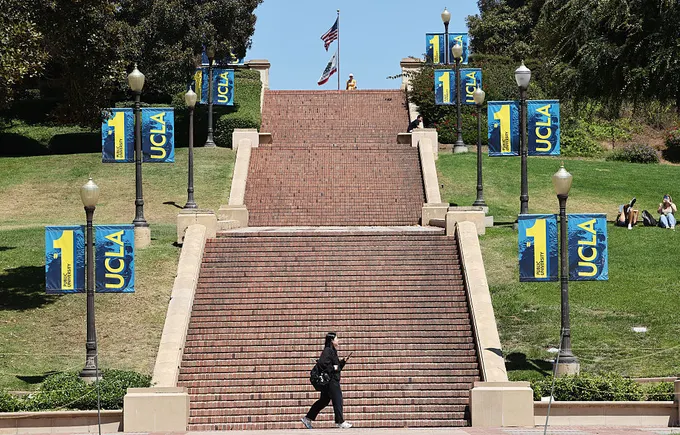
A coalition of University of California faculty groups and employee unions sued the Trump administration Tuesday over the federal government’s efforts to “exert ideological control” over the system and its 10 institutions.
Over the past three months, the federal government has cut off at least $584 million in grants to the University of California, Los Angeles, sought $1 billion from the system to restore that funding and delivered a wide-ranging list of ultimatums that would dramatically reshape the state’s university system through political interference.
In their lawsuit, the coalition — which represented tens of thousands of faculty, staff and students within the university system — called the cuts unconstitutional and an “arbitrary, ideologically driven, and unlawful use of financial coercion” that threatened U.S. higher education and advancement.
“The administration has made clear its intention to commandeer this public university system and to purge from its campuses viewpoints with which the President and his administration disagree,” the lawsuit said.
“Campaign to control universities”
President Donald Trump began laying the groundwork for “his administration’s coordinated attack on academic freedom and free speech and campaign to control universities” shortly after retaking office in January, the lawsuit alleged.
“Rather than acknowledging educational institutions like the UC as the assets to this nation that they are, the Trump administration views them as barriers to the President’s agenda of ideological dominance,” the lawsuit said.
At the end of July, the U.S. Department of Justice ruled that UCLA had violated civil rights law by failing to adequately protect Jewish and Israeli students from harassment. A week later, the federal government suspended $584 million in grants to UCLA over the allegations.
Tuesday’s lawsuit alleged DOJ picked and chose from university documents to make the argument it had wanted to from the start. For example, the agency relied heavily on an October report from UCLA that found antisemitism and anti-Israeli bias on its campus. But DOJ entirely failed to address the improvements UCLA had undertaken since — a factor similar to one cited by a federal judge when she struck down the Trump administration’s $2.2 billion funding freeze at Harvard earlier this month.
DOJ also did not explain what connection the specific research funding cuts had to alleged antisemitism, forcing all university employees to prepare “for the possibility of significant and immediate termination of funding,” the lawsuit said.
The University of California, one of the largest research systems in the country, derives a third of its annual operating budget — $17 billion — from federal funding, according to the lawsuit.
The Trump administration has also unlawfully disregarded the process by which the government can terminate or withhold federal funds, the lawsuit argued.
Addressing the cuts on Aug. 6, system President James Milliken said they did “nothing to address antisemitism,” but said the University of California would enter into negotiations with the Trump administration to have the funding restored.
In the event of a major loss of federal funding, the system would need, at minimum, between $4 million and $5 billion just to survive, Milliken told state lawmakers this month.
Dramatic and expensive ultimatums
On Aug. 8, two days after Milliken announced the forthcoming negotiations, the system received an unprecedented list of wide-ranging demands from the Trump administration tying its federal funding to total compliance, according to the lawsuit. The plaintiffs cited a copy of the list, obtained by the Los Angeles Times, which the University of California has not made public.
The letter would require UCLA to install a “resolution monitor” — appointed with final approval by the Trump administration — who would hold significant authority over campus affairs.
UCLA would also be forced to provide the federal government regular access to “a wide variety of records” on faculty, staff and students, “as deemed necessary by the resolution monitor.”
“The only exception is for attorney-client privilege, not for speech, association, or privacy purposes,” the lawsuit said.
The Trump administration also demanded that UCLA inhibit speech by its non-citizen students, enact policies to bar international students who are “likely to engage in anti-Western, anti-American, or antisemitic disruptions or harassment,” and implement required trainings to “socialize” international students to campus norms.
“In making these demands, the Trump administration is seeking to impose speech restrictions upon students, faculty, academic employees, and staff employees that would violate the First Amendment if imposed directly either by the university itself or by the federal government,” the lawsuit said.
UCLA would further be compelled to cooperate with all local and federal law enforcement, including immigration authorities, and enact specific restrictions on expressive activities and bar demonstrators from wearing masks.
In addition to the ultimatums, the university would have to pay, at minimum, $1 billion to restore the $584 million in grants.
The plaintiffs, along with state lawmakers, lambasted the proposed payment as extortion. The lawsuit argued that no federal agency has the authority to demand a $1 billion monetary penalty for civil rights violations and disputed the DOJ’s findings.
A legal blockade — maybe
Citing ongoing irreparable harm, the plaintiffs — who do not include the University of California or its institutions — are asking a federal court to block the cuts and coercive actions by the federal government while their case is heard.
The system and its universities have already begun “to alter its policies and practices seemingly in capitulation to the Trump administration,” resulting in a widespread chilling effect, the lawsuit said.
As examples, it listed a new policy allowing U.S. Immigration and Customs Enforcement expanded access to the system’s medical centers and the University of California, Berkeley’s decision to turn over the names of 160 students and employees to the federal government.
Todd Wolfson, president of AAUP, framed the lawsuit as a move to combat “the authoritarian takeover of our universities.”
“We will not stand by as the Trump administration destroys one of the largest public university higher education systems in the country and bludgeons academic freedom at the University of California, the heart of the revered free speech movement,” Wolfson said in a Tuesday statement.
The list of plaintiffs includes:
The American Association of University Professors.
The American Federation of Teachers.
AFSCME Local 3299.
California Nurses Association and National Nurses United.
Council of UC Faculty Associations.
Faculty associations from each University of California campus.
Teamsters Local 2010.
International UAW.
UAW Local 4811.
University of California Los Angeles Faculty Association.
University Council-AFT.
UPTE-CWA 9119.
UCLA has already racked up one legal win against the federal government.
Last month, a federal judge ordered NSF to restore the funding it “indefinitely suspended” from UCLA in July — potentially hundreds of millions of dollars — allegedly over antisemitism concerns. The agency did not seek to appeal and said the funding has been reinstated.