Tag: Employees

  • Stanford University lays off 363 employees

    Stanford University lays off 363 employees

    This audio is auto-generated. Please let us know if you have feedback.

    Dive Brief:

    • Stanford University laid off 363 staff members last week as part of a plan to reduce its budget by $140 million for the 2025-26 academic year.
    • In a July 31 message to campus, senior university leaders attributed the need for cuts to “a challenging fiscal environment shaped in large part by federal policy changes affecting higher education.”
    • The private California institution warned of forthcoming layoffs in June, when it extended a hiring freeze implemented in February and said it would focus capital spending on critical projects or those with external sources of funding.

    Dive Insight:

    “Ongoing economic uncertainty” has created serious challenges for the higher education sector, according to Elizabeth Zacharias, Stanford’s vice president for human resources.

    “At Stanford, anticipated changes in federal policy — such as reductions in federal research funding and an increase in the excise tax on investment income — are expected to have significant budgetary consequences,” Zacharias said in a July 31 filing with the California Employment Development Department

    Like many research institutions, Stanford has suffered under the tidal wave of efforts by the Trump administration to slash federal spending on research and development — despite some of those moves being blocked in court for the time being.

    Changes to the endowment tax could also hit Stanford hard.

    In fiscal 2024, the university had the fourth-largest endowment among U.S. colleges, valued at $37.6 billion, according to research from the National Association of College and University Business Officers and asset management firm Commonfund.

    Before 2017, colleges did not pay taxes on their endowment earnings. That year, a GOP-controlled Congress enacted a 1.4% tax on private nonprofit colleges with at least $500,000 in endowment assets per student. 

    But President Donald Trump’s signature spending bill introduced a tiered tax based on endowment assets per student that will more than quintuple the tax for the wealthiest institutions from 1.4% to 8%. Stanford, with roughly $2.1 million in endowment assets per full-time-equivalent student, will likely pay the top rate. 

    These shifts, combined with rising operational costs and changes to funding sources and programs, pushed Stanford to implement layoffs, Zacharias said.

    Stanford employs 18,000 staff and faculty, according to its website.

    The affected employees — about 2% of its workforce — worked in departments from across the university, ranging from student support services to libraries to donor and alumni relations, according to legal filings.

    In addition to 60 days of legally mandated paid notice to impacted workers, eligible employees received severance packages and career transition services, a university spokesperson confirmed Wednesday.

    Source link

  • Kansas Colleges Say Employees Can’t List Pronouns in Emails

    Kansas Colleges Say Employees Can’t List Pronouns in Emails

    Kansas public university leaders have ordered employees to remove “gender-identifying pronouns or gender ideology” from their email signatures. The officials say they’re complying with new state prohibitions against diversity, equity and inclusion.

    In March, the Republican-controlled Kansas Legislature passed Senate Bill 125, a nearly 300-page piece of budget legislation. The following month, Gov. Laura Kelly, a Democrat, signed it into law. A spokesperson from the governor’s office didn’t respond to Inside Higher Ed’s request for comment on why.

    According to a few lines on page 254, the Kansas secretary of administration must certify that all state agencies—including colleges and universities—have eliminated all positions, policies, preferences and activities “relating to diversity, equity and inclusion.”

    SB 125 also specifically requires the secretary to certify that agencies have “removed gender identifying pronouns or gender ideology from email signature blocks on state employee’s [sic] email accounts and any other form of communication.” The law doesn’t define DEI or gender ideology.

    Kansas isn’t the first state with a GOP-controlled legislature this year to pass nonfinancial public higher ed provisions by inserting them into budget legislation. Among other things, Indiana lawmakers required faculty to undergo “productivity” reviews and post syllabi online, and Ohio lawmakers stressed that boards of trustees have “final, overriding authority to approve or reject any establishment or modification of academic programs, curricula, courses, general education requirements, and degree programs.”

    Ross Marchand, program counsel at the Foundation for Individual Rights and Expression, told Inside Higher Ed the new Kansas law is unconstitutional.

    “No one knows how to interpret this, and it’s overly broad,” Marchand said. “And both of these issues are fatal for First Amendment purposes.”

    Citing the law, the Kansas Board of Regents issued guidance in June directing universities to comply by the end of this month. On July 9, Kansas State University provost Jesse Perez Mendez wrote to K-State’s campuses that “all faculty, staff and university employees—including student employees—are asked to review and update their signature blocks accordingly.”

    On Tuesday, the University of Kansas’s chancellor, provost and chief health sciences officer wrote to KU’s campuses that “all employees shall comply with this directive by removing gender-identifying pronouns and personal pronoun series from their KU email signature blocks, webpages and Zoom/Teams screen IDs, and any other form of university communications.”

    The leaders also warned against efforts to circumvent the ban.

    “Your KU email account is your only official means for sending emails related to your employment at the university,” they wrote. “Do not use an alternate third-party service, such as Gmail, to conduct university business or communications.”

    They told supervisors that “employees who have not complied with the new proviso by July 31 should be reminded of it and the deadline.” They told supervisors to contact human resources about those who continue to refuse—while also telling KU community members to “please consider submitting a Support and Care referral” if they “know of a student, staff, or faculty member who needs assistance as a result of this new requirement.”

    A KU spokesperson shared the university’s new policy banning pronouns from email signatures. While it broadly says it applies to “all employees and all affiliates that use ku.edu and kumc.edu email addresses,” it also says “this policy shall not apply to or limit or restrict the academic freedom of faculty.”

    Joseph Havens, a KU undergraduate student researcher who has he/him/his listed in his email signature, said fellow students are unhappy with the order and are now adding their pronouns in protest. He said he doesn’t know how this will go over after July 31, but “I’m kind of excited to see the drama.”

    Havens said listed pronouns help people to avoid assumptions, and helped him personally to avoid misgendering a professor. “It seems very likely to me that the university’s hands are tied on this,” he said. But “in a lot of ways it feels like they agree with it.”

    KU is “in some way complicit,” he said.

    Source link

  • College Employees in Kansas Can’t List Pronouns in Emails

    College Employees in Kansas Can’t List Pronouns in Emails

    College Employees in Kansas Can’t List Pronouns in Emails

    Ryan Quinn

    Wed, 07/23/2025 – 05:25 PM

    Lawmakers in Topeka, like those in some other state capitals, used a budget bill to order nonfinancial changes to public higher ed. DEI was the target this time.

    Byline(s)

    Source link

  • Temple University to lay off 50 employees

    Temple University to lay off 50 employees

    This audio is auto-generated. Please let us know if you have feedback.

    Dive Brief:

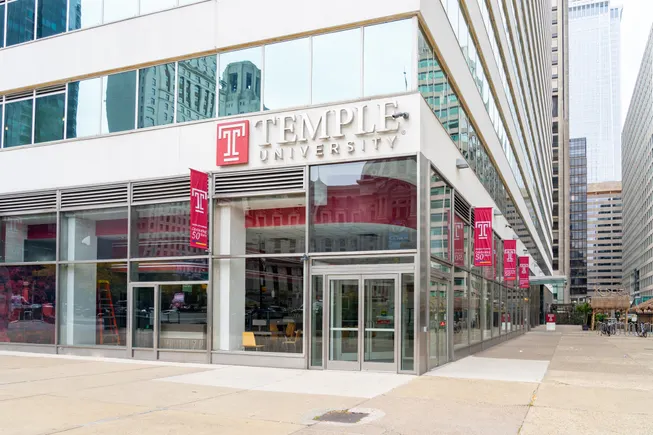
    • Temple University in Philadelphia plans to lay off about 50 staff members as it looks to cut a budget deficit previously forecasted at $60 million down to $27 million, according to a community message Friday from university President John Fry. 
    • The layoffs — amounting to nearly 1% of Temple’s workforce are part of a larger reduction of 190 positions across the university, the majority of which were eliminated via attrition, retirement or cutting vacant roles. None of the layoffs impact faculty members, a spokesperson said Monday.
    • Temple is also “closely monitoring” the potential impacts of changes to the federal student loan and Pell Grant programs set to start in the 2026-27 academic year following the implementation of Republicans’ massive new spending bill, Fry said.

    Dive Insight:

    Temple leaders signaled in June that job cuts were likely as officials tried to reduce the university’s structural budget. At the time, Fry pointed to a long-term dip in enrollment, specifically a decline of 10,000 students since 2017, with much of the loss coming during the pandemic. As of fall 2023, Temple had just over 30,200 students.

    However, the public university just logged its highest-ever number of first-year student deposits — 6,313 — indicating a second year of growth in Temple’s first-year class on top of a projected overall enrollment increase of roughly 200 students, according to Fry’s announcement. That would mark the first time the university’s student body has grown since 2017.  

    But for Temple, the historic enrollment decline has meant a drop of $200 million in tuition revenue, putting pressure on the university to reduce its expenses — the large majority of which are tied to employee compensation and benefits. And so to cut the university’s deficit, leaders have looked to its workforce.

    Of the coming layoffs, Fry said “considerable efforts were made to ensure that the reduction to our current workforce was as minimal as possible.”

    “It is my promise that care will be taken to ensure that any employee’s separation from the university will be handled as equitably and compassionately as possible,” he added.

    In his message, Fry described “significant financial challenges” facing Temple, stemming from both its structural deficit as well as “uncertainty at the federal level.”

    Fry highlighted the changes set for the federal student aid program without elaborating on their potential impact on Temple. Those changes include new limits on Pell Grant eligibility, caps on student and parent borrowing, and an elimination of Grad PLUS loans, which allow graduate students to take out loans up to their cost of attendance. 

    He also announced the roster of a 13-member university advisory group made up of faculty, students and staff to, as he put it, “help us navigate this complex and evolving environment.”

    Wide swaths of the higher education world are making workforce and spending cuts as the Trump administration takes a hatchet to the federal research funding system. Colleges are also bracing for further financial impacts from other federal policy changes in Republicans’ spending and tax bill, including an increased endowment tax and Medicaid cuts that will land hard on many university hospital systems.

    Source link

  • Ivy Tech in Indiana to lay off 200 employees (WSBT-TV)

    Ivy Tech in Indiana to lay off 200 employees (WSBT-TV)

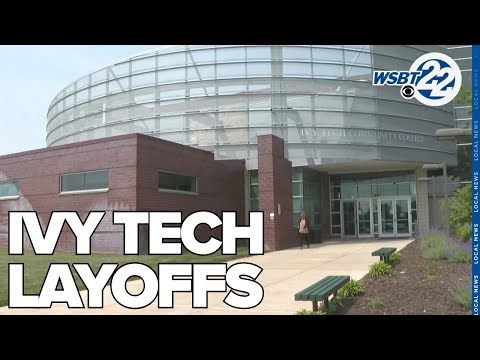
    More than 200 jobs at Ivy Tech are being eliminated due to a cut in state funding, and some of that loss is impacting people in South Bend. The student in this story discusses questions about the value of a community college education and finding gainful employment after graduation.   

    Source link

  • Judge Orders Education Department Employees Reinstated

    Judge Orders Education Department Employees Reinstated

    Photo illustration by Justin Morrison/Inside Higher Ed | Tierney L. Cross/Getty Images | Matveev_Aleksandr and raweenuttapong/iStock/Getty Images

    A federal judge blocked the Trump administration from firing thousands of employees at the Department of Education in a decisive rebuke of this spring’s sweeping reduction in force and the executive branch’s efforts to weaken the Education Department.

    Judge Myong Joun rejected the administration’s argument that the layoffs, which affected half of the department’s workforce, were part of a “reorganization” aimed at improving efficiency and said evidence showed the administration’s “true intention is to effectively dismantle the Department without an authorizing statute.” His order also prevents the department from implementing President Donald Trump’s March directive to dismantle the agency.

    Joun of the District of Massachusetts also said the injunction to rehire the fired staffers was necessary in order to restore the department’s ability to accomplish its core functions and statutorily mandated responsibilities.

    “Not only is there no evidence that Defendants are pursuing a ‘legislative goal’ or otherwise working with Congress to reach a resolution, but there is also no evidence that the RIF has actually made the Department more efficient,” Joun wrote in his 88-page ruling. “Plaintiffs have demonstrated that the Department will not be able to carry out its statutory functions—and in some cases, is already unable to do so.”

    Reports of systemic failings and overloaded staff have streamed out of the beleaguered department ever since the March layoffs, from an untouched backlog of complaints at the Office for Civil Rights to the piling up of applications for student loan repayment and forgiveness plans.

    The injunction, handed down Thursday morning, means the administration must reinstate more than 2,000 Education Department employees and reopen regional offices that were shuttered during the reduction in force.

    The administration has already said it has issued a challenge to the ruling. Madi Biedermann, the department’s deputy assistant secretary for communication, said the administration has already appealed.

    In an email to Inside Higher Ed, Biedermann decried the decision, calling Joun a “far-left judge” who “dramatically overstepped his authority” and maintaining that the layoffs were “lawful efforts to make the Department of Education more efficient and functional.”

    “President Trump and the Senate-confirmed Secretary of Education clearly have the authority to make decisions about agency reorganization efforts, not an unelected Judge with a political axe to grind,” she wrote.

    A spokesperson for the Association of American University Professors, one of the plaintiffs in the case, wrote in a statement that they were “thrilled” with the decision.

    “Eliminating the [Education Department] would hurt everyday Americans, severely limit access to education, eviscerate funding for HBCUs and [tribal colleges and universities] while benefiting partisan politicians and private corporations,” they wrote.

    Education Secretary Linda McMahon defended the layoffs at a budget hearing just a day prior to the ruling. She said the goal was to “wind down the bureaucracy” of the department, and that while she hoped to have congressional support to dismantle it eventually, the administration did not intend to so on its own.

    Joun’s decision undercuts that defense. In the budget hearing, Rep. Rosa DeLauro, a Democrat of Connecticut, told McMahon that the cuts were “unlawful” and a usurpation of congressional authority.

    “As long as you continue to deliberately and flagrantly defy the law, you will continue to lose in court,” DeLauro said.

    The injunction is the latest in a string of court orders challenging the Trump administration’s rapid cuts to federal agencies in its first 100 days, often under the supervision of Elon Musk’s Department of Government Efficiency. DOGE was responsible for the vast majority of the Education Department layoffs, according to McMahon’s House testimony Wednesday.

    Joun’s ruling wasn’t the only one aimed at undoing the administration’s Education Department cuts. Judge Paul Friedman of the U.S. District Court for the District of Columbia also ordered that the department restore grant funding to a Southern nonprofit that has helped further school desegregation efforts since the 1960s. The grant had been defunded as part of the administration’s push to eliminate spending on diversity, equity and inclusion.

    Source link

  • Most Higher Ed Employees Received Raises This Year, but Salaries Still Fall Short of Pre-Pandemic Pay

    Most Higher Ed Employees Received Raises This Year, but Salaries Still Fall Short of Pre-Pandemic Pay

    by CUPA-HR | April 8, 2025

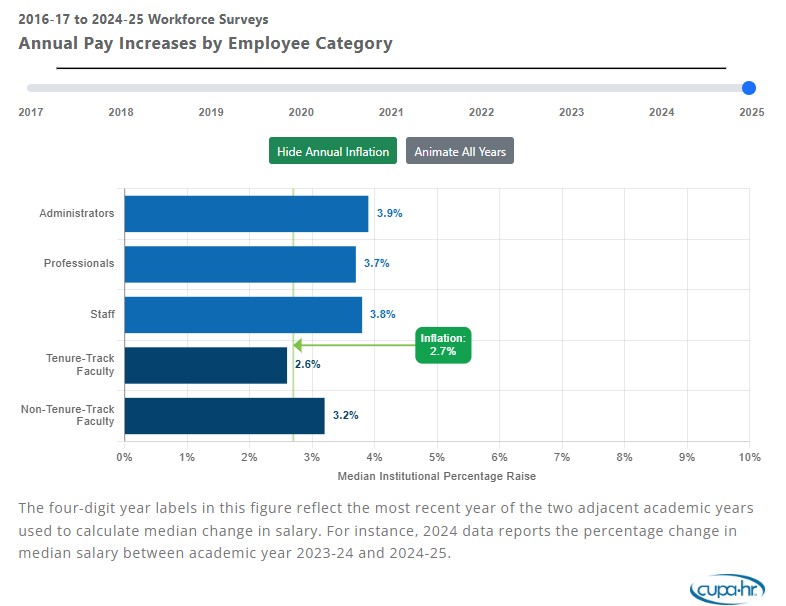
    New research from CUPA-HR shows that median pay increases for most higher education employees in 2024-25 remained strong, although they have dropped from the historically high increases seen in the previous two years. And although raises this past year for most employees outpaced inflation, they are still being paid less than they were in 2019-20 in inflation-adjusted dollars.

    The largest gap between pre-pandemic inflation-adjusted salaries and current salaries is for tenure-track faculty (who are paid 10.2% less), followed by non-tenure-track teaching faculty (paid 7.6% less). The smallest gap is for staff (paid 2.8% less).

    Some of the other key findings from an analysis of CUPA-HR’s higher ed workforce salary survey data from 2016-17 to 2024-25:

    • Staff employees continued to receive some of the highest pay increases compared to other workforce areas.
    • Non-tenure-track teaching faculty received a 3.2% salary increase, which is lower than last year’s high but still among the largest increases seen in recent years.
    • For the third consecutive year, tenure-track faculty received the lowest salary increase of all employee categories (2.6%). Across the nine years of data analyzed, tenure-track faculty salaries have not once exceeded the rate of inflation. This essentially means that — in real dollars — they have received salary decreases for the past decade.

    Explore this data and more in CUPA-HR’s newest interactive graphic.


    Source link

  • UPDATE: Another federal appeals court backs academic free speech for public employees

    UPDATE: Another federal appeals court backs academic free speech for public employees

    The U.S. Court of Appeals for the Seventh Circuit just sided with free speech, joining five of its sister circuits in holding the First Amendment protects academic research, writing, and teaching at public colleges and universities. This carves out an important exception to the Supreme Court’s 2006 decision in Garcetti v. Ceballos holding that public employees’ speech pursuant to their official duties is not protected.

    This is a big deal. Just ask Jason Kilborn, a law professor at the University of Illinois Chicago suspended in late 2021 for using a redacted racial slur “n___” on a final exam question about employment discrimination. He also used the redacted term “b___” in the same question.

    UIC suspended Kilborn and launched an investigation into his (non-)use of the terms. That’s when FIRE stepped in — defending Kilborn, writing to UIC administrators, and securing him a lawyer through our Faculty Legal Defense Fund. With help from that lawyer, UIC briefly reached a resolution with Kilborn but it later reneged on that agreement and forced him to write reflection papers and participate in months-long training sessions before he could return to teaching.

    Kilborn sued, alleging administrators violated his constitutional right to academic freedom — and while the district court had dismissed the case, on Wednesday, the Chicago-based Seventh Circuit agreed the First Amendment protected Kilborn’s speech. That court rejected UIC’s “invitation to extend Garcetti to speech involving university teaching and scholarship when the Supreme Court was unwilling to do so,” and sent the case back to the district court. 

    With the rejection of that application of Garcetti, the district court will analyze this case using the balancing test from Pickering v. Board of Education, which directs courts to weigh “the interests of the [employee] in commenting upon matters of public concern” against “the interest of the state, as an employer, in promoting the efficiency of the public services it performs through its employees.” 

    This is now the sixth federal appeals court to establish this exception to Garcetti, extending academic freedom protections to public university faculty throughout Illinois, Indiana, and Wisconsin. FIRE is currently awaiting a decision from the Atlanta-based Eleventh Circuit, where we’ve asked that court to do the same with respect to the Garcetti exception. Stay tuned for more as we continue to press and follow this issue closely. 

    Source link

  • Next Steps: A Practical Guide for Ensuring Access and Opportunity for All Employees

    Next Steps: A Practical Guide for Ensuring Access and Opportunity for All Employees

    by Julie Burrell | February 19, 2025

    The wave of new executive orders on DEI, immigration and gender identity has already significantly impacted the higher ed workplace. While the pace of change may feel overwhelming, HR departments are taking a leading role — just as they did during the COVID-19 pandemic — in navigating change and making sure all employees feel valued and supported at work.

    As CUPA-HR President and CEO Andy Brantley affirmed in his message about the recent executive orders, higher ed workplaces can still:

    • Promote equitable work and career pathing opportunities and pay for all employees.
    • Cultivate inclusive learning and working communities.
    • Create a workplace culture that embraces respect and civil discourse.
    • Level the playing field for everyone by working to remove bias, reviewing outdated policies, and creating transparency.
    • Reinforce institutional values by ensuring that all employees feel connected and supported.

    As you strategize your response to changes taking place on your campus, here are some considerations for ensuring that you are providing equal access and opportunity for all.

    Conduct an Audit of Your Institution’s DEI Efforts

    If you haven’t started already, conducting an audit of programs, policies and procedures can help identify areas of concern. Design a simple spreadsheet to help you organize and track your findings in areas such as training and development, hiring, performance management, communications and website content. For each item, indicate where it falls on the legal spectrum. Does it violate the law? Is it in compliance but in need of adjustments? Is it in compliance and effective as it stands?

    When reviewing your programs and processes, the central question to ask is, do they provide equal access and opportunity to all employees without giving special advantages to any one person or group?

    Here’s one example. The language of the recent DEI-focused executive orders emphasizes merit. Merit has always been critical to hiring, reviewing performance and making promotion decisions. Do your policies around hiring and promotion reflect that focus on merit? Are hiring and promotion processes fair and transparent? Are hiring and promotion decisions documented, and do they reflect those policies and processes?

    Connect with Campus Partners

    Your institution’s general counsel can help ensure any changes made to policies and procedures are in compliance with the new executive orders and mitigate risk for your institution.

    If you’re undertaking a website audit, consult your chief information officer. Is there AI-enabled software that might help identify noncompliant wording or outdated programs?

    Is your institution a federal contractor or subcontractor? If so, you may face additional oversight, including new contract terms certifying that your institution is following federal antidiscrimination laws. If your status is unclear, first check with the office of research.

    Consider creating a neutral body of campus stakeholders to help suggest, implement and communicate changes in response to the executive orders, but also expect that employees and administrators will have strong opinions and feelings about these changes.

    Reframe Inclusion

    As you review policies and communications to ensure compliance, take the opportunity to make your workplace even more welcoming and accessible.

    Align with your institution’s values. What are your institution’s core values and mission? It’s likely they involve respecting diversity of thought and perspective, creating a welcoming environment, and providing equal access and opportunity to all regardless of identity. Affirming and communicating these values can be an important way to stay focused on what matters during times of change.

    Consider accessibility. When revising programs and processes to be more inclusive, envision accessibility for all. For example, if your goal is to make career development programs accessible to all employees, look for gaps in access across your employee population. Just as holding trainings in non-ADA compliant buildings may limit the ability of some people to participate in career development, so might neglecting the needs of groups like non-exempt employees and working parents and caregivers. Are there more flexible options? Can you support supervisors to make it easier for an employee to take time away from regular duties?

    Ensure clarity and transparency. Equity in compensation, hiring and promotion is an effective way to bolster recruitment and retention. For example, hiring and promotion practices that are not transparent, written down, and consistently followed can negatively affect the workforce. Women are less likely than men to be promoted if clear, fair criteria aren’t used. Neurodivergent candidates are disadvantaged when job interviews rely on indirect measures like succeeding at small talk rather than a skills-based assessment. In both of these instances, vague criteria such as “culture” and “fit” may prevent qualified, highly skilled employees from being hired and from moving up the ladder. Finally, be sure that your institution’s job descriptions and job requirements are up to date and are being used as the basis for decisions related to hiring and pay.

    Focus on purpose. To avoid misinterpretation, your efforts at creating an inclusive workplace should be characterized in ways that are purpose driven. For example:

    • Communities of people with varied backgrounds and life experiences create opportunities for community members to grow personally and professionally. When employees thrive, institutions thrive.
    • Parity and equity, in opportunity and pay, support job satisfaction, recruitment and retention.
    • A safe and welcoming work environment fosters community and collaboration.

    Emphasize outcomes. Lily Zheng, author of the book DEI Deconstructed, encourages those invested in fair and healthy workplaces to strengthen outcomes. Zheng recommends an outcomes-based approach “focusing on measurable results like pay equity, physical and psychological safety, wellness, and promotion rates, rather than … a one-time training, posting on social media, or other behaviors that signal commitment without demonstrating results.”

    Take Steps to Educate Employees

    Review the ways managers and senior leadership are implementing the policies and processes that are in place. Is additional training required? If you have made changes to policies and processes, how will you communicate those to supervisors and other campus leaders?

    Be sure to evaluate anti-harassment and antidiscrimination trainings you have in place. These trainings should continue, although they may need to be adjusted to emphasize even more strongly the importance of opportunity and respect for all.

    Know That You’re Not Alone

    The higher ed HR community has been through challenging times before, most recently as the pandemic reshaped the workplace. If you have resources or ideas to share with other CUPA-HR members regarding ways that you and your HR colleagues are creating and sustaining an inclusive campus community, please email them to [email protected]. Your submission will be treated as confidential and, if shared, will be described in terms that will not identify your institution.

    Related CUPA-HR Resources

    Recent DEI-Focused Executive Orders: Next Steps for Higher Ed HR — This CUPA-HR webinar, recorded on February 13, offers excellent insights into steps institutions can take to ensure they are in compliance.

    Recent Executive Orders and Higher Ed HR’s Role in Creating and Sustaining an Inclusive Campus Community — A message from CUPA-HR President and CEO Andy Brantley.

    CUPA-HR Data — CUPA-HR is the premier source of higher ed workforce and workplace data.

    Compensation Toolkit — This HR toolkit includes resources to help ensure that compensation plans are fair and transparent.

    Recruitment Toolkit and Interviewing Toolkit — These HR toolkits include resources to help ensure that hiring practices are fair and transparent.

    Performance Management Toolkit — This HR toolkit includes resources to help ensure that performance management practices are fair and transparent.

    Layoffs/RIF/Furloughs Toolkit — This HR toolkit includes valuable resources for managing workforce reductions.

    Resilience in the Workplace — This CUPA-HR webinar, recorded in 2021, was designed to serve as resilience training for attendees, as well as a model that could easily be replicated at your institution for HR teams and other employees.


    Source link