Tag: Engagement

  • Running a Workshop: Guidelines for Engagement and Impact – Faculty Focus

    Running a Workshop: Guidelines for Engagement and Impact – Faculty Focus

    Source link

  • The higher education sector needs to come together to renew its commitment to enhancing student engagement

    The higher education sector needs to come together to renew its commitment to enhancing student engagement

    “Engagement, to me, is probably…getting the most out of university…taking and making the most of available opportunities.”

    This quote, from Queen’s University Belfast students’ union president Kieron Minto sums up a lot of the essential elements of what we talk about when we talk about student engagement.

    It captures the sense that the higher education experience has multiple dimensions, incorporating personal and professional development as well as academic study. Students will be – and feel – successful to the extent that they invest time and energy in those activities that are the most purposeful. Critically, it captures the element of student agency in their own engagement – higher education institutions might make opportunities available but students need to decide to engage to get the most from them.

    In recent years “student engagement” has suffered from the curse of ubiquity. Its meanings and applications are endlessly debated. Is it about satisfaction, academic success, personal growth, or a combination of factors? There is a wealth of examples of discrete projects and frameworks for thinking about student engagement, but often little read-across from one context to another. We can celebrate the enormous amount of learning and insight that has been created while at the same time accepting that as the environment for higher education changes some of the practices that have evolved may no longer be fit for purpose.

    Higher education institutions and the students that are enrolled in them face a brace of challenges, from the learning and development losses of the Covid pandemic, to rising costs and income constraints, to technological change. Institutions are less able to support provision of the breadth of enriching opportunities to students at the same time as students have less money, time, and emotional bandwidth to devote to making the most of university.

    The answer, as ever, is not to bemoan the circumstances, or worse, blame students for being less able to engage, but to tool up, get strategic, and adapt.

    Students still want to make the most of the opportunities that higher education has to offer. The question is how to design and configure those opportunities so that current and future students continue to experience them as purposeful and meaningful.

    Fresh student engagement thinking

    Our report, Future-proofing student engagement in higher education, brings together the perspectives of academic and professional services staff, higher education leaders, and students, all from a range of institutions, to establish a firm foundation of principles and practices that can support coherent, intentional student engagement strategies.

    A foundational principle for student engagement is that students’ motivations and engagement behaviours are shaped by their backgrounds, prior experiences, current environments, and hopes and expectations for their futures – as explained by Ella Kahu in her socio-cultural framework for student engagement (2013).

    It follows that it is impossible to think about or have any kind of meaningful organisational strategy about student engagement without working closely in partnership with students, drawing on a wide range of data and insight about the breadth of students’ opinions, behaviours, and experiences. Similarly, it follows that a data-informed approach to student engagement must mean that the strategy evolves as students do – taking student engagement seriously means adopting an institutional mindset of preparedness to adapt in light of feedback.

    Where our research indicates that there needs to be a strategic shift is in the embrace of what might be termed a more holistic approach to student engagement, in two important senses.

    The first is understanding at a conceptual level how student engagement is realised in practice throughout every aspect of the student journey, and not just manifested in traditional metrics around attendance and academic performance.

    The second is in how institutions, in partnership with students, map out a shared strategic intent for student engagement for every stage of that journey. That includes designing inclusive and purposeful interventions and opportunities to engage, and using data and insight from students to deepen understanding of what factors enable engagement and what makes an experience feel purposeful and engaging – and ideally creating a flow of data and insight that can inform continuous enhancement of engagement.

    Theory into practice

    Our research also points to how some of that shift might be realised in practice. For example, student wellbeing is intimately linked to engagement, because tired, anxious, excluded or overwhelmed students are much less able to engage. When we spoke to university staff about wellbeing support they were generally likely to focus on student services provision. But students highlighted a need for a more proactive culture of wellbeing throughout the institution, including embedding wellbeing considerations into the curriculum and nurturing a supportive campus culture. Similarly, on the themes of community and belonging, while university staff were likely to point to institutional strategic initiatives to cultivate belonging, students talked more about their need for genuine individual connections, especially with peers.

    There was also a strong theme emerging about how institutions think about actively empowering students to have the confidence and skills to “navigate the maze” of higher education opportunities and future career possibilities. Pedagogies of active learning, for example, build confidence and a sense of ownership over learning, contributing to behavioural and psychological engagement. Developing students’ digital literacy means that students can more readily deploy technology to support connection with academics and course peers, make active critical choices about how they invest time in different platforms, and prepare for their future workplace. Before getting exercised about how today’s students do not arrive in higher education “prepared to engage,” it’s worth remembering just how much larger and more complicated the contemporary university is, and with these, the increased demands on students.

    While there is a lot that institutions can do to move forward their student engagement agenda independently, there is also a need for a renewed focus on student engagement from the higher education sector as a whole. The megathemes contributing to shifting student engagement patterns are shared; they are not distinctive to any institution type, geography, or student demographic.

    The promise of higher education – that you can transform your life, your identity and your future through a higher education experience – only holds true if students are willing and able to engage with it. This demands a unified effort from all involved.

    Institutions must prioritise student engagement, placing it at the heart of their strategies and decisions. Furthermore, the higher education sector as a whole must renew its focus on student engagement, recognising its fundamental role in achieving the goals of higher education. Finally, as regulatory bodies evolve their approach to the assessment and enhancement of academic quality, student engagement must once again be put front and centre of the higher education endeavour.

    This article is published in association with evasys. You can download a copy of Future-proofing student engagement here.

    Source link

  • Personalized Communication Strategies That Drive Student Engagement in Higher Education

    Personalized Communication Strategies That Drive Student Engagement in Higher Education

    Key Takeaways:

    • Personalized, timely, and relevant communication is key to engaging prospective students and meeting enrollment goals in higher education.


    • Effective strategies rely on immediacy, relevance, automation, and trackability, ensuring impactful and consistent interactions.


    • Omnichannel outreach, using a mix of email, SMS, print, and digital platforms, enhances visibility and builds trust by meeting students where they are.


    • Data-driven tools enable tailored, personalized communication, real-time adjustments, and sustainable strategies.


    Connecting with prospective undergraduate students in meaningful ways requires a thoughtful blend of strategy, immediacy, and personalization. Gone are the days when generic messaging could effectively spark interest or drive engagement. Today’s prospective students expect communications that reflect an understanding of their individual needs, aspirations, and priorities and their value to your institution.

    Institutions aiming to enhance their enrollment strategies must adopt a more data-informed and strategic approach to communication. This means reaching out with the right message, at the right time, and through the right channels.


    Laying the Foundation for Communication Success

    Effective communication with students is built on four key principles: immediacy, relevance, automation, and trackability. Each element plays a critical role in ensuring that interactions resonate with students and influence their decision-making process.

    • Immediacy: Quick and timely responses that change as students’ behaviors change demonstrate attentiveness and can make a significant impression on prospective students. Delays in following up on inquiries or campus visits risk the loss of momentum and interest. Statistics show that the school that responds to inquiries first is more likely to convince that student to enroll.


    • Relevance: Tailored, personalized communication should go beyond basic name inclusion. Students expect messages that address their specific interests. Misaligned content, such as sending information unrelated to a student’s expressed major, can quickly undermine trust.


    • Automation: Streamlined, automated workflows keep communication consistent and dependable, even during staff transitions or times of high demand. Manual processes, such as college fair follow-ups that sit unprocessed for long periods, can derail engagement. Automation prevents these bottlenecks, enabling timely responses even when staff are unavailable.


    • Trackability: Monitoring communication effectiveness helps institutions refine their strategies and optimize ROI.

    By integrating these principles, higher education institutions can deliver a cohesive and impactful communication strategy that strengthens student engagement and builds trust.


    The Importance of Omnichannel Outreach

    While email has long been—and remains—a cornerstone of communication, relying on it exclusively is no longer sufficient. The sheer volume of emails students receive daily makes it easy for even the most well-crafted messages to be overlooked. To stand out, institutions must adopt an omnichannel approach with campaigns that combine email with print materials, SMS messaging, voice blasts, digital ads, social media engagement, and microsites, all tailored to student interests.

    Each channel serves a unique purpose for student engagement in higher education. Print materials, for example, are particularly effective at involving families in the decision-making process. A well-designed brochure placed on a kitchen table can spark conversations among family members, especially parents, who are often key influencers in the college selection process.

    Similarly, integrating consistent, tailored messaging across multiple channels ensures that students receive a seamless experience. Whether they encounter an institution on social media, via a targeted ad, by SMS message, or through an email campaign, the message should feel cohesive and tailored to their interests. Omnichannel strategies, timed appropriately through the enrollment timeline, not only improve visibility but also demonstrate an institution’s commitment to meeting students where they are, thus building trust and rapport.


    Leveraging Data for Personalization

    Modern communication strategies must be rooted in data. By analyzing student preferences and behaviors, institutions can craft messages that resonate on an individual level. With data-informed insights, institutions can identify what matters most to prospective students—whether that’s career outcomes, financial aid, or specific academic opportunities—and address those priorities directly.

    For example, students interested in STEM programs may be more receptive to communications highlighting research opportunities and faculty expertise, while first-generation students may appreciate messages emphasizing affordability and support services.

    To further maximize impact, institutions can use surveys and initial engagement data to tailor their outreach strategies, which allows them to deploy resources efficiently while maintaining relevance. For example, expensive print materials can be reserved for students who show strong interest in particular programs, while a social media campaign may be more appropriate for inquiries earlier in the enrollment cycle.

    Real-time data tracking lets institutions segment their strategies dynamically. If a particular campaign underperforms across the board or for certain cohorts of students, modifications can be made immediately to better align with student preferences. This agility is essential for maintaining relevance and impact throughout the recruitment cycle.


    Building a Sustainable Communication Infrastructure

    Sustainable communication strategies rely on the integration of advanced tools and technologies. While a customer relationship management (CRM) system lays a strong foundation, institutions often need more specialized solutions to elevate their outreach efforts. Liaison offers a suite of products designed to enhance and streamline communication and enrollment strategies, including:

    • Enrollment Marketing (EM): Liaison’s EM software and marketing services help institutions manage and analyze personalized, automated omnichannel campaigns, ensuring consistent and effective messaging across multiple channels.


    • Othot: This AI-driven tool leverages predictive and prescriptive analytics to optimize communication strategies and enrollment decisions, tailoring outreach to align with student behavior and institutional goals.


    • Centralized Application Service (CAS): By simplifying the admissions process for students and providing institutions with tools for marketing, data management, and application processing, CAS supports efficient communication with applicants.

    By incorporating these technologies, along with Liaison’s CRMs, institutions can maintain a seamless and unified communication flow so that prospective students receive timely, relevant, and personalized messages. These solutions also allow institutions to monitor campaign performance and adjust strategies in real-time, maximizing the effectiveness of resources and making messaging more impactful for target audiences. This integration reduces reliance on fragmented workflows, preventing gaps or delays caused by disconnected platforms.

    Aligning tools and strategies across departments using Liaison’s technologies keeps messaging consistent and impactful, even as prospective students engage with multiple touchpoints throughout their journey.


    Achieving Long-Term Engagement

    Effective communication with students is about building relationships that extend beyond the initial stages of recruitment. Institutions that invest in understanding and addressing the unique needs of their prospective students position themselves as partners in their academic journey.

    By delivering personalized, timely, and relevant messages through multiple channels, institutions can foster deeper connections and enhance student engagement in higher education. As the competitive landscape of enrollment continues to shift, adopting a strategic and data-informed approach to communication will remain essential for success.

    Ready to elevate your communication strategies? Discover how Liaison’s advanced tools and technologies can transform how you connect with prospective students. From personalized, omnichannel campaigns to data-driven insights, our solutions help you engage students meaningfully and meet your enrollment goals. Contact us today to learn more.

    About the Author

    Craig Cornell is the Vice President for Enrollment Strategy at Liaison. In that capacity, he oversees a team of enrollment strategists and brings best practices, consultation, and data trends to campuses across the country in all things enrollment management. Craig also serves as the dedicated resource to NASH (National Association of Higher Education Systems) and works closely with the higher education system that Liaison supports. Before joining Liaison in 2023, Craig served for over 30 years in multiple higher education executive enrollment management positions. During his tenure, the campuses he served often received national recognition for enrollment growth, effective financial aid leveraging, marketing enhancements, and innovative enrollment strategies.

    Source link

  • Engagement and wellbeing analytics: the whole is greater than the sum of the parts

    Engagement and wellbeing analytics: the whole is greater than the sum of the parts

    By Rachel Maxwell, Principal Advisor at Kortext.

    Data at the heart of student support

    A successful and integrated framework for academic support that is built around students comprises three core elements: data, theory and people. The university ‘ethos’ around student support frames the collection and use of data that in turn are both interpreted and used by staff to collaboratively design meaningful interventions with students to support engagement, wellbeing and academic development. The data proxies used to support academic engagement are proven and well-established (see Foster and Siddle, 2019; Rimmington, 2024; University of Essex, 2023). Data proxies for wellbeing are more embryonic in nature and it is less clear how to effectively use both data sets effectively to maximise the overall impact on student success.

    Mental health matters

    That the sector, if not the country, is facing an unprecedented crisis in the mental health of young people is well established. Underreporting or non-disclosure of issues masks the true scale of the picture, and the increasing severity of those issues imposes an additional layer of complexity and resource for higher education providers to address.

    Ways to address the crisis, using student data, are therefore logical and essential, but also unclear. The Jisc Core Specification for Student Engagement Analytics identifies five wellbeing data points that indicate risks to retention and continuation alongside six more traditional student engagement data points. The inclusion of wellbeing analytics is an essential part of a whole provider approach to supporting student success alongside access and participation activity or the embedding of the University Mental Health Charter from Student Minds. Successful initiatives can now be shared via TASO’s Student Mental Health Evidence Hub.

    The evaluation of an Office for Students mental health and analytics project at Northumbria University concluded that student wellbeing can be accurately predicted and can provide operational value to intervention models within student support in addition to students requiring academic support identified through engagement or learning/learner analytics. And while poor mental health is likely to evidence itself in non-engagement, not all non-engagement is indicative of a wellbeing risk.

    … but it’s complex

    Universities grappling with the thorny issue of accurately identifying students who are struggling and need support with their mental health will naturally be considering whether the Northumbria approach can be successfully transferred and scaled up within their own settings. Answering this question is particularly important in the case of initial non-disclosure or subsequent development of mental health issues, particularly given the fairly significant caveats associated with the project:

    • Data cleanliness, accuracy and availability is essential – but it was only possible following a decade-long data and digital transformation project at the university
    • Over 800 data variables were reviewed alongside dynamic data from relevant systems and associated student support facilities
    • Human decision-making by mental health and wellbeing experts remains central, to ‘see’ the person behind the risk rating, avoid potential ‘blind spots’, false positives and ‘misses’, and, crucially, to understand how an individual’s mental health is actually impacting their university experience
    • Although deemed successful, the Northumbria project has not (yet) resulted in a deliverable service.

    The whole is greater than the sum of the parts

    The Kortext student engagement analytics product, StREAM, provides an effective comparison point with early work to turn wellbeing indicators into effective data proxies suitable for risk determination.

    One critical difference is that StREAM can effectively identify risk with an average of 90% accuracy based on data drawn from just 2 core systems – the VLE and the student record. However, identification of the causes of disengagement comes only through meaningful conversations with students, based both on their data and on contextual information about personal and demographic circumstances. It is important that the significance of those circumstances is explored collaboratively with the student at a relevant time to determine subjective impact, rather than presuming risk in advance.

    In light of the mental health crisis, effective, holistic student support requires the use of analytics based on both engagement and wellbeing to provide frontline staff with a richer picture of their students. This approach will also enable universities to demonstrate that they have discharged their legal responsibilities to their students as fully as possible. Waiting until a possible mental health situation is starting to manifest in a student’s engagement data may be seen as too late and potentially too risky, being reliant upon all staff members to identify and act upon risk at the precise moment the student starts to disengage with their learning. While the need to provide ongoing information, advice and guidance to all students has long been identified as good practice, tailoring that messaging based on predictive and unsubstantiated subjective risk requires handling with care.

    What next for health and wellbeing analytics?

    Deploying engagement and wellbeing analytics together across an institution is complex. One size will not fit all in terms of using one approach to achieve dual objectives (retention/continuation and wellbeing), nor will the approach be the same across all institutions. More research is required to explore a range of questions, including:

    1. How many of the students identified as being ‘at risk’ by an engagement analytics system require mental health support?
    2. How many of those who don’t (at least initially) disclose a mental health condition, were subsequently identified as having low or no engagement by an engagement analytics system?
    3. Would the use of the wellbeing analytics proxies identify the same group of students as having mental health concerns as those picked up by an engagement analytics system and, following a conversation, be appropriately categorised as having a mental health concern?
    4. What level of confidence can be placed in each data set in terms of identifying the right students and, critically, doing so at the right time?
    5. Can the wellbeing data points inform the development of a mental health algorithm, when such data points are not easily reduced to a 1 or 0?
    6. What are the policy implications of a combined approach – both across the sector and within institutions – to demonstrate that a university has actively and meaningfully met their legal responsibilities for all students?
    7. How can ‘prior knowledge of a possible risk’ be combined with near real-time data in a student analytics platform to pinpoint an acute mental health situation and support early intervention?

    Here at Kortext, we are interested in undertaking in-depth research with universities and others to explore these questions and find ways to use both data sets to support successful academic outcomes and a healthy student population. If you’re interested, please let us know here: www.kortext.com/stream/contact

    Source link

  • Student Engagement in Higher Education

    Student Engagement in Higher Education

    How to Deliver a Personalized Experience Throughout the Student Journey

    Imagine this: a prospective student fills out a request for information on your website, sharing personal details like their program of interest, transfer status, and intended start date. What happens next? Too often, the response is a generic email or text urging them to apply. Then, perhaps unsurprisingly, many institutions see declining contact rates and applications. 

    Delivering an engaging, personalized experience — at scale, across programs, and from the very first interaction — is no small feat. But it’s also essential in today’s competitive higher education landscape. While complex communication plans and sophisticated automation tools play a role, sometimes the simplest approach can make the biggest difference: Asking the right questions.

    Focusing on the right questions can strengthen student relationships, increase lead-to-application rates, and even drive application-to-enrollment success, helping institutions connect personally with students and boost engagement at every stage of their journey.

    What Is Student Engagement in Higher Ed? 

    Before we can start asking students questions, we must first ask ourselves an obvious question: What is student engagement? 

    Engagement rates are metrics that show how actively involved your audience is with your content. By tracking specific metrics, your institution can analyze the effectiveness of your marketing campaigns. You should track the number of people who interact with your follow-up communications: whether they open, click, respond to, or visit a website.

    Every interaction a prospective student has with your institution’s website, social media posts, texts or emails, and other digital content generates data that you can use to capture information about leads (prospective students) and better understand and optimize future marketing efforts

    Tracking and analyzing “clicks” can tell you:

    At Archer, we’ve seen clients have 44% higher application-to-start rates and 33% higher application rates when prospective students engage with an institution’s post-inquiry communication. This makes for an efficient use of resources, as you’ve already generated the inquiry. A bump in conversion rates can go a long way in stretching a limited budget. 

    One Simple Thing You Can Do to Increase Student Engagement

    Imagine you have the opportunity to meet with every prospective student in person for coffee. What would you do? How would you engage with them? You’d probably begin to build rapport by asking them lots of questions. 

    A digital meetup should be treated no differently than an in-person engagement. “Digital” is simply another method of communication. Granted, you’re not able to sit at your computer and chat online with every prospect, but in terms of how to interact and build student engagement, you should think of it the same way: as a two-way conversation. 

    Simply put, stop talking at prospective students and start communicating with them.

    As much as you’re tempted to begin by telling them how great your school and program are, it’s best to first understand where a student is coming from and what they’re looking for.

    At Archer, our team and our proprietary end-to-end student support solution — called Onward — are available to students 24/7. Built exclusively for the student journey, Onward collects and analyzes data on digital student engagement and optimizes digital student communication with a goal of increasing post-inquiry engagement. It has taught us a lot.  

    We’ve found that one of the most impactful things we can do in our follow-up communication with students to boost engagement rates — at any stage of the student lifecycle — is to ask questions. Indeed, in follow-up exchanges where we ask students specific questions (and provide an option to answer directly in that communication), we see click-through rates 42% higher than average.

    It’s Not Too Late to Start Asking Questions 

    Even if you’ve already missed a key opportunity to ask questions of new prospects, circling back to get to know them better at any point in their student journey can have an impact.

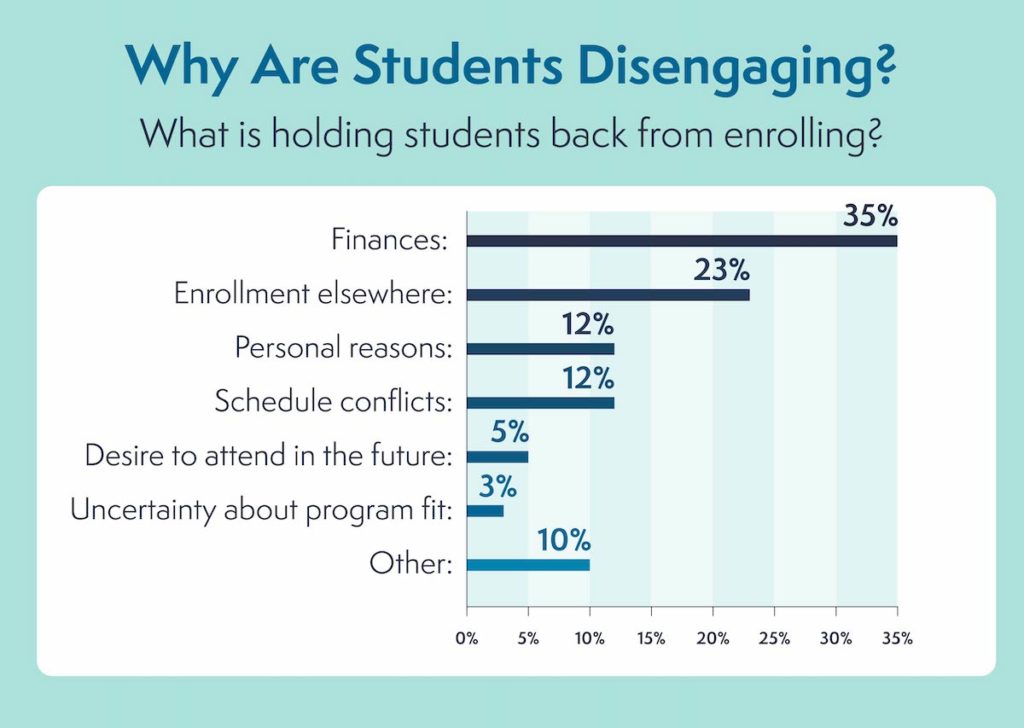
    Working with our partner Peru State College, we started sending a “What’s holding you back?” email to prospective students who weren’t taking the next step forward. The email not only asked “What’s holding you back from enrolling with us?” but also let the recipient click on an answer. For that email, we saw an average open rate of 16% — which doesn’t look too impressive until you consider these prospects had stopped engaging — and, more importantly, an average 33% click-through rate (with a majority of clicks leading to “apply now” pages). Not only did the email help the college reconnect with “lost” students, but we learned how to better connect with unconverted prospects going forward.

    The email allowed us to determine who was stopping out and why.

    • The top reason for not moving forward was related to finances (35%).
    • More than 20% of prospective students had enrolled elsewhere.
    • 5% said they weren’t ready to enroll yet but wanted to attend in the future.

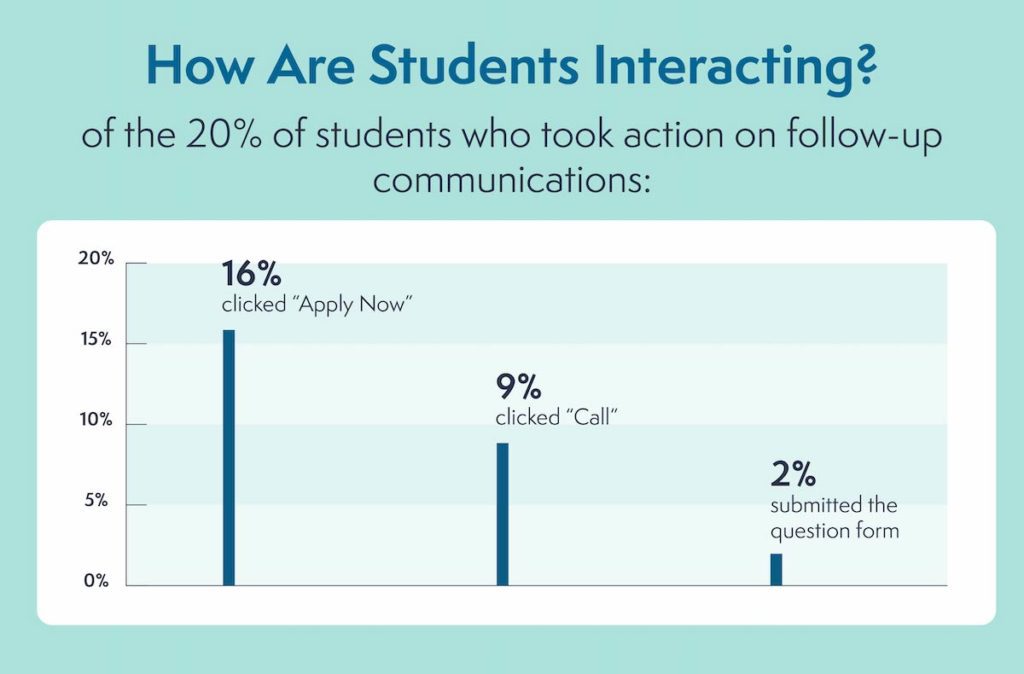
    These insights informed our follow-up digital communication, as well as our one-on-one admissions team follow-up. As a result, we reengaged with a meaningful percentage of stopped-out prospects by understanding some of their challenges and following up with relevant information. Moreover, 20% of this audience took action by clicking to start or finish their application and/or call an admissions rep.

    Student Engagement Strategies for Every Higher Ed Stage 

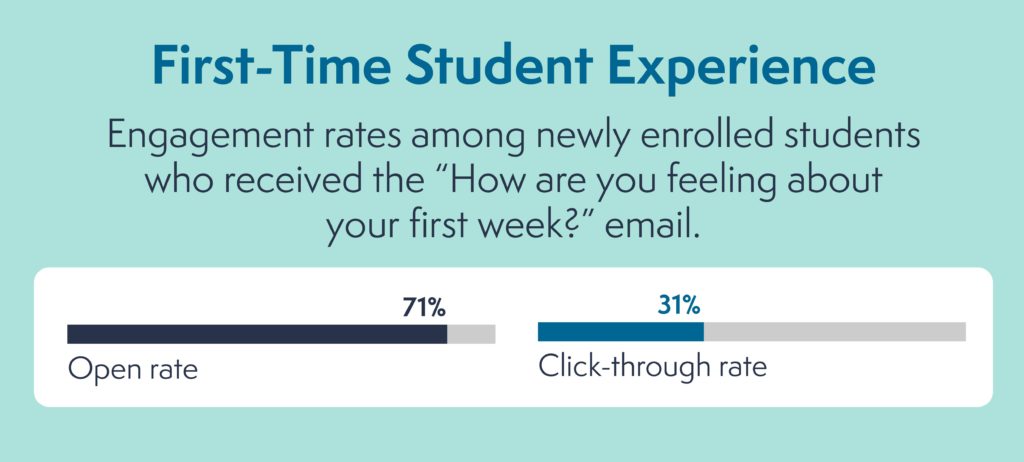
    We used this same engagement strategy for first-time students enrolled in Peru State College’s online programs. Before we could view information in our partner’s learning management system to see if students were showing up for class or turning in assignments — leading indicators of student success — we wanted to check in with these new students directly to ask how their first week was going. The email asked, “How are you feeling about your first week?”

    This email had an average open rate of 71% and an average click-through rate (CTR) of 31%.

    Using a similar email, Archer helped another partner intervene to help 14 students who had indicated they weren’t having the best first-week experience. By asking follow-up questions to learn what wasn’t working for them, and forwarding that information to our admissions team, we were able to connect those students with a success coach at the university.

    Optimize Student Engagement at Your Higher Education Institution 

    Higher-ed marketers and enrollment professionals know from experience that the success of every student is important to an institution’s long-term success. Providing a more personalized and engaging student experience can have a positive impact on enrollment growth and student retention. 

    It’s time for you to start having meaningful digital conversations that make an impact. 

    While Archer Education uses Onward, our easily scalable end-to-end student support solution, to deliver personalized communication and tailored post-inquiry follow-up 24/7, you don’t need a sophisticated lead nurturing tool to improve your student engagement strategies. Simply start asking questions in your communication with students and provide them with an easy way to respond. 

    Want to learn more about how to modernize your student experience and increase enrollment and retention rates with Archer’s Onward student support solution? Reach out to us and learn more today.

    Avatar photo


    Angie Mohr

    Director of Marketing & Communications

    Angie Mohr is the senior vice president of student engagement at Archer Education. With a background in marketing, communications, and CRM and marketing automation, she has over 15 years of strategic communications and higher education experience. In her current role at Archer Education, a full-service marketing and enrollment solutions provider for higher education institutions, Angie focuses on supporting student acquisition and life cycle delivery services, utilizing scalable communications strategies and technologies to help prospective students engage, enroll, and persist in their student journey.

    Source link

  • A Guide to Engagement and Climate Surveys That Inspire Action

    A Guide to Engagement and Climate Surveys That Inspire Action

    by Julie Burrell | October 30, 2024

    Surveys can be a powerful tool for improving workplace culture and employee satisfaction, but they can have unintended consequences if no action planning follows. In fact, the lack of tangible — and rapid — action planning often lead to a cycle of employee disengagement and eroded trust, which results in fewer employees taking future surveys, and ultimately weakens their effectiveness overall.

    But getting surveys right is possible. By implementing targeted surveys and following up with action planning, higher ed workplaces can earn a reputation for valuing employee insights. CUPA-HR’s recent webinar Turning Insights Into Action: Designing and Implementing Impactful Employee Climate/Engagement Surveys explains how to build, or regain, employee trust and confidence in surveys, increase response rates, and create a campus culture in which employees’ perspectives are prized.

    Ask These Two Questions First

    Before launching a survey, ask these critical questions: Does our institution need a survey? And, if the answer is yes, does our institution have the resources to act on the survey results?

    Without a solid “yes” to both questions, consider pausing survey efforts. It’s better not to conduct a survey at all than to conduct one and not follow it with action planning.

    Surveys should also focus on clear objectives, addressing one to three specific topics in depth. They should be topics the institution is ready to act promptly on once the survey is concluded. It’s also best to avoid questions with predictable answers. For example, you may already know that employees want parking that’s both closer and less expensive. Asking more refined or open-ended questions might lead to actionable results. In the case of employee satisfaction around parking, the right question might reveal that safety is a primary concern, something that can be addressed by installing more lighting in lots or strengthening security for employees using parking garages after dark.

    Increase Response Rates by Building Trust

    Effectively communicating the survey rollout and offering incentives can boost completion rates, but responses are ultimately determined by the trust employees have in your institution and the survey process itself.

    Make it anonymous. Clearly communicate how the survey will be kept anonymous and confidential. This is especially important for open-ended or text-based responses. If you’re not using an outside vendor, consider adding a survey analyst to your committee — you probably already have employees with these skills.

    Know that timing is everything. The survey should be sent out at the right time to avoid clashing with other surveys and to steer clear of any big campus plans or events that might skew results (for example, a recently announced capital project like a new stadium). A timely response from leadership is key, as are timelines in action planning. Any follow-up items should have target completion dates.

    Be clear on when and how employees will see the results. Don’t wait for a grand reveal when action items have been completed. This might take months, long after employees remember how they’ve answered survey questions. Instead, publicize the survey results as soon as possible and begin listening sessions to both refine results and include departments and divisions in planning.

    Build in accessibility and offer time to complete it. Consider if you need to translate the survey into multiple languages or if employees working outside of an office might benefit from a hard copy. Encourage supervisors to offer incentives like an early departure after completing the survey and ask them to send calendar invites to block off time for completion.

    Take Action. This is by far the most important way to build trust. The webinar offers concrete processes for building and planning a survey, impact planning (including templates to send to campus leadership for quarterly tracking), ideas for holding listening sessions, and proven employee engagement strategies.

    Discover More Resources for Data-Informed Decisions

    Read the article Employee Engagement/Satisfaction/Climate Assessment: Producing Actionable Results, which offers a six-step guide to creating and implementing effective surveys.

    Explore other webinars in CUPA-HR’s Data and HR series: Data You Can Count On: Using CUPA-HR’s Data Resources for Strategic Decision-Making and Data Visualization and Storytelling Tips and Tools for HR.


    Source link

  • Indiana University Faculty Who Focus on Student Engagement Using Top Hat See 11.5% Decrease in Student Withdrawal Rate

    Indiana University Faculty Who Focus on Student Engagement Using Top Hat See 11.5% Decrease in Student Withdrawal Rate

    Course withdrawals carry significant academic and financial consequences for students and universities. Studies consistently demonstrate that withdrawing from first-year courses can greatly increase a student’s risk of discontinuing their studies, reducing their likelihood of completing a degree (Akos & James, 2020).

    TORONTO – October 22, 2024 – Top Hat, a leading provider of student engagement solutions for higher education, has released the first significant finding in an ongoing research initiative with Indiana University exploring the impact of student engagement leveraging Top Hat on retention and academic outcomes. The study, involving an analysis of hundreds of courses from the Spring, Summer, and Fall semesters of 2023, observed that the use of Top Hat by instructors resulted in an 11.5 percent decrease in the mean student withdrawal rate compared to similar course types without using the platform. In absolute numbers, this would equate to approximately 289 of the sampled Indiana University students continuing their course work during the 2023 academic year. The findings highlight the positive impact of integrating Top Hat into course delivery on student retention, particularly in introductory courses that often have higher drop-out rates.

    The Top Hat platform empowers educators to use frequent low stakes assessments to increase student engagement during lectures through interactive polls, quizzes, and discussions. The use of frequent low stakes assessments have been shown to improve student confidence, academic outcomes and retention (Meer & Chapman, 2014). The principles of active learning can also be extended outside of class through Top Hat Pages, a content editing and personalization tool that enables instructors to create or customize their own interactive learning materials. Every interaction is captured by the platform, providing students with real-time feedback, while empowering faculty with data-driven insights they can use to identify struggling students and improve the impact of their instruction.

    “Indiana University is deeply committed to the success of our students, and the findings from this research demonstrate how the thoughtful integration of instructional technologies has contributed to strengthening our undergraduate retention,” said Gina Londino-Smolar, Ed.D., Teaching Professor at IU Indianapolis. “Implementing active learning and frequent assessment, which have been shown to improve student outcomes, has been an important focus for us and our partnership with Top Hat has been instrumental in enabling us to scale these practices across our institution, ensuring a consistent, high quality learning experience for our students.”

    The study’s primary objective is to evaluate the influence of Top Hat on various student outcomes, with an initial focus on withdrawal rates—a key indicator of student success. The collaborative research project, approved by the Institutional Review Board (IRB), involved analyzing data from thousands of individual courses. From the original large dataset, similar courses based on discipline and level were identified in order to equalize the sample size and undertake a more accurate analysis. After filtering the dataset, 235 unique Top Hat courses were compared against a similar set of 235 unique courses that did not use Top Hat.

    Indiana University began working with Top Hat in 2017 and, based on high rates of faculty adoption, made the decision to offer the platform free of charge to all students by entering into an enterprise license agreement the following year. By addressing concerns around equity, student affordability and ensuring compliance with respect to data privacy and standards for web accessibility, adoption has increased substantially. For the 2023/2024 academic year 1,022 faculty and 51,679 students across more than 1,900 individual courses from all nine IU campuses used Top Hat to enhance learning.

    “This study reinforces the importance of providing faculty with tools that make evidence-based practices, like active learning, easier to adopt,” said Maggie Leen, CEO of Top Hat. “The data speaks for itself—when instructors have access to the tools to support effective teaching methods, it can lead to stronger student engagement and higher persistence. We’re proud to be part of Indiana University’s efforts to increase on-time graduation rates for their students.”

    The 2030 IU Strategic Plan has one pillar dedicated to Student Success and Opportunity with a commitment to student affordability and experience throughout their educational journey to have success in the workplace and beyond. The incorporation of Top Hat to engage students with the course content, reducing withdrawal rates, can be seen as a direct contribution to the pillar for student success.

    Since its founding in 2009, Top Hat has continued to introduce new features to make proven teaching methods more accessible to instructors. Most recently, Top Hat announced the release of Ace, an AI-powered teaching and learning assistant that enables instructors to generate assessment questions and discussion prompts based on their lecture slides and course materials. As a personalized study assistant, Ace allows students to break down challenging concepts, find guidance tackling difficult homework assignments, and create on-demand practice questions they can use to prepare for high stakes assessments. 

    The initial findings will inform both Indiana University and Top Hat’s future strategies for enhancing student outcomes. The research initiative is currently focused on identifying patterns of usage by instructors across disciplines and their impact on student engagement and academic performance. Ongoing analysis is exploring the impact of Top Hat on the academic experience of various student populations, including historically underrepresented groups with a focus on how the platform supports equitable access to learning, improves engagement, and contributes to closing achievement gaps.

    About Indiana University

    Indiana University (IU) is one of the nation’s leading public research universities, with 90,000 students across 930+ academic programs, seven campuses, two regional academic centers and nine School of Medicine campuses. Since 1820, Indiana University has helped students create brighter futures while also driving innovation, from breakthroughs in DNA technology to cancer research to trailblazing cultural programs and resources. IU is home to world-class academics with the country’s largest medical school, the world’s first school of philanthropy, the top-ranked Kelley School of Business and O’Neill School of Public and Environmental Affairs, and the Luddy School of Informatics, Computing and Engineering, the nation’s first school of informatics. The university’s campuses are united by IU 2030, an aspirational vision for a bold and ambitious future focused on student success and opportunity, transformative research and creativity, and service to the state of Indiana and beyond. Learn more at iu.edu.

    About Top Hat

    As the leader in student engagement solutions for higher education, Top Hat enables educators to employ proven student-centered teaching practices through interactive content and tools enhanced by AI, and activities in in-person, online and hybrid classroom environments. To accelerate student impact and return on investment, the company provides a range of change management services, including faculty training and instructional design support, integration and data management services, and digital content customization. Thousands of faculty at 750 leading North American colleges and universities use Top Hat to create meaningful, engaging and accessible learning experiences for students before, during, and after class.

    Contact [email protected] for media inquiries.

    Source link

  • Top 10 Challenges Faced by Principals: Staffing & Engagement

    Top 10 Challenges Faced by Principals: Staffing & Engagement

    Tune In To Our Audio Blog


    Principals are facing challenges each day toward improving student achievement on campus. Every principal face some of the biggest frustrations to control student behavior, recruiting teachers and staff, promoting personalized learning, improving teaching effectiveness, student retention, parent support, and more. 


    Technology integration translates into enhanced student achievement

    21st-century classrooms strengthen tech-savvy teachers with the most advanced cloud, mobile, and digital technologies to teach and interact with students using videos, chat, notifications, social media, and email messaging. Creating future-ready classrooms and higher education institutions with the use of cutting-edge augmented reality systems in the classroom can enrich the learning process and improve student achievement.

    Principals are faced with complex and difficult challenges to turn around the campus with academic underperformance. Here is a list of the top 10 challenges and successful strategies to promote student growth and success.   


    1.  Paperwork

    Paperwork and forms are one of the biggest frustrations of principals. Eliminate paperwork and automate data collection processes through online forms and applications for admission, course evaluations, and more to reach out to more students in a positive manner.


    2.  Decision-making

    Principals’ decisions and strategies are critically important to institutional performance. They are accountable for high levels of student achievement. In order to accomplish the high expectations, administrators have to analyze data through dashboards and reports to identify factors related to student enrollment, retention, and success. There is clear evidence through insightful reports that the attributes of the institution such as admission, enrollment, attendance, discipline, grades, fee collections, etc. determined those outcomes.     


    3.  Scheduling 

    Classroom teachers, staff, and students report scheduling problems with principals. Cognitive reframing of scheduling with an automated timetable system enables instructors to manage class schedules across multiple courses, faculty and rooms for different time periods. Innovative scheduling can help alleviate conflicts in manual scheduling and place substitutes for teachers in order to maintain continuity of instruction. 


    4.  Recruitment

    Recruiting competent teachers who are capable of teaching all student populations is at the core of the problem. In successful institutions creating an advanced student admission system with real-time application tracking, online assessments, and an automated ranking system always identified the talented and sensitive teachers who demonstrated competency, will, and commitment to implement innovative and high-quality education programs and deliver excellence for all learners.  


    5.  Faculty Evaluation

    Teachers are vulnerable individuals who are struggling to align instruction and assessments to the learning context of a diverse student population. Creating instructions in innovative ways and building flexibility in the curriculum will be easier for students to rest with the teacher. Using a faculty evaluation system, creating faculty peer evaluation reviews through online surveys will benchmark teaching effectiveness. Based on the evaluation feedback score, training and improvement action plan for the benefit of faculty can be chalked out to improve teaching performance and cohesiveness. 


    6.  Attendance & Discipline 

    Principals perceive student absenteeism and misconduct are a major concern. Educational institutions can improve class attendance and improve students’ poor academic records using RFID and Biometric based attendance tracking systems to monitor student movements in real-time. Maintaining order and discipline and controlling violence, vandalism, bullying, racism, etc. in the campus using sophisticated discipline trackers that will capture incidents from mobile devices and notify authorities in real-time and ensure student safety.     


    7.  Curriculum Design 

    Principals are faced with the critical task of teaching a curriculum that is comprehensive and more encompassing. Curriculum mapping software provides the technology tools for executing changes in the curriculum design and syllabus. Principals and teachers can create customized outcome-based education that will map competencies, graduate attributes, and standards to improve learning outcomes. Students can develop skills and competencies that is aligned with course outcomes. 


    8.  Student outcomes

    One of the biggest factors that stood out is related to student achievement. Principals want to promote learning and see better student outcomes. With cutting-edge academic planning tools, administrators can create a personalized learning plan with goals and tasks linked to lessons to meet the precise requirement of students, which can improve learning outcomes and ensure student success. Using online assessments including assignments, tests, quizzes, and surveys will be of great help to students and teachers alike. Using online and mobile devices, teachers can measure students’ progress in real-time and share the results with parents through instant notifications via email and SMS alerts.  


    9.  Parental Involvement

    One of the biggest frustration faced by principals is that parental involvement is lacking to support the institution’s effort toward improving student achievement. Parents also have to take joint responsibility for the poor grade of their children. Using real-time status notifications for events, meetings, grades, fee collection, attendance, and discipline via web and mobile devices can improve interactions between teachers and parents and close the achievement gap.


    10.  Communication & Collaboration

    Principals and staff spend so much energy on building relationships with students, teachers, and staff. Powerful communication tools like discussion forums, chat, messaging and social media will have a positive impact on the institute community and promote collaborative learning.

    Source link

  • Role of Dean in Higher Education: 8 Strategies for Engagement

    Role of Dean in Higher Education: 8 Strategies for Engagement

    Tune In To Our Audio Blog


    Hello Deans, you are crucial in determining how education will develop in the future because you are the designers of your higher ed’s academic vision. Building successful learning environments where faculty and students flourish depends on your leadership. We’ll look at the role of dean in higher education and how deans can foster innovation in higher education institutions, and their creative approaches in this blog that can improve instruction and student participation, turning your classrooms into places where learning happens and ideas are generated.

    We’ll also demonstrate how the Creatrix suite can help you at every stage and provide you with the resources you need to have a significant, long-lasting influence. Let’s get started and support your academic community in realizing its greatest potential!


    The Role of Dean in Higher Education – Understanding the Dean’s Influence on a Campus

    With your influence over all facets of your institution’s learning environment, deans are the beating heart of academic leadership. Your influence greatly influences student outcomes, research, and teaching in addition to administrative tasks. Here is the common role of dean in higher education that demonstrates your impact:


    • Decide on the priorities and institutional culture.
    • Take the lead in implementing cutting-edge instructional strategies and technological advancements.
    • Make certain that the courses adhere to the most recent developments in education.
    • Motivate and assist educators in investigating novel teaching strategies.
    • Promote initiatives that increase student involvement and academic performance to increase student engagement.
    • Faculty and students can flourish in a dynamic learning environment when your vision serves as the cornerstone for educational excellence.
    • You take the initiative to implement tactics that raise student retention and success and involvement while fostering engaging learning environments.


    What’s Working Globally: 8 Proven Strategies for Deans to Elevate Teaching & Engagement

    While researching how deans can foster innovation in higher education institutions we arrived at a stunning analysis; we discovered how effectively leading deans from all around the world are changing education by pushing the envelope and implementing cutting-edge tactics. And we have documented on what’s working with them and the reasons these strategies are spreading throughout institutions worldwide for you to help you better!


    8-untold-proven-strategies-for-deans-to-boost-teaching


    1. Synergy across disciplines

    The most progressive deans of today are bringing students from various disciplines together to work together on real-world issues. Students studying business and engineering at the University of Michigan collaborated to develop ground-breaking solutions that enhanced critical thinking and teamwork, an approach that is quickly becoming recognized as a hallmark of academic innovation.


    2. Using Technology to Accelerate Learning

    Deans from the best universities across the globe are utilizing technology to transform education, from virtual reality to AI-driven tools. We figured out that Virtual reality (VR) and Gamified Learning were implemented at Stanford University recently! The main intention behind these initiatives was to enhance student engagement and understanding in subjects like anatomy and architecture! These technologies indeed allow students to study complex subjects in immersive and interactive ways.


    3. Investing in Faculty Development as a Strategic Move

    Giving professors the freedom to take the lead in innovation is crucial in the rapidly evolving field of education. At UC Berkeley, deans arranged workshops on active learning strategies, equipping teachers with the means to design more engaging, student-focused classrooms and demonstrating how supportive faculty members contribute to student retention and success.


    4. Innovation through research and experimentation

    It is also surprising to witness institutions such as Arizona State University provide faculty with resources to experiment with cutting-edge curricula. This is so welcoming indeed. By funding experiential learning projects, deans and decision-makers enable educators to test new models of teaching, and curriculum mapping, resulting in programs that increase student engagement and academic achievement.


    5. Change-Driven Loops of Student Feedback

    The next best strategy we figured out was that the academic institutions globally are utilizing student feedback to enhance their pedagogical approaches. They throng on 360-degree courses and faculty evaluation tools to listen out students’ opinions for improvement. It has been demonstrated that listening to students can significantly improve the learning experience. Georgia State University’s “Student Engagement Surveys” revealed insightful feedback that resulted in significant improvements in course delivery.


    6. Real-World Partnerships for Experiential Learning

    Another surprising discovery was this – Through partnerships with industry, top universities are witnessing a thirty percent increase in student engagement. More than 85% of participants at the University of South Florida reported feeling more prepared for the workforce as a result of the tech companies’ collaborative efforts with the university.


    7. Diversity and Inclusion as Innovation Drivers.

    We do not want to overlook this particular strategy! Institutions that prioritize diversity benefit from both innovation and engagement. At the University of Toronto, deans launched initiatives to bring diverse perspectives into the classroom, resulting in richer discussions, explorations, and new ideas, demonstrating that inclusive environments lead to more creative outcomes and better attainments!


    8. Risk-Taking & Experiencing Safe Environments

    The last thing we observed was promoting an environment where faculty and students feel comfortable taking chances to learn, adapt, grow, and shine. This strategy will for sure enable the upcoming generation of innovators to push boundaries and fail fearlessly, MIT has established “Innovation Labs,” which provide a creative environment where experimental projects flourish.


    The Role of Creatrix Campus Suite in Supporting Deans

    To all deans and academic leaders, managing a faculty is no small task, but it doesn’t have to be overwhelming. With Creatrix Campus, it’s easy to foster a culture of teamwork and innovation.

    Encourage a Collaborative Culture: Picture professors working together on projects and easily exchanging ideas with one another. Creatrix makes that a reality.

    Way to Miss the Admin Stress: Turn in the paperwork to Creatrix so you can focus on helping students succeed—that’s what really counts.

    Easy Decisions: With Creatrix’s perceptive analytics, you can easily adjust your strategies to achieve better results by identifying exactly what’s working.

    Create an Engaging Learning Experience: The tools aren’t just for management; they’re here to help improve student outcomes. By streamlining how faculty teach and interact, you’ll be building a more engaging and inspiring academic environment.

    Creatrix isn’t just another platform—it’s your partner in transforming the way your institution runs, making your job smoother and your faculty more effective.


    Case Study: University of Otago – Empowering Deans with Creatrix Campus

    But don’t just take our word for it—let’s look at a peculiar student retention and success story from an institution that embraced the Creatrix Suite.

    “Creatrix’s curriculum mind mapping based on learning outcomes, competency standards, and graduate attributes is excellent.” — Stephen Duffull, Dean School of Pharmacy, University of Otago


    Client Overview

    The University of Otago, one of New Zealand’s leading institutions and ranked in the top 1% globally, was looking to innovate its academic management systems to support its pharmacy school. Faced with the complexities of curriculum management, EPA tracking, and faculty workload, they needed a solution that could streamline their academic processes.


    Key Challenges

    Otago’s Pharmacy Department was juggling:

    Complex curriculum mapping: Multiple layers such as LOs, SLOs, EPAs, competency frameworks, and professional standards were difficult to manage manually.

    EPA tracking and rotational planning: Managing placements across five hubs required a detailed, integrated system.

    Timetabling inefficiencies: Manual scheduling for courses, faculty, rooms, and teaching events slowed operations and led to conflicts.

    Faculty workload management: Needed a more transparent and automated way to measure and balance faculty workload.


    How Creatrix Empowered Deans

    Creatrix helped Otago create a connected digital campus, where Deans like Stephen Duffull could:

    Streamline curriculum mapping: A visual mind map that ties in learning outcomes, assessments, and professional competencies, making it easier for Deans to track academic progress.

    Automate EPA planning: A dynamic rotational planner for EPA tracking, reducing manual work and ensuring smooth coordination across hubs.

    Master Timetable Scheduler: Automated scheduling with alerts for conflicts, integrating seamlessly with Google Calendar.

    Faculty Workload Management: Real-time tracking of faculty workloads, helping Deans better allocate teaching, research, and admin duties, with instant visual analysis.


    Business Impact

    With Creatrix, Otago saw immediate gains:

    • 2X faster implementation times
    • Seamless onboarding and reduced admin overhead
    • Greater faculty productivity and balanced workloads
    • Efficient curriculum and EPA management—all under one system

    Deans at Otago now had the tools to lead academic innovation, boost engagement, and drive institutional excellence.


    Conclusion: Empowering Deans to Lead Innovation

    We know that deans are crucial in shaping the future of higher education. Your leadership drives innovation and boosts student engagement. By exploring the Creatrix suite, you’ll discover tools that can simplify operations and enhance your institution’s academic culture. Take the next step—visit the Creatrix Campus suite of solutions and see how deans can foster innovation in higher education institutions. Let’s make a difference together!

    Source link