
Tag: enrollment marketing

  • 10 Smart Enrollment Marketing Tactics That Drive Results

    10 Smart Enrollment Marketing Tactics That Drive Results

    Reading Time: 12 minutes

    Today’s prospective students aren’t waiting for a glossy brochure to arrive in the mail. They’re researching schools on their phones between classes, watching campus tours on YouTube, and chatting with peers online to compare experiences. They’re digital-first and impatient, and expect the same seamless experience from a college as they would from Netflix or Amazon.

    To stand out in this noisy, fast-moving environment, your enrollment marketing needs to work smarter. That means shifting away from static promotions and embracing data-driven, student-centric strategies that guide each prospect from curiosity to commitment.

    Here’s how you can make that happen: 10 tactics that schools across North America (and beyond) are using to win the attention, trust, and enrollment of today’s students.

    Struggling with enrollment?

    Our expert digital marketing services can help you attract and enroll more students!
    1. Understand Your Audience (Better Than They Expect)

    The best enrollment marketing strategies begin with deep audience insight. Not the surface-level kind (like age ranges or postal codes), but real, behavior-based understanding.

    Instead of just collecting names at events or counting clicks on a landing page, take the time to analyze what your audience is doing. Are they spending five minutes reading your nursing program page but bouncing quickly from your homepage? Is there a spike in traffic after you post student testimonials on Instagram? These are the clues that shape smart decisions.

    Tools like Google Analytics, HubSpot, or Slate reveal exactly where prospects engage and where they drop off. Segmenting audiences based on their actions, rather than assumptions, lets you personalize outreach that feels meaningful. If a student explores your hospitality program at 11:00 p.m. from another time zone, your strategy should reflect that interest and context.

    Personalization builds a connection. And connection drives conversion.

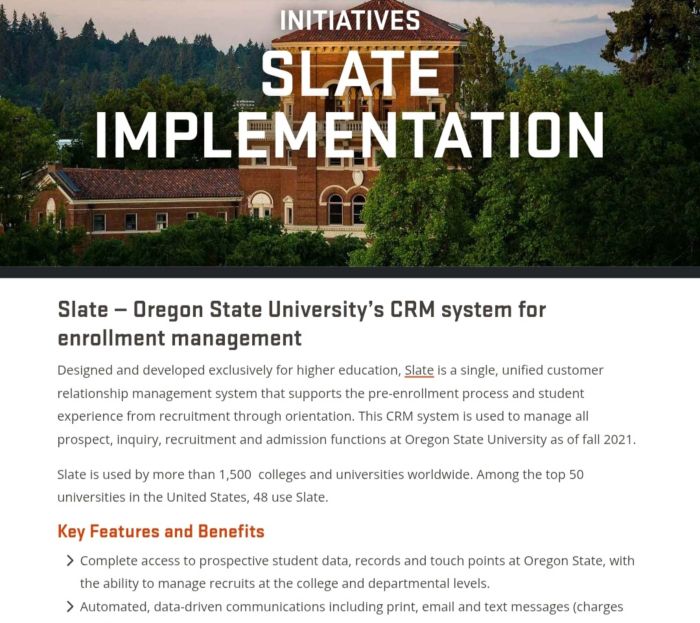
    Example: Oregon State University implemented a modern CRM (Slate) to segment and personalize outreach. OSU filters prospective students by interests, major, and location to trigger automated, tailored communications (email, text, print) for each segment. With this approach, Oregon State University ensures that prospects receive information relevant to them. For example, engineering-minded students get content on OSU’s tech programs, improving engagement and application conversion.
    HEM Blog Post Image 2HEM Blog Post Image 2

    Source: Oregon State University

    2. Turn Your Website Into a Top-Performing Recruiter

    Think of your website as your lead admissions counselor. It works 24/7 and never forgets a prospect’s name, if it’s built right.

    A compelling site doesn’t just list programs. It creates an experience. Navigation should be intuitive, especially on mobile, where the majority of users browse. Application deadlines should never be more than one click away. Program benefits should be clear, outcomes measurable, and support services obvious.

    Equally important is online visibility. Students won’t land on your site if it isn’t optimized for search. That means including the phrases they’re typing into Google: “Best business diploma in Vancouver” or “Top graphic design college Canada.” A steady stream of blog content around these themes builds your authority and search rankings over time.

    Don’t underestimate local search either. Schools that claim their Google Business listing and keep it updated with reviews, photos, and FAQs tend to show up higher in local results, right when families are deciding which campuses to visit.

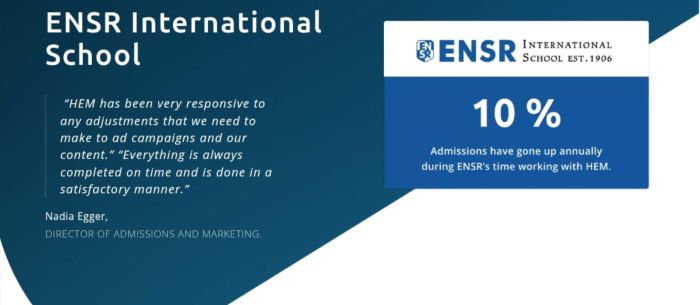
    Example: ENSR partnered with HEM to revamp its website for better usability and search visibility. Targeted SEO optimizations (including multilingual content and Google Ads campaigns) were implemented to attract more qualified traffic. ENSR also improved site speed and navigation. As a result, the school saw a 10% year-over-year increase in admissions, clear evidence that an optimized, easy-to-find website translates into more student enrollments.
    HEM Blog Post Image 3HEM Blog Post Image 3

    Source: HEM

    How can schools use SEO to reach more prospective students? Schools can use SEO by optimizing their website and content with keywords students search for, like program names or “colleges near me.” Creating informative blog posts, improving site speed, and using clear navigation help boost search rankings, making it easier for prospects to find and explore the school online.

    3. Meet Students Where They Scroll

    Social media is no longer just a promotional tool; it’s where brand trust is built. And guess what? Students don’t want picture-perfect posts. They want a glimpse into real student life: the awkward, the inspiring, and everything in between.

    How do social media platforms help attract prospective students? Social media platforms help attract prospective students by showcasing authentic campus life, student stories, and academic highlights where students already spend time. Targeted ads and engaging content build awareness, answer questions, and create emotional connections that encourage students to explore programs and take the next step toward applying.

    The most effective schools blend behind-the-scenes campus life, student takeovers, and authentic voices with strategic, paid campaigns. Engagement is key. Answer comments, reply to DMs, and ask questions. Your presence shouldn’t just be felt; it should be responsive.

    And when a student visits your site but doesn’t apply? A retargeting ad reminding them about a scholarship deadline can bring them back with a purpose.

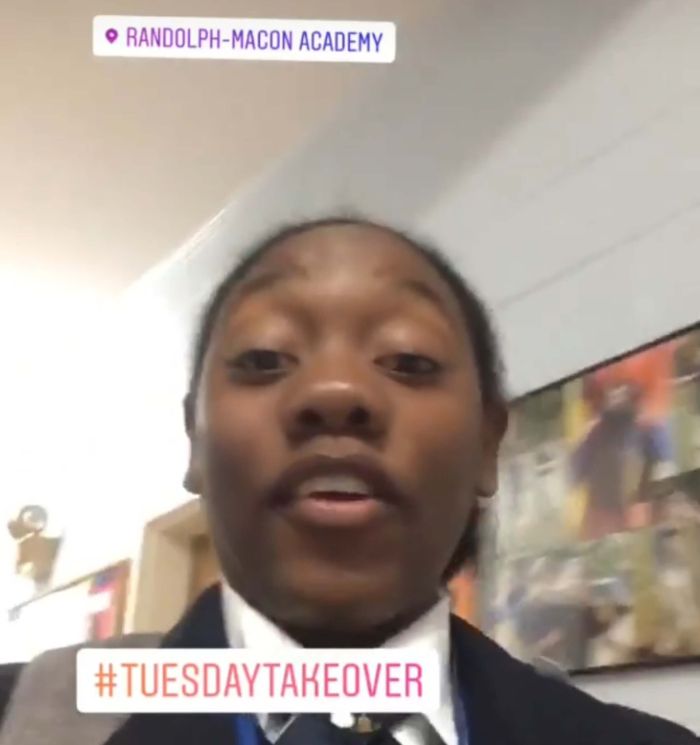
    Example: Randolph-Macon Academy utilizes student-driven social media takeovers and campaigns to humanize its brand. For example, on “Takeover Tuesdays,” R-MA students run the school’s Instagram Stories, giving followers a genuine day-in-the-life look at campus life. These peer perspectives resonate with prospective students and parents. R-MA also shares posts on LinkedIn celebrating achievements (like its seniors earning $16 million+ in scholarships) to boost credibility. By strategically targeting content on platforms like Instagram, Facebook, and LinkedIn, R-MA expands its reach and builds trust with specific audiences.
    HEM Blog Post Image 4HEM Blog Post Image 4

    Source: R-MA Instagram

    4. Bring Your Campus to Their Couch

    Campus visits are powerful but not always possible. Virtual tours bridge that gap beautifully when done right. 

    Why are virtual tours important for school admissions marketing? Virtual tours are important because they let prospective students explore campus facilities, culture, and student life from anywhere. They provide a first-hand experience that builds familiarity and trust, especially for international or remote students who can’t visit in person, helping them feel more confident about applying.

    The most compelling virtual experiences go beyond slideshows or still images. They immerse visitors in 360° visuals of your labs, residences, lounges, and dining halls. Add narration, clickable maps, and interactive hotspots to create a sense of discovery.

    Want to make it even more engaging? Offer live tours hosted by current students. Answer questions in real-time. Make the conversation two-way. This kind of hybrid interaction not only informs, but it also builds comfort and connection.

    Gamifying the experience with small touches like hidden easter eggs or quizzes can boost session time, making students stay longer and remember more.

    Example: Eastern New Mexico University: In January 2025, ENMU launched an upgraded 360-degree interactive virtual tour of its campus, in partnership with a virtual tour platform. The tour lets prospective students anywhere in the world explore campus landmarks at their own pace with panoramic views and clickable info points. New interactive stops even feature current students sharing their experiences via video, and users can access photos and descriptions of traditions at each location. This immersive virtual experience makes viewers feel “like they are on campus,” even if they cannot visit in person.

    HEM Blog Post Image 5HEM Blog Post Image 5

    Source: ENMU

    5. Let Video Carry the Message

    Nothing conveys emotion, trust, and energy quite like video. That’s why it’s the top-performing format across all platforms.

    Students use video to explore, compare, and decide. A 30-second clip showing campus energy can hook them, while a three-minute video of a student explaining why they chose your school can tip the scales.

    The best videos aren’t always the most polished. Often, it’s the realness that lands, the quiet moment in a dorm room, a laugh during class, a genuine answer about overcoming a challenge. When current students tell their story on camera, it resonates far more than scripted promos ever could.

    And don’t stop with publishing. Upload to YouTube (the second largest search engine in the world), share snippets on social media, and embed videos in your emails or on your site. It keeps your message moving, even when you’re not.

    Example: The Academy of Applied Pharmaceutical Sciences regularly produces short videos featuring student success stories and hands-on training highlights. These testimonials and “day in the life” videos are shared on AAPS’s website and social channels, providing an authentic glimpse into student outcomes. AAPS also posts video content of alumni in their new careers or students in lab classes, which personalizes the school’s message.

    HEM Blog Post Image 6HEM Blog Post Image 6

    6. Be There Instantly with Smart Chatbots

    Picture this: a student is exploring your program page at 10:45 p.m. They want to know if scholarships are still open, but your office is closed.

    This is where chatbots shine. When used effectively, they answer FAQs, guide students to relevant pages, and even collect lead info for follow-up, all in real time.

    Today’s best bots go beyond text. They can speak multiple languages, schedule tours, and connect students with human counselors. They’re not a replacement for your staff. They’re the frontline, making sure no interest goes cold.

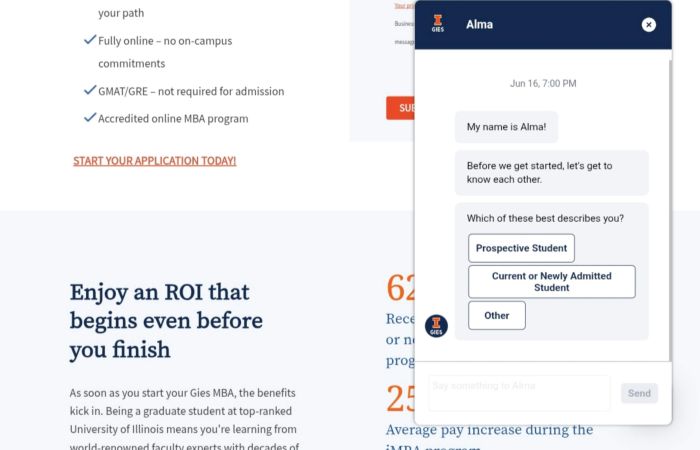
    Example: The University of Illinois Gies College of Business deployed an AI chatbot named “Alma” on its online MBA program website to handle common questions and nurture leads. The chatbot was built with a no-code AI platform and programmed to answer prospective students’ free-text questions about the program, provide key information (e.g., deadlines, curriculum), and even collect contact info for follow-up.
    HEM Blog Post Image 7HEM Blog Post Image 7

    Source: Gies College of Business

    7. Let Students Do the Talking

    Your school can say it’s great. But it means more when others say it for you.

    Prospective students read reviews before making decisions. That’s true whether they’re buying shoes or choosing a college. A few well-placed, authentic reviews from happy students or parents can tip the scale in your favor.

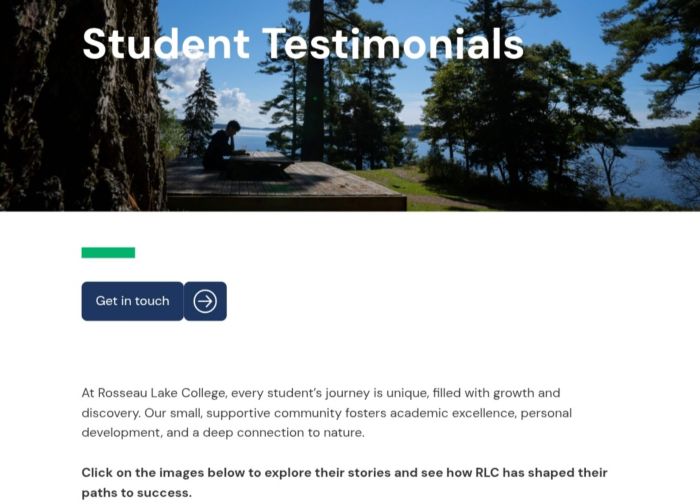
    Example: Rosseau Lake College actively highlights student and parent testimonials on its official site to manage its online reputation. RLC’s admissions section features a dedicated “Student Testimonials” page with quotes, stories, and even videos from current students and recent graduates.
    HEM Blog Post Image 8HEM Blog Post Image 8

    Source: RLC

    Make it easy for your community to share their voice. Follow up after tours or events with a simple request for feedback. Prompt graduating students to reflect on their journey. And most importantly, respond graciously to both praise and criticism.

    Highlight these testimonials in your marketing materials, emails, and website. Some schools even have dedicated pages that feature alumni quotes, rankings, and outcomes all in one place.

    Example: Discovery Community College leverages Google reviews and social media to boost its reputation. When the college receives a glowing review online, the marketing team amplifies it; for instance, Discovery CC shared a student’s 5-star Google review on Instagram with a thank-you message.

    HEM Blog Post Image 9HEM Blog Post Image 9

    Source: DCC Instagram

    When you let your results speak for themselves, people listen.

    8. Nurture With Purpose: Email and Text Messaging

    Email isn’t outdated. It’s just misused.

    Too often, schools blast the same generic message to every lead. But with marketing automation tools like HubSpot or Slate, you can do better. Much better.

    Send personalized messages based on actual behavior. If someone downloaded a course calendar, send a follow-up series about faculty highlights, career paths, or student testimonials from that program. If a student clicked a scholarship link but didn’t apply, follow up with a helpful guide or checklist.

    Text messages are the perfect complement: fast, direct, and effective. Use them for urgent nudges like deadline reminders or event RSVPs. But be respectful. Less is more when it comes to texting.

    9. Host Webinars That Educate and Inspire

    Done right, webinars are student recruitment gold. They let students interact with faculty, hear from alumni, and ask real questions, all from the comfort of home.

    Think beyond the program overview. What are students anxious about? Admissions essays? Career prospects? Financial aid? Offer sessions that solve these problems, not just sell solutions.

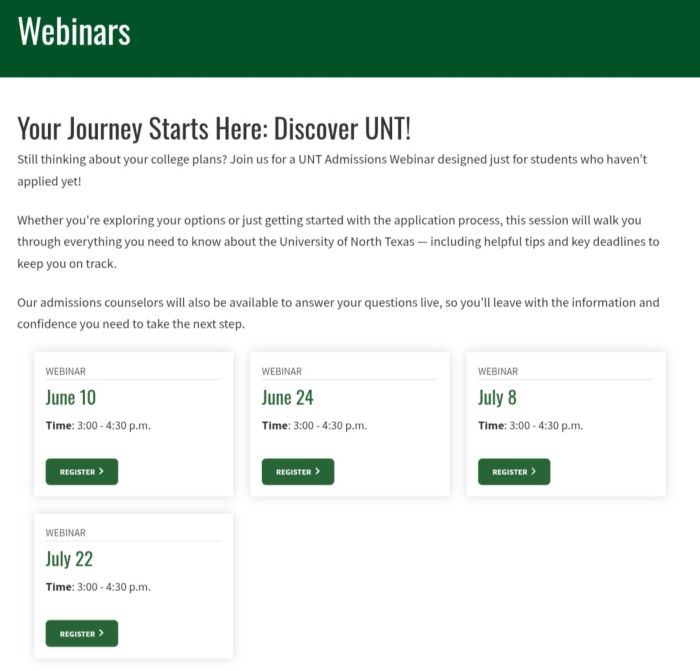
    Example: The University of North Texas runs themed Admissions Webinars for targeted audiences of students who haven’t yet applied. UNT invites high schoolers to sign up for sessions like “Why UNT? & How to Apply,” where recruiters walk through programs, campus life, and the application process via Zoom.
    HEM Blog Post Image 10HEM Blog Post Image 10

    Source: University of North Texas

    Live Q&As make these events feel dynamic. A student asking a question and getting an answer in the moment, that’s engagement. That’s trust.

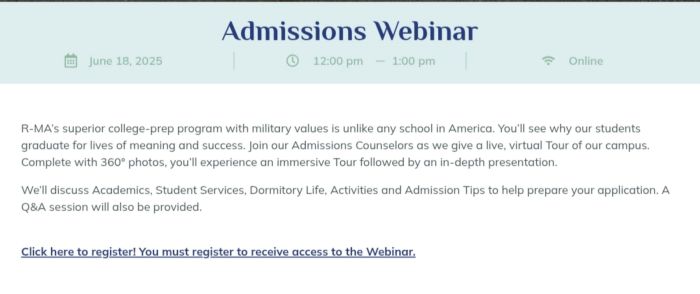
    Example: Randolph-Macon Academy hosts regular live webinars for prospective families as part of its recruitment strategy. During these virtual info sessions, R-MA’s admissions counselors present an overview of the school, share up-to-date facts, and then open the floor for Q&A. They often incorporate a live virtual campus tour within the webinar. This format has been effective in converting attendees to applicants – families get to interact directly with staff and students from home, addressing any doubts in real time.
    HEM Blog Post Image 11HEM Blog Post Image 11

    Source: R-MA

    And once the event ends, the content lives on. Recordings become lead magnets. Clips fuel your social strategy. Recaps can power blog posts. Every webinar is a long-term asset when you plan it right.

    10. Showcase What Comes After: Alumni Success

    Prospective students are investing time and money. What they want to know is simple: “Will it pay off?”

    Highlighting alumni outcomes is one of the most persuasive things you can do. Share job placement rates, grad school acceptances, average salaries, whatever metrics tell the story of success.

    Even more powerful are personal stories. The alum who launched a startup. The student who landed a dream internship. The graduate who returned to school to mentor others. These aren’t just achievements, they’re proof points.

    Example: Randolph-Macon Academy publicizes its alumni and student success outcomes as a core part of marketing. R-MA’s communications showcase statistics like 100% college acceptance and millions in scholarships earned by each graduating class. In 2025, R-MA proudly shared that its 69 seniors collectively secured over $10.5 million in scholarships for college. Alumni success stories (military academy appointments, leadership roles, etc.) are featured on the school blog and newsletters.
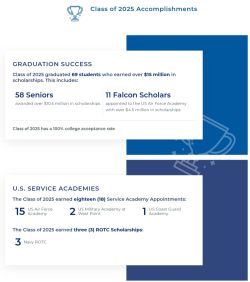
    HEM Blog Post Image 12HEM Blog Post Image 12

    Source: R-MA

    Some schools use interactive alumni maps to show where grads are working across the globe. Others run weekly spotlight stories on social or newsletters. However you do it, make sure it’s easy for prospects to imagine their own future in the successes of those who came before.

    When you say, “Here’s where our grads go, and here’s how we help them get there,” the value of your school becomes real.

    Enrollment Marketing Is Not About Tactics. It’s About Trust.

    Each of these enrollment strategies works on its own. But when you combine them into a cohesive enrollment plan, powered by data and driven by empathy, you don’t just generate interest. You build relationships.

    From a student’s first Google search to their final enrollment decision, every interaction matters. So make them count. Use tools like CRMs to track engagement. Align marketing with admissions. And most importantly, keep the student experience at the center of it all.

    Because in today’s world, enrollment isn’t about volume. It’s about value. Give your prospects content that answers questions, support that feels personal, and stories that inspire. Do that, and the results will follow.

    Need help building your enrollment marketing plan

    HEM offers expert services tailored to higher education institutions across Canada and beyond. Contact us today to learn more.

    Struggling with enrollment?

    Our expert digital marketing services can help you attract and enroll more students!

    Frequently Asked Questions

    Question: How do social media platforms help attract prospective students?

    Answer: Social media platforms help attract prospective students by showcasing authentic campus life, student stories, and academic highlights where students already spend time. Targeted ads and engaging content build awareness, answer questions, and create emotional connections that encourage students to explore programs and take the next step toward applying.

    Question: Why are virtual tours important for school admissions marketing?

    Answer: Virtual tours are important because they let prospective students explore campus facilities, culture, and student life from anywhere. They provide a first-hand experience that builds familiarity and trust, especially for international or remote students who can’t visit in person, helping them feel more confident about applying.

    Question: How can schools use SEO to reach more prospective students?

    Answer: Schools can use SEO by optimizing their website and content with keywords students search for, like program names or “colleges near me.” Creating informative blog posts, improving site speed, and using clear navigation help boost search rankings, making it easier for prospects to find and explore the school online.




    Source link

  • AI and Student Recruitment: Bridging Technology and Human Connection 

    AI and Student Recruitment: Bridging Technology and Human Connection 

    Artificial intelligence (AI) is revolutionizing student recruitment, offering tools to meet the growing demands of efficiency and personalization. As higher education institutions face shrinking pools of applicants and increased competition, the ability to deliver targeted, meaningful engagement is more critical than ever. AI not only enhances how a college or university understands prospective students but also how it interacts with them at every stage of the enrollment journey. 

    Leveraging AI for Data-Driven Decision Making 

    At the core of these advancements are customer relationship management (CRM) systems like TargetX and Outcomes, which centralize student data and lay the groundwork for AI-driven insights in higher education. By integrating AI with CRMs, institutions can unlock the potential of their data to deliver smarter, more effective recruitment strategies. However, the key lies in leveraging AI to augment human effort, not replace it

    Analyzing Data for Actionable Insights 

    Enrollment marketing thrives on data, and AI enables institutions to transform raw information into meaningful insights. With centralized student data in place, AI tools can: 

    • Identify high-value prospects | Predictive modeling analyzes behaviors, such as frequent visits to financial aid resources or high engagement with email campaigns, to identify students with the greatest likelihood to enroll. 
    • Discover growth markets | AI uncovers patterns in geographic and demographic data, highlighting regions or populations with untapped enrollment potential. For example, data analysis might reveal an increasing interest in online programs among working professionals. 
    • Enhance segmentation | AI’s ability to analyze large datasets allows institutions to refine audience segmentation, enabling hyper-targeted campaigns tailored to specific student profiles. 

    Prescriptive Strategies for Recruitment 

    AI doesn’t just interpret data—it help enrollment management professionals generate actionable strategies to optimize recruitment efforts: 

    • Financial aid optimization | By evaluating a student’s financial profile and likelihood to enroll, AI can recommend targeted aid packages that maximize yield. 
    • Campaign personalization | AI suggests tailored outreach strategies, such as sending event invitations to students interested in specific programs or nudging inactive prospects with relevant content. 
    • Continuous improvement | Enrollment marketing campaigns benefit from AI-driven feedback loops that analyze performance data and recommend iterative improvements for future campaigns. 

    Enhancing the Student Journey with AI 

    AI in the Exploration Phase 

    Most prospective students begin their college search online, making search engines a critical touchpoint. AI has significantly altered how search engines present results, directly impacting recruitment efforts: 

    • AI-enhanced search results: Tools like Google Bard or ChatGPT increasingly offer conversational responses, summarizing key information without requiring users to click on external links. For instance, a search for “top nursing programs” might yield an AI-generated list, bypassing institutional websites. 
    • Adapting to AI-driven search: To stay competitive, institutions should create conversational, Q&A-style content optimized for AI algorithms. Structured data and schema markup can enhance visibility, ensuring accurate representation in AI-driven search results. 

    Personalization Across the Enrollment Journey 

    Personalization is no longer a luxury—it’s an expectation. AI enables enrollment marketers to deliver individualized experiences to potential students: 

    • Dynamic content | Emails, ads, and landing pages can dynamically adjust based on a student’s preferences or behaviors. For example, prospective engineering students might see content highlighting research opportunities, while transfer students encounter information about credit evaluations. 
    • Real-time engagement | AI-driven tools monitor student interactions and trigger timely responses. If qualified students visit a program-specific webpage multiple times, marketers can automate follow-up emails with relevant resources or event invitations. 

    Guiding Students Through Key Milestones 

    AI supports students by providing actionable, personalized guidance throughout the recruitment process: 

    • Next-best actions | AI-driven solutions can recommend tailored next steps, such as completing an application, scheduling a virtual campus tour, or exploring scholarship options. These nudges keep students engaged and on track. 
    • Proactive assistance | AI can analyze behavior patterns to identify potential barriers, such as incomplete applications, and prompt intervention. For instance, a student frequently visiting pages about financial aid might trigger outreach offering a one-on-one consultation. 

    Navigating the Limitations of AI 

    The Irreplaceable Value of Human Connection 

    While AI excels at data analysis and automation, human interaction remains indispensable: 

    • Fostering relationships | Admission counselors play a vital role in addressing nuanced questions, providing reassurance, and building trust during critical decision-making moments, all of which support student success. 
    • In-person engagement | Face-to-face interactions, whether through campus tours, phone calls, or personalized advising sessions, create memorable experiences that AI cannot replicate. 

    Challenges in AI-Generated Content 

    AI-generated content, while efficient, has limitations that institutions must navigate carefully: 

    • SEO considerations | Search engines prioritize high-quality, original content with human authorship. Over-reliance on AI-generated text can harm visibility and credibility. 
    • Authenticity matters | Prospective students value content that reflects institutional expertise and culture, reinforcing trust and engagement. 

    Striking a Balance Between Technology and Humanity 

    AI should enhance, not replace, human efforts. While AI handles initial outreach and data-driven recommendations, human staff focus on relationship-building and addressing complex inquiries. This synergy ensures a recruitment strategy that is both efficient and personal. 

    Supporting the Institutional Mission

    AI is reshaping student recruitment, offering powerful tools to analyze data, personalize engagement with the right student each time, and optimize strategies. However, its limitations underscore the importance of human connection and authentic communication. By leveraging an AI-driven recruitment strategy, institutions can enhance recruitment efforts and support student success while staying true to their mission of fostering meaningful connections with prospective students. 


    Jess Lanning began her career in higher education at a private university where she served as director of enrollment marketing on a record enrollment team. Over her decade-long career, she has focused on strategizing and implementing digital marketing campaigns as a senior vice president of strategy and senior partnership manager for higher education-specific agencies. In these roles, she served undergraduate, adult, and graduate audiences across the verticals of paid social, search engine marketing, search engine optimization, conversion rate optimization, digital PR, and user experience. Jess now serves as a Director of Digital Strategy at Liaison and we are very lucky to have her!

    Source link

  • Personalized Communication Strategies That Drive Student Engagement in Higher Education

    Personalized Communication Strategies That Drive Student Engagement in Higher Education

    Key Takeaways:

    • Personalized, timely, and relevant communication is key to engaging prospective students and meeting enrollment goals in higher education.


    • Effective strategies rely on immediacy, relevance, automation, and trackability, ensuring impactful and consistent interactions.


    • Omnichannel outreach, using a mix of email, SMS, print, and digital platforms, enhances visibility and builds trust by meeting students where they are.


    • Data-driven tools enable tailored, personalized communication, real-time adjustments, and sustainable strategies.


    Connecting with prospective undergraduate students in meaningful ways requires a thoughtful blend of strategy, immediacy, and personalization. Gone are the days when generic messaging could effectively spark interest or drive engagement. Today’s prospective students expect communications that reflect an understanding of their individual needs, aspirations, and priorities and their value to your institution.

    Institutions aiming to enhance their enrollment strategies must adopt a more data-informed and strategic approach to communication. This means reaching out with the right message, at the right time, and through the right channels.


    Laying the Foundation for Communication Success

    Effective communication with students is built on four key principles: immediacy, relevance, automation, and trackability. Each element plays a critical role in ensuring that interactions resonate with students and influence their decision-making process.

    • Immediacy: Quick and timely responses that change as students’ behaviors change demonstrate attentiveness and can make a significant impression on prospective students. Delays in following up on inquiries or campus visits risk the loss of momentum and interest. Statistics show that the school that responds to inquiries first is more likely to convince that student to enroll.


    • Relevance: Tailored, personalized communication should go beyond basic name inclusion. Students expect messages that address their specific interests. Misaligned content, such as sending information unrelated to a student’s expressed major, can quickly undermine trust.


    • Automation: Streamlined, automated workflows keep communication consistent and dependable, even during staff transitions or times of high demand. Manual processes, such as college fair follow-ups that sit unprocessed for long periods, can derail engagement. Automation prevents these bottlenecks, enabling timely responses even when staff are unavailable.


    • Trackability: Monitoring communication effectiveness helps institutions refine their strategies and optimize ROI.

    By integrating these principles, higher education institutions can deliver a cohesive and impactful communication strategy that strengthens student engagement and builds trust.


    The Importance of Omnichannel Outreach

    While email has long been—and remains—a cornerstone of communication, relying on it exclusively is no longer sufficient. The sheer volume of emails students receive daily makes it easy for even the most well-crafted messages to be overlooked. To stand out, institutions must adopt an omnichannel approach with campaigns that combine email with print materials, SMS messaging, voice blasts, digital ads, social media engagement, and microsites, all tailored to student interests.

    Each channel serves a unique purpose for student engagement in higher education. Print materials, for example, are particularly effective at involving families in the decision-making process. A well-designed brochure placed on a kitchen table can spark conversations among family members, especially parents, who are often key influencers in the college selection process.

    Similarly, integrating consistent, tailored messaging across multiple channels ensures that students receive a seamless experience. Whether they encounter an institution on social media, via a targeted ad, by SMS message, or through an email campaign, the message should feel cohesive and tailored to their interests. Omnichannel strategies, timed appropriately through the enrollment timeline, not only improve visibility but also demonstrate an institution’s commitment to meeting students where they are, thus building trust and rapport.


    Leveraging Data for Personalization

    Modern communication strategies must be rooted in data. By analyzing student preferences and behaviors, institutions can craft messages that resonate on an individual level. With data-informed insights, institutions can identify what matters most to prospective students—whether that’s career outcomes, financial aid, or specific academic opportunities—and address those priorities directly.

    For example, students interested in STEM programs may be more receptive to communications highlighting research opportunities and faculty expertise, while first-generation students may appreciate messages emphasizing affordability and support services.

    To further maximize impact, institutions can use surveys and initial engagement data to tailor their outreach strategies, which allows them to deploy resources efficiently while maintaining relevance. For example, expensive print materials can be reserved for students who show strong interest in particular programs, while a social media campaign may be more appropriate for inquiries earlier in the enrollment cycle.

    Real-time data tracking lets institutions segment their strategies dynamically. If a particular campaign underperforms across the board or for certain cohorts of students, modifications can be made immediately to better align with student preferences. This agility is essential for maintaining relevance and impact throughout the recruitment cycle.


    Building a Sustainable Communication Infrastructure

    Sustainable communication strategies rely on the integration of advanced tools and technologies. While a customer relationship management (CRM) system lays a strong foundation, institutions often need more specialized solutions to elevate their outreach efforts. Liaison offers a suite of products designed to enhance and streamline communication and enrollment strategies, including:

    • Enrollment Marketing (EM): Liaison’s EM software and marketing services help institutions manage and analyze personalized, automated omnichannel campaigns, ensuring consistent and effective messaging across multiple channels.


    • Othot: This AI-driven tool leverages predictive and prescriptive analytics to optimize communication strategies and enrollment decisions, tailoring outreach to align with student behavior and institutional goals.


    • Centralized Application Service (CAS): By simplifying the admissions process for students and providing institutions with tools for marketing, data management, and application processing, CAS supports efficient communication with applicants.

    By incorporating these technologies, along with Liaison’s CRMs, institutions can maintain a seamless and unified communication flow so that prospective students receive timely, relevant, and personalized messages. These solutions also allow institutions to monitor campaign performance and adjust strategies in real-time, maximizing the effectiveness of resources and making messaging more impactful for target audiences. This integration reduces reliance on fragmented workflows, preventing gaps or delays caused by disconnected platforms.

    Aligning tools and strategies across departments using Liaison’s technologies keeps messaging consistent and impactful, even as prospective students engage with multiple touchpoints throughout their journey.


    Achieving Long-Term Engagement

    Effective communication with students is about building relationships that extend beyond the initial stages of recruitment. Institutions that invest in understanding and addressing the unique needs of their prospective students position themselves as partners in their academic journey.

    By delivering personalized, timely, and relevant messages through multiple channels, institutions can foster deeper connections and enhance student engagement in higher education. As the competitive landscape of enrollment continues to shift, adopting a strategic and data-informed approach to communication will remain essential for success.

    Ready to elevate your communication strategies? Discover how Liaison’s advanced tools and technologies can transform how you connect with prospective students. From personalized, omnichannel campaigns to data-driven insights, our solutions help you engage students meaningfully and meet your enrollment goals. Contact us today to learn more.

    About the Author

    Craig Cornell is the Vice President for Enrollment Strategy at Liaison. In that capacity, he oversees a team of enrollment strategists and brings best practices, consultation, and data trends to campuses across the country in all things enrollment management. Craig also serves as the dedicated resource to NASH (National Association of Higher Education Systems) and works closely with the higher education system that Liaison supports. Before joining Liaison in 2023, Craig served for over 30 years in multiple higher education executive enrollment management positions. During his tenure, the campuses he served often received national recognition for enrollment growth, effective financial aid leveraging, marketing enhancements, and innovative enrollment strategies.

    Source link

  • Moving Beyond New Year’s Resolutions to Embrace a Multi-Year Enrollment Strategy 

    Moving Beyond New Year’s Resolutions to Embrace a Multi-Year Enrollment Strategy 


    Developing New Year’s resolutions for personal growth is something many of us do. Unfortunately, it is often a set-it and forget-it process that is simply reupped the following year. When done correctly, however, creating a resolution that is developed as a sustained, long-term strategy—and that is regularly returned to and adjusted as needed—seems to be the best way to meet our personal goals.  
     
    As enrollment managers, we all have pursued the first approach in our professional lives by evaluating last year’s successes and failures annually, making a few tweaks, and then seeing how it all works out again the following year. The truth of the matter is that this approach was relatively sustainable for a time. Simply buying more names, adjusting the aid-leveraging model annually, or a developing a wider marketing plan often could drive greater enrollments—mostly because those tactics generally were designed to “add more fuel to the fire.” As long as the applications continued to grow, annual tweaks could help to maintain the core enrollments as well as improve on the margins for many institutions.  


    The Need for More Effective Strategic Enrollment Strategies

    Unfortunately, outside of key private and public flagship institutions, headwinds have developed over the past decade that are affecting higher education enrollments in significant ways. Ultimately, they may lead to campus closures for some, and to campus financial distress for many. As outlined in a paper from the Federal Reserve Bank of Philadelphia, “Predicting College Closures and Financial Distress,” those pressures include:

    • Post-pandemic enrollment challenges from traditional students (decreasing 15% from 2010-2021).


    • Changes among adult learners (“The number of adult students over the age of 25 has fallen by nearly half since the Great Recession”).


    • Growing competition.


    • A lack of public support for higher education nationally. 

    The combination of all these factors has brought about the need for enrollment managers to develop a wider multi-year strategy that includes tools with the ability to enable deeper, more highly data-informed fine tuning throughout any given cycle. A one-size-fits-all approach to creating a nuanced strategy can no longer work in an environment of shrinking applications and increased competition. 


    Liaison’s Partnership Philosophy

    Liaison is uniquely positioned to assist with higher education institutions in a true partnership. With the technology, services, and consultative approach that we provide our partners throughout the nation, we can assist in developing a comprehensive enrollment approach unique to your campus—ranging from single-point to full-enrollment planning solutions that are uniquely tailored to your unique needs. Liaison’s partnership philosophy, technology solutions, and industry knowledge and insights can not only help strengthen your enrollment planning and goals for this year but also set you up for long-term enrollment success.  


    Craig Cornell is the Vice President for Enrollment Strategy at Liaison. In that capacity, he oversees a team of enrollment strategists and brings best practices, consultation, and data trends to campuses across the country in all things enrollment management. Craig also serves as the dedicated resource to NASH (National Association of Higher Education Systems) and works closely with the higher education system that Liaison supports. Before joining Liaison in 2023, Craig served for over 30 years in multiple higher education executive enrollment management positions. During his tenure, the campuses he served often received national recognition for enrollment growth, effective financial aid leveraging, marketing enhancements, and innovative enrollment strategies.

    Source link

  • How to Recruit Undergraduate Students Who Persist

    How to Recruit Undergraduate Students Who Persist

    Key Takeaways:

    • Today’s undergraduate enrollment and recruitment strategies should be data informed and personalized, prioritizing quality over quantity.
    • “Flipping the funnel” shifts the focus from mass marketing to building meaningful, tailored connections with students, ensuring better matches and higher retention rates.
    • Student personas and data analytics enable institutions to craft targeted messaging that resonates with individual student goals.
    • Liaison’s tools empower colleges to use predictive analytics, real-time engagement, and tailored outreach to attract and retain students who are well-suited to their programs.

    For today’s higher education institutions, attracting the right students is more important than reaching a high volume of applicants. Traditional enrollment models that rely on casting a wide net and filtering through broad pools of applicants are no longer enough. Colleges and universities must instead adopt data-informed, personalized strategies that focus on quality over quantity.

    Liaison’s suite of advanced tools makes this possible, offering data-focused insights, real-time engagement capabilities, and tailored outreach options. This approach not only streamlines recruitment but also ensures a stronger match between students and their chosen programs, leading to higher yield and retention rates and ultimately providing a more fulfilling educational journey.

    Flipping the Funnel: Moving From Volume to Value

    Historically, institutions have used a “funnel” approach to undergraduate admissions and recruitment, beginning with a large pool of prospective students and narrowing the field. But with today’s intensified competition, this model is proving less effective. Rather than expanding the top of the funnel by acquiring more student names, “flipping the funnel” is a strategic approach that begins with the end goal in mind: enrolling and retaining the students who will thrive at your institution.

    Flipping the funnel shifts the focus from raw numbers to meaningful connections. Instead of mass marketing, this approach encourages institutions to recruit based on the distinct needs, goals, and interests of each student cohort. Just as each program or field has unique strengths, each student brings unique aspirations and potential. This customized outreach means that a prospective engineering student, for instance, might receive information about hands-on lab opportunities, while a fine arts student sees highlights of campus studios and faculty profiles. Liaison’s Enrollment Marketing and CRM solutions facilitate this tailored approach, allowing schools to reach specific audiences on digital platforms with messages that resonate with individual student interests.

    Building Student Personas to Enhance Targeting

    Understanding how to recruit undergraduate studentswho are likely to succeed and remain engaged throughout their academic journey requires a clear understanding of those students. Creating detailed student personas—representations of ideal applicants based on real data—lets institutions tailor their outreach with pinpoint accuracy. For example, Liaison’s CRM solutions facilitate this process by analyzing key data points such as academic background, geographic location, and behavioral insights, helping teams identify the students most likely to flourish and stay enrolled.

    With clear student personas in mind, institutions can deliver customized messaging that aligns with students’ priorities. For example, a prospective first-generation student may be most interested in affordability and support services, while a STEM-oriented applicant might respond better to information about research facilities and career pathways. Crafting communications based on these personas enhances engagement and strengthens student bonds from the beginning. By sending recruitment messages that truly speak to students’ goals, institutions foster a sense of belonging, which in turn improves retention and satisfaction rates.

    Utilizing Data Analytics for Personalized Interactions

    Data analytics has become an essential tool for individualizing outreach to connect with the right students with the right message at the right time. Real-time data enables institutions to track student responses, identify prospective students’ preferences, and adapt strategies based on what works best. Liaison’s AI solutions are designed for this agile approach, allowing institutions to monitor interactions and adjust their recruitment efforts dynamically throughout the enrollment cycle.

    With predictive and prescriptive analytics, schools can employ advanced tactics like retargeting, which reconnects with students who may have previously shown interest but haven’t yet committed. By capturing students’ attention during “micro-moments” as they browse social media or search online, institutions can stay relevant and timely in their communications. This data-informed approach—using Liaison’s Enrollment Marketing and digital services—increases enrollment numbers and forms trust with students by providing content that aligns with their journeys. The result? Stronger engagement and a greater likelihood of success.

    Transforming Enrollment With Data-Informed Precision

    In higher education, student recruitment requires a thoughtful, data-centered approach that emphasizes quality over quantity and personalization over generalization. By leveraging tools like Liaison’s Enrollment Marketing, TargetX, Outcomes, Search, and Othot, institutions can move beyond traditional methods and create recruitment strategies that attract students who are well-suited to their programs. By creating tailored recruitment strategies aligned to student cohort needs, you inspire students with a stronger sense of belonging and deeper engagement throughout the enrollment cycle. That, in turn, drives long-term success on your campus.

    To discover how Liaison’s technology solutions can transform your recruitment practices, reach out to us today. Our team is ready to help you implement data-backed, individualized outreach strategies that benefit your institution and future students alike. Contact us for a demo or a consultation to see how Liaison’s tools can elevate your enrollment efforts!


    About the Author

    Craig Cornell is the Vice President for Enrollment Strategy at Liaison. In that capacity, he oversees a team of enrollment strategists and brings best practices, consultation, and data trends to campuses across the country in all things enrollment management. Craig also serves as the dedicated resource to NASH (National Association of Higher Education Systems) and works closely with the higher education system that Liaison supports. Before joining Liaison in 2023, Craig served for over 30 years in multiple higher education executive enrollment management positions. During his tenure, the campuses he served often received national recognition for enrollment growth, effective financial aid leveraging, marketing enhancements, and innovative enrollment strategies.

    Source link

  • Tips for the Student Journey- Archer Education

    Tips for the Student Journey- Archer Education

    5 Tips for Keeping Students Engaged Throughout the Admissions Process

    In higher education, the enrollment funnel can feel like a battleground for institutions vying to convert interest into commitment. 

    Traditionally, the enrollment funnel has been viewed simply: attract, engage, and enroll. But the modern student’s journey is anything but straightforward — it’s a complex, winding path influenced by numerous digital touchpoints and personalized interactions.

    The health of the enrollment funnel extends beyond mere numbers; it represents the institution’s ability to connect with prospective students through every phase of their decision-making process. With technology reshaping expectations and behaviors, colleges and universities must not only catch the eye of prospective students but also keep them engaged through multiple channels and strategies. 

    This article unpacks key elements of the enrollment and admissions funnel, offering actionable insights and innovative tips to capture and retain students’ attention from their first inquiry through their enrollment stages. As we explore these strategies, you’ll discover the vital role that continuous, tailored engagement plays in transforming interest into activity, setting the stage for a successful educational journey.

    The Modern Student Journey

    Today’s students embark on their educational journeys equipped with a wealth of information and digital tools at their fingertips, making their paths to enrollment more complex and multifaceted than ever before. 

    Complexities and Challenges

    The student journey is far from linear. It involves numerous interactions across various platforms and touchpoints. Each student’s path is unique and influenced by personal, financial, and academic factors. 

    For instance, a modern student, such as a working professional returning to education or a parent seeking to balance family responsibilities with schooling, may have different priorities and use different resources compared to a younger, first-time college student.

    Technology has diversified the ways students gather information, and also how they engage with institutions. Prospective students might start their journey by conducting a simple Google search, but they will also often visit social media platforms, participate in virtual campus tours, and attend online webinars before starting their application. During this time, they are continuously evaluating their options and being influenced by each interaction they have with a school’s digital presence.

    Impact of Technology

    The proliferation of digital platforms has dramatically altered the student journey, both for students and institutions, in ways such as the following: 

    Given these technological influences, it is essential for educational institutions to adapt their enrollment strategies to meet the changing behaviors and preferences of modern students. Integrating data analytics, enhancing digital communication channels, and providing personalized experiences are all critical to effectively engaging with prospective students throughout their decision-making journey.

    Understanding the Enrollment Funnel 

    The enrollment and admissions funnel is a foundational concept in higher education marketing that illustrates the progressive stages a student navigates, from awareness through enrollment. The funnel is not just a theoretical model but a practical guide for shaping effective engagement strategies. 

    6 Stages of the Enrollment Funnel

    The enrollment funnel can be divided into several key stages, each requiring specific strategies to move prospective students to the next step:

    A deep understanding and effective management of the enrollment and admissions funnel is crucial for any educational institution aiming to increase its student body. Let’s see how it’s done. 

    How to Keep Students’ Attention Through the Enrollment Funnel

    Maintaining the attention of prospective students throughout their educational journey is crucial for successful enrollment. Here are key strategies to keep students engaged from initial inquiry through enrollment:

    1. Consistent Engagement Across Channels

    Leverage multiple channels to engage with students to ensure your institution remains top of mind. Implement a mix of digital and traditional marketing strategies to reach students where they are most active, such as the following:

    2. Personalization and Differentiation

    Tailor your communications to meet the specific needs and interests of each prospective student, and utilize data from their interactions with your digital content to personalize messages. Strategies to achieve these goals include the following:

    3. Incentives and Urgency

    Create a sense of urgency and motivation by offering incentives that encourage prospective students to take the next step:

    4. Building Relationships

    Foster a sense of community and belonging from the first interaction through forums such as the following:

    5. Continuous Improvement

    Regularly assess and refine your engagement strategies based on feedback and analytics tools and processes:

    It’s Time to Build Out Your Enrollment Funnel 

    The landscape of higher education is competitive, but the enrollment funnel could be your institution’s edge. By engaging prospective students at every stage of their journey with tailored strategies and personalized communications, institutions can significantly enhance their enrollment rates. If you’re ready to elevate your enrollment marketing strategies, Archer Education is here to take you to the next level. Reach out to us, and let us help you create a robust enrollment funnel that not only attracts but also converts prospective students into committed learners.


    John Van Fleet

    John Van Fleet is the Chief Marketing Officer at Archer Education. With more than 20 years of experience in higher ed marketing, John has a continuous track record of successfully supporting institutional growth.

    Source link