Dwight SanchezIn today’s hyper-competitive higher education landscape, the challenges facing Historically Black Colleges and Universities (HBCUs) and Minority Serving Institutions (MSIs) are immense. Declining birth rates, changing student expectations, shifting public sentiment, and persistent underfunding place extraordinary pressure on institutions that have long served as lifelines for students of color and first-generation learners. Yet amid these challenges lies an opportunity. By reimagining Strategic Enrollment Management (SEM) through the lens of negotiation theory, HBCUs and MSIs can increase their strategic agility, strengthen institutional partnerships, and yield more robust enrollment outcomes.
SEM as Negotiation
Strategic Enrollment Management isn’t merely about admissions and financial aid—it’s about aligning institutional mission with market realities in ways that are both student-centered and data-informed. Viewed through the lens of negotiation, SEM becomes a dynamic system of interdependent relationships: with prospective students, families, community influencers, K-12 schools, alumni, faculty, and internal staff. Drawing from 3D Negotiation: Powerful Tools to Change the Game in Your Most Important Deals by David Lax and James Sebenius, and Essentials of Negotiation by Lewicki, Saunders, and Barry, three principles become especially relevant: setup, deal design, and tactical interaction.
Setup involves determining who needs to be at the table, what interests are at stake, and which parties have influence over enrollment decisions. For HBCUs, this means engaging not just students, but parents, clergy, high school counselors, and community mentors who shape the decision-making ecosystem.
Deal Design refers to how institutions create value through the student’s experience. It’s not just about price; it’s about crafting offers that resonate emotionally and practically with underserved populations. This might include mentorship programs, clear career pathways, and intentional support systems.
Tactics, while often emphasized, should follow—not lead—strategy. Scripts matter less than systems, and strategic enrollment leaders must know when to pivot from persuasive messaging to coalition-building and issue reframing.
The Cultural Context
The diversity within HBCUs and MSIs also means that enrollment negotiations occur across varied cultural, economic, and generational dimensions. Chapter 11 of Essentials of Negotiation reminds us that in international and cross-cultural negotiations, assumptions can be fatal. For instance, assuming that all Black or Latino students respond similarly to recruitment strategies ignores regional, familial, and economic differences. Strategic enrollment leaders must develop cultural humility and data literacy to avoid overgeneralization and instead build nuanced personas that guide outreach.
Equally important is the political environment. Public perceptions of DEI initiatives, affirmative action, and federal funding can dramatically alter an institution’s appeal and perceived legitimacy. In this context, setup becomes a shield—anticipating changes, diversifying recruitment pipelines, and framing the institutional value proposition in ways that transcend political cycles.
Leadership and Accountability
Leading enrollment through this lens requires a shift from short-term performance metrics to long-term strategy. Enrollment managers must adopt a leadership posture that blends transformational vision with collaborative execution. As Lewicki et al. note in Chapter 10, multiparty negotiations (such as cross-department SEM committees) require clear roles, shared goals, and open channels of communication. Leaders must foster psychological safety while holding teams accountable to institutional KPIs—bridging the often-siloed worlds of marketing, academic affairs, and student support.
Professional development plays a critical role here. Too often, enrollment teams are equipped with tactical training (CRM usage, phone scripts, event planning) but lack exposure to systems thinking, data storytelling, or negotiation dynamics. Embedding professional learning communities and creating leadership pipelines within SEM units allows HBCUs and MSIs to develop internal change agents who can sustain innovation over time.
The Path Forward
HBCUs and MSIs are more than educational institutions—they are engines of social mobility and cultural affirmation. But to thrive, they must adopt a strategic posture that sees every element of SEM as a negotiation: from brand positioning to student engagement, from financial structuring to internal alignment.
Consider this: An HBCU looking to boost STEM enrollment among underrepresented males recognizes that traditional outreach and scholarship packages have limited impact. Instead of only increasing merit aid, the institution reframes its offer through negotiation theory. They partner early with high schools, launch a summer bridge program co-led by STEM faculty and alumni, and guarantee every enrolled student a faculty mentor and paid internship by year two. They also engage parents and community leaders as ambassadors—tapping into local trust networks. At the internal level, they align academic and student affairs teams through shared enrollment metrics and regular scenario planning meetings, increasing accountability and cohesion.
This isn’t just marketing—it’s “setup” and “deal design” in action. It expands the scope of stakeholders, adds value beyond dollars, and creates a win-win proposition for the student, family, and institution. It also reflects a broader institutional willingness to act as a proactive negotiator in shaping its market position.
By leveraging the principles of negotiation—particularly setup, value creation, and coalition building—enrollment leaders can develop strategic enrollment plans that are not only adaptive but transformative. In doing so, they ensure their institutions remain vital pathways for generations of students yet to come.
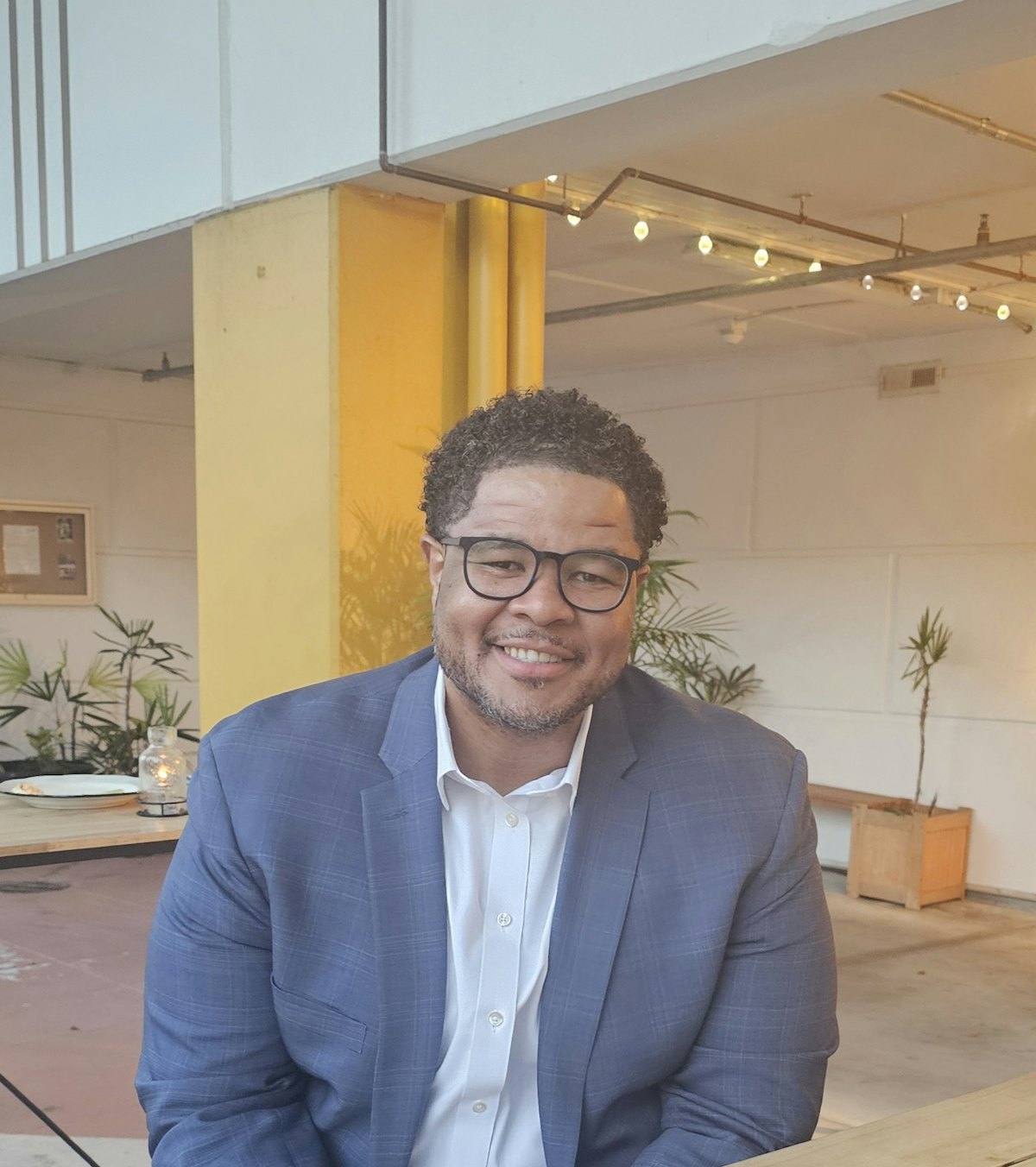
Dwight Sanchez is the Executive Director of Enrollment Management at the University of Maryland School of Pharmacy.
Headline: How State Policies Can Support Dual Enrollment Students
Title: Sharing the Cost: Insights From States Funding Dual Enrollment to Expand Access
Authors: Krista Kaput, Sharmila Mann, and Carrie Hahnel
Source: Bellwether
Research demonstrates that participation in dual enrollment programs improves student outcomes, with the potential to increase graduation rates and college enrollment and further students’ postsecondary attainment. While these benefits reach all participating students, students face unequal access to dual enrollment programs, which serve white and high-income students at a higher rate than Black, Hispanic, Indigenous, and low-income students.
To better understand the policies in place to support dual enrollment programs, a new report published by Bellwether examines dual enrollment programs and policies among four states, finding common themes related to both cost-sharing and access that states can replicate to further promote equity in dual enrollment participation.
In analyzing the states and programs, the report notes seven themes related to increasing access to dual enrollment programs to serve as models for other states.
Three of these themes involve funding policies:
States allocate the full, per-pupil cost for dual enrollment students directly to participating school districts, ensuring that districts are not put at a financial disadvantage if students attend dual enrollment courses.
Dual enrollment students are accounted for in community college full-time equivalent calculations, ensuring that community colleges are sufficiently funded for all students during the budget allocation process.
States either fully or partially reimburse community colleges for the tuition costs associated with dual enrollment students, ensuring that costs are kept low for students while supporting the additional costs for community colleges.
Four more themes concern policies unrelated to funding:
There are specific, state-set goals for dual enrollment programs, which can involve a method for data collection, setting program performance expectations, and alignment with other state attainment initiatives, to ensure that students are receiving high-level programming.
Community colleges and K-12 school districts are responsible for reporting dual enrollment program data to the state, allowing for policy adjustments supporting both strengths and opportunities for growth.
States require the establishment of formal agreements between school districts and community colleges, ensuring that responsibilities for dual enrollment students are acknowledged and upheld among both parties.
Dual enrollment coursework provides experience toward a credential of value or a need among the workforce, increasing the likelihood that credits earned through dual enrollment will support future postgraduation plans.
Beyond the seven themes that support dual enrollment students found among the four states, the authors of the report go on to note further potential policy changes that states may make to better serve underrepresented populations in dual enrollment programs. To increase access and participation, states ought to establish sustainable funding that provides frequent investment in support of dual enrollment students. Students’ participation can also be supported by increasing the number of instructors among educational areas of high demand, establishing strong advising systems among school districts and community colleges, and allocating funding toward non-tuition costs that may hinder enrollment.
To read more about specific dual enrollment programs, state policies, and how states can further increase access and participation among dual enrollment students, click here.
—Julia Napier
If you have any questions or comments about this blog post, please contact us.
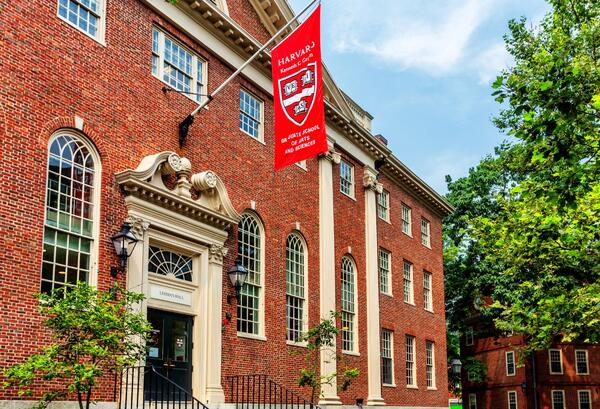
International students make up more than one-quarter of Harvard’s student body.
APCortizasJr/iStock Unreleased/Getty Images
Less than a day after having its ability to host international students revoked by the federal government, Harvard University successfully sued the Trump administration to block the move. A judge granted a temporary restraining order late Friday morning.
Department of Homeland Security Secretary Kristi Noem announced Thursday afternoon that the Trump administration had stripped Harvard’s Student and Exchange Visitor Program certification in a letter that vaguely accused Harvard of a “failure to adhere to the law.”
However, the letter did not name any specific violations of the law by Harvard.
On Friday morning, Harvard threw a legal counterpunch, filing a lawsuit challenging the revocation of SEVP certification and seeking a temporary restraining order to halt the action, which could cost Harvard to suddenly lose more than 6,000 students if they are unable to enroll. (International enrollment typically makes up about a quarter of Harvard’s head count.) Beyond blocking new enrollments, the revocation would require current international students to transfer.
Harvard president Alan Garber blasted the SEVP revocation as “unlawful and unwarranted” and said it was a punitive effort by the Trump administration in response to Harvard’s rejection of demands to reform governance, admissions, hiring processes and more following allegations of antisemitism and harassment that stemmed from pro-Palestinian protests last year. (Harvard filed a separate lawsuit pushing back on those demands last month, prompting the Trump administration to retaliate by freezing $2.7 billion in grants and contracts, or about a third of its federal research funding.)
“It imperils the futures of thousands of students and scholars across Harvard and serves as a warning to countless others at colleges and universities throughout the country who have come to America to pursue their education and fulfill their dreams,” Garber wrote in a message to campus.
He added, “We will do everything in our power to support our students and scholars.”
Harvard’s lawsuit echoed Garber’s points in an even sharper tone, accusing the federal government of blatantly violating the First Amendment and Harvard’s due process rights.
“With the stroke of a pen, the government has sought to erase a quarter of Harvard’s student body, international students who contribute significantly to the University and its mission,” lawyers representing Harvard argued in Friday’s early-morning legal filing.
Harvard’s lawsuit named DHS, Noem and other officials within the department as defendants, as well as the U.S. Departments of Justice and State and agency leaders.
Assistant DHS secretary Tricia McLaughlin fired back at Harvard in a response to Inside Higher Ed.
“This lawsuit seeks to kneecap the President’s constitutionally vested powers under Article II. It is a privilege, not a right, for universities to enroll foreign students and benefit from their higher tuition payments to help pad their multibillion-dollar endowments. The Trump administration is committed to restoring common sense to our student visa system; no lawsuit, this or any other, is going to change that. We have the law, the facts, and common sense on our side,” she wrote.
Another Legal Setback
A judge swiftly agreed with Harvard’s argument, signing off on the temporary restraining order to prevent revocation of the university’s SEVP certification within hours of the lawsuit being filed.
In a brief opinion, a district court judge in Massachusetts wrote in response to Harvard’s legal filing that the temporary restraining order was “justified to preserve the status quo.” The judge blocked DHS from stripping SEVP certification, at least temporarily, and granted a hearing.
A date for the hearing was not specified in court documents.
The temporary restraining order is one of multiple legal setbacks the Trump administration has faced recently as it has sought to pull student visas over minor infractions (and for constitutionally protected speech), cap federal research funding reimbursement rates, and slash staff at the Department of Education and other agencies. Many of those efforts face ongoing challenges.
On Thursday, for example, a federal judge barred the Trump administration from firing thousands of Department of Education employees as part of a sweeping reduction of force.
The federal government has already appealed that decision.
‘Do This Everywhere’
The Trump administration’s latest action against Harvard prompted broad condemnation from academics and free speech groups, who argued that the federal government did not follow legal processes for stripping SEVP certification and had ignored the university’s due process rights.
“The administration has clearly targeted Harvard in recent months. In doing so, it has violated not only Harvard’s First Amendment rights, but also the rights of the university’s students and faculty,” the free speech group Foundation for Individual Rights and Expression wrote in a Friday social media post. “We commend Harvard for standing up for itself. Free speech and academic freedom are essential to higher education. They are values worth fighting for.”
Despite widespread concerns from academics and lawyers that stripping Harvard’s SEVP certification is not legal, multiple Republican officials have endorsed Noem’s actions.
Rep. Randy Fine, a Republican who represents Florida and a member of the House Education and the Workforce Committee, cheered on the move in a Friday appearance on FOX Business. Fine, a two-time Harvard graduate, said the Trump administration should “do this everywhere” amid concerns about antisemitic behavior and harassment on college campuses.
Fine also took a dim view of international students exercising their First Amendment rights.
“We should not be bringing people into America to get an education who hate us. They should be coming here to get an education, and frankly they should keep their mouths shut beyond that. I don’t go into someone else’s house and complain about it when I’m there,” Fine said.
International students make up more than one-quarter of Harvard’s student body.
APCortizasJr/iStock Unreleased/Getty Images
Less than a day after having its ability to host international students revoked by the federal government, Harvard University successfully sued the Trump administration to block the move. A judge granted a temporary restraining order late Friday morning.
Department of Homeland Security Secretary Kristi Noem announced Thursday afternoon that the Trump administration had stripped Harvard’s Student and Exchange Visitor Program certification in a letter that vaguely accused Harvard of a “failure to adhere to the law.”
However, the letter did not name any specific violations of the law by Harvard.
On Friday morning, Harvard threw a legal counterpunch, filing a lawsuit challenging the revocation of SEVP certification and seeking a temporary restraining order to halt the action, which could cost Harvard to suddenly lose more than 6,000 students if they are unable to enroll. (International enrollment typically makes up about a quarter of Harvard’s head count.) Beyond blocking new enrollments, the revocation would require current international students to transfer.
Harvard president Alan Garber blasted the SEVP revocation as “unlawful and unwarranted” and said it was a punitive effort by the Trump administration in response to Harvard’s rejection of demands to reform governance, admissions, hiring processes and more following allegations of antisemitism and harassment that stemmed from pro-Palestinian protests last year. (Harvard filed a separate lawsuit pushing back on those demands last month, prompting the Trump administration to retaliate by freezing $2.7 billion in grants and contracts, or about a third of its federal research funding.)
“It imperils the futures of thousands of students and scholars across Harvard and serves as a warning to countless others at colleges and universities throughout the country who have come to America to pursue their education and fulfill their dreams,” Garber wrote in a message to campus.
He added, “We will do everything in our power to support our students and scholars.”
Harvard’s lawsuit echoed Garber’s points in an even sharper tone, accusing the federal government of blatantly violating the First Amendment and Harvard’s due process rights.
“With the stroke of a pen, the government has sought to erase a quarter of Harvard’s student body, international students who contribute significantly to the University and its mission,” lawyers representing Harvard argued in Friday’s early-morning legal filing.
Harvard’s lawsuit named DHS, Noem and other officials within the department as defendants, as well as the U.S. Departments of Justice and State and agency leaders.
Assistant DHS secretary Tricia McLaughlin fired back at Harvard in a response to Inside Higher Ed.
“This lawsuit seeks to kneecap the President’s constitutionally vested powers under Article II. It is a privilege, not a right, for universities to enroll foreign students and benefit from their higher tuition payments to help pad their multibillion-dollar endowments. The Trump administration is committed to restoring common sense to our student visa system; no lawsuit, this or any other, is going to change that. We have the law, the facts, and common sense on our side,” she wrote.
Another Legal Setback
A judge swiftly agreed with Harvard’s argument, signing off on the temporary restraining order to prevent revocation of the university’s SEVP certification within hours of the lawsuit being filed.
In a brief opinion, a district court judge in Massachusetts wrote in response to Harvard’s legal filing that the temporary restraining order was “justified to preserve the status quo.” The judge blocked DHS from stripping SEVP certification, at least temporarily, and granted a hearing.
A date for the hearing was not specified in court documents.
The temporary restraining order is one of multiple legal setbacks the Trump administration has faced recently as it has sought to pull student visas over minor infractions (and for constitutionally protected speech), cap federal research funding reimbursement rates, and slash staff at the Department of Education and other agencies. Many of those efforts face ongoing challenges.
On Thursday, for example, a federal judge barred the Trump administration from firing thousands of Department of Education employees as part of a sweeping reduction of force.
The federal government has already appealed that decision.
‘Do This Everywhere’
The Trump administration’s latest action against Harvard prompted broad condemnation from academics and free speech groups, who argued that the federal government did not follow legal processes for stripping SEVP certification and had ignored the university’s due process rights.
“The administration has clearly targeted Harvard in recent months. In doing so, it has violated not only Harvard’s First Amendment rights, but also the rights of the university’s students and faculty,” the free speech group Foundation for Individual Rights and Expression wrote in a Friday social media post. “We commend Harvard for standing up for itself. Free speech and academic freedom are essential to higher education. They are values worth fighting for.”
Despite widespread concerns from academics and lawyers that stripping Harvard’s SEVP certification is not legal, multiple Republican officials have endorsed Noem’s actions.
Rep. Randy Fine, a Republican who represents Florida and a member of the House Education and the Workforce Committee, cheered on the move in a Friday appearance on FOX Business. Fine, a two-time Harvard graduate, said the Trump administration should “do this everywhere” amid concerns about antisemitic behavior and harassment on college campuses.
Fine also took a dim view of international students exercising their First Amendment rights.
“We should not be bringing people into America to get an education who hate us. They should be coming here to get an education, and frankly they should keep their mouths shut beyond that. I don’t go into someone else’s house and complain about it when I’m there,” Fine said.
On May 22, the Department of Homeland Security (DHS) announced that it terminated Harvard University’s Student and Exchange Visitor Program (SEVP) certification. According to DHS, this action bars Harvard from enrolling foreign students and requires foreign students currently enrolled at the institution to transfer to another U.S. institution or lose legal status.
In the announcement, DHS states that “Harvard’s leadership has created an unsafe campus environment by permitting anti-American, pro-terrorist agitators to harass and physically assault individuals, including many Jewish students, and otherwise obstruct its once-venerable learning environment.” DHS claims that many of the agitators are foreign students. The announcement also accuses Harvard’s leadership of facilitating and engaging in coordinated activity with the Chinese Communist Party.
On April 16, DHS Secretary Kristi Noem sent a letter to Harvard requesting the university to provide records on foreign students’ illegal activity or misconduct. The letter stated that Harvard could face immediate loss of SEVP certification if it did not comply. According to the DHS announcement on the SEVP termination, Harvard did not provide “the required information requested and ignored a follow up request from the Department’s Office of General Counsel.”
In DHS’s announcement regarding the termination of Harvard’s SEVP certification, Noem states that DHS’s decision to terminate Harvard’s SEVP certification is “holding Harvard accountable for fostering violence, antisemitism, and coordinating with the Chinese Communist Party on campus.” She further states that “it is a privilege, not a right, for universities to enroll foreign students” and to “let this serve as a warning to all universities and academic institutions across the country.”
CUPA-HR will monitor for additional updates on this decision and other actions taken by DHS.
This audio is auto-generated. Please let us know if you have feedback.
Dive Brief:
College enrollment rose 3.2% year over year in spring 2025, increasing by 562,000 students and inching closer to pre-pandemic levels, according to new data from the National Student Clearinghouse Research Center.
Total enrollment reached 18.4 million students. Undergraduate enrollment increased 3.5% to 15.3 million, while graduate enrollment rose 1.5% to 3.1 million.
Community colleges again drove much of the growth in the sector, with a 5.4% increase in undergraduate enrollment at public two-year institutions. Among community colleges focused on vocations, enrollment rose 11.7%, a gain of about 91,000 students.
Dive Insight:
Colleges are continuing to make up ground lost during the pandemic, according to the clearinghouse’s latest report. While undergraduate enrollment this spring remained 2.4% lower than pre-pandemic levels, graduate enrollment grew 7.2% higher than in 2020.Spring enrollment at trade-focused colleges was up a whopping 20% since 2020, an increase of 871,000 students.
Historically Black colleges and universities saw their highest upticks since the pandemic, with year-over-year growth of 4.6% for undergraduates and 7.7% for graduate students, according to the clearinghouse.
Undergraduate enrollment grew among students in their 20s for the first time since the pandemic, with headcounts up 3.2% among students aged 21 to 24 and 5.9% for students aged 25 to 29.
Every kind of higher ed institution saw enrollment growth this semester, with community colleges taking center stage.
Public two-year institutions accounted for a little over half of the sector’s undergraduate growth in spring 2024 while making up slightly more than a third of the total undergraduate population, Doug Shapiro, executive director of the clearinghouse’s research center, noted during a media briefing Wednesday. However, community college enrollment is still “well below pre-pandemic numbers,” he noted.
At about 4.7 million students, public two-year college enrollment this spring is still nearly 350,000 students under its 2020 high, according to the clearinghouse report.
Along with two-year program enrollment increases, community colleges drove 4.8% enrollment growth in undergraduate certificate programs.
“Students are voting with their feet in favor of shorter-term credentials at lower costs and with more direct job-related skills,” Shapiro said.
Four-year institutions also made progress this spring. Total spring enrollment was up 2.5% in public four-year colleges — compared to 1.7% growth in spring 2024. And private four-year nonprofits saw headcounts rise 1.4% — a slight deceleration from last spring’s 1.7% growth but still another mark of progress since the pandemic-era declines.
Most states in the U.S. experienced enrollment growth, with a handful of exceptions: Enrollment dropped 6.2% in Idaho, 3% in Alaska, 2% in Vermont, 1.6% in Oregon, 1% in Nebraska and 0.7% in Missouri.
The clearinghouse prefaced that the decline in Idaho, the biggest drop seen among the states, was largely driven by one college’s decision to stop reporting dual enrollment numbers, which include high school students taking college classes.
Earlier this year, the clearinghouse found that fall 2024 enrollment grew 4.5%, with first-year student headcounts rising 5.5% annually.
“College student attendance patterns this spring compared to spring 2024 are reinforcing and building on the growth that we saw in the fall,” Shapiro said Wednesday.
Collegis empowers data-driven admissions and streamlines prospective student support.
Buffalo, NY (May 20, 2025) — Trocaire College, a private, career-oriented Catholic college, today announced a multi-year partnership with Collegis Education to advance its enrollment strategy and elevate the student experience. Through this collaboration, Trocaire will leverage Collegis’ Enrollment Support Services and its Connected Core® platform to guide prospective students from inquiry to enrollment.
The partnership comes as Trocaire begins implementing its new three-year strategic plan, with a sharpened focus on increasing enrollment and creating a seamless, student-centered admissions process.
“Trocaire College is looking forward to working with Collegis to help grow our enrollment in alignment with our mission. Collegis has a proven track record of achieving results in higher education including revenue-growth, enrollment expertise and optimization of student experiences while having an ‘edu-preneurial’ mindset,” stated Jason Konesco, executive vice president at Trocaire. “We chose Collegis for their ability to be a true partner working collaboratively with our team to create a tailored solution that will best reflect the needs of our institution.”
Collegis will serve as an extension of the Trocaire admissions team, providing personalized support and helping prospective students navigate their journey from initial inquiry to first contact to the first day of class. With just over 1,000 students across its South Buffalo location and Transit Achievement Center in Lancaster, Trocaire empowers students to achieve personal enrichment, dignity, and self-worth through education in various career-focused degree programs including healthcare, business, technology, veterinary sciences and the liberal arts.
Earlier this year, Trocaire first connected with Collegis at the Association of Catholic Colleges and Universities (ACCU) Annual Meeting. Additional follow-up meetings, including a site visit from the Collegis team, solidified a shared vision for a collaborative, student-first approach.
At the core of this partnership is Connected Core, Collegis’ integrated technology and analytics platform that empowers institutions to make data-informed decisions while extending operational capacity. Recently named a “cool tool” by EdTech Digest, with Connected Core, Trocaire College will gain actionable insights into prospective student behavior, streamlined admissions workflows, and access to enrollment specialists trained to deliver high-quality student engagement.
“This partnership reflects what we do best: supporting institutions like Trocaire to help them grow in ways that honor their mission,” said Pat Green, vice president of enrollment solutions at Collegis Education. “We’re proud to bring data, tech, and talent to Trocaire’s team and we are passionate about supporting the next generation of students preparing for careers of purpose and lives of service.”
About Trocaire College
Founded in 1958 in Buffalo, NY by the Sisters of Mercy, Trocaire College is a private, career-oriented Catholic college that empowers students with the resources and supportive environment needed to achieve their academic goals. The core mission is to allow each person to be a valuable contributor to the workforce needs of the community. Trocaire offers bachelor’s degrees, associate degrees, certificates and workforce development programs in healthcare, veterinary sciences, business, and technology. Trocaire ranks in the top one-quarter of colleges and universities for return on investment by Georgetown University and is designated as an Opportunity College and University by the Carnegie Classifications with a Higher Access, Higher Earnings classification. Visit trocaire.edu for more information and follow Trocaire on Facebook, Instagram and LinkedIn.
About Collegis Education
As a mission-oriented, tech-enabled services provider, Collegis Education partners with higher education institutions to help align operations to drive transformative impact across the entire student lifecycle. With over 25 years as an industry pioneer, Collegis has proven how to leverage data, technology, and talent to optimize institutions’ business processes that enhance the student experience. With the strategic expertise that rivals the leading consultancies, a full suite of proven service lines, including marketing, enrollment, retention, IT, and its world-class Connected Core® data platform, Collegis helps its partners enable impact and drive revenue, growth, and innovation. Learn more at CollegisEducation.com or via LinkedIn.
“Denver Public Schools to close 7 schools, cut grades at 3 others despite heavy resistance.”
“The list is out: These are the SFUSD schools facing closure.”
Such reports can leave the impression that districts are rapidly closing schools in response to declining enrollment and families leaving for charters, private schools and homeschooling.
But the data tells a different story.
School closures have actually declined over the past decade, a period of financial instability that only increased in the aftermath of the pandemic, according to research from the Brookings Institution.
The analysis, shared exclusively with The 74, shows that in 2014-15, the closure rate — the share of schools nationwide that were open one year and closed the next — was 1.3%. In 2023-24, the rate was just .8%, up from .7% the year before.
“I think it’s important for people to realize how rare school closures are,” said Sofoklis Goulas, a Brookings fellow and the study’s author.
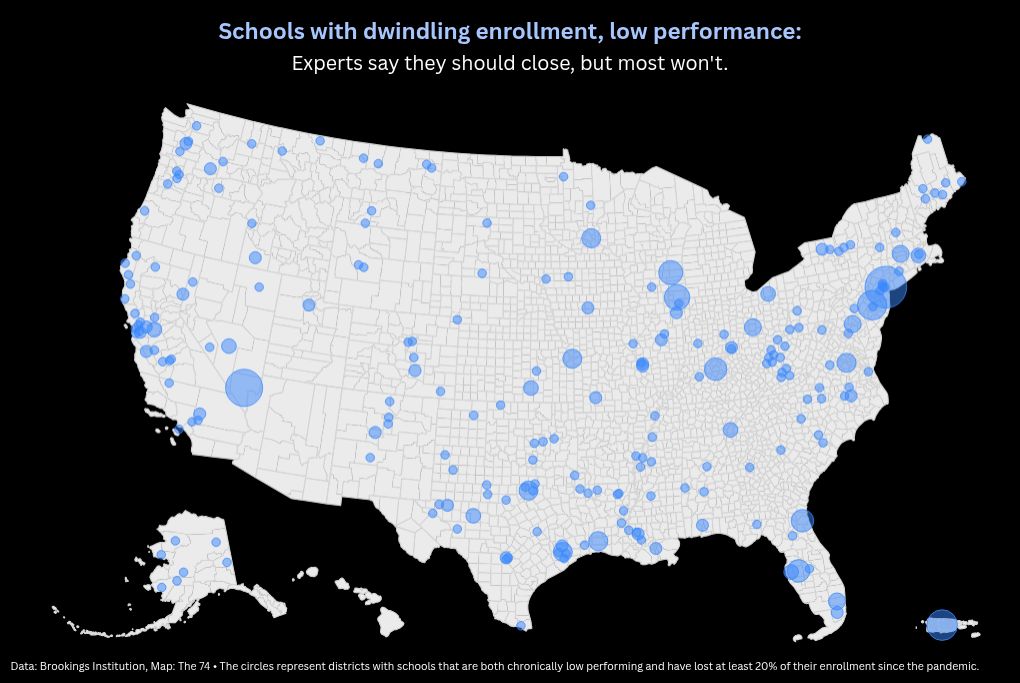
Last fall, his research showed how schools that have lost at least 20% of their enrollment since the pandemic are more likely to be low-performing. The Clark County Public Schools, which includes Las Vegas, had the most schools on the list — 19 — but isn’t currently considering closures. In Philadelphia, with 12 schools in that category, district leaders are just beginning to discuss closures.
When it released Goulas’s initial report, leaders of the conservative Thomas B. Fordham Institute argued that low-performing schools should be the first to close. But efforts to do so are often met with pushback from families, teachers and advocacy groups who argue that shutting down schools unfairly harms poor and minority students and contributes to neighborhood blight. Their pleas often push district leaders to retreat. Working in advocates’ favor, experts say, is the fact that many big district leaders are untested and have never had to navigate the emotionally charged waters of closing schools.
“Closing a neighborhood school is probably one of the most difficult decisions a district’s board makes,” said Michael Fine, CEO of the Fiscal Crisis and Management Assistance Team, a California state agency that provides financial oversight to districts. “They are going to avoid that decision as long as they can and at all costs.”
Such examples aren’t hard to find:
Just weeks after announcing closures, the San Francisco district halted plans to shutter any schools this fall.
In September, outgoing Chicago Public Schools CEO Pedro Martinez pledged to put off school closures for another two years, even though state law allows the city to take action sooner. The district is in the process of absorbing five charter schools to keep them from closing.
In October, Pittsburgh Public Schools recommended closing 14 schools; several others were set to be relocated and reconfigured. About a month later, Superintendent Wayne Walters hit pause, saying the district needed more “thoughtful planning” and community input.
Last May, the Seattle Public Schools announced it would shutter 20 elementary schools next school year in response to a $100 million-plus budget deficit. They later increased the number to 21. By October, the list had dwindled to four schools. Just before Thanksgiving, Superintendent Brent Jones withdrew the plan entirely.
“This decision allows us to clarify the process, deepen our understanding of the potential impacts, and thoughtfully determine our next steps,” Jones wrote to families. While the plan would have saved the district $5.5 million, he said, “These savings should not come at the cost of dividing our community.”
Graham Hill Elementary in Seattle, which fifth grader Wren Alexander has attended since kindergarten, was initially on the list. The Title I school sits on top of a hill in a desirable area overlooking Lake Washington. But it also draws students from the lower-income, highly diverse Brighton Park neighborhood.
Among Wren’s neighbors are students from Ethiopia, Vietnam and Guatemala. Wren, who moves on to middle school this fall, said she looks forward to visiting her former teachers and cried when she heard Graham Hill might close. She wanted her younger brother and sister to develop the same warm connection she had.
“I don’t think I would be who I am if I didn’t go to the school,” she said.
Wren Alexander and her little sister Nico, outside Graham Hill. (Courtesy of Tricia Alexander)
Tricia Alexander, her mother, was among those who opposed the closures, participating in rallies outside the district’s administration building and before board meetings.
“We were really loud,” said Alexander, who’s also part of Billion Dollar Bake Sale, an effort to advocate for more state education funding. She said there was “no real evidence” that closing schools would have solved the district’s budget woes. “In no way would kids win.”
It’s a view shared by many school finance experts, who note that the bulk of school funding is tied up in salaries, not facility costs. Districts may save some money from closing schools, but unless coupled with staff reductions, it’s often not enough to make up for large budget shortfalls.
‘So bad at this’
If enrollment doesn’t pick up, experts say, leaders who delay closures will have to confront the same issues a year later or — perhaps even more likely — pass the problems on to their successors.
“If there continues to be fewer and fewer children …then that doesn’t get better,” said Brian Eschbacher, an enrollment consultant.
One Chicago high school, for example, had just 33 students last year. In Los Angeles, the nation’s second-largest district, 34 elementary schools have fewer than 200 students and 29 of those are using less than half of the building, according to a recent report. The share of U.S. students being educated outside of traditional schools also continues to increase, according to a forthcoming analysis Goulas conducted with researchers at Yale University.
“We don’t see a trajectory of enrollment recovery,” he said. “Things actually got worse in the most recently released data batch.”
But such conditions haven’t stopped advocacy groups from campaigning against closures. One of them, the left-leaning Advancement Project, has joined with local groups in Denver and Pittsburgh to make a case against closures nationally.
“All children deserve to have a local, neighborhood public school in which they and their families have a say,” said Jessica Alcantara, senior attorney for the group’s Opportunity to Learn program. “It’s not just that school closures are hard on families. They harm the full education ecosystem that makes up a school — students, families, school staff and whole communities.”
Last May, Alcantara and other Advancement Project staff urged the U.S. Department of Education to treat school closures as a civil rights issue. Nine of the 10 schools the Denver district planned to close in 2022 had a majority Black or Hispanic student population.
The advocates argued that in cases of enrollment loss, run-down facilities and empty classrooms, there are alternatives to closing schools. They encourage communities to push for renovations and urge district leaders to use vacant spaces for STEM, arts or other programs that might attract families. Opponents of closures also say that districts sometimes underestimate how much of a building is used for non-classroom purposes like special education services, early-childhood programs and mental health.
Eschbacher’s assessment of why districts often back down from closing schools is more blunt.
“Districts are so bad at this,” he said. “If you just do a few things wrong, it could sink the whole effort.”
For one, leaders often target schools with under 300 students for closure, appealing to parents that they can’t afford to staff them with arts programs, a school nurse or a librarian.
But those explanations sometimes fall flat.
“Parents always say, ‘I wanted a small school. I know my teachers and they know my kid. And it’s right down the street,’” Eschbacher said. If they didn’t like their school, he added, they would have likely would have chosen a charter or some other option.
District officials also run into trouble if they try to spin the data. When Seattle officials talked about “right-sizing” the district, they pointed to the loss of 4,900 students since 2019-20.
But Albert Wong, a parent in the district and a lifelong Seattle resident, knew there was more to the story. Not only is the current enrollment higher than it was from 2000 to 2011, the pandemic-related decline seems to have leveled off. In a commentary, he argued that officials presented misleading data “to make current enrollment look exceptionally bad.”
Graham Hill Elementary, fifth-grader Wren’s school, actually saw a slight increase in enrollment this year, including a new class for preschoolers with disabilities. And while Pittsburgh schools are projected to lose another 5,000 students over the next six years, enrollment this year held steady at about 18,400.
To Eschbacher, the “burden of proof is always on the district” to make an airtight case for why students would be better off in larger schools. He has applauded the Denver-area Jeffco Public Schools, which has closed 21 schools since 2021, for having state demographers, not just district officials, explain population trends to families at community meetings.
‘It wasn’t realistic’
Walters, Pittsburgh’s superintendent, can easily rattle off reasons why the district should rethink how it uses its buildings. Early last year, local news reports showed that almost half of the district’s schools were less than 50% full.
“We’ve lost about a fourth of our population, but we have not changed anything to our footprint,” he said.
Meanwhile, the average age of the district’s buildings is 90 years old, and many lack air-conditioning, forcing some schools to send students home in sweltering weather.
But a consulting group’s proposal showed that Black and low-income students and those with disabilities would be disproportionately affected by the changes. Several advocacy groups drew attention to those disparities, calling the effort “rushed.”
412 Justice, an advocacy group, is among the community organizations pushing for alternatives to school closures in Pittsburgh. (412 Justice)
Walters agreed and put the plan on hold last fall, saying he lacked “robust” responses to parents’ tough questions about how schools would change for their kids.
“It doesn’t mean that we don’t see a path forward,” he said. “But it wasn’t realistic that we would have those questions answered within the timeline that we’ve been given.”
In March, parents pushed for another delay, causing the school board to postpone a vote on the next phase in the closure process.
As the Jeffco district demonstrates, some school systems are following through with closures. The school board in nearby Denver unanimously voted in November to close seven schools and downsize three more.
But that’s after community protests pushed the district to put the brakes on a plan to close 19 schools in 2021. Advocates argued that families in low-income areas, who had been heavily impacted by the pandemic, would be most affected. Then the district only closed three in 2023, and now board members are considering a pause on closures for three years.
School boards closing a dozen or more schools are often catching up with work their predecessors let pile up, said Goulas of Brookings.
“Closing a single school allows for easier placement of students and minimizes the political cost and community stress,” he said. “When a district releases a long list of schools to close, it likely indicates that they waited for conditions to improve, but this didn’t happen.”
Angel Gober, executive director of 412 Justice — one of 16 organizations that called on the Pittsburgh district to drop its plan — acknowledged that their fight isn’t over.
“I think we got a temporary blessing from God,” she said. But she wants the district to explore a host of alternatives, like community schools and corporate support, before it shutters and sells off buildings. “We do have very old infrastructure, and that is an equity issue. But can we try five things before we make a drastic decision to close schools for forever?”
Engaging students wherever they are is critical to enrollment success.
With eight years of experience at Ruffalo Noel Levitz working with more than 100 campuses across the country and following more than two decades leading enrollment efforts on campus, I know firsthand the challenges you face in enrollment. And in today’s environment it can feel like information overload on what you should be doing.
I recently hosted a webinar sharing insights from our 2025 Marketing and Recruiting Best Practices for Undergraduate Students study, where 114 institutions of all types completed our survey about their use and effectiveness of recruitment strategies. We covered everything from the fundamentals of outreach to the latest in AI-powered chatbots. In survey responses, we found a lot of shared experiences and opportunities for strategy enhancement. Specifically, we identified seven strategies that should form the foundation of your annual marketing and recruitment plan, as well as a few others we recommend incorporating to drive your recruitment to the next level.
Let’s talk real numbers (and real support)
In our survey, we asked about written marketing and recruitment plans. Only 29% of institutions have a fully implemented, data-driven plan. So if you’re among the 71% of institutions still working on creation of a full plan, you’re in good company—we’re all trying to navigate this evolving landscape. The encouraging part is you’re committed to improvement. We found that most institutions rate their plans as “good,” but you’re aiming for “excellent.” That drive to excel is what we’re here to support.
Discovering what truly works (together)
Through survey responses, we found some powerful strategies that are working for colleges right now. Virtually every institution that uses them rates personalized videos and video calls with students as effective, although fewer than half of you are using those outreach tactics. And implementing new AI-based digital assistants on your website will meet an expectation that students and families have to receive real-time answers to their questions 24/7 about application status, academic programs, and aid packages—but only 22% of institutions have taken this important step.
Search engine optimization (SEO) stood out as a leading strategy with 75% of institutions pursuing this and 100% of institutions rating it as effective. But we also know that most institutions don’t invest enough or broadly in SEO. Students are increasingly turning to search sites to find university sites and program information, and if you’re not in the top seven links, you’re effectively invisible. You need to incorporate into our annual plans ongoing SEO across your website to develop and maintain relevant content that speaks directly to student interest, both for traditional search engines and AI tools like ChatGPT and Gemini. You then need to track site traffic to measure ROI and so you know when it’s time to revisit those pages again. SEO is not a one-and-done process! Let’s make your website a powerful tool for student recruitment.
7 practical steps to optimizing your enrollment management outreach
Revisit your core: start with the fundamentals. Don’t underestimate the power of the basics! Make sure those foundational strategies are rock-solid and you have a documented plan for implementation. A strong foundation allows you to build from there and creates the space you’ll need to deal with mid-cycle unforeseen challenges.
Refine your digital approach: digital marketing practices and calls to action. Take a fresh look at your digital marketing. Are your calls to action clear and compelling? Personalize your ad content to the audiences you’re targeting.
Boost your visibility through SEO. SEO is key to being found. Make sure your website content is discoverable by both traditional searches and AI tools. Track your traffic so you know what’s working and what isn’t.
Advertising strategies. Get smart about your advertising. Are you spending your dollars where your students are today or just where you have always spent them? In the last 4 years we’ve seen a significant shift away from “traditional media” and to digital advertising.
Connect authentically on social media. Focus on the platforms where your students are spending their time. Remember, authenticity is key. They’re looking for real glimpses into campus life, not just polished perfection. Show them the genuine experience.
Create tailored experiences with personalized video. Imagine how students will feel when they receive a video that’s just for them! Work to create personalized, customized content based on each student’s interests and watch who’s watching by incorporating tracking metrics.
Enhance student support with AI chatbots. Digital assistants have come a long way in just a couple of years. Use today’s technology to provide 24/7 support so your prospective students can get specific answers in real time.
We can help you navigate the digital shift and engage students 24/7
While the ongoing shift toward digital strategies can feel overwhelming, we’re here to support you every step of the way. We’ll help you find the right balance for your institution and your audience.
AI is no longer a distant disruption. It’s already influencing how prospective students and families search, navigate, and make decisions on higher education websites. As teams responsible for delivering seamless digital experiences, we need to understand the behavioral shifts underway and how to respond strategically.
Across the institutions we support, we’re seeing early but consistent signals: users expect smarter, faster, and more personalized interactions. These changes are subtle in some places and dramatic in others. But they’re accelerating.
How AI is changing search behavior
AI tools like Google’s Search Generative Experience (SGE), ChatGPT, and other large language models are changing how people expect to interact with information. According to a 2023 Pew Research study, 58% of U.S. adults are aware of ChatGPT, and younger audiences are among the most active users. Meanwhile, Google continues testing SGE, which presents AI-generated summaries above traditional search results.
Students are learning to type full, natural language questions — and they expect precise, context-aware responses in return. This behavior is now showing up in on-site search patterns.
Across higher ed websites, here are a few things we’re noticing:
A rise in long-form, conversational search queries, especially within internal site search tools
Increased use of search bars over menu navigation (particularly on mobile). A recent E-Expectations Trend report found that half of high school students use the site search to navigate a website.
Across the higher ed websites we support, we see stronger performance on pages that are tailored to high-intent topics like cost, admissions, and outcomes. A recent analysis of over 200 higher ed sites found that 53% of engaged sessions come from organic search — highlighting the importance of content that’s built for both SEO and AI-driven discovery.
Additionally, research indicates that 80% of high school juniors and seniors consider an institution’s website the most influential resource when exploring schools. This highlights the critical role of personalized and relevant content in engaging prospective students effectively.
These findings emphasize the necessity for higher education institutions to develop and maintain website content that is specifically tailored to the needs and questions of their target audiences to enhance engagement and support enrollment goals.
Parents and adult learners demonstrate similar behavior as they vet institutions with a clearer sense of goals and outcomes.
Ready for a Smarter Way Forward?
Higher ed is hard — but you don’t have to figure it out alone. We can help you transform challenges into opportunities.
We still need to get the fundamentals right
It’s important to say: AI-driven search doesn’t eliminate the need for strong site structure. Navigation menus, clear page hierarchy, and thoughtful content design still matter — a lot. Most users move fluidly between browsing and searching. What’s changing is the expectation for speed, relevance, and control.
To meet this moment, higher ed websites should focus on:
Modernizing internal search tools to move beyond keyword matching and support relevance-based or semantic search with tools like Vertex AI in full-site search tools or even program finders.
Designing content around user intent, not just institutional priorities. Emphasize topics that students are searching for — like affordability, flexibility, and outcomes — rather than internal program structures or catalog-style descriptions.
Making calls to action easy to find and easy to act on (especially for first-time visitors.) We help partners optimize for conversion with AB testing for placement, messaging, and functionality that best resonates with your audience.
Better leveraging personalized and dynamic content to deliver tailored experiences based on user behavior, location, or stage in the journey. For instance, high-intent pages like “How to Apply” can be leveraged to serve personalized content blocks based on the visitor’s context. A returning user who previously viewed graduate programs might see a prompt to schedule a call with a graduate admissions counselor. A visitor browsing from New York in the evening hours could be shown a message about flexible online options for working professionals. These dynamic cues guide prospective students forward in their journey without overhauling the entire site.
Why this isn’t a one-time fix
This is not a single redesign or one-time upgrade. Optimizing your site for how people actually use it needs to be a continuous process.
This should include the following:
Reviewing analytics and user behavior regularly
Conducting search query audits to identify gaps
A/B testing calls to action and user pathways
Collecting both qualitative and quantitative research to understand different audience needs
Higher ed website performance is directly tied to enrollment growth. According to a 2024 survey conducted by UPCEA and Collegis Education to better understand the perspectives of post-baccalaureate students, 62% of respondents said not being able to easily find basic program information on the institution’s website would cause them to disengage.
The survey focuses on program preferences, delivery methods, and expectations during the inquiry and application processes and offered insights into how these preferences vary by age and degree level.
How to prepare for what’s next
To stay competitive and relevant, institutions need to invest in both smart search experiences and a streamlined digital journey. Here are some high-level recommendations:
Audit your internal search functionality. How are users searching your site, and are they getting the right results?
Map user journeys for key audiences. This includes traditional students, adult learners, and family decision-makers.
Evaluate AI integration options. Tools like Google’s Vertex AI or other semantic search platforms can enhance search accuracy and personalization.
Don’t overlook AEO (answer engine optimization). As AI-powered tools reshape how students discover and evaluate schools, it’s time to think beyond traditional SEO. AEO focuses on structuring content to directly answer the natural-language questions students now ask in tools like ChatGPT and Google’s SGE. We can help you begin integrating AEO into your strategy and content planning, so your institution stays visible in the next wave of search.
Treat optimization as ongoing. Staying competitive in the AI era requires continuous improvements grounded in data, user behavior, and evolving search trends. Ongoing commitment to this initiative is crucial.
Smarter web experiences start now
The future of higher ed websites isn’t just about making information accessible. It’s about making it findable, meaningful, and actionable – and being able to act fast and stay committed to this work.
Institutions that recognize how AI is already reshaping user expectations, and respond with thoughtful, strategic digital experiences, will meet today’s learners where they are and build trust for the long-term.
We’re paying close attention to these shifts and helping institutions make smart, scalable updates. If you’re rethinking how your website supports recruitment, engagement, or conversion, now is the right time to start. Collegis Education supports institutions with strategic marketing and web solutions designed to meet these evolving needs.
Let’s talk about how we can work together to future proof your web and digital experiences to best support enrollment growth for years to come.
See how your website stacks up — Contact us to request your AI Readiness Assessment.
Innovation Starts Here
Higher ed is evolving — don’t get left behind. Explore how Collegis can help your institution thrive.