Get stories like this delivered straight to your inbox. Sign up for The 74 Newsletter
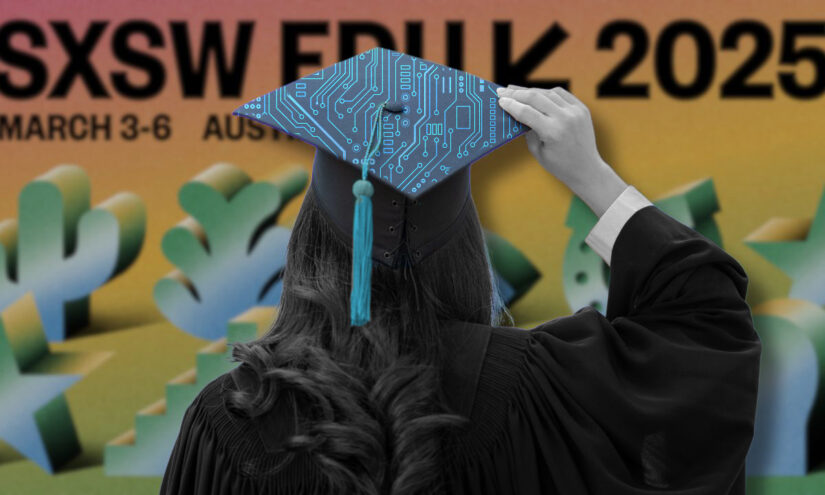
South by Southwest Edu returns to Austin, Texas, running March 3-6. As always, it’ll offer a huge number of panels, discussions, film screenings, musical performances and workshops exploring education, innovation and the future of schooling.
Keynote speakers this year include neuroscientist Anne-Laure Le Cunff, founder of Ness Labs, an online educational platform for knowledge workers; astronaut, author and TV host Emily Calandrelli, and Shamil Idriss, CEO of Search for Common Ground, an international non-profit. Idriss will speak about what it means to be strong in the face of opposition — and how to turn conflict into cooperation. Also featured: indy musical artist Jill Sobule, singing selections from her musical F*ck 7th Grade.
As in 2024, artificial intelligence remains a major focus, with dozens of sessions exploring AI’s potential and pitfalls. But other topics are on tap as well, including sessions on playful learning, book bans and the benefits of prison journalism.
To help guide the way, we’ve scoured the schedule to highlight 25 of the most significant presenters, topics and panels:
Monday, March 3:
11 a.m. — Ultimate Citizens Film Screening: A new independent film features a Seattle school counselor who builds a world-class Ultimate Frisbee team with a group of immigrant children at Hazel Wolf K-8 School.
11:30 a.m. — AI & the Skills-First Economy: Navigating Hype & Reality: Generative AI is accelerating the adoption of a skills-based economy, but many are skeptical about its value, impact and the pace of growth. Will AI spark meaningful change and a new economic order, or is it just another overhyped trend? Meena Naik of Jobs for the Future leads a discussion with Colorado Community College System Associate Vice Chancellor Michael Macklin, Nick Moore, an education advisor to Alabama Gov. Kay Ivey, and Best Buy’s Ryan Hanson.
11:30 a.m. — Navigation & Guidance in the Age of AI: The Clayton Christensen Institute’s Julia Freeland Fisher headlines a panel that looks at how generative AI can help students access 24/7 help in navigating pathways to college. As new models take root, the panel will explore what entrepreneurs are learning about what students want from these systems. Will AI level the playing field or perpetuate inequality?
12:30 p.m. — Boosting Student Engagement Means Getting Serious About Play: New research shows students who are engaged in schoolwork not only do better in school but are happier and more confident in life. And educators say they’d be happier at work and less likely to leave the profession if students engaged more deeply. In this session, LEGO Education’s Bo Stjerne Thomsen will explore the science behind playful learning and how it can get students and teachers excited again.
1:30 p.m. — The AI Sandbox: Building Your Own Future of Learning: Mike Yates of The Reinvention Lab at Teach for America leads an interactive session offering participants the chance to build their own AI tools to solve real problems they face at work, school or home. The session is for AI novices as well as those simply curious about how the technology works. Participants will get free access to Playlab.AI.
2:30 p.m. — Journalism Training in Prison Teaches More Than Headlines: Join Charlotte West of Open Campus, Lawrence Bartley of The Marshall Project and Yukari Kane of the Prison Journalism Project to explore real-life stories from behind bars. Journalism training is transforming the lives of a few of the more than 1.9 million people incarcerated in the U.S., teaching skills from time management to communication and allowing inmates to feel connected to society while building job skills.
Tuesday, March 4:
11:30 a.m. — Enough Talk! Let’s Play with AI: Amid the hand-wringing about what AI means for the future of education, there’s been little conversation about how a few smart educators are already employing it to shift possibilities for student engagement and classroom instruction. In this workshop, attendees will learn how to leverage promising practices emerging from research with real educators using AI in writing, creating their own chatbots and differentiating support plans.
12:30 p.m. — How Much is Too Much? Navigating AI Usage in the Classroom: AI-enabled tools can be helpful for students conducting research, outlining written work, or proofing and editing submissions. But there’s a fine line between using AI appropriately and taking advantage of it, leaving many students wondering, “How much AI is too much?” This session, led by Turnitin’s Annie Chechitelli, will discuss the rise of GenAI, its intersection with academia and academic integrity, and how to determine appropriate usage.
1 p.m. — AI & Edu: Sharing Real Classroom Successes & Challenges: Explore the real-world impact of AI in education during this interactive session hosted by Zhuo Chen, a text analysis instructor at the nonprofit education startup Constellate, and Dylan Ruediger of the research and consulting group Ithaka S+R. Chen and Ruediger will share successes and challenges in using AI to advance student learning, engagement and skills.
1 p.m. — Defending the Right to Read: Working Together: In 2025, authors face unprecedented challenges. This session, which features Scholastic editor and young adult novelist David Levithan, as well as Emily Kirkpatrick, executive director of the National Council of Teachers of English, will explore the battle for freedom of expression and the importance of defending reading in the face of censorship attempts and book bans.
1 p.m. — Million Dollar Advice: Navigating the Workplace with Amy Poehler’s Top Execs: Kate Arend and Kim Lessing, the co-presidents of Amy Poehler’s production company Paper Kite Productions, will be live to record their workplace and career advice podcast “Million Dollar Advice.” The pair will tackle topics such as setting and maintaining boundaries, learning from Gen Z, dealing with complicated work dynamics, and more. They will also take live audience questions.
4 p.m. — Community-Driven Approaches to Inclusive AI Education: With rising recognition of neurodivergent students, advocates say AI can revolutionize how schools support them by streamlining tasks, optimizing resources and enhancing personalized learning. In the process, schools can overcome challenges in mainstreaming students with learning differences. This panel features educators and advocates as well as Alex Kotran, co-founder and CEO of The AI Education Project.
4 p.m. — How AI Makes Assessment More Actionable in Instruction: Assessments are often disruptive, cumbersome or disconnected from classroom learning. But a few advocates and developers say AI-powered assessment tools offer an easier, more streamlined way for students to demonstrate learning — and for educators to adapt instruction to meet their needs. This session, moderated by The 74’s Greg Toppo, features Khan Academy’s Kristen DiCerbo, Curriculum Associates’ Kristen Huff and Akisha Osei Sarfo, director of research at the Council of the Great City Schools.
Wednesday, March 5:
11 a.m. — Run, Hide, Fight: Growing Up Under the Gun Screening & Q&A: Gun violence is now the leading cause of death for American children and teens, according to the federal Centers for Disease Control and Prevention, yet coverage of gun violence’s impact on youth is usually reported by adults. Run, Hide, Fight: Growing Up Under the Gun is a 30-minute documentary by student journalists about how gun violence affects young Americans. Produced by PBS News Student Reporting Labs in collaboration with 14 student journalists in five cities, it centers the perspectives of young people who live their lives in the shadow of this threat.
11:30 a.m. — AI, Education & Real Classrooms: Educators are at the forefront of testing, using artificial intelligence and teaching their communities about it. In this interactive session, participants will hear from educators and ed tech specialists on the ground working to support the use of AI to improve learning. The session includes Stacie Johnson, director of professional learning at Khan Academy, and Dina Neyman, Khan Academy’s director of district success.
11:30 a.m. — The Future of Teaching in an Age of AI: As AI becomes increasingly present in the classroom, educators are understandably concerned about how it might disrupt their teaching. An expert panel featuring Jake Baskin, executive director of the Computer Science Teachers Association andKarim Meghji of Code.org, will look at how teaching will change in an age of AI, exploring frameworks for teaching AI skills and sharing best practices for integrating AI literacy across disciplines.
2:30 p.m. — AI in Education: Preparing Gen A as the Creators of Tomorrow: Generation Alpha is the first to experience generative artificial intelligence from the start of their educational journeys. To thrive in a world featuring AI requires educators helping them tap into their natural creativity, navigating unique opportunities and challenges. In this session, a cross-industry panel of experts discuss strategies to integrate AI into learning, allowing critical thinking and curiosity to flourish while enabling early learners to become architects of AI, not just users.
2:30 p.m. — The Ethical Use of AI in the Education of Black Children: Join a panel of educators, tech leaders and nonprofit officials as they discuss AI’s ethical complexities and its impact on the education of Black children. This panel will address historical disparities, biases in technology, and the critical need for ethical AI in education. It will also offer unique perspectives into the benefits and challenges of AI in Black children’s education, sharing best practices to promote the safe, ethical and legal use of AI in classrooms.
2:30 p.m. — Exploring Teacher Morale State by State: Is teacher morale shaped by where teachers work? Find out as Education Week releases its annual State of Teaching survey. States and school districts drive how teachers are prepared, paid and promoted, and the findings will raise new questions about what leaders and policymakers should consider as they work to support an essential profession. The session features Holly Kurtz, director of EdWeek Research Center, Stephen Sawchuk, EdWeek assistant managing editor, and assistant editor Sarah D. Sparks.
2:30 p.m. — From White Folks Who Teach in the Hood: Is This Conversation Against the Law Now? While most students in U.S. public schools are now young people of color, more than 80% of their teachers are white. How do white educators understand and address these dynamics? Join a live recording of a podcast that brings together white educators with Christopher Emdin and sam seidel, co-editors of From White Folks Who Teach in the Hood: Reflections on Race, Culture, and Identity (Beacon, 2024).
3:30 p.m. — How Youth Use GenAI: Time to Rethink Plagiarism: Schools are locked in a battle with students over fears they’re using generative artificial intelligence to plagiarize existing work. In this session, join Elliott Hedman, a “customer obsession engineer” with mPath, who with colleagues and students co-designed a GenAI writing tool to reframe AI use. Hedman will share three strategies that not only prevent plagiarism but also teach students how to use GenAI more productively.
Thursday, March 6:
10 a.m. — AI & the Future of Education: Join futurists Sinead Bovell and Natalie Monbiot for a fireside discussion about how we prepare kids for a future we cannot yet see but know will be radically transformed by technology. Bovell and Monbiot will discuss the impact of artificial intelligence on our world and the workforce, as well as its implications for education.
10 a.m. — Reimagining Everyday Places as Early Learning Hubs: Young children spend 80% of their time outside of school, but too many lack access to experiences that encourage learning through hands-on activities and play. While these opportunities exist in middle-class and upper-income neighborhoods, they’re often inaccessible to families in low-income communities. In this session, a panel of designers and educators featuring Sarah Lytle, who leads the Playful Learning Landscapes Action Network, will look at how communities are transforming overlooked spaces such as sidewalks, shelters and even jails into nurturing learning environments accessible to all kids.
11 a.m. — Build-a-Bot Workshop: Make Your Own AI to Make Sense of AI: In this session, participants will build an AI chatbot alongside designers and engineers from Stanford University and Stanford’s d.school, getting to the core of how AI works. Participants will conceptualize, outline and create conversation flows for their own AI assistant and explore methods that technical teams use to infuse warmth and adaptability into interactions and develop reliable chatbots.
11:30 a.m. — Responsible AI: Balancing Innovation, Impact, & Ethics: In this session, participants will learn how educators, technologists and policymakers work to develop AI responsibly. Panelists include Isabelle Hau of the Stanford Accelerator for Learning, Amelia Kelly, chief technology officer of the Irish AI startup SoapBox Labs, and Latha Ramanan of the AI developer Merlyn Mind. They’ll talk about how policymakers and educators can work with developers to ensure transparency and accuracy of AI tools.
Get stories like these delivered straight to your inbox. Sign up for The 74 Newsletter