Tag: Era

  • Universities UK’s new era of collaboration

    Universities UK’s new era of collaboration

    The first major report of Universities UK’s transformation and efficiency taskforce – Towards a new era of collaboration – is a milestone in the ongoing national debate about unlocking maximum value from state investment in the higher education system.

    Though “transformation and efficiency” is the headline, the focus of the group has largely been on collaboration – ways in which universities and other providers can work together, and ways in which government and regulators can make it easier for this to happen.

    The drive for transformation came slowly at first and then all at once. The financial pressures on the sector – arising from Covid recovery, uneven patterns of student recruitment, rising pensions costs and erosion of the unit of resource for undergraduate tuition – are long standing (remember then chief of staff Sue Gray’s “shitlist” for the new government which featured the financial collapse of a large university?)

    Why and how

    The election of a new Labour government prompted the publication of the Universities UK Blueprint which hoped for a shift in relations between government and the sector based on effort on both sides to address the structural challenges facing higher education, of which a taskforce on transformation was one recommendation.

    Even at the point of the formation of the taskforce, led by former University of the Arts London vice chancellor Nigel Carrington, there was a degree of scepticism about how feasible the promised “new era of collaboration” might be. Wonkhe and Mills & Reeve’s Only Connect report on the opportunities for cooperation in the English sector found an appetite in principle among university leadership for new models for collaboration, along with a sense that the cultural and regulatory barriers were so significant as to make meaningful exploration of those opportunities unlikely.

    The taskforce, through a series of in-depth interviews with stakeholders, and detailed work with sector organisations, professional bodies and external experts, has therefore made an enormous stride forward in setting out the potential for system-wide change.

    The case for change

    There is a genre of departmental spending review submission called the “bleeding stumps” report, wherein civil servants offer up apocalyptic and or foolish ways in which spending constraints can be overcome – ex-DfE adviser Sam Freedman loves to tell the story of a pre-spending review report that suggested that pupils could attend school either in the morning or the afternoon.

    What Universities UK has produced is pretty much the diametric opposite of this approach. While recognising the dwindling availability of cash, the impact of these circumstances is set out via the results of a survey conducted in May of this year. While this is pretty bleak reading – 55 per cent of universities are consolidating courses (94 per cent would consider in the next three years), 25 per cent have seen compulsory staff redundancies already (up 14 percentage points on last year) and 36 per cent are cutting student support services (77 per cent would consider) – it comes across neither as sensationalist nor overblown to reflect the way the sector is having to change.

    The “would consider in next three years” column will be of most concern to the government, even beyond DfE: 79 per cent would consider cutting academic research activity, 71 per cent would be looking at cutting civic and local growth activity. To be clear this is based on a survey completed by 57 providers, so while it does show a concerning direction of travel you couldn’t expect a precise picture of what is happening on the ground everywhere.

    One interesting nugget within this section is a call for sector stewardship – with OfS focusing on teaching through a market-based regulatory lens, and Research England acting as a research council UUK argues that no single body has an eye on the health of the sector as a whole with the ability to intervene where action is needed. The declining value of tuition fee income and other state support is part of the issue, but a rise in the number of providers and what is described as “an increasingly competitive environment” has played a part in many of the pressures universities are facing. As consultees told the taskforce:

    the focus had shifted too far to the individual student or institution, even where that created conflict with wider national interests, including disadvantaging activity that could benefit economic objectives and wider society but may not translate into student demand, such as the provision of highly specialised skills to meet the needs of certain industries or the protection of universities playing important civic roles in parts of the country with higher levels of disadvantage.

    Opportunities and actions

    The taskforce’s findings are neatly split across seven “opportunities”, each with associated actions for university leaders, Universities UK itself, other organisations, and government:

    1. Pursuing innovative collaborative structures
    2. Sharing more services and infrastructure
    3. Leveraging sector buying power
    4. Supporting digital transformation
    5. Adopting a common approach to assessing efficiency and benchmarking costs
    6. Developing leadership skills in those mandated to deliver change and further improving governance
    7. Developing the current regulatory environment and supportive structures to help collaboration and transformation to go further, faster

    Each is also supported by case studies (drawing primarily on existing work in the UK higher education sector, though the net is occasionally cast further afield) and indications of appetite from consultation respondees.

    Collaboration and sharing

    The case for university collaboration in the UK has been made with increasing frequency as the financial squeeze starts to make itself felt in profound ways. That said, there has been little tangible activity – the report points to longstanding structures such as the University of London federation, existing networks of research collaborations, and strategic working with local stakeholders. The taskforce adds the multi-academy trust-esque group structures employed by the (HE and FE) University of the Highlands and (cross sector) London South Bank to the list., and there is a nod to the world of sharing expensive research infrastructure too.

    A third strand covers the sharing of infrastructure and services – major examples here include UCAS and the Jisc Janet network, alongside more specialist activity like Uniac on auditing services (further examples are worth digging into via the recent Jisc/KPMG report).

    Though the big newsworthy two-become-one moments exemplified by ARU Writtle may be few and far between, what comes across powerfully is just how much of this stuff is going one, and the potential that exists to do more. One of the big gaps is expertise and understanding – tackling the legal, technical, and process aspects of joint working is not for the faint of heart and if this is the direction of travel both specialist staff and institutional leaders need to be clear and up to date on how this works. There’s scope for detailed advice and guidance (that the taskforce itself will produce) alongside an ongoing support function at Universities UK – we need regulatory tweaks to allow for innovation in organisational forms too.

    The bigger asks are for a transformation fund, and specific advice from the Competition and Markets Authority (CMA) on what would constitute a breach of competition law in this space. The latter appears to be in progress – there was an encouraging blog post from CMA at the end of last week. The cost of transformation (ie investing in the infrastructure and systems that can enable efficiency) could, the taskforce suggests, arrive in a straightforward way by allowing universities to access a “small portion” of the existing £3.25bn Transformation Fund available to the public sector.

    Spending and benchmarking

    Taken as a whole, the higher education sector spends £20.1bn on operating expenses each year – much of the non-pay end of this happens via procurement processes at individual institutions. The cumulative impact of all this spending can often enable the sector to get a better deal, but this needs to be coordinated across multiple providers for the benefits to kick in. Initiatives like the UK University Purchasing Consortia and Jisc’s procurement on behalf of the sector are unlocking big, existing, savings – the report suggests savings of £116m via UKUPC, and £138m for the Jisc activity – taking maximum advantage of these proven schemes could drive further savings.

    But there is potential to unlock even more – the work of the taskforce indicates that there is both scope and appetite for this kind of collaborative spending in information technology (ask your IT department, the cost of software licenses and cloud-based solutions are spiralling) and estates (bear in mind the maintenance backlog that the precarious financial environment has led to).

    Another angle is making it easier to understand when your university is spending over the odds. Finance teams are very keen on benchmarking spending with comparable institutions – why should it cost more to do fundamental stuff than at the university down the road? – but it is difficult to access reliable and comparable data. There’s a suggestion that an Association of the Heads of University Administration (AHUA) organisational efficiency maturity model (basically best practice on understanding and reporting spending) could help get the sector on the same page, and that UUK could drive a more collaborative approach to sharing and using this data to drive savings.

    Digital transformation

    There’s any number of promises that the latest and greatest software can save your university time and money, but your IT director will tell you that such promises take substantial time and money to realise. The rise of large language model generative tools has unlocked another round of wild claims, and both institutional leaders and IT and administrative specialists are being asked to evaluate spending even more to make these efficiencies a reality. There’s so many questions – not least around whether your shiny new system will work with the systems and processes you already use.

    The trouble is, understanding and implementing this stuff takes time and expertise at both specialist and leadership levels – and both are at a premium in higher education. Jisc is already supporting 24 providers in understanding and benchmarking their digital transformation maturity – helping, in essence, to understand where further help may be needed. There’s also a need to actively and meaningfully involve senior leaders, and to understand the digital competencies of staff and students. The taskforce calls for a wider roll-out of this maturity model, and for Jisc and UCISA to promote shared standards around software and processes.

    Regulation and leadership

    The need for an advancement in leadership skills runs throughout the taskforce report. Transformations like the ones advocated require competencies and knowledge that go far beyond business as usual, and correspondingly more is being asked of senior staff and governors – all of which comes alongside a more onerous (and fast-moving) regulatory regime that requires its own expanding set of skills.

    The report is supportive of the current Committee of University Chairs (CUC) initiative to review university governance (via updating its current code for governors), and Universities UK proposes to facilitate ongoing and sector-led improvement activity.

    There’s immediate stuff that can be done on cost pressures – there’s a specific ask of government on relaxing the rules that require some universities to enroll all staff onto the increasingly expensive teacher’s pension scheme (TPS), and a more general suggestions that the government avoid putting additional costs on the sector such as introducing new and unfunded expectations, or inventing new levies.

    There is clearly scope to address the regulatory burden placed on the sector – one easy win would be to address the barriers to collaboration. Recent regulatory activity (particularly in England) has focused on individual providers – the recent shift in the OfS remit to consider the wider health of the sector offers scope to reestablish the idea of a “custodian” of the sector that could deliver on the long-term goals set all levels of government and by wider civic society.

    What’s next?

    This report marks the end of the first phase of Universities UK work on transformation and efficiency. Phase two will create an oversight group to keep an eye on the various asks from sector agencies and monitor both progress and impact. This is not in any sense a political report – though it is clearly politically useful – and it is clear that both UUK and the sector are in this for the long haul.

    More broadly the report stands as another signal to government that the sector is prepared to go further and faster on transformation and collaboration that has previously been the case – but there is a clear desire for a reciprocal “vision” or plan from government around which the sector can do, ideally backed up with some investment in that vision.

    The rather dour communications that have so far issued from DfE on HE reform and funding suggest that the government is not yet prepared to give the sector a full-throated endorsement, but there is scope for that to change following next week’s spending review and the publication of the post 16 education and skills and HE reform white paper this summer.

    Economic circumstances notwithstanding the policy agenda in the next few months will set a course for HE for the rest of this parliament and beyond – it would be a real own-goal not to seize the opportunity to work with the sector to get things onto a firmer footing.

    Source link

  • A Twilight Zone Warning for the Trump Era and the Age of AI

    A Twilight Zone Warning for the Trump Era and the Age of AI

    Rod Serling’s classic 1961 episode of The Twilight Zone, “The Obsolete Man,” offers a timeless meditation on authoritarianism, conformity, and the erasure of humanity. In it, a quiet librarian, Romney Wordsworth (played by Burgess Meredith), is deemed “obsolete” by a dystopian state for believing in books and God—symbols of individual thought and spiritual meaning. Condemned by a totalitarian chancellor and scheduled for execution, Wordsworth calmly exposes the cruelty and contradictions of the regime, ultimately reclaiming his dignity by refusing to bow to tyranny.

    Over 60 years later, “The Obsolete Man” feels less like fiction and more like a documentary. The Trump era, supercharged by the rise of artificial intelligence and a war on truth, has brought Serling’s chilling parable into sharper focus.

    The Authoritarian Impulse

    President Donald Trump’s presidency—and his ongoing influence—has been marked by a deep antagonism toward democratic institutions, intellectual life, and perceived “elites.” Journalists were labeled “enemies of the people.” Scientists and educators were dismissed or silenced. Books were banned in schools and libraries, and curricula were stripped of “controversial” topics like systemic racism or gender identity.

    Like the chancellor in The Obsolete Man, Trump and his allies seek not just to discredit dissenters but to erase their very legitimacy. In this worldview, librarians, teachers, and independent thinkers are expendable. What matters is loyalty to the regime, conformity to its ideology, and performance of power.

    Wordsworth’s crime—being a librarian and a believer—is mirrored in real-life purges of professionals deemed out of step with a hardline political agenda. Public educators and college faculty who challenge reactionary narratives have been targeted by state legislatures, right-wing activists, and billionaire-backed think tanks. In higher education, departments of the humanities are being defunded or eliminated entirely. Faculty governance is undermined. The university, once a space for critical inquiry, is increasingly treated as an instrument for ideological control—or as a business to be stripped for parts.

    The Age of AI and the Erasure of the Human

    While authoritarianism silences the human spirit, artificial intelligence threatens to replace it. AI tools, now embedded in everything from hiring algorithms to classroom assessments, are reshaping how knowledge is produced, disseminated, and controlled. In the rush to adopt these technologies, questions about ethics, bias, and human purpose are often sidelined.

    AI systems do not “believe” in anything. They do not feel awe, doubt, or moral anguish. They calculate, replicate, and optimize. In the hands of authoritarian regimes or profit-driven institutions, AI becomes a tool not of liberation, but of surveillance, censorship, and disposability. Workers are replaced. Students are reduced to data points. Librarians—like Wordsworth—are no longer needed in a world where books are digitized and curated by opaque algorithms.

    This is not merely a future problem. It’s here. Algorithms already determine who gets hired, who receives financial aid, and which students are flagged as “at risk.” Predictive policing, automated grading, and AI-generated textbooks are not the stuff of science fiction. They are reality. And those who question their fairness or legitimacy risk being labeled as backwards, inefficient—obsolete.

    A Culture of Disposability

    At the heart of “The Obsolete Man” is a question about value: Who decides what is worth keeping? In Trump’s America and in the AI-driven economy, people are judged by their utility to the system. If you’re not producing profit, performing loyalty, or conforming to power, you can be cast aside.

    This is especially true for the working class, contingent academics, and the so-called “educated underclass”—a growing population of debt-laden degree holders trapped in precarious jobs or no jobs at all. Their degrees are now questioned, their labor devalued, and their futures uncertain. They are told that if they can’t “pivot” or “reskill” for the next technological shift, they too may be obsolete.

    The echoes of The Twilight Zone are deafening.

    Resistance and Redemption

    Yet, as Wordsworth demonstrates in his final moments, resistance is possible. Dignity lies in refusing to surrender the soul to the machine—or the regime. In his quiet defiance, Wordsworth forces the chancellor to confront his own cowardice, exposing the hollow cruelty of the system.

    In our time, that resistance takes many forms: educators who continue to teach truth despite political pressure; librarians who fight book bans; whistleblowers who challenge surveillance technologies; and students who organize for justice. These acts of courage and conscience remind us that obsolescence is not a matter of utility—it’s a judgment imposed by those in power, and it can be rejected.

    Rod Serling ended his episode with a reminder: “Any state, any entity, any ideology that fails to recognize the worth, the dignity, the rights of man—that state is obsolete.”

    The question now is whether we will heed the warning. In an age where authoritarianism and AI threaten to render us all obsolete, will we remember what it means to be human?


    The Higher Education Inquirer welcomes responses and reflections on how pop culture can illuminate our present crises. Contact us with your thoughts or your own essay proposals.

    Source link

  • Together We Lead: A New Era of HBCU Transformation

    Together We Lead: A New Era of HBCU Transformation

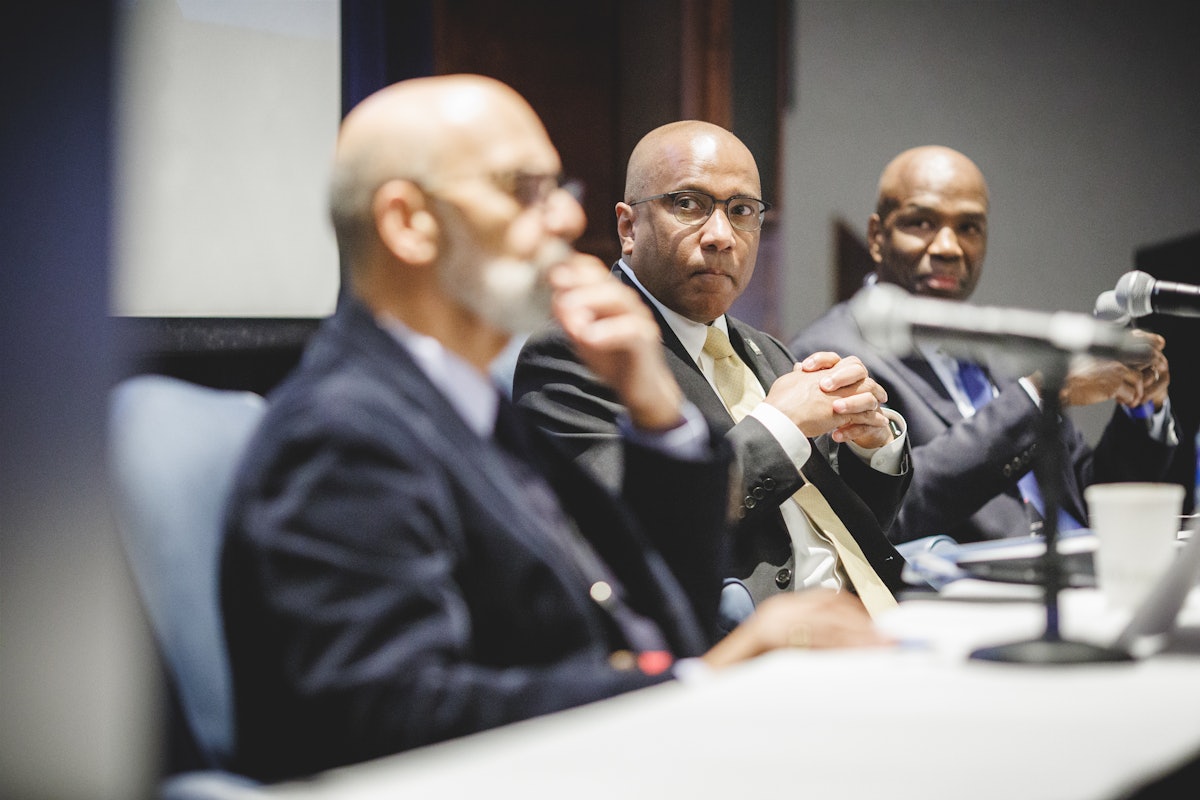
    Dr. Michael Lomax, Dr. Harry L. Williams, and Jim Runcie

    By Michael L. Lomax, Harry L. Williams and Jim Runcie 

    At a time when higher education is facing increased scrutiny, economic headwinds, and technological disruption, a group of institutions is charting a new path forward—one grounded in legacy, strengthened by collaboration and built for the future. These are historically Black colleges and universities (HBCUs). And they are proving that with the right investments and strategic partnerships, transformation is not only possible—it’s scalable.

    Four years ago, UNCF, Thurgood Marshall College Fund (TMCF) and Ed Advancement launched the HBCU Transformation Project—a collective effort to strengthen institutional sustainability, enhance student success and modernize campus operations across a growing network of these mission-driven institutions.

    The results speak volumes. Between 2020 and 2024, while national higher education enrollment declined, institutions participating in the HBCU Transformation Project grew their enrollment by 5.1%. In an era of enrollment contraction, these colleges are not only holding the line—they’re expanding their impact.

    “This effort is rooted in a networked approach,” according to Dr. Michael L. Lomax, president and CEO of UNCF. “When we combine institutional insight with philanthropic investment and aligned technical support, we can accelerate change in ways that benefit students, campuses and communities.”

    The initiative currently supports more than 40 HBCUs—from urban campuses to rural colleges—each selected to represent the diversity and strength of the sector. Through this initiative, campuses have redesigned their enrollment systems, implemented new technology platforms, modernized financial aid processes and invested in data-informed student support services.

    What ties these efforts together is a shared commitment to transformation to secure long-term institutional health and improve outcomes for students. It’s about building the infrastructure that allows these colleges to thrive in a fast-evolving higher education marketplace.

    “Our students need more than degrees. They need meaningful pathways to jobs, leadership and advancement,” according to Dr. Harry L. Williams, president and CEO of TMCF. “This work ensures our institutions are positioned to align with 21st-century workforce needs, opening doors to opportunity.”

    Beyond enrollment and academic programs, the Transformation Project is helping these institutions rethink how they operate. By investing in operations, shared services and scalable back-office solutions, the initiative is removing the all too pervasive obstacles of outdated systems and under-resourced departments. We are making foundational changes that will yield a lasting impact.

    Jim Runcie, CEO of Ed Advancement, put it simply: “We’re helping institutions do what they already do well—but with the right tools, systems and capacity behind them. Sustainable growth starts with operational strength.”

    The economic importance of HBCUs cannot be overstated. According to UNCF’s 2024 Economic Impact Report, these institutions generate $16.5 billion annually and support over 136,000 jobs nationwide. Their graduates—from engineers to educators, scientists to entrepreneurs—fuel industries, build communities and lead across sectors.

    And yet, this value has too often gone underrecognized. The HBCU Transformation Project is shifting that narrative—moving from proof-of-concept to proof-of-impact.

    UNITE 2025, UNCF’s annual convening of institutional leaders and strategic partners, will spotlight this progress. With the theme Together We Lead, UNITE is the premier platform for sharing solutions, surfacing new ideas and catalyzing partnerships. It’s where transformation moves from theory to practice.

    Looking ahead, the path is clear. We must continue to strengthen these institutions—through technology, leadership development, data utilization and investment. The transformation of HBCUs is a smart strategy for the future of American higher education and for maximizing the opportunity to link arms with international partners, seeking to mobilize global communities in a different way.

    Now is the time for more partners—investors, policymakers, employers and innovators—to join us. The groundwork has been laid. The momentum is building. And the opportunity is real.

    Together, we lead.


    Dr. Michael L. Lomax is president and CEO of the United Negro College Fund (UNCF).

    Dr. Harry L. Williams is president and CEO of the Thurgood Marshall College Fund (TMCF).

    Jim Runcie is CEO and co-founder of the Partnership for Education Advancement.


    Source link

  • In an era of permacrisis, higher education needs to get better at coming up with solutions

    In an era of permacrisis, higher education needs to get better at coming up with solutions

    Readers of Wonkhe need no reintroduction to the storm surge of bad news that, wave after wave, is washing over the sector’s defences and causing the majority of UK institutions to take drastic financial evasive action.

    Given that the government’s response to the growing financial crisis in UK higher education seems to be “let’s do a ranking of vice chancellor salaries compared to graduate salaries” and “let’s introduce an international student levy that the Australian Government decided was a bad idea,” it also seems pretty clear that the sector isn’t exactly cutting through with its political affairs arguments.

    In other words, the sector has to generate our own solutions to the problems we face.

    On the back foot and retreating

    On 25 June The Venn University Leaders Forum will convene senior academic and professional service leaders from across the sector to provide them with the space, inspiration and facilitation needed to help develop these solutions.

    The Venn will feature interactive sessions focused on geopolitical scenario response, unconferences, challenges “from the vice chancellor’s desk” and perspectives from North America and from outside higher education. Most importantly it will take the conversations in the margins’ of conferences that so many of us find the most valuable part of these forums – and provide the space and format for that to happen during the main programme.

    We need a better playbook

    In adjusting to permacrisis, one of the challenges universities and the sector has as a whole is that we risk spending all our time and energy raising the shield to fend off each individual wave of issues; and wielding the sword only in a defensive, reactive measures to trim staff numbers, cut courses and reduce expenditure.

    There are two risks to this approach. First, institutions can’t “take a breath” to think about how they adapt to the new reality, leading to constant reactive churn, burnout of staff, and leadership feeling under siege. This reminds us of that moment in about February 2021 when the adrenaline of dealing with successive Covid impacts and new variants started to seriously ebb away from those within universities, and institutional leaders started to think longer term about how to turn ‘crisis-response mode’ into ‘crisis-as-usual’.

    Second, the sector misses the tsunami lurking on the horizon and fails to invest in measures that either avert or prepare for a much larger impact. Given that on almost every occasion in the last decade we’ve said, “oh, that couldn’t possibly happen” only for the Darkest Timeline to be victor – it’s now odds-on that a Farage-Badenoch ticket will sweep to victory in the next General Election. How is higher education preparing for this possibility?

    “Telling people what do” isn’t working

    When I was in the US recently as part of the CASE Global Leaders Programme, a senior representative from one of the US university associations said they had a shared bingo card with their colleagues that they used every time a university president said “we just need to tell our story better… we need a ‘Got Milk’ campaign.” But we’ve been trying versions of that for a while, and nothing has changed. It’s no longer sufficient for higher education to “tell” better. It needs to “do” better.

    For universities, the question is now no longer “how do you do more with less?” Instead, it is becoming “how do you do less with less?” – and what do you stop doing entirely? As difficult as the current situation may seem, the sector still has the resources, political capital and ingenuity to make bold, impactful choices about what it does differently. This includes new models of delivery that might change the public and political narrative, shift the dial financially and maybe even divert the worst case scenario. Critically it has the opportunity to look at what is happening around the world – most strikingly in the US – and learn what to do (and what not to do).

    This article is published in association with The Venn – find out more about The Venn and apply to attend here. Wonkhe is partnering with The Venn to create a dialogue between the event and our upcoming Festival of Higher Education on 11–12 November – early bird tickets are now on sale.

    Source link

  • The era of hyper competition between universities needs to end

    The era of hyper competition between universities needs to end

    When the Higher Education Funding Council for England (HEFCE) closed in 2018 and its duties were carved up and distributed between the Office for Students and Research England, we have inadvertently wound up the very function that the sector and the government now need most.

    As the sector struggles to find genuinely collaborative solutions to a perfect storm, we are weaker for not having the brokerage that HEFCE once provided between institutions themselves, and also between the sector and government.

    We miss working closely with an organisation that understood the sector and its individual institutions intimately, so that it could both provide useful evidence and insight to shape government policy and corral us to develop and deliver new innovative approaches to programme delivery, technological developments or systems-level challenges.

    The introduction of HERA 2017 exacerbated what competitive threads already existed in the sector, threads HEFCE often helped to overcome through its stewardship.

    We are now confronted by the genuine problem of trying to identify opportunities for collaboration from within a formal and competitive marketplace, forces within which have been intensifying more recently due to volatile immigration policy, rising operational costs and reduced student demand in some areas, to name a few challenges currently around.

    It’s a problem that the Department for Education’s HE Reform package should actively seek to resolve to usher in a new era that moves the sector towards greater collaboration in the national interest.

    Defining the problem

    In September 2015, then Minister for Universities and Science, Jo Johnson, delivered a speech proudly talking about a record number of students accepted into the UK’s universities, stating “we have no target” for “the right” size of the higher education system, but believe it should evolve in response to demand from students and employers, reflecting the needs of the economy’.

    He went on to talk up the level of demand and credited the 2012 reforms as being a key driver of change:

    This government values competition. We want a diverse, competitive system that can offer different types of higher education so that students can choose freely between a range of providers. Competition not for its own sake, but because it empowers students and creates a strong incentive for providers to innovate and improve the quality of the education they are offering.”

    In many ways, those reforms and that competitive market led to growth in tuition fee income and student numbers, which contributed to investment in our facilities, community and civic agendas, mental health and student support.

    There are of course some restrictions placed on that market by government to temper it (not least price caps), though there remain many ways in which it is expected to compete, perhaps particularly as institutions seek to attract students.

    So, when a competitive market starts to falter, perhaps because of restrictions to a key source of demand (like international students) or funding (like a frozen tuition fee), government should consider interventions to address market failure.

    Indeed, HERA2017 allows scope for even the regulator to address market failure, so it’s not a lack of imagination on the part of the founding legislation preventing this course of action.

    The role of the Office for Students

    Amongst its general duties, as set out in the HERA, OFS is intended to have regard to:

    The need to encourage competition between English higher education providers in connection with the provision of higher education where that competition is in the interests of students and employers, while also having regard to the benefits for students and employers resulting from collaboration between such providers.

    OFS was created to regulate the competitive market. The nod to “having regard to the benefits from collaboration” is difficult to administer in the current regulatory approach.

    There is certainly plenty of evidence of how the OfS has invested in regulatory strategies and compliance, but much less of how it has used its scope to intervene where competitive barriers are too great to achieve a necessary goal like securing the sector’s financial footing.

    It could be argued this approach reflects an unnecessarily narrow interpretation of the powers and duties put forward in HERA 2017.

    Collaboration

    OfS could do more to align its relationships and approaches with a collaboration agenda. The burden of regulation could be reduced. Its focus could shift to fostering creative and collective thinking about responses to the vulnerabilities mentioned previously, alongside monitoring regulatory compliance in a risk-based, outcomes-oriented way.

    Indeed, the UK’s own Regulator’s Code steers regulators to prioritise both ensuring compliance and providing support to grow. Given the current state of finances, highlighted just last week in OFS’s Financial Sustainability Report, it would be very welcome and appropriate for a rethink on how and what OFS could be doing to work purposefully with institutions to design responses to these critical risks.

    Where competition divides, we convene

    It is not down to OFS to solve this crisis, though we see a major role for them to play if we could reimagine a more effective regulatory approach for the sector. The reason we’ve author this as sector body leaders is because we recognise that our organisations may also have a role to play in this work.

    Sector organisations like GuildHE, AHUA and others are well-placed to convene a wide variety of colleagues to help carve solution-oriented paths forward on behalf of the sector while navigating political sensitivities and delivering broader public benefits.

    Rocks and hard places

    The government now finds itself wedged between the desire to drive economic growth and the prospect that parts of the HE sector are weakening under the strain of protracted under-funding, with many already closing courses and actively shrinking their institutions, which will themselves deliver increased levels of unemployment and lower numbers of the types of skills graduates the economy will increasingly demand in the years ahead.

    UUK’s Blueprint, and the follow-on Transformation and Efficiency Taskforce, has done a good deal of the mental heavy-lifting for us all, exploring what steps the sector can take together, beyond or without an increase in teaching funding or tuition fee levels.

    But there is so much more to do – more thinking, more activating, and more effort to ensure that those beyond UUK’s membership are included and considered in any reimagining or business case developments that may provide useful paths forward. To be effective and complementary to the work UUK have done so far, we must be inclusive and expansive in what we consider possible.

    Many of us have experience in securing benefits through collaborative solutions. Joint procurement initiatives have been successful, as shown by the Southern Universities Purchasing Consortium (SUPC).

    Their 2023/23 impact statement shows they spent £2.4b through their agreements last year, generating £116.1m in cashable savings while embedding sustainability, ethics and innovation in their collaborative procurements.

    GuildHE’s Research consortium demonstrates the tangible benefits of collective purchasing by providing services such as an open-access research repository and HIVVE impact tracker, which not only offers services at discounted rates, but also extends access to smaller institutions that would otherwise be unable to afford them.

    Eating the elephant one bite at a time

    We can build on these efforts to inform the art of the possible. Brokerage efforts, designed and delivered by our organisations working in partnership, could facilitate opportunities to reduce the risk of market failure or the need for acquisitions.

    If successful, those efforts could give rise to collaborative initiatives that deliver real national and regional impacts, thereby underpinning the value of HE to local communities and, increasingly important, local politicians, some of whom not only reflect a laissez-faire attitude towards university closure, but also make statements about immigration and international students that courts further damage to us all.

    The growing concern about the financial state of our sector has led the OFS to recommend recently that a special administration regime for HE institutions be established, building (unknowingly or otherwise) on arguments that have been swirling for years about the need to establish a restructuring fund or regime to support institutions at risk of failure. The time is now to help create solutions to avoid needing such a regime, but to support those going through it if we can.

    We put our heads together and share this thinking outward as a call to arms for all those working on behalf of our higher education institutions.

    We also make clear that the anticipated HE Reform package must acknowledge the tensions created and fostered by the current competitive market if it intends to plot a practical path forward towards prosperity.

    Like OFS, we are not the whole solution, but we can be an important part of a vision which reinvests in higher education as the most impactful force within our democratic society to foster economic growth, deliver improved outcomes for society, and secure a legacy as global leaders – one we can all be proud of.

    Source link

  • The era of hyper competition between universities needs to end

    The era of hyper competition between universities needs to end

    When the Higher Education Funding Council for England (HEFCE) closed in 2018 and its duties were carved up and distributed between the Office for Students and Research England, we have inadvertently wound up the very function that the sector and the government now need most.

    As the sector struggles to find genuinely collaborative solutions to a perfect storm, we are weaker for not having the brokerage that HEFCE once provided between institutions themselves, and also between the sector and government.

    We miss working closely with an organisation that understood the sector and its individual institutions intimately, so that it could both provide useful evidence and insight to shape government policy and corral us to develop and deliver new innovative approaches to programme delivery, technological developments or systems-level challenges.

    The introduction of HERA 2017 exacerbated what competitive threads already existed in the sector, threads HEFCE often helped to overcome through its stewardship.

    We are now confronted by the genuine problem of trying to identify opportunities for collaboration from within a formal and competitive marketplace, forces within which have been intensifying more recently due to volatile immigration policy, rising operational costs and reduced student demand in some areas, to name a few challenges currently around.

    It’s a problem that the Department for Education’s HE Reform package should actively seek to resolve to usher in a new era that moves the sector towards greater collaboration in the national interest.

    Defining the problem

    In September 2015, then Minister for Universities and Science, Jo Johnson, delivered a speech proudly talking about a record number of students accepted into the UK’s universities, stating “we have no target” for “the right” size of the higher education system, but believe it should evolve in response to demand from students and employers, reflecting the needs of the economy’.

    He went on to talk up the level of demand and credited the 2012 reforms as being a key driver of change:

    This government values competition. We want a diverse, competitive system that can offer different types of higher education so that students can choose freely between a range of providers. Competition not for its own sake, but because it empowers students and creates a strong incentive for providers to innovate and improve the quality of the education they are offering.”

    In many ways, those reforms and that competitive market led to growth in tuition fee income and student numbers, which contributed to investment in our facilities, community and civic agendas, mental health and student support.

    There are of course some restrictions placed on that market by government to temper it (not least price caps), though there remain many ways in which it is expected to compete, perhaps particularly as institutions seek to attract students.

    So, when a competitive market starts to falter, perhaps because of restrictions to a key source of demand (like international students) or funding (like a frozen tuition fee), government should consider interventions to address market failure.

    Indeed, HERA2017 allows scope for even the regulator to address market failure, so it’s not a lack of imagination on the part of the founding legislation preventing this course of action.

    The role of the Office for Students

    Amongst its general duties, as set out in the HERA, OFS is intended to have regard to:

    The need to encourage competition between English higher education providers in connection with the provision of higher education where that competition is in the interests of students and employers, while also having regard to the benefits for students and employers resulting from collaboration between such providers.

    OFS was created to regulate the competitive market. The nod to “having regard to the benefits from collaboration” is difficult to administer in the current regulatory approach.

    There is certainly plenty of evidence of how the OfS has invested in regulatory strategies and compliance, but much less of how it has used its scope to intervene where competitive barriers are too great to achieve a necessary goal like securing the sector’s financial footing.

    It could be argued this approach reflects an unnecessarily narrow interpretation of the powers and duties put forward in HERA 2017.

    Collaboration

    OfS could do more to align its relationships and approaches with a collaboration agenda. The burden of regulation could be reduced. Its focus could shift to fostering creative and collective thinking about responses to the vulnerabilities mentioned previously, alongside monitoring regulatory compliance in a risk-based, outcomes-oriented way.

    Indeed, the UK’s own Regulator’s Code steers regulators to prioritise both ensuring compliance and providing support to grow. Given the current state of finances, highlighted just last week in OFS’s Financial Sustainability Report, it would be very welcome and appropriate for a rethink on how and what OFS could be doing to work purposefully with institutions to design responses to these critical risks.

    Where competition divides, we convene

    It is not down to OFS to solve this crisis, though we see a major role for them to play if we could reimagine a more effective regulatory approach for the sector. The reason we’ve author this as sector body leaders is because we recognise that our organisations may also have a role to play in this work.

    Sector organisations like GuildHE, AHUA and others are well-placed to convene a wide variety of colleagues to help carve solution-oriented paths forward on behalf of the sector while navigating political sensitivities and delivering broader public benefits.

    Rocks and hard places

    The government now finds itself wedged between the desire to drive economic growth and the prospect that parts of the HE sector are weakening under the strain of protracted under-funding, with many already closing courses and actively shrinking their institutions, which will themselves deliver increased levels of unemployment and lower numbers of the types of skills graduates the economy will increasingly demand in the years ahead.

    UUK’s Blueprint, and the follow-on Transformation and Efficiency Taskforce, has done a good deal of the mental heavy-lifting for us all, exploring what steps the sector can take together, beyond or without an increase in teaching funding or tuition fee levels.

    But there is so much more to do – more thinking, more activating, and more effort to ensure that those beyond UUK’s membership are included and considered in any reimagining or business case developments that may provide useful paths forward. To be effective and complementary to the work UUK have done so far, we must be inclusive and expansive in what we consider possible.

    Many of us have experience in securing benefits through collaborative solutions. Joint procurement initiatives have been successful, as shown by the Southern Universities Purchasing Consortium (SUPC).

    Their 2023/23 impact statement shows they spent £2.4b through their agreements last year, generating £116.1m in cashable savings while embedding sustainability, ethics and innovation in their collaborative procurements.

    GuildHE’s Research consortium demonstrates the tangible benefits of collective purchasing by providing services such as an open-access research repository and HIVVE impact tracker, which not only offers services at discounted rates, but also extends access to smaller institutions that would otherwise be unable to afford them.

    Eating the elephant one bite at a time

    We can build on these efforts to inform the art of the possible. Brokerage efforts, designed and delivered by our organisations working in partnership, could facilitate opportunities to reduce the risk of market failure or the need for acquisitions.

    If successful, those efforts could give rise to collaborative initiatives that deliver real national and regional impacts, thereby underpinning the value of HE to local communities and, increasingly important, local politicians, some of whom not only reflect a laissez-faire attitude towards university closure, but also make statements about immigration and international students that courts further damage to us all.

    The growing concern about the financial state of our sector has led the OFS to recommend recently that a special administration regime for HE institutions be established, building (unknowingly or otherwise) on arguments that have been swirling for years about the need to establish a restructuring fund or regime to support institutions at risk of failure. The time is now to help create solutions to avoid needing such a regime, but to support those going through it if we can.

    We put our heads together and share this thinking outward as a call to arms for all those working on behalf of our higher education institutions.

    We also make clear that the anticipated HE Reform package must acknowledge the tensions created and fostered by the current competitive market if it intends to plot a practical path forward towards prosperity.

    Like OFS, we are not the whole solution, but we can be an important part of a vision which reinvests in higher education as the most impactful force within our democratic society to foster economic growth, deliver improved outcomes for society, and secure a legacy as global leaders – one we can all be proud of.

    Source link

  • Stop Marketing to Yesterday’s Students: A New Era for Higher Ed 

    Stop Marketing to Yesterday’s Students: A New Era for Higher Ed 

    Is your institution’s marketing truly reaching today’s students, or are you shouting into the void? Higher education marketing is undergoing a seismic shift. With rapid changes in student behavior, the rise of AI and mounting constraints on institutional funding, marketing leaders can no longer rely on yesterday’s strategies to meet today’s challenges. Student expectations have evolved. Budgets are tightening. And yet, many institutions are still using outdated strategies that fail to resonate with the Modern Learner.  

    To stay competitive, institutions must embrace the new era of higher education marketing—an era defined by personalized engagement, brand-building and data-driven decision-making. In a world where marketing dollars work must work harder than ever, rethinking your strategy is no longer optional. It is essential to long-term success.  

    Students no longer passively wait for information. They actively seek it across multiple channels, from social platforms to AI-powered search tools. Their behaviors are more self-directed than they were even a decade ago, and the expectations they bring to the table are shaped by instant access, transparency and digital convenience. Modern Learners want institutions that reflect their values and aspirations. As a result, branding plays an even more critical role in decision-making than ever before. Trust, authenticity, and alignment with personal identity all contribute to conversion. Meanwhile AI is accelerating these shifts by analyzing behavior in real time and delivering tailored experiences at scale.  

    These changes are not on the horizon—they are already here. Institutions that fail to adapt risk being left behind.  

    This evolution is shaping the standard of higher education marketing, and redefining what it takes to attract and engage Modern Learners. Today’s students are not yesterday’s prospects. They are savvy, value-driven and self-directed. Marketing strategies must evolve to meet them where they are—not where they used to be.  

    At EducationDynamics, we are not here to maintain the status quo; we are here to challenge it. We rethink, rebuild and drive your institution into a future where growth isn’t just a goal—it’s a guarantee. With solutions designed to empower, we are continually adapting to the evolving needs of our partners to equip them for long-term success.  

    Evolving Student Behavior: Implications for Higher Education Marketing 

    The Changing Search Journey 

    Today’s students are no longer waiting to be guided; they are leading the charge. With a strong sense of autonomy and purpose, Modern Learners navigate the enrollment journey on their own terms. Their decisions are shaped by what EducationDynamics identifies as the Three C’s: cost, convenience, and career outcomes. These components are central to a student’s decision to apply or enroll. The challenge for institutions is not just to deliver value, but to demonstrate that value clearly and quickly in the digital environments that students operate in.  

    The student search journey has undergone a fundamental shift. No longer do students begin with degree or program keywords. Instead, 58 percent of Modern Learners now initiate their search with specific school names, according to EducationDynamics’ 2025 Engaging the Modern Learner Report. If an institution is not top-of-mind, it is already at a disadvantage. 

    Compounding this shift, nearly 60 percent of education-related searches result in no clicks. Students are making faster decisions, often based on AI-generated overviews that appear directly within search results. Currently, 65 percent of education searches trigger these overviews. This marks the rise of zero-click search and the emergence of Generative Engine Optimization (GEO) as a critical strategy.  

    The message is clear: if your institution is not immediately visible and delivering value within the search experience, it risks being excluded from the student’s consideration entirely. 

    Search engines like Google are prioritizing quick, curated answers, reflecting broader shifts in how users engage with content. Education-related searches have become more intricate, with students asking detailed and personalized questions. They are no longer browsing—they are making decisions. A static, cumbersome website is not just outdated; it is actively repelling Modern Learners. Institutions must create digital experiences that are responsive, student-focused and seamlessly accessible across all digital touchpoints. A lack of dynamic, intuitive design is no longer an option; it’s a failure to meet Modern Learners’ expectations. 

    In today’s search environment, visibility alone is not enough. Institutions must deliver relevance, clarity and authenticity across channels that Modern Learners use.  Institutions that want to remain competitive must not only be present at the beginning of the search journey, but also deliver information with the speed, clarity and authenticity that Modern Learners expect. Those that rise to this challenge will earn attention and trust, while those that don’t will fall behind amid competition.  

    The Demand for Authentic and Engaging Content 

    If your institution’s content strategy still leads with rankings, tradition or campus accolades, it is missing the mark. Modern Learners are not making enrollment decisions based on institutional prestige alone. They are looking for evidence of belonging, support and authenticity. Colleges and universities must shift from promotional messaging to content that mirrors the lived experiences of their students. Modern Learners want to see real people, real stories and a real sense of community. 

    Video content, especially in short-form, is now one of the most powerful mediums for delivering the connection that Modern Learners seek. Today’s students are not flipping through text-heavy brochures or watching ten-minute promotional videos. They are forming impressions in literal seconds, with the rise of TikTok, Instagram Reels and YouTube Shorts. These channels are avenues where your institution’s brand can come to life, showcasing content that is concise, compelling and aligned with the pace of student attention. Highlighting faculty, student testimonials, campus culture and day-in-the-life content in thirty seconds or less can drive significantly more engagement than polished but impersonal campaigns.  

    Authenticity is not a trend—it is a requirement for building trust. User-generated content (UGC) plays a critical role in building credibility. When students and alumni share their own stories, they give prospective students a transparent view of your institution’s impact. An honest glimpse into campus life helps cultivate connections and bolster credibility in ways that other marketing mediums cannot achieve. 

    At the same time, social media is no longer just a place for amplification. Increasingly, it is becoming an integral steppingstone in the student research journey. Modern Learners actively use platforms like TikTok, Instagram and Facebook to evaluate how your institution aligns with their lives and goals. Marketing strategies must evolve to include social-first storytelling and platform-specific content that makes the institution feel approachable and relevant. 

    At EducationDynamics, we don’t just help institutions meet the demand; we empower them to exceed it. We deliver Creative Solutions that are not only strategic but deeply human. Our approach centers on compelling storytelling, a student-first mindset and content designed for the channels where prospective students are making key decisions. Whether through video, social campaigns or user-driven narratives, we equip colleges and universities to show up in ways that make real impact and drive measurable results. We help our partners shape the future, rather than follow it.  

    Key Shifts in Higher Education Digital Marketing

    Website Marketing Evolution 

    In today’s higher education environment, your website is not just an accessory to your digital strategy; it is the central nervous system of your brand, the engine behind your reputation and a key driver of student engagement and revenue. With deep expertise in enrollment marketing, our team of experts transforms websites into high-performing conversion machines. Through data-driven UX, advanced SEO, GEO and conversion strategies, we ensure your website continuously evolves to meet the changing demands of the industry. If your institution’s website isn’t delivering results, it’s not just underperforming—it’s limiting your growth potential. 

    To remain competitive, website marketing must shift from static, siloed approaches to dynamic, user-centric experiences. As student behavior changes and new digital platforms emerge, institutions must design websites that can withstand these digital disruptions and provide seamless navigation, personalized content and clear pathways to action.  

    Search engine algorithms are now more sophisticated and volatile, requiring deeper alignment with how students search and engage. Website optimization now requires more than traditional SEO tactics. It demands an integrated approach that combines content marketing, user journey optimization and brand amplification. A seamless student experience is essential, but so is a strategy that ensures your content reaches prospective students across multiple platforms.  

    The role of an institution’s website as the front door of your brand remains as vital as ever. However, the digital space has evolved beyond simply driving traffic through SEO. Today, success hinges on ensuring your content is discoverable across a wide range of digital channels, and understanding how that content is delivered to students within the search engine results pages (SERPs).   

    AI has become a pivotal force in content discovery and visibility within SERPS. Visual shifts in the SERPs now prioritize rich media and first-person expertise, meaning your content must not only reflect relevance but also showcase real-world experiences to stay competitive. First-person expertise, such as student stories, faculty insights and user-generated content, is increasingly favored by search engines, underscoring the growing demand for authenticity. Rich media—images, videos and interactive elements—boost engagement and click-through rates. As visual content continues to dominate SERPs, your strategy must adapt to harness these trends effectively. 

    Looking to 2025 and beyond, SEO will demand a comprehensive, integrated approach that encompasses both on-site and off-site elements. Institutions that focus exclusively on on-page SEO or create content in isolation risk falling short of maximizing their potential. The most successful strategies will seamlessly connect content across multiple digital channels, driving not just visibility but also meaningful engagement. 

    Modern website optimization will be multi-faceted and multi-channel, anchored by four key components: 

    1. SEO: Search Engine Optimization will remain foundational, still being a critical part of driving organic traffic to your website but now must be paired with user-focused content creation. A strategic blend of blog posts, video content, graphics and articles will ensure that your website remains relevant and discoverable in a competitive search environment.  
    2. User Journey Optimization: Understanding the student journey is essential for converting traffic into applications. A data-driven approach that identifies usability roadblocks and tests the optimal path to conversion is key. A/B testing and ongoing adjustments will ensure that every touchpoint on your website drives students to take meaningful actions.  
    3. Brand Amplification: Strong content deserves to be seen. To achieve this, institutions must invest in amplifying their brand through content promotion, social media engagement, local profile optimization and PR. Engaging in user-driven discussions on forums and social media platforms will strengthen your brand’s visibility and credibility, allowing your message to reach broader audiences. 
    4. Content Marketing: The creation of high-quality content is a cornerstone of digital marketing. By producing content that directly speaks to student needs, you reinforce your institution’s position as a trusted authority. Strategic content creation is not just about filling your website but aligning content with student expectations and ongoing digital trends. 

    With these changes, institutions must take the driver’s seat in shaping their digital presence and optimizing web strategies. Meeting the moment requires a proactive approach to evolving digital trends, ensuring that your institution remains competitive, relevant and positioned for long-term success in an increasingly dynamic online environment. 

    The Transformation of Paid Media 

    The transformation of paid media has been just as significant as the evolution in organic search. With AI now playing a central role in optimization, marketers have had to rethink not only where they invest but how they manage campaigns. Gone are the days of manual bids and rigid keyword targeting. In what was once a highly controlled environment, advertisers would apply uniform bids across all matching search queries, rely on static text ads, and build campaigns around exact or phrase match keywords. These strategies offered precision but lacked adaptability and scalability.  

    Today, optimization is driven by automation, data and real-time decision-making. Smart bidding adjusts bids dynamically based on user behavior, intent and context. Responsive search ads tailor messaging to the user’s query, while improved broad match capabilities allow for more relevant and flexible reach. This shift demands a new approach, one away from managing structure and more on shaping signals for AI-based optimization. 

    Performance Max (PMax) campaigns exemplify this change. By consolidating efforts into a single campaign that spans Google’s full inventory, advertisers can let AI optimize toward specific outcomes. Institutions are increasingly shifting towards investments in branded PMax campaigns, using them to drive awareness and conversions across the funnel. Unlocking their full potential, however, requires consideration on inputs such as audience insights, quality creative and defined performance goals.  

    In this environment, marketers must shift their focus. Rather than managing granular campaign structures or keyword-level bids, success depends on a streamlined structure. Over-segmentation is now the enemy of AI—limiting data flow and stalling machine learning algorithms. Instead, consolidation, automation and audience-centric strategies are key to maximizing performance and achieving scale. The more robust your audience signals and creative assets, the more effectively AI can optimize for effective campaigns.  

    The Central Role of Brand in Modern Higher Education Marketing

    Brand as a Differentiator 

    In a competitive and crowded marketplace, brand is your most powerful differentiator. As enrollment pressures intensify and prospective students become more discerning, a clear and compelling brand narrative is not an accessory to success; it is essential for it. Yet many institutions struggle with perceived value leaving prospective students unsure of what truly sets them apart.  

    According to Hanover Research’s 2024 Trends in Higher Education report, 66% of Americans believe colleges are “stuck in the past” and no longer meet the needs of today’s students. This perception gap presents a unique opportunity for institutions to not just rebrand but redefine the role and relevance for higher education in the modern world. 

    Brand marketing plays a transformative role in addressing these challenges. Brand is not merely visual identity or taglines, it is about storytelling that resonates across platforms and inspires connection. With students engaging across an increasingly fragmented digital landscape, institutions must show up consistently across every touchpoint.  

    The emotional connection is especially important today, as higher education faces intense scrutiny from multiple forces. Amid ongoing conversations about cost, access and accountability, there is a pressing need for institutions to reshape the narrative. By investing in brand marketing, institutions can demonstrate their alignment with the needs of Modern Learners, reinforce their commitment to student outcomes and build trust in a time categorized by uncertainty.  

    Brand and reputation go hand in hand. One reflects your promise. The other reflects your proof. When balanced well, they shape a perception that drives enrollment, builds revenue and sustains long term success. 

    Today’s higher education marketers must engage students before they start their search. This requires delivering authentic content across channels that builds trust and awareness over time. The Modern Learner’s journey begins with emotion, not just information. Your brand must be visible, relatable, and memorable. 

    In an era marked by uncertainty and choice overload, institutions must lead with empathy, clarity, and purpose. Showcase a brand that resonates, builds confidence and drives action. 

    Balancing Brand and Performance Marketing 

    In higher education marketing, finding the right balance between brand and performance marketing channels is crucial for long-term success. Historically, higher education institutions have leaned heavily into performance marketing, driven by the immediate need for results like inquiries and applications. However, this strategy is becoming less sustainable in today’s dynamic and competitive landscape. While performance marketing continues to be essential for driving immediate conversions, it cannot be the sole focus. 

    Brand marketing plays an increasingly important role, especially in the upper funnel, where students are still in the process of exploring and considering their options. This phase of the student journey is more about building awareness, shaping perceptions and creating emotional connections, rather than expecting immediate results. Students are making life-changing decisions that require time, research and deep consideration, so brand-building efforts often take longer to produce tangible outcomes. 

    To navigate this, higher education marketers must strategically allocate resources across both brand and performance media. A suggested allocation might be 20-35% for brand marketing, including channels like Connected TV (CTV), OTT streaming video and audio, out-of-home (OOH) ads, display ads, and paid social. The remaining 65-80% can be allocated to performance marketing, focusing on paid search, paid social and website marketing. This balance allows for consistent brand presence while still driving immediate performance goals. 

    However, finding the right mix will depend on your institution’s unique needs and goals. There is no one-size-fits-all approach. It’s important to embrace a testing mentality when allocating your budget, understanding that this is a multi-year investment. Brand marketing’s impact often requires indirect measurement and time to mature, with a holistic cost per enrollment being a long-term goal. 

    By adopting a balanced approach and a willingness to test and iterate, institutions can achieve the right blend of short-term performance and long-term brand growth. 

    Adapting to Thrive in the New Era

    The higher ed landscape is evolving and so are your students. Marketing strategies that once worked are no longer enough. To succeed, leaders must challenge the status quo, evolve their higher education marketing strategies, and fully embrace the behaviors, tools and technologies that are shaping this new era. 

    Now is the time to invest in transformation. Whether that means rethinking your website, shifting your media mix or consolidating campaigns to improve performance, the path forward begins with taking action. 

    The transformation does not have to be navigated alone. A higher education marketing agency can be a vital partner in this evolution. At EducationDynamics, we bring together proprietary research, full-funnel strategy and decades of expertise to help institutions like yours grow with confidence.  

    Let’s shape the future together. Connect with an EDDY expert to assess your current strategies and identify new opportunities for growth.  

    The institutions that succeed will be the ones that are bold enough to evolve—strategically, creatively and with purpose. Now is your opportunity to lead that change.  

    Source link

  • Mentoring in an Era of Uncertainty for Higher Education

    Mentoring in an Era of Uncertainty for Higher Education

    More than half of college students believe professors should take on a mentoring role to support their career development, according to a 2024 Inside Higher Ed survey. And a 2023 report from the American Council on Education showed that informal and formal mentoring can broaden pathways to graduate education for students, particularly those from historically marginalized backgrounds.

    But few faculty members receive formal training on how to be an effective mentor while also balancing teaching, research and publishing responsibilities. That’s only getting more difficult as faculty navigate a changing—and increasingly uncertain—higher education landscape marked by intensifying political scrutiny, ever-shrinking budgets, increased workloads and fewer academic job prospects for their students.

    “The conditions for mentoring continue to deteriorate,” said Maria Wisdom, assistant vice provost for faculty advancement at Duke University. “At the same time, there’s never been a greater need for truly impactful mentoring, and I think there has never been a moment at which it’s clear that we need to learn to support people without having all the answers.”

    After a decade working as an English professor at Columbia College, Wisdom turned her focus to coaching early and midcareer faculty across disciplines. She also leads mentoring workshops for faculty looking to improve their mentorship of junior researchers, scholars and colleagues.

    Last month, she published How to Mentor Anyone in Academia (Princeton University Press), a practical guide aimed at demystifying what it means to be a mentor. Inside Higher Ed spoke with Wisdom about some of the advice she lays out in the book and how it may help mentors—and mentees—navigate the higher education sector’s uncertain future.

    This interview has been edited for length and clarity.

    Q: How did your experiences as a mentee and mentor shape your approach to mentoring?

    A: Looking back, the mentorship I received was only OK. Every now and then it was really helpful. But I can also think of multiple instances in my professional trajectory where things could have gone differently and better if I would have had more effective mentoring.

    Many years later, after I had left the professoriate, I was working at Duke—first as a graduate adviser and then as a certified coach, working first with grad students and then with faculty. It was through that professional training—which was a very different kind of training than what I received in my graduate education—that I was able to understand what it means to be a professional helper and how many different roles we can occupy when we’re professional helpers. And all of those roles overlap in some way with mentoring.

    That awareness helped me realize that the majority of faculty mentors just don’t have the time or bandwidth or resources to be thoughtful about those role distinctions and what it means to actually mentor somebody in a certain context at a certain time.

    Q: In the book you write about three different approaches to mentoring: mentoring with a heart, a backbone and like a coach. Can you describe the difference between those approaches and how mentors can employ all three?

    A: They’re all connected and they’re all important.

    All effective leaders need to have both backbone—which means firmness, rigor and consistency—and heart, which is empathy, understanding and kindness. A good leader balances these two things out at the same time, and rarely is a leader a natural in both areas.

    Maybe they aren’t good at giving feedback, don’t establish clear expectations at the outset of the relationship or don’t have a system of regular check-ins with their mentee. Those are all elements of backbone. Or maybe they’re not putting enough heart into it. They may set clear expectations and give regular feedback, but they’re kind of insensitive to the needs of the mentee, or they’re just not very empathetic, and so I think you need to have both.

    And that’s where coaching comes in. Coaching is a structured conversation, one in which you need to be fully present and empathetic. So that’s how I see coaching, marrying both aspects of backbone and heart.

    Q: What are some of the common misconceptions about what it takes to be an effective academic mentor? What does it take to be an effective mentor?

    A: There’s this prevailing assumption among many academics that mentoring is just something you naturally figure out how to do as you go along. Faculty either mentor the way they’ve been mentored, or they mentor in opposition to an ineffective way they were mentored. I also see too much of what I call mentor impostor syndrome in the academy, which is this faulty assumption that you can only mentor people in the same discipline as you or who follow the same career path as you.

    We tend to underestimate the power all of us have to be helpful to each other’s professional growth in ways that have nothing to do with disciplinary expertise. Those are things like active listening, cultivating empathy, basic coaching skills and doing more listening and active questioning than talking at somebody.

    We need to stop assuming that mentoring is something you’re born with and instead think of it as a set of skills, competencies and even an entire worldview that can help you be helpful to anyone. It’s not about pouring knowledge into an empty vessel. It’s about being a facilitator and creating the space to ask provocative questions that are going to help somebody remember just how talented and resourceful they are.

    Q: How does effective mentoring benefit students and higher education more broadly?

    A: Good mentorship is upending, to some extent, all these hierarchies we have in higher education, where professors are the fountain of all knowledge, holding all the power, and graduate students are more like apprentices or vessels to be filled with that knowledge. It’s charging mentees with a much greater responsibility for their own learning, growth and development.

    That may seem like a big burden to place on the shoulders of a mentee. But if a grad student learns during their degree program how to be reflective about their own professional needs, how to ask for help in a respectful and effective manner, and how to set clear goals and work toward them in small steps, they’re going to be set up for success for the rest of their career.

    Q: The higher education landscape is changing, with faculty jobs and funding becoming more scarce. How do these realities make mentoring more challenging?

    A: Often, people aren’t taking on mentoring roles because they simply feel like they don’t have enough time. Meetings are rushed, or maybe the mentor is distracted while mentees are in their office. And that’s just a microcosm of a larger deterioration of relationships across our society.

    Nobody in higher ed has the answers about what’s going to happen three months from now, let alone three years from now. But that doesn’t mean we just give up and stop supporting my junior faculty or my graduate students. We need to think about how we can help them learn and grow even in the midst of this type of environment. And that’s the kind of mentoring that my book is trying to encourage people to adopt.

    Q: How can mentors help students navigate the changing academic job market?

    A: In academia, we still tend to assume that not only are there academic jobs to be had, but that people will stay in the same career their entire 30- to 40-year career. For plenty of senior faculty, that has been their life experience, but we can’t assume anymore. Mentors aren’t doing their students any favors by preparing them for these linear, stable, nearly nonexistent career paths. Mentors need to think about how they can support people in being nimble and adaptable in the face of unpredictable change.

    We need to make our students comfortable with trying new things, taking risks, being proactive and building relationships. These are all things that will help them to weather change. Every now and then I’ll hear about a faculty member or adviser who didn’t want their student doing an internship because it had nothing to do with their dissertation and [would] make it take longer to finish the program; they see it as a distraction. But for some of those students, internships were the most valuable thing they did in graduate school, because it led directly to their first nonacademic job after graduation.

    Q: How can mentors support themselves and each other in trying to improve mentoring?

    A: Improving mentoring can’t just happen by improving one relationship at a time. We need to think about how to build cultures that support excellent, effective mentoring. Too often, mentoring is still practiced in isolation and faculty are shy to talk publicly about their mentoring experiences. That’s kind of silly, because I think you could have many faculty members in a single program all dealing with the same mentoring challenges. But because they never sit down to compare notes, they don’t even realize it.

    I talk in the book about the importance of chairs and associate deans normalizing conversations about faculty mentoring. Faculty members should ask themselves when the last time faculty, graduate student mentoring or new faculty mentoring was on the agenda over the past year.

    These conversations are rarely happening. There’s a need for mentoring mentors. And very often, they are your peers or somebody you consider a professional mentor. There’s a lot of strength in learning to build these informal networks of support.

    Mentor burnout is also a big problem. If you’re trying to mentor somebody and you’re showing up with dark circles under your eyes at every meeting, your mentee is going to assume that’s necessary for success in the academy. Faculty need to model wellness and self-care, not just in mentoring, but in just about every area of their lives.

    Q: Does your book offer any advice for mentees?

    A: Yes. This book actually grew out of a course that I taught for graduate students, which addressed how to get the most out of mentoring relationships.

    Most graduate students haven’t had the opportunity or the luxury to sit and think about what a good mentor is or how they’ll advocate to get better mentoring. At the end of every chapter, I have a little section called takeaways for mentees, including one section on how to accept and use feedback. There’s also another on how to build an informal mentoring network if you’re not getting enough from your formal mentors.

    I wrote this book for mentees as well as mentors.

    Source link

  • Faculty salaries grow but still lag pre-pandemic era

    Faculty salaries grow but still lag pre-pandemic era

    This audio is auto-generated. Please let us know if you have feedback.

    Full-time faculty salaries rose for the second year in a row, even after adjusting for inflation, according to preliminary compensation data from the American Association of University Professors. 

    Fall 2024 salaries rose an average of 3.8% year over year, though inflation brought that growth down to an increase of 0.9%, according to the study.

    Even with two years of gains, faculty compensation has not fully recovered from the pandemic period, which brought a 7.5% effective drop in salaries from 2019 to 2022, AAUP said.

    Faculty’s inflation-adjusted salaries are still climbing out of their pandemic dip

    Year over year growth in nominal and real salaries from academic years 2017-18 to 2024-25.

    During an era of constrained budgets for many institutions — with job and program cuts making headlines — institutions are under a countervailing pressure to invest in their people and infrastructure after years of belt-tightening. Some colleges have given employees raises even as they make budget cuts in other areas.

    Preliminary data from AAUP’s latest faculty study shows salaries making some headway even in an era of slashed budgets. Fall’s salary increases for full-time faculty followed an inflation-adjusted 0.4% increase in 2023. 

    Those of course are averages, and figures varied across rank and job types. Associate professors’ salaries, for example, typically grew at a faster clip in the 2024-25 academic year than professors or assistant professors while lecturers’ salaries rose faster than all of those positions, with growth over 6% at the doctoral and master’s level institutions, according to AAUP’s study. 

    The survey also found continued gender disparities for professor compensation, with men earning nearly $26,000 more than women at doctoral institutions and about $8,000 more at master’s institutions. 

    College and university presidents typically made around four times or more than the average faculty member across most institution types, according to the study. 

    Part-time faculty made an average of $4,093 per class section in the 2023-24 academic year. But their compensation “varied widely” depending on where they worked, AAUP said.

    At private nonprofits, a part-time faculty member could make an average of $1,950 per section teaching at associate-granting institutions compared to $6,481 at bachelor’s-degree colleges. 

    Maximum payments could run into the tens of thousands of dollars across institution types. Meanwhile, some part-time faculty could earn as little as $700 per section teaching at a public university. 

    Just over one-third of colleges, 34.4%, made retirement plan contributions for at least some part-time faculty, and fewer than one-third, 32.5%, contributed to insurance premiums for at least some part-timers.

    The AAUP analysis is based on surveys of more than 800 U.S. institutions, with data on roughly 370,000 full-time and 90,000 part-time faculty members

    CUPA-HR also found annual salary growth across much of the sector in the 2024-25 academic year. 

    After factoring in inflation of 2.7%, salaries went up 1.2% for administrators, 1% for professional staff, 1.1% for general staff and 0.5% for nontenure-track faculty, according to CUPA-HR. Real salaries for tenure-track faculty fell 0.1%.

    As with AAUP, CUPA-HR noted that higher education salaries still fell short of pre-pandemic levels despite growth. The largest gaps are in salaries for tenure-track faculty — paid 10.2% less than in the pre-pandemic era after adjusting for inflation — and non-tenure-track teaching faculty, who are paid 7.6% less.

    Source link

  • R&D spending brings the era of strategic ambiguity to an end

    R&D spending brings the era of strategic ambiguity to an end

    I was working with a university on how they communicate their research work.

    An academic remarked to me that they simply couldn’t understand why the university didn’t talk more about the leading work they were doing in defence research.

    At the time, I thought talking about research into the things that kill people would be an obvious and enormous error. I now think I may be wrong.

    Missiles have a PR problem. They are not the soft embrace of a civic university which wraps its arms around their places. They are not the technician helping to solve the pandemics and global disasters of our time. And they are not the lofty ideals of pushing forward the shared understanding of the human experience.

    Conducting research into defence is to acknowledge that universities are part of the unsavoury end of geo-politics too.

    Universities have generally followed the lead of the government on the international research front. This is to say universities work with people, even where they may disagree with them, if it furthers a common cause of research. In an era of sharpening geo-political divides, increased defence spending, and pressure on the moral mission of universities highlighted by what they choose or choose not to cut, this feels untenable.

    Strategic ambiguity is possible where the strategy is clear and the policy is not. The government has now made its spending policy for defence clear.

    Defence and its detractors

    There are plenty who have made the moral case against UK universities being involved in research into lethal weapons. Open Democracy carried out work in 2023 where they drew the line between weapons manufacturers, university research, and global conflicts, to make the case that

    “Responding to Freedom of Information requests, 44 universities told openDemocracy they had taken a combined total of at least £100m in funding and donations from eight of the biggest UK and US defence firms: RTX, Lockheed Martin, Boeing, Northrop Grumman, General Dynamics, BAE Systems and Rolls-Royce.

    All are listed in the top 100 arms and military services in the world, according to the Stockholm International Peace Research Institute.”

    And there are a constellation of left-wing blogs that have sought to make the same arguments. Novara Media, for example, have sought to bring to attention the links between university weapons research and the ongoing conflict in the Middle East. It is not that universities are undertaking research directly for difficult and despotic regimes and demagogues directly. It is that they are undertaking research with companies where their technologies may either be used directly, or through their dual applications, in the defence of nations and by extension the killing of people all over the world.

    This attention is likely only to grow as the government increases investment into defence technologies. The 2020 Spending Review committed to an extra £6bn of defence R&D over four years. In 2024, then Prime Minister Rishi Sunak promised a further uplift in defence spending with a significant proportion dedicated to R&D. Keir Starmer has now promised that defence spending will reach 2.5 per cent of GDP, with an ambition to reach 3 per cent, and further increases to R&D in defence.

    This includes a further £2.9bn of spending in the coming financial year compared to 2024–25. This is a big increase but in context BAE systems alone spent £1.45bn on R&D in 2022 as a combination of their own and government money.

    This presents a challenge for universities. The flows of R&D spending are increasingly toward defence but they have, collectively, not found the language which sets out the moral case for doing the work.

    Re-arm for Britain

    Today’s piece from Jess Lister makes it clear that a plurality of citizens in the UK are in favour of increased defence spending. A majority of the public also agree it would be better to invest in R&D in new defensive technologies. Of course, this presumes there is always a clear and practical difference between the use of weaponry for defensive and offensive purposes, and the reasons for research are as important as the actual mechanism through which research is deployed.

    There are the universities that undertake research which makes the country safer but isn’t directly involved in the business of lethality. The examples of universities building partnerships, engagements, projecting the UK across the world, making the UK a better place to live, are numerous. In an era of constrained funding and increasing concerns about defence spending, the ability for universities to talk about national safety, the tolerability of living in the UK, and national security, the freedom to live free from the threat of harm or death from a foreign power, may end up moving closer together. The decision to cut Oversees Development Assistance, funding used to promote social, economic, and welfare capacity, to fund defence spending is in this regard an absurd political decision in making the UK less safe on the one hand while making it, potentially, more secure on the other.

    And there is the business of the production of the UK’s defensive capabilities. There are a range of regulations which cover this work. In particular, the rules on dual use technologies which place extra restrictions on the exports of research that could have both civilian and military applications. There are specific cases which have come under scrutiny particularly under the use of technologies which could be used for drones. As a minimum, if universities are going to increasingly grow their R&D and defence budget they will need the internal capacity to navigate what has been a difficult and changing world.

    Narrative interventions

    Aside from the regulation there is a real narrative problem on defence research. There are generally three explanations used when a university is asked about defence research. The first is that we follow all of the rules. The second is that we work directly with companies and what companies choose to do beyond our due diligence isn’t within our control. And the third is that even where projects are within the rules we continually monitor them. The problem with all of these responses is that they are the minimum of procedural compliance not explanation of work.

    In his acceptance speech newly appointed Chancellor of the University of Oxford and once foreign secretary William Hague stated that

    We do not need to agree on everything, indeed we should not. I am pleased to say we do not need a foreign policy: we are not a country. Nor do we need a view on every daily occurrence: we are not a newspaper. The concern of a university is that opinions are reached on the basis of truth, reason and knowledge, which in turn requires thinking and speaking with freedom.

    This is the same William Hague who suggested in 2015 that

    In the 21st Century, foreign policy is no longer the preserve of governments speaking behind closed doors. It’s also about that web of connections between individuals, groups, companies and all kinds of organisations, on social media and international travel.

    The William Hague of 2015 is correct and the William Hague of 2024 is mostly wrong. The frustration with university work into defence isn’t because the public believe what they are doing is illegal – in fact the public support what they are doing. It is that universities are trying to pursue an amoral approach to defence (as in, without a moral position, as opposed to immoral or evil), which leaves them open to charges of hypocrisy.

    The reason for this is a refusal to commit to bright red lines. It would be totally legitimate for universities to state there are certain partners, certain countries, and certain contexts in which they will not work. It also would be totally legitimate for universities to say they work with anyone regardless of their politics, but universities have done neither.

    The one unilateral intervention in refusing to work with Russia was the morally correct step, and has of course opened up the charge of hypocrisy. The line seems to be that universities will work with foreign partners irrespective of what they do unless they are legally barred from doing so and/or said foreign partners undertake a full scale invasion of a neighbour.

    The age of strategic ambiguity is over because ambiguity cannot be funded, supported, or made consistent to a public who don’t always appreciate the value of universities. Universities are not a country but they are a global network that allows for the movement of people, ideas, and technologies. The basis on which these things are allowed to move is the moral mission of our era for universities.

    Source link