by Sarah Butrymowicz, The Hechinger Report
December 14, 2025
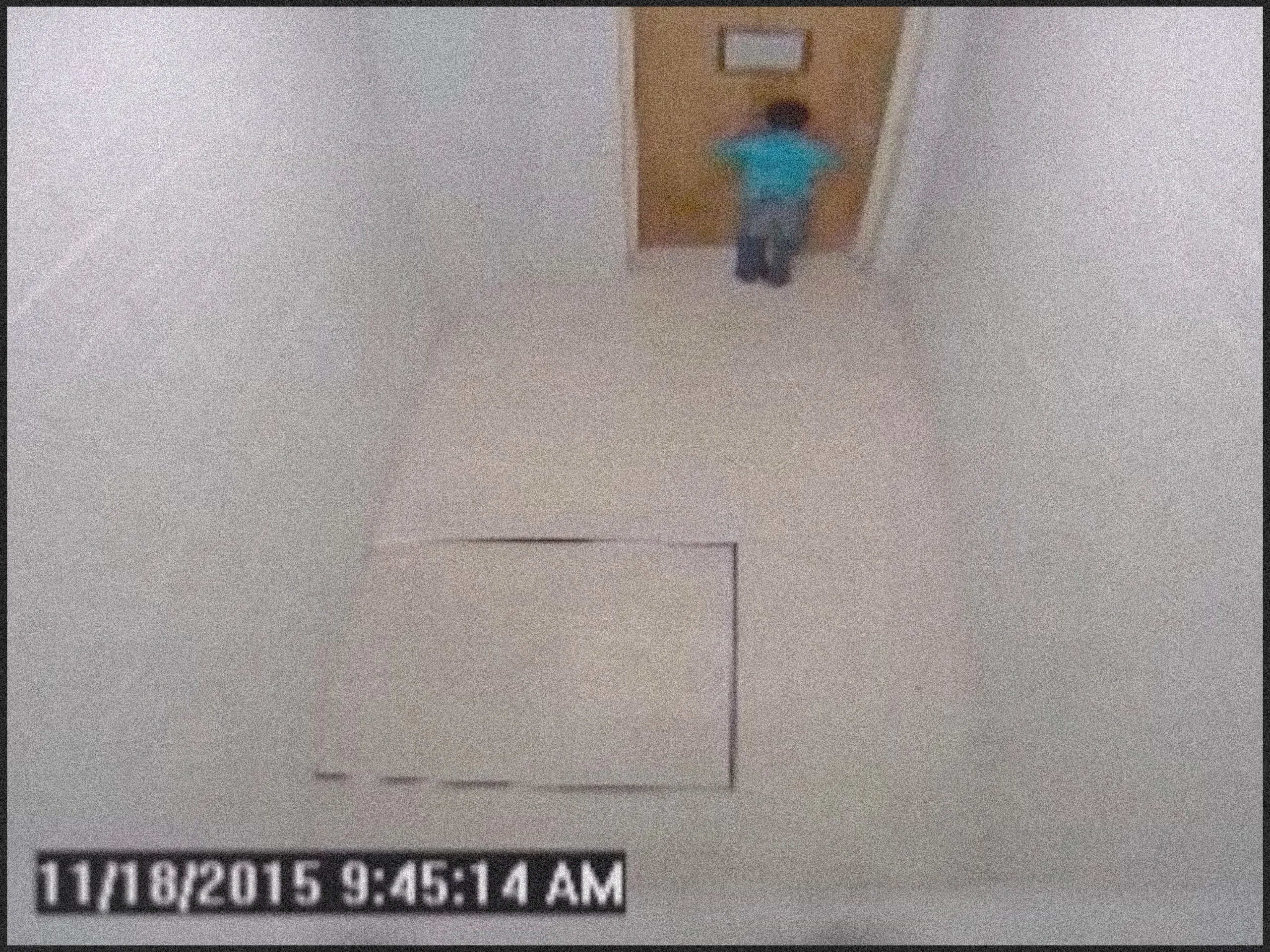
The 10-year-old was dragged down a school hallway by two school staffers. A camera captured him being forced into a small, empty room with a single paper-covered window.
The staffers shut the door in his face. Alone, the boy curled into a ball on the floor. When school employees returned more than 10 minutes later, blood from his face smeared the floor.
Maryland state lawmakers were shown this video in 2017 by Leslie Seid Margolis, a lawyer with the advocacy group Disability Rights Maryland. She’d spent 15 years advocating for a ban on the practice known as seclusion, in which children, typically those with disabilities, are involuntarily isolated and confined, often after emotional outbursts.
Even after seeing the video, no legislators were willing to go as far as a ban. Nor were they when Margolis tried again a few years later.
In 2021, however, the federal Justice Department concluded an investigation into a Maryland school district and found more than 7,000 cases of unnecessary restraint and seclusion in a two-and-a-half-year period.
Four months later, Maryland lawmakers passed a bill prohibiting seclusion in the state’s public schools, with nearly unanimous support.
“I can’t really overstate the impact that Justice can have,” said Margolis. “They have this authority that is really helpful to those of us who are on the ground doing this work.”
Related: Become a lifelong learner. Subscribe to our free weekly newsletter featuring the most important stories in education.
Within the Justice Department’s Civil Rights Division is a small office devoted to educational issues, including seclusion, as well as desegregation and racial harassment. The division intentionally chooses cases with potential for high impact and actively monitors places it has investigated to ensure they’re following through with changes. When the Educational Opportunities Section acts, educators and policymakers take notice.
Now, however, the Trump administration is wielding the power of the Justice Department in new and, some say, extreme ways. Hundreds of career staffers, including most of those who worked on education cases, have resigned. The Department of Education’s Office for Civil Rights also has been decimated, largely through layoffs. The two offices traditionally have worked closely together to enforce civil rights protections for students. The result is a potentially lasting shift in how the nation’s top law enforcement agency handles issues that affect public school students, including millions who have disabilities.
“There are those who would say that this is an aberration, and that when it’s over, things will go back to the way they were,” said Frederick Lawrence, a lecturer at Georgetown Law and former assistant U.S. attorney under President Ronald Reagan. “My experience is that the river only flows in one direction, and things never go back to the way they were.”
Related: Tracking Trump: His actions to dismantle the Education Department, and more
The Justice Department’s lawyers historically have worked on a few dozen education cases at once, concentrating on combating sexual harassment, racial discrimination against Black and Latino students, restraint and seclusion, and failure to provide adequate services to English learners.
In the last 11 months, however, the agency has sued over and opened investigations into concerns about antisemitism, transgender policies and bias against white people at schools. It sued at least six states for offering discounted tuition to undocumented immigrants and pressured the president of the University of Virginia to resign as part of an investigation into the school’s diversity, equity and inclusion policies. And it joined other federal departments to form a special Title IX investigations team to protect students from what the administration called the “pernicious effects of gender ideology in school programs and activities.”
As the Educational Opportunity Section’s mission shifted, it shrunk in size. In January, before President Donald Trump took office, about 40 lawyers tackled education issues. In the spring, the U.S. Senate confirmed Harmeet Dhillon as leader of the Civil Rights Division. Dhillon founded the conservative Center for American Liberty, which describes itself as “defending civil liberties of Americans left behind by civil rights legacy organizations.”
After her confirmation, staff who weren’t political appointees began resigning en masse, concerned Dhillon would promote only the administration’s agenda.
By June, no more than five of the 40 lawyers were left, according to former employees. Some new staff have been hired or reassigned to the section, but the head count remains well below usual. It’s far from enough to sustain the typical workload, said Shaheena Simons, who was chief of the Educational Opportunities Section until she resigned in April. “There’s just no way the division can function with that level of staffing. It’s just impossible,” said Simons, who took over the section in 2016. “The investigations aren’t going to happen. Remedies aren’t going to be sought.”
Department officials responded to a list of questions from The Hechinger Report about changes to their handling of student civil rights protection with “no comment.”
The Department of Justice, including its educational work, has always been somewhat subject to White House interests, said Neal McCluskey, director of the libertarian Cato Institute’s Center for Educational Freedom. During President Joe Biden’s term, for example, the agency pursued allegations of discrimination against transgender students, reflecting administration priorities.
McCluskey added, though, that the Trump administration is more aggressive in how it is pursuing its goals and is bypassing typical protocols, noting that in many cases “it’s like they’ve already decided the outcome.”
Related: Which schools and colleges are being investigated by the Trump administration?
An investigation into allegations of antisemitism at the University of California, Los Angeles, for instance, took just 81 days before the department concluded the school had violated federal law. DOJ investigations typically have taken years, not months, to complete.
Lawrence, who also serves as president of the Phi Beta Kappa honor society, said he could not speak to specific investigations, but the UCLA timeline “does suggest a rather accelerated process.”
A federal judge recently ruled that the administration could not use the findings from its UCLA investigation as a reason to fine the university $1.2 billion, which if paid would have unlocked frozen federal research funding. She wrote that the administration was using a playbook “of initiating civil rights investigations of preeminent universities to justify cutting off federal funding.”
As new investigations are opened, older ones remain unresolved, including one of practices in Colorado’s Douglas County Public Schools.
In 2022, Disability Law Colorado submitted a complaint to the Justice Department about the district’s use of seclusion, as well as restraint, where school employees physically restrict a student’s movement.
The following year, three other families sued the school system, alleging racial discrimination against their children. The students were repeatedly called monkeys and the N-word, threatened with lynchings and “made by teachers to argue the benefits of Jim Crow laws,” according to the complaint.
Related: Red school boards in a blue state asked Trump for help — and got it
The Department of Justice decided to investigate both issues. Four staffers were assigned to the restraint and seclusion investigation, said Emily Harvey, co-legal director at Disability Law Colorado.
As part of the inquiry, Justice officials visited the district twice. The second time was during the final week of Biden’s presidency.
After that visit, Douglas County didn’t hear anything about the investigation from the Trump administration until a mid-May email. “Good morning,” it read. “We are having some staffing changes.”
The email, which The Hechinger Report obtained through a public records request, said that going forward, the district could contact two staffers on the restraint and seclusion case. The racial harassment case would be reduced to only one employee until another Justice staffer returned from leave in the fall.
One Douglas County parent, who asked her name be withheld because she is afraid of retaliation from the district, said that although she knew the investigation could take a couple of years, the longer it goes without a resolution, the more children could be harmed.
“The justice system is just moving so incredibly slow,” she said.
The parent said she knows of dozens of families who have dealt with restraint and seclusion issues in the district. Her own son, she said, was secluded in kindergarten. “He was scared of the person who put him in there. He kept saying, ‘I can’t go back,’” she said. “I never envisioned, until my son was secluded, a world where the school would not care about my child.”
When Harvey, of Disability Law Colorado, first contacted the Department of Justice, she hoped for statewide reform. She wanted to see a ban on seclusion, like Margolis had helped secure in Maryland, and for the state to commit to more accurate tracking of use of restraints. The way Colorado law is written, restraints must be recorded only if they last more than a minute. Douglas County, the second largest in the state with 62,000 students, reported 582 restraints to the Colorado Department of Education in the 2023-24 school year. The number of shorter-term restraints, however, is unknown.
“We believe this is an arbitrary distinction,” Harvey said. “My hope was that the Department of Justice would potentially weigh in on that as a violation” of the Americans with Disabilities Act.
Related: How Trump 2.0 upended education research and statistics in one year
Douglas County school administrators said in a statement to The Hechinger Report that their “focus is on taking care of each and every one of our students” and that they take all concerns seriously.
They have worked with the federal government to set up school visits and interviews during their visits, according to emails from January.
Subsequent emails between district and federal officials describe a phone call over the summer and requests for additional documents. Another DOJ employee was included in the messages.
There are signs that the Justice Department is not abandoning restraint and seclusion work, said Guy Stephens, founder of the national advocacy group Alliance Against Seclusion and Restraint. A webpage about previous cases that was removed after Trump took office has been restored, and in July, the DOJ announced a settlement with a Michigan district over these issues.
Yet Stephens has concerns. “There are still people very, very dedicated to this work and the mission of this work, but it’s very hard to work in a system that is shifting and reprioritizing,” he said.
Former DOJ employees worry that it might not only be future investigations that are markedly different. The department has historically monitored places where it has reached agreements that demand corrective action, rewriting them if districts or colleges fail to live up to their promises. It also provides support to achieve the new goals. Now, provisions written into past resolutions might be at odds with Trump administration actions, and oversight of some settlements is ending early.
Take, for instance, a DOJ investigation into Vermont’s Elmore-Morristown Unified Union School District over allegations of race-based harassment against Black students. Investigators found that the district didn’t have a way to handle harassment or discrimination not targeted at a specific person, according to David Bickford, the school board chairman.
As part of a settlement agreement signed two weeks before Trump was inaugurated, the district agreed to provide staff training on implicit bias. A Trump executive order, however, calls for eliminating federal funding for anyone that discusses such a concept in schools.
Bickford said that the district has complied with everything the settlement called for, including professional development.
The investigation itself, he said, was extremely thorough, and required handing over nearly a thousand pages of documentation. Since then, the district has sent regular reports to the department but has not received any lengthy response or input, Bickford said. He also noted there had been staffing changes in who the district reports to.
Related: Federal policies risk worsening an already dire rural teacher shortage
Justice officials decided to end supervision of a 2023 settlement early following a racial harassment investigation in another Vermont district, Twin Valley. The original plan was to monitor the district for three years. In October 2024, investigators visited the district to check in. In a letter two months later, officials noted that while Twin Valley had made significant progress, they still had several areas of concern, including how the district investigated complaints, as well as “persistent biased language and behavior on the basis of multiple protected classifications; a pervasive culture of sexism; and lack of consistent and effective adult response to biased language and behavior.”
Even so, the department was pleased overall with its visit, said Bill Bazyk, superintendent of Windham Southwest Supervisory Union, which includes Twin Valley. “But things certainly sped up after the election,” said Bazyk, who started his job after the case had been settled.
Throughout the spring, Bayzk and his staff checked in with the department, and in May the district was told oversight of the settlement would end a year early, as Twin Valley had fully complied with the terms.
“We were doing all the right things,” Bayzk said, noting that the district’s work on diversity and equity is ongoing. “We took the settlement very seriously.”
The investigation began in 2021 after the American Civil Liberties Union of Vermont filed a complaint. Legal Director Lia Ernst said it is possible that Twin Valley resolved those lingering problems between December and May, stressing that it’s impossible to know from the outside. But still, she said, there is a larger pattern of ambivalence to the Justice Department’s approach to civil rights complaints.
“It is disappointing to see that one ending early,” she said. “It is my hope that it is ending early because Twin Valley has made so much progress, but it is my fear that it is ending early because DOJ just doesn’t care.”
Contact investigations editor Sarah Butrymowicz at [email protected] or on Signal: @sbutry.04.
This story about the Justice Department was produced by The Hechinger Report, a nonprofit, independent news organization focused on inequality and innovation in education. Sign up for the Hechinger newsletter.
This <a target=”_blank” href=”https://hechingerreport.org/under-trump-protecting-students-civil-rights-looks-very-different/”>article</a> first appeared on <a target=”_blank” href=”https://hechingerreport.org”>The Hechinger Report</a> and is republished here under a <a target=”_blank” href=”https://creativecommons.org/licenses/by-nc-nd/4.0/”>Creative Commons Attribution-NonCommercial-NoDerivatives 4.0 International License</a>.<img src=”https://i0.wp.com/hechingerreport.org/wp-content/uploads/2018/06/cropped-favicon.jpg?fit=150%2C150&ssl=1″ style=”width:1em;height:1em;margin-left:10px;”>
<img id=”republication-tracker-tool-source” src=”https://hechingerreport.org/?republication-pixel=true&post=113866&ga4=G-03KPHXDF3H” style=”width:1px;height:1px;”><script> PARSELY = { autotrack: false, onload: function() { PARSELY.beacon.trackPageView({ url: “https://hechingerreport.org/under-trump-protecting-students-civil-rights-looks-very-different/”, urlref: window.location.href }); } } </script> <script id=”parsely-cfg” src=”//cdn.parsely.com/keys/hechingerreport.org/p.js”></script>