Tag: essay

  • WEEKEND ESSAY: Summarising and responding to the post-16 white paper

    WEEKEND ESSAY: Summarising and responding to the post-16 white paper

    This blog was kindly authored by Professor Roger Brown, the former Vice Chancellor of Southampton Solent University and Dr Helen Carasso, Honorary Norham Fellow of the Department of Education at the University of Oxford. Their previous book, Everything for Sale? The Marketisation of UK Higher Education was published by Routledge in 2013.

    It is eighth blog in HEPI’s series responding to the post-16 education and skills white paper. You can find the others in the series here, here, here, here, here, here and here.

    We need a reset to ensure the system can play its critical role in delivering provision aligned to the government’s growth and Industrial Strategy ambitions, support training at scale, deliver opportunity and outcomes for all, and reduce the persistent gaps in outcomes for the most advantaged students.

    (HM Government, 2025, p.46).

    As this statement of intent shows, the post-16 Education and Skills White Paper published last month has ambitious aims for the higher education sector in England. These are framed in the context of a wide range of proposals covering not only higher education but also further education and what used to be called ‘industrial training’. So far as higher education is concerned, the main proposals are:

    • To promote greater provider specialisation, including through greater collaboration
    • To increase financial sustainability and efficiency
    • To improve access and participation
    • To strengthen the incentives on providers to promote growth
    • To improve quality

    Specialisation and collaboration

    The Government wants to see greater specialisation: ‘over time there will be fewer broad generalist providers and more specialists’ (p.49). The White Paper seems to envisage two types of specialisation (a) by broad orientation, ‘teaching only’, ‘research’ and ‘teaching with applied research in specific disciplines’ (p.49) and (b) by discipline ‘a provider may decide to specialise across multiple disciplines or to focus on one or two where they are strongest’ (p.49). It is not clear how this will be achieved, but the White Paper speaks of ‘incentivising a more strategic distribution of research activity across the sector’ (p.50). This would be done through reforms to research funding. There will be a more permissive approach to collaboration on the part of the regulators. The Government declares that it will work with the Office for Students ‘to ensure there is a more robust process for market entry’ (p.50) but nothing is said about market exit.

    Financial sustainability and efficiency

    The White Paper confirms the earlier announcement by the Secretary of State that the undergraduate tuition fee cap for all providers will be increased in line with forecast inflation in the academic years 2026-27 and 2027-28. These ad hoc increases are intended to support the financial sustainability of institutions until legislation can be put in place to make such increases automatic. The Government will work with the sector to improve research cost recovery, with measures including improvements to TRAC (Transparent Approach to Costing) and support for collaboration and sharing of infrastructure. The White Paper also notes the potential of AI for dramatic improvements in research productivity. However, future Government support for research will be tied to ‘three distinct priorities’:

    Protecting and promoting curiosity-driven research; supporting the delivery of government priorities, missions and the Industrial Strategy; and providing targeted innovation, commercialisation and scale-up support to drive growth.

    (p.50)

    Moreover, improving cost recovery may ‘result in funding a lower volume of research [but] at a more sustainable level’ (p.52) and the research assessment system will be reformed ‘to better incentivise excellence and support the Government’s vision for the sector’ (p.53).

    Improving access and participation

    There are signs that the Government has registered the scale of the financial pressures on students with maintenance loans increasing with forecast inflation each year. Means-tested maintenance grants for students from the lowest income households (funded by the new International Student Levy) will be introduced. However these will be confined to those who are studying courses that support the Government’s missions and Industrial Strategy. The long-awaited introduction of modular teaching funding through the Lifelong Learning Entitlement (LLE) will also be focused on ‘key subjects for the economy, informed by the Industrial Strategy’ (p.56). However, given that the LLE model is to be used to operate loans for all eligible home undergraduates, it is unclear what this will mean in practice.

    To reduce administrative burdens, the regulation of Access and Participation Plans will be refined to focus on those parts of the sector where there is the greatest room for improvement. The Government will ‘develop options to address cold spots in under-served regions and tackle the most systemic barriers to access’ (p.57). It will also explore the reasons for the declining proportion of UK doctoral applicants in some fields. This could include reducing the financial barriers for those from lower socio-economic backgrounds.

    Incentives for growth

    The Strategic Priorities Grant will be reformed so as to align with the priority sectors that support the Industrial Strategy, the Government’s Plan for Change and future skills needs. Providers will be expected to review their curricula to increase flexibility and strengthen progression. Student support (i.e. eligibility for SLC loans) for Level 6 courses may be made conditional on the inclusion of accredited break points in degree programmes. Universities will be required to engage with Local Skills Improvement Plans. There will be ‘a new market monitoring function, drawing together key datasets to provide a clear, single picture of higher education supply and demand’ (p.61).

    The Government has protected the overall funding of UKRI (at £8.8bn). It will continue to ensure that there is ‘the right balance’ between the three research funding priorities. Some of UKRI’s funding will be ‘pivoted to align to areas of strategic importance as described in the Industrial Strategy sector plans’ (p. 62).

    The country’s ‘global leaders’ will be placed on a more sustainable footing through the linking of fee cap increases to quality (as discussed below) and the projected improvements in research cost recovery. The Government will work with the sector ‘to maintain a welcoming environment for high-quality international students’ (p.63). However, there will be tighter enforcement of visa approvals and monitoring of international students’ course enrolments and completions. Finally, providers will be encouraged to develop ‘civic plans’ that fit with their strengths and priorities.

    Improving quality

    Even though three-quarters of providers received Gold or Silver ratings in the last (2023) TEF, ‘we need to raise the bar across the system…with pockets of poor provision undermining the reputation of the sector’ (p.64). On the REF, the White Paper acknowledges the risk that research funding and assessment frameworks can incentivise ‘perverse behaviours’ with publication becoming ‘the main aim’ (p.65) (why did it take them so long?).

    There will be an increase in the OfS’s capacity to conduct ‘quality investigations’. Ultimately, the Government will legislate to ensure that the Office is able to impose recruitment limits where growth risks poor quality and future fee uplifts will become conditional on providers achieving a higher threshold through the Office’s quality regime.

    The Government will work with UCAS, the OfS and the sector to improve the quality of information for individuals ‘informed by the best evidence on the factors that influence the choices people make as they consider their higher education options’(p.66). An OfS review of its approach to degree awarding powers will include the role of external examiners and ‘the extent to which recent patterns of improving grades can be explained by an erosion of standards, rather than improved teaching and assessment practices’ (p.67). Employers will be consulted on whether the academic system is giving graduates the skills and knowledge they need for the workplace (p.67). Using the model of Progress 8 in the schools, the Government will work with the OfS to develop options for measuring and comparing progress in higher education.

    The Government will also consider its approach to research assessment ‘to ensure it meets our needs and ambition for research and innovation’ (p.68). There will be a pilot ‘to seek better information on how our strategic institutional research funding is used’ (p.68).

    The White Paper in its historical context

    In our forthcoming book Every Student Has Their Price: The Neoliberal Remaking of English Higher Education,to be published by Policy Press next year, we identify the progression of reforms that have enable the marketisation of English higher education. These reforms to funding, regulation and market entry have enabled a significant growth in the number of competing higher education providers to more than 400 (see the December 2023 HEPI Debate Paper Neoliberal or not? English higher education in recent years Roger Brown and Nick Hillman).

    The White Paper vigorously reaffirms the official view, evident in the 1985 Green Paper The Development of Higher Education into the 1990s (Department for Education and Science, 1985) that the role of higher education is first and foremost about meeting the needs of the economy: what Salter and Tapper many years ago termed ‘the economic ideology of higher education’ (The State and Higher Education, 1994). But whereas most previous White Papers have at least paid lip service to the wider functions of higher education this one doesn’t even bother. It is, in fact, the most wide-ranging attempt yet to tie the future development of the sector to the Government’s perceptions of the present and future requirements of the economy, and specifically the presumed requirements of the labour market.

    The White Paper’s impacts can be expected to mostly reinforce those of the earlier reforms in at least six areas: demand and equity, supply, funding, the higher education workforce and the system.

    Demand and equity

    The White Paper is silent on the future size of the sector. So far, the neoliberal reforms have done little to check the huge increases in numbers and participation rates that we have seen. Nor have they made much difference to the continuing gaps in participation by different social groups or the tendency for students from wealthier backgrounds to go to better-resourced institutions. This is because – as nearly every independent analysis has shown – the major barriers to wider participation lie much further back in the education system and these in turn largely reflect the structure of our society and economy. So it is very hard to see the White Paper proposals making much difference to access or demand. But there are one or two warning signs. The stipulation that maintenance grants will be restricted to students on courses closer to the Industrial Strategy will not only constrain student choice but perhaps also reinforce the divisions between higher and lower tariff providers that were exacerbated by the abolition of the numbers limits in 2015. Is there perhaps another potential binary line here, with better off students free to pay to study humanities and social science at wealthier and more prestigious institutions and go on to well-paid jobs in the City or the professions, while poorer students are obliged to study ‘practical and applied’ subjects at less well resourced and less prestigious ones?

    Supply

    It is striking that there are no proposals for expanding the number of providers, indeed the White Paper envisages toughening the rules for market entry, as we have seen. The Government appears to assume that it will be existing providers that will cater for the cold spots in under-served regions, rather than new ones. This will at least mean some greater stability.

    Funding

    It seems highly unlikely that the proposals for fee indexation will be sufficient to redress the post-2016 funding squeeze, wean universities off of their reliance on international student fees (even without the tax represented by the International Student Levy) or restore the unit of resource in real terms. UUK analysis suggests that there will be an overall £2.5bn reduction in sector funding across the academic years 2024-25 to 2026-27 compared to 2023-24. Whilst the intention to improve research cost recovery is welcome, it will almost certainly be insufficient to reverse the long-term decline in research funding since 1980, and indeed the Government partially accepts this.

    This combination of some additional funding, together with a strong drive towards increasing efficiency and encouragement for institutions to consider specialisation, collaboration and restructuring as options, is placed within the context of recognition that ‘the higher education sector is rightly and proudly autonomous’(p.53). This freedom, the Government states, has its consequences, so ‘the leadership of the sector must take responsibility for managing their institutions robustly and in the public interest’ (p.53). The OfS will therefore be supported to tighten the management and governance requirements of institutional registration. Indeed, there will be a ‘….focus on targeting sharp regulation where it is most needed, to drive the positive change required to maintain our world-leading higher education system.’ (p48)

    Quality

    The White Paper notes some of the quality issues that have arisen over the period, including grade inflation and (some) sub-contracting (franchising), most of which are in fact due to the combination of increased competition and reduced funding that has characterised the period of the reforms. The proposal that future fee increases should be linked to quality raises as many questions as it answers. Whilst this idea has often been floated in the past, it has not been seriously applied in the UK since the days of the Polytechnics and Colleges Funding Council when sector committees advised the funding council on the allocation of additional funded student numbers to ‘deserving’ institutions on a broadly disciplinary basis.

    The proposal that the OfS should be able to confine future fee uplifts to ‘providers achieving a higher quality threshold through the OfS’s quality regime’ is also par for the neoliberal course. The potential weight that this places on TEF outcomes makes the current review of the exercise even more crucial, including the importance of designing a process that acknowledges the role of a variety of institutions offering forms of education that might be different but not automatically ‘better’ or ‘worse’.

    The proposal that the OfS should review the degree awarding powers process and the role of external examiners in protecting standards also raises many questions.  But the issue is the same, namely, how and to what extent can the traditional ways in which the academic community has, generally, successfully guarded its standards resist the combined pressures of competition, consumerism and inadequate funding.

    The proposals on information for students continue with the hopeless – in the authors’ view – quest for the Holy Grail of information that will quickly and cheaply enable students and other ‘users’ of the system to make reasonable choices about subjects, courses and providers, the insuperable difficulties of which were explained at length in the HEPI Debate Paper referred to earlier. Similarly hopeless is the idea of a progress measure for higher education along the lines of Progress 8 in the schools. We can only sympathise with the hapless individuals who will be tasked with taking these ideas forward.

    The proposal to review research assessment raises concerns that future exercises could be tilted, like research funding, towards greater emphasis on (a) impact, and (b) subjects considered most relevant to the Industrial Strategy. Haven’t the reforms to increase the role of impact in research assessment over the years already gone far enough?

    Staff

    The White Paper breaks new ground in one respect at least, in that the position of staff, and in particular the precarity of many early career researchers, is mentioned. However, what will happen here will depend very much on how much of a financial recovery there will be (if any), on how much system restructuring takes place and on what form any increased collaboration takes. If this takes the form of institutional mergers, we can expect more redundancies and potentially worsening of terms and conditions. The experience of mergers in HE indicates that the only significant, permanent savings come from disposing of assets: any savings on things like shared services are offset by the greater costs of the managerial coordination required.

    The system

    The Government clearly hankers after a more streamlined system that is both more efficient in its use of resources and offers a wider, or at least clearer, set of choices for students, employers and other ‘users’. As with so many other aspects of the White Paper we have been here before. In the early 1980s the old University Grants Committee consulted on designating the existing universities as ‘R’, ‘X’ or ‘T’, depending on their research intensity. The proposals were universally rejected. In the early 2000s, HEFCE toyed with the notion of dividing institutions into separate and distinctive groups depending on their overall orientation, but this also foundered. The institutions were almost all strongly opposed, the criteria and data for selection were insufficiently robust to be a basis for policy and the Funding Council anyway lacked the necessary powers. The same seems likely to be the case here, especially given the renewed emphasis on institutional autonomy built into HERA(2017).

    Where does the sector go next?

    In our forthcoming book, we argue that the post-80s reforms of higher education in England are a reflection of the key planks of neoliberalism: privatisation, marketisation and reduced claims on the taxpayer. The press release accompanying the White Paper speaks of it being a ‘landmark statement’. This it certainly is, if not in the sense seemingly meant by its authors. If the essence of neoliberalism is the subordination of all social and cultural activities to the needs of the economy, then this is indeed a ‘landmark’ document of which the authors of neoliberalism would have been justly proud.

    Source link

  • New Michigan Law Essay Prompt Asks Applicants to Use AI

    New Michigan Law Essay Prompt Asks Applicants to Use AI

    Photo illustration by Justin Morrison/Inside Higher Ed | Gazanfer and InspirationGP/iStock/Getty Images

    In 2023, the University of Michigan Law School made headlines for its policy banning applicants from using generative AI to write their admissions essays.

    Now, two admissions cycles later, the law school is not only allowing AI responses but actually mandating the use of AI—at least for one optional essay.

    For those applying this fall, the law school added a supplemental essay prompt that asks students about their AI usage and how they see that changing in law school—and requires them to use AI to develop their response. (Applicants may write up to two supplemental essays, selected from 10 prompt options in total.)

    “TO BE ANSWERED USING GENERATIVE AI: How much do you use generative AI tools such as ChatGPT right now? What’s your prediction for how much you will use them by the time you graduate from law school? Why?” the prompt asks.

    Sarah Zearfoss, senior assistant dean at the University of Michigan Law School, said she was inspired to include such a question after hearing frequent anecdotes over the past year about law firms using AI to craft emails or short motions.

    Indeed, in a survey released by the American Bar Association earlier this year, 30 percent of all law firms reported that they use AI tools; among law firms with over 100 employees, the share is 46 percent.

    But many have been derailed by the same well-documented hallucinations that have plagued other AI users. Judges have sanctioned numerous lawyers over the past several years because their use of AI resulted in filings riddled with imaginary cases and quotations. That makes it all the more important to evaluate whether prospective students are able to use AI tools responsibly and effectively, the law school believes.

    “That is now a skill that … probably not all legal employers, but big law firms, are looking for in their incoming associates,” Zearfoss said in an interview. “So I thought it would be interesting: If we have applicants who have that skill, let’s give them an opportunity to demonstrate it.”

    Michigan Law still disallows applicants from using AI writing tools when they compose their personal statements and for all other supplemental essay questions, which Zearfoss hopes will allow her to compare applicants’ writing with AI’s assistance to their writing without it.

    Is AI Inevitable for Lawyers?

    Frances M. Green, an attorney with Epstein Becker & Green, P.C., who specializes in AI, told Inside Higher Ed that she believes the ability to use and engage with AI will eventually become a required skill for all lawyers. That doesn’t mean just using it to write court filings but also understanding how to manage the use of AI-generated evidence—say, the notes of a physician who uses AI technology to listen to and summarize appointments, rather than old-fashioned, handwritten doctors’ notes.

    “I believe lawyers who use AI will replace lawyers who don’t,” she said. “I think that is very, very true. And judges even, in some jurisdictions, are encouraging the use of artificial intelligence tools.”

    Even so, Green noted that she doesn’t really like how Michigan’s question is phrased, because applicants may be inclined to over- or understate how much they use AI based on what they think the admissions officer is looking for.

    But Melanie Dusseau, an English professor at the University of Findlay in Ohio and a critic of AI, questioned the prompts’ utility in actually evaluating if a student is well-suited for law school.

    “A law school application is a showcase of a student’s language abilities, their passion for lively rhetoric, logic, and captivating narrative. Do reviewers want to know how well future lawyers can prompt a bot [to] turn its beige copyslop into something compelling, or how well they can write? And which would be more important in a law school application?” she wrote in an email. “Since LLMs are fawning sycophants, at least tonally, I would imagine that future lawyers would do better to polish their persuasive writing chops without automation.”

    Zearfoss is not a prolific AI user herself; once she decided she wanted to include an essay option related to AI, she recruited the help of another Michigan Law professor, Patrick Barry, who teaches a course on lawyering in the age of AI, to help compose the question itself.

    She expects the essays will reveal uses of and perspectives on AI that she never would have been exposed to otherwise.

    “I’m always excited when an essay teaches me something, but I don’t really expect that—it’s sort of a bonus, right?” she said. “But I think with this particular prompt, I assume a high percentage of the essays will be teaching me something.”

    Source link

  • Satirical Essay on Restructuring Humanities (opinion)

    Satirical Essay on Restructuring Humanities (opinion)

    The administration at U of All People has suffered long enough with the underperforming School of Social Sciences and Humanities. Its various departments, programs and whatnot have grown arcane to the point where the students themselves no longer understand the difference between, say, philosophy and psychology, save that both begin with the letter p. And since many students no longer engage in reading or writing without the aid of AI, we should stop supporting distinct majors that encourage both. Consequently, we are restructuring the school to reflect the current dictates of academic administration.

     Here are some issues we have made up to justify the restructuring:

    • There has been a recent decrease in enrollment, or at least there ought to have been.
    • These are perilous times for the humanities, and smushing them together will help.
    • Merging departments will make the infrastructure more economical, particularly if we do away with pesky department offices and office staff.
    • Just saying the word “interdisciplinary” makes us feel connected to the 21st century.

    SSSH currently includes English, history, philosophy, religion, sociology, anthropology, modern languages, linguistics, political science, psychology, classics and several others that may have escaped our notice. However, we have hired a consultancy firm that can list them all. Already, the consultants have put together a PowerPoint presentation advising what they have inferred we want.

    The restructuring will feature programs such as philohistenglish-religiosophy (PHER), anthrosociopsychology (ASP) and perhaps two other smushes with better acronyms. The new, flexible majors may be grouped under the Program for (Somewhat Limited Freedom of) Speech, the Program for Global Awareness of What Trouble We’re In and the Program That Resembles a Grab Bag From a Kids’ Party. Instead of a bunch of quarrelsome department heads and a dean, a triumvirate of armed SSSH administrators will be responsible for keeping the peace.

    We have already polled the faculty and students in a metric calculated to prove our point: On a scale of one to 10, please rate how dissatisfied you are with the current setup, with one being “very” and 10 being “extremely.” The 12 respondents answered that they were very dissatisfied. Note that we are perfectly willing to listen to suggestions from the faculty and in fact have invited them all to attend a feedback session to take place yesterday at 3 a.m. in the Student Center Ballroom (bring your own flashlight!). However, we urge the faculty not to think outside the box we have placed them in while also being nimble when it comes to downsizing.

    During this process, the SSSH building itself, shabby compared to the shiny new STEM complex, will be restructured, possibly to a multilevel parking garage with spots reserved for U of All People administrators. It has also been suggested that the faculty themselves could use some restructuring, starting with their mouths, which can be sealed through a painless surgical procedure.

    Don’t think of it as a loss of autonomy and shared governance. Consider it a gain for this administration!

    David Galef is a professor of English and the creative writing program director at Montclair State University. His latest book is the novel Where I Went Wrong (Regal House, 2025).

    Source link

  • Essay on Faculty Engagement and Web Accessibility (opinion)

    Essay on Faculty Engagement and Web Accessibility (opinion)

    Inaccessible PDFs are a stubborn problem. How can we marshal the energy within our institutions to make digital course materials more accessible—one PDF, one class, one instructor at a time?

    Like many public higher education institutions, William & Mary is working to come into compliance with the Web Content Accessibility Guidelines by April 2026. These guidelines aim to ensure digital content is accessible for people who rely on screen readers and require that content be machine-readable.

    Amid a flurry of other broad institutional efforts to comply with the federal deadline, my colleague—coordinator of instruction for libraries Liz Bellamy—and I agreed to lead a series of workshops designed to help instructors improve the accessibility of their digital course materials. We’ve learned a lot along the way that we hope can be instructive to other institutions engaged in this important work.

    What We’ve Tried

    Our first big hurdle wasn’t technical—it was cultural, structural and organizational. At the same time various groups across campus were addressing digital accessibility, William & Mary had just moved our learning management system from Blackboard Learn to Blackboard Ultra, we were beginning the rollout of new campuswide enterprise software for several major institutional areas, the institution achieved R-1 status and everyone had so many questions about generative AI. Put plainly, instructors were overwhelmed, and inaccessible PDFs were only one of many competing priorities vying for their attention.

    To tackle the issue, a group of institutional leaders launched the “Strive for 85” campaign, encouraging instructors to raise their scores in Blackboard Ally, which provides automated feedback to instructors on the accessibility of their course materials, to 85 percent or higher. The idea was simple—make most course content accessible, starting with the most common problem: PDFs that are not machine-readable.

    We kicked things off at our August 2024 “Ready, Set, Teach!” event, offering workshops and consultations. Instructors learned how to find and use their Ally reports, scan and convert PDFs, and apply practical strategies to improve digital content accessibility. In the year that followed, we tried everything we could think of to keep the momentum going and move the needle on our institutional Ally score above the baseline. Despite our best efforts, some approaches fell flat:

    • Let’s try online workshops! Low engagement.
    • What about in-person sessions? Low attendance.
    • But what if we feed them lunch? Low attendance, now with a fridge full of leftovers.
    • OK, what if we reach out to department chairs and ask to speak in their department meetings? It turns out department meeting agendas are already pretty full; response rates were … low (n = 1).

    The truth is, instructors are busy. Accessibility often feels like one more thing on an already full plate. So far, our greatest success stories have come from one-on-one conversations and by identifying departmental champions—instructors who will model and advocate for accessible practices with discipline-specific solutions. (Consider the linguistics professor seeking an accurate 3-D model of the larynx collaborating with a health sciences colleague, who provided access to an interactive model from an online medical textbook—enhancing accessibility for students learning about speech production.)

    But these approaches require time and people power we don’t always have. Despite the challenges we’ve faced with scaling our efforts, when success happens, it can feel a little magical, like the time at the end of one of our highly attended workshops (n = 2) when a previously skeptical instructor reflected, “So, it sounds like accessibility is about more than students with disabilities. This can also help my other students.”

    What We’ve Learned

    Two ingredients seem essential:

    1. Activation energy: Instructors need a compelling reason to act, but they also need a small step to get started; otherwise, the work can feel overwhelming.

    Sometimes this comes in the form of an individual student disclosing their need for accessible content. But often, college students (especially first year or first generation) don’t disclose disabilities or feel empowered to advocate for themselves. For some instructors, seeing their score in Ally is enough of a motivation—they’re high achievers, and they don’t want a “low grade” on anything linked to their name. More often, though, we’ve seen instructors engage in this work because a colleague or department chair tells them they need to. Leveraging positive peer pressure, coupled with quick practical solutions to improve accessibility, seems to be an effective approach.

    1. Point-of-need support: Help must be timely, relevant and easy to access.

    When instructors feel overwhelmed by the mountain of accessibility recommendations in their Ally reports, they are often hesitant to even get started. We’ve found that personal conversations about student engagement and course content or design often provide an opening to talk about accessibility. And once the door is open, instructors are often very receptive to hearing about a few small changes they can make to improve the accessibility of their course content.

    Where Things Stand

    Now for the reality check. So far, our institutional Ally score has been fairly stagnant; we haven’t reached the 85 percent goal we set for ourselves. And even for seasoned educational developers, it can be discouraging to see so little change after so much effort. But new tools offer hope. Ally recently announced planned updates to allow professors to remediate previously inaccessible PDFs directly in Blackboard without having to navigate to another platform. If reliable, this could make remediation more manageable, providing a solution at the point of need and lowering the activation energy required to solve the problem.

    We’re also considering:

    • Focus groups to better understand what motivates instructors to engage in this work.
    • Exploring the effectiveness of pop-up notifications that appear with accessibility tips and reminders when instructors log in to Blackboard to raise awareness and make the most of point-of-need supports.
    • Defining “reasonable measures” for compliance, especially for disciplines with unique content needs (e.g., organic chemistry, modern languages and linguistics).

    Leading With Empathy

    One unintended consequence we’ve seen: Some instructors are choosing to stop uploading digital content altogether. Faced with the complexity of digital accessibility requirements, they’re opting out rather than adapting. Although this could help our institutional compliance score, it’s often a net loss for students and for learning, so we want to find a path forward that doesn’t force instructors to make this kind of choice.

    Accessibility is about equity, but it’s also about empathy. As we move toward 2026, we need to support—not scare—instructors into compliance. Every step we make toward increased accessibility helps our students. Every instructor champion working with their peers to find context-specific solutions helps further our institutional goals. Progress over perfection might be the only sustainable path forward.

    Source link

  • A Multiday In-Class Essay for the ChatGPT Era (opinion)

    A Multiday In-Class Essay for the ChatGPT Era (opinion)

    A successful humanities course helps students cultivate critical, personally enriching and widely applicable skills, and it immerses them in the exploration of perspectives, ideas and modes of thought that can illuminate, challenge and inform their own outlooks.

    Historically, the out-of-class essay assignment has been among the best assessments for getting students in humanities courses to most fully exercise and develop the relevant critical thinking skills. Through the writing process, students can come to better understand a problem. Things that seem obvious or obviously false before spending multiple days thinking and writing suddenly become no longer obvious or obviously false. Students make up their minds on complex problems by grappling with those problems in a rigorous way through writing and editing over a sustained period (i.e., not just writing in a blue book in one class session).

    Unfortunately, since ChatGPT became widely available, out-of-class writing assignments keep becoming harder to justify as major assessments in introductory-level humanities courses. The intense personal engagement with perspectives and cultural artifacts central to the value of the humanities is more or less bypassed when a student heavily outsources to AI the generation and expression of ideas and analysis. As ChatGPT’s ability to write convincing papers goes up, so does the student temptation to rely on it (and so too does the difficulty for professors of reliably detecting AI).

    Having experimented very extensively with ChatGPT, I have found that, at least when it comes to introductory-level philosophy courses, the material that ChatGPT can produce with 10 minutes of uninformed prompting rivals much of what we can reasonably expect students to produce on their own, especially given that one can upload readings/course materials and ask ChatGPT to adjust its voice (the reader should try this).

    And students are relying on it a lot. Based on my time-consuming-and-quickly-becoming-obsolete detection techniques, about one in six of my students last fall were relying on ChatGPT in ways that were obvious. Given that it should take a student no more than 10 extra minutes on ChatGPT to make the case no longer obvious, I have to conclude that the real number of essays relying on ChatGPT in ways that conflict with academic integrity must be at least around 30 percent.

    It is unclear whether AI-detection software is sufficiently reliable to justify its use (I haven’t used it), and—at any rate—many universities prohibit reliance on it. Some instructors believe that making students submit their work as a Google Doc with track-changes history is an adequate deterrent and detection tool for AI. It is not. Students are aware of their track-changes history—they know they simply have to type ChatGPT content instead of copying and pasting it. Actually, students don’t even have to type the AI-generated content: There are readily available Google Chrome extensions that take text and “type” it at manipulable speeds (with pauses, etc.). Students can copy/paste a ChatGPT essay and have the extension “type” it into a Google Doc at a humanlike pace.

    Against this backdrop, I spent lots of time over the last winter break familiarizing myself with Lockdown Browser (a tool integrated with learning management software like Canvas that prevents access to and copying/pasting from programs outside of the LMS) and devising a new assignment model that I happily used this past semester.

    It is a multiday in-class writing assignment, where students have access through Lockdown Browser to (and only to): PDFs of the readings, a personal quotation bank they previously uploaded, an outlining document and the essay instructions (which students were given at least a week before so they had time to begin thinking through their topic).

    On Day 1 in class, students enter a Canvas essay-question quiz through Lockdown Browser with links to the resources mentioned above (each of which opens in a new tab that students can access while writing). They spend the class period outlining/writing and hit “submit” at the end of the session.

    Between the Day 1 and Day 2 writing sessions, students can read their writing on Canvas (so they can continue thinking about the topic) but are prevented from being able to edit it. If you’re worried about students relying on ChatGPT for ideas to try to memorize/regurgitate (I don’t know how worried we should be about students inevitably trying this), consider introducing small wrinkles to the essay instructions during the in-class sessions (e.g. “your essay must somewhere critically discuss this example”).

    On Day 2, students come to class and can pick back up right from where they left off.

    A Day 2 session looks like this:

    One can potentially repeat the process for a third session. I had my 75-minute classes take two days and my 50-minute classes take three days for a roughly 700-word essay.

    This format gives students access to everything we want them to have access to while working on their essays and nothing else. While it took lots of troubleshooting to develop the setup (links behave quite differently across operating systems!), this new assignment model offers an important direction worthy of serious exploration.

    I have found that this setup preserves much of what we care about most with out-of-class writing assignments: Students can think hard about the topic over an extended period of time, they can make up their minds on some topic through the process of sustained critical reflection and they experience the benefits and rewards of working on a project, stepping away from it and returning to it (while thinking hard about the topic in the background all the while).

    Indeed, I have talked with several students who noted that they ended up changing their minds on their topic between Day 1 and Day 2—they (for instance) set out to object to some view, and then they realized (after working hard through the objection on Day 1 and reflecting on it) that what they now wanted to do was defend the original view against the objection that they had developed. Perfect: This is exactly the kind of experience I have always wanted students to have when writing essays (and it’s an experience that students don’t get with a one-day blue-book essay exam).

    Because the setup documents each day’s work, it invites wonderful opportunities for students to reflect on their writing process (what are they seeing themselves prioritizing each session, and how/why might they change their approach?). The opportunities for peer review at different stages are also robust.

    For those interested, I have made a long (but time-stamped) video that illustrates and explains step by step how to build the assignment in Canvas (it also discusses troubleshooting steps for when a device isn’t getting into Lockdown Browser). The video assumes very minimal knowledge of Canvas and Lockdown Browser, and it describes the very specific ways to hyperlink everything so that students aren’t bumped out of the assignment or given access to external resources (in Canvas—I cannot currently speak to other LMS platforms). The basic technical setup for the assignment is this:

    • Create a Canvas quiz for Day 1, create an essay question, link to resources in the question (PDFs must be uploaded with the “Preview Inline” display option to work across devices), require a Lockdown Browser with a password to access it, then publish the quiz.
    • Post arbitrary, weightless grades for Day 1 after the first writing session so that students can read (but not edit) what they wrote before Day 2 (students cannot read their submitted work until you post some grade for it).
    • Create a Canvas quiz for Day 2 just like Day 1, but this time, in the essay question, link to the Day 1 Canvas quiz (select “external link” rather than “course link,” and copy/paste the Day 1 Canvas quiz link).

    As I mentioned at the beginning of this piece, a successful humanities course helps students cultivate critical, personally enriching and widely applicable skills, and it immerses them in the exploration of perspectives, ideas and modes of thought that can illuminate, challenge and inform their own outlooks. The research I have done over the past three years tells me I can no longer be confident that an intro-level course that nontrivially relies on out-of-class writing assignments can be a fully successful humanities course so understood. Yet a humanities course that fully abandons sustained essay assignments deprives students of the experience that best positions them to fully exercise and develop the skills most central to our disciplines. Something in the direction of this multiday in-class Lockdown Browser essay assignment is worthy of serious consideration.

    Source link

  • Essay on Immigration Law and Student Activism (Opinion)

    Essay on Immigration Law and Student Activism (Opinion)

    On Sept. 23, 1952, Mugo Gatheru had just finished English class when an American official approached him and flashed a United States Immigration Services badge. Gatheru, a young Kenyan student at Lincoln University, quickly realized that his education was not the officer’s concern. His politics were. The officer interrogated him about his role as an editor of the Kenya African Union’s newspaper, The African Voice, and about whether he had ever engaged in political agitation against government officials in Kenya, India, England or the United States.

    In the 1950s, the Cold War logic of American immigration enforcement sought to place Gatheru into a rigid political binary: communist or anticommunist, agitator or ally. But Gatheru challenged these political borders. When accused of being an agitator, the young Kenyan student reframed the terms of the interrogation. Agitation, he argued, was a matter of perspective. British colonial authorities may have seen him as disruptive, but what he was doing was simply a continuation of the democratic ideals he had learned in America. “After all,” he told the immigration officer, “even George Washington was an agitator here in your country.”

    Seventy-three years later, it’s old wine in a new bottle.

    The same Immigration and Nationality Act that was used to justify deportation proceedings against Mugo Gatheru in the 1950s is now being wielded against Mahmoud Khalil. In Gatheru’s time, the target was anticolonial activists suspected of communist ties; today, it’s Palestinian advocates accused of supporting terrorism. The global politics are different, but the playbook remains the same: Silence dissent, rebrand it as a security threat and use immigration law to make it disappear.

    These cases are not just about two individuals. They are part of a much longer history of using immigration enforcement as a tool of political suppression on college campuses. Gatheru was one of many African, Latin America, Asian and Caribbean students in the mid-20th century whose presence in U.S. universities became politically suspect. Fueled by Cold War anxieties, U.S. authorities from across the political spectrum saw anticolonial activism as inherently subversive to American geopolitical interests. In the late 1970s, the Carter administration, which professed a strong commitment to human rights, employed the same tools of immigration enforcement to investigate and silence Iranian students who denounced U.S. complicity in the shah’s regime. And in the mid-1980s, the Reagan administration also utilized those same tools to prosecute young Palestinian activists in Los Angeles.

    The history of immigration and student activism is thus also a history of global racial politics. White European students were welcomed into American universities while Black and brown international students from the Global South were scrutinized for their political beliefs. In effect, academic freedom was never truly universal for international students. It was selectively granted and shaped by a racialized global hierarchy that mirrored U.S. Cold War priorities. Ultimately, an uncomfortable truth might be this: American universities are deeply entangled in America’s geopolitical agenda, and their commitment to academic freedom rarely extended to those who challenged U.S. hegemony.

    Today, the U.S. government is deploying a similar logic. In addition to Khalil’s arrest, the government has trumpeted the arrest of another international student tied to the Columbia protests, Leqaa Kordia, and the visa revocation and “self-deportation” of Ranjani Srinivasan, who says she got mistakenly swept up in arrests of protesters during the occupation of Columbia’s Hamilton Hall last spring. A Georgetown University postdoctoral scholar from India, Badar Khan Suri, was also arrested last week, targeted, according to his lawyer, for his wife’s “identity as a Palestinian and her constitutionally protected speech.”

    In other words, these are not isolated incidents but part of a deliberate policy effort to criminalize Palestinian advocacy and antiwar protest.

    In the past two years alone, we have seen student groups labeled as extremist, faculty members investigated for their political speech and foreign nationals facing heightened scrutiny for their views on the ongoing war in Israel-Palestine. The arrest of Khalil, even if dropped, has had its intended effect: It sends a chilling message that political dissent, particularly when voiced by students from politically fraught regions, comes at a cost.

    The echoes between these cases should prompt us to reflect on the historical legacies at play. Both Gatheru’s and Khalil’s experiences show how governments, fearing the power of certain ideas, attempt to control the discourse by criminalizing student activists. Both demonstrate how racialized and colonialist logics shape the policing of dissent, whether in the 1950s, under the specter of communism, or in 2025, under the guise of counterterrorism. And, most significantly for those in higher education, both reveal the ways in which universities serve as battlegrounds for global political struggles.

    Yet both cases also highlight the potential role of academic communities and activist networks in resisting such overt suppression of political activism. When Gatheru faced deportation, university allies and civil rights leaders and groups, including Thurgood Marshall and the NAACP, mobilized on his behalf. Faculty and students at Lincoln University established the Friends of Mugo Gatheru Fund. They reframed his case as a fight for both racial justice and academic freedom. Their efforts eventually led to the U.S. government dropping its case.

    Khalil’s arrest has likewise sparked widespread resistance. Student organizations and faculty at Columbia have mobilized swiftly, with Jewish faculty members holding a campus rally under the banner “Jews say no to deportations.” Meanwhile, an online petition demanding Khalil’s release has amassed more than three million signatures. These responses underscore the broader stakes of Khalil’s case: It is not just about one student but about the right to dissent in an era in which protest is again being reframed as a national security threat.

    Gatheru’s case, once seen as a national security risk, is now remembered as an example of state overreach. Will we look back on Khalil’s case the same way? If so, it will be because students, faculty and advocates refused to allow immigration enforcement to dictate the terms of political activism. As Gatheru reminded his interrogator, George Washington was an agitator, too. The question is whether we will continue to punish today’s agitators for following in that tradition.

    David S. Busch is the author of Disciplining Democracy: How the Modern American University Transformed Student Activism (Cornell University Press).

    Source link

  • Essay on the play “Heroes of the Fourth Turning” (opinion)

    Essay on the play “Heroes of the Fourth Turning” (opinion)

    A brief announcement: After 20 years of writing “Intellectual Affairs” for Inside Higher Ed, I am retiring at the end of the month—from the gig, that is, not from writing itself. The final column will run in two weeks.

    Going to a play at the height of COVID-19 was effectively impossible, but I managed to see two productions of Will Arbery’s Heroes of the Fourth Turning in the fall of 2020. The first performance was via Zoom. The actors did what they could, but the suspension of disbelief was never a viewer option. Heroes was then produced by Philadelphia’s Wilma Theater and “captured digitally as a site-specific production, created in a closed quarantine ‘bubble’ at a private location in the Poconos, following strict health guidelines,” as press materials stated at the time.

    Set at a small Catholic college in rural Wyoming during the first months of Donald Trump’s presidency, Heroes centers on four friends (two men, two women) who reunite at a college function, a few years after graduation. They all admire a professor who has been appointed as president of the college. She joins them around two-thirds of the way through the play; one of the four is her daughter.

    The audience quickly picks up that Transfiguration College of Wyoming has a curriculum based on the Great Books, with a strong dose of conservative theology—not least on matters of sexual morality. And the lessons have gone deep. None of the four has drifted away from the faith, or skewed to the left, although one is clearly more troubled by punitive rhetoric than the rest.

    The play’s title alludes to a pop-sociological theory of history as moving through a cycle of four periods, each about two decades long. Since graduation, one member of the group has become a fairly successful figure in right-wing media (likely she has Steve Bannon on speed dial) and an ardent believer in the apocalypse promised by the fourth turning.

    “It’s destruction,” she says. “It’s revolution, it’s war. The nation almost doesn’t survive. Great example is the Civil War, and the economic crisis before that. Or the Great Depression and World War II. And it’s right now. The national identity crisis caused by Obama. Liberals think it’s Trump. It’s the fight to save civilization. People start to collectivize and turn against each other. It seems like everything’s ending—we’re all gonna die. No one trusts each other. But the people who do trust each other form crazy bonds. Somehow we get through it, we rise from the ashes …”

    The phoenix that emerges? An era of security, conformity and prosperity. The apocalypse has a happy ending.

    When the play premiered off-Broadway in 2019, reviewers often imagined the discomfort it would presumably give New York theatergoers—plunged into a continuous flow of red state ideology, with no character challenging it. But the play did more than that. The figures Arbery puts on stage are characters, not ventriloquist dummies. They have known one another at close proximity for years and formed “crazy bonds” of great intensity.

    Their conversation is rooted in that personal history as well as in Transfiguration College’s carefully tended vision of Judeo-Christian Western civilization. The playwright creates a good deal of inner space for the actors to occupy and move around in. When I finally got to see Heroes of the Fourth Turning onstage, in person, there were moments that felt like eavesdropping on real people.

    What comes out of a character’s mouth at times echoes well-worn culture-war talking points—many unchanged now, almost eight years after when the play is set. At the same time, the characters clash over points of doctrine and ethical disagreement, and express very mixed feelings about the MAGA crusade. The closest thing to an expression of enthusiasm for the new president (then and now) is when a character calls Trump “a Golem molded from the clay of mass media … Even if he himself is confused, he has the ability to spit out digestible sound bites rooted in decades of the work of the most brilliant conservative think tanks in the country.”

    This is cynical, but also naïve. When the president of the college appears before her adoring former students, she recites some points they have undoubtedly heard from her many times:

    “Progressivism moves too fast and forces change and constricts liberty. Gridlock is beautiful. In the delay is deliberation and true consensus. If you just railroad something through because you want it done, that’s the passion of the mob. Delaying is the structure of the [republic], which is structured differently in order to offset the dangers of democracy. I believe in slowness, gridlock.”

    She’s a fictional character, but I still wonder what she’s made of the last few weeks.

    Not long after Heroes opened in 2019, Elizabeth Redden wrote an in-depth article for Inside Higher Ed about Wyoming Catholic College, the not-so-veiled original for the play’s Transfiguration College. Arbery’s father was the college’s president at the time. All of which goes some ways toward explaining how a one-act play can evoke so palpably a college that is also a counterculture.

    Scott McLemee is Inside Higher Ed’s “Intellectual Affairs” columnist. He was a contributing editor at Lingua Franca magazine and a senior writer at The Chronicle of Higher Education before joining Inside Higher Ed in 2005.

    Source link

  • Essay on the panopticon (opinion)

    Essay on the panopticon (opinion)

    Not quite a household word (beyond academia, anyway), “panopticon” nonetheless turns up in news stories with surprising frequency—here and here, for example, and here and here. The Greek roots in its name point to something “all seeing,” and in occasional journalistic usage it almost always functions as a synonym for what’s more routinely called “the surveillance society”: the near ubiquity of video cameras in public (and often private) space, combined with our every click and keystroke online being tracked, stored, analyzed and aggregated by Big Data.

    Originally, though, the panopticon was what the British political philosopher Jeremy Bentham proposed as a new model of prison architecture at the end of the 18th century. The design was ingenious. It also embodied a paranoid’s nightmare. And at some point, it came to seem normal.

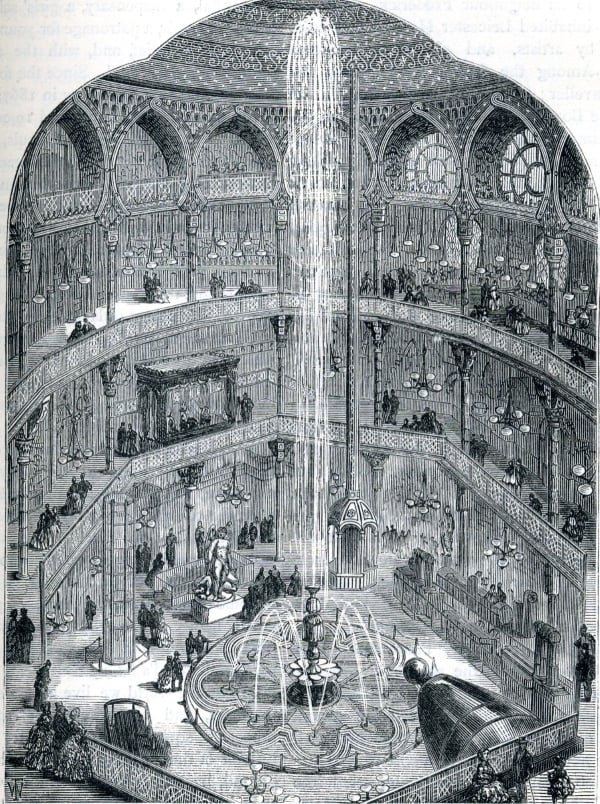
    Picture a cylindrical building, each floor consisting of a ring of cells, with a watchtower of sorts at the center. From here, prison staff have an unobstructed view of all the cells, which at night are backlit with lamps. At the same time, inmates are prevented from seeing who is in the tower or what they are watching, thanks to a system of one-way screens.

    Prisoners could never be certain whether or not their actions were under observation. The constant potential for exposure to the authorities’ unblinking gaze would presumably reinforce the prisoner’s conscience— or install one, if need be.

    The panoptic enclosure was also to be a workhouse. Besides building good character, labor would earn prisoners a small income (to be managed in their best interest by the authorities), while generating revenue to cover the expense of food and housing. Bentham expected the enterprise to turn a profit.

    He had similar plans for making productive citizens out of the indigent. The panoptic poorhouse would, in his phrase, “grind rogues honest.” The education of schoolchildren might go better if conducted along panoptic lines; likewise with care for the insane. Bentham’s philanthropic ambitions were nothing if not grand, albeit somewhat ruthless.

    The goal of establishing perfect surveillance sometimes ran up against the technological limitations of Bentham’s era. (I find it hard to picture how the screens would work, for instance.) But he was dogged in promoting the idea, which did elicit interest from various quarters. Elements of the panopticon were incorporated into penitentiaries during Bentham’s lifetime—for one, Eastern State Penitentiary in Pennsylvania, opened in 1829—but never to his full satisfaction. He was constantly tinkering with the blueprints, to make the design more comprehensive and self-contained. He worked out a suitable plumbing system. He thought of everything, or tried.

    Only in the late 20th century did the panopticon elicit discussion outside the ranks of penologists and Bentham scholars. Even the specialists tended to neglect this side of his work, as the American historian Gertrude Himmelfarb complained in a book from 1968. “Not only historians and biographers,” she wrote, “but even legal and penal commentators seem to be unfamiliar with some of the most important features of Bentham’s plan.” They tended to pass it by with a few words of admiration or disdain.

    The leap into wider circulation came in the wake of Michel Foucault’s Discipline and Punish: The Birth of the Prison (1975). Besides acknowledging the panopticon’s significance in the history of prison design, Foucault treated it as prototypical of a new social dynamic: the emergence of institutions and disciplines seeking to accumulate knowledge about (and exercise power over) large populations. Panopticism sought to govern a population as smoothly, productively and efficiently as possible, with the smallest feasible cadre of managers.

    This was, in effect, the technocratic underside of Bentham’s utilitarianism, which defined an optimal social arrangement as one creating the greatest happiness for the greatest number of people. Bentham applied cost-benefit analysis to social institutions and human behavior to determine how they could be reshaped along more rational lines.

    To Foucault, the panopticon offered more than an effort at social reform, however grandiose. Its aim, he writes, “is to strengthen the social forces—to increase production, to develop the economy, spread education, raise the level of public morality; to increase and multiply.”

    If Bentham’s innovation is adaptable to a variety of uses, that is because it promises to impose order on group behavior by reprogramming the individual.

    From a technocrat’s perspective, the most dysfunctional part of society is the raw material from which it’s built. The panopticon is a tool for fashioning humans suitable for modern use.

    The prisoner, beggar or student dropped into the panopticon is, Foucault writes, “securely confined to a cell from which he is seen from the front by the supervisor; but the side walls prevent him from coming into contact with his companions.” Hundreds if not thousands of people surround him in all directions. The population is a crowd (something worrisome to anyone with authority, especially with the French Revolution still vividly in mind), but incapable of acting as one.

    As if to remind himself of his own humanitarian intentions, Bentham proposes that people from the outside world be allowed to visit the observation deck of the panopticon. Foucault explains, with dry irony, that this will preclude any danger “that the increase of power created by the panoptic machine may degenerate into tyranny …” For the panopticon would be under democratic control, of a sort.

    “Any member of society,” Foucault notes, had “the right to come and see with his own eyes how the schools, hospitals, factories, prisons function.” Besides ensuring a degree of public accountability, their very presence would contribute to the panopticon’s operations. Visitors would not meet the prisoners (or students, etc.) but observe them from the control and surveillance center. They would bring that many more eyes to the task of watching the cells for bad behavior.

    As indicated at the beginning of this piece, nonscholarly references to the panopticon in the 21st century typically appear as commentary on the norms of life online. This undoubtedly follows from Discipline and Punish being on the syllabus, in a variety of fields, for two or three generations now.

    Bentham was confident that his work would be appreciated in centuries to come, but he would probably be perplexed by this repurposing of his idea. He designed the panopticon to “grind rogues honest” through anonymous and continuous surveillance, which the digital panopticon exercises as well—but without a deterrent effect, to put it mildly.

    Bentham’s effort to impose inhibition on unwilling subjects seems to have been hacked; the panoptic technology of the present is programmed to generate exhibitionism and voyeurism. A couple of decades ago, the arrival of each new piece of digital technology was hailed as a tool for self-fashioning, self-optimization or some other emancipatory ambition. For all its limitations, the analogy to Bentham’s panopticon fits in one respect: Escape is hard even to imagine.

    Scott McLemee is Inside Higher Ed’s “Intellectual Affairs” columnist. He was a contributing editor at Lingua Franca magazine and a senior writer at The Chronicle of Higher Education before joining Inside Higher Ed in 2005.

    Source link

  • Alternatives to the essay can be inclusive and authentic

    Alternatives to the essay can be inclusive and authentic

    I lead our largest optional final-year module – Crime, Justice and the Sex Industry – with 218 registered students for the 24–25 academic year.

    That is a lot of students to assess.

    For that module in the context, I was looking for an assessment that is inclusive, authentic, and hopefully enjoyable to write.

    I also wanted to help make students into confident writers, who make writing a regular practice with ongoing revisions.

    Inspired by the wonderful Katie Tonkiss at Aston University, I devised a letter assessment for our students.

    This was based on many different pedagogical considerations, and the acute need to teach students how to hold competing and conflicting harms and needs in tension. I consider the sex industry within the broader context of violence against women and girls.

    The sex industry, sexual exploitation, and violence against women in girls are brutal and traumatic topics that can incite divisive responses.

    Now more than ever, we need to be able to deal well with differences, to negotiate, to encourage, to reflect, and to try and move discussions forward, as opposed to shutting them down.

    Their direction and pace

    During the pandemic, I designed my module based on a non-linear pedagogy – giving students the power to navigate teaching resources at a direction and pace of their choosing.

    This has strong EDI principles, and was strongly led by my own dyslexia. I recognised that students often have constraints on their time and energy levels that mean they need to engage with learning in different patterns during different weeks – disclosing that they “binge watch” lecture videos, podcasts, or focus heavily on texts during certain weeks to block out their time.

    The approach also honours the principles of trauma-informed teaching, empowering students to navigate sensitive topics of gender-based and sexual violence.

    As I argue here with Lisa Anderson, students are now learning in a post-pandemic context with differing expectations, accessibility needs, and barriers including paid work responsibilities.

    The “full-time student” is now something of an anachronism, and education must meet this new reality – there are now more students in paid employment than not according to the 2023 HEPI/Advance HE Student Academic Experience Study.

    We have to meet students where they are, and, presently, that is in a difficult place as many students struggle with the cost of living and the battle to “have it all”.

    Students may not be asked to write exam answers or essays in their post-university life, but they will certainly be expected to write persuasively, convincingly, engaging with multiple viewpoints, and sitting with their own discomfort.

    This may take the form of webpage outputs, summaries, policy briefings, strategy documents, emails to stakeholders, campaign materials. As such, students are strongly encouraged to think about the letter from day one of semester, and consider who their recipient will be.

    They are told that it is easier to write such a letter to somebody with an opposing viewpoint – laying out your case in a respectful, warm and supportive way to try and progress the discussion. Students are also encouraged to acknowledge their own positionality, and share this if desirable, including if they can identify a thinker, document or moment that changed their position.

    Working towards change

    An example is a student who holds a position influenced by their faith, writing their letter to a faith leader or family member, acknowledging that they respect their beliefs, but strongly endorsing an approach that places harm-reduction and safety first. Finding a place of agreement and building from there, and accepting that working towards change can be a long process.

    Another example is a student who holds sex industry abolitionist views, writing to a sex worker, expressing concern and solidarity with the multiple forms of harm, stigma and violence they have experienced, including institutional violence.

    They consider how the law itself facilitates the context that makes violence more likely to occur. This is particularly pertinent at the moment as we experience a fresh wave of digital “me too” and high-profile cases of sexual violence and victim-blaming.

    In this way, students are taught to examine different documents and evidence, from legal, policy, charity briefings and statements, journal articles, books, reports, documentaries, global sex worker grassroots initiatives, news reports, social media campaigns and footage, art, literature, etc.

    By engaging with different types of sources, we challenge the idea that academic material is top of the knowledge hierarchy, and platform the voices who often go unheard, including sex workers globally.

    The students cross-reference resources, and identify forms of harm, violence and discrimination that may not make official narratives. This also encourages students to be active members of our community, contributing to each workshop either verbally or digitally, in real-time, or asynchronously via our class-wide google doc.

    Students are also taught that it is OK to not have the definitive answer, and to instead ask the recipient to help them further their knowledge. They are also taught that it is ok to change our position and recommendations depending on what evidence we encounter.

    Above all, they are taught that two things can be true at the same time: something might be harmful, and the response to it awful too.

    Students responded overwhelmingly in favour of this approach, and many expressed a new-found love of writing, and reading. Engaging with many different mediums including podcasts, tweets, reels, history talks, art exhibitions, gave them confidence in their reading and study skills.

    Putting choice and enjoyment in the curriculum is not about “losing academic rigour”, it is about firing students up for their topics of study, and ensuring they can communicate powerfully to different audiences using different tools.

    Dear me, I wish we had tried this assessment sooner. xoxo

    Source link