Tag: Events

  • 10 Universities Seek Recognition by a New Accreditor

    10 Universities Seek Recognition by a New Accreditor

    Just four months after the launch of the Commission for Public Higher Education, the aspiring accreditor has received letters of intent from a cohort of 10 institutions, making them the first potential members.

    The initial group to submit a letter of intent seeking CPHE accreditation comes from four states: Florida, Georgia, North Carolina and Texas. All are currently accredited by the Southern Association of Colleges and Schools Commission on Colleges. They are:

    • Appalachian State University (N.C.)
    • Chipola College (Fla.)
    • Columbus State University (Ga.)
    • Florida Atlantic University
    • Florida Polytechnic University
    • Georgia Southern University
    • North Carolina Central University
    • Texas A&M Kingsville
    • Texas A&M Texarkana
    • University of North Carolina at Charlotte

    With its inaugural cohort and draft standards in place, the newly formed commission—introduced by Florida governor Ron DeSantis at a June press conference in which he railed against existing accreditors—is making progress toward its eventual goal of recognition by the U.S. Department of Education, which is a years-long process. Now the first 10 potential member institutions will offer CPHE a chance to show how it might offer a different approach to accreditation, even as it simultaneously battles accusations that it is aligned with DeSantis and his partisan attacks on higher ed.

    The Initial Cohort

    The aspiring members are all public colleges or universities—in keeping with CPHE’s stated mission—and represent a range of institution types. Several, including Florida Atlantic, are large research institutions, while NCCU is a historically Black university and Chipola College mostly offers two-year programs, though it does confer some bachelor’s degrees as well.

    “I think it’s an extraordinary group. It’s beyond, both in terms of number and in terms of breadth, where I think anyone could have reasonably thought we would be when we started this project,” said Daniel Harrison, vice president for academic affairs at the UNC system, who has worked from the beginning of the project to launch the Commission for Public Higher Education.

    Harrison noted that those institutions were the first to express interest before the fledgling accreditor capped the initial cohort at 10, though he anticipates bringing more in next year.

    Those institutions will maintain SACSCOC accreditation while going through the recognition process for CPHE, which will include a self-study by the universities, meeting with teams of peer reviewers and site visits—all typical parts of the recognition process for any accreditor.

    While Harrison said CPHE encouraged individual institutions to discuss the endeavor with Inside Higher Ed, only three of the 10 provided responses to requests for statements or interviews.

    Appalachian State University provost and executive vice chancellor Neva Specht wrote in an email that “we welcome a peer review process that recognizes the characteristics that distinguish institutions of public higher education.” Specht added that they “anticipate that an accreditation process that emphasizes clear outcomes and helps focus our work in alignment with public higher education standards will help bolster confidence not only in our institution, but in our industry, as we continue working together on improving value and return on investment for our students, their families, and the taxpayers of North Carolina.”

    Chipola president Sarah Clemmons also offered a response, writing in an emailed statement that the college “believes that a competitive environment fostered by multiple institutional accreditation options promotes innovation and continuous improvement in accreditation practices. Quality assurance is strengthened when accreditors must demonstrate their value and effectiveness to their member institutions. This healthy competition ensures quality which ultimately benefits students, institutions, and the broader higher education community.”

    UNC Charlotte, which has faced criticism for allegedly pursuing CPHE accreditation without faculty input, shared with Inside Higher Ed a previously published statement and frequently asked questions page.

    Others either did not respond or referred Inside Higher Ed to system officials or CPHE. When asked for comment, the University System of Georgia pointed back to CPHE.

    The Specter of Politics

    The public first learned about CPHE during the June press conference where DeSantis blasted the failings of higher education broadly and accreditors specifically. The Republican governor attacked the “accreditation cartel” and claimed SACSCOC sought to impose diversity, equity and inclusion standards on Florida universities, though the organization has never had standards on DEI practices. (Asked about that topic, DeSantis falsely claimed it does have DEI standards.)

    While DeSantis emphasized conservative political grievances with accreditation in the initial announcement, CPHE leaders have sought to temper the governor’s remarks.

    Harrison—who was traveling to Appalachian State University to meet with professors the same day he spoke to Inside Higher Ed—said the commission is working in a “personalized way” to address concerns about politicization by seeking faculty input at potential member institutions.

    “We are coming very earnestly to our faculty and asking them to engage with us and help us to make this what it should be,” Harrison said. “And I think that if faculty will continue to allow us the room to grow and to operate, they’re going to be very pleased by what they see here.”

    He also highlighted the appointment of Mark Becker to CPHE’s board.

    Becker, the former president of the Association of Public and Land-grant Universities and former leader of Georgia State University, said in a news release announcing his role that “the time is ripe for innovation in higher education accreditation,” adding that CPHE “is poised to take advantage of that opportunity to become a powerful engine for improving student outcomes across the sector.”

    Harrison argued that Becker’s “entire career has been built on serious nonpartisanship—not bipartisanship, nonpartisanship. And that is the model that we are following here as well.”

    But critics persist.

    Faculty voices have been the most critical of CPHE thus far, especially the American Association of University Professors, which held a webinar on “politicizing accreditation” earlier this fall highlighting concerns about the new accreditor.

    Matthew Boedy, a University of North Georgia professor who led the AAUP webinar, expressed worry about how state governments might impose their political will on CPHE. In a follow-up email to Inside Higher Ed, he cited CPHE’s “lack of independence” from states as the most significant concern.

    “Whatever power SACS or others had to limit political interference or leveraging campus expansions on bad economics or even cuts in programs—all that would be gone,” Boedy wrote. “Administrations at the campus and system level can’t be both the referee and player in this game. There is also a concern that this new ‘state run’ accreditation will not just limit itself to schools but also professional programs like law and medicine that have stuck to diversity goals.”

    The AAUP has also encouraged members to contact lawmakers and trustees to express their apprehensions, sharing talking points in a tool kit circulated last month that took aim at the organization.

    “CPHE is not an academically credible accrediting body,” reads part of a proposed script in the AAUP tool kit designed to help members organize against the new accreditor. “It is structured to advance political agendas by allowing state government control over institutional accreditation. It threatens academic freedom, faculty shared governance, and institutional autonomy.”

    But CPHE officials continue to urge critics to focus not on DeSantis’s partisan rhetoric but rather on how the organization has proceeded since it was launched. Speaking to Inside Higher Ed at the APLU’s annual conference on Monday, Cameron Howell—a University of South Carolina official and CPHE adviser—argued that the organization has eschewed politics in its operations.

    “I believe there is nothing political or ideological about what we are doing,” Howell said.

    While he said he didn’t “want to end up in a rhetorical argument with the governor of Florida,” Howell emphasized that other speakers involved in the rollout who followed the governor in the June press conference focused on innovation and efficiency. He also emphasized transparency in CPHE operations.

    “We have tried very, very diligently to be transparent in the way we’re making decisions and in the way we’re seeking feedback, in part to demonstrate in a way that’s completely aboveboard that nothing that we’re doing is political or ideological,” Howell said. “Now, of course, there are benefits to having stakeholder involvement in and of itself, but I think that we’ve done a pretty good job of convincing a lot of faculty with whom we’ve been working … a lot of other administrators, that we take this very seriously, that it’s about process and results. It’s not about politics.”

    Ryan Quinn contributed to this report.

    Source link

  • The Hidden Costs of College Beyond Tuition

    The Hidden Costs of College Beyond Tuition

    College affordability conversations tend to focus on tuition. But it’s the total cost of attendance (COA) that can catch many students off guard and derail their progress toward a degree. A new deep dive report from Inside Higher Ed—Beyond Tuition: The Hidden Costs of College and Their Disproportionate Impact”—reveals how inaccurate COA disclosures and unexpected costs, from mandatory meal plans to technology fees to rising rents, can blindside students and threaten their success.

    Join the Discussion

    On Wednesday, Dec. 17, at 2 p.m. Eastern, Inside Higher Ed will host a live webcast discussion based on the report. Register for that here. Download “Beyond Tuition: The Hidden Costs of College and Their Disproportionate Impact” here.

    Drawing on data from Inside Higher Ed’s Student Voice surveys and other research, plus interviews with dozens of experts, student advocates and students themselves, the report notes that just 27 percent of undergraduates fully understand their institution’s cost of attendance—and that, for some, even an unexpected $100 expense could threaten their enrollment. Hidden costs hit lower-income, first-generation, parenting, international and other student groups especially hard, the report also finds.

    Examining efforts to improve COA accuracy and transparency, and zooming in on students and change-makers in California, New York and Texas, the report calls for colleges to provide more accurate COA data, expanded emergency aid and clearer communication to help students plan for the full cost of college, not just the tuition bill.

    “The public doesn’t think about living costs, although you have to cover them when you go to school. They also think tuition is skyrocketing when it really hasn’t,” said Robert Kelchen, professor and department head of educational leadership and policy studies at the University of Tennessee at Knoxville. “To some extent we’re focused on the wrong problem.”

    This independent editorial report is written by Melissa Ezarik, with support from the Gates Foundation. The findings and conclusions contained in the report are those of the author and do not necessarily reflect positions or policies of the Gates Foundation.

    Source link

  • UC Berkeley TPUSA Event Protests Spark Arrests, DOJ Probe

    UC Berkeley TPUSA Event Protests Spark Arrests, DOJ Probe

    Justin Sullivan/Getty Images

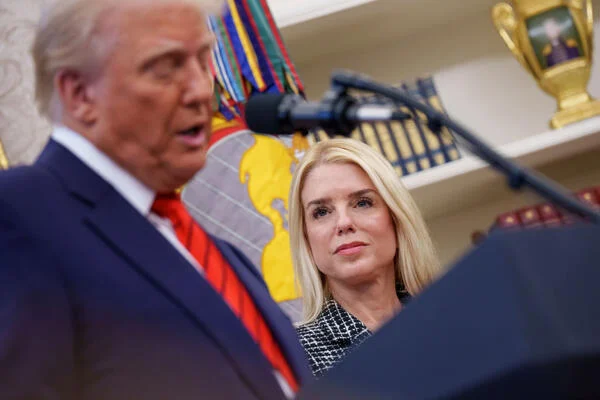
    Protests of a Turning Point USA event at the University of California, Berkeley, campus Monday sparked arrests and investigation announcements from top U.S. Department of Justice officials, who alleged “Antifa” involvement. The DOJ was already investigating the UC system over various allegations, and the Trump administration has demanded UCLA pay $1.2 billion and make other concessions.

    “Antifa is an existential threat to our nation,” Attorney General Pam Bondi posted on X Tuesday. “The violent riots at UC Berkeley last night are under full investigation by the FBI-led Joint Terrorism Task Force.”

    Harmeet K. Dhillon, the assistant attorney general supervising the DOJ’s Civil Rights Division, also said her division will investigate. “I see several issues of serious concern regarding campus and local security and Antifa’s ability to operate with impunity in CA,” she wrote on X.

    Dan Mogulof, a UC Berkeley spokesperson, told Inside Higher Ed Wednesday that there was only one reported incident of violence: A person with a ticket to the event was hit in the head by a glass bottle or jar thrown from a crowd of protesters. The victim was transported to Highland Hospital by ambulance but was “upright and conscious,” Mogulof said, adding that police are reviewing videos to see who might have thrown the object.

    In an incident that Mogulof said people mistakenly believed was connected to the protest, the City of Berkeley Police Department said its officers were monitoring the protest when they saw a fight between two men. Police determined one of them had stolen a chain from the other and the other was attempting to reclaim it, and the man who allegedly stole the chain was arrested on suspicion of robbery and battery resulting in injury.

    Mogulof also said campus police arrested two people for allegedly failing to comply with directions and, the night before the protest, arrested four students for alleged felony vandalism for trying to hang something on the historic Sather Gate. At the protest itself, Mogulof said, there were people who “self-identified as Antifa,” but he didn’t know whether they were part of an organized group.

    In a statement, the university said, “There is no place at UC Berkeley for attempts to use violence or intimidation to prevent lawful expression or chill free speech. The University is conducting a full investigation and intends to fully cooperate with and assist any federal investigations.”

    Source link

  • Texas A&M Faculty Finds Dismissed Prof’s Academic Freedom Violated

    Texas A&M Faculty Finds Dismissed Prof’s Academic Freedom Violated

    A Texas A&M University faculty council determined in late September that Melissa McCoul, an instructor fired for teaching about gender identity in a children’s literature class, had her academic freedom violated and that former president Mark Welsh flouted proper termination processes when he fired her, The Texas Tribune reported Monday.

    McCoul was dismissed in September after a video went viral, showing a student confronting her in class and claiming the professor’s gender identity lesson was illegal. McCoul is actively appealing her termination. The documented justification for her dismissal was that McCoul’s course content and material did not match the description in the course catalog, but the faculty council said this was false. 

    “The content of the course was the reason for the dismissal and not the stated reason: failure of academic responsibility,” the council wrote in its report. “Given the timeline of dismissal, the political pressure brought to bear, and statements by Regents that the course content was illegal, President Welsh’s assertion that the firing was for failure of academic responsibility appears pretextual.”

    In an Oct. 2 memo obtained by the Tribune, Vice Provost for Faculty Affairs Blanca Lupiani rejected the council’s conclusions and said the council acted outside its charge to review matters that were “largely unrelated to academic freedom.” The complaint about McCoul was never assigned to the council, Lupiani said in the memo. 

    University rules require the department head to write charges for dismissal, seek approval from the dean and give the faculty member a notice of intent to dismiss with five business days to respond, but Welsh requested McCoul’s dismissal on Sept. 9 “effective immediately,” the Tribune reported. 

    Source link

  • Portland State Ordered to Reinstate Some Laid-Off Faculty

    Portland State Ordered to Reinstate Some Laid-Off Faculty

    An independent arbitrator ordered Portland State University to reinstate 10 faculty members after determining the university violated its collective bargaining agreement with the Portland State University American Association of University Professors, Oregon Public Broadcasting reported.  

    The faculty senate in April voted no confidence in the administration’s “Bridge to the Future” plan to address an $18 million budget deficit, and the vote “underscores the fact that the university made its layoff decisions before it had sufficient evidence to support them. That is a violation of the collective bargaining agreement,” the arbitrator wrote in her decision

    PSU-AAUP filed a labor grievance after the university laid off 17 non-tenure-track professors at the end of the 2024–25 academic year as part of its plan to close the deficit before the end of the spring term. The remaining seven employees declined to grieve their layoffs. 

    “[The decision] forces the university to respect the concept of shared governance,” union president Bill Knight told OPB. “It’s a reminder to the university that they can’t simply make arbitrary administrative decisions without involving the faculty.”

    The union contract requires university officials to follow a specific, lengthy process to lay off faculty members for economic reasons—as opposed to eliminating courses or programs—which the arbitrator determined they did not do. Portland State is considering an appeal.

    The budget cuts were successful in closing the deficit, OPB reported. Recent financial documents show the university saved more than $12.3 million—about 88 full-time faculty positions—in its academic affairs division. But more personnel cuts are likely. In September, the Portland State University Board of Trustees approved a plan to address a $35 million shortfall over two years.

    Source link

  • 3 State Policy Ideas to Accelerate Success in Transfer

    3 State Policy Ideas to Accelerate Success in Transfer

    The Beyond Transfer Policy Advisory Board is thinking creatively about financial and reputational incentives to improve transfer and learning mobility. In this article, two of the PAB’s members—Sharon Morrissey and Ron Anderson—who are both seasoned, system-level leaders, share their reflections on what is needed next to accelerate success in transfer and learning mobility.

    In April 2025, the Beyond Transfer Policy Advisory Board and Inside Higher Ed collaborated on a webcast entitled “Short-Term Reward, Long-Term Harm: How Current Transfer Practices Hurt Learners and Institutions.” This event drew nearly 400 live attendees across 46 states, including a mix of administrative, faculty and student service leaders from institutions of all kinds.

    During the webcast, participants were polled on the following question: “To what extent do you agree that new financial incentives or budgeting models could help institutions to prioritize improving transfer student outcomes?” The audience’s response was positive, with 85 percent agreeing at least somewhat. However, we see some divisions within the data, with 32 percent saying they “strongly agree” and 53 percent saying they “somewhat agree.”

    While that data might feel a bit hard to make sense of, it rings true to us. Between us we bring over seven decades of experience as faculty, institutional administrators and system office leaders across three states, Minnesota, North Carolina and Virginia. That experience has taught us that improving credit transfer and expanding learning mobility are some of the most complex challenges facing higher education.

    Why is this? For one, improving recognition of learning and credit transfer requires higher education institutions to contend with a wide range of prior learning experiences, including traditional college coursework, high school dual-enrollment courses, career and technical education, work-based learning, military service, industry certification, and more. This implies the participation of numerous learning providers, such as institutions of higher education, high schools, employers and the military. And it involves multiple decision-makers, such as students who choose transfer pathways, faculty who determine what learning to recognize and how to apply that learning to program requirements, enrollment managers who wish to recruit transfer students, registrars who process transcripts, deans and provosts who oversee academic standards, and presidents who are held accountable by policymakers for serving transfer students. In short, there is complexity at every step of the process.

    That complexity points to the fact that—as the mixed results of that poll show—if we are going to make true progress on transfer and learning mobility, we must find solutions that appeal to the priorities of multiple decision-makers. As we think about incentives, for example, the incentives that would influence the behavior of a faculty member are not the same as the incentives that would influence the behavior of an administrator. Those responsible for revenue may be more swayed by a policy that would augment an institution’s state appropriation for increased enrollment and graduation of transfer students, while those responsible for curriculum may be more inclined to accept and apply transfer credit to a degree program based on their assessment of how the prior learning aligns to the learning outcomes of their own local courses.

    Another key theme of the webcast—and, let’s be honest, nearly every discussion held these days about transfer—was that we must zero in on the credential applicability of prior learning. Past reform efforts have advanced incredible work such as understanding the student experience, increasing transfer student belonging, strengthening advising and creating infrastructure for efforts such as credit for prior learning. All that work is critical and must continue. But we must also double down on how to advance credential applicability of courses and other forms of prior learning. We are not helping transfer students meet their educational goals if we fail to apply their prior learning to program requirements.

    Finally, a third theme elevated in the webcast was about shifting culture and mindsets. Achieving increased credential applicability will require a shift away from the current culture that interrogates every aspect of a course or other prior learning experience to find a course-to-course equivalency. Does anyone really believe that a student cannot be successful in a subsequent course, or in the workforce, if they happen to read a different textbook? As the Council of Regional Accrediting Commissions recently elevated, the practice of interrogating the minutiae of courses and other learning experiences should, instead, focus at a higher level, on questions such as:

    • Does the sum of a student’s learning provide an appropriate foundation to set them up for continued academic success?
    • Can a student be successful in subsequent learning experiences, with appropriate just-in-time support? How can the institution provide that support?
    • What data do we have that a student will not be successful in a subsequent course?

    Based on our experience working with institutions and systems, we share here three state policy ideas that attend to these themes by 1) appealing to the priorities of multiple decision-makers, in this case both faculty and administrators; 2) zeroing in on credential applicability of prior learning; and 3) nudging broader cultural and mindset shifts.

    The first idea is for policymakers to explicitly include credit transfer and applicability within the design of state funding models by pinning rewards to credential applicability of groups of many courses. Right now, some—but not all—states have funding formulas that focus attention on transfer students’ outcomes. Those that do often include metrics such as the rate of students who transfer and bachelor’s degree completion for those who enter as a transfer student.

    On their own, these goalposts are too broad and have not yet produced the level of change needed. How can states improve this approach? We think one approach might be for states to collaborate with institutions to build various program-aligned credit thresholds and then reward institutions for applying that credit to degree requirements, such as:

    • Awarding and applying 15 program-aligned credits: The equivalent of what many refer to as a meta-major, designed to introduce students to a broad program area (e.g., allied health).
    • Awarding and applying 30 program-aligned credits: The equivalent of roughly the first year of college, often represented by a general education transfer core that is customized to include program-aligned courses.
    • Awarding and applying 60 program-aligned credits: The equivalent of a typical associate degree—but again, this must be a program-aligned associate degree.

    The goal here is for receiving institutions to not pull these credit blocks apart and pick and choose which credits apply. If students have met a threshold and their preparation is program-aligned, they should be advanced toward program completion for all of those credits. The groups of courses students have completed add to more than the sum of their parts. Students are journeying through a learning experience, with a variety of learning outcomes, that when looked at holistically are offering strong preparation for not just subsequent courses, but life and work. The mindset shift here is: Students do not need to have met every single learning outcome addressed in the receiving institution courses to be successful. They need to be prepared enough to be successful in subsequent courses, learning experiences and the workforce.

    Second, we encourage state policymakers to couple this policy change with demonstration projects that engage faculty in pedagogy, curriculum design and research. As receiving institutions accept and apply these groups of courses, what just-in-time supports should receiving institutions offer to students to ensure their success after transfer? How are students performing on a number of measures: in subsequent courses, for graduation and in the workforce? Which curricular design assumptions no longer hold? Where might classroom approaches be strengthened and evolved to reflect shifting needs of learners?

    Finally, all the findings of this work should be elevated through state recognition awards (ideally coupled with some funding) that promote the visibility and reputation of colleges and universities that are embracing all high-quality learning and moving learners toward credential completion.

    Through the Beyond Transfer Policy Advisory Board, we’ll continue to push against the status quo to imagine new possibilities for institutions and learners. Connect with us on Instagram (@beyondtransfer) to stay informed on the board’s latest policy insights and ideas, and visit our website to access prior research reports related to transfer, institutional finance and financial aid, including:

    • Beyond Transfer Policy Advisory Board. (2023). Affordability Disconnects: Understanding Student Affordability in the Transfer and Credit Mobility Era. See paper with visuals and blog.
    • Beyond Transfer Policy Advisory Board. (2023). Unpacking Financial Disincentives: Why and How they Stymie Degree-Applicable Credit Mobility and Equitable Transfer Outcomes. See paper with visuals and blog.


    Source link

  • A Microcourse for Sophomore Student Success

    A Microcourse for Sophomore Student Success

    Starting college can be a daunting transition for many students, with some moving cities or states and integrating into a new world of learning. That’s why most colleges invest significant time and energy to ensure first-year students have a successful start, connecting them to peers, support resources and faculty invested in their personal and academic growth.

    But the support often lags during the transition to sophomore year. Retention is a key factor in timely degree completion; students who leave college after the first year are much less likely to ever finish their program.

    That’s why DePaul University in Chicago piloted a new intervention this summer to bridge the transition from first-year to sophomore status. Through short online modules, students improved their time management, money management and career skills, preparing them to tackle the new academic year.

    What’s the need: As a university, DePaul has focused on improving second-year retention, said Jaclyn Jensen, professor of management and associate dean for undergraduate programs in the Driehaus College of Business at DePaul.

    Jensen was approached by a DePaul alumna, Pam Schilling, co-founder of the ed-tech company Archer Career, who was looking to apply for the Illinois Innovation Voucher program. The program provides funding for small or medium-size businesses that partner with higher education institutions in the state.

    Archer Career offers online, self-paced microlearning courses to support students and early-career professionals in achieving their career goals. Topics range from job search skills, such as networking or how to develop a LinkedIn profile, to personal skills, including identifying goals and career exploration.

    “This opportunity to seek funding was also the catalyst between leveraging our focus on retention in business students and that connected really seamlessly with her platform,” Jensen explained.

    How it works: The Rising Sophomore Success Program is structured as a collection of 10-minute modules, which include video and interactive activities. To select relevant course topics for RSSP participants, DePaul leaders used historical data on why students left the university, as well as demographic information to identify common pain points in the student experience.

    For example, DePaul has a large share of commuter students, so building students’ time management and executive functioning skills was important to enable them to juggle their various responsibilities.

    Students applied to be admitted to the program and completed the course during the summer after their first year.

    “From a student standpoint, we thought, ‘OK, we have this time when you’re not overwhelmed by taking multiple classes and you might actually have some time to carve out in meaningful ways to invest in your own success,’” Jensen said.

    Students were also supported by a peer mentor, an upper-level undergraduate in the business school, who facilitated weekly check-ins, talked through challenges and encouraged them in their learning.

    In addition, each student was paired with a professional mentor, either someone already in their support network or a graduate who could provide career advice.

    For the pilot cohort, DePaul recruited 10 rising sophomores in the Driehaus College of Business, which included three incoming transfer students. The participants were celebrated with a kickoff event in the spring and a graduation ceremony during the fall after completing their Archer Career courses.

    What’s next: Following a successful pilot, DePaul and Archer Career were awarded a voucher from the state to integrate agentic artificial intelligence into the platform. It also provides funding for Archer Career and for DePaul personnel, including the peer mentor, an intern and a faculty researcher.

    The AI will offer personalized nudges and encouragement to students as they navigate the platform, similar to the way a coach might. Previously, a student intern hired to work on user design drafted messages for the peer mentor to send to students. Now, the university will automate the messages using AI.

    The nudges “will still rely on the behavioral data of students who are engaging in the platform, but it won’t be a member of the team manually sending those messages out at a particular time, but leveraging technology to help us do things like that,” Jensen explained.

    The goal is to scale the program to maximize impact and increase the number of students who can participate, Jensen said. DePaul plans to launch a more robust pilot of 50 student participants in summer 2026.

    If your student success program has a unique feature or twist, we’d like to know about it. Click here to submit.

    This article has been updated to clarify Jaclyn Jensen’s title.

    Source link

  • Where the Ed Dept. Stands After Longest Government Shutdown

    Where the Ed Dept. Stands After Longest Government Shutdown

    The House of Representatives passed a legislative package late Wednesday evening in a 222-209 vote, putting Congress one step closer to ending the federal government’s longest shutdown in history.

    Now, the legislation, which first passed the Senate late Sunday night, heads to the White House. There, President Donald Trump is expected to sign it into law.

    One policy expert told Inside Higher Ed that he expects to see little operational change for institutions as the government reopens. But he and others will be paying close attention to whether the Trump administration follows through on one of the bill’s key compromises: reversing the most recent round of federal layoffs.

    LEAD IN

    PITHY STATEMENT FROM SPEAKER JOHNSON OR WHITE HOUSE

    Part of the package would fund the Department of Veterans Affairs, military construction, the Department of Agriculture, the Supplemental Nutrition Assistance Program and Congress through the end of the fiscal year. But it only appropriates funding for the Department of Education and most other agencies until Jan. 30, using what is known as a continuing resolution. For the most part, the CR gives agencies access to the same levels of federal funding as the last fiscal year.

    Jon Fansmith, senior vice president for government relations at the American Council on Education, said because some of the Education Department’s staff continued working throughout October and into November, not much will change for colleges and universities.

    “Financial aid was being disbursed, student loans were being serviced, all those things. So there probably won’t be an immediate significant shift,” he said. “It will, of course, be important for [grant] programs who have not been able to contact program officers with concerns or questions to have staff now available to them again. But that’s probably the biggest thing.”

    Fansmith also noted that some education benefits for military service members, which in many cases have been disrupted and backlogged due to staffing shortages, will take some time to get back up to speed.

    The 4 Parts of the Stopgap Bill

    “There are veterans who have housing benefits and education benefits and all sorts of assistance that they’re using to fund their educations that have just not been coming through over the last six weeks,” he said. “And even when they turn the government back on … that backlog has only grown in the interim. So it’s not going to be an immediate resolution.”

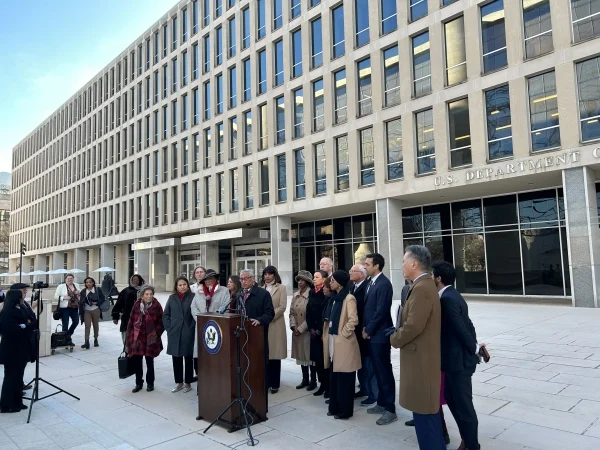
    Senate Democrats also negotiated with Republicans to reverse Trump’s latest round of layoffs in the stopgap bill. Theoretically, the legislation should reinstate more than 460 Department of Education employees within five days of it being enacted.

    It mandates that any employee who was subject to a reduction in force during the shutdown “shall have that notice rescinded and be returned to employment status.” (The majority of those employees were tasked with overseeing federal grant programs for both K–12 and higher education.)

    But Rachel Gittleman, president of the Education Department’s union, argues the language in the bill doesn’t do enough to protect public servants. She worries that saying staffers must be “returned to employment status” could allow Education Secretary Linda McMahon to place union members on administrative leave and not actually put them back to work.

    “The Trump administration has shown us repeatedly that they want to illegally dismantle our congressionally created federal agency,” she said. As such, “We have no confidence that the U.S. Education Department will follow the terms of the continuing resolution or allow the employees named in October firings to return—or even keep their jobs past January.”

    Fansmith is also skeptical department employees will return to their jobs.

    “[The administration hasn’t] shown much willingness to follow what the law requires. So I would absolutely assume we should expect to see efforts to further reduce staffing,” he said. “They’re not hiding the fact they’re trying to do it, and they don’t have a lot of compunction about the methods they use to do so.”

    A department spokesperson, however, told Inside Higher Ed that all employees—both those who were furloughed and those laid off during the shutdown—will return to work, as they remain employees of the department.

    The department also pointed to a ruling from the federal district court in Northern California that blocked the reduction in force in late October, saying that under that order, all employees who received a RIF notice during the shutdown remain employees of the federal government.

    Inside Higher Ed reached out to multiple Republican and Democratic lawmakers in both the House and the Senate to ask about the concerns Gittleman and Fansmith raised. None responded prior to publication.

    Source link

  • Former Professor on How New College of Florida Lost Its Way

    Former Professor on How New College of Florida Lost Its Way

    Amy Reid spent more than 30 years at New College of Florida, where she served as a professor of French and the founder and director of the gender studies program. Her relatively secure employment as a tenured professor emboldened her to become one of the most outspoken critics of the conservative effort to transform NCF into a “Hillsdale College of the South,” led by then-interim president Richard Corcoran, who was hired by a swath of conservative trustees installed by Gov. Ron DeSantis in 2023.

    That same year, Reid was elected to serve as faculty representative on the Board of Trustees; she voted against Corcoran’s appointment to be the college’s permanent president and pushed back against numerous policies, including an effort by the administration to use the faculty to help enforce gendered bathroom laws.

    Last month, Corcoran denied a recommendation from the New College provost that Reid be granted emerita status at the college, citing Reid’s advocacy for faculty and academic freedom, which he described as “hyperbolic alarmism and needless obstruction.” In response, the New College Alumni Association Board of Directors made Reid an honorary alum.

    Since taking unpaid leave in August 2024 and then retiring a year later, Reid has brought her talents and penchant for advocacy to PEN America, a nonprofit focused on fighting education censorship and protecting press freedom.

    Inside Higher Ed spoke with Reid over Zoom about her experience as the faculty representative on the New College Board of Trustees, the transformation of the public liberal arts college and expanding efforts by Florida conservatives to censor faculty speech.

    The interview has been edited for length and clarity.

    Q: Before you became faculty representative on the Board of Trustees at New College, the previous representative quit in protest. What motivated you to pursue the role and what were you hoping to do with it?

    A: Things had been contentious on campus. Frankly, that’s an understatement. When the new board members were appointed that January [2023], they described their arrival on campus as a “siege”—using military language. So I began organizing with other faculty members and providing support to students so that they could respond to the rapid changes on campus, changes that included the immediate firing of our president [Patricia Okker], and then, over the coming weeks, a number of key leaders; the censoring of student speech and chalking on campus; the denial of tenure to a number of very qualified faculty.

    I started holding weekly teas for students, providing them a place to ask questions and to be heard and also to have cookies. So working with my colleagues and providing support for students were the two things that I really wanted to do.

    As a senior member of the faculty and as the leader of the gender studies program, I felt like I had a particular responsibility to speak up on campus. I knew that colleagues of mine who were not tenured couldn’t necessarily do that, so I tried to speak up for my community. And after Matt Lipinski resigned from the Board of Trustees and from his faculty position [after the board denied tenure to five professors], he actually reached out and asked me to stand for election as chair of the faculty, because I’d been both working in collaboration with others through the union and also because of my outspokenness as director of the gender studies program. So after talking with other colleagues, I agreed to stand for election in collaboration with two other colleagues.

    Q: What was the initial reception from the board when you joined?

    A: What I really remember, actually, was the real support that I had from colleagues and students and alums. So yes, there was a certain amount of tension with certain members of the Board of Trustees. There were people on the board who did reach out in friendly and professional ways—greeting me at meetings, things like that—but really I had strong support from faculty, alums and students, and that’s what mattered.

    Q: Do you think you were successful in the faculty representative role?

    A: That’s really a challenging question, and it depends on what metrics you want to use. I think I did a good job of raising serious questions and concerns in the trustee meetings, even if my votes were not often on the winning side. I always brought my integrity with me, and as an educator, that was really important to me. I think I was able to help rally faculty around various policy proposals that we put forth, because my job wasn’t just in the Board of Trustees, it was also in the management of the faculty, which meant multiple meetings every week about budgets and other administrative issues.

    There was a lot of work there behind the scenes to support faculty, to support the curriculum and also to advocate for students in a number of ways. I know that students and faculty and alums felt that they could reach out to me about their concerns, that they knew I would listen and respond. When people spoke at Board of Trustees meetings, I paid attention and took notes on all of the people who came to speak. In that way, I think I was effective, but frankly, the votes on the board were stacked.

    Q: When you resigned, you said that the “New College where you once taught no longer existed.” Was there a specific moment that tanked your faith in New College leadership?

    A: It’s really not about a loss of faith in the new leadership. Richard Corcoran came in with a set of ideas about how he wanted to change the campus, to change what one trustee called the “hormonal and political balance on campus.” And Corcoran followed through on that. I can point first to the firing of valuable and dedicated campus leaders, including President Patricia Okker, the dean of diversity, the campus research librarian. [I can also point to] the denial of tenure to six very qualified and effective faculty, the chasing away of over 30 percent of the faculty and about 100 students—and that’s a real record for the first eight months of this administration.

    Then you have the painting over of student art on campus, the replacement of grass with Astroturf and the plowing down of hundreds of trees along the bay front. You have the wasting of millions of dollars of state funds on bloated administrative salaries and portable dorms that were uninhabitable within three months due to mold. You have the abolishing of the gender studies program in the summer of 2023, the erasure of our budget, our eviction from our campus office in December of 2023. The imposition of a rigid and limited core curriculum in spring of 2024. The withholding of diplomas from a cohort of students in May 2024, the wholesale destruction of the student-led gender and diversity center in August 2024. That was a student-led space with a collection of books that had been curated by students for over 30 years, all thrown in the dumpster.

    So not one moment, but a lot. But what I still have faith in, even today, is the determination of students and alums to pursue an education that embodies academic freedom, which I understand is the right of students to pursue an education free from government censorship. And also, I have great faith in those faculty who are remaining, who support the New College academic mission and who are doing their best day in and day out to support our students.

    Q: Were you surprised when Corcoran denied the dean’s recommendation to grant you emerita status?

    A: Not really. I’d say it’s par for the course, but I was surprised that he was so up front about his reasons. In his statement, he noted that despite my record of achievement as a teacher and a researcher, it was my advocacy for the college—my opposition to him—that was the problem. So now he’s on the record explicitly as punishing speech, and that is stunning.

    What happened to me is just one small thing, but it reflects a pattern of censorship on the campus that needs to be called out. But more importantly at this moment, I really want to thank my colleagues who nominated me for emeritus status and the New College alums who adopted me as one of their own. That’s meaningful, and I am very grateful.

    Q: As a reporter, I spend a lot of time reading and writing bad news, but I’m seeing the same types of attacks on faculty speech and academic freedom that happened at New College occur at other institutions, in Florida and elsewhere. Would you say these current attacks on faculty speech are unprecedented?

    A: A lot of people have talked about this as unprecedented, but what I see is the culmination of a pattern of censorship we’ve seen playing out at state levels across the country. In Florida, in 2022, they passed House Bill 233, which allows or encourages students to surreptitiously record faculty if they intend to file a complaint against them.

    Since then, really, the state has been tightening a gag around faculty speech in myriad ways. Just in the past couple of months, we’ve seen a number of faculty sanctioned—even one emeritus professor at [University of Florida] lost his status based on complaints about his social media posts. So what’s happening now could be cast as unprecedented, but yet, it’s part of this pattern we see playing out now, not just in Florida, but across the country, where some 50 faculty members have been sanctioned or fired because of their speech or social media posts since the start of September.

    Since 2021, PEN America has been actively tracking efforts to censor speech in college and university classrooms across the country, and we’ve seen a real rise in the number of bills introduced to censor speech … and in the numbers that are being passed; 2025 was really a banner year for censorship in higher education in this country. There were a record number of gag orders passed across the country—10 of them, 10 bills that explicitly limit what can be said in college and university classrooms.

    And then there are other restrictions designed to chill faculty speech—restrictions on tenure or curricular control bills, and let’s also remember the bills that were introduced or passed to limit student protests on campus. All of those things are designed to make people afraid to speak up and to question things on campus. That’s not healthy for our education system, and it’s not healthy for our democracy. Currently, about 40 percent of the U.S. population lives in a state that has at least one state-level law restricting classroom speech at the college and university level. Is that something we’re OK with as a country? Do we really think that our First Amendment rights are that fungible?

    Source link

  • Ken Bain Changed College Teaching Forever

    Ken Bain Changed College Teaching Forever

    Is it possible for someone you’ve never met to be a mentor?

    I don’t know how else to describe Ken Bain, author of What the Best College Teachers Do, a book that transformed not just my teaching, but my entire life.

    Ken Bain passed away on Oct. 10. I first learned this news on LinkedIn from Jim Lang, who did know and was directly mentored by Ken Bain and, like the several dozen folks who offered comments on his passing—and also me—whose life and work were profoundly affected by Ken Bain’s work.

    (I also recommend checking out this episode of Bonni Stachowiak’s Teaching in Higher Ed podcast, which remembers Ken Bain and provides links to his multiple appearances on the show.)

    I read an advance copy of What The Best College Teachers Do sometime in early 2004 in a period where I was starting to question the folklore of teaching I had absorbed as a student and graduate assistant, and it immediately changed how I thought about my own work, kicking off a process of consideration and experimentation around teaching writing that continues to this day.

    What the Best College Teachers Do reflects more than a decade of study and is entirely based in observations of teaching, teaching materials, student responses and reflections, interviews and other sources, filtered through various lenses (history, literary analysis, sociology, ethnography, investigative journalism) to draw both big conclusions about not just what teachers do, but how they think, how they relate to students, how they view their work and how they evolve their approaches.

    The method is relentlessly qualitative rather than quantitative, and it can be straightforwardly adapted to one’s own work.

    At least that’s how I used the book. Looking through some of the text for the first time in years, I can see significant strands of What the Best College Teachers Do DNA in my writing about the writer’s practice. The lens of “doing” as the central feature of any work has been part of my personal framework for so long that I almost lost its origin, but there it is.

    One of my very first posts at Inside Higher Ed, back before I even had my own section and was merely guesting at Oronte Churm’s joint, was on What the Best College Teachers Do.

    The book is more than 20 years old, but its framing questions are evergreen and even more relevant in this AI age. The book asks and answers the following questions:

    1. What do the best teachers know and understand?
    2. How do they prepare to teach?
    3. What do they expect of their students?
    4. What do they do when they teach?
    5. How do they treat students?
    6. How do they check their progress and evaluate their efforts?

    The book helpfully encapsulates the study’s findings under these categories, and as bullet points of good teaching practice they are spot-on. But I am also here to testify that they are not a substitute for the full experience of reading What the Best College Teachers Do, because the act of reading the specific illustrations and examples that gave rise to these findings allows for the individual to reflect on their own practices relative to others.

    The first thing I did after reading and absorbing What the Best College Teachers Do was change my attendance policy to no longer punish students based on a maximum number of absences. I’d engaged in this practice because it had been handed down as conventional wisdom: If you don’t police student attendance, they won’t show up. Bain’s best teachers challenged this conventional wisdom.

    The positive effects were immediate. I stepped up my game in terms of making sure class was viewed by students as productive and necessary. My mood improved, as I no longer stewed over students who were pushing their luck in terms of absences, daring me to dock their overall semester grade.

    Attendance went up! I asked students about this, and they said that when a class says you “get four absences” they were treating that as a kind of permission (or even encouragement) to go ahead and miss four classes. Student agency and self-responsibility increased. If they missed a class, they knew what they had to do, and it didn’t involve me.

    The experiments continued, leading ultimately to the writer’s practice and my embrace of alternative assessment, developments that made me a much more effective instructor and now, improbably, someone invited to colleges and universities to share his expertise on these subjects.

    It would not have happened without the work and mentorship of Ken Bain, mentorship I experienced entirely through reading his book.

    I worry that mentorship is going to be further eroded by AI, particularly if entry-level jobs with their apprenticeship tasks are now completed through automation, rather than by working with other, more experienced humans. The enthusiasm for letting large language models compress texts into summaries rather than reading the full work of another unique intelligence is also a threat.

    My conviction that our way forward through the challenge of AI is rooted in deeply examining the experiences of learning and fostering those experiences for students only grows stronger by the day. What the Best College Teachers Do is experiences all the way down, a book of observations conveyed in such a way that allows us to make use of them, literally, in what we do.

    A great man. A great mentor. Ken Bain’s work will live on through the many pedagogues he’s inspired.

    Source link