Tag: Events

  • Trinity Christian College Announces Closure

    Trinity Christian College Announces Closure

    Trinity Christian College outside Chicago will close at the end of the current 2025–26 academic year due to insurmountable financial pressures.

    The college announced the move Tuesday, citing a litany of challenges, which include “post-Covid financial losses; persistent operating deficits; a decline in college enrollment and increased competition for students; and a shift in donor giving and financial circumstances,” according to a statement from officials posted on a frequently asked questions webpage.

    Acting President Jeanine Mozie said in a video message that the Board of Trustees considered multiple options to address “significant and rapidly evolving financial challenges,” but ultimately, there was “no sustainable path forward for our beloved institution.”

    The FAQ page noted that the Board of Trustees considered “significant programmatic changes, strategic partnerships, and the like” but “determined that these and other alternatives were insufficient to overcome the college’s deficit” and sustain Trinity’s mission over the long term.

    The closure announcement follows a recent leadership change at the college. Former president Aaron Kuecker resigned in August after less than two years in the top job but nearly 14 at Trinity altogether. Multiple staff members were also reportedly laid off in August.

    A review of the college’s finances shows that Trinity operated at a loss in eight of the last 10 fiscal years and relied significantly on a small pool of donors. An estimated 76 percent of all financial contributions came from just three donors in 2024, according to Trinity’s latest audit.

    Trinity also had less and less cash on hand. According to the audit, “cash and cash equivalents” fell from nearly $7.2 million in fiscal year 2023 to just under $5 million—a drop of nearly 31 percent. Trinity also had a meager endowment, valued at $11 million at the end of the 2024 fiscal year. (A recent study found the median endowment across the sector is $243 million.)

    Bondholders warned the college in June that Trinity was at risk of violating its financial covenants because of its limited liquidity, according to publicly available documents.

    Both faculty numbers and student head count had dropped in recent years, bond documents show. Both of those numbers have been in decline in recent years with total faculty falling from 145 to 126 and enrollment dropping from a total head count of 1,068 in fall 2019 to 872 last year, despite a recent tuition reset to attract students. Trinity aimed to hit 1,081 students by the 2027–28 academic year, financial documents show.

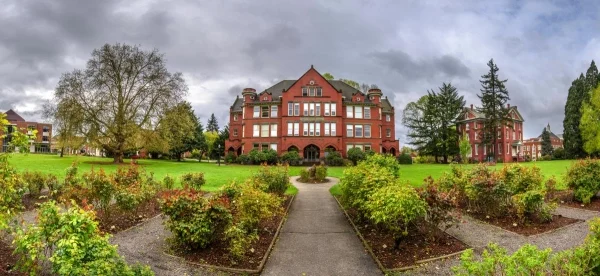
    Trinity was founded by Chicago businessmen in 1959 and is located on a 56-acre campus in Palos Heights, Ill., outside Chicago, which was recently estimated to be worth $25 million.

    College officials announced teach-out and transfer agreements with Calvin University in Michigan as well as Olivet Nazarene University and Saint Xavier University, both of which are in Illinois.

    Trinity follows several other small, cash-strapped Christian colleges that have announced closures this year, some of which have shut down abruptly, such as Limestone University and St. Andrews University. Siena Heights University, a Roman Catholic institution, also announced plans to close. On the secular side, Northland College in Wisconsin closed earlier this year, and Pennsylvania State University announced plans to shut down seven rural campuses by 2027 after years of shrinking enrollment.

    Source link

  • The Push for Viewpoint Diversity Misses the Point (opinion)

    The Push for Viewpoint Diversity Misses the Point (opinion)

    Much of the controversy around the Trump administration’s “Compact for Academic Excellence in Higher Education” has focused on its push for viewpoint diversity and the claim that open inquiry does not exist in our classrooms. That push builds on a long-standing conservative critique that today makes hay out of the fact that the vast majority of faculty in U.S. colleges and universities lean left.

    Recent data supports that claim. In elite institutions, like Duke and Harvard Universities, surveys suggest the number of faculty identifying as liberal exceeds 60 percent. The percentages differ not only by type of institution but by discipline, with the humanities and social sciences leaning more liberal than STEM. Some even claim that political bias corrupts academic disciplines.

    Liberal faculty and commentators on higher education sometimes take the bait and respond defensively to what often is a politically motivated attack. In an op-ed in The Guardian, Lauren Lassabe Shepherd argued that the purpose of the conservative critique has been “to delegitimize the academy … [and] return colleges to a carefully constructed environment not to educate all, but to reproduce hierarchy.”

    Whether or not she is right, you don’t have to look hard to see that institutions of higher education are feeling growing pressure to right their ships—to create campuses and classrooms where open inquiry flourishes, where students feel free to say what they think and to challenge ideas they disagree with. Colleges have responded by scrambling to incorporate more ideological diversity into their course offerings, to implement new programming and to recruit guest speakers who challenge progressive thinking.

    All this misses the point and distracts us from the work that needs to be done to further improve the quality of the education students receive in American colleges and universities. Put simply, instead of fixating on who is in the classroom and whether they are liberal or conservative, we should be focused on how we are in the room.

    Higher education’s greatest challenge to achieving open inquiry is not one of ideology or viewpoint diversity, but of disposition. Harvard University’s 2024 report from a working group on open inquiry gestured in this direction but did not flesh it out.

    If we are to truly commit to open inquiry, we need to step back, pause and reflect not just on what we think, but on how we acquire knowledge, how we think, whether we are interested in learning more or if we are content with what we already know.

    You can decorate campuses with all the colors of the political rainbow but not make them better places to learn.

    The issue is how we show up with others. Data suggests that students in our classrooms don’t feel comfortable pushing back on each other or on their professors when they disagree. They engage in what psychologists Forest Romm and Kevin Waldman call “performative virtue-signaling.”

    In conversations with students at Amherst College, we have heard that they are not just constraining their expression in academic settings but in social settings, too. It seems we are afraid of each other.

    It is no wonder. The academic and public squares have not proven themselves to be especially kind or generous as of late. We need look no further than the vitriolic reactions to Charlie Kirk’s murder, and the as-vitriolic reactions to the reactions to his murder. When we do, we can see that the rush to righteousness operates across the ideological spectrum.

    The work of college education is to dislodge the instinct to judge and replace it with a commitment to rigorous listening. The work of college teachers is to model an approach to the world that puts empathy before criticism.

    What if instead of just talking about the right to speech, we emphasized the right to listen? But we don’t just mean any kind of listening; we mean listening in a certain way. Deep listening. The kind of listening that takes in ideas in slow, big gulps and lets them settle deeply, and sometimes uncomfortably.

    It is listening that seeks to catch ideas in flight and carry them further. This is a disciplined kind of listening that resists defensiveness and instead burrows into curiosity.

    To foster it, we have to cultivate in ourselves and in our students a disposition to wonder. Why does someone think that way? What experiences, places, relationships, institutions and social forces have shaped their thinking? How did they get to that argument? How did they get to that feeling? How is it that they could arrive at a different perspective than I did?

    This is the heart of open inquiry, and it is much harder to achieve than it is to bring more conservatives to campus. Without the disposition to wonder, doing so will produce enclaves, not engagement, on even the most ideologically diverse campus.

    This kind of open inquiry would demand that we remove the stance of moral certainty and righteousness from our ways and practices of thinking. That is the real work that needs to animate our colleges and universities.

    It is hard, slow work. There is no magic bullet. Teachers and their students, liberals and conservatives, have to commit to it.

    While open inquiry is a social disposition, it is also about how we orient our thinking when we are alone. We need to challenge our students to wonder not just about others but about themselves.

    What would happen if we all got into the habit of asking ourselves: When was the last time we changed our mind about something? When was the last time we left a conversation or finished a text and actually grappled with our orientation to a subject?

    We yearn for our students to practice open inquiry not just when they are in our classrooms, but when they are in the library or in their dorm room with a book to read, an equation to solve, a painting to finish.

    The promise of this type of inquiry is exhilarating, freeing. And it opens up great possibilities of seeing the world differently or in more complicated ways.

    At the end of the day, the literary scholar Peter Brooks gets it right when he says, “To honor, even only nominally, the call for ‘viewpoint diversity’ is to succumb to a logic that is at its heart hostile to the academic enterprise.” At the heart of that enterprise is a belief that viewpoint diversity is not the same thing as open inquiry. That belief requires changing the culture of learning on our campuses.

    Maybe the shift does not seem responsive to the political clamor of the moment. Maybe it sounds like it demands too much and will be hard to assess.

    But whatever the case, it feels revolutionary to us.

    Austin Sarat is the William Nelson Cromwell Professor of Jurisprudence and Political Science at Amherst College.

    Leah Schmalzbauer is the Clarence Francis 1910 Professor in the Social Sciences and associate provost and associate dean of the faculty at Amherst College.

    Source link

  • Innovation Project Experience Designer at Grand Valley

    Innovation Project Experience Designer at Grand Valley

    Are you leading a search for a role at the intersection of learning, technology and organizational change? Today, we hear from Eric Kunnen, senior director of IT innovation and research at Grand Valley State University, who is recruiting for an innovation project experience designer.

    Q: What is the university’s mandate behind this role? How does it help align with and advance the university’s strategic priorities?

    A: Put simply, the IT innovation and research team’s futurEDlab is on a mission to unite faculty, staff and students to spark innovation and help shape the future of education. At Grand Valley State University, our Reach Higher Strategic Plan highlights the value of innovation as well as the university’s commitment to empowering learners and enriching society. Specifically, this role contributes to enhancing education through incubating ideas and facilitating project management in our work to design, develop and deliver innovative immersive experiences leveraging emerging technologies.

    Q: Where does the role sit within the university structure? How will the person in this role engage with other units and leaders across campus?

    A: The innovation project experience designer at GVSU will serve on the information technology division’s innovation and research team, engaging across the university through partnerships and interdisciplinary partnerships.

    Q: What would success look like in one year? Three years? Beyond?

    A: In year one, success includes catalyzing our project intake and management operational procedures within the futurEDlab, building momentum, capacity, efficiency and effectiveness as we deliver high-impact innovation experiences at Grand Valley State University. In three years, this role will be pivotal as we increase the value of digital transformation in teaching and learning as part of the innovation pipeline with the Blue Dot Lab ecosystem.

    Q: What kinds of future roles would someone who took this position be prepared for?

    A: Future roles for this position include coordination, management, leadership and innovation pathways in higher education, such as innovation strategy, digital transformation and senior level innovation program and project management.

    Please get in touch if you are conducting a job search at the intersection of learning, technology and organizational change. Featuring your gig on Featured Gigs is free.

    Source link

  • Students, Unions to Protest Trump’s Higher Ed Agenda Friday

    Students, Unions to Protest Trump’s Higher Ed Agenda Friday

    Members of the American Association of University Professors, the affiliated American Federation of Teachers and student groups are planning protests in more than 50 cities Friday against “the Trump administration’s broad assault” on higher ed, the AAUP announced in a news release.

    The AAUP said demonstrators will urge institutions to continue rejecting Trump’s “Compact for Academic Excellence in Higher Education” and instead “commit to the freedom to teach, learn, research, and speak out without government coercion or censorship.”

    “From attacks on academic freedom in the classroom to the defunding of life-saving scientific research to surveilling and arresting peaceful student protesters, Trump’s higher education policies have been catastrophic for our communities and our democracy,” AAUP president Todd Wolfson said in the release. “We’re excited to help build a coalition of students and workers united in fighting back for a higher education system that is accessible and affordable for all and serves the common good.”

    The protests are part of a progressive movement called Students Rise Up, or Project Rise Up. The Action Network website says there will be “walkouts and protests at hundreds of schools” Friday—the start of a buildup “to a mass student strike on May 1st, 2026, when we’ll join workers in the streets to disrupt business as usual.”

    “We’re demanding free college, a fair wage for workers, and schools where everyone is safe to learn and protest—regardless of their gender or race or immigration status,” the website says.

    Other groups listed as organizing or supporting the protests include the Campus Climate Network, College Democrats of America, Florida Youth Action Fund, Frontline for Freedom, Higher Ed Labor United, Ohio Student Association, Sunrise Movement, Dissenters, Feminist Generation, Gen-Z for Change, Generation Vote (GenVote), March for Our Lives, Oil and Gas Action Network, Socialist Alternative, Together Across America, Voters of Tomorrow, Blue Future, Get Free, and NOW Young Feminists.

    Asked for a comment from the Education Department, Madi Biedermann, deputy assistant secretary for communications, repeated statements the department previously made, saying, “The Trump Administration is achieving reforms on higher education campuses that conservatives have dreamed about for 50 years.”

    “Institutions are once again committed to enforcing federal civil rights laws consistently, they are rooting out DEI and unconstitutional race preferences, and they are acknowledging sex as a biological reality in sports and intimate spaces,” she wrote.

    Source link

  • Anatomy of the Research Statement (opinion)

    Anatomy of the Research Statement (opinion)

    The research statement that you include in your promotion and tenure dossier is one of the most important documents of your scholarly career—and one you’ll have little experience writing or even reading, unless you have a generous network of senior colleagues. As an academic editor, I support a half dozen or so academics each year as they revise (and re-revise, and throw out, and retrieve from the bin, and re-revise again) and submit their research statements and P&T dossiers. My experience is with—and so these recommendations are directed at—tenure-track researchers at American R-1s and R-2s and equivalent Canadian and Australian institutions.

    In my experience, most academics are good at describing what their research is and how and why they do it, but few feel confident in crafting a research statement that attests to the impact of their accomplishments. And “impact” is a dreaded word across the disciplines—one that implies reducing years of labor to mere numbers that fail to account for the depth, quality or importance of your work.

    When I think about “impact,” I think of course of the conventional metrics, but I think as well of your work’s influence among your peers in academia, and also of its resonance in nonacademic communities, be they communities of clinicians, patients, people with lived experiences of illness or oppression, people from a specific equity-deserving group, or literal neighborhoods that can be outlined on a map. When I edit research statements, I support faculty to shift their language from “I study X” to “My study of X has achieved Y” or “My work on X has accomplished Z.” This shift depends on providing evidence to show how your work has changed other people’s lives, work or thinking.

    For researchers who seek to make substantial contributions outside of academia—to cure a major disease, to change national policy or legislation—such a focus on impact, influence and resonance can be frustratingly short-termist. Yet if it is your goal to improve the world beyond the boundaries of your classroom and campus, then it seems worthwhile to find ways to show whether and how you are making progress toward that goal.

    If you’re preparing to go up for tenure or promotion, here’s a basic framework for a research statement, which you can adopt and adapt as you prepare your own impact-, influence- or resonance-focused research statement:

    Paragraph 1—Introduction

    Start with a high-level description of your overarching program of research. What big question unites the disparate parts of your work? What problem are you working toward solving? If your individual publications, presentations and grants were puzzle pieces, what big picture would they form?

    Paragraph 2—Background (Optional)

    Briefly sketch the background that informed your current preoccupations. Draw, if relevant, on your personal or professional background before your graduate studies. This paragraph should be short and should emphasize how your pre-academic life laid the foundation that has prepared you, uniquely, to address the key concerns that now occupy your intellectual life. For folks in some disciplines or institutions, this paragraph will be irrelevant and shouldn’t be included: trust your gut, or, if in doubt, ask a trusted senior colleague.

    Middle Paragraphs—Research Themes, Topics or Areas

    Cluster thematically—usually into two, three or four themes—the topics or areas into which your disparate projects and publications can be categorized. Within each theme, identify what you’re interested in and, if your methods are innovative, how you work to advance scholarly understandings of your subject. Depending on the expected length of your research statement, you might write three or four paragraphs for each theme. Each paragraph should identify external funding that you secured to advance your work and point to any outputs—publications, conference presentations, journal special issues, monographs, edited books, keynotes, invited talks, events, policy papers, white papers, end-user training guides, patents, op-eds and so on—that you produced.

    If the output is more than a few years old, you’ll also want to identify what impact (yes) that output had on other people. Doing so might involve pointing at your numbers of citations, but you might also:

    • Describe the diversity of your citations (e.g., you studied frogs but your research is cited in studies of salmon, belugas and bears, suggesting the broad importance of your work across related subfields);
    • Search the Open Syllabus database to identify the number of institutions that include your important publication in their teaching, or WorldCat, to identify the number of countries in which your book is held;
    • Link your ORCID account to Sage’s Policy Profiles to discover the government ministries and international bodies that have been citing your work;
    • Summarize media mentions of your work or big, important stories in news media, e.g. magazine covers or features in national newspapers (e.g. “In August 2025, this work was featured in The New York Times (URL)”);
    • Name awards you’ve won for your outputs or those won by trainees you supervised on the project, including a description of why the award-giving organization selected your or your trainee’s work;
    • Identify lists of top papers in which your article appears (e.g., most cited or most viewed in that journal in the year it was published); or,
    • Explain the scholarly responses to your work, e.g., conference panels discussing one of your papers or quotations from reviews of your book in important journals.

    Closing Paragraphs—Summary

    If you’re in a traditional research institution—one that would rarely be described by other academics as progressive or politically radical—then it may be advantageous for you to conclude your research statement with three summary paragraphs.

    The first would summarize your total career publications and your publications since appointment, highlighting any that received awards or nominations or that are notable for the number of citations or the critical response they have elicited. This paragraph should also describe, if your numbers are impressive, your total number of career conference presentations and invited talks or keynotes as well as the number since either your appointment or your last promotion, and the total number of publications and conference presentations you’ve co-authored with your students or trainees or partners from community or patient groups.

    A second closing paragraph can summarize your total career research funding and funding received since appointment, highlighting the money you have secured as principal investigator, the money that comes from external (regional, national and international) funders, and, if relevant, the new donor funding you’ve brought in.

    A final closing paragraph can summarize your public scholarship, including numbers of media mentions, hours of interviews provided to journalists, podcast episodes featured on or produced, public lectures delivered, community-led projects facilitated, or numbers of op-eds published (and, if available, the web analytics associated with these op-eds; was your piece in The Conversation one of the top 10 most cited in that year from your institution?).

    Final Paragraph—Plans and Commitments

    Look forward with excitement. Outline the upcoming projects, described in your middle paragraphs, to which you are already committed, including funding applications that are still under review. Paint for your reader a picture of the next three to five years of your research and then the rest of your career as you progress toward achieving the overarching goal that you identified in your opening paragraph.

    While some departments and schools are advising their pretenure faculty that references to metrics aren’t necessary in research statements, I—perhaps cynically—worry that the senior administrators who review tenure dossiers after your department head will still expect to see your h-index, total number of publications, number of high-impact-factor journals published in and those almighty external dollars awarded.

    Unless you are confident that your senior administrators have abandoned conventional impact metrics, I’d encourage you to provide these numbers and your disciplinary context. I’ve seen faculty members identify, for example, the average word count of a journal article in their niche, to show that their number of publications is not low but rather is appropriate given the length of a single article. I’ve seen faculty members use data from journals like Scientometrics to show that their single-digit h-index compares to the average h-index for associate professors in their field, even though they are not yet tenured. Such context will help your reader to understand that your h-index of eight is, in fact, a high number, and should be understood as such.

    You’ll additionally receive any number of recommendations from colleagues and mentors; for those of you who don’t have trusted colleagues or mentors at your institution, I’ve collected the advice of recently tenured and promoted associate professors and full professors from a range of disciplines and institutional contexts in this free 30-page PDF.

    I imagine that most of the peers and mentors whom you consult will remind you to align with any guidelines that your institution provides. Definitely, you should do this—and you should return to those guidelines and evaluation criteria, if they exist, as you iteratively revise your draft statement based on the feedback you receive from peers. You’ll also need to know what pieces of your P&T dossier will be read by what audience—external readers, a departmental or faculty committee, senior administrators. Anyone can tell you this; every piece of writing will need to consider both audience and context.

    But my biggest takeaway is something no client of mine has ever been told by a peer, colleague or mentor: Don’t just describe what you’ve done. Instead, point to the evidence that shows that you’ve done your work well.

    Source link

  • Colleges Pay Students to Participate in Events on Campus

    Colleges Pay Students to Participate in Events on Campus

    Since 2020, faculty, staff and administrators have noticed a trend among incoming college students: They don’t know how to make friends. Data affirms this—fewer students said they studied with classmates, volunteered or participated in clubs or organizations in 2023 than in 2019, according to a 2025 report from the Student Experience in the Research University Consortium.

    At the same time, student engagement and belonging correlate with academic success. Past surveys show that students who engage in extracurricular activities are more likely to feel that they belong on campus and that it’s easier to make friends. Extracurriculars can advance students’ career skills such as leadership and communication, as well as develop their professional interests.

    The challenge for institutions, therefore, is how to reverse the trend toward disengagement and emphasize on-campus connections.

    Some colleges are moving beyond offering free T-shirts and raffle prizes to encourage event attendance and moving straight to giving out cash, recognizing that finances are often the biggest barrier to student participation.

    State of play: An August 2025 Student Voice survey by Inside Higher Ed and Generation Lab found that 36 percent of students have not participated in an extracurricular or co-curricular activity on campus. About one-third of students said they were involved in a few activities, and 17 percent said they were very involved in one activity.

    Adult learners (65 percent) and two-year students were least likely to say they’ve participated in campus activities (64 percent), as were students who had dropped out for a semester (63 percent), students working at least 30 hours per week (55 percent), first-generation students (49 percent) and Hispanic students (48 percent).

    The biggest hang-up for students: finances. As the costs of attending college continue to rise, a greater share of students work while enrolled. Seventy percent of Student Voice respondents said they hold a job in a typical semester, and 30 percent of those students work full-time.

    When asked their top source of stress while in college, students pointed to balancing academics with other financial and personal obligations (50 percent) or paying for college (38 percent). An additional 22 percent indicated that paying for personal expenses was a top stressor.

    Rather than ask students to choose between work or campus activities, administrators are creating avenues to pay students for certain university-led activities, such as attending workshops, engaging with support resources or investing in their health.

    Points for participation: Lynn University in Boca Raton, Fla., is launching a points-based incentive program next spring, called Blueprint Rewards, that translates on-campus participation into scholarship dollars and discounts at the campus store. The initiative builds on previous investments in co-curriculars including a student-facing app, Blueprint, and digital badging, which were implemented in 2018 and 2021, respectively.

    Under Blueprint Rewards, some campus events are designated as points-bearing in Blueprint, denoted by the abbreviation SET, for Student Engagement Transcript.

    Each SET event is worth between one and 10 points. After reaching 20 points connected to a given theme, students unlock a badge. The six badges are loosely modeled on the National Association for Colleges and Employers’ career competencies: leadership, accountability, problem-solving, growth mindset, collaboration and adaptability.

    For example, activities that count toward the growth mindset badge include participating in a mindfulness event (worth one point), attending a fitness center training (five points) or becoming a wellness educator on campus (10 points).

    After completing one badge, students also earn $500 in scholarship dollars, which is applied to the following year’s tuition, making the program a retention strategy as well.

    Students unlock scholarships and other rewards as they complete various badges in the Blueprint Rewards program.

    Students can redeem up to $1,000 in badge dollars toward tuition each academic year. Administrators elected to cap badge scholarships at two per academic year to ensure students are juggling their academic and other responsibilities with campus participation, according to a FAQ page.

    If they finish all six badges, students can opt to enroll in a no-tuition graduate-level course after their senior year, a value of $2,250.

    If they complete three badges by the end of their junior year, students can gain an additional $1,500 toward participation in a faculty-led experience in the U.S. or abroad. The goal is to encourage study-away experiences, and the badges (adaptability, problem-solving and accountability) help make sure the student is adequately prepared for travel.

    The program was announced Oct. 29, and full-time undergraduate students can start earning rewards in January. Since launching the digital badges in 2021, the university has seen the number of student engagements in co-curricular activities grow 65 percent, President Kevin Ross said.

    “Blueprint Rewards builds on that momentum—helping students lower tuition costs while earning résumé-boosting credentials and scholarships that recognize their engagement and career readiness,” Ross said.

    Another model: Administrators at Lynn aren’t the only campus officials using financial incentives to get students out of their dorm rooms and gaining life skills.

    The University of Kentucky’s UK Invests both rewards students for engaging in health and wellness activities and provides financial literacy and investment education. The university dedicated $1 million for the first year and has received philanthropic support to continue awarding students money.

    UK students who open a Fidelity savings account and deposit $25 are given $50 by the investment firm; each event they attend could be worth as much as an additional $50 in their accounts.

    Student behaviors are tracked on three platforms—Handshake, SUMO and BBNvolved—and participation data is used to establish how much money the student earned, which is then deposited into the student’s Fidelity account. The university processes payments to student accounts every other Friday.

    There is no cap on how much money a student can earn in a given year under UK Invests, but there is a limit to which events have financial incentives attached. For example, a student who uses the gym is paid $5 for visiting the gym three times in one week, but the student isn’t eligible to earn money after six weeks.

    The goal for the university, in addition to encouraging students to take advantage of the various offerings on campus, is to ensure graduates leave with a return on investment for their degree and some cash in savings.

    We bet your colleague would like this article, too. Send them this link to subscribe to our newsletter on Student Success.

    Source link

  • Trump Partially Funds SNAP, Colleges Scramble

    Trump Partially Funds SNAP, Colleges Scramble

    In the last week, campuses scrambled to shore up resources as 42 million Americans, including over a million college students, prepared to lose federal assistance to buy food. Payments for the Supplemental Nutrition Assistance Program, or SNAP, didn’t go out on the first of the month as they normally would amid the ongoing government shutdown.

    Now the Trump administration plans to dole out some of the benefits this month—but not all—in response to two federal court orders.

    In court filings Monday, the Trump administration agreed to expend emergency reserves to issue partial benefits this month, but also said the funds will only cover half of eligible households’ current benefits. And for at least some states, payments could take months to come through because of bureaucratic hurdles.

    Erika Roberson, senior policy associate at the Institute for College Access and Success, said she worries students who rely on SNAP will still get less food than they need.

    “Some food is not nearly enough food—especially when students are left to decide between finding their next meal and studying for an exam,” Roberson said in a statement to Inside Higher Ed. “Food should not be a luxury, but today, sadly, many college students are finding themselves in a position where that’s their reality.”

    And while partial benefits are better than none at all, some questions remain unanswered. It’s unclear whether all SNAP recipients will get half of their benefits or whether some will get less than others this month, said Mark Huelsman, director of policy and advocacy at the Hope Center for Student Basic Needs at Temple University. He also expects payments to be delayed.

    “I think that it still holds that campuses and food pantries and community organizations are going to be stretched pretty thin in the coming weeks,” Huelsman said, “even if the courts did the right thing here and stepped in and made sure that people’s benefits weren’t completely withheld.”

    Campuses ‘Plan for the Worst’

    Colleges and universities across the country have been furiously stocking up their campus pantries and expanding on-campus food programs in preparation for a pause in SNAP.

    Southeast Community College in Nebraska typically runs a food drive in November for the food pantries on its three campuses. But this year, the college started its drive a month early, predicting a surge of students in need. Already, the Lincoln campus’s pantry went from serving 49 students two years ago to 505 students this September, said Jennifer Snyder, communications specialist at Southeast Community College. That number is only expected to grow. The college also plans to run a fundraising campaign for its emergency scholarship fund in case more students need aid than usual.

    Ramping up these supports comes with challenges, Snyder said. Campus pantries used to be able to stock up by buying items at a low price from local food banks, but food banks are holding on to more of their goods as they also prepare for increases in demand. As campus pantries become harder to fill, Snyder worries staff members will have to make difficult decisions about how much food students can take.

    “The need is there, and the demand is there, but the supply just keeps dwindling,” Snyder said. “So, how do you make it even? How do you make it fair for everybody so that everybody has access?”

    Snyder said the Trump administration’s promise to partially fund SNAP this month hasn’t changed the college’s plans.

    “If it’s partial funding, that’s a benefit,” she said. But “you just don’t know when it’s going to be taken away, so we should plan for the worst.”

    Keith Curry, president of Compton College in Los Angeles, also sprang into action when he realized his students’ SNAP benefits were at risk.

    The college already offers students one free meal per day through a partnership with the nonprofit Everytable. Starting Wednesday, the college is upping the number to two free meals daily for students participating in CalFresh, the state’s SNAP program, and CalWORKs, a state benefit program for low-income families. CalWORKs students will also get $50 in grocery vouchers per week, and students in either program get an extra $20 in farmers market vouchers per week.

    Compton College also has a data-sharing agreement with the Los Angeles County Department of Public Social Services that helps the college identify students who are eligible for CalFresh and CalWORKs to offer them extra supports, if students sign a waiver allowing it. The college plans to lean on that partnership to verify more students participating in these programs who are now eligible for Compton College’s new supports. The college and Everytable are splitting the costs of the additional free meals, and the college plans to reassess the political situation every Friday to determine whether the extra measures are still needed.

    “We’re moving forward, because we don’t know what the impact will be to our students,” Curry said. “We don’t know how much they will actually receive. And our students need us more now than ever before. People are waiting for their benefits, and they’ve got to figure it out. Students are in a precarious position where they already have other needs.”

    The Foundation for California Community Colleges expects more than 275,000 students in the system will be affected by SNAP payment delays, according to an emergency fundraising campaign launched Monday.

    Grant Tingley, 41, is one of those students. He’s a student at Cypress College and an ambassador for the foundation whose job is to spread information about student food and housing resources. He’s also a SNAP recipient himself. In preparation for SNAP’s lapse, he’s been working with community organizations and other students to create a database of local food pantries and is pushing his campus food pantry to expand its hours.

    Tingley emphasized that hunger makes it harder for the most vulnerable students to focus on their schoolwork. He’s also a student worker at Rising Scholars, a support program for formerly incarcerated students, students with incarcerated family members or students recovering from substance use, like himself. He fears these students in particular are at risk of losing academic momentum.

    “They’re a group of people that have been beaten down repeatedly, time after time, and sometimes a small roadblock can really be a huge impediment for them going forward and continuing on their path,” he said. “Every little roadblock that we put in front of these students is almost make or break.”

    Huelsman, of the Hope Center, encouraged colleges and universities to keep pushing forward plans to bolster student food supports and emergency aid as students divert funds they use for housing and other necessities to groceries. The Hope Center also put out a guide to help colleges navigate how to support students through disrupted SNAP benefits.

    Even with partial benefits flowing, “every contingency plan and every preparation that institutions were making to help students weather this is still live,” he said. “Students are going to still feel a pretty severe disruption. And there’s just general confusion about what’s next.”

    Source link

  • A Tumultuous Tenure Leading the Nation’s Diversity Officers

    A Tumultuous Tenure Leading the Nation’s Diversity Officers

    Paulette Granberry Russell is stepping down as president of the National Association of Diversity Officers in Higher Education after a dramatic and unpredictable five years at the helm.

    She represented campus diversity professionals amid the national racial reckoning that accompanied the Black Lives Matter movement, and then through the dizzying years that followed as anti-DEI laws swept the country. She also spent 22 years as a diversity professional at Michigan State University.

    Granberry Russell told Inside Higher Ed she never planned to stay at NADOHE longer than five years, so she’s ready to move on and facilitate a “smooth transition and handoff.”

    But what a tenure it’s been.

    She spoke with Inside Higher Ed about how she navigated the headwinds facing diversity professionals and the future of diversity, equity and inclusion work on campuses. The conversation has been edited for length and clarity.

    Q: Over the course of your term, from 2020 to 2025, the landscape for diversity professionals in higher education radically shifted. What has it been like for you to represent DEI professionals then and now?

    A: When I came into the role, my goals were to do a few things, which, not only were intended to build on our past successes, but also [to] develop new initiatives that would enhance a few areas, [including] increasing our membership but also providing our support for them. It included, for example, enhancing our industry influence but also sustainability of the organization.

    I came into the role in March of 2020, and what happened in March of 2020? The pandemic, which altered much of what was going on in higher education and how we were doing our work, whether that was remotely, but also with threats in terms of both student experiences but also student support. And then in May of 2020, the murder of George Floyd, and all of the ways in which our institutions were reacting and responding and certain commitments were made to enhance antiracism efforts on our campuses.

    When I think about my first few months, it was something very different than what I anticipated. And I’m certain that’s true for higher education as well. I lived in this state of shifting priorities, having to think about ways to best support members who were having to adjust to significant shifts on their campuses. We were also dealing with significant challenges around freedom of speech and disruption on our campuses prior to these more recent experiences.

    And the politics are very different. When you shift from an environment of enhanced commitment built on an understanding that our campuses had to deal with issues around race and expanding opportunities more broadly across identity to now pushback—it was causing quite a shift in equilibrium. And that’s true for our members as well as the organization. And because of the evolution of diversity, equity and inclusion in higher education historically, as painful as a lot of this was, I believe we were better prepared than we understood ourselves to be.

    Q: You touched on how you started at NADOHE in this moment in 2020, when campuses made commitments and investments in thinking about race and racial inequities, and now campuses are rolling back so much of those efforts in response to anti-DEI legislation. How did these policy shifts change NADOHE’s work and change your work as its leader? How did you have to pivot?

    A: Our successes, I think, resulted in some of the pushback. The pushback was evolving. Expanding on opportunities [created by diversity initiatives] beyond race, so that people understood that diversity was more inclusive than they initially understood it to be—we did not do as good a job as we could have and should have.

    But [we] are beginning to do [it] now, in broadening people’s understanding that diversity is and should be interpreted very broadly. I think that the narrative was hijacked, meaning it was easy to unfortunately define diversity narrowly on the basis of race, gender and sexuality. And others used that narrative to create fear and apprehension that somehow others were being advantaged, versus understanding that we all have benefited from the ways in which we were adjusting our efforts on campus to broaden access, to broaden opportunities, to increase equitable outcomes, understanding that [it’s] not one-size-fits-all, and we had to tailor and adjust our efforts to accommodate the broad range of interests and identities that presented on our campuses and have always presented on our campuses. What we failed to do well was messaging both the communities impacted by our work and the work that was being done to expand opportunities as well.

    Q: How did the backlash shift your priorities, if at all?

    A: When we think about the early challenges, some [opponents] would point to critical race theory. I don’t know that they necessarily understood it very well, and [they] were having a difficult time messaging it. But it was easier to talk about diversity, because for many people, that conjures up issues around race, it harkens back to earlier views of affirmative action and I think it became an easier message to divide higher ed both internally as well as externally.

    It was important for NADOHE to emphasize—whether it was around academic freedom, First Amendment rights and freedom of speech and freedom of expression—that diversity, equity and inclusion are embedded in those. Freedom of expression cannot be sanitized. Our research, for example, or our curriculum is going to touch on issues that may impact communities broadly—and diverse, marginalized, underserved communities. And the work that we do in higher education as diversity leaders requires evidence-based research that informs our work. In the absence of that, you’re guessing at strategies and interventions that will support all students.

    This work is not going to go away. We’re not going to go back to a time when opportunities were constrained, when fairness did not extend to certain communities. That’s unacceptable.”

    —Paulette Granberry Russell

    And so, I don’t know that it was as much a shift in our priorities as much as it was helping higher ed internally, as well as audiences outside of higher ed, to understand that access and opportunity are not limited to any one demographic or a few demographics. If there was a shift in priorities, it was hopefully helping broader audiences understand that there’s nothing to fear, especially in the ways that diversity, equity, inclusion was being demonized. This work is not intended to grant preferential treatment to some and deny others opportunities.

    Q: So, you found yourself having to do a lot of explaining about what’s actually meant when people say “DEI” in a higher ed context.

    A: That’s right. And it’s also saying to folks, don’t use the acronym. Because the acronym, unfortunately, supported a very narrow way of defining efforts.

    Diversity is not defined narrowly. Equity is intended to reduce barriers that may result in differential impact, and those differential impacts are not limited to any one category. Inclusion doesn’t happen just naturally. We know individuals feeling included allows them to be themselves but also allows them to be more successful. If I don’t feel like I belong, what do I do? I tend to retreat, or I don’t access the resources that are there, resources that may benefit me, resources that are accessible to all, with an understanding that, again, we’re not monolithic. It is helping people differently understand, and hopefully better understand, that there are no threats here. Diversity on our campuses is a reality, period. And it’s not going to change, certainly not as long as organizations like NADOHE are here to defend access and opportunities.

    Changes in nomenclature happen. How we define our work, how we label our work, how we tag our work has always changed. If we think historically, going back 20, 30 years, we talked about affirmative action. We talked about multiculturalism. We talked about diversity. We talked about equal opportunity. We talk about fairness. We talk about equity. We talk about belonging. We talk about inclusion. Terminology evolves over time, given how the work itself evolves.

    Q: As campuses close centers associated with DEI and get rid of diversity roles, what do you see as the next phase of the work? How do campus diversity professionals move forward from here? And what does the DEI movement look like now and into the future?

    A: At least for this moment in time, we need to more closely scrutinize the systems that have been designed that have resulted in barriers to success. And how do we redesign, or how do we begin to design systems that differently support our campuses?

    There’s no single office or individual that can do this work alone. Certainly, in my own career at an institution that was a large public land-grant with over 40,000 students at that time and 14,000 faculty and staff, there was no way that a person with two staff was going to be able to dramatically impact change. [Change comes from] working with others and understanding that it’s going to take what I would call a whole institution approach, which means that our leadership, our policies, budget, people, culture have to be aligned. That also means that we have to take a look at the policies, practices, procedures that we have in place that may be having differential impacts, and how do we make adjustments in those? Not to grant preferential treatment, not to discriminate, but to say, can we design systems that work better?

    We’re talking about a systems approach for structural change. When I say a systems approach, this is going to be far more extensive than I think many of us are prepared to do, but I think that it’s the future. [In the past], unfortunately, we didn’t [always] look at connections between the needs of our students, the capacity of faculty to meet those needs, the capacity of staff to meet those needs and connecting our students to potential employers. Things were very siloed. Things are still very siloed. We have to think about the life cycle of a student. And we do that, but it’s not that we are always very deliberate in how we do it.

    When I grew up as a child, the expectation was that I would go to college, but my family by all definitions was very low income. [When] I got to my undergraduate experience, there were no tools in the way that there are now. There were no interventions. There were no programs that I could access that connected me to all of the resources that would allow me to be successful. I was a low-income Black female who arrived on a campus with no prior experience, not knowing how to navigate the space, not knowing where the resources were, not knowing how to fund my education. I was a person with a dream and a family that really wanted me to be successful, but they didn’t have the tools to provide that. It’s a very different world we live in today.

    [The goal is] helping that student understand where the resources are, and then helping faculty understand the differences of those students that come into your classroom, ways that you as faculty can support them, connecting those faculty with the advisory services that those students might need. We have to design [systems] in ways that reduce barriers, that acknowledge the differences that exist and with the goal of those individuals being successful [and] reducing the barriers for faculty to be successful.

    Q: After leaving NADOHE, what’s next for you?

    A: My entire trajectory, my entire life, I have always been this person who believed in fairness. I always believed in opportunities. I’m always that person who fought for not only myself, but for others to be treated fairly, because I grew up in a family where my history included ancestors who were formerly enslaved.

    At 16 years old, I decided I wanted to increase participation in voting. In 12th grade, I remember I had a speech class, and I was that person giving speeches on the slaughtering of baby seals. I was the person who was giving speeches on sexuality and treating people differently based on how they identified. I was that person who gave speeches on the Black Power movement, civil rights, Martin Luther King. And as I reflect now, as I transition, I’m not going to be any different than what I have always been. I will find new ways to [apply] my experiences and my advocacy. Because I have no choice. I realized that about myself.

    My time with NADOHE has been to build on the successes of my predecessors. I believe that I have done that. I achieved the goals that I set out to achieve, both for myself and for the organization, whether that is increasing our membership, our influence within higher ed [and] beyond higher ed. We’ve done that.

    This work is not going to go away. We’re not going to go back to a time when opportunities were constrained, when fairness did not extend to certain communities. We’re not going back to a time when discrimination on the basis of identity was lawful, certainly in the context of race, gender, sexuality, sexual orientation. That’s unacceptable. We’re not going back.

    My next move is, I’m going to breathe. I’m going to take a little bit of time for myself. But I know I will always find my way back to what I have always been committed to, that I want people to be treated fairly. I want people to have opportunities.

    Q: Whoever takes over your position is going to face significant headwinds. What would be your advice to them?

    A: Bring your passion. Bring your commitment. Coming into this role, it’s going to be exhausting, but you have to decide that there’s no other way forward. Too many lives depend on it. This country, our democracy, depends on it.

    Source link

  • Collective Punishment, Early Decision Edition (opinion)

    Collective Punishment, Early Decision Edition (opinion)

    Tulane University’s admissions office has banned students from four high schools from applying to Tulane through early decision this fall, according to reporting from The New York Times. Though three of the schools have not been publicly identified, the one-year ban (or “suspension”) for Colorado Academy comes after a student from that school backed out of the early-decision agreement they signed when they applied to Tulane last year.

    For those who aren’t card-carrying college admission geeks like I am, early decision is an application option and enrollment management strategy in which students apply earlier and promise to enroll if admitted, in exchange for receiving an earlier decision offer. The binding nature of early decision means that a student can apply to only one college through early decision.

    In most cases students applying through early decision are asked, along with a parent and their school counselor, to sign an early-decision agreement attesting to their understanding of the commitment to enroll if admitted. Early decision is in no way legally binding, but colleges take the early-decision commitment seriously and are appalled and disgusted when students back out of the commitment. The one agreed-upon reason for backing out of an early-decision commitment is when an institution can’t meet a student’s financial need (as determined by the college’s financial aid formula, not what a family thinks it can pay).

    I have had admission deans tell me that they would hold it against a school whose students did not follow through on the early-decision commitment, but Tulane is the first college I’ve seen publicly penalize schools. The Tulane ban raises some interesting and thorny ethical questions.

    The most obvious is whether it is permissible to punish students in the Class of 2026 for offenses committed by students in the Class of 2025. Retribution may be fashionable these days, but punishing the innocent because you have no way to punish the guilty is not retribution, just wrong.

    But that may be just me. The National Association for College Admission Counseling has an “Ethical Dilemmas in College Admission” page on its website that includes a hypothetical case study in which a student wants to back out of an early-decision commitment. Among the suggested advice for counselors is to caution the student and parents that withdrawing could have negative consequences for future applicants from the school. Even if that might be the case, that’s terrible advice from NACAC, making it seem like colleges punishing future applicants is acceptable and normal.

    At least Tulane is being transparent with its early-decision ban for the schools. As bad as that is, there is a scenario that would be worse, if Tulane ostensibly welcomed early-decision applications from the four schools when it had no intention of admitting any of them.

    The Times article didn’t provide any details about the circumstances leading up to the ban for the four schools, but Tulane’s position seems to be, as the Times paraphrased it, that the schools “failed to uphold the expectations of the early decision agreement.” Let’s examine that claim a little more closely.

    What is a school’s responsibility in advising students wanting to apply early decision? As a counselor, I always advised students and parents that it was a binding commitment, not to be taken lightly. I don’t remember any of my students backing out of an early-decision commitment, but on several occasions I had students who told me on Friday they planned to apply early decision to one college and then a different college on Monday. My response was that they were not ready to apply early decision at all if their thinking was that fluid.

    It’s hard for me to imagine how the schools would have failed in their responsibilities. The counselor part of the early-decision agreement states, “I have advised the student to abide by the early decision commitment outlined above.” As long as they have done that, are they responsible for policing the student’s actions? The school could withhold sending transcripts to other colleges, but in today’s litigious environment, it could face legal action from parents for doing so. I have learned that parents who are lawyers are especially skeptical of the early-decision commitment. If the student wanted to renege on early decision, I would require the student to inform the college. An applicant owes the college that courtesy. Beyond that, schools can’t be expected to enforce early decision.

    There are several other issues that deserve scrutiny. One is Tulane’s claim in a statement to the Times that “A last-minute withdrawal without explanation unfairly impacts other applicants who may have missed opportunities due to the limited number of early-decision offers a university can make.” Excuse me, my BS detector is going off. Tulane has no restriction that I am aware of in the number of students it can admit through early decision, as suggested by the fact that, in recent years, it’s admitted more than 60 percent of its freshman class using early decision, and it has other opportunities to make up for any loss through early decision 2, early action and regular decision.

    There is also an interesting philosophical question about the nature of the early-decision binding commitment. At what point does the binding commitment kick in? Or, more to the point, when does Tulane believe that the commitment is binding?

    The common understanding across the world of college admission is that students take on the binding commitment either as soon as they sign the early-decision agreement, or at least as soon as they are accepted. Tulane’s application instructions state that early decision is binding and that students are expected to withdraw all other applications once accepted and issued a financial aid offer, but there are two other points in the same instructions that bring into question whether Tulane really believes that students are committed as soon as accepted.

    The first bullet point in Tulane’s instructions for early decision defines it as an “application timeline for students whose first choice is Tulane and who are prepared to enroll soon after (italics mine) being admitted and receiving a financial aid offer.” The use of the phrase “soon after” suggests that there is a period of time after acceptance when the student is not yet committed.

    In addition, Tulane expects accepted early-decision applicants to submit a $1,000 enrollment deposit by Jan. 15. Asking for a deposit is not unique to Tulane, but if the student is committed to attend Tulane as soon as they sign the early-decision agreement or upon acceptance, why require an enrollment deposit? If a student is accepted early decision but doesn’t then make the deposit, have they broken the commitment or does that commitment only kick in with the deposit? Am I the only one who sees a contradiction here? (The answer may well be yes, and it wouldn’t be the first time.)

    The broader issue here has to do with early decision itself. Early decision has been around since the 1950s, and it’s controversial. The early-decision “bargain” can be argued to benefit both colleges and students, but it is far more beneficial to institutions as a way to manage enrollment. It doesn’t work well for students for whom financial aid is essential or those who come from schools without savvy college counselors who understand the early-decision game.

    Tulane is the poster child for how colleges and universities use early decision to manage both enrollment and prestige. Its admit rate has declined precipitously in recent years largely through strategic use of early decision. According to its most recent Common Data Set, about 63 percent of the freshman class was admitted through early decision (that’s assuming a 100 percent yield rate for early-decision admits).

    That may actually understate the impact of early decision. Another 20 percent of the class was admitted off the wait list (the CDS shows the number of students admitted off the wait list but does not break it down in terms of enrollments, but there are universities that only admit students off the wait list if they know they will enroll, almost a form of “early decision 3”).

    The heavy use of early decision means that there is a huge variance in the admit rates for early decision and other admissions plans at Tulane (it also has nonbinding early action). According to the Common Data Set, the admit rate for early decision was 59 percent, compared with 11 percent for all other options. That’s not new. A 2022 Inside Higher Ed article reported that Tulane had admitted only 106 students in regular admission. In any case, the numbers suggest that not applying early decision is hugely disadvantageous at Tulane, which makes the ban even more punitive.

    I am trying to be sympathetic to Tulane’s hurt feelings over being dissed by students they admitted in early decision, but I would hope the university’s admissions office will take to heart the wisdom of Gilbert and Sullivan, as well as the Ramones, and let the punishment fit the crime.

    Jim Jump recently retired after 33 years as the academic dean and director of college counseling at St. Christopher’s School in Richmond, Va. He previously served as an admissions officer, philosophy instructor and women’s basketball coach at the college level and is a past president of the National Association for College Admission Counseling. He is the 2024 recipient of NACAC’s John B. Muir Excellence in Media Award.

    Source link

  • Minor in Holistic Wellness Advances Student Career Wellness

    Minor in Holistic Wellness Advances Student Career Wellness

    Most, if not all, colleges and universities provide mental health support and wellness resources to encourage resiliency and thriving among students, who report high rates of mental health concerns.

    At Rutgers University at New Brunswick, staff are taking health education one step further, offering a new minor in holistic wellness to support students’ personal well-being as well as to provide practical skills so they can share well-being principles in their workplaces.

    The minor, developed by ScarletWell, the university’s well-being division, is open to any student on campus. It is designed to empower a new generation of workers who demonstrate wellness in all dimensions of their lives.

    What’s the need: One of the key features of the holistic wellness minor is that it expands education beyond personal well-being into teaching and creating a culture of wellness, said ScarletWell director Peggy Swarbrick. Included in the learning outcomes are an understanding of policies that foster wellness, wellness communication and program development.

    “These skills will make Rutgers students more attractive for jobs, regardless of their career or discipline of focus, because they will be able to work with leadership to improve sense of community and belonging and overall health of the workforce,” ScarletWell leaders wrote in the minor proposal to administrators.

    Burnout is a frequent concern among American workers and can be a threat to both student and worker retention. One survey published earlier this year found that 66 percent of American employees say they’re experiencing some sort of burnout; young adults (ages 18 to 24) were even more likely to say they’re burned out (81 percent).

    Providing wellness education is one way to support student success and give workers the tools they need to be impactful in their roles, Swarbrick noted.

    In addition, wellness as an industry has grown, meaning more sectors—including schools and police departments—are looking to hire individuals with a focus on organizational wellness, said chief wellness officer Josh Langberg. More employers are also seeking individuals with a background in wellness.

    Data from the U.S. Bureau of Labor Statistics shows wellness-focused jobs are expected to grow at a faster pace over the next decade than the current 5 percent average for all workers.

    What’s involved: Any student in any major at Rutgers’s New Brunswick campus can enroll in the 18-credit minor. Students complete three core courses that provide a foundational understanding of well-being as well as a range of skills and strategies courses, which focus on practical applications of wellness, including exercise, journaling or other self-regulation methods.

    ScarletWell staff helped develop the program, but the minor is housed in the school of environmental and biological sciences. Students complete courses from a variety of disciplines including the arts, nutrition, sociology and horticulture.

    This is the first academic program at Rutgers to have “wellness” in the title. It’s distinct from the offerings of other institutions in the state because of its holistic focus, Langberg noted.

    What’s next: The minor was approved in spring 2025 and soft launched this fall with the course Wellness Learning Community, which enrolled a range of students across disciplines at Rutgers. The course teaches students the eight dimensions of wellness—physical, social, intellectual, spiritual, emotional, financial, environmental and occupational wellness—developed by Swarbrick, as well as how to reflect on their own definitions of wellness and how to apply what they’ve learned to their future occupations.

    Students were also introduced to various resources on campus including Harvest, an on-campus dining option that focuses on sustainability, economic responsibility and reducing food waste.

    Initial feedback from students indicated they valued the course content and wished they had taken it sooner in their academic careers, said Amy Spagnolo, senior program coordinator of ScarletWell. Students also said they appreciated being in classes outside of their disciplines with peers from other majors across campus.

    Swarbrick hopes to enroll between 40 and 60 students in the minor. So far, the program has grown through word of mouth.

    In addition to the minor, students and staff can engage in digital badging to be credentialed as a Wellness Champion or peer support leader. Since the program launched last year, 60 staff and faculty have participated in the peer-support program.

    Do you have a wellness intervention that might help others promote student success? Tell us about it.

    Source link