Laurel Bongiorno, vice president for academic affairs and provost at Hartwick College in New York, has been named president of Hartwick, effective July 1, 2026.
David Cook, president of North Dakota State University, has been appointed president of Iowa State University, effective March 1, 2026.
David Dausey, provost of Duquesne University in Pittsburgh, will become president of the institution on July 1, 2026.
Terence Finley, vice president and chief operating officer at Harris-Stowe State University in St. Louis, has been selected president of Corning Community College, part of the State University of New York system, effective Jan. 2, 2026.
Jennifer Glowienka, co–interim president of Carroll College in Montana, has been named president of the college, effective July 1, 2026.
Alan LaFave, president of Valley City State University in North Dakota, has been appointed president of Northern State University in South Dakota, starting in January.
Carolyn Noll Sorg, vice president for enrollment and marketing at John Carroll University in Ohio, has been appointed president of the university, effective June 1, 2026.
Jamilyn Penn, vice president of student services at Highline College in Washington, has been named acting president of the institution, effective immediately.
John Schol, retired bishop of the United Methodists in Greater New Jersey, has been selected as president of Centenary University, effective Dec. 1.
Michael Spagna, interim president of California State Polytechnic University, Humboldt, has been appointed president of Sonoma State University, also part of the CSU system, effective Jan. 20, 2026.
Susan Stuebner, interim president of Simpson College in Iowa, has been named the university’s permanent president, effective immediately.
Gregory Tomso, who most recently served as vice president of academic engagement and student affairs for the University of West Florida, will become president of St. Cloud State University, part of the Minnesota State Colleges and Universities system, effective Jan. 5, 2026.
Mary Ann Villarreal, vice president for institutional excellence at the American Association of Colleges and Universities, has been appointed interim president of California State University, Dominguez Hills, effective Jan. 1, 2026.
David Whitlock, interim president of Southeastern Oklahoma State University, has been appointed permanent president of the institution, effective immediately.
The Education Department and its Office of Federal Student Aid typically hold a conference the first week of December each year.
Photo illustration by Justin Morrison/Inside Higher Ed | Caiaimage/Chris Ryan/iStock/Getty Images
Each year during the first week of December, the Department of Education has historically hosted the Federal Student Aid Training Conference to provide university administrators with updated education on regulations and technical systems. That hasn’t happened this year.
Now, many financial aid experts are expressing their frustrations on social media, attributing the lapse to the Trump administration’s majorreductions in force and calling it a shortsighted mistake.
“There is no conference. That’s what happens when you fire many of the staff who organized and conducted the training,” Byron Scott, a retired FSA staff member, wrote on LinkedIn. “Perhaps in ‘returning’ this Department of Education function to the states—where [it] never was—the Department forgot to tell the states about this new responsibility.”
Department officials have neither announced the event’s cancellation nor clarified whether and when it might take place. The conference website, where logistical information is traditionally posted, only says, “Information coming soon.”
One senior department official who spoke with Inside Higher Ed on the condition of anonymity said the conference is slated to occur in person in March.
“The announcement was queued up but the shutdown got in the way,” the source wrote in a text message. “I think the plan [will be released] in the coming days.”
An Education Department spokesperson did not respond to questions about the March date but blamed any delay on the government shutdown.
“The Democrats shut down the government for 43 days, and as you can imagine, planning a conference is not an exempted activity,” the spokesperson said. “We’ll have more updates on this in the coming weeks.”
If the conference is eventually held in person, it would be the first time since the COVID-19 pandemic broke out in 2020.
The senior department official said they hope that “returning the conference to in-person will make the wait worth it.”
But Heidi Kovalick, director of financial aid at Rowan University, responded to Scott’s LinkedIn post saying that right now is “a critical time.”
Financial aid officers have a lot to adapt to; the One Big Beautiful Bill Act mandated major changes to the student loan system, and the department issued regulations outlining new standards for Public Service Loan Forgiveness, among other significant shifts since Trump took office.
“Fin[ancial] aid administrators really need to hear from the experts,” Kovalick wrote. “Of course as others have mentioned, [it’s] kind of hard when they have been forced out. We miss you all.”
Regardless of whether staffing shortages or the government shutdown played a role in the delay, Melanie Storey, president of the National Association of Student Financial Aid Administrators, said one of her greatest concerns is the tight timeline financial aid officers will face if the department does reschedule the conference for spring.
“Truthfully, March is pretty soon—three months away. Institutional budgets are tight. People are going to have to book flights and hotels, and you know that that can be expensive,” she said. Still, the NASFAA president applauded the department for its effort to return the conference to an in-person event.
“The last few were virtual, which had mixed reviews. The sessions had to be prerecorded. They weren’t always as timely. And there wasn’t an opportunity for interaction. But those are all the things that financial aid professionals prioritize,” she said. “If March is when they can do it, well, we’ll be happy to see it in March.”
Every college and university president I know has on their faculty the Angry Eight. Or the Furious Five. Sometimes just the Irked Individual. One president told me about an initiative that was resisted but finally passed with all but one vote in favor. That lone no was a victory: If the person had voted yes, it would have signaled compromise of values.
When I ask whether the Angry Eight are still producing scholarship or doing good work in the classroom, you can guess the answer. After one president at a fancy-pants institution got a vote of no confidence, I read the many pages of materials filed against him. Then I googled each faculty name to check their research activity. Looks like these folks sure had a lot of free time.
What’s most troubling to presidents, they say, is when the Angry Eight take the floor to rant and everyone else in the room starts looking at their phones or nails. No one stands up to the bullies. It’s hard for faculty to argue for decisions they know their colleagues won’t like; most of us remember being not picked for middle school teams. Plus, we know our peers will be evaluating us when it comes to tenure and promotion. Even when they’re not angry, it still always seems to be the same people doing all the talking. Not a great example of classroom management or collaborative decision-making.
To be clear, the presidents and chancellors I know respect and admire their faculty. They say that the vast majority take their jobs seriously. They are devoted teachers, they publish, they shoulder the massive workload of helping run a university. This is also my experience. I am grateful to have colleagues willing to staff all the necessary committees. I’ve done enough service to know I’m generally more useful in the classroom and am smarter, nicer and more temperate on the page than I ever was when I served in Faculty Senate.
As an assistant professor, I kept my big fat mouth shut in Senate. Before I had tenure, I knew I needed to learn the culture of the professoriate. But after a few years sitting silently through meetings wondering why so much time was devoted to copyediting policies and procedures and also hearing colleagues rant about how the administration was doing wrong and terrible things, I thought, Oh! This is how we were supposed to behave. Distrust and don’t bother to verify! Accuse and rant! So I learned to speak out. And never shut up.
I wish I could blame my previous bad behavior to youthful arrogance or on a life spent in school without exposure to professional work, where you have supervisors and are expected to deliver. But nope. I came to a faculty role in my early 40s with plenty of “real world” experience. When I was staff as a university press editor and in an admissions office, I knew if I didn’t do my job, I could and should be fired. Post-tenure? Party time!
Over time I was enculturated into an attitude of you’re not the boss of me. When administrators asked for reports, colleagues shrugged: We’re not going to do that. The reasoning? They always ask; nothing happens; it’s a waste of effort. Forget it.
I’ve seen faculty members who, once promoted, stopped even pretending to do the scholarly work that had earned them promotion and just spent time on committees doing the “whatever it is, I’m against it’ dance.
Which brings me back to shared governance, the thing that makes academe both fascinating and baffling to outsiders. Curriculum must be controlled by subject matter experts, otherwise you end up with, say, a health official who believes long-effective vaccines are harmful. Expertise matters. No physicist should decide which books writers read and no writer should be teaching organic chemistry.
But neither should I be telling the basketball coach who needs more playing time (though I think I know) or the CFO which budget model to use. Sure, I worked in admissions a long time ago, but the enrollment VP knows more than I ever did.
And yet, we faculty members often think we know more than we do about, well, everything and feel like we can express that in Faculty Senate.
It would be an interesting experiment to ask everyone on a campus for a definition of “shared governance.” Like “Foucauldian,” it gets tossed around with more bravado than clarity. One former president told her faculty, “Shared governance is not the same as co-management.” Too often the Angry Eight are up in arms about things that are clearly outside their lane.
And too often, free speech and academic freedom get conflated (though both may be a thing of the past, as we’ve been seeing in recent weeks). Faculty must have control over what goes on in the classroom. And we need leaders who will fight against legislators who’d prefer we include in our syllabi things like phrenology and pastafarianism.
Here’s what scares me: That threat may not be as crazy as it seems. While most presidents are swept up tracking the deluge of doo-doo coming out of D.C. (and the states), faculty members tend not to keep up with general higher ed news and don’t realize how dire things are beyond their campus walls.
Why? Because faculty are focused on doing their jobs (and doing them well, even as all of us are being asked to do more with less). Most don’t have the time, bandwidth or interest to track higher ed policy shifts, public distrust or enrollment crises. Most have not paid attention to the One Big Beautiful Bill Act and its evil policy spawn. Many don’t even know how their own budgets work, clinging to the naïve belief that cutting football would rain millions down on academic affairs. Every campus has its magic-money-tree myth.
And those who have been around a few blocks feel like they’ve heard this song before. Administrators come and go but we’ve been here and we’ll outlast you. The last guy who came in said we were broke. So did the guy before him. Whatev.
Um. No. Right now things are pretty freaking dire.
Presidents’ hardest task may be educating their campuses on these realities without scaring the bejesus out of everyone. How to convince people who have never really had to worry about job security that the sky is in fact falling? That the world has changed and we’re no longer respected? That not everyone thinks college is worth it and they’re showing that by not showing up? That AI has already changed everything?
Our roles as teachers and scholars are more essential than ever, and we need to protect and defend higher ed to keep doing what we do best. It’s not the time to be fighting in Faculty Senate meetings about where the recycling bins should be placed on campus or if there are dust bunnies in offices or which departments, with four tenured faculty and three students, need to be preserved.
Shared governance is an important way of keeping each other accountable. Yes, there are presidents who do hinky things. There are careerist and craven provosts. Some deans operate out of self-interest or play favorites. Many administrators never learned to be good managers. A system of checks and balances used to be built into our nation’s government is essential.
The average tenure of a president has gone down from six years to about 60 days. When a president “resigns abruptly,” it’s not usually because they were embezzling or sleeping with students, but because they are caught between boards who want change and faculty who do not. They are faced with a number of seemingly insurmountable challenges from the outside. Before we take votes of no confidence or dig in for a fight about dust bunnies, it might be helpful to remember we can’t keep going through leaders like Kleenex during flu season if we want our institutions to survive.
Given how many institutions are closing, merging or getting rid of faculty, I’m grateful there are still a few people who are willing to step up in higher education so I can just focus on my students and feel fortunate to still have a job.
Though really, if I’m being honest, I still think that little point guard deserves more minutes.
Rachel Toor is a contributing editor at Inside Higher Ed and the co-founder of The Sandbox, a weekly newsletter that allows presidents and chancellors to write anonymously. She is also a professor of creative writing and the author of books on weirdly diverse subjects. Reach her here with questions, comments and complaints compliments.
In early November, following extensive debate by the RISE negotiated rule-making committee, the U.S. Department of Education proposed a definition of “professional degree” for federal student aid that could deter talented students from pursuing health-care careers. The proposed rule, stemming from the One Big Beautiful Bill Act, would leave students in many fields critical for our future health-care workforce subject to a $20,500-per-year federal student loan cap.
Physician assistant/associate programs stand to be strongly affected. These programs are intensive, highly structured and clinically immersive. Students complete rigorous professional-level coursework while rotating through multiple clinical sites to gain hands-on experience. Unlike in many graduate programs, PA students cannot work during their studies, as clinical rotations are full-time and often require travel across multiple locations. Within this context, federal student aid is not optional; it is the lifeline that allows students to stay in their programs and complete the training they have worked for years to achieve. Without it, some students will have no choice but to abandon the profession entirely.
The financial gap under the department’s proposal is striking. Tuition alone —not including expenses like housing, food and other needs—for PA programs often exceeds $90,000 for the duration of the program due to the unique costs associated with health professional education, such as simulation technology and clinical placement expenses. Under the department’s proposal, federal student aid would only cover a fraction of this amount. For students without access to private resources, the gap will likely be insurmountable.
These challenges are not hypothetical. A student accepted into a PA program may face a choice to take on crippling private debt or leave the career track entirely. Students in nurse practitioner, physical therapy and occupational therapy programs face the same reality. Each of these programs combines intense academic and clinical requirements, preparing graduates for immediate entry into practice. Federal policy must recognize this reality if it hopes to support the next generation of health-care professionals.
The consequences extend far beyond individual students. PA students, along with other health professions students, are essential to addressing workforce shortages, especially in rural and underserved areas. Every student forced to forgo pursuing a PA program due to financial barriers represents a future provider absent from the health-care system. At a time when demand for care is rising, federal policy that fails to recognize these students risks worsening shortages and limiting access to care for patients who need it most.
The Department of Education has the opportunity to correct this in the final rule. Explicitly including PA students, along with nurse practitioners, physical therapists, occupational therapists and other professions that meet the statutory criteria for professional degrees would ensure that aid reaches students fully committed to intensive, licensure-preparing programs. Recognition will reduce financial stress, allow students to focus on becoming high-quality health-care providers and maintain the pipeline of skilled professionals critical to patient care.
Including PA and other health professions students in the department’s final rule is both necessary and prudent. It allows students to complete programs they cannot otherwise afford, protects the future health-care workforce and ensures that communities continue to have access to vital services. The Department of Education can achieve clarity, fairness and meaningful impact by explicitly recognizing these professional students.
Sara Fletcher is chief executive officer of the PA Education Association.
Faculty writing has never been more crucial. In an era of heightened competition for grants, promotion pressures and demands for public engagement, writing is the vehicle through which faculty share their expertise, secure funding and advance their careers. Research shows that successful academic writers aren’t necessarily better writers—they’re better-supported writers. They have systems, communities and resources that support their productivity and help sustain engagement with writing as their needs change across their roles, responsibilities and careers.
Faculty writers are seeking support for their writing. Where do they go when they need it? Many are unsure.
Support for faculty writing on campus is often decentralized or may vary from year to year, making it difficult to find or accessible only to those with the advantage of an informed mentor. Support for faculty writing might be offered in any number of campus locations: centers for teaching and learning, provosts’ offices, offices for faculty advancement, writing centers or academic support centers, research centers for grant writing, graduate student support centers, or individual departments. Writing support may be outsourced through institutional memberships to organizations such as the NCFDD or the Textbook and Academic Authors Association, which offers webinars, writing programs and templates for downloading.
Department chairs and campus administrators may want to support faculty writers but aren’t sure where to begin. Or if there is a problem, it’s considered an individual faculty problem and not one that calls for a campus response.
Perhaps there’s an underlying assumption that faculty should already know how to write and shouldn’t need support to meet basic job expectations, like publishing a certain number of articles before tenure. Establishing a faculty writing space or central resource hub might be seen as suggesting they need remedial help—much like the stigma writing centers face as places where “bad” students are sent.
Yet today’s faculty are expected to write across more genres than ever before: grant proposals, peer-reviewed articles, public-facing pieces, social media content and policy briefs. Each involves different skills and audiences. The faculty member who can craft a compelling journal article may struggle with a foundation proposal or an op-ed. Writing support isn’t remedial—it’s strategic professional development.
The current moment also presents unique challenges. Post-pandemic isolation has disrupted the informal networks that previously supported faculty writing. Budget constraints mean fewer resources for individual faculty development, making shared writing support more essential. New faculty arrive on campus without the professional development resources or mentor networks that previous generations took for granted, while midcareer faculty face mounting pressure to produce more with less support.
We can do better in our support of faculty writers. If you want to help, here are ways to do better, or to get started.
Gather resources. Even though writing support might be available, it may not be widely known, or up-to-date, and it may be dispersed across many different units or offices on campus. Create a centralized web page gathering information for all campus resources for faculty writing. The entity that hosts the site will be different for each campus. For some, it’s the provost’s office. For others, it’s a writing or teaching center. List the resources—where faculty can go for support—and help faculty navigate the resources by providing descriptions (not just links), categories (i.e., “find a writing group”) and contact information. Collaborate with faculty to curate a list of recommended books, podcasts and writing spaces they have found helpful.
Make faculty writing visible. What if faculty writing support were as central to campus as student writing support? A teaching center could include a workshop on writing about teaching; the provost’s office or campus research center could offer workshops on developing institutional review board protocols. Consider reserving dedicated spaces for faculty to gather and write (such as a faculty writing room) or schedule specific writing times/days in a university writing center or campus coffee shop. Give them a name (Writing Wednesdays, Motivating Mondays). Writers can plan for these meet-ups and write in the company of others, in public rather than isolated in individual offices.
Organize a virtual workshop watch session and follow-up discussions. Gather faculty for a workshop watch session. After the workshop, help participants continue to discuss what they learned and how they’ll apply it through group check-ins or follow-up meetings. Try NCFDD’s core curriculum webinar “Every Semester Needs a Plan,” The Professor Is In’s “Art of Productivity,” or join a London Writers’ Salon Writers’ Hour, and talk about everyone’s work after the writing session.
Identify a faculty cohort to support for a year. Supporting all faculty writers with diluted support is often ineffective. Instead, focus on associate professors one year, new faculty writers the next and clinical faculty writers the next. Help them connect and be resources for each other throughout the year through writing retreats and writing groups. Build a campus writing community one cohort at a time.
Collaborate with campus partners. Combine campus resources to support writers. Could the library offer a meeting space? Two departments co-convene a writing group? Campus units could take turns hosting a daylong writing space once a month, helping writers learn about different spaces and writers across campus.
Start a writing support library. This can be virtual or in a central location on campus. Partner with the library to keep track of which books are in circulation or in high demand. Consider developing a workshop or writing group around in-demand books.
Ask faculty what they need and listen and respond. If we don’t ask faculty what they need, we won’t know. What some faculty need now may be different than what they needed last fall.
Support connectors. Every campus has them—the person or department that is a go-to for troubleshooting faculty questions and connecting them to writing resources. Amplify their reach, and support the faculty relationships and networks they’ve already established. Support the person or people who will curate that library, update the resource list, collaborate with campus partners and serve as a faculty writer point of contact.
What’s next? Start by mapping what already exists on your campus. Create one central hub where faculty can find all writing-related resources. Make faculty writing as visible and supported as student writing. It’s OK to start small: Try one of these strategies we’ve shared and notice what happens. And remember—supporting faculty writers isn’t about fixing deficiencies. It’s about recognizing that writing is central to faculty success and deserves the same institutional attention we give to other essential job functions. Faculty are an invaluable resource in our campus ecosystems. Let’s lower the barrier to them finding the support they need to write well. When they thrive, so do our institutions.
Jennifer Ahern-Dodson is an associate professor of the practice in writing studies at Duke University, where she directs the Faculty Write Program.
Christine Tulley is a professor of English at the University of Findlay and president of Defend, Publish & Lead, a faculty development organization.
High tuition rates and cost-of-living expenses can make it difficult for students to make ends meet in the present, but that doesn’t mean they’re not worried about future financial burdens. A 2025 Student Voice survey found that one in five respondents say their biggest source of stress when considering their post-college future is “affording life after graduation.”
A 2024 survey by Handshake found that more than 40 percent of students have thought at least “a fair amount” about planning for retirement; 15 percent say it’s a major focus area. However, a majority of young people are not saving for retirement (61 percent), according to a 2024 survey by CNBC and Generation Lab.
By the numbers: Nationally, about three in five adults have a retirement savings plan, with more college graduates (81 percent) likely to have a retirement plan than those with some college (58 percent) or those without a college education (39 percent), according to 2025 Gallup data. Young adults between 18 and 29 were less likely to be planning for retirement in general. However, many Gen Zers have aspirations to retire by age 65, 2024 Morning Consult data showed.
Preparing students for financial stability beyond college also has implications for their families; over half of students told Handshake they plan to provide financial support for older family members during their career.
Previous research shows that some graduates who take on large amounts of debt to attend college may be less likely to reach adequate retirement wealth. One study found that graduates in 60 percent of majors analyzed—including education, political science, journalism, biology and general business—were unable to reach $290,000 in retirement savings by age 65. For students who held $40,000 in debt, “80 percent of all majors will not reach a sufficient level of financial wealth to have a 50/50 chance of not outliving their money at retirement,” according to the report.
Future planning: To help students prepare for the future, some colleges and universities offer financial planning support or supply resources on financial education.
Many institutions partner with iGrad, which provides financial literacy training. iGrad offers courses for students to help them plan for retirement, with content including understanding tax implications, identifying Social Security benefits and navigating common retirement pitfalls. The platform also has a retirement analyzer tool to help students understand the gap between their retirement savings and their goals.
Kansas State University’s Powercat Financial division offers peer counselors and staff who can answer questions about retirement planning and help students navigate various accounts that might be available to them. The university has also created blog posts that detail how to evaluate employee benefits.
Two-thirds of undergraduates surveyed by Handshake said they wouldn’t accept a job that didn’t include retirement benefits, and an additional 32 percent said retirement benefits aren’t essential, but they are important.
Trinity College’s website features a Retirement 101 guide, which helps students understand when they might decide to retire, how to calculate comfortable retirement savings and how investing can factor into retirement income.
Wellesley College encourages students both to save for their own sake and also to consider how they can give back to the college through a charitable remainder trust or by deeding their residence to the college.
How does your college or university encourage students to practice wise money habits? Tell us about it.
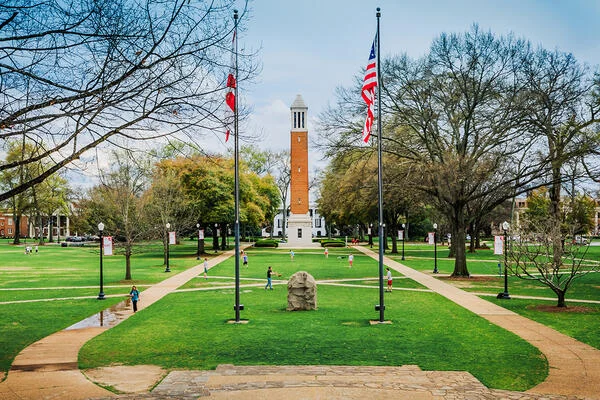
The University of Alabama has ended two student magazines, citing “legal obligations.”
Carmen K Sisson/iStock/Getty Images
The University of Alabama has ended publication of two student-run magazines, one focused on women and the other on Black students, in order to comply with legal obligations, officials say.
Local and student media reported that Steven Hood, the university’s vice president for student life, said that because the magazines target specific groups, they’re what the Department of Justice considers “unlawful proxies” for discrimination. Both publications received university funding.
The women’s magazine, [Alice], just celebrated its 10th anniversary last month, while Nineteen Fifty-Six, named after the year the first Black student enrolled in the university, says it was created in 2020. [Alice] managing editor Leslie Klein told Inside Higher Ed that university officials told her magazine’s editor in chief Monday that the magazines were being canceled because they’re identity-based.
“I think it is ridiculous,” Klein said. She said it seems like a decade of history is being “put down the drain.”
The university pointed to a July memo from Pam Bondi, in which the U.S. attorney general provided “non-binding best practices” to avoid “significant legal risks.” She wrote that “facially neutral criteria” that “function as proxies for protected characteristics” are illegal “if designed or applied” to intentionally advantage or disadvantage people based on race or sex.
But Bondi’s memo didn’t specifically say that a media outlet focusing on an audience it defines by race or sex is illegal. DOJ spokespeople didn’t respond to Inside Higher Ed’s questions Tuesday about whether the department considers the Alabama magazines unlawful.
Marie McMullan, student press counsel for the Foundation for Individual Rights and Expression, said in an email that the university’s “unlawful proxy” claim is “nonsense.”
“These publications have the First Amendment right to be free of viewpoint-based discrimination, but UA is explicitly citing their viewpoints to justify killing their publications,” McMullan said. “No federal antidiscrimination law authorizes the university to silence student media it dislikes.”
Mike Hiestand, senior legal counsel for the Student Press Law Center, said he knows of no other university that has used the memo to target a student publication. He said anyone is allowed to write for these magazines.
“A student publication is not a DEI program,” Hiestand said. He said the memo says “absolutely nothing about denying students the right to talk about topics that are important to them” and “I don’t know what the university is thinking here.”
“That looks a lot like viewpoint discrimination to me, which the Supreme Court has said repeatedly is off-limits,” he said.
The university didn’t provide Inside Higher Ed an interview Tuesday or answer multiple written questions. In an emailed statement, the university said the magazines’ editors and contributors “were informed of the decision to suspend the magazines effective immediately, with the Fall 2025 issue as the final issue.” It added that “staff hope to work with students to develop a new publication that features a variety of voices and perspectives to debut in the next academic year.”
“The University remains committed to supporting every member of our community and advancing our goals to welcome, serve, and help all succeed,” the university said. “In doing so, we must also comply with our legal obligations. This requires us to ensure all members of our community feel welcome to participate in programs that receive University funding from the Office of Student Media.”
This was Klein’s fourth year with [Alice]. “It really just breaks my heart,” she said.
Tionna Taite, who founded Nineteen Fifty-Six, said in a statement to The Alabama Reflector that both magazines are pivotal to the minority experience at the university.
“I am beyond disappointed in the regression UA has made since I created 1956 Magazine,” Taite said. “In 2020, UA made promises to be more diverse, inclusive and equitable. Five years later, I do not see any progress and their decision regarding both magazines confirms this.”
These magazines aren’t the first university student publications that administrators have curtailed in 2025. Purdue University said it would no longer distribute papers for The Purdue Exponent, an independent student newspaper, or allow it to use the word “Purdue” for commercial purposes. The university said it’s inconsistent with “freedom of expression, institutional neutrality and fairness to provide the services and accommodations” to “one media organization but not others.”
Indiana University also fired Director of Student Media Jim Rodenbush and canceled printing of the Indiana Daily Student newspaper before relenting and again allowing a print edition. Rodenbush remains separated from the university.
Multiple public and private universities announced job and program cuts, as well as other money-saving measures, last month in response to financial challenges driven by a range of factors.
Some institutions noted the loss of federal research funding, while others cited declining international enrollment amid the Trump administration’s crackdown on foreign students. Still others pointed to sectorwide challenges, including the worsening public perception of higher education. And some colleges cut low-demand programs to comply with state laws such as Ohio’s Senate Bill 1.
Here is a look at job and program cuts as well as other moves announced last month.
The center has been the state’s designated energy research institute since 1975.
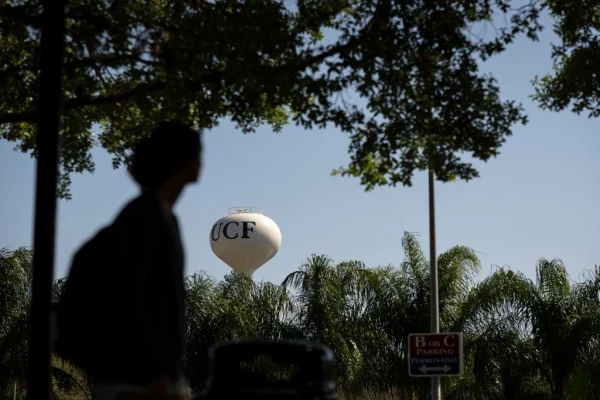
UCF officials told the news outlet in a statement that the university “made the difficult but necessary decision to reduce staffing at the Florida Solar Energy Center to ensure responsible stewardship of university and state resources,” noting that the center was not financially sustainable.
University officials also cited a decline in external funding, which hampered research activities, as well as “recent shifts in federal funding priorities in energy research, including reductions and cancellations of key programs that historically supported the center’s research activities.”
In addition to cuts at the Florida Solar Energy Center, UCF also laid off six employees in its technology department and two workers at the UCF Arboretum, The Orlando Sentinel reported.
Lewis University
Citing a significant decline in international students, the private university in Illinois is cutting 10 percent of its workforce through a combination of layoffs and buyouts, Shaw Local reported.
Altogether, 63 people are on the way out.
The university reportedly laid off 17 staff members and 16 professors and eliminated some vacant roles. Some eligible employees opted into early retirement programs offered by the university.
Lewis officials told the news outlet that international enrollment has collapsed, dropping from a peak of 1,417 students to just 847 this fall. That decline comes amid a flurry of action at the federal level, where the Trump administration has sought to limit international enrollment and increased scrutiny of foreign college applicants as it takes a hard line on immigration policy over all.
Calvin University
The private Christian university in Michigan is shedding jobs and programs as part of a restructuring that will see multiple faculty members laid off over two years, MLive reported.
Calvin is cutting 12.5 percent of the faculty. While the university did not specify a precise head count, it employed 363 faculty members last fall, 197 of whom were full-time, according to its Common Data Set. Based on those numbers, Calvin appears poised to cut as many as 45 professors.
University officials declined to provide the exact number of jobs cut to Inside Higher Ed.
“Most of these departures are voluntary (e.g., retirements, voluntary exit incentive packages, etc.), and many were identified during budget planning that occurred within the academic division last year,” President Greg Elzinga wrote in an email to the campus community last month announcing the changes. “Involuntary departures will amount to approximately 3% of our current full-time faculty workforce, and those impacted have already been notified.”
Elzinga also told MLive that Calvin’s finances remain strong and it is on track for a balanced budget for the current academic year, despite sectorwide challenges such as diminishing public confidence in higher education and international enrollment declines stemming from federal policy changes. Visa processing delays reportedly cost Calvin 65 international students who were unable to make it to campus.
Rider University
The private university in New Jersey announced last month that officials plan to lay off 35 to 40 full-time faculty members, cut salaries by 14 percent and enact other cost-cutting measures as it navigates financial challenges.
President John R. Loyack wrote in a letter to the campus community that the university was taking steps to address “the financial risks that have grown increasingly serious in recent years and have intensified in severity in recent months.” He noted that the university faces “a significant cash shortfall” due to “new and unforeseen developments” and could run out of money “to meet its payroll and other obligations before the end of the current fiscal year.”
Rider also plans to indefinitely suspend retirement contributions, increase faculty workloads, end faculty tuition remission benefits and cut some senior administrative roles, among other moves.
The university was placed on probation by its accreditor, the Middle States Commission on Higher Education, in late October due to compliance concerns related to financial standards.
Keene State College
Grappling with a $4 million budget deficit, the public college in New Hampshire is cutting 25 staff positions and offering voluntary separation agreements to faculty, The Keene Sentinel reported.
Of the 25 staff positions cut last month, eight were reportedly vacant.
So far, 12 faculty members have accepted buyouts, reportedly in line with the goal of 12 to 15; eight of those professors will exit after the fall semester and four will leave in the spring.
Roger Williams University
The private university in Rhode Island is mandating unpaid furloughs for up to half of its full-time workforce in an effort to shrink a projected $3.5 million budget gap, The Boston Globe reported.
According to the newspaper, layoffs are not currently being considered.
A university statement described the mandatory, unpaid one-week furloughs as a “temporary measure that will allow the university to preserve positions, wage increases, and healthcare benefits for our dedicated staff and faculty, while maintaining the student experience.”
University of Providence
A split from the Providence Health System has prompted officials at the private Catholic university in Great Falls, Mont., to ask its Board of Trustees to declare financial exigency, NBC Montana reported.
While Providence Health has provided financial support, that arrangement is reportedly set to end in December 2027 and the university must become financially independent, which means plugging an $8 million budget shortfall. University officials told NBC Montana that it previously relied on $8 million or more in health system support to balance its budget.
Layoffs and program cuts are expected to be part of the financial recovery plan.
Cornell College
Multiple programs are set to be eliminated at the private liberal arts college in Iowa, a process that officials said in a statement last month was driven by student enrollment data and interest.
Majors being cut include classical studies, French and Francophone studies, German studies, religion, Spanish, and multiple music programs. Students enrolled in those majors will be able to complete their degrees through teach-out plans, according to the announcement.
An unspecified number of job cuts will accompany the program eliminations.
The New School
The private university in New York City announced last month that it is offering faculty buyouts, freezing hiring for certain positions, cutting pay for some employees and pausing retirement contributions for up to 18 months, among other changes, in an effort to balance its budget.
Further, the New School plans to pause admission to most doctorate programs for next year. Program closures are also expected.
President Joel Towers wrote last month, “The New School continues to face serious and persistent financial deficits that require immediate decisive action.” Now the university is offering early retirement packages to professors and voluntary separation packages to employees, as well as cutting top salaries by 5 to 10 percent. Still, he wrote that job cuts “will very likely be necessary” depending on “participation in voluntary programs” and “progress toward our budget goals.”
University of Lynchburg
Faculty buyouts are on the table at the private liberal arts college in Virginia as it seeks to reduce a persistent budget deficit it has been whittling down for the past three years, Cardinal News reported.
That deficit has reportedly dropped from $12 million in late 2022 to about $2.7 million currently.
Programs on the chopping block, all at the undergraduate level, include an integrated major in math and English, medieval and Renaissance studies, music theory, and musicology, among others. Students currently enrolled will be able to complete those programs before they are terminated.
Signed into law earlier this year, SB1 bans diversity efforts in higher education and requires colleges to drop undergraduate programs that yield fewer than five degrees annually, averaged over a three-year period. However, colleges can ask the Ohio Department of Education for waivers to keep such programs, which Ohio State has done for a dozen offerings.
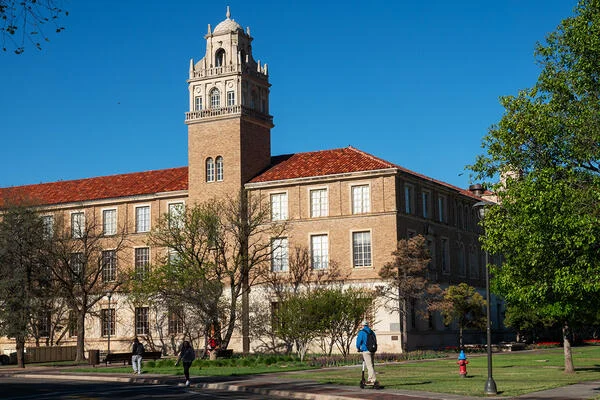
Months after beginning to enforce unwritten policies about how faculty members can and cannot teach topics related to gender, Texas Tech University system officials released a memo Monday that officially put those policies—and more—in writing.
“Effective immediately, faculty must not include or advocate in any form course content that conflicts with the following standards,” Chancellor Brandon Creighton wrote in the memo to system presidents, which was passed along to faculty members. The standards include specific rules around race and sexuality that were not previously discussed, system faculty members told Inside Higher Ed. The memo also enshrines that the Texas Tech system recognizes only two sexes—male and female.
The fuzzy anti-trans policies that were first introduced via a game of censorship telephone at Angelo State University in September have now been made clear and expanded upon across the entire five-university Texas Tech system. Course content related to race and sexuality is now also subject to heightened scrutiny. Although the memo doesn’t ban outright discussion of transgender topics or any topics that suggest there are more than two genders, policies across the country stating that there are only two sexes or genders have been used to restrict transgender rights.
Texas Tech is far from alone in its efforts; public systems across Texas have taken on varying politically motivated course reviews, leaving faculty members in the state angry and confused. For example, the University of Texas system recently completed a review of all courses on gender identity, and the Texas A&M system board approved a new policy last month mandating presidential approval for classes that “advocate race or gender ideology, sexual orientation, or gender identity.”
According to Creighton’s memo, faculty members may not “promote” or instill the belief that one race or sex is superior to another; that an individual is, consciously or unconsciously, inherently racist, sexist or “oppressive”; that any person should be discriminated against because of their race or sex; that moral character is determined by race or sex; that individuals bear responsibility or guilt because of the actions by others of the same race or sex; or that meritocracy or a strong work ethic are racist, sexist or “constructs of oppression.”
Creighton defined advocacy as “presenting these beliefs as correct or required and pressuring students to affirm them, rather than analyzing or critiquing them as one viewpoint among others. This also includes course content that promotes activism on issues related to race or sex, rather than academic instruction.”
The memo also outlines a Board of Regents–controlled review process, complete with a flowchart, for courses that include content related to gender identity and sexuality. Although race is mentioned earlier in the memo, it’s unclear whether race-related course content will also be subject to this review.
“We’ve been in this slow rollout process already. We had to go through all of the courses and essentially do the flowchart before the flowchart existed,” said a faculty member at Angelo State who wished to remain anonymous for fear of retribution. “Anything that would cover transgender [people] was flagged.”
Creighton, a former member of the Texas State Senate, justified the new rules using Senate Bill 37, a law he sponsored earlier this year that, among other things, gave the control of faculty senates to public institution governing boards and established a once-every-five-years review process for general education curricula. An earlier version of the bill that passed the Senate contained language that’s very similar to the restrictions in the Texas Tech memo, including censoring specific course topics that suggest any social, political or religious belief is superior to another and allowing administrators to unilaterally remove faculty senate members for their personal political advocacy. The existing law does not prohibit teaching about transgender identity, racial inequality, systemic racism, homosexuality or any other individual topic.
“This directive is the first step of the Board of Regents’ ongoing implementation of its statutory responsibility to review and oversee curriculum under Senate Bill 37 and related provisions of the Education Code. This curriculum review under Senate Bill 37 will, in part, ensure each university is offering degrees of value,” Creighton wrote.
Texas Tech University system spokespeople did not respond to Inside Higher Ed’s questions about the memo, including what next steps might be.
“The Board’s responsibility is to safeguard the integrity of our academic mission and maintain the trust of Texans,” Board of Regents chairman Cody Campbell said in a news release. “The Board welcomed the clarity provided by Senate Bill 37, which reaffirmed the Regents’ role in curriculum oversight. This new framework strengthens accountability, supports our faculty, and ensures that our universities remain focused on education, research, and innovation—core commitments that position the TTU System for continued national leadership.”
Faculty across the system are largely upset about the changes but unsure about how to push back, a faculty member told Inside Higher Ed. One Texas Tech professor emeritus, Kelli Cargile Cook, told The Texas Tribuneshe began drafting a resignation letter.
“I’ve been teaching since 1981 and this was going to be my last class. I was so looking forward to working with the seniors in our major, but I can’t stomach what’s going on at Texas Tech,” she told the Tribune. “I think the memo is cunning in that the beliefs that it lists are, at face value, something you could agree with. But when you think about how this would be put into practice, where a Board of Regents approves a curriculum—people who are politically appointed, not educated, not researchers—that move is a slippery slope.”
Brian Evans, president of the Texas chapter of the American Association of University Professors, criticized the memo Tuesday.
“Empowering administrators to censor faculty experts’ teaching decisions does a disservice to the university, its students and the state,” Evans said. “Such a system is inconsistent with long-standing principles of academic freedom, university policy and the First Amendment.”
Graham Piro, faculty legal defense fund fellow for campus advocacy at the Foundation for Individual Rights and Expression, decried the memo in a statement Tuesday.
“The Texas Tech memo unconstitutionally singles out specific viewpoints on these topics, implying that faculty members must adhere to the state’s line on these issues—and that dissenters face punishment. The memo is also so broadly worded that an overzealous administration could easily punish a professor who seeks to provoke arguments in class or advocates outside the classroom for changes to curricula that reflect developments in teaching,” Piro said.
“Decades ago, the Supreme Court recognized that the First Amendment ‘does not tolerate laws that cast a pall of orthodoxy over the classroom.’ It instead wrote that ‘truth’ is discovered not by ‘authoritative selection,’ but ‘out of a multitude of tongues.’ These principles are timeless, and Texas Tech should not compromise them, no matter the political winds of the day.”
He also likened the memo to Florida’s Stop WOKE Act, currently blocked by a federal court, which severely limited how Florida faculty members could talk and teach about race, gender and sexuality.
More colleges and universities are seeking ways to embed work-based learning into the student experience, ensuring graduates are prepared to tackle their first job.
The University of Delaware’s Lerner College of Business and Economics received a grant in January from the Delaware Workforce Development Board to create yearlong employment opportunities for current students, connecting them with businesses across the state that are interested in hiring local talent. Program leaders say the goal is to provide deeper learning opportunities for students and create a talent pipeline for the region.
“We want to keep homegrown talent here in Delaware after they graduate,” said Scott Malfitano, chair of the Delaware Workforce Development Board, in a press release. “We also want to keep those students who come from out of state to Delaware here when they see the wonderful opportunities that are available.”
Part of the challenge is that companies in Delaware compete for talent with employers in nearby regions including Washington, D.C.; Philadelphia; and New York, Malfitano said. “We want [students] to see the opportunities that are here, and they’ll find out that businesses are hungry and they want to keep the talent here.”
How it works: The Lerner Co-Op program launched in January. The university’s career center solicited businesses in the region to host co-op participants and opened a form for students to apply. In the spring, companies provided job descriptions, and students submitted applications before being selected for interviews by the employers.
The co-op officially started in June, when students began their full-time summer internships, working 40 hours per week. Since classes started back up in the fall, students continue to work up to 20 hours per week, which they will do until next spring.
“A lot of our students tend to intern in the summer for eight to 10 weeks, which is great, but we wanted for them to have a much longer experience to build their résumé, build their networks and make money,” Jill Panté, director of Lerner career services, said in a January press release.
Grant funding was used to hire a program coordinator to oversee the co-op, including posting positions, scheduling interviews and assisting with the offer process, Panté said.
The impact: For the initial cohort, 25 students were placed with 21 employers, including WSFS Bank, JPMorgan Chase, 2L Race Services, the Siegfried Group and DuPont. Student roles include business operations, event coordination and data product solutions.
Feedback from participants, collected in surveys and blog posts, showed that continuing the work beyond the summer has been productive for both students and employers. Employers get more work done, and students expand their learning experiences and benefit from longer-term mentors who provide career advice and support during the program.
Looking ahead, the university hopes to grow the program to 50 companies in the next year, allowing additional students to participate.
Does your college or university provide paid work experiences for students during the academic year? Tell us more here.